This is Hyundai's popular compact four-door sedan. It has a very sharp, modern look that makes it look like a vehicle from a science fiction movie, and it is designed to offer great fuel economy at an affordable price.
The Elantra is a small, affordable sedan made by Hyundai. It is popular for being reliable, fuel-efficient, and packed with modern features for its price.
Unlike a standard automatic transmission that shifts through gears (like 1st, 2nd, 3rd), a CVT doesn't have gears at all. It uses a clever belt system to smoothly adjust your speed, which helps save gas but can make the engine sound a bit like a loud, continuous hum when you accelerate quickly.
When you take your foot off the gas or step on the brakes in a hybrid or electric car, the car uses its electric motor to slow you down. This action acts like a generator, capturing the energy that would normally be wasted as heat and using it to recharge the car's battery.
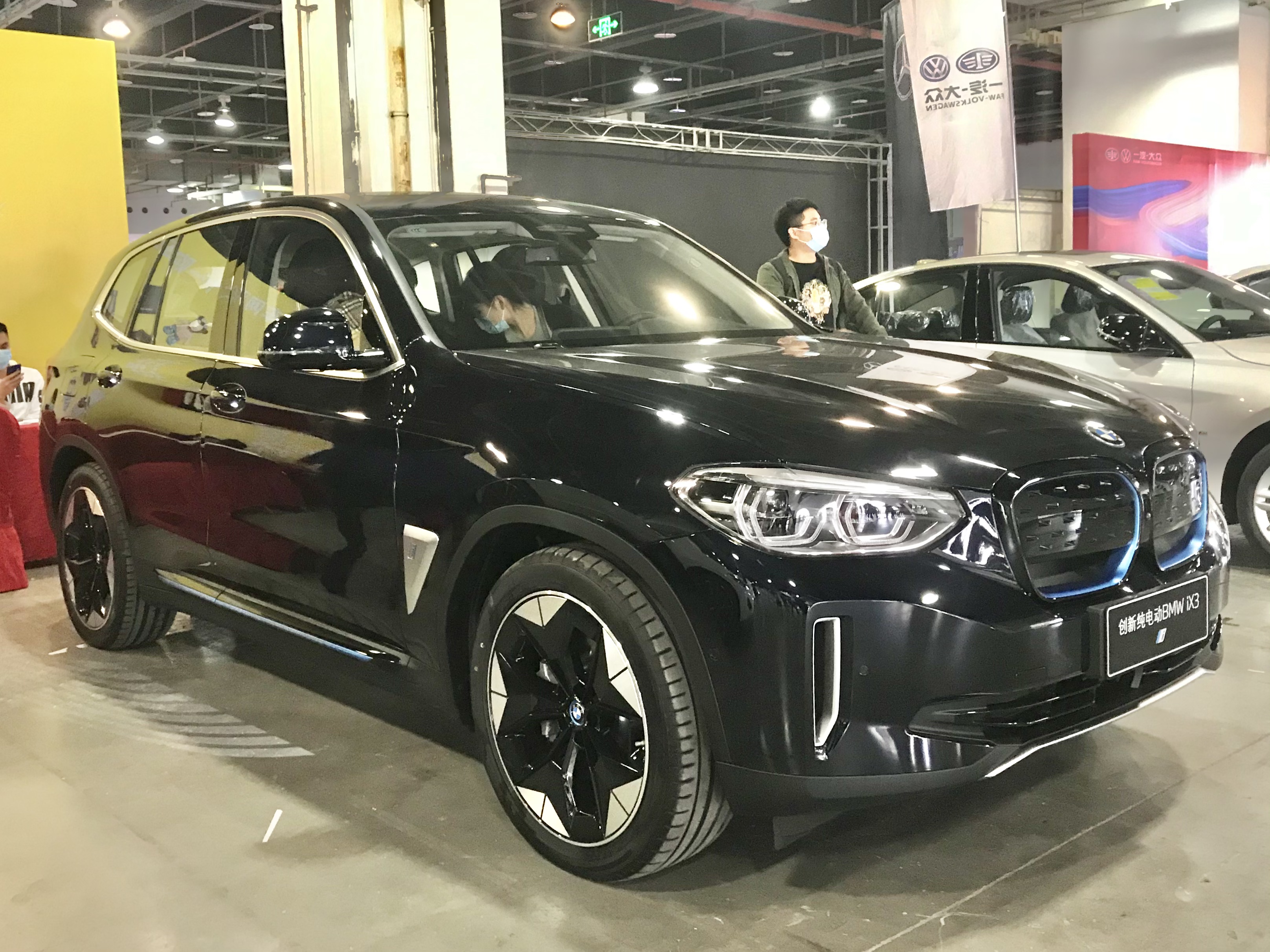
The iX3 is an electric version of BMW's popular X3 SUV. It looks and feels almost exactly like a normal gas-powered BMW, but runs entirely on electricity.
This is the extra-fast, sporty version of Hyundai's small car. It features a powerful turbocharged engine, upgraded brakes, stiff suspension, and a loud exhaust, making it a blast to drive on twisty roads or race tracks.
The X5 is BMW's famous mid-sized luxury family SUV. It is known for being comfortable, spacious, and surprisingly sporty to drive, and the newest version is getting a radical futuristic redesign.
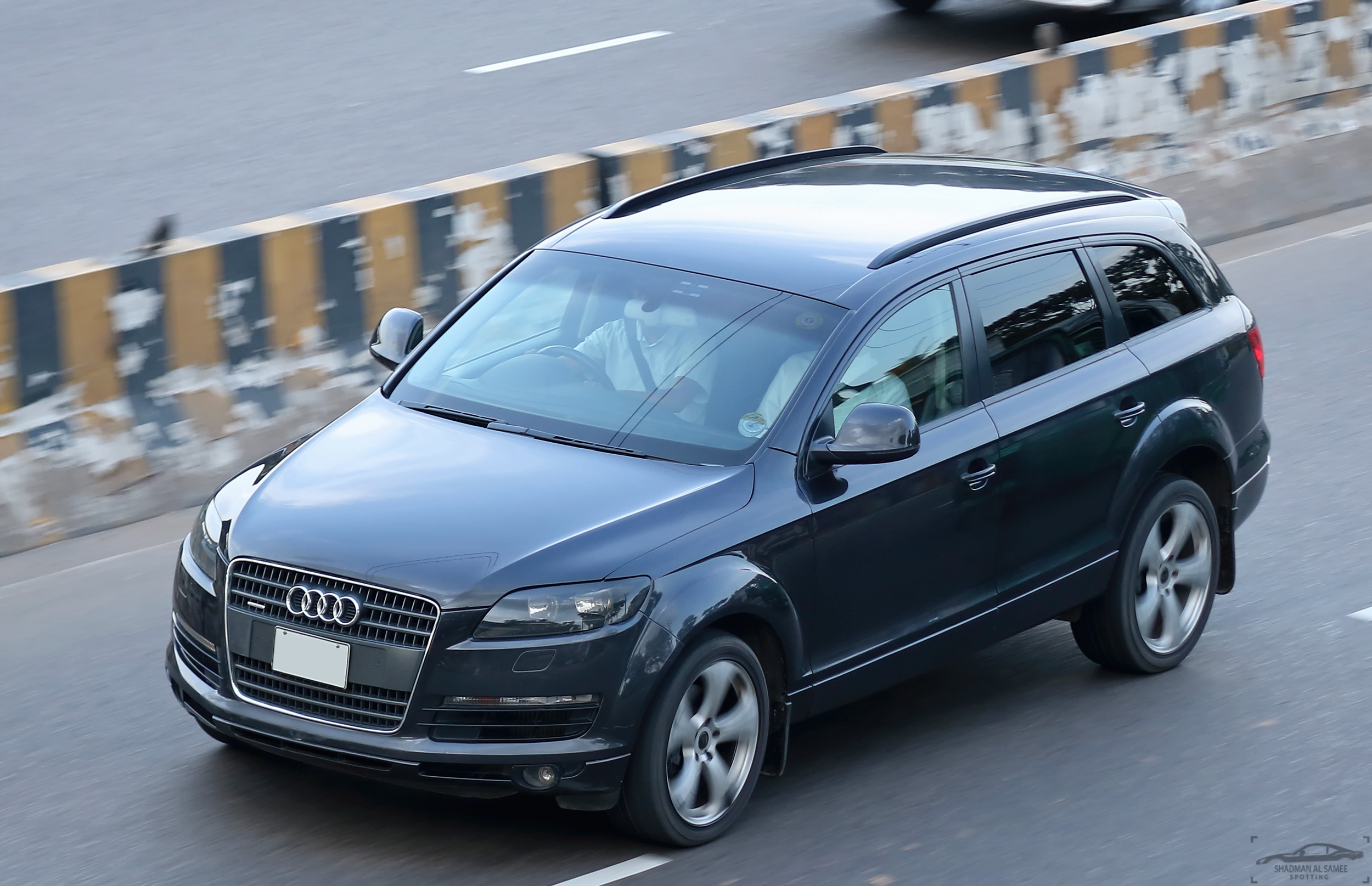
The Q7 is a large, luxury SUV made by Audi that comes with three rows of seats to fit up to seven people. It focuses on a smooth ride, high-tech screens, and safety.
The GLE is a mid-sized luxury SUV made by Mercedes-Benz. It is designed to offer a very smooth, quiet ride with a high-end interior and the latest digital screens.
The XC90 is a premium, mid-to-large-sized SUV made by Volvo. It is highly popular with families because of its comfortable seats, elegant styling, and excellent crash-test safety ratings.
The EX90 is a large, fully electric family SUV made by Volvo. It is designed to be extremely safe, runs entirely on battery power, and has a very clean, modern interior.
Car
BMW iX5
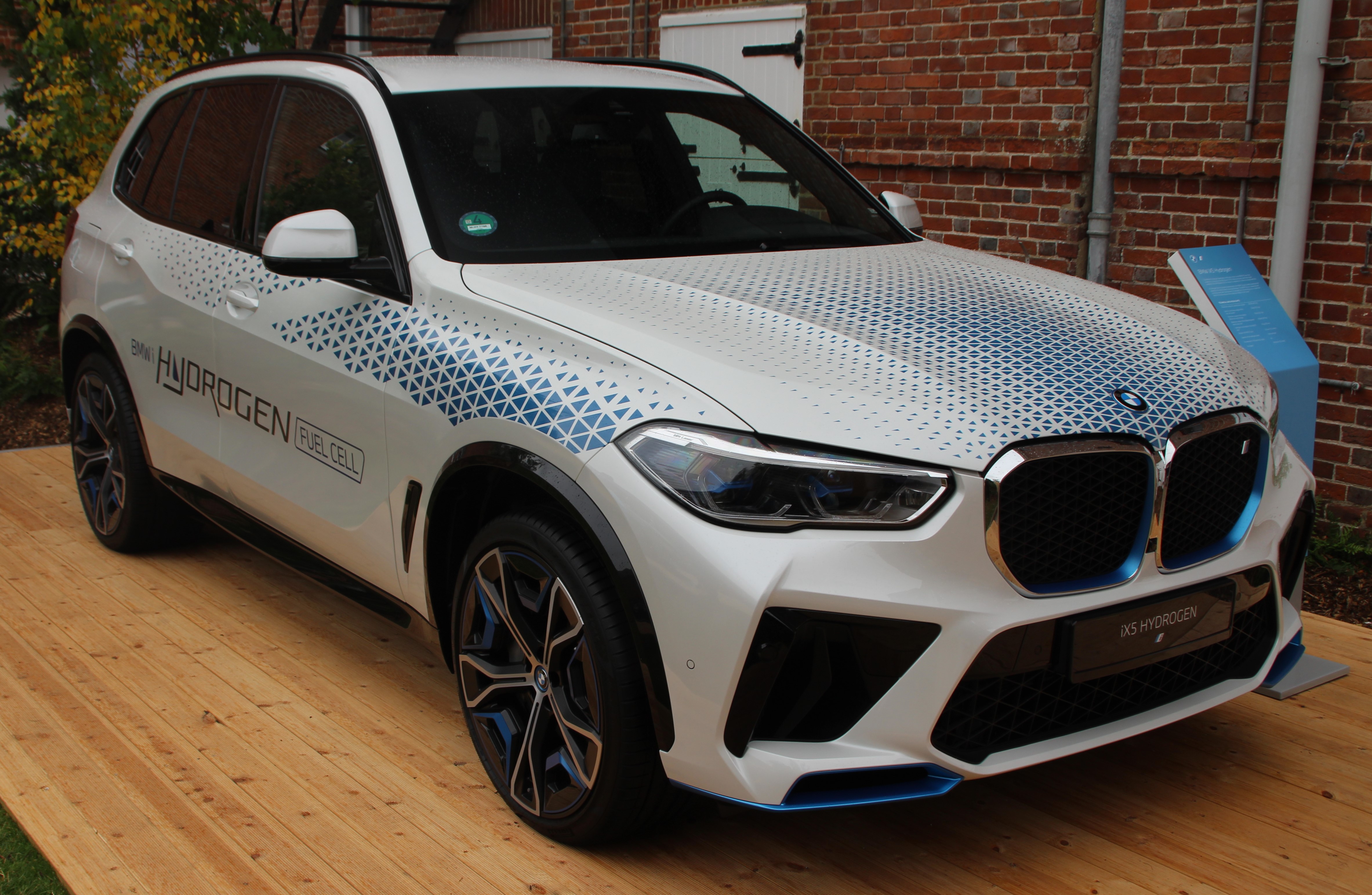
This is the all-electric version of BMW's popular X5 SUV. It has a massive battery pack that allows it to travel incredibly long distances on a single charge, and it can charge up extremely quickly.
Instead of plugging into a wall to charge a battery, a hydrogen fuel cell car gets filled up with hydrogen gas at a pump, similar to a gas station. The car mixes this hydrogen with air to generate its own electricity on the go, and the only thing that comes out of the exhaust pipe is water.
This is the name for BMW's brand-new family of electric cars. It features a totally new, minimalist design style on the inside and outside, along with advanced battery technology that lets the cars charge faster and drive much further.
The i3 is a small, futuristic-looking electric car made by BMW. It was built using lightweight materials and recycled fabrics to be as eco-friendly as possible.
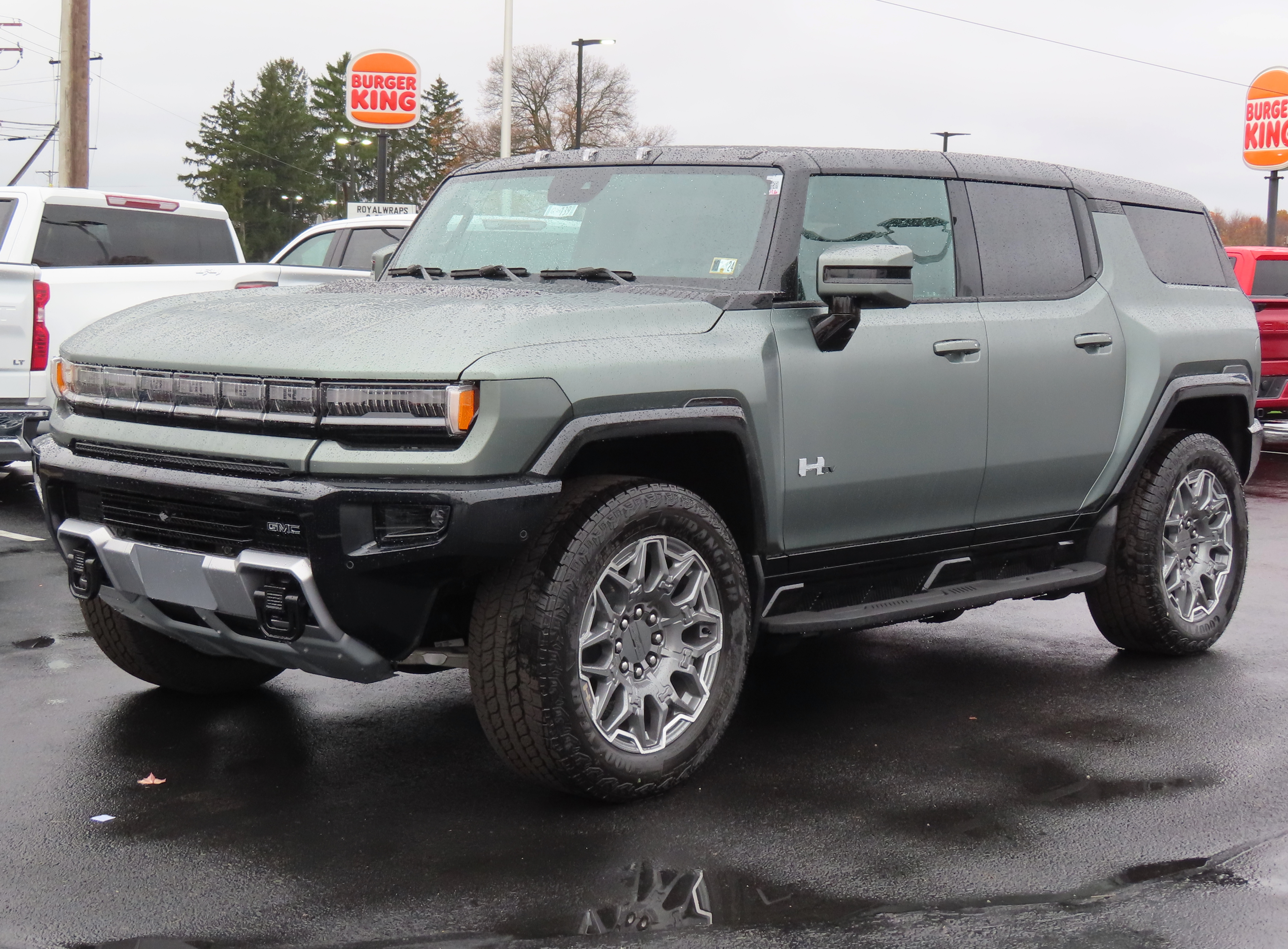
The Hummer EV SUV is a massive, fully electric version of the famous military-style Hummer. It is incredibly heavy, very fast, and can steer its rear wheels to drive sideways like a crab.
The Cayenne is a sporty, high-end SUV made by Porsche, a company famous for sports cars. It is built for people who want a fast, luxurious, and spacious vehicle.
The X-90 is a small, unusual 1990s car made by Suzuki. It looks like a tiny two-door sedan but sits high off the ground like an SUV and has a roof you can take off.
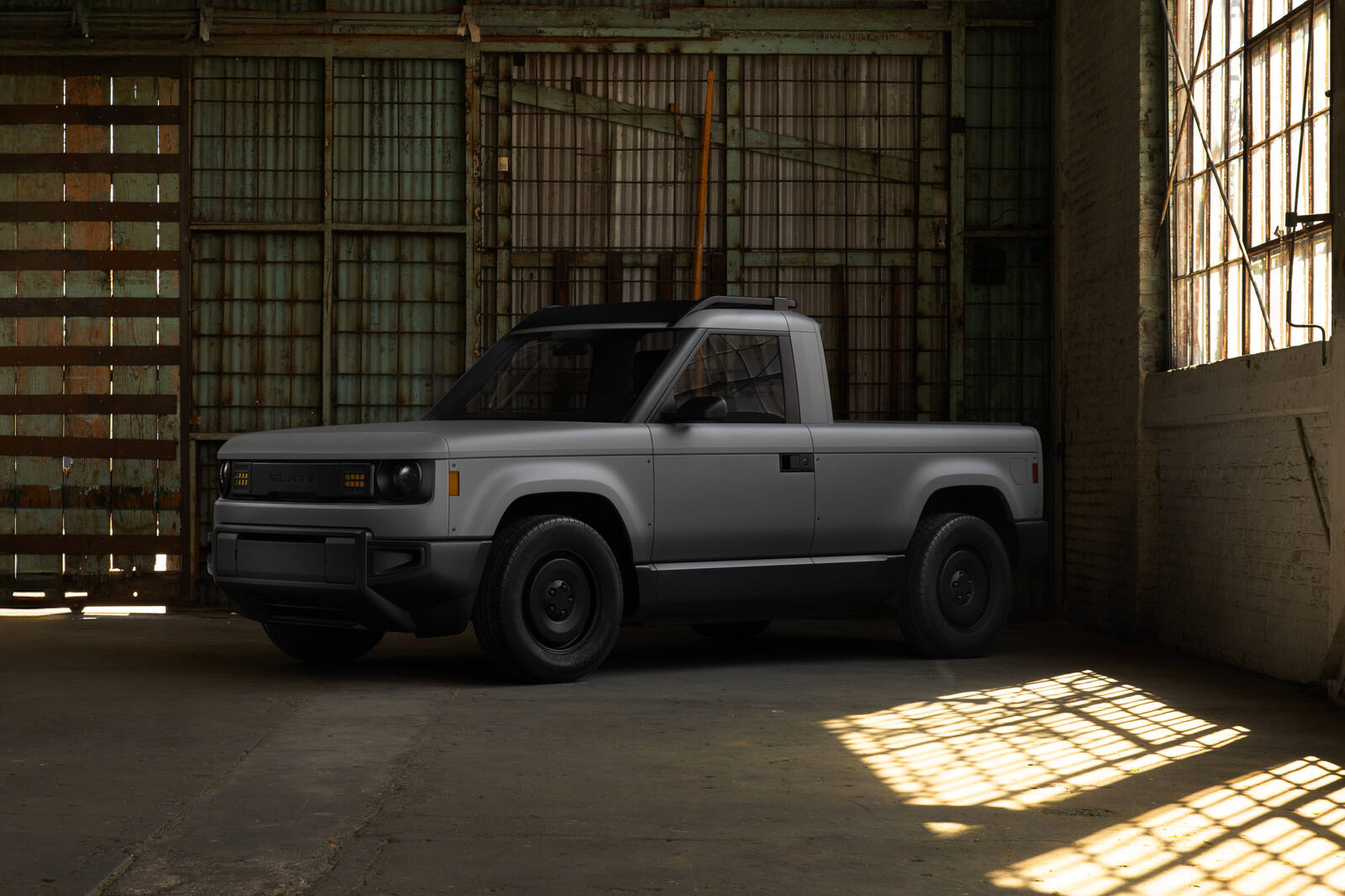
This is a unique, highly customizable electric pickup truck from an American startup company. The base model is incredibly cheap because it comes with almost nothing inside—no radio, no power windows, and no fancy screens—allowing you to buy and snap on only the parts and features you actually want.
The Maverick is a smaller, budget-friendly pickup truck made by Ford. Unlike giant traditional trucks, it is easy to park, drives like a normal car, and gets great gas mileage.
also like, okay, yeah, here, I was thinking to myself, maybe we
should check because currently, the X drive 50E is $152 for the
current gen.
And that's the plug-in hybrid, right?
That is correct, that's a plug-in hybrid. So the X drive 30D,
the base model diesel starts at $137, the I, the petrol starts
is a $141, and the plug-in hybrid is $152. So let's up that.
Okay, yeah, let's start again.
Yeah, let's add another $50,000 to our station.
Yeah, yeah, exactly.
Okay, so I think the EX5 based on that's probably towards
$200,000, let's, let's see.
And I think it'll start probably the base diesel or base
specification, regardless of its petrol or diesel, towards the
140s, I feel like, pretty, pretty comfortably.
Yeah, great, yeah, so it's good that I checked.
I was like thinking, I was like, okay, just as a current, as a
thing, I should probably check how much the current one costs
because I would be out of date.
Yes, the IX3, I've also checked, yes, it's basically starts at
$100, the current IX3, but the IX3 is a lot smaller as well.
That's right, yeah, and I mean, and I know like the interior is
fundamentally the same, but like they have up the finishing in
the IX5, like I was watching my favorite YouTuber or automotive
YouTuber, Thomas from Out of the Fool, and the finishes and the
quality are a little bit like more sumptuous in the IX5 and
the, sorry, the X5.
So, yeah, it's going to be quite a bit more expensive than
the IX3, unfortunately.
But yeah, look, I don't, I know there's been a little bit of
controversy with the design because especially the DRLs
have that X-shaped, which is taking inspiration from the
BMW X branding, but you can actually turn that off so you
can make it look like a regular sort of just the diagonal DRLs.
You can turn off the X-shaped, so you can, if you don't, if you
can, you can customize that from the infotainment display, so
you can make it look less controversial, I suppose.
But yeah, it's definitely a very strong competitor.
Yeah, technically, it seems to be ahead of its main rivals,
like I have to say that.
And yeah, looking forward to seeing it on the road.
All right, look, we might move on to our final topic, which is
the new X5, but this is, this particular car is almost like a
new approach to EVs, and we're going to, it's called the Slate
truck. So this is a, Slate is a US startup that's been backed
by Jeff Bezos of Amazon fame. And Sam, did you want to talk a
little bit about what this actually is like? What is this
concept of the Slate truck?
It almost is like a modular car, basically. I believe ideas to
this have been thought of, the idea that you start with an
incredibly cheap sort of car that basically only has absolute
fundamental functions, and then depending on what you want, you
can add to it. I think, weird enough, EVs have probably made
this easier because of the way that electric cars can be more
flexibly designed. It probably makes more, it's probably easier
to do it with them with a petrol car, which automatically
constrains the kind of design that you do. I really appreciate
the name of the absolute base model, the blank Slate. That was
very clever. Starts at 25 US, so 36,000 Australian dollars. Now,
I will say, for 36,000 Australian dollars, you're basically
getting nothing. So it's not necessarily good value for money,
even though it sounds cheap.
Well, in the Australian market, yeah.
Yeah, in the Australian market, it really isn't good value for
money, because effectively, the base model doesn't come with an
infotainment, doesn't even have power windows. No stereo, no
speakers, like just gray composite panels, physical climate
control. So to that extent, it's not cheap. If you think about it,
even 25,000 US, I'm pretty sure, not as familiar with the US
market, I'm quite confident you can get proper cars with every
feature under the sun for 25,000 US. So really, if you think
about it that way, even though the headline price sounds cheap,
it's not really that cheap. I mean, like, yeah. And then after
that, from what I understand that you can, but like the idea
goes that you can turn into one of car you want. So even though
it's not cheap, the idea of it being so flexible in terms of
what kind of car that you want is reasonably cool. Going to the
Slate's website is really interesting. So if you go to their
website, it actually shows the unbelievable level of
customization that you basically can do. Now, from what I
understand, they have some pre done, like basically, you can
pre done designs, which so you don't have to literally
customize every single aspect. And it's like almost like playing
game. But yeah, so the blank slate 24,000, then you can start
putting body kits. Right. I'm just going to go to the interior
right now. Yeah. So adding in dash panels, you need to add in
an armrest, a door bolsters, dash panels, power armrests,
yep. Key fob for the audio, you need you need to put in
speakers because it does the best doesn't even come with
speakers, Bluetooth, etc. utility. Okay, it also doesn't come
with, like, even a bunch of stuff that you need for
practicality, like cargo hooks, copy organizers, okay, all of
that needs to be done. The tech again, you need to basically
add like infotainment for you. They can I like the name, it's
called a, well, actually, I can't even tell what it's called.
But yes, your expectation is that you basically bring your own
tech almost. And yes, and as I said, you're after that, you
know, you customize it the way you look. The website is cool, I
will give it that you can do you make it look like quite a few
different things. But as I said, really, it's I feel like the
concept is cool. But and I'm sure there's a market for it. But I
think in reality, it's actually not necessarily as cool as it
could be.
Yeah, I feel like I mean, it's interesting, like, I applaud Slade
for taking this concept and sort of going with it. I feel like
this concept sort of works well in the American market for a
couple of reasons. Firstly, because pickup trucks or utes, as
we call them in Australia, are huge. They're like that. I mean,
this is much smaller than the Ford F 150. But the F 150 is like
the biggest selling car in the US, like the most popular selling
car in the US. So trucks generally, they're a huge
market. And also, I feel like the my sense is that the US market
is very big on, you know, that sort of morning scene and
customizing it and the car essentially being an expression
of your identity. So, you know, US, I feel US customers are very
individualistic, they want to their the regulations are sort
of flexible enough that you can do a lot with like, you know, body
kits and different colors and different, you know, wheel designs
and other add ons and so on and so forth. So I feel this car sort
of caters a lot to that sort of crowd. I don't see it sort of, I
feel like it's probably a bit too basic to, for the blank slate
to sort of work in the Australian or the European markets,
just because I don't know what additions they would need to
comply with our sort of regulatory requirements, like
things. And, and we also especially in both Europe and
especially more in Australia, we have so many Chinese brand
that, and this is something that Sandeep touched on that offer
you know, very sort of comparative products, not they're
not youths, but like in terms of SUVs, which you can convert this
slate into they offer a lot, a lot of there's options
and there's a lot more competition that is way more fully
featured for similar, similar pricing. Like I don't think, you
know, hypothetically, if this was sold in Australia, I don't
think it would be a direct conversion from, you know, 25
US, 25,000 US to like 36 Australian, because that US
pricing also excludes all of their taxes and stuff and other
things that you would typically include even before the
100, 100 costs in Australia. So, you know, hypothetically, if
this is sold in Australia, I wouldn't expect it to be that
much cheaper than like, you know, 50 to $45 to $50,000. So I
see, I think from a, if you look at this in the Australian
market, maybe not incredible value, but for the US market
where you don't really have any Chinese brands, and trucks are
really popular there, people love that sort of modding scene.
It's a really that price is like, very sort of headline
grabbing. And I think what's the, what's the range? I think the
base range for the blank slate is what 205 miles on the EPA
100 and something kilometers, correct? Yeah, which is, I mean,
330 kilometers, which is, you know, not incredible. Like, let's
be honest, and that is without having anything in it, because
assuming this is a truck, so people are gonna carry stuff in
it. Exactly. And I don't know how the range would be affected
by the different body styles. So like, that's, that range is, I
feel it's probably for the blank slate, like the ute version.
But then if you start adding like, you know, you start adding
the, the SUV or the fastback, whatever they're calling like,
which is like a three door. So firstly, there's only, even if
you call it an SUV, it's still like a three door SUV. So it's
not like a, you can't convert it into a five door SUV. But if
you start adding like that, that roof that makes it into an SUV,
I don't know how that affects the aerodynamics and the range,
but I would assume that it would reduce the range quite a bit.
And then yeah, the features like, it's really, really spot on
like things like, you know, you have manual windows, no
infotainment, you have like manual climate control. There's a
tiny instrument cluster that shows the absolute basic
information in front of the steering wheel. And like this
company Slate, I feel like they will they have
they're advertising this price of $24,950 or just under $25,000.
I don't think anybody will actually pay that price. Like
that's a
Yeah, correct.
Yeah, that's a good price to get attention and to get people
onto their website and to start designing the cars. But I feel
the money that this comes, the profit is all in the
customization and in the accessories that are sort of
exclusively designed by Slate. So they're saying that they'll
have more than 200 accessories and so on. That's where the money
that's where the money will be made for the
company. And because I think the assumption there is that, you
know, oh $25,000, let's get in. Oh, once you start adding those
wraps, you know, the armrest and the other features that Sam
touched on, that's only another $5,000, $6,000. If you want to
make it an SUV, that's another $5,000. And this is all US
dollars, by the way. So then you once you start adding it and
making it like a more comfortable car, or a lifestyle
oriented vehicle, then it's then it's probably not that
comparative compared to other options.
It's funny, I was just reading. So the idea of manual windows.
Now, the apparently, the people at Slate were saying that no
company in the US still produces manual wind down windows. So
they had to go to a company in Brazil, in order to get there,
which makes sense, because I was like thinking power windows has
been a thing since for 30 plus years, right? Yeah. So how the
hell is a car in 2026 that's brand new still having wind down
windows. The other thing, if again, going on to the Slate
Auto website, one cool thing is that lots of people wrap their
cars, but they're all done aftermarket. Slate has a bunch of
what's called starter packs. So if you don't want to start with
blank slate, they've got a bunch of starter packs on their
website, where like it's some of the stuff is pre done. And I
will admit, some of them look really cool. Like you can I do
really like, like they'll look extremely unique on the road. And
as you touched on Europe, people, especially in the USC car as
expression of identity. And again, rather than having an
aftermarket wrap, having one straight from the factory, it
would be a very cool thing. And the starter packs that Slate
offers. Quite good. I imagine most people won't actually start
with the blank slate. I imagine that's why they're producing
these starter packs. Because so because they sort of know that
that's actually what people will be interested in. And yeah,
Slate's website shows a lot of them. And yeah, I'm like, like,
like, there's one called area 51 ice house. There's one called
retrograde, which looks really cool. There's another one called
Nightway. The retrograde one looks really cool. I'm like, wow,
it looks like a Jurassic Park style. One of those old jeeps.
Other really interesting thing again, going on to their website.
It's tiny. So on their website, they actually compare it for
1985 Toyota. Yeah, it is tiny. It's the size of a car. It's the
size of a youth from 40 years ago. They compare it to a Ford
Maverick. It's like significantly smaller than
even a Ford Maverick. And a Ford Maverick is a small truck and
compared to Chevy Chevrolet, it's like being it. So like, that's
probably another thing it is really, really, really, and for
the US market, where like, like the bigger the truck, the
better it is, that I'll be interested to see how it goes. But
even by Australian standards, this is a very small mute.
Yeah. And I think like, they essentially using these wraps as
a substitute for paint. So this is like, these are all vinyl
wraps. And it's like, you know, so the actual, I think they're
only offering like really one fundamental paint color, which
is that blank slate that the gray that the dark gray that it's
offered in. But yeah, you could spend like, I can imagine
people spending hours and hours like I, I'm having a look at
this website in a little bit more detail now as well. And I
want to spend like, you know, heaps of time trying to
customize my own slate, like you look at some of these, you
know, like there's an option called high visibility, which
looks really fun with the yellow wrap and the gray sort of
bonnet and everything. It looks like, and I mean, you can see
how it makes sense from like a business perspective, because
the more time you spend on the website, the more likely you are
to be engaged with the brand and so on. And then you get like,
oh, maybe I could, maybe I could actually buy this car, you
know, it looks so cool. I spent so much time customizing it and
everything like it definitely like, it has probably the best or
the best like, configurator of almost any of any brand I've
ever seen like this.
If you have a look at a starter pack, I just picked the
retro grade starter pack, just the thing and then you could
build. And then it's crazy, the price shoots up from 25,000 to
39,000. Oh, well, that's just the very first starter pack adds
14,000 US onto the price. Yeah. So there you go. Yeah. That's
without adding anything else. That's just the starter pack.
Yeah. And all the accessories that that starter pack comes with
and that's it.
And is that an SUV configuration?
It is in the SUV configuration. That is true. Yeah. So
basically, it adds, yeah, all of the different things that it
adds. Yes, it's handy because basically, I just realized,
because you can break then when you look at the starter packs,
it breaks it down into exactly which accessories it's
automatically ordering the starter packs effect of returning
into a normal car. And as a normal car, as we just said, it's
about $40,000.
Yeah, I'm just clicking on the there's one option that's called
the professional and I'm just curious because it has big wheels,
how much it's actually going to know. I'm just curious. I
don't know. It doesn't say the price.
No, the professional start designing. I want it now. The
safe thing. It is $37,529 US.
Oh, where are you getting?
If you click see your design.
Okay, well, there you go. So that's, yeah, that's already pretty.
Yeah, that's already pretty expensive. So yeah, I mean, we're
already we're on this talking on this podcast, we're already
spending so much time on this slate website. So, you know, it's
pulled us in. There you go. You can already tell the effect
that's having. So very cool website. And I can see it
working in the US market. If everybody buys the blank slate,
this company is done. But if people start customizing it and
actually buying these personalized options and the
accessories, then I can see this company having like some level
profit and success. So, so yeah, very, I mean, it's very
exciting to see. I don't know if it if this concept would work
outside the US market, though, because like as we've touched on
a lot of this customization and the pricing really works well in
the US market, but maybe not in the European and Australian
markets where there's a lot more competitive Chinese options.
Okay, so did you have anything else to talk about with the
slate?
I know, like I said, in Australia, it doesn't make much sense,
because as I said, the reality is is that at a low price, you
can already get really great car options. But as I said, it's a
cool concept. And like, it's one of those things, it's a cool idea
and I'm glad someone's doing it or a company's doing it. But in
reality, like really, unless you have a lot of money to burn, it
doesn't necessarily make the most sense.
I mean, it reminds me a little bit of when like modular phones
were going to be a huge thing. Like, I think like, you know, you
look like back 10 years ago, and I think Google had something
called what was Project Aria or Project Aria, and they were
going to make a modular phone and that sort of completely
failed. Yeah. But, you know, that's sort of taking the same
philosophy and maybe it will work in the car space, we just
don't know.
Even this, I have a feeling that most people just stick with the
startup packs, even the people.
Yeah, that's true. Yeah. Yeah. And I mean, the startup packs are
where they come because they're sort of heavily customized
pre configurations. That's probably where the company will
make most of its money. Yeah. Yeah. Okay, look, we might end it
there for this week's episode of the Hooktown podcast. So thank
you so much for listening to us. We really appreciate it. Please
remember to like and subscribe, give us a rating. We're on
Spotify, Apple podcasts, all the major podcasting platforms,
and we're starting to have a little bit more of consistent
audience numbers. So we're hoping we can keep it up as we go
forward. So thanks so much. Bye.
About this episode
Hyundai's bold new i30 sedan takes center stage as the hosts dissect its futuristic, Blade Runner-inspired "Art of Steel" design. They break down the powertrain options, including a clever new predictive hybrid system, and explore the Android Automotive-powered cabin. With rising competition from budget-friendly Chinese brands, the discussion turns to whether this striking sedan can hold its ground in the Australian market, alongside speculation about the future of the high-performance i30N variant.
In this week's episode of The Hook Turn Podcast, we discuss Hyundai's futuristic new i30 sedan (also known as the Elantra or Avante). We also cover BMW's impressive new X5 with a whopping 140 kWh (!) battery, and examine whether Slate's innovative modular truck concept is enough to bring it success in the US market.