The Ford Ranger is a pickup truck that can be used for both everyday driving and off-road trails. People talk about it a lot because it’s a common truck to modify with off-road tires and suspension upgrades. It’s also sized in a way that can be easier to handle on rough roads.
A fire extinguisher is a handheld device that helps you put out a small fire. Off-road people carry one because fires can start in a vehicle, especially when you’re far from help.
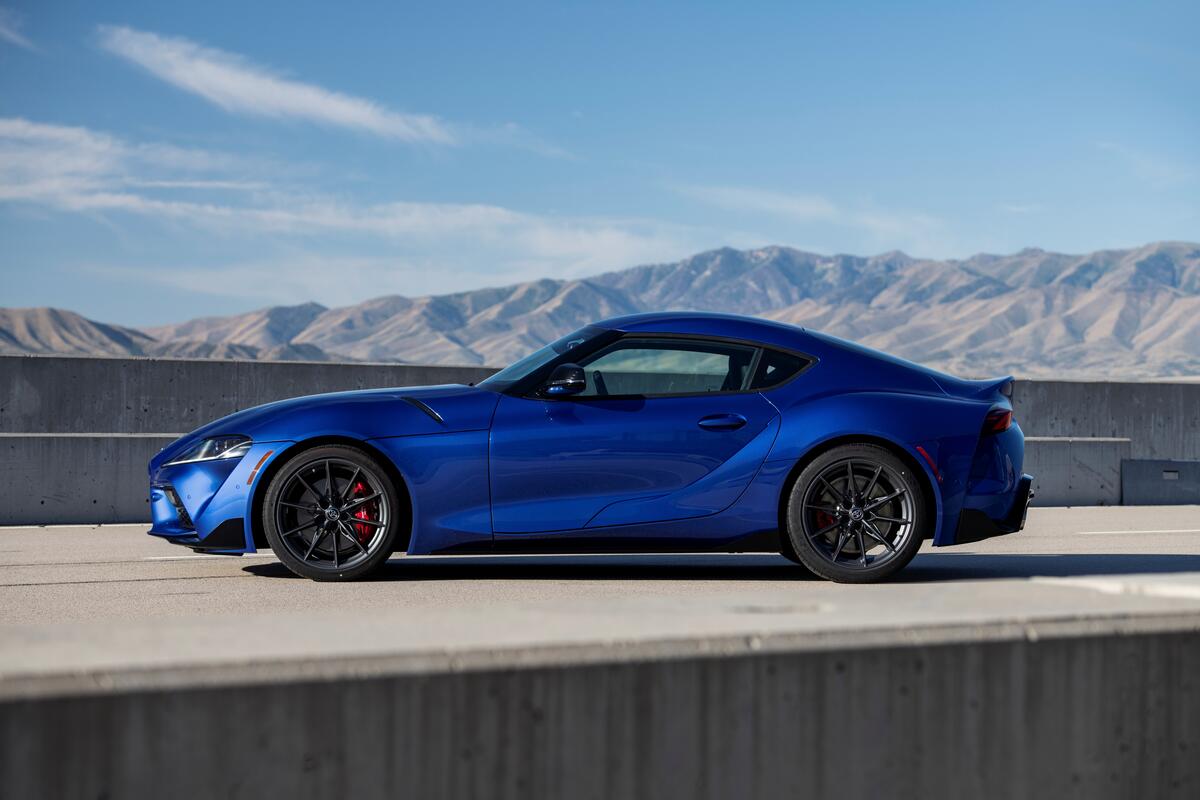
The Toyota Supra is a sports car made for fast driving and handling. It’s not an off-road truck or SUV—it’s built more for performance on regular roads. It may be mentioned in a podcast because it’s a well-known enthusiast car.
An awning is a cover stretched over an area to block sun and provide shade. The hosts clarify they’re talking about a backyard shade canopy (not window/door awnings), with a partially light-transmitting fabric.
Term
mountain bike
A mountain bike is a bike built for dirt and rough paths. It’s tougher than a regular bike and can handle uneven ground.
Term
flexible mount
Flexible panels are thinner solar panels you can stick onto a surface instead of mounting with rigid hardware. They can change how the system behaves compared to a traditional hard-mounted panel.
It’s the box that controls the power coming from your solar panels to your camper batteries. Without it, the batteries could get overcharged when the sun is strong.
Term
hard mount panel
A hard mount panel is a solar panel attached firmly to the roof with fixed mounting points. It can behave differently than a flexible, adhesive-mounted panel.
This is the controller that takes the electricity from the solar panels and “tunes” it for charging the batteries. It can often be adjusted so the batteries get the correct voltage.
Output voltage is the “electrical pressure” the controller sends toward the batteries. Setting it correctly helps the batteries charge properly instead of too weakly or too aggressively.
Concept
wired both all three panels together into the same wiring harness
Connecting multiple solar panels together in one wiring setup can affect how the whole system charges. If the panels aren’t matched, the system may not perform the way you expect.
Watts tell you how much power you’re getting overall. It’s like the total “work rate” of the electricity. The host uses watts to check if the panel’s output makes sense given the amps and volts they’re seeing.
Volts are the “push” that drives electricity into the batteries. If the voltage is high enough, the charger can keep charging even as the batteries fill up.
It means the charger can change the voltage it sends to the batteries. That helps it charge the batteries more effectively as the system heats up or as the batteries fill up.
Batteries aren’t perfect conductors—there’s resistance inside them. That resistance affects how much current they can accept, especially when they’re nearly full.
It’s a way to picture charging multiple batteries in a row: once one battery fills up, the “flow” effectively moves to the next one. That’s why the charging pattern can change over time.
False readouts mean the screen is showing numbers that aren’t really what’s happening. That can be caused by a bad sensor or a mismatch between parts that were installed together.
An ammeter is a tool that measures how much electrical current is flowing. In this case, it would help you confirm whether the solar controller is really sending the expected amount of power to the batteries.
BMS stands for Battery Management System. It’s the safety-and-monitoring brain for a battery pack, making sure the cells stay balanced and don’t get damaged.
Here, Bluetooth means wireless connection to check your battery’s status. It lets you view battery/BMS info in an app instead of using only the built-in display.
A shunt is a small electrical part used to measure how much current is going in and out of a battery. It helps you track battery usage over time so you can understand how much charge you’re really using.
Term
12-volt AC systems
They’re talking about the camper’s electrical system that runs on 12 volts. Depending on the device, some things run directly on 12V, while other things need an inverter to get AC power.
The Jeep Gladiator is a pickup truck that’s made for off-road driving. It’s based on Jeep’s 4x4 design, but it also has a truck bed. People often modify it with extra protective parts to make it better for trails.
The Toyota Land Cruiser is a rugged 4x4 SUV that’s famous for going off-road and lasting a long time. Here, it’s just mentioned as one of the vehicles the speaker made a custom etched piece for.
Dana 60 is the name of a strong axle used on some trucks and a lot of off-road builds. Here they’re talking about different Dana 60 versions and how the wheel-end design changes, which affects what parts you can use and how it’s maintained.
Super Duty is Ford’s heavy-duty pickup truck family. In this context, they’re comparing axle designs, because off-road builders often use heavy-duty truck components for tougher setups.
A unit bearing is a sealed wheel bearing built into the hub so it’s one combined part. They’re saying their axle design avoids that style and uses a spindle-based setup instead, which can make maintenance and parts sourcing different.
A spindle is the part that the wheel assembly mounts onto in certain axle designs. Here it’s mentioned as the alternative to a unit-bearing setup, meaning the wheel-end is built and serviced differently.
A GoPro mount is the bracket that holds an action camera in place on your vehicle. They’re saying the mount location matters because it can block buttons or visibility.
The Toyota FJ Cruiser is an SUV made for off-road driving. It’s designed to go over rough ground and is popular with people who like to take their vehicle on trails. The transfer case is part of the drivetrain that helps control how the car moves at low speeds, which is why it comes up in off-road discussions.
A transfer case is part of a 4x4 that sends power to both the front and back wheels. It also provides low-range gearing for slow, controlled off-road driving.
Anodized means the aluminum was treated to form a tough protective coating. That coating can also be colored, like black, and it helps the part last longer.
A hard line is a rigid pipe in the air-conditioning system that carries refrigerant. If it gets rubbed or damaged, the system can lose refrigerant quickly.
The firewall is the wall between the engine area and the inside of the car. Parts and lines often run near it, so if something rubs there, it can cause problems.
An engine cage is extra metal protection around the engine area. It can make it harder to route hoses and lines, so mechanics may need to reroute them to avoid rubbing.
A rear swing-out is a hinged rear setup that swings open for easier access. Off-road builds use it so you can reach things like a spare tire or gear without crawling under the vehicle.
An “E locker” is a device that locks the two wheels on an axle together. That way, if one wheel starts slipping, the other wheel can still push the truck forward. It’s especially helpful on rocks, mud, or loose ground.
The “rear diff” is the part in the rear axle that lets the left and right wheels turn at different speeds when you’re turning. If it’s worn or mis-set, it can cause noise or traction problems. Rebuilding it can fix those issues.
“Ticking” is a type of unusual noise from the drivetrain. It can mean something inside is worn or not set up right, like gears or bearings. Fixing it early helps avoid bigger damage later.
“Shock tuning” is when someone adjusts your shocks so the suspension soaks up bumps the way you want. It can make the ride smoother and help the tires stay in contact with the ground. It’s like setting the suspension to match how you drive.
“Dual cases” usually means the truck has two transfer cases instead of one. Transfer cases control how power gets to the axles, especially in low range for crawling. With two of them, the gearing and durability can be better for extreme off-road use.
“23 spline” is a way of describing how a shaft connects to another part using ridges (splines). The number has to match the mating components so they fit and transfer power correctly. It’s an important detail when rebuilding drivetrain parts.
A “bearing setup” means installing the right bearings and making sure they’re positioned correctly. Bearings help rotating parts spin smoothly, and if they’re set wrong they can make noise or wear out quickly. It’s a key step in rebuilding drivetrain components.
A carrier bearing is a support point for the driveshaft so it doesn’t wobble. If you change to a driveshaft that uses one, the angles can shift, and you may need to adjust other parts to make everything line up correctly.
The rear axle housing is the metal “shell” that contains the rear differential gears. If it’s cracked, it can fail or cause driveline problems, so it usually needs to be replaced or professionally repaired.
The driveshaft angle is how “tilted” the driveshaft is. If it’s not set right, the truck can vibrate and the drivetrain can wear faster, so people adjust the axle and related angles when they change parts.
The pinion is a key gear inside the rear axle that transfers power to the wheels. Changing its direction helps the drivetrain line up so the truck drives smoothly and doesn’t wear parts as quickly.
Roto packs are fuel cans you mount on the outside of an off-road vehicle. If they’re positioned poorly or move while you drive, they can rub and eventually damage the truck’s metal or the cans.
LIVE
Welcome one welcome all to the snail trail four path for podcast if you like going off
running in Toyotas wrenching on Toyotas camping in Toyotas and maybe even poking a little bit
of fun at Toyotas and of course hearing about how fantastic I like I think I was ducking
now. How fantastic don't it's all right. Then this is the podcast for you. That's right
ladies and germs. My name is Tyler and joining me for another episode of snail trail four
by four from Canada live is the one and only Mr. Jimmy jet. How you doing? I'm doing good
a and doing good man. How's Canada treating you? It's a bit chilly.
It's like middle year. It's like a nice, crisp, warm, balmy 45 degrees outside a Fahrenheit.
So they do Celsius up there. Yeah. Yeah. So 45 Celsius would be a very different. Oh,
yeah. A very different thing than 45 Fahrenheit. Did I send you the video about how Canadians
measure things? No, but I think I know you. I've seen it or no. Amazing. Yeah. There's
a comedian that's up and I think he was he was in Toronto if I remember correctly. And he was
like, you know what blew my mind the other day is that you guys measure speed in kilometers per
hour, but you measure distance distance in like feet or miles or something. But if it gets so far
apart that you measure distance in time and I didn't see that one and then he was
and the people everybody was like, yeah. And he goes, that is crazy. And then people like, well,
yeah, how tall are you? And he would answer and feet and they're like, well, we would answer
kilometers or meters. Yeah. How tall they are. And then like, and then that went on and on and
on to explain all the different systems of intermingling systems that they use to measure
things. Yeah. They do speed. I'm pretty sure in kilometers an hour, but distance in like the
standard system. So feet and inches. So how tall they are is like five foot 10 or 11. Okay. Right.
And then they do, they did, what was the other one? They don't, whatever the other system was,
like they do measuring for like volume, I think. And like, I don't know what it is.
Yeah. But they don't do leaders. They do fluid ounces. Oh, really? So it's like, what the fuck
is going on up there? I gotta see if I can find this video. I knew, hold on. I knew where it
sent it to. I got to play it. You guys do kilograms here, right? So I, uh, no, wait,
where's we're in Canada? Do you kilograms? No, where, but you do kilometers an hour.
What the fuck is that? No way. So you do kilometers an hour, but you don't do kilograms.
How tall are you? Okay. So for cocaine, you use grams. Okay. Thanks for this very relatable
information for the rest of you. You guys are such nerds. You just had a fucking writing.
How do you measure things like a Canadian? What are you measuring temperature? Is it cooking? Oh
my God. Shut the fuck up. This is not real mass. Is it your weight? Yes. Pounds. It's not your weight.
Is it heavy? If it's heavy, we do kilograms. If it's not heavy, we do pounds. Shut the
up. This is horrible. Speed is the only one that's metric like consistently here. Yeah.
Distance. Is it your height? Yes. Imperial. Is it a long distance? If you say yes,
then the distance is just time. How are you an engineer in this country, dude?
Is it a long distance? No. Is it related to work? Imperial. Is it not related to work metric?
Fuck. There you go. Canadians. Canadians in their measuring systems. Yeah.
I mean, we do the hour thing too. That's fair. Yeah. How far away is your grandpa or your uncle's
cabin? It's about two hours. Yeah. You're not going to say it's 112 miles. That's true. I have no
clue how many miles it is to the cabin. Okay. That's fair. Yeah. How far is it to San Francisco
from us? Two hours. Yeah. Yeah. It's about 100 miles. Yeah. A little over 100 miles. Okay.
Or something like that. All right. So when it's so far, you don't know the mileage. Yeah. I mean,
for the most part, distance, I would probably almost all argue that it's time. Yeah.
Interesting. I never thought about it that way, but I think you're absolutely right. Yeah.
How far is it home? Home? It's seven minutes. Yeah. Eight minutes. Right. You're not even
thinking miles. Yeah. Interesting. I never realized that before. Right. I think besides that, I think
Canada screwed the rest of the time. Okay. Perfect. But I think even Americans will be like,
if it's a far distance, you're going to say time. And even to some extent, you're saying time.
So here's an interesting small distance. How far is it to Austin, Texas?
Days. Days? Interesting. See, I would argue, I would say that one in miles. I'd be like
1500 miles, 2000 miles, 1500, 2000 miles. I wouldn't say that one in time.
Yeah. I don't know. I mean, I would know the distance. So I would do, I don't know, multiple
days. Okay. Interesting. Cause I'd be thinking like, I'm going to take a plane to Austin. I'm not
driving to Austin. Yeah. Sure. So like if I'm taking a plane, it's only three to four hours.
Yeah. Well, I think you'd clarify that. Yeah. Interesting. But even when you're like, how,
I mean, how long does it, I think that's the thing is we go, how long does it take you to get to
King of the Hammers? Not how far is it to King of the Hammers? Okay. I mean, I think we phrased
the question a little differently. Yeah. Okay. Cause most of us, even if you said it was 500
miles to King of the Hammers, most of us would be like, how long does that take to drive?
The next question is like, okay, how long am I actually going to be in a car?
Okay. That's fair. So like how long is a King of the Hammers? Yeah. Like the race. It's multiple
day long. The race. How? Yeah. The race. That's a 10 hours, 12 hours. Yeah. I mean, it depends on
the course that year, but most of the time it's around 200 miles. Yeah. So I don't know. That
one's, I think, but I think the most common, most commonly you're going to refer to a distance
that you're going to travel by time. Okay. That's fair. I would argue that. But yeah, I don't know.
So yeah, I saw that video. It's funny. Like height, feet and inches. I thought it was funny.
Also, if you're doing business or if it's like with friends, it's different business versus
personal. Yeah. And I, and my argument about across the whole entire thing that we've been
talking about is we need to move to the metric system. I agree. I know the stupid imperial
standard system. Multiplying by six is lame. Multiply by tens. Come on, people. Yeah. And
everything. Yeah. Since we're on the huge tangent, we'll just keep going. I watched another video
one time of a guy that made every, I think the week that he had every month had the same amount
of days. Okay. And the month always started, I think it was on a Monday. Okay. And the,
and it was like all just, all everything was streamlined. I think he had to make another
month. I think it had to be 13 months. And there was only four weeks in a month. Okay. And all of
the months started on the first of, was a Monday and ended on a Sunday. Yeah. And it was just like
everything, it all worked. It all worked out the most part. Interesting. It was like, why,
why are we doing this before? So I showed that to the US. Julius Augustus Caesar wanted a month
named after him. Yeah. Well, then we went from 10 months to 12 months because they had to add
another month and then they skipped six months of a year to move it to realign the calendar
because they figured out they were off anyways, but I showed the video I watched to the assistant.
She's like, that wouldn't work being a all science teacher. She started explaining to me in science
why that, the whole thing wouldn't math out. You're like, none of this is scientifically
stable. Okay. It's all time or not time state. It's all convenience stable. Okay. Yeah. It's
like, why aren't we just on the lunar calendar? Yeah.
When the moon goes around the earth, that's one year. That's one year. Yeah. We're good.
We'd all be on months old like when we were kids.
Anyways, all right. Fun tangent. This is Thursday's episode, which means we have,
and we're at the beginning of the month. So even though we just did this for May,
we were a little bit behind in May. Thanks to trial hero X. Thanks a lot, Rich.
And now we're back into June new month. So we could just kind of start over and get you guys
a winner for the Russo fire extinguisher, which I have right here next to me. It's kind of sitting
in between me and Jimmy. My arms reach it because mine are longer because I'm much taller has nothing
to do that Jimmy's further away from it than I am. So I would, think I'd wager that
my wingspan is bigger than yours. You think so? Maybe we may have to challenge this in a bit.
Once we're off air, we may have to figure this one out. So we got a Russo fire extinguisher.
We got a new giveaway this month, which we'll get into the details on that. We've got birthdays,
FNGs. We've got reviews to go over. So fun packed episode, a lot of shout outs to people coming
along here. And then we also were up to some no goods over the weekend. So we'll get into those
too. So let's see, where should we start? Huh? Huh? Huh? Well, how about I'll talk about discord
if you want to, uh, you already got reviews and everything up though, huh? So never mind,
let's just start with reviews and then we'll move into birthdays and FNGs and all that fun stuff.
But if you guys want to go and leave us a review, you need to go to Apple podcast,
make sure that doesn't say 13 reviews when you log in because that's what happened when we logged
in. Tyler was freaking out. I panicked. Yes. Uh, so go over to a snail trail four by four podcast,
click on the reviews button over there and leave us a review. Uh, any stars, whatever you want to
say or whatever it is, we don't necessarily care. But what you're doing is you're entering yourself
into a giveaway because every 50 reviews we get, we do some sort of giveaway and we're coming up.
I think we're coming up. We might be over. He hasn't told me how many we have yet,
but we're coming up on 800 reviews and we're going to be giving away an on ex elite membership.
When we get a 850 reviews, we're doing another on ex elite membership and we get to 900 reviews.
We're giving away $900 of more flake gear.
That's exciting. I'm excited for it. Yep. Uh, one of the launches, we'll get into it
in a, uh, within a couple of weeks here. Uh, one of the launches is happening right now. I'm,
I'm 3d printing a bunch to start off. So, uh, all right. So let's do some reviews. Yeah. What
are we at? We're at 700 92 period 90. So we got 22 reviews in in two weeks. I think so. Yep.
Okay. Uh, so we got 10 more spots left before the next giveaway point. So, uh, make sure if
you guys were looking to get one of those spots so you can get in for this giveaway for the on
ex elite membership and some swag, um, as well as future giveaways. Um, there's only 10 spots there
right now. So, uh, we are down here. So I just wanted to say congratulations, Jimmy. Thank you.
What is today's date of, as of recording June 2nd, 2nd or 3rd? So I think we're recording on the
2nd today. Um, the last review we did was June 1st. So we're ahead except this one's now June 5th.
Okay. But we're gonna get it to get ahead. I think so. Yeah. We're getting ahead.
We're just two years behind three years, three years behind. So this review was June 5th of 2023.
All right. Uh, so it's from, uh, Jay Long. Oh, a good four by four dirt podcast,
always informative and a fun listen. Thanks, Jay Long. Thank you. It's a J long a J long.
Is it a J? No, it's a space J space long. So it could be a long J and, uh,
Apple just switched his names around. Yeah. Sure. Okay. Yeah.
Next up is Tacoma 79 89 with a long Jimmy a long Jimmy. That works. Yeah. Yeah.
We'll skip this one. Come back to it. Uh, shy guy. Ah, shy guy. Yep.
I'm not going to try and say shy's name. Vegan overland. Yes. Vegan overlanding.
Yeah. Who I believe also has gout. We've, I'm, yeah. Okay. We talked about it. Nice.
One time. Yeah. He also makes crystals.
Yes. He does. He's special. He's special. Just like me.
Tom Saldivar, who's doc. Yes. Doc Saldivar has been a supporter of ours for,
well, all these guys are supporters for a long time, but doc talks to me all the time. So yeah,
that's fun. It's fun to chat with on, uh, I talked to him on a Facebook messenger. Yeah.
So he's like, what is he Yoda militia or something like that? I don't even know his
Instagram. I just talked to him on Facebook and I see him popping up and all like the
Toyota groups on Facebook. So, uh, and then Evan cook. Oh yeah. Evan cook.
Thank you very much. Love that forerunner of yours, but Tyler loves it more. I do.
He's my, uh, my SUV forerunner brother and the final one. Okay. Which was, uh,
a really good kind of, he became a pretty good buddy of the show. Um, super helpful dude. He
was just out to always help people with their cars and their builds really mechanically inclined,
really smart guy. Um, and, uh, big supporter of the off-road community here in Northern California.
Um, and he ended up passing away. Yep. Uh, I want to say four years ago now,
I think it would have been four or 54 or five. It was right around when I hired Sean.
Okay. So that would have been 2021. I think. Yeah. So five years ago. Wow. Um, Rob Gootsman,
Rob Gootsman. Yeah. Honorary lifetime. Yep. Uh, snail squad member. Yep. He'll always be here.
So, yep. And, and we thoroughly enjoyed Rob's time. Um, he's an amazing gentleman,
genuine heartfelt, always down to help anybody. And one of the ways that we remember him is
always keeping him on this list. Yep. Yeah. So Rob, we miss you buddy. Hopefully you're
getting a lot of wheeling time up there, man. Yes. Uh, all right. So that does it for June
birthdays. Those are all seven year, seven year members. That's so cool. So thank you everybody.
Yep. If we make it to 10 years, we'll do another 10 year anniversary gift. Yep.
Yeah. It'll be something bigger. Like maybe a course light. We'll send you or something.
We'll send you a 12 pack so you can use your cooler bag. That's five years old.
Perfect. Oh, all right. So that's FNGs and, uh, birthdays. Yeah. We got a giveaway though.
And we do have a giveaway. We need to get a wiener here. Wiener for the Russo two and a
half pound multi-purpose fire extinguisher. Excited for that. I still need to get in contact
with them and get them some panels so I can get my fire extinguishers because I still have the
other brand in my truck that we shouldn't be having. All right. So we have two through 96 would
be our range. So that's 94, 94, 94 odds to win. So we'll hit the go to the Google random
number generator. Would it be one in 93? Do you take yourself out of that or do you leave
yourself in? I guess you'd leave yourself in. Am I in that list? No. I mean, I a person that
we can talk about this later. Okay. It's pointless. It's a thought experiment. Not that. Okay.
All right. So tell me when to stop. Yeah. I mean, maybe I should continue this while you
keep hitting that button. All right. Stop. Number 12 early bird. So that is this line.
By the way, these are normally in alphabetical order. So that's how you guys might know.
Who is it? This one's a cool one. Okay. Been pretty active on the discord recently. Sweet.
Mr. Johnny Freski. Oh, Johnny Freski. Congratulations. Yeah. So Johnny, you just won a two and a half
pound fire extinguisher from Russo fire extinguishers. That's awesome. Yeah. It's pretty
cool, buddy. So Johnny, I'll text you or Jimmy will text you or we'll reach out on the discord,
whatever it is, and figure out how you want to get this. If you want to ship out to you,
or if you want to swing by and pick it up from the studio, or we'll meet you on the trail,
throw it in the rig. And next time I see you on the trail, I can give it over to you. So
lots of different options there, bud. So congrats. Yes. Congratulations, Johnny. And thanks everybody
for their continued support and support of the channel. Without you guys's support, and more
honestly, your guys's interactions, you know, Tyler and I wouldn't be hitting the record button
every week. We'd still be doing the same old stupid stuff that we're normally doing or that
we're always doing here, but we just wouldn't be recording it. And your guys's feedback and
really one of the things that has really shown to me is that the discord channel is,
it's alive and well. And we have over 100 active people on that thing.
Oh, we broke 100? Oh yeah. Nice. Yeah, we're probably like at least 120, if not more, I think.
And then, but it just shows that there's some people that truly care about
the channel and really enjoy it and are having as much fun listening as you and I are doing it.
So yeah, no, really appreciate it. And we, what? I can't say it. Okay.
My brain, my brain went in a very naughty spot. That's not out of the ordinary.
I just wanted to say a big thank you to everybody for the continued support and hopefully we can
continue doing this for quite a while and continue to give out cool stuff like the Russo fire
extinguisher. Yep. This month. Yeah. Speaking of giveaways. Yep. So this is June 4th that this
is coming out. So we're getting out there for everybody. We partnered up with IceCo for this
month's giveaway. So IceCo does fridges, refrigerators, ice chests, etc. They've been
doing some really fun collab fridges, which is where a lot of people have been kind of getting,
seeing their notoriety recently with other companies in the off-road space such as PRP.
They did one with King Shocks recently. They did one.
What was it? Was it a golf company? I want to say they did a golf one, a golf themed one.
They've done quite a few of them. They did one with a lighting company. I think they did it with
Baja Designs and a few other ones. So it's a really cool company after talking with them down at
Overland Expo SoCal. The company in the off-road space for IceCo is really aligning with what
we're doing here on the podcast, trying to create win-win-win scenarios and create a big community
within the off-road space. So talking with them, it sounds like they're all on board with
working more with Snail Trail 4x4. It's exciting. It'd be really cool. So we don't know exactly
the item that's going to be given away this month yet, but they are on board. We will be
doing an interview with them, and then they just, they have a few different items that are being
launched like this quarter that they're not sure which one they really want to focus on on the
podcast here. So we'll get them nailed down for whatever item they're looking to do and let you
guys know what that is. But this month's giveaway is with IceCo, and it will be a refrigerator of
some sort. Yeah, it might be a fridge. It might be one of their cool backpacks that they're coming
out with, that we've been talking about a little bit, or maybe a discount to
something that is in their lineup, but we're definitely going to get some sort of item out
there for you guys of that $100 or more value, which is what we strive for for our giveaways.
Yep. So we got that going on in order to get signed up for that. Now that we're kind of back
from Trail Hero X, I really want to work on getting the signup tiers added to Discord. So
that's kind of the next project. So we should hopefully have that done before the end of the
month. We'll let you guys know when that's live. And then you can either sign up that way or sign
up over on IRA 4x4, the good old-fashioned normal way of doing it until we get the Discord set up. So
let's see you guys have until the end of the month, which is June 30th to get in for that.
And good luck to everybody. May the odds be ever in your favor.
Thanks, Hunger Games. Anytime, man. All right. Anything else to go over before we get into
our shenanigans? No. I just, you know, tokens are ever going live. They're out there. So if you
guys are interested in getting the file for the tokens that's over on the Discord channel,
you need to go and log into the Discord. And then there's a thread for the tokens. And I believe
that gives you the link to download the folder onto your Onyx Offroad account so that you can
see where all the tokens are around the United States, for the most part.
We did try to get some up into Canada not too long ago, but apparently we can't send raw wood
to Canada. That was my bad. Sorry. None in Canada unless we figure out a way to kind of sneak it
in there. But if I could sneak it in with a more fleet order of some kind. I mean, I thought about
just not claiming it, but I just didn't want any problems that be had.
Anyways, I know there's a bunch in California and then there's a good handful in a bunch of other
states, including Hawaii. So if you guys are going to Hawaii anytime soon, the big island,
there's I believe two available on that island. Nice. Yeah. Cool. So that's kind of fun. So
if you're interested in and let me just back up the tokens, Tyler and I have always seen them as
a good way to kind of share places that we've gone, but a good way to try to entice people just
to go out and explore and have a good time out in nature and go see somewhere new or somewhere
that you enjoy. So that's really the benefit of it. Like, yeah, you can collect all the tokens,
get spell out snail trail four by four and win a prize, which this time is the gear wrench
master mechanics tool set. But really it's go get outside and go explore and have some fun. And
this will give you a reason to go somewhere new. Cool. Yeah. I like it. Yeah. Sounds good.
All right. Anything else? No, I don't think so. Okay. Yeah. Let's take a quick break here.
Okay. And we'll be right on back with kind of some of the shenanigans and the things that
Jimmy and I were doing over the weekend so you guys can live vicariously through our shacho,
which this weekend was. Oh, was it? Oh yeah. All right. I'm excited to listen. All right. We'll
be right back. Hey guys, I love going out wheeling and I love playing in the outdoors. And one of
the main tools I rely on for all of the activities is on X offer. On X keeps me in the know. It keeps
me on the trails and it keeps me from getting lost so that I can make it back home to my family and
friends. There's tons of tools and data available for outdoor activities on the app that helps you
play the next trip and it helps keep the adventures rolling. Start your free trial over at on X maps.com.
Oh, welcome back ladies and gentle people. This is Thursday's episode. So we get to talk about
Jimmy's shit show over the weekend. And I am pretty, I'm tickled excited about what I did over
the weekend. So what is your shit show? What does it have to do with?
You want me to start there? Yeah, sure. Go for it. All right. Let's see. So I was literally
trying to write down the week and what chaos happened every single day, but you've got me.
Nothing necessarily in regards to off-roading. So unfortunately, but there was some fun things
that happened. Let's see. So we record on Tuesdays, right? So really, I'm reporting from Wednesday,
Thursday, Friday, Saturday, Sunday, Monday, right? And then we sit down and record next Tuesday.
So last week, Tuesday, we recorded and then Wednesday happened and it was a good day. I think
I shipped some panels, hung out, did some computer work, answered emails, you know, customer service,
all the normal stuff. And then there was a whiskey release at Monks. Okay. And the assistant
had to go to her dance class. Normally she skips her dance classes because these
whiskey tastings are like once a quarter or once every two months or something like that.
But she heard dance recitals coming up in a week or so. And so she's like, I can't miss dance. So
you can go and then you can bring a friend or something and you can go to the whiskey tasting.
So I invited my brother because I know he likes whiskey. And he was like, well,
I'll drive since I have to wake up early in the morning and you can drink. I said,
It's sweet. That works great. That works good. So really, you brought an Uber driver with you?
Pretty much. That drink as well. Yeah. So the whiskey tasting was Brother's Bond.
And from what I remember... Was that intentional?
Brother's Bond? Is that a whiskey company, I assume? That is the company that we did the
tasting with. Okay. Did you intentionally bring your brother to Brother's Bond? No.
I didn't catch that. Yeah, that's funny. I'm disappointed in you.
Yeah. No, my brother and I did not bond over Brother's Bond. Well, I mean, we did, but yeah,
it was not intentional. So apparently there was two brothers in the TV series, I think,
called Vampire Diaries. And those brothers are the founders of Brother's Bond. So I guess they
made enough money from the franchise Vampire Diaries to start a distillery and started a whiskey
company. It's still pretty new. It's pretty young, from what I recall, because all their barrels
are still being aged and they're now buying aged barrels and blending them to make their whiskey.
So they're not technically making their own whiskey yet. Wow.
Well, if you think about... Can you imagine the business plan? I know where you're going.
To say, I'm going to start a whiskey company. Somebody fund it or fund me.
Or I'm being self-funded, whatever. And I'm never going to sell anything for 10 years.
Pretty much. 8 to 10 years. Yeah. I'm going to start a company and I'm not going to be able to
sell my own product for 7 to maybe 6 to 10 years.
Okay. Right? Isn't that crazy? Yeah.
So you buy a bunch of product upfront. You distill it. You make it. You throw it in barrels.
You age it. You set it on a rack for 6 years, let's say. In the meantime, you're buying aged stuff
from other companies and you're blending it. So you're buying a few barrels here,
a few barrels there, whatever, and blending them together to make your own
until you get to that 6-year mark. Where you finally get yours.
Yeah. And in the meantime, you're still barreling and aging stuff and putting it on the rack to
have stuff for a later point. And how do you know? So like, oh my God.
Holy shit. Talk about barrier of entry to fucking business. Okay. So I have more questions.
So 6 years goes by minimum for them to reach a finished product on their initial investment.
And there, meanwhile, every year, sequential year, they're making barreling another thing.
Yeah. They're barreling in another batch for the next year.
So are they using the same as a mash bill? They should be.
They're using the same mash bill for 6 years before they can taste the finished product and be like,
this was a good mash bill or we need to modify this mash bill.
And then it takes them another 6 years before they get to the second variation of their mash bill.
Yeah. So that's a 12-year fucking investment.
But it might be less. There might be people very wise, whiskey-tasting people
that can taste a whiskey before it comes to the finished while it's still green or whatever you
want to call it. And know if it's gonna be good or not or what it's gonna turn out.
Needs to change one way or later so that when it hits the final product, it's where it needs to be.
So there might be somebody that's like, at 3 years, that person could come in and go like,
this is gonna be way too sweet or this is gonna be way too dry or you're gonna end up with a batch
that has matte where it's super high-proof and has almost no taste or whatever.
So there might be some people like that. I'm not sure.
I would say that that's not even, I mean, they probably can't taste it in a year or so.
I don't know that much. But yes, I do agree that there's like,
you're going six years before you find out if you did good or not, which is crazy.
Besides the fact, we sat down, I ordered an old-fashioned, we had five glasses in front of
us with different flavors that the brothers bond makes. They made an 80%, which is low.
The 80% proof. 80% proof, 40%. Normally, whiskeys and bourbons are like 90.
But they did it, the saying is they did it because there was such a big audience from
vampire diaries of females and the 90 proof is a bit harsh, kind of tolerable, even though
like a seasoned whiskey drinkers don't think it's that bad. But if you're just starting to get into
whiskey and you've been following the brothers bond people, which are on the vampire diaries and
you're a female and you really like them, you're not going to want to try a 90 proof. So they
made an 80 proof. They didn't make cookie dough. That too. Yeah. The cookie dough whiskey.
But it was super flavorful. So I actually ended up coming home with a bottle of that.
Okay. It was 30 bucks too. Damn. I'm like, $30. Okay. Yeah, the alcohol is not there,
but it's very, it's very tasty. And for me, it's going to be a good mixer, right?
And it'll be the one I'm going to mix with my proof syrup or make another drink out of or not,
you know, because I don't want to do that with one of my 50, $60, $80 bottles or whatever.
So that's going to be a mixing one. And then I ended up buying the other, the next bottle in
the tasting, which it was, I forgot what it was called, but it was something like regeneration
or revival or something like that. And they used all 100% their grains. So they must be a few
years in if it's there. And it's all 100% organic grains and it was, it was very good.
Then we went up to like 112 proof and all these super high ones. And I just, I think they shot
themselves in the foot. The next one was a brother's bond, which are always fairly,
which is 100 proof or higher. And then the next two was like a cast strength one or whatever. And
we got a little bit of food and we hung out there for a little bit. And then we went home and I was
so drunk. I was drunk. I wasn't so drunk, but I was pretty drunk. Woke up the next morning, had a
hangover, ended up doing everything I needed to do in the morning, take the kid out of school,
came home and took a nap. Normally I'm up for a little while longer. So yeah, I did all that.
And then that night was the mini assistance band performance at school. Okay. And so she's in the
clarinet at school. So she plays the clarinet. And so they had their band performance. So that was
fun. It was way too fucking long though. I invited another school to come. They, my daughters in
the like school band, but then they have the concert band, which is another level of the school
band. And then they had another band, another elementary school show up from the same area.
And so they had like, they had her school play four to five songs. And then the other band,
the other band out of that school, the concert band separated. They played four or five songs.
Then the other school played four or five songs. And then I guess the district that my daughter is in
was one band until last year. And then they split for each school to have their own band.
And so a lot of the eighth graders, because the district she's in is kindergarten through eighth
grade, wanted to play a final year with each other. So they had all the eighth graders come
together and I think they played two songs. And it was like two hours long, the whole thing. I was
like, Oh my gosh. So that was long and kind of it was actually the band. They're really phenomenal.
As like 12 year olds playing music. I was shocked about the band teachers were really good. But
two hours of it was just two hours too long. Okay. So yeah. So that was that. That was Thursday.
Yep. And then I don't something happened on Friday. I don't remember what it was.
I don't know. So we did something on Friday, but then Saturday I woke up and I went to work at
the theater of doing the stage building. They're doing Hades town, which is a play. I don't know
much about it, but they want the stage to rotate. Okay. Yeah. So I was never in the conversation
of like how it's going to get done or anything, but I was there to help them make it happen.
Okay. And there was a guy there that had a game plan and it worked out, but it was just a lot of
work. So we ended up building the stage is bigger, but we ended up building a 13 foot diameter piece
of wood structure. Okay. Like casters, eight casters on the inside of a ring and then eight
casters at the ID and eight casters at the OD. Okay. And then there was six or eight casters
pointing parallel to the ground, pointing in all spinning around a stationary circle. Okay. So
it can't wander around. It's all pivoting like around the hub, right? Or the spindle,
whatever you want to call it. So I don't know why, but in my head, I pictured it like a bicycle
tire, like there's the hub, that everything or the axle, everything kind of spun around. And then
the parallel wheels held it centered and then all the other wheels allowed it to float. And then,
and it worked. It was working. They're going to, their game plan is to power it with a bicycle.
Okay. And so they would make the front fork stationary on the station
part, the static part, and then the back tire would push. And it should, and then the weight of the
person and the force would cause the table to turn. Okay. I thought this might happen. And when
we attempted it, it happened. When you're trying to push around thing, it's always trying to push
you off of it. And so the next game plan is how do we hold the bike to the device? Well,
sort of how do we hold the bike onto the continuously pushing it onto the device so that it can
turn, but not push itself off. So that's the next thing that we have to figure out.
Or what else do we use to turn the table? Yeah. But after we kind of got that done.
Tesla nine inch motor. Yeah. The next day on Sunday, I came back again, and I started building
the floor up. So more or less, we raised the entire deck of the floor for the theater about
six inches higher to build this table. And then we have to build, or build like the turntable,
the wheel. And then we had to build the rest of the stage up to match that. And so the next day,
I came back and I was working on that. Okay. But Saturday night, we went to, well, Saturday afternoon,
the mini assistant had a piano recital. And so we went to that. And then she went with her dad.
And then Saturday afternoon was a retirement party for the union president that the assistant is in.
And it was in Rockland until we went over to that. And I said, I'll drive, you know, like,
this is your party. So I actually, I had this funny discussion and I'll, I'll,
I'll bring you into it. All of you. I was telling the assistant, I've been having this sort of
internal debate with myself, trying to figure out like, if you go to an event, who should drink?
Okay. Right. And so let's say we go to, let's say you and I, Tyler, are headed out.
And we're, and we're married. Okay. Sure. We'll say it. I mean, that's not too much of a stretch of
imagination. But we're going, let's say we're going to your family. Okay. Right. Who should drink?
If one of you is driving home out of the two of us, who should drink? I would drink. You would
drink. Yes. So we're going to your family. You would get to drink. Yeah. And I would be sober
and I would drive us home. Yeah. Okay. That makes sense. Right. The benefit of that is like,
you're with your family, friends or however you want to put it in you,
you're going to be drinking with your family and friends. And then the person that
technically isn't part of that is sober. Yeah. My argument against it is the person that is
typically not there, doesn't have much association with those people. So they probably
lighten up more if they drink. Okay. Fair. Right. And so that's what, that's the debate I've been
having. And I was talking to it with the assistant on the way there. And I said, well, you drink.
I'll drive home. Yeah. Right. We ended up there until about two in the morning. Oh my god. And
the assistant was loud. So now my mind is switched to the other way around. Because Iowa didn't
know anybody there. Okay. Yeah. Right. I didn't know anybody. I mean, I started talking to people,
of course. That's what I do. That's my job is to talk to people. You're a very good social
butterfly at events. Yeah. Right. But when it got to the end of the night and I'm sober and I'm
not having very much fun and there's like six people there and they're all drunk because
the one person that knows the other people is drunk too and keeps drinking and having a great
time. I think I'm convinced that the person, when you go to a party with like your significant
other or a friend or whatever it is, the person that doesn't know everybody should be the drinking
one. Interesting. Because I think that the like, if I was the one drinking, I would be having a
good time and the assistant knows people there. So she would still be having a good time. So
I'm now leaning more that direction. It sounds more to me like the issue with this particular
situation was the time. It was like, and I think I got, I was getting tired and I wasn't drinking.
Right. So I'm like, I'm tired. I'm not having like, I'm not alive. It's a long time to be sober,
dude. To be to a nighttime party gathering with people. Right. I had a few drinks, but
you have to stay sober and have to drive though. I mean, we got there at,
jeez, I don't, I think we got there at six. Oh, wow. And I had, you're there eight hours.
Yeah. And I had a margarine and a beer. Wow. And see the other problem is like,
after a certain time, you just stop drinking because you're like, I need to make sure that I'm
sober and I had a good, I was like, and then you're there for three more hours after that.
You're like, well, that's okay. Yeah. Yeah. Okay. They're like, have a shot. I'm like,
I'm not going to do a shot right now and we're going to take off. And then we didn't take off.
Right. It's like, I could have taken a shot. Like it's been over an hour. Yeah. I was like,
yeah. So, but I think still think that if the person is drinking, doesn't know the people,
it's they're going to have a more fun time. There, the factor, the factor is the person
that doesn't know everybody will have more fun. And the person that does know everybody will
still have fun where the flip is the person that knows everyone and is drinking is going to have
a lot of fun. But the person that doesn't know anybody is not having fun. So I think the weight,
it's heavier on the other way around. I can see it. I see it both ways. I do too.
That's a tough one. I think it just comes down to talking to a significant other and being like,
all right, and have those conversations. All right. Hey, who's drinking tonight? Who's going
to be the responsible driver? I have that conversation every time we go out. Yep. I know
you guys are really good at that. And then the other conversation I think that needs to happen is
bingo time. When is it go time to get out of here? You know, that's that's bingo time.
And I think it's easier for me and the secretary because we're more anti social. So we're like,
we don't want to be hanging out at a party till 2am. And you have a kid and we have a kid that
needs to go to bed at 7 30. So we have to kind of use that as a leverage point to get out. Normally,
we have a kid too, but this weekend we didn't. And you know, I know that the assistant doesn't
get to see these many people and the lady that's retiring, it was at her house, right? So it was
like, she's this might be the last time she ever really sees this lady and they were decent friends.
And so yeah, I was like, okay, we're good. We're good. And then all of a sudden somebody poured
the assistant like a two to three finger four of whiskey and then the assistant like downed it.
And I was like, it's time to go. But we didn't like in my head, I said, oh,
shit, like if she's doing that, she's already drunk. And if she's doing that, it's going to be a rough
night. And and my head, I was like, it's time to go because she's already she's far gone enough.
Yeah. And but I was like, she's having a good time. Let's stay, you know, and then I was like,
okay, when I got to like midnight, I was like, we've got to get going. And then just she's like,
okay, just just a little bit, you know, I was like, no, like we got to get going. And then it was
like, yeah, I think we got home at two. Like so we left about 130. Wow. It was ridiculous. And then
we got home and I was like, you need to go to the bathroom and throw up. Like you're gonna,
like, and she's like, I don't need to throw up. I'm like, I didn't say you need to. I said, you
should like, you're gonna thank me in the morning. Yeah, because I don't know why
get it out of your system. Get it out of your system. You don't
work through your body is drunk. You're drunk right now. And you still have more alcohol on
your stomach. You don't need that in your stomach anymore. You got to get that out. And I don't
like, she's not a bulimic. She's not anorexic. You know, it's not a thing. It's just,
I was trying to help her the next morning. And she did a bit all over the bathroom, but she did.
And I tried to, I gave her like a drip drop or hydration pack and like a water and I said,
you need to drink this and she drank it. And then right back to the bathroom, she went. I was like,
yeah, I kind of, I should have seen that coming. And then she assembled out and went to bed and
then I just made sure she was on her side and added her back and cleaned the bathroom.
And then she woke up and then she went wine tasting the next day. What?
She scheduled a wine tasting professional that their moms grew.
I went back to the theater on Sunday and she went wine tasting and she came home and was like,
why did I do that? And she forgot her phone at the party, right? And so I was supposed to go to the
theater at like nine in the morning and I woke up and I was like, we don't like,
so if I leave, she has to map quest to the house and she probably doesn't even remember where it is.
So I looked it up on my phone and found the address and I didn't know where it,
what the address was. We were going off directions off her phone when we went there,
but at least I could, I knew it was near an elementary school. So I searched the elementary
school and then I was like, okay, I know I went up this road and then I turned right and
there was like two or three houses down. So then I did Google view and I went and I was like,
this was the house. So at least I remembered it. So I wouldn't have been able to do that.
I would have been fucked, right? Exactly. And so, and I tried calling the phone and,
you know, it's on silent. Both of our phones are constantly on silent. We use our watch to
notify us. So it rang and I was like, well, still has battery. And so
I woke her up at like 830. Well, actually I did. I woke her up around nine and I messaged the theater.
I was like, I'm going to be late today. And they're like, no problem. But she, she's like,
oh, I got to go to the bathroom and she went to the bathroom and she came back and she's like,
did you clean up last night? I said, yeah. I was like, normally, I'm not the type of person that
like gags when people are throwing up or throw up or dirty things like that. I'm not. Well,
that night though, I walked in to like, she was out. I was like, all right, I got to go clean
the bathroom. I walked in and I was like, Oh God, it was rank. So I like, what am I going to do?
So I like held my breath. I went and opened the bathroom window and turned on the fart fan
and let it sit there for a little while. And then it wasn't so bad. And she, I'm letting out all the
dirty secrets. She threw up the listeners. Next time they see the assistant somewhere that she
threw up in the bathtub, which won't go down the drain. And I told her that the next morning.
She's like, why did I do that? I'm like, I told you not to do that and you still did it.
So I went and got a glove and started scooping puke out. So the next morning she was like,
did you clean the bathroom? And I said, yeah, you threw up in the bathtub and all in the floor
and all like cleaned it up. And she's like, Oh my gosh, thank you. And so since then till
today, she's been the nicest wife. She like still made me breakfast the next morning.
She's like, you cleaned up after me? Like how could I not get up and make you breakfast?
I'm like, because you're hungover? She's like, yeah. I'm like, I would expect you to be in bed
still. She's like, I got wine tasting. I'm like, Oh fuck, I forgot about that. And I was like, you
don't have your phone. She's like, I don't have my phone. I said, yeah, I think we left it at
the party. She's like, I don't know where it, where to go. I'm like, well, I found the address.
And I'm like, I can get you 95% of the way there with directions really easy, but after,
like there's a few turns that you're going to have to remember. And she's like,
what if map quest still exists? And it does. It does. So she straight up printed out map
quest directions. Yeah. Skills we learned back in the nineties.
Yeah. And she went to the person's house. They had found the phone and plugged the phone in.
So it was at full charge. And she walked up with the map quest direction. She's like,
map quest still exists. And everybody in the house started laughing.
Yeah. So then she went back wine tasting. And then I finished theater and then I went
over to monks and had a drink an old fashioned because I had a short period of time before
I needed to rush home to beat the mini assistants dad home. And before the mini assistant was
dropped off. Okay. And then shortly after the assistant showed up from wine tasting and she's
like, I said, sounds like a great idea. Deliver would appreciate it. So that was my shit show
weekend. Wow. Yeah. Good job, Jimmy. Thank you. Yeah. Good job.
Husband of the year. I don't know. That's the thing is though, you know,
and I don't want to get like too sentimental about it into this or anything, but
I think she would have done the same same thing for me. And when you find your partner, you know,
yeah, picking up puke out of a bathtub to throw it into a toilet sucks. But you know,
if you have a kid, you're going to do it. If you have an adult, apparently you're going to
have to do it. And it's just sort of a part of life at some time if you're especially if you have
drinking family. And it doesn't I just want to get like this in the scheme of things when I've
met my wife. She's had two nights like this in the whole sense I've met her. Yeah. Right. One of
was nearly as bad was worse than this. And she hasn't and it's been years since she's been
like this before. So it's not an alcohol thing. It's not she just was. I mean, she was having a
party. She was having a good time. I don't fault her for it one bit. It's, you know, and I know
I've been there in my life too. So it's not to me. It's like, you know, she's there now and
I could have been there and she would have been doing the same sort of thing for me.
She might have left the puke for me to clean up for me. Let's be honest. But she won't next time.
Yeah. Exactly. Right. Now you set this expectation. Yeah. Yeah. It's so she had a great weekend.
I wonder how long you could ride this out and be like three years from now. Babe,
do you remember that time I cleaned your puke out of the bathtub? You let me do this. All right.
It's going to be I'm going for the rest of my life.
Perfect. Hey, can I buy this car? I want to buy this old truck. No, you shouldn't have it, babe.
Do you remember that? that time? Perfect. Okay. This is yeah. Never gonna.
So yeah, he's just learned a lot about the assistant. Can I use that at some point?
Yeah, you can clean up her puke. No, I don't want to clean up her puke. I'm just going to use that.
I'm going to say like next time I want to do something and she'll be like,
it's a bad idea. So I'm going to be like, you remember the time Jimmy picked up your puke.
Okay. You need to let me go. I'm yeah. I think you can use it on the assistant. I'm not sure
about your wife. Yeah. No, it wouldn't work on my wife. But yeah, you'd be like, Hey,
why aren't you letting Jimmy come out this weekend? Yes, that's what it'll be. You remember that one
time? I'm totally doing that. Yeah. Yeah. Go ahead. Okay. All right. Perfect. Yeah. It'll be good.
So how's your weekend? Weekend was surprisingly good. So we had like our third winter here in
North Carolina, which was really weird last week. And since we've been back from Trail Hero X,
we kind of had a period of cool, windy, a little bit of rainy weather, right?
Yeah, it was nice. I didn't have to water my garden. It was very nice. But this weekend,
I think was like the first serious weekend that it's ramping up now finally for summer.
And so I had the goal of I needed to put the awnings back on the house.
During the windstorm, the wind ripped the awnings out of the house and tore
big old holes in the stucco. So I had to patch the stucco and reinstall the awnings.
And I wanted to get that done and I wanted to get the solar redone on the lance. Yes.
And so by like 10 a.m., I was already fucked, man. Yeah, you were. I bet.
10 a.m. and putting up the awnings. I was like 88 degrees and you're like,
I can't do this. I was like direct sunlight. I'm like, what is going on? My body's already
shutting down on me. And so I was like, I'm done. I'm going to go inside, take a shower,
and we're just going to lounge around, have a lazy day. And so we did that Saturday.
Yeah. You're like, yeah, secretary, I can't go out and stole the solar panels because
it's solar panels and it's sunny outside. You have to wait till nighttime.
Nighttime or morning, early morning, right? Yeah. Before the sun comes up, which isn't
true. You can install solar panels at any time. You can. The secretary doesn't need to know that.
Well, I mean, she wasn't really too concerned about it. She wanted the awnings up.
That was the main thing. So once I got that done out of the way Saturday morning,
the rest of the weekend was whatever I wanted to do.
So what are you? What? I don't remember your awnings on your house at all. It's kind of funny.
They're, they're the like metal framed. No, they're, they're the like the nylon
fabric style that gets carabinered into the house. So you put in a mounts brackets up on
the, in the stucco of the house. Okay. Like an eyeball. Yeah. I ended up using
eye bolts when I redid it. Okay. So it goes in and then eyeball or not a T bolt. So you,
you drill a hole and then you put the bolt in and the thing goes in. And once it's on the
other side of the wall, it snaps into a T. Sure. So it keeps everything from coming out.
Yes. And so I did that siliconeed in the hole and then with an eye, eye bolt on the end
and then you hook it to a carabiner to it and then you tie off the other sides to the fence.
Oh, those awnings. It's like a wind shade. Yes. Okay. I thought you had like awnings over your
windows and doors and shade canopies. Gotcha. No. Yeah. Not a shade canvas for your backyard.
It's more of a shade canvas, a shade, a shade, what did I just call it?
Wind shade? Yeah. Whatever. It's not a wind. Yeah. It's, and it's like,
yeah, 45% like transparent or whatever, not transparent, bad word for it, but like the
sun gets through. Yeah, kind of. Yeah. Whatever. Like opaque. I don't know what you want to say
that, but yeah, yeah, yeah. I know. A lot of playgrounds use them for shade cover. Yes.
For nowadays. Okay. That's, thank good. I was like, I don't remember any awnings on your house.
Yeah. That bad, that bad of being observant? Yeah. Okay. So it was in the backyard.
It went from your back of your house to the fence in your backyard covering,
shading your backyard. And you had like two of them. We had two of them. Yeah. Okay.
See? There you go. I'm on the same page now. So those ripped out of the house. I didn't drink
this weekend, so I'm with you. Perfect. I got them all set back up. By the time it was 10 a.m.,
it was like 80, 85 degrees outside and I was like, yeah, I'm done. I'm not acclimated to the hot
weather yet. So I went inside. We lounged around the rest of the day. In the afternoon,
we kind of just went out in the backyard and hung out. Oh, I went and picked up a bicycle
Saturday as well. Or just riding. So it's a mountain bike. Okay. But you're going to get
into mountain biking? Not really. You're going to ride to the office? No. Well, maybe I might.
I might ride to the office. We'll see. How far is that? It's not too far. Four miles, five miles
down the back road. It's about an hour. Sure. Yes. Right around there.
My guess, if I had to ride my bike to work, it'd probably take me 40 minutes.
I'm guessing 35 to 40 minutes. Maybe. Yeah. So when I was riding pretty good, I was holding
about, but I was on a road bike. I was holding about 10 to 15 miles an hour. Okay. I wouldn't
even know where to begin to figure that out. But anyways, I got it because we're going
on a big week long trip, almost a week long. It's like six days, I think we're planning.
Earning man. Lassen. Lassen National Park. And so for Father's Day, it's my Father's Day gift,
right? So we're going to go up there. We're going to do some bike cycling around Lassen National
Park, but also Reed likes biking. Okay. Right now. Cool. And so we ended up getting one of those
toddler seats that goes in front of you on the bike. Oh yeah. That's in front of the handlebars?
It's behind the handlebars. Yeah. On the, whatever, the post that goes from the handlebars to the
seat, roughly. Yep. So attaches to that. And we're going to set that up. And then I'll also
be able to ride around the neighborhood with him. Cool. And while we went, we ended up going on a
bike ride yesterday afternoon, Monday afternoon for the secretary's lunch break. Nice. And we found
a spot with a bunch of turtles, wild turtles, water turtles from the levy. I'm not sure exactly.
It's right next to the river. It's like one of the drainage is off of the river. Okay. I'm not
sure what that drainage is being used for off of the river there, the Sacramento River, but it's
one of the drainage coming off the river and just kind of works its way down into this park.
And there's just a, we saw 10, 12 turtles as we were crossing over this bridge. Cool. So
did they all look up at you and then jump in the water? Two of them did. Yeah. Yeah. So yeah,
that was kind of neat. But yeah, we'll be able to take him on little bike rides around the
neighborhood around the area. So it'll be fun. Yeah. So we did that. I got picked up a bike
Saturday afternoon. What kind of bike is it? It's a Marin. I don't, I don't know what model
the company's Marin three plus eight or three times a 24. Okay. So 24 speed. What size wheels
or tires? 27 inch. Okay. Large size, large frame, 27.5 maybe 27.5 21 inch frame. Okay. If that means
anything, it does to somebody. Okay. Large size frame. It's all aluminum. It's lighter than the
secretary's bike, which is kind of impressive. Wow. It has shocks in the front forks. Okay.
Which is really nice. I've never had a bike with shocks before. Hard tail. Hard tail.
But everything works really well on it. It rides really smooth disc brakes,
disc brakes front and rear. Nice. Yeah, it was $280. That's a good deal. So I thought it was
pretty decent deal. I need to swap out the seat. The seat is hard. It hurts. Yes. So I didn't swap
the seat out. And then from there, I'm just going to run it the way it is. Yeah. And we'll see
where it goes. I'm not going to buy one of those gel covers. Maybe. Yeah, we'll see. I know nothing
about seats. I need to figure out what are bike seats? What are the options? A very long time
since I studied bicycles. Yeah. But yeah, sounds, I mean, Marin's a decent company.
They've been around a while. I think they're REI now. I believe they are. Yeah, I think they're
REI now, but they've been around a long time and they might be bought out by somebody bigger now
at this point. So anyways, I got that and we'll start riding it around. I've also decided while
we're riding around, I found a park kind of in the next neighborhood over that has really nice
tennis courts. So I kind of got the itch because the French open is on right now. French open is
playing. I kind of got the itch that I want to start playing tennis all again, like go in the
morning times like eight or nine a.m., find somebody and go out and play tennis in the mornings.
I don't want to know about your wee wee. That reminds me of a joke. Okay, go for it.
Joke master. Do you know that boys have three knees?
They're right knee, left knee and weenie.
I told that to my old man and then he said, what about the kids?
What about the kids? The kidneys. Oh, okay. I was like, all right, we got 54 or five.
Anyways, continue on. So you're going to play tennis again? I think I'm going to try and get back
into tennis. I'm actively looking for somebody to hit with. Okay. Without going back and paying
for the private clubs hit with or hit on. Is there a difference?
So anyways, that was a little Saturday and then Sunday I got to work on the solar.
Okay. So I pulled the lance around and started working on it. I think it was eight, 15,
eight, 30 in the morning. And what I needed to do was I had the flat mount solar panels on
those, the flexible ones that I had adhesives to the top of the camper. There was two of those
and then one hard mount panel. Okay. And that one was there when I bought the lance
and had the stock as the stock, a solar regulator built into it.
At least the stock solar regulator display is built into the lance. Okay. But I think that the
actual incoming charge controller, the solar controller coming in that then sends a signal
to display what to display. I think that's aftermarket because it's variable. You can set
the output voltage on it. And I'm pretty sure that wouldn't have come with the lance originally
in 2005. Okay. So you can set it to be eight volts, 10 volts, 12 volts. I think it's variable.
I want to say between 10 and 24 volts. So I have it set at a 14.5 right now. So
so is there a capacitor on the inside that? I don't know exactly how I don't know enough
about electronics and how they achieve variable voltage outputs. Blake, right in. Let us know.
Call it 916-345-345-4744. There you go. Got it.
So the problem I've been having is when I put the read out that's inside the camper that tells
me what's going on with the solar system, it'll read me voltage and amps. Okay. And so I can tell
how many amps are being put into the batteries from the charge controller, right? The solar controller.
And so before I did the flexible panels, it was reading at about
9 to 10 amps and 13.5 volts. Okay. When I put the flexible mount ones on, so
9 to 10 amps at 13 volts is 130 watts, whatever it is. Sure. And that panel up there is supposed
to be 100 watt panel, but it's a 20 volt. It puts out 20 volts. Okay. So just remember that. It's
the hard mount one that came on the camper when I got it. It was a 20 volt panel. I don't know
what's up my head, what the output amps was of the 20 volt solar panel. Okay. So when I put the
flexible mount ones on, those are putting out about 14 volts, 14.5 volts. And I think what
happened was I wired both all three panels together into the same wiring harness that then
went down through the roof into the solar controller that converted it into whatever voltage it
needed to be to go out to the batteries, which was I had it set for 14.5. When I put on those
three panels together, it should be 300 watts of power or roughly 30 amps, 28 to 30 amps. The
reading on the output display was only reading like a max ever of like 16 to 17 amps. So it was
only working at like half the capacity of what it should have been working at. Okay. And before
long, it was only like six months to a year. It started only reading like six to seven amps.
Oh, wow. So like halved from there. Right. So it was only working like a quarter of the capacity
and it was barely putting out 13 volts. So 13 volts is not enough to charge lithium batteries.
Okay. And so just slow the first battery in my line because I have everything wired parallel,
but it's in a line rather than everything going to a common bus bar. Sure. Being parallel that way.
Yeah. So the first battery would always get pretty decently charged 90 to 95 percent
and then every battery in succession has been like lower and lower, lower, right?
And so it's never been working great and turns out the both of the flexible mount panels
shorted out. There was burns in the panels, which we've talked about, I believe. Yes.
And so I'm pretty sure that what happened was the 20 volt panel
interfered with the 14 volt panels and burned up the 14 volt panels,
shorted them out or burned them up to had too much voltage going through that wasn't,
they weren't ready for, they weren't operating for it went backwards or something because
there's access power. Yeah. I'm guessing the X that backfed the solar panels somehow
and burned them up. So I researched and pulled out more stats on the hard mount panel and bought
another panel that's supposed to be a 20 volt, 200 watt panel. Nice. So that's roughly 10 amps,
20 volt, 10 amps. Yeah. Should get you right back up to where you were. Should, in theory,
get it right back to where we were. So I wired that up, took the other flat mount panels out,
redid all the wiring, and then I connected them the exact same way because they should
match the voltage, 20 volts, 20 volts. Makes sense. And I tested each one before I hooked
them together and they were both putting out 20 to 20.5 volts. Okay. So I was like,
sounds good. They're close enough. We should be all good. Put them together. And so what I did
was I hooked up each one individually and then hooked them together and checked the regulator
in between the solar controller. So I hooked up the old panel only and went down and checked and
the output reading was showing 10 amps. And I was like, perfect. That's pretty much exactly what
it should be. So then I unhooked it and hooked up the new panel. Went down and checked it and
was showing 45 amps. What? Yeah. And I'm like, that doesn't seem right. No.
That does not seem right. I'm not sure why, why that's, it should be reading like 20 to 25 amps.
Yeah. But it said that it was showing 13 and a half to 14 volts. Okay. At 45 amps. So I kind of
did a little bit of math that's still over 200 watts that the panel says it should be the output
power of. Maybe it's really clean. That was pretty dusty. I never cleaned it off after hammers.
So it was all still dusty. No, the new one. Yeah. I never cleaned it off after hammers.
Oh, okay. Cause I had it out of hammers on the trailer. Got it. I was trying to feed the battery
system, but the solar controller I had from Renegi was not letting power through. So it never fed
the batteries at hammers. I was running everything off of that six to seven amps. Yeah. Draw coming
into the batteries at hammers. So anyways, hooked up the new panel and it's showing 45 amps. I'm
like, I mean, awesome. If that's actually what is being put out. And then I was like, is that the
input to the solar controller or is it output to the batteries? And I'm, it's, I'm pretty sure it's
output to the batteries because the voltage is showing 14 volts. And I'm like, if it was coming
into the solar controller, it'd be showing 20 volts because I tested that and I know that it
was 20 volts. So in theory, if you step down from 20 volts to 14 volts, then that should increase
your amperage. If it's a 200 watt panel going into a controller that's converting 200 Watts,
20 volt down to 14 volts. So you'd get a little bit more amperage, but not double the amperage.
That would be like going from a 20 volt to 10 volt. Sure. So I'll take your word for it.
Anyways, so I, I was like, okay, interesting. So I hooked it up and then I hooked them both
together and plugged both of them in and the system was showing 56 volts. Nice.
And our six, 56 amps. Sorry. Yeah. Current was 56 amps. And I was like, rad. And that was at like
945 AM. And it was already getting hot. I was like, I was burning like the back of my neck is burned
just from being up there like an hour and a half maybe. And I spent a lot of time,
I had to keep taking breaks. And I have my cherry tree, which I've just been told is
actually a plum tree purple leaf plum. It's a, maybe they're tight. They're the size of cherries.
I've never seen a plum that small. I don't know. Do plums call come out that small normally?
Well, when you, when you see fruit that actually is produced in a garden, it's never the size
you see it in the grocery store. Okay. Fair. That's fair. So anyways, I kept taking breaks and,
and eating plums, cherries, whatever my tree, maybe they're in the shade. Maybe they're a
chair. Um, a trim. It's a trim. I have a trim tree combo. Cherry plums. Yeah. So anyways,
I got done at 945. The system was showing 54 to 56 amps into the batteries. Dang. I was like,
that's a huge, uh, change. And it was showing like 13, eight, 13, nine volts. I'm like,
that's enough to charge at least like the first two to three batteries. I've got four batteries.
Okay. Um, so how do you get more volts? Uh, you increase the variable voltage on it.
Um, or, uh, the internal resistances of the batteries as long as you have a high enough
voltage, it should in theory keep feeding into the batteries, um, until they all fill up. Um,
but you'll still have a little bit of a loss down the line due to the internal resistance of
batteries. Yeah. Like, uh, cascading waterfall sort of thing, or those fountains or whatever.
Once the top one fills up, it starts flowing over to the next one and then flowing over to the next
one. Yeah. So you can kind of, that's a close enough way to visualize it. Yeah. Um, and so
by what was, I did the, I kind of stood around and waited because the sun wasn't at optimum
position yet in the sky for solar. And so I waited, uh, let's see. So at 10, 10, 15, it got,
it went up to like 64 amps. Wow. And then by like 11 AM, it went up to 75 amps. Holy cow.
At 12, 30 PM, I went back out and checked it and it was at 96 amps, which is like 1300 watts.
So for a 300 watt panel system, how does that work? I have no clue. Magic. I don't know what's
going. So now I'm like, something is not right. Something is not telling the truth.
Either the sensor in the, the regulator, or maybe it's a combination of the aftermarket
variable voltage solar controller combined with the stock display. Maybe that is interfering somehow
and giving false readouts. Um, but either way, it's showing now that it's running at 14 to 14.4
volts. That's good. Which should be good enough to make sure the batteries are nice and healthy
and stay healthy. Um, but now I'm really curious as to what's lying to me is what is the amps
and voltage coming off the panels compared to the amps and voltage going to the batteries.
Um, so I want to put an ammeter on both sides of the solar controller and actually figure out
which, how many amps are actually going into the system kind of thing. Cause I'm like,
these panels are rated for 300 Watts. It should not be putting out 1300. Yeah. No, at all. So,
um, yeah, that's the next step is to check and see what's lying to me
and figure out what's actually going on. Well, if that's the case,
let me know what solar panel that is cause I might need to go get one.
It's right. And if it is telling the truth, I'm like, fuck, okay. I mean, it's, it's the same size
panel as a 400 watt commercial industrial panel that you'd see people put up on their roofs
for like housing projects. Um, but those are typically 40 volt. So they usually like 40 volt,
10 to 15 amp panels. Yeah. And this one is a 20 volt, supposedly 10 amp panel,
but if it's a 20 volt, 20 amp panel, it should still only be like four to 500 Watts.
Yeah. But if it's pumping out a thousand, all right. Now we got something else is going on.
Yeah. It sounds fun. Yeah. So I need to do a little bit more investigation, but
I checked the batteries cause I can Bluetooth into three of the four batteries and check the
BMS is on them and they're all very happy. So I, I don't want to question too much success,
but I also want to know what's going on and why, what is that difference there? Cause the math
is not math thing. Sure. That makes sense. Maybe a decimal points in the wrong spot.
Maybe, and maybe the regulator display just doesn't show decimals properly. It's actually
showing only 9.6 amps, but then that's way too low for what it should be. Right?
So I don't know. I need to put an ammeter on or a shunt. I have a shunt to put on. I just
haven't figured out how I want to route to the wiring for the display of the shunt. Okay.
It's a shunt. A shunt is something you put on typically the ground side of a battery
and it measures the power draw and the power input, the recharge cycles of a battery and will
keep very accurate information on the, how much capacity your battery has. Got it. And good shunts
will have memory features to them that will give you historical data of power usage and power
recharge and all that. Okay. So I have one of those to put on. I just got gassed by
11 a.m. up in direct sunlight on top of the camper that I was like, I'm done for the day.
Okay. So yeah, that was my project over the weekend was the getting the solar up and running.
And I'm very happy with how it's performing compared to the old setup. It's just a matter of
what's trying to figure out what's actually going on with it. Sure. Yeah. Interesting. Yeah.
Well, I'm excited to hear the conclusion to that maybe in a week or so because you are going to
use it for the last-in-trip. We'll use it for the last-in-trip and I'm pretty sure it's good enough
to go with the last-in-trip. If the system is working even half as good as it says it's working,
then I think I'm going to be good to then retrofit the AC system on the lance and go to the 12-volt
AC systems, essentially the one that all hose had on their truck. Yeah. Yeah. That one looked cool.
Yeah. Literally. So that'll be kind of the next big project for the lance is if the
electrical system is all good to go, setting up the inverter and also putting in the 12-volt AC
system. Nice. Yeah. Okay. Oh, I also, fun little project, the fridge doors on the lance. Yeah. If
I'm not using the lance for a trip or something, I turned the fridge off, right, to save the propane.
Sure. But if you leave the doors closed, it gets nasty inside, right? So yeah, I got to keep them
open, but you can never really keep them open because as you drive, they'll kind of swing
around and then come back and close themselves. Okay. Yeah. So I 3D printed a little bracket
that snaps onto the divider between the freezer and the fridge. Yeah. It snaps on there and keeps
the doors from closing. So they're just banging around in the back? They're kind of banging
around. I need to find a way to solidify them. It does kind of like bind up the door enough
where they're not just going to fly open. Okay. But yeah, they could be just flopping around
inside. Make a hook so that it can hold them also in place. And speaking of 3D printing,
did you bring me anything? Did I bring? Oh, fuck. Damn it, Tyler. It's sitting right next to the
door. I grabbed my voter ballots and forgot to grab that. Well, fortunately for you, well,
maybe I don't have time. I might have time to go to your house and grab it. Yeah, we'll see.
One of this ends up. That was my weekend. My weekend was mainly getting the bicycle and
solar and a couple of house projects. Yeah. So very nice. Yeah. The next step for the house
projects is anchoring items in the kids room so that we can get rid of his crib. Oh, going to a
bed, huh? Kind of. We're taking one of the walls off his crib and putting in kind of a
quarter wall so he can get in and out if he wants to and start getting used to a regular bed.
But we don't want him climbing on his dresser and the changing station and pulling it over in the
middle of the night kind of thing. So I got to anchor those down and then we can convert the
crib into a toddler bed. Yeah, that works out rather well. While you were talking, I wanted,
I thought of something else I wanted to share that I've been working on a panel design
from the help of our good friend Nick DeLuca because he got rid of the panel that was on
the back of the Gladiator and he's moving to a snail armor panel. Nice. And he wanted a custom
design work on it. And so I've been working almost a month on this design slowly but keeping
Nick informed. But we did it at an exploded diagram version of a Dana 60. Oh, okay. Nice.
And I found all the factory numbers for all the parts and I believe all the torque specs that
are required. And so I have a design for an exploded pretty much Dana 60 knuckle and pinion
and like axle shaft and stuff with the part numbers from Ford and the torque specs when
you put it all together. Nice. And so I got that set up on his Gladiator panel, printed it out or
etched it out on the other day. And it's in the mail to him now. So very cool. Yeah, it's going
to be that's a fun one to do. It's I did one for the Land Cruiser. Okay. Yeah, I had that one.
Yeah. So I did one for truck Norris. Okay. And I got it set up and he's like,
people are asking for these. You got to put them on your website. I'm like, nobody's going to want
to buy it. It's going to be it takes like three hours for me to etch it. Yeah. I have to stop.
I can't run the whole thing at once. I've got to like run three or two thirds of it and then
shift the panel and run the last part. And I think that the Land Cruiser one is four pieces,
but I think I can run three in one. And so I had it. I think I have it priced for like
$300 online about $300 print. Yeah. And I've had people order it. Really? I'm kind of like,
all right, I'll do another one. Yeah. So I think the Dana 60 will be a little bit more
interesting or interested because there's yeah, there's a lot of FJ80 as axles out there, but
there's more Dana 60s out there and it's a no five up super duty axle design. Nice. Nick has the
ultimate Dana 60 axle, which I didn't know there was a big difference between them, but it pretty
much removes the unit bearing and goes back to spindle. I said, sorry, I think more people are
going to have not have an ultimate Dana 60 and have actual Dana 60. So this is the design.
Nice. And he's like, that's fine. Nice. Yeah. So that's fun. I got that up and running. I'll
probably post a video of that soon. At least you know, I'm future casting here, but before I send
it out, I'm going to shoot a video of it. Cool. Yeah. That'd be neat. I ordered a Wolfbox mount
from Lee. Yeah, good limb cell function. So that came in yesterday. I need to get that installed.
So you can mount it up on the normal. I'm going to do it on the dash. Okay. Yeah,
I kind of like it down on the dash. I thought that it would block too much of the vision,
but I'm just freakishly tall and see over it. So it doesn't really block the vision.
So I'm going to put it down on the dash. I like the way it's kind of set up now, but I'm using
somebody's GoPro mount. I think that's Carson. Is it Carson's for it? And I can't access the
power button. It's paying the ass right there. So Lee's gets it off the dash a little bit
enough to access that power button, but keeps it down low. So we'll get that installed. I got new
shifter knobs for Fiona. Yeah. Because the ones that are in there are the Marlin crawler ones.
And I keep losing track of which one's the 47 two point three,
I think it is in the, the cruiser box or the FJ cruiser transfer case gears.
So I bought, I found some black anodized aluminum shifter knobs that fit those, the M 12s, I believe
they are M 12 by 1.5 threads. And that way I can put them on and test to make sure they clear
everything and then take them back off and laser engrave the tops of them for 2.347 and four by
four. What, what metal are they? Aluminum. Aluminum. Yeah, I think it's 6061. It might be 5051.
You might not be able to do it. Why not? I don't know. I don't think your laser can do it.
What do you mean? Why not? I think it bounces off and reflects. They're anodized. Oh, they're
anodized. Yeah. Okay. Yeah, you can totally do it. They're anodized to black. Got it. So yeah,
I'll get rid of all that. Engrave the black anodizing off of them and expose the aluminum.
I understand that. Okay. Sorry, I missed it. I thought that you were there just aluminum.
Raw aluminum. I was like, no, you're going to have to send those to leave first fiber.
Yeah, I would have needed to. Yeah. So I got those and you put those on.
You didn't want to put painter's tape down like I did? No. No. So yeah, I did that.
And then I got it. I took Fiona into the AC shop. Okay. Because the AC
evacuated itself in less than 24 hours. Yeah. Turns out the line, the hard line,
one of the hard lines was rubbing really bad on something back near the firewall,
rubbed a hole in the hard line. And so they had to redo it, but there was no space with the engine
cage and the fenders, the inner fenders that were built on that vehicle to run a hard line again. So
that it wouldn't be in danger and harms way anymore. So they did all that and I just got
the rig back this morning. So we'll see on the drive home if it's cool. It's still cool. It was
running cool when we went to lunch. Nice. But yeah, so the rig is back. My next move is to take the
rig over to Brad's hot metal fab, take Fiona over there and finish the rear swing out or
probably completely redo the rear swing out. Have him redo it. it and fix it
and then finish it up the way I want it as well. And then after that, I got to take it back to Jason
to do the rear diff and fix the rear diff and put an E locker in it and get out that ticking
time bomb waiting to happen. And then after that's done, I got to take it to Phil to do
shock tuning. And then after that's done, I got to go call Eric from Radio Dynamics
and redo the whole steering side of the system. So there's a nice big laundry list of stuff
to do on Fiona and there's a couple of accessory projects that I'm doing on my own
in between all that in order to quote unquote put the rig to where it should be in my opinion.
So yeah, to put it lightly and then Kermit still in one piece. Kermit's
Just know that the input shaft is still broken. So we technically, we don't know what's broken,
right? True. We don't know. We have a good guess. But yeah, I need to, I'm going to take the dual
cases, my spare dual cases to Jason this week and have Jason start rebuilding the dual cases
and then put a 23 spline in and then rebuild the gears and everything. Make sure it's all
good. Do a whole new bearing setup in them. Put them back together and then I'll get that back
and slap that under Kermit and pull out the broken cases that are under Kermit right now.
Okay. Yeah. That makes sense. Yeah. A lot of stuff going. I was talking to somebody the other day.
I think it was Lee. I was telling Lee about, we were talking about Rubathon,
which is coming up in a few weeks, trying to figure out my schedule. I'm definitely going
to be out there at some point that week. Okay. But I don't know why Rubathon always plans their
event when my daughter has a show that same weekend. So I need to talk to somebody. But yeah,
so the mini assistant has her show, our theater performance that same weekend. So I'm either
going to go out, at least I think my game plan is to go out Wednesday or Thursday and be there
till Saturday and leave Saturday and go to, I think she has a matinee performance on Sunday.
Okay. That should work out. Well, I think that'll be good. The other option is to go to her show
performance on Friday and come in Saturday morning and hang out Saturday and Sunday with everybody.
Okay. But I like the other one better. So, and then I know that Lee and some other guys,
and it sounds like Dave Morgan Morgan and possibly you are all going to go in a little
early and serve tacos and pormosas. I think a buck at some, at some point to some people
coming through, which sounds fun too. So I might try to join you guys for that.
I think what I'm going to end up doing is go in with Nick DeLuca. Okay. On Thursday. Okay.
With the forerunner run, the forerunner mini truck run. Sure. But we're going to stop at Buck
with Lee, Dave and Morgan. Yeah. And then go into the springs on Friday or Saturday,
whenever they go in. Got it. I like that might be a good one too. But we were talking about,
he was telling me things that he still wanted to get done in his rig and I was talking about
things I wanted to get done on Bobcat, which I still, which won't happen before the trip,
but I still really want to change my driveshaft out to one with a carrier bearing and go back
to the old style that it used to be when I bought the truck kind of. And when I do all that,
I need to switch out my rear axle, the housing and put in a new housing. Cause one,
when I go to the carrier bearing, the driveshaft angle is going to change a lot. So I'm going to
have to rotate the axle and point the pinion in a different direction. And two, my axle housing is
cracked again. It just recracks, it keeps cracking at the same spot more or less. And so
that housing just needs to be thrown away or crushed or turned into a bearing puller or whatever
it is. And so there's a, I need a, there's a small chunk of work that I need to get done on
Bobcat too. So yeah. So that's a, that's in the near future. I think I want with summer
wheeling season coming up, I think I'm going to take a short pause on Samantha and try to get
some stuff done on Bobcat after Rubathon. Okay. Yeah. Nice. I think the only thing I'm going to
try and really push to get done on Fiona before Rubathon is that rear swing out. The, the,
what are the gas called? The gas cans called the roto packs. The roto packs are rubbing so bad on
the rear door. They're rubbing a hole in the metal of the, of the body right now.
Really? Yes. Wow. And like, they're also starting to rub a little bit of a hole in the roto packs.
Okay. And so I'm like, okay, yeah, this is definitely not good. I mean, yeah, I could,
but like, in the meantime, yes, they'll get taken off, but like it's
the whole dot swing out needs to get completely redone. So yeah.
Cool. So that's, that's our stuff, man. Yeah. A lot of stuff, a lot of moving things, a lot of
things going on, a lot of drinking. Yeah. It was a good week and looking forward to the next one.
Yep. So cool. If you guys have any feedback for us on the show or anything else in life going on,
give us a call at 916-345-4744. That is a voicemail line only. So you guys can call,
you can text message it as well, I guess, but we won't ever reply to it. We just use it for
tomorrow's episode, which is Fridays. It's called snail mail where we play your voicemails, we read
your text messages, and then we reply kind of quote unquote live in the studio to you guys and
then put out the recordings on Fridays. So give us feedback, go check us out on the discord.
That's a lot of fun, some really fun conversations going on. People are getting their devos lights
and showing off what they're using them for, which is kind of neat. And yeah,
lots of different ways to keep in contact and interact with us. And we love it every single
way you guys do. So Jimmy, anything else for today? No, not really. I just, yeah, looking
forward to getting my hands back onto Samantha here soon. I don't think it'll be this week
because I'm going camping. Probably going to have to take off Thursday to reserve our spot.
Yeah, that's maybe next week. I'll get elbows deep. Power steering is the next step.
Nice. Cool. Well, awesome. Then anything to kind of close up the episode with final words for
me? Have fun. Drink responsibly. And without my friends, keep crawling.
I got one for you. Which fast food chain McDonald's is most likely to win a basketball tournament?
A and W. Why? Because they're A's and winners. Okay. I don't know. Dunkin Donuts.
That's fair. See, that one's harder for West coasters because we don't really have a lot of
Dunkins out here. There's some. That's like making a joke about, ah, fuck, what is that? Like
Castle? Now, what is the Dunkin Donuts for Canada? I have no idea. Wow. There's like a chain. That's
how Canada got its name, right? Because they're
how Canada, because it's a lot of A's. They put all the consonants in a hat and then drew letters,
and it was a C, A, N, A, D, A. That was a lot better than Dunkin Donuts.
Well, you brought us there. Yeah, look at me. Yay.
About this episode
The hosts kick off with a Canada-and-units tangent, then pivot into how people naturally think about travel in terms of time instead of miles. The conversation turns into community updates and giveaways—review milestones, prizes like a Russo fire extinguisher, and an IceCo fridge/ice-chest partnership—plus OnX token logistics and a June 30 deadline. Later, they shift to whiskey tasting and “drink responsibly” social planning, followed by a long stretch of off-road build talk and solar/electrical troubleshooting.
Tyler and Jimmy talk about their weeks. Tyler was joking about how we had a shit show of a weekend, but then Jimmy agreed with him. Jimmy then went on and explaid his weekend and how the Assistant had a wonderful time at a party. Tyler took over, telling everyone about what needs to get done on Fionia and Kermit. There is a lot of work that needs to happen before Rubithon.
SnailTrail4x4 Discord: https://discord.gg/yFyFFkQbuy Come hang out with us on the SnailTrail4x4 Discord — it’s the easiest way to connect with Tyler and Jimmy directly, chat with fellow offroad enthusiasts, and get first access to Group Buys and Treasure Hunt token drops.
MORRFlate Giveaway at 900 Reviews on Apple Podcast. But our next giveaway is when we reach 800 reviews; we are giving away an OnX Elite Membership. We will also give away an OnX Elite membership when we get to 850. However, when we reach 900 Reviews, we are teaming up with MORRFlate for a $1000 MF Product Giveaway. Go over to Apple Podcasts to leave your review now and become eligible to win. Congratulations to A13XMONT, who won a set of tires from Yokohama Tire!
Call us and leave us a VOICEMAIL!!!
We want to hear from you even more!!! You can call and say whatever you like! Ask a question, leave feedback, correct some information about welding, say how much you hate your Jeep, and wish you had a Toyota! We will air them all, live, on the podcast! +01-916-345-4744. If you have any negative feedback, you can call our negative feedback hotline, 408-800-5169.
4Wheel Underground has all the suspension parts you need to take your off-road rig from leaf springs to a performance suspension system. We just ordered our kits for Kermit and Samantha and are looking forward to getting them. The ordering process was quite simple, and after answering the questionnaire, we ensured we got the correct and best-fitting kits for our vehicles. If you want to level up your suspension game, check out 4Wheel Underground.
SnailTrail4x4 Podcast is brought to you by all of our peeps over at irate4x4! Make sure to stop by and see all of the great perks you get for supporting SnailTrail4x4! Discount Codes, Monthly Give-Always, Gift Boxes, the SnailTrail4x4 Community, and the ST4x4 Treasure Hunt! Thank you to all of those who support us! We couldn’t do it without you guys (and gals!)!
SnailSquad Monthly Giveaway
This month’s giveaway is with Iceco Freezers. We are excited to work with and share their exciting new releases. One lucky winner has a chance to win. Big thanks to Icecofor sponsoring this month’s giveaway. If you want a chance to win, sign up for the Giveaway Tier on Irate4x4
Congrats to Johnny Freskie you won the Rusoh Fire Extinguishers. We have one of their 2.5-pound extinguishers to give away to a lucky winner. This extinguisher has an 18-year shelf life and is the best fire extinguisher for any off-road vehicle. To learn more, check out Rusoh.com. If you want a chance to win, sign up for the Giveaway Tier on Irate4x4
Listener Discount Codes:
SnailTrail4x4 –SnailTrail15 for 15% off SnailTrail4x4 Merch MORRFlate – snailtraill4x4 to get 10% off MORRFlate Multi Tire Inflation Deflation™ Kits 4WheelUnderground – snailtrail 10% off Ironman 4×4 – snailtrail20 to get 20% off all Ironman 4×4 branded equipment! Sidetracked Offroad – snailtrail4x4 (lowercase) to get 15% off lights and recovery gear Spartan Rope – snailtrail4x4 to get 10% off sitewide Shock Surplus – SNAILTRAIL4x4 to get $25 off any order! Mob Armor – SNAILTRAIL4X4 for 15% off SummerShine Supply – ST4x4 for 10% off Backpacker’s Pantry – Affiliate Link Laminx Protective Films – Use the Link to get 20% off all products (Affiliate Link)