A metal-on-metal pivot joint used in racing and heavy-duty off-road suspensions to let parts twist freely. Because they don't have rubber cushioning, they make the ride much bumpier and noisier on regular roads.
A special type of heavy-duty pivot joint used in off-road suspension systems. It allows the suspension parts to twist and flex easily when climbing over rocks while keeping the ride relatively quiet.
An old-school type of suspension made of stacked, curved metal bars that bend to absorb bumps. They are very strong for carrying heavy loads but aren't as smooth or flexible as modern spring systems.
A famous, incredibly difficult dirt and rock trail in California that off-road enthusiasts use to test their vehicles. It is so famous that Jeep names its most capable models after it.
The Jeep Wrangler is a rugged SUV designed specifically for driving over rough terrain like rocks, dirt, and mud. You can take the roof and doors off to enjoy the outdoors while driving.
An iconic, boxy SUV from the 1990s built by Toyota. It is famous worldwide for being incredibly tough, comfortable, and able to drive through almost any terrain.
An incredibly strong metal axle assembly taken from heavy-duty Chevy trucks. Off-roaders love to install them on smaller trucks and SUVs so they can run giant tires without breaking the drivetrain.
Installing two batteries in a vehicle instead of one. One battery is kept safe just for starting the engine, while the other runs your camping gear, so you never get stranded with a dead battery in the wilderness.
A tough, sealed type of car battery that won't leak even if you tip it upside down. It handles rough, bumpy off-road driving much better than a standard car battery.
A giant, rechargeable battery pack with built-in wall outlets and USB ports. It lets you plug in household appliances, laptops, and camp lights anywhere without needing to wire anything into your car.
A smart switch that automatically turns off your camping accessories if your car battery gets too low, making sure you still have enough power left to start your engine.
The standard size category of a car battery. It tells you the physical length, width, and height of the battery so you know it will fit perfectly in your car's battery tray.
A measurement of how much power a battery can output to start your car's engine on a freezing cold morning. The higher the number, the easier your car will start in winter.
A high-end, heavy-duty car battery known for its yellow top. It is designed to both start your engine and run power-hungry accessories like winches and extra lights without wearing out quickly.
The built-in computer brain of a modern lithium battery. It makes sure the battery charges safely, doesn't overheat, and shuts it down before it gets damaged from being drained too low.
A high-tech, lightweight car battery that uses the same basic technology as your smartphone. It is much lighter and lasts longer than a traditional heavy lead battery, but it is expensive and doesn't like freezing cold weather.
A heavy-duty pulley wheel used with a winch. It lets you redirect your winch cable or double your pulling power, making it much easier to pull a heavy vehicle out of the mud.
A smart charger installed in your car that takes power from your engine while you drive and safely charges your secondary camping battery at the perfect speed.
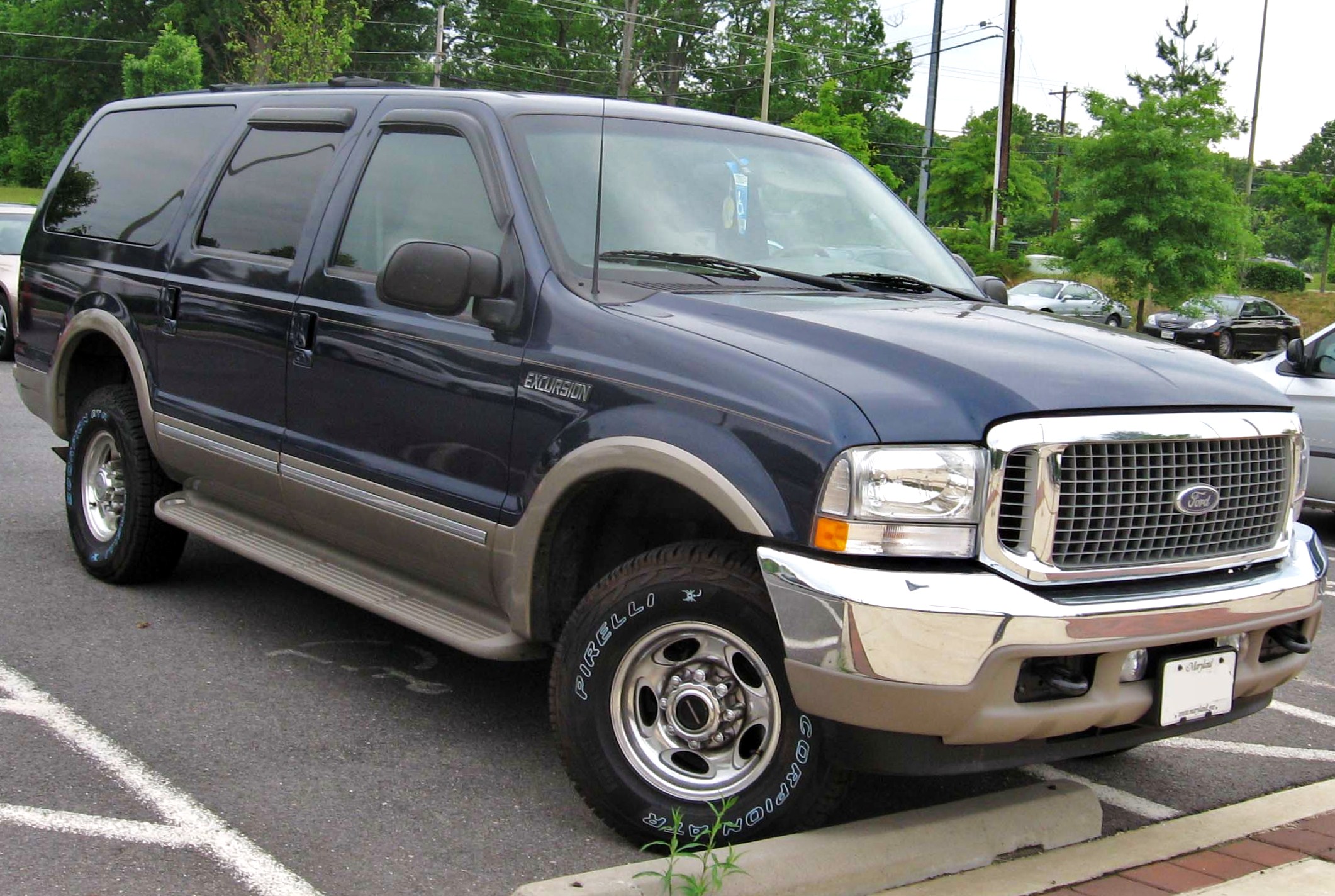
The largest SUV Ford ever made, built on a heavy-duty truck frame. It is massive, can tow almost anything, and is highly prized by campers who need tons of space.
A legendary mid-sized SUV from Toyota built like a truck to handle rough off-road trails. It is famous for lasting hundreds of thousands of miles with basic maintenance.
A massive annual off-road racing event in the California desert that combines fast desert racing with crawling over giant boulders. It is famous for being incredibly tough on vehicles.
A popular brand that makes high-tech portable power stations and solar panels, known for pushing the limits of how fast they charge and how much power they can output.
The Chevrolet Volt is a hatchback car that runs on electricity from a plug-in battery, but also has a gas engine that kicks in to generate power so you don't run out of charge on long trips.
A historic annual off-road event where hundreds of Jeep and 4x4 owners gather to drive across the famous Rubicon Trail together.
Car
1977 Toyota Pickup
An old-school, incredibly tough small Toyota truck from the late 1970s. It is famous for being almost impossible to break, even under the harshest conditions.
A next-generation battery technology that replaces liquid chemicals inside the battery with solid materials. This makes them much safer, faster to charge, and able to hold more power in a smaller size.
LIVE
Four wheel underground is making some big changes.
They really are. What's really cool about what they're doing right now is they're
kind of changing the way the business is set in the sense that you get to now buy things
all a cart.
Absolutely. So if you want the upper frame bracket, you can just buy that.
Yeah. If you want the lower link bracket, because it has the integrated bump stop and
it's super stout and it looks really good too. You can get just those before you would
have to buy the whole kit. Now you're going to be like, that's the bracket I want.
He's also brought joints in house.
So now you can buy those all a cart from cartridge joints, rebuildable Johnny joints,
hymes, offsets, all sorts of different ones.
Do you know what else he brought in house?
Aluminum links, that's pretty rad.
He found a way to source aluminum links so that there's no extra charge on the suspension kits.
They now all come standard with aluminum links.
I know I'm totally jealous.
And thanks to the all a cart system, you can also order aluminum links if that's all you want.
So if you want to move your Toyota from Lee Springs to a link suspension kit,
check out four wheel underground.
We want to check with you guys today about on X off road.
Definitely one of our favorite apps for off roading.
Yeah, what's better is not only their software, but they also are doing a lot to be a part
of the off roading community here in the country from the trail revival program,
which I actually got to be a part of and use to do some maintenance on the Rubicon Trail too.
They have an elite partnership.
So if you are an on X off road user, you can go to any of their 40 plus partners on there
and you get discounts with any of those partners.
So from bringing the people to the brands to the listeners to everybody involved,
it sounds like they really want to be a part of our community.
So let's be a part of theirs.
Go download on X off road from your favorite app store.
Oh, welcome one.
Welcome all to the snail trail four by four podcast.
If you like going off roading in Toyotas, wrenching on Toyotas, camping in Toyotas,
maybe even poking a little bit of fun at Toyotas.
And of course, hearing about how fantastic
in Toyotas.
And this is the podcast for you.
That's right, ladies and germs.
My name is Tyler and joining me for another episode of the snail trail four
by four podcast is Mr. Energizer Bunny himself.
Jimmy Jett, which I'm playing with your nipples.
What are you doing there?
I was doing the hammer for the energizer.
But okay.
Sorry.
I had a very different visual going on.
My shirt's still on.
Okay.
Not for long.
Which is good because I got some bird.
Oh, did you did?
Did you forget to put sunscreen right there?
I didn't put any sunscreen on.
Last, the last day when we had to leave early, I didn't put any sunscreen on.
All right.
Yeah.
And the sun must have been over this way.
Because only this side got burnt.
What happened that Italian lineage, huh?
Oh, it'll be gone in a day or so.
When we go camping this weekend, it'll be gone.
I hate you.
Yep.
I will like barely burn in like half an hour in the sun.
And then it'll be there for a month.
Yeah.
So.
No.
Yeah, it doesn't even hurt.
Like it's burnt, but it's like a hot shower, you know, like it stings.
Like, no, not there.
Suck it.
All right.
Yeah.
Well, we got a lot of fun things to cover today.
So let's jump through the housekeeping items, shall we?
Let's see.
We've got a fun giveaway going on right now.
Possibly the biggest giveaway we've had this year, for sure.
A biggest giveaway we've had in a long time.
I don't know how long it's going to hold up, though, to the next giveaway.
I mean, the next giveaway is one item.
It's it is less.
It's less expensive than this one.
Yeah, yeah, but it's pretty cool.
It's still very much usable and a pretty awesome item for off-roaders.
Yeah, yeah.
But this month we are giving away an APL 20 from IceCo and IceCo fridge.
So you have your chance to win a fridge from IceCo.
All you have to do is sign up on the giveaway tier.
You can sign up on I rate four by four.
You can sign up on the discord now.
Tyler said he might have got it going by now.
So we'll we'll see if he's true with that.
They said, I haven't got it going.
Get it going good.
I thought, no, no, you said I had it till after Rubith Otter.
I could do it after Rubith Otter.
Yeah, it's Monday.
Get out of here.
It's already Monday.
I'm not getting this done by four 20 a.m. Monday morning, Jimmy.
OK, they're really, really typically released about 2 a.m.
So yeah, not that doesn't help.
All right, but if you do want to sign up through the discord,
you can just DM us over there and we'll get you the link to go to the sign up
option that you choose and then we'll figure out how to get those links
running for everybody in the future.
But yeah, now you only have a few more days after this episode airs.
You have till the end of the month till Tuesday, the 30th to get in
for the iceco fridge giveaway and you have roughly one in 100 chance.
Yeah, so which I think is pretty good odds for winning an APL 20 for
$550 item. Yes, I think that's pretty damn good odds.
So go over to I rate four by four or the discord to get your sign up options there.
Do we want to talk about next month?
I mean, I think we can talk about it.
We have it all lined up ready to go.
So that, you know, if people want to sign up on Wednesday or Thursday
this week for next month's giveaway, because you're not signed up yet,
you can definitely do that.
We're doing a giveaway with Wolfbox next month.
So one of the G 900s, the GT 900 G 900 T is what it is.
It's the review mirror.
That's the triple camera review mirror.
The same one that we got during trailer X for Fiona.
And I've come to actually really, really enjoy and appreciate it.
I never thought that I would like a review facing camera video system
like that, and I really appreciate it on the crawler.
So we have one coming up for the giveaway for July.
And then we're going to have a really sweet interview with some people
associated with Wolfbox.
We're going to be doing a group buy and a discount code
if you want to end up getting in after you're listening to this episode
or listening next month after the group buy is already done.
You still want to get one.
So yeah, yeah, a lot of stuff happening there.
And we'll talk more about that in the future.
But that just tells you what's coming up.
So if you want to get in now for that APL 20 from Isco,
then you can just stay on board next month for the Wolfbox giveaway as well.
And I'm super stoked to that to Wolfbox credit.
Both of you went and I went into that going,
this is going to be installed for the TV show.
And then we're going to take it right back out because we don't want it.
I don't like it.
And we both fell in love with it while we were wheeling around for a few days.
I really like the dash cam dash camera aspect of it
in case of emergency or you just catch something crazy.
I think that's going to be really cool.
I'm looking forward to putting that into Bobcat
and maybe making some interesting film
footages with the way that the axles move for those cameras
or sort of set up there.
So it's going to be fun.
I'm excited for it.
But yes, big thank you to Isco for supporting this month.
And we're looking forward to working with Wolfbox here up for next month.
Yeah, cool.
Let's see.
Well, everybody stay.
Make sure that you're paying attention to that kickstarter on the Isco.
If you're looking for that VPL 45 plus as well.
Really freaking sweet fridge set up.
And I'm I'm jealous that everybody on the kickstarter is going to get one before me.
But it's it'll be worth it when I get it.
So yeah, how much longer does that go?
Do you know?
I want to say it was supposed to be like a 60 day kickstarter campaign.
Oh, dang. So it might.
I don't even think we're 30 days into it or not.
So yeah, it'll be going for a little bit longer here.
Yeah, you have about another month.
Yeah.
Dang. OK.
So we'll double check that and keep giving you guys updates
on when that's coming to a close.
That way, if you finally change your mind as we get close to the end of there,
you'll be able to go in and still sign up.
So let's see.
So that's this month's giveaway.
Next month's giveaway.
We'll do birthdays, F and G's, all that good stuff next week, Thursday, Thursday.
What else this week?
Thursday, sorry.
Time traveling.
Well, anything else?
Go leave a review.
We'll go over reviews when we do the F and G's and everything.
And we'll talk about those.
And hopefully we can catch it.
Get another month ahead of three years behind month ahead.
And yeah, we'll talk about F and G's and reviews and everything there.
But we probably will be at 800 reviews by the time on Thursday.
So if you haven't got in yet, go over there
and be one of the last people to leave a review or one of the first ones or one
of the first ones for the next giveaway, but get over there, ASAP and leave yourself a review.
You need to do it on Apple podcast and for the snail trail, four by four podcast.
That's the only way you're going to get entered.
You can feel free to go leave a review for any of the other people.
But if you want to get in for our giveaway, you need to do it for the snail trail, four by four podcast.
And once we get to 800 reviews, we're giving away an on ex elite membership.
That is a one year subscription of the elite package.
And it comes with all kinds of amazing features
that you do not get in the standard set up there.
So once we get to 800 reviews, we're giving away an on ex elite membership.
When we get to 850, we're giving away another on ex elite membership.
And when we get to 900 reviews, we're giving away $900 of more flake gear.
Yeah, that's awesome.
That'd be really cool. It'll be over 900 bucks.
But a minimum 900 bucks.
And we've already got a slew plethora of different items getting ready to launch here.
I've been kind of teasing about it. I'm working on them all year long.
We one is completely done.
It's ready to go.
We just need product images done and we have a backlog of digital media projects going on.
So that one is we'll get launched here.
Hopefully very shortly. It's all ready to go.
Another one that I've been planning on all year long is about 45 to 60 days out, I think.
On being launched.
Well, once we get them in, we need to do product images and everything.
And then another one is about, I'm guessing, 35 days, 30 to 45 days from being ready.
Wow. So we got within...
Within the next two months, we should have three...
Three months. We have three items coming out.
Yeah. We should have three new launches coming out.
And then we have a big one coming out Black Friday still.
It's still on track to be there.
And I'm hoping that if that one goes well, like it really should,
then we should have another two that are...
They're pretty much ready to go.
I just don't want to stretch the cash flow thin when I really need to be...
We need to be focusing on the Black Friday launch.
So those other two, assuming the Black Friday launch goes well,
the other two should come out very shortly after around Q1 next year.
Nice.
All that pretty much will be in the Morph Lake goodie bag for the 900 reviews.
Yep. Probably.
All right.
Yeah. Along with all the normal stuff.
So compressor, hose kits, air hub.
Yep. And even if we get to 900 reviews before some of this stuff comes out,
it will be included in your package.
Once they are released, they'll send them over to you.
Yep. Awesome.
Yeah. Some fun stuff coming.
Yep.
I think the last little order of business is we're over on Discord now.
If you haven't heard, so we're over on Discord.
We started to Discord thread.
It's nail trail four by four.
There's also a link down in the description that will take you right over there.
And some fun conversations.
Fun backend conversations, shall we say, happening over there.
And it's a great way to get in contact with us
and just bullshit with us a little bit more.
Tyler's on there a lot more than I am.
I think I've come to the conclusion.
I just don't type very much.
I read everything for the most part.
I just don't feel like I need to put my two cents in sometimes,
unless somebody's calling me out.
But even with like group chats, I'm like the last one to message.
Did you catch that you get to stay Jeep and Jimmy?
Yes, I saw that.
Oh, you did see that one?
Yeah.
Cool.
I just wanted to make sure.
I wanted to, I had to do everything I could to catch that one.
Yeah.
Thanks, Richard.
So, yeah, I think that's it.
Tokens are on there.
Tokens have been released.
More tokens have been released than in the last few days.
So that's awesome.
We currently have 55 open and available to go be found.
Yeah.
That's awesome.
And we're not going to go check some of the pre ones.
So somebody might just have to tell us if they're there or not.
Yeah.
Yeah.
We left over from two to three years ago when we first started it.
So they might have been claimed by the environment by now.
Other people might have picked them up.
We're not sure.
Good luck.
Have fun.
The whole point is that you guys get out and enjoy the outdoors.
So as long as you're going out and seeing some cool stuff,
then we consider to win and we're not going to care whether you can't find a token or not.
Yeah.
Enjoy it.
Love you.
All right.
Sounds good.
All right.
Let's see.
Anything else, man?
Nope.
I don't think so.
Let's grab some drinks then.
Okay.
And we'll take a quick break and we'll be right on back with today's campfire discussion
about power systems for all your glamping pleasures.
At four wheel underground, we have something for everyone's 79 through 04 Toyota vehicle.
Whether you've got a Chevy Dana 60,
05 and up super duty, fabricated, FJ80, or many truck axles, we got you covered.
Three link, four link, parallel and triangulated suspension kits.
We've got you covered under bed coilover mounts, through
trailing arms, cantilevers, custom tuned coilovers and air pumps.
We've got you covered frame stiffeners, subframes, skid plates, shock towers and more to come.
Make sure to use coupon code snail trail at fourwheelunderground.com,
because we've got you covered.
Welcome back, everybody.
I am here.
You are here.
I am here.
They are here.
Yes, you are here.
No, they are.
I'm not a they.
I'm a, a.
I'm a Hishi.
I'm a hi.
I am a hi.
I am a hi.
I am a hi.
Hi, before he, yeah.
So I have a question for you.
Okay.
If I have a tarp, is that considered a set up on a lean to is that set up as a considered a tent?
That's backpacking.
So it's not camping.
Okay.
If I have a gazelle, my camping or glamping.
I don't know.
What if I have a gazelle with a lithium battery power station?
Heating your inside your electric blanket.
Am I camping or glamping?
Glamping.
You're glamping?
Okay.
Because I'm just kind of curious if I do run electric blanket.
Do I also have enough power to run like a CPAP or lights or power a diesel heater?
Maybe.
I don't know.
Do I need two of those to last all night?
You could.
I don't know.
But that's the question today.
Question today we're going to be talking about is battery systems.
Battery packs mainly for your vehicle.
And I guess if you want to go camping off your vehicle, you can totally do that running a little
extension line.
I've definitely done it in the past.
But it kind of comes down to, you know, if you're looking at setting up a power system
in your vehicle to help with your recreation activities, whether that's camping, glamping,
backpacking, car camping, overlanding, rock landing, or you're just homeless,
there's different options out there.
And you know, what is the best setup for how you want to use it?
Really comes down to a variable options with kind of everything.
And what are the pluses and minuses of each system and type of system and which one's for
you, which one fits in your budget, which one does what you want it to do.
And so that's kind of what we're going to try and dive into today and see how this goes.
Yeah.
I like it.
May, I think we're going to be pretty much looking at like three different systems roughly.
We're going to be talking about dual battery setups.
Like your typical stereotypical AGM battery dual battery setup.
A lithium battery in your vehicle and a portable power station like a Gold Zero or a
Jackery or a wagon tech or a Blue Yeti or whatever ones that you fancy out there.
Okay.
So that's essentially a lithium battery packaged within something that has like an
inverter for 110 power access, 12 volt access.
You've got barrel plugs, USB plugs, yes, all that's all that stuff.
So that would be a power station, a power station.
Cool.
All right.
Sweet.
Yeah.
I guess the the let's start and dig into and kind of get into details about what each of these
are.
Okay.
So the dual battery setup, why a dual battery setup?
Why is that a popular thing versus just a singular battery?
Well, I would say that you just have twice the battery.
Okay.
Is really kind of what it comes down to is if you're running a lot more electronics,
then you're going to need more power, especially if you are going to be sitting in one spot for
an extended period of time.
But there are added benefits to having a dual battery for power consumption, like a winch
or maybe a welder, right?
And those need, I think those would run better on a dual battery than a power station for sure.
And then lithium batteries, I'm not too familiar with.
So I'm going to defer that one to you because you've, you, and this is what's fun because
I've only ever ran power stations.
Yeah.
I have a single battery in my truck and I have power stations.
Yeah.
You have power stations, you have a lithium battery and you've ran and you have dual batteries.
I've ran, I've ran all of the above.
Yeah.
And so I would argue that having a dual battery is a lot is better for,
my argument is a dual battery is better for in-car power consumption.
Okay.
I think the main point of running a dual battery AGM system is so that you can have a starter
battery and a house battery and they stay separate from each other.
Right.
Unless you want to hook them together.
There are systems out there.
Red Ark has a really good system.
I believe Odyssey had a system, has a system where you can connect them together in series
or parallel depending on if you need more amperage to run a winch, a hard winch pull,
or if you want to connect them together and get 24 volt for welding.
So I think that the main benefit of like an AGM battery setup is the versatility of
keeping them separate or hooking them up in different ways, easiest.
To achieve what you're trying to accomplish with them.
I would say that you typically, we're not going to talk much about lead acid batteries
just because they're not safe in offered vehicles.
If you ever have a rollover with a lead acid battery, that acid that's in there
is going to come out and create a lot of damage.
So the first thing I do with all my offered vehicles, any offered vehicle I get is I get
rid of lead acid batteries, yes, and put something else in it.
And up until 23 years ago, I don't know when it was.
I found that Dakota lithium battery for Kermit.
I was running dual AGM batteries.
And what I did was I had a very simple low voltage disconnect between them.
Okay.
So I had all my house stuff, quote unquote, your house things, your, your accessory items
to the vehicle connected to the house battery.
And then the vehicle systems themselves or the starter harness, the engine power, your ECU power,
your main fuse box for the vehicle, all that came off the starter battery.
And then in between them, I had them connected with a low voltage disconnect.
So that when the starter battery went below, I think I had it set for 11, 5, 11, 4 volts.
It would disconnect and no longer draw power from the starter battery and would just then
now drain the house battery only.
And then it wouldn't reconnect the power until the voltage got back up above.
I think 11, 9, 12, something like that.
Okay.
So I think it was 12, 1 or 12, 2 because most alternators will run at least 13, 4 to 13, 5.
So that's the, I think that's the key point of dual battery setups is that you're separating
your starter battery from your house battery, but you also get all the other benefits that
you talked about too.
So yeah, I get it.
I mean, I would run dual batteries and I would have like my radio and, you know,
anything else that is not crucial to starting your vehicle on another battery.
So then I could run my radio all night long if I wanted to.
You know, or I can leave the party lights on all night long if I wanted to.
And I wouldn't have to be concerned about starting the vehicle in the morning to drive
to the next campaign spot.
That's a real good thing about dual battery setups.
Exactly.
And one of the cool things about dual battery setups is typically vehicles like to have a
certain group size battery.
And mainly what that comes down to is packaging for space in the engine compartment for the
battery.
You can run different group size batteries as long as all the batteries are the same voltage
system that whatever your, the system is that you're hooking up to it, right?
Well, isn't there, you have to concern yourself with the cold cranking amps too.
Yeah, I guess does their group size batteries that are tied to cold cranking amps or is that
just like, can you get a group 35 with different size cranking amps?
I don't know that answer.
Yeah, I don't know that answer either.
But I think what I would be mainly concerned about is your cold cranking amps.
And you need a certain type of cold cranking amps to get your vehicle started, right?
Now, if you can find a smaller battery that has the same cold cranking amps that your vehicle
requires, then yeah, go with, you can do that.
You just might have a lower group size means more or less lower cell, power cells, volume
of batteries.
Capacity.
Capacity.
I think that's a good way.
Useable power.
Capacity.
Yeah.
So if you have a smaller group size, then you just have lower capacity, less capacity.
And you just can't run things as long.
But if you go dual to lower smaller ones, what he could be more than your other ones.
So yeah, there's a fun game that you can play there for sure, figuring out packaging
and battery size overall.
But I think your main thing to concern about, or at least I believe the main thing to concern
about is your cold cranking amps just so when, so you can start your vehicle when you need to.
Yeah.
Yeah.
Cold cranking amps is a very, very important, a key aspect of batteries to keep on your starter
battery.
I think when it comes to house battery, it's, you want to look at what accessories are you
wanting to run without the vehicle running.
So that's lights at night camp lights.
That's music.
That's maybe you run an inverter so that you can have an electric stove top instead of a
propane stove, camp stove.
So there's, you just got to look at what all things you want to run.
Figure out how much power those all pull.
And then think about your run time of how long you're going to run those items for.
And you want to build an AGM battery for your house battery roughly twice the size
of the amp hours that you're going to plan on using.
That's kind of my general rule of thumb for house batteries and AGM batteries.
And there's a couple reasons for that.
A, you'll probably end up using more than you anticipate.
You will.
Okay.
So it gives you some leeway to use a little bit more.
But also AGM batteries, you never get the full amp hour rating out of them that they're rated
for because they're not a regulated output voltage.
AGM batteries, as you use power from the battery, the voltage drops.
Correct.
And after it gets down to, you know, 1111 to some 12 volt accessory items will stop working.
And even though the battery technically has usable power left, it's not usable by some of,
it's not the device anymore.
It's not 12 volts.
Exactly.
So like some 12 volt fridges, that's the, I think the main issue with that very first fridge you got
was that it didn't like to work below 11, 7, 11, 6 volts.
And so once the battery got down to 11, 5, you could still run camp lights and music
and everything, but the fridge wouldn't work anymore.
Maybe.
So the big, that's kind of my big complaint about AGMs is that it's not a regulated power output.
Okay.
Whereas if you have a regulated power output, it will take the power coming off the cells
and ramp it up to make sure you always have at least 12 volts output.
That does technically deplete the cells faster overall than an AGM battery,
but you get longer usable power out of it because it's always 12 volt.
Sure.
And what systems is that?
Is that an added feature or is that a different type of battery?
You can run like a DC to DC power supply that will take a 10 volt, 8 to 10, 8 to 12 volts,
and convert it up to 12 volts and make sure that it's always running that.
You could do that with an AGM battery.
So that would be one way to do it.
It's just another device or item you have to have in the system.
And AGM batteries aren't really cheap themselves.
But you can definitely build one.
So there's that, but that's kind of my big issue with AGM batteries is that you never
get the full amp hour ratings out of them that they're rated for.
And they're typically quite, I don't want to say quite a bit bigger.
The amount of power you get out of an AGM battery is, I don't want to say the amount
of rated power. So say an AGM battery is rated for 60 amps.
I think a yellow top is 65 amp hours.
So like an Optima yellow top battery is about 65 amp hours.
It weighs a lot more.
It has to use a much heavier, more dense cathode and an anode cathode for the
interiors of the battery, which means the weight of the battery is going to be a lot more.
And say that 65 amp hour battery is going to be, I think those are group 35 size, which is
17 to 20 inches across by 10 to 12 inches by 12 inches tall.
They're pretty big batteries, the yellow tops compared to like a red top or a blue top
or some of the Odyssey batteries.
And so you'll get a rated 65 amp hours out of it.
If you get a lithium battery that's the same size packaging,
you can get 100 to 130, 150 amp hours out of it rated.
So not only are you getting almost double, if not more than double the rated amp hours
out of it, pretty much all lithium batteries nowadays come with BMSs, pretty decent BMS,
which is a battery management system. Yes.
And those BMSs regulate the output power of the battery as well.
So you always get 14.1 to 14.4 volts pretty much.
I think my lithium's in the Lance range.
Once they start getting down to 13.3, they're hitting the cutoff on them.
But for the most part, I'm getting on average 13.9 to 14 volts out of the lithiums
that I have in all the vehicles.
And that goes pretty much constant until they're down to zero usable power.
So not only are you getting double, if not more than double the rated output power from an AGM,
you're also getting a regulated power output, which means you're actually using that full
rated power rather than AGMs, you drop below whatever that device needs and you don't get
to use that power anymore. So that's kind of the big difference. And the big thing that I've noticed
is that it's almost double. Right around double the usable power of an equivalent
rated amp hours output between an AGM and a lithium.
So if you have roughly the same size battery.
Well, for roughly the same rating output. So say a yellow top is 65 amp hours.
You find a lithium battery that's also rated 65 amp hours.
It'll be a smaller battery than the yellow top. Yes, it will.
But you're going to get almost double the usable power out of that than the yellow top.
Right. Just because of AGM and the way AGM batteries work.
But because the lithium batteries are also smaller packaging,
you can get a bigger lithium battery for the same size as an AGM battery.
So that now comes into the, what are the benefits of just using lithium batteries
over dual battery AGM setups? So any thoughts, any ideas?
Well, I would argue packaging. Okay. Packaging is a big one.
You don't have to worry about fitting two AGM batteries, two batteries anywhere,
because one lithium is either the same size or smaller than what you currently have.
For the rated power. Yep. And so, and once again,
you have to concern yourself with cold cranking outs if you're going to go straight
automotive battery in this scenario. Yep. So let's talk about different scenarios real quick.
Okay. Lithium batteries, you can run a single lithium battery and just like you can run a single
AGM battery. Yes. Or you can run a dual battery setup and lithium batteries.
Correct. In the same way you would run a dual AGM battery setup so that you can connect them
when you want to disconnect them when you don't want to to help charge each other,
power the other one, get more usable power for a bigger winch pull, whatever.
Or you can run them all completely separate. True. So what would be the benefits?
Can you run a AGM starting battery with a lithium house battery?
You don't want to because they're sitting voltages. They're sitting output voltages are
going to be drastically different from each other. Well, you could if they don't ever connect, right?
Sure. I guess I missed the original. Did they were not connected in your original question?
I just, I didn't know. I mean, I was just throwing the question out there. Okay.
But if they're not connected, like you just have a mounted lithium battery that runs your
hard mount things and then you want to charge it, you would need to find a way to charge it or
you would have to charge it at home or something separately, but you could run a dual battery that
way, but it wouldn't. The two batteries wouldn't be communicating with each other at all. They would
not be disconnected. So yeah, you're technically still running or disconnected. Yeah. So do you
know, and the funny thing is I think that setup really moves us into the portable power station.
So let's not do that at the moment. Okay. Let's stay, let's, because we haven't gone to the
portable power yet and this is a permanent portable power situation. Yeah. Exactly. A permanent power.
Yeah. So let's just go back to lithium automotive batteries and AGM batteries. Yeah.
And so you could run the dual lithium batteries. You can run dual AGM batteries. You can run a
single AGM battery or a single lithium battery. You can do any version kind of of that. You don't
really want, you don't want to mix them. No. Which is kind of where I was alluding to, but
and then what would be the advantages of the little lithium side? I think if I was going
lithium battery, I think I would just do one larger battery and not two smaller ones. Okay.
Just because the one, because I can get more usable, over double probably usable battery
for something that is roughly the same volume size as my normal AGM battery. And I can put it
in the exact same spot. Yep. And so to me, there'd be no real point to run dual lithiums
because you get twice the power. You just need to still pay attention to it. I guess the only
advantage to running dual batteries is it's kind, once it's set up properly, you kind of don't have
to worry about, am I draining the battery too much? Will my vehicle start? Yes. That's I think the
big benefit of the dual battery. A dual battery system is you're keeping your starter separate
from your house. Yes. Yeah. So in my vehicles, I've chosen to do one big lithium battery
in each of the vehicles, right? So Kermit and Fiona. And I have a 135 amp hour lithium battery.
That's a thousand cold cranking amps that powers each vehicle. And that single 135 amp
hour battery is about the same size as a red top, if not a little bit smaller. Okay. It's about
half the weight. Yeah. And it's about four times the usable power of one red top battery,
one optimal red top. Now it's expensive. That battery is major negative. That battery is a
thousand to $1,200 depending on sales that you find in everything. But if you're looking at buying
four red tops and trying to hook them into a car, that's a thousand bucks right there.
So I mean, if you're looking at, at the amount of usable power per
dollars you spend, pretty reasonable. But who's going to try, hook up four red tops
in their off-road vehicle? I'm sure somebody's done it. I'm sure somebody's done it.
So yeah, that's, I think the first immediate drawback of lithium starter batteries
is just they're expensive. They're, they're a little price prohibitive still, I think.
Another drawback to lithium starter batteries is that they don't work below sub freezing
temperatures. True. Yeah. So you get below 32 degrees Fahrenheit or what, what is that?
Negative 258 in Celsius. I don't know what it is.
Once you get below that, lithium batteries don't like to work. Yeah. And they will shut
them all themselves off because they're too cold to operate. Whereas AGM doesn't really give a
shit that there is a certain point, which AGM will not work, but like you can still get the
sub freezing AGM battery. So that's one of the big, I think, main benefits that AGM has over
lithium is you don't have to worry about the weather and how cold you're going to be.
And they do make batteries that have little heaters on the inside, but the little heater
now is taking your battery and using some of the power to keep it self warm. So that's just
something you have to put into your equation when you're thinking about your, how much power usage
the vehicle is going to have and how big of a battery do you want in order to run things when
the car is not running? Yes. You have to take that little heater inside the battery into
consideration when you're doing it. Yeah. So the, the, let's see some downsides to the lithium
battery is that it can't handle really hard full on winch poles as well as AGM can. Okay.
AGM can handle, can handle bigger draws on the battery for longer amounts of time.
The lithium starter batteries, they'll, they can handle a thousand cold cranking amps. So a cold
that you need to look at the sustained amperage. Um, and I believe like my, uh, Dakota lithiums,
they're 135 amp hour. They're about a hundred amp hours sustained. Got it. Or a hundred amps
sustained. Yeah. Um, so, you know, on that winch pole, um, as long as I understand that,
that I'm only going to get five to seven seconds under a full winch load, which a full winch
zone could pull 400 amps. Um, I just need to be aware of that as I'm winching, right?
The other nice thing is that my alternators help add to the usable power for the winch.
Okay. So say the sustained output of my lithium batteries is a hundred amps. My alternators
are 160 amps. So I have multiple alternators all in one in each vehicle. Okay. The alternator
in Kermit is 160. I'm not a hundred percent sure what the alternator in Fiona is. I think
it's a 160 as well. I've just never checked and confirmed that. Um, but you know, if I have 160
out of the alternator and a hundred out of the battery, you don't want to max it out for too
long. You'll burn up your alternator, which I found out with my premier. Um, and so you have
about 250 amps of usable sustained power. Now that's pretty good for a winch. That's, if you
got a 12,000 pound winch, you're probably looking at a nice 9,000 pound pull at 250 amps,
nine to 10,000 pounds. Okay. So, you know, you just have to remember that one way you can help
alleviate that is run snatch blocks and use mechanical advantage that helps lessen the load
on the winch, which means you lessen the power draw off the bower system. Um, so there's different
tricks to get around it, right? You just have to be aware of it. Whereas like with a dual AGM
battery setup, that doesn't give a shit. You just run the winch until pulls it off the bumper.
So, uh, that's a big benefit that AGM has over lithium is in winching and winch management
and recovery situations. So I would recommend, you know, if you're doing, you're using your
vehicle a lot for recovery purposes, maybe you don't want to do a lithium battery or
maybe you want to do, which is another option later on AGM batteries with power station,
yeah, kind of stuff. So, um, so that's a, uh, one of the big drawbacks of lithium is in winch
management. Um, the, obviously the big benefits to lithium is you get way more usable power.
It's roughly, I mean, for a size equivalent packaging size equivalent, you're almost looking
at four times the amount of power that an AGM will have usable power. Um, and if you want,
you know, just double or the same amount of power, you can go to a much smaller battery
and have a much smaller packaging. I know a lot of trophy trucks do that. Um, so like trophy
trucks and trace chase trucks, they don't, they're not running a lot of times a fridge. They're not
running a bunch of camp lights. They're not planning on running a lot of music at camp over
nighttime. So they just get these dinky little tiny ass, almost like a motorcycle starter battery
with a, a thousand cranking amps. And it's like a 10 to 15 amp hour, right? Lithium battery with
a thousand cranking amps so that they don't have to worry about packaging or securing a big ass
battery. It's just this tiny little thing they put anywhere in the vehicle and just run the vehicle
starter system off of it. And then everything in the vehicle just runs off the alternator when
it's running pretty much. Yeah. Yeah. Um, and that they've been doing that for a long time.
Yeah. Yeah, they have. Um, so, um, that's always an option. If you don't need a lot of power,
you can get a dinky little starter battery and, uh, Optima has some really good options for power
sports, uh, starter batteries right now. Um, and they're pretty inexpensive. I want to say four
to 500 bucks instead of a thousand, 1200 bucks for the big ones. So if that's all you're looking
for and not looking to run a ton of accessories, it's a great option. Great way to go. Um,
let's see. So we have a single lithium battery. Yes. And we talked about kind of the benefits
and, and drawbacks of that one versus a GM or versus dual setup. Obviously the other problem
with a single, a single lithium is that you can draw it down too far and not be able to start
your vehicle. Correct. Although I believe it's Optima that I think it's Optima might be a
just released a starter lithium battery with a low voltage disconnected. Okay. So that always
maintains enough charge. It'll cut itself off before it drains fully. So you can always start
the car again. Right. Um, you just have to go to the battery, push a button, and it's essentially
a jump box. Now it goes into jump box mode. Okay. Um, to start the vehicle. Interesting.
And I was like, that's a great idea. That's a really great feature for automotive lithium
batteries. Oh yeah. So, um, kudos. I'm pretty sure that's an Optima. I could be wrong on that.
Okay. Um, so that one is now that that feature is kind of out on the market. Um, I expect
other starter lithium battery companies to start adding that feature into their starter
lithium batteries. Yeah. Um, let's see. So that's a single battery. Let's talk about dual lithium.
So I guess. Yeah. I mean, dual lithium is, I mean, it's the same thing as dual AGMs in part.
It's just, uh, you know, um, a vehicle battery and a house battery. I guess, uh, you, if you're,
for your vehicle battery, you still need to concern yourself with cold cranking amps,
but your house battery, you don't know. So you can, um, easily get a cheaper battery.
Yeah. And lithium house lithium batteries that don't require cold cranking amps,
they're pretty damn inexpensive. They're cheaper than like AGM starter battery. AGM
batteries right now, really cheap. I mean, you just picked up the one for your trailer,
Taylor, the trailer, Taylor, Taylor, the trailer. Well, you got it for 150, 180. I think it was 180.
Yeah. I was around there and it's a hundred amp hour and it's a hundred and
hundred barely plus or a hundred. Yeah. It's like a hundred amp hour. Okay. It might be a little more.
Yeah. And it's got a BMS all in it. And the BMS will actually has a readout on the top of the
battery. So I could hit a button and it'll tell me a hundred percent, 75%, 25% or zero.
And then it has, um, other lights down below it to tell me if there's any errors going on
with the battery. Nice. Yeah. And that's all the BMS is reporting all that information. So
like I went out camping at this summer solstice camping trip this last weekend.
And when I left, the battery was at 70, was showing 75%. And when we got home,
I, you know, I hit the button and the battery is showing 50%.
Yeah. That's pretty nice. It's a nice little feature to be able to check in on the battery.
Yeah. And it's like, okay, I'll leave it at 50%. And then before our next camping trip will be in
a few weeks, I'll charge the battery a few days prior and bring it back up to a hundred and then
we'll can do it all over again. Yeah. Yeah. So, um, the nice thing about those is because
they are a lot cheaper than starter batteries, you can get a, uh, like a lithium starter battery,
like one that trophy trucks or the chase trucks use the tiny ones, all 10, 15 amp hour starter
battery motor sports starter one, um, for pretty cheap. And then you can get a big house battery,
like a hundred amp hour lithium house battery or 150. If you really want to go big, um, and
that'll run awesome. You just put a little low voltage disconnect in between them and you're
good to go. Um, and so, um, yeah, that's a, that's a great way to go. And it preserves
your tiny little starter battery that runs the vehicle. And, um, because that lithium gets
to roughly double the usable power than an AGM does, um, you'll get about the same amount of
power as like a 30 to 40 amp hour AGM. Um, so it's the only downside and thing to really pay
attention to is winching with that kind of setup, right? So, um, if you only have, I mean, it'd be
about the same, you just have less amp hours that you can winch on, um, without really relying on
your alternator for all your power, which you never really want to do when winching. So, um,
you just don't want to burn out your alternator, right? You don't want to burn it up. Um, and if
you're, you're relying on your alternator for the, all the power for your winching system,
you burn up alternators. Um, that's a very bad situation. So, uh, yeah, it's having that setup
with a dual lithium is very similar to, um, a single lithium. You're just now preserving
the starter battery. Yeah. And you, and you're getting into the market for a little cheaper,
I think you are. Yes. Right. Overall, cause you still have a few hundred dollars to buy
the cold cranking app starting battery, but then your house batteries only 200 bucks. Yeah. You're,
you'll be, um, you would be out of pocket, I guess would be a little bit more than a dual AGM setup.
Yeah. But you get way more usable power out of it drastically. A lot more. So I think your,
your power per dollars goes a lot further with that setup. You just have to be very cautious
at that point about winching. Yes. With that kind of setup.
Um, and if you're like Bobcat and didn't have a winch on it for a long time, then, you know,
there you go. Yeah. If you're into really, really into overlanding and never use your
winch or like you have one of those magnetic, um, what is that? The magnetic fair lead with the
winch hook that comes out of it. You look like you have a winch. I didn't see that. That was a
great, uh, of all those, uh, uh, April fools joke. I think Warren did one year of activity.
That's hilarious. That was amazing. Um, so yeah, if you don't have a winch, uh, or winching,
you're like, I'm just never going to really winch. And then in case of emergency, when I get myself
stuck, like if there's other vehicles around, we'll just prioritize using those. Right. That's
a great setup to go with. So yeah. Or know that your system is on the weaker end and do the
appropriate actions to preserve it. Yep. Set up. Statch blocks. Um, yeah. Do you use as much
mechanical advantages as you possibly can in the system? So and rev your engine up and try to get
those, the alternator rolling so that you can use that. Yeah. Yeah. Um, so let's see. That's a dual
lithium. Yeah. What other options are there? I guess we can talk about the AGM and lithium dual.
Yeah. I mean, well, okay. So yeah, AGM and lithium dual setup. It would be interesting because
I would probably, that would be interesting. I wonder if there's a like a mechanical switch
to change your alternator over from one battery to another. No, I think you would just do it
like a DC to DC charger at that point. Um, off of the, you could technically have it draw off of the
AGM battery. And if you really wanted to, you could put a switch in it so that it's disconnected
when you don't want it to draw off the AGM and then you can manually connect it when you want it to
draw. Right. Um, but that would be, I think the way to go. Yeah. Um, and so the benefit there is
you're getting a standard AGM, a standard battery from, you know, the auto parts store that has
the appropriate cold cranking amps. It's made and designed to have heavier loads on it than
a lithium battery would. So you can do good winch pulls if you need to, but then you have
it'll also operate lower temperatures. It'll also operate in lower temperatures. Um, and
then you have a lithium house battery because you don't need to worry about the vehicle starting
in anything. Cause that's all on the AGM to run almost all the other accessories and anything
that you want to run beyond that. And you will have, it'll be a dual battery and you'll have
maybe a, your second battery could be about the same size as your AGM battery, but you're getting
roughly twice the power, the amp hours out of it. And so you can run a fridge and you can run
your lights and camp lights and radio and everything. And you, once again, with this
dual battery setup, you're not worried about the vehicle not starting in the morning because
that's on its own system and everything's running off the lithium. So the only thing you would
technically have to kind of worry about is if you do run that lithium battery too low, you either
need to get power to it one way or another, whether it's a DC to DC charger. That would be
the best way to do it. Or you just charge it. If you're only gone on a weekend trip, then you
probably can just charge it before you leave and come home and still have a little bit of power left
depending on the accessories that you're putting on it. Yep. Yeah. The key thing with the lithium
batteries is you want to make sure they're charging off of the alternator, not the other battery,
the other battery. Right. So one of the things that you could do is I wouldn't even want to do
it that way. You'd want to do the DC to DC charger. So I'm not going to mention the other way.
You could do a keep them separate though. And like you said, just if you keep them separate
and you charge it before your trip, like you do with Taylor trailer. Yep. And then just when you
come back home, put it back on the charger, trickle charger. There's some pretty cool like
solar panel chargers that are a little 25 watt solar panel that you just throw on the top of
the rig and it's designed to be a trickle charger. You just put that up there and
hook it to your lithium batteries. So it's ready to go when you next time you go on an adventure
or solar panels. Right. I know that I think it's Lee. I think Lee Lim runs this kind of this way.
He has a lithium battery pack that he built himself. He got all the cells and put them
together and built a 150 amp hour lithium. Of course he did. Yeah. And he keeps it all separate
from his vehicle system. Yeah. And charges it with solar panel. Yeah. And of a few people that
do that, I think CJ with the CJ does that on the excursion. Okay. And his trailer trailer
doesn't have a starter battery though. And I want to say MF Orion does that. Okay. I think he has
a little 100 amp hour lithium battery pack in his forerunner that he keeps separate from the
starter battery system and charges off a solar. Yeah. And that's a great option. That works
from those guys that I know that do that. They have zero complaints at that setup.
It keeps their starter batter separate. It makes them have be able to have an AGM starter battery
so that they get all the advantages out of that. But they also get all the advantage of the usable
power out of the lithium smaller packaging, easier to package in tight spaces and lighter weight.
Yeah. So with the advent of solar nowadays, that's a really kind of nice way to go. Yes. Yeah.
And a bonus side mention right here. Okay. ICO has a little 250 watt hour battery
that magnetizes to a surface and it's just a 12 volt lithium battery. I don't know if it has a
BMS. We never, we never asked David about it. I think it does. I would imagine it does. I can't
imagine they would put out a lithium battery without a BMS. But it's only like 115 bucks
for 250 watt hours, but it only, and it only has one output. It only has one output. So yeah,
it's you'd have to kind of set up your own little bus bar and everything for it.
But it's a tiny, sweet little tiny package about the size of a Bible and you can just magnet it
to different surfaces in the vehicle and have that be your house battery. Yeah.
It's pretty sweet from a packaging and simplistic standpoint and price point standpoint.
It's a pretty sweet little option. It's a 12 volt accessory plug. So you could just wire that in
and then always have your accessory circuit on the vehicle and just always have it charging
whenever you're driving. Yep. Yep. And then you have wired up to like a little bus bar
and you could put your radio to it. You could put your lights to it. You could put
whatever else you wanted to it. And then whenever you're driving, it's charging.
That's a pretty sweet little setup, man. Yeah. So that kind of the benefit to that is it's also
a little bit of a portable power station. Kind of. Kind of. You don't get the 110 voltage out of it
and everything, but it's kind of designed to be magneted on two different surfaces and be portable,
right? The packaging. Well, the benefit of that one really for the, for the IceCo stuff is when
you like, if I am inside loading my fridge in the house, I have the fridge plugged to my wall,
the 110, right? And it's keeping my fridge cool. Well, then if I were to go throw that into the
back of Bobcat, it would take me, I could have it running off of their little battery
from disconnecting it to the, from the house and carrying it outside, putting it in the back of
Bobcat. And then I run Bobcat with usually I have a portable power station back in the back of
Bobcat, but this would take its place. And the whole time from me disconnecting it from the wall
to carrying it outside, it's still staying cool with this little porter. It's running. You don't
have to get everything hooked up and set up power wise right away. It'll kind of fill in the time
until you start driving. So if you're just loading the car, but you're like, we're not leaving for
more couple hours, right? Throw the fridge in there with this little battery pack on,
it'll definitely sustain it for a couple hours. Yeah. And you just connect it to your cigarette
lighter and you're fine. Yep. When you start driving. So I think it's a really cool. It's
another really neat way to think about a house battery, quote unquote, and how do you use it?
How do you package a house battery in a vehicle? So let's talk about power stations then real
quick. Yes. What's a power station? How does that differ from a lithium house battery?
I would say the big difference between those is pretty much packaging. Okay. That's like you and
me, right? What's our thought? Yes, a little. So packaging.
They're both lithium batteries. The house battery, the accessory battery that you're going to throw
into a vehicle is like a dual battery or a portable power station. They're both lithium
batteries, right? The thing about the power stations is that they don't look like,
typically don't look like a battery. And then they have a bunch of other
plugs and accessories that you could plug into. There's the inverter for 110,
usually built into them. There's a bunch of USB plugs and typically there's a cigarette lighter.
And then sometimes there's a light that's on them or some other random features.
Parallel plugs, Anderson plugs. Yeah. There's a bunch of different kind of outlet port types
built into power stations. Right. And so the power station is a way that you can run multiple
devices strictly off of that without having to connect it anywhere else. It's sort of a portable
battery with easy connects. Yeah, it really is. When we were talking about that little lithium
battery from Isco for their fridges and we were like, yeah, you could just throw it in your vehicle
somewhere and then run the output of it to a bus bar and then run all your stuff off the bus bar.
A power station does that all built in like the bus bar quote unquote is built in. You're just
plugging directly into the ports on the power station. Yeah. And then they have a typically
have a digital interface. So you can see what's going on. They give you a rough estimate or they
give you an estimate of the how much battery power is left. Yeah. And or charging and how
much watts are going in or what you're using. That's a lot of them have some pretty interesting
things on the digital interface as well. Yep. So and this is the way I go. This is this is the
one I've I've only for the most part ever ran. I have the house battery in the trailer. Yeah.
But whenever I'm out rock crawling, overlanding or whatever, I still bring a power station at
least one and I have two of them. Yeah. So and I like this way because mainly it's less complexity.
100%. I agree. Right. It's way less complexity in the setup. It's way more universal because
you can plug so many different things into it already and it's way more convenient because
it's not tied to the vehicle now either. Yep. Yeah. That's that was that's another thing like
and especially for charging. Right. Like if I have to charge the battery, I either I'm with those
it's really easy for you to use a solar panel and most of them have a very easy dedicated
like here's the input for your solar panel. Yep. Just plug it in. You don't have to wire
anything or figure out a conversion or how or set it up and you can just take the solar panel
and the battery over to the sun and set it down. Yep. As long as you have either then that's one
of the reasons I like to have two is because I can take the lower charged battery and go and start
charging it. Yeah. And I can rotate it and then I can put the one that has more charge onto the
fridge or whatever else is going or if I need to charge a cell phone. I just move my fridge
around with the solar battery. Yeah. To the sunspots. Yeah. Or you get a really long cable.
Yeah. For your solar. Yep. And then you can run the solar panel way out there and then
yeah, connect it to your battery. Yeah. And in all honesty, that's less packaging than another
battery. Yeah. But having I have two 500 amp hour batteries. 500. Yeah. 500 watt hour batteries.
Which equates to about each one's about a 50 amp hour battery. Yep. And so overall,
I have about 100 amp hours. And that really, unless I'm out like over a week,
I think then I might start having a little bit of problems or running into like I really need
to start conserving. But most of the time I'm like at King of the Hammers, we are down there for what?
Five days. 56 Yeah. I had one battery that was at 50% and one battery that was like at
80%. Because I could, it's so sunny there. Yeah. That I can, I was charging one of the batteries
all the time and or, you know, rotating them and it would pretty much charge up to full
in that amount of time. So yeah, it was, and that was at that time, I didn't have the battery.
I was using one of my lithium cubes as the battery for the trailer. Okay. Yeah. Remember?
Yeah. So anything like any of the lights or anything charging my phones or anything with
the trailer was running off the lithium cube. Yeah. But yeah, I think that power, I personally
like power stations because they're convenient. You can move them around. You can, you know,
carry them from your truck to your tent and then use them for your electric blanket and
charge your cell phones and you don't have to leave your cell phone out in the car or whatever.
But there are some drawbacks to them as well. I don't, the main one that I can kind of think of
is just sort of cable management. Cable management can be a pain in the butt with portable stuff.
Yeah. Right. It's kind of like more flight hoses, right? We keep the system portable,
but then the downside is you have these massive hoses you have to deal with. Sure.
All the time. Yeah. Yeah, for sure. You know, but it's like anything you're plugging into it
is now just another cable coming out of it, right? And that's all in one area. And so it's like,
oh, I need to run the pump for my air mattress. I got to plug that into the 110. I got to charge
my phone. I need to be running the fridge. All these things need to happen all in one location.
And I can't really move them around or deal with it. Yeah. Another thing is they take
up space inside your vehicle where dual battery setups are just a bigger single battery. He's
all under the hood or under the vehicle somewhere away and tucked away and is not taking storage
space away. I'm curious. So you know the size of the 100 amp hour in Taylor the trailer. Yep.
And you have, you know the size of your wagon techs, which are about 50 amp hours. Yep.
How are those two size comparisons for packaging size?
One wagon tech is probably two thirds of the 100 amp hour.
Okay. That's actually not bad. Not a little bigger. They're not the same. Okay. The wagon tech is
smaller. It is smaller. Okay. But it's not half as small. Okay. Right? Yep. Which would be half
the size. And that's because you've got a bunch of extra ports in there. You've got an inverter
built into it too, right? You've got a carrying handle for them. So there's a size efficiency
there that you lose by doing a power station. But what you're gaining from it in the university
universality of being able to plug a wider range of stuff into it, I think more than
makes up for the size efficiency. This, the battery that I have in Taylor the trailer, it's
the 100 amp hour battery is larger than the previous 100 amp hour battery I had. Yeah. And
almost a third bigger. Wow. And I think it's mainly, it's not as cheap. Yeah. It has a better
BMS. And I think, I don't know for sure, but I feel like it's just structurally stronger than the
other one was. And I like it a lot better just for all, every one of those aspects. But the
other 100 amp, the original one that we were talking like we had,
it's about, that's the same size as a wagon tech, right? And so that one right there is,
you know, it's twice the power for the same size. Same size packaging. Yeah. Yeah. And so,
I mean, and that just goes to show that there's a variety of sizes for all the things that are
out there. But yeah, same. Yes. Okay. I would also, a thing is that a lot of power packs are
portable battery packs have a lower power output. Oh, yes. That's a good, they're very,
they're typically very regulated on their power output capabilities. And so you can't run a lot
of things like you, maybe some of them now, but back in the day, you couldn't like run a blender.
You know, you could barely run a hairdryer. You know, it was like there's the much lower
output for the batteries. And so you just need to be careful about what you bring. I know that
when I, when we were originally saying that we run our electric heated blankets or mattress pad,
in my case, Jason over on wheeling wine and whiskey was shocked that our portable power
stations can handle that. They thought that it was drawing too much. And it just goes to show that
it's like, there's things out there that, that it just can't do. Yeah. Yeah. For sure. I mean,
I, I'm not going to run a winch off of it. No, definitely not wanting a winch off of it. I did.
I bought a portable ice maker at one point that ran 110 volts. And I was like, this would be awesome
to have a portable tiny little like it's designed to be a kitchen countertop portable ice maker.
And it makes these tiny, these cute little ice cubes. Oh, the rabbit cubes.
They're not rabbit poops. They're like a round cylinder with the hole through the middle. Oh,
yeah. And so I was like, this would be great to have out on the trail, you know,
I have just a constant flow of ice for drinks ready going, but it pulled about 700 watts.
And the power station I had at the time only did a max of like 600 watts. Yeah. So it capped it out
and maxed it out and it wouldn't run the ice maker. Now, what's really neat is that the
technology is getting better and blue Eddie seems to be kind of leading the way in power
station technology and capabilities at the moment. Jackery is obviously, I think the big brand name.
I think they were one of the first on scene, first to market kind of thing.
But I think that Jackery tends to play power stations very safe and blue Eddie is really
pushing the boundaries of technology in them. Blue Eddie has introduced a power station that
it has, it's, it's about the size of your wagon techs. Really? And it'll do, I want to say,
2000 watts on the AC, the 110 circuits and it'll fast charge off of the 12 volt input. Yeah. So
it'll most every kind of lithium power station I've found so far that charges off of the 12
volt input off of a car kind of maxes out around a hundred to 120 watts of input charge.
This one will do what was a 20 to 30 amps of input charge. So 200 to 300 watts. Wow.
Off of like your car's alternator system. My car would burden down.
Bob, I think has a 90 amp alternator, 80 amps, something like that. So,
yeah, you obviously, if you're doing stuff like that, you need to make sure your alternator
is rated for it. Fun story. We were doing Jeepers Jamboree a couple of years ago, Morphlyte,
you know, we air up all the vehicles coming out of Jeepers Jamboree into Homa and one of the band
has an old like 77 Toyota pickup, 78 Toyota pick up first gen old first gen. Yeah.
Carbureted everything is mechanical in this thing, right? And we went to air up his tires
and we're like, yeah, we'll just hook up to your battery, the compressor to the battery and then,
you know, keep your car on and we'll air up your tires. Now I'm talking to him about his Toyota
and being the band member and everything. And all of a sudden his car shuts off
and the compressor stopped working and we're like, oh, that's weird. And he couldn't get
this car started again. We're like, what just happened? Turns out the dude has still had the
original alternator in that car, which is only a 40 amp alternator. Oh, geez. It was like 30 or 40
amps. Wow. And so our compressors pull, you know, 60 amps running. Yeah. 90 amps peak, 90 to 200
somewhere around there, depending on what pressure you get up to. So we burned up his alternator.
Oh, shit. And I was like, dude, I'm so like, I did a bunch of diagnosing with a multimeter
and everything. I was like, we burned your alternator. You're fucked. Sorry. Luckily,
we were able to push start him to get him going and got him back down into, he got down into a
truckie, I believe it was. And I called ahead to the Napa down there and got a paid for an
alternator for him to do it. Unfortunately, it was not the same alternator that was designed
for that vehicle. And he's trying to keep everything stock. So it was a 120 amp alternator
that just happened to also work and fit. Yeah. And then so I ended up having to buy him another
alternator because he wanted the vehicle to stay stock and he wanted the stock 40 amp
alternator back in it. Yeah. So I had to find one source one, send it to his house in up,
up out of a volcanoville area. Oh wow. So yeah, fun, fun fact. Always be aware of
your outputs versus your power supply and what they can do. Yeah, definitely. So
yeah, that's funny. Yeah, it was fun story. Yeah, fun dude. He took everything really,
really well. I felt terrible about doing that. And after that, everybody here at MoreFlight now
knows when we're doing events and airing people up, double check and confirm their alternate
outputs. Yeah. Yeah. So let's see. So I think the only other thing I have on my list is that
power stations can be more expensive than a dual battery setup. I think there's some
minor limitations there. But typically a power station is more expensive. But there could be,
like if you're doing red arc stuff and building this entire dual battery setup, then yeah,
you're probably arguing which one's more expensive. But because of everything that's built into the
power stations, power stations are costly. They're costly, but you get benefits from that cost. It's
not just like wasted cost inefficiencies, right? You're getting an inverter. You're getting a lot
of different variability of what devices you can use, right? So there's a lot of really
valuable things, but you are paying a little bit more for that value.
Right. Yeah. So after this discussion, are you swayed in any way for something? Because I know
you have like all of them. I've done every single setup that we've talked about. And I still think
I like the setup I'm doing right now, which is the lithium starter, the big lithium starter. That
way it kind of takes the place of having a small dedicated starter. I have to worry about it drawing
that battery down too far and then not being able to start, but I carry a jumpbox with me.
And then using the power station, my power station to run camp stuff.
Right. Yeah. You know, I think that's a benefit that we kind of glazed over,
is that while you're like, yeah, you can use your vehicle for a lot of power,
but then there's things that you can pull the power station out and use it around camp for
other things. Yep. That's what I really like about the power station, I think, is the being able
to remove it from the car and run camp stuff. Portable. Yes. Portability to a portable power
station. Yeah. Yeah. Yes. And I think that's what really made me stick there. I like the wagon
Tex 500 amp or the 500 watt hour 50 amp hour size is a super, it's like the case of, it's like a
12 pack of beer. No, it's even less than that. I don't know. It's about a small suitcase. It's
about the size of 12 pack of Coors Light. Yeah. It's about that. You know, it's really portable.
It's really easy to move around. And since I have two of them, which was a little bit of an
investment, I've been able to move them around to a few different things and rotate them and
like leave one up in the rooftop tent and put one down at camp or leave one in the back of
the truck to run the fridge. And it works out rather well for me on how to set that all up.
And that's why I think I've always stuck with the portable power. So while you were talking,
because I agree with everything you said, like, I think you and I say, I did that. I was curious
because we are recording while prime day is going on. Okay. Yeah. Last time I checked,
I have two brands I like to keep an eye on for portable power stations on Amazon. One is a brand
called VTO man. Yeah. Which is the ones that I've kind of landed in. They just have a phenomenal
price point. You can get a 1500 watt hour power power station for like 700 bucks. Wow.
As a normal price on Amazon. And then they're smaller. They're 500 watt hour equivalent one is
like 350 to 400 bucks. Yeah. Blue Eddie right now. Okay. Has their elite, which is the new ones I was
talking about the fast charging, the high output AC ports. It is 1000 watt hours. Okay. So 100 amp
hours. Yeah. For 1800 watt AC ports. Wow. So it's 36. It can handle a 3600 watt surge
or 1800 watts in one port or 1800 watts spread across four ports. Yeah. So that'll run a hair
dryer that'll run your blender. Yeah. Or your ice maker, your ice maker for sure. It'll run
the fuck three ice makers almost. It's supposedly 35% smaller than their previous
1000 watt hour. Wow. It has the fast charge on the 12 volt input solar input.
How much do you think that is on prime day right now? Well, it's retail normally retail price is
620 bucks. I was going to say prime day deal 700. Yeah. So blue Eddie's been doing some really
good retail, regular retail pricing on for the technology they're putting into their shit right
now. Okay. So retail's down to about 500 for prime day prime day. 395 bucks. Wow. That's a good deal.
If you guys are looking for a power station right now, a portable power station,
that's the deal to get. Now you're not going to listen to this during prime day prime day will
be over when you guys are listening to this episode. So I'll put it in the discord for you.
Hopefully everybody in the discord will get to see it, but that's a screen. I might just
fucking buy one of those and sell my VTO, man. That fast charge and the high output on the AC ports
is nice. That's pretty cool. Yeah. We have a couple more days on prime day. I'll figure it out.
We got like one more. Yeah. Is it? I thought I know today. No, it goes three days. Tuesday,
Wednesday, Thursday. Okay. Yeah. So really? Yeah. I thought it started on Monday because
that's when I bought my phone. Oh, I wonder if you've got a pre pre prime day or somebody
runs on early. Maybe I'll have to Google if my phone's cheaper now. Send it back. Yeah. So anyways,
I hope you guys enjoyed this episode. It was brought to us by a listener and we kind of modified it
with the lithium side of things. It was just sort of dual batteries versus power stations,
but we wanted to include some lithium information in there for you. I hope, you know, we answered
some of your questions out there. And if you were considering doing one or the other or a
combo of something that, you know, this definitely helped you out. I think that you can do like a
combo of all of these, which is kind of fun. You can run your AGM battery. You can have a very
small lithium battery that's running your lights like rock lights and your radio so that you don't
have to worry about those when you're at camp and you can have your portable power station that
you carry into your tent. You know, like there's, you can do a combo of any one of these things.
It's just a matter of packaging and how you're going to put it all together. Yep. So, and there
is no wrong answer here. It's whatever best fits your lifestyle, your workflow, which is trying to
get out of your system. Yeah. For sure. So since there is no wrong answer, I have a few scenarios
that I would like to ask you, which way you would set your system up. Okay. Yeah. All right.
So what about a dedicated overland vehicle? Dedicated overland vehicle. I would do an AGM
battery starter, keep it simple like that. And then the house battery, I would do a big standalone
lithium battery on a solar panel on the roof. Yeah. Yep. Okay. I would probably go for 200
amp hours of the house battery because that way at 200 amp hours, you can run a 2000 watt inverter,
which means you can run an electric stove top and not have to worry about carrying any propane
around and you're fully self sustained for your cooking, your power supply, stuff, everything.
Okay. Yeah. Cool. What about a weekend warrior? Weekend warrior. I would just keep whatever battery
your car came stock with. If you're going to do anything where you're risking rolling over,
please switch it out to an AGM. Don't run lead acid. But if you're just a weekend warrior going
car camping in a national park or a national forest, something that your lead acid will
probably be fine. Just don't roll your vehicle over, please. And then do a power station. I'd
go and fucking get one of those blue eddies on prime day right now dude. That's a screaming deal.
Yeah. Well, what about if you have multiple vehicles? Definitely power station. And then
just depends on how long of trips you want to go out on as to whether
and what kind of trips you're going to be going out on. Yeah, I know that's sort of the starter
battery, but definitely a power station. If you have multiple vehicles, yeah. Okay. What about
like a base camp vehicle with solar? What about like, how about your, your Lance? So the Lance is,
I mean, it doesn't have a starter battery, right? But I would told any house battery,
I would do be doing lithium 100%. If you're looking at running any kind of house accessories,
you're doing some sort of lithium. I wouldn't run accessories off of AGM, even if you're like
doing, building an Arctic Explorer. At that point, I would invest in your solar power,
having good solar and dependable solar and then getting self-heated batteries.
Okay. Yeah. The lithium self-heated. Yep. What about like a rock crawler that you end up doing
a lot of winching with? And are you doing long trips like a rock lander or
just a rock crawler day trip? Yeah. Rock crawler day trip, a lot of winching.
I'd probably stay, I had to budget wise. That's going to depend on budget for me.
If you have the budget, go with a lithium starter. You want to get at least a 100 amp
hour lithium starter, preferably more if you can do it. If the budget allows,
if the budget doesn't allow, get your AGM and just be good at, I'm keeping it good, I guess.
So for a vehicle that you're going out wheeling and winching with, you would do a lithium starter
still. As long as your power system can run it, if you're doing a recovery vehicle and not
necessarily a rock crawler, then I would do dual AGMs in a recovery vehicle. But if you're
doing a rock crawler, that's going to be winching yourself or a buddy off of an obstacle really
quick. Single lithium starter battery is awesome for that kind of scenario, but a lot heavy duty
cycle, a lot of winching. You're running a recovery vehicle. Like you're going out to
location to pull vehicles up hillsides dual AGM is you have to do it. Okay. Yeah. Budget
budget. This is the last one, by the way. Okay. So pure budget. No, no use case. Yeah. No,
you're just on a budget. The tightest budget you can do. What would you do? You got to get crafty.
I think that if you're in any sort of vehicle that has the opportunity to roll over, do an AGM
battery. There's some decent budget option AGMs for your starter, and then build your own lithium
battery, purchase the cells, purchase a BMS, learn how to wire it, learn how to connect them together.
You're going to have to put in time in order to do things on budgets. Yes. Right. So typically,
I've kind of see life as you have a lot of time and no money, or you have a lot of money and no
time. Sure. Or you know, you've really made it when you have a lot of time and a lot of money.
You know that you're really fucked if you have no time and no money. You need to do something
very different with your life. Like I'm sorry. You know, come talk to us. We're hiring at Morfley
right now. So yeah, if you, if you have no time and no money, you'd need to use, I'm sorry, you
need to figure something else out. But typically, if you've got no money, you typically have time
to do stuff. So you, you put your ass together and you learn how lithium stuff works and you
build yourself a lithium battery. Yeah. Okay. I agreed with you on everyone. I think budget,
I would just go to AGMs. Okay. I think that's the simple play. Yeah. AGMs are 250 bucks each right
now. If you wanted to buy a BMS, buy the lithium cells, put it all together and solder it all and
wire it all yourself. You could put together a hundred amp hour lithium battery for, I want to
say about 80 bucks. Wow. But you got to put in more time for it. So just how much is your time worth?
Yep. Yep. Cool. Sounds good. Honorable mention. Okay. Red Ark has a system right now. They launched
it, I want to say two years ago, year and a half, something like that. It's a power station,
portable power station that plugs into a cradle in your car. Interesting. And runs as a secondary,
a second battery, dual battery setup in your car with all of the wiring and fancy gizmos and gadgets
to have the low voltage disconnect to your starter battery and disconnect, reconnect, charge the
house battery off of the starter. So it's got DC to DC charging built into it and everything. Yeah.
It's a really fucking slick setup, but it's like, I want to say it's like $5,000. Yeah.
It's very expensive, but it is a, it's a rad setup. So, but you're not connecting like your
stereo to that battery. It's just, it's just extra battery storage in a way. You're connecting,
you can connect things to it like a house battery, like to the cradle. Okay. There's, I believe there's
connection ports to the cradle so that you're running whatever is connected to the cradle.
You're running off of that house battery. Got it. But the cradle also does DC to DC
and low voltage, just connect them everywhere else. And then you can just take that house
battery, unplug it from the cradle and now you've got your portable power station that you can
move around and run camp off of too. Huh. It's a slick setup. It's pretty, I got to admit it.
I got to hand it to Red Ark on that one. That was, that's a very nice setup. Very expensive.
Yes. But very nice. Yeah. Best of both worlds. Yeah. Yeah. Nice. Well, that's a good one. Yeah,
I don't have an honorable mention. So portable power stations for the wind. Yeah. They cover a
lot of bases, man. They're great. They're, they cover a lot of bases. So in my opinion,
it's the most universal, most usable multi-use application portable. It's, it fills a lot of
holes. Yeah. Yes, it does. All right. That was a fun topic. Yeah. Thank you. Do you know who sent
that in? I'd have to, it was on discord. I have to go back and look it up, but I don't remember
off the top of my head. I should start writing those down as I write out a new thread of podcast
suggestions. Oh, that would be a great that I think on there. So cool. If you guys have other input
about portable power setups, I would expect Don too. He's an electrician. So if there's other
ideas out there, ways to use these that we haven't really talked about, we didn't bring up. There's
something else out there that we don't even know exists. That's some pretty cool ideas or things.
Solid state batteries are starting to become more and thing right now. And those are
just faster charges and more charge cycles out of them, longer lasting. And then the energy
density is also greater on them. So once those become more and more into the market, we'll
figure those, see how they compare. We'll play with those batteries too. Yeah.
Yeah. Give us a call. We love hearing from you guys. We love hearing your use cases. What do you
use on the trail? What is your use case and what works out best for you for dual batteries,
lithiums, power stations? What is it? Give us a call. Let us know 916-345-4744 and discord,
of course, snail trial four by four discord. I think you can find it by searching. Did we put
it public? I don't know. There's a link in the show notes anyways. You guys can get there through
that. There's Instagram emails, you know, all sorts of different ways to get in touch with us.
You can text us the voicemail, whatever you like. So anything else, Jimmy? I think that's all.
Cool. How do you want to wrap up the episode then? I think I'm going to go get a blue yeti.
That's the deal of the year, in my opinion right now. So
and without my friends, keep growling.
How's that? Not as funny as this is. All right, I'm ready.
Can a kangaroo jump higher than the Empire State Building? No. No? Why not?
Kangaroos can only jump like three feet.
Yeah, but how high can the Empire State Building jump? Get the fuck out of here, Jimmy.
Of course it can. Okay, yep.
About this episode
Navigating the complex world of 12-volt vehicle power systems can be daunting for off-roaders and overlanders. Hosts Tyler and Jimmy Jett break down the pros and cons of dual battery setups, lithium batteries, and portable power stations to help you choose the right setup for your rig. They also share updates on custom suspension parts from Four Wheel Underground, highlight the latest OnX Offroad features, and discuss exciting gear giveaways, including portable fridges and smart rearview mirrors.
A listener asked about power systems, so Jimmy and Tyler break down every option: dual battery AGM, single and dual lithium, power stations, and the hybrid setups that combine them. Covers why lead acid batteries don’t belong in an off-road vehicle, why AGM never delivers its full rated capacity, why lithium gets you roughly double the usable power in the same size battery, and where AGM still wins (cold weather, sustained winching). Plus a breakdown of power station tech, and a $5,000 RedArc system that converts between a vehicle dual-battery setup and a portable power station, and a cautionary tale about frying a 40-amp alternator at a Jeepers Jamboree airdown.
SnailTrail4x4 Discord: https://discord.gg/yFyFFkQbuy Come hang out with us on the SnailTrail4x4 Discord — it’s the easiest way to connect with Tyler and Jimmy directly, chat with fellow offroad enthusiasts, and get first access to Group Buys and Treasure Hunt token drops.
MORRFlate Giveaway at 900 Reviews on Apple Podcast. But our next giveaway is when we reach 800 reviews; we are giving away an OnX Elite Membership. We will also give away an OnX Elite membership when we get to 850. However, when we reach 900 Reviews, we are teaming up with MORRFlate for a $1000 MF Product Giveaway. Go over to Apple Podcasts to leave your review now and become eligible to win. Congratulations to A13XMONT, who won a set of tires from Yokohama Tire!
Call us and leave us a VOICEMAIL!!!
We want to hear from you even more!!! You can call and say whatever you like! Ask a question, leave feedback, correct some information about welding, say how much you hate your Jeep, and wish you had a Toyota! We will air them all, live, on the podcast! +01-916-345-4744. If you have any negative feedback, you can call our negative feedback hotline, 408-800-5169.
4Wheel Underground has all the suspension parts you need to take your off-road rig from leaf springs to a performance suspension system. We just ordered our kits for Kermit and Samantha and are looking forward to getting them. The ordering process was quite simple, and after answering the questionnaire, we ensured we got the correct and best-fitting kits for our vehicles. If you want to level up your suspension game, check out 4Wheel Underground.
SnailTrail4x4 Podcast is brought to you by all of our peeps over at irate4x4! Make sure to stop by and see all of the great perks you get for supporting SnailTrail4x4! Discount Codes, Monthly Give-Always, Gift Boxes, the SnailTrail4x4 Community, and the ST4x4 Treasure Hunt! Thank you to all of those who support us! We couldn’t do it without you guys (and gals!)!
SnailSquad Monthly Giveaway
This month’s giveaway is with Iceco Freezers. We are excited to work with and share their exciting new releases. One lucky winner has a chance to an ALP20Fridge. Big thanks to Icecofor sponsoring this month’s giveaway. If you want a chance to win, sign up for the Giveaway Tier on Irate4x4
Congrats to Johnny Freskie, you won the Rusoh Fire Extinguishers. We have one of their 2.5-pound extinguishers to give away to a lucky winner. This extinguisher has an 18-year shelf life and is the best fire extinguisher for any off-road vehicle. To learn more, check out Rusoh.com. If you want a chance to win, sign up for the Giveaway Tier on Irate4x4
Listener Discount Codes:
SnailTrail4x4 –SnailTrail15 for 15% off SnailTrail4x4 Merch MORRFlate – snailtraill4x4 to get 10% off MORRFlate Multi Tire Inflation Deflation™ Kits 4WheelUnderground – snailtrail 10% off Ironman 4×4 – snailtrail20 to get 20% off all Ironman 4×4 branded equipment! Sidetracked Offroad – snailtrail4x4 (lowercase) to get 15% off lights and recovery gear Spartan Rope – snailtrail4x4 to get 10% off sitewide Shock Surplus – SNAILTRAIL4x4 to get $25 off any order! Mob Armor – SNAILTRAIL4X4 for 15% off SummerShine Supply – ST4x4 for 10% off Backpacker’s Pantry – Affiliate Link Laminx Protective Films – Use the Link to get 20% off all products (Affiliate Link)