Hey, Russ, we got a guest coming up at the end of the podcast today.
You bet. Optima batteries. You ever heard of a battery that jump-starts itself?
They've got one.
We'll talk to Darrell Brockman coming up at the end. Stick around.
This is Under the Hood.
Welcome to the Under the Hood show. We are glad to have you with us.
Russ Evans is here to answer your automotive questions.
Thanks for joining us under the hood.
Shannon Nordstrom is not here today to answer your automotive questions.
Not here.
I believe about now he's in the, in the sky.
I think he's supposed to be.
Oh, wait, maybe he was on the west coast, so he might not be in the sky yet.
Two hours behind. Wasn't he taken off at nine, right?
So he'll be, it'll be a while.
I thought he was getting here at nine.
And then Russian, Russian to the studio. No.
No, he won't get out till maybe a couple hours yet.
No, Shannon Nordstrom today, but we do have your phone calls.
We do.
866-594-4150.
866-594-4150.
Right before we came to the studio today, I saw that there is a Ford Recall.
Another one.
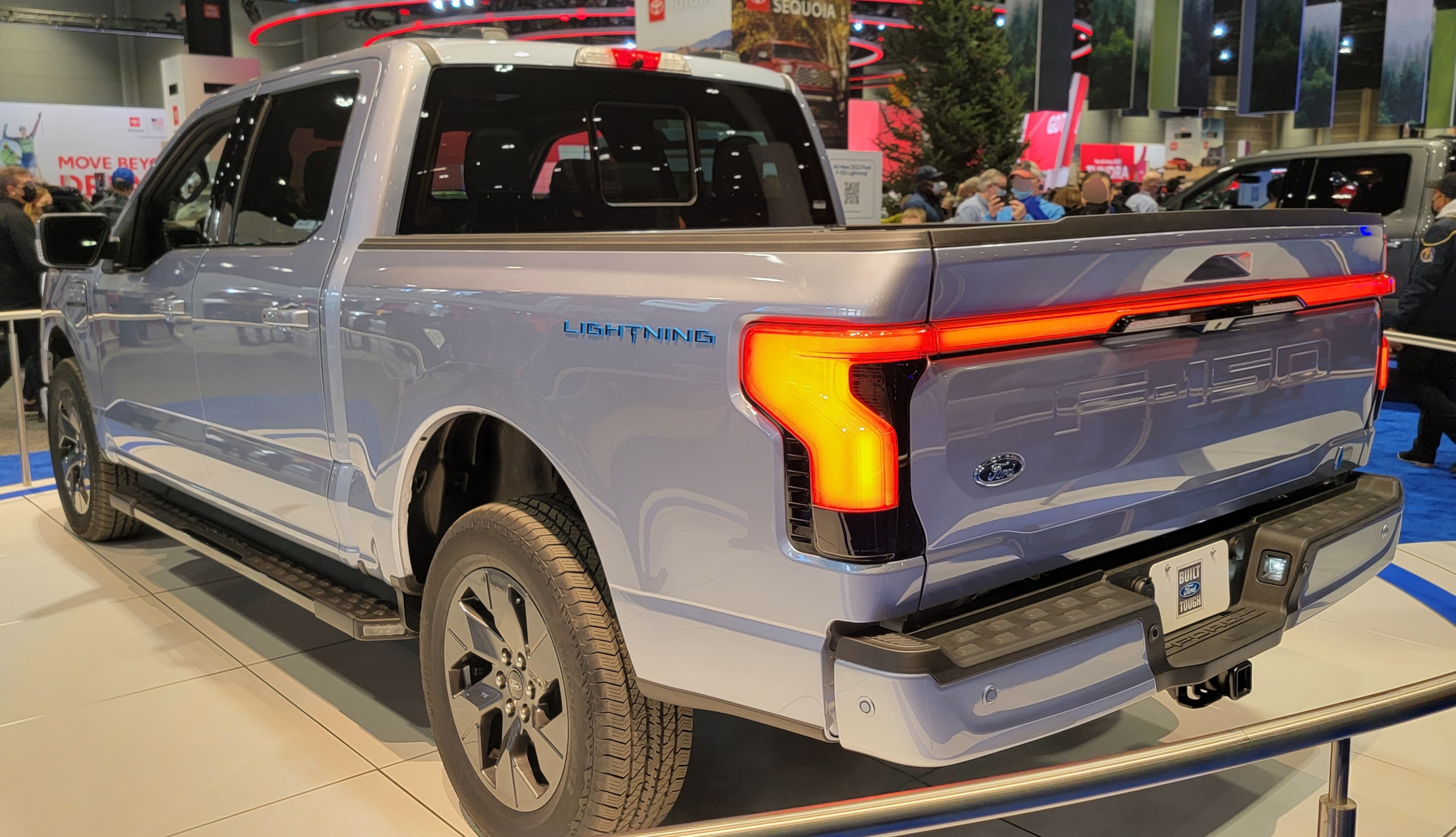
Over 300,000 pickup trucks due to instrument panel display failures
that cause blank screens, preventing drivers from seeing critical safety
information like warning lights and vehicle speed.
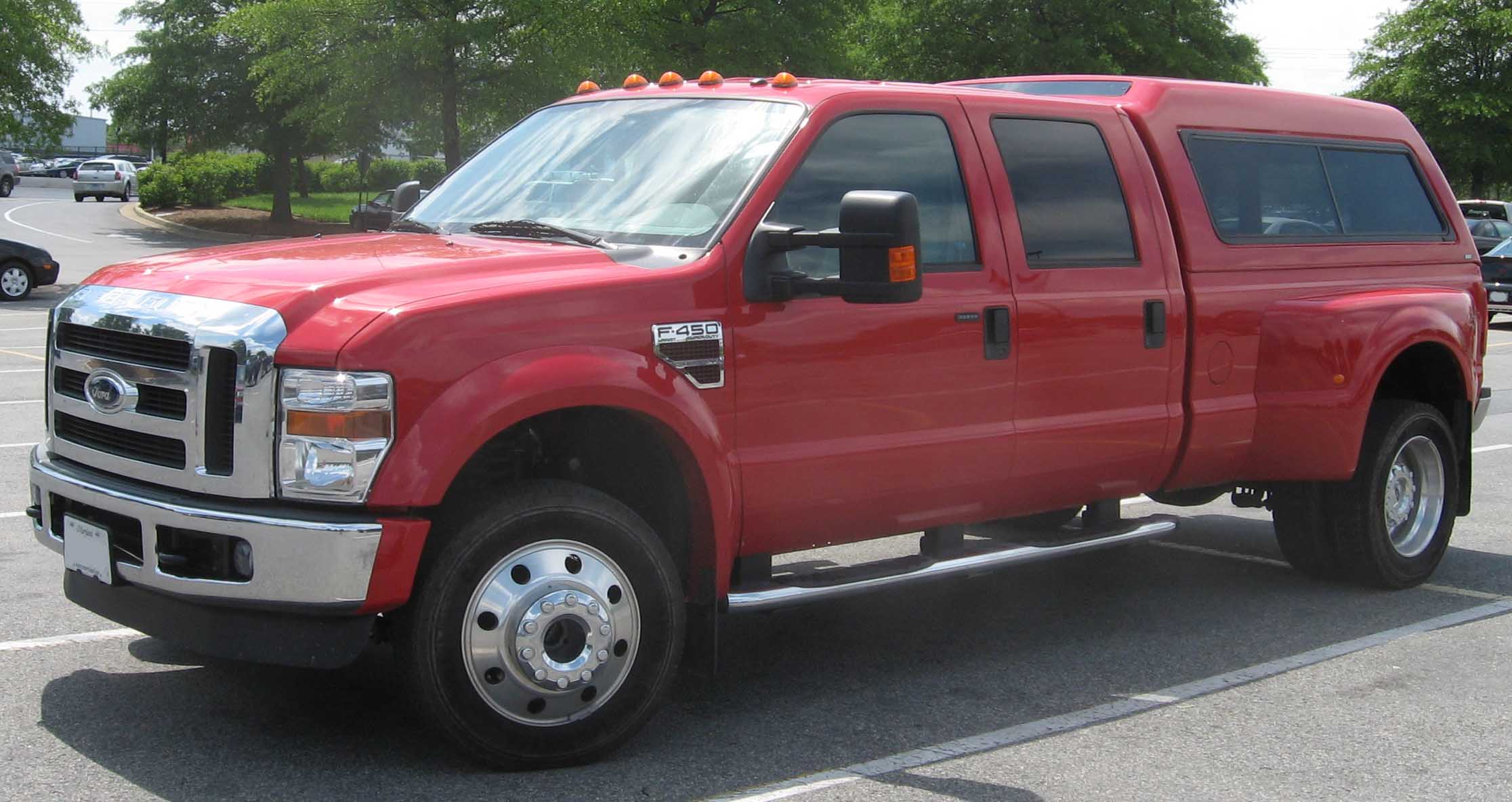
The Recall affects 2025 F-150s and 2025-26 Super Duty trucks,
including F-250, F-350, F-450 and F-550.
They have received 95 warranty claims,
but no reported accidents or injuries.
So that it's one of several major Ford Recalls this year,
including 694,000 vehicles for fuel injector issues
and over 850,000 cars for potential fuel pump failure,
which is a lot, but they sell a lot.
Yeah, that's fine.
You know, they're covering it, right?
Right.
They're paying for it.
So yeah, you're out a little inconvenience, whatever,
but they're taking care of it.
The other hand could be, hey, we're not going to help you out.
We know what happens and you're on your own.
But Chris, how about you?
Could you really not drive if your dash wasn't working?
If you covered it up, could you get where you're going safely
and go, oh, hey, I think I'm speeding?
Really?
If there's another car on the road, you should know really
how fast you're going, unless they're the only one there
and they're going way too fast.
But you would still know.
You could tell.
But there's people out there and I'm telling you, oh, they barely
know how to put gas in that thing and they're driving.
I've seen some.
And there was a recall recently about putting gas in the car.
I saw it under the hood show YouTube.
Yeah, was that short enough for you?
Yeah, I liked that one.
Yeah, it was good too.
I looked around and I started seeing them pop up about the Corvette
the fire when refueling only on the Z06 and the ZR1.
And the reason for that is because the ZR1 and the Z06
have an intake fan and an intake on the driver side fender.
This is a new one that looks like a spaceship.
Basically what it is is normal gas dripping down your car
happens to everyone.
But they put an intake right at the below it.
If the gas goes down there.
Fumes, gas, whatever it is.
And occasionally the nozzle doesn't shut off.
Depending on where you're at the pump.
If it decides to go and spill out like some stations do.
Well, and as I have learned since I got my new vehicle,
I have a capless system.
And that's what that is too.
And if you don't wait once that pump stops, you get gas everywhere.
Once the pump stops and it's full,
you have to wait a few seconds before you pull it out
or it just shoots out.
Yeah, a little pressure because it's made to be sealed up
a little more to try to prevent the fumes coming out.
Yeah, that's a quick little video.
If you're wondering why it catches on fire,
whether you've got one of those cars or not,
check out the video on YouTube.
It's just a little short.
It's like a minute long.
866-594-41.
5-0, let's go to Oklahoma and talk to Mark.
You're on the end of the Hood Show, Mark.
What can we do for you?
I actually called back at the end of May
to get advice on what kind of truck to buy
to pull my travel trailer, which weighs about 6,500 pounds loaded.
Okay, wait.
What did we tell you to buy?
And by we, I mean Russ and Shannon.
You actually suggested that any of the half ton pickups would work with that.
And what did you end up with?
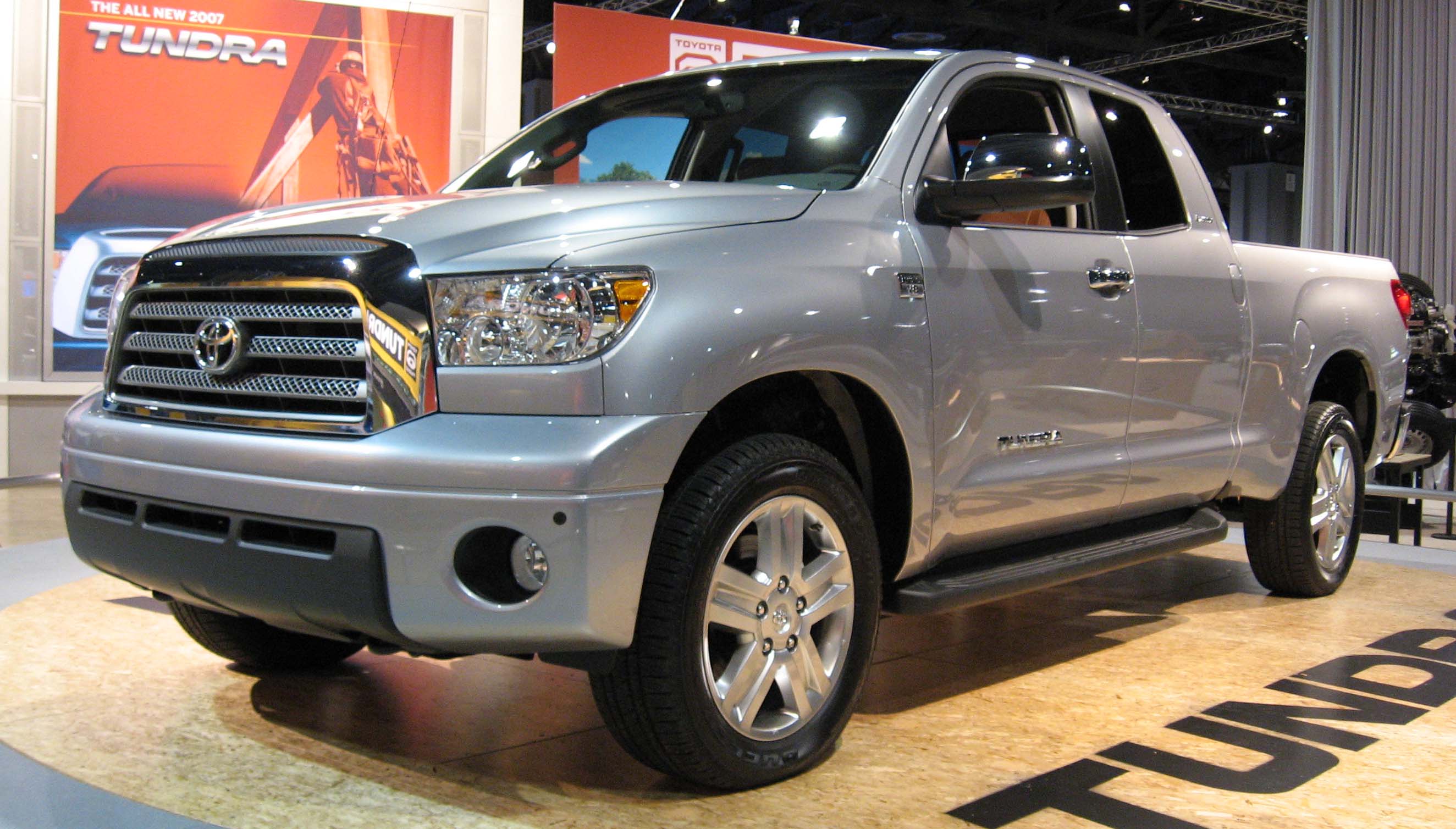
And I ended up buying a brand new 2025 Toyota Tundra,
has the V6 twin turbo with a tow rating of 11,400.
And I love it so far.
I got a couple of questions.
I actually have three really quick questions.
First one is I don't know how to drive it.
And by saying that is we were pulling my trailer a little trip about two hours.
And I thought, well, I've got the tow haul button.
I got that on.
It's a smart truck.
I thought I could probably be okay using the cruise on this.
And I'm driving through Oklahoma down the interstate.
It's rolling hills.
And it would frequently when you top the hill or right before you top it,
it would drop down one gear.
And it really wasn't anything like jerks the truck and revs or anything.
It was just I'm watching the tachometer and I just dropping down one gear.
And I'm kind of thinking that that had a good idea to use a cruise or not.
My wife goes online and searches and it says, when you're pulling the trailer,
you shouldn't use the cruise.
So I turned the cruise off and I'm driving myself.
And every time I come up to one of those rolling hills, I drop it down a little bit.
And I find that I'd get near the top and, and dang, I didn't drop it down.
I didn't thought my speed down enough and it would downshift with me driving.
So if it's going to drown shift with me driving half the time,
then why don't I just use the cruise?
So I don't, I wouldn't use it if I was in Colorado or Arkansas with, you know,
with huge heels, but it's rolling hills here.
No comment.
Should I use the cruise?
Yeah, you can.
A lot of people use the cruise when they're towing a heck GM even has their super cruise
where it drives the vehicle itself, hands off with the, with the cruise, you know,
cruises on your pulling the trailer.
You've watched that little video on TV where they show them pulling the
trailer down the road and it goes and changes lanes and pulls back in and merges.
That's nuts.
Anyways, yeah, you can leave the cruise, but make sure you have the tow haul mode on.
That's what you need to be doing.
Oh yeah.
That's the most important thing.
Tow haul mode on and then just go.
If there's a problem with the vehicle, it'll shut the cruise off.
If it doesn't, if it doesn't like it, if it's too far off, or if you don't
like the way it's revving up, if it's just too high, a downshift,
whereas just screaming, you know, you could turn that cruise off and slow down a little bit
instead to prevent it, but you're, you're probably going to drop at least one gear
climbing hills on those vehicles.
If not too, depending on how much weight and how big a hill you have.
And when I'm driving mine, I like to just slow down a little bit because I don't
like it downshifting so drastically when I'm climbing hills.
So I'll, I'll turn the cruise off if I get into hills, but when I'm on
fairly straight ground, I'll, I'll leave it.
You get to, you get the feel for it.
You know when it's going to be shutting off after you drive that thing for a few
months, you'll realize this hill will be fine.
That hill won't be fine.
I need to shut that cruise off and keep my foot on the gas.
That way, if it does rev up too high, you can just back up a little bit if you need to.
Okay, well good.
The second thing was it's getting about when I'm pulling the trailers,
getting about 10 miles of the gallon.
And I thought I researched it thoroughly when I bought it,
but I didn't check to see what size of a fuel tank it has.
And it has a 22 gallon tank.
Well, at 10 miles of the gallon, I go about two hours before I have to stop and get gas,
which at my age, I got a P in every two hours anyway.
So I shouldn't be worried about it.
But would it be stupid to buy a, go to Carlyse parts and buy a larger tank and put on a brand
new truck?
I wouldn't put a bigger tank in it.
Like you said, it's, it's good to, to get out and stretch, walk around and, and just,
just check things out.
Because, you know, when you're towing something that big, it's, it's good to, good to stop.
Eyeball it.
Yeah.
You know, commercial towing where you've got people in the truck all day long and they're
running a hot shot or whatever, a bigger tank is, is good if they can go four hours at
a stretch and they're younger.
But you know, when you're, when you're driving with the camper, it's, it's good to
stop.
And when I'm pulling my camper, I, I like to stop it.
I usually stop every hour or so and just look at the, look at things,
see if everything's all still in one piece and get some gas if it's a little low.
And if we stop somewhere, I'll, I'll always put fuel in when I stop somewhere, even if
we're stopping for some, sometimes there's a thing, oh, I gotta stop.
So, okay.
So we stop and fill that thing up just in case, because you, you might find yourself
running short the next time, but that's, that's pretty common, that kind of fuel
mileage, pulling weight like that and, and that many hours of driving.
Okay.
We're good.
And then finally, the cargo capacity on my truck is, I think it's set to like 1650 maybe
and the tongue weight on my trailer is about 650.
But I was surprised about how much sag I had when I hooked it up.
Now I did adjust my, my low leveling trailer hitch to get my sag down to about an inch
and a half over the rear wheels, the wheel well.
But I was, I was surprised about the amount of sag because I thought I had a
plenty of room there based on the cargo capacity.
Was that what I was supposed to look at, cargo, cargo capacity and tongue weight?
Well, first off, you need to find out, you need to get a scale.
They make them for trailers and find out what the hitch weight is with your trailer
loaded as being pulled down the road.
You might be surprised.
It doesn't take much to change that tongue weight to a thousand pounds
or to 400 pounds when it says it's about 600 from the factory because you're moving
weight forward or rear of that axle.
Second, your cargo capacity is based on a load put dead in the center of the bed,
not on the end of the bumper, which is way on the end.
So now you're holding that on the end of a stick way down there.
We got at our local pavilion, we've got a truck on the end of a long stick and a
eight year old girl can pick that truck up with pulling on the rope.
So couldn't pick it up if it was in the middle.
So yeah, that's going to change that.
So make sure you get that tongue weight, find out what it is and you're going to want it.
I mean, we're usually around 20% on that.
But you'll find your recommendations, ask the manufacturer what the recommended
tongue weight is for that vehicle when loaded.
You might want to just shift your cargo around a little bit until you get it right.
Too little, you'll get sway, too much, you'll get squat on the truck.
Mark, thanks very much for the call.
Those are, I feel like those questions are great for him to have it.
Like you get the new truck and then you're like, oh my, I wonder about this, I wonder about this.
Yeah, that tongue weight.
Maybe people that have been towing for years and didn't know on something like this.
Mark, thanks very much for the call.
Good luck.
866-594-4150.
That's the number to reach us here at the end of the hood show.
Let's talk to Kevin.
You're on the end of the hood show.
Kevin, what can we do for you?
I've never heard you before.
Week ago, I was taking a road trip heading west on South Dakota, headed out to my farm.
No radio stations.
I heard you guys talking cars, so I kept listening.
Oh, we appreciate that.
Yeah, I got a 13 Tundra V8 four-door
ever since I've got it.
I've always gotten nine to 10 miles a gallon in town or on the highway.
And normally on the highway, I'll do 8081.
Is that the problem?
Is there a problem with the motor?
Is there something I can do?
Or is it just the way the Tundra is?
Yeah, well, they don't get great mileage to begin with.
You're not too far off, but that top speed is huge on it.
If you slow that thing down to 65, you're going to see a jump.
You could gain as much as five miles per gallon by dropping down to 65 from 80.
It's really huge.
Okay.
The faster you go, the more exponential that load.
Imagine holding up a sheet of plywood, like a 4x8 sheet of plywood,
and walking down the driveway with it.
You could probably do that.
It's not that hard, you know?
But now walk into a 40-mile-an-hour wind and see how hard it is to put.
You're like, oh, I'm really pushing this thing hard,
but do you slow down again?
You're fine.
But going on that highway, at the minimum, you're pushing an 80-mile-an-hour wind
if it's just a dead calm.
If it's with you from behind, you're going to drop that a little bit.
If it's a 20-mile-an-hour headwind,
which you get in South Dakota all the time, boy, you're pushing.
And if you're going 80, even with the wind behind you,
you're still going to be pushing.
Oh, you're still going to be whatever it is.
Almost 80.
It's like a plane with your ground speed.
You know, if you've got a 10-mile-an-hour tarot wind and you're going 80,
you're going 90.
So, yeah, if you're headed into a 20 or 30 or 50-mile-an-hour South Dakota wind,
dead head, boy, you're really going to drop that few miles.
Yeah, you know, because I watch, we got the wind turbines halfway in between where I go.
And I'm always checking to see which way the wind is blowing.
And half of the time, I figure I'm not getting good gas mileage.
So I'm going to push it 80, 82 anyways.
And I'm going to get there.
You know what I mean?
That's up to you.
Sometimes cost versus time.
And I've done that too.
It's like, do I go the speed limit?
As sometimes it's not safe to slow down.
Sometimes if you're trying to drive 70 on one of our 80-mile-an-hour roads,
people are passing you doing 90.
That's very common for people to be cruising along at 90 on our 10-over.
And if gas is 470 versus 270, I don't know if I make a conscious decision,
but I definitely drive differently when gas is $3 more than it is now.
Right.
One more question, gentlemen.
I'm coming home and I'm crossing the Missouri River from west side of South Dakota to east side.
And it's a great big hill.
And I'm coming across the Missouri River.
I got it on cruise control and Jersey.
And I get halfway up there.
Jersey.
And my cruise control is shut off.
Is there a reason why it won't take me the rest of the way up the hill?
Or should I not use it going up the hill?
No, it should be fine.
But if it drops down too far and the RPM goes up too high, it's going to shut the engine down.
So there might be a code in there.
Usually, there's a last shut down event.
What turned the cruise off?
You can find that with the right correct scanner for it.
It'll tell you.
And we use that for diagnostic.
And sometimes it says over RPM on the engine, so it dropped down too far.
It says, hey, you're going too fast.
You know, we can't maintain this speed.
So we're going to shut it down.
Yeah, you see that in semis all the time.
When they're going up a big hill, they're in the right lane.
They slow down because the load is so much.
Your cruise control, if you can't maintain that speed, it's not going to try and keep it.
It's going to eventually shut off and go, hey, you got to handle this.
It can only drop so many miles per hour before it shuts down.
It almost sees it as the brakes are like you tap the brakes or something like that.
Does that help you out there, Kevin?
Yeah, that's great.
You guys help me out with everything.
I know now that before I get to that hill lately, I've been hitting my brakes and shutting my
cruise off and just going up the hill.
But with the gas mileage, I'll definitely slower down.
Kevin, thanks very much for the call.
That is mind blowing to me.
Doug, I was looking at Doug to see if Doug, 10 miles to the gallon.
I can't fathom what that's like.
I'm getting 36 in my new car and I'm like, I might have to adjust here.
36.
I'm kind of going through the, I've been getting 50 for 12 years, 15 years.
So 10 miles to the gallon just blows my mind.
Yeah.
I mean, that's normal.
I've got a car that gets 18, 17.9 all the time, no matter what I do with it.
I just stuck right there and like, ooh.
And then the truck is dependent on what I'm pulling more or less.
Yikes.
866-594-4150.
Let's go to Michigan and talk to Raimi.
You're on the end of the hood show.
Raimi, what can we do for you?
Hello, gentlemen.
I called you a couple of weeks ago.
I'm my brother's 17 spark and had all the training problems.
It was shifting funny, blah, blah, blah.
And you gentlemen recommended putting coils in it and doing this.
And it was a running problem.
Well, guess what?
It blew up.
My brother is amazed with what happened with the car.
We put the new coils in, new spark plugs, and it runs like a million bucks.
The only thing we're running into and the shifting problems, the lights coming on the dash,
went away.
Thank you.
And he quickly complained that dad and me were the mechanical.
But anyway, one other issue with the car is when we first changed that,
he took it on the highway and when he was up at about 70,
it did a few chugs, didn't want to go.
And now, a couple of weeks later, in fact, this morning, a couple of hours ago,
we went and it's cool out and it's running.
It's doing what it's supposed to do.
Now, my question is he had the fluid and filter change, excuse me, the fluid change,
the flush, but they never changed the filter.
Should I change the transmission filter in that?
No, and the access?
I don't think that one has one that you can get to easily.
It's built into the case.
You'd have to tear it down to do it.
So it's not something that's normally done.
It's just a screen and those.
Raimi, thanks very much for the call.
Fluid change is all you need on that.
I feel like I feel pretty happy with like I had something to do with it.
Oh, of course you did.
Yeah.
I mean, I you're right there.
Yeah, I'm that's where you are.
I was important.
I was right here for you.
You're always important.
Ah, the under the hood show podcast is brought to you by exclusive sponsors like Berkeley
One Classics celebrating 50 years, your key to collector car insurance.
And by car dash part dot com with over 200 million parts.
Find them online at car dash part dot com and by road ready wheels.
OEM replica wheels at a huge savings road ready wheels dot com.
Thanks for listening to the under the hood show podcast.
I'm Russ Evans with Shannon Nordstrom and Chris Carter.
When we needed protection for our own personal collectibles and performance vehicles,
we turned to Berkeley One Classics.
And here's why Berkeley One Classics has over 50 years experience and they're
dedicated to serving their customers.
They will work with you to help determine the amount of coverage a vehicle like yours
should have.
And that coverage is agreed valued coverage.
So there is no disagreement on what your vehicle is covered for.
They also have discounts for car club members.
Berkeley Classics ensures a wide range of vehicles from sports cars and rare exotic cars
to antique vehicles including cars, trucks, tractors, military vehicles and antique motorcycles.
Over 50,000 of them a year.
Visit BerkeleyClassics.com today and get a free quote and find out firsthand
what they can save you and how well they can cover your valuable investment.
It takes just a few minutes using their easy online quote tool on their website.
Visit BerkeleyClassics.com that's BerkeleyClassics.com or call 800-603-3330.
That's 800-603-3330.
If you need parts whether it be for a brand new car or going back about 20 years it doesn't matter
check out car-part.com.
It's fast and it's easy.
Over 200 million parts strong all across North America.
Over 4,000 recyclers to choose from giving you the largest selection available.
Whether it's an engine, transmission, doors, seats or wheels you can find them on car-part.com.
We even let you know what parts from other models and years fit your car.
Many recyclers supply pictures of their parts too.
We even have a mobile app.
Search US and Canada or buy from your local independent recycler.
Whichever you choose buying recycled is good for the environment and good for your wallet.
If you're a repair shop there is a professional version available for you at no charge.
That's car-part.com.
Car-part.com.
Check it out today.
We want to tell you about our partner at Road Ready Wheels.
Road Ready Wheels has the very best aftermarket OEM replica wheels available with a direct fit
of the factory center caps and TPMS sensors so you don't need special caps and sensors.
Simply transfer yours over when you replace the wheel.
With near perfect ratings on Google, Amazon and eBay consumers like you are extremely
satisfied when it comes to Road Ready Wheels.
Maybe your wheels leak air or maybe you want to upgrade from an old rusty steel wheel.
Road Ready Wheels has both aluminum alloy and new steel wheels to fit many cars on the road today.
They stock thousands of wheels ready to ship and have free returns and shipping.
Plus save 10% more when you use the code hoodie at checkout.
Aftermarket wheels can be very expensive and it's so hard to choose what you want.
With Road Ready Wheels you get an OEM looking wheel that fits like it should
but costs much less.
Save money today and get yours at RoadReadyWheels.com.
Special discounts apply for large quantities and dealers and they have a special electronic
data feed and online portal waiting for you.
Find out more by going to RoadReadyWheels.com where you can use their online vehicle
selection tool to find your Road Ready Wheels today.
That's RoadReadyWheels.com.
Welcome back everybody.
It's time to get back under the hood with our motor medics.
866-594-4150.
Don't forget you can watch the show on our YouTube channel.
If you subscribe there and join the hoodie fan club at UnderTheHoodShow.com you could win a hoodie.
Like Tyler Richards, congratulations for everybody here under the hood and our friends over at
Berkeley One Classic celebrating 50 years of collector car coverage and Universal
Technical Institute, UTI.edu.
The only place that we feel you should go if you're thinking about becoming an automotive
technician. 866-594-4150.
Let's go to Chicago and talk to Alan.
You're on the end of the hood show.
Alan, what can we do for you?
I'm still working on my old 1956 Ford F100.
Just plain blue as we talked about before and it's
got the 223 inline six and the three on the tree.
Got it running and driving now.
But after we finally got the carb tuned up and the timings that
it goes 20-30 minutes pretty good and then it just kind of like dies.
And then it doesn't want to start again until it's cooled off.
Did you ever verify what's going on there, whether it's fuel or spark?
Have you checked to see when it shuts off and it doesn't crank?
Is there spark gone?
It cranks. I think the spark's gone.
Last time I was just so mad at it, I just kind of walked away from it.
But I went out the next morning and it started right up.
Well, of course.
It's been 30 minutes.
I let it idle in the garage for 20 or 30 minutes and all of a sudden it just shut down.
Oh, that's easy then.
That's great.
That's a dream for a mechanic when you say,
just let it sit here and idle for 20-30 minutes.
It'll shut off.
That's what I'd be looking for.
I'd have a spark tester on it so I could watch the spark doing its thing.
Okay, wait, I have a question.
If he brought this to your shop and you knew, I assume you start the truck,
Russ, and then you set a timer.
Because you're not going to stand there for 30 minutes watching that spark tester.
No, I'm going to do like the mechanics do.
I'm going to order a pizza and if they're at my door delivering it.
Exactly.
Then I'm close.
Right.
So how long do you set the timer for?
18 minutes?
I just look at the clock and say, oh, it's two after one, 132 minutes.
And if you miss it, you wait another half hour.
I probably will because by the time 30 minutes is a lot for me.
I've got 10 people will call, five people will walk in.
Three people need help and something's going to happen.
I'm going to be busy and go, ah, it's been three hours.
Missed it.
But that much.
So I'm going to put a post-spark tester on it and I'm also going to put a volt meter on the coil
to see if I have voltage there compared to look at the battery.
Okay.
Oh, look, I got 12 volts of the battery, 12 volts of the coil or six, whatever kind of car you got.
And I'm going to watch it and I'm just going to sit there and when I get close,
I'll watch.
And then when it dies, what did I lose?
Did I lose power to the coil?
Nope.
Still got power to the coil.
Lost my spark.
It stopped sparking.
But you have to watch it and you're going to have to have that thing sitting probably idled up
more than at 500 rpm or whatever it's idle in that because it'll just do
and shut off.
You're like, oh, I didn't even see if the spark went off.
You got to see that engine coast down.
So if it's running at 900 rpm or 1000 rpm, just high idle, then you say,
and it slows down.
And as it's slowing down, you go, oh, the spark's gone.
And they say, was it fuel I lost or was it spark?
More than likely it's going to be spark.
And you've got to find out, was it the, I'll probably have a, I'll go one step
further.
I'll have power hooked up on the input side so I can see if I've got battery
voltage there.
But I'm probably also going to have a test light stuck on the other side
so I can see it blinking to tell me that the, does this thing still have
points in it?
Yeah, I'll put a new points condenser.
Okay.
Then on that negative side, if that light's blinking, it'll tell me that
the points are functioning properly.
And that's not what shut it down.
Can't tell you that the coil was so hot, I couldn't touch it.
Well, that could be a problem too.
You need to find out, do you have a resistor coil?
It'll say resistor built in.
If you do not, and the truck does not have a resistor coil,
it's going to do that.
It's going to shut down and it's going to burn the coil up.
So that's important because they either have a resistor built
into the power wire going to the coil or the coil has a resistor built
into it.
Most of them will say resistor coil on them now, but I've seen people
still get it the other way and there's no resistor and that coil
gets so hot that it opens up the windings inside and it kills it.
It shorts it and it's dead.
So you might, you might have that problem.
And this has been anything with an ignition coil on it going
back to the beginning of time.
They had, you know, they either had the resistor built
into the wire or they had it built into the coil.
One of the two, you got to check that out, see what's going on.
But yeah, really hot.
That's a, that's a clue right there.
All right.
There you go, Alan.
Thanks very much for the call.
That's a cool truck.
Yeah, they were pretty cool.
866-594-4150.
Let's stay in Chicago and talk to Larry.
Larry, you're on the end of the hood show.
What can we do for you?
Hey guys, appreciate you and really enjoy the show.
Thank you.
And Chris, it's great to have you here today.
I've got a old 92-1 ton Chevy with a 454.
I would be really excited if I could get 10 miles to a gallon.
Yeah, that's like six.
I shouldn't even get that.
Five or six.
Yeah.
All the time.
Pull on that.
Yeah.
Eight or nine downhill.
Dumb dumb.
We got a 20, I have a 2016 Cadillac ATS, a 2.0 turbo.
And it's random and every once in a while, when I put it in gear,
it doesn't seem like I'm not seeing gauge right away.
It's kind of like, I'm thinking about it, you know.
That's the eight speed in there.
That's not good.
Yeah, it's not consistent at all.
No, the better part is that it's not consistent.
You might be able to put some transmission cleaner in it,
run it, change the fluid, flush it out good.
And that might help if it's a valve that's sticking in there
and solenoid that's sticking.
And once it does it all the time, we're more concerned
that you've got a bigger problem.
It's already failed.
Something's failed inside of it.
But if it's inconsistent like that, you might be able to,
you might be able to clean it up with a flush.
But you've got to put some transmission cleaner in there.
In our shop, we use a Justice Brothers transmission cleaner.
And that's meant to go in, drive the car,
let it shift through every gear.
We, you know, forward, reverse, lower gears,
higher gears, drive down the road,
get the torque converter to lock up,
put it in reverse, forward, park a bunch of times where it's,
it's repeating all those things.
It's got to move.
If you don't move it, it's,
you're not going to get that cleaner run through there.
And then we flush it while it's hot.
I understand.
And see what you got.
Okay. Thank you.
I appreciate it.
Thank you very much, Larry.
Good luck.
866-594-4150.
Let's go and talk to Ron.
You're on the end of the hood show.
Ron, what can we do for you?
I, unfortunately, a dodged journey.
I think it's the 17th.
Having a problem with the air conditioner.
It's got the dual control passenger driver.
And it's the driver's side that's an issue.
The some days it'll just blow a nice cold air.
And intermittently it'll stop.
I'll get heat.
Still getting cool out of the passenger side.
And then oddly, when you shut it off,
go in wherever you're going.
Come back out, fire it up.
It'll work fine.
A lot of times when you shut them off and restart them,
it recalibrates itself.
They've got a self-calibration mode.
And if it sees a code show up, shuts it down.
It doesn't want to work.
You get the temp stuck on one position or the other.
You shut it off and restart it.
It goes through a self-learn, self-check.
And it can fix itself.
Because what happens is as it moves,
it gets a feedback in its circuit and says,
this is the position of the door.
Well, if it loses that position because you've hit a dead spot
and then you shut it off and restart it,
it's not looking for the position right away.
It starts to move the motor.
And then it's looking at the counts
as it goes back and forth to relearn.
So it can go by that spot and get where you want it to go.
Eventually it'll just fail typically almost all the time.
It's the motor that's causing that problem, the actuator.
Is there any, Ron, can you just pull over,
shut it down, start it back up,
and it gets cool again right away?
Sometimes.
Not always.
I haven't tried that.
I just kind of suffer through it.
Yeah, you want to...
So there's a damper door under the dash
somewhere activated by a motor?
Several, yeah.
You got several under there.
Several.
A left, a right, a recirculation door,
temp, you know, left and right temp.
But since it's working on the passenger side,
does that tell you where to...
It usually tells me the driver side motor's failed on.
Okay.
And the passenger side's still good.
Okay.
On the ones where you got to tear the whole dash,
that one you should be able to replace just that motor
without taking the whole dash out.
But on the ones where you have to pull the whole dash out,
we change every motor in there.
You can actually buy them in kits.
Our partner over at Dorman Products,
they sell kits and if you wonder, it's like,
well, why are they selling kits with every motor?
Because they fail.
Yeah.
Oh, I mean, they're just a little...
A rector set kind of cheap motor with plastic gears
and they go bad.
So if you're spending the time to pull a whole dash out
of a car, you should buy all of them.
And those kits, it's actually surprising.
In a kit with four motors or five motors,
you can get the whole set for just a little more
than buying two motors.
But in Ron's case, he doesn't have to do that.
Well, in his, yeah, I think that one,
you can just take off the one motor
and get to it pretty easy access.
So you should be able to buy just one
and replace just the one.
And like I said, it's self-calibrating.
So if you bolt it on, it should take off and test itself.
But that's the most common item.
And you'll see those motors for pretty reason.
Well, I appreciate that.
Well, will they affect the heating season too?
Oh, yeah, everything.
Hot, cold, all of it.
Sometimes it's just one into the other,
like all the way cold, all the way hot.
I got a car that won't work on the full cold,
but one notch up, it's fine.
So all winter, it's great.
But if you have to turn it all the way down
by that max area, it's going to shut off.
Start clicking, tick, tick, tick, tick, tick.
Ron, thanks very much for the call.
Good luck.
866-594-4150, let's talk to Brian.
You're on the end of the hood show.
Brian and Iowa, go ahead.
Hello.
I had a question about a follow-up on a 13-port edge
you recommended a couple weeks ago.
You said it was EVAP problem with it.
I talked to my mechanic, and he didn't know
if you could smoke the fuel inlet on the vehicle,
or that there was, I can't remember the name.
It was a bent valve canister.
Can you smoke that, or do you have to replace this stuff?
You could smoke anything, anytime.
You just, yeah, you bet.
With it on the vehicle, off the vehicle, it doesn't matter.
You can put the smoke in there and find out
if it's leaking through the valve.
If the valve's stuck open, it's going to go
in one side and right out the other.
It shouldn't do that.
If it's turned off, it should be blocked.
Or open, depending on what type of system.
You'll have to look at his manuals and see.
If it says it's normally open,
then it's going to flow until it's turned on.
If it's normally closed, it won't flow until it's turned on.
But they can be done right on the car,
the fuel filler neck is going to fill up with smoke
as he's doing that evap test.
So if it's coming out the gas cap, then that's bad.
So it's pretty easy and it's a simple test.
Cheap machine too.
Brian, thanks very much for the call.
Good luck. 866-594-4150.
Okay, I have no skin in this game, but
do you, I have a question for you before we move on.
How much do you love that when someone calls and says,
hey, I went to my tech, told them what you said,
and they asked me to ask you how to do it?
I mean, that's great.
And it's, not only is it, I mean, because I feel like,
I feel like I just fixed things.
I mean, it feels like I made it, you know.
You know, mechanics don't want to.
But that's, we have some to call our show and say,
hey, I have a car I'm working on, I need help.
But then there's other mechanics to say,
well, I don't want people to know that I don't know everything.
Well, then have somebody else call or you can call.
That was,
Because nobody's going to know it's you, right?
I think it's not like we're on 250 stations across the United States
and podcast and YouTube and Facebook.
They're not going to recognize your voice.
I promise.
I think if you tell your tech something
and they don't know how to do it and they ask you to ask,
I think that's like, that's the tech you want, isn't it?
It is.
It's like, I don't care how you fix my car.
I just want you to fix it.
So ask as many people as you need to ask.
Let's talk to Mark here on the end of the hood show.
Mark, what can we do for you?
Yeah, I got a issue with the 17th Sierra and it's electrical nature.
And my information center has given us a bunch of warnings
and my mirrors are closing and opening
and the doors are locking and unlocking.
Uh-oh.
That's trouble.
And I'm wondering if we took it in and there was a window quit working.
It kept telling us for a while that we needed to open and close the window
to reset something.
Yeah, that happens when the battery goes dead or if it loses power.
So I'm kind of wondering, I'm trying this new thing now
and we're driving and I was listening to you and I thought I'd call
the main key fob that we've been using through that to draw it home.
And I got out the spare key fob and I'm going to see if it fits the key fob.
You can give that a shot.
Sometimes it is.
Sometimes it's trying to switch between presets
and it can do all sorts of wacky stuff.
But we did identify a broken wire and that harness into the door.
But I just wondered if it could be that simple or if we're just
going to grab it whole.
That's no, that's the can bus.
There's wires in there that control the can bus of that module.
There's power and ground wire to the door module.
All that stuff.
One broken.
That'll mess the whole thing up.
Well first of all, if one's broken, there's a chance that that's the only
part that you can see that's broken.
Oh, there might be more broken.
Exactly.
I give them a little pull.
Everyone a little pull because they can be broken inside.
Before the plastic case breaks.
Or the plastic case can crack and the metal wire is still good.
Right.
And then you could insulate it.
But you know, it's usually with those smaller ones, we have them break inside
and I give them a little tug and I'm like, oh look, you can stretch that thing.
It's pulling apart inside.
So you want to make sure they're all good.
Very common in every model of car out there.
At some point the door wires will break.
Yeah.
And when that happens, you're breaking a circuit that goes back and forth
and allowing a ground feedback loop or something, it's going to try to find a path
and that could be through the conductors.
Mark, thanks very much for the call.
Good luck.
866-594-4150.
Let's talk to Brad.
You're on the Under the Hood Show.
Brad, what can we do for you?
Over in 98th Jeep Grand Cherokee and what do you do?
It's from Japan.
It's right hand drive.
No, yeah.
What do you do if the scanner doesn't recognize it?
The scanner will recognize any car from anywhere in the world is OBD2.
If the scanner has a problem, something's wrong in the car in the data link.
Okay.
Okay.
So what do you do then?
Well, you can use generic OBD2 and see if that communicates.
If it doesn't, then you need to find out why the system isn't working.
You need to start diagnosing the CAN bus, checking power and ground and looking to see
if there's a short or open in that data.
And make sure there's nothing that it's connected at the sensor.
Well, look behind where it plugs in under the dash because a lot of times people will
tie remote starts and other things in there to get data and it will interrupt the whole system.
So make sure nothing is tied in behind that port.
Follow the wires up to where they disappear into the harness where the tape is.
But where it's built like that shouldn't matter at all.
OBD2 is onboard diagnostics.
Jeep is not like some of these cars.
I could see if you bought a car from China that was made in China.
There was something odd that didn't comply.
That could be an issue.
But Jeep, Dodge, Chrysler, Ram and anything.
Mercedes, Audi, BMW, Ford, GM, all of that stuff is all worldwide OBD2 compliant.
So it's going to work.
But what I do first is I plug it in and go on general OBD2 and see if it recognizes it that way.
Well, I don't know.
He tried a couple different scanners and it just doesn't recognize it at all.
It's got a fuse on that OBD2 connector.
If it's blown, it will not work any scanner as well.
The answer there is it's your vehicle, not because of that.
It's the vehicle, not the scanner.
This vehicle, if you put the steering wheel on the other side, would still have this problem.
Something is wrong in that CAN bus system.
And it can be checked.
I mean they have diagrams for that connector and you can see and you go to that pin
and say, oh, oh, there's no power there.
What's up?
Look at the diagram, see where that fuse is.
Go to the fuse box, replace that fuse.
You got power back.
Now it's going to work.
It's got to see that vehicle power and ground.
Otherwise, it's not going to communicate with any scanner.
Brad, thanks very much for the call.
Good luck.
That call and the call before that just reminded me of something I heard somewhere
once and I have to assume it was on the show because, I mean, I've been on the show
a long time and this is, somebody said once, if you see electrical tape, check there.
Always start there.
That was probably Shannon.
That sounds like a Shannonism, doesn't it?
If you see electrical tape, somebody's been there.
Somebody, check where the humans have been.
866-594-4150.
Let's talk to Kyle.
You're on the end of the hood show.
Kyle, what can we do for you?
I heard you guys had a company call with a 2012 pilot with a transmission shutter.
Yeah, yeah, yeah.
Maybe a couple of weeks ago.
So my wife's 12 pilot had the same thing.
And so I brought the scanner out and was trying to figure out.
So I was like, there's no way to transmission.
I had a remote transmission in it.
Turns out the VCM, which plays those Honda V6s with the cylinder delete stuff,
was kicking on when you would let off the gas a little bit
and then get back on.
It was like deactivating and then reactivating cylinders.
And shutters, fellow shutter.
Yeah, it would shutter.
It would feel like a shutter.
But the fix is that the guy on the internet makes the VCM tuner, it's called.
And basically it plugs into the coolant temp sensor and kind of tricks you to
basically not think it's warm enough to activate that whole cylinder deactivation stuff
and completely clear it up.
The car runs on six cylinders all the time now.
And if you can catch it early enough, you don't end up, you know,
clogging up the rings with oil for and start burning.
Yeah, you catch it early enough, obviously.
Well, that's cool.
Yeah, they do make a little plug in under the dash one, too,
that you got to buy for the port to shut, keep that from going on, too.
That always makes me nervous when a guy on the internet
sells a thing you can plug into your car.
Well, yeah, some of them don't have the thing you can buy off Amazon.
So you got to find the guy that has it.
All right, after show, no after show.
We got to go.
We got stuff going on.
We're going to go over and talk to the guys over at Optima batteries
and all sorts of battery tech.
They've got some new stuff that you're on YouTube now,
the battery shop on YouTube.
Check them out.
It's all new set up there.
All sorts of stuff going on.
So and if you're watching on YouTube right now, hi.
Go listen to the podcast when it comes out and you'll hear that interview.
Yeah.
So get on it.
Be on the end of that.
Thanks, everybody.
Russ, we have a guest on the Under the Hood show.
We want to talk to Daryl Brockman from Optima Product Development.
Daryl, welcome to the Under the Hood show.
It's good to talk to you.
Great to be here.
Thanks so much.
Optima batteries.
Hey, so Daryl, I've got a question right off the top.
Why do power sport vehicles like ATVs, side by side, snowmobiles,
wave runners, jet skis, all that stuff,
why do they have and need a specific type of battery
as opposed to batteries used in everything else, like cars and trucks?
First of all, the batteries that are used in power sports vehicles are much smaller size,
a fraction of the size of a typical car amount of battery.
The other thing is in power sports vehicles, the electrical systems are more like an older car
where all the battery is doing is starting the engine and then there's a providing
overage in vehicle demand, you know, all the electrical accessories running
all the systems within the vehicle.
Modern vehicles, autos and trucks, the electrical systems are much more
complicated, you have start stops, you might have regenerative braking.
The vehicle loads are much, much higher and you need a bigger battery with more energy storage
capacity for those vehicles versus a power sport.
We do ads for Optima batteries where they talk about hypercore lithium technology and I can
read so I can say it fine.
But when we're talking about that exactly, what are we talking about?
There are a lot of different lithium chemistries that are used in the market, the lithium chemistry
that's used in your cell phone is different than what would be used in an electric vehicle
and it's different than the lithium chemistry that's used in Optima batteries.
So lithium chemistry that Optima uses is lithium iron phosphate, which has an excellent
capability for delivering a burst of power, such as for engine starting, and is widely
considered one of the safest and most abused tolerance lithium chemistry.
And even within lithium iron phosphate, there are different variations, there are,
you know, ways that a cell manufacturer can tune the chemistry for different characteristics.
Optima's lithium chemistry or hypercore lithium technology enables a much broader
operating temperature range, so Optima's lithium starting batteries can start a vehicle at minus
20 Fahrenheit, whereas if you look at other, you know, kind of more standard lithium iron
phosphate chemistry, usually those batteries wouldn't allow, they shouldn't be used at
temperatures below maybe 10 or 20 degrees Fahrenheit.
Is there any problem with using a lithium battery in an older vehicle that originally
came with a regular lead acid battery?
So one of the great things about lithium iron phosphate chemistry is that the ideal charge
voltage for that chemistry is the same as a lead acid battery in the neighborhood of 14.4 volts.
This 14.4, that 14.4 volts is also the typical charging voltage of most automotive
alternators or vehicle charging system. So that means that a vehicle that is good for
their charging system works well for charging a lead acid battery. You can drop in a lithium
battery and the charge voltage is very much the same, and it's able to keep that battery fully
charged. One of the benefits of a lithium battery is they have much, they're much more
efficient in their charging process. They can charge, they'll accept, have very high charge
acceptance all the way up to full state of charge. So a lithium battery in an older vehicle
automorph system is going to charge fully much more quickly, much more efficiently than a lead
acid battery. So the amount of time this alternator is charging the battery is much shorter.
That said, if you have any vehicle, and this is something that is true for both lead
acid and lithium, if your battery gets discharged to the point where you need to jump start it,
that isn't what, that to charge that battery back up again, it's best to use a battery charger.
An alternator is a voltage maintenance device, and to keep a battery that's almost fully,
you know, near fully charged to get it up to and maintain that full state of charge.
If you have a deeply discharged battery and you use the alternator, drive the battery car around,
to charge the battery back up again, you can damage your alternator. And if any of you have,
you know, if you've had a battery go bad, and then you replace the battery and then find that
you need to replace the alternator, probably it's, that's what has happened is you jump
started the vehicle numerous times maybe. Cooked it. That damaged the alternator and then you end up having to replace it.
Our guest is Darryl Brockman from Optima Product Development on the Under the Hood Show.
Hey Darryl, talk a little bit about the PowerLink system.
Sure, PowerLink is a proprietary system with multiple patents on it, and it enables
battery communication, control and charging with a cordon dongle that's connected to the
battery. It allows user to easily know their battery status via the multi-colored LED. For
example, Green would tell you that the battery is fully charged. Red tells you that the battery
needs to be charged. There's a button on the, on that PowerLink dongle that allows user to shut
the battery down for off-season storage or to wake the battery up when using the Optima CPR
function. It also has a plug that allows direct connections optimally to enable battery charges
and entertainers. For power sports vehicles, the battery oftentimes, it's pretty well buried. You
might be renting for half an hour so you can get to the point where you see the battery.
So to physically access the battery, it's pretty inconvenient. And this cordon dongle
enables you to control the battery, charge it, know the battery status without getting out your
wrenches. I got a couple jet skis that'd be perfect for. I got to look into this. I wasn't even aware
of that, but I'm glad I am now because I want to shut those things off, but I can't reach the
battery. So it takes forever to get done. Yeah, personal watercraft are among the most
difficult to get at the battery. Yeah, it's way down the bottom. Tell us a little bit about
the Optima CPR feature you just mentioned. Your Optima CPR is what we call our built-in jump start
function. So if you have a pair to the draw on the battery, if you leave a light on, if you
need the heated drips on your water cycle on, when the battery gets down to 35% state of charge,
the battery can automatically shut down and that 35% state of charge that the battery has
is held in reserve like a built-in jump starter. So for a power sports battery,
if that Optima CPR function is activated, you just need to press the button on the power link
to reactivate the battery. Our QH6 automotive battery, that's our lithium automotive battery
we just introduced. For that, all you have to do is open up the Optima lithium Bluetooth app
to automatically reactivate the battery. You don't have to open the hood,
you don't have to tear apart your trunk to access the battery
to reactivate it when the CPR function kicks in. Although there is a button on the battery
that also performs the same function. Okay, so what you just said, listeners,
listen closely. How many times do we get a call with my battery goes dead overnight,
my battery goes dead in two days, what can I do? I've been to the shop 10 times,
nobody can find it, right Chris? All the time. Producer Doug, over and over and over.
You guys just hit the jackpot right here, you can buy a battery with the CPR feature and then
when the car drains itself, it'll shut down and then all you got to do is use your Bluetooth app
and reactivate it and now it's going to start and you can drive your car, you need to get
that thing charged up because you want to fully charge the battery, you don't be driving
around with the alternator, cooking it, but still you don't have to worry about your car being dead.
That's huge, that's the best thing we've talked about in a feature like this in a very, very,
very long time. I love it, I love it. Well, in my experience, if my head,
if my wife has a dead battery, it's not a bright sunny day, it's raining, it's snowing,
it's hard, it's inconvenient, right? And to be able to reactivate the battery sitting in the
seat of your car, you don't even have to open up the hood is really kind of a game changer.
Or go to the back seat or try to find it. Yeah, that's great, I love it.
Let's talk a little bit about safety. When we're talking, we talk a lot about batteries and I
think everybody on the show has a story about the past and maybe some shortcuts that were taken
or mistakes that were made. Let's talk a little bit about certifications with agency and safety
certifications, especially we talk about that a lot now. Kind of talk about why that's so important.
Sure, I mean, the first thing to keep in mind is that inherent safety of the cell chemistry.
I mentioned before, lithium iron phosphate is known to be widely considered the safest and most of
use power in lithium chemistry. It's different than the technologies that's used in cell phones,
it's different than the technologies that's used in the UDs. We've all heard reports about
incidents involving those kinds of batteries, but it starts with the inherent safety of the
cells. And those agency certifications or safety certifications, they're both cell level
and system level, battery level certifications that it can be earned. But those safety certifications
are one way to know that the battery or the cells have undergone rigorous testing
to ensure trouble free operation. The cell level certifications in some ways,
you know, for given test chemistry, those are easier to achieve. It's a component level test.
The battery level test evaluates the battery system, the robustness of the performance of
the battery management system, which is the computer inside the battery that controls
everything that the battery does and how it does it. And one really big difference between our
batteries and a lot of the other lithium batteries on the market is that our batteries are
designed by Clarios' lithium engineering. Their main role is designing lithium-engineered systems
for major auto makers. Clarios has supplied more OE low voltage lithium energy storage systems
than anyone in the world. And that deep understanding and experience in the development
lithium system is one enabled app certification for both cell and battery systems, not just
the U.S. or UL standards, but also the international PDE standards.
Where can our listeners go for more information about all the stuff we talked about, but even
just regular battery information if they have normal questions?
Sure. OptimaBatteries.com or our technical support team at 888-8-Optima.
Our guest on the Under the Hood show, Daryl Brockman from Optima Product Development.
Thanks for taking time out of your day and joining us on the Under the Hood show.
Thanks so much for having me.
With Russ Evans, this is Shannon Nordstrom thanking you for tuning into the Nordstroms
Under the Hood show. Have a great day and remember PTLA.
The opinions heard on this program, based on the many years of experience of Russ and Shannon,
are offered for entertainment value only and as a guide to your repair needs.
No claim to repair or cause is given or implied. Always consult with your own
certified technician and follow all safety procedures before attempting any repair.
To be a part of the show, call 866-594-4150.
Find out more by visiting UndertheHoodshow.com.
Under the Hood is produced by Prairie House Productions.
All content is the property of Nordstroms Automotive Incorporated
and may not be used without our permission.
Copyright Nordstroms Automotive, Inc.
About this episode
Daryl Brockman from Optima Batteries joins the show to discuss innovative battery technology, including their self-jump-starting batteries and the unique PowerLink system for power sports vehicles. The conversation dives into the advantages of lithium iron phosphate batteries, their safety certifications, and how they can enhance vehicle performance. Listeners also hear about common automotive issues, including Ford recalls and towing advice, as well as practical tips for maintaining and troubleshooting vehicles. The episode is packed with insights for both casual drivers and automotive enthusiasts.
25 Tundra why does cruise shut off while towing? 13 Tundra Fuel mileage Chevy Spark Update 56 F100 Dies after 30 minutes of driving 16 Caddy ATS Trans shift delay 17 Dodge Journey AC Dual zone problem 13 Edge Evap Testing 17 Sierra Broken Door wires 98 Jeep RHD won't communicate