
A Budget Built Miata Earns A Fast 15 Spot in the Race to the Sky!
About this episode
Pike’s Peak sets the stage as the hosts talk Fast 15 qualifying and what it takes to run a budget Miata up high altitude—especially with carburetor tuning from 8,000 to 14,000 feet. They also share the intensity of the climb from personal experience, plus event logistics like oxygen use, media coverage, and where to watch (including Doublesplayground). Between race talk, the conversation detours into a Road Runner history turned Pike’s Peak project, and later a Waymo robotaxi privacy/legal story.
The road to the top of Pikes Peak looks beautiful right up until you imagine missing a corner. We call Richard Tomlin from the mountain to get a real-time look at what it takes to compete at the Pikes Peak International Hill Climb when the sun is brutal, the air is thin, and even cell service feels like it’s fighting you.
Richard walks us through a huge milestone for Apex Auto Works: the ApexOSET Miata based build qualifying in the Fast 15, plus the very different challenge of keeping “Big Bird” a 1968 Plymouth Road Runner, happy with carburetor tuning across massive elevation changes. We also dig into the heart of this year’s story, a Plymouth Road Runner with deep family history that gets transformed for the mountain with NASCAR-derived hardware underneath, while still carrying the little details that make it a true legacy car.
From there we talk race day reality: staging cars, camping, beating the crowds on the one road in and out, and why so many drivers use onboard oxygen to stay sharp at 14,000 feet. We also share where to watch the live coverage on Racer TV, then shift gears into our racing calendar, quick hits from automotive history, and a can’t-believe-it story about a thief using a Waymo robotaxi as a getaway while police come up empty.
If you love hill climb racing, grassroots engineering, classic muscle cars with modern race tech, and the weird edges of self-driving car privacy, hit play, then subscribe, share this with a car friend, and leave us a review.
Be sure to subscribe for more In Wheel Time Car Talk!
The Lupe' Tortilla RestaurantsLupe Tortilla in Katy, Texas
Gulf Coast Auto Shield
Paint protection, tint, and more!
Disclaimer: This post contains affiliate links. If you make a purchase, I may receive a commission at no extra cost to you.
---- -----
Want more In Wheel Time car talk any time?
In Wheel Time is now available on Audacy!
Just go to Audacy.com/InWheelTime where ever you are.
----- -----
Be sure to subscribe on your favorite podcast provider for the next episode of In Wheel Time Podcast and check out our live multiplatform broadcast every Saturday, 10a - 12nCT simulcasting on Audacy, YouTube, Facebook, Twitter, Twitch and InWheelTime.com.
In Wheel Time Podcast can be heard on you mobile device from providers such as:
Apple Podcasts, Amazon Music Podcast, Spotify, SiriusXM Podcast, iHeartRadio podcast, TuneIn + Alexa, Podcast Addict, Castro, Castbox, YouTube Podcast and more on your mobile device.
Follow InWheelTime.com for the latest updates!
Twitter: https://twitter.com/InWheelTime
Instagram: https://www.instagram.com/inwheeltime/
https://www.youtube.com/inwheeltime
https://www.Facebook.com/InWheelTime
For more information about In Wheel Time Podcast, email us at
[email protected]
Fast 15
"UmqualifiedintheFast15,whichbasicallytellsyouyou'reinthetop20%offcarsfromrunningupthemountain. Wegot74partsthisyear."
“Fast 15” is like a leaderboard cutoff. If you qualify for it, you’re in the top group of cars based on how fast you can run up the hill.
“Fast 15” is a qualification tier used to rank how quickly cars perform in the event. The host describes it as placing you in the top 20% of cars running up the mountain, so it’s essentially a performance cutoff for a relatively elite group.
carburetor tuning issues
"Andthenuhwe'vealsogotBigBirduphere,whichisqualifiedatthebackofthepack,havingsomecarburetortuningissuesontopofthemountain. Surprise."
A carburetor is the fuel-mixing system on some older or modified engines. If it’s not tuned right, the engine can run too rich or too lean, which can cause power loss or rough running—especially when conditions change with altitude.
Carburetor tuning issues are problems with how a carburetor meters fuel and air to the engine. At altitude and under load, small changes in mixture can cause drivability problems, which is why the host connects it to running up the mountain.
carburetormotor
"Um,thisisthechallengeofrunningacarburetormotorat8,000allthewayupto14,000feetofelevation. Anduhwe'relearningeveryday."
This means the engine uses a carburetor to mix fuel and air. The challenge is that as you climb higher, the air changes, and a carburetor often needs more careful tuning to keep the engine running well.
A carburetor motor is an engine that uses a carburetor instead of fuel injection to deliver the air-fuel mixture. The host highlights the difficulty of keeping a carbureted engine running correctly as conditions change while climbing to high elevation.
8,000
"Um,thisisthechallengeofrunningacarburetormotorat8,000allthewayupto14,000feetofelevation. Anduhwe'relearningeveryday."
That number is about how fast the engine is spinning. Running at high revs for a long climb makes it harder for the fuel/air system to stay perfectly tuned.
The host is referencing engine speed (RPM) when they say the carburetor motor has to run from 8,000 up to 14,000 feet of elevation while maintaining high revs. Sustained high RPM increases heat and load, making mixture control and tuning more critical.
feet of elevation
"Um,thisisthechallengeofrunningacarburetormotorat8,000allthewayupto14,000feetofelevation. Anduhwe'relearningeveryday."
“Feet of elevation” refers to how high above sea level the car is operating. Higher elevation means thinner air, which changes how much oxygen is available for combustion and can strongly affect carbureted engines and their tuning.
Pike'sPeak
"AndhethrewoutRoadrunner,andIsaid,Well,nobodywouldbuildaroadrunnertoracePike'sPeak. That'sdumb. Umit'smadetogoinastraightlineveryfast."
Pike’s Peak is a well-known mountain race in Colorado where cars try to drive up as fast as possible. It’s tough on the car because it’s a long, steep climb.
Pike’s Peak is a famous Colorado hillclimb where cars race up a steep mountain road toward the summit. It’s a popular proving ground because cars are tested under sustained climbing loads, heat, and traction changes.
NASCAR engine
"AndthenwehadsomefriendsatPike'sPeakthathelpedusthrowinauhR5P7NASCARenginechassissuspensionunderneath. [439.3s] Um,sogreatlyviolatedmyfather'sroadrunner,cuttingoutthebellyofitandputtingaNASCARunderneath,butitisaDodgeNASCAR,um,sothatmakesitsomewhatacceptable."
NASCAR engines are race engines designed for stock-car racing. Here, they’re talking about swapping in a NASCAR-style racing engine into the car for the mountain race.
A NASCAR engine refers to the purpose-built racing powerplants used in NASCAR stock-car competition. In this episode, the host says they put a NASCAR engine and related components under the Road Runner chassis for the Pike’s Peak build.
chassis
"AndthenwehadsomefriendsatPike'sPeakthathelpedusthrowinauhR5P7NASCARenginechassissuspensionunderneath. Um,sogreatlyviolatedmyfather'sroadrunner,cuttingoutthebellyofitandputtingaNASCARunderneath,butitisaDodgeNASCAR,um,sothatmakesitsomewhatacceptable."
The chassis is the main frame/structure of the car. It’s what everything else mounts to, so changing it usually means a big build.
A chassis is the car’s structural foundation that supports the engine, suspension, and body. When the host mentions adding an engine/chassis/suspension underneath, they’re describing a major race-car foundation swap rather than a simple bolt-on modification.
classifications
"Uhhasitalreadyitobviouslyisqualifyingandstuffandyou'vegottenclassifications. Whenistherealevent?"
In motorsports, classifications are the official categories/entries used to group cars for results and eligibility. The host is asking about qualifying and classifications, implying the event assigns cars to specific classes before the race.
land speed record
"NowthenmovingontoJunethe25th,MalcolmCampbellsetsanewlandspeedrecord. Now,thisisreallyimpressivebecausetheBritishdriverpushedhissunbeam-poweredracertoalandspeedrecordat109standsinWales."
A land speed record is when a car (or vehicle) sets the fastest speed ever measured on land. People chase these records because they push engineers to improve engines and aerodynamics quickly.
A land speed record is the official maximum speed achieved by a vehicle over a measured distance on land. The segment uses land speed records to illustrate how racing and record attempts accelerated automotive technology in the early days of the industry.
Malcolm Campbell
"NowthenmovingontoJunethe25th,MalcolmCampbellsetsanewlandspeedrecord. Now,thisisreallyimpressivebecausetheBritishdriverpushedhissunbeam-poweredracertoalandspeedrecordat109standsinWales."
Malcolm Campbell was a famous British race driver known for setting speed records. Here, the host credits him with driving a car to a new land speed record in 1925.
Malcolm Campbell was a British driver famous for setting land speed records. In this segment, he’s credited with pushing a Sunbeam-powered racer to a new record in 1925, which helped spotlight rapid automotive technology progress.
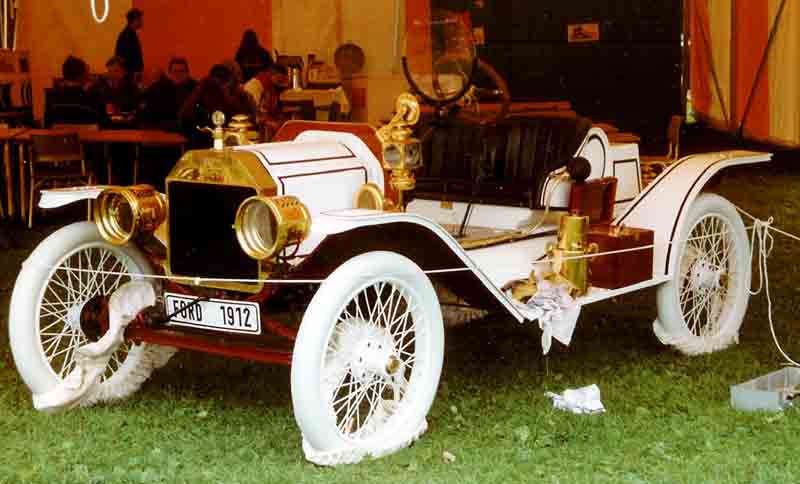
Ford Model T
"ThenonJunethe26th,thelastFordModelTrolledout. Now,thiswasuhabigdeal. Itwasthe15millionthuhModelTthatwasbuilt."
The Ford Model T was one of the first cars that many regular people could afford. The host is talking about when the last one was built, and how huge the total production was.
The Ford Model T is an early mass-market car that became a benchmark for affordable, high-volume production. The segment notes the final Model T rolled out on June 26, and it frames the Model T’s scale (15 millionth built) as a milestone in automotive manufacturing.

Model A
"Andinreality,ofcourse,theModelAfollowedthis,buttherealityoftheModelAwasbasicallyaModelTonsteroids. Itwastalittlebitwider,alittlebitlonger,butitlookedalmostthesameotherthanthedimensionsonit."
The Model A came after the Model T. The host is saying it was basically an improved version of the Model T, with some changes like being a bit larger.
The Model A is the successor to the Ford Model T, and the host describes it as essentially a Model T “on steroids.” That comparison is pointing at how Ford evolved the same basic concept—more size and refinement—rather than starting completely from scratch.
two-cylindertwo-strokeengine
"Itwaspoweredbyatwo-cylindertwo-strokeengine,butitgotareputationforreliabilityanddurabilitybecauseoftheengineeringthathadgoneintotheaircraftexperiencethatthecompanyhad. Sobreliable?"
A two-stroke engine makes power with a simpler cycle than most engines you’re used to. In this segment, the host says Saab used this kind of engine in the early Saab 92 and that it helped the car last reliably.
A two-stroke engine completes its power cycle in two strokes of the piston, unlike a four-stroke engine that needs four. The host specifically links the Saab 92’s two-cylinder two-stroke setup to the company’s aircraft-engine engineering experience and the resulting reputation for durability.
grand touring
"TheysetouttobuildgrandtouringcarstochallengeFerrari."
“Grand touring” is a category of car meant for long trips. They’re usually built to be comfortable while still being quick.
Grand touring (GT) refers to a style of car aimed at comfortable, high-speed long-distance driving. In this context, Lamborghini set out to build GT cars as a way to compete with Ferrari.

Lamborghini 350GT
"Anduhsotheyintroducedthe350GT,andit'sthat'sreallywherewhatfoundedLamborghiniandcreatedoneoftheworld'smostfamousrivalriesbetweenthemandFerrari, whetherit'sinracing,ontheshowfloor,design,they'rejustthey'reaftereachotherallthetime."
The Lamborghini 350GT was one of Lamborghini’s early “grand touring” cars. It matters because it helped make Lamborghini famous and set up the brand’s rivalry with Ferrari.
The Lamborghini 350GT is an early grand touring (GT) model from Lamborghini, built in the early days of the brand. It’s historically important because it helped establish Lamborghini’s identity and kicked off the company’s long-running rivalry with Ferrari.
self-driving car
"PoliceinSanFranciscohavespentfivemonthssearchingthecities,firstknownthieftofleethesceneinaself-drivingcar."
A self-driving car is one that can drive itself using cameras, sensors, and computer software. The story is about a crime happening in one of those cars.
A self-driving car is a vehicle that uses sensors and software to navigate and control driving tasks with little or no human input. The segment references a theft where the incident happened in a self-driving car, emphasizing how autonomy changes the context of everyday driving.
San Francisco
"PoliceinSanFranciscohavespentfivemonthssearchingthecities,firstknownthieftofleethesceneinaself-drivingcar."
San Francisco is a big city in California. The episode mentions police there investigating problems involving self-driving cars.
San Francisco is a major U.S. city that has been an early testing and deployment area for autonomous-vehicle services. In this segment, police there are investigating incidents involving self-driving cars and a Waymo robotaxi.
Waymo robotaxi
"InJanuary,someonestoleclothingfromayogastudio,loadedthelootintothetrunkofaWaymorobotaxi,androdeoff,accordingtotheSanFranciscoChronicle."
A Waymo robotaxi is a self-driving ride-hailing car. In this story, someone stole items and put them in the trunk of one of those self-driving cars.
A Waymo robotaxi is an autonomous vehicle used for ride-hailing, operating with driverless (or near-driverless) automation. The segment describes a theft where loot was loaded into the trunk of a Waymo robotaxi, highlighting how these cars are used in real-world city operations.
Request an Explanation
Heard something you'd like explained? We'll add it to this episode.
Sign in to request explanations for terms you heard.
Want to learn more?
Browse our glossary for plain-English explanations of automotive terms, jargon, and concepts.
Help improve this episode
See something that's not quite right? Our annotations are AI-generated and can sometimes miss the mark. Click the flag icon on any annotation to suggest a correction.