
A Houston Mustang Club Leader Explains Why They Cruise So Much
About this episode
Richard Jones, head of the Mustang Club of Houston, explains why members cruise so much—highlighting a very active club, a five-year presidency, and heavy real-world mileage. The hosts dig into how the club runs meetings (minutes posted online and voted on), how many cars they estimate, and what’s coming next, including a big August cruise. Along the way, they discuss a 2020 EcoBoost Mustang’s intake/exhaust upgrades and share local Texas event details.
A car club is only as fun as the miles you actually drive, and Richard Jones proves it. We talk with the president of the Mustang Club of Houston about how an 80-member group keeps the calendar full, from casual Saturday cruises to bigger road trips and national Mustang gatherings. He shares what it’s like leading a club when “nobody else wants the job,” plus the simple systems that keep things moving without bogging everyone down.
Richard also gets specific about his own ride: a 2020 Ford Mustang EcoBoost 2.3L that’s been lightly modified for extra punch. We dig into why a four-cylinder Mustang can still deliver real performance, why fuel economy matters when you rack up serious annual mileage, and how club cruises like their drive toward Blessing, Texas turn a normal weekend into something you look forward to.
Then we shift gears into Houston driving destinations built for date night, including Captain Foxheart’s Bad News Bar & Spirit Lounge, Beetlejuice Betelgeuse, La Carafe, Axelrad Beer Garden, and Little Dipper Bar. Jeff follows with a Texas cruise-in and events calendar, and we close out with auto history and headlines, including AI tools in car buying and why hybrids are getting harder to find on dealer lots.
If you like real car people, local events, and smarter ways to enjoy the drive, subscribe, share the show with a friend, and leave us a review.
Be sure to subscribe for more In Wheel Time Car Talk!
The Lupe' Tortilla RestaurantsLupe Tortilla in Katy, Texas
Gulf Coast Auto Shield
Paint protection, tint, and more!
Disclaimer: This post contains affiliate links. If you make a purchase, I may receive a commission at no extra cost to you.
---- -----
Want more In Wheel Time car talk any time?
In Wheel Time is now available on Audacy!
Just go to Audacy.com/InWheelTime where ever you are.
----- -----
Be sure to subscribe on your favorite podcast provider for the next episode of In Wheel Time Podcast and check out our live multiplatform broadcast every Saturday, 10a - 12nCT simulcasting on Audacy, YouTube, Facebook, Twitter, Twitch and InWheelTime.com.
In Wheel Time Podcast can be heard on you mobile device from providers such as:
Apple Podcasts, Amazon Music Podcast, Spotify, SiriusXM Podcast, iHeartRadio podcast, TuneIn + Alexa, Podcast Addict, Castro, Castbox, YouTube Podcast and more on your mobile device.
Follow InWheelTime.com for the latest updates!
Twitter: https://twitter.com/InWheelTime
Instagram: https://www.instagram.com/inwheeltime/
https://www.youtube.com/inwheeltime
https://www.Facebook.com/InWheelTime
For more information about In Wheel Time Podcast, email us at
[email protected]

2020 EcoBoost Mustang
"Iamsittinginatwo2020EcoBoostMustang,a2.3 literEcoBoostMustang. Andit'sgotumalmost300horsepower."
This is a 2020 Ford Mustang with a turbo 2.3-liter engine. Even though it’s not the V8, it can still be pretty quick and it’s easy to modify for more power.
The 2020 Ford Mustang EcoBoost is a turbocharged Mustang that uses a 2.3-liter four-cylinder instead of the classic V8. It’s a popular “cruiser” platform because it can make close to 300 hp from the factory and responds well to bolt-on modifications.
turbocharged
"Iamsittinginatwo2020EcoBoostMustang,a2.3 literEcoBoostMustang. Andit'sgotumalmost300horsepower."
A turbocharger uses exhaust to spin a turbine and push extra air into the engine. That extra air helps the engine make more power.
Turbocharging uses exhaust gases to spin a turbine, which forces more air into the engine. More air (and the right fuel/engine tuning) lets the engine produce more power than it could naturally aspirated.
horsepower
"Andit'sgotumalmost300horsepower. Ithasabout310fromthefactory, butIhavealittle bitmore..."
Horsepower is a way to describe how much power the engine makes. People use it to compare how strong the car is before and after upgrades.
Horsepower is a measure of engine power—how much work the engine can do over time. In performance discussions, it’s commonly used to compare stock output versus gains from modifications.
cold air intake
"butIhavealittlebitmore becauseI addthecoalintoKNcoalairandtape."
A cold air intake is an upgrade that helps the engine breathe cooler air. Cooler air can make the engine run better and sometimes add a bit of power.
A cold air intake (often shortened to CAI) replaces the stock intake path to draw in cooler, denser air. Cooler air can improve combustion and, with proper tuning, support power gains on turbo engines.
cat-back exhaust
"IhadanMBRPuhcatback,andsoitboostedthehorsepowerlikeby335to340."
A cat-back exhaust is an aftermarket exhaust system that starts after the catalytic converter. It can change the sound and help the car breathe a little easier.
A cat-back exhaust replaces components from the catalytic converter back to the tailpipe. It can reduce exhaust backpressure and change sound, and when paired with other mods and tuning, it may help power and throttle response.
MBRP
"IhadanMBRPuhcatback,andsoitboostedthehorsepowerlikeby335to340."
MBRP makes aftermarket performance parts, especially exhaust systems. In this case, it’s the brand of the exhaust upgrade on the Mustang.
MBRP is an aftermarket brand known for exhaust systems and performance parts. Here, it’s referenced as the source of the cat-back exhaust used on the 2020 EcoBoost Mustang.
Bentley Motors
"BentleyofficiallyfoundedBentleyMotors. Hisideawastobuildafastcar,buildagoodcar,andmakeitthebestinclass. Andwhattheydidtogettheirreputationgoingfortheirengineeringexcellence,theywentoutanddidenduranceraces."
Bentley Motors is the company behind Bentley cars. They started by building cars meant to be fast and then proving them in big races, which helped build their reputation.
Bentley Motors was officially founded in May 1919, and the company’s early strategy was to build fast cars and then prove them through racing. The episode links that reputation to Bentley’s engineering focus and endurance-race participation.
Le Mans
"Andwhattheydidtogettheirreputationgoingfortheirengineeringexcellence,theywentoutanddidenduranceraces. LikeLeMans,andtheyevenmadeittotheIndy500in1922."
Le Mans is a very famous long-distance car race. It’s not just about going fast—it’s about lasting the whole race.
Le Mans is a famous endurance race in France where cars must run for long periods and manage reliability as much as speed. The episode mentions it as part of how Bentley built its early racing credibility.
Indy 500
"LikeLeMans,andtheyevenmadeittotheIndy500in1922. Andthisisthetypeofactivitiesthatbuiltuptheircredsinsidethemarket."
The Indy 500 is one of the biggest car races in the U.S. The episode mentions Bentley showing up there in the early days to build credibility.
The Indy 500 is a major American open-wheel race held at Indianapolis Motor Speedway. The episode cites Bentley making it there in 1922 as another milestone in its early racing reputation.

Oldsmobile Curved Dash
"AndinMaythe4thin1904,weoftentalkabouttheOldsmobileCurvedDashvehiclethatransomOldsbroughtout. Itwasoneofthefirstmass-producedautomobiles. Itwasalightweightrunaboutsinglecylinderengine,madeitveryreliable."
The Oldsmobile Curved Dash was an early car that helped kick off mass production. In this segment, they describe it as having a simple single-cylinder engine and being pretty reliable.
The Oldsmobile Curved Dash is an early Oldsmobile model (referenced here as the 1904 “Curved Dash”) known for being among the first mass-produced automobiles. The episode highlights its lightweight single-cylinder engine and its reliability, plus the idea that its assembly methods were efficient.
mass-produced automobiles
"Itwasoneofthefirstmass-producedautomobiles. Itwasalightweightrunaboutsinglecylinderengine,madeitveryreliable."
Mass-produced cars are made in big numbers using repeatable processes. The point here is that early cars like the Curved Dash helped show how to build cars at scale.
Mass-produced automobiles are vehicles built in large quantities using standardized parts and repeatable manufacturing steps. The episode uses this idea to frame the Oldsmobile Curved Dash as an early example of scaling car production.
moving assembly line
"ButthethingwasthathealotofhisassemblytechniquesactuallypredatedHenryFord'smovingassemblyline. Soheprovedthatyoucanbuildacarefficiently. Andoneofthethingsthathelpedthisthinggetinstarted,itwasactuallyafirein1901."
A moving assembly line is a way to build cars by having the car move past workers. Each worker does the same step over and over, which speeds up production.
A moving assembly line is a production system where the workpiece moves through stations so each worker performs a specific task repeatedly. The episode contrasts Oldsmobile’s assembly techniques with Henry Ford’s later moving assembly line, arguing that efficient production existed before Ford popularized it.
pace car
"FordwasMustangwastobethepacecarforthe64Indianapolis500. Soitgotalotofattentionthere. AndthentheyalsolaunchedthePaceCarEditionimmediatelyrightbehindthat."
A pace car is the car that leads the pack at a controlled speed during parts of a race. It’s also a big publicity moment for the brand that supplies it.
A pace car is a vehicle used to lead or control the speed of the field during certain race conditions, such as before the race starts or during cautions. In motorsports marketing, being named the pace car can also create major publicity for the automaker and its model.
four-wheel hydraulic brakes
"Maythe5th,1925. Chryslerintroducesthefour-wheelhydraulicbrakes. Weweretalkingearlieraboutthewirebrakesversusthehydraulic."
Hydraulic brakes use fluid pressure to squeeze the brake parts. Using them on all four wheels helps the car stop more consistently than older mechanical systems.
Four-wheel hydraulic brakes use brake fluid and hydraulic pressure to apply the brakes at all four wheels. The episode contrasts this with earlier “wire/mechanical” braking approaches, emphasizing Chrysler’s push toward more modern braking technology.
wire brakes
"Weweretalkingearlieraboutthewirebrakesversusthehydraulic. SoChryslerwasverymuchintotechnologyandtryingtouhpushnewthingsoutintothemarketplace,particularlyimprovingonthemechanicalbrakingsystems."
Wire brakes use cables to pull the braking parts. Hydraulic brakes use fluid pressure, which usually gives smoother and more reliable stopping.
Wire brakes refer to older mechanical braking systems where force is transmitted via cables (or similar mechanical linkages) rather than hydraulic pressure. The key difference is that hydraulic systems generally provide more consistent, controllable braking force.
Sony
"in1958,thisactuallybecameSony,theveryfamousSonyelectronicscompanythatwentontouhinfluenceautomotivetechnologywithradiosandcassetteplayers,CDs,navsystems,thingsthatarewe'restillhavingthingsfromSonyshowupinourcarstoday."
Sony is described here as originating as the Tokyo Telecommunications Engineering Corporation and later becoming a major electronics brand. The episode connects Sony’s electronics expertise to automotive tech—like radios, cassette players, and later navigation systems—showing how consumer electronics influenced car infotainment.
Mercedes-Benz
"Maythe7th,1998. Thisisterrible. MercedesBenzannouncestheChryslermerger. Whatwaslistedpubliclyasbeinga50-50deal..."
Mercedes-Benz is a car company that, according to the episode, announced a merger with Chrysler. The story explains that the deal didn’t go smoothly and involved lawsuits before the companies ended up operating together.
Mercedes-Benz is mentioned as announcing the Chrysler merger, which was publicly framed as a 50-50 deal but later became a takeover situation. The episode highlights how corporate restructuring and lawsuits shaped the timeline before the merger effectively dissolved back into the combined Chrysler/Mercedes-Daimler structure.

Dodge Caravan
"Chryslerintroducestheminivan,theDodgeCaravanandthePlymouthVoyager. Andandthisreallyrevolutionizedfamilytransportationwiththemodernminivan."
The Dodge Caravan is a minivan. The episode says minivans changed family driving by being easier to use—especially with sliding doors and front-wheel drive.
The Dodge Caravan is a minivan model associated with the shift toward modern family transportation. The segment credits Chrysler’s introduction of the minivan concept with features like front-wheel drive, sliding side doors, and car-like handling that made it more convenient than many station wagons.
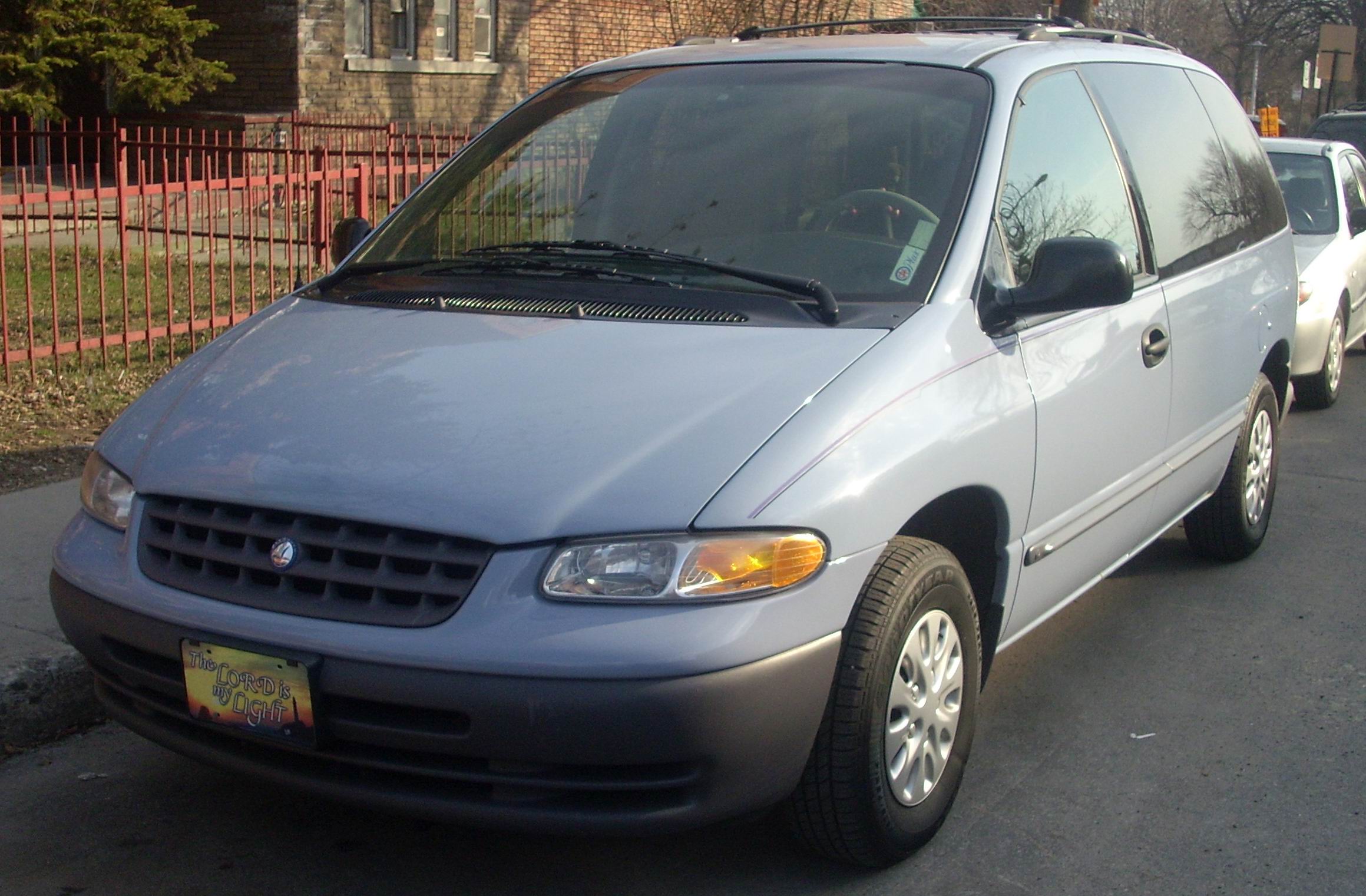
Plymouth Voyager
"Chryslerintroducestheminivan,theDodgeCaravanandthePlymouthVoyager. Andandthisreallyrevolutionizedfamilytransportationwiththemodernminivan."
The Plymouth Voyager is another minivan from the same Chrysler launch. The episode frames minivans as more practical than station wagons for families.
The Plymouth Voyager is a minivan model introduced by Chrysler in the mid-1980s era. In this segment, it’s used to illustrate how the modern minivan package—front-wheel drive, sliding doors, and easier driving—replaced the station wagon as the go-to family vehicle.
front-wheel drive
"Stationwagonwasstillavailable,butthiswassomuchmoreuser-friendlywiththefront-wheeldrive,theslidingsidedoors,car-likehandling."
Front-wheel drive means the front wheels do the work of moving the car. The host is saying that this layout helped make the minivan easier to live with than older family wagons.
Front-wheel drive (FWD) means the engine’s power is sent to the front wheels. The episode credits FWD as part of why the modern minivan felt more user-friendly and easier to drive than many station wagons.
sliding side doors
"Stationwagonwasstillavailable,butthiswassomuchmoreuser-friendlywiththefront-wheeldrive,theslidingsidedoors,car-likehandling."
Sliding side doors open by moving sideways instead of swinging outward. They’re handy for getting kids in and out, especially in tight parking spaces.
Sliding side doors are doors that move horizontally along a track, typically used on minivans and vans to make entry and exit easier. The episode lists them as a key convenience feature that helped the minivan feel more practical than a station wagon.
Cox Automotive
"Uhconsumers,albeitasmallnumber,whouseartificialintelligencetoolstobuyavehiclereport,beingmorepleasedwiththeoutcomethanthosewhodon'tusethem,accordingtotheCoxAutomotive2025CarBuyerSurvey."
Cox Automotive is a company that tracks car-buying trends and publishes research. Here, they’re the source for the survey about how shoppers use AI tools.
Cox Automotive is a major automotive data and research company that publishes consumer and market studies. In this segment, it’s cited as the source for survey results about how people use AI tools when researching and buying vehicles.
hybrids
"elevated fuel prices drove demand for hybrids and electric vehicles to record levels while supplies of such models dropped, data firm CatalystIQ said. Despite representing about one in five vehicles marketed for sale, hybrids were both the fastest turning power train type and had the lowest days supply, according to Catalyst."
A hybrid uses two kinds of power, usually a gas engine and an electric motor. That combination can help it use less fuel than a regular gas car, especially in city traffic.
A hybrid vehicle uses more than one power source—typically a gasoline engine plus an electric motor/battery. The electric assist helps improve efficiency, especially in stop-and-go driving, and it can also reduce fuel use compared with a traditional gasoline-only car.
electric vehicles
"elevated fuel prices drove demand for hybrids and electric vehicles to record levels while supplies of such models dropped, data firm CatalystIQ said. Hybrids advertised for sales spent an average of 59 days on a dealership lot compared to 75 days for traditional gasoline-powered vehicles and 114 days for EVs, which had supplies of 77 and 79 days."
An electric vehicle runs on electricity stored in a battery. Instead of using gas to drive, it uses an electric motor.
Electric vehicles (EVs) are powered primarily by an electric motor drawing energy from a battery pack. Because they don’t use gasoline for propulsion, demand and supply can swing differently than for hybrids or gas cars, affecting dealer inventory and pricing.
CatalystIQ
"data firm CatalystIQ said. Despite representing about one in five vehicles marketed for sale, hybrids were both the fastest turning power train type and had the lowest days supply, according to Catalyst."
CatalystIQ is a company that provides data used to describe what’s happening in the car market. In this episode, they’re cited for the claim about demand and supply changes.
CatalystIQ is referenced as a data firm providing market context—specifically linking fuel prices to demand for hybrids and EVs and noting supply drops. In other words, it’s the cited source for the inventory/demand claim in this segment.
days supply
"Hybrids were both the fastest turning power train type and had the lowest days supply, according to Catalyst. Hybrids advertised for sales spent an average of 59 days on a dealership lot compared to 75 days for traditional gasoline-powered vehicles and 114 days for EVs..."
“Days supply” is a way to measure how much inventory a dealership has compared to how fast cars are selling. Fewer days supply usually means cars are selling quickly and there’s less to choose from.
“Days supply” is an inventory metric estimating how long current dealership stock would last at the current sales pace. Lower days supply generally indicates tighter inventory—often meaning shoppers have fewer choices and vehicles sell faster.
power train type
"Despite representing about one in five vehicles marketed for sale, hybrids were both the fastest turning power train type and had the lowest days supply, according to Catalyst."
“Power train type” just means what kind of drivetrain the car uses—gas-only, hybrid, or electric. It helps compare how those different types are selling.
“Power train type” is a classification of how the vehicle makes and delivers power to move—such as gasoline-only, hybrid, or fully electric. It’s used in market reporting to compare how different drivetrains are selling and how quickly inventory moves.
Gulf Coast Auto Shield
"GulfCoastAutoShieldisyoursavethepaintcompany. JohnGrayandhisteamofdetailingexpertscanhelpyourcarsfinishwithoutafullrepaint. Searching for real experts in window tent or windshield protection, GulfCoastAutoShield."
Gulf Coast Auto Shield is a company that helps protect a car’s appearance. They’re mentioned as a way to prevent or fix damage like paint scratches without doing a full repaint.
Gulf Coast Auto Shield is a detailing/protection brand offering paint-saving services aimed at reducing visible damage like scratches. The segment frames it as an alternative to a full repaint by using window-tint and windshield-protection products and professional detailing.
Request an Explanation
Heard something you'd like explained? We'll add it to this episode.
Sign in to request explanations for terms you heard.
Want to learn more?
Browse our glossary for plain-English explanations of automotive terms, jargon, and concepts.
Help improve this episode
See something that's not quite right? Our annotations are AI-generated and can sometimes miss the mark. Click the flag icon on any annotation to suggest a correction.