
Annotations will appear as you listen
0:00
60:37


LIVE
I'll do online After Hours is brought to you by Bridgestone Tires Solutions for Your Journey and by Borg Warner Propulsion Solutions that support a clean, energy efficient world.
Hey Gary, John, how are you. I'm doing okay? How
about you? I'm doing real well, Thank you. So I know we're
gonna have an We're gonna talk about Ford Motor a lot on the show today.
Yeah, they had their Capital Markets Day on Monday, and I discovered a fun fact about Ford Motor Company. On May twenty fifth, nineteen twenty
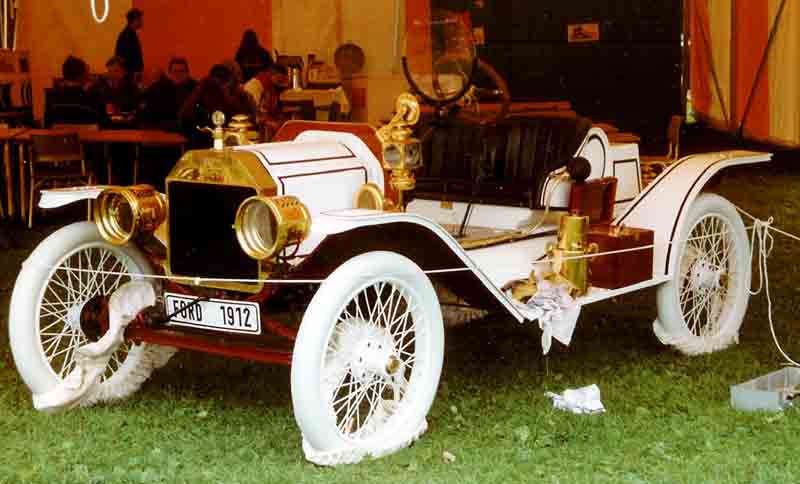
seven, Henry Ford announced the Model T was done. Way the next day
he and Edsel drove out of the Highland Park plant in the last Model T and that was that. That's right, because then they switched over to the
Rouge plant and started making Model as right. Not not right after that,
I think there was They were out of production for like a year or something like that, weren't they. Now they had they had a few came out
in December of that year. Okay, so they got some. But I
mean, just just imagine how times have changed to the extent that you know, someone could announce, oh, we're done, and the next day they're done. Okay, isn't It isn't like they're going to be done in three
months or you know, we're gonna run this this year out is the way it is now. I mean, it's just like we're done. Goodbye.
Well, you know Henry rand out with an iron fist and what he said?
What that that's how it happened. Yeah, and uh but I thought
that was that was rather rather interesting. Since we're on May twenty fifth,
so and speaking Afford, we should bring in our our friend Keith. Noon.
Hi guys, Keith. Great to say. We've got Michael robt A
from S and P Global Mobility as well. Michael, great to have you
on the show. Good afternoon. I hope you can hear me. Okay
a lout and clear a lot of clear and Keith too. I don't Uh.
We got a lot to get into today, especially focused on suppliers, and I think that will be a nice segue later into the show as to what forward talk about and so much I want it talked about at the capital market stay so so, Michael, you did a report for SMP Global Mobility about suppliers in the transition to EVS, and and in that you suggest that there are some suppliers that think that EV may be a fad, and consequently
they're not taking measures in order to address that. So I mean, what
are the nature of these people? Are they living in a cave? That's
a great point, Gary, Um, you know, no matter of us in the forecast industry to you know, chirp in the ear and say listen, it's not a matter of of this, but when um, but but you know this, this is the world they know, and they understand in the ice world, and they have relationships in the ice world, and they there's some suppliers and again I would say it's a small subset, pretty small subset, but nonetheless there are some that basically say, um, I just don't believe it's going to happen. There's not enough lithium, the infrastructure is
not ready, pricing is too high, and and you know, every new technology, every new shift in global manufacturing, you know, basically it never started out easy. And I think we're at that point right now. And
this, you know, this whole transition is going to be pretty lumpy.
I think we all would agree that there's gonna be the world smooth and EB transition is going to be. It's not going to be synonymous. But but
to your point, Gary, um, I would say that there are suppliers out there that just don't believe that it's going to happen and want to be there sort of to be able to catch the industry when it comes back to them. And I'm not sure there's gonna be much to catch. So Michael
Love me guess here. These are probably smaller suppliers Tier two and three,
and they're probably on the ice side of the business, ie ice power train.
Is that right? You've hit the persona pretty well dead on. These
are family run companies. They they're on their second or third generation. They've
done very well at what they've done. They usually have a they usually have
an advantage in the market, and which means that they probably have decent margins, and they start to see those margins eroding because we've got programs that are elongating. In other words, you know, I might have been on let's
say a five or six year engine program and then the OEM taps you on the shoulder and said, yeah, I don't really need to redo that engine married anytime soon. So you know, your throttle body or your valvet you're
supplying, just keep supplying it for a couple more years, and you're thinking, oh, I would rather have replaced it was something that made a little bit more money, but okay, I will And that's exactly what's happening over and over and over in our industry right now. It seems like they're not
thinking ahead here. I mean, you know, even if evs catch on
slow, they're going to replace ice vehicles. The entire market's not going to
increase just because evs are coming into the market. Evs are going to take
sales away from ice products or do they not see this or they just have their head in the sand. I think there's a little bit of head in
the sand. They also are looking at case studies. I'm gonna call the
case studies the situations of the last year or two or three, where we'll see that that bab came into the market and it was a really slow launch and it hasn't done as well as everybody thought. But we've got to remember
the last two or three years, we've had a calamity of one thing after another impact this supply base in the industry from from a supply perspective, so you know, it really hasn't been the best example of what has been going on in the industry. So but to your point, it's a matter of
these will start to come in and burying your head in the sand may only work if you're strong in the oct market and maybe that's maybe that's what they're looking for. So yeah. One of the things that Jim Farley and Doug
Field, you know, the chief technology officer at Ford, has stressed is particularly this week at Capital Markets Day, is that this isn't just about an electric propulsion system. They see the bigger revolution coming in software. So it's
not just the mom and pop ice you know, tier two, tier three players, it's the tier one players who make those black boxes that control all sorts of functions in the cars that the customers interact with. Ford wants to
bring all that in house. Doug Field wants to control all of that.
In fact, I was in doug Field's breakout session on Monday, the second breakout session, and if you'll indulge me, I'm going to read to you a response he gave to a question. Somebody said to him, you're talking
about a massive amount of content of software from your suppliers. How do they
feel about that? And he says, suppliers that have content that's woven into
customer functions, it's not going to be possible to keep running the business that way. The supply base doesn't like that. It's not a big surprise because
they could be relegated into contract board stuffing, board manufacturing if they don't add value through software. So I would say there's still a place for partners who
can have modular pieces of software and can do it really, really well, but they have to be great at it, and they've got to be willing to live with our APIs and build on our platform, and if they don't, they can't be part of the future. Keith, that's amazing. You
know what you're talking about there. I was in that session as well,
because you know, what Michael has brought up is largely two or two or two or three smaller suppliers that are to ice power trains. What you're talking
about there impacts the multi billion dollar multirational the big tier ones that have boied massive amounts of resources into software. Right, so you know the way,
and Michael knows this so much better than I do. So please Michael correct
me if I'm saying anything wrong here. But the way those companies traditionally have
improved margins, improved volumes, added value was by creating content that customers did touch and control and feel. That was a differentiator. If you could have
a better touch screen, screen, a better IP, whatever, you would win the day. Now Doug Field is saying, no, we're going to
control that, and you know that is going to be something we're bringing in house. That's a huge change for the supply base, and it's there's going
to be a lot of losers in that scenario. I would agree there's a
lot of suppliers that, as part of their business plan had assumed, Hey, I'm going to make hardware, but I'm also going to make much better software. I can do it better than the OEM, right I will.
I will say that there's a lot of suppliers that can do that that there's a lot of suppliers that are are very very good at what they do and the OEM doesn't have really a capability in their space. But but what what
what Doug said is basically synonymous around every OEM. They want to control anything
that the customer touches or fields. They want to control that, and that's
a change. But Michael I mean getting getting back to the study that you
did, and you know more more of the mechanical aspect of these things is I think we're sometimes lose sight of the fact of, you know, how much software Dug Fields wants, it doesn't matter because it has to go into a vehicle that people are able to drive and steer and break and so on.
And um. You know. One of the things that I think is
interesting and it is that, Okay, you know, you point out that there are one point three billion ices out there right now and that you don't see, you know, the change to full evs for some years to come.
Absolutely, And and so I guess what I'm wondering about here is what happens to these suppliers. Do they do they just cease to exist or are
there alternatives for them to do something else? Well, the more proactive ones,
and listen and John John brought it up earlier, there's a lot of mega tier ones that that saw this coming years ago. The counties, the
Bosches, the magnas, you know, they all they all saw this coming and basically said to themselves, we have to get ready for it. So
they went off and they invested in the BEV space, whether it be in um in in emotors or other factors are you know, basically condensers and other other electronic content that's required for the BEV. But but to your point,
the smaller companies are definitely uh, you know, you've got to classify two suppliers in kind of two spaces in the ice space. In the ice space,
there's your pure oe supplier, where you know, there's maybe one per vehicle, and once the vehicle is built, you usually don't have much of an aftermarket for it. I'm thinking things like intake manifolds and throttle bodies and
uh, you know, and and cylinder heads. You know, you don't
hear often, hey I'm going in to get a new cylinder head. Job.
It just doesn't happen these days. So that's kind of one per vehicle.
But then there's a lot of suppiers that have an aftermarket tail to them.
You know, the belts, the hoses, um, you know, and and and you know, breaking and other parts of the vehicle that are a little bit more uh uh you know, where where there's where there's usage and there has to be replaced, they can have a longer tail. And
that's where the one point three comes in. But what we tell a lot
of suppliers is listen, once your oe market is done, it's done.
There's there's not a lot of aftermarket after it for a couple of these players.
You know, you mentioned about these major tur wants that saw the EV revolution and coming and got on board with it. Michael, But I mean
they came up with electric motors, you know, fully integrated systems, gear reduction units, you know, the power electronics, e axles. I mean,
do they realistically have a chance of selling those to the major OEMs when it, like Keith points out, Dugfield says, no, we want to bring all that stuff in the house major OEMs. I think that that's going
to be a problem. They look at that and they look at that as
basic content of the vehicle. They want to control more of the value out
of the vehicles. So your your gms, your forwards, your damelers,
your you know, they have all basically built out emotor capability. They're they're
obviously joined together with battery suppliers. They're making battery packs, some of them
making their own battery enclosures, some of outsourced it. So I would say
the smaller OEMs to gain some level of scale and capability. They may look
to those suppliers, but but that's that's been a real kind of head knocker for a lot of a lot of suppliers. They thought, let's get ahead
of this. I'm gonna I'm gonna introduce emotor capability and e drive capability.
But you know, the OEMs came along and said, yeah, I'm okay, I'm gonna make my own and plus the my my union partners want me to employ as many people as what I had before, So I'm going to do this in house. Plus I think I can do it better and with
scale um and so you know, it's been a it's been a strategic issue within the supply industry, and it's going to force a lot of change.
People are gonna have to rethink their business models entirely. They're already they're already
doing that right now. I mean, you're you. You've seen several oms
kind of split their businesses. You've seen uh many many Tier one split their
businesses. There's a lot of new joint ventures out there. Uh and and
you know, suppliers that have more or less said, well, I'm gonna wait for this to kind of form and then I'll make my choices. The
problem is is at the early platforms, and by the way, there aren't a lot of them. Just to let you know, the early best platforms
have already been engineered, they've already been sourced and either they're being built right now are going to be built over the next year or two. So so
that train has left the station. So if you're sitting at the station,
well, all another's train coming down the tracks, No, there isn't.
It's way around the bend, and you may not be there long enough for when it arrives at the station. Michael, are there Are there any new
engine programs? Are there? You know? How does that look going forward?
It's very very limited. There's I think GM was out there saying that
they've got one coming. And there are some what i'll call vocation based vocation
based engines and other engines coming out for a reason because they have to be redesigned for emissions or some other reason. But for the most part, the
onlyums are all done designing engines, maybe repackaging them, but they're all done designing engines. It's so funny because I have a story coming out in Business
Week this week about all the redesigns of the mid size pickup trucks, which are almost all ice. You know, the only even partially electrified one will
be the hybrid that Toyota is coming with. So those are not new engines.
Michael's right, but they are still selling and getting margin on those ice vehicles. They are, but there is not a lot of new technology.
And the technology is coming in maybe in hybridization of them, maybe in a mild hybrid or a p have or a full hybrid type of structure, or maybe maybe for emissions compliance. Maybe there's some additional things that they're doing.
But you know, frankly, there's just you know, if you want to look at it on a scale of one hundred percent, I'd be floored if if more than ten percent of resources are being spent on on ice engines these days, you know. But it is interesting. I mean, the OEMs
are investing in ice. You know, GM announced what a month or two
ago it was putting eight nine hundred million dollars into it's V eight engines.
I was recently at a manufacturing equipment company that has equipment that is used on ice manufacturing lines, you know, piston engine lines and What was interesting was they were not building new equipment. They were refurbishing old equipment from General Motors
for it and Stilantis and others too, Commons and you know, the agg equipment, the off highway equipment. So they want to keep their ice lines
viable, efficient, modernized, but they're using as much old equipment as they can. And I asked the guy who ran the facility, so do they
save money doing it this way? And he goes, yeah, they save
some, he says, but think about it. They've got to disassemble this
stuff, put it on trucks, ship it to us. We've got to
unpack it all. We've got to go through everything, evaluate what can be
used or what's got to be replaced, and we got to put it all together, get it up and running, get it to you know, an SPC level that they find acceptable, just assemble the whole thing, ship it off to them where they got to rebuild it and do the same thing all over again. And I said, so why do they do it? Then
he says, because then they don't have to write it off. And as
you guys probably know, right offs, that's an expense. It comes right
out of your bottom line. So they're trying to keep their ice production lines
as viable as possible and looking for every nickel and penny that they can save to do it well. They still need to make the money off the ice
vehicles. That's it's financing the EV strategy. That's why there's going to be
a Mustang dark horse. You know, we're still seeing lots of talk about
horsepower out of Detroit. You know, John, you brought up a really
interesting point though. You know, right now, right now, our capassionalization
is at a certain level. But as we require fewer ice engines and even
coming in the twenty four, twenty five, twenty six time frame, we're going to start to scrub off a couple percent every year. And as we
start to scrub that off, you know, everybody thinks, well, once they get down a fifty or sixty percent utilization, maybe i'll wave the white flag. Smarter suppliers they see that coming. They're not going to wait till
sixty percent. They're gonna say, hey, I'm already between eighty five and
eighty percent, and I don't see an avenue where I'm going to get better.
So to your point, they got to stay as efishing as possible and be able to whittle down their operations as much as they can to stay as efficient as possible as he reduced their capacity. Going forward, it's going to
be a fine art building ice components over the next decade, Michael, And listen to what you're saying, because you know, once you get below your break even point, Holy Kyle, you know you're just losing money at that point. And I don't know where their break even point. Let's just say
for argument's sake, it's fifty percent. But when you get to that below
that break even point, you got to go back to the automaker and say, either you raise your prices dramatically or I stop shipping tomorrow. That's what's
happening right now. Hey, you know, we know a lot of people
on the oient pacurement side and the great volume of their day and also on the supply side by as well, is basically going back and restructuring prices and trying to convince your customer I've got a real problem here. And sometimes it's
the squeakiest wheel that gets the grease, which is unfortunate. So it's I
would say, and I know the supply relationship survey came out earlier this week, but I would say that that is probably the biggest bonu contention right now in the industry, bar none. But but going back to what Keith was
talking about in terms of the you know, everybody's launching their new mid size and they're putting internal combustion engines in them, so there's still life for those things. And then you know, I was I was looking at some numbers
today that just came out of Europe, and so we look at Europe and like, oh boy, they're really ahead of us in terms of electric vehicles.
So right now, electric vehicle take in Europe is fourteen percent fourteen The take for diesel engines is fifteen percent, gasoline thirty seven percent, mild hybrid sixteen percent, hybrids nine percent, plug in hybrids nine percent. So with
the exception of that fourteen percent that's electric vehicles, all the rest have gasoline or diesel engines. I mean, there's still a whole lot of those things
being built. Yeah, But Gary, the one thing I think we have
to all remember is that we have and I've been quitted to saying us in the past, we've bebbed on the edges. So far, we've done,
you know, large hummers, and we've done small bolts, and but we having bebbed for mom Pas Smith and des Moines that own an Equinox or are an Edge or something like that. It's basically where the meat of the market
and where the volume is, and that's going to be the tailfell signed for the industry is can you sell batter electric vehicles to the masses in the middle of the market. That's where the volume is. And the Europeans feel that
what back, they're I guess leading that it's going to go that way.
We are as well a little bit later. But that's going to be a
real telltale sign going forward. And Michael, don't you think that's an unanswered
question at this point because currently our mainstream vehicle is the Model three, which is not well, it's getting closer to mainstream prices, I guess with all the price cuts from Elon, but it's not exactly mainstream priced at over fifty thousand dollars. So we haven't had the equinox test yet, have we?
No? Not really. I mean I think you know GM's coming out with
a couple of vehicles. Stelantists is for it is as well, I would
say twenty four, twenty five, twenty six, we'll be able to come back on this show and say, well, let's see how it occurred over the last three years, and that's going to be the real telltale sign, right. It's just the question is has all of the volumes so far just
been those early adopters, the first mover crowd who want the latest technology, or is there some regular folks who are buying it because they think it's a better mouse trap. I would say that there's probably some regular folks, especially
Mark Blake markets like California, that that you know, basically feel hey, this fits my lifestyle better. But there really haven't been a lot of vehicles
for them to choose from, like you were saying, I mean in that sort of thirty five to fifty five or sixty thousand dollars range, there's not a lot of product out there. That's where a lot of the newer product
is starting to come in. And then so how the OEMs how they put
bring that into the market will be really interesting for sure. Michael, I
love you. You created a new verb for us that we haven't bethed for
this or we haven't beved for that. I love it. Oh, I
got another. I got another one. Webster is I'm sure is going to
call me. But the word call ops you know where you know the supplier
gets a call on Thursday and says, uh, you know, I'm your customer and I don't need your stuff on Monday, so I'm calling you off and you don't need to send anything on Monday. That's a that's a word.
The last spires don't want to hear. Hey. Going back to what
Gary pointed out on the diesel engines, is there a lesson in there as to how this is going to go? Because if diesels, would you say,
Gary, fifteen percent? Correct? Yes, I mean there used to
be fifty percent five zero percent in Europe and now fifteen. Are there lessons
to be learned from the collapse of diesels in Europe? I think there is.
And a good friend of mine in the diesel industry told me a couple of years ago. He said, the diesel folks are very nervous about all
this let's call it petrol or gasoline volume going down, mainly because the gasoline guys cover a lot of burden for the diesel folks. And so if if
you got declining gasoline volumes and diesels also declining, maybe not at the same rate. They were covering a lot of burden for them back off his burden
and other factors, and now diesel's got to carry more of its own load going forward. That is a big concern for the diesel industry to a point.
I know that you know forty yeah decided to you know, sell off their exhaust their exhaust manufacturing application down in Columbus, Indiana. Why probably be
doesn't want to make sure that there's still more technology coming and they can keep the diesel engine running. You know. But John, one of the things
I think that we got we got to think about in terms of diesel in Europe and the fifty percent down to fifteen percent. I mean, the immediate
thought is, oh, Volkswagen, that's that's what did it. But if
you think back, it used to be tax policy made it far more appealing for people to buy passenger cars that had diesel engines than passenger cars that had gasoline engines. And so, I mean it was it was a tremendous,
tremendous difference which caused the big rise in diesel. So it comes down to
a legislative play. And you know the thing I sort of wonder about is
is that so you may have seen today twenty seventh Senate Republicans sent a letter to the Biden administration saying, hey, you got to slow down on this missions thing. And earlier this month, one hundred and fifty one House Republican
members basically did the same thing. So what I wonder about is, Okay,
if the legislation changes, you know what happens then? And so so,
Michael, does that make the people who think that maybe evs are not going to be you know, all this in a piece of cake, like, oh, this is great. You know, we have this opportunity because
there will be a new administration. Rules will change. Funny you said that.
I got that very question this morning from a client at a presentation.
And the one thing that we highlight is that we have to remember we're part of a global automotive industry. It sounds a little high, you know,
high and mighty, but we really are part of a global automotive industry.
And we see the Chinese moving very very quickly into bev's. We see the
Europeans, whether they want to or not, are moving quickly into BEV.
You know, someone once said, why don't we just you know, continue with ice and just forget about all this bev and And while it sounds on a face of it, sure there's plenty of oil, why don't we just do that for another twenty thirty years? I think that as our place in
the global automotive industry, we would slip very very quickly. Number one.
Number two, we are only fifteen percent of the global vehicle market. I
think that's something else everybody thinks. In North America, you know, basically
drives the horse or drives the truck. It doesn't. China is a third,
Europe's close to eighteen twenty percent, and then we're about fifteen percent.
So for good or for bad, we really kind of need to follow the rest of the world from a technology perspective. Doesn't mean we need to follow
him in lockstep, but we can't fall too far behind. Well, and
this came up today. Jim Farley did the fireside chat at a Morgan Stanley
conference today and he was asked, you know, sort of what rival are you most concerned about or do you most admire, And he said, China's BYD, which is going to surpass Tesla this year in global EV production, and he said, seventy percent of globally V production comes out of China.
China is the powerhouse, he said, in the electric vehicle future, and that's who we're all chasing, Not Tesla, he said, My main rival is China, not GM, not Toyota. To your point, BID is
exporting and will continue to export. If they're smart, and they are,
they're going to move production to the regions that they're selling. I think that's
one thing about BEVs that a lot of people don't realize is that these vehicles are not going to be as exportable as as our previous ice versions of vehicle.
So, for instance, the Europeans are already very aware of that.
You know, the Mercedes, the BMWs, of Volkswagens, even the Jaguars know that the days of exporting a good amount of their production over to China, over to North America and other regions, those days are that volume is going to decline significantly in the BEV world. Why because it makes more sense
to build those vehicles locally because of logistics and also now because of regulatory and trade legislation. To get to your point, there BYD announced it's looking in
Europe for to put in an assembly plant, and this year China has surpassed Japan is the number one car exporter in the world. And China is just
getting going. I mean, they've got so much overcapacity there and way too
many car companies making way too many different models. Their only solution for any
hope at all of surviving is exports. So I think they'll do like four
million vehicles this year, or maybe it was last year they did four million, but we're going to see a lot of Chinese cars get exported. I
think there's a growing backlash in Europe, and that's why BYD has decided, hey, we better put an assembly plant in there, and not in Eastern Europe. We need to go to Western Europe so that the supervisor to reboards
with you know, half the labor content of board members doesn't come breathing down our neck and you know, try to keep us out of the market entirely.
Well and Farley talked about how they've let BYD into Europe, which I found ironic because Ford is reportedly talking to Bid about selling them their Sar Louis plant in Germany, So who's letting Bid in exactly. Yeah, Michael,
I'm going back to here your studying. One of the one of the points
you made is in this goes to something you just said a moment ago that there it's no longer a globally based industry and that there's more localism going on.
Explain what that means and what the implications are for both suppliers and OEMs.
Well, I'm actually going to use an example, so the recent IRA agreement, you know, the Inflation Reduction Act, which you know it doesn't really describe what it really meant to the automotive industry, but it really changed the way that the oniam's look at the industry in North America. Where they
where they point their value, add looking at upstream, where do they refine their materials and the like I would say, And again I'm I'm going back almost sixty years. The US Canada Autopack of nineteen sixty five is probably the
most important automotive trade legislation to hit this this continent ever, and I think the IRA is as impactful, if not more. Why because it basically says,
if you want the rebate to apply to your vehicle, you had better make the battery locally. And if you if you also want an additional rebate,
you'd better find a way to get the inputs made locally or at least refined locally. From a value add perspective, that is a major shift.
I mean, we've had years where we would bring in engines from China and Europe and put them into vehicles in North America and think nothing of it.
But those days are are really kind of winding down, and we're turning.
We're going from a globally developed vehicle but a locally sourced and built vehicle, which which is a major difference. Ye hey, you guys, we've got
to take a quick commercial break. We'll be back in thirty seconds. A
lot more to talk about here. How do you bridge stone tire stop shorter?
On what roads? Is there hydrotrack technology? But you don't have to
know how the science works, just where the brain is. What really matters
is they're bridgestone. The world is changing at an ever increasing pace. No
matter what the mode of transportation, there is always the need for an efficient propulsion system and that's exactly what Board Warner has been doing since the earliest days of the automotive industry. All right, thank you, Bridgstone and Board Warner
for that support. So back, Keith, Let's go back to that capital
markets presentation that Ford had today. It went on for hours. I was
scribbling notes like crazy. I think I learned a lot, but I'm fury
what your takeaway was. Yeah, you know, it really didn't move the
stock. Unfortunately. They were trying to convince a skeptical Wall Street that they
can get to an eight percent EBIT margin on their EV business by the end of twenty twenty six from the three billion and losses they're predicting this year on that basis, and just reading the analyst reports, it didn't seem like they closed the deal on that quite yet. They've got a lot in front of
them in terms of cost cutting, you know, and the analysts are in this kind of show me state of mind because Ford's had very up and down financial results in the last couple of last year, right right, they and they had big misses. This most recent quarter they did well, but the
two previous quarters were big misses. So you know, the honeymoon is well
over for Jim Farley, and they really need to show that they can do this thing that right now sounds like a stretch to investors, which is why their stock is languishing this year around eleven bucks. It's pretty much unchanged for
the year. Yeah, Michael, what are what are your thoughts of the
whole capital markets day. Well, I obviously they laid out their game plan
from uh, you know, especially with respect to the software and how they address the markets. UM. That is interesting. The note about the fact
that we're not going to be everything to everybody, I think that you know, that's been that's been obvious for a little while. Obviously there's there's really
no sedans left in the in the in the in the portfolio. Um.
And you know, like most OEMs, they're trying to find uh, segments of the market that are high volume that they are able to gain appropriate economy scale and and be competitive. Um. I you know, be honest,
not only for it, but virtually every other manufacturer as as we look at this sort of BEV the ice transition are excuse the ice to better musition, that's oxymoron. But as we as we go to ice to BEV, you
know, these only ms are going to also be challenged not only to pick the right BEB suppliers or BEB content suppliers. But also, as they're saying
earlier, keeping their ice suppliers, keeping them, keeping them afloat, keeping them active and viable, that that is going to be a real trick over the next six to seven years for sure. Right, So I got a
question, I got a question for for for Michael and John. Okay,
So, Keith mentioned that there was the three billion dollars loss on Model E, the electric electric in software part of the business last year, and that in twenty six they want to go from forty percent forty point six percent down to eight percent up. Okay, So so we're talking about in four years
from a manufacturing standpoint, can any company make that big a shift? And
how can they possibly do it? Yeah? I think they can. You
know what Ford has also said is by the end of this year, Keith, you chime in on this. I think with the Mackie they say they're
going to be almost break even from a contribution margin. Stampoint the contribution margin
meaning you know, all the raw materials and the labor and everything that goes into making your car. So, okay, almost break even is not breaking
even. But I know, but Gary is you know, scale scale,
scale, scale scale, but even that changes everything, even that almost break even target is getting a lot of skepticism. Emmanuel Rosner credit three. So
I think it is feels like they need to cut the costs of their evs and half to just get to that bogey and never mind the eight percent by the end of twenty twenty six. So I think I would agree. I
think a lot those is being placed on the shoulders of services. You know,
we're gonna have over the air updates, We're gonna be able to sell content. We've heard of oms that will sell a low trimmed vehicle and through
over the air updates and other augmentations be able to give them a mid trimmed vehicle while it sits in the driveway. So you know, that holds services
ide. And again it's still a lot of it has to be proven out.
But we've seen GM Ford in and virtually every other OM want to go down that road because they want that sort of reoccurring value and revenue stream going forward. And I'm sure they're counting on that as well. Oh yeah,
and they're not the only ones. And look, you know, Walter,
it's got good reason to be skeptical, especially with Ford. They got to
execute. They got to show them that they're they're doing it. But Mary
Barros saying in the same thing at GM, they're talking about similar EBIT margins on their evs in a similar time frame, and she cites two other things that, you know, besides making the evs taking costs out. You know,
Farley mentioned they've taken five thousand dollars cost out of the Bockey since it's been watched, So they're making progress in that regard. But you know,
Mary has talked about selling subscription services and things like that, and the government money. You can't ignore that. I mean, there's a whole bunch of
government money for building evs. And that's how I can't remember if she said
six percent or eight percent. Maybe she said, you know, mid single
digit. But in any case, you know, for it's not the only
one saying this. If GM is two. Farley made a good point today
on another way of looking at EV costs. Obviously, the battery is the
biggest cost, and he said we are large battery obsessed in this industry because everyone is trying to deal with the range anxiety question. And he says that
really isn't the right answer. We should be looking for smaller battery solutions.
He said, humans are just naturally inclined to stop after two hundred miles in refuel, So why do we need a battery that weighs a tongue to go to a five hundred mile range. That's a pointless expensive exercise. And he
says we need to rethink the whole battery equation. But isn't that's what if
that's what the customers want, then isn't he flying in the face of his customer. I think what he's trying to say is that's it's kind of an
irrational fear and that we need to sort of if you will, re educate the marketplace that you should buy just enough battery for what you need. You
don't need to over buy because these things are really expensive. I mean we
see more of that in Europe, to be honest with you, Keith, where the European OEMs, remember the europe And OEMs. You you paid a
registrar vehicle based on the weight of the vehicle. I mean, yeah,
there's a footprint issue, but but basically on the weight of the vehicle.
So a nine thousand pound hummer is not going to fly real well in Europe.
Because the registration cost is going to be very, very very high.
So you know, they're trying to reduce the size of their batteries as well and make them, you know, a little bit more appropriate to the range that the customer maybe expects out of that vehicle. Yeah, but I go
back to what Dudfield said too. He's promising three hundred miles of range at
seventy miles an hour, you know, so this is not a combination city highway. I think city highway. They're talking three hundred and fifty miles range
with a battery one third the size of what they've got right now. So
he's not just trying to talk customers into buying a smaller battery and accepting lower range. You know, based on what I heard them say, they're driving
for far greater efficiency in the evs that they're coming out with that will allow them to use a smaller battery. I think I'll cost that way. It
speaks to them wanting to go all in on the LFP battery chemistry because that's a lighter battery that charges more quickly. And so you know, the deal
they have with CATL for that plant and Marshall could be a view of the future. Hey, Michael, we got a quick question from the chat room
here from Michael Rhodes wants to know how many evs I'm going to build in Mexico this year. Not many. I have to I have to check my
numbers. I know that they're launching I think next year if I'm not mistaken.
Now someone's going to correct me on that. But but they are launching
out almost Atispe. I don't think it's the end of this year. I
think it's into next year that that launches. That's the Blazer, right,
that's going to be made in Mexico if I remember correctly, that's correct.
And I think the Equinox two maybe yeah. And I think that gets back
to your earlier question, John, not to kind of circumvent it, but there there's just greater economies of scale as we moved to BEV. If we
only have one or two battery chemistries, we have maybe four to five different emotors among all different vehicles that are being built, whether it's GM or four to whoever it would be. Count the number of engine families we have right
now. Count the number of transmission families we have right now. If you
can reduce that and change them on the fly with over the year updates.
It's a whole other world from an economy's scale perspective. Just to get back
to Michael Rhodes a minute, you know, I think the answer is not many this year. Next year, it's going to be a whole lot more
than GM will build in Mexico. And don't forget the Mackie is made in
Mexico, for it is building in plenty of electric vehicles in Mexico, and they just doubled capacity at that plant, So six figures of Locke production out of Mexico. But to your point, launches, I think are going to
be different. Though in the bed world we have a number of OEMs.
It's kind of like the Wild West. Everybody's doing it a little bit differently.
I make my battery bit differently, my battery box is different. I'm
using a different emotor. We spend one hundred years figuring out how to make
the internal combustion engine, and for the most part, you know, it's not all the same. But there aren't a lot of variances in terms of
how we build engines. But in the bed world it astonishes us how every
OEM is trying to do it a little different because they might have a better idea. But I will say economies of scale is going to improve very very
quickly in the battery space. I had a buddy of mine from one of
the one of the D three came over and we're between a couple of beers.
He said, you know, if we are low versus our competitor by ten bucks a kilowatt hour on one hundred kilowatt battery, that is a major disadvantage. That kind of disadvantage does not exist in the ice world right now,
but he definitely could exist in the battery world. So this is why
it's so important to gain economies of scale. So one of the quotes that
I thought was interesting that kal Kumar Galhatra said, who's in charge of Ford Blue, and I want you guys to unpack this for me. During the
presentation, he said, quote, we are less exposed than our competition during this EV transition. More than seventy percent of rangers sold have our sold in
places with minimal EV infrastructure. So so what did he mean about the less
exposure and why did he point out that there are a whole bunch of rangers being sold where they can't be charging batteries. I think he's saying we're a
more ice dependent company than others. I'm not sure that's actually a virtue,
but it is if you run Ford Blue and you know, the Ranger is a global vehicle. The US is not its largest market. So you know
places like Thailand where they sell a hell of a lot of Rangers, I don't think they necessarily have a great charging infrastructure. Look, this has been
Toyota's argument, right that, hey, when you look at the developed world, they're not ready for the EV transition. It's going to be a long
time coming there. And that's why Toyota has been arguing, you know,
in favor of hybrids and pehabs instead of just pure eyes. Absolutely, And
I think the other factor is everybody talks about infrastructure, but there's sort of three arguments there. One is are we have enough charging stations or charging ports?
Number one? Number two are we have enough power? And number three
is a power going to the right places? And those are read different questions.
If you talk to your average utility, they will say, yeah, we've got enough power. We've got some peak demand issues, but we'll figure
that out. The bigger issue, to be honest too, is the distribution.
How we distributed the right power to the right places, And those are questions that don't get answered in any year. And talking to some of the
utilities, those are five, six, seven year initiatives to move power and substations to the right location. So you know, there's a lot of questions
still unanswered in this whole process. And Gary getting back to the point that
you're raised there, I think this shows a fascinating bifurcation in the strategy of the different OEMs going after EVS. So GM has said, hey, Ultium,
everything's going on Ultium and it's going to fit our entire different products, our entire lineup. We'll just put different top hats on different wheelbases and tracks
and ba boom. We're there. Volkswagen the same way, doing all kinds
of different models, Hunda Group doing all different kinds of models. What Ford
has said is we're not going to do that. We are going to target
specific segments of the market and we're going to optimize those vehicles for those duty cycles. So you know, we're gonna have a Mokey that is, you
know, performance oriented. We're going to have a lightning that's just going to
be a pickup truck. We're going to have any transit that is just going
to be for commercial vehicles. And so maybe that's what Kumar is getting at
that we're less exposed because we the Forward Motor Company speaking on behalf of him.
We're just going into targeted segments. We're not going to try to cover
the market. See. I was wondering if basically one of the things he's
saying is is that you know, we're doing great with Broncho. Let's let's
not you know, fool around. We're doing fantastic with Bronco. We're still
dominant in trucks. And oh, by the way, we have this car
and you mentioned it earlier, Keith, We've got this car called a Mustang now with an E on the end, but a Mustang, and people really love these cars and we are not going to abandoned that for the foreseeable future.
And we actually make money on these cars, which we need to do if we want to make the other ones. It's very important, No I,
John, I think your point's very important. So I want to come
back to it a little bit that so Ford is saying, we want to pick our hits, and in fact, they now seem to sort of apologize that they're in the two row crossover EV segment with the Machee because Farley feels like that's the commodity segment. There's gonna be a one hundred players and you
won't be able to get price or margin in that segment. So that's why
they've cut the price of the Machi twice this year to match what Elon's doing with Tesla. So they want to be in segments like full sized pickup where
yes, new players are coming in, but you'll never get a hundred of them, you know, You'll it's doubtful you'll see a Hundai full sized pickup truck, you know. So they want to be in a segment like that.
And the other thing that they talked about, and I actually think this is in a way sort of a missed opportunity on Campa Markets Day, is they're going to do is three row crossover suv and they feel like that is also a market segment that won't be as overrun. GM did a brilliant PR
move by announcing their electric escalade the morning of Capital Markets Day, which is of course a three row suv but so that they duck Field showed a little schematic of the vehicle behind them. But you know, and I know they're
trying to keep secrets and so forth, But to me it was a missed opportunity. I feel like they could have convinced more people, even if it's
just a design book, if they would have rolled something out on stage and showed it to people. You have to think outside the traditional box of how
you introduce cars and when you introduce them. What would Steve Jobs have done,
what would Elon Musk have done? You know, they would have rolled
something onto the stage. They would have shown something more than a PowerPoint presentation.
And I feel like that was a missed opportunity for forth. Wow,
good wine, you know, Keith to your to your point, though you talk about two row and three row and we've done we've done some analysis.
What's interesting is as we go to battery electric, you could almost go down half a segment in terms of size. So we traditionally an industry have thought
about CS and CDs and d's and ease. You can almost go down a
half segment and have as much, if not more interior spacing your BEV than you had in your ice and uh and that has not that is not lost on a lot of oms. They also understand that making the vehicle bigger doesn't
exactly reduce range a significant amount like it does in the ice world. Because
you've got you're able to recapture a lot of that energy with region and a lot of other factors. So the dynamics are much different now in terms of
how they segment and white space that they look for in the future. Right,
those are great points and and Farley seem to be like teasing that a little bit. He was talking about how the third row of their crossover will
be larger than a third row you've ever seen. So I just think they
have all this new interior space they can play with. It doesn't all have
to be thrown into a fronc. There's other ways to use that open space,
and we're going to see those executions. Keith, you're right. But
you know the little schematic you talked about of them showing that three U three row SUV. The schematic that had a person sitting in that third row looked
like their knees was in their chin. It looks tightly. It didn't look
very real me to me. I mean, maybe they should have cheated on
their schematic again, missed opportunity, John, they should have given us something that was a little more dazzled than what we saw. Yeah, all right,
So here's another quote. This is from John Lawler, the CFO of
Ford, who said, quote, disruptive technology allows us to leverage foundational strengths to build new capabilities and enriching customer experiences and deepening loyalty. Could any of
you guys tell me what disruptive technology Ford has? Well, I know,
I think to be yeah, no, I think to be fair, I mean anything that's new to uh, you know, new to the market in terms of how it's executed, whether it be like I was saying earlier over their updates or um, you know, some of the new drive technologies, and how batteries are charged, and how they um wireless versus non wireless, all these other factors. Though, you can almost put those into a disruptive
category bucket because it is all new to the customer. This is everything's basically
first in any of those Um no, I when I don't know there, I'm sure there's a couple that's that. I'm sure that they have. They've
patented and they're going to be first in UM but but it's all disruptive technology to most of the especially the mass market buyers. I think we can't lose
sight of the fact that your average buyer has not sometimes even ridden in a bed yet that day's coming and they're going to be looking at it as a consideration vehicle over the next two to three to four years. Is more product
is available to them in their in their price category. See, I think
he's talking about something else, you know, because when you get into battery chemistries or motor windings or asynchronous or permanent, the public doesn't know any of that stuff. They don't even care. It's too confusing. I think he's
talking about digital services in the car, and you know, they're all taking their queue from China right now. China is in the lead by a wide
margin and providing that in mass market cars. And that's my read out of
it. If Field is talking about is providing people in the car with a
wow factor that separates their brand from others. I mean, there could be
more to come, Gary, but what we know about right now is just them refining something that's already out there. So they've gotten sort of good reviews
on Blue Cruise. They are not first by any stretch with that technolog but
they feel like they have some sort of competitive advantage. And with LFP batteries.
Farley today was talking about, you know, getting you know, two hundred miles of range in a ten minute charge. Well that would be a
game changer. So, you know, but they're not the first with LFP
batteries. You know, Tesla has them, so so no, they're not
the first, but they are taking other people's disruptive technologies and I guess trying to make them more mainstream. See what I'm thinking here is is that this
is this is I think a cursive Detroit where Detroit thinks that it's always been first, it's always been best, it's always been biggest. And Keith,
as you pointed out earlier, you know, Wall Street didn't exactly say, Hey, these guys really had it, And so Adam Jonas of Morgan Stanley wrote, we suspect the ultimate manifestation of Ford's transformation may follow a materially different path than that conveyed in Deerborn on Monday. So basically he's saying, you
know, these guys are really talking a lot of smack here and we think that maybe something else is going to be happy. And I think that,
you know, like, so they're talking about quality, and you know we mentioned earlier the you know, the issue of supplier relationships. I mean,
Ford is not at the bottom of the list. Ford is second from the
bottom of the list in terms of supplier relationships and it had the biggest decline of any company and it's been declining since twenty fourteen. And I'm thinking,
you know, quality is one of the ways that they're going to they're going to succeed in this business ball not if you don't have the suppliers on your side. Well, you know, currently their supply chief is their CFO,
John Lawler. He has a job on an entram basis because how Tai Tang
left kind of abruptly and how was the one who was handling that previously.
And by the way, that was also adjunct to his day job as head of product development. So they haven't really had a dedicated supply chiefs, purchasing
chief, whatever you want to call it, in a long time. And
you know, I think the suppliers noticed that. Yeah, you know,
it's I would say, quality is absolutely going to be critical. I talked
about earlier some of these lumpy launches. Uh, we're being we're building brand
new vehicles. Uh. And sometimes brand new are at least completely outfitted plants
or brand new refurbished plants. UH, new build processes. Sometimes a lot
of new suppliers that are coming in. Uh, we've had the skill,
uh the folks that are building the vehicles differently, A lot of new, new, new, new, new, and new means to us that there could be basically be some pretty slow launches and quality is going to absolutely be so critical. UM. I remember the days and you know, John Gary,
even Keith, you guys remember the days when Bob Eaton went on the stage and dropped the bag of parts on the on the on the on the stage and basically said, these are the carrier parts in the last Grand Cherokee.
And everybody's applauding, and a lot of us are going, wow, Uh, you you basically are building a brand new vehicle. I hope you
know what you're doing. Um. And and of course you know, those
launches can get lumpy, and we believe that the launches are going to be a bit delayed and the launch curves are going to be I'll have a much lower slope. Not all of them, but I think that definitely there's going
to be some good examples out there. You know, Michael, I've stutter
under Jim Harbor, and he always said, an all new product and an all new plant with an all new workforce is a recipe for disaster. We
have a lot of disasters coming so so so given that, okay, so, so, how does how does the consumer react to that? Right?
Because I mean, ultimately, if it's a bad product, the consumers the one who's going to be the one who's suffering. I mean, doesn't this
perhaps push back on their willingness or excitement about buying a new ev whether it's from Ford or anybody else. I think Gary thus comes back to that who
is the next level of buyer? Because the early adopters clearly did not to
push back on the awful quality of the early Teslas, with their huge gaps between their panels and door handles that didn't function, and all sorts of things that you know, just cars shutting down, screens turning off. All those
Tesla loyalists. Look how they are online, My goodness, they forgive every
sin. But will the next wave of buyers who are buying from you know,
legacy automakers. Will they put up with that? I mean it takes
them back to seventies style quality. I'm not sure they will, that's right.
But you know, you can have bad quality in the plant and still deliver the customer a good car, but it takes a lot of inspection and rework, which means you're losing all your profit along the way. So that's
going to be the dilemma. How do they deal with this all new product,
all new plant, all new workforce, and still deliver the customer decent car. And look, this is why everyone's struggling. Rivian's way behind,
lose its way behind. You know, Elon went through his production. Hell,
General Motors is going through productive They're all doing it. But what they're
doing their damnness to do is at least deliver a good card to the customer.
But like I said, they're eating it with the cost of bad quality.
They've also got the advantage of most of them. Anyways, going forward
with over the air updates. So where's the day of Well, you need
to get back to your dealer. We're going to reflash this ECU or whatever
the case might be they're able to do that a little bit more quickly, certainly with over the year updates. I'm not saying it's some sort of panacea
and it cures all because a hardware issue is a hardware issue. But nonetheless
they do have that in their back pocket going forward, and I think a lot of Williams are counting on that. Yeah, when they have OTAs for
paddle gaps, this industry will rock. One thing though we should not forget,
is you know, just a few months ago we had a forward lightning in the holding lot outside the plant erupt in flames because of a battery problem.
This industry is still figuring out battery fires that has not been solved.
So if that gets to a customer's hands, which it did on some teslas, as we know, that's a problem. That's really a problem for the
ev adoption and bolts and bolts. Sorry, I didn't need to believe anybody
out well, you know, to the point of over the ear updates fixing things. And so I was looking at the NITZA recalls and now admittedly this
is a small number, seven hundred and sixty four vehicles, but let me read what it says. Florida is recalling certain twenty twenty to twenty twenty two
Explorer vehicles. The previous powertrain control module update completed under Recall twenty two blah
blah blah blah blah, did not include the automatic electronic parking break feature when the vehicle is shipped to shifted to park as intended. In addition, the
rear axle horizon until monty mounting boat may fracture and cause the drive shaft to disconnect. So here was a digital fix, which presumably somebody had to go
to the dealership to get done, that didn't work. And so I don't
know that over the updates. I mean, we sort of imagine that all
of the information the packets are going to be sent properly. And I mean,
so before the show started, Michael, I mean, you had problems getting with your with your camera, right, I mean, and you've done it a million times using the camera, but you had to switch to your phone because you know, software is tricky business. I mean, and we
just sort of think, ah, it won't be a problem at all, Things will go fine. But you know, as we can see, not
necessarily welcome to the new reality. Hey, look, guys, We're at
the top of the hour here, probably a good time to wrap it up.
But Michael Keith, great half of the both of you guys on excellent insights, excellent information. Thanks for having me. Thanks John and Gary.
I'll see you next week. Indeed, I have another good show, So
thanks guys. Thanks everyone, take care. Autoline After Hours is brought to
you by Bridgestone Tires Solutions for your Journey and by Borg Warner Propulsion Solutions that support a clean, energy efficient world. If you liked this program, I
would like to learn more about the automotive industry. Check out our website at
Autoline dot tv, or look for us on YouTube on the Autoline channel.
About this episode
The discussion centers around the evolving landscape of automotive suppliers amid the shift to electric vehicles (EVs). Experts analyze the challenges faced by traditional suppliers who are hesitant to adapt, believing EVs may be a passing trend. Insights from Ford's recent Capital Markets Day highlight the company's focus on software and in-house production, indicating a significant shift in supplier relationships. The episode also explores the implications of local production and the competitive landscape, particularly with rising Chinese manufacturers, and the potential impact on quality and consumer acceptance in the EV market.
Original notes
TOPIC: How Suppliers Survive EV Transition; PANEL: Michael Robinet, S and P Global Mobility; Keith Naughton, Bloomberg; Gary Vasilash, on Automotive; John McElroy, Autoline.tv
Autoline After Hours
Autoline
0:00
60:37