Annotations will appear as you listen
0:00
67:26




LIVE
Auto Line After Hours is brought to you by bridge Stone Tires Solutions for your Journey and by Intrepid Control Systems over the air engineering boost your game. Boddy,
Welcome to Auto Line After Hours. Garry Vashlash out here today. He
will be back next week. I've got two great guys on the set with
me right now, to Lee, who's been on the show before from Sino Auto Insights, and we've got Michael Robinett from s and P Global. Michael's
been on for years now. It has yes and David Welch from Bloomberg's going
to join us very shortly too. He missed the freeway exit getting here,
so he'll be with us in just a minute here. But man, we
got so much to talk about here, and I think maybe one of the best topics to kick this all off with was Jim Farley dropped something of a bombshell during the Auto Analysts talk, saying that Ford had a skunk works, very secret skunk works that has developed an all new EV platform going to be low cost. We don't know much more details than that about it. But
two, what do you think I'm kind of wondering why it was skunk works to me that should be critical path because in the past they haven't been able to build, sell, or market profitably anyways any sedans or small cars.
So I don't know if this means that they have a new way of doing it, but I don't know why that's news. Well, skunk works is
that's how you get things done fast. You put it in the system and
takes forever to get things done, and you also take some of your people that you think are a little bit more avant garde and willing to take in some new ideas. You know. That reminds me when the Tata Nano was
basically designed and I remember that someone said, well it doesn't have a hatchback.
They designed it with low cost in mind, they had a fixed rear you had if you want to put something behind the rear seats, you went in through the side door. And people is like, well, you can't
build it that way. Who said you can't build it that way? There's
no rule that says So maybe a skunk works is the right avenue to get that type of mindset through and say what do we need and what do we not need. Here's the other thing, too. Farley called it the best
ev engineering team in the world or something like that. So I think they
went around the world trying to get the best EV engineers. So hopefully it's
more than single piece front end, single piece rear end from a from from the standpoint of building the best profitable small small car platform. Right, So
uh that that to me. So you're you're you're referring to the Tesla unboxed,
Right, it's got to beat Tesla with unboxed. It's got to beat
Tesla, right, got to because uh uh yeah to me, that shouldn't have been that big of a news, but yeah, and uh, well to me it is big news. I mean if you can go, oh,
David Welch is here, come on in, David put a microphone on too. Yeah, we were, uh, we're talking about that bombshell.
I'm calling it a bombshell that Farley dropped about Ford coming out with this low cost EV. I know, Ford's not your beat, you cover GM.
They got to be looking at something similar. I mean, GM has a
bolt coming in twenty twenty five, right, and it's small. It was
already pretty cheap. I mean it sold for under thirty thousand pre Yeah,
but were they making money? I mean The key is to sell a low
cost the old one because the old one was basically wasn't it with older engineering?
It was off an ice as we say, yeah it. I mean
you would think using a retrofitted ice platform for evs you'd be able to make money, but none of them do. I mean, Ford loses prediction just
amounts of money on it's EV program right now, low volume rustro fittered dice platforms. Well, GM can't even build batteries yet. No, I mean
they're they're starting to, but in what few thousand a month? But they're
way behind schedule. Yeah, at least I mean at least a year.
You know that, you're so you're gonna have an it's gonna be an altium based bolt and Bolt EUV and so I think that's going to be their cheap play. I think everyone is wanting to do this. Can they make money
on it? I mean that's okay because what what's Farley? Farley was saying
they will make money on the small one, right, that's what he said.
In fact, he said it'll be what ebit profitable within twelve months a launch. That's pretty aggressive. But if you can scale the size of the
battery who says you absolutely need a battery that will do three fifty or four hundred miles. Maybe maybe customer just wants a battery that does two hundred and
they can get in car, won't do three hundred miles. Yeah, range,
Yeah, So I'm just I'm just saying it's going to be really about the battery, the packaging, and also obviously reducing the capital for the assembly cost. Those are gonna be the big drivers as to profitability. That's right.
So the probably build it in Mexico. I mean, look, so
that the cheapest EV they were going to see in the next twelve months probably the Equinox, right, I mean that's the Nissan. Yeah, we're starting
to bed in the middle of the market, which you know everybody, the media not so much you, but a lot of people are forgetting That's okay.
But I think the media have really forgotten that we've debbed on the edges.
We've done performance, we've done large pickup trucks, we've done some you know, luxury, but we really haven't bed for mom Pas Smith and des Moines. Iowa. Well, I mean the demise of the Bolt and the
Bolt EUV in December, there's one vehicle on the market ev that sells for under forty thousand, and it's the Leaf. Nothing against the Leaf, but
it gets one hundred and ninety or on two hundred and twenty miles of range at the long end. That's most people that that's not good enough. And
it's a compact hatchback altogether. Now, what to American consumers hate? What
if they hated since the Volkswagon Rabbit came out compact hatch pass. But I
would argue that it's not that the US three conditioned us and trained us to not like small cars because they made more money on SUVs and f one fifties and big picks. See, I don't agree. I think the market will
buy what the market wants, and the Detroit three have tried to do small cars. They conditioned us to hate. There, you'll get because cars were
not their best effort, That's right, it was for sure, you know they would they would put a lot more money into their large SUVs, mid sized SUVs and pickup trucks and luxury vehicles and you know the interiors of you know, Chevy Cobalts and Chevy Cruises and and Ford escorts and Ford Focuses were not the interiors of a you know, Toyota, Corolla and so forth.
I mean, look at the current Honda Civics. I mean that's a heck
of a vehicle. I mean that's yeah, that's a company putting its best
foot forward in that segment. And you know it shows just sitting in the
car. But you know, going back to the forward thing with the low
cost ev I got to believe you attack this, and I think any automaker has got to attack now. I mean, Tesla set the bar with its
unboxed process. You've got a design a system that takes out half the build
of material cost, half the capital investment cost. You've got to come out
with something that gets rid of the body shop, the stamping shop like Tesla's done with the cyber truck, get rid of the paint shop like Tesla's done with the cyber truck. There, and you don't have to just do stainless
steel to get there either. There's a lot of other ways. Do plastic
panels a whole there's a whole nest of possible. Right now, let's go
back to your original question on what fur he said. He said it would
be a bit profitable. So is that is EBIT profitable. Is that is
that net of the upfront costs because everything everything you're talking about taking out capital costs by getting rid of paint shops and a lot of the stampings and that sort of thing. You know, right now, GM is saying that their
evs will be the first evs here will be profitable on an on a contribution margin basis. So that's not net of all that upfront capital costs, and
they won't be there until at least twenty twenty five. And twenty twenty five
is their goal based on production, and GM is always very careful to say we're going to be at you know, million units or whatever it is at production, not sales, going to be production capable. They don't know if
they can sell the vehicles get and you got to sell them to get the margin and you know, to get the scaling of the margin. So you
know EBIT, you know that's well, eb it's interest in taxes, right, So that would would apply to me that that your full cap ax is amortized in there is that it's kind of a profit, a proxy for operating profit. So netting is below that which it'll include a bunch of other things,
a lot of overhead and that. Yeah, so uh, I don't
know, we need we need like rod Lash sitting here with is the thing.
If we're playing accounting scrabble. Then they're not going to be profitable by
that point in time, right, I mean at the end of the day, there's still not gonna be able to compete with a Tesla or a BYD for instance. So I mean, just to simplify that out, it's going
to be a while, probably closer to twenty thirty before they're really profitable with any electric vehicles. So I don't know if I don't know, but I
will say this is a huge chicken and egg problem. We got to drive
enough volume to get to drive the scale, and the scale allows the price to come down out of the scale, then you know the price is going to stay high. It's it's the it's the world's biggest chicken and egg problem
we've ever had an automotive. So where are we right now? You know,
we've seen the growth of EV sales slow down considerably worldwide. In fact,
we'll get into more of the world. But looking at the US right
now, is this a modified S curve? I E. We had a
big jump and now we're plateauing. But then it's going to grow up again.
Well, what do you think, at least in North America, as like we was saying earlier, we we a lot of the early adopters have their vehicles. We've kind of bebbed on the edges. Now. You know,
I remember telling a client a couple of years ago, you know, the real tale of this is going to be as we start to add BEVs in the middle of the market where all the volume is. That's going to
be the real trick of it. And and this is this was always going
to be lumpy. Anybody that thought that this is going to be the smoothest
track is crazy. This was always going to be lumpy. And and and
it's bearing, it's going to bear fruit. This is it's a long transition.
What do you get get more? Well, I lived at it this
way. If Tesla and there's been pushback about this mid twenty twenty five to
get that model too out. If the US three aren't able to launch a
vehicle in the thirties that's feature rich, high value, in demand by twenty twenty six, this game over on the small car side for them. Because
we also know that there's a high likelihood or at least I have a decent idea that by twenty twenty five there's gonna be some Chinese evs here. They're
going to eat a lot of that that tariff, or they're going to go through Mexico and they're going to be well under forty thousand dollars for sure, and they will sell. So I mean, look, look, I think
it's it's a classic S curve. And you see in a lot of different
products, right, early adopters and for the matter, luxury buyers, right, a lot of these vehicles, a lot of these EV's out there are luxury. They're either sold under luxury brands or they act like luxury ways.
Yeah, and so like in some ways this is gonna be a bit faster and maybe insulting to some people. But expecting EV growth to have gone like
this with the set of vehicles are for sale right now, it's like sitting around and saying, when is the five series going to hit the mass market?
Because the average priceman EV is sixty three thousand dollars according to Edmonds, when's the mass market going to buy sixty three thousand dollars? Sed ans.
Why isn't this happening because people don't care about the environment, must be I mean, it's a ridiculous question if you think about it. That's the easy
constraint. The other constraint is there's just not enough charging infrastructure. There's probably
going to be twenty four to thirty month process to get enough to where the meat in the market feels comfortable with buying above at a forty thousand dollars price point. So this gives the US three an opportunity to really get much better
at designing and building. But if people are talking about slowing down their product
transition, that's playing right into China ev ink in Tesla. So there's another
issue with charging that I don't know if there's an easy solution for this, which is, you know, the the edge case, if you will.
But when I talk to consumers who aren't the auto business and that sort of thing about will they buy an EV, they always bring up the road trip.
Every time they bring up the road trip, and you see it in studies and surveys. So the answer is, well, we got to have
a bunch of charging stations out on the highway. True. But okay,
you know, my daughter goes to college in Pennsylvania. So I'm driving the
Ohio Turnpike. Lots of charging banks on the Ohio Turnpike. Most of them
are Tesla banks, but you can get an adapter now for some of these evs. So I haven't driven an EV on this trip, but I have
driven plug in hybrids. I can charge on the turnpike. That's not the
problem. Can I charge at my destination? And then you end up with
the same problem you're in if you you know, you have an EV and you do a lot of driving, and you charge at home, but then you get you know, low on juice when you're out there somewhere. Where
do you go? So I used an app once and I there's a university
garage. I'm like, great, I pull in in. The guy says
you have to have a university parking pass blah blah blah, can't use it.
So you end up in problems where you're not a member wherever this charger is. Or the other problems that have been well publicized. Are you know,
the chargers don't work, Are they're all full and stuff like that, And it's not just on the highway to get where you're going. They have
to be at the destination, which means, so where do you put them?
You know, is it just hotels? Is it parking garages in the
city, And then we get there's a chicken and egg problem here with that, and maybe it's a marketing problem. Consumers who are quite happy with their
gasoline powered vehicles right now, they want to know where these chargers are without doing the effort to look for it, and why should they, like, you know, like, why should they go do that leg work. They
don't see them because they are in places that are obviously like parking garages and office center garages and you know, hotels and that sort of thing. But
they don't see them like they see filling stations on every corner. So you
know, they need to know that it's there without having to even those of us. I'm sure everyone in this room has used apps to find charging and
it hasn't worked out all the time. That this goes back to John's point
about the lumpiness right because up until this point, the US government has been involved. So if you want federal money, you need ninety seven percent of
time. There's been three entities involved, the charging manufacturers, the charging service
providers, and whoever is managing the charger, and nobody's ever cared and none of those incentives have been aligned. And I know that there are some startups
because I'm working with them that are trying to get alignment on uptime, understanding in real time which chargers are available, how fast they're charging, and whether or not your vehicle is compatible for that. So again, twenty thirty months,
we should see a lot lot more and a lot better service because at the end of the day, it's the OEMs that own this customer experience, so it's in their best interests. And up till now, Tesla's been the
only one that has benefited from having their own charging infrastructure. So if I
were GM, if I would forward, I would align very closely with the charging manufacturer and say, look, you make these bulletproof, and you make them, you know, completely compatible with my entire platform vehicles. That's what
I would do. I think the whole situation with EV's is going to look
a whole lot better in just two to three years. I think we'll have
second generation platform, second generation batteries, We're going to have far more public charging stations. They're going to be reliable by then because if they're not,
the whole thing's dead anyway, and I believe they will get that reliability.
It is. It's just an issue of getting consumers who are I keep I
said this on Boomberg TV A bunch of times. People are happy with their
cars. So you know, quick story about flights I had with editors at
Business Week about fifteen years ago. When Nissan and Toyota came out with full
sized pickups. They said, Detroit's done, and they said, well,
hang on. They left Detroit's mid sized Sedan's and compact cars because they were
bad. They were just bad vehicles. Their quality sucked everything else. The
truck's pretty good, and these people are pretty happy. So the TAA and
Nissan are going to have to dislodge people who are very happy with their trucks, and they didn't. And they're both you know, they've both been big
players in that segment. That's the problem we are now with the mass market.
It's not just price, it's not just charging. These people are pretty
happy with their cars, and now I think when people drive evs smoother, quieter, faster, and they're just I mean, I will never go to a charge it at home. Yeah, there are a lot of reasons they're
better vehicles, but you got to convince them to do it. One thing
you brought up earlier on profit I just hit on really quickly is you know, for the longest time everyone said Tesla couldn't make any money, and they print money, so you can make money on these things. And but you
have to have the volume of the scale. Yes, scales everything, scales
everything. If you think about what some of the Wiliams are done, They've
gone down to five emotors for all their EV vehicles, that's what GM has done. And you know battery packs there's only you know, two or three
variations. Think about it. It's all about scale right now. What are
there ten fifteen different engines with all kinds of displacements and so again, scale, I think is going to really drive this forward. Scales right now.
And that's what ultim is, right. Ultimam is not a secret sauce battery
cell chemistry. It's an industrial strategy of taking a bunch of cells and putting
it into a bunch of modules that can give you packs for everything from a small bolt to a hummer. And I'm not saying that that configuration is necessarily
the best, So I think it's pretty good. But the fact that you
know your platform is basically multi use for every single kind of vehicle you could make, that's where you get scale. This is this is the crazy thing
because the lumpiness that we're talking about is only we've only talked about the mechanical side. We've not talked about the software side. So there's still no guarantee
that they're gonna going to be able to do the software out of it.
Right, have Mike Abbott, They have a Doug doug Field, but and I've heard things about Mike Abbott and a bunch of crazy. Who's the guy
they just hired They just announced today GM got somebody that used to be at the battery guy for Kelse. He was, he was Tesla's. He was
Tesla's by Panasonic to Tesla. He negotiated with Panasonic to do the gigafactory in
Nevada. He's been with one of the uh one of the cathode Yeah,
that's right, one of the cathodes manufacturers that GM is working with, right, So, I mean this guy's been in battery for thirty years and with Tesla for I think it was eleven years and he left sort of a whole bunch of executives who took off in twenty seventeen. But he knows, he
knows the business, he knows vehicle batteries and like that is who they need.
But the software side, it's not just GM. I mean they've had
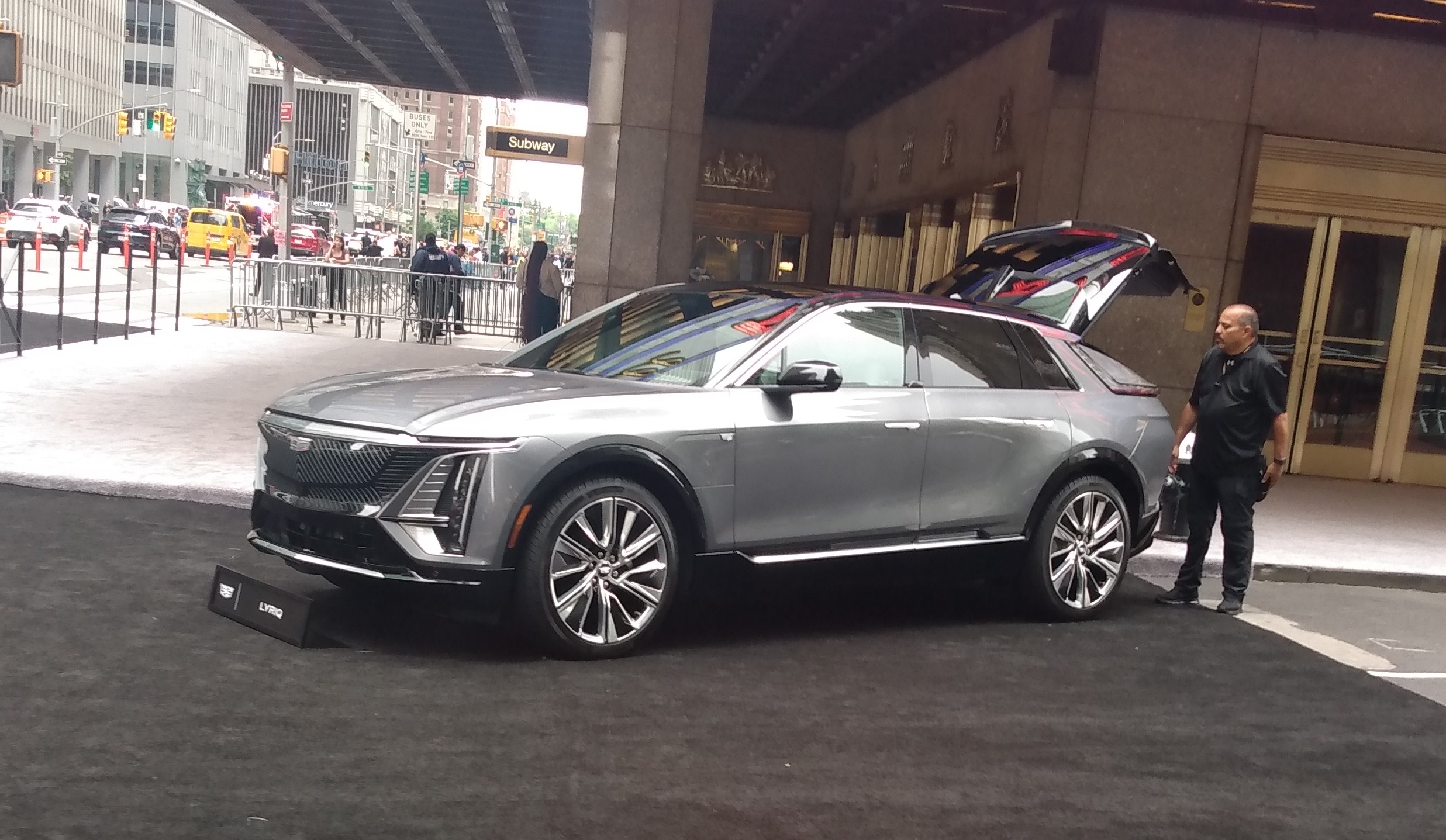
I mean, although they're you know, I did a story on the cadillacal Lyric about ten months ago and they had you know, they had software issues back then. Now they're having software issues on the Blazer. Volkswagon and Porsche
have had serious software issues with their evs. I mean, this is not
what car companies do and they have to figure it out. And there's there
are a lot of reasons for that too, right, I mean, they want to own it. They want to own the experience, so they want
to own the software. They don't want it, they don't firm it out,
they do a third party company. They want to own it themselves.
They tell you they want to own it. But who have they hired?
But also who's leading that team? You guys, can you know there's one
guy, Mike ab It, right, I mean, at the end of the day, why is an executive manager from from Amazon? Right, Why
isn't the entire team, because I guarantee you, on the engineering side, most of the guys at GM and Ford couldn't even tell you what language is being coded on the firmware on the operating system. Because that's the it needs
to be. It needs to move from eighty percent traditional automotive engineers and twenty
percent software engineers, and that needs to be flipped. And what I'm hearing
from the OEMs is that they're trying to hire these ninjas that are sawing software developers, but put them into the traditional bands. Oh he's eighth level.
Oh he's he's uncoded, but we can't pay him more than you know, one hundred and ninety five thousand dollars, you know whatever. And so that's
not how the digital world works. They're trying to shoehorn their traditions into something
that they have no background or understanding. And that's the most frustrating thing to
me. Anyways, the OEMs, you know, Ford and Ford's probably been
the most open about it. As a traditional a lot of maker they want
to write all the software. They don't want suppliers doing it except in maybe
some very specialized cases. And they need to do that I think they can,
that's my question. Well, then they do it, so they have
to, Like it's sort of like with the charging network. It has to
happen because right now, the problem they have, and I think one of the reasons they're having somebody quitches and Mike, you'd be very knowledgeable on this, I think, is you've got code for whatever chunk of the car, Bosh makes whatever chunk of the car, continentelemakes and so on, and then you got to bring all those together because for GM and all these guys, they do not actually they don't actually no cars. They assemble modules into cars,
and each one has its own chips, its own software code that they then stream together into the you know, and so you have millions and millions of miles of code that have to all were in to talk to each other.
So what they want to do and what they have to do is one set of code for everything. When when when I was at Apple, I'm
making this up Infinian memory and Samsung memory right effectively on paper, the same thing. But you put it in a MacBook Pro Infinian memory and it works
perfectly with the current software and firmware. You put a Samsung chip in or
a memory in there, and there's a conflict. So so it's it's not
just the same part should work the same way. Software is completely different.
And this is why Blazer's having problem. This is why the lyrics, because
they're frankingsteining all this different firmware that's not communicating with each other, and because they're looking at every single piece of the stack as a buy sell and right now they don't have time to or make buy sorry not buy sell, but make buy, and they don't have time to make it. So what they're
trying to do is I'm going to buy it until I can make it.
But you know that's well, you know, I've talked to suppliers about this and a lot of them don't believe that the OEMs, at least currently have the capability to do it on a high level, you know, system basis, yes, but when you get down into very specific controls like a brake controller, you're breaking steering suspension, just the nuances. And then you know,
I remember I have a client in a power steering space, electric power steering, and used to be a day where in the hydraulic power steering you had almost no software engineers, maybe a couple. Now you literally almost have
one hundred per program. I mean because of a yaw and turning and all
the dynamics up the fact that you know how the suspension transmits and how they're breaking. So you are right from a perspective of I think the oms want
to be able to control the software, and frankly I understand why. I
mean they have to. They have to because it changes the experience. I
mean, we just spent a couple of minutes talking about emotors that basically are all the same, whether it's a Mercedes or a Ford or whatever. You're
just the gears just a little bit different. Probably they're just as quiet as
one another, and the batteries are not that different. So you've got to
find a way to change the driver experience. But and I'll tell you one
thing though, Even though the suppliers that I've talked to think that the OEMs can't do it right now, they've got their hair on fire because they've the big ones, the big multinationals. Suppliers have built up enormous software capabilities.
They've got thousands of software engineers because that's where the value AT's going to be, right right, So I mean they're deeply worried about this trend. YEP.
I think we simplify it. So the steering will has the logo on
it of the brand, right, and when you put when you look at an Android or an iPhone, there's normally the brand of the Apple showing up, right. So if this steering wheel turns into a touchscreen or a screen,
what logo is going to show up? Is it going to be the
car brand or is it going to be the software? So that ultimately is
going to decide because now if I don't if I bring everything in house, I don't have to share that data, right, because that's the ultimate from a services standpoint and services revenue, and Mary said twenty thirty percent of our revenues you're going to come from services by twenty thirty five or something like that.
So there's that twenty two billion, which would be it'd be less than ten percent, but it's a significant amount of lont So, but yeah, I just look at it like the ev transition is a qualifier now, and how they do on launching services, being able to create a seamless user experience on the hardware software stack side is going to be really really where these guys are going to earn their keep. So you know, one thing, this
GM's decision to get rid of car Players controversy, and I'm going to get hate mail for this, but I find car plays performance to be extremely uneven.
You know, I've driven you know, vehicles from multiple automakers all you guys have, and some in some cars car play works pretty well. Others
have had pretty kolugee experience. And these are all the relatively new vehicles that
maybe the automaker's fault. Maybe it's not Apple's fault, but it's like car
Play is not that great and GM's bet and I think because they're having all these software problems, people are dubious they can pull it off. Is that,
you know, with an in house system that was made for their cars, they can eventually deliver a better experience. And eventually people won't care that
it's not Apple as long as they can use their Apple apps from the phone they plug it in, they'll be fine. But it's got to be as
good or better. And you know, I think the reason that they backed
out of it they don't want to pay licensing fees to Apple or Google for this stuff and keep all the data they don't have to share it, that's right. And one of the reasons Apple technology is so compelling is that it's
a closed system. You know, an Apple MacBook pro plugs into an iPhone
plugs into the services. So this is where Apple is not very good with
working with other ecosystems. Okay, So if we look at a Microsoft Dell
PC, if you have an error, you don't know who to call.
Is it a Windows problem or is it a Dell problem? And so that's
kind of what we're getting into when it comes to software. If it's not
completely in house. Okay, where's this this error code? Where's this coming
from? Right? And is it the supplier or is it my firmware or
is it my operating system? And so that's really really confusing. And the
bugs are just going to be crazy, crazy, crazy because the Blazer obviously in the lyric, we're not ready for the big time or the big lights.
So how they let something that bad get out? That's what I've wondered
because it's been uh, I mean, look the lyrics. I mean,
as soon as started test driving those things, I was interviewing, stories came out about how many problems I was interviewing Lyric owners who you know, the the online system where they ordered the car, said the vehicle was done and an inspection and the inspection was for going on for like nine twelve months, and basically there were software issues that they couldn't that they were trying to figure out. And now the people have these cars now and they're starting to get
volume up. They you know, they like the cars, but you know
that that's been I don't know. I mean, it's a much bigger mystery
with Blazer than Lyric because Lyric was the first one to come out in any kind of volume, and you always expect with one of the first ones.
Yeah, and I worry about the warranty crews for all these OEMs because you know, they've been building ice vehicles for over one hundred years, so they kind of get it and they know what's going to be good and bad.
But on the on the bed side, you don't know what. You don't
know how long some of these issues are going to take to fix. Right,
We're in a period of disillusionment here with evs. I mean, look
at what Hurts has done in the past two well, yeah, this quarter and last they've they're selling the dumping there. And one of the reasons,
well, look, they did the thing that rental car companies always get.
It always gets them in trouble. They bought the wrong vehicles right before the
price the value goes out. I mean, this is this is when bankrupt
kind of screwed them by cutting prices, right he did. I mean Maryann
Keller taught me those years ago. Car rental companies do not make their money
renting cars. They make their money selling the cars. They buy them new,
the renting covers all the depreciation and then they sell them and make all their money. Well, if your residuals have gone down, you've gone upside
down on your residuals. I mean, you've just lost a bunch of money.
That's what's happening with it. To be fair to Hurts, you know,
you can't you know, even if Tesla was going to lower prices.
You know, usually it's a couple of thousand dollars rebate, not twenty five thirty percent on these models. So it was hard to foresee. But they
you know, they put a lot in it. But the other reason is
repair costs were way higher than they thought. Now, that was one of
the myths. Right, evs were supposed to be super cheap to repair and
everyone who bought one was going to have hardly any bills at the you know, at the shop. But what they were saying is with Hurt said,
is the supply chain is just not as mature and it's tougher to get parts and repairs are much more expensive. And another anecdotal story is we've heard they've
had trouble charging them because the problem is that the airport authorities aren't exactly the fastest about bringing in all kinds of new chargers. So he in came all
these vehicles. They actually had to have mobile chargers come in like trucks.
I don't know if they're hydrogen or what, but they were basically generating power to to probably charge all these out. So it went against all the ideas
of why we did DEV in the first place. So, you know,
it's still a major chicken and egg. I think the more the public understands
that this is going to be a settling out, this is going to take some time. It's just not going to be instantaneous. Right Hey, hey,
look we've got to take a quick commercial break right now. We got
a lot more to get into. But first a shout out to our great
sponsors. How do you Bridgestone tire stop shorter on what roads? It's their
hydro track technology that you don't have to know how the science works, just where the brain is. What really matters is their Bridgetonte. We want to
know what drives you are testing. OTA Connected Car diagnostics, remote testing.
Intrepid Control Systems is here to help you work from anywhere. Intrepid Control Systems
driven by your data. Okay, we're back talking all kinds of things.
So especially we've been talking about problems with electric cars, problems with the software, trying to build the batteries, trying to charge these things, slow down of sales. So, Michael, my question to you is, are pebs
going to all of a sudden look a whole lot more attractive. I think
to some customers they will, because it'll be an interim strategy. They'll feel
Okay, i'll get the field for an electric vehicle. I won't have the
range anxiety issues. At least the smarter customers that understand how a PF works,
and so they'll get the idea. Okay, I'll charge it up at
night. I'll get my thirty or forty miles. I'll be able to go
to work and back, and I'll get the benefit of having the security of have a gasoline engine that gets me to where I want to go and because they need it. But otherwise I'm really driving an EV I think the experience
the problem is a lot of people wax poetic about how wonderful these things are.
But in Europe, you know, let's face it, the government basically said you should you know, we'll drive some pebs and people were just driving them. And so you basically had an electric system and a guys who were
not They weren't plugging them in. So you had all these cars. Those
are company cars, and so people felt they didn't need to you know that guy. And in Europe, not only do you get a company car,
you often get a credit card to pay for the gas. Right, So
it's like there's no incentive, right, you get pretty awesome mileage and a p if you actually charge it up. That's all right, there's no doubt,
there's right. What do you think pebs? Yes or no? I
don't know why the US three painted themselves in the corner saying we're going to go straight to BEVs. Well, it was a scale thing. It comes
back up what Michael said, if you're if you need scale, don't mess around with pebs just I would also say it's a bit of a first mover issue too, because you know, like, for instance, the Japanese only ms are famous for I'll wait wait for some of the other guys to make some mistakes, so figure out the mistakes are. I won't make them,
and I'll come in kind of stealth like and I'll get my market. They're
not. But I think the problem in the bedspace is that if you didn't
go and get all the lithium you can go find, and all the cobalt you can go find in the graphite and all the other it's a different animal, uh, in the in the bad world, you can't be a slow follower because you know all the critical materials, a lot of them are going to go away and that'll be a big problem. The thing is too is
GM, Ford and Stilantis make most of their money more so Ford and GM now because Atlantis multiple companies but in the US and relatives, yeah, like of their operating so it's not as North America. When it's not as quite
US noted as it was when it was Fiat Karsler. But yeah, they
make a ton of money here. We have the cheapest gas in the world
in gasoline, you know, you look around the globe, I mean normally produces tons of it, and they charge seven or eight bucks a doown for it. You know, we're charging what it's like two thirty or something.
Now it's like super cheap at the moment. So phebs are great if your
if your customer is worried about fuel economy. Americans really aren't. And except
we have these spikes when it goes up to three seventy and all of a sudden, every local news has, you know, some guy complaining at the gas pump. And but now they need them because they've they've told the government,
the federal government, that they're going to do all this great stuff with battery electric vehicle and they're clearly not going to be taking money. Yeah,
but they're not going to hit their targets. And they've got very aggressive greenhouse
gas and fuel economy regulations coming for twenty thirty two. Well that goes for
Europe in the UK too, right, but I mean GM doesn't do business over there, you know, And forest business a lots more than their business here. So you know, now they've got to do this to meet the
REGs in the US if they don't sell enough battery electric vehicles and some future administration or even the current one doesn't back off on regulations over the next few years. So I think in part it's a regulatory hedge with behaves. GM
doesn't they hate this idea, like Mark Royce and Mary Barr have been saying for years that the problem with peehouse is you have two power trains in there and it's very expensive and you can't get the pricing for it. I mean,
it'd be okay if the customer would pay you a nice, healthy profit on top of this double cost. But they don't think. In GM's case,
I mean you feel, you know, their presentation from a few years ago, what GM wanted to do, and with LTM Mary or thought she could do it. She could get this raft of vehicles a you know,
Chevy Blazer sized vehicle, Chevy Equinox sized vehicle, some version of a Bolt and then some pickup trucks and large you know, large luxury issues cover like seventy percent of the current market. So and if they got there before Tesla
and everybody else. They could reset the market share table and start gaining back
all that market share that GM has lost, you know, prodigiously since nineteen sixty and by launching them very close together, driving scale right and of the basically the same battery set, just more or less of or different packaging.
But that's where the money is. It's a great strategy, and I thought
GM was out ahead of everybody, except that they haven't executed that's, I mean, a brilliant strategy. They haven't made it work. Here's the thing,
though they might. They might get lucky, and not lucky because they're
good. Might get lucky with this. With this break in consumer demand for
evs, I mean, I still think ev demand is growing and if you look at all the studies, it's captured the American American consumer's imagination. People
want them. It's just they're not priced for all the reasons we talked about
earlier in the show. That that gives everyone a chance to kind of catch
their breath and get vehicles developed to seize on this next wave of growth.
And if GM can actually get Equinox and Blazer out the door in the Silver oado, the fleet version of it. They could get some serious volume on
this. But look, big TVD. I mean, every single if you
go back to that that investor presentation where they wanted a double revenue growth of the company was ev AV Software services. Every one of those things is just
falling on its face in the last twelve Okay, So here's what I wanted to ask you specifically about. Did Kyle Vote lie to Mary Bara about what
was really going on at GM Cruise, because I mean, this thing's blown up in a big way. It has. I mean, look, there's
there's so we saw that. You've probably seen the Quinn Emanuel report. That's
the law firm that GM hired to do the internal investigation, and there's nothing that says they lied about it and not GM. I'm not vote pas no
job on Mary bar saying this movie got this all under control, everything's going good, and she just left this this a v expert in charge and didn't question anything until it all blew up. I mean, we don't have any
proof that he lied. I would say that the board of Cruise consisted of
Mary Barr, Mark Royce, Doug Parks is now retired, and Craig Glydden, who's the General counsul GM, who's now that the chief administrator or co CEO of co CEO of Cruise, along with the Muhammad, the tech guy who was there before. And and Mary is non executive chairman of that board.
And so you know, and I asked craigin this question when we're working on a story about the Quinn Annual report, and they did rely on Cruise's people to manage the technology and the government affairs, which are the two things that have brought up. So now GM is you know, they've got public
relations people and legal people from General Motors who are camped out in San Francisco at Cruise. Because we can mention that the corp communications team or the risk
management team at Cruise probably told them to keep quiet about it and didn't tell the GM folks because Mary got bad intel, because she should have flown over there and taken care of it a royce from the very beginning, because whether I mean, you can't get more serious than your autonous vehicle run somebody over and drag them twenty feet, right, Because if she didn't know about that the minute after it happened, then there are many more problems with Cruise and we're seeing it. Nine people, nine executives left, nine hundred people laid
off, and then Royce is talking about we're not going to get these cars back on the road for another two years. I mean that game's over because
right now FSD gets two million miles a day from from other the Tesla drivers.
So that game is over unless they can get many, many more of these robo taxes on the road testing and gathering that data. Look, there
was so GM's roughly eighty percent owner of Cruise, and I think clearly they gave these They gave Kyle Vote too much leeway. And he was a tech
guy, you know, Look he had the Silicon Valley mindset. You know,
I've had a couple of stories on this where he had There were two things he told stephf internally. One was, you know, the regulators are
going to give a scrutiny on this, but we need to fight like Elon does, which is hugely flawed because Elon has a product people love and he makes people a lot of money. Cruise doesn't make anybody any money. And
in San Francisco, people like graffiti and throws in front of Waimo and Cruz autonous vehicles because they annoy them. So so Kyle had negative leverage with regulators
because regulators see themselves as protecting the public from new products. And in the
case of Tesla and Elon Musk, the regulators are under pressure because if they lean on him, there they're standing in between the people make money off.
He wants businesses and people like as products, and he wants cars totally totally different, totally different calculations and the other thing he said, and this isn't this is logical, but he still I think pushed the company too hard.
They wanted to be in twelve markets in twenty twenty four with Cruise Robot taxis.
He wanted Kyle Vote wanted to be uber and not left. He wanted
to get into the market, establish the scale you need with you know, depots, vehicles, the brand name, customer base and all of that, so they could be the first big player, and think about you don't have to worry about hiring drivers. You just go in and you know, if
your system works and you gave them gathered the mapping data and the cars are running routes, you can start raking it in and you're saying he wanted to be the poor man's Travis Colonic basically, well you know, he never mentioned Travis that I know of, but but that that that was the strategy.
And you know, I think they did push too hard with their technology, but they had you know, serious government affairs issues too, and where they are I know that they were also looking at international markets. Well, yeah,
no, they were there, you know the I think they're still running in Japan. I think they're running in Dubai, yes, I mean I
know they were. I don't know if they've shut that down because there's actually
as there's two or three Chinese autonous vehicle companies that have entered the Middle East, and so there's a competition right now because Europe is going to be years away from allowing pilots in their country in the countries, so they're looking at the Middle East and because they're not going to go to China obviously, so you're not going to go to China the US. Oh, the US companies
right right, But the race is on between the US and China over eighties.
And you know, it seems like every week I look at the media in China and somebody else has gotten a license in some city to go with no driver in it. I'm probably one of the few, maybe fifty sixty
seventy people that have ridden in multiple autonomous vehicles in China and the United States, so they're not so I rode in a cruise a lot of one ways when you're when you're getting into San Francisco, so and it was like nine o'clock at night, and then it was no faster than thirty five miles an hour. And in the Chinese autonomus vehicles that I've been in, there's a
lot of naked left turns that were going and they were going faster than thirty five miles or kilometers an hour. So it's it's neck and neck, but
all else being equal, they win because of the data, because the size of China, the difficulty of getting around Chinese cities, especially the lower tier cities, and so it is going to be race. I mean, the
wild card is Tesla, right because they're probably they're trying to launch FSD in China, but that's going to be kind of dicey too, right, So yeah, I think that's the interesting part. Now it's just kind of sort
of weay mo because motional and because aptive left motional. I mean, hun
I could buy the rest of that and pick up the tab. But look,
I wonder if there's actually a very good business with robo taxi. I
mean, we don't know what people are going to pay for that. Whereas
with our timous trucking there's a problem here, there's a shortage of truck drivers.
There's a business need. Yes, with robotaxi. I don't think your
average customer who needs a ride cares if the driver of that car is Vinnie Romano from Queen's in a yellow cab, an Uber and a Lyft driver or a robot. They don't care as long as it's on time and they get
their say. Sure, but it's all about taking the driver out of the
equation for am a cost standpoint, so that you can lower the price of the rides, get that much more volume, and make that much more money.
That's what this is really all about. I get it, But here's
here's here's and everyone still tells me it's going to be way cheaper and more profitable to run a rootaxi company than Uber and Lyft. That driver that everybody
hates so much and thinks is just getting super rich driving an uber or a lift. They don't pay him that much. He absorbs the depreciation and amortization
in that car, He changes the tires, he charges or gases it up, he partsioned himself when it's not running, and he pays the insurance on it. All that stuff. What's the insurance going to be on these rowotaxi
companies now that we drag somebody for twenty feet. I mean, look,
I'm not making light of what happens, I hear you. Unfortunately, the
oms are going to have to get involved in that and subsidize it. So
they're just going to be capital on their books and they're going to be in the fleet management side. No one really knows how expensive or cheap that.
There are a lot of estimates out there, but and no one knows if anyone's going to pay more for it. But well, by definition, Auton's
vehicles shouldn't have accidents, right, so they shouldn't need insurance Number one, number two. When I get into an uber, I don't care what brand
it is, so I don't care if it's GM Foard. So this is
existential for them because at the end of the day, an uber can hire a contract manufacturer like box Con and have Uber branded robotaxis. Guess what game
over for GM? Guess what game over for four? Because what's going to
happen is GM foward. All the automakers are going to have a mobility app.
The two money making services are going to be ev tall and robotaxis.
Everything else is to increase the install based the grocery delivery, the micro mobility service that they offer, the food delivery, that's all going to increase the install based so that millions and millions of millions have installed this and then every once in a while they'll use their robotaxi service. But let's go back to
the first thing you said. In theory there shouldn't be accidents from robotaxis,
so that the insurance should be nothing. You know, these cars have to
work perfectly and handle every edge case for that to be true. And I
think we're very like, we're a long way very car just hit a cyclist, Yeah it did, but and why do we know this Because a cyclist walked away with a few scratches, and so it's national news, national news.
A bicyclist got some scratches. You know, how many people were hit
by cars in San Francisco that day. Totally. Nothing in the we're going
to get away with not paying insurance is if the car has no accidents.
So yeah, no, I would not agree with you that they're not going to have any accidents. But the data is out there, David. They
have far fewer accidents. I mean by by and I think the died since
that op ATG accident, and the only ms are doing whatever they can to push level two and Level two plus as much as they can if they can make sure that their vehicles don't get in the more obvious accidents like rear enders.
You know, we used to sit on the highway and see like every morning somebody would you do a rear ender. It's getting a lot better now.
I'm not saying it's great, but it's getting a lot better because more automatic emergency breaking and people are just saving themselves from them from themselves on the weather. Three systems that are coming out now you know that have have light
ere in them or those are going to be even more effective with this look.
One of the coolest companies out there in this whole autonomy semi autonomy business is Nauto. They basically sell the super cheap system that keeps semi drivers from
you know, kind of protects them from themselves. If you know, the
driver drives the truck, but if he starts to make a mistake, the system corrects it. You know. It's a semi autonomous system that identifies problems
and sort of writes Sam if he does this off or whatever. That's a
really good application for something, and apparently they they've reduced the number of accidents with semis using that kind of system. And there's some others out there that
are doing stuff with trucking that are really simple routs, I think. But
the problem with Cruise and to a degree, Weymo, But but I think Weaymo was smarter to start in Phoenix is Cruise's idea was, let's start in the toughest market there is, and we will. If you can drive in
San Francisco, you can drive anywhere. Then we're just going to fan out
across the country. Jo to San Francisco's really hard. Yeah, right,
So yeah, one of my brothers was in Phoenix with his wife a couple of months ago. They went everywhere by Weaimo driverless, you know, and
they said it worked perfectly. They went all over the Phoenix area, no
problems whatsoever, and that's probably a problem that GM Cruise did. They tried
to tackle the hardest one first, and that makes a lot of sense sitting in the room talking about it. But to your point, getting out there
and dealing with the reality very difficult to do. So why not go to
a Phoenix where all the streets are straight and it's all we sunny, and you learn, you make your mistakes there, you have your iterative improvements.
Then you go to San Francisco and they've just gone there and yeah, they had an accident with a bicyclist that got a few scratches, and it's headlines around the country. And to me, you know what we should be hammering
is the data that shows avs get in far fewer accidents. This could save
tens of thousands of lives. We have the opportunity of eliminating thirty thousand deaths.
And this is the other thing that never gets talked about. You know,
forty thousand people get killed in motor vehicle accidents. Two million get injured
enough every year to have to go to the hospital. Imagine if we could
reduce that or eliminate that, what would be the impact on the US healthcare system if we stop sending two million badly injured people to hospitals on the unemployment.
Look, it may not get that there, we'll get that, but I mean, this is what the industry should be talking about. And they
got to be upfront. Avs are not going to be perfect. They are
going to get in accidents. People are going to get killed in autonomous vehicles.
They are, but it's going to be a fraction of what gets killed.
Right now, I agree when I ask us they're a business and robot taxi is how profitable is it? Is it worth billions of dollars of development?
It might be. I just look every business model we've seen that's that's
going to revolutionize the automobile and transportation. You know, twenty seventeen, eighteen,
AV and EV we're going to be here within a couple of years and revolutionize everything. It's all been more difficult, more costly, and taking way
more time than everybody expected. So you know, look, my job is
to be a skeptical journalist. And right now I'm saying, hey, any
of these programs, your software, your EV's, your av's, whatever it is, show me prove it proven that it makes money, prove that it's safe because now it's working right now, Well, it is working right now.
I just told you my brother drove all over Phoenix with no problems whatsoever, and he needs work in China, and China's going a whole hog in it. I mean, so there's a bunch of people around the world who
do believe this is this is a game changer. I happen to believe it
is, Lenn And look, it still has in the US system. It
still has to make money, correct, Absolutely, Yeah, that's I totally agree. If it can't make money, it's not going to happen. So
I would just bring up Amazon. They didn't make money for almost twenty years.
Now I'll bet you probably four or five, three or four or five of us have all Amazon Prime accounts, right, So, I mean the path profitability doesn't have to be tomorrow, right. I mean the management of
these companies they were never the expectations they set were never realistic. But you're
in a different I agree with that Amazon in some way is a good comparator because they started off selling US books and music, and then what do they do? They learned distribution, supply chain, electronic payment marketing, of stuff
online, all of that stuff, and now they sell us everything, right, they didn't start off selling us everything, so and that's what autonomy should have done, and some of the companies have done that started off more simple than what the vehicles learned different With Amazon, though, there was always a lot of hype that it was going to be a game changer, and investors were always in. Investors were in on AV. But now you look arguably
first investors as signed zero valued to crews within general markers. They don't think
it's worth a plug nickel. And if you look at the stocks of the
publicly traded AV companies or what we're being one, these things are all trading it a couple of bucks, you know, way way way off their pieces.
A lot of people have lost a lot of money on those. They
may come back, but that's a problem because if your stocks trading in the tank, you can't. But you know, but Two's got a great p
point about you know, the timeline on this, and my line right now is American capital has no patience whatsoever. You know, you know who invented
the neodymium magnets, the rare earth magnets, general motors, and they sold it to the Chinese for a song. Now, this was when GM was
in the meltdown and they wanted every possible penny they could get. They sold
it for eighty million dollars. I don't know what that technology is worth today.
What about lithium ion batteries we really invented in the United States? Who
who bought the patents and ran with it? The Chinese? Because American capital,
you know, long term, American capital long term too. It is
the end of the year that that's that's a long term focus. December thirty
first ev one, my god, had they had stuck with that, even if they had put a three cylinder Suzuki engine in it just to get some volume going, what they could have done with that car. And so I
hope I a GM does not give up on Cruise. I know that they've
sung billions into it, but I think this is going to be rare Earth magnets all over again. And somebody's gonna come in and say, you know,
after Mary and say it's gone, We're out of this thing. We're
gonna save a bunch of money. And I would argue that cruise value goes
to zero because of the managers not because of Cruise itself and the opportunity in front of it. What I'm saying is autonomy not just Crewe Autonomy in general.
Investors are giving it no value because it's not just Cruise. Look at
all the stocks and in the publicly traded company totally agree and like I think Gaddick has an interesting business model. They're doing sort of middle mile. Yeah,
a lot of easy between warmart distribution centers and stores, you know, suburban out of suburban, like easy driving. They're not going to go public
right now because the market for it's terrible, right so, you know, they're they're going to do private rounds probably, you know, until they get to a point where the market again likes autonomy. The market doesn't like autonomy
right now. I like a company like Main Mobility, which drives on known
routes. It's not dynamic, it's not going anywhere they go, and they're
basically funded by Toyota. Right now, Toyota's gone and with them in a
big way. Exactly they limit the EDU cases anytime you can limit the EDU
cases, that no, but Toyota is pushing them in more robotaxis because they were getting small investments prior to Toyota, Toyota open their checkbook for hundreds of millions of dollars. Now main mobility is getting more into robotizes. But what
I'm saying is I like their approach because it was let's take baby steps and then we'll build from there, as opposed to GM crews that said, let's tackle the most difficult problems we possibly can upfront, and if we solve them, we solve everything. Like I said, good in theory, but you
know, taking baby steps and learning your way, making your mistakes small, I think is a great way to go as a startup. How expensive are
those cars to make? Michael's The problem is the scale. If you don't
build it in scale, then robox mydeo has one on sale for fifty thousand dollars in China. Six light are forty censors. So it's it's not a
cost issue because light art you can get solid, say a ladder for less than five hundred and six hundred dollars right now. And I mean the sensors
are part and parcel with almost every passionate vehicle in the world right now.
So it's not a cost standpoint because and but this is where Tesla actually has us as a beta testers, right, and this is why with no light art. Yeah, so that's not true autonomy either, I mean full self
driving. It's not full self driving. It's moving that way though. No,
you don't think full self driving will eventually become the ROBOTAXI that Elon thinks it will be. Show me. Yeah, No, I'm with you on
that one, David. I mean they got a show. I mean he's
been talking about this way six or seven years now. They've been talking about.
Well, the difference now is this new V twelve, right, version twelve, which is the you know, learned by watching video clips, not by keeping on more piles of code. So that's going to be the real
thing. And yeah, early reviews are mixed, some are extremely positive.
A lot of short sellers have lost a lot of money counting Tesla out.
But again a time, it's just really difficult. And so you know,
I think we have to have patients that the market doesn't have. And it's
still fifteen years where we are. Well define what you mean, because I
keep coming back to my brother who drove all around. I guess what commercially
viable problem? Well, what I would say is commercial will probably go there
first. Trucks for the reasons that we describe. There's a business there's a
business case exactly right, and it's it's not just about a difficulty in getting truck drivers. It's that truck drivers have a limit on how many hours they
can drive a day, times every right, So the driver can sleep in the cab while the truck keeps on rolling. And there's huge advantages to it.
And that's why I think commercial will get there, get there first.
And then of course it's going to be geo fenced. It's only going to
be in certain areas. But I believe it's like cell phones. When cell
phones first came out, you could only use them in downtown business districts, and then you could use them in the airport as well, and then you could use them in your car going from the business district to the car to the airport. Now you use them everywhere. And the same thing I believe
will happen with the geo fence posts for autonomous vehicles. We'll just keep moving
those fence posts farther and farther apart until they're from sea to shining Seed.
But that's not going to happen in a couple of years. That's going to
take a couple of decades to do. The other autonomous vehicles that will show
up sooner rather than later are Agritech, and they're already the mining trucks already there. One could argue John Deere is ahead of GM and everybody else.
I mean they were at CEES showing all their autonomous agg equipment. So there's
I mean even Cruises Robotaxi that you know is now grounded because of the problems they've had. Whenever I've been one in San Francisco, they worked pretty well.
I mean they got me where I wanted to go. Uh, there
was one that just never showed up for me. But I've had that happen
with Uber with a person I never showed up. Yeah, I mean,
like I that the safety record when I look at the whole thing with Cruise in some ways from it. Let's rephrase it from a technology standpoint. The
punishment doesn't fit the crime because what happened to the woman is tragic. It
was also an extreme edge case and then an absolute calamity of of disingenuous and incompetent government affairs and and and executive behavior. But you know that no one's
died in in anyone's av since that Uber accident, which was had a test driver in it and it was a test driver's fault. Yeah, he was
asleep at the switch, basically was watching a movie, I think, right, So there's there's something to be saved. The other thing when people say
GM want to ditch crews in the way that Ford and Volkswagen ditch Dargo.
Okay, so GM reduced their expenditure by about a billion dollars this year on crew So that's going to bring the total down to let's call it one point five one point seven billion something like that. What are they going to do
with that one point seven billion? Buy more shares back? I mean,
because that's what they're doing. What they're gonna pay U a W workers with
that money? If we know that, well, it could already afford that,
like like, that's what they said. So they're going to buy more
shares back or raise the difference, which they're already doing, which will give them maybe a little bit more pop on the stock. But GM doesn't have
any other ideas for growth. So when you don't have ideas for growth,
you give them money back their share back in China, which is down fifty in the last ye seven years. How they going to do that? I
mean, is it just likely? I mean by with evs, I mean
I get the sense and I'm not there, but I get the sense that something is fundamentally changed with Chinese consumers because of geopolitics, and also because Chinese cars are really good. Now that you know, domestic brands in China are
no longer you know, the cheap homebrew. They're like not to overse for
it. The kids are now the main buyers in China, where the parents
would not buy a Chinese brand, whether that's an appliance or a vehicle.
The kids that are the digital natives boring after nineteen ninety, they grew up with Wei Chat, they grew up with Ali Baba, and so they're very comfortable with Chinese brands, and honestly, to your point, they make better evs full stop. But to what do you make of odd this big drop
in EV sales in China last month? And that was significant, It was
like a forty percent drop in sales, and the whole market was down month over month if you compare it to a year ago. No, because a
year ago January sales were nothing because of the Chinese New Year. But I
was stunned at how much sales of EV's dropped in China last month. I
think that it's it's kind of so the first quarter of every year. I
don't know if this is the same way in Europe and the United States.
It is always the slowest in China. It is the slowest in this market.
Okay, but we're talking one and a half, and I'm talking new energy vehicle sales for twenty twenty starting in twenty twenty one and a half three and a half, six and a half to like eight last year, So there was bound to be this like reckogning almost And what will be interesting is March April, because they're not going to really trust the numbers from a January fevery standpoint, because tomorrow's actually Chinese New Year Eve, and everybody's gonna be
gone until the end of February. But March April, let's see how the
sentiment comes in. And there will be a proportional amount of price cuts,
likely from these Chinese automakers, which is not a good thing for the automakers.
No, and you know, we had talked about this before. We
came on, there's gonna be a huge pressure to export, and if not Europe, likely Mexico less less Sol in Mexico on the on the electric vehicles, but in Europe, huge huge pressure to export by d's in seventy something countries. And so they're likely gonna level off a little bit. But you
know, we talked about scale a million times today. They are the company
with all the scale. And you know, Tesla is going to hurt this
year in China because they can't sell the cybertruck the three refreshed and go so well, well the why refresh that's coming later this summer. Tesla lost market
share last month. Yeah in China. So and yeah, so that's going
to be the interesting thing because people are talking, Okay, why would I believe that the Model two is going to come out in China middle of twenty twenty five, because if they get that extra capacity, they're committed to selling that capacity and in somewhere right, and so if they're saying to their suppliers in China that hey, you know, prime the pump, you know, starting in twenty twenty five, we're going to try to launch by middle of twenty twenty five, then I think there's a decent likelihood that in and around
that timeframe that model two comes out to What what's Tesla's brand like in China?
I mean, how is it perceived where here? It's the tech vehicle
because they're the EV leader and over the air updates and all of that.
So so Tesla still has sizzle. You know, they bring excitement to the
entire industry. What they are now perceived as is kind of like almost like
the mainstream EV. And because a lot of these Chinese brands are brand new,
okay, and so they don't have a track record, they haven't built that trust up, they haven't created a ton of awareness yet. And so
Tesla is that global brand. And it's safe to say that my friends aren't
gonna make fun of me if I drive a Tesla, right, I might not be the most cutting edge technology guy anymore technology person. And then again
charging infrastructure, right, so the Tesla superchargers are still there's a ton in China, but you know it's basically BYD then Tesla, and then a gaggle eighty ninety brands that you probably heard of, five or six of them.
So that's arazing. Well, hey, look we're gonna have to wrap this
up now. I want to thank you guys for coming on. Great discussion,
a lot of things. We could go on for a lot longer,
as we always say, because we can, but thanks for coming on.
I really appreciate it. I'll online after hours. Is brought to you by
Bridge Stone Tires, Solutions for your journey, and by Intrepid Control Systems over the Air engineering boost your game.
About this episode
Discussion centers around the challenges faced by automakers in the EV market, sparked by Jim Farley's announcement of Ford's new low-cost EV platform. Experts debate the effectiveness of skunk works projects, profitability of EVs, and the competitive landscape with Tesla and Chinese manufacturers. The conversation also touches on the slow growth of EV sales, the importance of charging infrastructure, and the implications of software development in autonomous vehicles. Notable guests include Lee from Sino Auto Insights, Michael Robinett from S&P Global, and David Welch from Bloomberg.
Original notes
TOPIC: With the EV slowdown, PHEVs could look more attractive PANEL: Michael Robinet, S and P Global; David Welch, Bloomberg; Tu Le, Sino Auto Insights; John McElroy, Autoline.tv
Autoline After Hours
Autoline
0:00
67:26