
AAH #693 - Meet the Mobility Expert Who Quit His Job and Traveled the World
Autoline After Hours · May 3, 2024
Annotations will appear as you listen
0:00
62:11



LIVE
Out Online. After Hours is brought to you by bridge Stone Tires Solutions for
your journey. Welcome everyone. We're glad you've joined us on another edition of
Autoline after Hours. John is not here, so I have stacked the deck
with autoline veterans. So Stephanie Brinley from SMP Mobility, I can't even talk.
Thank you join us starting. Thanks for joining us today. Thanks again
for having me back here. It's nice to be back in the studio.
It very is, It absolutely is. We've got Craig Cole from ev Pulse
Steed indeed and which is a source for all of your evy info needs something like that. We do try try to educate people and maybe entertain them sometimes
sometimes occasionally occasionally, okay, I agree with that. And and last,
but not least, we have Trevor Pault. Now. The last time you
saw Trevor, he was the Chief Mobility Officer for the State of Michigan, the very first chief Mobility officer for the State of Michigan. He started in
twenty twenty in that job. In last year, in July, he left
that position. Now, just to give you some cred while you were there,
This is according to the State of Michigan. You launched the first state
strategy for Fusion mobility, for building America's first road custom built for driverless vehicles, first road that charges an EV while it drives, the development of a signature EV route around Lake Michigan. Launching America's first smart parking lab, and
on and on and on. You did many things, my friend, And
yeah, that stuff is great, but I think it's my third time on and I assume there'd be some sort of gift or some like a jacket or like a watch, the kind of like you know, they do things that Sat Day Live for hosts that come back act three times five times, So saying did Sean not offer you a bottle of water? Nothing? I got
mine right here. I don't know. He's strongly hinting right there. Oh
all right, all right, all right, so so so so the point the point of saying all those wonderful tho already off the rails, the point of hours of why he did I said he did these wonderful things was because here's this guy who's got this great job. He's doing all these wonderful things.
And last year you did what. Yeah, So my wife and I
we both left our jobs. I think it surprised a lot of people.
And we took our at the time six month old and three year old around the world for a year most of the year, so fifteen countries, twelve languages, and and we uh, we lived. We were present, We
were full time parents, and it was hard, but it was magic and worth every mind. How do you travel with youngsters? That sounds awful,
like there's no formula. Man, it's pretty deptifying. Yeah, you just
have to. Once you start, you're all in and you gotta go.
Yes exactly is say for every two hours of the trip, I would say about an hour and a half of it was just like pulling your hair out, which is why. But then that half an hour there was just things
you would have missed had you continue to grind and follow your ambition. And
it was just time. I had a good run. It was time for
a career pause, a career half time, and it's going to be back.
Okay, so so so so the reason I wanted you to come back on the show because you're charming and you are demanding graft and but but but beyond that, it seems to me that that since I've known you You've always been interested in innovation in one shape wait, you know, shape or form.
And it further seems to me that while you were traveling around the world, you probably had your eye on what was going on in other parts in terms of mobility. Yeah, in terms of it. So what did you
see? Well, I had been looking at the future of mobility, I
think through the eyes of business leaders and bureaucrats, trying to those that can influence change, influence with their resources, trying to move the needle as best I could while I'm here on this planet, alive and present. And on
the trip I got to see the future mobility through the eyes of my three year old, which is much more basic, things like explaining why Venice has streets made of water and why the garbage boat that comes by every morning isn't larger, you know, like explaining in Indonesia why there's a whole family on a motorbike and how they balance, how they make it work, why it matters, and frankly, he had some really good questions about accessibility. Okay,
for this fairy in Sydney, how does the wheelchair actually get on?
Why is there a yellow line? How does the subway map in New York
City work, and so I kind of got back to basics as it relates to mobility. And I think, by and large, across fifteen countries were
more similar than different, And there's a lot to learn. There's a lot
to learn about the types of mobility technologies we introduce into our communities, because you know what, every community around the world, they choose their mobility strategy based on their values. If Bali, for instance, wanted great thoroughfares,
smooth, paved, clean lines, they would have spent money on it.
But instead what they value what makes them happy in life, because that's all we have is temples in every home, most beautiful temples you've ever seen three in every community. You honk as you go by for permission, like it's
that important every day, but it's in front of a dirt road. And
on the dirt road we shared. We had our stroller, we had dogs,
we had cars and trucks and bikes. But everyone sort of operated in
harmony, understanding that if you go slower, you'll get there. And frankly,
like, it's not all about productivity and efficiency, it's about honoring what you value. And I think at times on my old job. It was
about productivity and it was about efficiency, and it wasn't I love my team, But I think in general, we really here in America and the Western will focus on that and sometimes we got to go community by community and look deeper than the technology. So is it a technology play here? Is it
a big business play here? In in other parts of the world, it's
more ad hoc. Oh No, it's a business play for sure. It's
the biggest investment a family can make in Southeast Asia is to buy their motorbike, and there's really unique financing options to do so, and there's a whole system of maintenance that keeps jobs in a community. And I think we got
to be careful as and I you know what I thought. Actually at one
point in the trip, I'm like, man, I respected Honda and Toyota, but how I really respect them because you know what I saw on the road in these developing world or countries more than any other brand Honda and Toyota.
And I was always like, why are they so methodical? Why are
there just a little bit slower on AI and AV and EV Because you know what, they're the OEMs that are going to have to tackle maybe in a larger percentage, the issues of the developing world, the issues you have just putting in a charging station when there is literally no infrastructure around it and having to make it sustainable. So yeah, there were those little realizations along the
way that made me miss my old world but also made me look at it in a different way that I feel like is better. What are the countries
you visited? I'm dying to know. Fifteen. That's that's a lot of
countries. Yeah, well US, you know, Canada, those are easy
ones coming. Yeah, Mahabi Desert, Kauwhai, New Zealand. For a
month, we did Australia, Indonesia, we did Turkey up the Ateriatic Seas of Montenegro, baz the Croatia, Slovenia, Italy exactly. There you go.
That sounds so epic when you say that, Switzerland, Spain, Portugal.
Then back to New York and home, so very nice. Yeah,
we move in interesting ways in this world, we do so and seeing it laying out in so many different communities and is that kind of why I feel like before you were on your journey, and maybe a little bit before COVID, like the push to to mobility and having everybody have a scooter and everybody have all of this stuff, and it was huge, and it's gotten quiet in terms of kind of the news and in terms of what's going back and forth. And is part of that the whether whether we've consciously realized it or
not, but the reality to your point that you really do have to figure out what's going on in a community. Finanswer or real real? Yeah,
you just got real, Like cost centers just became issue. I know we
probably will talk about Tesla DA. I'm assuming though that's getting back to fundamentals
costs center play. And I think it's gone quiet because people are realizing they've
reached a point where the next new pilot isn't necessarily worth it when the first five pilots actually have worked. Now you need to replicate it across twenty cities.
You know, one thing I learned that we got to figure out here, as it relates like if we do a perfect job of electrifying Michigan, which actually, like it's fun to see, like how many more chargers there are now than when I left, that's great. And if we electrifuy North
America, that's great. But guess what, like we still have a huge
issue with climate change if we don't help the rest of the world rise up.
And you may say, well, the rest of the world doesn't own, you know, the percentage of SUVs and large vehicles. We do.
But if you line up, you know, let's say you have two lanes and four motorbikes in a row, like that's that's way more than you know your Honda accord or your your focus. So I think we need to do
a better job of making sure that not only that we're introducing sort of like electrification financing models for here to get people excited, but then also thinking about how to actually introduce affordable financing models across the world. There should be versions
of every way that we make evs easier here. We should find in the
back of our heads thinking about what it looks like somewhere else. And I
sometimes I think we get a little bit ton of movement on it. So,
I mean, to the point of you know that steffanie is making about mobility seems to have gone quiet somewhat. I thought it was interesting that Reuters
reported today about Aptive, which I've got to read how Aptive describes itself.
It describes it as having a unique position as the provider are both the brain, software and compute and nervous system power and data distribution of the vehicle, which allows us to conceive, specifying, deliver the advanced vehicle architectures of the future. And so when it announced its earnings, it basically said, you
know what, We've got that deal with Hyundai on motional whereby we're going to have these autonomous vehicles that are rolling around Las Vegas where people wear sweatpants and part of the pre show discussion garat and question it goes in Vegas when he goes and so so basically they said, you know what, you know, we've got all that, We're gonna we're gonna we're gonna sell you back part of that, and we're not going to invest more money in that. And
I'm thinking to myself, and now, isn't it ironic that this is a company that basically would make money from other companies should this model be successful.
So, I mean a key part of mobility, and you know, it's Stepp's point, it's it's going quiet. I think, to your point,
Trevor real as part of it. Because part of the reason I think that
it's gone quiet even we're talking about app to you is autonomous sort of development, and it is much harder if we're not there. And in twenty nineteen,
the conversation was, oh, by twenty twenty one, by twenty twenty two, maybe by twenty three. Did these come work? It would be
easy. No, I don't think they did. But I think that that
the expectation was scaling up would be easier than it is. I mean,
if you look at some of the things that our go AI said as they were going through their development and said, Okay, we nailed one neighborhood, but it's going to it's it's going to take you know this much more work to do the next neighborhood, and we have to go neighborhood by neighborhood and not take something and just scale it across the country all at one time.
So there were some things there that happened. But even even in that point,
it was like, well, this is going to take a bit a bit longer, and I think there was a there was a bit of hype that we're going to solve this problem. You know what it is. I
think it's an education like an education issue in a sense that if you have a new micromobility solution. For instance, in Detroit, there's a new ten
mile autonomous vehicle loop that was announced in the last couple of days. So
that's you know, that's news and a quiet news cycle. But how do
you where do you go to know? When you know that? Like when
you can catch your shuttle? Right? You know? How much does it
cost? Is it free? That in the right place? Say conversation do
you need a smartphone to access it? That basic conversation is playing out in
every major metropolitan area that's rolling out these these these new programs. So there's
going to take some time to actually get folks at scale to adopt these technologies.
And that's not even getting into the dealership model, right. Explain to
like we need to change the dashboard for how we buy a vehicle, meaning it's is it Milesberg gallon? Is that's what I look at when I go
to the auto show and I want to buy a new car. And it's
been that way since I was buying myst or looking to buy my first car in the nineties. But now now it's got to be total cost of ownership
and the conversion there is not obvious to the consumer, and how long you keep it, and that doesn't know how much it costs to charge. That's
a huge beside. It's always education, education, education is and you're fighting
misinformation as well, because it's very easy for people to go on YouTube and upload something they hate. Evs are going to destroy the world and get a
whole bunch of views and clicks on that when that's not necessarily the truth.
Now, we'll never say evs are perfect never they have serious issues. However,
there's a lot of misinformation out there and people don't still don't fundamentally understand how they work and how to use them to get the best experience. And
that is that's still is that's slow. Yes, yes, it takes time,
and it takes time, and it's takes time. And one of the
challenges which we've been working with for the last fifteen years is that if you don't have to make the change, you really have to be convinced to do so. And we're going to get to sales eventually, but what we're seeing
in twenty four and twenty five is getting across that chasm of people who want to try it to. People are like, I'll think about it. To
people are like, I really am not sure, and because what sticks with you is the horror story of EV's not charging in Chicago during the winter or whatever. It could be what sticks with you, and it could be just
like how much change do I want to make? I don't know how it
is, and I can't wait in some ways to see at a higher percentage and see what consumers really do. We have made assumptions about how many chargers
we need, how many where they have to be, what do people need for homes? And they's been reasonable assumptions with a lot of data behind them,
a lot of questions. But you know what, when those consumers get
hold of it at any sort of scale and any sort of volume, they're going to start doing something a little different. I don't know what they're going
to do differently, but it's going to be something. You know, blackberries
got used differently than they were sort of intended. We evolve technology, it
also has to evolve with the consumers use. I personally think they're going to
start to learn that they don't need four hundred miles of range and you and every minute and every day. But that's just a small part. We've got
to convince the guy that's commuting to work fifty miles one way in a Chevy suburban that he alns because he tells Jess, we're not ready. We're not
ready for one hundred percent anyway. So if we don't convince him for another
seven or eight years, it's really not the end of the world. We're
not going to convince him or seventy eight years. We're not convincing him period.
But okay, but I'm going to ask you, so, Okay, when you're a chief mobility officer, you know, you had these what I would sort of describe as moonshot goals. Okay, and you're going to do
all these wonderful things by twenty thirty and they'll be you know, you'll be tripping over all the eed chargers in Michigan, and you know you'll be walking down the street and your feet will feel tingling because you're getting charged from the you know, all the stuff you're doing. And what I wonder about circuit
is is there is there a disconnect betwe between what government thinks and what Steputy was describing as what consumers think about all of this. So there's not a
disconnect. Well, at the federal level, perhaps I would say that within
the state of Michigan right now, what I've heard recently that now we have like the twenty percent of the residence in Michigan are a ten minute drive away from a charger. Currently for gas stations, eighty four percent or ten minutes
away from filling up. So there's definitely some ground to be made up,
but it does take time. So in a month you typically install five DC
fast chargers, maybe thirty level twos. So that's really the pace of growth
at this point. To do it right, to not just put these things
in places that don't make sense, you want to be thoughtful. Going back
to my point earlier, one of the big things I learned on my trip was like, there's a lot of thoughtless mobility going on, and we could we could be a little bit more thoughtful on things. So I think the
charging infrastructure is probably the biggest barrier. I don't think that here's a here's
another question going back to what you know, what government bodies value. There's
a lot of things you can spend money on right now. There's a whole
clean energy transition you should need to retool, retrain, you know, making an electric vehicles require less parts, which means thirty to forty percent less workforce.
So if what is the static eight percent of Michigan's workers do assembly, six hundred thousand or so people do assembly, what does that mean If we cut that by thirty or forty percent, that's nineteen thousand jobs. And so
there's a lot of things you need to do for people as well as infrastructure.
So it's not that government is off kilter. I just think there's a
lot of different things to weigh out. And frankly, the new Chief Mobility
Officer, Justin Johnson, who I love, who I talked to, and Governor Whitmer and her team, and the medc LEO M dot Eagle, all the different departments, they think about this stuff every day, and the momentum is just as strong as ever from you know, my conversations I still have.
So I feel good about things at the federal level, though I worry that you have a candidate that is up in you know, Northern Michigan saying that if you elect the other guy, your industry is going to die.
That scares me. And the lot you could use it the logic that was
used. You could say, well, let's bring back horse carriage manufacturing.
That'll mean more jobs, but at what expense? What costs the clean energies
like GM already decided, already decided. It wasn't based on what President Biden
said that things were gonna like move in twenty thirties, we're going to be all electric, And I think we need to realize that those decisions were made on data. So I'm worried. I'm worried about this in particular later in
the OKA. And so, Stephanie, yesterday you were at a and Craig
was there as well, a Cadillac presentation where they talked about their electric strategy or let's say, their propulsion strategy. So what did you learn there.
It's the luxury of choice. We will let the consumers guide us as to
how long we will have internal combustion engines and how quickly we will have electric vehicles. But they will have a full electric vehicle portfolio, meaning they'll be
in all the segments they want to be in with an EV and the electric, the ice vehicle segments that they're in, they'll they'll stay in there until consumers don't want them anymore. But it's a very different tone from the idea
that Cadillac was going to be all electric by twenty thirty, and that was that was thrown out and as a statement a couple of years ago, and and Cadillac was supposed to be the first all electric GM brand. It may
still happen, and that isn't necessarily off of the table. But we have
seen in the last couple of months a number of auto makers kind of go, oh, sure, we're going to get there and there, And I think to your point that the dedication to getting there ultimately isn't changing, but the realities consumers are not coming along as fast and it's going to take time.
It's going to take more time than we sort of wanted to. We
looked at it, you know, you looked at the data in twenty twenty and twenty twenty one, in twenty twenty two, and Tesla could do no wrong, and EV's were going up on percentage basis. But you know,
you go up one hundred percent with a small number, and it's a small it's not a big number. And then you've got a big number and you
only go up by five or six percent, and everybody's like, oh no, you know, so we were going to hit this chasm you could see what was going to happen, and now that we're there, it's difficult to keep to keep everyone focused. And so I think we have that issue coming
on. And while we've been it feels like I've been saying it for a
long time, Right, this isn't a marathon. It's like, I mean,
this isn't a sprint like you know, three years ago. I'm like,
we're picking out running shoes. We haven't even gotten to the point of
lacing them up yet. And we're kind of still there in terms of getting
consumers along with this and the education that needs to happen. And infrastructure is
a huge part about it, a part of it. But if you think
about how long it took to develop the gas station infrastructure, that's even close to what we know now. I mean, it's been pretty stable in terms
of gas stations and convenience stores for most of our lives, but it took like forty years to get there. And we're like, yeah, we're going
to have this infrastructure ev infrastructure thing knacked out by twenty thirty. No we're
not. We're just not going to have it fixed by that again, partially
because people will be doing things different, and we did some thoughtless stuff.
We can go around various Meyer parking lots in Detroit and be like, okay, so you've got chargers in there, but the parking spots aren't big enough.
They're in the middle, and the Amazon, the Ruvian van that goes to charge up, blocks three quarters of the lane, and they really didn't think about how it would integrate even with the traffic in their own parking lot.
And we've got a lot of things like that going on that need to be evolved, and you've sort of had and and part of that is just growth, that's just organic. You throw it up and you figure out what
works and you make changes as you go. That's where we're out with infrastructure,
and it's gonna take a long time to sort that out local ordinances that it helps the line to begin to make some changes. And I think and
now the point about parking spool, it's like literally, like to have a Kroger in your community or a big box store. There's certain spots you need
to have, right they're taken up by chargers. How do you measure how
do you measure that back up with the law, and then you know not's that every consumer needs to understand exactly how many cables need to go in.
But if you look at it at a big box store, if you look at a mier and you're like, god, they've got a ton of electricity.
O. Ideally just take some of that out for the car. That's
not true for a lot of those locations. The electricity they have going to
those stores is enough for those stores. It's not enough for those stores plus
charging twenty evs. It can cost one hundred brand or more to put it
charger. It all depends on where it is, how much more cabling you
need, what what's really going on in site by site home by home personal homes are not consistent here on multi units, not solidified, not even so it's mobility and electrication inextricably linked or or are they? Are they different things?
Because I'm thinking of these you canary. Nobody's stopping. This is the
whole point. I mean, which you know you saw people on tuk tuks
and things like that right when you were on your tuk tuks are awesome.
Any any tuck tuck in measure Detroit, I would be the first rider.
Yeah, so so you mean so that's mobility right, Yes, ingress and egress during the pandemic. How many people flow into a Whole Foods or what
your local grocery store, Kroger or wherever. That's mobility. Mobility on your
feet is something we don't think about here, but the rest of the world thinking about. So, Craig, what I mean, what is your sense
of like when you were at the presentation yesterday and you basically heard them sort of real things in I mean, I'm not surprised that EV sales don't seem to be going as far as people were hoping, yes, at this point, So I mean, the sensible thing is to do what Toyota did right and sort of offer their suite of hybrids and then maybe dabble in EV's as well. It's not as sexy or flashy, but it's certainly a pragmatic choice
that will really bridge the gap for people that aren't sure if they want an EV yet. But you know, maybe a gas powered car with some electrics
it's a bit more efficient. Maybe that's the right choice for me. So
I think GM perhaps backtracking is very smart and it's not just them, so we don't need it, you know, but it's and I don't beat up people to go ahead. And it's not one hundred percent backtracking because even in
you know, twenty nineteen or twenty one and then they made these the goals and the targets, it was always subject to market conditions because consumers do still weigh in and they do get to choose it is, so you know, it's it's just taking a little bit longer and it's moving not necessarily in a way that you're completely shocked by, but that does seem to be. And
the challenge in the meantime, and the challenge that even when they had that is it's really expensive they have both for the vehicle for the vehicles. Yes,
it's just going to be if they need affordable EV's really eh. I
yes and no. I'm having fun with the affordable TV concept conversation sometimes because
I think that the bigger challenge is not does it cost twenty five thousand dollars.
The bigger challenge is that it's five thousand dollars or ten thousand dollars more than a comparably sized vehicle on the segment. If you're at thirty five thousand
dollars, you can find an EV is it a three row no is the three row EV nine starts kind of close to tell your ride now, but that's a base EV nine and an upper level tell you the ride. So
you're really not Apples to Apple. When you start looking at content, You've
got a pretty big difference in there. And that is where I think the
affordability question really comes in, is as how do you how do you get those a little bit closer together. One way we had talked about that is,
you know, late in this decade early next to you get fewer ice, and the ice is going to go up a little bit more even as batteries come down. But I really think it's much more about that discrepancy,
and it's more about consumer's hesitation right now. I think I think a lot
of times when people say I'm not buying an EV because it's too expensive for me, and then they go buy a fifty thousand dollars car, you know, it's it's a it's a way to justify what they what they wanted.
Isn't they come down to the fact that, okay, you buy a fifty thousand dollars car, you buy a fifty thousand dollars ice vehicle, you're likely to get a hell lot more stuff in that vehicle, then you're going to get some fifty thousand dollars ev. So, you know, apples to apples
compar type, and it's what do you get in that space? And they
are more expensive, right, But I think that we're in that that condition.
The problem is not that the ID for is thirty five thousand dollars.
The problem is that a compact car shouldn't be thirty five thousand dollars, right, So we can find them at that part at a variety of price points.
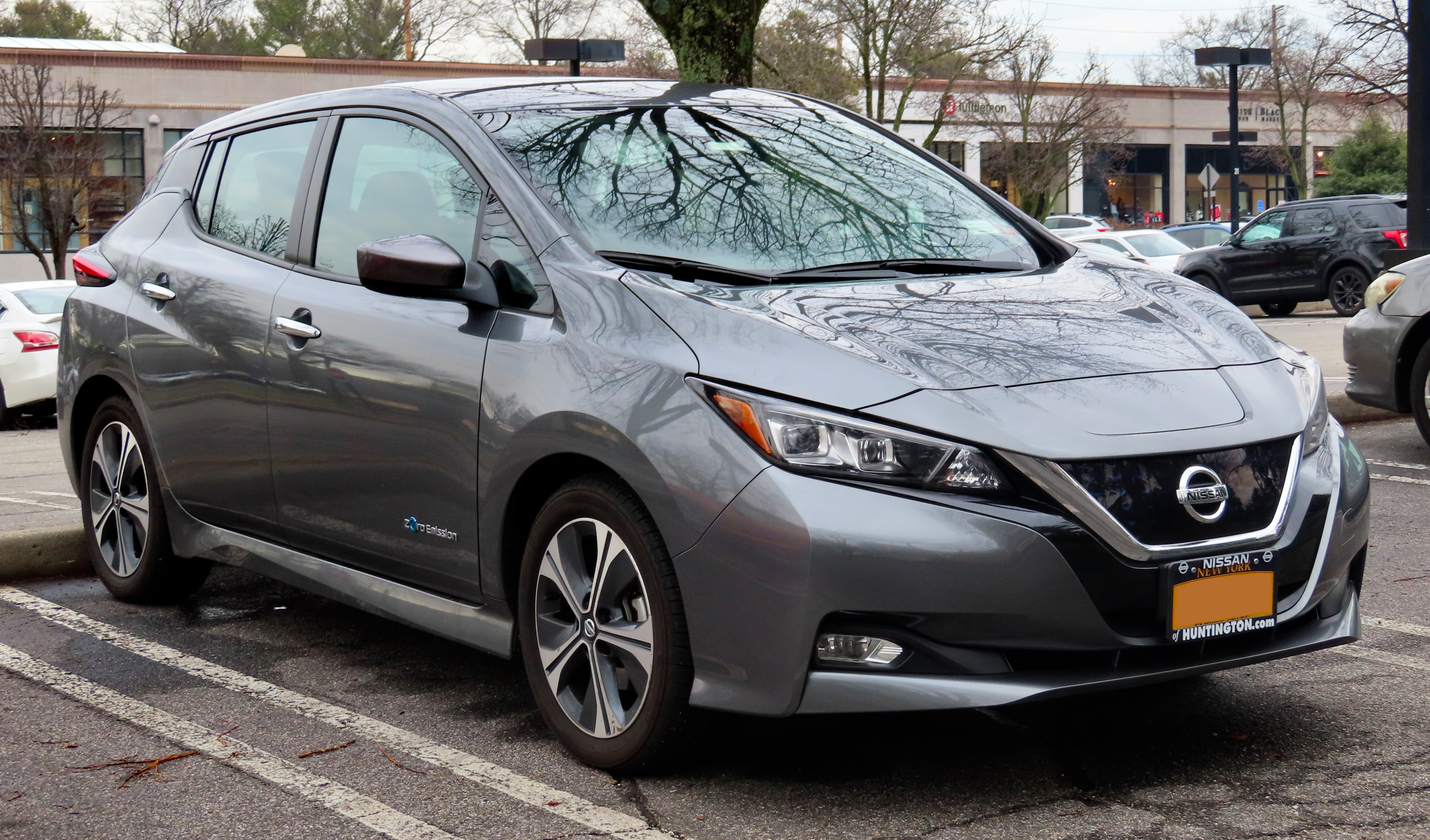
Right now, the Nissan Leaf is a great price point, and it just not quite knocking it out of the park right now. So I don't
think the magic bogie is that it's thirty thousand dollars or twenty five thousand dollars.
It's segment for segment. How do you get those costs? How do
you get those prices more comparable to the others? That's ten thousand dollars gull.
That's not a solution. I mean, not that we don't know that
that wouldn't be interesting, But I think that's the you know, I mean, we drag about f one fifty Lightning. It's priced right in the middle
of all of the other f one fifties. It's not an affordability problem with
that vehicle. Well, so when it's up happening, you know, Trevor,
if politics change in this country. Now, according to S and P
Global Mobility, I got these numbers from that outfit. They seem to be
we have a lot and they they seem to know something about this stuff.
But they're talking about Okay, if you look at consumer and manufacturing credits for the production of evs, that you get an average stimulus of twelve thousand, ninety dollars. Okay, So that's seven hundred fifty thousand dollars consumer credit and
a four thousand, five hundred and ninety dollars dollars manufacturer credit. So there's
a lot of money right that basically is being per ev What happens if that goes away? It's slower, but it doesn't stall, so is it it's
but will it slow to the degree that for all practical purposes, and let's take Tesla out of the equation for the moment that it just basically no, because I think there's been enough done, whether it's chargers being installed, workers hired, assembly lines, reconstituted financial models, unit by unit by unit now under different measurables, where I think we have become resilient as an industry,
like to withstand something like that, I don't. I mean, I think
that there will be enough I would say, regardless if who gets elected, I think there will be enough debate where I don't think it's going to be a zero sum game. I think I think we'll we'll find find a way
to make it work. We're America, right, But I don't think I
don't think we're on the same pages about whether we want it. When you
get down to a consumer level, we're not on the same page about whether or not we want it. That is that is, that is thank you.
I think that if the manufacturing credit goes away, that's a bigger problem than if the consumer credit goes away, because that's what's helping manufacturers be able to invest in building the vehicles here. If both of those things go away
and the regulations slip even again, then then you've got a bit of an issue, especially for automakers who aren't filling EV pipelines as sharply in other markets.
So we were to take a quick break and we're going to come back and we're going to talk about what's going on at Tesla, and we're going to have oh deep deep insights there. So yes, you invited the wrong
guy. I'm sorry. Oh, you're going to be all over that.
So we're going to here's from our friends at Bridgestone. When the elements are
working against you, being confident in your grip on the road is what really matters Bridgetone or lends of tires, Improved acceleration in wet conditions, and we are back, so gang. In recent weeks, Tesla has lost its senior
vice president of par train and in energy engineering. It's vice president of public
policy and business development. It's senior director of supercharging and basically get rid of
all of the supercharging people. It's director of vehicle Programs and new product and
introduction. It's vice president of investor relations, and it's senior director of human
resources in North America. So a lot of people I've not heard about the
human well intern program. Come on, are you man? Okay? Well
he's got a cold blackhart all right, So so here's my question, what the hell is going on? Well, the man that runs the company is
literally insane. Apparently that might be part of it. I mean, since
he bought Twitter, I refuse to call it X. He's just like completely
off the rails. He's nuts and that can't that's not how you run a
company. That's a terrible look. It's been interesting watching I don't know exactly
why they've made all those changes. I don't know how they execute the next
twenty four months with that kind of a turnover and key areas and not having a calear. I mean, if you lose people and you say, okay,
when Drew bag Lana, if I say his name right and Drew left, you know, and you say, okay, we've got a search.
We've got an acting person to take over his responsibilities while we figure out what's going to go next. We're going to let the Supercharger people go, but
we've got a plan because we're really going to make it smaller, because we're going to do whatever. And that second half of it isn't It isn't being
communicated. And some of these reports are you know, newspapers and news are
organizations getting a hold of documents that we're of it, and we're we're kind of confidential internal memos. I'm not saying that they're not true or anything of
the sort. I mean, we're talking about high quality news organizations who follow
things through. But it also means we don't have the whole story. I
don't know. That means having the whole story means it's a good story all
of a sudden, But we don't know everything right, but we know enough.
I mean, you know, it doesn't know you when you lose the guy who is in charge of your new vehicle introduction. I mean it's just
like that, the vehicles. So I mean, okay, Trevor, So
you're you're the closest thing we have here to a guy who big business, Okay, big organizations. I mean you were the cheap mobility officer of State
Mission, for God's sake. I mean, it's just like, come on,
this is bigness. So when when you hear something like that, how
can an organization operate effectively? Well, first thing I'll say is, and
it's never going to come out the way that all of us want to hear it, but it's essentially saying, okay, we realized that, for instance, superchargers, there's now an industry standard most folks are following, and there's also a joint venture with all our competitors on it. Salanis Mercedes, these
companies are coming together to create these networks. And so I think by dropping
that program, well, that program went to something that was almost amote, something very strategic to being a cost center. And going back to what I
said earlier, he's focused on costs. You know, there's some new manufacturing.
I think that he and his team, like giga casting and unboxing, we essentially try to punch out the underbelly of a car and sort of one fail swoop like that one away, that's going away. They're going back to
some old manufacturing processes. Now. The real kicker here is Tesla has always
been known to be first at things. That is their competitive advantage. They've
driven us this far. Who who's going to drive us now? Because you
need an OEM that's going to try some new things and fail. And the
one thing, whether you love or hate Tesla, you can't argue is that they tried things and that gave us a blueprint of us as in big business other OEMs, on what not to do and what to ex sel at.
So you're going to miss that. We're going to miss that if they begin
to get back to basically past tense here. I mean, so is it
over? No, it's again. I don't think so. I think it's
it's a look every I mean, there are across the board right now with the clean energy transition. There are buyouts. They're at fundamentally conservative companies,
utilities like healthcare providers, to utilities and to all these like everyone's sort of repositioning their organizations for the new economy. This isn't a stall. This is
a blink twice and jaw drop and be like, okay, no, we're here. This is it. We have to get real if we're gonna,
you know, be in the best pace position five ten years down the road.
This is what the middle of the decade looks like, as it should look like when we talked in twenty twenty, like this is the road to twenty thirty. It's bumpy. It's bumpy. And one of the things you
brought up the cost center on supercharger and that because Tesla hasn't really said if they've ever made money on the superchargers itself. It's services and other and it's
sort of blended together. We don't I don't see a clear plas tip path
to anybody making money on chargers or these companies haven't said that they're really profitable on making and operating a charging station so far. That is something that the
industry has to resolve. You cannot just have charging infrastructure that is free,
and especially you know, you get to as a consumer and the prices are all over the map and it's a little bit different than you thought, So the consumers are a bit confused at this point. But those companies need to
be making money and I don't know if you know how much Tesla is making or if they're not, but to pull back as they're going to have more people on it, it's it's a concern and I feel like that's been a concern for a good decade. Where is the profit for the charging center?
There has to be a profit for the charging infrastructure, because that's just simply how how business kind of works in this country. It's it's nobody's going to
maintain a profit a charging center for free. But it hasn't always been the
argument that that superchargers have better reliability. They happen, yes, than all
of the other ones. Right, So then you have because we've we've had
these reports about you know, only twenty five percent of people have been able to charge and they've rolled into a charging station, you know, across the board in general, not just superchargers, every everybody, like the American and so on. And you know, if you if you like, seventy five
percent of the gas stations that are even closer than all these charges are, if you rolled in and they were like, sorry, no gas, but we do have a lot of jerky, which is interesting because gas stations don't make their money off of gas. They make it so they probably would say
that and they would probably sell you some. You would find a jery,
you would find it to be delicious. Yeah, And I think, you
know, I think part of also we're going to go to I think part of the problem with even though I do think it's a problem in terms of having a profitability in that space and and having a number of out of charging companies with with chargers that weren't at the uptime they needed to be. That
to me is part of this development process. They some of them went fast
and found out that the equipment that they bought really wasn't so great. Electrify
America has been through replacing almost what they're in their third generation, and they're kind of and part of that. It does need to be addressed, and
it's good if a consumer complaints that it doesn't work and that they didn't get the service that they needed. But it's part of this process. To Tarper's
point, this is an ugly process. We're in this ugly process. It's
not going to be fixed in two or three years. But what's what's the
argument to the consumer of why they want an EV I mean clean, smooth, quiet, instant torque. The the ideal use is in memory, right,
Well, I mean yes, basically, I mean to takes the torqu out right smooth, clean lexus es whatever. Yeah, but even smoother and
cleaner. But that I can go further in my lexus es. And it
takes less time to refuel than it does to charge. Well okay, yes,
technically it takes less time to repley, I mean no, but hold on, physic. You pull up to the Flying J you're gonna buy your
eighty seven octane gas filled the tank. It's going to take a few minutes,
but you're probably going to go into their use the bathroom, check your phone, check your phone, answer some emails. You're very industrious answer emails,
get some jerky whatever snacks. So when you add all that up,
suddenly the eighteen minutes that you know an EGMP card might take to go ten to eighty percent isn't so outrageous and that that conversation can arrives me. It's
not. It's not an air, but it's not my personal So I'm like
gas and go and I'm like, well, great, so you buy an EV and you need to entertain yourself for this twenty minutes. And so you
got chap on the screen, right, yeah, decided TV entertainment headlines.
I wish there's a mute because you know, you decide you're gonna, you know, need to charge there for twenty minutes. So you need to go
and buy a pop that you were going to buy anyway you need to.
It's going to be half an hour, so you need you grab a sandwich because but, but, but the dream. I wasn't going to the dream.
The dream. Use of having an EV is that you charge ninety eight
percent of the time. You level two charge at home, and you have
a full tank every morning when you go to work or run errands or whatever.
DC fast charging do not treat that like a gas station that's only for long trips. And if you think about, like for instance, to plug
a company down the road, our next energy, I mean, the ideal battery should get you from you know, Detroit to Cincinnati and back on a charge. Yeah, because the technology is getting better. I wish someone would
do a study as to how long it took to fill up in nineteen fifty five and how long the windows too, and check the air pressure. Full
service, like you know, one of the reasons they have full service.
Well the reason I'm one of the reasons that they had full service. I'm
sure you were at the pumpless Lauren. I don't know the answer to that
question. But one of the reasons that you didn't have the pump did not
have an automatic shut up, so you had to have a human and you didn't trust the driver to shut it off, so you needed to have somebody that was employed by the gas station shut just like like New Jersey and like Oregon, you still have the right and it relates back to that, so if the guy's standing there, might as well wash your window, right.
But it's interesting that that and that that technology change was one that really opened up how gas stations could be out and more of them and and change the experience for consumers. We're going to find things like that with DC Fast that
changed that experience, which it just it's not going to happen if I remember extly, Like in the very early days, didn't you buy gasoline it like it was like the pharmacy or something is where they would sell it. So
like see how far we've come twenty years. Parts of the world you just
go to a convenience store and it's sold and like it looks like rock and rye the wrong bottle. So, I mean, okay, getting getting back
to Tesla. So so one of the interesting things that Elon did after I
mean his stock started going sh So then he hops on the private jet flies to China, very animated explanation because this is a visual medium and complimenting you get him animation throwing stones here for sure. So he goes to China and
then he he signs a deal whereby full self driving will at some point at in the future or I don't know when we land people on Mars or whatever, that it will be in China. But in order to do that,
he had to sign a deal with Baydo which is the big Chinese software company search Engine or whatever does like everything you know, And I began to wonder, is it possible that Elon just basically may say, you know what China is where I need to be, Us will be a backwater. I think
he's struggling. Well, isn't he currently selling a product called full self driving
that's now called supervise software. It's oh, if they changed it, okay
good. I feel like Elon's proclamations have large been more global than they have
been uniquely American, and so I think by his standards, he's looking to change the world and not just one country in the world. So I wouldn't
be surprised. I wouldn't. I think everything's on the table at this point.
One thing we know about him he has a lot of federal dollars right now. If it's not going towards supercharging, it'll go towards something like I
mean, we'll see. I'm curious to hear what you both think about about
that. That's a provocative question. It's an interesting question, I think.
Is I think that the China's EV market is in such a price war that they're struggling there as everyone else is that it's so it's not as it's not that he's going to abandon China went and any way, shape or form.
But it's not so clear. I think when we talk about affordable evs too.
I mean, we've seen Tesla cut and cut and cut and just wipe through in their margin by dropping prices and it's not triggering more sales and quite the way that they wanted it to do so, which again, the problem is not that there's not a thirty five thousand dollars eb The problem is buyer.
Not enough buyers are ready to buy it. So that's I think it's
a bigger problem. And I don't think it is just to forget the US.
I'll go to China instacks. I think of China is struggling as well.
So I mean, so if part of the problem is that you have more or less model three, Model Y saturation and very little in the way of changes, do you get ready or new product development. Now I'm more
concerned about the supercharger cuts because now everybody's adopting the North American charging standard, right, and which is the service exactly exactly that's the connector is the service going to be terrible? Now, I don't know. I don't think so,
I would hope. I think they're still going to maintain. It's just
gonna it's going to slow down some forward. I mean, he's said that
whatever is already construction and wherever they need it, So it's it's it's not slowing down, it's not slowing down to a total cult, but it's kind of being refocused a little bit. And you know, and he, you
know, the company continues to say that that full self driving is really where their revenue is going to come from. And that's still the bogie out there.
It's like, oh great, you know, we don't we just need cars so that we can put the software on them. And yeah, I
don't know. I think part of the reason that that Tesla sales have been
what they've done in the last two years on last year and a half is we're in that point. We are in that chasm that we started off talking
about earlier today. So we aren't at a point where Model three and Model
wire saturated and when we can't get more volume out of them. We're at
a point where we need to bridge that gap. We need to get to
the pragmatic buyer and they're not there yet. It doesn't mean when they get
there won't take a Model three. Just because they don't take a Model three
and twenty twenty four, it doesn't mean in twenty seven they won't take one.
So I don't think it's I don't know that we've saturated all Model three and Model hy. But the pace of growth is not what it was,
and that is I think what he's sort of struggling with and tried to adjust it with pricing, and you know that. Show me an automaker who succeeded
by chasing volume by reducing prices on a long term basis. It doesn't It
doesn't sustain the business on a long term basis. You eventually have, right
and these raised prices you eventually have to to You can't just lose money in a vehicle and hope feel some more of them and not lose money. It
works on little lips here and there, but it doesn't work on a sustained basis. So going down that path was a risky one to begin with.
Okay, So somebody asks you a general question going beyond bond Tesla, and you can chime in here. It's very kind of you. I appreciate it.
So so the Boston Consulting Group recently came out with a study whereby they say, we estimate that most OEMs currently lose around six thousand dollars on each ev they effectively sell for fifty thousand dollars after accounting for customer text credits.
So everyone that's rolling out losing six thousand bucks, How is that a business model? Well, sell more f one fifties, I guess I don't know.
How is Facebook a business model right when it launched? I mean,
yeah, I'm sure that I don't know the forecast. But for these companies,
not just the you know, the OEMs, but Tier ones and even Tier twos, you project these losses. The question is that I would want
to know from that study is Okay, what do you think it's going to be in five years? And what was it five years in the past?
But be careful with those. Okay, but do we see do we see
like some of the startup companies like Fisker or or Rivian or fair Day Future, are they able to they have five years? I mean, I mean
we have this assumption that, yeah, it's all going to get better at some point in the future. The question that I have is how many companies
are going to make it to that future? And we've had, you know,
guests on the show have suggested that like big companies which they don't name, are going to cease to exist because it's just going to be too difficult for them to sustain their businesses, especially when we get to the previously mentioned things like the BYD Seagull. Well, in the early days of the combustion
powered car, like, there were hundreds of just American automakers, right it was the wild West, and all of those gradually fell by the wayside, got purchased, merged with other companies, and now we're left with basically well maybe if you count Tesla Rivian, maybe five domes automakers, right, five domestics, And yeah, we're in that ebb and flow of how many companies do you have and who comes together and who doesn't. The So you've got
a traditional automaker, if you've got GM, you've got your Forge, you got Volkswagens and Toyotas and Honda's and they for the moment, while it's super expensive and it is a challenge on a capital investment strategy point, you're at least making money on something. If Tesla is losing, if Tesla's is losing
money on electric vehicles, there's not a backup. There's not there's not a
there's not an F one fifty that they're making money off of. And it
doesn't make it so that it's easy for Ford and they're in an easy and it's simple for them. But at least there is still revenue coming in.
And that's what a Fisker doesn't have. That's that's what a Ruvine doesn't have.
And I'm not suggesting that they're all going to fail, but I would hope I'm not doing that. I don't. I don't call that who's going
to live and who's going to die? And this is not my it's not
my game. But the execution you thought i'd a black heart, No,
I don't call it. But in the middle of in the middle of all
of that, you know, if you see, we may see more some companies start working together a little bit more. Because scale is does seem to
be a magic there's a combination of battery technology and scale. Battery technology is
wild because it's doesn't follow development and scaling up a battery chemistry and technology and production doesn't follow quite the same linear line that an internal combustion engine does.
You can math the heck out of that thing and figure it out. And
solid state batteries, you get to a point and they're like, well, wait a minute, Like that scaling isn't working the way that I want it to, So I've got to start over. I've got to do something else.
And it doesn't. It's less predictable in terms of when it'll happen,
and so that makes it difficult to predict when the scale what point the scale really is that it's going to be affordable, But we have regulations we have to make, and we have climate control, we have our climate concerns, so we have a lot of things pushing in this direction that you know, it's just going to take longer than we thought, and it's going to take more line. I think we keep pushing it back. Can we just get
cellulosag ethanol? Rick Wagner promised me ninety nine cents a gallon? Yeah,
whereas yellow that's right? Are the Coast Gatta Partnership like, yeah, that's
right. Fifty years ago, it seems like at this point, but where
is it I want to fill my tank with switchgraps. It was Yeah,
that was when they wanted a different fuel and everything and every clean diesel some of them are some of those those proved out to be too expensive and water take too much water to develop and electricity to develop. There's always something.
But there's still work being done on synthetic fuels, and there's still there's still other technologies. Are when there are less new ideas. Yeah, that that
is the takeaway, Like when we're not failing, we're not trying, and that's scary. It's just so ties into our regulations that I like it.
I like it a lot, and it ties into the way that regulations are written right now, because I really there's a number of different ways that electric is being pushed. Is kind of the answer, and it's the easy,
safe one to say this is what it needs to be. But Trever's point,
we do need more ideas and we do need more development, and amazing there's other things that are still happening. With Elon, he's just like,
all right, like the base has been set, my work has been done here onto a VS. Maybe maybe that's my work here, my work I'm
leaving now, all right. So without his forty five billion dollar paper.
But will you change us up a little bit? Okay, so you know,
because you went to the fifteen countries because you were trying to look at this through the eyes of your your kids and to see things somewhat differently.
I mean, is it possible that there may be a generational shift whereby what we have all taken for granted in terms of private car ownership, in terms of you know, five minute refueling, in just that a new generation is going to say, I don't get it. I mean it's like I have
we have we innovated ourselves into loneliness? Is the question? Or or have
we asked the existential question right there? But the point being is are we
going to risk it all and and you know, dedicate our lives as an industry to creating a world where you can go a day and maybe talk to four or five people because you have to go to the bathroom at your office or at your home and your you have kids and a wife that happened to be there. Like we talked about full service and how that went away?
Is that a good thing? You talk to one more person, You got
to know one more person in the community who would ask you about your kids.
I think there's a communal nature to transportation that we've lost in specifically sprawled out cities that are not on the coasts, that we need to somehow claim.
I think the younger generation or reclaim. I think the younger generation is
very much into a multimodal future, is into living closer together, is into be like the idea that home depot is actually forty minutes away versus fifteen.
Okay, taking a bus okay, trying the latest scooter companies offering, or the pod offering. I think tuk tuks would do really well, not for
everything, but for some things, and the rest of the world is catching on the rest of the Food delivery is another one. The gig economy not
just about how moving people innovates, but how goods move. The rest of
the world, who's been constrained by space which we don't have here in Michigan, are ahead of us, and we need to figure out a way I think, to introduce community back into the way we move our people in goods.
I hope we do that. I'm still fired up about it. I
don't know food delivery really solves the problem of not talking to people. You
see the guy at the door, right, No, I mean the idea of food like the goods. The movement of goods introduces community. The movement
of goods introduces like reuse. Like what if our parking garage just became these
inventory centers for various things that allows you to get whatever you want and within thirty forty minutes, but then also allowed for jobs in a more jobs in a tighter area. More within the city of Detroit. There's a lot of
space right now that could be used, and that all around the middle density though right in New York City, Manhattan Island or maybe Tokyo. You want
to make it done as find ways to have goods closer and jobs closer to the people. That isn't zoning a big issue too, because you go to
Europe you'll have housing over top of retail establishments where we don't really do that here. Right, is that we're getting better? But yeah, one hundred
percent, I think it starts with that's a great conversation for government to lead.
Yeah, I think because do we need another strip mall, another gigantic's marking lot? What's in the strip mall stores? I mean, like it
depends on the source, right, King, I don't know what is in this story. You shouldn't aimlessly develop strip malls unless we truly like feel good
about that being there the next four years, the younger generations are done.
That was a figment of their past. But but you know, Stephanie mentioned
scale earlier. Is there is there scale if you have a multi modal approach
versus the what is I mean what scale? I mean making enough of them
so you can make money off of them. Right, So if you begin
to slice the pie. Okay, so right now, it's basically for people,
you know, it's a sedan, it's a pickup truck, or it's a crossover period. Right, But if you have a scooter and feet and
a bicycle and a tuck tuck, suddenly you're slicing that fairly thin. But
what you're referring to as a hardware conversation, yes, not a software conversation.
I think the real money is around monetization of software subscription services. Yeah,
company, new companies getting in the game. That's ticket. Yeah,
all right, we're around a time step. But you get the last word
on this. Subscription services are are a theory, but I think they do
increase personal cost a point where finding that balance is, and you're then competing with everything in the home. You're not competing for a car, you're not
competing for a TV. Everything you know, does that person value the the
app for the grill or the app for the car, because they're probably not buying both. So there's opportunity for subscription services, but there also can be
fatigued quickly. And when you're paying for something permanently and you never ever ever
stap, you will spend more money than if you bought it. I can't
say it issue the last word. I got all right, all right,
all right, you get the last word. You get the last word.
I think they'll be a wild last for subscription services, just like they're This is just you know evs like look new things like require this struggle. We're
in the new thing. That's exciting. Think of all the things that had
to go right in the universe first to be right here to the point of electric vehicles. That's pretty stunning. We should be proud of that, boom,
are you? Probably because I'm not supposed to have the last words,
So I'm gonna just you can have the last word now, But I don't want the last word, I'm gonna I'm gonna it was it was offered.
Well I'm declining it. Thank you Jesus. Well, I like you think
you're coming back, right, so much for your twenty fifth. Yeah,
that's right, right, you know we're and you know and there's been like special swag we're going to have for you, like a bomber jacket with Soudo line log on. It's just like but you know what it's done. We're
going to get a mon nothing. I go out of my way to help
you out, and this is how I get treated. Indeed, I'll keep
this in mind. I think John will be proud of this episode. He's
just shaking his head in Chaine either way, all right, So so if that stuffy Brinley, thank you for coming, Thanks for having me, Trevor Paul, it's it's been a blast. And and who are you again?
Oh that's that's right, Craig cole Ev paulse thank you so I appreciate Hey, thanks, thank you all for joining us, and I hope for sticking with us. We'll see you next week out online. After Ours is brought
to you by Bridgestone Tires Solutions for your journey
About this episode
Trevor Pault, former Chief Mobility Officer for Michigan, shares his transformative journey traveling the world with his family, exploring mobility through the eyes of his young children. The discussion highlights the differences in global mobility strategies, emphasizing community values over mere efficiency. The panel debates the current state of electric vehicle adoption, infrastructure challenges, and the evolving landscape of automotive technology. Insights into Tesla's recent leadership changes and the implications for the EV market are also explored, alongside the need for thoughtful urban planning and multimodal transportation solutions.
Original notes
TOPIC: Mobility PANEL: Trevor Pawl, Fmr. Chief Mobility Officer; Stephanie Brinley, S and P Global; Craig Cole, EV Pulse; Gary Vasilash, shinymetalboxes.net
Autoline After Hours
Autoline
0:00
62:11