
Annotations will appear as you listen
0:00
62:28
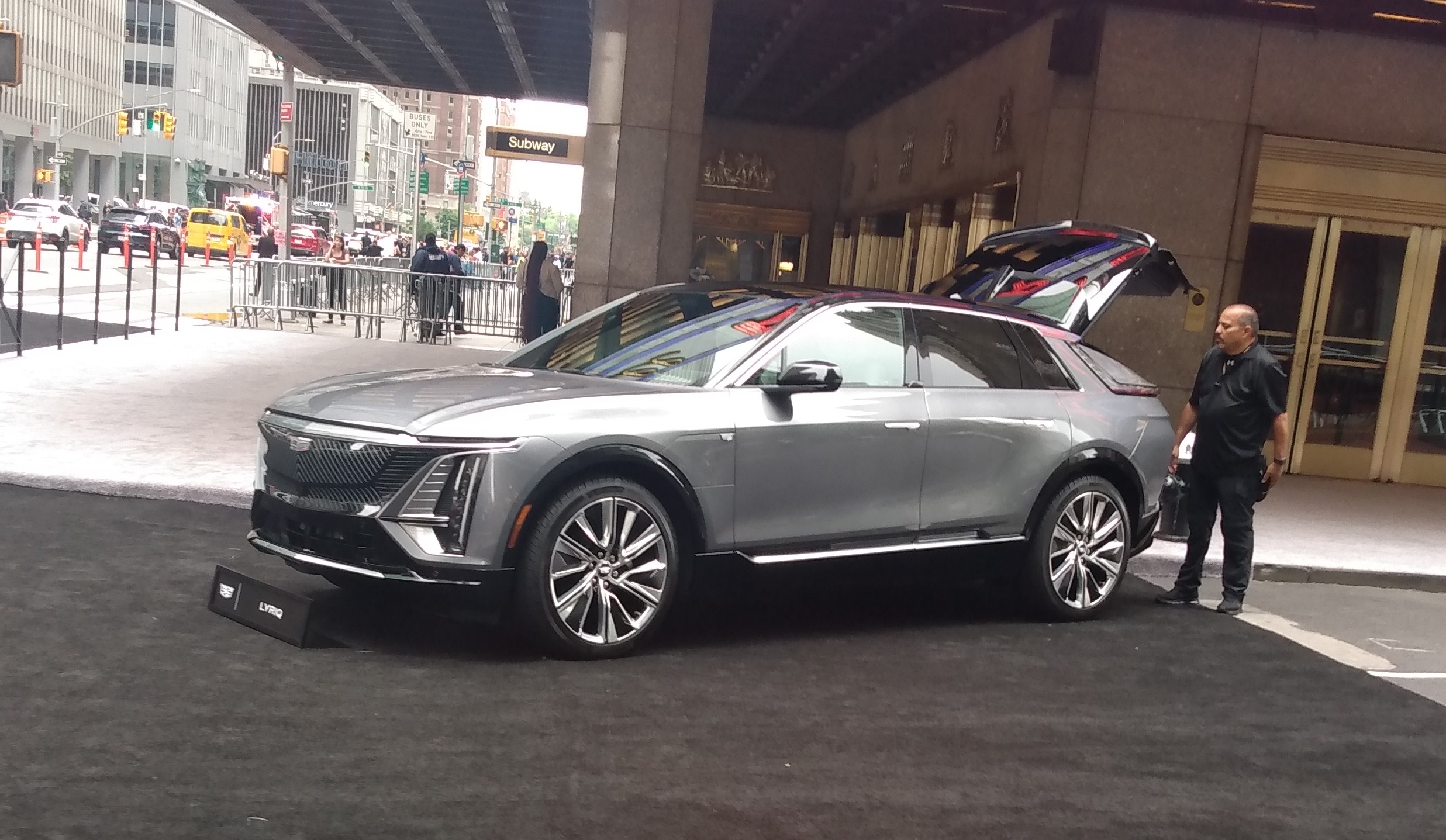
Car
Cadillac Lyric

Car
Toyota Prias

Car
Dodge Viper

Car
Jeep Cherokee

Car
Cadillac Sts

Car
Honda Civic
LIVE
Speaker 1: Auto Line After Hours is brought to you by Bridgestone Tires, Solutions for Your Journey, and by Borg Warner. The automotive
industry continues to evolve, and so do the opportunities to define it. Borg Warner, one of the world's most admired companies,
gets partners where they need to go. Let's do something
big together.
Speaker 2: Thank you Borg Warner and Bridstone for that. And we've
got to start out the whole show by saying we've got Bob Let's back on the show. This is awesome,
this is historical. It's amazing that you're still so interested
and got things to say about the automotive industry.
Speaker 3: Well, thank you.
Speaker 2: We've got Jack Keeler and Jack Keeler too. That's right, Yeah,
bet Jack helped us get Bob on the show today.
So thanks for doing that.
Speaker 4: Jack, You're welcome.
Speaker 3: Okay.
Speaker 2: So, usually Gary, you got something this state in history, you try to stomp us you usually do.
Speaker 5: Oh, you've been doing good, John.
Speaker 3: This this this one, this one.
Speaker 5: Will be incredibly easy because I know you'll just nail it right away. Okay, soaing me up.
Speaker 2: So okay.
Speaker 5: So on September nineteen, nineteen oh nine, the famous son of a more famous father was born.
Speaker 2: M Well, I would guess a soul for I'd go with that, or ok so there's all.
Speaker 5: You're on Jeopardy, that would be its true. They would
just say, Okay, that's that's your fairy Porsche.
Speaker 2: Could be another one. That's that's the one.
Speaker 5: Every one, but that was your second guest. That doesn't count,
that's right.
Speaker 2: Yeah, yeah, good one. So, Bob, I'm dying to ask
you about the industry and a whole bunch of other things, but I want to get your viewpoint. What's going on
right now? It's a mess. As you know, sales have
not recovered from the COVID. You know, we're still running
at least a million units below that. You got this
ev transition. I'd love to get your viewpoints on that.
You got the Chinese knocking at the door. How do
you see it?
Speaker 3: Yeah, well, it's certainly an adventurous time to be in the business. But there's no question that sort of post
COVID boom in sales, and it seemed like no price was high enough and there was a shortage of vehicles, and incentives disappeared and leasing went down to a very reasonable, easily manageable number, and some people believed earnestly that that was going to go on forever, which clearly it was not.
But what we're seeing now is a flattening sales curve, quite a bit of resistance to higher pricing. Incentives are
way up, dealer inventories are way up, and leasing, I was just read in Automotive News leasing is back up to on average twenty five percent, which means that more and more people are basically unable to handle traditional purchase financing and leasing is a way out. But leasing is
a two edge sort because what the finance companies or the manufacturers are doing is when they establish the lease rate, they're betting on residuals, and they're looking at historic residuals when the market was hot, and inevitably, in a cooling market, the residuals that you plan for are not the residuals that you're actually going to get two or three years from now, which means massive write downs and really sucks.
It sucks a lot of the profit fit ability out of the game. And then you've got a federal government
that says we don't have an EV mandate. No, they
don't have an EV mandate. They just established fuel economy
regulations which are synonymous with an EV mandate because they can't be they cannot physically be met without mass electrifications.
So when you listen to the propaganda says Trump is Trump is wrong, we don't have an EV mandate, they're both wrong. We do not have a formal EV mandate.
But technically we do have an EV mandate.
Speaker 2: But they can't get there without electric cars and in bigger numbers.
Speaker 3: But you know, the Democrats like to say, well, let them get invented, make some more advances in the internal combine.
We're not saying it has to be elect if they can find a way to save fuel with out go, hey, we're all that's that's all window dressing. The fact is
the current administration, as does the EU and European countries in the Chinese, favor electrification because nominally it reduces CO two, although in the US, to me, that's highly questionable because about last time I looked, eighty three percent of the power generated in the United States was generated by fossil fuels.
So whether you're creating the CO two at the power generation plant or at the tailpipe, the planet really doesn't care.
Speaker 2: Except that as you know, E, these are so much more efficient at transmitting energy into forward motion. I mean
an internal combustion engine and is like on average thirty percent thermally efficient, You're wasting seventy percent of the energy and a gallon of gasoline. An EV is probably closer
to ninety percent.
Speaker 3: But don't forget the transmission losses.
Speaker 2: And and there's losses in pumping and shit fuel, charging.
Speaker 3: The battery and discharging, et cetera, et cetera. No, but
I'm personally perfect. I'm personally an EV fan, basically an
EV fan myself.
Speaker 2: I know you are.
Speaker 3: I believe in him. I believe they're the future, but
I believe they have certain drawbacks right now that are pre vetting the majority of the that. They've also become politicized,
so it's become that's a probservative versus liberal issue.
Speaker 2: Which don't you think the industry is going to overcome these Look I used to be TV out there skeptical they will, but the industry has been hammering away at these products.
Speaker 4: So what's the timeline?
Speaker 2: That's the issue.
Speaker 3: It's the timeline what we what we forget is we're one hundred and twenty five years into continuous improvement of the internal combustion engine, so it's gotten pretty good, whereas we're what ten or fifteen years into serious electrification, where it's in its infancy and lithium ion batteries are pretty good, but we still need more range, not by adding more and more batteries, because you're adding thousands of dollars of
cost every time you do that, but by improving the energy density of the batteries that we have, and that help is on the way there definitely. I mean we're
two or three years out at the at the utmost on getting lithium ion batteries with much higher energy density than we've got now. And then there's the big elephant
in the room that nobody ever talks about because the media keep talking about lack of charging interest, lack of charging infance. No, it's not the absence of chargers. It's
the fact that when you've got a charger, you're third in line waiting for the other two guys in front of you to finish their half hour, each getting their eighty miles into the tank. And the beauty with the
IC engine is in five minutes you can put three hundred and fifty miles in the tank, and I have reason to believe that there is. And I have to
be very careful here because I'm a board member of a company called Group fourteen that's working on this technology, but I have reason to believe that there are solutions to the charging issue, a charging time issue that would take fully charging say a three hundred mile range EV, from the current seven to eight hours down to seven or eight minutes. And if you can get that to
where you can fully charge an EV in roughly the same time that it takes to charge an internal combustion engine, and the cost becomes competitive, of course, but at that point, I think the resistance to EV's will go away, because right now I wouldn't make it a trip from I have a Cadillac Lyric, which I love, three hundred and fifteen mile range, and it's it's very conservatively estimated. If
you use full region, by setting it to one pedal operation, you can actually easily exceed the three hundred and fifteen miles.
That's wonderful, But I'm not going to take it to New York and try to find a charging station and wait.
And most most EV owners that actually what's the guy with the Rivian that came on the boat with us. Oh, Nick, Yeah,
he has a Rivian pickup and he's done long trips with his Rivian, but you know he's had situations where he's waited four or five hours subplace to charge the thing.
Speaker 6: Yeah, but I mean range is not so much of an issue today. I mean most customers know that. You know,
you can buy an affordable EV that's got three hundred miles of range.
Speaker 5: You can buy an affortable EV.
Speaker 6: You can there there are affordable evs that are at three hundred miles.
Speaker 2: Of range, but the public perception still is that the range is not good. The charging time is perception, but
it's not enough that they are available.
Speaker 3: They are a lot of it is perception, but the charging time is still a gigantic issue. And if you
use the car locally, which my wife and I use the Lyric, we plug it in every night and every morning, we've got three hundred and fifteen mile.
Speaker 4: Pretty convenient problem.
Speaker 2: Would eat your advice to these automakers now, I mean we can just talk to trade right now, right, GM, Ford, Stilant, well not Stilantis, but GM and Ford have invested very I mean they put tens of billions of dollars into this EV technology and the sales are not there. What
the hell are they going to do?
Speaker 3: Well? I think one of the things they're doing is
Ford obviously has done a total reset and said we're going to stop all these programs until we figure it out.
Speaker 4: So they can figure out how to make money.
Speaker 3: Yeah, at least stop the bleeding, right, And h GM is soldiering on they I think I know phrase this carefully.
I think I know that they believe that they can get evs to break even our profitability within a year or two.
Speaker 2: They were talking variable profit by the end of this year.
Speaker 3: Well okay, yeah, well we'll see, we'll see. But that's
a lot of that is probably everything's got to go the right way. But I think GM is doing something
very prudent with this hookup or collaboration with Hyundai, because that's one way to quickly acquire technology which GM. As
you and I were talking earlier, GM had it with the Chevy Vault and then abandoned it in the interest of pure electrification. And now all of a sudden, it
seems like a series hybrids are back, or plug in hybrids are back and more or more acceptable to the public than pure evs, because why wouldn't they be.
Speaker 6: You've got But if you're a car manufacturer, Bob, and you're looking at a vehicle that has two power trains, that's got to be painful when you're doing your business case.
Speaker 3: Right, long term, I don't think it's viable. But in
the in the medium term, if that's what the public wants, it is, that's what they're say, And if by doing a thirty mile plug in range they can make the EPA numbers, then it's a In the medium term, it's a sound strategy. But Jack's absolutely right. Long term, a
series hybrid with an electric drive train and an ic drive train makes no sense. You've got to get rid
of one of the drive trains. And ultimately, ultimately, I
bet you ten or fifteen years from now, evs will dominate and they'll have a five hundred mile range, they'll be utterly reliable, they'll be cheap, they'll have a five to ten minute recharge time and no and people will remember ic engine vehicles.
Speaker 6: Fondly already has a five hundred mile range, but unfortunately, battery what does it cost?
Speaker 5: So I thought I thought it was very interesting so you know, Norway is the one that, yes, they're they're so far ahead in terms of EVS, they're wonderful. And
so apparently they looked at the car registration through September of this year of the you know, the cars that are on the road in Norway, and lo and behold they discovered that for the first time ever, battery electric vehicles are at seven hundred and fifty four thousand, three hundred and three units, and gasoline powered are down at seven hundred and fifty three thousand, nine hundred and five units.
So battery, more EVS, more EVA. But then you look
at the numbers a little more closely, and it turns out that there's nine hundred and ninety nine thousand, seven hundred and fifteen pass cars in Norway that are powered by diesel. Okay, and then you look at then you
go into the look at gasoline in Norway a little closer.
So not only do we have the normal ice vehicles, but we have pa heaves and we have hybrids, and you add all of those together and that's one million, one hundred and seven, nine and nineteen units, which seems to be somewhat more than those battery electric vehicles that everybody's jumping up and down about. Then you look at
the diesel numbers. Okay, so not only you know nine
nine hundred and ninety eight thousand, there are diesel pa heaves in Norway, and then there are diesel hybrids and you add those up together and again you have more than a million units. So even in Norway, which you know,
incredible tax incentives, all kinds of advantage job and you know, well, because the government basically has all the money from North Sea oil as well as high taxes on gasoline, so they're able to say, oh, give you these deals, right.
Speaker 6: And the argument of course against plug in hybrids is that people don't plug them in. I mean even if
it's got thirty or forty miles of range. They say,
a lot of folks they order one as a coming car, but they don't necessarily plug it in.
Speaker 4: They just run it on dieseler.
Speaker 3: Yes that I was telling John earlier. We were talking
about the Chevy Vault, how revolutionary it was at the time, and I was making the comment nobody ever really understood it.
And my example is I just recently heard of a woman who has two hundred and thirty thousand miles on her original two thousand and eleven. Vault loved it as
an average, but she little disappointed with the fuel economy because she's only getting thirty two miles per gallon. But
she proudly states she's never plugged it in. Oh so
she probably thought she had a Toyota Prias.
Speaker 2: So Bob, okay.
Speaker 5: For the people that don't know, I mean that that was a vehicle that you were in charge of product development at General Motors at the time. I mean, you've
got a tremendous history in terms of product development, and you know, going back to what John was talking about at the top of the show, of all these challenges that the domestic automakers are facing right now, whether it's people not buying vehicles, whether it's the Chinese.
Speaker 3: Don't just say domestic, the Germans are in even bigger.
Speaker 5: Trouble, right So okay, from a product development standpoint, I mean, what would you do if you were running the show at a given company right now?
Speaker 3: First of all, I don't have all the facts, and I don't know how grim the situation is. But the
first thing I do is exactly what General Motors has done and what Ford probably Farley is doing the same thing, pull out all the stops and try to get evs profitable.
And the big the big target is obviously the battery, and there are alternate chemistries that don't have quite the energy density but would permit local use two hundred mile range evs at a much lower battery cost. So part
of the problem has got to be relentless pressure on the cost of evs. The other one has to be,
in the case of GM, this very intelligent hookup with Hundai, which the number one short term benefit I can see from that is they can take Hyundai's ready made hybrid technology and just either by whole adapt whole architectures or by the hybrid systems fully engineered. And we know Hyundai
Kiya do a great job on engineering, so you try to look for alliance says that will dilute your problems somewhat.
And then the third, the third thing I do, which both GM and Ford are doing with a vengeance, is keep producing your current high margin pickup trucks and sport utilities and market the hell out of them. Because they're
bringing in the top line that is going to alleviate a lot of the pain. But it's a huge and
then the last thing you do is try to gain as much insight, which we all neglected to do. In
the case of the Japanese, we said, oh, what do they know about the business? And we've been at this
for a long time, and after all, we're American and so that that attitude cost us a lot of market share.
And when we finally did study Toyota, the Toyota production system, we were able to neutralize their advantage. And I hope
that in the case of the Chinese, were a little quicker to find out what it is that they're doing or that the government is doing for them that's giving them a competitive advantage.
Speaker 6: Well, that that is the final step, isn't it, Bob.
I mean they're doing teardowns on the Chinese vehicles. In fact,
I think I sent you an article recently. Farley has
got all of his folks tearing down like bid vehicles and trying to understand, you know, how do you get to a I was going to say, twelve five hundred dollars vehicle. As you mentioned earlier, you're not likely to
see a twelve five hundred dollars vehicle here in the United States, not with all of our safety requirements and things.
But they're trying to better understand how the Chinese are doing what they're doing. And it's not just through government incentives.
That's part of it, but they're also they're doing a great job engineering the vehicles.
Speaker 2: Well, you know, look there's good Chinese companies, there's crummy Chinese companies. So we shouldn't just say that. Chinese should
point out.
Speaker 3: Like the US was eighty or ninety years ago, we had all those brands and some of them are destined to fail. Obviously, the Chinese government doesn't mind if a
lot of them fail.
Speaker 2: No, it will only strengthen the Chinese auto industry. But
you know, to me, the thing is, it's not just tearing down these cars and seeing what technology and manufacturing processes.
What is the corporate structure that allows them to move so fast? That to me is the key. You know
they call it China Fi.
Speaker 3: I'm not sure it's material costs. I mean, you can
tear down the cars till the cows come home and they're going to find the same number of components designed and engineered the same way. There is no secret sauce
in the Chinese cars except that their battery costs are probably a whole lot lower, but the rest of the vehicle, other than safety, safety and emissions equipment, is probably very much like ours. The difference has to come in procurement costs.
The stuff that they buy from vendors has to be a lot cheaper for reasons that somebody has got to figure out. And I have a hunch that they're successful.
Companies are run at a much higher a much faster pace than the legacy companies in Europe, the US, or even Japan, which I think, by comparison to the Chinese, are probably also monster bureaucracies. And the Chinese are highly competitive, energetic,
they're change agents. They're not people pleasers or consensus driven
like the Japanese. They're highly focused, highly competitive, and I
think they don't tolerate a lot of the corporate turning that dissipates so much energy in legacy automobile companies. And
you know, Jack spent enough time at GM to realize what I'm talking about is so much of what goes on, and Volkswagen is no better, nor is Toyota. I think
there's a huge amount of effort inside large companies that never translates into product excellency.
Speaker 4: Internal battles, yeah, internal.
Speaker 3: Battles, satisfaction of internal requirements, relentless quest for knowledge on the part of the organization that wants to know absolutely everything about everything. So there's massive research budgets that don't
serve any useful purpose. And it's interesting. I don't think
he'd mind if I told you this, But Rick Wagner, once retired from GM, became I had lunch with him about a year ago and in Plymouth and Sean o'callahan's Irish pub. Yeah, yeah, a nice place. And Rick, unbeknownst
to me i'd been a board member of Rivian, was.
Speaker 2: You're a board member of Rivian? You are a board member?
Speaker 3: No, no, no, Rick was, And he told me. He said,
in his usual cautious style, he said, it was somewhat of an eye opening experience for me because it became obvious to me how much faster a company like Rivian makes decisions and acts than what I was used to at General Motors. And I thought, yeah, I'm not surprised
to hear that, because I had one advantage in my career in that at one point, first of all, I was an officer in the Marine Corps, the Marine Corps is the smallest of all the services, underfunded, never has enough stuff, never has enough budget. But as this scrounge
stuff from the other services, make do, improvise and move fast because you make up an agility what you don't have in mass. So that was one lesson. Then it
was my period at BMW when they did one hundred and eighty thousand cars and twenty thousand motorcycles, and again it was a it was an eas VP at the you know, reporting to the CEO in Munich, but it was like whoa, you can run a car company without all the stuff we did at General Motors. And they
actually expected executives to do stuff and it make their own decisions, not rely on the staff position papers that came floating up at you. So that was an eye
opener and it taught me.
Speaker 4: That what about your Chrysler experience?
Speaker 3: That too, Chrysler was small, fast music, the small, scrappy Ayacoca had gotten rid of a lot of the deadwood, right.
Speaker 2: But but go into that a little bit more detailed, because Chrysler, even when you got there was a very traditional you know, bureaucracy bound and you and Castang and your crew figured out how to do this platform engineer, you kind of restructured how the company would.
Speaker 3: Yeah, we didn't get rid of the people who were nonproductive, We just didn't use them. We just bypassed it all.
And you know, we'd we'd make product decisions in meetings of the Gang of the Gang of six, and product planning would say, well, we'll, we'll, we'll develop some position papers.
Don't bother. We've already decided. But you haven't seen our
position papers as an and we don't want to thank you very much. So and but my favorite anecdote is
the Dodge Viper. We decided to do it. One V
ten engine, one manual transmission, no windows, no power top, no air conditioning, no abs, and et cetera. So Dodge
Marketing said, well, hey, if we're going to we're going, if we're going to own that thing, we'd like to at least take a look at the proposal. We said,
all right, be my guest, I told Francois this is not going to end. Well, let them have their fun.
So it comes back from Dodge Marketing three weeks later.
They love it. But in addition to the V ten,
they want a V eight and a V six so that they have an entry level one and it's got to have a convertible top, power windows, ABS, and automatic transmission option. They want a base price in the low twenties,
et cetera, et cetera. So we edit it all up
and it came to like four hundred and eighty million dollars.
And I just look at the Dodge guys and said, your proposal brings the program to four hundred and eighty million dollars. The budget is eighty million. So unfortunately, while
I know you'd like all this stuff, you're not going to have it. It's going to be a V ten
manual transmission, no ABS, no windows, no top, and that's that's that's the way it was. But the minute you
let the bureaucracy in on it, inevitably the programs expand exponentially.
And that's why I'm all. You know, I buy into
all of the modern leadership principles about listening to your subordinates and you define the want and let them decide how.
That's all good. And I think people who have worked
for me would say, by and large I was relatively easy to work with. But I believe that it's the
job of leadership to lead and teamwork works. But teams
without a strong become discussion groups. And there's got to
be somebody who set the direction and sets the parameters that says, here's what we're going to spend and here's what it's going to be done, and we'll have two trim versions. Oh, well, we usually have three. We're gonna
have two trim versions. Well, we can show you a
We could show you a map that says we can enhance profitability with three trim versions. Two trim versions, and
it's somebody's gotta crack the whip or the bureaucracy will complicate everything. I noticed that GM now on some of
the recent programs has mandated two trim versions maximum. Well good,
you know what took so long.
Speaker 5: But Bob, the thing I'm wondering about is that, Okay, there was like one of you, right, and you made things.
I had help, but you made things happen at the companies that you worked at. And it goes back to
sort of what John was asking about earlier in terms of, you know, the the organizational inertia that exists at many of the traditional companies. I mean, how do you break
through that?
Speaker 3: It takes somebody who is a change agent and who is very strong willed and is confident in his or her views, but not overconfident. If you're overconfident, like for instance,
Ferdinand Piek was, or Vintercorn, or to some extent, Elon Musk, where you're so convinced of your own infallibility that you stop listening to other people. That can get you into
terminal problems and cause you to make catastrophic.
Speaker 4: Mistakes Dieselgate, cyber truck.
Speaker 3: Yeah. And I think the good leader is one with
strong opinions, strong views. Having the data to back them
up helps, of course, But I found in my career I always had a lot of help because the minute it became obvious that I was in charge, it would I was like a magnet. It would attract frustrated, like
minded people in the organization who had been dying for somebody to come in and actually make decisions.
Speaker 4: I would agree with that. People got on board.
Speaker 2: Hey, look we got to take a quick commercial break.
We're going to come back because this is really good stuff.
Speaker 3: Making a life full of memories, one road trick at a time, that's what really matters.
Speaker 4: Reached them.
Speaker 2: Weather pat tires with a thousand mile women at warranty.
Speaker 1: The automotive industry continues to evolve, and so do the opportunities to define it. Borg Warner, one of the world's
most admired companies, gets its partners where they need to go.
Speaker 2: Let's do something big together. Okay, we're back. Okay, Yeah,
So you're just talking about leadership. So let me put
you on the spot here a bit. What do you
think of the job that Mary Bara, Jim Farley and Carlos Tavares are doing.
Speaker 3: Uh, I really don't feel comfortable.
Speaker 2: Okay, Gil, But that's that's fair.
Speaker 3: But I will say this without talking about those three individuals, who are, by the way, all three highly successful. But
when you look at the landscape of personalities who go into business or get gainful employment in civilian life, you've got on the ex on one extreme, you've got this the serial entrepreneur, the guy who will get he's failed at his business twice, but he's convinced that with a tweak or two this time he's going to get it right.
Gets a second mortgage on his house, makes his wife hawker jewelry, and tries again, and ultimately, in some cases they're successful and become billionaires. Well he has yet to succeed,
that's my point. Yeah. Well, but as they say, some
of them succeed, but some don't. But that's the guy
who just is not security or at all and will roll the dice again and again. At the other end
of the extreme, you've got the government employee guys who joined the Post Office and say, hey, I may never get rich, but I'll have a comfortable living, I'll have a guaranteed retirement after twenty years. I'll have a little
cottage someplace, and I'm just going to be comfortable and there's no risk to my employment and so forth. Somewhere
between those two extremes is the average big corporate executive, not totally risk averse like the guys who go into government jobs, not entrepreneurial like the entrepreneurs, but somewhere in the middle, but with a tendency towards let's be cautious.
I don't want to get into trouble here because I like this job. I want to retire when I'm sixty.
I've got a little place in Tucson, Arizona, et cetera.
And and that's why it's so hard in large corporations find people who will actually make decisions because they're afraid that they'll come down on the wrong side of a decision.
They'll say, if it goes wrong with somebody else, say who decided that, and then they'll get the ax. I
never had a problem with making decisions. I mean, to me,
making the right decision was always pretty darn obvious. And
but you find that so many people in large corporations, and again not just the automobile business. Large corporations generally
take NASA versus SpaceX. I mean, you've got a perfect
example of a huge bureaucracy that is so entrenched in doing so much business with itself that there's almost no end product at SpaceX. LEAN mean, performance driven cruel, probably
not as on DEI as they should be, but really putting rockets in space. And you see that again and
again that the kind of guy that goes to business school, gets an MBA and goes into a large corporation is not a change agent. He or she are very comfortable
fitting in and hopefully outperforming most of their peers so that they'll advance to a higher position. And they're all
a lot of them are intellectually brilliant, but they lack that spark of leadership. They lack the drive to get
it done now they they lack the will to impose tight deadlines. And that's one of the reasons for all
his imperfections. Leiah Coca was the best leader I ever
worked for. He was intelligent, but he was impatient, demanding,
often irrational in his requests. But you know, he commanded
tremendous loyalty and people would walk through walls for him and literally get the impossible done when it really seemed impossible, but people would do it anyway because Leiah Koca demanded it.
Speaker 2: I totally agree with what you said about Lee. I
also think he should have stepped down before he did.
I think you should have become the CEO. I'm not
kissing your ass here, you know.
Speaker 3: You know that even he thought that.
Speaker 2: Later later later he did. But you got along pretty
well with Jerry Greenwald, right.
Speaker 6: Or no?
Speaker 3: A point I didn't let me put it this.
Speaker 2: What if Lee had stepped down at age sixty five?
He stayed out. That's when Jerry Greenwald, the CFO, said
I'm out of here. You know, Lee's going to be
What if Jerry Greenwald had become chairman U CEO, would Diamoner Chrysler have ever happened.
Speaker 3: I have no way of knowing that, no way of knowing that.
Speaker 2: I don't think it would have. No.
Speaker 3: Well, I think Leiahcoca agrees with you, yeah, that he thought he thought we sold the company. But I would
agree with you.
Speaker 2: You know, as a member of the media, whenever he was talking, I'd always put my hands on my wallet because I knew he was going to talk me into buying something. He was that good.
Speaker 3: Yeah. No. Lee was a very world's most effective salesman.
And the interesting thing was he was a trained engineer, and yet he really knew very little about cars, and he was terrible.
Speaker 2: He was a marketing guy who was a.
Speaker 3: Terrible driver, and he was really poor at evaluating cars.
And we had a Lamborghini Kuntark at the time that Chrysler owned Lamborghini, and Lee took it home one time and when he when he brought it back Monday morning, he said, I don't know, it's not very fast and the transmission doesn't have very many gears. He'd been starting
in third gear and so he thought it was pretty much of a dog. But for a guy who wasn't
trained in marketing. All his skills were in marketing total
and he definitely knew how to manipulate the public, but he also knew how to manipulate governments. He was he
was great in front of a Senate commission or congressional committee.
He was terrific because he was unapologetic. He always took
the lead in a discussion like that need instead of sitting count and yeah, and he would go on the offensive and says, let me explain the realities. So he
reminded me of Jack Nicholson and a few good men when he says the truth, you can't handle the truth.
That was pure aa cocer.
Speaker 5: So, Bob, you know, you're talking about the types of people that go into organizations, and that pretty much now the leaders of organizations are somewhat reticent to make bold choices because they want to protect their jobs.
Speaker 3: It's collective, collective management as opposed to individual leadership. And unfortunately,
much of our business leadership or business literature, and even a lot of academia now really pushes that and says, you know, individual heroic leaders are a thing of the They're an anachronism. Group think is the way to go.
Decisions have to be collectively made with a lot of inputs from a lot of people, and that's all politically correct, but it doesn't work.
Speaker 4: And it's a steady hand on the tiller right, steady as she goes, steady as she goes. So we we
saw what's called for right now. I mean, when you
look at what's going on in the industry right.
Speaker 6: Now, the chaos that's going on in terms of this electrification, transition, everything, it's going to require bold ideas and execution to get it done and risk.
Speaker 2: So when you're talking, you reminded me of one of my favorite quotes of Ulysses S. Grant, which is decisions risks,
error initiative, risks failures.
Speaker 3: Yeah, yeah, or Wayne Gretzky who said you miss one hundred percent of the shots you don't take.
Speaker 5: We recently had Mark Wakefield of alex Partners on the show and he maintains that the OEMs need to create completely different companies to be able to compete in what's going on right now. So it's not like General Motors
creates another Saturn division General.
Speaker 3: Motive that was that was a huge mistake.
Speaker 2: But what creating Saturn or killing it?
Speaker 3: Creating it? Really yeah, it was. It was a money
pit from the word go, and it encompassed some good ideas which were immediately adopted by the rest of general motors.
So the uniqueness of Saturn kind of became moot. But
I don't think the general the legacy automaker's problem can't be solved by creating new entities.
Speaker 5: What can solve it?
Speaker 3: I think, uh, a hard look at internal structure, certainly benchmarking the Chinese find out what's working for and what's not.
Also benchmarking Tesla, benchmarking SpaceX and other Elon Musk run companies, and getting a return to discipline, and shedding people out of the organization that are nice to have and provide an information flow that makes everybody feel so comfortable and forces people to make decisions faster, decisions based on less information because the information you gather is out of date anyway,
and it's usually biased, and it's usually not worth the research money that you spend on it. But if I'm
running one of the major automobile companies today, the first thing I do is do the eighty twenty rule, find out who are the twenty percent of the people that are doing all the work, and then focus a lot of my energy on getting rid of the other eighty percent.
And I will bet you money that almost any company, I mean, Chrysler was the perfect example. We did our
best work when we had almost no people. And American
Motors just before Chrysler bottom was at the point where they had so little money and so few people, and they were doing so much with so little that the next phase is was going to be they were going to do everything with nothing. But we stopped them from
doing that by buying them.
Speaker 2: But you bought them, and then many of the American Motors executives quickly rose to the top.
Speaker 3: Because they understood lean. They understood, they understood not listening
to a bunch of useless staffs and a budget yeah, and they understood making do with old machine like the famous I six engine that was in the Cherokee. It
turns out that was developed very quickly and for almost no investment. I said to Francois, I said, how did
you do an all new inline six engine for almost no investment? Because you had that adequated four point two
I six. But this new four leader I six is
and all new engines, it's not all new. We went
to the factory, and we looked at the machine tools and we asked the manufacturing guys, so, which of these automated machine tools are the most expensive to replace, And it turned out it was the boring machine and the honing machines for the cylinders. And they said, if you
change the distance between bores, we're in big trouble because then we're going to need new So if you designed the engine to are the same bore centers, we can save all this stuff. And they did that throughout. So
it was a new engine but capable of being all machined and assembled on existing equipment. It looked new, it
felt new, it drove new. But they got it for
you know, pennies on the dollar of what it would have cost. General motors are afford to do that engine.
And they did everything that way. I mean, it was
it was amazing.
Speaker 5: So what happened that thinking? Where did that thinking go?
Speaker 3: They're thinking, I mean.
Speaker 5: These clever approaches to.
Speaker 3: The old adage, necessity is the mother of invention. If
you have the money, you're going to spend it. If
you're rich, you're used to being served. And you know,
time isn't the time isn't of the essence, because money buys you the luxury of time, whereas they had neither time nor money. Everything had to be fast and on
a shoe string, and they did brilliant stuff for next to nothing, and the ones that couldn't do that didn't survive.
Frostwa Castell, of course, being the former head of Reno Formula one. Formula one is the ultimate school teacher in
fast decision making and fast execution. Because you lose a
race on Sunday because a part broke, you've got Monday and Tuesday for re engineering, Wednesday to make it, Thursday and Friday to try it, install it in the course Saturday for practice, Sunday to race, so you've got a one week product development cycle. In Frost will never lost
that mentality, and pretty much if you wanted to survive in Frost's world, you had to get used to working that way. Did we make mistakes, sure we did, but
so what no more than the traditional way.
Speaker 2: There's a great quote from on the Fisher Body Organization that goes back many decades. When the strong arm fails,
think your way to victory and and and that's it.
You know, when if you like you're saying, if you've got all the money in the world, you're going to spend it. Somebody gives you a budget, you know what
it is, use it or lose it. And you don't
want to end up at the end of the year with excess budget because then they're going to say you weren't managing your property.
Speaker 6: Well, you know, it does seem odd that, you know, we you know, the domestic car manufacturers find themselves in this you know, this dark period of time.
Speaker 2: But it's the Germans, it's a Japanese, but they're all the legacies.
Speaker 6: But the point is all of those entities, German, Japanese, American, the existing traditional carmakers, they've had an incredible run for profit.
And it's kind of like fat, dumb and Happy Bob's point in regard to you know, when you're really working your butt off and you're you're using every asset you have, that's when you really start to crank things out.
Speaker 4: And these these folks, I think, for there's.
Speaker 6: Been a period of time where it's been kind of easy to make a lot of money, and I.
Speaker 4: Don't know whether they've concentrated on the things they needed.
Speaker 5: I mean, after they had bankruptcy, didn't they all have religion, and weren't they all going to be?
Speaker 6: You know what, that religion didn't last very long, not from my perspective. You're right, because I was there through all.
Speaker 5: That, all right, So why didn't it last?
Speaker 4: The leadership changed.
Speaker 2: Look, I think a lot of it's got to do too with boards of directors. The boards set the tone
for what management's got to do. And there's that old adage,
tell me how you're going to reward me, and I'll show you how I'll perform.
Speaker 3: Boards. Boards are they're they My experience is the average
board of director members has no clue about the automobile business, not a clue, so that they're mostly retired CEOs of large corporations that ran in their area much the same way that General Motors, Ford or Chrysler run, and their source of information is basically funneled through the CEO of the organization, and everything they hear and know they get
from the CEO. And I mean, I'm a CEO, a
board of directors member of a company that making advanced battery materials Group fourteen. You should google it there I will. Yeah,
they're doing amazing stuff. But the fact that I'm a
board member of a battery company, a battery materials company does not make me an expert in electrochemistry, and I'm not about to dive in and tell them how to run their business. The same with I'm also chairman of
the board of Carbon Revolution. The roles totally manufacture of
carbon fiber road wheels and that's a you know, startup company, fabulous product in its infancy, struggling a bit financially, but other than asking questions of the management, are you sure you've got your fixed cost as low as you can get it? That's about as far as you go. Because
board members are, by governance rules, not supposed to get into running the business. That's what you have the management for,
and if they're unsatisfactory, you swap them out. That's the boards.
But the board to ask the board to come up with a strategic direction for the company, that is asking too much. And when the boards try to do that,
they come up with really bad ideas. Like on Smale
of Proctor and Gamble, who sold GM on brand management to where a Buick Electra became a free standing brand.
A Cadillac sts was not a Cadillac, it was a free standing brand, to where General Motors suddenly had like seventy five different brands, each one with its own infinitesimal, infinitesimally small little marketing budget, to where the Cadillac sts blew their whole budget taking a bunch of putting in a bunch of stands at some horse show and that was it. That was the annual marketing campaign for that
particular product. It was ridiculous, but you know, it was
an idea that resonated with other board members and then you you all it takes. Then is a compliant CEO
who says, certain it's been successful for Proctor and Gambell, I certainly think we should give it a try, and then off they go. And of course one of my
first official acts when I got the GM was, even though I wasn't in charge of marketing, but I was influential enofice vice chairman, that we got the whole brand management thing scrapped almost overnight and made a lot of people redundant, which is and they never should have been hired in the first place. Every single every single model
in the GM portfolio had a tiny little staff of director for that little a chief marketing officer, a chief planning officer. So it was just so counterintuitive and so
nutty and so anything you'd want, nimbleness, beat of decision making, et cetera. That it was just in violation of everything
you know to be good for a company.
Speaker 6: The design group have a little book that explained, you know, what a buick was, what an old was, what a saturn was, how many spokes on the wheel, so that if you wanted to do five.
Speaker 3: Brand character, that was the brand character. Chevrolet had five spokes,
so that meant that no other division could have.
Speaker 4: Fights have a fight about but you couldn't have five folks.
Speaker 3: If you'll remember, Pontiac had those Volvo style headdress with a padded frame with the netting in between, and those were horrendously expensive, and women complained because they'd get their hair cut in the webbing, and they hated them. I said, well,
let's get rid of the damn things. We'll save like
thirty bucks a car. Oh you can't do it. Why not? Well,
those framed headdress with the wedding as a part of Podiac brand character, I said, easy, you could have fooled me.
I've been looking at Potiacs for a long time. I
never get rid of them. So you know, we just
ran rough shotover that somebody had do a wheel and somebody, some staffer would come in and say they can't do that wheel. That's our brand character. I mean, stuff that
the public would never notice. But it was all like
so much of the effort in large corporations, as Jack says rightly says, so much of the effort is internally directed and it's total wasted, never makes its way to the public.
Speaker 4: Yeah.
Speaker 6: John Smith used to say, get things done, don't make heat.
In other words, don't get into these little fights. The
idea is to get things done. And you know that
was one of the first things he told me when I arrived there. And I live with that the entire time,
so I would avoid fights and try and get things done and it served me well.
Speaker 5: Bob, let me ask you a tactical question.
Speaker 3: Earlier. You said that.
Speaker 5: General Motors and Ford ought to really concentrate on selling as many of their big vehicles as they possibly can because that's where they're making all their money.
Speaker 3: Yeah, that's momentarily the gross profit generator is pick up trucks and full size utilities and probably some crossovers that are generating solid profitability too.
Speaker 5: So how do you keep the staff that's working on those vehicles who know that the future is not going to be those vehicles motivated.
Speaker 3: I don't think they know it, and I think you tell them that those vehicles are very much the future, but they'll be electric. Like I drove in an electric
Age two the other day. I mean it's got the
same deficiencies that the original H two did. Very stiff
windshield limited visibility out of the vehicle because of the very tight glass planes, et cetera. But what a thrill
to drive. I mean that thing is weight ten thousand pounds.
Speaker 4: The battery weighs three thousand.
Speaker 3: Yeah, and but the vehicle is ten thousand. It's got
a twenty five kilo one hour battery, and but the ride.
Speaker 2: And probably twenty five or two hundred and fifty.
Speaker 3: Yeah, you're right, it's two hundred and fifty. And it
gets They get the four hundred mile range with one point seven miles per kilo water hour, which by electric vehicle standards.
Speaker 2: Is not driven very good, very much.
Speaker 3: But but the vehicle to drive is phenomenal. We were
you and I were talking about how nice the Cadillac Lyric is to drive. It's that nice, you know, easy
light steering with good feedback, and when you put it in the WTF mode, it'll do sixty and two point eight seconds and it's it's uh. And then the crab mode,
which is when when you've got it engaged with no reason not to engage it. But you can do a
U turn on a two lane road. Have you driven it?
Speaker 5: I have no.
Speaker 2: It has the turning radius of something like a Honda Civic.
Speaker 3: It's less than that. I mean, you can't take a
Honda Civic and do a U turn on a two lane road, right, It's amazing. But that's what I tell
the truck g is, just keep doing what you're doing.
Make a compelling. America loves their big vehicles. They love
the big SUVs, they love the pickup trucks. It's just
over time, the V eight engines and the turbov six is are going to be out of business, but the trucks won't. Yeah.
Speaker 2: No, you know, to the point that you said earlier, the price of the batteries will come down, the charging time will come down, Right, They're going to become more affordable.
It's going to happen.
Speaker 3: Yeah, and it'll get to the point where charge charging points are as ubiquitous as gas stations are today. It's
just that we're in a transition period, and I think anybody who thought we had an electric vehicle revolution as opposed to an evolution, they were seriously misguided. And we're
working for the administration or both are those.
Speaker 2: Hey, look, we're at the top of the hour. We're
going to have to wrap this up as good as it's been. But Bob, it's been awesome having you here
that your feedback is brilliant.
Speaker 3: I love it well. And Jack, who is one of
my strongest allies at GM and one of the architects of GM vehicle excellence.
Speaker 4: Thank you.
Speaker 3: That's great.
Speaker 2: Yeah, well that's quite the accolade.
Speaker 4: Jack, it was quite a peak behind the curtain.
Speaker 2: Yeah, so yeah, thanks both of you guys for coming in.
And Gary, I'm going to be gone next week. I'm
going to be Yeah, I've got the SAE Powertrain Conference in Chicago I've got to go to. So don't worry
what this shows all yours.
Speaker 5: We've got Mark Feeling and Henry Payne will be here next week.
Speaker 3: Who are you going to have Mark Feeling.
Speaker 5: And Henry Payne Okay, sounds good. We're going to talk
about the neck Toy nominees for this year, so it should be good.
Speaker 2: A lot to talk about. With that, we're going to
wrap it up. I want to thank all of you
for having tuned in.
Speaker 1: Auto Line After Hours is brought to you by Bridgestone Tires, Solutions for Your Journey and by Borg Warner. The automotive
industry continues to evolve, and so do the opportunities to define it. Borg Warner, one of the world's most admired companies,
gets partners where they need to go. Let's do something
big together.
About this episode
Bob Lutz returns to discuss the current state of the automotive industry, focusing on the challenges faced by GM, Ford, and Stellantis. He shares insights on post-COVID sales trends, the EV transition, and the impact of Chinese manufacturers. Lutz emphasizes the need for automakers to adapt quickly, streamline operations, and embrace electrification while addressing consumer perceptions about EV range and charging times. His candid views on leadership, corporate culture, and the future of internal combustion engines provide a thought-provoking perspective on navigating these turbulent times.
Original notes
TOPIC: State of the Auto Industry PANEL: Bob Lutz, Former Auto Exec; Jack Keebler, Keebler Auto; Gary Vasilash, shinymetalboxes.net; John McElroy, Autoline.tv
Autoline After Hours
Autoline
0:00
62:28