
Annotations will appear as you listen
0:00
63:05


LIVE
Finish your year with your dream kitchen with help from Menards.
Clearview Cabinets offers a selection of finishes made with the finest materials and built to
a stand.
Life's sticky messes.
They provide features like soft clothes, doors and drawers, and cabinet accessories to match
your unique style.
Don't wait to finish your projects.
Save big money on Clearview Cabinets and check out our weekly flyer on Menards.com for more
great deals happening now.
AutoLine After Hours is brought to you by Bridgestone Tires, solutions for your journey.
Time is precious and so are our pets.
So time with our pets is extra precious.
That's why we started Dutch.
Dutch provides 24-7 access to licensed vets with unlimited virtual visits and follow-ups
for up to five pets.
You can message a vet at any time and schedule a video visit the same day.
Our vets can even prescribe medication for many ailments and shipping is always free.
With Dutch, you'll get more time with your pets and year-round peace of mind when it
comes to their vet care.
Go to Dutch.com to get vet care that is always there for just $92 a year.
Alright, thanks for joining us everybody on AutoLine After Hours.
Gary Vassilash is in the house here with me.
Back from a wonderful river cruise in Europe, was it?
Holland and Belgium.
But I couldn't break the automotive aspect of this thing and so I kept observing all
the vehicles so that I could see while I was dodging bicycles in Amsterdam and it was
striking to me I did not see one pickup truck, not one.
So if we go outside the studio right now, we can't help but to see like multitudinous
pickup trucks and so what a different perspective one gets to see what the rest of the world
was driving or at least a part of the rest of the world.
Or at least in Holland and Belgium, right?
Hey, we got to let everybody know.
We got Nora Eckert from Reuters joining us this afternoon as well.
And our special guest today is Aruna Anand.
She is the CEO of the North American Operations of the newest supplier in the industry that
happens to be about 30 years old.
Not Aruna, but so today was the day that Amovio did its IPO in Germany.
And Amovio is the spin-off from Continental and that's why I say it's the newest company
that's actually 30 years old.
But Aruna, exciting time.
I mean, and to be the CEO of the North American Operations has got to be a lot of pressure
but a lot of opportunity ahead too.
Absolutely.
Today is a wonderful day for us to start a new chapter with a newly formed Amovio.
We have the strong legacy of a 150 year old company and we've always excelled in excellence
and we have a lot of innovation and so on that we have to offer.
And this provides an excellent opportunity for us to be a well positioned to grow
and to have sustainable value creation.
So that's very exciting.
And I also wanted to tell you, yes, it is a privilege.
It is very humbling to be leading the North American organization.
We are 16,000 people strong.
And if I look at last year's result, we are a $5 billion company here in North America.
So we are very excited.
We are very motivated to create value to our customers, to our shareholders,
and as well to the employees of Amovio.
What a great day.
So for those who are not familiar with the company, what is it that you bring to the market?
So as John mentioned, we are not totally new.
So we've been continental automotive.
And so we have an excellent legacy of excellence and we have a strong pursuit of innovation.
And so with Amovio, what are we doing in a very high level to give you driving experiences
in the areas of safety, connected vehicles, autonomous and exciting.
How do you make your drive in all of these?
Our track record speaks for itself.
And with this legacy of excellence and this relentless pursuit of innovation
that we have time and time again shown, we are positioned especially well in these areas
to contribute and provide with our creativity, with our vision, these ideas into actual actions.
And in the course of our conversation, I can give you some high-end technologies
that we had recently showcased on IAA and how all of what I say now is put into action
into realizable products.
Let's talk about some of those technologies.
Aruna, one of the things that caught my eye is what you're calling mirrorless HUD head-up display.
But mirrorless, what's that mean?
So again, I'm incredibly proud of the innovations that we are bringing to front.
So when you look at a typical head-up display, you need something, a projection system
to project the image on to your windshield.
Or put a little piece of glass like Mazda does.
Normally, the mirror is used for that projection technique.
And the challenge here is the curvature of the windshield and the angle in which it connects
are also different across different vehicles.
And in order to do all of these strategies, we spend quite a lot of time to package that too in that space.
And that becomes a lot of effort.
So now imagine that you don't need a mirror.
And that means you're able to reduce your packaging size to 50% of what you had.
And not just that, it's able to scale as well across multiple vehicles.
We use extensive software algorithms, AI technology,
and we have partnership with a company called Epitome to be able to do this.
And not just the size of packaging for convenience, but the span of projection is also increased,
the view of projection is also increased, and the depth of the image also we are able to work
and provide you a seamless, but better approach and a convenient approach, cost-effective approach.
So that was one of the aspects that was shown at the IAA.
Yeah, people I think underestimate the size of a head-up display.
I mean, it's giant that's stuck in the IP.
Yeah, it's the size and the time it takes for development.
And because when you are building this, even the car is in its state of infancy
and a lot of these curvatures are not defined at the start of the project.
And the amount of experimentation that has to go through to get this all right
takes a lot of effort and time, which normally nobody has these days.
And this innovation, that's why it's very unique.
And it's able to help in all of these areas to get products out faster
by using technology that is available.
Another technology that you guys are touting right now is night-capable cameras.
Yeah, right.
Is this for night vision displays or what?
Also, so this is another one.
So again, I told you we are in a more view focusing on four distinct areas,
one on safety, then making the ride safe as safe as possible,
making autonomous, making the drive as exciting while you do this
and all of these things have to be connected.
Because we always want to have a seamless experience moving from our living room
into our car, right?
So this one is in the area of advanced driver assistance system.
How can we have convenience?
But at the end of the day, a car is used to drive from point A to point B in a safe manner.
Otherwise, there's no point to go to point B.
So this camera is again an advancement of technology.
And you can see images very clearly when it's pitch dark outside.
Are they used for red cameras?
If you're crossing the street with a deer and so on and so forth, you're able to see it.
Again, it's working on image perception algorithms with AI that we are able to do this.
Again, a seamless, so it is used for convenience.
It's used for safety.
It is used to advance collision warning systems.
So these are add-on things on top of what we have.
We have an overall system for advanced safety that we had promoted called the ZELF.
It's about software and system solutions for level two to level four.
How do you scale that?
Which becomes a very important factor.
And on top, you add all these add-ons that can increment the safety of the car
and making the ride a most pleasurable one.
So that was on the area of advanced driver assistance.
And obviously you need a lot of compute power and all of that to be able to do that.
So that brings us to the connected area where we talk about zone controllers, vehicle architecture in general.
How do you do high performance computers and how much computational power it needs to have and so on.
So that was another highlight.
And then of course, let's not forget the safety aspects of things.
Here we had green caliper basically, which is hydraulic less and it's very efficient.
It's lightweight and that is able to be used for electric vehicles.
And the idea of this is it's going to increase your range because the residual drag is now reduced.
So that's a possibility.
And then another technology that we showcased was as well the corner module.
What this module is is now a relatively small box.
It combines in it driving, braking, suspension, all of that steering all in one module.
So you can have four corner modules.
And when you're doing software defined vehicles, you can drive it each independently and so on.
And that gives you a lot more flexibility.
And again, packaging is less and so on and so forth.
So these were at least highlights of some of the things that we had highlighted a couple of weeks ago with IAA.
Nora, ask a question because John and I are going to step on this if you don't.
Well, you know, I'm going to get into the bigger debate about what customers actually care about.
But we might be leapfrogging.
No, no, no.
Get it good because that's where I wanted to go now.
Yeah, so I think, and this was the topic at some of the conferences we were at recently,
is, you know, like the customer doesn't really care if it's his own little architecture or not.
They don't know what this means.
What do you think customers are willing to pay for and how do you keep that in mind?
I mean, that's a very important question one need to answer.
Also, interesting question for which you don't have concrete evidence of what one might like and what one might not like.
But if I were to look at it, there are a few things that price is always very important, right?
So the question also, I can also put it relatively if you want to go to Best Buy and buy a laptop.
I have, say, a $1,500 laptop that does everything I want it to do.
But then I have a $5,000 laptop that will be useful for me two years down the road,
three years I can put all functions, features, whatever.
So what do I want to invest on the $5,000 or $1,500?
Some of us are like, no, I'll better do the $5,500 and let's see how things emerge.
And then if I need a new laptop, I'll buy it then and some not.
Then the question is, what triggers that movement?
So multiple things come into play.
First of all, the price point itself.
So in order to have all these functions and features, you need to have the hardware that is capable of doing that.
So you need to hardware protect basically so you can add functions and software as days progress.
And the question becomes, how much hardware is sufficient?
How do anybody know one year from now, these are things that really evolve and not evolve and so on and so forth?
And that is a very important aspect because you have to be able to scale that as well.
And if you put too much hardware to future protect, your price point is going to go very, very high.
And if you put too less, then you're out of the game.
So that's the challenge that we all need to grapple with.
So that's on the hardware side of things.
Then you look at software and differentiating functions which is where your question was.
Our vets can even prescribe medication for many ailments and shipping is always free.
With Dutch, you'll get more time with your pets and year-round peace of mind when it comes to their vet care.
Go to Dutch.com to get vet care that is always there for just $92 a year.
Again, we can only have indicators on what would be a potential.
So I would always start on multiple levels.
In general, you say something that makes better quality that saves lives.
You tend to want to buy it because you want to save a car for your family.
And then when you're defining these functions, one need to ask, what is the problem I'm trying to solve?
A function by itself is no good because it's nice, but am I going to invest in buying that?
But if it's able to solve a given problem, or if it's able to increase quality
or the way I communicate with my car to make my life better,
or if it's going to save lives for my family, I'm more prone to investing in that.
And if there's enough hardware to support those features, then it's good for the industry
and good for all of us, and we are in a position to monetize.
So those are the challenges why these things are not as easy as it seems.
You were mentioning hardware that would protect one's investment for going forward.
So historically, the auto industry has used chips that are not, let's say, at the cutting edge.
So how do you manage to do that?
I mean, is it a matter of getting more technology in terms of the chips and the smaller sizes,
or going back to the old time?
I mean, we are looking at complete transformation, that's why.
So we are all talking about software-defined vehicles.
And if you look at the current state, where we are,
not all cars are in the same state, but where we are coming from to where we are going,
it's a sea of change.
Because today, the way or until the recent past, the way we used to do things are quite different,
because you have purpose-built hardware, each only doing what it's supposed to do,
a door module just to care of the doors.
You would have a seat module that takes care just for its seat.
Then you have hundreds of these that are spread across in the vehicle.
And linked to that, you have a development cycle.
You're given a spec, and the hardware is purpose-built,
and the software and the functions that go in those modules are purpose-built for that.
And there's no possibility to put more functions and so on within that module,
because it's just purpose-built for that.
And also, your development cycle just ends when you go into launch mode.
You're not talking about that anymore.
We are saying, you know what?
Do we really need hundreds of modules in the vehicle?
It's adding a lot of complexity, and you have done a lot in your show
in terms of how the architecture is working.
And so you are then thinking of few modules, which are, I call it,
high-performance, high-compute modules that are in the vehicle.
And then you have the zone controllers that are taking care of those particular zones.
So then you need, as well, if you want to put all the software and all of that,
and you want to use AI, and you want to use Image.
When I say, you know what, I want to learn what is coming,
and I want to have a learning system,
that means your hardware has to be capable and ready to be doing that.
So then you go into fewer boxes, which are much more powerful.
So the entire structure of what we had to where we are going
has evolved pretty rapidly.
But then it is a fun time to be, despite all of these challenges.
And the reason is, the whole life cycle does not end at all.
Because if you're building no more purpose built,
but you're making these as a foundational block,
many want to do concept study.
What hardware and how should I do with the architecture?
So you're starting up front.
And then you're having enough hardware in the system.
So when you're, what it allows you is to use any number of functions,
you're not purpose building to one supplier.
That means anybody that has those differentiating functions
are able to contribute, and that is a good place to be.
Maybe in some cases the OEMs think, yes, this is my function.
I want to develop on my own, and I have the foundation of my hardware.
And then maybe there are other suppliers that are not even in the automotive industry,
but coming from other industries that want to integrate.
Wonderful.
So you have diversified that and allowed for integration of all of that.
And then what happens if you have that much hardware,
you have to maintain them, right?
So then these functions will evolve.
You will maybe adapt, upgrade and so on.
So you have a maintenance phase.
So your job is not done at production.
And if you're building, bringing so many different suppliers,
you need a platform to integrate.
Who's going to integrate all of them and making sure that everybody can work on this setup seamlessly?
And if everyone needs that hardware, how do you get it?
You want to do virtualization.
You want to make sure you have a virtual hardware that you can work your stuff in
and have an integration platform that you can integrate.
So the opportunities are plentiful.
So it's really an exciting time to be, but as well a challenging time to be, I must say.
Aruna, the automakers say they want to go to software to find vehicles
and zonal centralized computing because they say they want to write all the software.
Are they doing that?
Is there room for suppliers like Amovio to still write software?
What kind of messages are you getting from the OEMs?
So at the end of the day, we are into value creation.
So I want to make sure our OEMs are successful because my belief is as an extension,
Amovio succeeds if my OEMs are successful.
Clear.
What is very clear with this whole concept is we don't have time.
If you look at the other side of the world, the eastern side of the world,
things are happening at a much, much, much faster pace, sometimes more than I'd like.
The 996 concept sounds very interesting, but I don't know if I want to do 996 here, right?
So we have to be very efficient.
Timeliness becomes an issue.
So it's totally possible for an OEM to do everything in-house.
But that's where you have to understand
what is differentiating and what's not.
There is no value add for an OEM to do non-differentiating functions
because it's not going to differentiate in any way.
And here, Amovio gets to do those things that are not differentiating.
I'm more than happy to do non-differentiating stuff.
And maybe there are one or the other functions.
For example, we have a particular function called ultrawide band access system
where just with your phone, you don't even need your keyfab to enter
and your car recognizes you, only you, very uniquely.
So if I have such kind of differentiating functions,
maybe the OEMs would say, you know what?
I want just that function from you, not everything.
Maybe for this, I want somebody else to integrate.
So I think they are starting to open up to say,
okay, this is the collaboration model that we need.
And we are working now.
Collaboratively, we have some portions of the hardware that are not interesting
or the modules themselves.
We are able to do it.
And the question and the interesting point is how fast is a company like Amovio
willing to adapt with changing times?
I can't expect that always I'm going to be giving hardware
and everything that goes as a turnkey.
I have to find where the value add and value creation happens
in this whole process.
So I start from the beginning.
I'm able to do concept face.
I'm able to do the whole box and give the box so they can put their functions in.
And if that's not desired, I can just give the hardware
and allow for anybody to do their stuff.
I can make a virtualization model where the OEMs can develop their software
and functions and features without having a real hardware in time for their development.
Or I can do a build to print.
If they want to design, they want to do it all.
We are more than glad to do a build to print.
We are more than happy to offer services.
And this integration platform, when you have now many players,
it becomes very important to have system level deep understanding,
which we bring to the table so that integration proves very important.
And as well, you would see now, we are interacting more and more with phones and so on.
They have their own level of standards.
And Amovio was the first and very few suppliers that have expert level know how
on how to integrate IT technologies, phone technologies into the vehicle seamlessly
and making it work and have certification to do that.
So we are willing and able to do that.
Some OEMs have their own cloud services.
And for those OEMs that don't have that, we are willing to do that.
So you have to understand and value create that whole process.
And afterwards, also the maintenance phase, we are more than happy.
So we are not very picky on what we want.
And we have modeled ourselves to be very agile, flexible,
looking at customer demands and answering to the voice of the customer.
And you might also know completely totally different from passenger cars.
We also are doing now level four system with Aurora on truck,
where it's not typical selling or buying model.
It's based on mileage driven.
So we are exploring every avenue and showing that yes,
we are a company that takes the interest of the customer in mind.
And we want to be agile and responsive to the needs.
Tell us more about this collaboration with Aurora,
because this is the year of autonomy that John has said.
Yeah, I keep saying 2025 is the year of autonomy.
Gary continues to challenge me on that.
I'm still waiting for it.
Three months left.
So we are working with Aurora on automated driving for trucks.
It's a level four system and continental.
Then an Amovio now is fully responsible to provide the backup,
complete full system stack backup solution for Aurora.
And not just that, all the elements that make up the cameras,
the radars, the telematic modules that are talking,
all of that with a high performance module that hosts all of this
is handled by Amovio.
And what is happening now is this whole system is being tested
and Aurora is testing them on the roads driver less for some time.
I don't know how many miles they've covered.
I know it was already a lot, but you need to do all of that.
And that's what is happening.
And not just that continental.
Then an Amovio now is launching this in a new Brownfels location.
We are manufacturing these things with the NVIDIA Thor X chips
in the US location in new Brownfels.
And this is expected to launch middle to end of 2027 into series production.
So this is basically a package that Amovio is providing
that is installed on the big rigs.
Yes, the whole system of cameras, radars, telematic units,
and then also maintenance of that for the lifetime.
So it's, again, very exciting, but a lot of work in that area
because we are the first ones to enter.
And so when you go into something, there's a lot of complications as well.
Technical topics that one have to deal and we are very excited.
We have excellent collaboration as well with Aurora.
And this is something we are eagerly looking forward to.
Again, a white spot where we found a good solution.
We're getting down to the end of the segment.
So this will be a little quick.
But what's your sense of where autonomy is going?
Because there's some people are now saying, some experts in the field,
forget about robo taxis.
That's not going to be the business.
It's going to be personal autonomous vehicles.
Where do you think it's going to go?
So as Amovio, again, I have to take care of all the white spots.
And I also have to see at value.
We do service robo taxis where if there is a need,
if it's personal car, we do.
I told you about the self system that we have shown at IAA, automatic parking,
automated driving, where it's not just automated driving for the sake of it,
but it's also understanding how a normal driver would behave and react.
And so it's not so automated that it's because sometimes what happens
if you're driving and you change signal, do you want to just stop right there?
Or do you want to seamlessly go like a normal human would do?
So how do you humanize some of those?
So we are doing that as well as a fallback system to offer when you go into
automated driving, you definitely need a fallback system that would take care
if the primary system were to fail or not react at the time that it's allowed.
So we are in all areas because our products are pretty much agnostic to where you want to use.
We are there to help and innovate where possible.
That's a great way to do it because whichever way the market goes, you can just go with it.
Exactly, that's the idea.
To always do value creation.
Aruna Anand, thanks so much for coming on Auto Line After Hours.
It's great to have the CEO of the North American Operations,
of the newest, not quite new supplier tier one in the industry.
Thank you.
Thank you so much, Gary. It's a pleasure.
Thank you for giving me an opportunity to be part of the show
and an opportunity to introduce Amovio to the world.
Thank you so much. Much appreciated.
We're good.
We're going to take a quick commercial break.
We're going to come back and talk about some of the news that's happened in the last week.
Making a life full of memories.
One road trip at a time.
That's what really matters.
Bridgestone Weather Peak Tires with a 70,000 mile limited warranty.
Time is precious and so are our pets.
So time with our pets is extra precious.
That's why we started Dutch.
Dutch provides 24-7 access to licensed vets with unlimited virtual visits and follow-ups for up to five pets.
You can message a vet at any time and schedule a video visit the same day.
Our vets can even prescribe medication for many ailments and shipping is always free.
With Dutch, you'll get more time with your pets and year-round peace of mind when it comes to their vet care.
Go to Dutch.com to get vet care that is always there for just $92 a year.
Very good. Thanks again.
Thanks, Mary.
Bye. Nice to see you.
Well, talk about the news of the week.
You created some news today and Reuters there.
It's my job, yeah.
Yeah, Nora, talk about this thing about how car prices have really not gone up much because of the terrorists,
but you're suggesting that may not last.
Yeah, I hate to bring the bad news today,
but I'm sure you talked to a lot of these people back in March
who were sort of rushing out to dealerships to try to grab a car before tariffs hit those prices.
And those people might be right, although like five months late,
we haven't really seen MSRP's increase that significantly.
We had some data from Cox that showed they were actually just in line with historical averages.
So these automakers have been eating billions and billions of added tariff costs over the last few months.
And that's not going to last because they're settling in with the reality that these tariffs are here to stay.
And GM has 5 billion in gross tariff costs, Ford 3 in gross,
and of course they're going to offset some of that.
I have to say that, so the automakers don't call.
But yeah, I mean, that's so much for them to absorb,
and they have to pass on some of that to consumers.
There's only so much that dealers or suppliers or the automaker itself can eat.
But in your story, you showed, OK, MSRP's have not gone up
because none of the automakers want to get in President Trump's crosshairs.
He'll go ape on them.
But as you pointed out, destination charges are going up.
Yeah, that was a sneaky little metric that we found.
So that was admins.
They found that destination fees increased 8.5%,
which was uncharacteristically large year over year.
I think typically they were around 3 or 4%, if I remember off top of head.
So that was a huge jump.
So yeah, the price to transport the vehicle mysteriously shot up,
you know, a substantial amount.
So the automakers have been finding ways to hide these fees.
But that's basically on the sticker, though.
I mean, the destination handling charges.
It is, but that's not the MSRP.
They always call it MSRP.
And now in some cases, it's significantly over $2,000 for the destination charge.
So look, I've been preaching this for years.
It should be illegal for any car company to post a price without including the destination charges.
You cannot buy any of those vehicles without that price.
So to me, this is just sleight of hand and not right.
But going back to this, they're reducing their incentives too, right?
So I mean, we're seeing the cost of cars go up even if the MSRP is not changing.
Yeah. And we got some, I've been talking to dealers about that.
And we didn't include a lot of that in the story because it was really varied.
It depended on the dealer I was talking to.
And the data wasn't quite as clear there that we found.
But yeah, the dealers are saying that it's hurting, you know, they're hurting as well.
But yeah, we're going to see some probably more dramatic price increases, unfortunately.
I mean, we've seen some on more of the luxury models and of course Ford increased their Mexico produced models.
I think three months ago now.
So yeah, there's been some slight news there, but we're probably going to be seeing more, unfortunately, for the consumer.
And then the big question is how much more can they tolerate because they're already paying historically high prices
and they've been paying that for several years.
So unless you're buying an EV right now, which is the best deals ever, you're kind of, yeah, in a bad spot.
For a short period of time.
Yeah, like one more week.
The deals will continue because once the incentives go away and if all these dealers have inventory.
No, you're right.
They're still going to want to get rid of it.
Yeah, that's a good point.
Actually, I hadn't thought of that.
So you think it's going to be a pretty good EV market for the rest of the year?
Well, you know, sure, you're not going to be able to get $7,500.
Yeah.
But you're still going to be able to get a good deal because these dealers don't want to be stuck with these cars on their lots.
Yeah.
Yeah.
Okay.
Maybe I should start shopping.
I live in an apartment though.
So that's my issue.
I don't have a charger on site.
Well, you know, you were mentioning Cox and so Jonathan Smoke, their chief economist recently said, you know, consumer sentiment plays a huge role in people's willingness to go out and buy.
And, you know, the University of Michigan consumer sentiment numbers for September are not looking good.
I mean, they're at 55.4.
That's down from 58.2 in August.
But the real kicker is if you go back to September of 2024, it was 70.1.
So there's been a 21% decline see consumer sentiment.
I'll tell you, over the course of my career, I have found that the U of M consumer sentiment is a great leading edge indicator of car sales.
And if it's going down, that doesn't bode well for car sales.
But isn't there a mismatch between, and there's been some reporting on this, not from me, but isn't there a pretty stark mismatch between the sentiment and behavior right now?
It's like that whole Tale of Two Economies story.
No, that's a good point.
No, that's a great point.
Yeah, what consumers feel and what they actually do.
Not that that's going to be continued forever.
Of course, it's going to catch up.
But that's been so interesting to observe.
Like, yeah, you hear so much doom and gloom and then people are out spending money.
They normally would be included, but yeah.
All right, so I got a quiz for you and it will be thematic for another part of, for the other part of the show.
Only for John, though.
History quiz.
No, no, no, you can chime in.
No, I don't want to.
Really?
Okay, this is September 18th.
Today's 18th.
Yeah, 2006.
So Alan Mulally is CEO.
We're going headstrong into what's going to become the Great Recession, even though that wasn't quite apparent at the time.
And 11 million bucks.
I mean, that kind of money falls off the table when you're counting the profits, right?
I mean, that's not a lot of money.
For some people.
Daria Sumpi, I have no clue.
They acquired the rights to the Rover name.
Now you're going to go, wait, wait, wait, wait, wait, wait.
They already owned Land Rover.
They bought it in 2000 for a cool 1.8 billion.
And they bought Jaguar in 1989 for 2.8 billion, but they never bought the name Rover.
So they had to buy that from BMW.
So they ended up selling Jaguar Land Rover for $2.3 billion, which was a big, big, big loss.
Time is precious, and so are our pets.
So time with our pets is extra precious.
That's why we started Dutch.
Dutch provides 24-7 access to licensed vets with unlimited virtual visits and follow-ups for up to five pets.
You can message a vet at any time and schedule a video visit the same day.
Our vets can even prescribe medication for many ailments, and shipping is always free.
With Dutch, you'll get more time with your pets and year-round peace of mind when it comes to their vet care.
Go to Dutch.com to get vet care that is always there for just $92 a year.
My mind immediately went to CDK.
That's the most immediate example for me being greener on the beat.
But yeah, are there examples of this sort of thing happening, this significant of a shutdown in the past?
Not that I'm aware of.
What was the supplier that was hit a couple years ago?
It was just before the CDK situation.
Oh, gosh, I can remember.
Was it Zeta or Martin Ria?
Yeah, but yeah, I mean, so here they are.
It's estimated that they may be losing 50 million pounds a week, which I mean, the British pound.
I mean, for people saying, we're going to lose 50 million pounds.
Weight loss program.
I mean, it's huge.
Well, look, they haven't said anything about demand for a ransom.
Undoubtedly there is.
And based on what I read, there's other companies outside of the industry in the UK, they're getting hit by ransomware.
So it looks to me like JLR management has decided to hell with paying the ransom.
We're going to go through and do forensic audits on our computers.
We're going to find this malware and take it out.
And JLR has said that they expect this to get cleaned up kind of soon, although they didn't put a date on it.
What was it, the Financial Times or the London Times?
Who was that, Sean?
They came out and they're reporting that this might go on till November.
JLR denies that.
But I mean, this is a wake up call to the entire auto industry.
You know, we've done a lot of shows about how do you cyber harden a car?
Well, geez, it starts with cyber hardening the car company.
Yeah, I have a colleague who works out of our Ann Arbor office with us who cover cybersecurity for Reuters.
And, you know, he gets reports about this happening for automakers all the time.
It's just on a smaller scale.
And so he'll have copies of data that's been sort of, you know, held ransom.
And usually it's nothing that we would really care about.
I'm sure other other product people would.
But yeah, at this scale, it seems to suggest a real weakness.
I'm sure that like the big three dedicate so much time and resource to this, you know, development.
I doubted me they do.
But, you know, in interviews I've done with cyber experts, they have said, look, you cannot stop a determined hacker,
particularly if it's a bad state actor, like another country.
But what strikes me about this is being particularly vexing is, OK, JLR is owned by Tata.
Tata owns Tata Technologies, which is one of the leading IT companies on the planet.
OK, so I got to figure they got some pretty smart people there that are working on this thing.
And then to your point, John, this whole question of, OK, how do you harden a car if you can't harden the company?
So what does this do to people's interest in cars that are, say, autonomous?
I mean, are they connected?
Yeah, instantly like those.
I know Scout is not an unconnected vehicle, but instantly those, or sorry, Slate, not Scout.
I know Slate is not disconnected, but those crank windows sound pretty attractive.
Yeah, you're never going to be able to hack a vehicle that's not connected, right?
I think the windows probably like the most benign thing that could be hacked.
That would just be annoying.
Up and down.
Yeah, right?
Like we had a story a few weeks ago about Stellantis backing off their level three program.
And the overwhelming response I got was I wouldn't have driven that system anyway.
And not because it's Stellantis, but people are just nervous about it.
And these are not people who work in the auto industry, so they're not as well-versed on.
But they're people who buy cars, right?
Right, I know.
They're the people that matter.
Yeah.
So I don't know.
Just like, I don't know what you encounter in your day-to-day, but that's the overwhelming response I get from people.
No, people are definitely worried about it.
And look, there's movies about the bad guys taking over autonomous vehicles and smashing them together and stuff like that.
So even if people haven't imagined it themselves, there's plenty of entertainment out there suggesting this is all bad.
It wouldn't be very entertaining if it happened to you.
Yeah.
So there's a problem.
So speaking of Stellantis, big news came out of Auburn Hills.
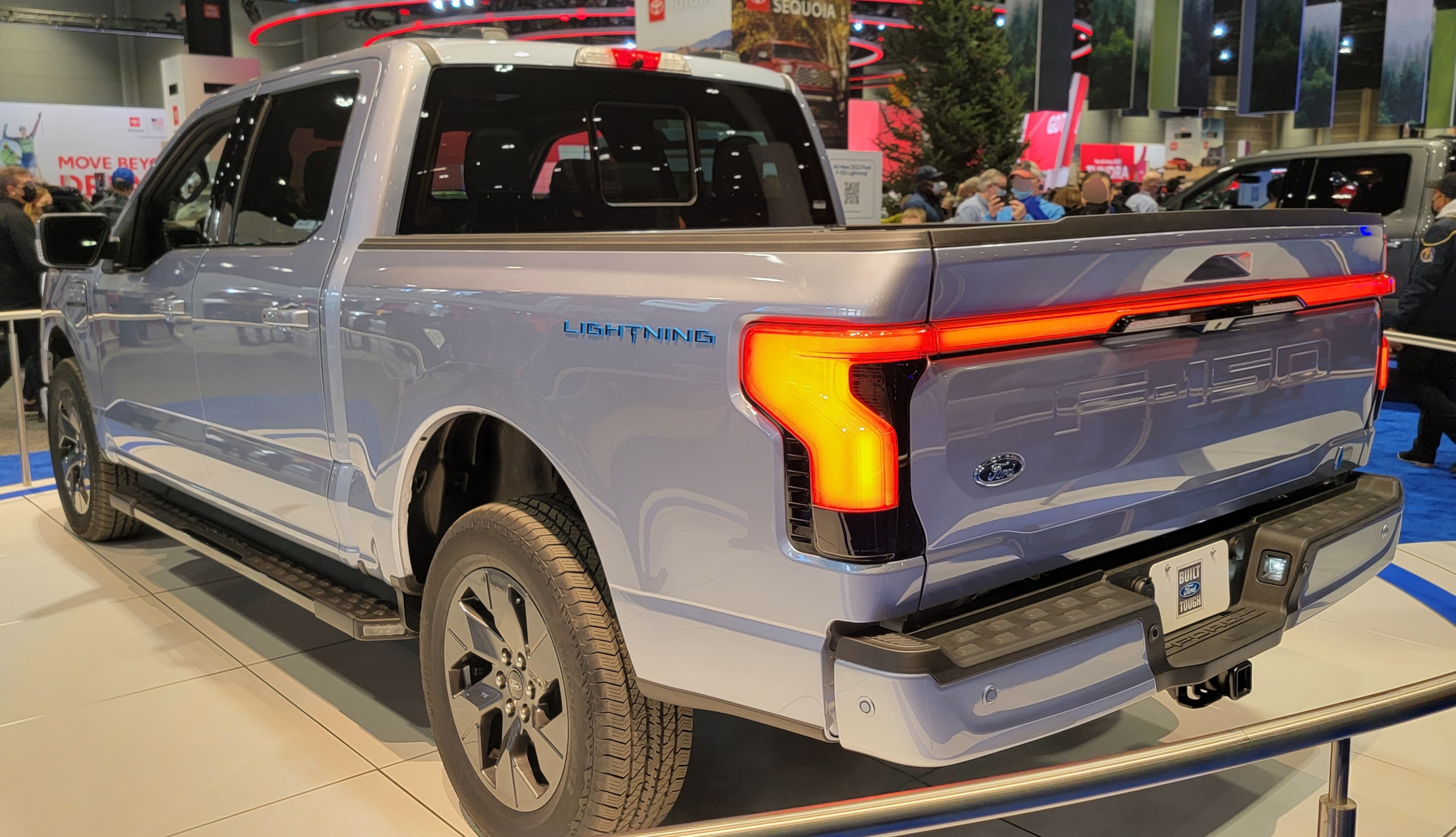
Yeah, they're canceling their electric pickup truck, which is, I don't know if people outside of the industry, all of you who are in the industry watching,
you know, once you've tooled up a truck and it's ready to go to cancel it is a massive write-off that you've got to take.
I mean, there's got to be a couple of billion dollars that you just flush that money down the drain.
That's going to hurt their earnings.
And it also makes me wonder, they say they're going to come out with their extended range EV.
But I wonder, and I only say that because I think the biggest product development failure I've seen in my career are GM Ford and Stellantis doing electric pickups.
And I say that because they claim they know their customers so well and they really know the pickup buyer.
Well, pickup buyers are the most conservative of any buyer in the market.
They want nothing to do with electric pickups.
You know, who's buying the electric pickups?
It's not people coming out of their ICE, F-150, Silveradoes or Rams.
It's other people who have never owned a pickup before that are coming into the market.
Right.
And so is there demand for an EREV?
I'm bullish on EREVs.
But I just wonder if pickup buyers are going to say, yes, I will pay a premium to have to plug it in even though I can use gasoline.
So let me go back to something you just said, though.
Okay, they spent a lot of money on developing the electric truck that they have now canceled.
Okay, so would they lose more money if they brought it to production?
It's like the three-row that Ford canceled, right?
That's the argument.
That was a massive write-off not to mention all the supplier fault and everything.
But at what point do you just say it's not worth it?
But yeah, that's the answer, right?
Because they would have brought it if that weren't the case.
Yeah, you would lose more money if you started building it.
Yeah.
Because if you're losing money on every one, the more you bake, the more you lose.
I mean, it's easy.
Just cut your losses and walk away from it.
But it's going to be financially painful.
It's going to show up on the books.
Well, I don't know about you, just on that point, because I wrote that story for Reuters on Friday,
and it was a pretty quick story.
It wasn't a huge surprise, but I got so many texts over the weekend from sources at the other two Detroit automakers
being like, oh, God, it's just really alarming.
And of course, the top execs would have probably seen this coming,
but some of the other people are thinking, what happens to the next gen lightning?
That's already been delayed on the team's times.
What happens to the EV pickups for GM?
Yeah, it's like a huge question, because those are still in play.
But anyway.
Yeah.
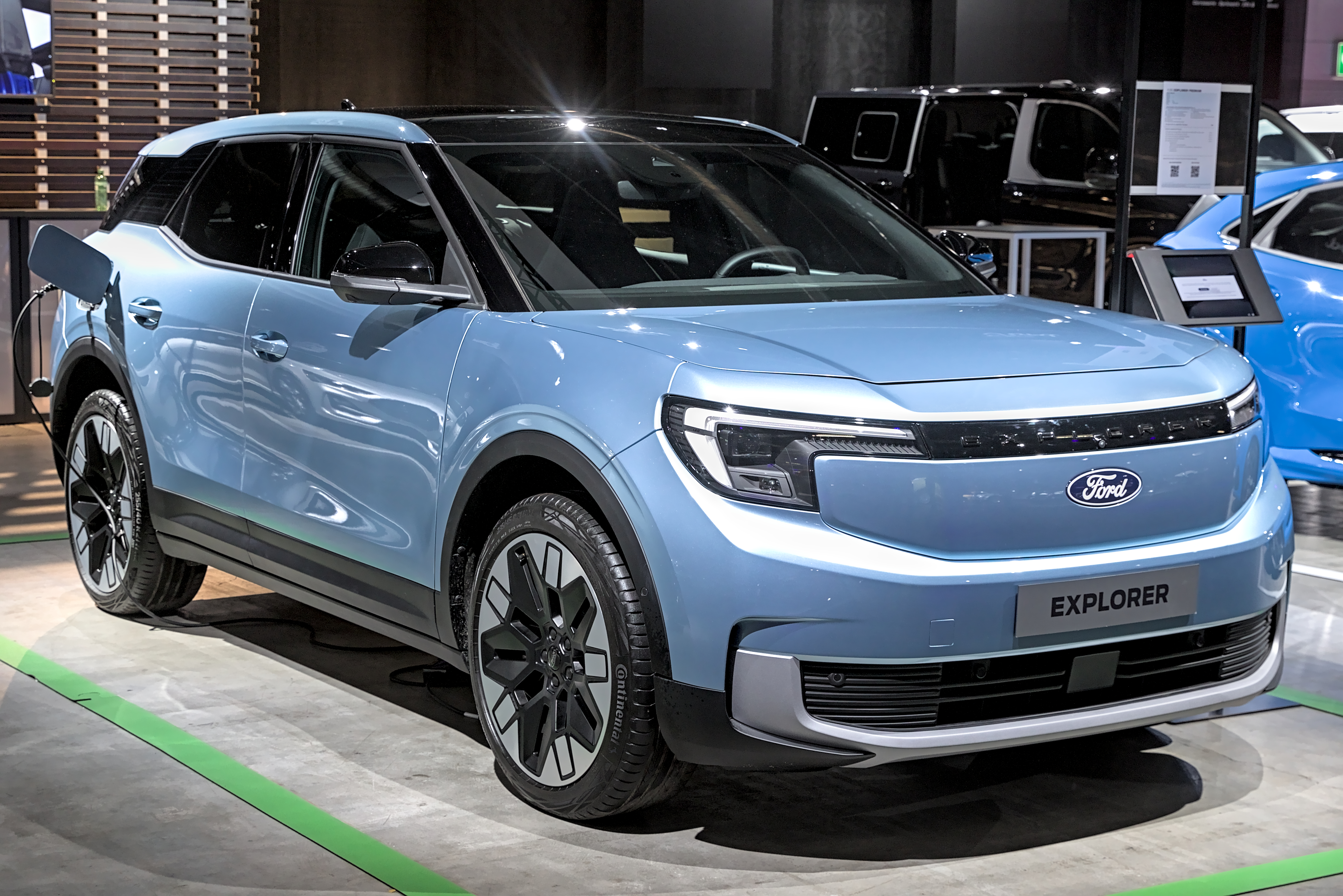
Well, speaking of Ford, they announced they're cutting 1,000 jobs at their Cologne, Germany plant
where they're making the electric explorer, which I saw in real life this past week,
which it looks great.
I mean, it looks fantastic.
But the thing that I wonder about is that, OK, Europe in terms of acceptance of EVs is far advanced
compared to what it is in the United States.
But it's not good.
But who?
I don't know what I'm saying.
OK, so what's the US?
We're bouncing around, what, 7% to 8% of market, right?
Europe's in the 14% to 15% or higher.
It had been over 20%, and it has slipped down.
And so you do see EV sales continuing to grow, but hybrids are growing much faster.
People are still looking at P-Hubs again.
And the European market right now is not structured for 15%, 16% share of market for EVs.
They were expecting it to be at a much higher rate now.
So yes, you're right.
They're way ahead of the US, but it's not a good situation.
So the thing that I wonder about is that come 2030, there still is on the EU books the need for massive CO2 reduction,
which means they're going to need a lot of electric vehicles being sold.
And I wonder if Ford is doing this, and Ford is in the first half of this year, it was in 14th place in EV sales in Europe.
Oh, really?
Wow.
They had sales of 35,239 Volkswagen was number one with 100,000 more vehicles than that.
My question is, will Ford be able to exist in Europe if this EV mandate in 2030 and then in 2035, that's 100% EV, unless rules change.
I mean, it doesn't bode well for that company.
Yeah, this was a huge conversation around the EU trade deal because and this is more a discussion of if Ford is going to export vehicles there as well.
But like there's a question if those customers even want those vehicles, EV or not.
But yeah, like that's a massive conversation we've been having just at Reuters and beyond with our industry colleagues is do GM or Ford even have a place in that region,
kind of outside the US in general, that's the bigger question.
And of course they say that they do and that they've got some very popular passion products over there.
But yeah, like in an actual marketplace sense, I don't know.
Yeah, and also under pressure to downsize too as losses mount in the US.
I can't see the board being like, great, okay, you sold you're in 14th place.
That's great.
That's totally sustainable.
I see several things in this.
This is not good news for Ford because the Explorer is kind of a new product, right?
And they're already admitting it's not selling well.
Yeah, we got to cut headcount here.
This is also why the European automakers under ACA, the constructors organization and CLEPA, which is the organization for suppliers,
are screaming bloody murder that they need instant relief on the CO2 regulations right now.
And this talk of banning ice by 2035 in Europe, they want that wiped out.
They want that gone.
And who's the woman who's the head of the EU, Van der Leyen?
Ursula.
Ursula Van der Leyen.
She has already come out and said, look, we're going to fast track this.
We're going to come to some resolution very, very quickly on it.
Because what the German industry is in the process of shedding 50,000 automotive manufacturing jobs before the decades out.
And that's just Germany.
You know, let's talk about France, Italy, UK and whatnot, Spain and Portugal.
And so the European industry is in deep trouble, really financially.
And I think that they're going to get relief in some way, shape or form.
Maybe they postpone things or something.
But it's going to come to a head before this year is over.
Well, I mean, I think the question comes back to sort of what we were talking about is that, OK, these companies have made significant investment in electrification.
And if it's not paying off, you know, how do they go forward?
In any market, that's the thing.
Of course, it's not paying off here right now.
But even in markets where it is taking off, it's not paying off.
Like, shouldn't that be the, yeah, the starkest sign that something's wrong?
And of course, in China, it's definitely not paying off.
Yeah.
Yeah, that's the other thing that, you know, there's cracks appearing in the Chinese industry.
I mean, you know, we look at all their exports, we look at how their EV sales are growing, especially in Europe, for example.
But Reuters had a big story on this, Nora, that there's a lot of signs that the Chinese industry is headed for some trouble here.
Right.
Yeah, my colleagues have been just dominating this story in Asia.
It's been really amazing to watch.
I can't claim any credit for it, but I've been following with interest.
And yeah, like they really called the moment that you guys have also talked about this, this involution that's happening in China, where there's been so much government pressure to meet certain metrics that consumers haven't kept up with, which I mean, might sound familiar to some people in the US, but to a different extent.
And these automakers are, I mean, there's a lot of them and they're not making money on EVs, especially.
So yeah, this has been really punishing for them.
And there's been some like very interesting creative workarounds, if you want to call it, where there's entities that dealers will sort of offload vehicles to to record a sale or the automakers will to record a sale so that say, hey, you know, we made our numbers, but then you've just got lots of vacant vehicles sitting, collecting dust.
And yeah, it's really interesting.
But of course, like their market is, you have to say, it's still so much more advanced and we can't be like, OK, the China threat, it's totally gone.
No, no, you're right.
That's not the case.
But it's interesting to observe like there might be, yeah, like you said, some small cracks.
Well, you know, some people, and I don't know if it was Reuters or not, have raised the specter of the Chinese auto industry may go through what the real estate industry went through in China.
Which is a total collapse.
And I don't think we're going to see that in China.
But you know, some stats from what your colleagues dug up at Reuters, 70% of all car dealers in China lose money.
Yes.
70%.
Can you imagine here like that would not fly?
Yeah.
So yeah, there's this gamesmanship of selling new cars as used, you know, so that they can book the sale.
And then your colleagues dug up that there are independent retailers that are buying up this inventory.
And they said they're selling Audi's for 50% off.
And they said 26,000.
We're dealing.
Yeah, we're dealing.
Come on down.
And then Chevy Malibu's that normally sell for about $26,000, $10,000 off the price.
So this doesn't bode well.
And the other thing too, BYD, you know, we've been singing the praises of BYD.
Look at this company and we've been benchmarking them and talking all about this stuff.
Sales down, profits down, stock down.
Sharply, sharply, they're going to fall a million units short of what they thought that they were going to sell this year.
So I agree.
We can't all say, OK, kickback.
It's all good.
China's out of the picture, but they're headed for some tough time.
Time is precious.
And so are our pets.
So time with our pets is extra precious.
That's why we started Dutch.
Dutch provides 24-7 access to licensed vets with unlimited virtual visits and follow-ups for up to five pets.
You can message a vet at any time and schedule a video visit the same day.
Our vets can even prescribe medication for many ailments and shipping is always free.
With Dutch, you'll get more time with your pets and year-round peace of mind when it comes to their vet care.
Go to Dutch.com to get vet care that is always there for just $92 a year.
You got to think about this, John.
I mean, OK, five years ago, we never talked about China in terms of being anything in the auto industry, right?
Yeah.
Nobody did.
Right.
Yeah.
And so, you know, the government comes out with a Maiden 2025 program and it's got, you know, the 10 industries that it's going to dominate and auto is one of them.
And here we are talking, you know, it is 2025.
They achieved it.
And, you know, maybe it's not working out the way they want.
But I think that, you know, as you say, Nora, I mean, it isn't over and the Chinese government will certainly do what it takes to maintain its champions in the auto industry as well as other industries.
And so, I mean, it doesn't bode well for, you know, European companies, Korean companies, Japanese companies, and certainly not American companies.
You know what I was thinking about this week was one of my first trips when I was back at the Wall Street Journal was NADA in Las Vegas and talk about a welcome.
This is the dealer association.
Yeah, dealer association.
In first time in Vegas, I did not picture it would be for a car dealer association meeting, but that's what I went there for.
And one of the dealers or it was a, it was someone from that world.
I don't think it was a dealer, but they said, you need to keep an eye on BYD.
And this was, I think, March of 2022.
And I remember talking to my US team at the time and like, oh, I haven't heard anything about BYD in so long.
I was thinking about that this week because now it's all we hear about, right?
So I mean, that was three years.
I haven't been on the beat that long.
So it's crazy.
So yeah, you don't want to bet against them, I think.
But speaking of the Chinese, I don't know if you guys have followed this, but this week, the Canadians floated the idea that they may allow Chinese EVs.
EVs into Canada.
You know, right now they've got 100% tariffs.
And, you know, they, they, you know, thinking together with the United States will keep the Chinese out.
What do you make of this?
It's going to be hard when US shoppers see, I don't know how much they'll cost there, but say it's like a $20,000 EV available in Canada.
And, you know, we're close.
So you see that right across the border.
Oh, I have to pay 50 grand.
50 grand?
One side of the street river with binoculars.
Yeah, that looks pretty good.
Yeah, I think about that more from a US market because it's going to, at some point, customers are not going to care and they're going to want the cheapest product.
No, no, I know people in California who are seeing Chinese EVs from Mexico coming in, people going shopping or whatever like that.
So they're getting exposed to these brands.
Yeah.
Well, speaking of Mexico, our friend Warren Brown had had a piece this week where he was talking about the possibility of Mexico putting a 50% tariff on vehicles from China, India and South Korea into Mexico.
And he points out, and I quote, General Motors de Mexico imports 77% of their overall sales volume from the three countries, most affected by the proposed tariffs.
Their China sourcing was a competitive advantage.
It will now become a competitive albatross.
So, you know, as you were saying, Nora, I mean, this is like, is the US auto industry going to be literally the US auto industry?
Yeah, and I don't know.
I'm curious what you guys think of that.
If you can sort of subsist off of our truck buying hunger for that long, because that's kind of what we're doing right now.
But I don't know, like long term, I don't know if that's going to be solution.
Long term, it's not good.
But, you know, for another decade, they can easily live off the profits of just the US market.
Yeah.
But, you know, if all they do is decide, OK, we'll stick in, you know, the US and maybe we'll export a few little things here and there.
You know, 10 years down the road, they are hopelessly behind in technology.
And at some point, you're going to get a new administration that goes, you know, all you guys do is make really expensive cars.
We got to have cars that are affordable for working class people.
Yeah.
And so we're going to open the doors and that'll be the end of it.
Right.
The end of the industry.
Well, I mean, going back to, you know, what Warren goes on to say is US plants do not produce low cost SUVs, either a popular segment in Mexico.
GM US customers purchase high volume tracks and trailblazers models produced in South Korea.
Their Mexican produced equinox is twice the price of the imported tracks, limiting the potential for increasing volume locally.
So this goes to the point of, OK, back to the pricing.
Yeah.
It's going to increase in how the consumers absorb that.
They don't.
They go buy a used car like they're doing right now or so many of them are doing.
Yeah.
We're slate.
We'll see.
So one more story that I want to end on, because I think this is actually pretty positive.
And I think it's actually very significant in the industry.
Porsche announced this week while developing the Cayenne EV that they skipped the prototype stage and went straight or going straight to production.
So, you know, automakers like to design a car.
They get the clay.
They do all this stuff.
Then they build prototypes that they have to drive all over the world under all kinds of test conditions.
Porsche said it normally develops 120 prototypes.
You know, if you go back like two decades ago, they would build, not just Porsche, other automakers, four or 500 prototypes.
You know, they have to crash them physically, crash them and all that.
Not all of them, but I find this pretty significant that Porsche is relying on digital twins and artificial intelligence to skip that all together.
Because what they're saying right now, and Aruna was getting to that too, is that the testing starts when the vehicle is still in the design stage.
So I don't know if you guys have any thoughts on that.
But to me, this is like Boeing skipping prototypes and going straight to the 777, you know, ready for production through all the simulation stuff.
They still had to do FAA certification in order to make this go.
So the question then becomes whether, you know, doing it software in the loop testing, if that is indeed sufficient in order to create a vehicle that travels in excess of 140 miles an hour and weighs two and a half tons,
I'm guessing that's with the Cayenne in least ways, remains to be seen, I think.
I mean, in terms of cost savings, yeah, I mean, but time is money.
So correct.
That's right.
So, you know, but at the end of the day, is it worth doing that for such an important vehicle in the Porsche lineup?
Because if you look at Porsche sales numbers, they're not good.
Well, they're not good overall.
But I mean, the sports cars that we all think about when we think about Porsches, the SUVs are like all car companies, it seems.
That's where they're making their dough.
I don't know.
What do you think?
Yeah, I do.
And maybe this won't even register with customers.
But do you think there'll be some purists who think like you've lost something in that process too?
Like the essence.
Yeah, the soul.
This is, I mean, probably not.
But that's where my mind went to.
It's like riding with AI versus riding with a human, you know, like something lost in the process.
Yeah, no, no, that's a great point.
Because what Porsche did say is that they tested this virtually in the digital world from everyday driving and traffic to doing the Nurburgring racetrack at the limit, all digitally, from testing the car in Death Valley all the way to north of the Arctic Circle.
But they did say that after they did all that digital, and they said the correlation was actually very good, but they said the final tuning was done by their engineers who do all the synthesis to make sure everything is just perfect.
So even though their correlation is good, you know, to your point, Gary, they are finally coming down to human beings to finish all that stuff.
But unless they're watching the show, I think most Porsche enthusiasts will be oblivious to the fact that Porsche is doing this.
Yeah.
Yeah.
And will it cost a lot of jobs?
Do you think or no?
No, I don't think so.
I think it's, well, look, if you built prototypes, if you had that business, you're not going to have a lot.
If your job is to go to the Arctic Circle and drive it?
That's one person dying.
Exactly right.
All right.
We got another one.
This is the year of autonomy, and Zooks launched its autonomous vehicles in Las Vegas.
Right.
So further evidence that you're right and I'm wrong.
Well, you know, what's the definition?
I mean, because autonomous cars have been around for a while.
I'm just saying we're reaching a critical mass right now, where we're seeing autonomous vehicles pop up in various US cities, various Chinese cities in the Middle East as well.
And I'm saying we're at the inflection point, where it's now going to really hit critical mass.
So going back to Nora, attending the NADA in Las Vegas, and my experience when I've taken a cab in Las Vegas over the years is that the people that were in there before me.
Yeah.
You never know what you're going to get.
You never know what you're going to get.
Exactly right.
You know, and the cabbie doesn't care.
He's getting flashbacks.
He's not sitting back there.
So I wondered to myself, you know, it's like, okay, so here you have this autonomous vehicle, you know, driving up and down the strip.
And if somebody has had too much of a good time, may leave something behind.
Apparently they have cameras in an AI system that determines whether something has been left on a seat.
And if it has, then it takes the vehicle back to the depot to get cleaned.
They've thought of everything.
Joanne, Moller was telling us about this and like how she was driving.
I think it was in a Waymo and they hit just a bad pothole and they like pulled the car aside.
They checked to make sure it was okay.
And then they brought her back on and they said, she said it was 30 seconds.
And it's just so fascinating how these vehicles deal with those little one-offs.
I hadn't, my mind, I have to confess didn't immediately go to, oh, did someone leave a present?
But of course they thought of that, yeah, especially in Vegas.
What happens in Vegas stays in the Zooks can.
Yeah, it's in the Zooks, yeah.
Okay, with that we're going to wrap it up.
Nora, thanks so much for coming on the show.
Really good.
We'll continue reading all your stories and writers.
Thank you.
Keep it up.
Gary, we'll keep doing this too.
We will.
And I want to thank all of you for having tuned in.
AutoLine After Hours is brought to you by Bridgestone Tires Solutions for Your Journey.
Our vets can even prescribe medication for many ailments and shipping is always free.
With Dutch, you'll get more time with your pets and year-round peace of mind when it comes to their vet care.
Go to dutch.com to get vet care that is always there for just $92 a year.
About this episode
Aruna Anand, CEO of Amovio, discusses the company's recent IPO and innovative technologies at the forefront of automotive safety and connectivity. Key highlights include a mirrorless head-up display that reduces packaging size and enhances projection capabilities, and night-capable cameras for advanced driver assistance systems. The conversation also delves into the challenges of balancing hardware costs with consumer expectations, the evolving landscape of software-defined vehicles, and Amovio's collaboration with Aurora for autonomous trucking solutions. Anand emphasizes the importance of agility and value creation in a rapidly changing automotive market.
Original notes
TOPIC: Aumovio PANEL: Aruna Anand, Aumovio NA; Nora Eckert, Reuters; Gary Vasilash, shinymetalboxes.net; John McElroy, Autoline.tv
Autoline After Hours
Autoline
0:00
63:05