Plug-in hybrids are cars that can run on both electricity and gasoline. You can charge them at home or at charging stations, and they can drive a certain distance using just electricity.
The Inflation Reduction Act is a law that helps reduce prices and encourages people to buy electric cars by offering tax credits. It aims to support clean energy initiatives.
A battery electric vehicle is a car that runs only on electricity from batteries, not gas. They are better for the environment because they don't pollute the air.
The Ford Model T is one of the first cars that many people could afford, which changed how people traveled. It’s important because it helped make cars popular and changed the way we live.
Toyota is a well-known car company that makes many popular models. They did really well in car sales in October, meaning lots of people bought their cars.
HEVs are cars that use both a gas engine and an electric motor to save fuel. They can't be charged like electric cars, but they use energy from driving to recharge the battery.
The Volkswagen Tiguan is a smaller SUV that has a lot of space for passengers and cargo. It’s popular because it’s easy to drive and has many modern features.
A tax return is a document you fill out to tell the government how much money you made and how much tax you should pay or get back. It's usually done once a year.
EV resale value is how much you can sell an electric car for after using it for a while. Sometimes, electric cars lose their value faster than regular cars, making them cheaper in the used market.
The Nissan Leaf is a small car that runs on electricity instead of gasoline. It’s important because it helps people drive without polluting the air, and many people like it because it’s cheaper to charge than to fill up with gas.
The Tesla Model 3 is a car that runs only on electricity and is known for being fast and having a long driving range. It's popular because it has a lot of cool technology and is more affordable than other Tesla models.
Weatherpeak tires are a type of tire made by Bridgestone that can be used in different weather conditions. They are built to last a long time, with a warranty that covers them for up to 70,000 miles.
NIO is a car company from China that makes electric cars. They focus on high-end models and have some unique features, like changing batteries quickly.
Tariffs are extra fees that the government charges on products brought in from other countries. This can make those products more expensive for buyers.
Chinese automakers are car companies that are based in China. They are becoming more popular and are making cars that have a lot of new technology, especially electric cars.
A 'smartphone on wheels' is a way to describe cars that have a lot of technology and features like a smartphone. These cars can connect to the internet, run apps, and make driving easier and more fun, just like using a phone.
The Lincoln Nautilus is a comfortable SUV that has nice features and a smooth ride. It’s designed for people who want a luxury experience while driving.
The Lincoln Navigator is a big, fancy SUV that has a lot of room and nice features. People like it because it’s comfortable and can carry a lot of stuff.
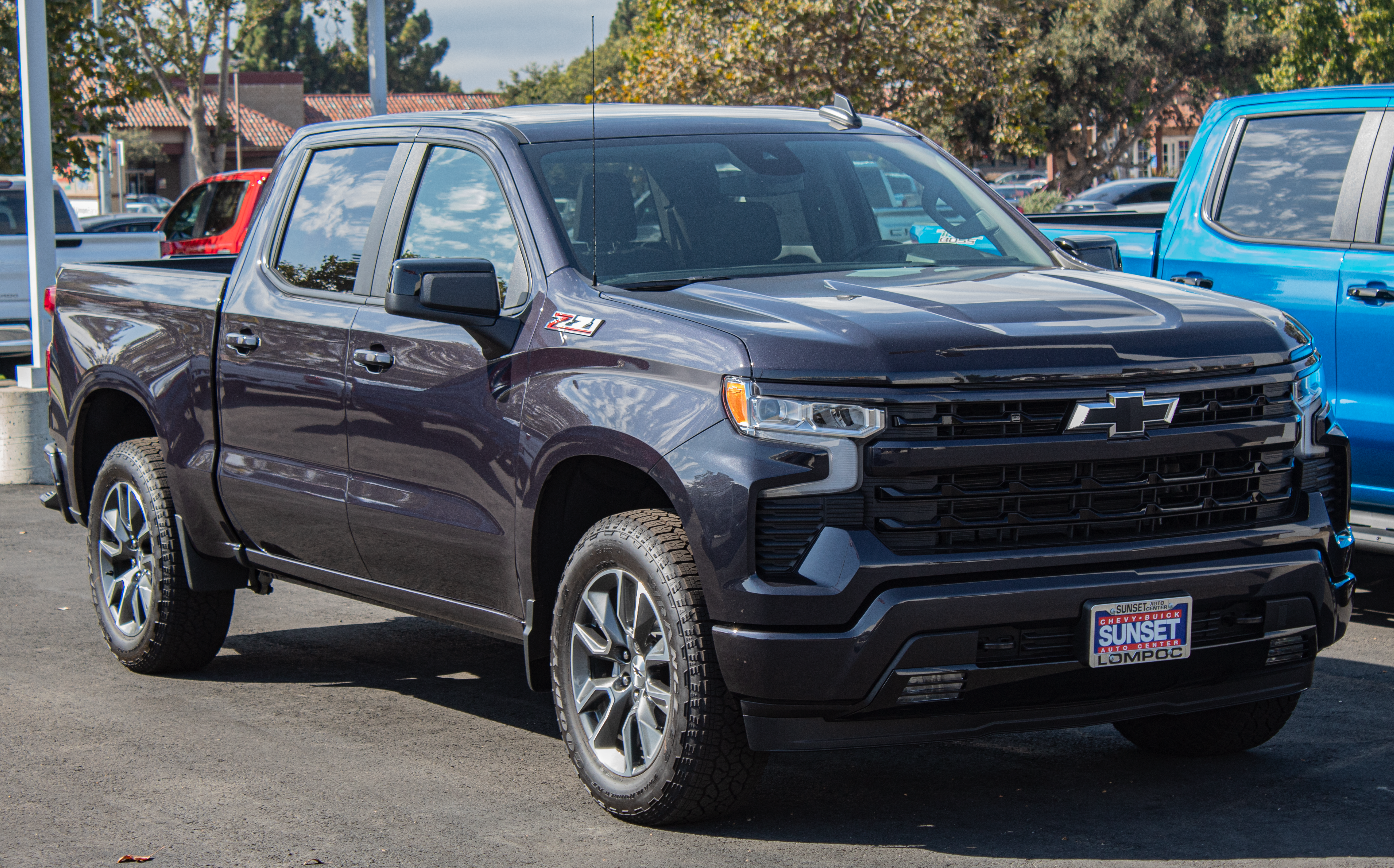
The GMC Yukon is a large SUV that can fit a lot of people and cargo. It's popular for families who need space and is also good for towing trailers or boats.
The Tesla Semi is a big truck that runs on electricity instead of diesel fuel. It’s important because it aims to make transporting goods cheaper and better for the environment.
LIVE
Forget whatever plans you have this weekend because you're staying at home and playing on SpinQuest.
And there's never been a better time to sign up than right now.
New users get $30 coin packs for just $10.
All the table games you love with hundreds of slot games and real cash prizes.
That's at SpinQuest.com.
S-P-I-N-Q-U-E-S-T.com.
SpinQuest is a free-to-play social casino.
Voidware prohibited.
Visit SpinQuest.com for more details.
AutoLine After Hours is brought to you by Bridgestone Tires, solutions for your journey.
Hey, everybody. Thanks for joining us for another edition of AutoLine After Hours.
So, those who have been watching the show for a while know that we've been, you know, gasbagging about what's going to happen after the EV credits go away.
And, you know, it's just like we make up stuff.
So, this show, we're going to get some real, real insight on that because we have Charlie Chesbrough, Senior Economist from Cox Automotive, who he knows the stuff.
I'm like, you know, John and I would just say stuff.
And joining us also is Joe White, who is the author of a highly recommended substack, High Speed Rodeo.
You go there.
You got to see it.
Joe does a magnificent job.
Thanks, Gary.
Yeah, good to be here.
So, thank you.
And we've got Brett Smith, Independent Researcher.
Good to be back, Gary.
And does that mean since Charlie always tells the truth, do Joe and I also?
We'll try to tell the truth.
Let's try to tell the truth.
We'll have fact-based opinions if there is such a thing.
Excellent, excellent.
So, Charlie, you know, I'm going to quote you from earlier this week.
And you said, as more tariff products replace non-tariff inventory, prices are tracking higher, which should lead to lower sales through the remainder of the year.
Okay.
Now, you're saying this in light of what we just saw in terms of October sales.
What did we see in terms of October sales?
What does it look like after the other shoe drops?
Well, October came in pretty much where it was expected to come in, but it was down significantly from the pace that we've been running the last few months.
We've been running in the mid-$16 million range for a seasonally adjusted rate for the months of July, August, September.
And then we had the numbers come out for October, and it was a $15.3 million pace, so down quite a bit.
And what we think happened out there is that a lot of the pull-ahead activity that we saw, people going out there buying battery electrics, plug-in hybrids,
while that $7,500 tax credit was still viable until September 30th, a whole bunch of folks the last couple of months, really since July 4th when they announced this was going to go away,
have been rushing out to buy these EVs and plug-ins and, in a sense, kind of borrowed some sales from October, pulled it all forward, and so we're seeing the sales have come down.
So the market was down about 4% for the month on a year-over-year basis, and it was pretty much where it was expected,
but it really does kind of leave an uncertainty of, well, where do we go from here?
The expectation is that battery electrics and plug-in sales are probably dead through the fourth quarter,
that anybody who was even thinking about buying probably pulled the trigger, at least the vast majority of those folks.
So that's going to be a big headwind to not actually have those sales.
The industry has been leasing plug-ins and battery electrics the last couple of years,
actually since the fall of 2022 when they passed the Inflation Reduction Act at over a 50% rate.
I mean, it's a monster amount of leases that we've been doing.
I was worried about that because you could get to $7,500 even if your income was higher than the limit that was in the IRA.
That's right, but the IRS decided that you could lease these things and have it qualified.
That was my understanding, but anyway, go ahead because a lot of that, and that's gone.
So that's all going to come collapsing down, and we may still see them trying to lease at high rates, these plug-ins,
but certainly not going to do the volumes that they had done before.
And so that's one of the big questions we have for the industry going forward is that we talk about higher prices.
The lack of that low-cost offer out there of these subvened lease rates for these battery electrics means a huge chunk of the market is going to get much more expensive.
And leasing of traditional hybrids is around 14%, so it's a much smaller share, and leasing of ICE vehicles is around 20%.
So unless the industry is going to step up and really get more aggressive with other lease offers on products that people would be interested in,
we're going to see leasing come crashing down along with the battery electrics and plug-in hybrids,
and that's a low-cost option for many in the market that's going to be going away.
So you used a term there that I need you to define for me, subvened lease rate.
So what does that mean?
Well, it just means sort of the capital cost reduction.
So the $7,500 that the feds were going to give on a battery electric, you can put that on a capital cost reduction.
So you're only paying a lease on a $42,500 vehicle.
So it's a rebate by any other name or another name.
Yeah.
And this is really interesting because just one thought as you're talking about this.
In the past, automakers could look at it kind of a cyclical sales slump and say, okay, fine.
We'll throw another $1,000 or $2,000, or we'll go do low-cost, 0% financing or something like that,
and spend some money to get the revenue to come in the door and keep people working at the union-represented plants and all that good stuff,
all the plants.
The money that they might have used for that sort of thing is being sent to the government in form of tariffs, right?
I mean $5 billion or so at GM, $2 billion or whatever it is at Ford, on and on.
So it seems like the – what's the word I want?
Flexibility, financial flexibility to kind of juice the market and encounter a downturn that a normal consumer – there's not as much of that or maybe none.
Well, certainly the tariffs are squeezing manufacturer margins.
And as we've seen thus far, they haven't really passed these costs on to consumers, even though we know that they're substantial.
I mean for all the tariffs are in place, tariffs are not in place that we've had over the last few months,
steel and aluminum tariffs have been in place since the end of March, and that's anywhere from $600, $700, $800 average cost per vehicle.
They're paying that cost, and they have for some time.
These cost pressures are only growing, and our expectation is that as the new model year 26 has become more and more,
a larger portion of the existing inventory, right now it's a little under 50%.
It just means that they're going to have to – these costs can't be absorbed for much longer,
and they're going to have to start passing them on because there isn't a lot of money left over to tweak the pot there and make the deal.
Yeah, just quickly, I was at the conference by my former employer, Reuters, this past – last week.
And a couple of OEM executives were there, and they were asked about this,
and the gist of what they had to say was, we aren't going to be able to eat this for much longer.
I'm paraphrasing, but that was the gist.
It's like you're going to see somehow or another, right, these things come through.
You know, Joe, you mentioned this idea that the cash flow is an issue.
So many people have talked about how much was invested in battery plants and switch over to –
and GM announced they're going to have to write some of that off.
But the other part is they're not getting revenue from those products going forward.
So they're not building on that base to create with any more money.
It creates an even bigger challenge for them.
Yeah, and they're laying people off, especially GM.
So you're starting to see this big issue of, oh, my gosh, we are getting to a cash short spot.
It looks like it.
Well, and the other big issue with battery electric that hasn't really been discussed
is now that we're sort of backing off of this push towards electrification for the country,
a lot of the assumptions to get to the high levels of penetration of battery electrics
was the battery cost was going to come down, and it was going to come down because of scale.
There's going to be so many of these things selling that the cost per battery is going to come down.
Well, now that's all out the window.
We're not going to have that scale.
So what happens to these battery costs?
It just seems like it's going to be that much more difficult to really make this transition.
Well, and can I just pick up on another thing?
I think it's adjacent.
So you said October was 15.3.
Yes.
And then where is Cox Automotive at for the full year?
What's the number?
Well, our forecast for the full year is around 16.1 million for the year.
We're currently running on a pace of about 16.2 million.
So we're expecting the fourth quarter to be a little bit slower than the third quarter,
and that kind of bags us down a little bit.
Okay, and here's the point I want to make about that.
And, again, this is more of an industry perspective than a consumer perspective,
although I think consumer perspective would be good to talk about here, right?
From an industry perspective, that's a million-plus vehicles per year.
I'm looking at you because you know numbers better than me.
A million-plus fewer vehicles per year than we had when we were tracking pre-pandemic.
And so, again, speaking of factors, so you look at this, you say, okay,
if this is the level and EVs aren't going to be the novel product that boosts it above 16-ish million,
there's a million vehicles worth of factory we don't need in this country.
And that's a problem.
So I just throw that out there as kind of one way to look at it.
Well, I think it's an excellent point.
And I think the industry has moved to much higher price points in the marketplace,
and they sort of are abandoning the less than $30,000 price point that really could be a lot of capacity there.
They could be building a lot of low-cost vehicles,
but I don't think the industry is that interested in meeting that demand necessarily.
They're pretty happy with the price points where they're at right now.
And to your point, Joe, I mean I was looking at a chart yesterday from auto forecast solutions of capacity utilization,
and Toyota is up here, Honda is here, and then everybody else is down here.
I mean – and so – and this is over a period of time, right?
Yeah, it's been consistent.
So you have this question of, okay, if you have all of this capacity that's going unused, that's costing you money.
Sure.
And so it's like invisible to most people, right, because you don't see the factory that's not working, but it's there.
Yeah, it's there.
And it's full of equipment that they have to pay for.
And, you know, they got lights and water and insurance.
Yeah.
Well, full of equipment.
So, Brett, go ahead.
I'm sorry.
And back to the earlier point, Ed, you're not getting product coming out of there.
Right.
Not only is it sitting idle, but you're not getting revenue from any of that.
Mm-hmm.
Yeah.
The CEO of – U.S. CEO of Fanatec, the big industrial robot company, again, was at this conference I was at,
and I chatted with him briefly.
And he was saying – and I said, well, what's happened?
What is the result of the EV, you know, kind of wave going away?
And he said, well, you know, yeah, we sold a lot of, you know, Fanatec machinery and robots, which is sitting in factories.
And now the question is, can we and the customer, you know, rework those robots,
put new tools on the ends of the arms to build ICE vehicles?
So that's like they put them in, they installed them, they tooled them up to do a certain type of thing.
Now they're going to have to redo them, reprogram them, do it.
It's just money, time.
Yeah.
BMW got beat up a lot four or five years ago because they were doing very flexible platforms
when others were going to very dedicated facilities.
Maybe later we'll talk about BMW.
But that ability to be flexible is so critical in an uncertain time.
UnitedHealthcare nurse Crystal checked in on a patient.
We do a routine call after surgery, and I could tell in her voice that she was struggling.
Crystal knew she needed help.
And I knew that this is very serious.
This is like septic.
This is life-threatening.
And she knew just what to do.
And I called the hospital and said, she's coming in.
Here are her labs.
And got her the help she needed.
I see my role at UnitedHealthcare as a life-saving role.
Hear more stories like Crystal's at UHC.com.
Benefits, features, and or devices vary by plant area.
Limitation and exclusions apply.
Charlie, can I ask you?
So another thing that I've been seeing a lot about, and I think it's a complex subject.
So what is the impact on the auto market, but maybe both new and used,
of what seems to be a fair amount of trouble for consumers who, you know, subprime or, you know,
the middle class, not really affluent, you know, not affluent,
but middle class people who are getting in trouble on credit, getting in trouble on loans.
What's happening with those folks?
And are they just out of the market or what?
Well, we're certainly seeing a lot of delinquencies are sort of at record highs right now.
And the concern is, is that going to switch over into defaults?
And defaults have been high, but they've actually come down a little bit over the last year.
And one of the reasons that there's all this concern out there is that there are a lot of delinquencies.
A lot of people are getting behind on these payments.
There's talk about this K economy.
The upper part of the economy is doing great.
The bottom part of the lower income folks are doing terrible.
And people in the middle are getting squeezed.
You know, all of that is going on.
But it seems to me that the direction of all of this is that the market is going to –
well, I kind of lost my train of thought on this one.
Well, I mean, does the new car market really just become a market for people who have six-figure incomes at the very least?
Well, it does seem like we're transitioning to a market where anybody who's buying new is luxury.
Because if you can afford a new car payment and the new car insurance,
it kind of defines you as sort of a luxury-type person in today's economy.
I heard last week that 15% to 18% of new car buyers' loans are monthly notes.
They're paying $1,000 a month for a car.
That's not a middle-class wheelhouse, is it?
No, but I think we have to abandon the idea that the new car market is for a typical American.
It's just not anymore, and it hasn't been for a long time.
Yeah, the metaphor of the Model T is over, right?
That's not the metaphor.
It has been that way for quite a while.
And it's only getting worse.
But the reality is there are affordable products in the new vehicle marketplace.
We've got Chevy Bolt.
We've got a lot of compact SUVs out there.
But that's not what people want to buy.
People want the bigger vehicles.
They'll settle.
If they can only afford a small vehicle, they'll take it.
But they want bigger.
They want better.
Back to Joe's point, then.
Americans seem interested in buying lots of technology on their vehicles.
They like the bigger vehicle.
How do they afford that?
And do we end up in another situation where we have a lot of defaults?
Or how do we resolve that seemingly conflict?
Well, one way you resolve it is you sell a million less vehicles, right?
So you have fewer people that can buy these things,
so you don't have as big a market.
And I think that's kind of the direction we're going,
is that we're going to stay lean and mean,
that we're not going to try and oversell this market and have massive
incentives to try to get us back to a $17 million-plus market.
Or your finance department really push the envelope on getting loans,
which creates a problem.
Well, it does.
It does, but this is more people that are sort of their own finances
and whether they make correct financial decisions.
So this will be good news for the auto industry.
I was reading the FICO score credit highlights report.
Because you do that.
Things like that.
So we don't have to.
The FICO payment hierarchy is, number one, auto, number two, mortgage,
number three, personal loan, number four, bank card,
number five, student loan.
Meaning when it comes to paying bills, auto gets the bill paid first.
So this is their explanation, and I just thought this was fabulous.
Auto and mortgage are secured products associated with tangible assets,
essential to one's quality of life, so they are higher in the payment hierarchy.
One reason auto is higher than mortgage is monthly payments are generally
lower for auto than mortgage, generally.
Additionally, while the mortgage foreclosure process takes longer
and there are more legal protections for homeowners,
autos can be repossessed with little notice,
which brought to mind the famous Repo Man movie.
Right.
I can't remember which media outlet that I consume.
It might have been the New York Times just did an article.
Because I've done them myself in my career,
the perennial or the quadrennial Repo Man article.
Porter follows the Repo guys.
He's picking up people's unpaid vehicles.
Yeah, no, I do think that – oh, I was going to say that I read transcripts of
some of the Q3 calls.
I didn't actually listen to the calls themselves.
I read the transcripts.
And certainly in the GM – and I didn't look for it, but looked at GM.
They were asked about this, and it sounded like they were saying,
we're not in trouble on subprime because we don't really lend,
do a lot of subprime lending.
And General Motors, of any company, we would think would know that lesson
because they got burned really badly during the financial crisis,
a lot of subprime, both mortgage and I think car loans too.
So I don't think – they're not trying to expand the volume with subprime loans
like they did before.
Is that right?
Because that's sort of what they say.
Subprime has gotten a much smaller share of the market today than it was back
during – certainly much less than it was during the Great Recession.
Yeah, yeah.
And I – yeah.
But rates for used car vehicles, used car loans, those are pretty high still, right?
Still very high.
In fact, the Treasury, 10-year Treasuries have kind of been coming down a little
bit, but car loans still remain quite high.
And I think we're sort of seeing the financial marketplace reflecting their
concern about are people borrowing too much on these vehicles,
and they're not quite ready to lower those rates.
So they're pricing the risk.
I think they're pricing the risk, yeah.
But the other thing we saw, I think, if we look back at during COVID,
is the world's falling apart.
Nobody knows what's going on.
What did people do when they got these checks?
They ran out and bought cars.
People wanted personal transportation.
They wanted the mobility.
I have to get the heck out of town.
I want that.
And certainly if I have to keep going to my job, I need that transportation.
So people do pay those car loans, and I think that's why we don't see –
and certainly we didn't see this during the Great Recession either.
You just didn't see the default rate on car loans like we saw in bank cards
and other assets.
Yeah, you don't want to open the door in the morning and see your car's not in
the driveway.
That's right.
Well, then you can't get to work, and you're really in trouble.
But, okay, so, Charlie, one of the things that I know you guys do is that
when you look at the numbers in terms of sales, you look at individual
companies and see how they're doing.
So, I mean, what companies did pretty well in October
and what companies did not so well?
Well, I think we'd have to say probably the big winner for October was Toyota.
Their sales were up big.
I think 11% was what it was.
I looked at the numbers before I came here.
Compared to last year, they gained two full points of market share in the same
month from a year ago.
That's a big move in the marketplace.
So I think they're doing quite well.
And what we can see that selling is it looks like their hybrids are really
just on fire.
Yeah.
And if you look at the market this year, in fact, overall we're up about 4%
year to date.
But what is selling out there has really quite varied.
Battery electrics are up a little bit more than that, maybe 5%, 6%.
Plug-in hybrids were actually down a little bit.
ICE vehicles were down about 1%.
And traditional hybrids or HEVs up 50% plus year over year.
Huge increase in hybrid sales.
And so that's Toyota.
They've really moved into that category.
They kind of own it at this point.
Along with Honda a little bit, they're doing some themselves.
I think that's really been a big plus for them.
In terms of who had a tough October, I think we can look at Nissan.
Their numbers were down that we got.
They were down double digits.
Part of it is we can see they are pulling back on fleet.
A lot of rental fleet activity pulled back this month as well as last month.
I don't know if they're getting a little bit more discipline over there and not
wanting to do as much fleet as they had done historically.
They're always kind of known to be a rental fleet type of company.
So maybe they're changing their strategy on that.
But they've had a tough October.
And Tesla, we saw Tesla numbers in October.
It looked like they had come down.
So as we would expect with the fire sale over there and with the $7,500 credit.
Yeah, Toyota really did call the hybrid thing, at least certainly for this market.
Right.
And the head of Volkswagen North America, again, was at the same Reuters
conference, and he was asked about hybrids for electric because they were
one of the we're all in on electric companies, right?
Yeah.
And I think his name is Kel Gruner.
And he said, you know, we thought we could leapfrog hybrids.
We can't.
He's new in his job, too.
I think it's important to say.
So he gets a little bit of a clean sheet.
But he basically said, nope, we cannot.
And they're building or they're developing hybrids.
I think you said for the Atlas and the Tiguan, maybe others as well.
So they're doing a – I don't know if it's a U-turn, but it's a 90-degree
U-turn on hybrids and trying to bring them in to this market.
Yeah.
For the longest time, we all thought, oh, Toyota, they're falling behind.
They're not doing much on electric vehicles.
And it turns out they –
They're betting against Toyota.
Charlie, so looking back, you've described some of what's happened.
Maybe look forward a little bit.
And given the government shutdown, what kind of data or how do you look forward
over the next couple of months to figure out what's going to happen volume-wise,
sales-wise, and such?
There doesn't seem to be any real trustworthy data because of the government shutdown.
There's really not.
I'm glad I'm just an automotive analyst and not a Fed chairman because I don't
know how they make decisions on these interest rates not having any information.
You know, everyone's kind of flying blind right now.
But certainly the trends were suggesting a very troublesome environment for the economy.
Consumer confidence is definitely at recessionary levels.
We had seen that, you know, the job creation, monthly job creation was definitely trending
towards zero before we started getting any numbers.
So, you know, I think everyone's kind of taking a cautious approach.
We're all kind of waiting for the tariffs to finally hit the fan and we start to suffer
the ramifications of these things.
And that's our expectation as well is that we're going to see starting in the fourth
quarter, as we saw in the first month, that things are going to slow a little bit.
So do you think this will be evident to a consumer on the sticker or will the auto
companies do things to sort of disguise it?
And this is where it gets tricky.
Yeah.
So, you know, I don't think anyone's coming out and saying we're raising prices.
Because of the president's tariff policy.
I don't think we're going to hear that.
I don't think we're going to hear that.
And I'm sure they're all reluctant to be a first mover and be the one because you
know what the president's going to say if you're raising your prices.
You don't want to be getting a shout out from him about that.
So, no, I think what we're seeing out there is we had expectations that they were going
to cut back on incentives, that they were going to get a little bit leaner and sort
of keep some of the money to boost their margins.
We haven't seen that yet.
Incentives have actually stayed relatively stable.
They haven't pulled that lever.
So what we think is probably going to go on is they're just eating it right now, as
we've seen from their quarterly earnings reports.
But they're going to start to slowly roll those into prices.
With the new model year coming in, you always kind of have price changes in.
It's kind of easy to hide it there.
Maybe a little bit higher destination charges to get that vehicle delivered.
And then the other one, and we're actually internally trying to figure out how do we
measure this, but it's shrinkflation.
Are we going to start to see the manufacturers say, oh, here's that vehicle.
Same price as last year.
Doesn't have the cruise control this time, but it's the same vehicle.
So they start pulling back some of the features that they have been throwing into
these vehicles in order to keep back.
So they become options that will then.
Yeah, and I remember in years past when I paid much closer attention to pricing for
the purposes of writing about it, they did that and then they did the reverse, which
was they would eliminate the stripper model in the model line, package up everything.
Now standard is X, Y, Z, and then they would price up and say, well, look, but like for
like, you're getting the same content, but you're not.
I mean, the content is obviously much cost them a lot less than they're charging you.
Yeah, that's what I expect they'll do.
But let's not come back to something I said earlier.
The other constituency that's suffering or taking the brunt or the impact of tariffs
are the are the employees and the workforces and I think also capital budgets.
I mean, picking on GM just because I'm kind of familiar with what they said about this.
You know, you see the layoffs, you see you see lots of, you know, action to cut costs
and consolidate within that organization.
You see, you know, production shutdowns.
You know, there's they're doing a lot within their organizations to basically take out cost.
And they've talked about it with Wall Street.
I mean, they've said, look, we think, you know, the term they use at GM is self-help.
So they figure they can take a little price.
They can do this.
They can do that.
They're very grateful to the president for the relief that, you know, they kind of tweak
the tariff so they get some relief, which is definitely worth something.
And they get regulatory relief on emissions and EV quotas, which is definitely worth something.
But there's a gap there.
And right now, it looks to me like they're taking it out on the capital budgets and the
employees to try to narrow it.
So how long that goes on, you know, is another.
I know Sean Fain was on Facebook last night, given it H-E-double-L.
And he was talking about, you know, these cuts and, you know, obviously concerned.
He should be.
That's his job.
But I do think that's something to watch.
Well, Charlie, are you guys, I mean, you know, as we've established from Brett's question,
I mean, we don't know what the future is going to be because there's not, you know, economic
data that usually gets generated.
But, I mean, as Cox Automotive looks to 26, I mean, do you see it being pretty stable
or do you anticipate there could be some growth?
Well, this is so this is where it gets tricky trying to forecast in this environment because
there's so much uncertainty with these tariffs.
And it was the Supreme Court going to throw them out or, you know, lots we don't know.
But one of the things that we've calculated is so that we're certainly concerned about
higher prices from these tariffs.
And that's going to be a headwind.
And we think consumers are going to be seeing those higher prices in the market next year.
But one of the things that we also have calculated recently is the big,
beautiful bill is going to change people's tax returns come January and February when
people are getting their tax returns.
We're estimating that people are going to get a big bonus, a big surprise that they're
not expecting.
And that is because of all the little nuggets that were in the bill of, you know, senior
citizens' deduction and higher assault state and local tax deductions, higher deductions
for everybody, standard deduction.
No tax enforcement.
No tax on tips.
Well, yeah, that's a whole other thing.
But no tax on tips, no tax on overtime, a lot of things.
But they made it all retroactive to January.
So people's withholdings have all been based on the old tax rates and not the new tax rates.
The new tax rates are more favorable.
So we've calculated it that the average tax return of about $3,000 come February when
people get them is actually going to be about $3,750.
So $750 more, almost, you know, 20% more than probably what they're even expecting.
Well, it certainly may not do much for the new vehicle market, but for the used market,
it could be a hot corner.
And just by coincidence, landing in the midterm election year.
Complete coincidence.
Timing is everything.
I lost my son to cancer when he was just 14 years old.
And I came to UnitedHealthcare to make a difference.
Anything that I could do to honor him.
I understood I was once that person on the other side.
I took it from my boy.
He gave me so much.
To build on that positive, we talked a lot of negative here.
What are other positive trends you see for the possible market growth or for some kind of solid future?
Given that you can't see half the data anyway.
Yeah, well, certainly, you know, a couple of things in the bill, the auto loan deduction.
I think that that will help a little bit for the new vehicle side.
Not a lot because it phases out after $100,000.
And not many folks are buying vehicles that don't make it at least that.
But I do think the other one we saw is 100% depreciation, bonus depreciation on commercial vehicles.
That could be really 6,000 to 14,000 pound vehicles.
You can deduct the entire amount right off the right out of the gate.
So you can buy a $100,000 big truck, write it right off of your profit margins and pay no tax that year.
And normally, it was about a five-year depreciation allowance.
Okay, but wait a minute.
You said something very important there quickly when you said you have to write it off your profit margins.
Well, or whatever your tax return.
It comes off of your…
Yeah, but then you have to make…
So not everybody's going to go, holy crap, I'm going to buy a $100,000 car.
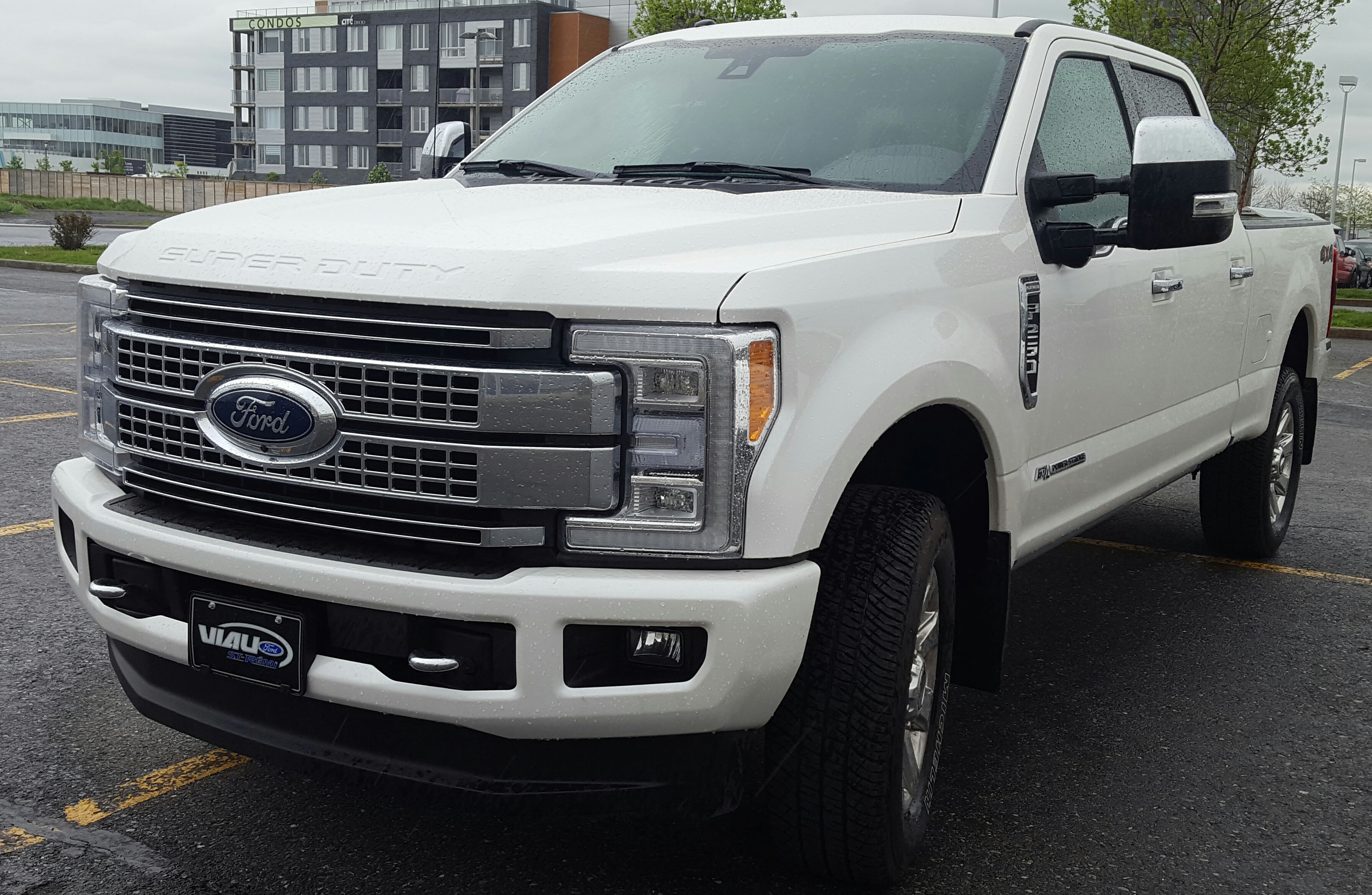
So with my sub-stack, I'm not going to be able to go out and buy an F-250 and then…
Write it off.
Write it off.
Well, it's tempting, but it might not pan out for me.
It's not for personal.
It's only for commercial business applications.
Well, I've seen a whole lot of large SUVs with some decal on the side.
I'm not going to help people with that one.
I'm pulling a lot of snowmobiles up north on the weekends.
Yeah, yeah, yeah.
But really, it's a work truck.
Yeah, yeah.
So that could help.
But certainly, the tax return itself we see as being a big plus for the used market come the first quarter.
And kind of in a similar situation, when people got that surprise check back in the wake of 2020 and COVID,
people could be getting a surprise amount of income.
But what we don't know…
So normally, yes, that would be a big plus for the vehicle market.
We're going to have a hot Q1.
But what we don't know is what are finances in households and are people not getting their SNAP benefits
or people having a hard time paying other loans.
Is that $750 extra already spent?
So they're not going to be able to use it.
That's the part we don't know.
For the used car market, EV resale value is really low.
Tell me about how that…
There aren't a lot of EVs already sold out there to build a huge…
But there are.
You look at some of these high-end luxury vehicles coming back on the market for 30%, 20% of their original, 40% maybe.
Yeah, there's some oddball.
We're too expensive at the get-go, I think, and that's coming home to roost.
But when we try to analyze residual values, it is a little tough because there's really only sort of Nissan LEAF that you've got a long history,
Chevy Bolt, and then maybe the Model 3.
We're starting to get enough data now for the Model Y because it's been a few years.
But even then, it's not like you've got hundreds of vehicles to monitor, so you can't really look at.
But depreciation has been a real challenge for electric vehicles.
They do depreciate faster in general than ICE vehicles.
But I think the pullback on the $7,500 tax credit will help support residual values down the line because we're not discounting them as much up front.
But one of the interesting things is because we've been leasing at such a high rate of these plug-in hybrids and electrics,
we've got a whole bunch of these things coming back off-lease starting later this year, but they really get into high volume next year and into 2027.
And in fact, by 2027, we estimate there's going to be about a half million battery electric vehicles coming back off-lease.
And that's a huge chunk of volume that's going to be coming to the used car market.
If you want to bargain in the used car market.
If you want to bargain.
And interestingly, a lot of these are going to be Model 3 and Model Ys.
Wait, so who's behind Tesla's leases?
Because if they wrote those leases assuming I'll make it up 50% and it's actually going to be 30, that's a pretty big sandwich that someone's got to eat.
Well, so we're going to see.
I don't know who wrote all those, what finance company they worked with.
But that's going to put a lot of pressure on their new vehicle sales as well.
That if they're going to be trying to sell a new vehicle, but you've got a competitor out there for half the price, that's going to be a real challenge for them.
So there's a lot of moving parts of electric vehicles in the new market.
But what we do know with some certainty is there's going to be a whole lot of these things in the used market.
It's interesting because I figured that we would talk about this.
I looked at the websites of a couple of dealers in the Detroit area and looked at their used EVs because I would imagine that there would be some concern when buying an EV about the battery state.
So two separate dealers, just very competitive and there was no information on the state of the batteries that you'd buy fill in the blank EV for.
So if you're buying a used Sentra, you don't worry about like, oh, if the battery goes as 12-volt battery, you get a replacement.
Yeah, and there's this century-old body of knowledge of how to take a used combustion vehicle and determine whether or not the engine needs a ring job or whatever.
I don't know all those things, but there are people who do and you can hire them and it will be fine.
But what does Cox do?
We do do a battery health score now at our auctions with Battery Electric.
So when they're going through and they're getting a score on sort of the condition, a condition report of the vehicle, we do have a score for the battery as well.
But yeah, it's very difficult out there.
And some of these electric vehicles, the battery, you can't get to it.
It's going to be near impossible to fix it or replace it.
But other manufacturers, their products, you can repair these things.
So you're going to have to do a lot of homework if you're going to get into a used EV, I think, and make a wise purchase.
All right, we've got to take our break now.
We're going to come back.
We're going to talk about lots of things.
Joe's got this collapsed China market information that he brought with him.
I'm not the only one who does this sort of silly stuff.
So we're going to hear from our sponsor, Bridgestone, whom we greatly appreciate.
Making a life full of memories.
One road trip at a time.
That's what really matters.
Bridgestone Weatherpeak tires with a 70,000 mile limited warranty.
And we are back.
You guys want a quiz?
Do you want to?
Sure, we'll try to do that.
OK.
So this is a famous automotive executive, was born on November 6th, 1893.
And for those who are watching live, this is, of course, November 6th, so it's appropriate.
So, OK.
He sponsored Admiral Richard Byrd flying over the North Pole in 1926.
He has a section of an interstate named after him.
And you guys all know who this person is.
And I dare say that most people, even if they have very little interest in the auto industry,
recognize this guy's given name as well as his surname.
Edsel Ford?
Edsel Ford.
You got it.
Really?
Wow.
OK.
It was the Admiral Byrd part, right?
No, that didn't help me at all.
The freeway was like, OK.
And I was like, wait a minute.
So in Detroit, there's a section of...
He died young.
Yeah.
OK.
Yeah, a section of a freeway in Detroit.
Ford Freeway named after him, not after his father.
Well, happy birthday, Edsel.
Yeah.
Yeah.
And the famous Diego Rivera murals in Detroit.
Well, that's right.
He caused those to exist.
Yeah, he caused those to exist.
So what does Joe win?
I get to come back sometime.
Our admiration.
Well, OK.
Yeah.
I get to come back sometime.
Yes.
Anyway.
All right.
So you've discovered that there are some companies in China that aren't doing so well.
Well, I didn't discover it.
I mean, this has been...
But again, this is earnings season.
And especially the three major German automakers, BMW, well, maybe four or five, but BMW, Volkswagen, Mercedes.
We're talking about their results.
And the thing overhanging all of them is that in China, these are brands that were super strong in China.
They've made billions in China over the last 20 plus years.
China, I think, at various times has been the largest single market for their vehicles.
Right.
And that is rapidly becoming not the case.
They're all struggling.
They're all dealing with double digit declines.
I looked this up.
And again, I'm going to cite my colleagues at Reuters.
If you look at Volkswagen, in 2020, they were selling 3.7 million vehicles a year in China.
In 2024, 2.8.
So almost a million vehicles fewer.
And frankly, they're doing great compared to General Motors, which 2020 was selling 1.4 million vehicles and 2024, 528,000.
I mean, their sales have collapsed by more than half.
But all the German automakers are really struggling.
Porsche came out and basically said, you know, they made I think they made 400 million a year ago in the third quarter for a million euros or something like that.
This time was this quarter's last quarter was 40.
And they're basically the new CEO.
Porsche is basically talking about, you know, strategic reboot.
They also did the, you know, we're all in on EV.
I think they switched a couple of their I think the Macan, which I think is one of their I know it's one of their most highest volume products.
Very important product, very important product globally.
They were going to go all electric with that.
And in this market, I think that turn was pretty much rejected by the customer.
And in the China market, their EVs were deemed not up to scratch compared to the local competition.
So, yeah, it's been it's a tough go for these brands that, you know, not that long ago, four, five, six years ago, really seemed like they had it knocked.
They had this great market in China.
They were, you know, Charlie's points earlier.
I mean, they were in position very well for a market that was aimed increasingly at affluent buyers.
And now it's just like we got a reboot.
We got a reboot and it's it's going to be going to be a rough ride.
Well, to be fair to Porsche for its one point one billion dollar loss for the third quarter.
They say that 700 million euro.
Caused by tariffs. Well, right.
Yeah, I think the 40 million was, I think, you know, sort of, you know, earnings before bad stuff, kind of a number.
But even that was minimal relative to the past.
And yes, and they took these big charges.
And then, yes, all three of them obviously are getting are getting whacked by tariffs.
And Porsche, unlike BMW, Mercedes and Volkswagen, Porsche, the Porsche brand has no U.S. manufacturing.
So the other three, the ones that do have some cushion and, you know, some not total Porsche has none.
And, yeah, so that's and I guess even Porsche can't raise their prices sufficient to cover that, even with their customer base.
Like, you know, there's some limbs.
So, yeah, I think it's it's they're in a tough spot and I think they're looking at some really tough decisions.
Right. Going forward.
Keyshawna wanted to pay homage to her son.
I lost my son to cancer when he was just 14 years old and I came to UnitedHealthcare to make a difference.
She instantly made an impact on others.
Anything that I could do to honor him.
I understood I was once that person on the other side.
Through her work, she's been able to turn her pain into purpose.
A toy for my boy. He gave me so much.
Hear more stories like Keyshawna's at UHC.com.
So, Charlie, I mean, OK, when you look at let's call them specialty brands, I mean, Porsche is certainly not a mainstream brand.
Do they have a runway ahead of them that that they can take advantage of or is here in the U.S.
You're asking Charlie to put the death knell on Porsche?
No, I mean, I'm just I mean, if you look at, you know, Ferrari, Maserati, I mean, they all have very, very small portions of the market in the United States.
And, you know, at some point that has to become economically infeasible.
Well, it seems to me they've always had sort of a little niche place.
If they've made it work this far, you know, I don't know that their circumstances have really changed.
I will say, I think in China, I think one of the problems a lot of manufacturers are facing is, well, it's just massively competitive.
There's what, 200 OEMs there right now and a whole bunch of nameplates and a whole bunch of really just electric golf carts, really.
I don't even know if you could call them. We wouldn't call them, I don't think, vehicles here in the market here.
But they are selling millions of these things and it's kind of eating away at the whole low end.
So any sort of real manufacturers are all competing with each other for that type that customer that's looking for a real electric vehicle, not sort of this golf cart version.
So I think it's a real, even a bigger challenge.
I think on a longer term strategic opportunity challenge, interesting thing.
The Chinese government is notorious or renowned for doing these five-year plans.
EVs have been a fundamental part of that for 30 years-ish.
They've recently, my understanding as I read it and look at it, is they're de-emphasizing it.
It's no longer a strategic goal because they look around and say, well, geez, everyone can do it.
We'll let the strong survive and we'll figure out how to win away the others.
Are those companies you mentioned the strong?
Well, the foreign companies, certainly the Western companies and Western sort of includes the Japanese companies and to some extent the Korean companies as well.
But they are not the strong currently.
They are not the strong and Charlie Wright.
The low to middle of the Chinese market is going toward these very inexpensive domestic cars and especially BYD, but many others as well.
The high end of the market, and again, I'm borrowing ideas of my podcast partner, Tu Li, who's an expert on this stuff.
But you have relatively new brands like NIO or Xiaomi, which is a phone company five years ago.
It still is, but they got into making cars.
The upper end of BYD, several other brands, they're now offering vehicles that are point for point what a Porsche or a BMW or a Mercedes are offering.
Chinese consumers might say better.
They're electric, which is obviously still kind of which is an advantage in this market.
And so I think you're seeing a lot of younger Chinese consumers saying, well, these cars, these brands have the tech that I expect.
They have the oh, and a price point.
It's I don't know what it's less depending.
It's a lot less.
So I think that the Western brands, even the luxury brands are not they're not measuring up in terms of the important product attributes and they're too expensive.
And that seems I mean, and that seems to be the problem.
And, you know, again, I haven't been to China in a while, so I can't tell you, you know, is there sort of a national pride aspect to this is like, you know, why are we buying these German or American brands?
When we have, you know, homegrown Chinese brands that we should be supporting?
I suppose there's some there is, you know, there is here right in the reverse.
But I don't know.
It just seems like it does seem like the customers are saying, you know, especially younger customers are saying their stuff, this domestic stuff's better by that.
Yeah, well, and I think one of the things we have to think about in the US market is we can't make low cost vehicles profitably here in the United States.
You know, subcompact SUVs, compact cars are generally made offshore and we and we bring them in with all these tariffs.
It just means that the low end of the market is just going to get that much more expensive.
In fact, our own calculations are that it's the lowest product segments that are going to look at the highest percentage cost increases as a result of these tariffs because they're all made offshore.
The vast majority.
But the Chinese could be they could kind of fill that void if we allow them into the US market.
They especially sort of like all the other, you know, the Japanese did it in the 70s, the Koreans in the 90s.
They could kind of come in at that low end and offer a low cost vehicle to the US market.
I'll be optimistic again.
Slate, the new Ford truck, maybe those or not.
But that attempt to try to fill that market.
I go back to with those products.
They're fabulous ideas.
They're really interesting.
The skunk works at Ford is cool.
Slate's a fantastic story.
But American consumers historically, traditionally, recently have bought more technology, more technology, more technology.
We like the bells and whistles.
And aren't showing an interest in that.
Yeah.
I don't know if people get to a point where they just can't afford the new technology and say, I'll plug my phone into the Slate and I'll be happy.
But there's this really interesting opportunity coming.
Maybe.
Yeah.
I mean, one of the things that's interesting, and again, I'm just kind of getting my head around this.
But I do think that the problem or challenge that, again, coming back to the German brands, but it's not just the German brands.
I mean, the more people study what the best of the Chinese automakers are doing, not all of them, but the best of them, what they're doing.
They're starting to realize that the best of the Chinese automakers have done what Tesla did, but are now kind of ahead of Tesla.
Which is they've designed a car from the ground up to basically be a smartphone on wheels.
Taking a lot of the cost out.
I mean, the software-defined vehicle, everybody talks about software-defined vehicle.
And they talk about it in terms of, well, you can update it over the air and that kind of thing.
Well, what it really seems to be about is that if you do it right, you can produce the vehicle, engineer the vehicle, produce the vehicle for thousands of dollars a vehicle less than a conventional vehicle.
It's a Toyota production system applied to the architecture of the vehicle.
So they're playing a different game cost-wise.
That seems to be the problem.
And again, I mean, you hear these, especially the German company CEOs, because in a way, the German company has been on the front line of this collision, right?
And they're tearing apart these Chinese cars and realizing, oh, they're doing it different.
But isn't it the case, I mean, that they have the problem because they went full on and said, geez, look at this.
This is great for us.
We're going to have a huge part of this market because people in China are beginning to get money.
They're going to want to buy our deluxe products.
We've got pedigree.
We're going to buy a Mercedes.
Oh, that's really special.
And now you have the situation where people came back to Earth and realized, well, you know, maybe we can buy something from LeapMotor that isn't going to be as pedigreed as a Mercedes or a BMW or an Audi.
But it's something that's got the stuff.
And there is something to be said for nationalism.
Yeah, no, I mean, it does.
Right.
It does look that way.
And again, you know, I mean, if you're.
Again, I'm going to borrow from my friend to Lee.
The Chinese car buyer, by and large, is a much younger car buyer than than the average in the West and certainly in the United States.
So, right.
Pedigree may not matter as much to, you know, some 30-year-old, you know, successful Chinese tech worker or, you know, somebody who's doing well in the Chinese economy.
But pedigree may not matter.
I mean, as compared to, you know, other attributes and other things.
Well, and I wonder whether in sort of in our own market here, you know, what defines luxury in the U.S. market anymore?
What used to be, you know, had all the latest and greatest features.
Well, now you can get latest, greatest features on all kinds of vehicles, like different price points.
And I just wonder if in China, you know, the foreign brands, they were the ones that had all the cutting edge technology.
But now you can get that technology.
I think that's I think that's right.
I mean, that's that's what seems to be happening.
I mean, you know, it's been a while since leather seats were, you know, a defining, distinctive feature.
But they certainly aren't.
I mean, that isn't what people care about.
And the other thing that and this, again, was spoken of a lot.
And I've heard a lot of people talk about this over the last few months.
You know, in Western markets, you know, things like horsepower, you know, we're like defining features.
You know, if you had 400 horsepower, you were it.
You were like in the Chinese market, you know, and I certainly know this from being in.
If any of you've been in any big Chinese cities, you're not going very fast.
And horsepower is irrelevant.
It's can you, you know, can you sit in your car and watch a movie while you're stuck in traffic and or receive,
you know, kind of streaming content and kind of exactly what you want.
And again, that seems to be what the best of the Chinese brands are doing very well.
Heather is a nurse practitioner from UnitedHealthcare.
We make patients wherever they live.
During a house call, she found Jack had an issue.
Jack's blood pressure was dangerously high.
It was 217 over 110.
So they got Jack to the hospital and got him the help he needed.
He had had a stamp placed in his heart, preventing a massive heart attack.
If it wasn't for my guardian angels, I wouldn't be here.
Hear more stories like Jack's at UnitedHealthcare.com.
Benefits, features and or devices vary by plant area limitation and exclusion supply.
So so bringing it back to this market, I was looking at the sales numbers for Lincoln, OK, which.
Storied American manufactured, but I think even so far it has something to do with the existence of Lincoln, our man of the hour.
Well, it's just come closer.
So, OK, so Lincoln sales in October, Corsair down 18.3 percent, Nautilus down 28.5 percent, Aviator down 14.8 percent.
And the only one that was in positive territory was the Navigator, which is up 37.6 percent.
OK, now we go back to, you know, Corsair for the year down 2 percent, Nautilus down 3 percent, Aviator down 7 percent.
Navigator up 47 percent. OK, one car out of four.
Is is evidently keeping the lights on. How does a how does a company like that exist?
That car does create a lot of profit, though. So if you're going to sell one car more, that's a good one to sell.
Yeah, I go back to the question we often hear is what is the reason for Lincoln from the customer's point of view?
We know what it is from Ford's point of view. But what do the customers look at and think?
This is why Lincoln is here. And I think for most of my life, which is getting pretty long, it's struggled with Lincoln.
And I think they still struggle with that. Yeah, no, I agree. I mean, again, those are U.S. sales numbers, right?
Correct. Yeah. But but I mean, to some extent, I mean, U.S. markets obviously very different.
But I mean, to a little bit of an extent, you're maybe seeing an analog to the issues that I was talking about with China.
I mean, you're right. I mean, you know, I mean, the Navigator. Right. The Navigator.
First of all, they make a lot of money. If they only sold that, they would probably make more money in the division than trying to sell the rest of them and that.
So that's number one. Number two, I mean, it's like the the the negative image, the bizarro world image of what's going on in the Chinese market, the U.S. market.
You're having kind of a resurgence of these gigantic ice vehicles, combustion vehicles like the Navigator.
You know, the thing is gigantic. It's basically a truck. It is a truck, you know, body on frame V8 in the front truck.
And that's that's what's floating the boat. And that's where that's makes all the money at Ford Motor Company.
So. So, I mean, but but isn't it the case then that. Escalades make all the money for Cadillac and Tahoe's and Yukon's and Silverado's and.
Yeah. And Sierra's and. Yes, absolutely. And that's that that is that that is the problem.
That's that's the challenge, right? Because, again, if you look at the Chinese market, it's kind of like, you know, the as a proxy for what's not a proxy for us.
It's a bigger market than the European market and the U.S. market put together.
So if you look at the Chinese market as a as as as the future, like what is the market, the auto market, the future going to look like?
And the Chinese market, you know, biggest market in the world by far there. What is it?
50 plus percent electric, I think, as of the last couple of months and reporting periods with with all the stuff that I was saying earlier about sort of the primacy of kind of digital tech and a different way of putting together a vehicle that's significantly lower cost.
Fine. And then, you know, the United States market's second biggest market is basically making money the same way the U.S. market has made money since 1956.
And the eight body on frame and and I would go to it was kind of, I think, naive for people to think that would change quickly.
We like big trucks. We like gasoline. We like big trucks. We cannot lie.
And there's not much. Forget the environmental impact. That's OK.
The idea that people were waving their hands and saying, we're going to be 50 percent, 100 percent electric by the end of this decade or early next decade, I think was either naive.
It was naive because it's a good word. Yeah.
And I'm not going to go because American consumers don't view them as a better vehicle right now.
Over time, they may and they may be much better vehicles.
Whether they are now doesn't matter.
They are not viewed as such. And for the Americans, American selling in the U.S. to say, well, we're going to be 100 percent EV by 2030 was just not logical.
Well, and yeah, and it didn't fly politically. Right.
Because the current administration, in part, not entirely, but in part owes its success at the polls to, you know, arguing exactly what you said.
Look, you know, this is this. These EV mandates are the wrong idea.
That's not the way to do it. You know, just, you know, for the, you know, zero percent of our listeners don't know this, but I'll say it anyway.
The Chinese government, on the other hand, 30 years has operated on a very different principle, which is you darn well will buy what we tell you to buy.
And we're going to set up the economy or in these massive license fees in Shanghai and Beijing to try to buy a combustion vehicle or do all sorts of things to push the market toward 50 percent EV.
And and, you know, end of meeting. That's what we're doing.
And in this country, that's how it works. Yeah.
Well, to be fair, I mean, European countries are still incentivizing the purchase of EVs, too. So this isn't just simply a Chinese phenomenon.
No, but I think politically and again, you know, you think I'm in trouble talking about China.
Wait till we talk about European politics. But I do I do think and I think it's been covered.
I mean, back to my friends, the German automakers, you know, they're getting traction in Europe with arguments that the 20 I think it's 2035.
It's not viable. It's not viable. And yeah.
And the fact that they don't have China subsidize their operations back in Europe or don't have the same level of sales and jobs in Europe are threatened as well as jobs in the United States.
I think that that's another that helps.
But it seems to me the danger for the U.S. industry, though, is is we make the big pickup trucks. We make the big SUVs.
We're great at it. No one can beat us at making those products, but they don't sell in the rest of the world.
And these Chinese electrics that are really inexpensive are going to be selling everywhere.
And it just seems like we're giving the world to China.
But I mean, isn't in some ways I mean, nobody ever talks about this, but I mean, isn't the possibility that the future is really Chinese e-routes rather than than full electric vehicles?
And what's an e-route besides a plug in hybrid? Right.
Yeah. Just version of that.
Yeah. And so, you know, well, but Americans have shown, I think that, yeah, if you're going to give me 750 bucks to buy something, I think I might buy it.
Well, but even there, but even there, though, and I mean, you're right.
I mean, the Chinese market is not just electric.
It does. There's other sort of technologies and era of technology.
But if you're a Chinese manufacturer and you're able to scale a technology in the domestic, the Chinese domestic market, when you take that elsewhere, it seems like you'd have a pretty big running head start in terms of cost and refinement of the tech, whatever technology it is that you've scaled at home.
Whereas in this country, I mean, I know this, I think Scout is talking about has an e-rev and I think there's others, but they're not scaling.
Well, they've got more orders for the e-rev than they do for the pure EV. And I just wonder about companies like Rivian.
How is Rivian going to exist in a world where the American consumer is basically not all that interested in EVs? And I know that people are saying, oh, you're wrong.
Yes, RJ Scringe, if he were here, would say you were wrong, but I'll do it for him.
But the thing is, is that they've got no alternative. I mean, that's all Rivian has is electric vehicles.
Well, OK, so I've spent an unusual amount of time with Rivian executives in the past month because they've been kind of getting out more, both RJ Scringe and also their CFO, Claire McDonough.
And I think that the Rivian take and I think their hope and their bet is that there is a market for EVs.
It's not 100%, as Brett said, but it's going to be large enough, they believe, to sustain over 300,000 sales in sort of the medium term and larger than that in the longer term because they're putting two factories,
expanding the factory they have to roughly 300,000 if I did my math right.
And then they've got a factory in Georgia that they're still going ahead with, even though we all asked them, why are you doing that?
So I guess their view is there will be a market for pure electric vehicles aimed as their products are at an affluent.
Plus $70,000.
Yeah, well, the cheaper one is going to be $40,000, but that's still a car that you have to have some money to buy.
This is not anything they said, what I'm about to say, but I think they're looking at themselves as kind of like, look, BMW has a great business.
They don't sell three million vehicles a year in the United States, but they have a great business here and we can do this.
Again, I am paraphrasing, but the gist is we're going to be a great thing to some people, not everything to all people.
And I think Americans are still concerned about fuel economy.
I mean, it's not a hot topic right now, but the worst point in terms of consumer satisfaction that we've had in the last 50 years was in June of 2022,
when we hit the lowest point ever and we had 9% inflation across the country and $5 gasoline average price around the country, $9 out in California.
I think that sent shockwaves in people.
And we look at why are hybrids selling 50% growth this year?
People are still interested in fuel economy.
They're not willing to go all in on EVs because they don't think the infrastructure is ready for it.
They don't have a home charger, all of that.
But they're still concerned about being exposed to gas prices because they've gone out of whack and they know they'll go out of whack again at some point in the future.
Oh, no, I have a truck.
Again, I want a hybrid, but you could not find a hybrid truck in this market in that segment.
Joe, back to your point about this.
I don't want to come across as saying EVs are bad.
To RJs, there's some really fabulous attributes, amazingly great attributes, and there are niches for it.
The question is how big and how long before they grow into something more?
And I think that naivete of the bubble of the last five years really cost a lot of investment, a lot of money, put people in a really bad place.
And it's curious that a lot of the executives aren't taking heat for it.
Yes, I think you're right.
I think RJ is in a somewhat different position on that last bit, the part about making a bad bet.
He's making a bet.
He's got investors who I think are a little nervous for him, but we'll see how that plays out.
He's definitely got a vision for how they can succeed, but you're right.
General Motors, Ford, Stellantis.
I've seen interviews with former Stellantis CEO Carlos Tavares.
I certainly miss him as a reporter on the beat because he was so quotable.
He's still quotable.
He's still quotable.
But they all over called EVs or were pushed into over calling it by the former administration in this country.
And Wall Street, I think.
And Wall Street.
And now, right.
It's all like, well, it's like Spinal Tap.
Help me like our new direction.
It's like, wait a minute.
You just wrote off $1.6 billion.
Doesn't that hurt?
No.
All right.
So final topic and we're going to wrap this up.
As we sit here right now, the board meeting is to start with Tesla and they're going to be considering the $1 trillion package for Elon.
$1 trillion.
So I ask you three, is he going to get it?
I've been doing a lot of talking.
Go elsewhere.
UnitedHealthcare nurse Crystal checked in on a patient.
We do a routine call after surgery and I could tell in her voice that she was struggling.
Crystal knew she needed help.
I knew that this is very serious.
This is like septic.
This is life threatening.
And she knew just what to do.
And I called the hospital and said she's coming in.
Here are her labs.
And got her the help she needed.
I see my role at UnitedHealthcare as a life saving role.
Crystals at UHC.com.
Benefits, features and your devices vary by plant area.
Limitation and exclusions apply.
I think he's going to get it.
I think if you've got to pay a guy a trillion dollars, you've got a serious problem.
But I think he's going to get it.
Yeah.
I'm with Brett on this one.
I mean, and I, you know, for a period of my career, I tried to become smart or smart is the wrong word.
I tried to educate myself about corporate governance because it was relevant, you know, to a bunch of the companies on the auto beat.
And it's relevant now.
It's very relevant now with Tesla.
Yeah.
I mean, you know, history tells us that he'll probably get it.
It will be interesting to see what the share of no votes is because normally, you know, most corporate votes, right, shareholder votes, it's minimal opposition to.
And I'm not sure what the right threshold is, if it's 10 percent, 15 or 20 percent.
But if it's a double digit, this is me and I could be wrong about this.
But I think if you see a double digit percentage of no votes, if I were on their board, I would take that as a as a wake up call around some corporate governance stuff that Tesla is doing or failing to do that really ought to get fixed.
Number one, you have any idea who could be the CEO of Tesla if Elon quits to go run his AI company?
If you're paying someone a trillion dollars, you have no one else.
Well, right. Exactly. They have no one else.
So they're basically have said to their shareholders without this guy, our stock, you know, becomes, you know, it goes to bupkis.
We get value like a car company, which is various people pointed out is a very small percentage of 1.4 trillion dollars.
Number two, if I were on their board, I would I would figure out a way and I don't think they've done it.
Maybe they have. I would figure out a way to demonstrate to the shareholders that you want is actually spending a lot, you know, a significant amount of his time on Tesla.
I mean, I read these articles where he's like sleeping under the desk now at his AI company because he's so it's stuff like this.
You know, SpaceX is a real business. Somebody's. What's he doing there?
So I think that's those are the things I'd be interested to see what they say.
I think he has to deliver an economist, too. I mean, I think self-driving is.
Yeah, I mean, and he was just and he was and he was apparently just on Joe Rogan the other day talking, you know, signifying in some way that they were going to have a flying car version of his roadster, which is just up.
And we haven't had the roadster yet.
I mean, isn't the board like isn't their fiduciary responsibility to have a succession plan?
Yes, absolutely. Right.
So aren't they sort of missing?
I go back to the dude is incredibly unique.
There are very few people in the history of industry that are creative, intelligent, all of those things.
I don't know if there's a backup plan.
I don't know.
And he's delivered. I mean, he's got.
Well, I mean, yeah, I mean.
I mean, but but many companies have CEOs who are extraordinarily talented.
I mean, a lot of companies have CEOs, ordinary human beings, but they're I mean, but but, you know, Apple. Right.
I mean, it turned out I didn't know what it was at the time, but it turned out they did have a succession plan for Steve Jobs.
Right. Who's every bit as extraordinary as Elon Musk.
And they had a succession plan.
And, you know, Tim Cook has has done is the CEO.
Oh, he moved. Yeah, right. I mean, there was he was, you know.
And by the way, he's added more shareholder value in his term as CEO than Jobs ever ever did.
As brilliant and as amazing as Steve Jobs was.
And yeah, I mean, I mean, it seems to me that some that, you know, again, I don't not party to any of this. Right.
I mean, you see shareholders like the Norwegian Wealth Sovereign Wealth Fund, which was a big, you know, kind of public, very engaged shareholder saying, we don't want this.
They're probably not going to carry the day.
I wonder, though, if they're if they're if the head of that organization, who, again, has been quite outspoken and has got no say whatever the heck he wants, won't be saying to the board, look, fine, you got your thing.
But we need to see succession plan.
We need to see demonstration of time on task.
I don't know. See, we need to see.
Well, yeah, we need to see the stuff that you're promising is it's going to drive the growth.
The army of robots that he's concerned with that if I'm not in charge, he's still selling it.
He says a couple hundred thousand next year are going to be in production.
So we're still waiting for the Tesla semi, by the way.
Yeah.
Yeah.
And I mean, right.
Yeah.
I mean, you know, you look at it right now.
I mean, if you if you just if you if you put aside all of the stuff that he says is coming, you know, what is Tesla?
It's basically a one car or one one platform to two to model company three and why they don't sell hardly anything else of anything else.
Everything else is minimal.
It's models three and why.
And, you know, we could do a whole nother show about why the three and why are not going to be enough.
Right.
I'm going to say we're running out of time, I'm sure.
But I have a theory on the well over time.
Yeah, I have a theory on the truck that would take a whole nother discussion.
All right. All right.
So thank you all for bearing with us.
We could go longer, but I think Sean wants to go home.
So Joe White, again, high speed rodeo sub stack at the wheel podcast with Tuli.
Charlie Chesbrough, Cox Automotive.
Really, really appreciate your your insights.
As I said at the top of the show, we just make stuff up.
You got the real stuff.
And Brett Smith makes up more than most.
Thanks for for being back again.
And we'll see you all next week.
Auto Line After Hours is brought to you by Bridgestone tires, solutions for your journey.
Spin Quest Social Casino.
The presents are open and you're over the in-laws.
It's a perfect time to grab your phone and play Spin Quest dot com with live dealer blackjack crafts and a ton of slots.
And here's a great deal for the holiday.
A 30 dollar coin pack for ten dollars.
And if you're hearing this ad, you can play right now on Spin Quest dot com.
Spin Quest is a free to play social casino.
Avoid where prohibited. Visit Spin Quest dot com for more details.
Heather is a nurse practitioner from United Health Care.
We make patients wherever they live.
During a house call, she found Jack had an issue.
Jack's blood pressure was dangerously high.
It was 217 over 110.
So they got Jack to the hospital and got him the help he needed.
He had had a stamp placed in his heart preventing a massive heart attack.
If it wasn't for my guardian angels, I wouldn't be here.
Hear more stories like Jack's at UnitedHealthCare dot com.
Benefits, features, and or devices vary by plan, area, limitation, and exclusions apply.
About this episode
The discussion dives into the current state of the auto industry post-Q3, focusing on the impact of the recent EV tax credit expiration and rising tariffs. Guests Charlie Chesbrough, Joe White, and Brett Smith analyze October sales data, revealing a decline in EV purchases and a shift towards higher-priced vehicles. They explore the challenges facing manufacturers, including rising costs and consumer credit issues, while also highlighting the success of hybrids, particularly Toyota's offerings. The episode concludes with insights on the future of the market amidst economic uncertainties and evolving consumer preferences.
TOPIC: Car Sales PANEL: Charlie Chesbrough, Cox Automotive; Joe White, High Speed Rodeo; Brett Smith, Industry Expert; Gary Vasilash, shinymetalboxes.net