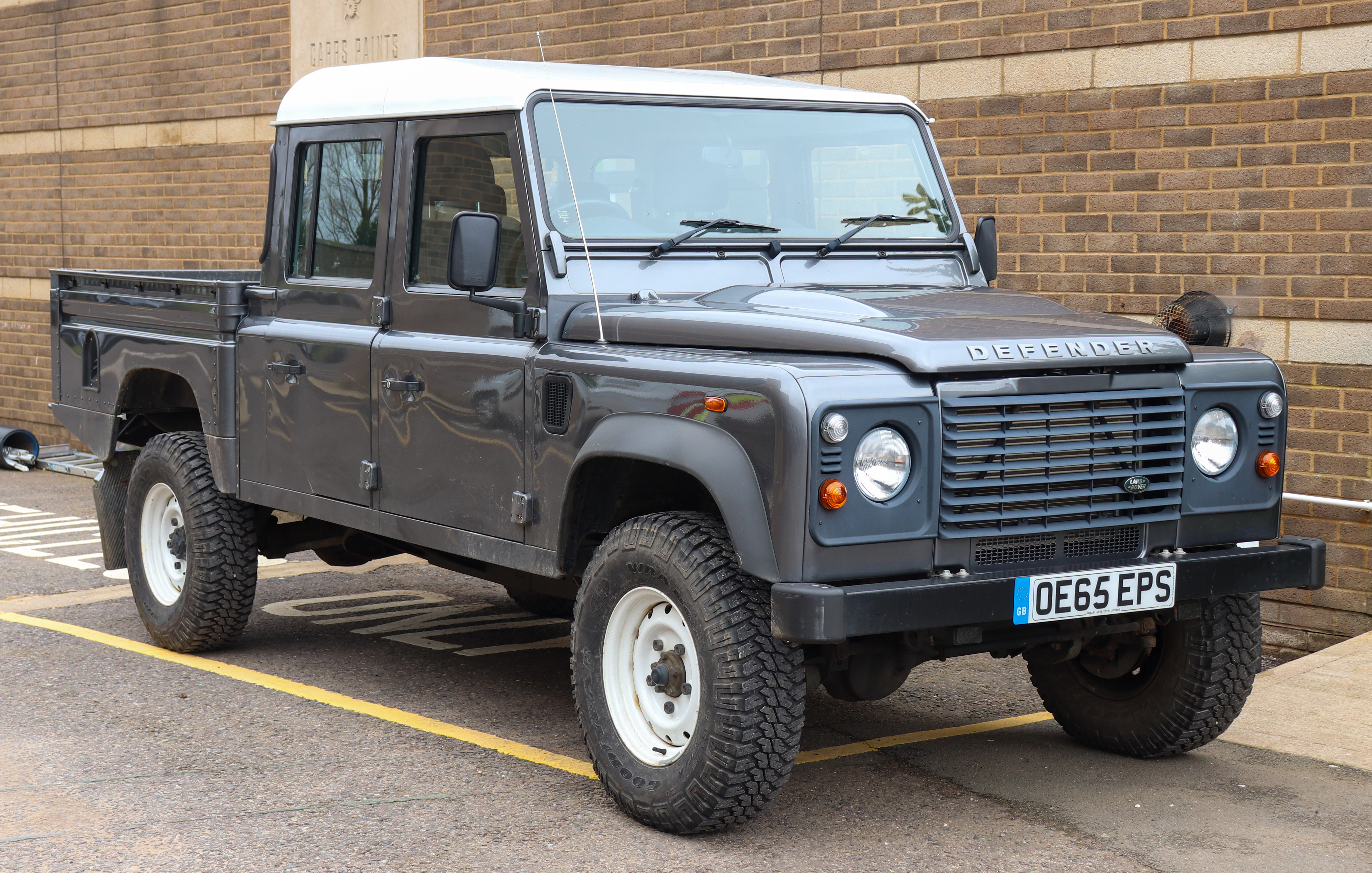
In a body‑on‑frame car, the frame that holds everything together is separate from the outer shell. This makes it stronger for off‑road use but can add weight.
BFI means the car’s body, frame, and entertainment system can be swapped or shared between models. This lets manufacturers build many cars with fewer parts, saving money and time.
Think of it like Lego blocks for cars. The same basic parts can be used to build different models, so the company saves money and time when making new cars.
Tariffs are extra fees the government adds to cars that come from other countries. They can make those cars more expensive and change how companies decide where to build or sell them.
The Maverick is a small, inexpensive truck from Ford that people can use for everyday tasks or light hauling. It’s cheaper than larger trucks and still has a useful cargo bed.
LIVE
That's me in Tokyo learning to make sushi from a master. How did I get here? I invested wisely. Now the only thing I worry about is using too much wasabi. Get where you're going with spy. The world's most traded ETF. Getting there starts here with state-street investment management. Before investing, consider the funds investment objectives, risks, charges and expenses. Visit statestreet.com-slash-im for perspectives containing this and other information. Read it carefully. Spy is subject to risks similar to those of stocks. All ETFs are subject to risk, including possible loss of principle, Alps distributors and distributors.
All online after hours is brought to you by Alex Partners, when it really matters. Hear that? That's me in Tokyo learning to make sushi from a master. How did I get here? I invested wisely. Now the only thing I worry about is using too much wasabi. Get where you're going with spy. The world's most traded ETF. Getting there starts here with state-street investment management.
Before investing, consider the funds investment objectives, risks, charges and expenses. Visit statestreet.com-slash-im for perspectives containing this and other information. Read it carefully. Spy is subject to risks similar to those of stocks. All ETFs are subject to risk, including possible loss of principle, Alps distributors and distributors.
All right. Thank you, Alex Partners, for sponsoring the show. Gary, good to see you here. Good to see you. We were gone for Thanksgiving last week. Yeah, but we're back in the saddle.
It seems like a such a long time ago since this whole year. It's like, isn't this April still? I can't believe we're in December. Hey, we got to tell everybody who we got here.
Warren Brown, Forecaster extraordinaire, I'll say, and Adam Bernard, product savant, maybe is the way we got so much to get into today. You got something you want to kick the show off with?
Okay, so I want to give you guys a quiz here, which is different. It's not that happened in history. Warren, he teaches at Lawrence Technological University, so this is turn about fair play. If your students are watching, they're probably like, yeah.
All right, so this is this is something that is just happened. Okay, so it's it's contemporary. So the association of Scottish motoring writers gave an award to the best family car. Okay.
So the association of Scottish motoring writers. Now, what do you think they named as the best family car for 2025?
Oh, there's got to be a joke in here someplace. This is real. I mean, I'm sure it's real, but I just find it astonishing. Okay. Okay, for an astonishing answer, the anyose grenadier.
It's a good, good guess, but no, no too far off.
Because it's Scottish, I'll go with some defender version of Land Rover.
It's another good answer. Also wrong. John, I have no idea. Okay, and I will give you the answer, and I have no idea what this vehicle is.
It is the Jaco 7, J-A-E-C-O-O 7. It's a Chinese cherry.
It's called something else in China, but Jaco and Amoda are the two brands they launch within Europe.
So I mean, isn't that astonishing that, you know, of the vehicles that you mentioned, you'd think, that's a natural thing, but a Chinese vehicle.
They weren't shilling for the Brits, is that what you're saying?
That's right. But I mean, it goes to the point of the penetration of the Chinese.
Of the Chinese. And arguably, the, you know, bonus feedays of that vehicle in order to beat out things like the anyose and the defender.
We automatically went up market for it, you know, the whole thing.
That answer may be more telling about the future of the British auto industry than anything.
Oh, no, European auto industry. Not just the British.
Slowly climbing up there. I wouldn't say slowly. They're really, really big in England.
They're very big in England. They're rocketing up the charts in terms of market share.
So, so I mean, okay, if if we just say, okay, they're doing well, obviously in their home market.
I mean, comparatively speaking, right? Well in Europe, South America. Right.
Specifically, Chilean Brazil. Apparently they're, they're making moves into Africa.
Yep. And Middle East. So like if we take Antarctica out, what is that leaf?
Greenland, US and Canada. Greenland. Yeah. And they're in Australia too. Don't forget that.
So, so how long? That's what you, that's what you get Gary when you have 25 million units of excess capacity, most of which is gasoline.
And you need to feed the Africans, South Americans, Central Americans, Central Europeans with affordable vehicles.
And especially when you cannot make money in your home market, you can price these things higher overseas and maybe make some money.
So these cars are not as cheap in Europe as people think they are a $10,000 B.Y.D. in China is like $20,000 in Europe.
Price to the market, yes. Price to the market. Right.
But not the bargain basement thing that everyone was afraid of. Yeah.
It's still 20. Yeah, I was going to say. I mean, yes. It's still, it's still competitively priced. Right.
And it's a very competitive vehicle. Right. Right. But anyway, enough for the Chinese. That's the Chinese. Yeah. Yeah.
Great, great quizzes always. Yeah. Very good one. Yeah. Cause I never knew that. And one of the things you wanted to talk about is this rush into the hard core four by four off road market.
And it seems like everybody must have woken up to this about three years ago because all these products are coming to the market right now. But what are your observations on?
Well, I know, you know, during COVID, there was lots of stories about RV sales going through the roof and empty lots and things like that.
And people need to get away. And I don't have any market research to support this. But I'm wondering if that's kind of a leftover feeling.
And, you know, Nissan is bringing back the Xtera body on frame architecture. Audi might be building a vehicle off the scalp platform.
BMW is supposed to be working on something. Hyundai showed the crater concept, which is an off road SUV at the Los Angeles Auto Show.
So I don't know if it's kind of a form of escapism. And the fact that gasoline is still relatively affordable in the US compared to the rest of the world suggests that, you know, people are a little less concerned about a blocky non aerodynamic heavier vehicle in order to have a little sense of adventure.
But everyone seems to be dabbling this in this in one form or another. Yeah, well, you know, look, Jeep had it forever, right? And they had it to themselves. I kept saying this on the show years ago.
I can't believe the rest of the industry is letting Jeep get away with it. And then Ford woke up to it, came out with a Bronco. It's doing terrific for them, really.
And that must have awakened everyone else to what's going on in this off road space. But my question to you is, is it going to grow the segment or is it just going to slice the pie thinner?
So I had to look at some numbers that when the Bronco came out, it wasn't declined in Wrangler sales. But if you look at net Bronco plus Wrangler, it was an increase in the size of the market.
Now there may be a practical limit to how much stuff you can throw out there. I think it helps Nissan that Xtera is somewhat of a known brand. And there's a little cult of followers out there with it. And Scout arguably is trying to do the same thing.
If you're going to bring a trailer and look at some of the numbers for vintage Scouts, those values are starting to climb. So I think they're trying to bank on that as they come to market for a company like Hyundai and maybe a little more challenging because they don't have any off road credibility.
They've done rally cars, which go off road and they could try to leverage that and convincing people that yeah, you're going to go everywhere.
Everywhere a Jeep can go on this Hyundai, maybe a bit of an uphill battle for them. But to what extent you think the Xtera is coming back because it's a name that people recognize. So cheaper to market because you've already got that out there.
B, it's body on frame. I'm sure they got a lot of Titan frames, frames sitting around somewhere that they haven't used that they can put as your work.
Well, they talked about a new body and frame architecture that they're developing. And it's supposed to be electrified. So some sort of hybrid. And they even hinted that the pathfinder could go body on frame for the next generation, which I think would be a bit of a strategic misstep.
If you take pathfinder out of the BFI front-wheel drive, all-wheel drive family SUV market and then make it a rugged three-row off-roader, you lose fuel efficiency, you lose interior package efficiency.
Again, some fun, but you may lose some families in the process. So I'm not sure if they're going to go down that road, but they apparently Nissan CEO is doing a lot of new stuff. And so this sounds like part of it.
Sounds like a tribute to the four runner.
Yep, yep. And four runners still doing doing great. I think.
Markerwise.
And Lane Cruiser.
And Lane Cruiser.
I think there'll be two classes, by the way.
The status class.
Scout is in that status class in the mainstream.
Wrangler, Bronco, Xterra, BMW and Audi.
Yeah, we can go on, honey, we could go off road if we needed to.
Well, don't we spend a thousand bucks for the extra for the paint job?
Yeah, the Lexus LX70.
I mean, it's the same thing. You can go off road, but would you?
Yes.
There'll be two classes.
Maybe even a third, because I would say there's going to be the posers that are going to have the painted toe hooks and the big wheels and everything.
But that's about it. You know, they're not going to be really off road.
They're just going to have that looking people like that.
Look, of course.
All right, so some people.
So to your point, I have some stats here that underline that in a huge way.
Here is a strategic vision to the survey in 2022.
So this is, you know, within the COVID period.
Right. I mean, it's fairly.
So 98% of SUV and crossover buyers and 70% of truck owners go off road only once.
A year or less.
91% of SUV crossover buyers only drive on dirt or gravel once a year or not at all.
So it sounds like this is all show in very little go.
Probably. I'd be curious to see the numbers for Wrangler and Bronco.
I think if you do get a real body on frame capable, be it probably a little higher.
And like the exterior is a little more.
But yeah, something like a traversi 71 or a Santa Fe XRT.
Those numbers are probably right in one.
Yeah, right.
But you know, I to follow up on what you just said there.
Ford Raptor.
I'll bet those people are going off road with those things.
So.
But you have to have the street credibility.
Right.
There are plenty of people who will buy a vehicle that has unbelievable off road capability.
And they're never going to use it.
In their mind that they've got the vehicle that good.
So come the zombie apocalypse.
Right.
You know, they got to get out of town car.
They look different at church in the parking lot.
Yes.
You can.
You can call those out.
Well, there's that whole psychological aspect of saying, hey, you know, if if the zombies do come.
Yep.
I'll be able to drive over that hill.
No problem.
Yeah.
But you know, I see this development akin to the midsize pickup segment.
There's been so many other players that have come in and more yet to come in.
Ram's going to do a midsize pickup.
For example, Hyundai is doing something else that's going to be bigger than the Santa Fe Santa Cruz.
Excuse me.
And it's grown the segment some.
But I don't think the newer players are getting the volume.
They thought they would.
Yeah.
And it's interesting to the RAM.
There was a lot of speculation.
This new ram truck was going to be off of the Stella large architecture.
It's going to be a fi street truck kind of deal.
And then still and is just confirmed it's going to be body on frame.
So it's now going to have offer of capability.
Yeah.
And it's going into the Jeep plant.
So if I were them, I'd bet it's going to be awfully similar to.
I think I like Adam's point about the COVID thing.
I think that that influenced it.
But but you're a little closer in that.
And SUV is an SUV is an SUV.
It's a box.
Okay.
The differentiation between.
If you take Ford Bronco out the differentiation between a traverse and an explorer and all of these.
Not that great.
So think of it as a way to finesse distinction to finesse something that's differentiated from just everybody else.
Because it's an SUV.
I mean, it's.
It's just like a four door sedan.
It's a car.
Okay.
But if you get, you know, a high horsepower RT charger or whatever,
well, that's different than just the regular charger that's on the street.
So there's there's a history of finesse that I think is happening.
So, but you know, to your point, Adam.
I mean, so at what point are there too many of these.
There are alternatives out there that it.
It comes to the point where.
The volumes are just just too low.
I mean, you can have this.
You know, all these extra fanboys, you know, like, damn it.
We can't wait to the thing.
It's out and they'll buy them.
Right.
Right.
They'll enjoy them.
But.
You know, you know, 10 years ago, you probably could have asked how.
How fragmented can the SUV market get?
And I think it's probably now more fragmented than any of us anticipated.
I mean, body and frame and BFI and like SUV coups, which was not a thing 10 years ago.
So, you know, I think automakers are getting smarter in terms of modular architectures
and manufacturing flexibility and able to make money with smaller volumes to an extent.
But yeah, there's probably a risk of a saturation at some point, especially if it's a brand that's trying to establish itself
versus the brand that's already got some heritage and reputation there.
So Warren, since we've seen you last on the show, you've come out with another of your analysis of.
Of of the industry, the impacts of tariffs and whatnot.
And you came out with what I will call the line of the year, which is asset with no realistic economic purpose.
And that is applied to some plants that you see.
So tell us what the landscape looks like.
Well, you know, the ones that I called impaired assets or they're on impaired asset watch.
Are our plants that don't exist today?
They're not in the capacity utilization situation today.
They are plants that are either got the girders up.
The land cleared out.
They've been fast, a promise made, okay?
But there are six plants out there that don't exist today.
That were done under the guise of the world is going a little more electric than maybe what the market was going to do.
And they have spent 15 billion, 12 to 15 billion dollars of plants that don't exist yet.
They're not making one unit, but over the 27 28, they will add a million units to capacity.
They don't have the volume to support 12 to 15 billion dollars worth of investment.
Okay? And what I've what I've not seen is Ford on blue oval.
A Rivian on Georgia scout on South Carolina.
Come out and say, you know, we said we were going to spend four, but we're really going to spend two.
Now that all of this is this was the marvelous opportunity for them to do this.
For them to do this six months from today and say, you know, we've re-evaluated the whole thing.
I believe, but I know enough about the internal workings of General Motors.
Maybe not others. They've already evaluated it.
Ford's already evaluated blue.
And they're not five billion dollars will not pencil.
Even with gas versions, it wouldn't pencil.
So, yeah, that's why I put them on the impaired asset watch.
If you just take a look at the capacity, a million and you cut that in half.
Meaning you cut the capital expenditure in half at the same time, even though in the case of blue oval,
that that investment pretty well along the way, right?
And probably for scout as well, maybe not so much for Rivian.
If you cut the capacity in half and you filled it at 100%.
Twilio empowers the builders who shape tomorrow.
Whether you're scaling a startup or transforming an enterprise,
you need a customer engagement platform that keeps up.
Twilio gives you the power to build, test, and scale with confidence.
Connecting data, AI, and customer communication into one seamless open system.
No silos, no barriers.
Just everything you need to bring your biggest ideas to life.
Learn more at twilio.com.
Still doesn't pencil.
Still not enough volume to make money as what you're saying.
No.
Well, so you project that next year prices will go up 4.6%.
And as a consequence of that, the vehicle sales will decline by 3.5%.
Correct.
15.6%.
I think you sent us a chart on that.
I can probably bring that up.
You have a multi-year scenario.
And you show that sales and production because of the tariffs.
And US automotive manufacturing employment going down because of the tariffs.
Correct.
Now, you also compare this to what you call your,
I think it was a pre-COVID baseline.
No, when the inflation reduction act came out,
there were all kinds of changes relative to what GDP growth was expected to be,
what prices were expected to be, what incentives were expected to be
to alter the transaction price.
Okay.
That, and it was compounded or enhanced, I would say,
by, you know, you could get $7,500 off on every lease vehicle.
So to think that those $7,500 were only applied to just the 18 vehicles that qualified.
No, it applied to every vehicle that was going to be leased.
And you could work that into the leasing agreement.
So there was some growth in the market.
And the two things that have been removed are the incentives.
Meeting shareholders will now have to pay.
The government's not going to pay anymore for that $7,500 bucks.
For an EV.
For an EV.
The, the shareholder will have to pay.
And two, in the initial phases, I was shocked that prices didn't go up this year above 2%.
I was shocked because my approach was,
if tariffs are going to go up by 15, let's just call it that.
You know, some have gone up by 25, they haven't come down yet.
But 15, that there's not enough margin across the board to absorb all of that.
There isn't.
Okay.
And when you, when the supplier has to pay and pass that along to General Motors or to Ford or anybody else, there isn't enough margin.
I thought prices were actually going to rise by 5% to 6% this year.
2025.
Yeah.
Didn't happen.
Did not happen.
They absorbed it.
Because they absorbed it.
Okay.
But they paid for that on their bottom lines.
And there's talk now that prices will start to climb.
I believe so.
So I think it's been delayed.
Right.
Yeah.
Nobody wants to come out with the Trump administration.
The president himself breathing down their neck and said,
look, we had the raised prices because of tariffs.
He's going to cut their head off.
So they've been loathed to raise prices.
And I agree with you.
They're finding some offsets and the administration has done a number of things.
You don't have to pay his ever credits going forward.
For example, you're not going to face these cafe fines going forward.
In fact, we're going to give you a tariff rebate.
3.75% of the American content on any car that you've got.
So they're finding some amount of offsets to the tariffs themselves.
Right.
But even so, the tariff, these offsets don't make up for everything.
Well, the thing I teach at L.T.U. is that ultimately the consumer will pay those tariffs.
And you can get it into the 50s or the hundreds of studies that have proven that to be true.
The exceptions to the rule are that the market is so big that the supplier
and the distribution channel and the manufacturer will absorb that increase
because they want to hold the market.
General Motors doesn't want to let the market go before the Chinese get here.
Right.
So they're going to absorb, but after a while, after quarterly earnings, after quarterly earnings,
you know, I see a big right off in the fourth quarter of 2025 that's writing all that stuff off.
But ultimately, you're going to have to increase price.
If you want to get back to margins, and here's the key that I wrote in my report,
if you want to get back to margins that are going to sustain investment,
this is an investment intensive as you will know, Adam, an intensive investment industry.
You're spending five to six billion.
So what sort of margins do they need to be healthy?
10%.
Yeah.
And now they've got to fund money to reinvest an internal combustion.
Now that that's hot again.
Well, they're writing off the EV stuff.
Exactly.
And that's, you know, portion of what, three and a half billion dollars to read sugar their plans.
And every other owner maker is now trying to fund the money to put back into IC.
Right.
But don't forget, they have raised price.
They haven't not raised MSRP's, but they've raised destination charges.
They've taken away all kinds of incentives.
So even though the MSRP hasn't changed that much, the actual transaction price.
That's what we got to look at.
Well, of course, but that's also influenced by mix.
Correct.
Absolutely right.
So I want to make three points.
Yeah.
Capacity is not required.
And ultimately, they'll have to come out and say that.
Okay, or, or do something different.
Did Scout make the right move in doing E-E-R-E-V-E-R-E-V's rather than devs?
Yes, they did.
But will people buy them?
Well, I think that they'll buy the RAM, but irrespective, a million units of capacity by the end of 2028 that does not exist today.
And capacity utilization this year will be close to 80%.
Wow.
And the volume is going down.
Right.
And now we're adding a million units.
That isn't needed.
I just think that they're making cool new vehicles though.
So of course those plants will be churning.
Ruby hasn't made a nickel since they've opened.
Right.
They're at 15.
They don't need a stock price.
They're at 15 stock price.
They don't need another plant.
Ford doesn't need blue, oval, then fast.
We'll see what happens with them.
But I think Scout Audi needs U.S. manufacturing.
And so supposedly Audi's going to get a version of the Scout.
I wouldn't be surprised down the line.
It gets more than just a version of the Scout.
If the Scout doesn't sell.
Well, once you've built plant, you know, they will do what they can to fill it.
But you know, let's assume that Audi does a Scout version.
And I believe that they will.
It's going to be a 70,000 mile vehicle.
You know, we know what the market's like demand is for $70,000 vehicles.
Not that good because people are screaming for $35,000 vehicles.
Right.
So there's access capacity.
And then we have plant.
There are some plants that have been saved.
Belvedere saved.
Right.
Okay.
Because the volume for the midsize pickup wasn't going to satisfy the weight.
Right.
So remember one of the things that saved Belvedere is that Brampton is getting its head cut off.
The compass is going into Belvedere.
And the Cherokee.
Yes.
Right.
But what's going into Brampton?
Because that's where they were supposed to go.
Maybe an SUV.
What I'm getting at is it's a game of musical chairs here.
Right.
So even though you're saying Belvedere saved Brampton is screwed.
Well, as is some Mexican compass, excess capacity closed.
Nissan's second plant in Mexico.
Closed.
Ingersoll.
Closed.
Brampton.
Bramlaia.
Bramlaia.
Whichever you pronounce it.
Those are four or five plants.
Right.
Who says that I know this is going to be a shocker.
And I'm the the Grinch that sold Christmas today.
But what's to say the Chinese don't sell one of those plants or buy one of those plants from the Canadian government?
Look, I talk to the Canadian.
They got workers.
They need to hire the summer about just that.
And would you guys consider turning to the Chinese because the Trump administration has slammed the door shut on you guys.
And his word was we don't want to play that card yet.
So they're clearly thinking about it.
What about compass in Mexico?
Mercedes is leaving.
Nissan has left.
It's a plant that's got a beautiful paint shop.
Probably a paint shop that can produce 150,000 vehicles.
Chinese are about to get, I think, a 50% tariff on imports, which will hurt general motors by the way.
Because they import a lot of Chinese vehicles in the Mexico.
Okay.
So they import them to Mexico to sell them in Mexico.
Correct.
Correct.
Sometimes to Mexico.
100,000 Chevrolet.
100,000 Chevrolet are Chinese in Mexico.
That's a shocker to a lot of people.
Right.
Some South Korean.
Yes.
But the point is if you put that on the Chinese have manufacturing experience in Mexico, even though it's on a small scale.
Just like Toyota started.
So you can ignore the fact that if you put 50% duty on import to Chinese, and that is a market ripe for a 25 to $30,000 vehicle by compass.
And all you won't be able to export it to the US, that's fine.
We'll build it at compass.
And with all the free trade agreements that Mexico has with other countries,
we'll ship them down to South America and Central America and the Cuba and everywhere else that needs those vehicles.
That's a strategic play that could happen.
Okay.
But let's just let's let's take the Chinese in Mexico out of the equation.
Let's take the Chinese in Canada out of the equation.
Okay.
So it seems to me that the numbers that you're showing sort of indicate that there's going to be blood on the streets here.
Of course.
So talk about that.
Well, the scenario where there isn't blood on the street.
And let's say the blood not on main street, but blood on Wall Street.
Okay.
Here's a continual absorption of all of those terrorists.
The Toyota General Motors Ford still on to say, look, we're just going to eat them.
And rather than having 3.2 billion of earnings every quarter, we're going to have a billion earnings every quarter.
And we're going to ride that horse until the end of 2028 because we're not going to give up one single piece of market share.
And we're going to hold that production and take it and make Wall Street and the shareholders pay.
That is a scenario.
That's not the one that I wrote about in my report.
My report says that prices will go up by 4.6 percent next year.
MSRP, meaning the menu price, which every manufacturer is always reluctant to change.
But boy, when that menu price gets changed, your respective of what the president says, it never goes down.
Not the menu price.
So the menu price goes up by 4.6 percent.
Yes, there will be a reduction in demand.
And there will be a reduction in production.
And when you have a reduction in production, you have a reduction in employment.
And so my scenario is...
You have a reduction in employment, you have a reduction in the number of people who can buy vehicles.
Correct.
So the scenario that I wrote in my report is a shareholders get relief scenario.
Right?
It is because the margins will be back.
The volume will still be a little less because the prices go up, right?
So you have this issue, who's going to pay?
I keep it fairly simple.
Shareholders?
Or the union?
But one of those pains will happen when you have tariffs that are five times.
Remember, tariffs were two and a half percent.
Everybody thought that was okay.
Was China cheating?
Yes.
Should China tariffs be higher than 2.5 percent?
Absolutely.
Canada?
So you went from 2.5 to 15.
And still for the USMCA, it's 25.
You have to work that into price.
Okay.
I can envision a scenario where General Motors, Ford, InstaLantis, and Toyota
continue to eat those duties at the expense of future investment.
I just can't.
That's the summary of my report.
Yeah.
I think you're right with that.
And this is a perfect time for us to take a quick commercial break for our sponsor.
We'll be back to talk about a whole lot more that's going on in the industry just this week.
We help businesses respond decisively to their most critical challenges
from urgent performance improvement to enterprise-wide transformation.
We work across the full value chain in automotive and in industrials,
helping clients navigate disruption, drive innovation, and unlock sustainable growth.
Alex Partners, when it really matters.
Come back and thank you again Alex Partners for your support on the show.
So Gary, big news yesterday in the White House.
President Trump eviscerating Biden's fuel economy standards.
What do you make of it all?
What do you make of it all?
So it just so happens that Secretary of Transportation, Sean Duffy,
had a op-ed in today's Detroit Free Press.
What do I, it's in the Detroit Free Press.
And so I will read you a couple of quotes from this,
which sort of makes me wonder, and I think you'll see where I'm going with this.
So this is a quote.
Lowering mileage standards will support President Trump's crusade
to revive the beating heart of American manufacturing our auto industry.
The sector was once the pinnacle of American might and ingenuity.
This initiative is going to let the automakers build the innovative cars of the future
that families want, guaranteeing new jobs and more long-term investments in the heartland.
So I would like you guys to explain to me how auto makers are going to build
the innovative cars of the future when basically it seems that what they're going to be doing
is just going back to internal combustion engines.
And viewers of this show know that I've been more critical of EVs
than anybody sitting either of these two chairs.
Yeah, well look, that's just a politician saying stuff that makes his boss look good.
Right, but I mean, but so I look to see what the standards are in terms of fuel economy
in China, in the European Union.
Now, of course, they have different tests than we do.
I mean, we have cafe.
It's a different gas prices.
It's calculated differently.
But basically, it comes down to the MPG equivalent.
Okay, for 2025 past your cars in EU right now, 60.2.
The holidays are about giving something truly special.
I'm Martha Stewart and I believe the best gifts aren't just beautiful.
They're useful every single day.
Lennox has brought timeless beauty and lasting quality to our tables for generations
and their Lennox spice village is the perfect holiday gift for someone you love or for yourself.
It's more than a spice rack.
It's a charming collection of hand-painted houses that turn ordinary spices into extraordinary experiences.
Imagine cinnamon from a tiny Victorian cottage or oregano from a pastel townhouse.
Suddenly, a simple meal becomes a moment to savor.
Because spices can be more than ingredients.
They can inspire memories, warmth, and joy all year long.
Give a gift that lasts beyond the holidays.
Discover the collection at Lennox.com slash spice village.
The China 60.2.
In the US, in 2031, it was supposed to be 50.4.
So here's my question.
How are we going to have the cars of the future?
How are we going to have innovative cars?
When the rest of the world is kicking our ass when it comes to technology that allows them to get that kind of fuel efficiency?
The first thing that pops it on my head is with so many people complaining about the price of gas.
If the US-based automakers decide they don't want to build fuel-efficient vehicles anymore.
And I don't know if they could do that.
But because competitors outside the US are still building those kind of vehicles and they'll be able to claim a fuel economy advantage.
And so a lower operating cost advantage that consumers are going to file a pitting.
I mean, when the Japanese first came in here, they touted their fuel economy advantage.
And that was before there were any kind of roles in place.
And it turns out a lot of people want fuel-efficient vehicles.
So, I think Bob Lust used to say that regulating fuel economy was like regulating the size of clothing.
And so, you know, you can go too far.
But I don't think that removing the fuel economy regulations is suddenly going to create amazing cars in the future.
No, no.
Can I be the silver lining guy here?
Okay, let's hear it.
Listeners of the show know that I'm not the silver lining guy ever.
Let's take a couple of things.
I applaud the level of deregulation that is happening here.
Including the fact that the United States is no longer divided between
we're going to follow California and we're going to do everybody else.
That manufacturing complexity was drastically understated.
Today, we're building vehicles for Oklahoma.
Well, boss, we don't have the parts for Oklahoma.
Well, we don't need anymore cars going to California.
What do we do?
Well, stop working.
I mean, that complexity was incredible.
So, the removal of that, even though it's not yet finally approved, okay.
I think it's significant.
That deregulation is significant.
The very fact that you don't have to meet those standards.
You don't necessarily have to have stop start.
You don't have to have the world's best air conditioning to get the GHG credits or whatever they call them.
I think that that's fantastic.
Summary to that is they're letting the market decide what vehicles are going to be built.
What's wrong with that?
There's nothing wrong with that.
Unless you don't build the ones that customers want.
That now is on the CEO always has been on the CEO.
But more and more on the CEO, what are we going to build sedans?
Well, boss, nobody buys them.
Well, but now we got to build sedans because Trump thinks we're going to build sedans.
Well, that's stupid too.
Except for one thing, I was reading Joe White's post that high speed rodeo earlier today.
And he made a really good point.
Cafe was skewed to favor trucks.
SUVs and trucks.
Sure.
So you didn't want to do even a compact sedan because if you did a compact quote unquote truck across over,
that was easier from a fuel economy standpoint.
So he was postulating that maybe getting rid of this thing.
We're going to see the U.S. manufacturers go, you know what?
It does make sense for us to start looking at building sedans again.
Good, but let's, Gary loves these.
Let's do a data check.
Toyota didn't get out of the car business.
But it sells on a global basis.
All right.
We can, we can, we can, we can try some data that is going to go between what you both of you are saying.
I've got a, I've got a Corolla hybrid sitting out there right now, a sedan, a hybrid sedan.
Okay.
Fifty miles to the gallon.
It's, here's the numbers city 53 highway 46 combined 50.
Okay.
Now, basically, what I heard the argument coming out of the White House yesterday is,
oh, I get it's impossible to do this.
It's just completely unaffordable.
It's a $30,000 car.
Now, I was thinking of some other numbers.
Unlike, I've never been much of a fan of the bolt because the bolt I thought was a small car,
and we're not supposed to like small cars.
Okay.
So I looked at the dimensions of the bolt.
It's got a wheelbase of 102.4 inches.
It's 163.2 inches long.
69.5 inches wide and 63.4 inches high.
Corolla has a wheelbase of 106.3 inches, a length of 182.3 inches, 20 inches longer than the bolt.
You know, I mean, all of its dimensions are bigger.
Now, do you think that by 2031, that toyot is not going to be able to have a
camera that is going to get 53 miles per gallon?
Sure.
There we go.
Right.
I don't doubt it.
So my point is that don't car companies that aren't toyota long look to the future thinking companies need to kick in the ass that may be standards.
I don't know if it's his first name.
I can't be start to an age.
Samuelsen who runs Volvo.
Okay.
Okay.
So he said yesterday that basically if there were not regulations, there would be no catalytic converters and cars, nor would there be seat belts.
Right.
Correct.
Right.
So we're against those things.
No.
No, but look, starting even before the Biden administration, I think it's arguable
that the Willy Wonka contraption that was built by the EPA to get people to buy electric vehicles was was overreach.
Can you agree more here?
You're hard to make the argument even unless you're, you know, the ultimate tree hugger.
I'm sure that somebody could contradict me, but that complexity was incredible.
And it drove a level of, I'm going to stick my neck out lying by CEO's saying that we're going to get there when they knew they weren't.
Okay.
So eliminating that Biden complexity and now Trump eliminating some of that regulations relative to cafe and CO2.
I don't see anything wrong with.
Yeah.
But here's the problem for the industry.
At some point the Democrats will come back into power.
And what are they going to do?
They're going to ratchet those regs right back up to where they were in the first place.
And then you're going, oh yeah, I do.
I do.
Maybe there will be a little bit more sanity in the standards that I hope to.
But what's likely is it's going to be another knee jerk reaction as we've been seeing here from administration to administration.
The industry is being to this way and then that way.
And so all I'm saying is that if I were running a car company, I'd be mighty careful what I do anticipating.
I'm not making a prediction as to when the Democrats will come back in, but they will.
And you better be ready.
And you better be ready in a way that you're not going to have to spend tens of billions of dollars to try to catch up again.
Let's take your valid argument.
One step further.
Going back to my study, not to harp on it.
Then you got to make your money and your margin now.
Yes.
Yeah.
Now make it while the sun shining, right?
To eat all of those tariffs at the expense of future investment for this industry, whether it be a supplier or an OEM.
Put you out now to where you're not making three billion a quarter.
You're making one point nine billion a quarter.
And then you get out and the Democrats come in and go, oh, here's all the new expenses that you're going to have.
You're already in the ditch now.
And so that was some of the thinking that went behind take your margin now and increase price.
Even if it means you've got to reduce production, wasn't that the code word during COVID?
We're never going to go back to giving the stuff away.
Okay, but what comes, I mean, five years from now, what's the technology that is going to be offered by the domestic manufacturers as it competes with your pain manufacturers and Asian manufacturers?
Is there a limit on Chinese vehicles coming to the United States?
Yes, probably still.
And you will have the incremental improvement in technology from today.
So basically, you're saying then that that BMWs won't have better powertrain technology five years from now than Cadillac or Lincoln will have.
Is Europe going to change the standard for 2035?
But 2035 standard was zero.
I'm trying to respond to your question.
Tell me what the European standard is.
I'll tell you how good BMW.
When I'm talking five years ago, so 2030.
BMW is relentless of improving their gasoline and diesel engines.
Not necessarily for the United States.
That's what I'm worried about.
The market will decide all of this is to make it easy now.
But it's not making it easy now because everything's planned four to five years in a pan.
So stuff in 2028 is like kind of done.
And so, you know, to assume that I'm going to remove the fuel economy standards and all of a sudden price is going to drop a thousand dollars.
That's.
Well, no, no.
It was a good show, though.
Yeah.
It was good TV.
Yeah.
Well, the name of the program is this capitalized freedom means affordable cars.
Freedom doesn't mean affordable cars.
Freedom means that the that there are car companies free to choose.
Yeah.
And the thing that is that I understand it is that the aforementioned Honda and Toyota and Kia and Hyundai are making affordable cars.
Yes.
And they're making a lot of them most of them here.
And to your point, there are levers that can be pulled right now to affect vehicle affordability as opposed to raising prices five percent next year.
Correct.
That doesn't have anything to do with fuel economy.
Well, look, I think the key to me, Joe's piece and what happened yesterday, semi-cubuki theater.
Okay.
Was the deregulation aspect of it to if you want to have stop start, if you want to have turbo, if you want to have in order to make smaller displacements to get better fuel economy, if you want to have improved air conditioning,
you decide that as a manufacturer on how you're going to go to market to compete against everybody else.
The government's not going to tell you how to do that.
I think that that's fantastic.
Now, I will conclude by saying it also has its risks.
If you're not competitive, even with the Chinese not being here.
If you can't keep pace with Hyundai and Honda and Toyota who are very strong competitors with manufacturing facilities in the United States and have been for quite some time.
And you start to only make a billion and a half because you're eating all of those tariffs.
When is the time where you say we can't make it anymore? Will you give us another handout?
I'm Martha Stewart and I believe the best gifts are not only beautiful but useful every single day.
And Lennox has brought timeless beauty and lasting quality to our tables for generations.
And their Lennox Spice Village is the perfect holiday gift for someone you love or for yourself.
Spice Village transforms everyday spices into inspired memories filled with warmth and joy all year long.
Give a gift that lasts beyond the holidays. Discover the collection at Lennox.com slash Spice Village.
Well, that's not going to happen. The American public will never bail out the American auto industry again. That's my prediction.
And I think it's an easy one.
So make your money now. I guess the summary of my study. Make it now if you don't raise your prices by 4.6%.
You're telling Wall Street you're eating them because that's what it takes to come to come clean.
So to go back to yesterday and then go back to your report, does yesterday change anything from what you're seeing for next year?
I think the level of engineering complexity gets changed. Yes, depending upon what you want to go to market with.
But I don't believe for one single minute.
It's never been the case of the 40 years I work to generate letters that purchasing came in with a cost reduction.
And the first thing finance said, let's pass that on to the consumer.
That is that is not an equation that Albert Einstein could solve.
And you could argue that an automaker would look at a given car line. And here's the portfolio of engines we have.
And they could decide with these new field economy regulations. You know what?
We don't really need the entry level basic technology for cylinder engine anymore.
And we're only going to offer the up market high-powered engines.
And so you still have vehicles that are less affordable because they have the more powerful engines under the hood.
So again, it flies right in the face of what they're trying to do.
I think the Trump regs will have some improvement factor.
It's just not going to be as ambitious as the Biden one was.
But if I were an automaker, keeping in mind that the Democrats are going to come back in someday,
I would jigger my fleet to beat whatever the new cafe standard is and brag about that every year.
Hey, we beat it.
Anticipating that way.
The lawyers would like it.
Anticipating that when the Democrats come back in, at least you're viewed as somebody who was trying to do in their eyes the right thing.
I totally agree.
But to me, I totally agree.
Up for debate.
Trump leaves office.
Do you think the terrorists will go down?
No.
Okay, that's one particular set of structural change that I also agree will not go away.
Do you think that the new USMCA agreement
will lower that duty between the three countries to less than 5% after it's redone?
Not less than 5%.
No.
Okay, so there'll be a further separation of Mexico and Canada from.
But it'll probably below 15%.
Because right now you can bring in stuff from what you can and England and the like.
Cheaper than you can bring in cars via the USMCA.
So you agree that those are two structural changes that probably are not going to be drastically modified.
Agreed.
Post Trump administration.
Now I want to take you out to the election, Gary.
I'm listening.
And the Democrats have a lead because now they've taken back the Senate or the House, whichever one you believe is going to happen.
Or maybe they don't at all.
But the Democratic candidate stands up in front of the UAW and says.
I'm putting those regulations back to where they were.
We're going to go back to cafe.
And we're going to go back to CO2 emissions because it's the right thing to do.
And we're going to go back to 12 states versus 36 states.
Right?
Because it's the right thing to do.
And the manufacturers go.
Well, you're going to do that just like Mary said today.
Then we're going to have to close some plants.
And we would have had to close plans if those new Trump regulations were in place.
And the UAW is going to get right behind that Democratic candidate.
Right.
I don't believe post Trump that there's going to be much change at all.
No, you're right.
So the union is one plank of the Democratic party, right?
And then you're going to have the environmental plank, which I would argue is far more powerful in the party right now.
And they're going to say climate change is an existential crisis.
And we're going to have to put their feet back to the fire.
That's what I think is going to happen.
And you're right.
The union will scream bloody murder.
But right now, I don't think especially with the UAW.
Who knows what's going to happen with Sean Fain.
There's a lot of dissatisfaction within the union with him.
Who knows where it's going.
He's going to come out in the next contract, demand start demanding pensions.
And he might even go for a job spank again.
But what I'm getting at is I just don't think the union has the same cloud as the environmentalist.
I can't debate that.
Yeah, I can't disagree with that.
So it'll be a huge argument within the party.
They may have more money.
Yeah.
The environment.
All right.
I want to segue away from this political thing.
And sort of underline my point of I think it's all about the technology that matters in terms of what consumers are going to buy into at this point of the.
You don't want to use the four because the six is going to get you a better margin.
But no.
So today at the Automotive Press Association, consumer reports came out with their 2026 overall brand report card rankings.
For the second year in a row.
And for the third time in five years.
BMW's are on our route.
Subaru is number one.
Porsche Honda Toyota Lexus Lincoln Hyundai Accurent Tesla.
So in those names that I just read.
What stands out.
Lincoln Lincoln.
Right.
Yeah.
The rest of them were.
Well, Tesla's domestic with the others were all foreign.
Good point.
So Lincoln, the highest rated domestic brand.
It climbed 17 positions to the number seven spot, which I thought was.
And this is reliability or overall brand report card vehicle scoring.
All right.
So so they they the annual auto reliability survey.
Which covers 20 problem areas engine electric motors transmission and power electronics and more.
So that so the data from that has.
Toyota is the most reliable brand.
No surprise.
Yeah.
So Adam, how did you guys inside general motors look at the consumer reports thing as not something that you wanted to do well on, but rather.
Did it reflect the reality of what you guys saw?
I think so.
I know there were folks that worked on, you know, understanding how consumer reports does the testing, because there are a lot of people that look at, you know, rely a hundred percent on consumer reports to get, you know, what car should I buy?
So I think they're, you know, they was working with the the consumers union to understand, you know, how they score vehicles.
And, you know, there was an effort to make sure that, you know, the products that they were being developed were going to score well.
You know, in terms of the, you know, understanding the reliability measures and stuff.
I know there's been always a lot of controversy over how they rate reliability.
But, you know, I think it's definitely seen as a tool to get people to have a positive view of the bar and so this is an interesting one.
So in an quoting, quoting from them.
This goes to the Ottawa about reliability survey.
Buick, as usual, ranks highest among them coming in eighth overall.
Good for Buick.
Okay. Only the enclave has a below average reliability.
And that's the brand new enclave.
Well, yeah, but what's the other story there?
Well, so Buick has four products right now, right?
Has the enclave which is built in Lansing, Michigan down the street here.
And then it has the vision out of China.
In vision out of Shanghai.
The Encore and the Envista out of Korea.
South Korea.
So, so the only one that has the problems is the one that's built there.
That's the other story.
See, and let's get back to my concern about what's going on.
It's just like we need to have the best technology in the world here.
Not elsewhere.
Right.
And that concerns me.
Although I'm curious where the problems with the enclave are, whether they are,
because I know a lot of the stuff you see is issues around all the electronics,
and navigation, whatever, or if it's powertrain related,
which is where all the fuel economy rules were kind of tied to.
Yeah, if there's engine problems, then yeah, that's an issue.
Look, I think that domestic manufacturers,
let's just pick on the Detroit three.
Domestic manufacturer is the,
and I know there's recalls, so I'm going to put that,
put that aside in my head.
The SUVs,
and the mid-sized pickup trucks are as good as any vehicle in the globe.
They are.
Detroit, they just as make cars.
Right.
They rely upon smaller SUVs to fill that niche that was once in passenger cars.
Whether they come back or not, I don't know,
but I think the innovation and the technology of the Detroit three is okay.
There's nothing wrong with that.
There's no really bad.
No, the new equinox.
The new equinox.
Okay, but there's not bad, but it isn't as good is my point,
and that's the concern, okay?
So, you know, going back to sedans,
you know, how many, how many cameras are sold over a year?
250,000.
So used to be 450,000.
Right.
And the camera is largely a North American only product.
So it's not quite as global as like a corolla.
Right.
So they're obviously able to sell lots of them here,
and yet some brands have said,
sorry, we're out of it.
Right, so here you have a full line manufacturer,
so they make soup to nuts, right?
Don't make as many tundra as they would like to,
but yes, soup to nuts.
Right, but yeah, so their trucks have, you know,
with the exception of the Tacoma,
which continues to dominate in the mid-sized segment for trucks.
But, you know, they've got everything.
They're making everything.
And yet they're kicking the asses of Detroit, okay?
So once you tell your chief engineers
that the way that we're going to meet that standard
is with electric vehicles.
You're going to stop working on those smaller footprint
vehicles that require a higher standard, just natural.
Every family has got that one house
where everybody wants to hang out for the holidays.
And all the ones got the cozy fireplace
and the open kitchen and a guest bath
that you're not apologizing for,
far enough away from the festivities,
if you know what I'm saying.
Next year, that could be your house.
Start planning your remodel right now
with Mountainwood Homes before the New Year's rush.
Get your project locked in and forget about the sugar plums,
visions of hosting next holiday season
will be dancing in your head.
Visit mountainwoodhomes.com right now,
CCB-184-317.
We're going EVs.
Stop working on those cars.
Because EVs are zero.
And those cars raise the bar on what we have to meet.
That was the change, Kerry.
So what executives at any of these companies
are being penalized for making the wrong move?
If the government says you're standards 54 and a half
and you think that the world's going to be EVs
because Europe's going EVs
and China's got a bunch of EVs, you go EVs.
I mean, I don't know how you get out of that.
I don't know that that was necessarily a bad decision
to go EVs.
You were getting $7,500, you were getting Gillians.
What the law said you had to.
But you were also getting incentives.
You were getting the carrot.
Yeah, yeah. No, there was a carrot.
But not just the condition.
You were getting the carrot.
You were getting the carrot,
but that was not nearly enough to cover
their investment costs.
Well, they're giving you money to build battery packs.
Yeah, the battery plants.
But I want to take a step back because, you know,
the market has a say in what it thinks
are the best vehicles out there.
And if you look at the US market this year,
I believe only five manufacturers have gained market share.
General Motors, number one.
I want to say Toyota and Hyundai and Ford Motor Company.
The only ones to gain market share this year.
There might be somebody else in there.
But Honda's losing market share.
Mazda, Subaru.
Nissan.
Nissan, big time.
The Germans have.
BMW, I think, has held its own.
But what I'm getting at is the market has a say.
The markets making decisions here.
And, you know, two,
the two true domestics here are the ones that, you know,
one of them gained more market share than anyone this year.
Without cars.
Without cars.
Right.
Right.
Right.
So it's.
It's the.
And as long as the General Motors is doing, you know,
what?
2.8 million vehicles in the United States selling them.
Without cars.
And they continue along that path.
And they need that margin.
Remember, they need that margin.
Let's go back to cars.
Where the margin is half of what it is on a traverse or on a Tahoe.
Gear it.
That's tough sledding inside when you're doing that financial.
I thought it's very interesting.
I don't know if you guys saw it yesterday.
When Ford came out with its numbers that it had its top sales guy put out a piece.
A blog piece.
Did you see that?
No, I didn't see that.
So this was all about affordability and how Ford has been.
At the leading edge of paying attention to affordability.
And they used for an example that the base model Maverick.
Yep.
Okay.
Its hybrid sales increased 74%.
Wow.
Yeah.
It's a phenomenal vehicle.
The base model.
74%.
And then the base model of the.
Ranger went up.
40% percent.
I think the base model of the Explorer went up.
60%.
Okay.
And it occurred to me that if we think about what has happened in the auto industry over the last five years.
That basically.
You don't want to sell the base level of anything, right?
You want you want the platinum.
You know, you don't want the XLT.
You want the platinum.
And so suddenly they're saying, no, no, no, no, no.
We know that this is what the market wants.
This is what consumers want.
They want.
They want the affordable one.
Can these guys make money on the affordable ones?
They will make less money.
Yes.
Absolutely.
Because a lot of the auto makers are building up their accessories.
They're building up their accessories portfolio.
Right.
You can customize, personalize your entry level Maverick without getting it all.
But it comes back to what Warren said earlier.
They can't give up market share.
The market's not growing.
In fact, your number show, the market is going to shrink for the next few years.
Correct.
And so market share has always been important, right?
Now it's going to be critically important.
Because if your market is not growing, how do you possibly grow your company?
We've hit up against the ceiling of how far you can go with raising your prices.
That's what the lever that they've been using right over the last five years.
Just keep raising prices and your top line grows.
Well, now the consumer is going, no, I want the base one.
And you better be ready to sell those because that's the only way that you're going to be able to maintain your market share.
So maybe slate will be successful work.
Slate.
Roll windows.
Oh, the cheap truck.
Yeah.
Yeah.
Look.
Look, I'll give them this.
They don't have a paint job.
Yes.
They don't have a body shot.
Right?
Quick question from the.
Okay.
You were the payment earlier related to slate.
Tyler Moser asked, did Trump just kill slate with the K car?
Oh.
Oh, no.
No.
Yeah.
We got to wrap this thing up, but yeah, K cars are not going to sell well.
They're a little nish thing in the US.
Somebody, somebody in Japan whispered in his ear and now he comes back as a car expert.
No, look, they've they've done a couple of things on the structure cost.
It's good.
But they have capacity of 150,000.
Maybe they need 50.
And maybe they need to run that at one shift for a while until they build up the volume.
Yeah.
Depends on how much they charge for the SUV kit to make it a really flexible entry level vehicle.
Every manufacturer, I'll close with this.
Every manufacturer came out with a vision or any other pontification about electric vehicles.
It was betting on that $7,500.
And the elimination of the $7,500, the elimination of the incentives to do batteries and manufacturing,
put those plants that we talked about earlier today, totally at risk.
And put the pricing at risk.
The shareholders are not going to eat $7,500 of vehicle in order to keep some of those vehicles sustained.
Although, if you want it, if you want a EV9 right now, Hyundai is prepared to give you 11 grand.
11.
Yeah.
So maybe some will be more aggressive than the others.
No, the elimination of the inflation reduction act and the one big beautiful bill.
Change the structure of the industry for the balance of the decade.
No question.
And on that note, we do have to wrap up.
But Warren Brown, great to have him here.
Adam Bernard, awesome to have you.
And Gary will do another show next week.
We will indeed.
I want to thank all of you for having tuned in.
Auto line after hours is brought to you by Alex Partners when it really matters.
While holiday shopping is almost always fun, credit can be confusing.
That's when you get my FICO.
Download the My FICO app now and shop with confidence knowing that you can stay on top of your credit 24-7.
Get your FICO score straight from the people that created it.
Plus, free credit monitoring and a free credit report every month.
No credit card required.
FICO scores are used by 90% of lenders, so trust the My FICO app to keep you in the know.
Visit MyFICO.com slash free or download the My FICO app today.
I'm Martha Stewart and I believe the best gifts are not only beautiful.
But useful every single day.
And Linux has brought timeless beauty and lasting quality to our tables for generations.
And their Linux Spice Village is the perfect holiday gift for someone you love or for yourself.
Spice Village transforms everyday spaces into inspired memories filled with warmth and joy all year long.
Give a gift that lasts beyond the holidays.
Discover the collection at Linux.com slash Spice Village.
About this episode
The discussion centers around the automotive industry's shift towards off-road vehicles and the implications of recent regulatory changes under the Trump administration. Notable guests Warren Brown and Adam Bernard explore the growing popularity of four-wheel-drive models, the impact of Chinese manufacturers on the market, and the future of fuel economy standards. They debate whether the influx of new off-road models will expand the market or merely fragment it further. Additionally, they analyze the potential consequences of deregulation on innovation and consumer choice in the automotive sector.
TOPIC: Off Road Vehicles PANEL: Adam Bernard, AutoPerspectives; Warren Browne, RFQ Insights; Gary Vasilash, shinymetalboxes.net; John McElroy, Autoline.tv