The Volvo EX30 is a new electric car from Volvo that can drive longer distances on a single charge. It's designed to be stylish and has a lot of tech features inside.
The Chevrolet Blazer is a type of SUV that was redesigned in 2019. It's known for its stylish look and comfortable interior, making it a good option for driving around town or on longer trips.
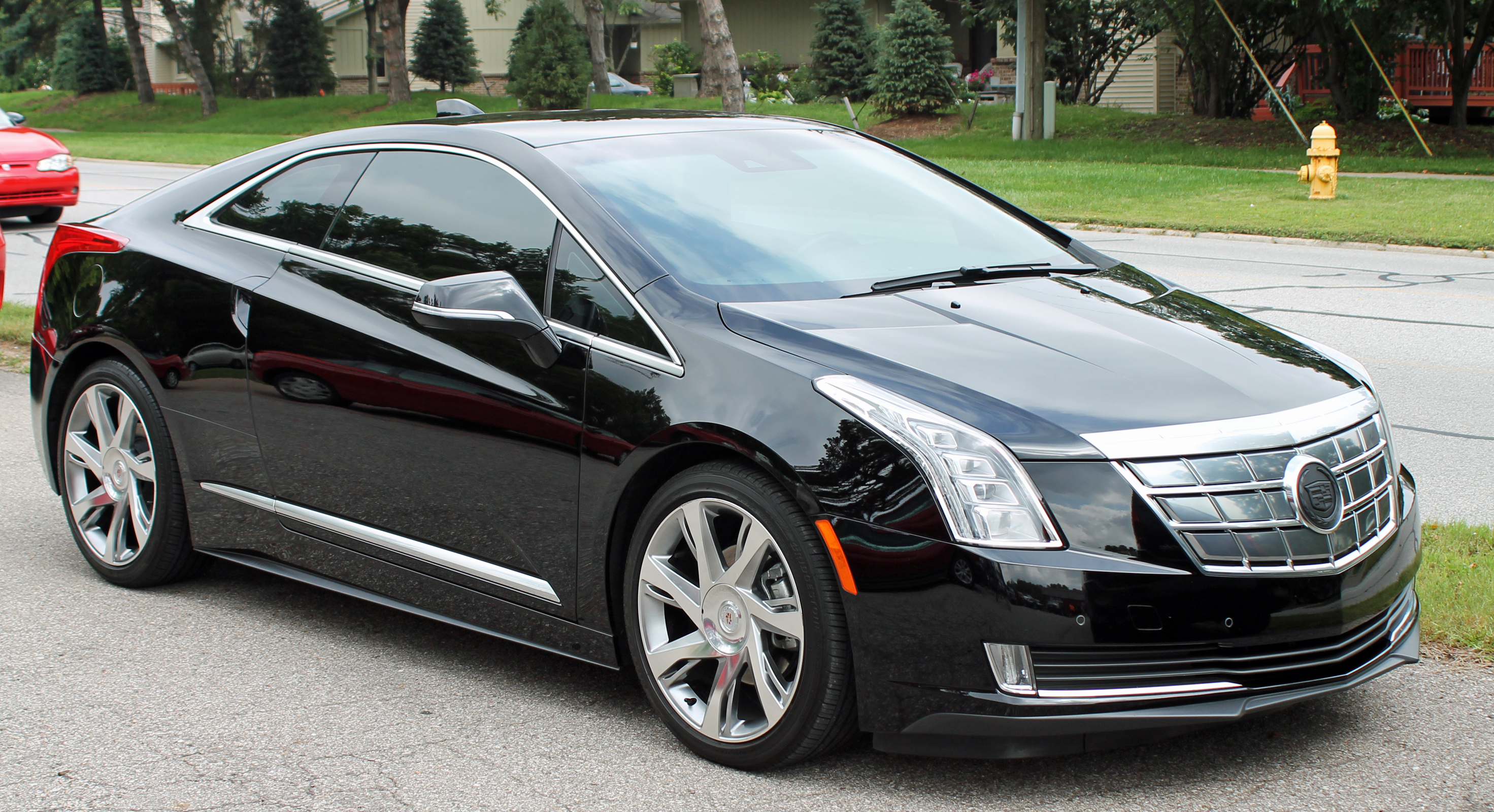
The Cadillac ELR is a fancy car that runs on both electricity and gasoline. It's designed to be more eco-friendly while still offering a luxurious feel and look.
An inline six cylinder engine has six engine parts that help it run, lined up in a row. This design makes the engine run smoothly and gives it good power.
LED headlamps are lights on cars that use special technology to shine brighter and last longer than regular lights. They help drivers see better at night and in bad weather.
Gentex makes special mirrors for cars that can automatically darken to reduce glare from other vehicles' headlights, making it easier to see while driving at night.
An automatic dimming mirror is a special mirror in cars that can change its darkness level to help reduce the bright lights from cars behind you. This makes it easier to see when you're driving at night.
Fog lamps are lights on cars that help you see better when it's foggy. They shine a wide beam of light close to the ground so you can see the road without blinding other drivers.
LEDs are a modern type of light that uses less energy and lasts longer than older lights like halogen bulbs. They are much brighter and can be arranged in different ways to create specific lighting effects.
An automatic dimming rearview mirror is a special type of mirror in cars that gets darker when bright lights, like headlights from cars behind you, shine on it. This helps you see better at night without being blinded by those lights.
A microprocessor is like a tiny computer that helps control how things work in electronic devices. In this case, it helps the mirror know when to get darker to reduce glare from lights behind you.
Adaptive drive beam is a type of headlight technology that changes how bright the lights are based on what's in front of the car. It helps drivers see better without bothering other drivers with too much light.
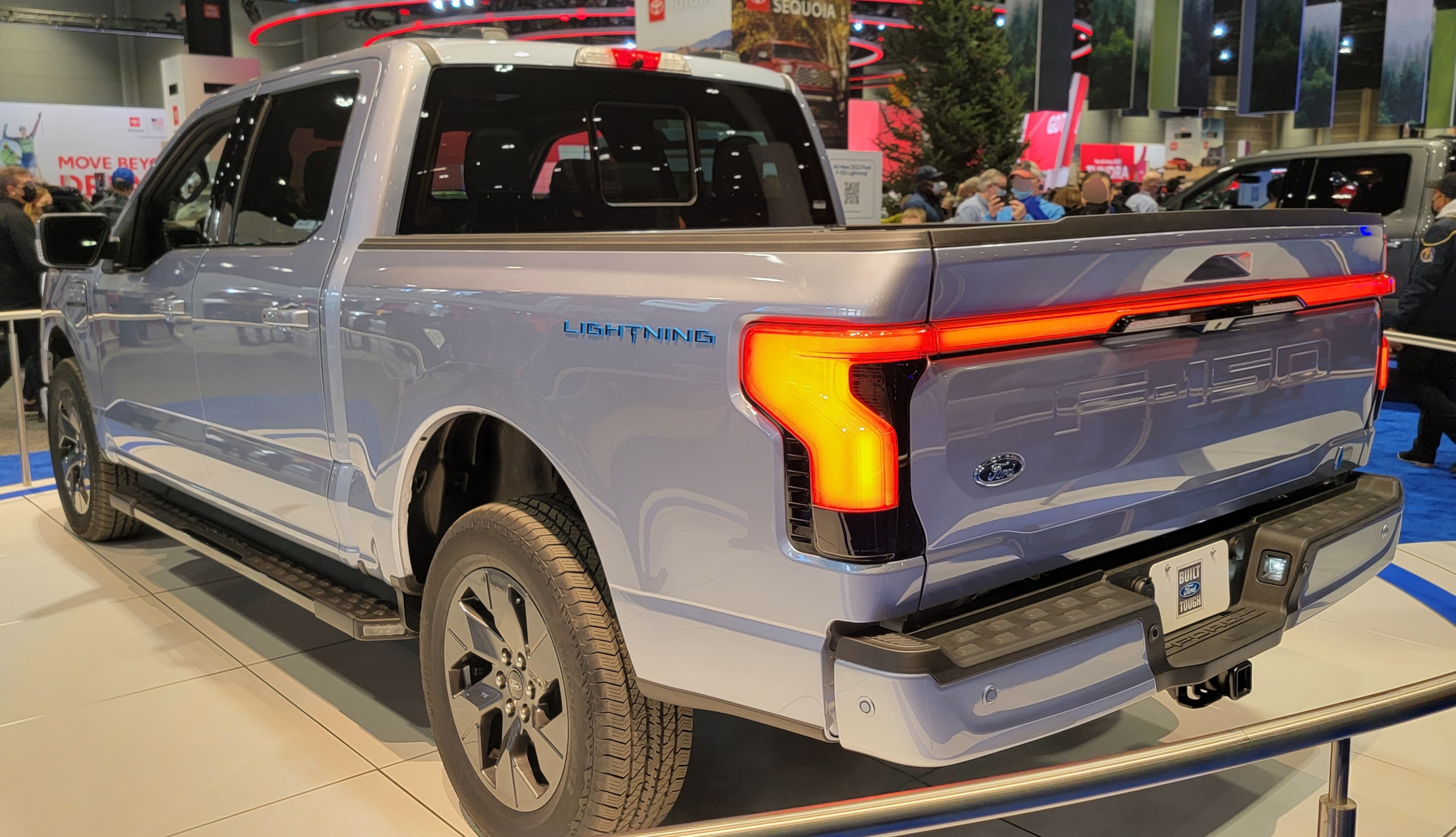
The Rivian R1T is a new electric truck that can drive off-road and has cool features. It's different from regular trucks because it runs on electricity instead of gas.
Adaptive cruise control helps your car maintain a safe distance from the car in front of you by automatically changing your speed. It makes highway driving easier by adjusting your speed without you having to do it manually.
Forward collision warning helps you avoid crashes by warning you if you're getting too close to the car in front of you. It uses sensors to watch the road ahead and lets you know if you need to slow down.
Matrix headlamps are special headlights that can adjust their light patterns. They help you see better at night without blinding other drivers by turning off parts of the light when there's a car coming towards you.
Adaptive driving means that some cars can change how they drive based on what's happening around them, like slowing down when there's traffic or keeping you in your lane automatically.
Aftermarket means parts or accessories for cars that are made by companies other than the original car manufacturer. These can be used to improve performance or change the look of the car.
A digital rearview mirror is a modern version of the regular mirror that shows what's behind your car using a camera. It can switch between being a regular mirror and showing a video feed.
A digital mirror is a type of car mirror that uses cameras instead of glass to show what's behind you. It can change the view to help you see better when you're driving, especially in different situations.
A blind zone alert is a safety feature in cars that warns you if there's a car in your blind spot, which is the area you can't see in your mirrors. It helps you avoid accidents when changing lanes.
Field of view is how much you can see from a certain point, like a car mirror. In cars, it can change based on how fast you're going or where you're driving to help you see better.
The Chevrolet Camaro is a sporty car that was made to compete with another popular car called the Ford Mustang. It's known for being fun to drive and has a cool design, which makes it a favorite among car enthusiasts.
The Pontiac Firebird is a sporty car that was made from the late 1960s until the early 2000s. It's known for being fast and having a unique look, which makes it popular with car lovers.
The Mercury Cougar is a car that was first made in the late 1960s and was meant to be a fancier version of the Ford Mustang. It has a stylish look and was known for being a nice car to drive.
The Plymouth Barracuda is a sporty car that was first made in the 1960s and is known for its cool design. It was one of the first cars in a group called pony cars, which are fun and fast.
The Dodge Challenger is a big, powerful car that people love for its speed and style. It was first made in the 1970s and has come back in recent years, still being popular among car fans.
The AMC Javelin is a sporty car made by a company called AMC from the late 1960s to the early 1970s. It was designed to be fun to drive and compete with other popular cars at the time.
The Chevrolet Corvette is a fancy sports car that's been around for a long time, starting in the 1950s. It's known for being very fast and stylish, and many people see it as a top car in America.
The Dodge Omni is a small car that was made in the 1980s and was popular because it was affordable and easy to drive. It was one of the first cars from Dodge to have the engine in the front and the wheels in the front too.
The Toyota Prius is a special car that uses both gas and electricity to drive, which helps save fuel and is better for the environment. It was one of the first cars to be really popular for being green and efficient.
LIVE
Speaker 1: Auto Line after Hours. It is brought to you by
ALEX Partners. For more than forty years, we have helped
companies and their stakeholders around the world harness opportunity, overcome challenges, and achieve outsized outcomes Alex Partners when it really matters.
Speaker 2: Hey, everybody, thanks for joining us once to get on out of line after Hours. Gary, what up?
Speaker 3: Not much?
Speaker 4: How you doing?
Speaker 2: I'm doing good?
Speaker 5: Yeah, I'm doing good because, like I talk about the auto industry and right about the auto industry and not in the auto industry, you see these people losing money left right, and holy I'm sure gam don't have to make those decisions.
Speaker 2: So we got to let everybody know who else is with us today. We got Craig pierres Ma from jen
Tex Corporation. We're gonna be talking about headlamp glare in
just a minute. So we got a great friend and
colleague of oars, Gary Witzenberg. Gonna talk about a book
Daddy wrote called Legends in Motion. We'll get into that
in the second half of the show. But gery great
to have you on the show too. So Gary vassel
Ash and we're going to have the Gary confusion. Obviously
one of our viewers. Dang it, and I should have
gotten his name. Said, you know, you got to kick
off the show every week asking everybody what they're dropping.
Speaker 5: So so they don't basically want me to ask you.
The question that I have here is what they're saying.
Speaker 3: So we'll get to that.
Speaker 2: So what are you driving this week?
Speaker 6: So?
Speaker 5: I am driving a Volvo EX thirty extended range single motor.
Speaker 3: Vehicle.
Speaker 2: Yeah, up comes down? What do you think sideway?
Speaker 5: I love the way it looks, I love lots of the interior. I am not crazy about all of the
gauges being contained within a screen that is centrally a little located. And the thing I wonder about, I mean,
it drives, well, it's a nice vehicle, okay, I mean but okay, you want your eyes forward, and I'm sure we'll hear much about that next. And the thing of
it is is that, okay, in order to see what speed going.
Speaker 3: You have to look over to the screen, okay.
Speaker 5: And the screen contains all sorts of information, I mean, how much state of charge you have, you know your range, the temperature, navigation audio, and so sometimes I'd like to know what time it is while I am driving, and so not having to look at my wrist, I would glance at eight clock of some sort that generally is in most vehicles. They've got this tiny font size that
basically you have to you know, squint to discover.
Speaker 2: Now people are oh, you're wearing glasses.
Speaker 5: You can say, oh, twenty twenty, Okay, I can't see the damn thing.
Speaker 2: So is it a deal breaker? Maybe? Would you get
used to it? Probably?
Speaker 5: But again, is it ergonomically correct to have the information that you need to drive your vehicle not in your line off to the side.
Speaker 2: In fact, Gary Witsburg, you'll reach number. You and I
co drove together on the launch of that car in Barcelona's Fame, and.
Speaker 4: To me has gone. I love their cars in general,
but they have gone way too far and putting everything into that one screen. Just I didn't like it from
the very beginning when they started doing it, what five six years ago, and now it's gets more and more with every vehicle they come up with. You know, another
thing I understand.
Speaker 5: We should point out Gary worked on electric vehicles at one point in his career, but so you know, there's no start or stop button on this vehicle, right you you get in it and you drive, you get out of it, and.
Speaker 2: It locks itself.
Speaker 5: Eventually, it just sensors the fob right right, and and so you go in your house.
Speaker 2: You're not really so you look out the window and see it's still on.
Speaker 5: Yeah, I mean, you know, and maybe maybe maybe that's the thing that you know, having you know, lived my life driving vehicle, it's that you deliberately turn on and off, you know, makes the difference. But you know, it seems
to me that, Okay, you're an electric vehicle, you want to save as much energy as possible for purposes of getting you from A to B.
Speaker 2: Right, every electron counts.
Speaker 5: So if you're sitting in your vehicle waiting for someone and it's running and you basically have the HVAC system on and HVAC systems basically take.
Speaker 2: Like the short of suck energy, Yes, you know, it's it's crazy. So, Gary Witzenberg, what do you drive?
Speaker 4: I'm driving my wife's twenty nineteen Blazer. Not too exciting, JOHNA.
Speaker 2: I'm not going to tell us about your Cadillac.
Speaker 4: It's a lovely car. She loves it to death. The
ELRS my Cadillact the Extended Range Luxury Cadillac version of the Vault right, and I love it to death, but I chose to drive her car today for reasons I'll get into later.
Speaker 2: Yeah, okay, i'm driving, or I have been driving last week.
AMAS Dawx seventy's the biggest. Most other is you know,
our viewers will know. It's got an inline six cylinder engine.
It's got this beautiful almost cashmere cloth on the instrument panel, which looks sensational. And you know, right now we're in
the bitter cold of winter and just to get into a car that's dot's warm, not fuzzy, but you know, sweded kind of material on the dash, I think is really good. But I got to tell you I love
Mazda's I think they do a terrific job of balancing, you know, the chassis, suspension, brakes, steering, acceleration. But this
one it's I don't know, maybe it's just its size.
It just isn't that that sort of tight mas to feel that I like in their other products.
Speaker 5: Well, it seems to me the many Masdas I've driven of late, there's a certain mosdenness that's going away.
Speaker 2: From those cars.
Speaker 5: I think that maybe they're cost savings by making some adjustments to their suspensions, and I just don't find the same joy of driving a MANSTERA.
Speaker 4: I've always liked their dynamics, the way that their cars drive without being overly sporty or harsh. And I'm subjective,
but I like the way most of them look. I've
always like you, I've been very fond of Massa's in general through the years.
Speaker 3: But were they were they?
Speaker 2: The cars are the SUVs.
Speaker 5: I mean it's like through there's you know, there's there's you have an immense amount of fun of like driving a Masta three, right, I mean it's just like it's a daily driver as well as something you can get a you know, a charge out of the m X five a Ka Miata. I mean you can't have it
as a daily driver, John saying yeah you can. Yeah, yeah,
for all of those who are listening to the the podcast Car.
Speaker 2: Club, yeah yeah, you don't want it for a daily driver.
But Craig, what are you driving? I have an Audi
S five that I'm driving, no nice performance car.
Speaker 3: So exactly this is going to.
Speaker 2: Be a segue. How are the headlamps?
Speaker 3: And then the headlamps are phenomenal. Yeah, it's got the
high beam system when you know, it's like daytime. It
feels like daytime with those.
Speaker 2: Massive candle power, right, but you're here to talk about headlands, and it's sounds like you're audi is part of the problem.
Speaker 3: It's part of the problem, part of the solution simultaneously, right, It's it's that's the that's the rub. We all feel
more comfortable with a car with modern led HEADLM technology.
It illuminates the road. There's research that says it helps
reduce accidents, thus making things safer. At the same time,
some of the research I've done of late and obviously biased being from Gentex, which makes automatic to MKE mirrors, but the research I've done shown that glare has reached epidemic proportions. Like the driving public is not They've gone
past it being annoyance. They are frustrated and in many
cases angry about the amount of glare that's coming from these modern head lift technologies.
Speaker 2: And your research is certain this is not just a US problem by any stretch of the imagination.
Speaker 3: No, that's what was amazing. So what happens is every
so often, you know, we're in a little downturn in the industry. Automakers started the content and one of the
things they tend to take off is especially that passenger side automatic dimming mirror. Right, So our salespeople say, hey,
you know, do some more research. We need to go
back into the automaker prove the worth of the autodimming mirror.
And so that happened about a year ago. I started
this again. I'm going to go look, go online, start
to do some research. Is there any research that's been done?
And I was astounded by what I found, not only actual research by some pretty hefty organizations, but then also anecdotally disagree to which the public is angry. So one
of the things, for instance, FIA in Europe, everybody I think is familiar with FIA, International Automobile Federation that runs global.
Speaker 2: Motorsports exactly right, right, runs Formula one and write everything else down.
Speaker 3: So they not only are running global motors they have about I forget what the numbers, two hundred and fifty car clubs around the world, eighty million drivers is who they represent. They did some research that showed about three
quarters of drivers say they are regularly dazzled, as they term they used by headlight player.
Speaker 2: Led in a bad way, in a bad way, right, not impressed.
Speaker 3: They're line by the line and you go through all the statistics, but the most startling part of that is at the end of that study. And this was done
in Europe in multiple countries about seventy five percent, so three quarters of drivers want tighter regulations on headlamp technologies.
So they're not just saying, hey, this is annoyance. They're saying,
we need to do something. So that in turn actually
prompted the United Nations Economic Commission for Europe to actually start something called Task Force Claire. So over in Europe
they are actually starting a task force to then study headlamp technology. I'm not sure what the outcome will be.
I think their first in person meeting was part of the Munich Auto Show this past fall, but you could see, I mean, this is real research, This is real real drivers that are saying, this is such a problem, you guys need to fix this.
Speaker 5: So isn't it I mean, isn't this something that the headlamp manufacturers need to address versus.
Speaker 2: A company like GenTech?
Speaker 3: Yeah? Well yeah, and that's I should say. You know
my caveat here is I'm not the lighting expert, right, I'm not here advocating some position about changing that technology.
I'm simply sharing the degree to which the driving public is frustrated. Now, certainly, you know, like we like we
started this segment, we all appreciate it when we're behind the wheel of a vehicle that has those good, those good headline technologies. So it's that modern you can see
so much better, yes.
Speaker 2: For sure at night.
Speaker 3: But we also then to a degree with gaslet that the public saying, oh, this is safer, it's fine, you'll be fine, And I think that's where the public's reacting is like, I'm not fine, I get it, but this is a problem, right, this is still making me angry, visibly angry.
Speaker 4: What about fog. I've always had a problem with people
driving around with their fog lamps side and some of them are too damn bright, right, I think they're just driving around because they look cool, not because there's fog out.
They just turn them on because I think it's great. Yeah,
but I was like, well.
Speaker 2: They do kind of look kind of look cool. But
I agree with you go into that because I know with regular headlamps there is a Federal Motor Vehicle Safety standard for headlamp cut off. I mean, you know, with
really good lamps. You know, if you pull out on
a dark road or maybe in your driveway, shine the lights on the garage. Some of them that the cut
off of the light is so noticing. It's like you
could take a knife and just cut a line straight across where above that there is no light scatter I think it's what they call it. But to Gary's point,
there's no such regulation with fog lamps. They just scatter
light all over the place.
Speaker 3: Yeah, I mean it's inherent with LEDs in the way you can organize them in a matrix that you can do these things where you can have a cut off line like that. But you know, the LED technology is
about three hundred percent brighter than halogens. Like older halogens.
LED technology has improved about two hundred percent brighter just in the last decade. So this is newer technology. And
if you get into the research you can read online, you will see, you know, how did we get to this point? You know, like you were suggesting, there are
some cutoffs and there are some measurement points that knitsa will say, here's the where you measure head lab intensity.
I was watching a show called The car Mudgeon where these two general are sitting around and they showed exactly what you're describing. They had a picture of headlamps shining
on the wall and you could see two little darker areas in the field of the light field. And they
were surmising, and some engineers had told them those are the measurement points. So because you got this LED matrix,
you can tone those down meet the brightness, but you can pump as much light everywhere else.
Speaker 2: So let's go through this in a little more details. Sure,
I think this is really important, and I think just about anybody has experienced this. You turn on your headlamps
and it seems pretty dark, but there's there's some spots out there that just don't seem as bright. And what
you're saying is that's where NITSA is measuring headlamp brightness, at least for headlamps in the United States, correct, And they automakers they darken those areas to be able to meet the letter of the law. And everything else is
right right, And this is this.
Speaker 3: Is what's you know when you look through I read articles, I've seen the videos where people are saying, yes, this is this is what's happening, and there's no maximum output in the other areas. So when you have that nice cutoff,
it does make sense that in real in in the uh the warehouse where you're testing it, this will work in the real world, though, does it? Where you have
misaimed headlights, where you have made you might have luggage and things in the back, where that car is jacked up a little bit, where you have hills in Michigan, where you have potholes and bumps, where the headlights are bouncing up and down, where you have dirty headlamps or dirty windscreen which adds that light. I mean, yes, theoretically
these things, it should work. It should be fine. If
we pump all this light, it's not into driver's eyes, but in real work conditions it's reaching the driver's eyes.
Speaker 5: So what are you guys doing to help? Yeah, not
solve the issue, but ameliorate the issues.
Speaker 3: Right, So clearly you know, Gentex invented and continues to be the largest supplier of automatic dimming rearvery viewers. So
this is the rear word glare. So this uses two cameras,
a forward facing camera that's looking at the amount of ambient light, a reard facing camera that's searching for clare, and then it talks to each other via a microprocessor and darkens a gel in the mirror that to eliminate that glare. It darkens to the precise level necessary to
eliminate that clare. It's been around for decades and it's
on maybe forty percent of the world's vehicle build But something that it's interesting that we're working on in we just sold our first program is a dimmable sun visor.
So obviously if you're looking, if you're driving into the sun, sunset, sunrise, you know, what do we do today? We flip down
a visor and yeah, we got a piece of cardboard in front of our eyes. So we call it good.
So I can't I'm blocking the sun, but I'm also blocking by view. These are dimbibile panels as the moment
you deploy it, so it's a sunlight advisor. The moment
you pull it down, it starts to darken. You could
reach up and hit a little button to make it darker or lighter, depending on how much glare is coming in.
But it allows you to monitor traffic, monitor street signs, road conditions while still blocking the glare. We know, having
driven this and now having you having many many customers driving this. We know the driver once this is available,
we'll be using this at nighttime to mitigate oncoming glare as well, and so we're starting to look at does this need a night time mode or things like this.
So now it's going to be much more costly obviously than a standard visor. It's a very elegant solution, but
it's some of the things we're trying to do to just look at the amount of light that's that's coming into that vehicle cabin. That's always something that's a bit
of interest to us. UH and eventually you know, dimmable
sun riffs, dimmable sidelights, that's all part of our of our road map and.
Speaker 5: That so so the spizor if someone is using it at night for headlight glare, so it automatically switches.
Speaker 3: Or the moment you deploy it, the moment you pull that down, it starts to darken to a predetermined level.
The actually the user can predetermine how dark it gets upon deployment and then can manually adjust it a little bit.
So but we know, you know, again we've designed it originally for the sun, but we know given the complexity and severity of the problem of oncoming glare at night.
We know, I mean the driver is going to do that and use it at night as well.
Speaker 4: While it's reducing glare, is it not also reducing the amount of detail you see out there in the dark.
Speaker 3: Yes, there would be right, it would make it a little a little darker. Yeah, But that's that's that is
that that that trade off you know between that forward visibility.
You know, it's interesting and one of the things we haven't talked about is like is the eye itself and how the eye actually works? And because there's a lot
of people, it's like, okay, is this really a problem?
Like is glare really dangerous? You know? And as eye
passes through the cornea, you know, it goes through the pupil, which it determines how much light gets into the eye.
It's then focused on the back of the eye on your retina, where there's these photoreceptors. During the day, we're
using photopic mode, it's color vision, very clear, optical clarity is there. But at night we're using the rods of
the eye and they are very susceptible to glare because they're basically we're seeing in black and white. It's called
scot topic vision. At night time, if you're in a
deserted road, your eye pupil is enormous. It's trying to
absorb as much light as possible, and then suddenly a car comes around the corner and it hits you that light is going through the pupil, it scatters within the eye and then it actually creates a blind spot that you might not even know exists. And actually research has
shown that even drivers they know this is happening, they can't articulate and call it. They don't know it's in
an actual blind spot that they know. Every time they
blink right, you see that bright spot from that glare again and there's an after image there that that inhibits your forward vision. And so we know that then decreases
reaction time and it's going to increase stopping distances. So
this is it is a real, real tangible problem that does create dangerous role conditions.
Speaker 2: An't that's fascinating? Are you guys bringing ophthalmologists in developments?
Speaker 3: And years ago we did. We actually had had one
on the team that would well, I was.
Speaker 5: Shocked to see you have this product E site go.
It's like, okay, so digital eyewear that utilizes a high definition camera of proprietary algorithms and powerful processing capture and project in real project, real time video onto too high resolution near to eye screens for full binocular vision. It
can improve functional vision for more than two any eye conditions and so basically for people who can't see very well, you have these glasses right that allow them to see better.
Speaker 3: That's part of our medical division.
Speaker 2: But yeah, it's Gentex makes this.
Speaker 3: Yeah, yes, yes, it's a company we bought a couple of years ago now, but we make it. It's now.
The latest person is called etesite Go and it's for people people with some sort of central vision loss, macular degeneration, Stargard's disease, all sorts of things, and the goggles. The
goggles have a camera and then there's two LED screens in front of your eyes, and there's a lot of adjustments and algorithms within the system, but it basically fills in the gaps of that central vision loss and it allows people to regain a sense of independence, uh, to recognize facial cues when they're talking to people, to watch television, read a book many times, see a loved one for the first time in year. So it's remarkable. So we
do understand that, I like more.
Speaker 5: Than just some guys who are saying, hey, let's let's put.
Speaker 3: Something that dims I mean right right. We do have
a good un a standing from an inteering perspective and the physiological perspective.
Speaker 2: Yeah, so you said you have your first program carbody are signed up to take this.
Speaker 3: Yes, we we plan ship out twenty twenty seven. We'll
start that. And there's in usually these products, it's it's
like Domino's.
Speaker 2: Once you have that first sold program, then the rest and technology like this always starts in luxury cars, high end car so on the super.
Speaker 3: Typically is how that usually goes on a higher end or trip certainly higher trip level.
Speaker 2: Yeah, the three of us would have to pin you down and pour hot away, align you to divulge.
Speaker 3: Who even then might not work.
Speaker 4: But yes, but if you have one of these in your car, you would recommend only using it when there's a glare issue so you don't lose that that division.
You would want it out of your way most of the time. You only want it down when.
Speaker 3: You write, like I said, we're still driving it and we're just finding that that many ways people use it, yes, exactly, just it's the attachment points are the same, the electrical connections are the same. It's folds up, you know, to
the headliner, just like you'd expect, but the moment you pull it down, it starts to dark it. But yeah,
I mean we're finding other ways people are using it.
My wife, for instance, Oh, she's much smaller than I am.
She almost always has that advisor down and up to the wind just to prevent some of that excess sunlight coming in. And then I get in the car and
smack my head there every time. But I could see
her using that and having it forward all the time, just to attenuate the amount of ambient light that's coming in during a bright day, even if it's not the sun on the horizon. So as we watch people drive
with this, we're learning new ways that they might use it.
Speaker 2: There is a headlamp fixed to this as well, and you know this, Craig, it's you know, headlamps with all you know, a zillion little led pixels to them, I guess is the way. And they use a camera to
look ahead and they shut down pixels that they know is blinding an oncoming driver. I for via let me
drive one of their prototypes with it, and even bicyclis who were coming in, yeah, you know, had lights on their bike, the pixels would shut off the light for them as well. Yeah, and so I thought that was
pretty good. But I gotta believe this is really expensive technology,
and headlamps are already getting too expensive.
Speaker 3: Yeah, it's it's called the typically adaptive drive beam is the overall term for that. It's been available in Europe
for many years. Jetechs actually provided imagers for some of
those earlier systems way back in the day, fifteen years ago, probably already. The challenge has been that North America hasn't
adopted the same standards as Europe. So it was two sound,
I think it's legal now twenty twenty two, and it did to said, okay, that's legal, but the wording is not exactly the same, so as I understand it. There,
there's all there's one manufacturer in the name. I forget
which one it is that actually is doing the same adaptive drive beam here in the US.
Speaker 2: I can tell you for a I don't know if the one that you're talking about is Rivian, but yeah, we just drove a Rivian RNT and it had that, and we didn't even know that until we started driving it, and I was like, oh my god, look at that.
It worked terrifically well.
Speaker 3: And but the way we've written the regulations here in the US, most automakers that said not going to do it. It's
like even my Audie, that version of that vehicle over in Europe's got adaptive drive beam. I think they call it,
maybe called Patrick's beam. Mine just says automatic highmount off
is all we have.
Speaker 2: All you got to do is get a hack.
Speaker 3: Software, isn't there.
Speaker 4: With the affectiveness of that go down though? As you
if you're driving in you know, bad conditions and it gets covered with slushy stuff you get that could happen, water, mud, stuff like that, all of a sudden you're.
Speaker 2: Right, well, no, no, no, Gary, You're you're absolutely right.
I mean, this is a big problem with sensors. You know,
how many of us have driven up here in the snow the north and if you get slush or anything like that on those sensors and all of a sudden, you know, you get a warning on the dashboard. Sorry,
you know, none of your safety equipment works. And it's
not just with snow or slush. I've been in the
middle of the summer when you have a high do point mourning and everything's con you know, you go out in your car and you know there's water off all over the it's just the humidity on anything that's glass, and same thing. It will tell you sorry, you know,
your forward collision warning, your adaptive cruise control, et cetera, et cetera. None of it works.
Speaker 5: And it sounds to me like your approach is being more cost effective than these headlamps.
Speaker 3: It certainly will be cheaper than yes, then so yeah, and get.
Speaker 2: Clear, but it'll block clear from anything.
Speaker 3: Yeah.
Speaker 2: You know, if we mandated today that every vehicle had to have these matrix headlamps, it would be twenty years before every vehicle had.
Speaker 3: Right, right, Yeah, the advantage of adaptive drive beam. Yes,
it prevents clear, but also it's optimizing forward vision, which is how we discord this discussion. Yes, brighter headlights do
make driving safer. So the way it works is it's,
you know, it's basically your high beams around all the time, but there are blockout zones. It can identify a pedestrian
other cars and shine that light pretty much almost around the those objects. So that's the benefit. But even in
Europe where that IFIA study was done, adaptive driving has a much higher take right, And still it's a problem as we're seeing in Europe. And you know, one of
the things that you know I mentioned is like how angry people have become about this this on this topic of Claire. There is actually a Reddit social media site,
and I don't think we can it's still a family show. R.
Speaker 4: I don't want to swear on the show.
Speaker 3: Yeah, but it's called after Headlights, like yeah, blank, your headlights is the name. When I think you and I
last talked about it, they were at fifty five thousand members.
I think it's almost at sixty to fifty eight fifty nine thousand members to this day. And it's basically a
Reddit thread that's just you know, an upswell of people coming together to complain about headline technology, and most are posting pictures of how bright the light behind them is in their mirrors or oncoming traffic or the truck that's behind them with the you know, the big suv with the higher mounted headlights. And so again, what other car
feature or drive issue is out there where you have these these threads popping up fifty five thousand people dedicated to posting memes information in some cases data and studies all angry about about this feature or lack of glare attenuation on the car, you know, or that how bright these headlights have become. It's it's crazy. I saw I
saw at one of the No King's rallies a person there.
I got a picture of a person holding a sign at a No King's rally that says, while I've got you, your headlights are too right. Yeah, just now we chuckled.
But like, what other driving issue out there is so severe that somebody that goes about does so?
Speaker 5: Okay, So when do you think that this technology that Gentex is going to be putting on the market at some unnamed luxury manufacturer. When when do you think it'll
proliferate two more vehicles, more afford both vehicles.
Speaker 3: Yeah, I mean, I think you're like many things, it's it's a decade, you know, by the time it starts to get at any kind of Uh.
Speaker 2: But here's another question, But what about aftermarket? You guys
think that after market.
Speaker 3: It's yeah, it's actually perfect. The advisor side of it
is a perfect product for aftermarket, just replace your existing visor exactly, because automakers don't have that many different sizes.
They have a couple of different sizes.
Speaker 2: But do you have to hack the wiring harness or anything.
Speaker 3: And typically that's there right because the attachment points should be the same and if it's got a lighted vanity, usually there's an electrical connection, you're good to go. So
a lot in many cases that will be that will go to the autopart stored by one Yeah, yeah, in your car.
Speaker 2: So are are you guys going to do that aftermarket?
Speaker 3: Well, certainly that'll that'll be part of most of those programs, will be Yeah.
Speaker 2: So when will that become a hill?
Speaker 5: Well, well, I mean you're talking about this great technology and people are probably saying, hey, I would.
Speaker 2: Like one of those. I'd like one of the You know.
Speaker 3: Every automaker is going to look at that kind of holistically, even if it's launching on a new vehicle. As part
of new vehicle program, you're going to be able to go back in time and have either a dealer install or whatever. I think that'll be part of their programs naturally.
Speaker 5: But somebody wants to go to O'Reilly Auto Parts and buy one that.
Speaker 3: Yes, that will be dependent on the volume of that vehicle, right, so it might work out for something, you know, like an F one fifty where they're making a million of them a year, and you can go backwards compatible. Our
true aftermarket portion of our business is pretty small. Most
of our when we say after market, we're still talking about dealer accessory programs or port install features because a jetex organization doesn't ship to small quantities. We're primed to
ship to the automaker so.
Speaker 5: Quickly before you go, I mean, you guys are also big in.
Speaker 3: The digital rearview mirrors. Yeah, what's going on in that space?
Speaker 4: Yeah?
Speaker 3: Yeah, we call it a full display mirror, but as a digital rearview mirror, it's functions as a normal mirror.
When you wanted to just a standard reflective surface but throw a switch and illuminates, they can't and the display that's integrated in the mirror. We ship about over three
million of those every year now, so it's growing rapidly.
But just at the CES show, we show the next generation of that. So if you imagine that rear facing
cameras taking a nice big rectangular picture, but we're only showing a small portion in the mirror, right, So it means we can digitally move that immage around depending on the driving scenario. So we're doing some cool things where
you put the vehicle in reverse, we can digitally pan that downward so that it makes reversing more natural with a digital mirror, if there's something in your side blind zone, so if there's a car alongside you, we tie it into the car side blind zone alert and the mirror can just pop out a little bit and show you exactly that vehicle on the side. Or we have speed
adjusted field of view, so if you're traveling at a high rate of speed down the highway, we're going to shrink that view up in the mirror a little bit, just so things aren't whipping by the sides of the mirror.
But if you're in a downtown pedestrian area going slow, we're going to expand that view so you can monitor pedestrians, bicyclists, and more of what's what's going on in traffic perspective.
So that's kind of the next generation of that full display mirror is digitally enhancing the view depending on the driving scenario. Is it still the same signs?
Speaker 5: I mean, so when you're saying it like it pops out, you know.
Speaker 3: So that you just gets expands. So yeah, yeah, no,
it's like a zoom in or zoom exactly exactly.
Speaker 2: So we're gonna have to wrap the segment up. I
just want to end on the note that I can corroborate what you said about people complaining. It's not like
I get complaints all the time. But of the complaints
I do get from viewers, number one is complaining about headlamp. Claire. Yes,
So anyway, Craig Pierres, thanks so much for coming in.
Very interesting what you guys have done. Loved all that
description to the eye and how it works explains to me why i'm you know, I got these spots in my eyes after I've been hit by a bright light.
But thanks a million cooling on the show. Okay, we're
going to take a quick break. Give a shout out
to our great sponsor, ALEX Partners.
Speaker 7: We act, we grow, we transform, we protect, we rescue in moments that define the future. We are the partner
you can trust ALEX Partners when it really matters.
Speaker 4: Oh, I'm looking at this and it's different than just looking in a mirror. It requires an adjustment every time,
so she didn't understand why I didn't like to use it.
It seems like that's maybe I'm not having that problem as much anymore. Is it just me?
Speaker 2: Or does that happen a lot? Yeah, we're back live.
Speaker 3: Okay.
Speaker 2: Yeah that was quick.
Speaker 4: Yeah that's right.
Speaker 2: So yeah, thanks for joining us back here. You're going
to talk about well, we're going to talk about a book, and we'll get into some of the news that's been going on in the industry. But I wanted to show
you this book that Gary Witzenberg has written, called Legends Emotion, and Gary, you tell the story. I mean, so let
me set the stage. Gary has been in this business,
Garry Witsenburg as even longer than I can remember. When
I first got into the business, Gary Witzenberg was already a really big name an automotive journalism. I remember one
of the first automotive events I went to and you walked by and you had name tag on. We all
had name tags at some event. I think it was
at the Chrysler proving grounds in Chelsea, and you walked by and I was like, oh my god, it's Gary Witzenburg.
Oh come on, I'm serious. I'm done serious about that.
But all I'm saying is, you've been in the business a long time, You've written a lot of things. You're
a pretty good writer, if I say so myself. And
so you put together this collection that you're calling Legends in Motion. Tell us about the content and why you
chose that title.
Speaker 4: To be honest, I didn't choose the title. The publisher
came up with that. I was going to call it
Cool Car Chronicles or something dumb like that, and they said Legends in Motion. I went with that. But it's
as you say, I've been doing this for a long time.
The first well, let me say back off. I started
out with small car magazines, and then I got into larger car magazines, and then I made a point to get into non car magazines. Back when there was no Internet,
it was just magazines, so Playboy, Better Homes and Gardens, Pop Mechanics, airline magazines.
Speaker 2: But you were writing car stuff for these.
Speaker 4: Now I was writing car stuff for non car magazines, in which almost no one else was doing at the time.
So it worked out well for me. And then in
more recent years, I was away from the business for fifteen years in a real job, and then I came back.
Speaker 2: And when he says real job, he was working for General Motors at the time. In fact, we'll get into
some of that. He was on the EV one program.
But anyway, sorry, and there's good stories about that in there.
Speaker 4: But anyway, I came back into the side of the business twenty four years ago, two thousand and two, I took an early retirement and relaunched the writing career, And since then I've been writing for multiple outlets, many of them online, still a few are print, and a couple of book authors whose work I really respect suggested to me, after reading one article or another, you ought to put a collection of this together, And I said, nah, who'd want to buy that? But then the more I thought
about it, the more I thought, Okay, let's do it.
So long story short, I've got I think it's sixty two stories in there, and it's the first chapter is all about my own experiences and adventures with various cars that I own, even when I was a kid, before I had a license to my first cars in high school, and one good example, the first car I had out of college was a Triumph tr for a I was intending to go racing, and I chose that car for the class that was in at the time in SECA.
My dad helped me borrow some money. I picked it
up in England and drove it all around Europe for three weeks before I even started my first job at what was then Chevrolet Engineer. And that's the first story.
But part of that story was I was looking for Formula One tracks. I took three night drive laps of
the Nerber Green back then in that brand new triph Trfoura didn't even have seatbelts in it because that was a factory option.
Speaker 3: Didn't get it.
Speaker 4: And you know, here I am, as a young kid, overconfident, very bad lighting, you know, talking about lighting, and I'm driving this Nerber Green thing like it's just a mountain road, you know. And I got away with that and survived it.
But then that car came back and the next the next story is when it came back to the States.
It became my first race car, which was my intent.
So there's a whole chapter about racing it. And then
the third chapter as I went in the Navy. This
is during Vietnam, and I took it to Navy ocs and then the West Coast and back. But what I
thought was the reason I mentioned the Nurburgreen story is fourteen years later, I'm driving the twenty four hours of Nurburgring in a real race. I'm in a serious race
with co driving in a factory effort. Yeah, somebody named
Jim Downing who was an impstant champion at the time, and with Mazda and Lindsay James, the famous woman racer before she was famous early in her career, before she did Indy and four GT. We won our class at
the Nurburgring in the twenty four hour race. So you know,
I'm driving late at night in this brand new Triumph and years later I'm driving the race. And that's another story.
There's a whole chapter in there about racing experiences, which you know. I'm not the world's greatest writer, but I'm
a good storyteller, and these stories are really fun at they're light.
Speaker 2: I'll back you up to because I read your stories.
You were kind enough to send them to me last year just to read. With your twenty four hours of
the nurburg Ring really interesting, and your adventures of driving around Europe and this Triumph that you had bought. They're
just fun, pleasant stories to read.
Speaker 4: They're non technical, they're just yeah, they're and they're not enhanced or exaggerated. It's just the way it happened, the
way I remember it. But also there are chapters in
there which have what I call inside stories of Okay, what is the story behind the creation of the first Ford Mustang, you know, way back in nineteen in the early sixties, And then what about the story about the Camaro was designed and developed to compete with that, And then the next story is what about the Firebird and the Mercury Cougar to compete with those. But on this light,
the higher level, and then the other one jumped in.
You have the AMC Javelin and the Barracuda from Plymouth and the Challenger from Chrysler, all those inside stories because I've done books on those things mostly so I took a compression view and wrote it for and.
Speaker 5: You've had the opportunity over the years to talk to many of the people who were instrumental in doing those characters.
So it's not just you know, right, this is what Gary, which is Gary research.
Speaker 8: This is original reporting by you. And oh yeah, I
interviewed everybody. I interviewed everybody. I did the Mustang book
it was like the Fox Mustang I did. It came
out at that time, so it's the first couple of generations.
But I interviewed everybody from Maya, Coca On down who was involved with that same thing. With every one of
these there's a lot more modern stuff in their cars.
I've owned that were really interesting, like a SHIVSSR, the Cadillac ELR that you mentioned, that's really interesting.
Speaker 4: Then there's fun stuff in there in another chapter that's like the ten most Beautiful Cars Ever Built, which I wrote for Car and Driver, the ten most Elegant Cars Ever Built, which I wrote for rob Report. Two different stories,
but a lot of the same cars ended up on the same list. And it's not just my opinion. I
got leading design leaders from all over the industry to vote on what was their most elegant car or most beautiful car?
Speaker 2: Okay, one little teaser for us, one little what was the most beautiful car?
Speaker 4: Well, one that rose to the ad or near the top of both of those lists was the Jag XKE, the E type Jag which everybody, i'man Ferrari suppose leasid that's the most beautiful car ever built. I don't know
if that's true, you know, but there's you know, the one story goes back to Cords and Dusenbergs and so on, and the other one is more modern stuff. It depending
on who the group is that I was soliciting the votes from. But there's interesting stuff like that. There's people stories.
My encounters with John Dolorian and with Zora Duntoff and John Delaurian is interesting because when I came back from the Navy, I was in a training program and I worked in the corvette group at Chievrolet for a few months as a trainee, and Duntoff was running it, and they had a at the time, Duntoff was really trying to get a mid engine corvette into production. And there's
stories on that in there too, about the whole of his pursuit of the mid engine. One day they sent
me over to pick up this beautiful mid engine prototype xpaight eighty two or something like that at the design staff drive it back. I drove it around the tech
center a little bit, drove it into the chival garage.
Two guys in suits were standing there and said, oh, what's that, And I said, well, that's our you know, mid engine corvette. Prototype. What do you think you know?
No big deal, Go back in my little office. The
next morning, I'm summoned into John Dolorian's office and he's spitting mad, and he was running Chivrolet at the time, and he said, what are you doing talking to a journalist about our most secret prototype? Oh wait a minute.
These were two guys at suits. I was i to
know who they were. And besides, if they weren't, if
they weren't in the Chevrolet garage, what were they doing there in the first place, you know, if they shouldn't have seen this thing. And he kind of calmed down
and about my career was over. I thought I was
getting fired. But years later I'm interviewing him in New
York in his office after he'd left GM. He's working
on his own car, but he was instrumental in both the creation of the Camaro and the Firebird. I interviewed
him for both of those two books, and also about his own car. And then a few years later I
was on the press trip where he launched his own car in Northern Ireland.
Speaker 2: The famous launch of fourteen journalists.
Speaker 4: I was the only freelancer. I wrote it for like
four different magazines from Playboy to cars in Australia.
Speaker 2: Can you take you guys over there on the Superstylic transport.
Speaker 4: Yeah, we flew on. We flew on the Concorde. They
told us the best hotel in London. We got over
to Northern Ireland the next day, the probably the only good hotel in Belfast, but it was surrounded by barbed WIRs and guys with big guns because there was a lot of terrorism going on at the time. That's a
good story. So it's three different times. I encountered Delorian
almost getting fired as a young engineer, and then I'm writing about his new car in Northern Ireland or from the Northern Ireland trip.
Speaker 5: So of all of your experiences over this period of time, we won't mention what that period of time is, but.
Speaker 2: Substantial one.
Speaker 3: What is your favorite story?
Speaker 4: The favorite story of the sixty two in there that I chose, it's some of my most fun stuff. Maybe
the Triumph trip as just out of college I borrowed money to buy and drove it around Europe, and that it was interesting on a number of levels because I picked up a hitchhiker who I thought I was tired of nobody speaking English in France and Belgium, and I picked up this kid, young, nice looking young guy. I
thought he was a Britter in American he turned out to be a Dutchman.
Speaker 2: And every language there is a medical student.
Speaker 4: And they were, yeah, quadrilingual. And he and I drove
to Stockholm, a thousand miles away to see some woman Heed Dow in Stockholm, and then we drove to East Berlin through East Germany to get to West Berlin, but through East Berlin, and we saw the wall, you know, and all that stuff long before Reagan said tear down the wall. And then we drove it back. And I
had one interesting thing about that was we started out on the left side of the road, on the right side of the road in England. Then we're on the
left side, on the left side of the road in Europe.
But Sweden at the time was was on the left side of the road. So I'm now back on the
left side of the road, on the wrong side of the car. And then we're around we go to Germany,
we're back on the right side of the road again, our own right side of the road, and that would take go back to England. We're back on the left
and every morning. We had to say where are we in?
Which side of the road are we supposed to be on?
Which way to go around? And round about?
Speaker 5: That is a great story, so curious, personal and the people aspect.
Speaker 4: There's a Carol Shelby story in there. There's some some
good people. Ye was in there too.
Speaker 2: Yeah, Well, what did you interview Carol about?
Speaker 4: Just about his kind of life story and his career, the creation of the Shelby cars and what he did.
It was it was kind of late in his career when I interviewed him, and it was a big kind of a profile that I did of him.
Speaker 2: I got to know Carol a little bit back in the nineteen amazing guy, really cool guy too. I had
a lot of fun talking with him because he was doing a lot of work with Chrysler at the time. Right,
remember the Omni Horizon g LA Carol, Right, that's right.
So he showed up at a number of Chrysler events, that.
Speaker 4: Was what he was. Ford kind of dumped him after
all the years he was doing good stuff with them, so he.
Speaker 2: Well, they kind of dumped him because he was an Aya Coca guy, and when I a Coca Chrysler, they cut.
Speaker 4: Their ties with cocacine and said, could you do some things for us? And all they had were small front
drive cars at the time, but he did some things with those that were pretty interesting.
Speaker 5: We got a blurb from Bob Lutz on your book.
Speaker 4: I did, indeed, and a couple of couple of old editors, like like William Jeans who was editor Car and Driver, and Jack near Rad who's a friend, but he was editor a Motor Trend when I was writing regularly for Motor Trend. So I thought, yeah, I thought that would
help if people said, no, this is good stuff, and that people had a credibility. It would help people say,
all right, I might want to buy that book.
Speaker 2: You said that there's some interesting stories about your time working on the GM e V one electric car program.
What story do you like from that?
Speaker 4: There's two stories in there about that. One is just
kind of the whole program, and actually there's three because there's an opinion the last chapter's opinion columns, and there's one in there about who killed the electric car. Come,
I give me a break. It wasn't GM that killed
the electric car. But there's a story of kind of
the whole program and how it evolved and developed, and you've probably read a version of that. I've written it
at different times for different outlets. But then Car and
Driver came to me after that and said, could you do something about behind the scenes about the development program.
So that was the second story I did. And there
was a guy who worked for me as the development guy.
The hands on dynamics guy was Clive Roberts as big tall brit who came from Lotus, so he was pretty good at that, and he and the rest of my team put together a car to go out and do an EV speed record, which they did. I forget what
it was, one hundred and seventy something at the time was the EV speed record and he did it at this track in Texas, the same place A J.
Speaker 2: Foyt set some Yeah, it's the San Angelo Test track track.
Speaker 4: And there's no guardrails and it was really I want to say, it's two miles.
Speaker 2: The streets I think are a mile long.
Speaker 4: You can only do He could only do one lap at a time because then he had to replace the battery used up all the energy in one lap. That
was when the thing. It was a lead acid battery
in that first EV one and it had the energy equivalent of a half a gallon of gas. That's what
you started out with when the battery was full.
Speaker 2: Fact, I remember from the first presentation of that there were two bottles of wine sitting on the big T shaped battery pack. Yeah, and whoever was making the presentation
might have even been Wrunkle, said, you know, there is as much energy in that battery pack as in those two bottles of wine. Should they be filled with gasoline?
Speaker 4: Yeah?
Speaker 5: So what was it like fifty nine miles range or something?
Speaker 4: It was, well, there was no single number. It was
good for the first generation, which was nineteen ninety seven, had that half a gallon of gas equivalent energy. It
was good for fifty sixty seventy miles on a really good day when it's warm, because temperature had a big effect on it. You might squeeze it up to ninety
if you're good. That was about it. The second generation
you could optionally get a lithium ion nickel metal, which doubled the range but also added a lot of costs.
But now your range is up above one hundred something.
But it all depended on temperature and San Francisco and they didn't get anywhere near as far as they did in La because of the hills, you know, made a big difference, and the temperature is a little bit lower.
It's that's an interesting story too.
Speaker 2: I thought that was a really cool car. I always
thought GM should have stuck like remember they owned controlled Suzuki at the time. They should have taken one of
Suzuki's little three cylinder engines and put it in there and at least give the program some sales volume.
Speaker 4: We tried that. We did a prototype, did you really
gas engine? And it didn't work out? Why we did
you hea?
Speaker 2: Or it didn't fit?
Speaker 4: There wasn't packaging room for it. There wasn't room even
just for the clutch and that mechanism down there. It
was it was. It was a bullet shaped car, and
that was all optimized in every way, including packaging for that powertrain.
Speaker 2: So let's take a step even.
Speaker 3: We did a hybrid version of it.
Speaker 2: Because Aero Vision is the company that did the first design that electric car, and that was Paul McCready, who I still say is probably the American equivalent of Leonardo da Vinci. Did this guy? Did you ever get the
chance to talk with McCready.
Speaker 4: I met him, I worked with him, because he he did well. First of all, he did the sun Racer,
the solar powered car that won a competition in Australia by two days or something like that. And then he
did with in conjunction with GM, the what was the Impact concept car that led to the EV one, and that was shown at the LA Auto Show in nineteen ninety and Roger Smith, then the chairman, in April on what was it called Earth Day I think in April and nineteen ninety said oh, we're going to go to production with something like that, and they started putting together the group. I joined a group about a year later,
the following April. So I never really worked and mc
cready wasn't really involved beyond the creation of that first concept car called the Impact.
Speaker 5: So Garry, if this car was called the EV one, were there ideas that there might be EV two.
Speaker 4: And absolutely really TV two, EV three, EV four, I mean you know there'd be sedans and there was a plan too. Oh yeah, I did. I had the proving
ground group at Milford and at one time we moved from a tiny little building we started in with one office and a couple of lifts. Clive and I and
a technician basically to down down the hill. I remember
the GM proving around the research buildings at the bottom of that hill. They expanded that tremendously to put the
EV program in there in what was the research building, and I did a ten year plan on how many lifts we were going to need and how many technicians we were going to need, and you know, just there was but the whole thing depended on the battery technology, and the nickel metal hydride didn't get us there. They
were looking for lithium polymer they called it at the time, and the polymer really was a plastic, but the lithium Polymer three M company was working on it at the time, and there's some little company in Canada was working on it.
But that was supposed to be the breakthrough that would make all these other different different kind of vehicles with reasonable range profit well, you know, feasible because it had a lot more energy, and it was you could put it in different shapes, so you could put it in different spaces around the car and so on. It just
never panned out. Lit them eye on or lithium polymer
just never happened. So the battery technology that would give
you a reasonable saleable marketable range never happened until lithium ion came along with Tesla a decade plus later.
Speaker 5: So were you disappointed when General Motors took them all back?
Speaker 4: And not me personally, I mean we are. I mean
our group was very, very passionate and sincere about making this work. But how many expensive two seaters can you
make that only go fifty sixty seventy miles? I mean,
you know, the market is pretty limited. So it all
depended on that battery technology and also at an affordable cost, because, as I said, the lithium or the nickel metal hydride added a whole bunch of costs. So yeah, you get
you get twice the range of the old lead acid, but now you're up to another several thousand dollars in costs.
And GM lost a ton of money on that because the memory they leased them, they wouldn't sell them. Jay
Leno was really pissed because they wouldn't sell anyone they wanted the first one and.
Speaker 2: It was through Saturn stores, right.
Speaker 4: They marketed through Saturn because Saturn at the time had a reputation for really good customer relationships, for customer service and so on, so they wanted that. It was never
it didn't have a brand on it other than GM.
It was the GM EV one, but they chose Saturn Division to do the sales and service.
Speaker 2: And if I remember, it was only sold in three cities, it was like San Francisco.
Speaker 4: La started in La San Francisco. I want to say, no,
not San Francisco, La Phoenix, and I forget the third one is not coming to mind right now. But we
needed warm weather because the cold weather.
Speaker 2: Probably not San Francisco because of the hills, right.
Speaker 4: So they added later San Francisco and god, I can't remember now that what the cities were. They were started
with three and they ended up being five. When when
they got the lithium or the I keep saying that the nickel.
Speaker 5: So okay, you know one of the one of the big issues of electric vehicles today is the charging infrastructure. Yeah, now,
I got to believe you guys back then working on the EV one were like, how do they charge them?
Speaker 4: Well, we worked regularly, I say we, the whole group, not not me personally, although I was a little bit involved with utilities in those cities to have public charging available.
And do you remember it was the inductive charging.
Speaker 2: Right like a big pan pong paddle kind of thing that slotted it.
Speaker 4: It was perfectly safe. I mean, we did demonstrations where
a kid would walk out and pouring rain and stick it in there and you couldn't couldn't get a shock from it. It was kind of neat technology, so we
that was part of the plan also was to have public charging. But they ended up leasing hundreds of these things,
not thousands. The actually actual numbers in the story, and
I don't remember, but there was a ninety seven with let only, and then there was a ninety nine with nickel metal hydride optional, and that's when two more cities got involved. Sacramento I think was another one, and they
didn't even hit a thousand leases in either one of those years. There was no ninety eight. Because this kind
of a quick, funny story. I don't how much time
we have.
Speaker 2: But yeah, I only got a few more minutes here, go ahead.
Speaker 4: I had one of the early prototype vehicles with the nickel metal hydride battery in it at the proving grounds and I'd been driving back and forth. I live in
these Lancing so it was roughly a sixty mile drive from Milford, and I could do the regular cars. I
could get home with it and charge it up at home on two forty and get back to work the next day. Barely okay with the lead acid, but with
the nickel metal hydride that's supposed to double it. So
I took one home one night and I went to a meeting at a restaurant in ann Arbor because I figured I got plenty of extra range. And then I
made a wrong turn and I barely got back. I
was limping back with the light saw at very low speeds just to get home that night. And the one
reason was it was a very hot night. And we
determined from that that the nickel metal hydride did not do well in hot weather. At the time, it was
lead acid was just the opposite.
Speaker 3: Let us.
Speaker 4: It was great when it was warm, but as it got cold at lost capacity, nickel metal hydride was much better cold and as it got hot at lost capacity.
So that was something we learned from that trip of mine, where I'm you know.
Speaker 2: Say, Dods, you took a wrong term.
Speaker 4: Yeah, severe range anxiety with that. And so they developed
a tunnel and they developed cooling. Air cooling for the
battery pack was a big T shaped thing. Under the
car through ninety eight, So that's why there was no ninety eight model. They were doing that and some other
improvements before they put out the ninety nine model which had that factor in it extra cooling for that battery.
Speaker 5: So all of the work that you guys did, when you look at what motors subsequently did I mean and there was obviously a yeah, time chunk that nothing was really happening, at least visibly. What do you think the
learnings were that people today are saying glad there was that an EV one team.
Speaker 4: Well, there's a lot of again if you look at referring to the book, but in that one chapter there's a lot of the technology, the one about the development process technology that our group developed for that vehicle, that's commonplace today. I won't go through particular things, but if
there's a list of it that's available. But also GM,
everybody thinks GM just stopped doing that and then just packed away from electric. No, we did, they not we
I was no longer involved. But they did the two
mode hybrid. Remember that they set up a whole program
in upstate New York somewhere to work on hydrogen, which was an electric vehicle. But powered by a fuel cell
instead of instead of a battery.
Speaker 2: Their friend Larry Burns that we had on the show was.
Speaker 4: Yeah right, yeah, yeah, And a lot of those same people were then deployed to those programs, so they didn't they just stopped doing pure battery powered electrics, but there was a lot going on behind the scenes. And then
they did the VOLT, which was the answer to the prius supposedly the extended range. Okay, you can you can
drive around on electricity locally. You don't need a whole
lot of range, maybe twenty thirty miles locally, but when you run out of that, there's a small engine that kicks in, drives, a generator, makes electricity, keeps the car going.
Speaker 2: Yeah, and now we've come full circle now e revs, you know, extended range TV thing everyone's talking about. And
the VOLT was one of the first ones. I say
one of the first ones because.
Speaker 4: It was the first one well unless you count diesel locomotives.
Speaker 2: Unless you count the loner Porsche from like nineteen hundred.
It was an extended range EV with hub motors. Yeah,
I was not aware of it, so yeah, I mean it was one off. It was not a series production, vehicle.
Speaker 4: But the idea was like a diesel locomotive. The diesels
don't run the wheels. Diesels run a generator which makes
electricity which runs the wheels. That's the extended range hybrid.
And BMW did it the I three, I think it was range a little motor engine in the back that was optional. That didn't work out.
Speaker 2: Real well yeah, well yeah, because it was sort of tacked on as an afterthought. But you know, in China,
e revs are are pretty popular, and we're going to see e revs in the US market probably in the next year.
Speaker 4: There's a lot of sense. But what killed the Vault?
And the people who bought the Vaults loved them to this day. I'm on a chat thing that I get,
you know, every week.
Speaker 2: About because of your ELR because I have.
Speaker 4: An ELER which is a Cadillac version of that. But
they love them to death. But what killed it and
why they stopped doing it was they lost money on every one. There was so much cost involved because you
have essentially two power trains, right, You had an engine and an electric power train, and then a whole bunch of software and hardware linking the two. And it was
very costly. So and that's one reason the ELR when
they put that thing out, they probably to seventy five thousand dollars.
Speaker 2: Yeah, they overprised.
Speaker 5: Which see this, this is a case where they should have met with the Cadillect first maybe and sort of seated the market.
Speaker 4: Interestingly, that story is in there too, the whole what did they do? They are and let's let's wanted it,
but a lot of people didn't. No, I thought you are.
Speaker 5: I remember being in that program.
Speaker 3: That was a wonderful car.
Speaker 4: They did twenty nine hundred and some less than three thousand over three mile years.
Speaker 2: So number one, I'll say, I think it's a beautiful car.
I think they were style gorgeously. I didn't think the
bolt was all that attracted Vault. The Vault excuse me,
thank you, Gary Vase lash.
Speaker 4: Second one better looking than the first, but better in many ways.
Speaker 2: You remember the concept car for a Vault, which was Anacensio design. They should have done that, but they changed it.
But but you know, you're right they lost money on that car. But I'll bet you a million bucks Toyo
loss money on the Preus program for ye.
Speaker 4: Yeah, No, I would turn the corner absolutely they.
Speaker 2: Did, and I wonder what might have happened had GM just stuck with the technology.
Speaker 4: Several years ago, after they announced they were canceling the Vault, I was at the Concord the way it used to be on a Brook now is or was Saint John's, and Lloyd not Lloyd Rice Mark Royce sat down at my table and I asked him. I was thinking, you know,
someday when I retire, I want an extended range EV and I was going to buy a Vault, but you guys cancel these. He basically said, we're not doing any
more hybrids ever, We're only we're going to do gas and then we're going to move to electric. And that
was four or five years ago. He told me that
no hybrids. Now they've rethought that they're going to do
some hybrids, but but again, the cost factor saw I with a hybrid even more than a pure EV, even all the batteries much smaller. There's so much hardware and
software involved in.
Speaker 2: Right, right, No, you look, I mean, I know, look, Toyota's mastered it, right, you know, and they're just deploying that technology across They're lying like crazy. But other automakers
can't get the pricing that they often need for their hybrids.
Speaker 4: It's really hard. Even with a relatively small battery compared
to a pure EV, the thing ends up being expensive.
But the idea of driving locally on electric only. I
hardly ever put gas in my ELR because I hardly ever take it anywhere but local.
Speaker 5: So it wasn't there a feature that it would indicate to you to like put gasoline into the vehicle.
Speaker 2: Oh yeah, so it wouldn't get old.
Speaker 4: Well. One thing I learned about the ELR when I
got it is that I got to a point at one point, I haven't put any gas in for a long time, and it would only run on the engine.
It would not use up the battery. It would ran
engine only. And I took it to the Cadillact dealers said,
what's wrong with it? It won't run on the electric And
it turns out that it's sensing old gas, So the car is forcing you to burn up the old gas before you can run on battery again.
Speaker 2: Yeah, hey, look, we're going to have to wrap this up.
I don't want to let the audience know again. The
book is called Gins in Motion. Where can they get it?
Speaker 4: It's available online Amazon, of course, Barnes and Noble. I'm
hoping it'll be in stores over time. But if anybody
should happen to want an autograph copy, they can go on my website and let me know and I'll send them an autograph copy for a few extra bucks.
Speaker 2: What are you charging for it?
Speaker 4: The softcover that you're holding is a thirty dollars book, basically twenty nine ninety nine. The hardcover is twenty bucks
more forty nine ninety nine. If you want an autographed
I charge another ten.
Speaker 3: Bucks kipping an handler.
Speaker 4: And so what's your web because the shipping is seven you.
Speaker 3: Know, what's your website?
Speaker 4: So they can do which rights dot com?
Speaker 5: So w it Z right, w R I e s dot com.
Speaker 4: Very logical, I guess. And the first thing you see
if you go to that website as an ad for this.
Speaker 2: Book, we're going to wrap it up.
Speaker 4: I'm not selling them in mass at home, but if somebody wants me, you know, to do an autograph, I'll do that.
Speaker 2: Well, Gary, thanks so much for coming on the show talking about it. I mean, I know, oh, you know
you're here to pitch the book, but I love the stories behind it.
Speaker 4: So thank you for having me. I appreciate it.
Speaker 2: Yeah, and Gary vass Lash, let's do it again next week another show. Indeed we will, okay, and we invite
all of you to tune in.
Speaker 6: And just because one comment came in Brian Young Creatives, that is the actual designer of the bolt concept is Jilani Aliu. I probably butchered that name was let by
Anna Sensio.
Speaker 2: Oh okay, so Johnny Aliu, you say, John's getting a comment from the chat section that says Anne didn't do the car, but a designer within her group did the car.
But I think Anne still gets the credit. So anyway,
thank you for that correction, and we'll see you all next week.
Speaker 1: Auto Line after Hours. It's brought to you by ALEX Partners.
For more than forty years, we have helped companies and their stakeholders around the world harness opportunity, overcome challenges, and achieve outsized outcomes. ALEX Partners when it really matters,
About this episode
Headlamp glare is the focus as Gentex Corporation's Craig Pierres discusses the growing frustration among drivers regarding modern headlight technologies. Research reveals that a significant portion of drivers feel dazzled by bright LED headlights, prompting calls for tighter regulations. The episode also features discussions on vehicle ergonomics, including the challenges of digital displays in cars, and personal vehicle experiences from the hosts. Notable insights into the balance between safety and driver comfort make for an engaging conversation.