The Toyota Tacoma is a popular small truck that can carry stuff and go off-road easily. The TRD double cab hybrid version uses both gas and electricity to save fuel while still being strong and good for adventures.
The Ford Bronco is a tough SUV made for driving on rough roads and trails. It looks like an old model but has new technology, making it fun and strong for outdoor trips.
The Dodge Charger is a big car that can go really fast and is known for having a strong engine. The 'Six Pack' version means it has extra parts to help the engine get more power.
The check engine light is a warning light on your car's dashboard that tells you something might be wrong with the engine or other important parts. It means you should get the car checked to avoid bigger problems.
A drive mode selector is a button or switch in the car that lets you pick how the car drives. You can choose sport for more power, offroad for rough roads, or electric mode to use electricity only.
General Motors, or GM, is a big company that makes many kinds of cars and trucks. They own brands like Chevrolet and Cadillac that you might have seen.
The UAW is a group that helps car factory workers get fair pay and good working conditions. They speak up for the workers when they talk to the car companies.
The Ford Escape is a small SUV that can run on gas or a mix of gas and electricity to save fuel. Newer models have better features and are good for everyday driving.
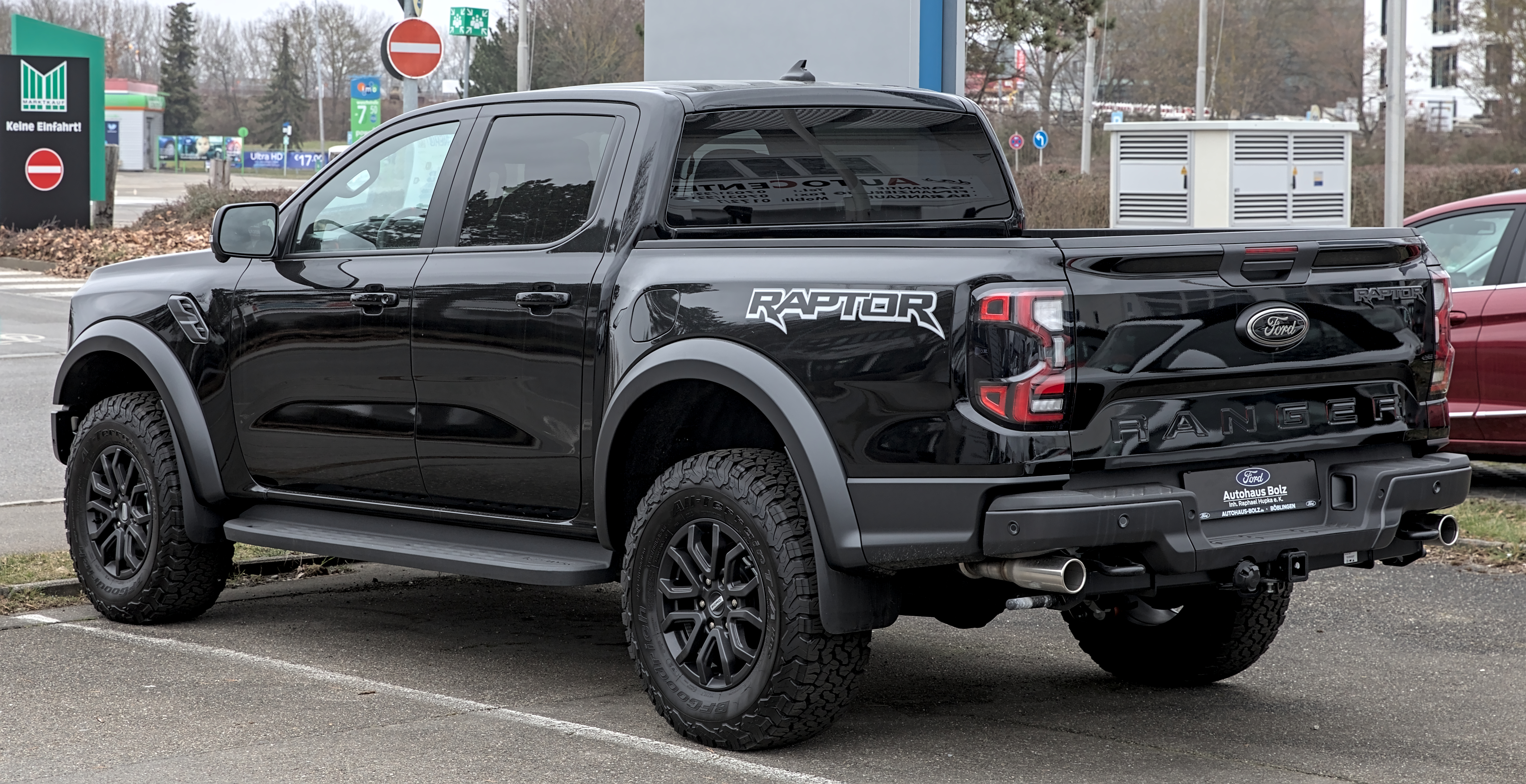
The Ford Ranger is a medium-sized truck that you can use for work or fun. It's smaller than big trucks but still strong enough to carry things and drive on rough roads.
The Jeep Wrangler is a famous car that can go off-road and has parts you can take off like the roof. Some newer versions that use batteries to help the engine have had problems with those batteries.
A recall happens when a car company finds a problem with their cars and asks people to bring them in to fix it for free. This can be because something is unsafe or broken.
If a car's engine gets very damaged, mechanics can take it apart and fix or replace many parts to make it work like new again. This is called an engine rebuild.
An over the air update means your car can get new software or fixes sent to it through the internet, so you don't have to take it to a shop to get it fixed.
The Lucid Air is a fancy electric car that can go very far on a single charge and drives really fast. It's made with the newest technology to make driving smooth and easy.
The Lucid Gravity is a new electric SUV that will be cheaper than some other fancy electric cars. It will be big and comfortable, with a strong battery to drive without gas.
LIVE
Speaker 1: Auto Line after Hours. It's brought to you by Alex Partners.
For more than forty years, we have helped companies and their stakeholders around the world harness opportunity, overcome challenges, and achieve outsized outcomes. Alex Partners when it really matters.
Speaker 2: He everybody, thanks for joining us on Outline after Hours.
Good afternoon, mister Gary Vassila, Alli John. I'm doing terrific.
I tell you that every week, but it's true, excellent.
Speaker 3: This is some someday may not be.
Speaker 4: But so let's let the audience know who else that we've got here.
Speaker 2: We've got Nora Eckert from Reuter's back by popular demand, and for the first time ever, we've got Liam Rapiley from the Detroit Free Press.
Speaker 4: Great to have the both of you here. Yeah, thanks
for having me.
Speaker 3: Happy to be here. Yeah, nailed the name.
Speaker 4: Yeah yeah, yeah, yeah, I know a funny steming too, spilled about it. Yeah yeah yeah right right.
Speaker 2: That's so we're starting this thing, per a should we get to that sho been uh and I got to look it up. One of you viewers out there suggested,
why don't we kick off every show talking about what we've been driving this week or recently, and so you want to start I started, how do you want to do this?
Speaker 4: Gary, I'll start, go We're glad you. So I've got
the Toyota Tacoma TRD double cab. It's a hybrid, which
is interesting.
Speaker 2: But this is this is remember when we had the chief engineer for the the Tacoma right.
Speaker 4: What was that three years ago? And we asked him
what about hybrids?
Speaker 5: And he was like no.
Speaker 4: So so, I mean this vehicle, you know, is a you know, sixty six thousand dollars toy for people who just want to beat the and this is after hours ship out of a VEW. I mean, it's just it's
just great. I mean it's fantastic. So you know, it's
got like fox shocks, It's got a rear diff skid play.
Is this the one with the seats with the with the that is one of the coolest things. So these
are seats that when you go over bumps that somehow they're able to with valving determined to keep.
Speaker 3: The gimble they had.
Speaker 2: It's not a gimbal. They have shock absorbers in the
back of the seat and they're like mountain bike shocks.
You know, you can even lock them if you want. Yeah,
and you can see them from the back side of the seat.
Speaker 4: You can't see him for the front side of the seat, and the front side of the seat's got this this really terrific fabric that you know, and it's it's just it's.
Speaker 3: Just an amazing vehicle.
Speaker 4: And so I was thinking about that, and then I was thinking about the show last week, when I was making the argument that OEMs may not want to spend a whole lot of money on racing programs because it's not good for their return on investment. Cadillac was the
poster child for my argument, and everyone else was arguing against me, including oh, yeah, okay time, I'm a motor racing fan. So so, so I happened to read two
things this week which go to my point. And this
is why, and Sean listened very carefully on this. This
is why I'm very positive about a certain type of racing that brings me to the.
Speaker 3: PRD Koma.
Speaker 4: So this is this is from the drive. And so
they spoke to Ford engineer and off road specialist Seth Gorlanski about driving in the Norro Mexican one thousand in Baja and he said, when we launched the Bronco.
Speaker 3: We showed up with.
Speaker 4: Obviously an unreleased product, it was still a prototype.
Speaker 3: Okay.
Speaker 4: Then he's thinking, okay, we're we're at this thing, but everybody can can drive on this Baja thing, you know, watorcycles, cars, vintage cars, new cars, on and on and on. So
he said that one of the issues when they're testing is, you know, like all the safety here that you have to have as an OEM to test for your drivers, and he said, I'll find it kind of fell in place and turely. When we're doing the high speed off
road validation, we're required to have fire suppression and the roll cage and the fixed back seats and the five points harnesses.
Speaker 3: Just in case of roll and continuings.
Speaker 4: Quote, We're looking at everything and we're like, wait a minute, we already have all the required safety equipment for doing this.
It's not an ex an additional expense. So it was
very convenient. So they've been taking the Bronco back to
the Baja one thousand to test to beat that right.
So Jim Farley had an interview with car and driver. Okay,
it's a great interview. I highly recommend people read this
and Farley, and this is quoting Farley. I'd say the
biggest surprise of Ford is the off road stuff. I
just never expected that it would turn into such a profitable, expansive brand image for us. Between the Broncos, the Raptors
and the Tremors. We can't make enough the stuff around
the world. Okay, that is.
Speaker 2: Where you go racing, and then you know, well look forged making stock Broncos to Baja to race and uh.
And they also just put in a full court press in the Dakar rally out in Saudi Arabia. They call
it the car more expensive though.
Speaker 4: That's yeah, that's you know, to go to the car, you've got to do a lot of logistics and it's time.
They spent a lot of money. But my point is
is that this is racing and it ends up with products that people can actually see and feel and touch, like that seat that's in that Tacoma out there. Like
when you look at those Fox shocks, you know you can see them.
Speaker 1: Right.
Speaker 4: So if somebody is to say, like you know, going back to the Ford example, when they're talking about the you know, the Universal EV platform, about like, oh, we used F one engineers for making it more aerodynamic. Well,
it's not going to look any more aerodynamic than anything else you're seeing out there, right.
Speaker 5: Oh dog, I think you're somewhere.
Speaker 4: Yeah.
Speaker 2: I don't agree, but I will say it's really good to hear you at least admit that there was some form of raising that's worthwhile doing. That's so I'm pleased, Nora.
What have you driven anything lately that's good or Yeah?
Speaker 5: So in the last month or so, I was in a bistic, calacistic and kind of opposite ram tungsten, which you were saying. I had that during a big snowstorm.
So that was a ram Tungsten.
Speaker 2: Tell us a little bit about that, because I'm not familiar with the name tungsten.
Speaker 4: Yeah.
Speaker 5: Yeah, Well we got in like the highest trim one and I mean I still am thinking about the weird massage seats.
Speaker 3: That are ridiculous.
Speaker 4: It was ridiculous in a RAM truck. It's the fifteen
top of the line. O guys, just yeah, So I
got how did you get in it? I mean with
a step storm?
Speaker 5: No, I never used the step No I did. I
had just vaulted myself in there with a pole. I
had to actually the step wouldn't go down because the snow was too high at one point, so that was kind of logistically difficult for me. I kind of to
pull up myself in, But I liked it. I was
surprised because, as I told you guys, I drive a smaller car, huge shocker for someone who's five to two.
But I really liked driving a truck.
Speaker 4: And what would you like about it?
Speaker 5: Yeah, I really felt like I was in command of the road, you know, as a smaller woman. That was
very nice. But also like the way that it got
through the snow, and that's such a practical thing around here.
But I really appreciated that and all of the nice little add ons, you know, the like sound system was wonderful, and we were saying, it doesn't take much to impress us with our daily drivers. But I really really liked it,
just a little bit about the vistic So I found myself to be missing car play, which I got in and immediately I was like, oh, let me connect, and I was looking for it and I thought, well, duck, Yeah, that's been the whole thing that they're not using car play.
But I never really thought that would be a huge deal.
I don't know if it is for you, but it was really it was tough for me. Like the whole
system was not very intuitive.
Speaker 4: So do you think this will be a generational problem that general wators will have maybe.
Speaker 5: Because do you feel like it's a problem for.
Speaker 2: You or now I would say it's going to be not so much generational.
Speaker 4: It's going to be a problem for anybody with an Apple iPhone. Right. It's you want that car play.
Speaker 5: But you probably get used to it over time. That's
the thing. I kept thinking when I was driving it
that I only have it for you know, a week, and so I think you probably get used to the system.
But it was just such a strong reminder of that.
That is, like the one thing that people always complain about is car play not working or not having car play.
Speaker 4: So yeah, how about you, Lilliam and anything interesting you've driven.
Speaker 6: The latest car I drove was the Charger six pack and it was that, you know, it was the high output, the scat pack, the whole thing. And we must have
been in the in a press car at the same time because I got it during that really intense storm exactly right, I know, I know, but I will say I think just because it is I mean, it's like a boat on wheels. It's it's a massive, heavy car.
I really I didn't slide much. It's on brand new tires.
I felt like I was safe enough. But I mean,
this was when it was like negative fifteen degrees out.
This car's got eighteen hundred miles on it or something.
And I get a check engine light and I you know, I'm I and I'm driving back from ann Arbor of all places, so you know, I'm I'm on ninety four coming back to Detroit in a in a five hundred and fifty horse power two door sedan like a coop that is, it's way too big. I'm horrified because it's
not my car. And the check engine light comes on,
and I'm I'm just like, I don't even.
Speaker 3: Know what to do. It's dark out, and so that
was really unpleasant.
Speaker 6: But I would I would assume that it was just you know that the cold temperature is a new car, the sensors, I'm not sure.
Speaker 4: I mean, I drove fine even with the light came on.
Speaker 3: I drove fine.
Speaker 6: Nothing sounded it was idling fine, you know, it was okay, but it was an abbreviated.
Speaker 3: Uh uh stay I got rid of it the next I I don't know. I I I hope that that
people don't get upset about this.
Speaker 6: I prefer the bev uh, just because that that car is absolutely ridiculous. I mean that that car is is
just the electric one, the electric one. Yeah, uh, it's
it's it's stupid. And maybe I was in a good way,
but maybe I was uh uh, you know, swooning for this car because when I got into the electric charger the Daytona, I was maybe two or three months into my job, and so I hadn't driven I had driven a hell Cat and like that was ridiculous, right, but I hadn't driven many cars, and so now I'm in this ridiculous ev uh. And so I had a lot
of fun with it. The the six pack, I think
it sounds good. I think it it. I think that
I think that the body looks great. Some people, well
it's sort of a you can't sit on the fence in terms of the body style of that car. But
I like it, and uh, you know, I thought it was impressive. But did it totally impressed me?
Speaker 3: I don't. I don't think so.
Speaker 6: I think I didn't really get to push it, right, I didn't launch it once because.
Speaker 4: There was no asphalt. It was all snow.
Speaker 3: Yeah, so I didn't. I didn't really really get to
drive it.
Speaker 6: So maybe maybe if I if I drove it again, I would be some donuts.
Speaker 4: All right, John notes your turn.
Speaker 2: Let's see, last week I've been in the Mazda c X ninety, this.
Speaker 4: Is their big three row suv.
Speaker 2: We've talked about this before, but this week I was in the p have version, the plug in and I gotta say I much prefer it in electric mode. You know,
we've talked about how well or I've certainly talked about how well Mazda synthesizes all parts of its cars, but the c X ninety and not so much. And this
is the gall will drive one, so you'ven got more drive train clunk involved in all that.
Speaker 4: But in electric mode, gosh, it's just great. It just
works well.
Speaker 2: But you know, they've got a switch on the console that you can pick sport motor, normal motor, offroad mode or EV mode. But I swear to god, I had
the hardest time getting this thing to go into EV mode.
And then once see, what I like to do is drive around town in EV mode. But if I'm going
on the freeway. You know, if you're going down the
freeway steady state, seventy miles an hour, it doesn't take much power to run a vehicle, honest to God, less than ten horse power, So the engine's actually operating at its most efficient. So I'm, you know, thinking from an
efficiency standpoint, I want the engine when I'm on the highway, not the battery. I couldn't get that. You know, as
much trouble as I had getting it to stay in EV mode, I could not get it to stay in ICE mode. It's like, what the hell is this? This
is you know, software stuff that I think Mazda hasn't figured out yet.
Speaker 5: Is it a bean or how do you switch between?
Speaker 2: It's just a switch on the console and they're on the instrument cluster it'll say sport no more normal EV all wheel drive. And it does not have an AXE
adapt an AXE plug in, so unless you have an adapter, you can't use y uh, it's a CCS plug, which is I suppose okay, But at this point in time, I thought everybody had switched over to NAX.
Speaker 4: So the better is like probably this big.
Speaker 2: It's not very big, and that's one of the things I do like about phebs because I can drive here in the morning plug it in other things. Uh. Fully
we got a lever level to charger here. It's fully
charged by lunchtime. You could you could drive here and
it would almost still be fully charged. So yeah, yeah, yeah,
I don't live far away, is true. But anyway, time
to get to the news of the week, right, and we got to start with Liam here because you cover Stilantes and they just spilled barrels of red ink all over the place today.
Speaker 6: Yes, yeah, for their first annual loss in company history.
They uh reported a big one, uh twenty six zero point three billion I think dollars.
Speaker 7: The real American dollars. You know, it's real money. Uh
that you as are real money too, Buchs. Twenty two
billion euros. That's I mean, that's still real money.
Speaker 1: Uh gone.
Speaker 6: And and that that to me is I mean, that's a that's that that is just a number that is hard to imagine. And it's it's the same story that
that Ford and GM are going through, which is that evs Uh. You know, they spend all this money investing
in it now wiping their hands with it total loss.
But what's interesting is that Stalantis's write down, which they reported earlier this month, was also twenty six billion dollars, which uh, you know, Ford reported about nineteen and a half that might have gone up to twenty by now, and GM said that it cost them about seven billion to sort of pivot away.
Speaker 2: I believe GM will announce yet more right down, you do that, That's what I believe.
Speaker 5: Haven't formally canceled any major programs.
Speaker 2: You know, Ford and the Stalanta's ripped the band aid off all at once, right, I think.
Speaker 4: Guh, this is my guess. We'll see what they reports.
I think there.
Speaker 5: I don't know, but yeah, it's true.
Speaker 6: And what's interesting to me, my colleague Jackie Cherniga wrote a great story about the fact that that.
Speaker 3: GM is still making an all.
Speaker 6: Electric pickup truck, two of them. Uh, and so you know,
who knows what they're going to do with that. It
seems like the industry is saying that that's not a viable product anymore. But they're full steam ahead, I guess.
But yeah, I mean, Slanta's wrote down about equal to Ford and GM combined on on EV's.
Speaker 4: But the thing that I understand is that, Okay, you know, you're up at two o'clock in the morning because it is a European company, right, Yes, And in Europe EVS are doing much better than they're doing here. So isn't
their investment in EV's paying off in other parts of the world?
Speaker 3: Right Well, and that's what's confusing.
Speaker 6: And I'm not so hawkish about Europe, right I write for a North American audience. I write for Detroit, so
so that's really where I'm an expert. But I will
say that that in Europe, and just sort of with their whole portfolio, is they like hybrids? Now that was
a very quick decision they made. And then it's the
it's the line that they hammer this freedom of choice thing, is that they like hybrids. So they've got the Cherokee
High Brid, and I think that there's a yes, the THEAT five hundred hybrid is something that they're touting as a great new vehicle. So uh, but yes, in Europe,
you would expect maybe some of this this They would be in a great position to leverage some of the research that they've done with the EVS. I mean, I
was just talking about a positive experience I had driving a stillant to TV.
Speaker 3: So it's.
Speaker 6: You know, it is interesting with with the European side of things because many of their nameplates, their European nameplates that are that are big names over there, also aren't performing exceptionally.
Speaker 2: Well, yeah, don't you think that explantas threw everything in the kitchen sync into this write off.
Speaker 4: It goes beyond just.
Speaker 3: Yes, yes it does. It does.
Speaker 6: And you know, they they throw in some of their strategic partnerships and they were interesting because they had signed on with Samsung and uh I think LG also, and they had all of these strategic partnerships. And there was
also the thing with Michelin and four of you to do the hydrogen car that they backed out of over the summer, and so you know, all of those things.
Speaker 3: I don't know if the four VIIa Michelin project was thrown in there.
Speaker 6: But warranty too wasn't and warranties, warranties were a massive cost to correct that all became part of this right off.
Speaker 4: Right, So what do you guys think happens to a company that okay, the partnerships like let's say LG or whomever you know, is let's say five years from now, they say, oh, we need to find a partner. You know, this,
this is how are these companies going to feel about partnering with them? Is this sort of poison the well
going forward?
Speaker 5: Oh? Like if Stillantis needs to partner or vice versa.
Isn't this just the way it is in Detroit?
Speaker 3: Detroit?
Speaker 2: I mean, this is an industry thing, right you know, yeah, yeah, no, go ahead.
Speaker 5: Like that's just business as usual. I don't know. I'm
sure there have been We've talked about examples where partnerships have worked in the past, but they're pretty rare, so I would think that I don't know. I didn't think
of it as poisoning the well. I just thought of
it as like the inevitable end of a lot of these agreements. But I don't know, what do you think?
Speaker 3: I sort of I think the same thing.
Speaker 6: I mean, I still believe that that these companies are going to have to produce evs at at a yeah, at a great clip if they want to remain viable businesses.
Speaker 3: And you know, they may not.
Speaker 6: Do that now or in the next three years or five years, but like you're saying, eventually, they're probably going to want a great contract with the supplier who makes good batteries, and.
Speaker 4: The suppliers will say, oh, we're playing data centers. We're
not interested in your right.
Speaker 6: I know, well, I mean that is a that's a great question that I don't know enough about to really speak eloquently. But but I do wonder about the sort
of reputational harm that this might cause.
Speaker 4: I think it all comes down to business.
Speaker 2: I think going forward, the LG's, the Thing Songs and the like of the world are going to go into joint ventures with eyes wide open, much more wide open than they had been a lot more circumspect. But if
they see a business plan and a chance to make money, they'll be back in right.
Speaker 3: But I'm just saying that if.
Speaker 4: Previously they had been more receptive to the bids such that they were able to say, we might eat some of this, you know, just just to get the business, and then suddenly they find themselves being thrown under the proverbial bus, like yeah, thanks, guys.
Speaker 2: Remember you know, the US government, until Trump came in, was paying what was the number forty five dollars subsidies.
Speaker 4: Per sell manufacturers. We right, so makes where you go
giant briary plants. Just imagine if they were giving money
to build emmis.
Speaker 5: That's maybe that it's something we don't come Yeah, but I mean aren't some of the battery makers using that that capacity now to produce for other partners. It's not
like they're totally oh yeah, no suppliers are.
Speaker 4: I'm just saying that if you know, if you're supplying Meta or you're supplying you know, some anthropic or something, and they're basically going to say, oh, you know, we'll pay you ten, and they're going to say, oh, we're making you know, seven from the car companies. And then
the car company comes back and says, oh, we've got this seven, we want to pay you and.
Speaker 3: They're like, no, we won eleven.
Speaker 4: Yeah, right for Yeah.
Speaker 2: So Nora, what do you think about going back to Stilantis the UAW workers not getting a profit sharing check?
Speaker 5: Yeah?
Speaker 2: Yeah.
Speaker 5: And Liam, you're more you're more keyed into this than I am. But I think like it probably was to
be expected when we saw that right off. But I mean,
can you break down how it's calculated? Because Ford had
you know, not not equal right off, but comparable, and they had pretty substantial profit sharing, So.
Speaker 3: Yes, they they out here. So I studied English. I
didn't study math.
Speaker 6: So I don't pretend, nor did I study finance, so I don't I don't pretend to know exactly how these.
Speaker 3: Numbers are are, how they calculate them.
Speaker 6: But I do know that that contractually, the profit sharing checks come from a number that that is or is similar to earnings before interest in taxes. So the eb
I C and that number for Stalantis, they're adjusted. Uh
profit loss was negative two billion. So when you take
out the massive, the right off, the massive right off, they still didn't make money. And so because that number
was was negative, these workers did not get paid off right.
Speaker 2: Right, So I know I can tell you the rough rule of thumb is that for every billion dollars in operating profit one of the Detroit three makes, each U a W worker gets roughly one thousand dollars. And so
when Stilantis adjusted number posted almost two billion dollars in losses, well, guess what, there's no profits to share, they.
Speaker 5: Charge the workers.
Speaker 4: So I mean they lost money the old fashioned way.
Speaker 2: They just lost as whereas Ford and GM, despite their their big ride offs, that's not counted as part of operating profit or you know, to your point, it's adjusted operating profit.
Speaker 4: So anyway, So getting into the way here, Okay, but how are these guys going to feel when you know, their next door neighbor who works for Ford and the other neighbor who works for GM they got the checks and they're sitting there without a check.
Speaker 5: Yeah, and I was even thinking of it, like, you know, Stillantis and the UAW have had a rocky relationship over the last few years. I mean it's been it's been
rocky with all the D three, but really Stillantis. You know,
there's that threatened strike back in twenty four, right, that was yeah, yeah, and so I don't know, I'm surprised we haven't heard from the union yet.
Speaker 3: Yeah, I mean they.
Speaker 6: Have been just sort of generally tight lipped outside of Chattanooga.
Of course, there was a great victory for them, but uh.
Speaker 3: Yeah, I mean, I but I guess at the end of the day, what can you.
Speaker 6: Say when when uh, the company makes.
Speaker 3: No profit, so there's no profit to share that other.
Speaker 5: Sean will say how much did pillows.
Speaker 3: And that's and that is a great question.
Speaker 5: Distribute some of that.
Speaker 2: But you know, but you know, there's a little bit of equal shared pain here in the sense that the board at Stalantis also declared no dividends this year, so shureholders are taking some pain here too. But I'd point out,
you know, it was just in twenty twenty three, I believe that the Stalantis workers made almost fourteen thousand dollars. Yeah,
and it was thousands or dollars more than the GM and four people.
Speaker 5: Yet.
Speaker 4: So I mean, this is what profit sharing's about.
Speaker 2: When when times are good, you know, you put on your bib and pull up a chair to the trough.
And when there's no profits, you know, you pull out your pockets empty them.
Speaker 4: So what did what did Felosa say about the future.
Speaker 3: He has?
Speaker 6: He has continued to call twenty twenty six the year of execution, right, and if you massage the numbers and look at it the right way, I mean their their vehicle shipments were up in the second half of twenty twenty five, so.
Speaker 3: They were they were moving cars.
Speaker 5: Uh.
Speaker 6: I mean, these people always have a way to take their numbers and throw these bullet points at the top of their press releases and say, look, look, look, things are okay. I think if you read some some of
the investors didn't sound quite as panicked as maybe some of these headlines might suggest but Felosa said, Stalanta's writ large, and I wouldn't be surprised if their strategic plan, which they're announcing in May, which is sort of rewriting this Dare forward thing, has something to do or says something about freedom of choice, because that is the refrain that in all of these uh uh, you know, press conferences and reveals and releases, that is the refrain that all of the CEOs of the of the brands are saying.
That's what they say, and you email for a statement about a random story and they're like, and.
Speaker 3: By the way, the freedom of choice.
Speaker 6: You can choose to get a gas guzzling car if you would like to, And so that really is what it is. He's saying that they're going to have a
great mix, you know, the company will return to profitability.
He's he's about that. I think after they did the
write off and announced the write off. I wasn't invited
to this, but they told some international media Felosa did that.
I believe that he expects twenty twenty six to be profitable again, and so you know, we'll see. He seems
incredibly optimistic. I think that people are still fond of
him and one thing that I've noticed that has changed in his tone a little bit, and maybe this is a company's tone. I mean, I don't know who writes
these things for him, is that in several of these statements he is pointing his finger directly at the former leadership.
He's saying basically, and he's not naming names, of course, but he's saying, this is Carlos Tavaris's fault.
Speaker 2: No, he's right, it is right. He took the golden
goose and broke it. I mean, and I say that
because you know, I keep pointing this out. Auburn Hills
accounted for sixty percent of the company's profits even though it accounted for forty percent of the sales. And what
did he do? He went in there. I'm like, oh,
your costs are too high. Outsource all this, lay these
people off. I mean, this is the operation that was
generating all the profit. And you know, as I like
to say, you don't go in there and start flashing and burning. Ask everybody how you can help them out
to make even more money.
Speaker 4: So freedom of choice. Mary Barra is now saying, we're
meeting the consumer where they are, and every GM person that was saying we're meeting the consumer where.
Speaker 3: They are, that's their okay.
Speaker 4: So apparently the consumer isn't in EBS, right.
Speaker 5: Yeah, at least in the US.
Speaker 6: Yeah.
Speaker 4: I mean, it's mystifying to me that these top executives at these companies just sort of came to the realization that, g wiz, maybe they don't like what we're trying to feed them.
Speaker 5: Right, right, But this is okay. This is a tricky
one because if you were in their shoes in twenty twenty two and you had Adam Jonas screaming at you about how you don't have enough EV investments, not screaming, but you know, saying strongly, like, I don't know, if you were in their shoes back then, would you have just not invested? Would you have had more of a bridge?
Like it's difficult for me looking back. You know what
information they had that we weren't privy to. It seems
so obvious now. But if the market did move that way, they.
Speaker 4: Would I agree with you.
Speaker 2: Wall Street's got a lot of blame to go along with this, But I still come back to government regulations that stipulated by twenty thirty, fifty percent of your sales had to be BEV. Two years later it was sixty
two percent had to be BEV and P have combined.
And even I'm an EV proponent, I was that's never going to happen, not in that timeframe. And so you
have and by the way, you miss it, you got billions and fines that you've got to pay.
Speaker 4: Okay, Meanwhile, everybody's bitching at Akio Toyota for dragging his heels and they're protesting outside of auto shows. You Knowyota
is not EV in the environmental crowd right right, nobody else there. Yeah, and because because basically, here's a company
that said, Okay, you know, we know we got to do that, but we're going to spread our bets, right, rather than going all in as as the Detroit Yeah did.
Speaker 5: So you're saying, what is it about?
Speaker 3: You have a I can do the same thing.
Speaker 2: But let's just for argument's sake, For argument's sake, say that Joe Biden didn't go snile and got reelected. Those
rags would still be in place, and Toyota would look like it's really dragging the seals and in trouble.
Speaker 5: Yeah, you don't think so.
Speaker 4: I think they build what was necessary to meet meet the requirements, they'd still be behind everybody. So well, and
these are a bunch of wet ifs.
Speaker 2: I mean, now you've got to deal with the reality as it is right now.
Speaker 4: And Toyota's very lucky.
Speaker 2: I would say that, uh, a Trump administration came in and scudded all those regulations.
Speaker 5: Well yeah, and how are we to say that, like in ten years, we won't be sitting here being like God, it's great that GM didn't pull out all their ed investments because now they're topping Tesla and I growing up.
Speaker 4: But you know, which I predict is exactly what's going to happen. Do you think I believe they're going to
come back?
Speaker 3: Yes?
Speaker 4: I do.
Speaker 5: We'll be making robots and yeah, yeah, so what if just carry us?
Speaker 4: We don't even need to do that really fast.
Speaker 5: That gets into the L four story.
Speaker 4: We need to get into that. We need to hear
what you've been reporting.
Speaker 2: But we also got to take a quick break because we're going to give a shout out to our great sponsor, alex Partners.
Speaker 8: The automotive and industrial sectors are undergoing a historic transformation electrification, digitalization, supply chain reinvention, regulatory shifts. The pace is accelerating and
the pressure to adapt is real. This is not a
time for hesitation. It's a time for bold decisions backed
by fast, effective execution. You need a partner who understands
complexity from factory floors to boardrooms and delivers measurable results.
That partner is Alex Partners when it really matters.
Speaker 4: All right, thanks for that, Alex Partners.
Speaker 2: And now you've been reporting on L three L four and bring us up to speed, because at least on the L three front, sounds like companies are starting to bail right.
Speaker 4: Yeah.
Speaker 5: And I should have brought this up when I mentioned driving the vistic because one of the main reasons I wanted to get into it was I hadn't tried supercrews in a long time, and I wanted to see how that L two plus system was evolving. Because the main
debate is if automaker should just really refine their L two offerings and then leap frog to L four because L three is so it's so pesky in terms of liability and like the technical difficulty of it and the cost and you know, I'm sure the audience knows this, but L three systems, the main differentiator is that you can take your eyes off the road, so when you're driving on your L two system, you can have your hands off, but you still need to be ready to engage.
And four GM and others are really betting that customers will pay for that capability. But there's a lot of
automakers like Mercedes that have tried it and realized that the capability is too limited. You can't really have expansive
use of this. You can have it on the highway,
I think Mercedes had. There's around like forty forty five
miles per hour cap which you know doesn't give you a lot of a lot of that.
Speaker 2: Even more, it is only legal in California and Nevada or something like that, and only on you know, certain roads, and so yeah, you'd spend all this money and if you lived in New York, you never got to use.
Speaker 5: It, no, right, And the main question is like if the driver cannot be considered the backup, So when you've got your fail safe systems, the general term like you need to have a backup for every system in the vehicle, and because the driver is not considered a backup, you need to build in all these redundant safety systems that add a lot of cost and like potential quality issues, and it's just a headache for the automakers. And the
business case for L four Robotaxi is a lot more promising robust, I guess compared to L three. So it's
interesting because GM and Ford are sticking with twenty twenty eight.
They're rolling THEIRS out, but see BMW take a step back, Mercedes take a step back, Tesla's focusing on Robotaxi. So
there seems to be a real split, and I'm skeptical customers will pay, as I am for most software's life.
Speaker 4: There's a possibility that Ford and General Motors may just say maybe not.
Speaker 5: They've never done that before, So I don't know.
Speaker 9: I think.
Speaker 5: Latitude no, GM Cruise, Yeah, I don't know. I don't know.
I mean yeah, I really have no insight there. They
just made these announcements, like Ford made THEIRS at CES that they were going to bring AL three to the UEV platform in twenty twenty eight, So it's possible when we get closer to that, they'll say, never mind, we're doing Alpha.
Speaker 4: Isn't it weird that that Ford is talking about doing it and it's times Will thirty thousand dollars vehicle. In general,
I'm going to be thirty in generally, yeah, we'll.
Speaker 3: Talk about that. Yeah, And in general, Motors is putting
it in.
Speaker 4: The Escalate IQ, which is like thirty. Yeah, and by
then it'll be like, you know, one hundred and eighty.
I mean, it's just it's insane. So, I mean, I
don't understand that.
Speaker 5: Yeah, and for decline. So when we reported on that story,
Ford declined to say that it would be on their thirty thousand dollars pickup. They said it'll be on the platform.
So let's say they bring out, you know, a more expensive model, even on the affordable platform, that might be a more likely first home for L three. But still
let's say, like it's a fifty thousand dollars model that's a lot less than the Cadillac alternatives. So I don't know,
I'm really skeptical about how viable these systems are because I'm not sure if like that translates into a lot more value for the driver being able to take your eyes off. I mean, I'm curious what you all think
about that.
Speaker 4: I'm checking your stock prices, yeah, looking for your profit share.
I love hands free. I can only imagine eyes free
is even that much better. The thing I like to
drive me at all much?
Speaker 6: Car?
Speaker 4: Do you like to drive?
Speaker 3: I'm not going go traffic? Okay, well.
Speaker 4: I'm talking about That's what I'm talking about. Or there's
times where I'm driving and it's.
Speaker 2: Like, oh, there's there's a nice rural scene and the things starts saying driver not paying attention, blah blah blah, and it's like, no, I want to look at that and that that those are the Yeah, drive a fifteen year old car, that's right, that's right, Yeah, no warnings.
Speaker 4: Right, So you know, speaking of fort I don't want I don't want to pick on them.
Speaker 3: But but I.
Speaker 4: Said a nice thing about Farley earlier, okay, in about the bron go ahead barrel No no, no no.
Speaker 3: So you're you're talking earlier about the p have you were just driving?
Speaker 4: Yeah, and you know long behold Ford announced three calls of twenty twenty three, twenty twenty five Escape pe Haves and mable are twenty twenty three twenty twenty six Corse Air, Lincoln Course Air Peas. Okay, so it's it's a problem
that has to do with the battery. Okay, then today
we had four point three million F two fifties, F one fifties expeditions, Mavericks, Ranger E Transit, and Lincoln Navigators twenty twenty one through twenty twenty six for a software glitch.
So the future is electric and software defined vehicles, and Ford is recalling massive numbers of them.
Speaker 2: What's going on, John Well? Number one? Let's start with
the pheabs. That's a supplier problem. Those batteries are from
Samsung SDI Remember Jeep Wrangler. Pheabs had all kinds of
battery problems, same supplier, same plant.
Speaker 3: The second you said Samsung, I was gonna ask about that.
Speaker 2: Right, Remember oud E KQW five A seven P have all kinds of problems batteries catching fire, same battery, same plant.
Speaker 4: So it's a supply problem in this point, sounds like it's a purchasing department. No, what I problem.
Speaker 2: I'll tell you what I think it is, because I've talked to battery experts about this, not for this particular one, but the key to getting a battery plant profitable is you have to get the yield over ninety percent. Once
you get over ninety percent, now a battery plant starts to make money and.
Speaker 4: To try to push to get that yield.
Speaker 2: It sounds like Samsung push to get that yield before the batteries. This is in this case, these batteries for
Jeep Audi. It's a manufacturing defect that caused all that.
So I'm not sure what is that?
Speaker 4: What does that do for the owner of the Lincoln Course, Sereny sitting there, it goes yeah, yeah, those No, it's a problem. They blame it on the people you buy
it from.
Speaker 5: I know, I've been thinking about this a lot this morning because with the four and a half million vehicle recall, the fix there was an over the year update, which you know, and I'm also a supplier issue too that one, because you saw Stillantis how a recall two days ago with the same sort of issue. But you know, whether
it's a supplier, whether you can fix it with an Ota, it still damages Ford's reputation. But we were talking, you know,
it's they have seen improvements. All give them their flowers
an initial quality, which is, you know, the metric that they really care about, like the first ninety ish days of ownership. But you know, some of these vehicles were
twenty twenty six model year, so they're pretty fresh.
Speaker 4: Brandow fresh out.
Speaker 5: But anyway, they've been seeing some promising improvements, they say, but it's such a tough thing. And Farley has been
talking about this since he became CEO in twenty twenty and sort of almost phrased it like, this is a historical problem, this is a new a new page for us, and it's.
Speaker 2: I dug up some numbers because I did to follow right up with what you're saying. I started digging into
warranty and recall costs for I looked at GM, Fordstlantis and Toyota. There's more data out there. That's all I
had the time to get to you. So, since Farley
became CEO of Ford, Ford's warranty and recall costs have gone up forty five percent, which is massive. GMS have
gone up sixty four percent. Toyota's have gone up one
hundred and ten percent in the same window, in the same well the same timeframe.
Speaker 4: But this is this is from a different base, a different base. But last year, so if you had, if
you had like zero in the right one.
Speaker 2: Last year, Toyota spent five point three billion dollars on recalls and warranty, same as General Motors. Five point three billion.
Ford was five point seven billion. So now Toyota makes
more cars, right than GM. So but still it's spending,
and Stillantis was the worst they're spending. They haven't posted
the latest numbers yet, but if you go back to the twenty twenty four numbers, Stella's recalls and warranty was six point two billion, substantially higher than Ford and over one hundred percent more than it was in twenty twenty one.
So I'm seeing forty five percent, sixty four percent, one hundred percent, one hundred and ten percent. There's an industry
problem with this. This is not an isolated thing, and
I'm not sure what's causing it. Cars are clearly getting
more complicated, and and a.
Speaker 4: Lot of it goes to software.
Speaker 2: To your point, Gary, because what I find interesting is we know Ford had way more recalls last year than General Motors.
Speaker 4: A record, a record one hundred and fifty three, right, yes, but Ford first all records.
Speaker 2: Yeah, but Ford's getting to your point. Ford's warranty costs
and recall costs drop almost ten percent last year. GMS
went up nineteen percent last year, and so Ford's having more recalls. But there's a lot of over the year
update reflexh but GM's got engine problems where the engine's got to be completely rebuilt or replaced and it's a big expense.
Speaker 4: Well but I mean, you know, you made the point of the reputational cost, right, which is not reflected in any of those numbers, and that becomes I think the bigger challenge that if you're out there saying, oh, you know, we've got this brand new technology, it is fantastic, and then somebody says, but wait a minute.
Speaker 3: You know I had this twenty.
Speaker 4: Twenty four car and you recall it because of the software problem or the battery problem. I mean it's just
like that costs a lot of money to convince that person.
Speaker 2: Right, No, no, no, you're absolutely right. But I just wonder,
you know, does anybody care if it's an over the year software fixed for a recall. I mean you get
to notice and it's like, oh, this isn't good, but the car is fixed, Hey whatever.
Speaker 5: I think that's better than going to a dealer. Oh yeah,
I mean, I don't know. It is a messaging problem
for them. This is the issue because I agree that
like we shouldn't view a recall equals this recall it's not like a one to one to one. If you
have an engine problem versus like a software which you can fix with an over there, over the air update, that's not a safety critical issue. Yeah, because Yeah, to
your point about how the number of issues has proliferated or the number of recalls, I really struggle to understand if that means quality is actually declining or if it's just like, as we're rolling out new software, this is bound to happen. And there's also the component of Barley
has said it's gonna get worse before it gets better, which I know is a convenient thing if you're the CEO to say, you know, you're gonna be seeing a lot more recalls under me, but that means everything's working.
But giving him the benefit of the doubt, like if you are flushing out, you know, the bad stuff in your system, you're gonna get more issues. But yeah, how
you make sense of that noise is tough, but it means like quality as a whole is well.
Speaker 2: When I see, you know, I only looked at four companies, and when I see these dramatic increases in the cost of recalls and warranty, it's like, Okay, something's going on here.
It's not just one company's problems. It's an industry wide problem.
And I would guess, you know, what's changed. We're seeing
a lot more safety technology in cars. We're seeing definitely
a lot more software being used in cars, you know, without having you know, the inside information that the car companies have. I've got a guess it's cars are just
getting more complicated.
Speaker 4: Well, funnily enough, I have the JD Power twenty twenty six US Vehicle Dependability Study which came up to you two weeks ago, and it says persistent problems with infotainment systems, spotty performance of over the euro up things, and issues with vehicle exteriors have driven long term dependability problems to new hides. You know. It's just you know, and it's
you know. Speaking of the over the air updates, it
says receiving updates is now a routine experience for many owners, with forty percent saying they received a software update in the past twelve months in the last year. Right, Okay,
how many updates we've gotten our phones in the last twelve months, right, It's just like a ridiculous number of those owners, only twenty seven percent say the update improved their vehicle, while fifty eight percent say they perceived no noticeable difference. More than half sixty three percent of the
software updates were performed OTA and resulted in a nearly fourteen percent increase in problems this year.
Speaker 3: Wow.
Speaker 6: Well, it reminds me of the GPF They sent out an over the air update that just bricked a bunch of comments.
Speaker 3: Yeah, and you know, it wasn't.
Speaker 6: A recall fix or anything.
Speaker 3: It was just like, oh, we're gonna update the system your car stet. Yeah. I don't know.
Speaker 6: I think I am sort of prone to believe in trusting you that that it is just these things.
Speaker 3: Are more complicated. Uh.
Speaker 6: And also what you're saying is that they're breaking these test tubes in public right there. This is they can't
sit on the technology for ten years and you know, decide if it's if it's reliable enough at the rate that the industry especially was going with with battery technologies in these electrified cars.
Speaker 3: Uh, I think that.
Speaker 6: I think the urgency at which they got them out they're paying the price for right now in several ways.
Speaker 3: But this is one of them.
Speaker 4: So, so do you feel more reticent now knowing these sorts of things about the possibility of level three vehicle that you're driving with your.
Speaker 3: Hands off and your eyes off.
Speaker 10: Don't worry, right, yeah, yeah, I mean that know, but that is a good point, right, I mean, technology in any situation is sort of prone to these growing pains, and we don't see them immediately, and you don't see them all at once.
Speaker 6: But I think I think you're right, and for that reason, I will still drive my car and stop and go traffic.
Speaker 4: Yes, right, fuir enough.
Speaker 2: I think part of the problem relates to the fact that legacy auto makers still learn all that good at software.
Speaker 4: I mean, even Tesla, which is, you know, the bleeding edge when it.
Speaker 2: Comes to software and cars, has has had software glitches, but most of it's been fixed with over the year updates.
But when you send out and I love your example, thear Liam, when you send out an Ota and you brick the vehicle, somebody didn't do the testing properly.
Speaker 4: I mean, and when you when.
Speaker 2: You test it, you have to test it with the consumer's usage in mind, not the engineer. You know, when
an engineer tests anything, the engineer will test it exactly how The book says that you should do it, and what you should really be doing is all the wrong things.
You should not trust it in the proper way, you should not use the thing in the proper way. You
should think of every stupid, idiotic way something could be done wrong and test it that way, because that's what's going to happen in the hands of the consumer.
Speaker 3: Proverbial edge cases.
Speaker 4: The car we've talked about on the show just a couple of weeks ago, the Wobo X thirty, Yeah, twenty three of them have been recalled battery was it. Yeah,
it's so they're telling the consumers to limit their charging to just seventy percent and park their cars away from buildings.
Speaker 5: Want you never want to park out?
Speaker 4: Who supply their battery? You know?
Speaker 3: It was a company I'd never heard of before.
Speaker 4: I mean it was not a brand name interesting well brand named some Chinese or Chinese okay Albos owned.
Speaker 2: By yeah Jelie, right, but I didn't know if they were getting their batteries out of Europe.
Speaker 5: So, but.
Speaker 4: The thing, the thing that we talked about, the limited range of the Vomo e x thirty. Now just imagine
they're saying charge it to seventy percent and when it's cold, like it's been here. You know, you're getting so it's like,
you know, drive around the block.
Speaker 3: Well again this is not by the way but away from the building.
Speaker 5: Yeah, enjoy your frigid walk into your home. Yeah.
Speaker 4: So again, So the question becomes, you know, what do things like this do to consumers? You know, you're talking
about EVS at some point in the future. I mean,
is this going to be something that is going to be sticking with them? Like, oh, I heard about that
that didn't work very well? Right, and maybe I want
that twenty fourth fourteen, super right.
Speaker 6: I I sort of wonder I would love to see a really large sample size of a survey that just sort of judged the like current pulse of customer sentiment about EV's because I think that we have maybe, just in common parlance, over corrected for how people feel about EV's, Right, because it was just maybe eighteen months ago that we were having these conversations about And I wasn't an automotive reporter at the time, so maybe I'm off base, but it seemed to me that many conversations about EV's were like, yeah,
I think, you know, maybe I'll buy one car, I'll have I'll have a three year lease and then they'll try it. Right, Like, it seemed like most people were
ready to sort of accept them. And now that the
companies themselves are not really trying to say evs are the future and you ought to buy one, it feels like in an instant we evaporated all of the potential interest that was there. And so I don't know in
terms of timeline how long it will be, especially if a lot of these products are just less reliable. I
mean that is that's such an attractive feature to a potential buyer, is a reliable car. I think it's among
the most desirable traits that you have, right will go shopping, especially you know, people who aren't these these enthusiast drivers out six banks, right, So yeah, I mean I don't know.
Speaker 3: How that will perform. I think that is the great
question right now.
Speaker 4: What do you think?
Speaker 5: It's such a messaging challenge for the automakers? I really
because you just never know like what will stick with the customer and what will resonate. And there's there's probably
just like some bs that sticks in people's minds about oh I saw this about an ev or you know, like it's sort of like autonomy. One fatal crash cuts
out all of the hundreds or thousands of lives you may have save with that system, you know, with EV's, it's like one fire, you know, And it's a challenge as a reporter because like those are the newsworthy things we cover, But you can't quantify all the cases where you know, an EV's battery hasn't gown up. But I don't,
I don't know. I do feel like this gets back
to a question I know we've discussed before, which just like where does the US market go from here? Because
what's driving it? And we asked Mary Barrow this question too,
and you know she said, it's just our internal compass as a company. But what is that Is that vision
for you know, environmental concerns for the future, is it cost concerns, is it we don't want to be bested by China concerns?
Speaker 4: I don't know.
Speaker 5: I don't know what our like EV compass is right now as an industry. It's not make money, It's for sure.
That's not a yeah. I think no, no, I think
you put the you know you thumb right on the issue right there. It's like what do you do right now?
And I think it's going to vary by automakers. So
Too has come out and said.
Speaker 2: Look, one out of three of our customers wants an electric car. Essentially said the same thing. You know, a
third of our our customer base wants an electric So I think there's still a lot of people out there who want electric who have not had one. They're still
waiting for the right one at the right price, and they want to see more public charging stations. But I
still say this Ford UEV is going to be really something significant to watch. We know that General Motors is
working on low cost ones, and.
Speaker 5: Gary, you've already said enough about.
Speaker 2: Look I watch what happened in Germany when two years ago they yanked all the EV subsidies and sales took a nosedive, and within two years they were back to where they were before all the subsidies got yanked. I
don't think it's going to happen that quickly in the US, but I do believe their sales will go back to where they were, which was about one point three million one point four million, even without subsidies.
Speaker 4: And one key thing to watch, just a.
Speaker 2: Real quick interjection here, there's three hundred thousand evs coming off lease this year, and so watch how the sales of those go because they're going to be available dirt cheap.
Speaker 9: They're dirt cheap, people buy them, right.
Speaker 4: So it's like, but because of what you're saying, is are they going to be marrid.
Speaker 3: I'm saying is an economic decision.
Speaker 4: So basically they're just saying, Oh, if I buy this Subaru that has an internal combustion boxer engine in it, it's going to cost me this. But if I buy
this used two or three year old electric, it's going to cost me this.
Speaker 3: By this one, it's cheaper, right, even with.
Speaker 5: The charging variable. You think that'll affordability will win out.
Speaker 2: Yeah, I think it will for consumers who are like, look, I'm going to charge it home and I'm not giving long to keep strang just going back and forth to work, you know, And then here's what I can get an almost brand new car.
Speaker 3: For plug it into them. It doesn't matter, you know
what I mean.
Speaker 4: It's get you get a good, good charge first and then just yeah, good to go. You know, you take
a trip, you take this, you know super much? Right,
bad example one out of three, but again low base in terms of what you're starting with in terms of sales over all sales of super.
Speaker 2: Yeah, very small, No, I hear you. I just threw
them out as an example. Hondas has one out of
three of theirs wants one. You know, as we've talked
about on the show, what was it, twenty seven to twenty eight percent of all Cadillacs sold last year were electric.
So you're you're you're getting close to that thirty percent number, and what's.
Speaker 4: What's gonna happen when you hit thirty percent? You talking
about ten percent was a tipping point? It doesn't say that.
Speaker 2: Well, yeah, for Cadillac. I would say Cadillacs at the
tipping point. There's certain brands that are doing a good
job of selling.
Speaker 4: So so if we if we were to look, unfortunately I don't have it with me, but if we were to look at Cadillac sales right now, I would speculate that the normal, normal escalade is floating the boat m okay, yes, And then there's the X T five, the XT six yes okay, And those are the only that are not electric as well. Correct, everything else is electric? Right, It's
a least stick the stick I Q another one, thank you? Yeah, yeah,
So somebody goes in the Cadillac dealer. What are the
odds doing to come up with an electric vehicle? Probably
pretty good because they have a hell lot of choice.
Speaker 5: For anything else and they have the money to spend.
Speaker 3: I know, it's like I want to buy it.
Speaker 4: It's like, Okay, I don't want to I a giant suv and I don't want to buy a sports Dan.
Speaker 3: I want to get I want to get an suv.
I want to get the mid sized suv. What do
you got?
Speaker 4: You got freedom of choice? Baby? Yeah? At Stilantis, all right, So,
so Lucid is eliminating twelve percent of its white color workers, not as factory people, it's white color workers twelve percent.
Aston Martin is getting rid of twenty percent across the board. Okay, Now,
Lucid makes expensive.
Speaker 9: Evs, right, wonderful, Lucid Air magnificent, get afford it, and even the Lucid Gravity, which was going to be more affordable, is way upstude.
Speaker 4: So then you look at it at Aston, which you know makes nose bleed expensive cars.
Speaker 3: What's this a sign of John? Ah?
Speaker 2: Yeah, I don't know. Off the top of my head.
I'll just say though, Aston Martin. How much money has
Lawrence Stroll put into that company? And he he you know,
he said, Oh, we're gonna do all this great stuff.
We're gonna race, you know, we're going to solve more cars than Ferrari and.
Speaker 4: And none of it has happened. None of it. And
his Formula one racing team, he's ford, you know, so much money into that and uh they're not very good. Uh.
Speaker 2: All I can say is might might take away Gary, this automotive business is really hard to do.
Speaker 5: M hm, yeah, because is that a symptom of these luxury vehicles aren't selling in the in the at the clip that we expected. I don't know. It's hard because
could that just be a sign of like two companies that are having company specific problems. You know, Lucid wasn't
exactly like having smooth sailing before these these cuts.
Speaker 4: I don't know.
Speaker 5: Do you think it's in a four D ability question?
Look at Catillac sales. I know those aren't as expensive
as Lucid, but.
Speaker 2: Well, you know, when you look at Lucid, to Gary's point, very expensive car Sadan. They should have launched with the suv.
They launched with the Sedan. Uh, they'd probably be looking
better if they had launched with the suv'ilt. They've built
a plant in Saudi Arabia. They can't even fill the
plant that they've got here in the United States, not even close. I mean it's a fraction of its capacity
utilization being used. And they've got this plant in Saudi Arabia.
Why because it's all Saudi money that's propping up the company, and the Saudis wanted a plant, but they don't need it.
And so you've got investors insisting that this is how you have to run the company. Whereas anybody who really
knew anything about selling, especially uber luxury cars, you know, you got to be the Ferrari way. You always sell
fewer cars. You build fewer cars than there are demand
for and then there is demand for it. And and
I think Aston made that horrific mistake. It had all
these grandiose ideas of how much money they were going to make.
Speaker 4: Uh, they've invested in all these new.
Speaker 2: Models, and now the bills are coming due and the sales aren't fair.
Speaker 3: I hate when that happens. All right, but the final
question for you guys.
Speaker 4: Okay, so we had the State of the Union address earlier this week, and the auto industry wasn't talked about much. No,
it wasn't talked about at all. He just said car
prices are down.
Speaker 3: That was it. But that was like in a list of.
Speaker 5: Things, gas prices or car prices.
Speaker 4: He said, prices are down. But then but the gas prices,
I will quote this one is now below two thirty a gallon in most states, and in some places it's a dollar ninety nine a gallon.
Speaker 9: Yeah, maybe at marl Lago gallon.
Speaker 4: I checked the triple A state by state. No place
is it two thirty a gallon? None? On my way
over here, same yeah, I know it would have been yeah, you know.
Speaker 2: Uh, presidents have no clue what's going on in the real world of everyday people, right. I remember if you
go back to George Bush, the first somebody asked him, what's a loaf of bread cost?
Speaker 4: And no idea, none whatsoever.
Speaker 2: Because when you're president, everybody does everything for you. You know,
your your chauffeurd everywhere, your choppered places. Apparently the president
has not seen the gas station signs that have got the price of a gallon of gas, because your.
Speaker 4: Point, he's just he's not pumping gas. But it just
surprises me that the industry did not get more attention. Okay,
he was at the Rouge plant right last month?
Speaker 3: Right is he?
Speaker 4: Is he still fuming because he was flipped off by the U a W worker? How does how does the
UAW talk about that? Uh?
Speaker 6: That that has that has been a really interesting story the U a W is. At first, they were very
tight lipped about it because I sort of feel like they weren't sure what was going to happen with him too, and I think that they were prepared to respond loudly had he lost his job, but he didn't, which which they celebrated as a win and then sort of were quiet about before conference in DC. But to answer the
real question here, I'm not sure why why he didn't mention the auto industry, because it has been something that that he has been able to point to in his own way and and call it a win. When you
have companies bringing investments and jobs back to American auto plans, there are you know, there's there's there are plenty of different critiques that you could make about that, but but largely he said, we are going to impose tariffs to bring jobs, automotive job back to the United States. He
did that, and in companies behaved accordingly. I mean he
even had Sean Fain, who is I often very clear and very loud critic of Trump, saying look this, I mean, we do like these pointed auto tariffs.
Speaker 3: This was the president of euaw for yes, thank you, And you would think that he would celebrate that, right he had said before that was you.
Speaker 6: Sean Faine called me and said that I was the smartest guy, the best guy, you know, the biggest genius, and he loves me, and that that would be something that he could cast as a win for himself. And
I was surprised he didn't.
Speaker 4: He might have, but there might have.
Speaker 2: I think if Trump had come out and said, look at all the great things that I'm doing for the auto industry, they would have all we in the media would have pointed out, here's the billions of dollars they lotched on the tariffs. Here's the mega billions of dollars
they had to write off on evs because you yanked the rugout from under them. And oh, by the way,
automotive manufacturing employment declined the last year, and so maybe.
Speaker 3: You just talked about it.
Speaker 2: Yeah, but what I'm getting at speech writer. Let's not
talk about all.
Speaker 4: You know, you can make up some prices of.
Speaker 5: Speech.
Speaker 3: But he did. He did do that when when he
said that the average.
Speaker 6: Vehicle transaction price was was nearing fifty thousand dollars under Joe Biden. Because he did it, he's brought it way
down when that happened a few months after Trump took office, So he does like to do that.
Speaker 3: You know, what do you think about that?
Speaker 5: I feel like autos has gotten enough airtime from him already.
Speaker 4: You know.
Speaker 5: I didn't read into it, and yeah, you know, I think it's gotten a disproportion amount of Trump words over the years. So maybe this was an evening out. But no,
I don't think he's I think if his messaging during the Detroit visit that was a month ago, I don't think anything's. The write downs all happened before then, right.
I guess GM's was after earlier.
Speaker 3: This month's too.
Speaker 4: Oh that's right.
Speaker 5: Yeah, maybe that did play. That was just this month.
Speaker 4: Yeah, yeah, I didn't.
Speaker 5: I didn't read into it. Maybe I should have. Maybe
that automotive worker had a little more power then they flipped them off than we knew.
Speaker 3: He's got a lot of cash to throw around. Yeah,
they did go fund me for him.
Speaker 6: Yeah, he made more than eight hundred thousand dollars I think, yeah, which makes me want to.
Speaker 5: Go early.
Speaker 2: Well, hey look we should wrap it up, but nor Eckert lean rapidly.
Speaker 4: Great to have you guys on the show. Really enjoyed
Speaker 2: And we'll do it again next week. And we want
to thank all of you for having tuned in.
Speaker 1: Auto Line After Hours is brought to you by ALEX Partners.
For more than forty years, we have helped companies and their stakeholders around the world harness opportunity, overcome challenges, and achieve outsized outcomes. ALEX Partners when it really matters,
About this episode
The discussion kicks off with hosts sharing recent driving experiences, highlighting vehicles like the Toyota Tacoma hybrid with innovative seat shocks and the Ram Tungsten with luxury features. They explore the value of racing programs, especially off-road events like Baja and Dakar, as platforms for developing practical, visible tech. The conversation also touches on challenges with in-car tech, such as the absence of Apple CarPlay in some models. Guests share insights on driving large vehicles in harsh weather and debate the appeal of muscle cars versus electric versions. The episode blends personal stories with industry perspectives on product development and quality.