The Lowe's close-out event means the final savings of the season are here.
It's your last chance to get deals on seasonal decor, tools, flooring, and so much more.
Refresh your home, check off your project list, or simply stock up on the brands you trust.
Shop now to grab amazing deals before they're gone.
Lowe's, we help, you save.
Valor through 1-7, selection varies by location, while supplies last.
If you're the purchasing manager at a manufacturing plant, you know having a trusted partner makes
all the difference.
That's why hands down, you count on Granger for auto-reordering.
With on-time restocks, your team will have the cut-resistant gloves they need at the
start of their shift.
And you can end your day knowing they've got safety well in hand.
Call 1-800-GRANGER, click Granger.com, or just stop by.
Granger for the ones who get it done.
Every team, every topic, everywhere, this is Belize.
Hello, welcome to the Shifton Steer podcast.
We're down a man.
We lost one of our good pals, Fred.
I mean, he's not gone forever.
He's just gone today.
We lose him permanently.
We just lost him temporarily.
We lost him to AI.
We lost him to, I don't know, probably some work thing, sometimes after work.
So it's you and me.
Yeah.
And we're going to wing it today off the cuff, off the sleeve, off the shoulder, the brim.
What's going on in your world, driving some cars, moving some stuff, selling a house?
Well, I'm parked.
I'm just finishing up another painting.
I did a couple this week.
Really put the time in.
I did one for the, what used to be the peak-to-peak rally in Colorado, which is most of the
group that we have at our Napa 750 event, they come to see us in Napa.
So they're doing their Colorado event.
So I did their charity cover, which I think Thursday is its wrap.
So the client and generous client will get his painting and they'll raffle off the next
one or auction off the next one for next year, which I'll do.
So like ours, I do the painting that was auctioned for the year before.
So they get the cover of the next year's rally and then they get the painting, the
original.
So that's really fun.
18x24 acrylic on canvas.
That one was tough because my references were kind of like, oh, let's do it under the arch
with my car.
And then I have to find the angles and the lighting and just find stuff online that's
not always clear.
And it was a Z06, a 2506 Corvette, which I gotta say, man, I have a newfound appreciation.
You know, whenever you get a car, you wash it, right?
Because your hands are physically on the body of the car and you feel all the
contours and lines.
Well, for me, yeah, I do it that way too, but if I'm doing it as a painting or an illustration,
I get to know those lines in the same manner and I get to know how light and shadow affect
those lines.
And that car is gorgeous and really complicated.
I had a really, really hard time painting that car.
In fact, I criticize that it's not my best work, mostly because the references are
all over the place and it's hard.
They always look a little wonky.
But yeah, the body lines on that car are really complicated.
And then this one, I think, is a Z06, maybe a generation that I'm doing now, which I sent
you and Brad last night.
I'm really happy with that one.
The photographer, proper lighting, great background.
I condensed a lot of things, so I took away some of the stuff that was in there
to simplify it and brought the mountain line down so it's in the frame.
I did some things, made some changes.
And I warmed the painting because the photograph reference was very blue, it was very cool.
So I warmed this one up so it's more inviting, but really, really happy with it.
I love doing this stuff, just love doing this stuff.
But yeah, that corvette is really complicated.
There's a lot of little subtle changes in the body lines, little details in the whole
nose of the way the vents come in and the way the little fins fold into each other.
And boy, you get those in some off-lighting and they get really complicated.
Yeah, a cool car though.
I like the car a lot.
Which kind of reminds me, the new C8 Corvettes, only the Z06 and the ZR1.
So if you picture it, it's rear-mid engine and there's big intakes behind the door.
And on the Z06 and the ZR1, there's an additional fan in there to cool it.
And the body line.
So one of the references I had was a ZR1.
And I don't know if it was a different body kit.
It had that submersion in the hood, that big cavity, and then it had some extra little intakes
on the shoulders.
Yeah.
It had some extra lines on it and it was really cool.
And I'm like, man, this thing is really cool.
On the new cars, the fuel filler is above, is in the rear fender, rear quarter, above
that vent.
Yeah, exactly.
And one of the differences is you go to the gas station, you turn your car off, but those
fans continue to run.
And when you're filling it with fuel, it sucks fumes in the hot engine and it starts a fire
and it burns your car to the ground.
Oh, jeez.
A slight little flaw on the new Z06 and ZR1.
I don't know how many have burnt so far, but GM is still working on a fix for that
because.
Wow, that is gnarly.
Yeah, I don't know what the fix is going to be.
They talked about doing some sort of like flapper or something in there that would divert the
fumes.
Yeah.
In my head, I was like, what they probably needed was a fan, that fan that stays on,
a cutoff switch triggered to the fuel door.
So if you park your car, the fan goes, but if you pop the fuel door open, it shuts
it down or even reverses itself, blows out just to make sure fumes don't get in.
Yeah.
Yeah.
You know, the evap systems are so complicated and there's so many points of failure.
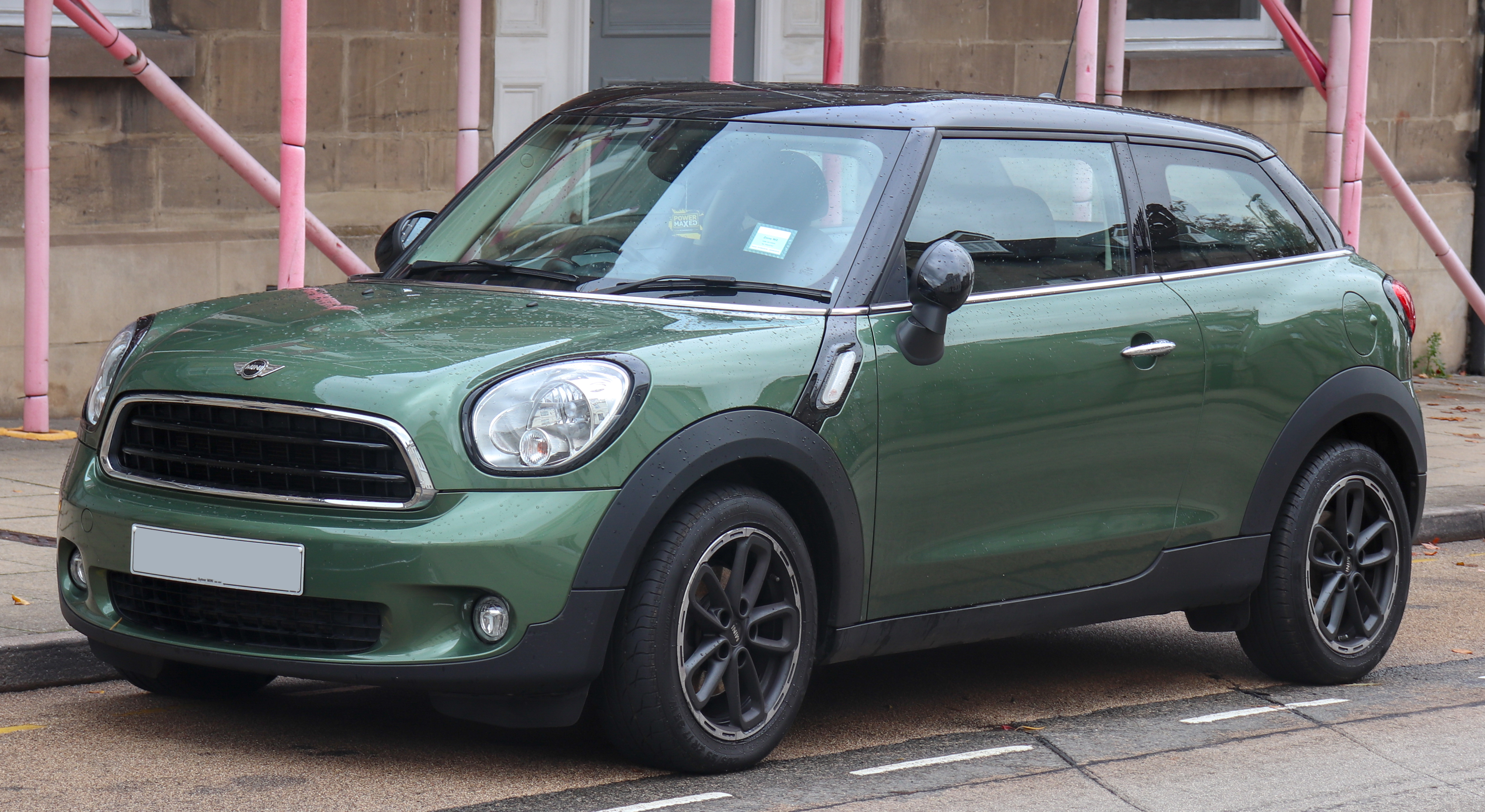
When we had that little Mini Cooper Paceman, I replaced that entire system twice at almost
$4,000 a pop and it was a nightmare and we had a problem with my mom's Jeep passing
smog because of two little tiny tubes.
There was like eight tubes that went around to different filters and different things for
my mom's Jeep, which is 20 years old already.
I mean, just, yeah, just the evap system is such a nightmare.
It's like, yeah, OK, so now it's sucking in gas fumes and starting a fire.
It's just like, what the hell?
Just something they just didn't think about.
Just something overlooked.
And then you don't.
Yeah, just it's it's amazing to me that coming without without operation.
Today, it's just like the amount of testing, the amount of R&D and engineering that goes
into vehicles and how complex they are.
And we still miss little things like that.
You miss those scenarios, those real life scenarios.
Yeah, I think that's a design flaw.
This isn't like, yeah, there's a recall because there's a water pump failure
and they trace it to a supplier that used like a cheap Chinese bearing or something
or a plastic impeller.
That's what a lot of recalls are, right?
Like the flaw in a supplier part.
This is a straight up design flaw.
Yeah, big time.
That they didn't think about.
It's a real life design flaw.
Like, like you may not realize it until it hits real life.
And then all of a sudden it's like, well, wait a minute, we did not see that coming.
Because when we tested ours, the fans never came on because, you know, we fuel them in
a different way than people would normally on the street and, you know, who knows.
They test them in the wind.
Yeah.
You know, when they designed this.
You can fuel them in the wind tunnel.
It never mattered.
Yeah, when they did the C8, which doesn't have the additional fan, it was not an
issue.
Right.
Right.
When they started doing the high-performance variants, which they knew they were going
to do the high-performance variants, but they probably didn't get down to the
fine details like additional cooling that was necessary for fans or how it would go on or
stay on.
Well, the cooling might have been an afterthought, so it was an addition to the end of the design
run and that they probably didn't get to test enough to realize that it would suck
in gas fuel.
I mean, for sure, the team that's going, we need additional cooling and the fan is
to be on a timer that's controlled by temperature.
So if you're doing a track day and you stop the car, it can run the fans.
And then never once were they going, worrying about the fuel tank, worrying about the
fuel filler.
Their focus is just all on the racing components and the cooling of the components.
So yeah, I don't mind.
Slightly overlooked.
Well, here's my big question, Matt.
So if that was an AI thing, so let's say AI has taken someone's job and it's now
AI's job to think of all this stuff.
Would AI have thought about that?
Because doesn't AI need real world input and doesn't it need, does it just figure out that
stuff?
It doesn't live in the real world.
How would it know something?
It doesn't.
But I think AI, it's tough to say in this scenario, but AI may look at something like
the fuel filler and go, what is this?
Yeah.
This is an anomaly.
Like what is this for?
And then what questions do we ask about what this is?
Because if you're designing the fender and the fan, if you did that initially in some
sort of CAD design and said, here's the fender, here's the fan, here's the intake.
And then presumably AI looked at it and studied what it was.
And then somebody walked in and said, where's the fuel filler?
You didn't add that to the design because the cars have that.
And the guy who's designing the cooling system is like, no, this is the shape of the fender.
Like, okay, but now here's the coolant.
Here's the fuel filler.
Here's the fuel filler tube that goes to the fuel tank.
Then AI would go, what is that that you just changed on the design?
So that's presumably what AI would do.
Would ask these questions.
So to see that there's a conflict, but not know exactly what that is.
Right.
It doesn't know what it's for.
It doesn't know what it is because that information hasn't been inputted.
But you change the design and it goes, well, what is this?
So presumably that's what, you know, what it would be.
It's like, I don't know, it's like when I put it, when, when, like this morning when I tried
to hide medicine in my dog's breakfast and he's like, what is this?
This is an anomaly in my breakfast.
I'm not sure what's going on here when I eat around this.
Yeah.
But see, if you get a big enough piece of flat turkey and you, and you origami
wrap it, he never gets to it by the time he swallows it.
That's that's what we do.
That's what we do three times a day.
I, I was doing another podcast this morning and I was doing it with Goldberg.
We were talking about his Cobra project that he's put in together.
Yeah, he's been working on that a while.
And he has, they finally got the body on it.
So it was a big day like yesterday and it's getting closer to being fired up.
And we were talking about just the little like satisfaction you get in
completing that task either for the day or, or, or whatever.
But it's just like, you know, he was just got jammed up trying to drill
the hole through the frame to add a support and was breaking bits.
And it was just like, I don't know why drilling one hole took three hours.
And just like, you know, we tried to step it, tried regular bit.
Like, and then I said, but I know, but when you finally got it done,
it's just fresh and you're like, thank God it's done.
I feel better.
You can go to bed at night going, at least I knocked that off my checklist.
Right. And he's like, yes, a hundred percent.
So I went down to the, the in my parking garage here,
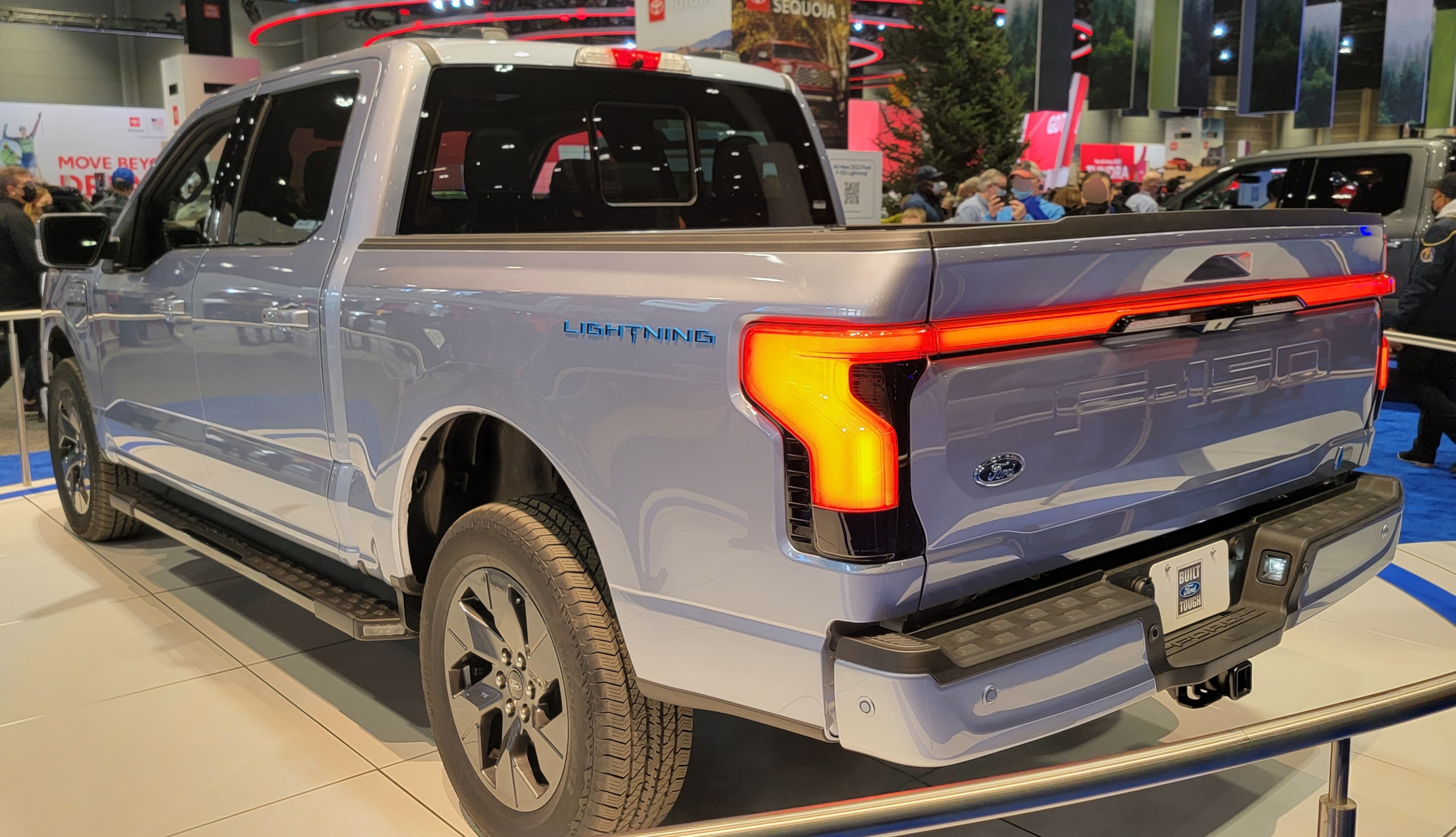
because I don't have the warehouse anymore, is my 95 Lightning, my Ford truck.
And it's kind of been sitting there since, I don't know,
since before SEMA last year, right?
Roughly, you know, almost a year.
So it's a little dirty.
And I knew it had some issues.
It doesn't run right.
It doesn't start well.
So I started like tackling the issues.
I got to go one at a time.
So it's dark down there.
It's in an underground parking garage.
Luckily, there's nobody parked next to me.
I was like, I'm going to replace the starter.
And I was like, you know, there's plenty of videos of people
replacing starters on YouTube, but I don't know if anybody's done it
on this particular truck.
So I'm going to give it a shot.
And and I haven't done money.
You know, of all the videos we put up on YouTube,
I haven't done like an installation video like this.
So I was like, oh, let's see if I can film it.
I picked the wrong thing to.
Oh, no. Because, you know,
if I was like under the hood doing like a distributor or something,
which I'm going to have to do next, sure,
I could put the phone somewhere and I can get the tripod.
But I'm going under the truck and trying to get a starter.
So like trying to hold like there's a lot of this.
Yeah, there's a lot of like fingers up clothes and trying to hold the phone
and get a bolt out and not drop the starter on my face.
And, you know, it's just kind of dark and echoey.
So I'm going to put the video up
just so you guys can see how shitty it is.
But I need to come up with the plan.
And then Goldberg pointed out to me.
I was like, you're trying to document as much in your car.
I was like, you got the Cobra, the body's off.
It's easy to film, right?
He's like, no, he's like, you're under it quite a bit.
And and this isn't a plug for product.
He just mentioned this.
He's like, I got the meta glasses.
Yes, I was just telling my wife about them.
Yeah, he got the glasses, the first generation.
Yeah, and it only records like two minutes at a time.
But what I was doing was like, all right, here's the bolt.
This is where you remove it, unscrew it.
And then that's the end of the video, right?
Then I do another clip, like I removed the bolt.
It's coming out.
And it makes sense.
It's right on your phone.
And I was like, oh, that's a super smart idea.
Not only could I have used those to I don't have them,
but if I got them, use those to record while I'm working with two hands.
But also I wasn't wearing eye projection.
And I got all the shit in my eyes from underneath that truck.
Doesn't make sense.
And I was just like picking all this grease and crap out of my face out of my eyes.
I was like, so I definitely it was amateur hour,
which I documented and I will put on YouTube to see
how flawed this is.
Did you actually fix those?
It does a start better.
I did. And talk about that sense of accomplishment.
Yes, I put the starter in, hooked up the battery
and then started it right up.
It worked perfectly.
I didn't hear weird noises and wasn't like the gear wasn't engaging correctly.
And it shimmed properly next.
And then, you know, I didn't have to do that.
So I used a newer power master starter.
And that gear or is it a full?
It's not, but it's but it's a high torque.
It is definitely high torque.
Only because I'm I'm I still have the other engine
that I'm going to be building for it.
And it's, you know, it's super charged and it's got a lot more power.
I want to make sure it was a good starter for it.
So I was going to wait until that engine was done.
But now that I don't have the warehouse,
like, I don't know when that engine is going to be done.
I can't really work on it.
It's in a storage unit.
I got to figure it all out at some point.
And I was like, well, I the starters
been sitting in the front seat of this truck.
So for for months for like a year, basically.
So I might as well put it in because it needs a starter.
It's not that the truck wouldn't start.
But it's like, if you if you start it up
and you go to the grocery store, then it won't start
because it's got a heat in this.
Oh, the starter solenoid and stuff.
Yes. So it's just with a couple of vehicles.
That sucks. Yeah.
So like I the last time I drove,
it was just to get some gas in it.
And then I was like, ah, fucking thing won't start.
And I'm a line behind me.
And this is like, I just don't want to be that.
So I wanted to get a decent starter in it.
But the Power Master one.
Before you put the starter in, there's, you know,
there's a mounting plate.
There's two screws.
It's pretty easy to do.
But that plate, which is nice about it,
is is there's two flush mount torx heads, T 25s.
You can loosen them and then you can rotate that plate.
Oh, yeah. Yeah. Right.
So I put the starter in and I was like,
it's tough to get this bolt in.
And it's like the clearance was fine,
but it was tough to get a bolt in.
And I was like, I just loosen them,
turn the plate a little bit, both goes in easily.
Still, the starter doesn't hit the transmission,
doesn't hit the exhaust, plenty of clearance.
You can't adjust it when it's on the vehicle
because you're hiding the screws.
When you bolt it up,
the screws basically face the flywheel, right?
So you kind of what you do is loosen them a little bit,
put the starter on, clock it to where you want it,
hit it with a Sharpie, right?
Put a little line on it, take it out, line it up,
tighten those two screws and then install the starter.
Super easy.
And because when I first put it in and I was like,
this bolt won't go in and maybe I need a shorter bolt.
And I was like, that seems weird.
Do I want to use a shorter bolt that I got to go buy one?
I was like, oh, stupid me.
I could just turn it.
I could just clock the mounting plate,
clock the face of this thing.
So that made it super easy.
And now I've got a brand new, like, high torque starter
that I'm sure built way better than any reconditioned piece of junk
I'm going to find at an auto parts store.
There is an advantage of working on the trucks.
Now, in the video, and I mentioned this in the video,
I did jack up the side of the truck
because the truck's lowered a little bit
and I wanted a little bit more room to, like, film.
But the reality is, is if this thing died in a parking lot,
I could get some tools, throw down a towel or a piece of cardboard
and change it in a parking lot.
The upside to a truck.
Yeah, that's the Jeep for something.
And I'm like, man, I got, like, I have to reach.
Yeah, right.
Like, there's plenty of room under here.
You know, this is a Mustang or something,
and I'm trying to get underneath it like it's never going to happen.
Yeah, the Mini Cooper.
I can't get your head low enough to look under there.
There's a cool tool that I came across recently.
I was thinking of getting would have served you well.
So imagine, imagine if you needed a Torx head
or a socket or something, and this looks like a
it looks like a wrench.
It looks like a racket, a ratchet wrench, right?
But on one end, it's connected to the other end.
So you put your your it's basically a remote wrench.
So so it has a socket end.
You put a socket on or you put a Torx head on
like whatever you want, you know, quarter fitting or whatever.
And then on the other end, you would use the ratchet arm
or you would use your your your drill or you would use your, you know,
and if you turn that, it turns the other end.
So so getting into things that are are difficult to get to,
you can kind of remote it with something that's relatively flat
with just that extra inch or so of a socket or whatever tool you needed.
Enough clearance to get that in.
And then you can tighten it from the other end of that.
Pretty, pretty cool.
Instead of using like a socket remote, you know, an arm
with a with a with a swivel head or something, you know,
never quite get the right angle to get it torqued.
This seems like you could and you could use a power tool
and just rip through it. Yeah.
Sounds like you might have been able to use something like that.
It's smart. It's smart.
And you know, I was I was thinking about another tool, man.
Like a smart thing was we were looking at Goldberg's Cobra
and it's got like an Ernie Elliott NASCAR engine
and it's like 800 horsepower.
That's the whole point of this thing.
It was the L. It's built it for him.
He's he's rebuilt it.
It was a long time ago.
So it's really all about the engine.
He's like when he first got it, he was like,
just put the engine in the stupidest thing you can think of.
And they're like, oh, let's put it into Cobra.
Nineteen hundred pounds or something.
But that engine is jam packed in there.
And this was really smart.
I thought about this.
He showed this to me from the top of the engine compartment.
You could barely even see the spark plugs.
It's so tight in the frame, the steering shaft, throttle linkage.
You can't do it, especially on the driver's side,
where all of those components are, right?
Steering column and all that stuff.
You can't get to any of it.
But if you go in the car under the dash,
the tunnel that's next to you where, you know,
expands for the for the for the bell housing
on the side of the tunnel, there's a plate.
You remove the plate
and you can get to the spark plugs
and the spark plug wires right there.
Yes. Super smart, super easy.
Yeah. I was like, oh my God, that's the best idea.
I didn't think about that at the time.
Now, the engine's kind of set back, right?
Because in the Cobra, the firewalls kind of move forward.
You know, so you're you're getting,
I don't know if you get all four of them on the driver's side,
but you get three of the four of them.
And then the the one that's toward the front of the engine,
that one's probably pretty easy to get to from under the hood.
But yeah, super smart.
Yeah, that's really smart.
You know, it's funny how these solutions that we see now,
whether we're just more mature and have more experience
or whether life has changed and we see life differently in general,
like magnets, like, like I see, I see, you know,
I came from the world of filmmaking and prosthetic makeup.
And I mean, nowadays, they're using magnets
to hold on accessories on the home latex appliance
or on the silicone appliance.
Superheroes have some little goggles.
Yeah, they're they're just there's magnets in the facial appliance
and the cheeks and the brows and nose bridge.
And it just clips on with magnets.
It's like so many things have magnets.
Like magnets have been around since the beginning of time
when iron polarized, you know, and all of a sudden it's like, OK,
so we're using magnets for everything now.
What? Like, why now?
Why didn't we use magnets all these years ago?
Like, how new is this idea of magnets?
You know, interesting that you mentioned that.
Oh, let's put a hole here so we can access something.
That makes a lot of sense.
I'm I'm I'm still since I was 15.
I'm still a car audio enthusiast.
But every car I've had, I've ended up holding a system in first thing.
And magnets now like custom
interiors, door panels being attached,
subwoofer boxes with trim plates.
Yeah, all the both holes or you're doing some sort
of clear, like acrylic and rear lighting magnets
are holding on all of these pieces.
Right. Great.
Because now you have trim pieces that you don't see any of the bolts
that can be fully upholstered and then you can pop it off to get
to like the adjustments of your of your DSP or just to the wiring or fuses.
And yeah, it's it's super cool.
But you're right. So simple.
Why were you printing like, oh, wow, since 3D printing came along.
There's so much we can do.
No, magnets, magnets, magnets.
I I did a I did a box, a subwoofer box in a BMW years ago,
and we made a nice trim plate for it.
And at the time, I was like, oh, it just was just Velcro it on.
Right. And it was Velcro.
That was the that was the thing.
But it was just like now it's like magnets.
It's so much cleaner, so funny.
And the magnets, if you do them correctly, if you use the magnet buttons and stuff,
it's self aligning, right?
So like it's it's so much better.
Like, you know, in the the Velcro, it's like we put the trim piece on.
And if you pull it off, then some of it doesn't stick.
And so now the Velcro is all on one side and you have to.
Well, you know, the trick to Velcro is stapling it on.
Staple it on like you got to staple it on.
That's a recent thing.
As of 10 years ago, you started stapling the Velcro on.
I'm with you 100 percent magnets.
Oh, my God.
Accessal.
That's what I was doing.
My mock held on by magnets.
I we were doing the mock one a couple years ago and we ended up.
Showing it at SEMA without speaker grills in the door
so we can show off the the new speakers that were in it.
But the plan was to do a speaker grill with magnets.
So at any point, you can just pop it off and pop it on itself, aligning again.
You could do different events.
You mean you could show like one door with this grills on the other door
with the grills off so you can kind of show what it looks like on and off.
But I didn't end up doing it that way.
But that was the plan originally.
But yeah, now magnets aren't always the answer and to something
that's that has features where where where the magnetic field
could affect something like welding, you know, a lot a lot of things
we have for welding are held together with magnets.
So you have a welding table, which is steel, and and you have steel
that you're working on.
And so you have a right angle magnet or something or a little
arm magnet that that's holding on the two pieces together.
And you're and you're you're you're TIG welding, you know,
you it can actually pull the puddle towards the magnet or to repel it
away from the magnet.
So I have had instances where where the magnetic field heavily affects
what I'm doing.
And I would think that in speakers, depending on the power
and how close that cover was and how strong those rare earth magnets can be,
I would be curious if it would affect any of the way the magnet works.
You they're small.
They're flat.
They're like barely smaller than like the little flat
batteries like 2032 like a watch battery.
Yeah, yeah.
Bare earth magnets.
Yeah, yeah.
Yeah, they're small.
Yeah, anyway, we let's let's let's just take a quick break.
And then we'll be right back and think about magnets.
Yeah.
Yeah.
OK, OK, enough about magnets, enough about magnets,
not about magnets.
So so dad calls me the other day.
Yeah, I'm in the middle of painting.
Yeah, dude, man, I'm in Dana Point.
I'm driving the new Ferrari.
He goes, he goes, how do I just the mirrors?
And then he goes, how do you put it in park?
And I'm like, you know what?
I had a problem putting it in part two.
I think if you just turn it off in gear, it goes into park mode,
but there's no park button.
And so I said, well, the way I was doing it is you pull the levers
into neutral and then you set the parking brake.
And when you set the button for the parking brake,
which is down on the left side of the, you know, the round
where your knee is. Yeah.
It's a little goes and on the screen, it says car wash mode.
So I'm like, so that's probably not the way to set it out the way.
How are you doing while the car's running?
I said, I would just I would just shut it off.
I think then you can set the parking brake.
But yeah, this new tech, it's just that car is kind of the epitome
of new tech, but in a not so.
I know it doesn't seem very intuitive.
I mean, as I drove it more and more that day,
things, I got used to things and they seemed a little bit more intuitive.
But like, like to change the mirrors,
you know, you tap left or right mirror and then there's a little swipe.
And I said, Dad, you can either tap in the direction you want to go
or you just swipe it.
I said, I didn't quite figure that out.
Tapping it seemed to be janky and the swiping.
It's such a narrow area to swipe.
It's kind of hard to do it in a straight line unless your hand is aligned
to go in that direction naturally.
I said, it's a little weird.
So maybe just try reaching out it and swiping it, you know, like this way.
Yeah.
And anyway, he goes, oh, yeah, yeah, OK, OK, I got it.
I got it.
Because see, I set the mirrors so I could just see a little bit of the fender
just so I kind of know where I am.
Yeah. Dad doesn't like any fenders in the mirrors,
which I find mind blowing because you don't have a point of reference.
Yeah, no, I got to have a little bit of fender.
I'm with you. He's like, I'm in the car.
I don't need a point of reference.
I just need to know what I can't see.
I'm like, OK, I get it.
But don't you want a little bit of fender to know where they are in relation to you?
He's like, no, no, no, no.
So he likes the mirrors turned out because we're about the same height,
same size, same, same reach.
So I figured where I'm sitting is probably a good place for him to start.
So I said, I put I put myself on number three.
On your on your on the preset on the preset memory settings.
I said, so, you know, if Kari's going to drive it, she can do two and you'll be one.
But start with three and then and then, you know, you should be pretty close.
He's like, I got to change a mirror.
But the ebra thing is kind of puzzling because
because Misha's little Porsche, you know, she has the 992 Porsche.
One thing bugs me, the mirrors, the light stays on.
So you know how you tap one and it lights up to show you which mirror
and then you tap the other.
Well, it always stays on.
So it's either driver's side or passenger side that bugs me.
But but it's like I'm always nervous to to to just stop the car
because it does have a clutch, but it's just no pedal, right?
So it's one of those the PDK.
So it's like, do I have to put the brake on?
Does it just go into park?
Because sometimes it feels like it rolls a little further than I want it to.
Like I'll park up to the trailer to like to the nose of the trailer.
And I'm like, oh, I got plenty of room.
And then and then I stopped the car and it rolls forward a lot.
And then I get out.
I'm like, oh, I'm like three inches from the trailer.
And Misha always sets the parking brake.
And then it's like, do I have to?
Do I have to turn it off when I drive?
Sometimes I swear it does it by itself.
I don't like these electronics.
So I just want to jerk up a lever and just know it's on or off.
I think most of the electronic e-brakes, it's like if you leave the brake on,
but you start moving the car under power, drive or reverse, it usually disengages it.
Yeah, there you go. Yeah.
Even my truck does as well.
But you're right, some of this technology doesn't.
It's not consistent.
No. So I drove the new Lincoln Navigator, which is gorgeous, by the way.
And in tears, it's gorgeous.
It's it's gorgeous interior.
It ran great, did everything right.
But yeah, I got into it.
It gets a press car.
So I got into it.
I look at the door panel on the left, no controls for mirrors.
And I'm sitting there going, oh, now I got to figure this out.
And I think I think dad dad's is on the dash on his pure song.
It's on the dash next to that.
This is on the steering wheel controls.
Oh, really?
Your wheel controls because they're multifunction, they're not labeled.
So what you put your thumb on it on the screen, it act.
It shows you what it's going to do.
A menu comes up. Oh, God.
Right. And then you you select mirror and then you adjust it.
And then it's weird.
And then the other thing that I didn't like now that I could live with.
Like once I figured it out, I set my mirrors.
Like you said, you set your preset.
Somebody else sets the preset in a press car.
It's a little weird.
But every time I am in the car, I have wind blowing on me.
I have air blowing on me.
Right. And it drives Tammy nuts.
So every time she gets in a car, the first thing she does is the air vents.
She flicks them away.
She just flicks them up or flicks them away.
And because she knows we're not going to win this battle.
Yeah. Like she's like, if she turns the air off, I'm going to turn it back on.
So she just flicks them away.
She gets in the Lincoln and she's like, what's wrong with these air vents?
They're they're not moving. Where's the thing?
And I go, oh, it's in the menu.
It's in the menu and they're electric.
They're powered and and they're the only option.
You have to like go to the AC menu, go to the AC vent menu.
And then you pick, do you want the air blowing on you
or do you want it blowing away from you?
And and that's it.
You hit the button, all the air vents move.
You hit another button, all the air vents move.
I was like, Matt, who wants these like you don't need that.
You don't want these features.
Oh, my God.
Isn't the car supposed to be your safe place?
The car is supposed to be a place where, oh, I'm in my car now.
Like I can do anything.
I don't know about you, but I don't feel was at home in a car anymore.
I feel like a foreign body in there.
And it's it's interesting that you mentioned that because the point
of that system was so you can take the navigator, park it and hit
like I forgot what it's called.
I keep forgetting the name, but it's like a spa mode.
And you hit it, it leans the car back.
It plays like spa music and it massages your back.
And it goes through this whole thing that you're doing.
And that's why the air vents are electric, right?
And so you can relax.
And I was like, explain this to me.
And I think so Jim Farley was explaining, although we don't
sell a lot of big vehicles like in China, that that is a luxury vehicle there.
And it's not uncommon.
I guess I don't know their culture, but I guess it's not uncommon in that culture
that has fun when you get home from work before you get into the house
and fuss with the kids and the dinner.
Like you can take 10 minutes, 15 minutes to relax.
So they specifically made this like spa mode, this relaxation mode.
You come home from work, you hit that button for 15 minutes,
you kind of decompress, get a little back massage and then go in and
and and and, you know, live the rest of your life.
I guess. Wow.
Cool feature, good technology.
But I was like, these air vents are frustrating
because I don't know how often I'm going to use this.
It's like three steps into the menu.
But anyway, that's nitpicking that thing
because it's a gorgeous vehicle and it seemed to work great.
That's hilarious.
Well, I'll tell you what what what JDM doesn't have those features
that I'm obsessed with right now are these AutoZam AC ones.
Are you familiar with those?
Are those the ones with the doors that go straight up?
They're a micro car.
They're made by Mazda.
I think they have a little Suzuki three cylinder motor in them.
But look it up.
Nineteen ninety five AutoZam AC one.
I've seen the car.
Yeah, it's it's it's getting into a YouTube craze now that the guys
that DriftWorks, I believe it's DriftWorks in Ireland,
did the F 40 conversion to one for one of their big events out there.
And now Stradman is is he just got one to do to do an F 40 conversion to
Liberty Walk makes it like a twenty seven thousand dollar body kit for these.
But I got to say, I've always liked these and and I'm obsessed with these
little micro cars and stuff, you know, these little K cars or key cars.
And I've been wanting to get one of these.
They've gone up quite a bit.
You used to be able to get them for nothing.
I think you can register them now being a ninety five in California.
But but right now they're in the mid twenties.
But but this one I should send you a link to this one.
This one in particular is in Virginia and it's black and it has the rally
lights in the middle.
And they're I think they're cool, man.
I would love to have one of these, but I guarantee you.
Yeah, yeah.
This is the Liberty Walk little F 40 body kit version.
I mean, come on, it's it's it's pretty fun.
You have to use real Ferrari tail lights and you have to use real Ferrari
front glass, supposedly.
There's a few parts that that you have to use that the guys,
the guys in Ireland had a real hard time getting wheels on that thing.
They had to do a lot of cutting and a lot of modifying.
It's so tiny.
But it really is.
But they are they are wicked cool.
And you know me and my weird car madness.
I I am after one of these things.
If they don't keep going up.
Look, if you did one of these, you can't call it an F 40.
You've got to call it F quarter one slash four, one fourth.
It's an F one.
It's an F point point two five.
Yeah, it's got to be the F quarter.
Isn't that fun, though?
But but but that's the customized one that the regular.
Yeah, I think they're neat that the ones with the with the rally lights
in the middle, so there's four lights.
I really like those that there's a black one for sale in Virginia.
Like I said, that's that's they're pretty cool.
I don't know if I get some extra play money.
I might have to find one of those.
But you know what doesn't have 80 horsepower like it can't be a sixty
five, maybe I think it has sixty five horsepower.
Yeah, yeah, they're they're it's it's not a it's it's it's a it's a
torquey car because it's it's so light.
You know, they weigh less than two thousand pounds, I believe.
They're very light.
So, you know, the power to weight ratio makes it makes it, you know,
OK, I don't think they they have much of a top speed.
Yeah, but but they're just weird and quirky and fun.
I mean, look at that.
How can you not just have fun?
But they're small, like like that's a small car.
Oh, yeah, it's half the height.
I mean, it comes up to the to the bottom of the window on most vehicles.
The roof line comes up to the bottom of your side window.
Yeah, I guess right to the shoulder.
It's it's it's small, but super cute.
The thing about these cars, there's still a handful of cars
that I'd really like to experience.
The problem is they're getting miles on them now.
So like like I still would love to have an alpha 4C
and I see them in the marketplace.
I found one for 30 grand with no miles on it and no damage.
And and I've seen them for 60 grand with with with the same condition in the 4C.
No, and I'm I'm really, really want to experience them.
But by the time I can get one, I think that they're going to have miles.
You know, the 4C it's fun to drive.
But it's it's pretty minimalist.
Get minimal. Yeah, it's it's loud.
It's bumpy.
It's hard to get in and out of. Perfect.
Ideal, I guess.
Broad Arrow had one of these little auto zam AZ one.
Aren't they fun?
Look at that.
It's all the couple of years ago for twenty two thousand.
Yeah. Yeah. At auction at auction in Monterey.
Yeah. So that's what I mean.
So 20 in the 20s used to be the high end.
Of these things.
And now it's kind of the middle like like the middle 20s is like middle ground for these.
I saw one for forty five thousand dollars that's pretty tricked out.
But, you know, and I've seen them as low as like 18.
So I think anything less than that is going to be too much of a project
with hard to find parts.
But, you know, mid 20s, I don't know, I could do a couple more paintings and maybe
a couple, couple more paintings, a few more paintings.
I wonder, like, have you dug into, like, are they reliable?
Do they work? What kind of issues?
Like, obviously, they don't make it anymore.
So ultimately with some sort of failure.
But why? Is it because nobody wanted them or because they're junk?
Yeah. No, I don't have to look into that.
That they're just these quirky little cars.
People do some upgrades to the cooling.
People do some upgrades to the turbo.
People do some upgrades to electrical
because they have a little tiny battery.
But it's a three cylinder motorcycle engine.
You know, it's it's it's a it's a motorcycle engine.
But it's it's, you know, they're they're basic little cars.
They're, I don't know, it's kind of like a Mazda Miata, I guess.
They're they're I would have I would think they're pretty reliable.
The things that go wrong, I would think are probably the struts on those doors.
Maybe the latching system from being, you know, from from being closed from four feet away.
I'm sure there's little quirks, but other than that, it's it's it's just little, you know,
stuff I would think that little trim pieces and things like that could break and miss.
And but the rest of it's pretty pretty solid, you know, mechanic wise.
It's a Mazda, man.
Mazda slash Zuki.
I don't know that much can go wrong.
You know, like my my Alfa Romeo spider as I was driving that around,
you know, it had some bugs and break.
But but just the overall design, I had to like try to improve upon some things.
It had air, but there's no real grill on the front of that thing.
It you could never get get air, you know,
flowing to the AC condenser or anything like that.
So it's like, if you're sitting in traffic, the AC doesn't work.
So I I I'd put aftermarket fans on the AC condenser, right?
Just so we can get some air flowing through it to improve, you know, to improve
the improve the coughing of the old lady with a cough drop in her mouth.
Yeah, basically to get the AC to work as you'd be dying in that car.
But yeah, but but those little things like that.
Yeah, but that's a really good example of of a car that that's kind of
timeless in its origin.
So from from the fifties to the nineties, when they stop making
that Alfa, let's let's say the Alfa Romeo spider, the Veloci, whatever you want to call it.
Yeah, and my later one is like ninety two.
OK, yeah. So so into the nineties, so you had the graduate or whatever.
So so from from the Giulietta to the graduate, which I think I think bookends
the production line of that car.
There wasn't a lot of changes other than modern amenities, like air conditioning
or like, you know, electronics, you know, fuel injection, injection, you know,
the the basic premise of that car and the way it functioned
really didn't change in that span.
I mean, it really didn't.
The addition of electronics is what changed it.
And those were the failure points of those cars.
Always was that electronics was the injection was the Bosch systems or whatever
they used in a hundred percent issues with relays.
Fuel, yeah, exactly.
Yeah, if you went back to analog on that car, I mean, aside from,
you know, a cam lobe failing or a valve getting sucked in
because of the high performance, high compression, whatever that they had.
The normal maintenance and wear and tear on my fifty eight
really wasn't anything significant.
It was mostly just the way you drove it.
And and anything that failed was a cable, you know, with something consumable
was a pad or a cable or a fuse or something that would go out
from vibration or use or being stretched or just whatever tires breaks.
Normal consumables.
But other than that, I found the cars to be well reliable
until I tried to get one from the eighties that had, you know,
fuel injection and disc brakes and and all these extra servos
and things, buses and relays.
And that stuff always failed, man.
But that base car would always work except for that stuff.
So, you know, so sometimes sometimes more technology isn't necessarily better.
I mean, a servo controlled air system.
I mean, you can't control where the air goes anymore.
That's all servo.
I mean, yeah, that is going to go wrong.
And it's going to be very expensive to fix.
Yeah, I'd rather just lick my palm and stick my hand out the window, you know.
Well, I mean, I ended up fixing a bunch of stuff
in my car and then selling it.
So like like so many of my cars, I don't know why.
But those Alphas are fun, though, aren't they?
Yeah, they are fun.
I did have fun with that car.
Yeah, not fast.
No, no, it's zero.
Paul Newman philosophy of driving a small slow car fast.
You can go fast in those cars if you know how to drive them and they're set up.
Well, but they're not fast cars.
They're they're they're leisure cars, you know, they're sports.
They're leisure cars that make you feel sporty, you know, they're zippy.
But they're not fast.
Yeah, I never went fast in my 58, but I could haul ass through town
and across mountain roads and I looked like I was a maniac all the time.
We're having that thing out as far as it would go.
I made mine for kind of fun.
So mine was mine had a little bit more spring, was lowered a little bit,
had a little bit more aggressive spring on it.
We did the bushings on it.
And then there was actually a thing you can get
almost like subframe connectors, but it was it was like a like a frame support.
It was like.
All underneath the car.
Yeah, right.
Because if you open both doors of that car and stood in the middle
at the top down and probably fold in half.
So I basically added what was the equivalent of like
frame connector, subframe connectors in that car.
So yeah, stiffened everything up, made it made it good.
Then the clutch.
The assembly of the arm that broke.
It's like it's like a round shaft with an arm coming off the bottom.
And it kept twisting and basically just twisted.
But it's a there was a cast piece in there, right?
Yeah. And I found a company that makes like an aftermarket heavy duty one.
They take some round bar, they weld on the arm that goes to the pedal.
But basically I was driving and I was like clutch feels soft.
And it was just twist, twist.
And then the pedals just hanging, dangling like a loose tooth.
And it's not you can't do anything with it.
I was like.
But then you got to go up underneath the dash and take it all apart.
Yeah, accessibility in those was never, never really fun.
I mean, the Europeans, I think the word fiddly, just my issue was
is so I finally went through it and fixed all of the things that needed
to be fixed, right?
Like the windows where you ran good and and the regular, you know,
the the relays were replaced, the clutch, you know, that arm was replaced.
The subframe connectors, the AC started working.
But by then I was so frustrated with the car, I was like, I'm selling it.
And then the next guy was like, great, someone did all the work.
Yeah, so he did all the work on it.
Yeah, I think it went to Texas.
So let me bring a trailer. I went to Texas.
Always leave something for the next guy to do.
Yeah.
Anyway, I think we're out of time.
What? Already?
We're just having fun.
All right, we're out of time.
We're going to wrap things up next week, Brad will be back.
Yeah, I'm trying to think of what else was going on.
Yeah, that's it.
By the way, oh, I saw your dad's doing another residency next year.
Oh, yeah. Yeah.
September, March, March and September.
Oh, March and September.
Yeah, originally I remembered it was supposed to be twice a year
and it didn't get picked up this year.
So yeah, March and September next year.
Good for him.
Tickets go on sale now.
I think by the time I'm listening to this, tickets are on sale.
So you can get your new Apple iPhone or you can get tickets to see Dad.
You can always get an iPhone, but you can't see Dad.
And let me tell you, just for those interested, it's a great show.
And we are trying to figure out this year after his residency
this year, why it was such a good show.
It's a great venue.
There's there's every seat's a good seat.
The sound is amazing.
The venue is kind of long and kind of not C shape, but it's kind of,
you know, U shaped a little bit.
So it's, I guess, C or U, whichever it's curved.
So every seat is a good seat, but there's just a level of comfort
and confidence combined with great quality of everything
that just makes it a fantastic show.
And so many people said it was the best show they'd ever seen.
I found it hard to believe after the Van Halen era,
but I think the experience is prime.
And it was probably a good reminder of some of the best shows that he's done.
His voice is on par.
Everybody's relaxed, you know, and it's a great show.
So if you are thinking about it, do it.
It is.
It's not high tech.
I mean, the back screens are pretty high tech, but it's just good, man.
It's just a good show.
It's at the Dolby Live at Park MGM.
Yeah, yeah, at the Park MGM.
The great place it really is.
So go see it.
If you're curious, go see it.
Dad will be 78 next year.
And he's taking care of himself.
So I don't think he'll be anything less than what he's always been.
You know, he sounds great.
He he brings it the whole band.
They're they're fantastic.
And let me tell you, he's probably driving that Ferrari a lot harder than I did.
Probably is.
He asked me if I got on.
I said once on the on ramp in a straight line.
I'm sure he has every time he's seen an opening.
He's he's on it. Good.
He should have fun with it.
All right, guys, we're going to wrap things up.
We'll see you next week.
And as Brad would say, that's a problem, not a threat.
If you're an HVAC technician
and a call comes in, Granger knows that you need a partner
that helps you find the right product, fast and hassle free.
And you know that when the first problem of the day is a clanking blower motor,
there's no need to break a sweat.
With Granger's easy to use website and product details,
you're confident you'll soon have everything humming right along.
Call 1-800-GRANGER, click Granger.com or just stop by.
Granger for the ones who get it done.
All right, guys, thanks so much.
About this episode
Aaron shares his experience painting a Z06 Corvette, discussing the challenges of capturing its complex body lines and the artistic process involved. The conversation shifts to the new C8 Corvettes, highlighting a design flaw that could lead to fires during refueling. Matt recounts his struggles with a starter installation video for his Ford Lightning, emphasizing the satisfaction of completing DIY projects. They also touch on the quirks of modern car technology, including electric air vents and the challenges of accessing components in tight spaces, all while sharing anecdotes about their automotive journeys.