
AD #3589 - Car Repair Prices Probably Going Up; EV Registrations Up; VW to Axe Models, Share More Platforms
Autoline Daily
AD #3589 - Car Repair Prices Probably Going Up; EV Registrations Up; VW to Axe Models, Share More Platforms
Autoline Daily · Jun 15, 2023
Annotations will appear as you listen
0:00
11:39

LIVE
This is Autoline Daily, the show dedicated to enthusiasts of the global automotive industry.
Testless sales shot up fifty two percent in the US market in the first four months of the year. That's based on registration data from Experience that was
reported by Automotive News. The model Y was up ninety nine percent, for
three was up twenty eight percent, the AX was up fifteen percent, while the Model S dropped sixty seven percent. One reason for the big jump is
that certain Tesla models now qualify for the full seventy five hundred dollars tax credit.
Experienced data shows that registrations of evs from all automakers in the US grew seventy two percent for a total of three hundred and forty eight thousand, two hundred and fifty eight units, accounting for seven percent of all vehicles sold.
And that's up from four point four percent for the same period a year ago.
And along lines, JD Power released its latest consumer survey that measures how likely they are to buy an EV. It found that about twenty six percent
said they are very likely to get an EV, which is slightly higher than a year ago. About thirty five percent said they are somewhat likely to get
one. On the other side, twenty percent said they were very unlikely to
get an EV and nineteen percent said they were somewhat unlikely. And by the
way, we're going to dig a lot deeper into that survey on autoline after Hours this afternoon, we've got Brent Gruber, JD Power's executive director of Global Automotive, coming on the show, as well as Tom Maloney, who's an expert on EV charging. Some of the topics for the show include GM and
Ford going with Tesla's charging system, as well as Toyota's pivot to evs.
And that show goes live at three pm Eastern Time. With nearly every oem
making commitments to carbon neutrality, we're seeing a greater focus on reducing emissions that includes pretty much all things EV. And we've heard a lot about cleaning up
manufacturing plants, and now they're going after another big polluter, tires. All
the little flex of rubber that scrub off your car's shoes every day leach toxins into the ground and water. So tire makers like Continental have developed rubber compounds
that feature more sustainable materials. In fact, Continental claims it's the first to
launch a tire with a large amount of renewables. Its new Ultra Contact NXT
tire, which has up to sixty five percent sustainable materials, goes on sale in Europe next month. Some of that material includes rubber ground up from US
tires and polyester fibers made from old plastic bottles that it uses to help reinforce the tire, but manufacturers are going to have to do more. All tires
are still made with a chemical called six PPD, which is used to reduce cracking and tire rubber, but it's also the most harmful to the environment.
Reuters reports that the state of California is expected to tell tire makers later this year that they have to show that they're looking into alternative materials, and a US startup called Carbon Rivers may have the answer. Graphene nanoflakes. Graphene is
a carbon material that's strong, flexible, and thermally conductive, but it's also a nert and won't react negatively with the environment. Early test show that graphing
could replace most or all six PPD, and Carbon Rivers says it can be added to tires at a very low price. Testing with regulators could start as
soon as Q one of next year, and while it's not doing commercial testing with tire makers yet, the startup says tires with graphing nanoflakes could be on the road as soon as twenty twenty five. We want to know what drives
you're testing. Ota Connected Car Diagnostics remote testing in Trepid Control Systems is here
to help you work from anywhere. Intrepid Control Systems driven by your data.
Use car prices in the US sword to all time highs when inventory got tied over the last three years, but they're expected to come down in the coming months. According to data from Mannheim and black Book, use car prices at
auctions dropped over the last two months, and that trend is expected to continue.
Use car prices are a big factor in how inflation is calculated by the Bureau of Labor Statistics, so as use car prices come down, so will the rate of inflation, which dropped to a four percent annual rate last month.
As we reported earlier this week, pension funds in the US and EU wanted to oust Akio Toyota as chairman of Toyota because they're unhappy with the company's evy strategy. And that snowball we were talking about is definitely a little puddle
now. At the vote the other day, shareholders did overwhelmingly vote to keep
Akio, but his support is declining. Last year he received ninety six percent
of the vote, but this year that dropped to eighty five percent. The
automaker revealed a bunch of information about its EVY efforts before the vote, seemingly to convince skeptic shareholders that it's serious about embracing evs, but obviously that didn't sway everyone's opinion. As we reported yesterday, the Volkswagen brand wants to boost
its earnings by ten billion euros by twenty twenty six in order to achieve a return on sales of six and a half percent. It also needs to invest
in future technologies. To hit those marks, it will focus on high volume
models and get rid of slow selling ones like the Ardon. It will also
cut model variants and reduce the number of option packages, which will reduce build complexity, and it's already started on the efforts. For example, the new
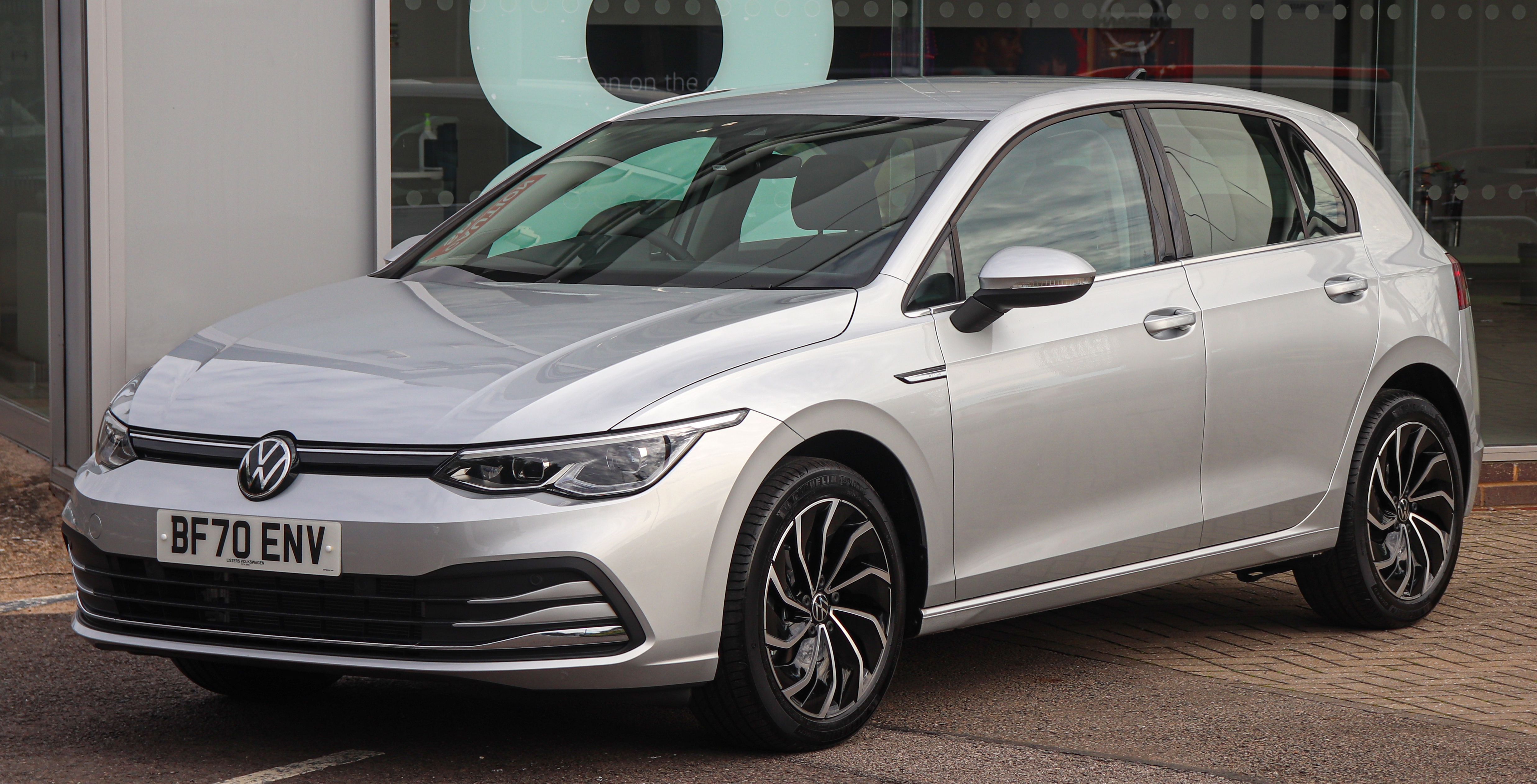
seven electric sedan has ninety nine percent fewer configuration options than the Golf. The
VW group also wants its different brands to share more assembly plants and boost the number of shared platforms. Electric vehicles perform really well in a lot of driving
situations, but they're still not well suited for hauling heavy loads or towing heavy trailers over long distances, and that's why automakers keep investing in their piston engines for heavy duty pickup trucks and full size SUVs. And yesterday, Ford showed
off its new six point eight Leader gasoline V eight, which replaces six point two Leader unit. The new engine develops four hundred and five horsepower and four
hundred and forty five pound feet of torque. It's actually a destroked version of
the seven point three liter V eight, but it gets new pistons, rings, and water manifold. Ford also updated it's six point seven liter diesel with
a bigger fuel pump with higher pressure and increase the fuel rate through the injectors by six percent. It dropped the compression ratio slightly to allow for more turbo
boost, and it added liquid cooling for the turbo compressor housing. Interestingly,
the lower part of the exhaust manifold is cast into the head, while the upper part is cast into the valve cover. There are two versions of the
diesel. The base one develops four hundred and seventy five horsepower and one thousand
and fifty pound feet of torque, while a high output version cranks out five hundred horse power and twelve hundred pound feet. The F four fifty super duty
pickup with the diesel and Ford's ten R one forty transmission is now rated at eight thousand pounds for payload, or it can tow a forty thousand pound trailer.
And I don't know how I miss this, and truthfully, I'm kicking myself for not catching it sooner. But on Tuesday, Nitza sent a letter
to automakers telling them not to comply with a Massachusetts law that allows open remote access to a vehicle's diagnostic system. Nitza claims that some shady individual could use
this access to remotely control a vehicle, crash it or make it drive dangerously, or attack a fleet of vehicles at the same time. So why was
the Massachusetts law overwhelmingly approved by voters in the first place. Some automakers started
adding what are called security gateways to their diagnostic systems. In order to get
past security, you need approval. Some automakers fought to make it hard to
get that approval, so the Massachusetts law was amended in twenty twenty to include the part about open remote access. This made it so third parties, mainly
independent repair shops, could get access to vehicle diagnostics and fix people's cars.
And I have a great fear that automakers will use this NITZA letter as an excuse to block independent repair shops from getting access to vehicle diagnostics. That's going
to give their dealers a lot more service work. It's going to be great
for dealers, but it's going to piss off a lot of customers. Repair
times are going to go up, and so will prices if this happens.
However, there is hope automakers don't have to block access to their vehicles.
Even with the systems right now that use security gateways, automakers have the ability to pick and choose who gets in and who doesn't, so you could know that you're getting the most trustworthy people. This creates more work for the independent
shops, but at least it doesn't mean the end of them altogether. And
if you feel like I'm a little more passionate about this subject than others, you're damn right. I was an automotive tech for over thirteen years, and
I still know a number of these folks who are mostly just really good people.
And that brings us to the end of today's show. Thank you for
tuning in. Altoline Daily is brought to you by Bridgestone Solutions for your Journey,
Intrepid Control Systems over the Year, Engineering boost your game, and by Scheffler We Pioneer Motion. At Scheffler We Pioneer Motion electrifying mobility, manufacturing smarter,
reducing CO two emissions, making energy production clean. Scheffler Pioneer's Motion to
advance how the world moves
About this episode
US EV registrations surged 72% in early 2024, led by Tesla models benefiting from tax credits, while consumer interest in EVs grows modestly. Volkswagen plans to cut slow-selling models and increase platform sharing to boost profits. Ford unveiled powerful new V8 gasoline and diesel engines for heavy-duty trucks, emphasizing the ongoing role of combustion engines. Tire makers are innovating with sustainable materials to reduce environmental impact. Meanwhile, a regulatory dispute in Massachusetts over remote vehicle diagnostics raises concerns about independent repair access and potential price hikes in car repairs.
Original notes
- U.S. EV Registrations Up 72% - U.S. Interest in EVs Grew Slightly - Continental Develops More Sustainable Tires - Graphene Could Lead to Tire Breakthrough - Used Car Prices Falling - Toyota Keeps Akio, But Support Declining - VW to Axe Models, Share More Platforms - Ford Revamps Gas and Diesel V8s - Car Repair Prices Probably Going Up
Autoline Daily
Autoline
0:00
11:39