
AD #3624 - Charging Cheaper Than Pumping Gas; Cadillac Reveals All-Electric Escalade; Mahle Improves Battery Cooling
Autoline Daily
AD #3624 - Charging Cheaper Than Pumping Gas; Cadillac Reveals All-Electric Escalade; Mahle Improves Battery Cooling
Autoline Daily · Aug 10, 2023
Annotations will appear as you listen
0:00
11:57


LIVE
This is Autoline Daily, the show dedicated to enthusiasts of the global automotive industry.
Some people believe it's more expensive to charge in EV than it is to fill a car with gas in the US, so the Washington Post did the math to find out the truth with help from the think tank Energy Innovation.
As you might suspect, the answer isn't straightforward because prices vary charger by charger and state by state, plus road taxes, rebates, and battery efficiency all affect the outcome. But the bottom line is that it's cheaper to charge an
EV in all fifty states. A driver that travels an average of fourteen thousand
miles a year will save seven hundred bucks a year with an electric suv or sedan and a thousand bucks with an EV pickup. That's with daily driving.
Taking an EV on a road trip is a bit of a different story.
In most cases, it's still more expensive to use gas, but there are some instances where the EV costs more, and that's because of the premium you have to pay for using Level three fast chargers. Volkswagen is desperate to maintain
its market share in China, so it slashed the prices of its ID three and saw an immediate bounce in sales. At its launched two years ago,
the ID three was priced at twenty three thousand dollars and sales went nowhere, so VW cut the price to nineteen thousand, seven hundred bucks, but that didn't help either. So last month it chopped the price to about sixteen thousand,
five hundred dollars, and all of a sudden, it tripled sales to about seven thousand, four hundred units. Even so, it still trails far
behind its top competitors. The BYD, Dolphin and ATTO three each sold three
times more than the ID three as or its other evs in China. So
far, VW has not slash prices for the ID four or ID six, and their sales reflect that it sold four thousand ID fours in only fifteen hundred ID sixes. Cutting prices by thousands is an expensive way to get market share,
but right now it looks like the only way that Volkswagon can get that market share. In China, it has about twenty percent of the market with
ice vehicles, but only about three percent with the evs Rivan reported its Q two earnings, and it's a story about cost cutting. The ev startup reduced
its head count, pushed some capital expenditures into next year, and negotiated lower prices with some suppliers. But it also cut costs by launching its own electric
motor, called in Duro, as well as its own power electronics, both of which are made in house. It also started using lower cost LFP batteries,
and next year a new electronic architecture is expected to get rid of sixty ECUs and twenty five percent of the wiring harness in its vehicles. But even
with all that cost cutting action, Rivan still lost money. Here's the numbers.
It sold twelve thousand, six hundred and forty vehicles, which was fifty percent more than Q one. That brought in one point one billion dollars of
revenue, including thirty four million dollars from selling regulatory credits. It posted an
operating loss of one point three billion, a net loss of one point two billion, and it burned through one point three billion dollars of cash. Rivan
says it's focused on boosting production, which will be its fastest path to profitability.
We want to know what drives you're testing. Ota Connected Car Diagnostics remote
testing Increpid Controls is here to help you work from anywhere. Intrepid control Systems
driven by your data. Cadillac revealed a new all electric suv based on the
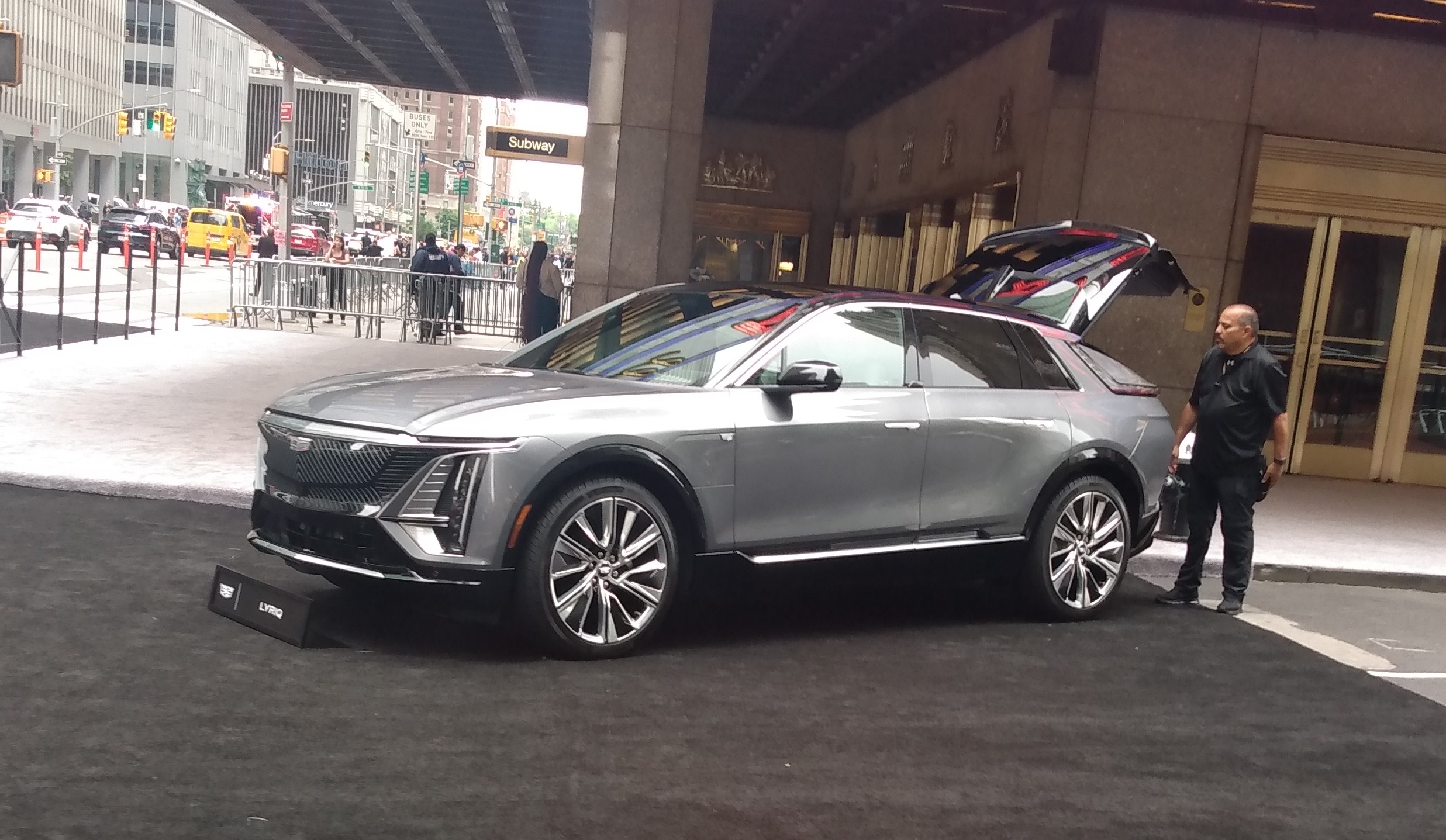
Altium platform called the Escalade IQ or Escalatic, which is how I like to pronounce it, because that's how you say the names of its other evs, Lyric and Celestic, even though it rides on a completely different platform than the gas powered Escalade. I don't think there's any denying the Escalatic looks like an
Escalade, but there's still a strong resemblance to the Lyric and Celestic as well, And overall, it seems like Cadillac has given the Escalatic more of a design tie into the Celestic, which makes sense because it will carry an estimated starting price of one hundred and thirty thousand dollars including destination charges. And I
think the similarities also carry over into the interior, like the pillar to pillar display screen, to the secondary screen on the center console, and even the pattern on the seats. But now let's get to the hardware. The Escalatic
features a two hundred kilowatt hour battery pack that provides an estimated four hundred and fifty miles or seven hundred and twenty four kilometers of range. It feeds energy
into two electric motors that provide all wheel drive and combine for six hundred and eighty horsepower and six hundred and fifteen pound feet of torque. But there's also
a velocity Max mode that bumps that up to seven hundred and fifty horsepower, which Cadillac estimates will drop the zero to sixty time to under five seconds.
A few other highlights of the escalatic our Magna ride suspension, four wheel disc brakes in twenty four inch wheels. Production will start next summer at GM's Detroit
ham Trammic plant in Michigan. Bentley is introducing a new type of leather for
its vehicles that uses a more sustainable tanning process. The tanning agent, which
comes from byproducts created from making olive oil, doesn't contain harmful metals or minerals, and the whole process uses less water than conventional tanning. The leather debuts
in a new model Bentley will unveil at the Monterey Car Week, which is this month. Even though the tanning process is more sustainable, Bentley is bucking
the industry trend most automakers are getting rid of leather entirely because they don't want to be seen as being cruel to animals. The German supplier Molla says it
developed a breakthrough to help make batteries more efficient by copying nature. It created
a new battery cooling plate which features channels that run in all different directions.
This causes the cooling in those channels to flow differently, increases the cooling performance by ten percent, and because of structural improvements, the cooling plate uses fifteen percent less material. This is a simple example of how the auto industry is
attacking all the challenges presented by electric vehicles, like keeping the battery at the proper temperature. The internal combustion engine saw one hundred and thirty years worth of
improvements, and now we're seeing the same thing happen with bvs. Kia revealed
an all new version of the K three, which is a small sedan that it sells in a number of markets, including under the name Fota, so we wouldn't be surprised to see an announcement in the US in the next several months. Kia is going with a much bolder design under its opposite's united styling
philosophy, with very distinctive lighting and a layered in somewhat chunky front facia.
The interior is modest, matching the car's affordability, and is highlighted by a floating display screen on the dashboard. Power will come from one of three four
cylinder engines that can be made to manual and automatic transmissions. The main two
engines are a one point six leader unit that makes roughly one hundred and twenty horse power and a new two leader engine that makes about one hundred and fifty horse power. The new K three will go on sale before the end of
the year. And speaking of the Hyundai group, it shocked us a couple
of weeks back with the sophisticated new styling of the Santa Fe, and now we can give you some specs on that model. In Korea and North America,
the new Santa Fe will be available with a turbo charged one point six leader hybrid setup that makes about one hundred and eighty horse power, or a turbo charge two and a half leader unit that makes roughly two hundred and eighty horse power, which provides best in the lineup acceleration of zero to one hundred kilometers an hour. In eighteen Europe will also get the one point six Leader
hybrid, but it gets a PHA version as well. Hyundai doesn't say how
big the battery is or how much range it has, but it also uses a turbo charge one point six Leader engine and has a combined output of about one hundred and sixty horsepower. The new Santa Fe goes on sailing Korea later
this year, followed by North America and Europe early next year, and it also looks like Hunday is considering going off roading with the new Santa Fe showing off this concept called the XRT that's tailored to an outdoor lifestyle. Will the
UAW go on strike next month? That's the hottest topic in the US auto
industry right now. Merrick Masters, a professor at Wayne State University in Detroit
who specializes in labor issues, says the uaw's demands would push labor costs to one hundred and fifty dollars an hour. He says that would be financially unstable
for gm Ford and Stellantis because it would make them uncompetitive. By the way,
Merrick Masters will be on Autoline after Hours this afternoon and the show will be all about the looming uaw strike. Kaylee Hall from the Detroit News will
also join John and Gary and we invite you to tune in when the show goes live at three pm Eastern Time. That's the end of today's show.
Thanks for joining us. Autoline Daily is brought to you by Bridgetone Solutions for
your journey, Intrepid Control Systems over the year engineering boost your game, Scheffler We Pioneer Motion, and by Tajin Automotive Technologies, the Formula for Better Mobility.
At Scheffler, we pioneer Motion, electrifying mobility, manufacturing smarter, reducing CO two emissions, making energy production clean. Scheffler Pioneer's Motion to advance how
the world moves. But at Taging Automotive Technologies we combine world class composite materials
expertise with cutting edge designs because frankly, there are better ways to lightweight vehicles, so lighten up. With Taging Automotive Technologies, the Formula for Better Mobility
About this episode
Exploring whether charging an EV is cheaper than fueling a gas car across the U.S., the discussion reveals EVs save money in daily driving but fast charging on road trips can be pricier. Volkswagen’s aggressive price cuts in China boost ID.3 sales but still lag behind competitors. Rivian focuses on cost-cutting and in-house tech to reach profitability despite losses. Cadillac unveils the high-end all-electric Escalade IQ with impressive range and power. Innovations in sustainable leather by Bentley and improved battery cooling by Mahle highlight industry advances. Kia and Hyundai reveal bold new models, while looming UAW strike concerns labor costs in Detroit.
Original notes
- Charging Cheaper Than Pumping Gas - VW Triples ID.3 Sales in China - Rivian Slash Costs, Still Loses Billions - Meet the Electric Cadillac Escalade - Bentley Intro "Sustainable" Leather - Mahle Improves Battery Cooling - All-New Kia K3 (Forte) - Hyundai Not Offering New PHEV Santa Fe in the U.S.
Autoline Daily
Autoline
0:00
11:57