The ongoing UAW strike has become a major political issue with President Biden and former President Trump both engaging with strikers. Ford's Canadian union deal includes restored pensions, setting a benchmark for UAW demands in the U.S. The strike's expansion to parts depots threatens supply chains and public services, while striking workers face limited financial support. Chinese automaker NEO is preparing for a U.S. market entry, and China leads global vehicle exports. Europe faces potential EV tariffs between the UK and EU, risking significant losses. Meanwhile, manual transmissions are seeing a surprising resurgence in U.S. sales, driven by younger buyers and nostalgia.
Topics:uaw strikepolitical impactford canadian labor dealunion pensionsstrike economic effectschinese automakerschina vehicle exportseu uk ev tariffsmanual transmission resurgence
- UAW Strike Becomes Political Football - Ford And Unifor Settle New Contract - Parts Depot Strikes Hurt OEMs, Dealers, Customers - Striking Workers Don’t Qualify for Unemployment - NIO Opens New HQ In California - Chinese Car Exports Soar in August - ACEA Begs the EU Not to Tax EVs from UK - Manual Transmissions Double Market Share
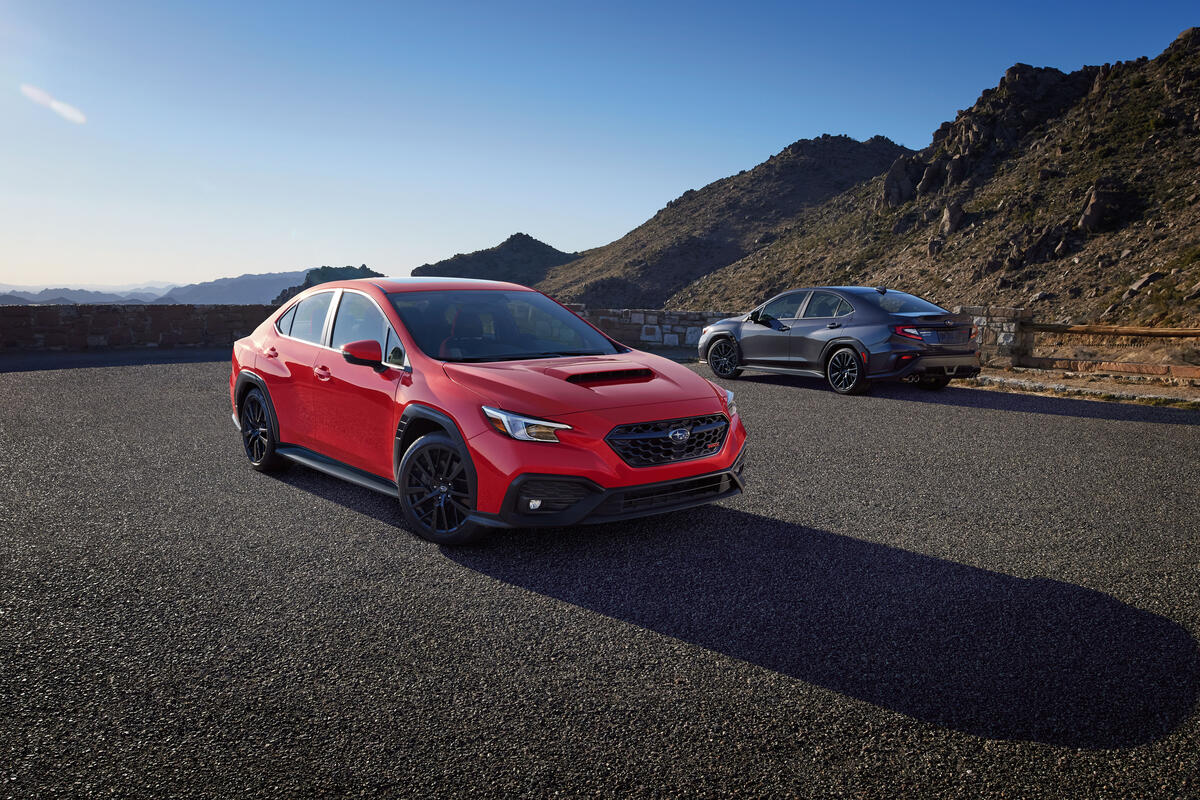
"...the manual are the Honda Civic, the Ford Mustang, Subaru WRX, Jeep Wrangler, and Chevy Camara. And that brings..."
Select text to request an explanation
This is Autoline Daily to show dedicated to enthusiasts of the global automotive industry.
Seahn's on vacation this week and so I'm filling in for him. Day eleven
of that UAW strike and now it's becoming a political football for next year's US presidential campaign. Tomorrow, President Joe Biden will be in Metro Detroit to meet
with strikers. The Detroit News reports it's the first time in a hundred years
that a sitting president has met with strikers. Then on Wednesday, former President
Donald Trump will be in Metro Detroit to give a speech to union strikers.
Over the weekend, Republican presidential candidate Vivic Ramaswarmy, speaking to leaders in the Republican Party in Michigan, blame the strike on President Biden's policies. Mike Pence
and Nicki Haley also issued statements blaming the president, and Republican presidential candidate Tim Scott suggested that all the striking workers should be fired, so the UAW filed a labor complaint against him. All this political grandstanding is only going to help
UAW President Sean Fayne. He's been able to turn the strike into a national
issue that's putting a spotlight on the power of the United out of Workers.
Meanwhile, in Canada, Ford in the Canadian Union Uniform, agreed to a new labor contract without any of the rancor and animosity that's going on in the States. Fifty four percent of the workforce voted in favor of it. Ford
agreed to boost wages twenty two percent over the course of the three year contract, and workers will get more than seven thousand, four hundred dollars for signing that contract. New hires will now get seventy percent of top wages and move
up to full wages in four years instead of today's eight years. Ford will
also restore cost of living adjustments or COLA instead of lump some payments. Surprisingly,
Ford agreed to reinstate fully defined pensions for all Canadian workers beginning in twenty twenty five. Undoubtedly the UAW is going to seize on that, since it
too has been demanding a return to full benefit pensions instead of employee savings plans, and no doubt general motors and stillantis are going to feel that Ford is giving too much away. As you probably know, last week, the UAW
expanded the strike to thirty eight GM and stillantis parts depots in twenty different states.
That's going to immediately impact the companies and their dealers and their customers.
It was already hard enough to get your car repaired or service due to a shortage of texts. Throw a part shortage on top of that, and the
strike's going to hurt a lot more than just the car. Companies and service
parts are very profitable business for automakers and dealers, but the UAW may be treading on thin ice. That part shortage could adversely affect police and fire departments,
ambulance services, and even airport vehicles. And if the strike starts to
affect the general public, that could turn public support against the union. According
to the Anderson Economic Group, the strike has already cost the American economy one point six billion dollars. There are now more than eighteen thousand, six hundred
workers on strike, and thousands more have been forced into layoffs. The economic
pain for those on strike is real and immediate. The union is only paying
them five hundred dollars a week, and they do not qualify for state unemployment.
It also looks like the UAW workers who were forced into layoffs because of the strike, may not qualify for unemployment either, but they will get that five hundred dollars a week. But even if they do, they're no longer
going to get supplemental unemployment benefits or sub benefits from the automakers. Under the
previous labor contract, the Detroit three would pay out sub benefits on top of state unemployment benefits that would get workers to about seventy five percent of their take home pay. But since that contract expired, the automakers are under no obligation
to pay sub benefits. The Taging Automotive Technologies we combine world class composite materials
expertise with cutting edge designs because frankly, there are better ways to lightweight vehicles.
So lighten up with Taging Automotive Technologies, the formula for better mobility.
Okay, enough of all that strike stuff. You know, we're often asked,
are Chinese automakers going to sell cars in the American market? Well,
here's part of your answer. Chinese automaker Neo just celebrated opening its new North
American headquarters in San Jose, California. The building is located near its previous
headquarters, but it's twice the size, and the opening was attended by seventy business partners as well as local government officials. In twenty twenty one, NEO
CEO William Lee said they would start selling vehicles in the US in twenty twenty five, and last year he said it's next gen vehicles are coming to the US. However, there's still no definitive date when the company will enter the
US market, and its current efforts are focused on Europe and Chinese Car exports sure are surging. According to Car News China, Chinese automakers exported four hundred
and thirty six thousand cars in August. That's up thirty nine percent from last
year, and for the first eight months of the year, China has exported more than three point two million vehicles. That's sixty five percent higher than a
year ago, and it now makes China the number one vehicle exporter in the world, ahead of Japan. Exports to Russia have helped fuel that growth.
Last year, China exported one hundred and sixty thousand cars to Russia. So
far this year that's gone up to five hundred and forty four thousand cars.
Mexico is actually second the second largest market for Chinese exports, but that's less than half of Russia's volume, and most Chinese EV exports are ending up in Western Europe, but that could slow down because the EU is launching an investigation into Chinese EV imports. And now from China we moved back over to Europe,
where the ACEEA to European Automobile Manufacturers Association is begging the European Union not to tax evs that are traded between the UK and the EU. If the
EU fails to act, EV's going in either direction are going to get a ten percent tariffs slapped on them, which could reduce sales by four and eighty thousand vehicles and cost automakers four point eight billion euros over the next three years.
Eliminating that tariff would also help European automakers compete more favorably against the Chinese evs that are pouring into the European market. And finally, here's a news
item that should make enthusiast jump for joy. Manual transmissions are actually making a
comeback, well a bit of a comeback. JD Power reports that sales of
vehicles with a stick shift will account for one point seven percent of the US market this year. That's up from one point two percent last year and zero
point nine percent in twenty twenty one, so sticks have almost doubled their market share in just the last two years. Carmack says manual transmission sales at its
dealerships hit two point nine percent last year, up from two point four percent in twenty twenty and there isn't any one factor responsible for the increase, but it's not because buyers are trying to save money. Manuals are no longer cheaper
than automatics and they usually do not get better fuel economy either. CarMax says
it's twenty something buyers who are driving the increase, but older consumers are also buying manuals for nostalgia, and the best selling vehicles with the manual are the Honda Civic, the Ford Mustang, Subaru WRX, Jeep Wrangler, and Chevy Camara. And that brings us to the end of today's report. Thank you
for watching Auto Line Daily. Autoline Daily is brought to you by Bridgestone Solutions
for your Journey, Intrepid Control Systems, over the Year, Engineering Boost Your Game, Scheffler we Pioneer Motion, and by Tajin Automotive technologies the formula for better mobility. We want to know what drives your testing. OTA, Connected
Car diagnostics, remote testing. Intrepid Control Systems is here to help you work
from anywhere. Intrepid control Systems driven by your data. At Scheffler, we
pioneer Motion electrifying mobility, manufacturing SMARTA, reducing CO two emissions, making energy production clean. Scheffler Pioneer's Motion to advance how the world moves, whate
Request an explanation for:
4 cars
4 cars featured
Request an Explanation
Heard something you'd like explained? We'll add it to this episode.
Sign in to request explanations for terms you heard.
Want to learn more?
Browse our glossary for plain-English explanations of automotive terms, jargon, and concepts.
See something that's not quite right? Our annotations are AI-generated and can sometimes miss the mark.
Click the flag icon on any annotation to suggest a correction.