The episode covers the ongoing EV price war in China with Tesla and BYD cutting prices, and the challenges faced by EV startups like Fisker struggling financially. It highlights Hyundai and Kia's strong U.S. sales and EV growth, Fiat's strategy to extend the Panda model's life with tech upgrades, and Bugatti's shift from a W16 to a plug-in hybrid V16 engine. The discussion also touches on Ford's potential multi-voltage battery system and how legacy automakers increasingly rely on suppliers for vehicle interior development.
Topics:ev price war chinafisker financial struggleshyundai kia us salesfiat panda updatebugatti v16 phevford multi voltage batteryautomaker supplier reliancelegacy automakersev market trends
- China EV Price War Picking Up Speed - Fisker On the Ropes - GM Cruise Loses Half Its Value - Car Dealers Don’t Like Hyundai, Amazon Deal - Kia U.S. EV Sales Soar 65% - Fiat Panda Gets New Lease on Life as EV Sales Slow - Bugatti Dumps W16, Goes with PHEV V16 - Ford Developing 800V Battery System - Vertical Integration? Legacy OEMs Rely More on Suppliers
"...system, but models with bigger batteries like the Hummer EV essentially have two four hundred volt packs whic..."
Select text to request an explanation
This is Autoline Daily, the show dedicated to enthusiasts of the global automotive industry.
That price war in China shows no signs of slowing down. Last week,
BYD cut prices by ten percent, and today Tesla is following suit.
It's offering insurance subsidies which essentially take the price of the Model three and Why down by three percent. Some paint colors get a price cut of almost fourteen
hundred bucks. And remember it was just a little over a month ago that
Tesla cut the price the three by almost six percent and the Why by almost three percent. So these price cuts are starting to stack up. EV sales
in China took a nose dive in January, and last month was the celebration of the Chinese New Year, where the entire country essentially shuts down for at least a week, so no doubt sales fell even further. Now everyone is
watching to see if this was just a temporary dip or if it's a signus something more serious. But one thing's for sure, this price war is not
going to end anytime soon. And here's more trouble in EV. Startup Land
Fisker is on the ropes and may not make it to this time next year.
The company only has three hundred and twenty five million dollars in cash and over five hundred and forty million dollars in expenses. Worse, its books are
a mess, and it's failed to file its financial earnings on time all year long. Fisker claims it's negotiations with a large automaker that could result in an
investment in Fisker or the joint development of an EV platform in a manufacturing location in North America. In his message to shareholders, Henrik Fisker blamed a host
of outside factors for the company's problems, but the basic problem is that it's struggling to build and deliver its ocean suv. Fisker only built ten thousand vehicles
last year and delivered less than half to customers. Here's our autoline insight.
Fisker probably won't get enough cash in time, and we think that anyone who's interested in picking up the pieces will wait to see if the company goes bankrupt, then by all the assets for pennies on the dollar. And In more
bad financial news, the Wall Street Journal reports that gmcruse has lost half of its value, citing an internal document. It says Cruse's private stock was worth
twenty four dollars a share just a little over three months ago, but now it's only worth eleven dollars. Gmcreuse pretty much stopped all its operations in the
US after an accident in which one of its autonomous cars dragged a pedestrian.
It had planned to expand its taxi service to a dozen US cities this year, but now it's going to take a lot longer to do that, and until it resumes operations and starts generating profits, that stock valuation is not going to go anywhere. Last year, Hyundai formed a partnership with Amazon to allow
car buyers in the US to shop and purchase vehicles on Amazon's website starting this year, and not surprisingly, an Automotive News survey of dealers at multiple brands found they're not happy with the deal. Dealers are concerned it will lead to
a more direct sales model, won't be good for long term customer service, and will impact their profits by cutting into the finance and insurance business and customer trade ins but some dealers were dismissive of the deal and not concerned at all, with one dealer calling it a gimmick. Amazon wants to partner with other
automakers to offer a similar buying process, So if Hyundai buyers liked the experience, we could see more brands partner up with Amazon. And speaking of Honday
and car sales, the group including Kia and Genesis announced February sales in the US. Hondai sold more than fifty five thousand vehicles, again of five percent
compared to a year ago. Meanwhile, Kia sold just over fifty nine thousand
vehicles, which was down about three percent, and Genesis sold forty six hundred vehicles, up nine percent. Hondai and Kia's EV sales are going strong as
well. Hondai sold five thousand hybrid p heven EV models in February, which
was up seven percent. Kia sold two thousand, six hundred and twenty seven
EV six's and EV nine's last month, but it doesn't break out neurosales, which is offered as an ICP Haven pure electric, but Kia says it's total EV sales are up about sixty five percent so far this year. Automakers will
report February sales over the next several days, and analysts expect sales to be up five to six percent. We want to know what drives you are testing.
OTA Connected Car diagnostics, remote testing, Intrepid Control Systems is here to help you work from anywhere. Intrepid control systems driven by your data. With
ev demand slowing, I think we could see more of what Fiat is doing with the Panda. It's extending the current model's life and upgrading it with new
technology. Fiat says the Panda will continue to be made in Italy at least
until twenty twenty seven, and it's giving the updated model, which it calls Pandena New eight as features two seven inch digital display screens and a new steering wheel. And I've got to imagine that this is a relatively cheap and easy
upgrade for the brand. The basis for the Panda's architecture traces its roots back
to nineteen ninety nine, and the last major update on the model was done in twenty eleven. Typically, limited model changes lead to a decline in sales,
but Fiat says it's boosting production at the Pandina by about twenty just to meet demand. I remember pretty well my mind being blown the first time I
read about the Bugatti veyron a sixteen cylinder engine with four turbochargers, nearly one thousand horse power, two hundred and fifty plus mile per hour top speed, and a million dollar plus price tag. There was nothing else like it when
it debuted in two thousand and five. But Bugatti is killing off that famous
sixteen cylinder engine and replacing it with another sixteen cylinder engine. However, instead
of the cylinders being arranged in a W pattern, the new engine is a V sixteen. We know it will also be paired with a plug in hybrid
system, and as you can see, the intake makes extensive use of carbon fiber. But that's about all the details we have on the new engine that
will power the successor to the sharone, which is supposed to debut in June.
Ford has at least considered coming out with a battery system that sounds similar to GM's ulti im pack. At its base, GM system is a four
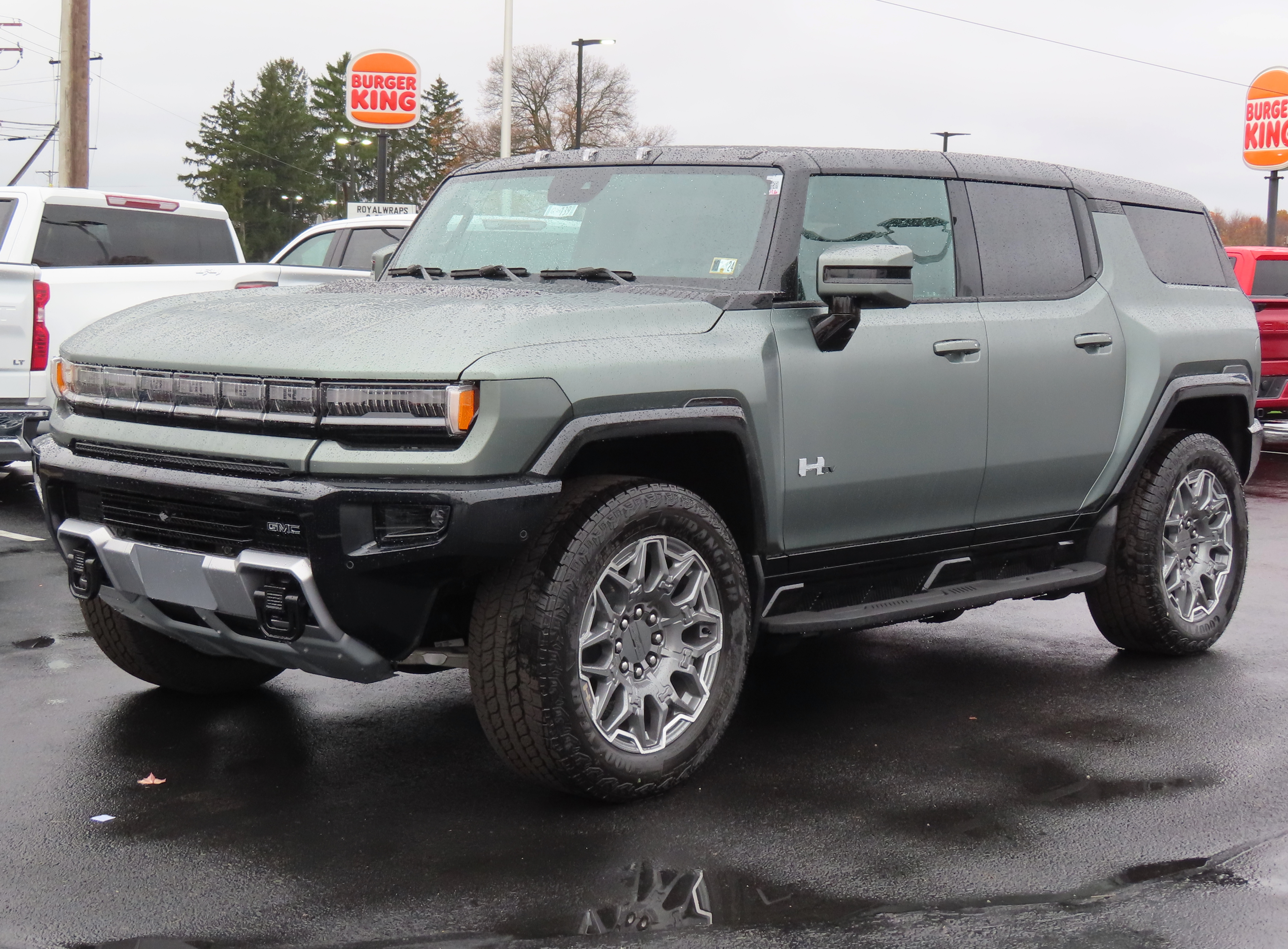
hundred volt system, but models with bigger batteries like the Hummer EV essentially have two four hundred volt packs which can be paired together during charging for an eight hundred volt system so it can charge at a faster rate. And Ford filed
a patent for a multi voltage system that has two separate battery arrays capable of operating at eight hundred volts during charging. It's possible we could see Ford implement
this soon because it filed the patent four years ago. But a lot has
changed in four years, and Ford now has a skunk works program working on more affordable evs, so it's possible the multi voltage system isn't part of the plan anymore. Despite all the talk about automakers needing to get more vertically integrated,
the opposite is happening. Legacy automakers are at actually relying more on their
suppliers to develop new designs. On Auto Line after Hours yesterday, Jeff's Stout
from Young Fun said that automakers are not just looking to suppliers for new ideas, they want them to take over doing everything, at least when it comes to vehicle interiors. In the last couple of years, a fairly significant percentage
of my budget comes from the customer. They call me and say, can
I give you some money so that you'll develop the solution for me? Either
I ever do that before. I've never heard of a car company doing you,
never ever, ever, ever, ever, Whereas now. For the
most part, we don't do development unless the customer is willing to say I'm willing to pay for it. You can watch that entire show right now on
our website or YouTube channel. It gives you great insight into what automakers want
from their suppliers and how suppliers have to deal with it. That's the end
of this show. Thanks for tuning in, and I hope that you have
a great weekend. Auto Line Daily is brought to you by Bridgestone Solutions for
Your Journey and by Intrepid Control Systems over the air engineering Boost your game.
Wards is the industry leader for news, data and analysis. That's why companies
across the globe subscribe to our premium service. Maybe even your own log in
for subscriber access. Now check your company's intranet for details and rely on wardsauto
dot com to keep you informed.
Request an explanation for:
3 cars
3 cars featured
Request an Explanation
Heard something you'd like explained? We'll add it to this episode.
Sign in to request explanations for terms you heard.
Want to learn more?
Browse our glossary for plain-English explanations of automotive terms, jargon, and concepts.
See something that's not quite right? Our annotations are AI-generated and can sometimes miss the mark.
Click the flag icon on any annotation to suggest a correction.