
AD #3819 - J.D. Power Sees 1.6 Million U.S. EV Sales; What OEMs Are Spending on R and D; BMW Uses 3D Printed Parts to Run Robots Faster
Autoline Daily
AD #3819 - J.D. Power Sees 1.6 Million U.S. EV Sales; What OEMs Are Spending on R and D; BMW Uses 3D Printed Parts to Run Robots Faster
Autoline Daily · May 24, 2024
Annotations will appear as you listen
0:00
13:00

LIVE
This is Autoline Daily, the show dedicated to enthusiasts of the global automotive industry.
You know, so far this year, things in the auto industry are not going the way that most automakers expected. COVID's behind us that chip shortage
is over, and so the industry thought it would be busy meeting pent up demand after years of lower sales, but that's not exactly happening. Stillantis is
paying Ram and Jeep dealers a bonus to order more new cars and trucks, something that dealers are reluctant to do because they have so much inventory sitting on their lots. CEO Carlos Taveres is reluctant to cut prices, and the result
is that Stilantis has lost three and a half percentage points of market share since twenty twenty in the US market, in an industry that fights over every tenth of a point of share, and it's not just Stilantis. JD. Power
says that sales incentives from automakers in the America market will average three thousand, two hundred dollars per vehicle for the rest of this year. Last year,
the average was only one nine hundred dollars you can blame higher interest rates and higher car insurance rates for that. Automakers are having to add incentives to offset
those higher costs for consumers. And all those ed startups that look red hot
just two years ago now wonder what hit them. Loocid is going to fire
another four hundred employees, or about six percent of its workforce. Sales are
well below where the company thought they would be, and it reported a bigger than expected loss in the first quarter. And while you can't call Tesla a
startup anymore, it's suffering similar problems. Reuter's reports that Tesla cut production of
the Model Y at its plant in Shanghai by at least twenty percent due to weakening demand in China for its cars, and based on new car registrations in the US, SNP Global estimates that Tesla sales fell twenty five percent in February and twelve percent in March, though Tesla says that was because it was supply constrained. Even so, it looks like Tesla has backed off its goal of
building twenty million cars by the end of the decade. Its latest impact report,
which was published yesterday, no longer makes any mention of that goal.
We think that Tesla really needs to consider a significant styling refresh of the Model three and why though they're very good cars, they're starting to look stale compared to the new competitors in the market. Yes, yes, yes, we
are aware of the changes to the three called the Highland and the upcoming changes to the Y called Juniper, but only Tesla fans will notice the difference.
To most everybody else, the changes are almost invisible. The one very noticeable
styling change that Tesla did make was when it changed the nose of the S and the X, but that was eight years ago. And take a look
at the last three generations of the Hyundai Santa Fe. Each generation is a
dramatic step forward from the one before, and that's how you keep a model line fresh. When people buy a new car, they want everyone to know
they're driving a brand new car. And history shows that the automotive industry is
really a fashion industry, and the companies with the newest, freshest designs always rise to the top. There's nothing wrong with heavy metal, hey light enough,
but with world class composite material taging, automotive technologies makes vehicles lighter, safer, and more eco friendly. Automakers suspending boatloads of money on research and
on new models. Here's how much money they spent on R and D last
year. Volkswagen Group spent the most, over twenty three billion dollars, but
it's got a lot of brands to feed. BMW was second highest at twelve
point seven billion dollars, which is probably paying for a lot of that new class of electric cars that are getting developed. Mercedes is a couple of billion
below that. GM spent nearly ten billion, while Ford was at eight point
two billion. Surprisingly, Toyota's only sixth on the list. Maybe that's because
it's not spending so much money developing electric vehicles. Honda and Stillantis came in
around six billion dollars, which is surprising for Stillants because it also has a lot of brands to feed. BYD, at five point four billion dollars,
broke into the top ten, a first for a Chinese car company, and Tesla rounded out the list with just under four billion dollars. Gazingly, Hyundai
did not even make it into the top ten. More and more heavy truck
makers are looking at running diesel engines on hydrogen. No, it's not ideal,
but it could be the fastest, easiest, and cheapest way to convert the trucking industry to zero carbon tailpipe emissions. That's especially true if they use
green hydrogen. Piston engines actually run more efficiently with hydrogen, though not nearly
as efficiently as fuel cells. Even so, it's fairly easy to convert an
IC engine to run on hydrogen. Bosh, Toyota and others are working on
it, and Vovo Truck just joined the party. Vovo says it's using high
pressure direct injectors from Westport Fuel Systems, where a small amount of ignition fuel is injected at high pressure to enable compression ignition before the hydrogen is added.
Vavo says it will start testing the trucks on the road next year. It
hopes to have them in production by the end of the decade. Many believe
that developing a hydrogen infrastructure for IC trucks running on hydrogen could actually pave the way faster for adoption of fuel cells. Here's an interesting way BMW is cutting
CO two emissions from its manufacturing process. It's using three D printed parts on
production robots that are lighter, which extends the service life of the robot and allows it to operate faster, which shortened cycle times. And just like a
car, reducing weight has a trickle down effect. If you make a car
lighter, you can do things like use smaller shocks and brakes. Making the
tools for a robot lighter allows you to use smaller robots, which is how you cut CO two emissions. But it's not just from the manufacturing process.
You also cut emissions when you're making the part, and in other cases, BMW has been able to cut out robots altogether. A newly designed three D
printer robot gripper, which is used to lift carbon fiber roofs and whole floor sections of a car, now weighs just under one hundred kilograms. We're a
little over two hundred pounds, but that's roughly forty five percent lighter than the original tool, which means one robot now can lift an entire roof instead of three robots. Beyond gripper tools, BMW makes three D printed parts for teaching
and production aids for employees, and even uses three D printed parts in its cars. Last year, BMW made about four hundred thousand three D printed parts
across all of its manufacturing sites. Volkswagen is showing off an even sportier version
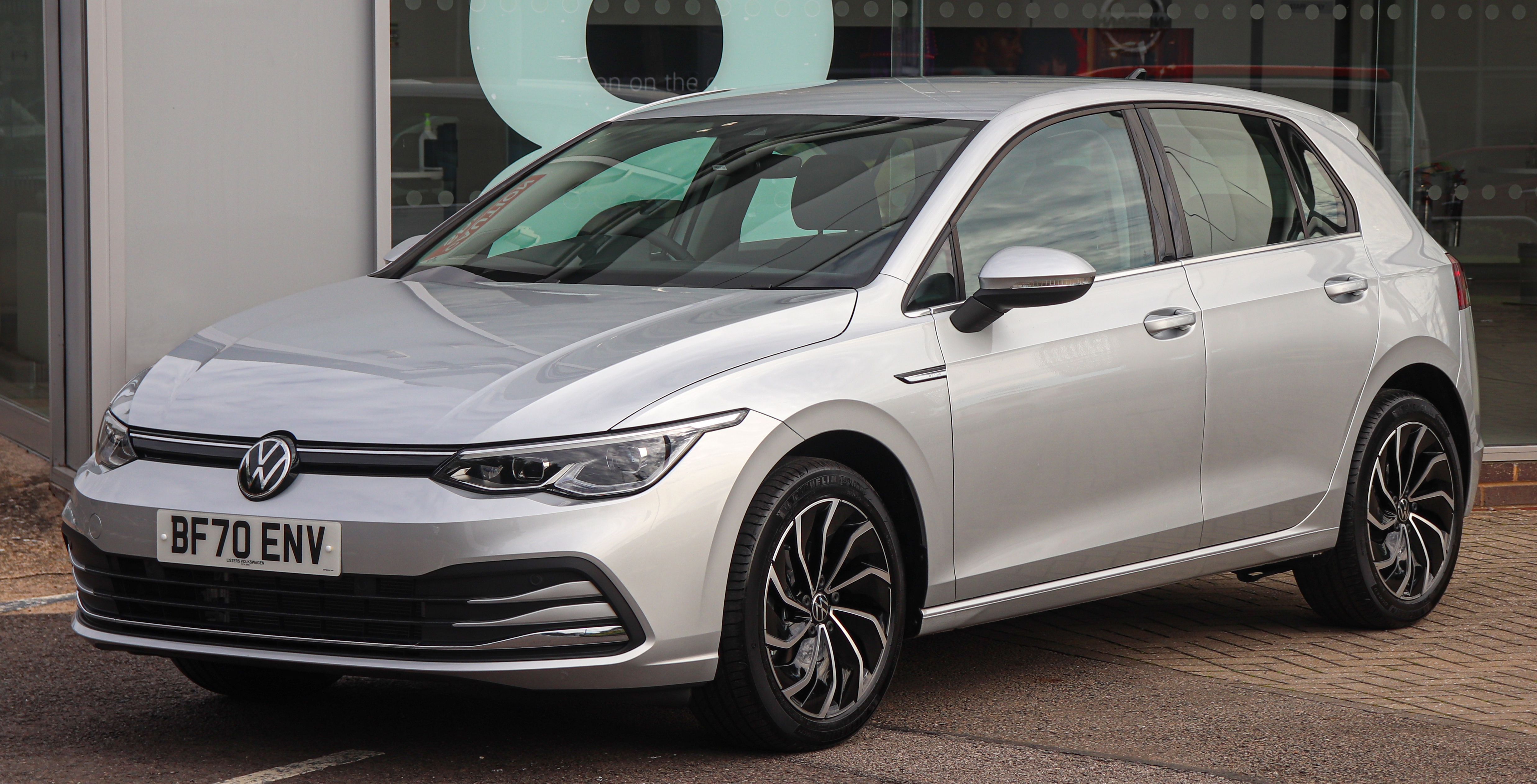
of the golf GTI called the club Sport. It features unique styling elements,
including special wheels and a large rear spoiler. Under the hood is a two
liter turbocharged Denton that will run on new bioethanol that was developed by Shell during an upcoming race. With that setup, it makes roughly three hundred and forty
five horse power, which is fed to the front wheels through a front differential lock. We think there could be a production version coming, but for now
this GTI club Sport is just a one off. JD Power estimates that roughly
one point six million evs will be sold in the US this year. That'll
be about ten percent of the total market and growth over last year's EV sales, which came in at around one point one million. However, according to
Elizabeth Career, the head of JD Power's EV practices, and our guest on yesterday's out of Line after Hours, there's going to be some segments of the EV market that gets sliced much thinner than some automakers are planning for. If
the industry's going to sell sixteen million vehicles and ten percent or evs, that's one point six million EV's this year. Let's take one of the largest segments
in the industry, the compact SUV mass market segment that makes up seventeen percent of industry sales. If we take seventeen percent of the one point six million
evs, that's two hundred and seventy thousand compact SUV evs in the mass market that should sell. Well. Guess how many players there are? Too many
seven seven and they're big players, right, Toyota, Hyndei, Kiya, Volkswagen, Ford, Nissan. So if you divide that two hundred and seventy
up, that's only thirty eight thousand units if you split it evenly. And
obviously not every brand has the same amount of interest, but we know automakers capacitize for more than thirty eight thousand uses. You can't make money at thirty
eight thousand. It's not in the middle market. Well, and that's where
there's this going to be, this this transition as consumer demand catches up with capacity, there's going to need to be incentives in this transition to attract them into the vehicles and to really share in what slice of the pie there is to share. You know, Elizabeth Career provides a lot of great insight into
the ed market in that show, and if you'd like to watch more, we'll put a link in the transcript and the description box and a programming note here. We're going to be off for the Memorial Day holiday on Monday for
those of you watching around the world. Here in the United States, we
always set the day aside to honor the people who have given their lives in service of their country. But we'll be back again here on Tuesday to bring
you the latest developments of what's going on in the automotive industry. Thanks for
watching. Autoline Daily is brought to you by Bridgestone Solutions for your Journey,
Intrepid Control Systems, over the Air Engineering Boost your Game, Tagent Automotive Technologies, the Formula for Better Mobility, and by ZF Intrepid's NEOVIPI allowing automotive engineers to interface, capture, and monitor vehicle data using Raspberry Pie. As a
matter of fact, it's the automotive industry's first robust platform for Raspberry Pie, featuring Intrepid canefting technology and Raspberry Pie compute module. The NEOVIPI is designed for
automotive environments, allowing use with relative power ranges and applications. In addition,
the neovipi enables you to use the Raspberry Pie for compute while avoiding additional development to adapt to network environments. That makes the NEOVIPI powerful enough to solve your
vehicle network problems, yet small enough to fit in your backpack. One of
many intrepid tools used for developing zonal architecture and software divine vehicles. Keeping your
heart racing in and out of the gym, that's what really matters. Bridge
don't pretends to sport as tires with a fifty thousand mile limited warranty. Wards
is the industry leader for news data and analysis. That's why companies across the
globe subscribe to our premium service. Maybe even your own log in for subscriber
access. Now check your company's intranet for details and rely on wardsauto dot com
to keep you informed
About this episode
Automakers face unexpected challenges in 2024 despite the end of COVID and chip shortages, with rising incentives due to higher interest and insurance costs. Tesla and EV startups struggle with demand, prompting questions about Tesla's growth goals and styling updates. R&D spending varies widely among manufacturers, with Volkswagen leading. Hydrogen-powered diesel engines are gaining interest for heavy trucks as a zero-emission solution. BMW innovates with 3D printed parts to reduce manufacturing emissions and improve efficiency. JD Power forecasts 1.6 million US EV sales this year but warns of fierce competition in key segments, highlighting the need for incentives during the transition.
Original notes
- Stellantis Pays Dealers to Order New Cars - 2024 Sales Incentives More Than Double - Lucid Drops 400 More Empolyees - Tesla Cuts Model Y Production in China 20% - Tesla Needs Styling Updates - What OEMs Are Spending on R and D - Volvo Truck Tests Diesel Engines Running on Hydrogen - BMW Uses 3D Printed Parts to Run Robots Faster - VW Clubsport is One Wicked Hot Hatch - J.D. Power Sees 1.6 Million U.S. EV Sales
Autoline Daily
Autoline
0:00
13:00