
The US car market reached a 16 million SAAR milestone, though still below pre-pandemic levels, with EV sales growing slower and inventory rising. Japanese automakers face scrutiny over falsified certification tests. Great Wall Motor is closing its European HQ due to poor sales, while BYD expands aggressively in the Caribbean. Toyota is gradually increasing EV sales but lags behind Tesla’s profitability scale. GM promotes former Apple execs to lead software development. Polestar plans to shift production from China to avoid US tariffs. Ford begins EV production in Germany and celebrates the restored Michigan Central Train Station with a major event.
Topics:us car market saleselectric vehicle salesjapanese automakers certification scandalgreat wall motor europe exitbyd expansion caribbeantoyota ev ramp-upgm software leadershippolestar production shiftford ev production germanymichigan central train station reopening
- U.S. SAAR Tops 16 Million for 1st Time This Year - Japanese OEMs Falsify Safety Tests - Great Wall Shuts German HQ - Great Wall Sales Slow in China - Toyota Slowly Ramps Up EV Sales - GM Appoints Ex-Apple Execs to Software Unit - BYD Moves Into the Caribbean - Polestar Scrambles to Avoid U.S. Tariffs - Ford Explorer EV Production Kicks Off - Ford to Open Michigan Central Train Station
"...y kicked off production in Germany of the all new Explorer EV, which is based on Volkswagen's MEB architectu..."
Select text to request an explanation
This is out Aline Daily, the show dedicated to enthusiasts of the global automotive industry. The US car market hit a sixteen million units are for the first
time this year. That's an important milestone for the industry, but it's still
not back to pre COVID levels, when sales hit seventeen million vehicles a year for several years in a row. Not all automakers have publicly reported their sales
yet. General Motors and Stallantes only report sales on a quarterly basis, and
Ford won't report its May sales until tomorrow. But JD Power estimates that automakers
sold one point four million vehicles, up seven percent from a year ago, though there was one more selling day last month compared to a year ago.
Sales of evs did not grow as fast as the overall market, and they hit eight point four percent market share, down point four percent from April.
JD Power also had a word of warning for the entire industry. Automakers are
building cars faster than they can sell them. Inventory levels are rising, and
it expects to see prices coming down. Last month, the average transaction price
for a new car was forty five thousand dollars, down a grand from a year ago. Japanese automakers are in hot water with authorities in Japan. The
country's Ministry of Transportation rated the offices of Toyota, Mazda, Honda, Suzuki, and Yamaha because it says the companies engaged in fraudulent acts involving their vehicle certification tasks. It told the automakers to stop shipments of all the affected vehicles
until regulators can determine their in compliance. The automakers have suspended shipments and apologize
for falsifying test results, but the companies say the affected vehicles are still safe to drive. While Europe is concerned about a wave of Chinese evs flooding the
market, not every Chinese automaker is doing well there. Great Wall Motor announced
that it's closing its European headquarters in Munich in August and will lay off one hundred employees. It says uncertainties in the market forced the move, but it's
obviously got to do with poor sales. Last year, great Wall only sold
about sixty three hundred vehicles in Europe and it's facing a slowdown in China too.
Last month, great Wall sold ninety one thousand vehicles, but that was down nearly ten percent from last year. However, new energy vehicles or nyvs
accounted for about twenty four thousand, six hundred sales last month, which is up sixty percent from a year ago. Toyota Corp. Is slowly ramping up
sales of pure electric vehicles. Last month in the US, Lexis sold a
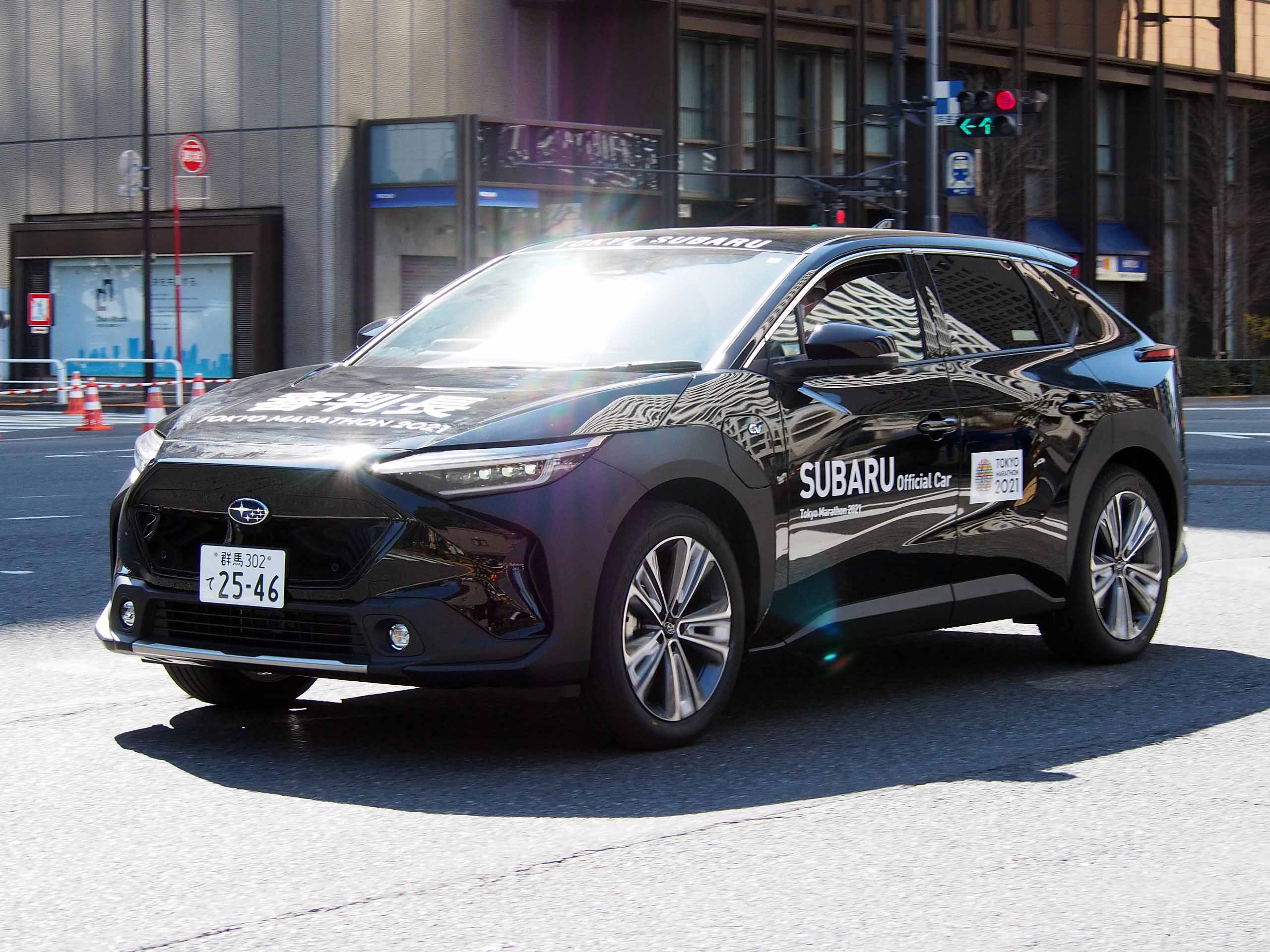
little under fifteen hundred rzs, slightly beating out the Toyota BZ four X at two twelve hundred and sixty units, and the Subaru Solterra, which is based on the same platform as the RZ and BEZ, actually outsold those models, with fifteen hundred and forty six reaching customer hands in May. However, Toyota
has had more consistent EV sales throughout twenty twenty four, and its sales are nearly double that of Lexus and subrew so far this year. Taesla started turning
a profit on Eve's roughly around the time it started building fifty thousand model threes a quarter, so by that measure, Toyota still has a long way to go back. In March, General Motors had a software Mike Abbott left the
company due to health reasons. Had hired Abbott away from Apple, and CEO
Mary Barr accredited him with helping turning around its software development. Now, the
automaker is promoting two former Apple execs to fill in abbot shoes. Barris Setinak
and Dave Richardson will head GM's software and services organization. Setinac will manage products,
programs and design, while Richardson is responsible for software and services engineering.
They'll both be based in GM's new tech center in California. BYD is taking
global markets by storm. After major moves in the South American market, it's
now entering the Caribbean. Just off the coast of Venezuela, the Chinese automaker
opened its first dealership in Trinidad and Tobago, showing off several of its new energy vehicles, including displaying its first ever pickup truck, the shark on social media. Car sales in the Caribbean market are dominated by the Japanese and Korean
automate. It used to be the same way in South America, but Chinese
automakers like BYD have found real success in the region and now they're expanding beyond Trinidad and Tobago. BYD also has plans to expand to more Caribbean nations,
including Jamaica, Barbados, and the Cayman Islands. When the Biden administration announced
it was raising terrace on Chinese made cars to one hundred and two and a half percent, it caught Polestar flat footed. All of Polestar's cars are made
in China, but that's about to change. This summer, the Polestar three
will be built at a Volvo plant in South Carolina, and half of that production will be exported. Next year, the Polestar four will be built in
South Korea by Renault and mainly shipped to the US. In twenty twenty seven,
the company hopes to build the Polestar seven in Europe. We're also waiting
to hear about Volvo's decision on the ex thirty. It's also made in China
right now and was supposed to go on sale in the US this summer.
We think the most likely scenario is that it will be delayed until Volvo starts production in Belgium and can export them to the US without that hefty tariff.
Ford officially kicked off production in Germany of the all new Explorer EV, which is based on Volkswagen's MEB architecture. The company invested two billion dollars into its
plan to be able to build evs there, and a second MEB based vehicle starts production later this year. Ford says it's a sports crossover that will be
revealed soon. And speaking of Ford, Thursday is a big day for the
city of Detroit and the company. That's when the Michigan Central Train Station officially
opens after a nearly billion dollar restoration. Built in nineteen thirteen and abandoned in
nineteen eighty eight, the building became the poster child of post and dust ruin in the city, but Bill Ford saw an opportunity to transform the broken down hulk into a gleaming gem. And the grand opening is gonna be a big
bash, with performances from Jack White, Diana Ross, Big Sean, Jelly Roll, the Detroit Symphony Orchestra, and a whole bunch more. All of
it will be streamed live on Peacock, and NBC will boil it down to a one hour special that's gonna air at seven pm Eastern Time. And this
wraps up today's show. But before we go, here's a brief video clip
we shot some years ago. When they held a drifting competition in front of
the train station when it was still a broken down mess. Auto Line Daily
is brought to you by Bridgestone Solutions for your journey, Intrepid Control Systems over the year Engineering, Boost Your Game, MEDC where Michigan businesses are powering the future of mobility, Tagent Automotive Technologies the formula for better Mobility and by z F Michigan is leading the charge and mobility and innovation and I can't think of
a better state to band. There's nothing wrong with heavy metal, hy light
enough, but with world class composit material taging Automotive Technologies makes vehicles lighter, safer, and more eco friendly. Intrepid's NEOVIPI allowing automotive engineers to interface,
capture and monitor vehicle data using Raspberry Pie. As a matter of fact,
it's the automotive industry's first robust platform for Raspberry Pie, featuring Intrepid canefting technology and Raspberry Pie compute module. The NEOVIPI is designed for automotive environments, allowing
use with relative power ranges and applications. In addition, the NEOVIPI enables you
to use the Raspberry Pie for compute while avoiding additional development to adapt to network environments. That makes the NEOVIPI powerful enough to solve your vehicle network problems,
yet small enough to fit in your backpack. One of many intrepid tools used
for developing zonal architecture and software divine vehicles. When the elements are working against
you, being confident in your grip on the road is what really matters.
Bridge through a lens of tires Improved acceleration in wet conditions
Request an explanation for:
3 cars
3 cars featured
Request an Explanation
Heard something you'd like explained? We'll add it to this episode.
Sign in to request explanations for terms you heard.
Want to learn more?
Browse our glossary for plain-English explanations of automotive terms, jargon, and concepts.
See something that's not quite right? Our annotations are AI-generated and can sometimes miss the mark.
Click the flag icon on any annotation to suggest a correction.