Cadillac is exploring the possibility of building an electric hypercar, potentially leveraging GM's Formula One powertrain technology. The episode also discusses the challenges of SUV design and the search for new body styles, with a nod to futuristic boxy 'toaster' designs for robotaxis. A study reveals that people prefer EV warning sounds that mimic traditional engine noises. Automakers like Nissan and Porsche are offering incentives to switch EV brands. European tariffs on Chinese cars are prompting production shifts, with Volvo moving some EV manufacturing to Belgium. Tesla's Model Y will not see a styling refresh this year, continuing incremental improvements instead.
Topics:cadillac hypercarelectric vehicle soundssuv design challengesev brand incentiveschinese automakers in europevolvo ev productiontesla model y updatesformula one powertrainautomotive tariffsfuture car body styles
- Cadillac Considers a Hypercar - What’s the Next Big Body Style? - People Prefer EVs That Sound Like IC Engines - Nissan Gives Bolt Owners $1,000 To Switch - Porsche Offers EV Owners $4,500 To Switch - EU Countries Want Chinese Assembly Plants - Volvo Shifts Some EVs From China to EU - Volvo Recalls EX30 On Software Glitches - We Drive 4 Chinese EVs - Report Card Data Available For $45 - Elon Musk Channels His Inner Henry Ford
"...eel that strongly about changing the looks of the Tesla Model Why. It's been about four years since it went int..."
Select text to request an explanation
This is out Aligned Daily, the show dedicated to enthusiasts of the global automotive industry. Could Cadillac make a hypercar? It would make all the sense in
the world. A well placed source tells us that GM president Mark Royce promised
CEO Mary Bara that he would restore Cadillac to the pinnacle of luxury. Those
efforts have included a return to Lama, a three hundred and fifty thousand dollars plus handbuilt sedan, and an announcement to get into Formula One. With all
that racing going on, GMS had to design. Michael Simcoe was asked if
Cadillac could build a hypercar. He said, quote, could we build a
hypercar? Yes? Would we like to build one? Yes? Are we
going to build one? That would be giving too much away? Well,
Michael, you've clearly thought about it. Simco also said the car have to
be electric. We actually think it would make more sense to use something similar
to the F one powertrain GM is developing, rather than the hybrid V eights Cadillac uses in the WEC and insracing series. We also think it would make
sense to manufacture the hypercar at the same site where the Celestic is made at the GM Tech Center in Warren, Michigan, but no word yet if anything is even left the design studios sketchpads. SUVs and cuvs dominate the body styles
in most markets, but especially in the US, but designers hate designing them because the silhouettes all look the same no matter what the brand is. Pull
the badges off most utilities, and most people couldn't tell them apart. So
automotive designers are trying to find out what the next big thing is. The
Wall Street Journal reports that some think it will be a box on wheels, what they're calling the toaster. Think of robotaxis like GM's origin, or the
one for zookes, or even think of canoe. Automakers are also playing around
with design studies of station wagons, two door pickups, convertibles, and sports cars, but that doesn't mean any of them will replace the suv. The
reason so many people buy SUVs is because they're so practical. They've got the
cargo room, higher seating position, and census security, which seems to meet the needs of so many people. But how about you, If you were
designing cars for the auto industry, what kind of body style do you think could be the next big thing. Electric cars need to omit a sound at
low speed so that pedestrians can hear them coming. Most automakers have opted to
beam out some kind of sci fi sound, but that's not what people want.
They want evs to sound more like a gas powered car. That's according
to a new study from the sound branding agency Listen and the market research firm cloud Army. Evs must admit a warning sound up to eighteen and a half
miles an hour to alert pedestrians and other road users, but the study found that people preferred sounds that remind them of the sounds that gas powered cars make.
Besides, if every automaker uses a different sound, pedestrians could be confused, so a sound that they're already familiar with makes a lot of sense.
Some automakers are offering ev owners money to switch brands. Nissan is offering Chevy
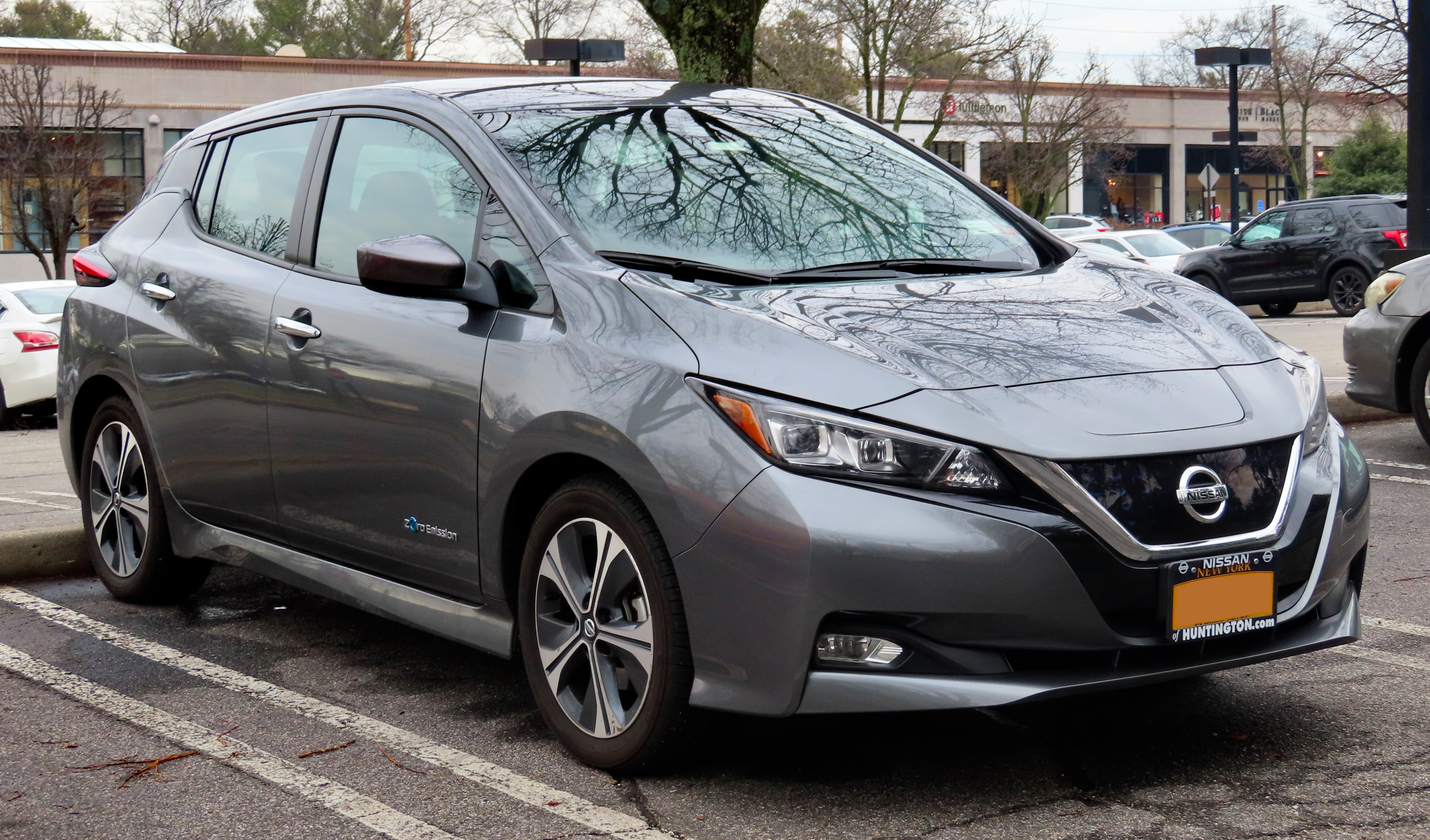
Bolt owners and less Ease one thousand dollars rebate towards the purchase or lease of a Leaf when financing with Nissan. The offer is available until July eighth in
the US, and owners aren't required to trade in their Bolt now that GM has discontinued the Bolt The Leaf is the most affordable EV in the market, with an MSRP of twenty eight thousand dollars with the forty kilo one hour battery pack. But it's not just Nissan. Porsche is offering anyone leasing an EV
up to forty five hundred dollars in credits for the purchaser lease of a new techon. The amount of credits you receive depends on how much time you have
left on your current lease. Porsche will give you fifteen hundred bucks for a
shorter remaining lease and up to forty five hundred dollars for a lease that's longer.
And it's easy to see why Porsche is offering this incentive. It sold
twelve hundred and forty seven ty Coons in the first quarter in the US, which is down about twenty percent compared to a year ago. There's nothing wrong
with heavy metal. Hey light enough, but with world class composit material taging
automotive technologies makes vehicles lighter, safer, and more eco friendly. The European
Union is ready to slap import terrace on Chinese make cars because it's afraid that a tidal wave of imports will cause factories in Europe to close. But if
Chinese automakers want to make cars in Europe instead of importing them, that's a different matter. A number of countries are offering incentives to Chinese automakers to build
new assembly plants within their borders. The automakers are most likely to locate in
low cost countries such as Hungary, Poland, Turkey and Spain. Labor rates
in northern Europe are probably too high to attract new assembly plants even with incentives, and if plants in Germany, France, Belgium, Sweden and the UK start closing down years from now, the political backlash will be horrific. Volvo
is already making sure it don't get slapped with those tariffs. The Times reports
that the automakers started to shift production of its evs, the EX thirty and the EX ninety, from China to Belgium. The EX ninety is being made
in the US as well, and it may also move production of some cars being shipped to the UK. This is seen as a way for it to
avoid the tariffs, but Volvo denied the report and says it shifting production because it wants to build vehicles and markets where they're sold at the same time, Volvo is dealing with another software glitch on the EX thirty, and the automaker is recalling almost all of the seventy two thousand units that have been made.
The model may have an air in the center screen that causes the speedometer to go into test mode, but luckily the issue can be fixed within over the air update. Volvo also had to delay deliveries of the model earlier this year
in Europe because of another software issue, and software issues have also delayed production of the EX ninety, which, as we just mentioned, kicked off in the US last week. It's still common to see people comment that the quality
of Chinese vehicles just don't match up to what's coming out of Europe, Japan, South Korea and the US, But once you actually get behind the wheel of one, your mind might be changed if you didn't already check it out.
Over the weekend, we've posted a video of John and Terry Wachowski, the president of vehicle benchmarking specialist Caresoft, driving around several Chinese EVY competitors that are already on sale in their home market and in some cases other parts of the world. I think an important thing to think of when watching the video
is remember how quickly these Chinese automakers have gotten to this point, and if this is what they already have on sale, imagine what's coming next. Despite
all the negative reports about Esla that you see in the media, it still grew its top line more than any other car company last year. In fact,
Tesla came within twenty two billion dollars of raking in the same amount of revenue that the entire Hondai group did. That's one of the insights we got
from the industry report card, which we think is full of fascinating information.
You can watch the video presentation of the highlights from the report card on our website or on our YouTube channel. But if you'd like access to all the
raw data plus information that's not included in the video, we're selling it for only forty five dollars. Just visit the autoline dot tv website and click on
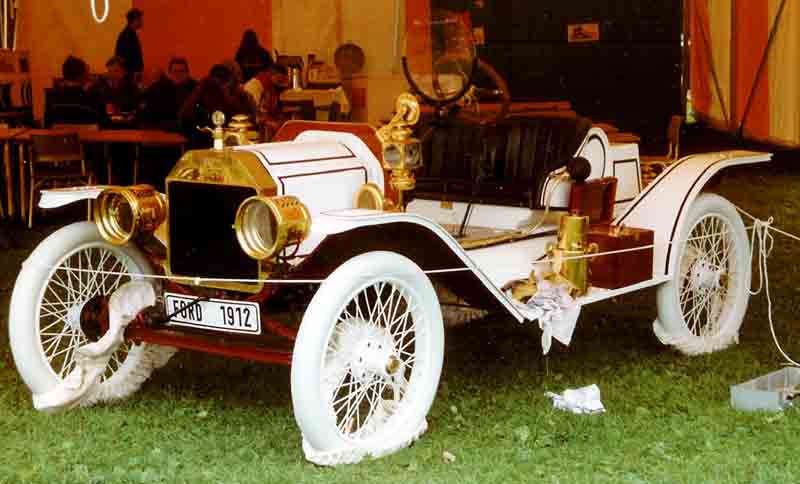
the spot titled merchandise, or just click on the link in today's transcript or description box. When engineers at Ford in nineteen twelve quietly updated the model T
and then showed it to Henry, he was so angry that he literally smashed it to pieces. But does Elon must feel that strongly about changing the looks
of the Tesla Model Why. It's been about four years since it went into
production without a change to its styling, and it's going to stay that way for a while longer. Elon Musk posted on social media that no Model Why
refresh is coming out this year, but said that it would keep getting little improvements. The Model three came out about three years before The Why, but
it only got its first styling refresh last year, so by that measure, the new look Why would come out in twenty twenty six. In the meantime,
sales of the Model Why are slipping. That's the end for today's show.
Thanks for making autoline a part of your day out Online Daily is brought to you by Bridgestone Solutions for Your Journey, Intrepid Control Systems, Over the Air, Engineering, Boost Your Game, MEDC where Michigan businesses are powering the future of mobility, Tagent Automotive Technologies the Formula for Better Mobility and by ZF Intrepid's NEOVIPI allowing automotive engineers to interface, capture and monitor vehicle data using Raspberry
Pie. As a matter of fact, it's the automotive industry's first robust platform
for Raspberry Pie featuring Intrepid canefting technology and Raspberry Pie compute module. The NEOVIPI
is designed for automotive environments, allowing use with relative power ranges and applications.
In addition, the NEOVIPI enables you to use the Raspberry Pie for compute while avoiding additional development to adapt to network environments. That makes the NEOVIPI powerful enough
to solve your vehicle network problems, yet small enough to fit in your backpack.
One of many intrepid tools used for developing zonal architecture and software divine vehicles.
Keeping your heart racing in and out of the gym, that's what really matters. Bridge don't pretends to sport as tires with a fifty thousand mile limited
warranty. Michigan is leading the charge in mobility and innovation, and I can't
think of a better state to be in.
Request an explanation for:
3 cars
3 cars featured
Request an Explanation
Heard something you'd like explained? We'll add it to this episode.
Sign in to request explanations for terms you heard.
Want to learn more?
Browse our glossary for plain-English explanations of automotive terms, jargon, and concepts.
See something that's not quite right? Our annotations are AI-generated and can sometimes miss the mark.
Click the flag icon on any annotation to suggest a correction.