The discussion covers the political battle over EV tax credits in the U.S., with major EV makers urging the Trump administration to maintain subsidies that support jobs and competitiveness against China. The episode also highlights Infiniti's decline in China amid a luxury market downturn and competition from Chinese EVs. Mercedes unveils advanced EV tech with efficient batteries and hybrid systems, while Chinese battery maker CATL introduces a promising second-gen sodium-ion battery. Toyota aims to cut EV production costs with innovative manufacturing, and Neo expands its EV charging network. Hyundai launches a race-inspired performance model, rounding out a global look at EV and automotive industry shifts.
Topics:ev tax creditsinfiniti in chinamercedes ev technologycarl battery innovationtoyota ev manufacturingchina eu ev tariffsneo charging networkhyundai performance modelautonomous vehicle standardspublic transportation funding
- EV Makers Beg Trump Not to Ax EV Subsidies - Trump Looks at National AV Standard - U.S. Public Transit Gets Big Election Boost - Infiniti Dying in China - EU OEMs Try to Prop Up Chinese Dealers - Mercedes Shares Details About New EV Platform - China and EU Still Negotiating Over Tariffs - CATL Intros 2nd-Gen Sodium Battery - Toyota Working to Slash Cost of BEVs - Avatr Joins Nio’s Battery Charging Network - Hyundai Reveals High-Performance Elantra N
"...rs. Lucid has already improved its system for the Gravity SUV and is working on its next gen tech that's ev..."
Select text to request an explanation
Speaker 1: This is underlined daily the show dedicated to enthusiasts of the global automotive industry. EV makers and battery companies are
begging the Trump administration not to kill off the federal EV tax credit. The Zero Emission Transportation Association, which represents
companies like Rivian, Tesla, Uber, Lucid, and Panasonic, say tax credits for EV sales and production have helped grow jobs and states that voted Republican, and ending them would hurt job growth. The group also says the credits help quote
compete to win against China. As we reported last week,
the Trump administration wants to kill off the seventy five hundred dollars tax credit for purchasing an EV. We think
they'll likely get rid of that, but keep incentives for battery production because most factories are located in states that voted Republican, and buildings factories creates jobs, and Trump says he's all about creating jobs. Speaking of Trump, Bloomberg reports
he's planning to issue a national standard for autonomous vehicles.
No doubt, Elon Musk has been talking to Trump about that since. Elon says the future of Tesla is really
with autonomous cars in AI. Right now, there isn't much
of a national standard for avs, and a missmash of state regulations make it almost impossible for automakers to deploy avs on a national basis. While the Department of Transportation
could issue rules on this, an Act of Congress would make it happen a lot faster. One interesting development from
the US election two weeks ago was the number of ballot initiatives for public transportation that were approved by voters, even in conservative areas like Nashville, Tennessee, and Maricopa County.
Speaker 2: In Arizona, there were.
Speaker 1: Twenty six initiatives and nineteen of them were approved. Those
and other approved initiatives this year raise an additional twenty five billion dollars for public transportation. Experts say people voted
this way because they want alternative choices for transportation, especially high quality public transportation. Okay, now over to China, where
Infinity is dying. There are rumors swirling around that Nissan's
luxury brand will pull out of the Chinese market, and while Infinity denies it will do that, the sales numbers show that the brand is essentially dead. So far this year,
it's sold less than two thousand cars in China, and you can't support a sales organization with so few sales.
And in fact, all the premium European brands in China are now subsidizing their Chinese dealers due to the sharp drop in sales, and they're subsidizing them to the tune of hundreds of millions of euros. But it isn't just
the European luxury brands. The entire life luxury segment in
China is off eight and a half percent so far this year, and two thousand dealerships are expected to go out of business.
Speaker 2: Two things are happening here.
Speaker 1: There's a backlash in China against flashy spending, and foreign automakers are falling behind Chinese automakers in evs, in vehicle infotainment and autonomous driving.
Speaker 3: Knowing that a little rain won't slow down your day, that's what really matters. Bridgetone torontso Quia tract tires confident
control in wet conditions.
Speaker 1: Mercedes is chasing lucid Air levels of efficiency with its next gen electric vehicles. The first to launch will be
the CLA sidan As, a twenty twenty six model year vehicle, followed by a station wagon and two SUVs. They'll ride
on a new skateboard platform called Mercedes Benz Modular Archet Texture, which features an eight hundred volt electrical system and a new in house developed drive unit. That unit combines a
two hundred kilowatt or nearly two hundred and seventy horse power electric motor with a two speed gearbox and a silicon carbide inverter. Formatic or all wheel drive versions add
an eighty kilowatt or roughly one hundred and five horse power electric motor on the front axle, but to maintain efficiency, Mercedes says it's mainly used as a boost function.
Speaker 2: Two battery packs will be available.
Speaker 1: One is an NMC or nickel manganese in cobalt chemistry and has an energy density of six hundred and eighty watt hours per liter, which is twenty percent more than its previous packs. With eighty five kilowatt hours of capacity,
it's expected to return over seven hundred and fifty kilometers or four hundred and sixty six miles of range, or the equivalent of twelve kilo hours per one hundred kilometers.
This battery will be used on sportier and higher end models.
The other is an LFP or lithium iron phosphate pack, which has an energy density of four hundred and fifty watt hours per liter and a capacity of fifty eight kilowatt hours. Rounding out the highlights on the EV side
of things is an improved charging capability of up to three hundred and twenty kilowatts, which can add about three hundred kilometers or about one hundred and eighty five miles of range in ten minutes. But these vehicles will have
a hybrid set up as well. It combines a turbocharged
one and a half liter four cylinder engine which is available in three outputs, with a twenty kilowat or roughly twenty seven horsepower electric motor that's integrated into an eight speed automatic transmission, along with a forty eight volt one point three kilowat hour battery pack. Vehicles will be able
to cruise an EV only mode for part of the time.
Mercedes also converted its AC compressor to forty eight volts, which, as we know from our cyber truck teardown videos, can reduce the size of parts and cut wire size by an average of about fifty percent. The company is going
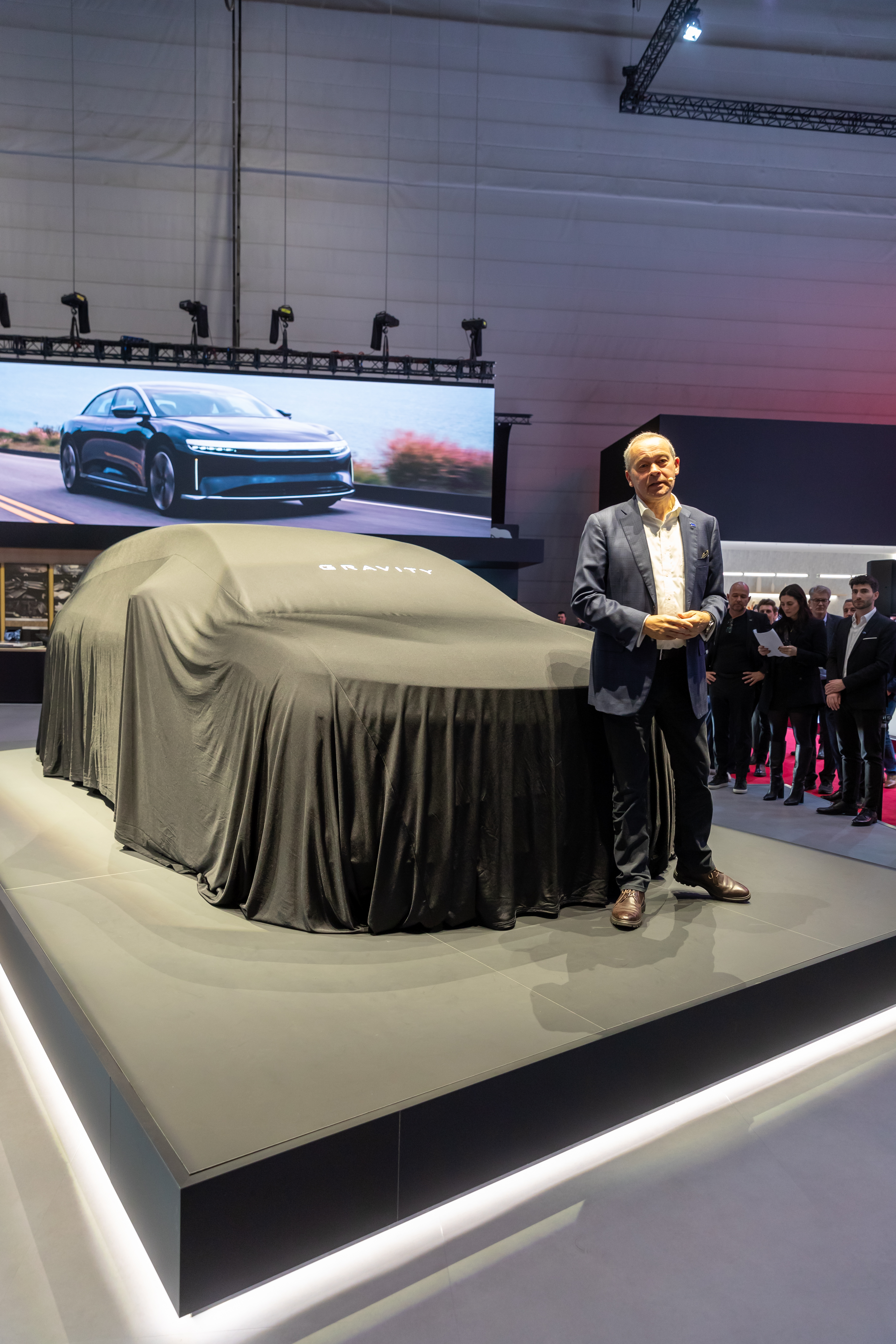
to need to keep innovating like this if it wants to keep up with Lucid and others. Lucid has already
improved its system for the Gravity SUV and is working on its next gen tech that's even more efficient. It
looks like China and Europe have made significant progress in their negotiations to end the EU's tariffs on Chinese made evs.
According to a posting on a Webo account affiliated with the state run China Central Television, the EU and China have reached a quote technical consensus on scaling back or ending the tariffs. However, there aren't any details about the
potential deal. It's been previously reported that they're working on
a deal that would set prices on Chinese made EA evs and limit imports to the EU in order to avoid the tariffs. Chinese EV battery makers COTL introduced its
second generation sodium ion battery. The company says the batteries
have better safety and low temperature performance compared to lithium ion batteries, with the ability to be discharged at temperatures as cold as minus forty degrees. COTL didn't reveal its
energy density, but previously said it's aiming to exceed two hundred watt hours per kilogram, which is not quite as energy dense as lithium packs. According to reports, cotl's second
gen sodium batteries could replace twenty to thirty percent of lithium ion batteries in small or short range vehicles. The
batteries are expected to launch next year, but they won't reach mass production until twenty twenty seven. Toyota is quietly
making progress on slashing the costs needed to make electric cars.
Toyota calls its b EV development area thirty five because it wants to shrink the manufacturing footprint and the number of parts needed to make b evs by thirty five percent.
The first car to benefit from this will be Alexis that debuts in twenty twenty six. We fully expected to
use large castings to eliminate stampings, and possibly a form of unboxed assembly, just like Tesla is playing around with.
Toyota says it will reduce product development time and equipment costs by twenty five percent and double productivity on its dedicated EV assembly lines. The company has already started converting
some plans to the new way of making cars, with the goal of converting all of them so it doesn't have to spend a fortune to build new ones. Those
efforts in Japan have boosted manufacturing capacity by eighty thousand vehicles already. Chinese automaker Neo just got another automaker to
sign up for its charging network in China. Avatar, a
joint venture between Changan Huawei and CTL, is Neo's latest partner, and all Avatar owners now have full access to the network.
Neo has partnerships with twelve other automakers for its charging network, which now includes more than twenty six hundred swapping stations and nearly twenty four thousand chargers. Hyundai's performance and vehicles
are pretty impressive.
Speaker 2: And already feel a little bit like a.
Speaker 1: Race car for the road, but now they'll really have that race car look. It's coming out with a special
TCR edition of the Yolantra En that looks just like the cars that Houndi puts on the track. On top
of the unique touches inside and out, it features an adjustable carbon spoiler and lighter nineteen inch wheels. The model
launches in South Korea next month, followed by global markets in twenty twenty five. But that brings us to the
end of today's show. Thanks for making Autoline Up part
of your day.
Speaker 4: Auto Line Daily is brought to you by Bridgestone Solutions for your journey, Intrepid control systems, over the air engineering boost your game, and by Tajan Automotive Technologies the formula for better mobility.
Speaker 5: There's nothing wrong with heavy metal, hey right enough, but with world class composite material, Tajent Automotive Technologies makes vehicles lighter, safer, and more eco friendly.
Speaker 6: Developing today's vehicles, issues can happen in an instant. What
good is knowing your problems without the data to solve them?
Eat Wireless Neova Cloud your secure off the shelf solution, empowering real time collaboration for quick resolution. With Wireless Neova Cloud,
your team can prevent issues before they can escalate. Driver
communication data and remote diagnostics to analyze and resolve your problems using OTA, allowing your executives to oversight throughout the process.
Wireless Neova Cloud your vehicle update solution in production and on the road. Intrepid control systems driven by your data
Request an explanation for:
2 cars
2 cars featured
Request an Explanation
Heard something you'd like explained? We'll add it to this episode.
Sign in to request explanations for terms you heard.
Want to learn more?
Browse our glossary for plain-English explanations of automotive terms, jargon, and concepts.
See something that's not quite right? Our annotations are AI-generated and can sometimes miss the mark.
Click the flag icon on any annotation to suggest a correction.