Jaguar unveils a bold new electric sedan concept, signaling a major shift in design and target audience. GM sells its stake in a battery plant to LG Energy Solution and plans to use prismatic cells for future EVs. Tesla faces legal setbacks over Elon Musk's pay package and reports fluctuating deliveries, while Cybertruck production shows signs of slowing. Volkswagen workers strike over plant closures and wage cuts. Ford launches the all-electric Puma in Europe, and startup Tello reveals a compact electric pickup with promising specs. Trade tensions between the US and China threaten supply chains for critical minerals.
Topics:jaguar electric sedangm battery plant saleprismatic battery cellstesla legal issuestesla cybertruck productionvolkswagen strikesford electric pumatello electric pickupus china trade tensionsautomotive supply chain
- Jaguar's Stunning Brand Revamping - Tavares Wanted More Cost Cutting - STLA's 10-Person Executive Committee - Musk's Pay Package Rejected Again - Tesla Deliveries Fall in China - Looks Like Cybertruck Demand is Falling - 100,000 VW Workers Went on 2-Hour Strike - GM Pivots to Prismatic Cells - China Bans Exports of Key Materials - Ford Unveils All-Electric Puma - Configurator Opens for Mini U.S. EV Pickup
"...Ford revealed the new all electric version of the Puma, which it calls the Puma Gene. It features a fort..."
Select text to request an explanation
Speaker 1: This autolne Daily, the show dedicated to enthusiasts of the global automotive industry. In one of the most stunning brand
revamps in the history of the auto industry, we think Jaguar is dumping its current customer base and is veering off towards a new generation of buyers. Yesterday in Miami
during Art Week, Jag showed off what it calls the Type double Low, which breaks away from every line in the brand's historic form language. Jaguar calls it exuberant modernism.
Note the extra long hood for a dash to axle proportion that hasn't really been popular since the nineteen thirties.
The sharp corners at the front end emphasized the width, while the cabin is pushed back as far as possible, and there's no back window or backlight as they call it in the industry. The rear tail lights are also
hidden in what JAG calls strike through horizontal graphics and butterfly doors open to a minimalist interior that's highlighted with brass accents. But we caution you to keep in mind
that these are renderings that are computer images and not an actual car, and designers always like to cheat the design in these renderings, meaning the greenhouse probably won't be chopped so low, the gap between the tires and wheel wells will likely be much larger, and the car will sit higher. Moreover, the production version will be a four door,
not the two door shown here. We'll have to wait
a year before we see the actual production car, and that's when we'll see how much this electric sedan appeals to the new set of buyers that it's aimed at. Okay,
over to Stalantis, where we're learning more about why and how Carlos Tavaras got dropped as CEO. The Wall Street
Journal reports that Tavaras wanted to double down on his cost cutting crusade and proposed to postpone payments to suppliers to provide a cash windfall to end the year on a high note. But that was the straw that broke
the camel's back, and when the board of directors rejected his latest plan, Tavarres quit and as we reported yesterday, it didn't sound like the board had a plan B to replace him, so it's forming a ten person committee to run the company until they find a new CEO.
The committee will be run by John Elkan Stalantis's chairman.
Committee members include Antonio Felosa, who runs North American Operations, Maxine Piquett, who runs purchasing, and Doug Oasterman, the CFO, while Richard Palmer, the retired CFO, is coming back as an advisor. Let's hope they find a new CEO soon.
Running a car company by a ten person committee could be disastrous. It hasn't been a good day for Elon
Musk or Tesla. First up, a Delaware judge has once
again rejected Elon's huge pay package. The fifty six billion
dollar pay package was rejected by the judge in January because she ruled it was excessive and was given the green light by a board that isn't independent enough from Musk.
Tesla held a shareholder vote in June to reinstate the package, which was approved by seventy seven percent of shareholders. With
that vote, must lawyers argued that his pay package should be reinstated, but the judge once again rejected it for the same reasons as before. That pay package is now
worth one hundred billion dollars due to Tesla's stock searge since Donald Trump was reelected. Musk blasted the latest rejection
and called it absolute corruption, and Tesla released a statement saying the decision is wrong and it's going to appeal it.
While over in China, Tesla's deliveries slumped in November. According
to the China Passenger Car Association, Tesla's ship nearly seventy nine thousand vehicles from its Shanghai factory last month, which was down four point three percent from a year ago. However,
it was a sixteen percent increase from October. Tesla is
making a big push to increase sales globally this quarter, and it needs to sell a record five hundred and fifteen thousand vehicles to hit its sales target for the year, but at the same time, it also looks like demand for the cyber truck is slowing. Tesla lowered its lease
price by ten percent, and Business Insider reports that the company told line workers at its plant in Austin, Texas that make the cyber truck to take three days off this week. Workers will still be paid for their schedule shifts,
but it's not clear why Tesla told the workers not to report, and Tesla didn't respond to a request for comment. However,
some workers told Business Insider that their schedules have been inconsistent since October, and they now feel lucky to get forty hours a week. At one point, people bragged that
Tesla had over two million reservations for the cyber truck, but the company is now accepting orders from anyone, and it's estimated that Tesla has delivered between forty and fifty thousand units.
Speaker 2: Knowing that a little rain won't slow down your day, that's what really matters. Rich done to runs a qui
attract tires confident control in wet conditions.
Speaker 1: Volkswagen workers in Germany are taking action over the company's threat to close plants and slash wages. The union ig
Mattal said nearly one hundred thousand workers across nine plants participated in a two hour strike yesterday, and while the strike was short, the union did say it disrupted production.
VW and the union are scheduled to resume talks next week, but more strikes are likely if they can't reach a deal.
GM is selling its stake in one of the three battery plants it's building in the US to LG Energy Solution.
Selling the LTM cell plant in Michigan will allow GM to recoup its investment and allow LG to start installing new equipment right away. It's entirely possible that new equipment
will be used to make prismatic cells that will go into future gmvs. Nearly three years ago, the two companies
announced a partnership to build those three US battery plants.
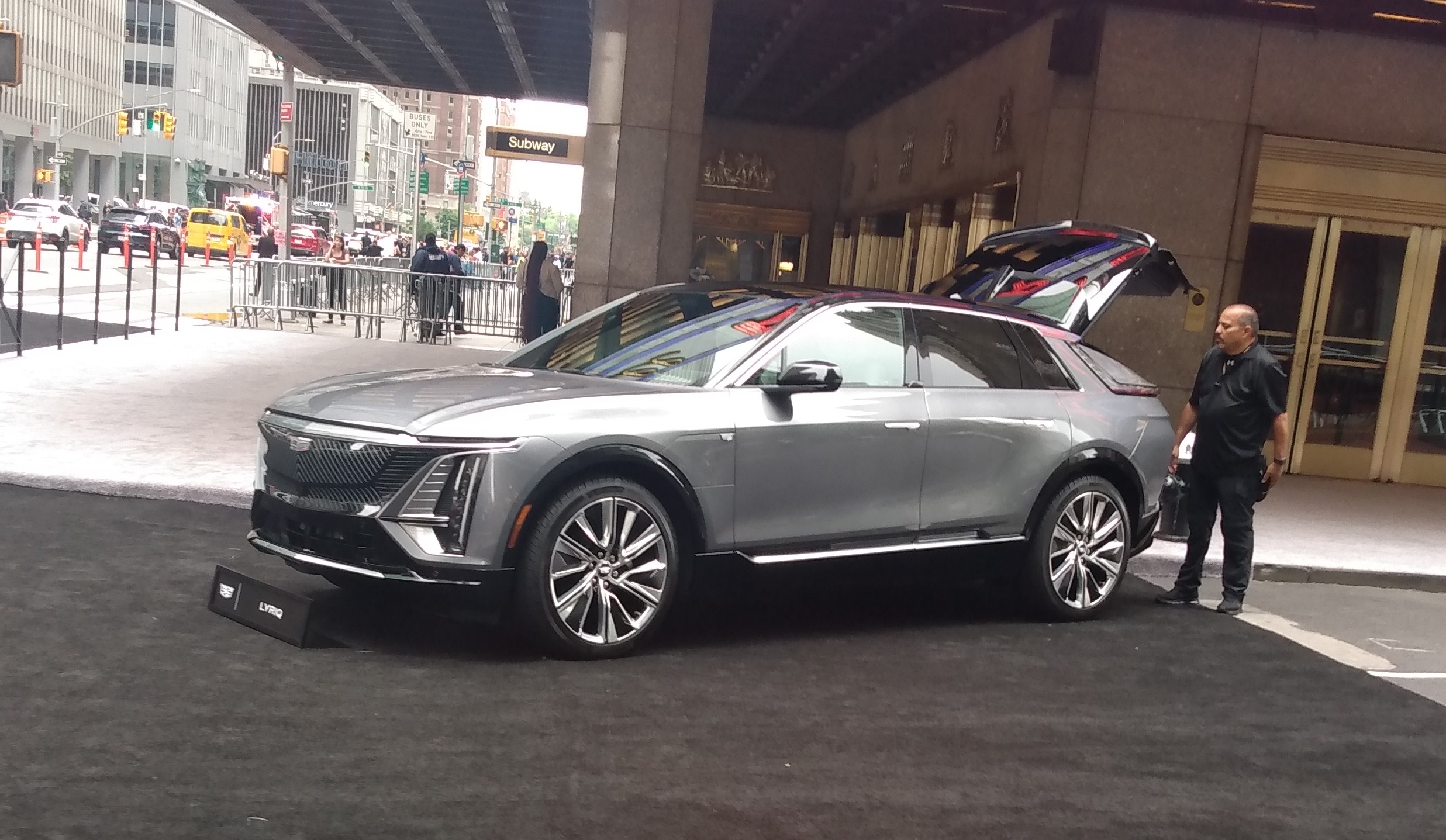
Their plant in Ohio opened in September of twenty twenty two and supplies batteries for the Hummer and Lyric. Earlier
this year, their plant in Tennessee started shipping batteries for the Blazer Equinox in Silverado, but the Ohio and Tennessee plants only make pouch cells, and GM also announced yesterday that it's extending its partnership with LG to include prismatic battery cells. It talks about how prismatic cells offer efficient
packaging that can reduce weight, as well as simplify manufacturing that can cut costs, which is why GM says they'll be used to power future evs. Trade tensions between the
US and China are heating up. Yesterday, the Binded Administration
placed restrictions on US companies exporting materials to Chinese semiconductor chip makers. In retaliation, China is banning exports of gallium, germanium,
and antimony to the US. They're needed to make advanced
microprocessors and infrared technology. Most of the minerals go to
military applications, but it could have an impact on the auto industry. China, which accounts for most global production of
the minerals, already started limiting exports last year, which caused prices to spike, and now with the latest crackdown, prices will likely continue to soar. Ford revealed the new all
electric version of the Puma, which it calls the Puma Gene.
It features a forty three kilowade hour battery pack that returns up to three hundred and seventy six kilometers or about two hundred and thirty miles of range. The car's
roughly one hundred and sixty five horse power electric motor is actually built at a Ford plant in the UK and then ship to Romania where the Puma is produced.
That motor drives the front wheels, and Ford claims the setup will do zero to one hundred kilometers an hour in eight seconds. Maximum charging speed is one hundred kilowatts,
which allows the Puma Gene to charge from ten to eighty percent and twenty three minutes. Customers in Europe can
place orders now, but deliveries won't start until the spring of next year. Here's an interesting evy startup that it
might be worth keeping an eye on. Tello is a
Silicon Valley based startup that wants to introduce an electric pickup in the US that's about the size of a Mini Cooper but can still carry five passengers or a four x eight sheet applywood with the rear seats folded down.
It just revealed an online configurator which shows the price for the truck starts at forty one thou five hundred dollars before any incentives. That's for a three hundred horse
power single motor version with a nearly eighty kilowad hour battery pack that returns an estimated two hundred and sixty miles of range. There's also a dual motor version that
makes five hundred horse power, does zero to sixty and four seconds, and has a one hundred and six kilowad hour battery pack that provides three hundred and fifty miles of range. The company currently has around four thousand pre
orders for the truck, but we'll have to see if it can hit its projected launch, which is said to be at the end of next year, and be sure to join us for Autoline After Hours this Thursday, when we'll have Chris Benjamin, the head of design at Scout.
We want to learn how we took an iconic brand that dropped out of the market in nineteen eighty and updated it for today's world. Also, Tony Kiroga, the editor
of Car and Driver, will also be on the show, So join John and Gary for a great inside look at what's going on at Scout. But that's a wrap
for this show. Thanks for tuning in.
Speaker 3: Autoline Daily is brought to you by Bridgestone Solutions for your journey, Intrepid Control Systems over the Year Engineering boost your game, and by Tajent Automotive Technologies the formula for better mobility.
Speaker 4: There's nothing wrong with heavy metal, hey right enough, but with world class composite material Taging Automotive Technologies makes vehicles lighter, safer, and more eco friendly.
Speaker 1: Developing today's vehicles issues can happen in an instant. What
good is knowing your problems without the data to solve them?
Meet Wireless Neovi Cloud, your secure off the shelf solution empowering real time collaboration for quick resolution. With wireless Neova Cloud,
your team can prevent issues before they can escalate.
Speaker 4: Driver communication data and remote diagnostics to analyze and resolve your problems using OTA, allowing your executives to oversight throughout the process.
Speaker 3: Wireless Nearby Cloud your vehicle update Speaker 1: Solution in production and on the road in trepid control systems driven by your data.
Request an explanation for:
3 cars
3 cars featured
Request an Explanation
Heard something you'd like explained? We'll add it to this episode.
Sign in to request explanations for terms you heard.
Want to learn more?
Browse our glossary for plain-English explanations of automotive terms, jargon, and concepts.
See something that's not quite right? Our annotations are AI-generated and can sometimes miss the mark.
Click the flag icon on any annotation to suggest a correction.