Tesla sales have sharply declined in Europe, particularly Germany, amid political controversies and shifting consumer preferences favoring traditional automakers like Ford, GM, and Toyota. Ford reported mixed financial results, with strong commercial vehicle profits but challenges in its internal combustion unit and skepticism about full-size electric trucks. Nissan is incentivizing dealers to boost US sales and seeking new partnerships after a failed Honda merger, with Foxconn showing interest. Rivian aims to advance autonomous driving with enhanced sensors and AI. Volkswagen plans a new line of affordable small EVs, while Jeep launched a more accessible Wagoneer S Limited. The episode also previews a discussion on the future of EVs amid industry struggles and subsidy changes.
- Poll Shows Elon Musk Very Polarizing in America - Ford's 2024 Earnings Mediocre - Jim Farley Bullish on EREVs - Volvo's 2024 Earnings Strong, But Predicts Weaker 2025 - Dealers Won't Like Nissan's New Incentive Plan - Nissan Looking For a New Partner - Rivian Thinks It Can Catch Up Fast with AVs - VW Developing New Family of Small EVs - Jeep Launches New Wagoneer S Trim
"... years. And speaking of new evs, Jeep debuted the Wagoneer S Limited at the Chicago Auto Show. It comes with..."
Select text to request an explanation
Speaker 1: This is Outline Daily, the show dedicated to enthusiasts of the global automotive industry. Tesla sales are taking a nosedive
in Europe, and now we've got the latest numbers from Germany, which are pretty bad. The KBA, the Federal Motor Transport Authority,
said sixty percent fewer new teslas were registered last month in Germany compared to a year ago. That's a huge drop,
likely for a number of reasons. Teslas sales are typically
weak in the first quarter. Some customers may be waiting
for the redesign model HY, and a lot of people believe that Europeans are turned off by Elon Musk interjecting himself into European politics. And it's not just Europeans. A
fascinating poll of Americans that was conducted right after last November's presidential election shows that Elon Musk has a highly unfavorable rating amongst people who by p haves and evs.
Most women don't seem to like him either, but conversely, amongst ic and pickup drivers and men, Elon is rated quite favorably. However, it also shows that people who are
interested in buying an EV this year are far more likely to shot for a Ford, a GM or a Toyota than a Tesla. And remember this poll was conducted
last November. Elon is almost certainly more polarizing now than
he was back then. Okay, now over to Ford, which
posted its year end earnings. While there's some glimmer of
hope in the numbers, overall it was a pretty mediocre performance.
Ford sold four point four million vehicles worldwide, up one percent.
Revenue hit an all time record of nearly one hundred and eighty five billion dollars, but expenses were almost ten billion dollars higher than the year before, so its operating profit fell four point four percent to five point two billion dollars. Ford's net profit of five point eight billion
was thirty six percent higher. But remember last year it
took a one point seven billion dollar write off for changes to its pension obligations, so that big percentage gain really isn't as good as it seems. One thing's for sure,
Ford pro the commercial vehicle unit is what's powering the company's finances. Sales, revenues, and profits were up strong. It
posted an EBIT profit of nine billion. The EVE unit,
called Model E, did just as it expected and lost five billion dollars, even though it cut expenses by one point four billion. Ford credit the finance arm, beat Wall
Street guidance and posted a one point seven billion dollar ebit. Surprisingly,
it was Ford's IC unit, what they call Ford Blue, that fell far below guidance, posting a five point two billion dollars EBIT, but that was two billion lower than Ford expected. Overall, Ford doesn't see things getting a whole
lot better this year either. Wall Street was disappointed to
hear that, and its stock fell seven percent in after hours trading. But we did get some interesting tidbits from
Ford's earnings call with Wall Street analysts. CEO Jim Farley
said it doesn't see a market for full size electric trucks and SUVs. He said the batteries are so big
that quote the economics are unresolvable. However, Farley is quite
bullish on small and medium electric trucks and SUVs. Remember
yesterday we reported that Ford is coming out with an electric version of the Maverick pickup. But Farley is even
more bullish on extended range evs or e revs, which he claims will be priced very similar to their IC counterparts because there's no transmission, no drive line, and no axles, and also added the incremental and investment of adding a combustion engine is minimal for the customer. But Ford isn't
the only automaker saying twenty twenty five could be a rough year for the industry. So is Volvo Cars. It
sold more than seven hundred and sixty three thousand passenger vehicles globally last year, which is an all time sales record for the company and up eight percent from the year before. That brought in thirty six billion dollars in revenue,
which is also a record, but only up slightly. The
automaker's operating profit shot up twelve percent to just over two billion dollars, and its net profit of one point five billion was up thirteen percent compared to the year before. Yet,
despite those good results, Valvo CEO Jim Rowan says that demands started to slow in the second half of last year, and he expects twenty twenty five to be more challenging due to increase competition and political uncertainty.
Speaker 2: Making the life full of memories one road trip at a time, that's what really matters.
Speaker 3: Richtone weather Peak tires with.
Speaker 2: A seventy thousand mile womened warranty.
Speaker 1: In an effort to boost its retail sales in the US, Nissan is going to offer dealers cash for hitting monthly sales targets. The program, which is called a Stair Step
Incentive Plan, pays two hundred and fifty dollars per vehicle sold by dealerships that meet ninety percent of their sales goals.
It goes up to five hundred dollars per vehicle for hitting the target, and it increases to one thousand dollars if dealers go over by ten percent or more. The
sales goals varied by dealership and are based on pass performance.
The automakers sold just sixty four thousand vehicles in the US last month, of which retail sales were up just one percent, while its fleet sales were up by fifteen percent.
So that's why it's offering the incentives. And while this
should help Nissan move the metal, dealers don't like stairstep programs because they feel pressure to hit the next level and will sell vehicles below cost to hit the targets and collect the bonuses. And speaking of Nissan, the automaker
is looking for a new partner now that It's merger with Honda has fallen through. Bloomberg reports that Nissan prefers
to team up with a technology company and one that's based in the US, since North America is Nissan's most important market. That news sent Nissan shares up as much
as eight point seven percent on the Tokyo stock exchange earlier today. But the report also says that Taiwan's Foxcon
is interested in partnering with the automaker. It approached Nissan
about a tie up in December, but it backed off after the automakers started negotiations with Honda. However, it didn't
give up completely, and Coon is still interested in reaching a deal with Nissan. Rivian lags behind other automaker's autonomous capabilities,
but it thinks it can catch up fast. This year,
Rivian will start offering a hands free highway driving system, but it will continue to build on its second gen vehicle architecture as well, which it's improving with software AI and more powerful processors from Nvidia. Rivian is also using
more sensors. Its second gen system features eleven cameras and
five radars. With improvements, the company expects to launch level
three autonomous capabilities sometime next year, and Rivian hinted that it's willing to use lidar to get to full autonomy.
CEO R J. Scerin says that's one of the areas
where it's different from Tesla and a way for it to catch up to autopilot and FSD. Volkswagen is coming
out with a new family of small electric cars. The
first is a production version of the ID two all concept, which will hit dealership sometime next year with a starting price under twenty five thousand euro. The model is based
on a new front wheel drive version of the MEB platform and will have about two hundred and twenty horse power and up to four hundred and fifty kilometers or roughly two hundred and eighty miles of range. Following the
ID two comes in all new unnamed EV that will start at roughly twenty thousand euro. We'll see the concept
in about a month, while the production version will be shown off in twenty twenty seven. The model will debut
VW's all new SSP platform, which it calls fully digitized and highly scalable. In fact, the automaker confirmed that new
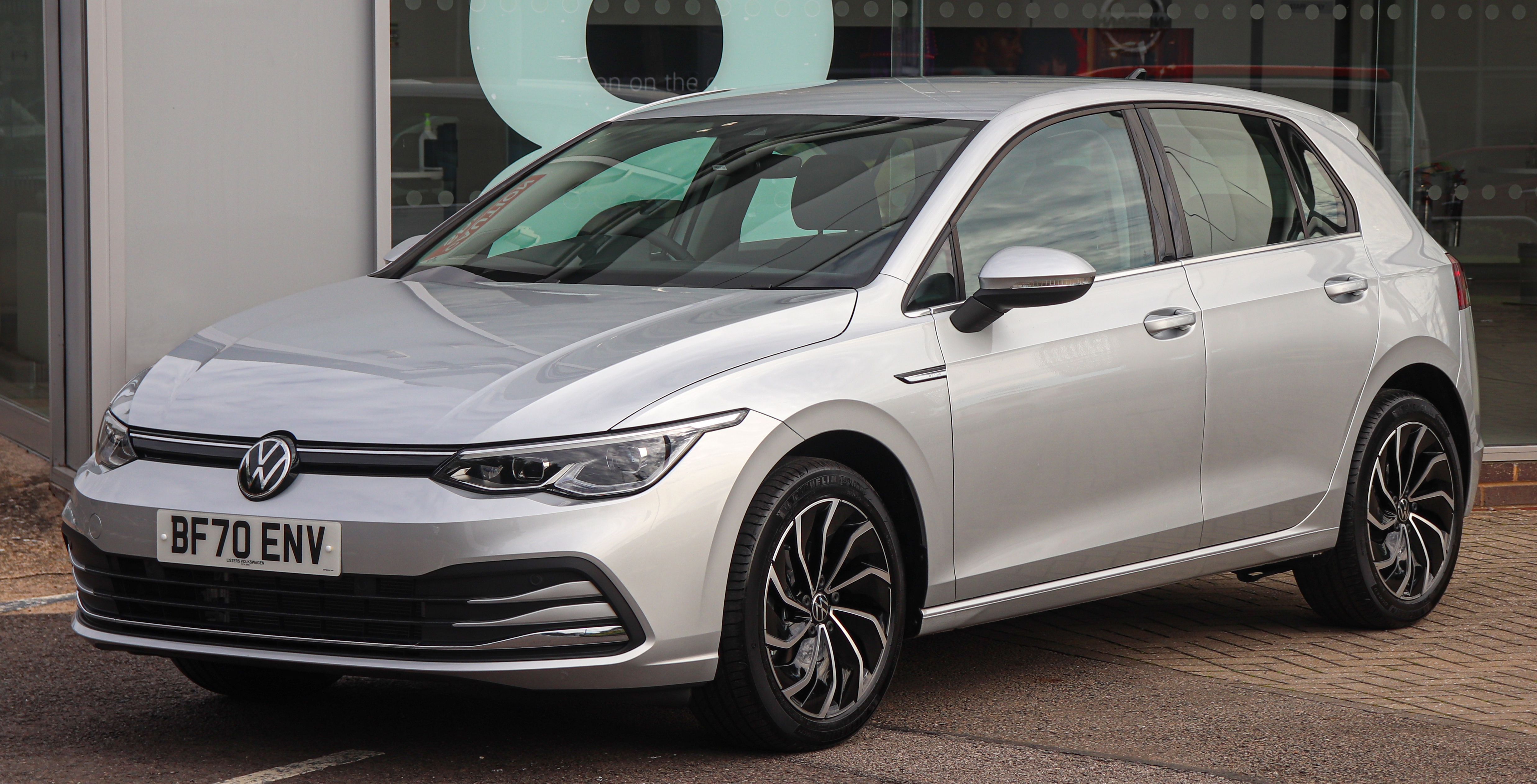
electric versions of the Golf and t Rock will also use the platform and previously VW sid SSP would be used by Audi and Porsche and would cover models with less than two hundred horse power up to those with over seventeen hundred horse power and all. The VW group
will introduce nine new models over the next two years.
And speaking of new evs, Jeep debuted the Wagoneer S Limited at the Chicago Auto Show. It comes with less
content than the launch edition, but the starting price is about five thousand dollars less. The Wagoneer S Limited has
a suggested retail price of just under sixty seven thousand dollars including destination charges. It also qualifies for the full
federal EV tax credit at purchase or lease, at least for now. It looks like that is going to get
phased out over time under the Trump administration and is the transition to EV's Inevitable sales are much weaker than expected.
Most automakers are losing billions on them, and President Trump might yank all the subsidies. But Mike Colias from the
Wall Street Journal just wrote a book called Inevitable, and he predicts the market will still go all electric. That's
why he's our guest on Autoline after hours. Today, we're
going to take a hard look at the new reality of what Evie's face, as well as dive into the stories behind this week's news. So join John and Gary
when the action starts at three pm Eastern Time. But
that brings us to the end of today's show, and I hope to see you later today.
Speaker 4: Auto Line Daily is brought to you by Bridgestone Solutions for your journey, Intrepid Control Systems, over the air engineering boost your game, and by Tajan Automotive Technologies the formula for better mobility.
Speaker 2: There's nothing wrong with heavy metal, hey light enough, but with world class composite material, Tajent Automotive Technologies makes vehicles lighter and more eco friendly.
Speaker 3: Developing today's vehicles, issues can happen in an instant. What
good is knowing your problems without the data to solve them.
Meet Wireless Neovi Cloud, your secure off the shelf solution, empowering real time collaboration for quick resolution. With Wireless Neova Cloud,
your team can prevent issues before they can escalate. Driver
communication data and remote diagnostics to analyze and resolve your problems using OTA, allowing your executives to oversight throughout the process.
Wireless NEOVI cloud your vehicle update solution in production and on the road in trepid controls steps driven by your data
Request an explanation for:
4 cars
4 cars featured
Request an Explanation
Heard something you'd like explained? We'll add it to this episode.
Sign in to request explanations for terms you heard.
Want to learn more?
Browse our glossary for plain-English explanations of automotive terms, jargon, and concepts.
See something that's not quite right? Our annotations are AI-generated and can sometimes miss the mark.
Click the flag icon on any annotation to suggest a correction.