President Trump's announcement of a 25% tariff on all imported vehicles and parts is shaking up the global auto industry, with potential price hikes, sales drops, and job losses looming. The episode also covers Hyundai's $21 billion US investment to expand EV production, Audi's move to digitize manufacturing with cloud-based controllers, and BMW's partnership with Alibaba to enhance AI cockpit tech for China. Foxconn aims to boost EV partnerships in Japan, while a study reveals EVs lose more value over five years than other vehicles, highlighting depreciation challenges in the electric market.
Topics:us import tariffsautomotive industry impacthyundai us investmentaudi digital manufacturingbmw ai cockpit technologyfoxconn ev partnershipsev depreciationvehicle value losstrade negotiationselectric vehicle market
- Trump Slaps Tariff on All Car Imports - Hyundai Holds Grand Opening for New Georgia Plant - Audi Controls Production Virtually - BMW Partners for AI Interior Tech - Foxconn Hopes EV Showcase Attracts New Partners - EVs Lose More Value Than Other Vehicles
"...esla Models Infinity, QX eighty, and the Maserati Ghibli. In fact, twenty three of the twenty five models ..."
Select text to request an explanation
Speaker 1: This is aut Aligned Daily, the show dedicated to enthusiasts of the global automotive industry. President Trump sent shockwaves through
the entire global auto industry yesterday announcing a new twenty five percent tariff on all vehicles imported to the US.
He claimed those imports, which accounted for nearly half of all new car sales in the US last year, pose a threat to the US's industrial.
Speaker 2: Base and national security.
Speaker 1: And on top of the vehicle import tariffs, which are supposed to go into effect on April third, Trump also implemented a twenty five percent import tariff on car parts that are not made in the US, like engines, transmissions, and electrical components that will kick in around May third.
Those tariffs will not apply to parts that comply with the USMCA Free Trade Agreement at first, but the administration is looking at ways that would essentially allow it to apply the tariff to then non US content of those parts.
And these aren't the only terraffs the Trump administration wants to impose that will have big impacts on the auto industry.
There's a twenty five percent tariff unimported steel and aluminum, which will stack on top of these new tariffs. There's
been threats of a twenty five percent tariff on products that come from countries that import Venezuelan oil, which seems like it's mainly aimed at China, and also stack on top of other terrafs, and the exemption that the administration gave to Canadian and Mexican imports that comply with the USMCA ends on April third as well, but it's not known what will happen with those tariffs yet. Trump believes
the terraffs will help spur growth in the nation because automakers will need to make more cars in one location and that will help the US generate an additional revenue of one hundred billion dollars a year. That's a lot
of money, but last year, the US imported four one hundred and seventy four billion dollars worth of automotive related products, and passenger cars made up two hundred and twenty billion dollars of that total. That's why auto groups and leaders
from all over the world have come out against these tariffs, with many now pledging their own retaliatory terraffs, and it caused the stock prices of most automakers to drop. No doubt,
automakers are stockpiling cars and parts ahead of the terraff, but as we've pointed out, that will only put off the pain for maybe a few months. If the tariffs
stick around for any amount of time, pretty much every single analyst says that prices will go up by thousands of dollars, which will cause sales to go down, which will result in fewer parts and vehicles being built, which will lead to job losses and fewer vehicle choices for consumers. However,
let's not forget that Trump has used terraces as a way to negotiate with other countries in the past and think that's what's going on here, because as you can see, the impact would be massive, And with all this going on, we've got to imagine that the Hondai Group is really happy with the timing of its new twenty one billion dollar investment in the US. Some of those funds will
be used to expand its new plant in Georgia that celebrated its grand opening yesterday. The facility will make evs
for Hyundai, Kia and Genesis, as well as the ability to build some hybrid vehicles. While it will initially have
the capacity to make three hundred thousand vehicles a year.
With the investment and expansion, the plant will eventually produce half a million vehicles.
Speaker 3: There's nothing wrong with heavy metal, hey light enough, but with world class composite material taging automotive technologies makes vehicles lighter, safer, and more eco friendly.
Speaker 1: Audi is digitizing its plants to make production safer and more efficient. The automaker says that one of its body
shops in Germany is the world's first to feature virtually controlled production, which it developed with Siemens, Cisco, and Broadcom.
It's taking hardware based controllers, which are essentially the brains of the machines, and bringing them into the cloud. The
virtual controllers enable software and new functions to be added faster, making production more efficient. They're first being used to make
the body of a Lamborghini model, and Audi is planning to use the tech at another body shop in Germany that makes the A six. We've seen Volkswagen and Mercedes
team up with Chinese companies for help on software, and now BMW is doing the same. The automaker is partnering
with tech giant Ali Baba to integrate AI cockpit technology into its vehicles for the Chinese market. The features will
launch next year and will include intelligent personal assistant with enhanced voice recognition, real time traffic information, and parking in restaurant recommendations. Ali Baba's technology is also used by Japung
Zeker and Leap Motor in China. The German automakers have
had to turn to Chinese tech companies for software to remain competitive because they haven't been successful developing it on their own. Fox Khan is stepping up its efforts to
partner with Japanese manufacturers. Last week, the Taiwanese contract manufacturer
formed a partnership with Mitsubishi to build EV's and now Reuter's reports that Fox Khan is going to hold an event in Japan on April ninth to showcase its EV strategy in an effort to attract new partners. Fox Khan
jumped into EV manufacturing five years ago, but previous deals with Jilian Lordstown fell apart. However, it believes it can
help automakers, especially Japanese companies, to be more cost competitive with the Chinese. Electric vehicles lose the most value after
five years of ownership, according to a new study from IC Cars, which analyzed eight hundred thousand vehicles sold in the US between March of twenty twenty four and February of twenty twenty five.
Speaker 2: The five year depreciation.
Speaker 1: For evs is nearly sixty percent, compared to the overall average of forty five percent. Hybrids and trucks had the
lowest depreciation, losing around forty percent of their value. The
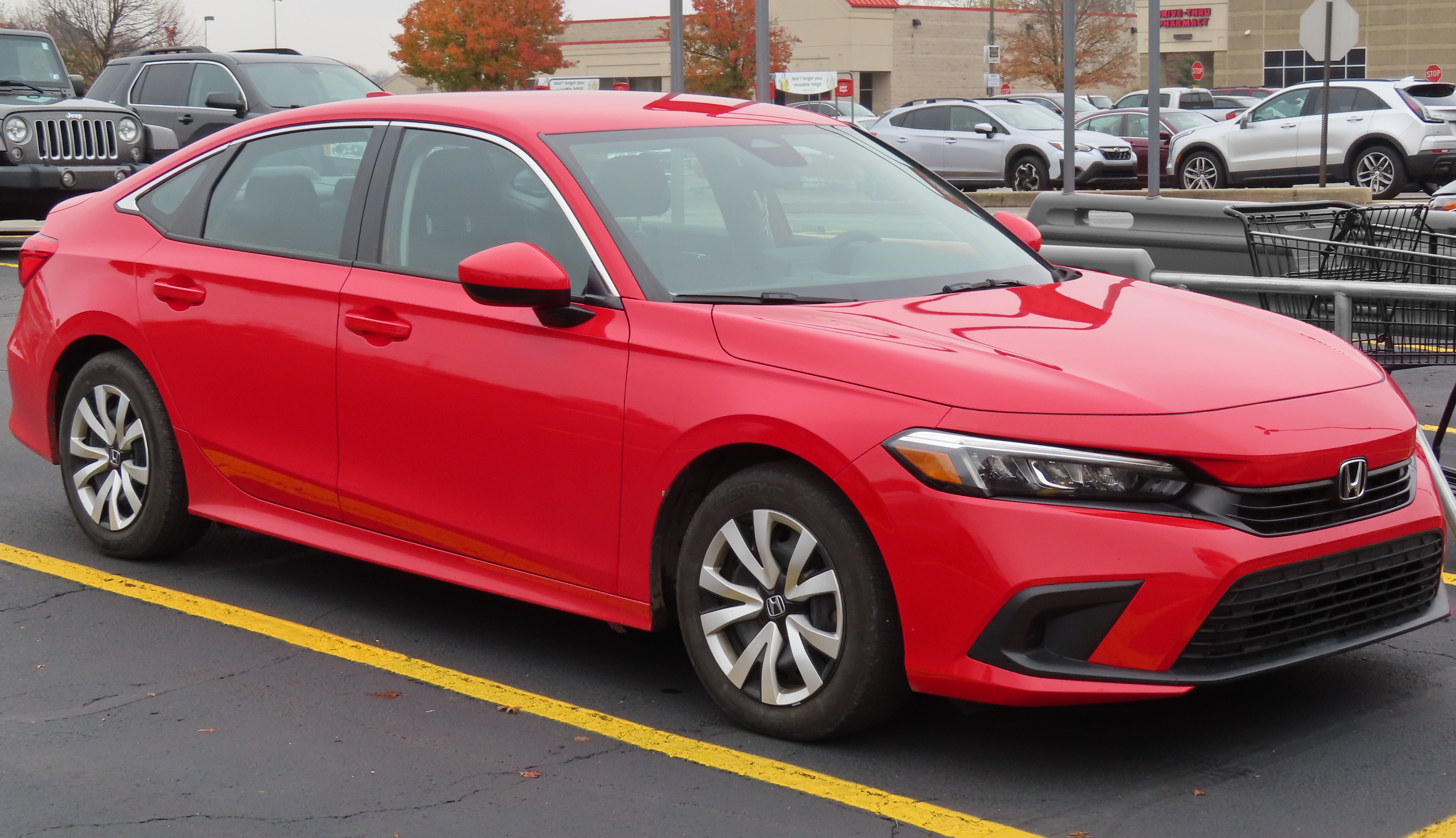
top five models with the lowest depreciation are the Portia nine to eleven and Cayman, Toyota Tacoma, Chevrolet Corvette, and the Honda Civic. At the other end of the spectrum,
the five models with the highest depreciation are the Jaguar Ipace at seventy two percent, followed by the BMW seven series, Tesla Models Infinity, QX eighty, and the Maserati Ghibli. In fact,
twenty three of the twenty five models that lost most of their value were evs and luxury vehicles. And just
a quick reminder that Autoline after Hours goes live at three pm Eastern time.
Speaker 2: Today. We've got a cybersecurity expert.
Speaker 1: Coming on the show to tell us if all this new tech and cars is going to lead to more hacks. Plus,
we'll get to this week's top news stories.
Speaker 2: So don't miss out. But that's a wrap for this show.
Speaker 1: Thanks for making Audoline a part of your day.
Speaker 4: Auto Line Daily is brought to you by Intrepid Control Systems over the Air Engineering boost your game, and by Tajent Automotive Technologies the formula for better mobility.
Speaker 5: Developing today's vehicle issues can happen in an instant. When's
the best time to solve a problem? The minute you
know you have one. Meet Wireless neovi Cloud. You're secure
off the shelf solution empowering real time collaboration for quick resolution.
With Wireless neov Cloud, your team can prevent issues before they can escalate. Driver communication data and remote diagnostics to
analyze and resolve your problems using OTA, allowing your executives oversight throughout the process. Wireless neov Cloud your vehicle update
solution in production and on the road Intrepid Control Systems driven by your data
Request an explanation for:
7 cars
Scroll for more
7 cars featured
Request an Explanation
Heard something you'd like explained? We'll add it to this episode.
Sign in to request explanations for terms you heard.
Want to learn more?
Browse our glossary for plain-English explanations of automotive terms, jargon, and concepts.
See something that's not quite right? Our annotations are AI-generated and can sometimes miss the mark.
Click the flag icon on any annotation to suggest a correction.