
Trade groups pressured the Trump administration to ease auto tariffs, leading to partial relief for US-made vehicles and parts, though tariffs on non-US content remain. GM reported weak Q1 earnings and pulled its annual guidance amid tariff uncertainty. Porsche's profits dropped sharply, halting US shipments. Ferrari plans to produce key EV components in-house. Volkswagen may build Chinese Layposs vehicles in Germany. Nissan plans to close its Wuhan plant. The episode also highlights the $15K Chinese electric off-roader iCar V23, Renault's new electric commercial vans, and JLR's reuse of old manufacturing equipment. Mercedes-Benz Truck aims for a unique reverse driving record with its electric semi.
Topics:auto tariffsgm earningsporsche profitsferrari ev strategyvw production dealnissan plant closurechinese electric off-roaderrenault electric vansjlr equipment reusemercedes electric truck record
- Trump to Ease Auto Tariffs, Sorta - GM Reports Weak Q1 - Porsche's Profits Plummet - Ferrari Keeps Key EV Components In-House - Chery Could Get VW Germany Plant - Nissan to Close Wuhan Plant - iCAR's $15K Chinese Off-Roader - Renault to Launch 3 EV CVs - New Renault Boreal for Global Markets - JLR Using Old Tooling to Cut Costs - Foxconn Could Build EV in U.S. Plant - Mercedes Trucks Wants Longest Reverse Record
"Speaker 2: It's likely to get worse. Speaker 1: Porsche has stopped shipping cars to its US dealers over the tariff uncertainty, and we estimate that the US accounts for nearly thirty percent of Porsche's profits. Speaker 2: Ferrari says it will build what it."
"... brought to you by Bridgestone solutions for your journey, intrepid control systems over the year, engineer..."
Select text to request an explanation
Speaker 1: This is Autoligne Daily, the show dedicated to enthusiasts of the global automotive industry. Last week, in an unprecedented move,
six different auto industry trade groups, including automakers, suppliers, and dealers, banded together to warn the Trump administration that its tariffs would cause car sales to drop and lead to layoffs.
And it looks like the President got the message. The
Wall Street Journal reports that the administration will lift the tariffs on steel and aluminum for vehicles made in the US.
Automakers importing parts to the US can also apply for reimbursement up to three point seventy five percent of the value of a US made car, but they'll still have to pay the twenty five percent tariff on the non US content of those parts, and the three point seventy five percent reimbursement only lasts for a year. It drops
to two and a half percent in the second year, and then gets phased out entirely. The President will attend
a rally in Michigan today where he's expected to officially lay out the new policy, and because of that visit, GM CEO Mary Barra is rescheduling her conference call with auto analysts. She was going to do it today because
GM released it's Q one earnings this morning, but Barra clearly wants to wait until she knows exactly what the Trump administration is going to say before she talks to the analyst community. On Thursday, GM already pulled its guidance
for the rest of the year due to tariff uncertainty, and so it comes as no surprise that GM had a week quarter. Sales were up less than two percent,
revenue was up two point three percent, but total expenses were up three and a half percent, which translated into a ten percent drop in operating profit and a six and a half percent drop in net profit.
Speaker 2: And at Portia, the news was even worse.
Speaker 1: It saw car sales fall nearly eight percent in the first quarter. Revenue fell one point seven percent, which shows
some pricing strength considering the drop off in sales, But Porsche's operating profit plummeted more than forty percent and its net profit fell forty four percent, and.
Speaker 2: It's likely to get worse.
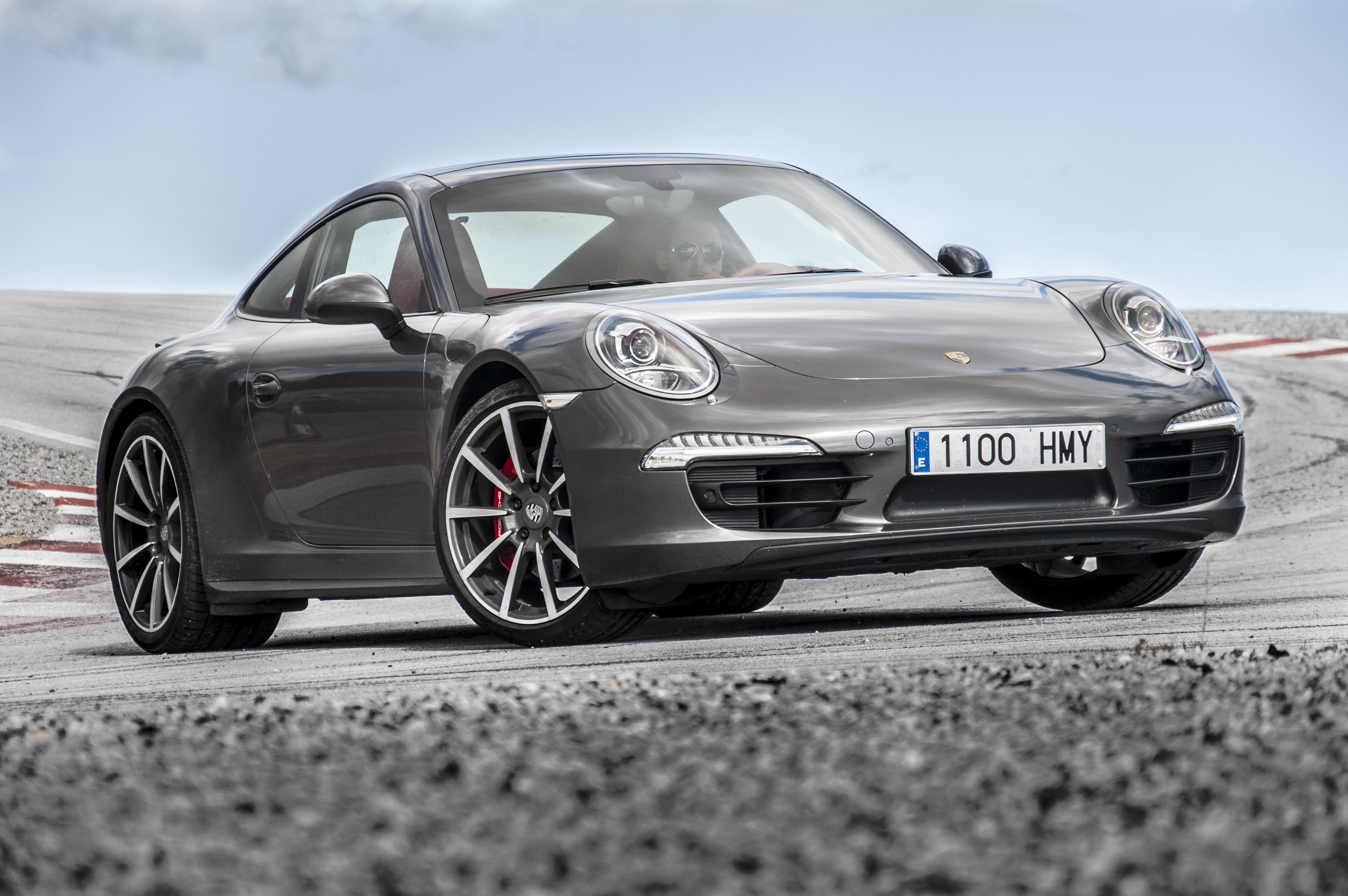
Speaker 1: Porsche has stopped shipping cars to its US dealers over the tariff uncertainty, and we estimate that the US accounts for nearly thirty percent of Porsche's profits.
Speaker 2: Ferrari says it will build what it.
Speaker 1: Considers strategic components for its EV's in house and not buy them from a partner. Ferrari will introduce its first
fully electric vehicle in October, and the company's CEO, Benedetto Vigna, says it will always make EV parts like electric motors and axles in house, but not the battery packs. Last week,
there was speculation Ferrari could develop an EV based on Leap Motors EV architecture, after Leap Motors CEO said the two companies weren't talk, but Leap Motor later clarified that the discussions were not ongoing at Vigna says Ferrari won't buy a platform from a partner. It looks like Volkswagen
has found a solution for some of its excess production capacity in Europe. Automotive News reports that the VW Group
is closing in on a deal with Chinese automaker Cherry to build vehicles at a plant in Germany. The site
would produce vehicles for Cherry's Layposs brand that launches in Europe next year, but Cherry says a few issues including costs, supply chains, labor unions and regulatory requirements still need to be worked out. In another production news, Nissan wants to
end production at its Wuhan plant.
Speaker 2: In China by March of next year.
Speaker 1: The plant, which has the capacity to build three hundred thousand cars a year, has only reached ten thousand units a year since it started operations in twenty twenty two.
Speaker 3: Thing wrong with heavy metal? Hey light enough, But with
world class composite material taging automotive technologies makes vehicles lighter, safer, and more eco friendly.
Speaker 1: Have you ever heard of a car company called Ikar?
Neither had we until we ran across this little gem at the Shanghai Auto Show last week.
Speaker 2: It's called the Icar.
Speaker 1: V twenty three, a two door, four seat battery electric, a segment off roator with a base price of fifteen thousand bucks. But the company really expects to make its
money by selling all kinds of accessories, including an electric mountain bike for one thousand dollars. The interior is simple,
but with a good sized screen, and the front seats can even be laid down flat to make a bed.
By the way, we're going to make all the specs available on this vehicle for our members, as well as a photomontage of what we saw at the Shanghai show.
You haven't signed up for a Patreon or YouTube membership to support auto Line, here's another good reason to do so.
And for all of you who have already become members, well, all we can say is thank you very much. We're
getting more details on the three new electric commercial vans that Renaul will launch next year. The Traffic, Goolette and
Stafet were developed by Flexus, a commercial vehicle joint venture between Renault and Volvo, and they ride on a new software to find vehicle architecture that was made by Renault's EV and software division called Ampere. The Traffic is available
in two wheelbases and only has a traditional van like cargo area. The Goalet is built on the same platform
and features the same cab as the Traffic, but the back half is available as a chassis cab, a cargo box, or even a deep cab version was seating for up to six people. The Estafet is built on the same
platform and features the same interior dash as the Traffic and Goolet, but it's a high roof version that has enough space for someone to stand up in all three vans will have two battery options. One is a higher
energy density NMC battery that provides up to around four hundred and fifty kilometers or about two hundred and eighty miles of range in the Traffic van, while the other is a lower cost LFP battery that provides nearly three hundred and fifty kilometers or roughly two hundred and fifteen miles of range. Power comes from a rear mounted electric
motor that makes one hundred and fifty kilowatts or two hundred horse power, and thanks to an eight hundred volt charging system, the vans can charge from fifteen to eighty percent under twenty minutes. Other highlights include bi directional charging,
capability over the air, updates, and lots of unique features and services for fleet operators. The Traffic, Goolet, and Stafet
will all be built at the same Renault plant in France, alongside the IC version of the Traffic, which will still be sold in the market. That same plant will also
make custom bodies for the vans that are then sent off to a nearby conversion center. Speaking of Renault, it
teased a new C segment SUV called the Boreal that it designed specifically for markets outside of Europe, like Latin America.
The model will officially be revealed in the coming months and will eventually be offered in seventy markets around the world.
And here's something that we wonder why more car companies don't do. Instead of buying new equipment for its EV transition,
JLR is reusing old tools and machines. It's taking one
hundred million pounds worth of equipment from closed down plants and unused production lines, fixing it up and then putting it back into its plants in the UK and Slovakia.
One other thing we find interesting about this is that JLR says some of the equipment came from Graz in Austria.
That's the same place where Magna Khan Track manufacture the Ipace and Epace for Jaguar, both of which are no longer being built. Although we don't know if Jailer bought
the equipment from Magna or if it already owned it.
And speaking of contract manufacturing, Fox con claims that it has a US client that will rebadge and sell its model c all electric crossover under a new name, and that the model will go on sale in the US before the end of the year. The company declined to
say who that will be, but it plans to start shipping models from its factory in Taiwan. However, if the
tariffs from the Trump administration would interfere with long term imports, then Fox Con says it could shift production to its plant in the US in Lordstown.
Speaker 2: Ohio as early as next year.
Speaker 1: Mercedes Benz Truck says it's aiming to set a new Guinness World record, but it's probably not the title you would think it's aiming for. It's going to try and
set the record for the longest distance trail in reverse with a trailer on the back of a semi truck.
Speaker 2: The current record stands.
Speaker 1: At fifty five miles or eighty nine kilometers and was set in twenty twenty by a diesel truck in the US, but Mercedes hopes to go one hundred kilometers or about sixty two miles with its new long haul electric truck at a closed track in Germany, so it will have to go around some twists and turns, which adds another little level of difficulty.
Speaker 2: But that's a wrap for today's show. Thanks for tuning in.
Speaker 3: Auto Line Daily is brought to you by Bridgestone solutions for your journey, intrepid control systems over the year, engineering boost your game, tajin automotive technologies, the formula for better mobility, and by.
Speaker 2: Making a life full of memories, one road trip at a time.
Speaker 3: That's what really matters.
Speaker 2: Rigdon weather Peak Tires with Speaker 3: A seventy thousand mile women at Warranty
Request an explanation for:
4 cars
4 cars featured
Request an Explanation
Heard something you'd like explained? We'll add it to this episode.
Sign in to request explanations for terms you heard.
Want to learn more?
Browse our glossary for plain-English explanations of automotive terms, jargon, and concepts.
See something that's not quite right? Our annotations are AI-generated and can sometimes miss the mark.
Click the flag icon on any annotation to suggest a correction.