
AD #4078 - Fewer Buyers Willing to Go Electric; Ferrari Delays 2nd EV Model; Honda Tests New Electric Hot Hatch
Autoline Daily
AD #4078 - Fewer Buyers Willing to Go Electric; Ferrari Delays 2nd EV Model; Honda Tests New Electric Hot Hatch
Autoline Daily · Jun 17, 2025
Annotations will appear as you listen
0:00
10:38

LIVE
Speaker 1: This is ut Aligned Daily, the show dedicated to enthusiasts of the global automotive industry. Car buyers in the US
and Europe are less willing to make the switch to electric.
According to a new survey from Shell, thirty one percent of respondents from the US would consider switching to an electric vehicle, down from thirty four percent last year, and in Europe the number fell from forty eight to forty one percent this year. The main reason buyers are reluctant
to make the switch is because a price. Evs are
thirty percent more expensive on average than gas powered cars right now. They're also concerned about range, but that percentage
is declining. Shell's survey included more than fifteen thousand respondents
in the US, Europe, and in China. Ferrari is delaying
the launch of its second fully electric model. It was
supposed to go on sale next year, but now it won't come out until at least twenty twenty eight. Sources
tell Reuters that Ferrari is delaying the model because demand for high performance evs is zero, and that's exactly what Rimat CEO said just over a year ago, saying these customers want to be different from mainstream vehicles and have combustion engines with an analog feel. Even so, Ferrari is
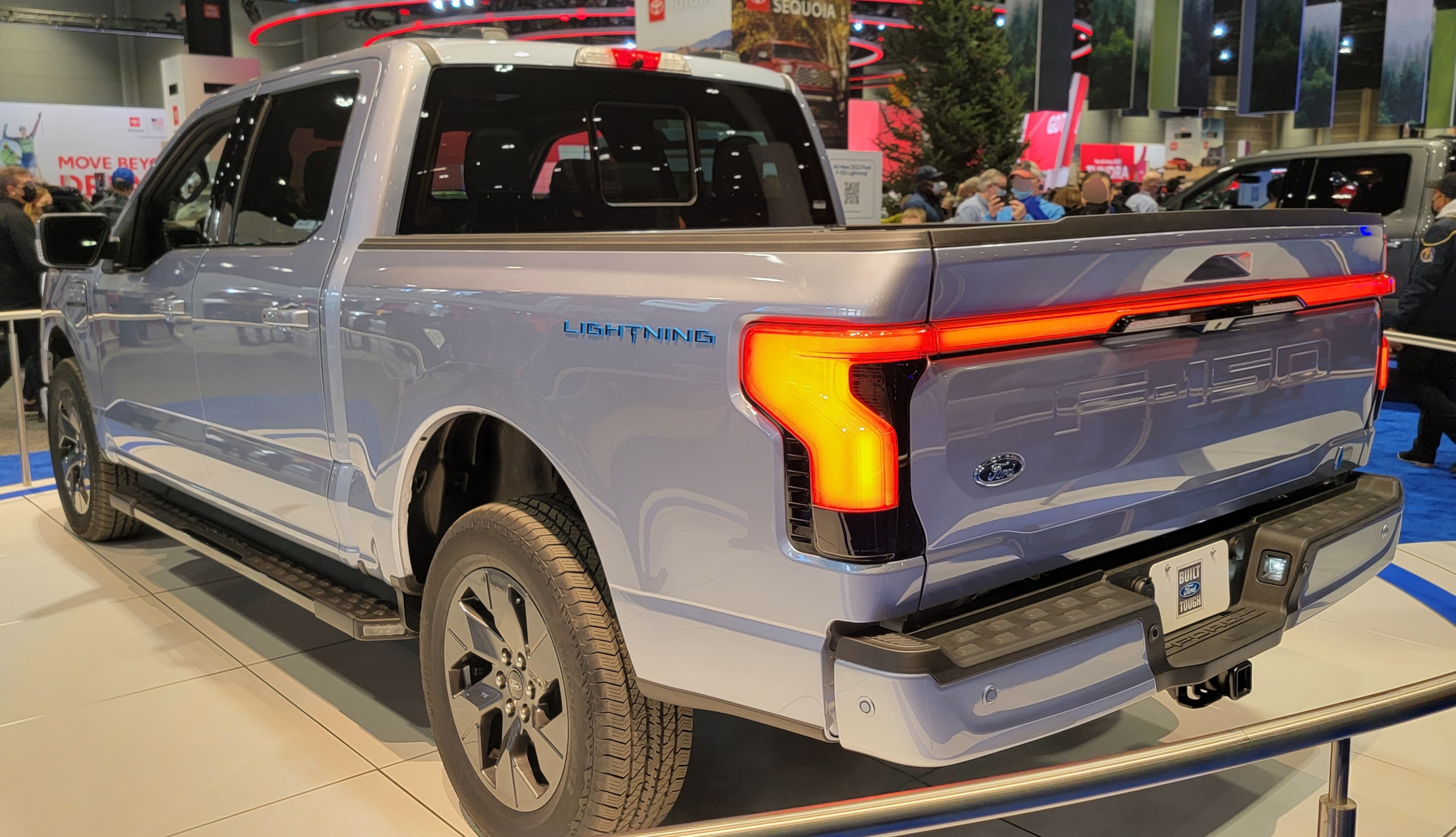
still moving forward with plans to reveal its first pure electric in October and start deliveries of that model to customers next October. With sales of the electric Ford Lightning
pickup truck falling far short of expectations, we wondered if Ford would continue the program, and with sales of evs in the US falling short as well, we wondered what Ford was going to do with that massive plant it's building in Tennessee.
Speaker 2: Called the Blue Oval City.
Speaker 1: Well, Auto Forecast Solutions just shed some light on what's going to happen. Ford is putting the next gen Lightning
in the Blue Oval plant, which is a big change from a January report from Auto Forecast that said the model was going to be made in Dearborn in Kansas City.
The next gen Lightning is scheduled to go into production in twenty twenty eight, which is about a year behind the original schedule. Auto Forecast says Ford is also going
to move production of the Transit Connect to Mexico, which is currently made in Spain, and it's going to move the electric Transit van production out of Kansas City to its Avon Lake plant in Ohio. Chinese automaker Neo helped
popularize battery swapping in China by offering customers free swaps, but now it thinks some owners are abusing the program using a practice that's called wool gathering. It says some
owners use Neo vehicles with free swaps for ride hailing services, Others are using the vehicle's discharge function to charge other electric cars. Owners are also selling access to the free
battery swaps online, and in more extreme cases, people are using their vehicles as mobile generators. Neo has tried to
combat the misuse by capping the number of monthly swaps, but now it's launching a new app that allows owners to report suspicious activity at its stations.
Speaker 3: Developing today's vehicles, issues can happen in an instant. When's
the best time to solve a problem? The minute you
know you have one. Meet wireless Neo vi Cloud. You're
secure off the shelf solution empowering real time collaboration for quick resolution. With wireless neov Cloud, your team can prevent
issues before they can escalate. Driver communication data and remote
dyn gnostics to analyze and resolve your problems using OTA, allowing your executive's oversight throughout the process, Wireless Neofi Cloud your vehicle update solution in production and on the road intrepid control systems driven by your data.
Speaker 1: After weeks of teasing it, Nissan officially unveiled the all new Leaf. It will first be available with a seventy
five kilowat hour lithium ion battery pack that's paired with a two hundred and fourteen horse power electric motor. That
set up provides a range of up to three hundred and three miles, and starting next spring, Nissan will offer a fifty two kilowad hour battery with a one hundred and seventy four horse power electric motor. The new Leaf
can charge from ten to eighty percent in as fast as thirty five minutes. Moving to the interior, lower trims
feature dual twelve point three inch display screens, while higher trims come with dual fourteen point three inch screens, and Nissan claims the new Leaf is the very first vehicle in its segment to have an available dimmable panoramic roof, which can switch from transparent to nearly opaque with a push of a button. The new Leaf goes on sale
in the US this fall. Kia's new electric sedan and hatchback,
the EV four, just one on sail in Korea, and it will continue to roll out to global markets throughout the second half of this year. The model is based
on the Hondai Group's four hundred volt EGMP architecture and will be offered in three trim levels. All versions are
powered by a single one hundred and fifty kilowatt or two hundred horse power electric motor that drives the front wheels.
That's enough output to move the EV four from zero to one hundred kilometers an hour and as little as seven point four seconds. Standard range models feature a roughly
fifty eight kilowat hour battery pack, which provides up to four hundred and thirty kilometers or about two hundred and sixty five miles of range on the WLTP test cycle.
Long range versions have just over eighty one kilowat hour packs that provide up to six hundred and thirty kilometers or roughly three hundred and ninety miles of range. Other
highlights include bi directional charging and the ability to charge from ten to eighty percent in as little as twenty nine minutes. Clarios, the world's largest manufacturer of twelve volt
lead acid batteries for cars, now plans to make supercapacitors.
These will be low voltage supercapacitors, which Clario says are ideal for systems like steer by wire in chassis stability.
It says the supercaps can be combined with lead acid batteries for better performance and reliability, as well as supplying redundancy for critical power systems, and they're not just for cars.
Clario says the supercapacitors can be used in AI data centers as well as in military equipment. Today, most supercapacitors
are made in China, so Clarios is currently searching for US manufacturing sites and expects to announce that location later this year. Honda is going to have quite the display
at this year's Goodwood Festival of Speed that includes f one winning cars from the nineteen eighties motorcycle concepts in even a brand new A segment hatchback that it's teasing for the first time. This is the only picture it's
currently providing of the Super EV concept, which is designed to be fun to drive and could have a production version launched around the world in the future. It almost
looks like a next gen version of the Honda E, which was officially discontinued last year. Slowly, but surely, pony
Ai keeps making progress with its autonomous technology in China.
It just announced the seventh generation of its technology stack, which is fitted on a Toyota BZ four X or the BEZ as it's now known in the US. It
uses thirty four censors, including nine light oar units, fourteen cameras, and four millimeter wave radars, as well as four Nvidia or in X chips. Pony Ai claims it's cut the
cost by seventy percent compared to the first gen stack, but it didn't reveal the cost. The system is designed
to last for ten years or six hundred thousand kilometers, which is over three hundred and seventy thousand miles. Pony
Ai already operates level four robotaxis in Beijing, Shanghai, Guangzhou, and shen Zen and expects to have a thousand of them on the road by the end of the year. Ever,
wonder how a designer of ultra luxury cars would fare having to come up with a vehicle for the masses well wait no More. Chinese automaker Seic hired former head
of design at Rolls Royce who is tasked to style the M seven sedan for its more mass produced roadway brand.
The model is highlighted by a big in your face grill with long vertical slats, a long, thin tail light that stretches the width of the car, a few pieces of bright work to highlight key areas, and large spoked wheels.
Them seven is a plug in hybrid that's expected to have a thousand kilometers or about six hundred and twenty miles of range, and we'll go on sale in China in the second half of this year. That's a wrap
for this show. Thanks for tuning.
Speaker 3: In.
Speaker 4: Autoline Daily is brought to you by Bridgetone Solutions for your Journey, Intrepid Control Systems, over the Air Engineering Boost your Game, taj In Automotive Technologies the formula for better mobility and by.
Speaker 2: There's nothing wrong but heavy metal, Hey light enough, but with world class composite material Taging Automotive Technologies makes vehicles lighter, safer, and more eco friendly.
Speaker 3: Performance that shines even in the rain.
Speaker 2: That's what really matters. Rich don't pretends to tires improved
grip and wet conditions.
About this episode
Car buyers in the US and Europe show declining interest in electric vehicles, mainly due to higher prices. Ferrari delays its second EV model until 2028, citing low demand for high-performance electric cars. Ford reshuffles production plans for its electric Lightning truck and Transit vans. Chinese automaker Neo tackles misuse of its free battery swap program. Nissan unveils a new Leaf with improved range and tech, while Kia launches its EV4 sedan and hatchback. Clarios plans US-made supercapacitors, and Honda teases a new electric hot hatch. Pony Ai advances autonomous tech in China, and a former Rolls Royce designer styles a new Chinese plug-in hybrid sedan.
Original notes
- Fewer Car Buyers Willing to Go Electric - Ferrari Delays 2nd EV Model - Next-Gen Lightning Going to Blue Oval City - NIO Fights Battery Swapping Abuse - New Nissan Leaf Specs - Kia EV4 Starts at $30K in South Korea - Clarios to Make Supercapacitors in the U.S. - Honda Plans New Electric Hot Hatch - Pony.AI Unveils 7th-Gen AV Stack - Former Rolls Designer Styles Mass-Market Chinese PHEV
Autoline Daily
Autoline
0:00
10:38