
AD #4140 - VW Starts Passing Tariff Costs to Consumers; Tier 1s Need Junk Bonds to Raise Capital; XPeng Says L4 Is Easier Than L2
Autoline Daily
AD #4140 - VW Starts Passing Tariff Costs to Consumers; Tier 1s Need Junk Bonds to Raise Capital; XPeng Says L4 Is Easier Than L2
Autoline Daily · Sep 19, 2025
Annotations will appear as you listen
0:00
9:10

LIVE
Speaker 1: This is out Aligned Daily, the show dedicated to enthusiasts of the global automotive industry. Yesterday we reported that automakers
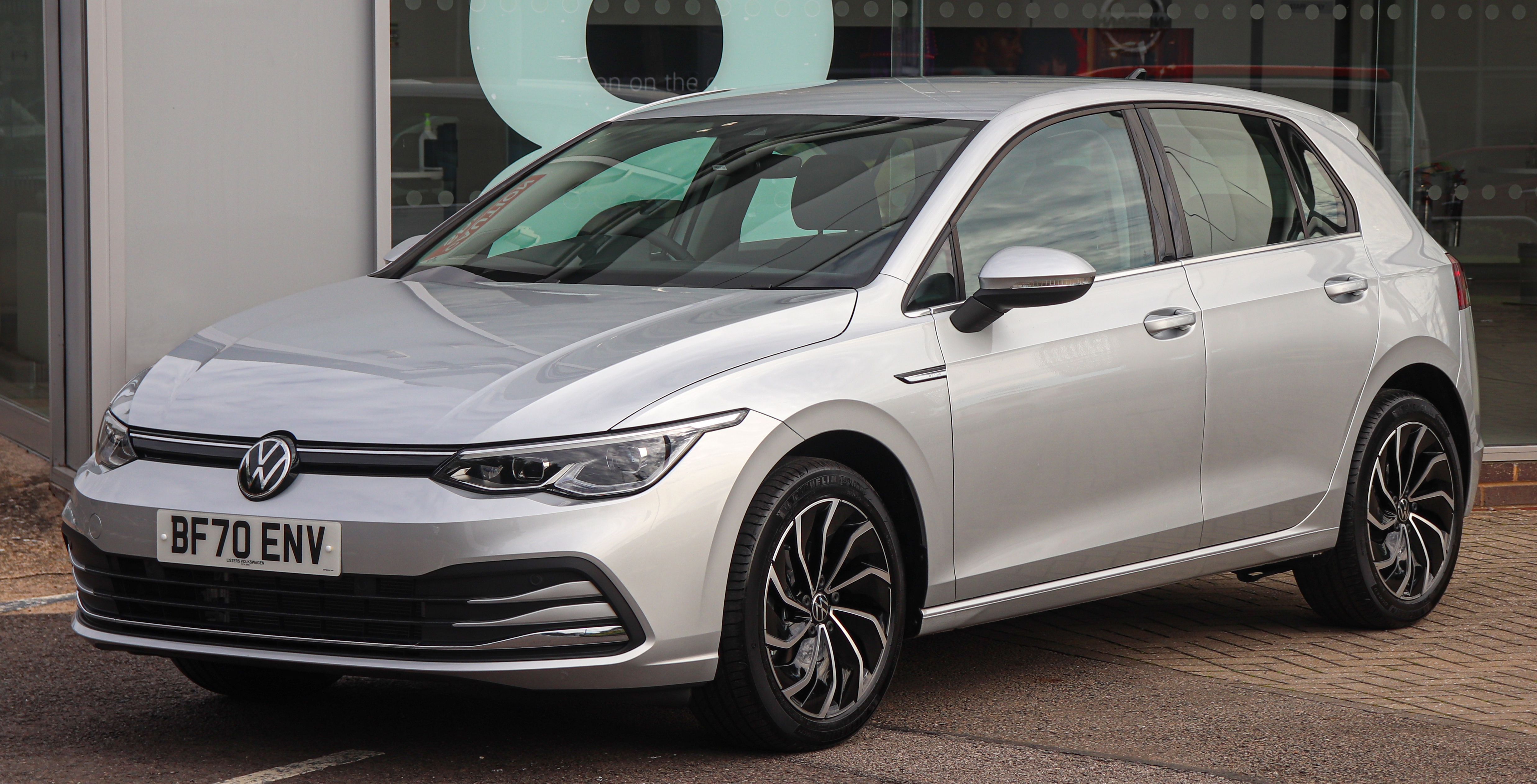
in the US haven't really raised prices that much due to US tariffs, and then today we find out that Volkswagen is raising prices anywhere from two point nine to six and a half percent. The Jetta and Taos, which
are made in Mexico, went up one thousand bucks. The
Golf GTI goes up by more than two grand, while the Golf R goes up over twenty four hundred dollars.
Even the Atlas crossover is going up by more than eleven hundred bucks despite being built in the US, because it gets its engine and other content from Mexico. VW
sales in the US are down by double digits so far this year, but there may be some help on the way for consumers. With the Federal Reserve cutting interest
rates by a quarter of a percentage point. Interest rates
on car loans should ease up a bit. That currently
dominates global production of rare earth magnets, accounting for seventy percent of output last year, and when it restricts exports like it did earlier this year in retaliation to President Trump's tariffs. It can really impact operations and several auto
makers had to idle production because of low supplies. But
now new sources are becoming available. Canadian company Neo Performance
Materials open Europe's first rare earth magnet plant in Estonia earlier today. The site will manufacture neodemium magnets and will
initially produce two thousand tons of magnets per year, with deliveries expected to start next year. The plant's capacity will
then triple in twenty twenty seven, which will be enough to support a million evs a year. Neo has signed
multiple five to seven year contracts in the fifty to one hundred million dollar range, but the only company that we know for sure is the supplier Bosh, which has reserved a quote signal magnificant share of the plant's production. However,
representatives from General Motors, Scheffler, and Mala also attended the opening ceremony of the plant, so it's probably safe to say they're also customers. Recycling materials in the auto industry
is nothing new, but Honda is taking it a step further.
The company opened its new Resource Circularity Center in Ohio, which will recycle tools, equipment, and other items used in operations, including vehicle production. It will also recycle office electronics and
vehicle service parts. In addition to recycling, Honda will study
ways it can repurpose equipment in parts, including donating items to nonprofits. Honda says the center will help reduce reliance
on new raw materials while reducing waste that would otherwise end up in a landfill. Another benefit that we'd also
point out is that Honda doesn't have to write the recycled materials off its books, which will help its financials.
For the first time in three years, the National Highway Traffic Safety Administration, or NITZA has a permanent leader. The
US Senate voted in favor of appointing Jonathan Morrison to head up the division. Morrison was previously a lawyer at
Apple and even worked as the chief counsel for NITZE during President Trump's first term.
Speaker 2: At CSP, we work with OEM engineers across the country on their journeys to lighter, safer, and more eco friendly vehicles.
Learn more at VCSP dot com.
Speaker 1: Several Tier one suppliers are turning to selling junk bonds to raise the capital that they need. American Axles, ZF
and for Via are issuing bonds with high interest rates, and to us, it really says something because it means an American, a German, and a French supplier to turn to junk bonds to fund their capital needs. That suggests
they couldn't raise the money selling stock, or didn't have the credit ratings to sell standard investment grade bonds, or simply couldn't borrow the money from banks, And that, in a nutshell describes the pressure that suppliers are under right now.
And just so you know, the yields on these bonds are pretty good. Zs have a seven point six percent yield,
for VIA's is six point seventy five percent, while American Axles is six and a half percent. We're unofficially officially
calling twenty twenty five the Year of Autonomy because we're seeing so much activity in the segment and feel like we're at an inflection point. And here's an example of
a fairly new startup that's getting some very healthy funding. Wave,
which was founded in twenty seventeen, raised billion dollars last year plus a private investment from Uber, and now Nvidia has signed a letter of intent to pour half a billion dollars into the company. What makes waves Tech a
little unique is that it uses camera sensors and machine learning to teach its system rather than relying on digital maps or coding, and not surprisingly, it uses chips from Nvidia.
Nissan also formed a partnership with Wave and will use its tech for the next gen light our based version of its hands free driving system, which is scheduled to come out in twenty twenty seven. And In other autonomous news,
public transportation riders in a city of Arizona will now have access to Weimo vehicles. Weimo signed a partnership with
Via Transportation, a tech company that uses software to help optimize public transportation networks. So now anyone that uses Via
software can integrate Weimo into their available fleet, and the city of Chandler, Arizona, is the first to try it out.
While Via has services in hundreds of cities in thirty countries, any expansion between the two would be limited to where Weimo operates, which currently sits at five cities. We've always
heard that level four autonomous cars are really hard to do, but the head of autonomous driving for Japung says that doing level four cars is actually easier than Level two because of the human driver. She says that in many
Level two situations, drivers want to take control of the car and that intervention drives up complexity. Interestingly, Japung is
taking a similar approach to Tesla, eliminating LDAR from its AV stack and relying mostly on cameras. Chapung's avy head
says it's training its AI system with videos that are only ten to thirty seconds long, and she says that its AI system can't use data from LDAR. She also
notes that their AV stack does not rely on HD maps and that's a wrap for today's show. Thanks for watching,
and I hope that you have a great weekend.
Speaker 3: Auto Line Daily is brought to you by alex Partners.
When it really matters, CSP, the Composites Solution Partner, Intrepid Control Systems, over the Air Engineering, boost your game and thanks to the following YouTube and Patreon members.
Speaker 4: We help businesses respond decisively to their most critical challenges, from urgent performance improvement to enterprise wide transformation. We work
across the full value chain in automotive and in industrials, helping clients navigate disruption, drive innovation, and unlock sustainable growth ALEX Partners. When it really.
Speaker 5: Matters developing today's vehicles, issues can happen in an instant When the best time to solve a problem the minute you know you have one. Meet Wireless neof Cloud. You're
secure off the shelf solution, empowering real time collaboration for quick resolution. With Wireless neov Cloud, your team can prevent
issues before they can escalate. Driver communication, data and remote
diagnostics to analyze and resolve your problems using OTA, allowing your executives oversight throughout the process. Wireless neov Cloud your
vehicle update solution and production and on the road intrepid control systems driven by your data.
Speaker 3: Wards is the industry leader for news, data and analysis.
That's why companies across the globe subscribe to our premium service.
Maybe even your own log in for subscriber access. Now
check your company's intranet for details and rely on Ward's auto dot com to keep you informed.
About this episode
Volkswagen is raising US vehicle prices due to tariff costs, with significant hikes on models like the Jetta and Golf. Meanwhile, suppliers such as American Axles and ZF are issuing high-yield junk bonds to raise capital, reflecting industry financial pressures. Neo Performance Materials opened Europe's first rare earth magnet plant to reduce supply risks. Honda launched a recycling center to repurpose manufacturing materials. Autonomous vehicle developments include Wave’s camera-based AI tech backed by Nvidia and partnerships expanding Weimo’s autonomous ride services. XPeng claims Level 4 autonomy is easier than Level 2, emphasizing camera reliance over lidar and HD maps.
Original notes
- VW Starts Passing Tariff Costs to Consumers - EU Gets Its First Rare Earth Magnet Factory - Honda Opens New Recycling Center in Ohio - U.S. Senate Approves New NHTSA Director - Tier 1s Need Junk Bonds to Raise Capital - NVIDIA Invests in AV Company From UK - Waymo Gets into Public Transportation in Arizona - XPeng Says L4 Is Easier Than L2
Autoline Daily
Autoline
0:00
9:10