AD #4149 - OEMs Step Up to Replace EV Incentives; U.S. Market Share Winners and Losers; BYD's Sales Drop
Autoline Daily
AD #4149 - OEMs Step Up to Replace EV Incentives; U.S. Market Share Winners and Losers; BYD's Sales Drop
Autoline Daily · Oct 2, 2025
Annotations will appear as you listen
0:00
10:08
LIVE
Speaker 1: This is Autoline Daily, the show dedicated to enthusiasts of the global automotive industry. Sales of evs hit a record
twelve point two percent market share in the US last month.
Speaker 2: According to JD Power.
Speaker 1: General Motors alone sold sixty six thousand, five hundred evs for the third quarter, and it may have even posted an operating profit at that scale. But with federal subsidies
for evs going away, everyone is sure that sales of electrics will now fall through the floor, but it may not happen right away.
Speaker 2: There are about one hundred.
Speaker 1: And thirty four thousand evs sitting on dealer lots right now, and dealers and automakers will continue to offer some kind of incentives to move those vehicles. As we reported earlier
this week, GM and Ford made down payments for leases on evs that their dealers have an inventory, which qualified them at the last minute for the seventy five hundred dollars federal rebates.
Speaker 2: Nissans says it will be cutting deals on.
Speaker 1: Its EV's two and you can add Hyundai to the list.
It says all twenty twenty five IONIC five still in inventory will continue to qualify for a seventy five hundred dollars cash incentive whether it's leased or purchased, while twenty twenty six model year Ionic fives, which are already in production, don't qualify for the cash rebate. The company is significantly
cutting prices. A base twenty twenty six Ionic five will
now start at thirty six thousand, six hundred dollars, down from over forty four grand, while other versions are getting nearly ten grand off the sticker price. The company says
these changes are part of a broader strategy to keep the Ionic brand competitive in the EV market while responding to shifting consumer expectations and growing pressure from competition. And
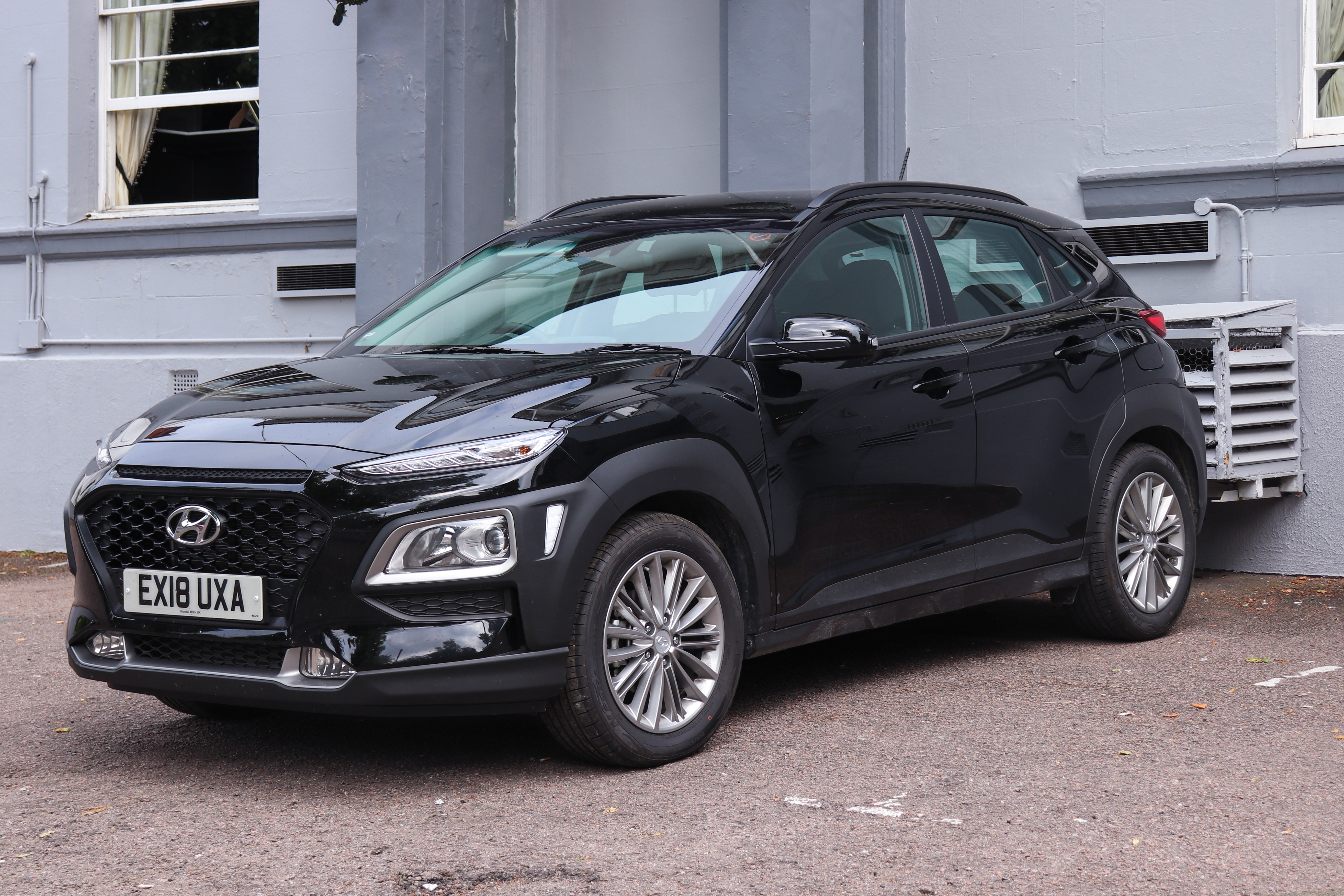
speaking of Hyundai evs, it's slashing the Kona EV lineup.
The model is going from four trim lines and two battery options to just one trim and one battery. It
will only be available in the se trim for twenty twenty six and with the smaller forty eight point six kilowad hour battery pack, which delivers two hundred miles of range on the EPA test. The previous model year was
also available with the nearly sixty five kilowad hour battery that offered up to two hundred and sixty one miles of range. While Hyundai hasn't announced pricing yet, the se
trim previously started at about thirty four thousand, five hundred bucks.
Stillantis is looking to cut costs everywhere at Ken in order to save cash, and Bloomberg reports that the automaker is considering selling its ride sharing business.
Speaker 2: Free to Move.
Speaker 1: The company has reached out to potential buyers, but the discussions are in the early stages and a decision to sell hasn't been made yet. Free to Move launched in
twenty sixteen, and it currently operates in sixteen cities around the world, including Washington, d C, Paris, and Berlin. In
another way Stilantis is cutting costs is scaling back its evy plans. The automaker already scrapped the all electric RAM
pickup truck and the plug in version of the Jeep Gladiator, and now mopar Insiders reports that the range topping version of the electric Dodge charger Daytona is being axed. The
model was going to feature an eight hundred volt architecture and was expected.
Speaker 2: To deliver more than one thousand horse power.
Speaker 1: The electric charger currently on sale uses a four hundred volt platform and delivers six hundred and seventy horse power, but it's not too surprising that the high performance version is being canceled. Through the first nine months of the year,
Dodge has sold just over seven thousand electric chargers. The
big problem with internal combustion engines is that they run on gas leaner diesel and can emit massive amounts of CO two.
Speaker 2: But what if there was something like.
Speaker 1: A new fangled kind of catalytic converter that could clean up some of those nasty detailed pipe emissions. That's what
today's topic on Autoline After Hours will be about. We've
got Yabs Kabeti, the systems engineering director from a company called Remora, coming on the show to talk about their carbon capture technology. Frank Marcus from Motor Trend will also
join us, so be sure to tune in when John and Gary go live at three pm Eastern Time this afternoon.
Speaker 3: At CSP, we work with OEM engineers across the country on their journeys to lighter, safer, and more eco friendly vehicles.
Learn more at VCSP dot com.
Speaker 1: Byd is the juggernaut of the Chinese auto industry, and it's the benchmarking target of virtually every other car company in the world, but it just posted its first monthly drop in sales in eighteen months. The automakers sold more
than three and ninety six thousand vehicles in September, but that was down five and a half percent from a year ago. BYD somewhat recently cut its sales forecast for
the year by sixteen percent to four point six million vehicles.
An Analysts from Morgan Stanley estimate that the automaker needs to sell an average of four hundred and forty seven thousand vehicles per month in the fourth quarter to reach its full year target, so BYD really needs to pick up the pace if it's going to hit its goal.
Speaker 2: When the EU slapped import tariffs.
Speaker 1: On Chinese evs, it wasn't long before Chinese automakers started looking for local manufacturing opportunities so they could start avoiding those tariffs. Since then, we've seen other countries like Brazil
and Mexico start slapping their own terraffs and restrictions on Chinese imports, so Chinese automakers once again are looking into local manufacturing. Bloomberg reports that Cherry is in talks with
renaulta manufacture and sell vehicles in South America. Discussions include
Cherry building combustion engine cars and Renault's planting Columbia, which would also be rebadged as Renault's, and to make Cherry branded plug in hybrid trucks at Renault's factory in Argentina.
The report says Cherry would fund the entire project as well.
Renault has a similar deal with Gili and Brazil, but it said any partnership with Cherry would not have an impact on its other projects. About a decade ago, the
auto industry hit peak sales. Since then, car sales in
all major markets of the world have stopped growing. So
how do you grow your company when the market isn't growing.
You go for market share, and that's where we're at right now, in a market share war. We've got the
latest market share projections for the US from Cox Automotive, and this very simply describes who's winning and who's losing.
So far this year, General Motors has gained the most market share, up six percent, followed by the Hyundai Group up five point three percent, Toyota was up four point eight percent, BMW up four point six percent, and Ford was up three percent. Honda and Mazda were flat with
no change. So now we get to who those other
automakers are stealing from. The biggest losers so far this
year are Mercedes Benz down thirteen percent, Tesla which is down twelve and a half percent, the Volkswagen Group down twelve point one percent, Stilantis dropped twelve percent, subarup went down four point seven percent, and Nissan Mitsubishi are down three percent.
Speaker 2: And here's a tip.
Speaker 1: If you're shopping for a new car, all those names on the loser list, they're probably gonna have the best deals. Hey,
what is it about car companies and lunar rovers? Toyota, Honda, Hondi, Kiya, Nissan,
and Audi have all shown concept drawings or crude prototypes of a lunar rover. Now, as NASA plans to go
back to the Moon, it's running a contest to see who can come up with a new lunar rover. It's
awarded contracts to three groups, and one of those is General Motors, which will develop the battery and power systems as well as the chassis, suspension, steering, and autonomous features.
Speaker 2: GM wants to use.
Speaker 1: Nickel cobalt manganese aluminum batteries that will last a decade and deliver thirty thousand kilometers of driving or about nineteen thousand miles. One of the rover's tasks is to map
the Moon's surface wherever it drives, so it can then offer autonomous driving. And this is sort of history repeating
itself because General Motors was involved in developing NASA's original lunar rover back in the nineteen seventies. And that wraps
up today's report. Thanks for watching online daily.
Speaker 4: Auto Line Daily is brought to you by Bridgestone Solutions for Your Journey CSP the composites solution partner Intrepid Control Systems over the Air Engineering boost your game and thanks to the following YouTube and Patreon members.
Speaker 5: Knowing that a little rain won't slow down your day, That's what really matters. Bridgestone Toronto Qui attract tires confident
control in wet conditions. Hi, I'm Don Hatfield from Traffic
Control Systems and I'm presenting the Wireless be Ams solution from Intrepid Control Systems Speaker 1: Of Come and see us in this demo at Booth forty six hundred at the Battery Show and also Analog devices will either as well, be happy to talk to you and help you with your solution.
About this episode
Electric vehicle sales in the U.S. reached a record 12.2% market share, with GM posting strong numbers despite the end of federal subsidies. Automakers like Hyundai and Nissan are offering incentives and cutting prices to maintain competitiveness. Stellantis is scaling back EV plans and considering selling its ride-sharing business. BYD, a Chinese EV leader, saw its first sales drop in 18 months amid tariff challenges, prompting talks of local manufacturing partnerships in South America. The U.S. market share battle heats up with GM, Hyundai, and Toyota gaining, while Tesla and Mercedes face declines. GM is also contributing to NASA's new lunar rover project.
Original notes
- OEMs Step Up to Replace EV Incentives - Hyundai Slashes IONIQ 5 Price - Hyundai Simplifies Kona EV Lineup - Stellantis Wants to Sell Free2Move - Dodge Axes Top EV Charger Trim - BYD's Sales Drop - Renault and Chery Talk Joint Assembly and Sales - U.S. Market Share Winners and Losers - GM Shows New Lunar Rover
Autoline Daily
Autoline
0:00
10:08