AD #4246 - Tesla and IG Metall Headed for A Showdown; Oil Prices Ease Despite Widening Iran War; Stellantis Launches 0% Financing Sales Blit
Autoline Daily
AD #4246 - Tesla and IG Metall Headed for A Showdown; Oil Prices Ease Despite Widening Iran War; Stellantis Launches 0% Financing Sales BlitAutoline Daily · Mar 4, 2026
CKD kits are boxes of car parts sent to another country to be put together there. This helps car companies save money and make cars closer to where people buy them.
Emission credits are like permission slips that let car makers pollute a little. If a company pollutes less, they can sell these slips to others who pollute more.
The Ford Model T is one of the very first cars made a long time ago. It was important because it was cheap enough for many people to buy, changing how people traveled. It might come up when talking about old cars or how car companies work with rules today.
Zero percent financing means you can borrow money to buy a car without paying extra fees called interest for some time. It's like free money to buy a car.
Car Bravo is a website that GM dealers use to show their used cars to people all over the country to help sell more cars.
LIVE
Speaker 1: This is Outoline Daily, the show dedicated to enthusiasts of the global automotive industry. SEWN is visiting the design studios
at SCOUT this morning, so I'm filling in for today and now the news more updates on the impact of the Iran war on the automotive industry. Yesterday we reported
that oil hits seventy nine dollars a barrel. Well today
it dropped below seventy four dollars. That's good news for
automakers because high prices at the pump could push customers away from high profit SUVs and trucks. Of course, we're
talking about a war here, and things could change very quickly.
To were reports this morning that a container ship was hit in the Streets of Horror Moves. Meanwhile, the price
of aluminum is on a tear because the Middle East accounts for about eight percent of global aluminum production. Aluminum
prices have been moving steadily upwards since last day April, and they're up more than fourteen percent since the war started.
Some producers have shut down their plants, but most are still making aluminum and putting it in storage for now.
Aluminum is very energy intensive to make, and the Middle East's low energy costs make it an attractive production site.
But the bigger problem that they face right now is that with the straits of Horrormu's clothes, they can't get the raw materials they need to make aluminum turns out.
Chinese automakers are also being disrupted by the war. Dubai
is a central hub for Chinese automakers to distribute their cars throughout the Middle East and the northern and western parts of Africa. Last year they shipped five hundred and
sixty seven thousand cars to Dubai, and with the Suez Canal now at high risk, shipments from China to Europe are being diverted around the Cape of Good Hope at the southern tip of Africa. You know what, Last year
Chinese automaker shipped one hundred and sixty four thousand passenger cars and CKD kits to Iran. Needless to say, those
sales have come to a complete stop. Okay, enough for
the war for now, let's turn to other developments in the industry. Yesterday we reported that Hondi and Kia set
record February sales in the US, with Kia surpassing Hyundai for the first two months of the year. Now we've
got some other sales numbers. Toyota was up a little
over three percent, Honda was up about one percent, Subaru dropped more than eight percent, and Mazda was essentially flat. Interestingly,
Honda is now going to focus more on fleet sales, which typically go to commercial operations or daily rental companies like Kurtz. According to S and P Global Mobility, only
three point two percent of Honda's total sales in the US last year went to fleets. Meanwhile, Nissan is at
twenty five five percent, Toyota is a little over nine percent, and Hyundai Kia are a bit over thirteen percent. You know,
I remember when Toyota and Honda executives were openly scornful of the Detroit three for relying on fleet sales. But
you know times have changed, and if you can manage your fleet sales properly, they can add volume and profits.
As the head of GM's fleet operations told me some years ago, John, if someone asks you if they can buy twenty thousand of your cars at a discount, why would you say no.
Speaker 2: We help businesses respond decisively to their most critical challenges from urgent performance improvements to enterprise wide transformation. We work
across the full value chain in automotive and in industrials, helping clients navigate disruption, drive innovation, and unlock sustainable growth.
Alex partners when it really matters.
Speaker 1: As we've been reporting, workers at Tesla's gigafactory in Berlin are voting for a new works council this week, and Egay Metal, Germany's largest industrial union, wants a majority of those seats. Voting began on Monday and the results are
expected to be revealed later today. The union needs to
secure nineteen of the thirty seven seats to win a majority.
Works councils allow employees to have a voice in talks with management regarding issues like work rules, working conditions, and hiring and firing. As we reported last week, Tesla and
Egay Metal we're in a bitter feud leading up to the vote. The union accused Tesla of creating a toxic
work environment. Then Tesla filed a criminal complaint against a
union representative, claiming that person secretly recorded a works council meeting.
But the two sides were able to reach a truce and they agreed not to comment on their disagreements until after the vote, and we'll let you know the results as soon as we get them. Speaking of Tesla, in Europe,
the ev maker is about to lose out on a big chunk of its credit revenue. Toyota, Stalantis, and Subaru
are no longer buying any of Tesla's carbon credits. Those
credits allow automakers that do not meet emission targets to buy them from other automakers who are compliant to avoid any fines. But last year, the EU rolled back its
plans to heavily fine automakers for not meeting targets by the end of twenty twenty five, and it allowed companies to average their emissions over a three year period instead, so automakers don't need as many credits. Even so, Ford Model,
to Honda, and Suzuki are still buying them. But Tesla's
income from credits is starting to dry up. In twenty
twenty four, it raked in a record two point seven billion dollars globally from selling credits. Last year that dropped
to about two billion dollars, and it's going to drop even further now that the US has eliminated emission credits.
Stillantis is in red alert, all hands on deck emergency mode to boost sales and regain market share. So it's
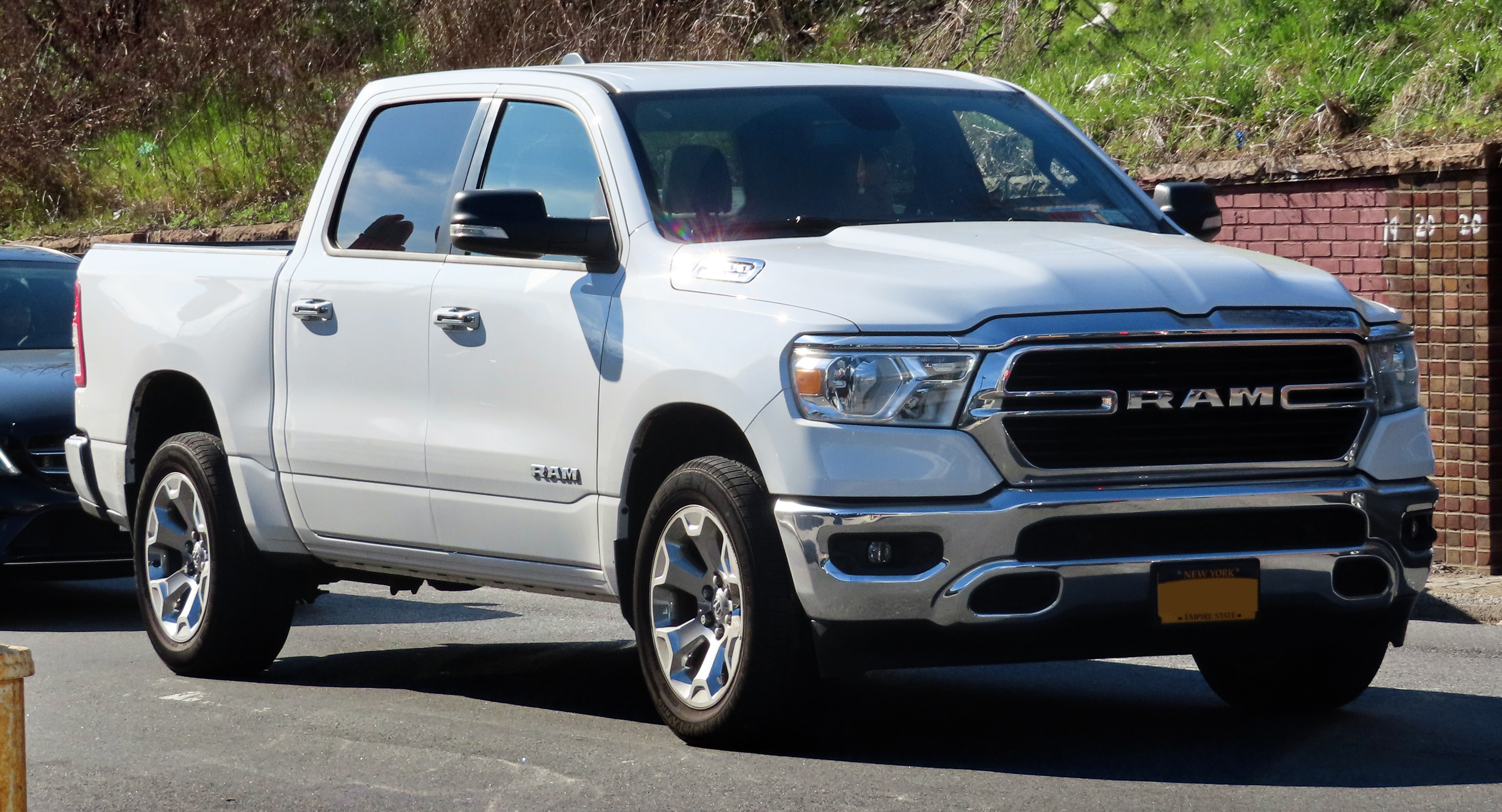
offering zero percent financing on the Jeep Wagoneer s, the Dodge Charger, and Chrysler Pacifica for seventy two months and sixty months for the Ram Bighorn and Ram Laramie. You
know that's free money, folks from a borrowing standpoint, and it's going to make Stalantis's competitors cringe. They're trying to
deal with tariffs, disruptive supply chains, evy ride offs, and a week market and the last thing they're going to want to do is to start discounting some of their models to counteract what Stalantis is doing. Meanwhile, general voters,
it's trying to help its US car dealers sell more used cars. It wants them to start posting their used
cars on GM's nationwide used car portal called car Bravo.
This is a carrot and stick approach. If dealers don't
use car Bravo, GM will no longer offer warranties as part of their Certified pre owned Car programs. By the way,
that portal is open to none GM models as well.
All with the idea of moving a lot more used cars through the system, and GM says people who buy certified pre owned cars are more likely to return in the future to buy a new one. But make no mistake,
this is a move to compete with Carvana, which is emerging as a dominant player in the used car market.
And that brings us to the end of today's report.
Thank you all you members out there who support this program.
We very much appreciate your support in bringing you the news of what's happening in the global automotive industry.
Speaker 3: Auto Line Daily is brought to you by alex Partners.
When it really matters CSP, the Composites Solution partner in Trepid Control Systems over the air engineering, boost your game and thanks to the following YouTube and Patreon members.
Speaker 4: Developing today's vehicles issues can happen in an instant. What
good is knowing your problems without the data to solve them?
Eat Wireless neova Cloud your secure off the shelf solution, empowering real time collaboration for quick resolution. With wireless Neovvi Cloud,
your team can prevent issues before they can escalate. Driver
communication data and remote diagnostics to analyze and resolve your problems using OTA, allowing your executives to oversight throughout the process.
Wireless NEOVI cloud your vehicle update solution in production and on the road in trepid control systems driven by your data.
Speaker 3: At CSP, we work with OEM engineers across the country on their journeys to lighter, safer, and more eco friendly vehicles.
Learn more at VCSP dot com.
About this episode
The episode covers the impact of the Iran war on oil and aluminum prices, disrupting global automotive supply chains, especially for Chinese automakers. It highlights Tesla's labor dispute in Berlin with the IG Metall union and the decline in Tesla's carbon credit revenue in Europe. The show also discusses Stellantis' aggressive 0% financing offers to boost sales amid market challenges and GM's push to increase used car sales through its CarBravo portal to compete with Carvana. Additionally, recent US sales trends for major automakers and Honda's shift toward fleet sales are examined.
- Oil Prices Ease Despite Widening Iran War - Aluminum Prices Up Sharply Due to Iran War - Chinese Car Exports Disrupted by Iran War - February U.S. New Car Sales Mixed - Honda To Ramp Up Fleet Sales - Tesla and IG Metall Headed for A Showdown - Tesla Losing Billions of EV Credits - Stellantis Launches 0% Financing Sales Blitz - GM’s CarBravo Battles Carvana For Used Sales