
CEO compensation
They’re talking about how much car company bosses get paid. Some people think it’s too high, especially when the company isn’t doing great. Others think the executives earned it because of company performance and incentives.
Ford
Ford comes up because the hosts are comparing how much top executives are paid. It’s part of the argument about whether that pay is reasonable. The focus isn’t on Ford’s cars here, but on leadership compensation.
Rivian
Rivian is the EV company in the story. The hosts point out that its CEO got paid a huge amount, mostly through stock and options. They also note Rivian hasn’t made a profit yet, which is why people are debating it.
stock and options
Instead of only getting paid cash, executives can get paid with company stock and options. That means they benefit if the company’s value goes up. The hosts are pointing out that this can happen even if the company hasn’t made profits yet.
General Motors
General Motors (GM) is highlighted with its quarterly results, including vehicle sales decline, revenue changes, and profit drops. For listeners, these metrics help explain why automakers may adjust guidance and spending. The segment also connects GM’s performance to broader industry demand and cost pressures.
automotive free cash flow
Free cash flow is basically how much real money a company has left after it pays to run the business and invest in things it needs. If it goes down, the company may have less flexibility for big plans or payouts. The hosts mention GM expects less of it going forward.
BYD
BYD is an automaker that the hosts say is struggling financially. They mention sales fell and profits dropped a lot. They also say BYD is lowering prices in China to try to sell more cars.
double T
“Double T” is Chery’s plan to copy two different playbooks. They want Toyota-style quality, and Tesla-style tech, in the same product strategy.
Stalantis
They’re talking about Stellantis, a big car group. In this segment, Stellantis is involved in partnerships that help Chinese brands build or sell cars in Europe.
LeapMotor
LeapMotor is a Chinese automaker involved in a partnership with Stellantis. They’re making cars on lower-cost designs now, but they want to build more premium cars later.
low-cost platforms
A “platform” is the basic design that many cars share. “Low-cost platforms” means the company is trying to build cars more cheaply so it can sell them at lower prices.
move up market
“Move up market” means selling nicer, more expensive cars instead of only budget models. The goal is usually higher profit per car.
Bridgestone Turanza quiet track tires
This is a specific Bridgestone tire model meant to be quieter on the road. The ad also claims it helps you feel more confident when driving in wet conditions.

Jeep Avenger
The segment says Jeep is adding a new lighting feature to its “iconic 7-slot grille” that will debut on the new Jeep Avenger. The change is described as small thin horizontal lights at the top of each slot, which is a common way automakers refresh styling without redesigning the whole front end.

Dodge Avenger
The Dodge Avenger is a sedan, meaning it’s a car with a separate trunk for luggage. The podcast is talking about a design update, especially changes to the front grille. That’s mainly about appearance rather than the car’s basic purpose.
Bollinger Motors
Bollinger Motors was a company that tried to build electric off-road vehicles. The hosts say the company is shutting down and selling off its equipment and vehicles at auction.
battery testing and validation systems
These are machines and tools used to make sure an EV battery is safe and works as expected. They help the company prove the battery can handle real-world conditions.

Bollinger B1
The Bollinger B1 is an electric off-road truck concept from a company called Bollinger Motors. The hosts are saying the company is shutting down, so it’s unlikely you’ll be able to buy one easily.

Bollinger B2
The Bollinger B2 is an electric off-road vehicle idea from Bollinger Motors. The episode is basically warning that you probably won’t be able to buy one because the company is going under.
Feng Cheng Bao Formula X concept
The Feng Cheng Bao Formula X is a show car that hints at what a future Feng Cheng Bao supercar could look like. The big idea is that it’s designed to cut through air efficiently, and much of that design may carry into the real car.
full carbon fiber body
Carbon fiber is a lightweight, strong material. Using it for the whole body can help the car feel more responsive because it’s not as heavy as many conventional designs.
aerodynamics with six airflow channels and 19 vent openings
Those channels and vents are there to help the car move through air more efficiently. They can also help keep things cool, especially on a high-performance vehicle.

Ford Bronco
The Ford Bronco is a type of SUV designed to handle rough roads and off-road trails. It’s known for being more capable than a typical family SUV. The podcast mention is about the possibility of a more extreme, off-road performance version.
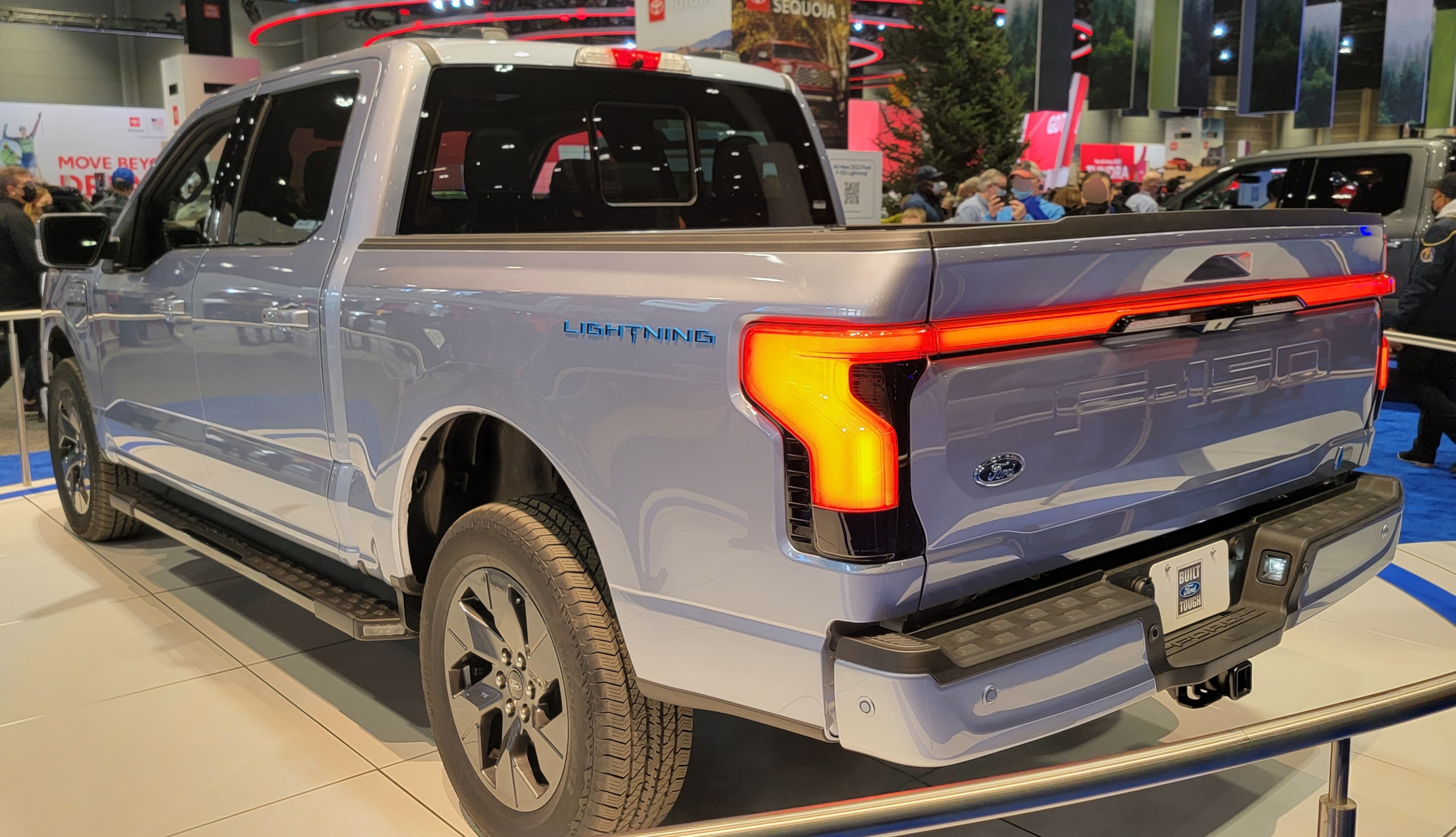
F-150 Raptor
Dream Technology Nebula Next 01 Jet Edition
The Nebula Next 01 Jet Edition is a new EV from Dream Technology that’s being marketed with rocket boosters for extreme acceleration. It also claims advanced battery and driver-assist tech like sensors and computer-controlled steering.
rocket boosters
Rocket boosters are extra thrust devices that can push the vehicle forward very quickly. The key question is whether the car can actually use that thrust without losing traction.
0 to 100 kilometers an hour time
This is a measure of how fast the car can accelerate from a stop to 100 km/h. It’s a popular way to compare performance, but tires and traction can make a big difference.
solid state battery
A solid-state battery is an EV battery design that uses a solid material instead of a liquid inside. The promise is better safety and potentially more range, but it’s still a developing technology.
steer by wire
Steer-by-wire means the steering wheel isn’t directly connected to the wheels with a mechanical linkage. Instead, computers control steering, which can allow more advanced features.
LiDAR-based autonomous driving functions
LiDAR is a sensor system that uses lasers to “see” the world around the car in detail. If the car uses LiDAR for autonomous driving, it’s using that detailed map to help it drive more safely.