onshoring critical minerals
Onshoring means bringing production closer to where the products are made. Here, it’s about making important raw materials (used for things like electronics) in the same country instead of importing them.
federal loan for the plant
This is money the government lends to help build a factory. If the loan amount changes, the company may have to scale back or adjust how many cars it plans to make.
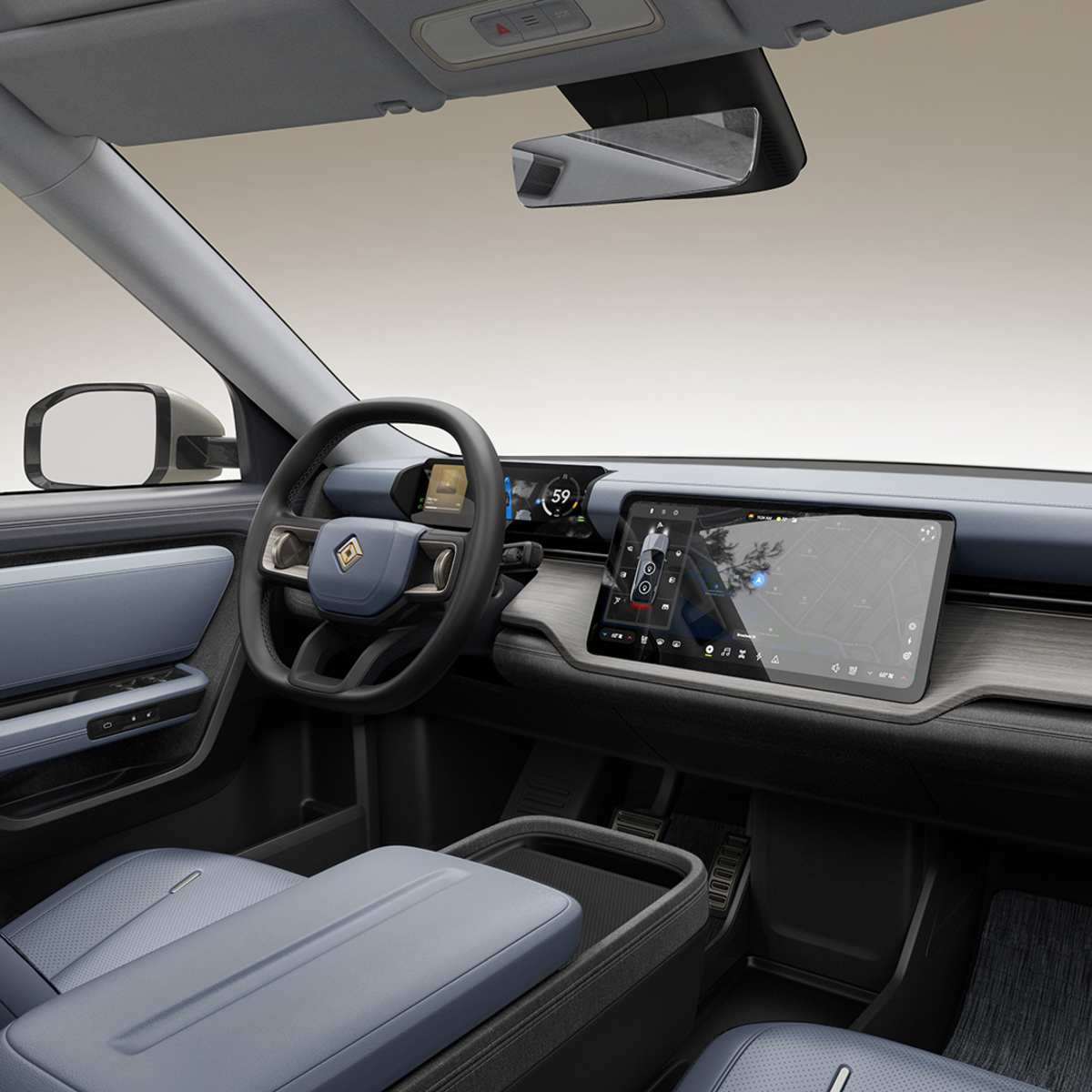
Rivian R2 crossover
Rivian’s R2 is one of the cars they plan to build in their new Georgia factory. The idea is that the factory will start with the R2 and then make additional related models too.
platform
A platform is like a shared foundation for cars. If multiple models use the same platform, they can be built more efficiently and usually cost less to develop.

Nissan Frontier
The Nissan Frontier is a pickup truck. In this segment, they’re saying Nissan plans to build a redesigned version of it at the Mississippi plant instead of making EVs there.
induction powered AGVs
AGVs are robot carts that move cars or parts around a factory by themselves. “Induction powered” means they get power without plugging in or swapping batteries as often.

Volkswagen Phaeton
The Volkswagen Phaeton was VW’s attempt at a luxury flagship car. It didn’t sell well, so the factory later produced different models instead.

Volkswagen ID.3
The Volkswagen ID.3 is VW’s electric car. The episode is using it as an example of how the Dresden plant didn’t become a high-volume success even when it switched to EV production.
BYD
BYD is a major Chinese car company. Here, they’re trying to use a German factory so the cars can be labeled as made in Germany for buyers in that market.
Made in Germany label
“Made in Germany” is a label that tells buyers where the product was made. In this case, BYD wants to build cars in Germany so the cars can carry that label.
UAW strike fund
The UAW strike fund is money the union saves to help workers if they go on strike. It helps pay bills and supports people during the work stoppage.
federal monitor
A federal monitor is like an outside watchdog appointed by a court. Their job is to check how an organization is being run and report problems.
enterprise wide transformation
This phrase means a company is changing a lot of things at once, across the whole organization. It’s usually done to adapt to big changes in the industry.
value chain
The value chain is the whole process from start to finish. It’s every step that helps a product get made and delivered.
pleos Connect
pleos Connect is Hyundai’s in-car user experience system, centered on a large central display split into sections for vehicle status, navigation, and multimedia. It also includes physical controls and a small driver-focused display, plus an AI voice assistant for tasks like searching and navigation.
AI voice assistant
An AI voice assistant lets you talk to the car. You can ask it to do things like navigate or find information using your voice.

Hyundai Genesis
Genesis is Hyundai’s luxury car brand. The cars are meant to feel more upscale and comfortable than regular Hyundai models. It’s mentioned because Hyundai may be updating or changing features across many of its brands at the same time.
federal EV tax credit
The federal EV tax credit is a discount from the government for buying certain electric cars. If it ends, EVs can become more expensive and sales can slow.
tariffs
Tariffs are taxes applied to imported goods, which can raise costs for automakers that rely on parts or vehicles sourced from abroad. Higher costs can flow through to vehicle pricing and reduce sales momentum.
Boston Dynamics Spot
Boston Dynamics Spot is a quadruped (four-legged) robot used for industrial tasks like inspection and monitoring. Here, Ford uses it at its Hailwood plant to help train apprentices and to detect issues using sensors like a thermal camera.
thermal camera
A thermal camera detects heat differences and turns them into an image, helping spot components that are running too hot. In industrial settings, it’s useful for early detection of overheating equipment.
air leaks
Air leaks are unintended escapes of compressed air or air from systems, which can reduce efficiency and cause equipment to behave incorrectly. Detecting them can prevent downtime and help keep industrial machinery operating within spec.
Magna
Magna is an automotive supplier company that makes components and systems for vehicle manufacturers. The segment discusses Magna’s earnings and how softer vehicle production in the US, Europe, and China affects supplier profitability.
divesting its lighting and rooftop division
Divesting means selling part of the business. Magna says the sale of its lighting and rooftop business came with a big loss in their financial results.
alex Partners
This is a company that sponsors the podcast. It’s not a car part or a vehicle model—just a business paying to be mentioned.
Bridgestone
Bridgestone is a well-known tire maker. They’re being mentioned here as part of a sponsor message about tires and driving in different conditions.
over the air
“Over the air” means the car can get updates wirelessly, like a phone update. You don’t have to plug in a computer or go to the shop for every software change.
Intrepid Control Systems
This is a company name mentioned in the sponsor read. It’s likely a tech supplier that helps with vehicle software and updates.
OEM engineers
OEM means the car company itself. “OEM engineers” are the people at the automaker who design the car, usually with help from outside suppliers.
CSP
CSP is a company being talked about as a partner to car makers. They’re described as helping engineers make cars lighter and safer.
Wardsauto dot com
This is an automotive news and information website. It’s being mentioned as a resource for industry updates, not a car or part.