AD #4294 - GM Pays $12.7 Million To Settle Driver Privacy Case; Europe Invests $235 Billion Into EV Sector; China Car Sales Fall While Expor
Autoline Daily
AD #4294 - GM Pays $12.7 Million To Settle Driver Privacy Case; Europe Invests $235 Billion Into EV Sector; China Car Sales Fall While ExporAutoline Daily · May 11, 2026
General Motors is the car company involved in this story. The segment says GM agreed to pay money to settle a privacy case about how it handled driver information.
Data monetization means selling information for money. Here, GM used car/driver data and passed it along so other companies could use it, including for insurance.
The battery supply chain is everything involved in making EV batteries, like materials and factories. The episode says Europe put a big chunk of its EV money into building that battery-making network.
EV charging means the public and private stations that plug in to recharge electric cars. The episode says Europe is building a lot more of these charging spots.
EV manufacturing means building electric cars in factories. The episode says countries are investing to convert plants and increase how many electric vehicles can be made.
“E revs” is being used here as another type of electrified vehicle category in China. The main takeaway is that it’s part of the broader group of cleaner electric or plug-in cars.
Automatic emergency braking is a car feature that watches for a possible crash. If you don’t brake soon enough, the car can brake for you to help prevent or lessen the impact.
Lane keeping assist helps keep the car from drifting out of its lane. If the car senses you’re getting off-center, it can nudge the steering to bring you back.
UMTRI is a research group focused on transportation. In this segment, they helped analyze crash data to see whether certain safety features reduce injuries.
In safety research, “control” is the comparison group. They compare crashes involving cars with the safety tech to crashes involving cars without it to see if the tech makes a difference.
This is Ford’s name for a new way of organizing how cars get designed and readied for production. The goal is to get different teams working together instead of in separate groups.
LIVE
Speaker 1: This is out Aligned Daily, the show dedicated to enthusiasts of the global automotive industry. Remember all that talk of
providing digital services in cars and monetizing the data. GM
CEO Mary Barras set a goal of earning twenty to twenty five billion dollars a year by the end of this decade. To get there, GM sold data it collected
from on Star to data brokers, who in turn sold the data to insurance companies that included their names, phone numbers, home addresses, GPS, locations of where cars went, and the driving habits of its subscribers. Normally, data has to be
made anonymous, so it can't be tracked back to any individual because it's illegal to sell personal data. So prosecutors
in California launched an investigation into the practice, and now GM has agreed to pay twelve point seven million dollars to settle the case. Nebraska and Iowa have also filed
law suits against GM. There's a federal level class action
lawsuit in the works, and we think a lot more lawsuits will be filed. Instead of providing General Motors with
billions in revenue because the way it went about doing it, data monetization is going to cost the company dearly. Cadillac
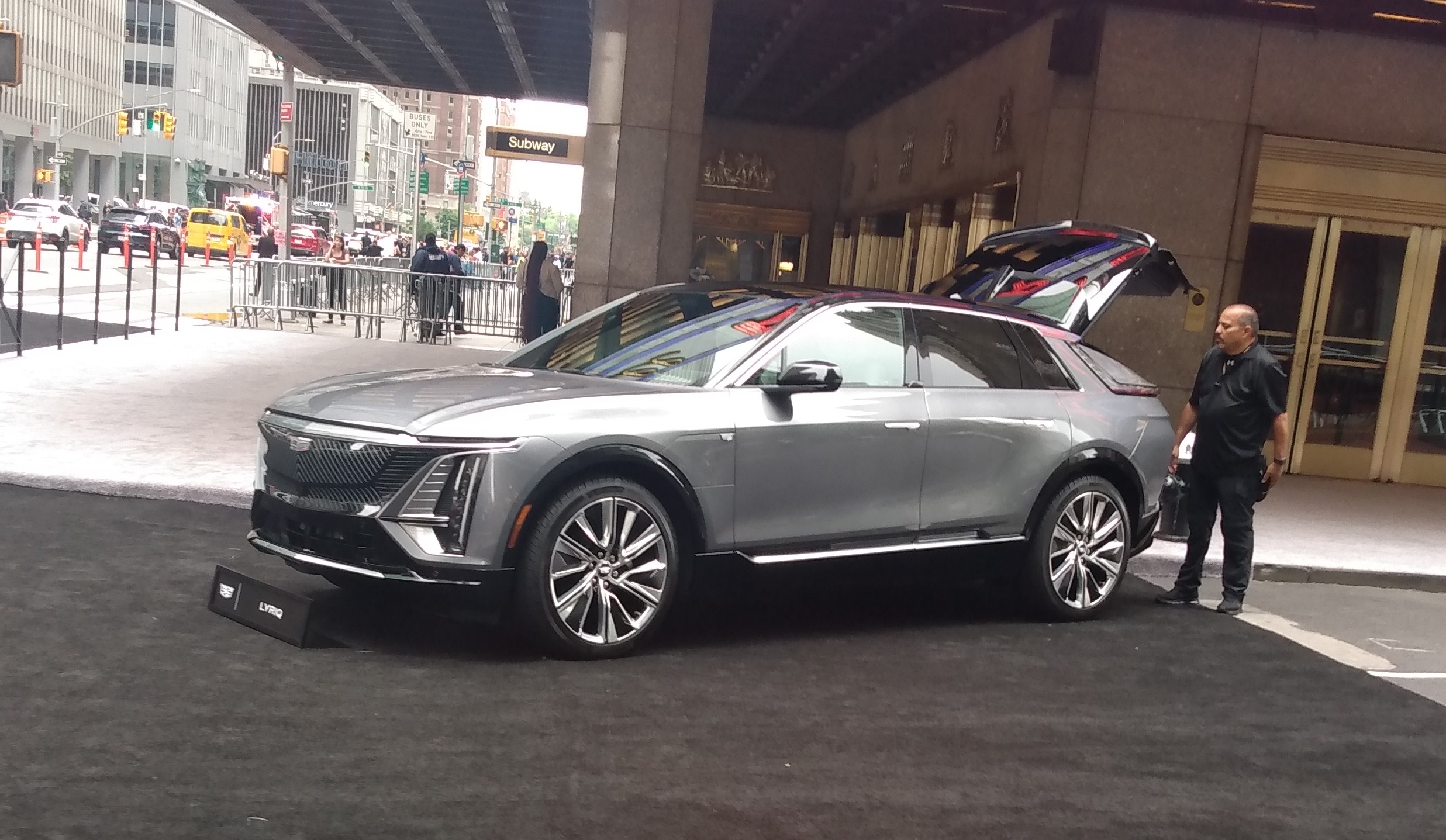
just reached a big EV milestone. It has now sold
one hundred thousand pure electric vehicles in the US. The
brand launched its first EV in twenty twenty two, the Lyric.
Since then, Cadillac has added the Vistic, escalaid IQ or Escalatic as I like to call it, and the Optic to its EV lineup, and last year they combined for more than forty nine thousand sales, up nearly seventy percent and representing almost thirty percent of all Cadillac sales in twenty twenty five. Thanks to that growth, the brand is
now number four in EV sales in the US, behind Tesla, Chevrolet, and Hyundai, respectively. But perhaps more importantly, cadilec evs are
bringing new buyers into the brand. According to GM North
America president duncan Aldred, seventy five percent of the people who buy a Cadillac EV are new to the brand, and it's poaching them from competitors like Audi, BMW, Lexis, Mercedes, and Tesla. At a time when many automakers are closing
plants or looking for partners to soak up unused capacity, Toyota announced it's going to open an all new manufacturing facility, but it will be located in India, a market that has huge growth potential. The plant will build a new
SUV and have the capacity to make up to one hundred thousand a year. It's expected to open in the
first half of twenty twenty nine and employ around twenty eight hundred workers.
Speaker 2: At CSP, we work with OEM engineers across the country on their journeys to lighter, safer, and more eco friendly vehicles.
Learn more at these DSP dot com.
Speaker 1: Countries in Europe are spending big on evs. According to
data from New Automotive, European countries have invested nearly two hundred billion euros or two hundred and thirty five billion dollars into electric vehicle manufacturing, batteries and charging. More than
half one hundred and nine billion euros was poured into the battery supply chain. Around sixty billion has gone towards
EV manufacturing, mainly converting existing plans to produce electrics, and up to forty six billion euros was invested to expand EV charging, with more than a million charging points being deployed across Europe. The researchers say these investments support more
than one hundred and fifty thousand jobs, and if all the projects go into full effect, they'll support three hundred thousand jobs. Car sales in China fell for a seventh
straight month in April. According to the China Pass and
Your Car Association, automakers sold one point four million vehicles last month, slumping twenty one percent compared to a year ago and due to high fuel prices. New energy vehicles
or nyvs, which includes Bev's phebs and e revs, accounted for more than sixty percent of sales. However, total NYV
sales were down seven percent last month, and while sales at home suffered a big drop, exports surged once again. Overall,
car exports were up eighty percent, while evs and p have specifically skyrocketed nearly one hundred and twelve percent. Morgan
Stanley is forecasting that domestic sales in China will fall eleven percent this year, while exports will grow thirty three percent.
The Robotaxi partnership between Lucid, Neuro and Uber received permits to start testing in parts of California. One permit allows
for driverless testing with no riders, and the other allows for tests with riders but with a backup driver on board.
Four other companies, including Zeukes and we Ride, have received the same permits, but so far Weimo is the only one authorized to give pay driverless rides in California. Tesla
also operates its robotaxi service in the state, but it is still not applied for driverless testing. Lucid, Neuro and
Uber hope to get full approval to operate in San Francisco before the end of the year. GM claims it
can show that it's making measurable reductions and crashes and injuries with technologies like automatic emergency braking and lane keep Assist.
Along with the University of Michigan Transportation Research Institute or umtree for short, they examined about twelve million twenty twenty to twenty twenty four GM vehicles and match them to more than seven hundred thousand police reported accidents across the US.
By comparing the rate of system relevant crashes to control crashes for vehicles with and without these technologies, they claim things like a thirty five percent reduction in front pedestrian accidents that result in injury and a fifty seven percent reduction in rear end crashes with injury. GM says its
future goal is still zero crashes and these assistance technologies will help it get there. If you're a Ford employee,
your work life is about to change. The company is
reorganizing under a new structure it calls product creation and industrialization.
It's about tearing down the silos within the company to foster more collaboration between departments, all with the idea of moving much faster and at lower cost. We interviewed Kumar
gel Hootra, the COO of Ford, to get more details of what the move means. You can watch that interview
now on our website or on our YouTube channel. And
if you work for Ford, are a Ford dealership, or sell components or services to the company, we highly recommend you check it out. Well, that's all for today's show.
Thanks for making Autoline a part of your day.
Speaker 3: Auto Line Daily is brought to you by alex Partners.
When it really matters, Bridge Stone Solutions for your Journey, CSP the composites solution partner Intrepid Control Systems. Over the
year engineering boost your game and thanks to the following YouTube and Patreon members.
Speaker 2: Knowing that A.
Speaker 3: Little rain won't slow down your day.
Speaker 2: That's what really matters.
Speaker 1: Bridgetone torunzi By attract hires confident control in wet conditions.
Speaker 2: We help businesses respond decisively to their most critical challenges, from urgent performance improvement to enterprise wide transformation.
Speaker 3: We work across the full value chain, in automotive and in industrials, helping clients navigate disruption, drive innovation, and unlock sustainable growth. ALEX Partners when it really matters.
About this episode
GM agreed to pay twelve point seven million dollars to settle a driver privacy case tied to OnStar data. The show then zooms out to Europe’s push for electrification, noting European countries have invested nearly two hundred billion euros or two hundred and thirty five billion dollars into EV manufacturing, batteries and charging. Cadillac’s momentum is highlighted with one hundred thousand pure electric vehicles sold in the US. China’s market is also cooling, while robotaxi testing rules in California are clarified.
- GM Pays $12.7 Million To Settle Driver Privacy Case - Cadillac Hits 100,000 EV Sales Milestone in U.S. - Toyota To Open New Manufacturing Plant in India - Europe Invests $235 Billion Into Electric Vehicle Sector - China Car Sales Fall While Export Numbers Surge - Lucid, Uber And Nuro Secure California Robotaxi Testing Permits - GM Study Shows Safety Tech Reduces Vehicle Crashes - Ford Reorganizes to Speed Up Product Development Cycles