A massive Canadian company that makes parts for almost every major car brand. They are so big they even build entire cars for other companies in their special factories.
The big boss of a massive company called Magna that designs and builds parts (and sometimes entire cars) for famous brands like BMW, Mercedes, and Ford.
A famous American luxury car brand owned by General Motors. It used to be known for giant, comfortable land yachts but now makes fast sports sedans and modern electric SUVs.
A giant Chinese company that is the world's biggest maker of batteries for electric cars. If you buy an EV today, there is a very high chance its battery was made by CATL.
A new type of battery that uses cheap, abundant salt (sodium) instead of expensive and hard-to-find lithium. They don't hold quite as much energy as lithium batteries, but they are much cheaper to make.
Special codes that your car's computer generates when something goes wrong, which triggers the 'Check Engine' light. Mechanics plug a scanner into the car to read these codes and figure out what needs to be fixed.
The U.S. government agency in charge of keeping roads safe. They are the ones who order car companies to fix safety defects (recalls) and perform crash tests.
A high-level car industry boss who used to run European operations for Fiat Chrysler and was hired by Chinese EV giant BYD to help them build and sell cars in Europe.
A car brand started by General Motors in the 1980s to try and beat popular Japanese imports. They were famous for friendly dealerships and cars with plastic sides that wouldn't dent, but the brand was shut down in 2010.
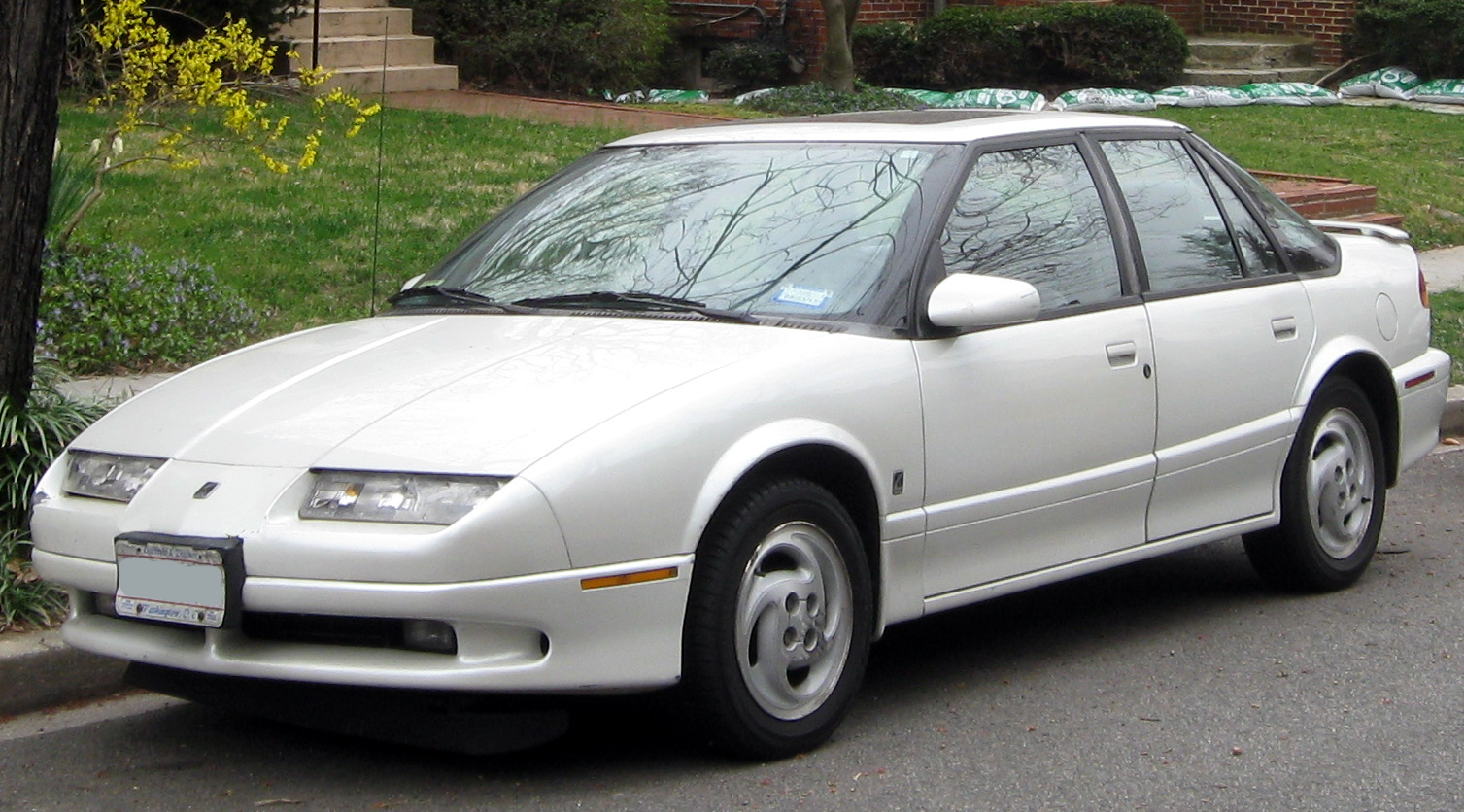
A line of small cars made by General Motors under the Saturn brand in the 1990s. They were famous because their side panels were made of plastic that wouldn't dent when hit by shopping carts.
LIVE
This is Auto Line Daily, the show dedicated to all of you enthusiasts of the global automotive
industry.
Well, Sean is still on jury duty, and so I'm still filling in, but let's get to the show.
You know, we said it could happen, then we said it will happen, and now it has happened.
It's official.
The United States will not renew the USMCA trade agreement.
Instead, the Trump administration will conduct annual reviews of the pact, which is exactly
what all the automakers and suppliers in North America did not want to see happen.
All they see is years and years of arguments and negotiations over tariffs and rules of
origin that will continue to leave their supply chains in chaos.
Yesterday, every single automotive trade and industry group representing automakers, suppliers,
car dealers, and consumers came out with a joint statement urging the administration
to extend the USMCA, calling it, and I'm quoting them here, a success story for the
entire US auto industry.
Just weeks ago, Swami Kothagiri, the CEO of Magna, said he wanted a new USMCA agreement
to provide stability and visibility so Magna would know when and where to invest its capital.
Obviously, he's not getting that, which leaves those investments in limbo.
Look, we commend the Trump administration for wanting to revive manufacturing jobs in
America, but the way it's going about doing it is leaving the industry in chaos, facing
uncertainty, tangled up in red tape, and dealing with higher costs.
So how are sales of new cars and trucks doing in the American market?
What with high gasoline prices, high interest rates, the cost of tariffs, and everything
else that's going on?
They're barely treading water, but at least they're not down.
According to the investment bank, Stevens Incorporated, Q2 sales were up 0.4% compared
to a year ago.
Automakers sold 4.2 million vehicles, but here's the interesting thing.
In the last quarter, the NYC, the S&P 500, and the NASDAQ have all posted double digit gains
as AI and microchip mania drove the markets up.
That was supposed to generate a wealth effect, but if it did, it didn't show up in new car
sales or at least not for a good chunk of the luxury brands.
BMW and Mercedes did well, but Lexus, Audi, Acura, Cadillac, Jaguar, Land Rover, and Porsche
all reported lower sales.
One interesting point about Cadillac.
Its sales were down 19%, but its EVs were up 3.5%, and 34% of every Cadillac sold
wasn't an electric.
Meanwhile, anyone who had hybrids had a field day.
Toyota, Honda, Hyundai, and Kia saw their sales go up, and every dealer in the country
wishes they had more hybrids to sell.
The US and Europe are scrambling to find new sources of the raw materials that go into
making EV batteries and electric motors.
It's all about reducing their reliance on China, but it's not going to be easy.
CATL, the Chinese company that dominates the battery industry, says that mining raw materials,
not refining them, is the biggest bottleneck it faces.
It's dealing with a shortage of lithium that's driving prices up,
and that's why it's so keen on making sodium batteries.
It may not be as efficient as lithium, but it's cheap and easy to get.
Delivering scalable next generation solutions requires thorough testing
trouble codes and defects by pinpointing which vehicles have specific software versions.
This allows them to isolate non-compliant vehicles in real time using analytics,
part numbers, DTCs, and organized, secure cloud-based data.
All of these steps ensure vehicles are cleared for production and ready for the road,
taking your fleet testing into the future of mobility.
Intrepid Control Systems, driven by your data.
Waymo seems to be in the lead with robo-taxis, but that doesn't mean it's going to keep the lead.
More and more robo-taxi companies are expanding their services into more cities,
but experts say scaling their networks will be just as difficult as solving the technical issues.
Part of the issue is that AI does not have the capability to handle edge cases,
and it can't respond to unique driving situations.
Another issue we're trying to scale is the lack of federal regulations for robo-taxis,
though NHTSA is working on that.
In the meantime, robo-taxi companies are not profitable,
and they're not expected to be profitable until the 2030s.
But the experts say the best tech stack will win the day.
BYD says it's nearing a decision on a second plant in Europe.
The automakers head of European operations, Alfredo Altavela,
who used to run Fiat Chrysler's European operations, says it's looking at sites in France and Spain
to acquire an existing factory from a traditional automaker.
That is a politically astute move.
BYD sales are exploding in Europe.
Last year, they soared 270% to nearly 188,000 vehicles,
and through the first five months of this year,
sales have more than doubled to over 100,000 units.
By making cars in Europe, BYD can avoid tariffs,
and by using an existing plant, it can avoid the political backlash
that Chinese automakers are stealing European jobs.
Speaking of China, it just set new safety rules for EV batteries.
The standard requires no fire or explosion within a two-hour period after thermal runaway.
Smoke may not cause any harm to passengers.
The battery must pass an impact test,
and the rule requires no ignition or explosion after 300 fast charging cycles.
Chinese automaker, Cherry, says its new Rhino batteries meet the standard,
and it's so confident in their safety that it's offering a lifetime warranty
to the first owner of the car, which covers the batteries, the electric motors,
and the control units.
Cherry says that if any model sold or currently on sale
suffers thermal runaway damage due to a non-human-caused faulty power battery,
it will compensate the owner with a brand new vehicle of the same model,
but that only applies to owners in China.
Volkswagen is so desperate to slash costs,
reportedly it wants to cut 100,000 jobs and close four plants in Germany,
and it's not stopping there.
Bloomberg reports that Volkswagen is considering the sale of its stakes
that it has in soccer teams or football clubs.
The company owns shares in Bayern Munich and VFB Stuttgart,
which it owns through Audi and Porsche.
Volkswagen declined to comment on the report,
but this shows how desperate it is to sell off assets and raise cash.
Here's a fun little story.
Last year, we had Matt Anderson,
the transportation curator of the Henry Ford Museum,
on Outline After Hours.
The museum has an incredible collection of cars,
but in the course of the conversation, we asked Matt
if there was something out there that he really wanted to add to the collection.
Yeah, he said.
He really wanted one of the first Saturns ever built
because it was an important part of the history of the industry.
Well, one of our viewers, Eric Vance,
contacted us to say he had exactly what Matt Anderson was looking for.
We put him in touch with Matt,
and I'm now happy to report that the Henry Ford Museum
has a 1991 Saturn SE in its collection.
I'm so pleased to report that Outline played a role
in placing a car in the Henry Ford Museum.
Speaking of Outline After Hours,
we've got one of Toyota's top safety researchers,
Jason Hallman, coming on the show later this afternoon.
Jamie Butters, who does the Auto Ton podcast, will also be on.
So join me and Gary when the show goes live at 3 p.m. Eastern Time.
And remember, Outline will start at summer break tomorrow
and will be off all next week,
but we will be back on July 13th to bring you the latest news
and developments in the global automotive industry.
Auto Line Daily is brought to you by Alex Partners,
when it really matters.
CSP, the composite solution partner in trepid control systems
over the air engineering boost your game.
And thanks to the following YouTube and Patreon members.
At CSP, we work with OEM engineers across the country
on their journeys to lighter, safer, and more eco-friendly vehicles.
Learn more at thecsp.com.
Alex Partners, when it really matters.
About this episode
Major trade disruptions loom as the U.S. decides not to renew the USMCA, opting instead for annual reviews that threaten automotive supply chains. Meanwhile, U.S. car sales remain flat, though hybrids are booming while luxury brands stumble. Globally, BYD eyes legacy European factories to bypass tariffs, Volkswagen considers selling soccer team stakes to cut costs, and China implements strict new EV battery safety standards. Plus, a viewer helps the Henry Ford Museum secure a rare 1991 Saturn SE, and Toyota safety researcher Jason Hallman previews his upcoming appearance.
- It’s Official: U.S. Will Not Renew USMCA - U.S. Car Sales Only Up 0.4% - Mining, Not Refining, The Big Bottleneck for Batteries - Robotaxi Companies Will Struggle to Scale - BYD Wants Legacy EU Plant - China Sets New Safety Rules for Batteries - VW To Sell Stakes in Futbol Clubs - Autoline Helps Ford Museum Get Car It Wants