
Annotations will appear as you listen
0:00
61:32

Car
Ford F

Car
Renault Wind


Car
Ford Expedition
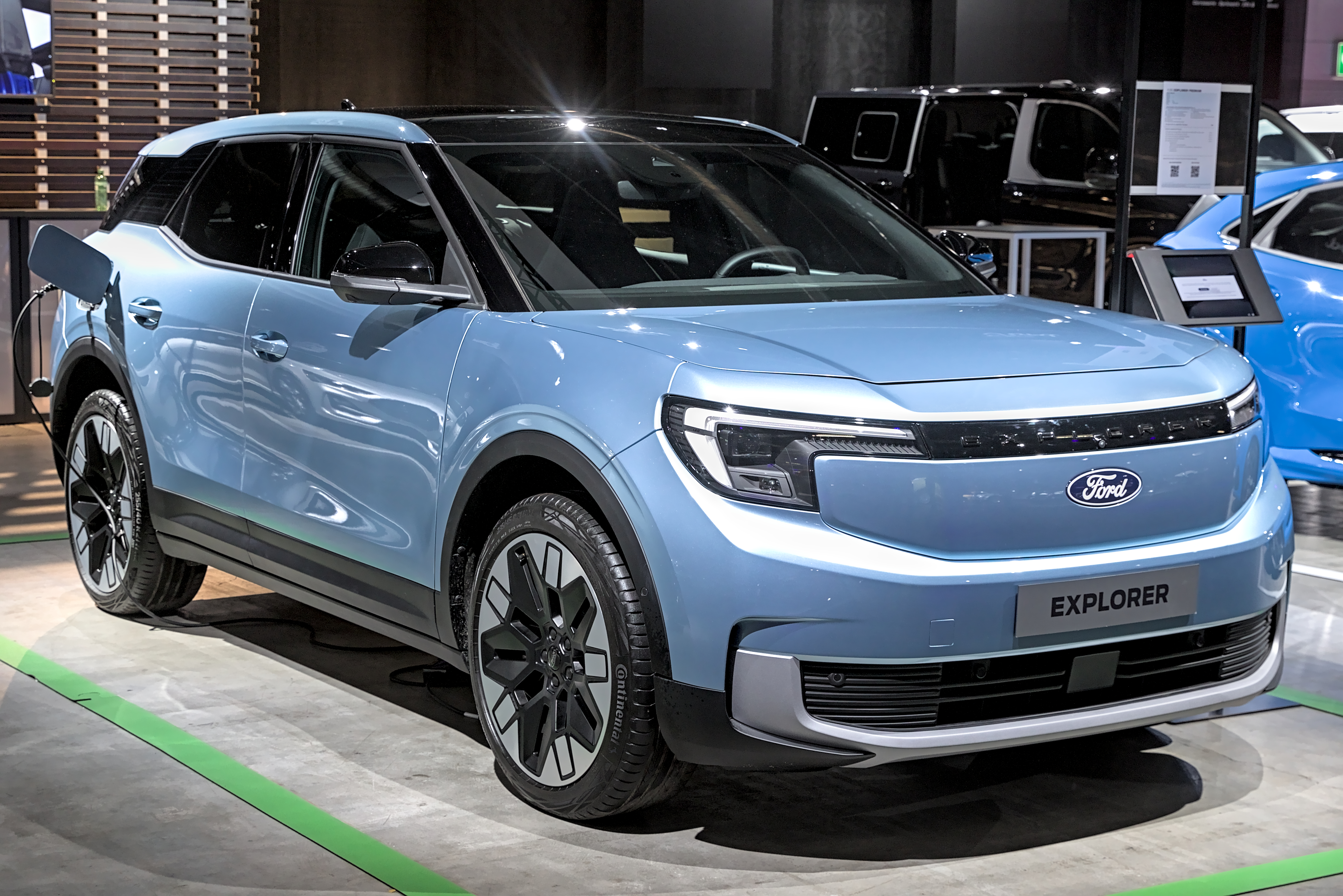
Car
Ford Explorer

Car
Ford Ranger

Car
Ford Bronco

Car
Ford Maverick


Car
Honda Crvs

Car
Toyota Prius
LIVE
Speaker 1: Auto Line after Hours. It's brought to you by Bridgestone Tires,
Solutions for Your Journey, and by Borg Warner. The automotive
industry continues to evolve, and so do the opportunities to define it. Borg Warner, one of the world's most admired companies,
gets partners where they need to go. Let's do something
big together.
Speaker 2: Hey, welcome everybody to Auto Line after Hours is going to have another very interesting discussion of what's going on in the automotive industry today. We've got Paul Thomas, the
CEO of BOSH North America. We've also got Adam Bernard
from what's the name.
Speaker 3: Of your Auto perspectives?
Speaker 2: Auto Perspectives. Thank you for that, Adam, and we'll get
into more of your background in a bit too. But Gary,
how you doing.
Speaker 4: I'm doing great.
Speaker 5: It's very very surprising that you would say, like a year ago, when you're doing the show, that you would not imagine that there'd be so much flux going on right now, so much happening.
Speaker 4: I mean, who would have expected it?
Speaker 2: That's right now, crazy time in the industry, but interesting but interesting. But Paul, just about a week or so ago,
BOSH North America big announcement. You know, your commitment to
the North American market automotive or what you guys call mobility, but beyond that as well, Why the big push? Why
what are you really trying to get across here by announcing all this investment in North America.
Speaker 6: Well, I mean there's certain trends in the region. I mean,
first of all, there's lots of trends in the region we want to take advantage of and having their global footprint is very important for us. But we also see
that there's lots of areas in the region that either are underserved by our other domains or that there's ways to increase the content in the automotive or in the mobility in the mobility market. So the big push is
coming out of the fact that there's certain technologies. We
feel we have technology and we have the ability from the engineering and delivery standpoint to manage. Silicon carbide is
a very big topic for US. I mean, we're investing
between now and the end of twenty seven, we want to invest or We plan to investorund one point nine billion dollars in developing silicon carbide for the region.
Speaker 2: So to have a local so you would make silicon carbyde Chips in North America or the US.
Speaker 6: In Roseville, California. So the facility is currently a brown
field facility that we bought about three years ago and we've been renovating it over the past over the past three years to be ready to produce next year two hundred milimeter silicon wafers for the automotive industry or for any industry that needs silicon carbide. So having a local
supply we think is important and just.
Speaker 2: Go what's the advantage of silicon carbide.
Speaker 6: Yeah, so silicon carbide primarily for the electrified vehicle market or whether you use it in power inverters or other areas as a way to have greater power density in your silicon than you do with traditional silicon carbide. And
you need it actually for the energy requirements in the high powered inverters, whether it's four hundred vold or eight hundred volt type systems. So the benefit of having it
local is, of course you eliminate some of the sustainability issues we saw during the semiconductor crisis, right, You eliminate long lead times, you have the ability to be local, and if there's any type of trade issues, you have a local supply base that can deliver to that and will be one of the only i would say, producers of silicon carbine in the region at scale.
Speaker 5: Well, many people think about BOSH and you're thinking fuel injectors abs. I mean, you guys have a broad portfolio.
Talk to us about that. I mean, because here we're
just talking about stuff that can go to evs. But
I mean, you guys are just right across the board.
Speaker 6: Yeah. Well, I'm glad that you didn't say you only
hear about dishwashers, because we also do lots of home appliances. Right,
So the breath of my responsibility primarily is first and foremost.
I'm the president of our mobility business, and our mobility businesses are traditional hardware business. So we have powertrain components,
so as you mentioned, injectors, fuel rails, pumps. We also
have cross domain computing, which is a variation of high compute solutions and low compute solutions, so vehicle gateways, body control modules, power neet control that we have. From that side,
we have electrified motion, which is all of the e machines that you see going in vehicles, whether they're rotating electrical e machines, or whether we have inverters or other things along those lines. We have our vehicle Motion division,
which is braking, so breaking and steering, so any of the brake control that you see, any of your air bags or things that you have that for safety control, we also do that. And then we also have steering
where you can move the car, so any way the car moves forward, backward, left or right. We try to
be part of that. And amongst all of the hardware
that we provide, we have a strong software organization. So
we have a group called ETAs that does a lot of the middleware and they try to bridge between our software and what our customers want. And we also have
an engineering group that's a kind of third party but wash engineering in the region that takes on let's say, projects like for Slate or projects for customers that need engineering support and we can kind of engage with them.
So from a mobility standpoint is not just powertrain the company as well. We have industrial technology, so all of
the heavy hydraulics you see and a lot of construction equipment Bosch takes care of or high volume production lines.
Bosch is engaged in building industry. Four point zero solutions
on our industrial technology side power tools. Hopefully you all
have a Bosh power tool in your house. If you
go into any DIY store, you'll see wash power tools.
And we just did a Super Bowl commercial or the Big Game commercial so to speak, in January of this year where we showed our home appliances and our power tool and the same thing. So we do a thermodoor
brand anyway, not to get into a big advertisement. Our
company does many things across consumers, across OEM type automotive supply and that's one of the beauties of the company is we're able to take advantage across all of those types of product areas to deliver solutions that are efficient, that can help the quality of life along the way.
And you know, we talked a little bit earlier about hydrogen, and you know, hydrogen is a great topic.
Speaker 2: We were talking so the audience, so we were talking about this before the show started off.
Speaker 6: Yeah, so yeah, so I don't want to go there yet, but yeah, Bosch is we're everywhere. We have a lot
of vertical integration as well.
Speaker 2: No, let's go there yet. Let's go there now. Hydrogen,
you know, because we always think it's the next energy source, right and we've been saying that for decades, but you guys are probably involved in that. Where do you see
it going?
Speaker 6: Yeah, I mean you can look at hydrogen in a couple different ways. I think you have have a mobile
hydrogen which are solutions that go inside vehicles and of course help with propulsion and transportation. You have stationary fuel
cells that you know, allow you to provide power in certain areas of the world that maybe you have a problem getting electrical to but you can. You have the
ability to produce hydrogen. And also you can use hydrogen
in multiple different ways. You can use it in a
fuel cell where you're actually there, or you can inject hydrogen yeah, and use it as an ice and an engine that combusts hydrogen. And we're looking at all different
opportunities for that. I would say that hydrogen. If you
went to the recent ACT show in Anaheim, hydrogen was one of the key things that you're hearing a lot a lot of our customers talk about. So if you
have like commercial vehicles or heavy commercial vehicles, hydrogen provides a very good solution for them that for long term haul, for long haul or even mid haul type solutions. You know,
you have the ability to refuel. And we're also seeing
really good progress in getting to let's call it zero mission status with injectable hydrogen, So engines that inject hydrogen could potentially be classified a zero mission vehicles. So hydrogen
has a place. It's not taking off. In other words,
the pace has slowed, but the interest hasn't. And there
are various ways to get to that. And I think
the infrastructure needs needs to increase dramatically, but then people will start using it again. And we look at producing hydrogen.
So we have electrilizers that we make penelectrilizers that can produce energy. We have fuel cells that can collect the
energy and use it to charge a battery. And we
also have the ability to make a hydrogen injector or a hydrogen top of engine so that you can inject hydrogen.
So we'd like to see it a move on.
Speaker 5: You guys are basically powertrained, agnostic. You'll you'll do wherever
somebody has something that they need addressed.
Speaker 6: You guys are yeah. You know, we used to think
that hybrids were kind of our hybrid engines or hybrid vehicles.
We're kind of a bridge to a full electric But now we're seeing that you had to have a multi laying highway approach to everything, and are we agnostic. We will.
We've never stopped developing ICEEE engines through all of this, so we still want to make them more efficient, we still want to make them have less impact on the environment, we still want to make them cost effective, we still want to make them quieter. So all through the let's
call it ev revolution, I've stayed in. Bosch has stayed
i would say agnostic, but also equally engaged across all platforms.
So we never gave up on the ice engine because old technology will always strike back if the consumers aren't pulling it, and our the consumer market, as you know, was really who turned the page on and said, look, I need choice, and we always felt that the choice had to be had to be available, so we never we never gave up on electrification because we have that product portfolio. We never gave up on hybrid because there's
also different topologies and ways that you need to introduce hybrid in an efficient way. I mean there's packaging constraints,
there's power constraints, there's software constraints, and then the IC engine can only get better.
Speaker 2: Paul, last week I was at the Automate Show, you know, which is all about automation. I was talking to the
CEO of a company that makes automated assembly equipment for combustion engines, and he was saying that, you know, just a few years ago, all the automakers were saying, we're never going to do a new ice program. And he said,
you should come see my shop. He says, I'm almost
turning business away. I've got so many orders all for
new engine programs. Is that an issue for for a
company like bosh of You know, the industry was so hot on EV and now it looks like hybrids are really the way to go, at least in the US market.
How do you deal with these switches? And can you
do it?
Speaker 6: Yeah? I mean a great example is a facility that
we have in the Carolinas. It's a manufacturing facility that
makes on on one side of the plant or within the plant, we make electric motors and just on the other side of the pathway, we make injectors for ice vehicles.
So this mixture of ice and EV has always been in our blood and the fact that it's in our DNA to not give up on technology. We were one
of the you know, long stall worts of injection technology, whatever bar whether it was gasoline or whatever, whatever fuel you wanted to inject. We always felt like that was
one of our core competences, from the software to the hardware to the know how. I think that the engine
changes that we're seeing are all for the better. Yeah,
because the more efficient you can still make the engine, and the more efficient you make it to work in a hybrid environment versus pure ice environment can be critical.
Right when you talk about emissions, and if you get into a range extender type vehicle where the engine is just charging a battery, that engine has a completely different duty cycle than one that's applying power to a drive shaft.
Speaker 2: So I'm bullish on E revs. Next underd range EVS
is that what you're hearing from your customers. There are a
lot of interest in that.
Speaker 6: Well. If you take one of the largest markets in
the world, if you look at China for instance, and you look at the different topologies. I mean, we were
just at the Shanghai Auto Show not so long ago.
They want their offering freedom of choice to all their consumers.
So you don't want to have a purpose built vehicle that only does one thing, because the use cases across the line have to be different, and the beauty of you have to start from the beginning that way, because if you if you have a topology that's pure and only ice and you don't consider E rev, you don't consider plug in hybrid or some to tear that up and to go backwards into package a battery or an inverter or an e machine gets very difficult. So I
think by looking at what happened in that market and what our consumers are asking for, I think it's super intelligent to have a freedom of choice and to have offerings for our consumers to, you know, depending upon their use case. Some people want to drive the same cast.
Some people want to drive a car, you know, eight hundred miles in a weekend, and some people want to drive it one hundred miles in a weekend. But they
still love the they still love the product. So we're
seeing I believe there's room john across the industry for a multitude of solutions, and I think the consumers will benefit from it, and the OEMs will will we'll live up to that challenge. I wasn't supremely I won't say
this the wrong way, but I was impressed at what was happening in China, but I also am impressed at the skills that we be able to apply here in our region. I think that we're capable to meet the
same type of products in our region.
Speaker 4: Well, I'm going to ask you.
Speaker 5: We had one hundred years of internal combustion engines just right, and so volumes were very high. When we go to
the choice, you begin to have slices and so it's no longer the same scale that you would have for one thing. Does that make it more difficult for a
supplier to be able to do fewer of more rather than lots of one.
Speaker 6: Yeah, of course, I mean we're of course we have to be concerned about the volumes, right, I mean, capital equipment, all of the facts of the matter of how we get there have to be important. But you also have
to balance your portfolio. So active portfolio management is super
important to us. What we're concerned about is how do
we maintain the same level of content or increase the content per vehicle. So as compute becomes, as computing power
becomes more relevant in a vehicle, as you move towards a software defined vehicle or software defined everything, for me.
It's important to say, Okay, we'll have a certain stability related to ice, but we know it can never last.
At seventeen million, nineteen million vehicles, we knew that was coming.
So we had to make a decision, Okay, where do we invest more into And if you look at what's happening with our cross domain computing organization, how engaged we are now in software defined vehicle, how we're engaged in body control modules, how we're involved in next generation vehicle control, how we engage more in steering steerby wire type of activities.
We had to pivot, and we had to do it in a way that balanced our resources and the skill sets that we had. So we were able to rescale
a lot of our let's call them traditional mechanical engineers into more of a software engineer roles. We were able
to transition and people across all of our product lines.
Even in the manufacturing environment. As I told you, one
day someone was making powertrain and the next day they move over to the line to make e machines. So
we were adeptly aware of what was going to happen to the market, and we invested moderately across all the technologies.
We never went all in in one area, but where we are in, we're in from a technology basis very strong.
Speaker 5: One of the things that you guys do that's great I think that people need to know is you train people and if they need to have a new job, you guys are going to back them.
Speaker 6: So I've been with the company for thirty years and the thing that impresses me the most is if you want to produce something to the tightest tolerance, and you want to produce millions of them, we can do it.
And we have apprenticeship programs of course, where we're developing associates and different career paths. One of the things that
we're most proud of. I would just go to the
Roseville facility. When we bought the Roseville facility from the
current tenant, we maintained over two hundred and fifty of the there were the major let's say ninety nine percent of the existing associates we maintained and we've been training them now how to make the transition from previous generation normal silicon to move to silicon carbide. And that's been
a very proud moment in our career that we say, you know, we didn't have to exchange the workforce, so we can just teach the workforce.
Speaker 2: Ah. That's very different from how most American es actually
from the door and the automotive industry, right, I mean you see them, you know, jettising hundreds of software engineers because they think they're not the right kind of software engineers.
So what you're doing is very very different. I'd like
to hear you talk about that and point out that BOSH is kind of a not for profit company. I
know profit's important, but you're really a not for profit organization.
Speaker 6: Yeah, I mean, of course we have to make money, we have to do right writers, but we've we've been around, i mean one hundred and twenty years history in North America, in the Americas is a great history. Of course, we
like to be able to sell finance our technology, but I would say that not not for I mean, of course we have to make money. We do have very
strict requirements for cash flow to be able to be able to invest.
Speaker 2: But it's a privately held company.
Speaker 6: Privately held company. Correct, privately held company.
Speaker 2: So you don't have Wall Street and shareholders, you know, breathing down your neck every quarter like everybody else does.
But you still have to make money too.
Speaker 6: Yeah, I mean I would I would say, don't. I
wouldn't say that we're not for profit. Yeah, okay, I
mean we still have to generate a return for our shareholders.
We have to generate a return to make sure that we can keep people.
Speaker 2: But what I'm getting at is because of this culture and history of the company, isn't it we have a culture that you're going to keep.
Speaker 6: I would train them. I would say that we make
decisions that help invent products for life. Yeah, and I
think you know we have. We have made some tough
portfolio decisions, and we always make tough portfolio decisions, and we have to be responsible with how we spend our money and how we develop people. From that standpoint, every
associated is important to us, or every employee is important to us. But also the portfolio will also change. As
you described, we like to maintain a stable workforce wherever possible.
We like to generate a return on our investment. Some
of the things that we saw is that we you know, our profit is not where we want it to be, right, and if our profit keeps shrinking, we won't have the cash to invest in new technologies in the minute we can't invest in new technologies will be a sad day for our company because we don't want the outside market to have to dictate what we want to be able to do. We want to do it based upon our
own merits. So the direction of our company is still
towards how do we deal with some of the modification in the market today, how do we do it in a responsible way? But we still have to make a
profit margin, otherwise we won't be able to fund I.
Speaker 5: Think John, one of your points is basically, I mean you sort of sit in passing apprenticeships like it's nothing, but I mean it's amazing.
Speaker 4: It's like you can't I mean.
Speaker 6: Yeah, I mean it is companies. No, it is great.
And I mean, like I said, thirty years with the company because they align with my values. Yeah, you can
always find a place within the company to develop yourself, whether you want to work in logistics, whether you want to work in manufacturing, controlling, business unit, leadership, sales, or anything along the paths. We have a very welcoming environment
for transition, and we have most of our people. If
you talk to a lot of our socialates, people have been at the company fifty it's common to find people that have worked at our company for fifteen to twenty five years, and if you ask them why, it's because you offer them so many different options in their career that they can find within this big multinational organization.
Speaker 4: Right.
Speaker 6: So you can move from power tools to home appliances, you can move from home appliances to home comfort. And
as part of our engagement in the region, you may have read that we are planning to close on the purchase of Johnson Controls Residential and commercial HVAC business, which was an eight billion dollar acquisition globally. That will increase
the workforce in North America dramatically, and that also is a great way how do we onboard all these beautiful associates into our business. So there's a lot of things
going on, and you know, Bosh is looking at ways of doing it to of course become a leader in every market that we that we're in. We'd like to
be in the top one, two or three in the market share.
Speaker 2: Paul got to ask you about tariff's and the impact on the industry North America particularly, and how you're adjusting to it and what you see as the outcome of it.
Speaker 6: I mean, first and foremost. I mean, I believe that
we can all benefit from a fair and equal trade environment.
I think that all businesses require that. The tariffs, of course,
are super important for us, regardless of whether you're importing from anywhere outside of the US. We've had a long
standing premise that USMCA is important to us, and we've been building Let's just stick with the mobility business for now.
We've been building our mobility business around a strong tenant of USMCA, and USMCA has allowed us to have a very good balance of manufacturing in the United States where we have twenty two thousand associates and in Mexico where we have close to the same number of associates between the US and in Mexico, and we see a great balance there. We've been localizing a lot of our suppliers.
We've been localizing and a lot of our manufacturing, and we like that environment. Tariffs, of course, we look at
it as a business challenge. We've always been resilient, whether
it's been semiconductors, the pandemic, you name it. We always
have scenarios in our company and we don't panic. We
have an industrial production network that we can look into and move production where we think we need to move production.
We have an amazing purchasing organization that can find different suppliers all around the world. But it is important to
us that we find a resolution quickly, and that stability is more important to me than when we see because when you start talking about one hundred and forty five percent tariffs on a Monday twenty percent tariffs on a Wednesday, the question becomes where do I invest? Because if I
invest based upon story a three years from now, is my investment going to really pay off? So I'm actually
interested that the government, the regulatory agencies are starting to get involved in a mobility business. It's been thirty years
and finally the mobility business is important to our government.
And I believe we have a responsibility as a supply base, as a OEM organization to make sure the government knows what's important to us. And I've spent many hours traveling
to and from Washington to make sure that our voice is heard, that USMCA is important to us, that stability is important to us, and that we do have plans to be as local as we can be. There's certain
high technology products I'd love to see one hundred percent localized.
But there's also products that you can't localize in the US because the labor force doesn't exist, or the training doesn't exist, or the investment can't be made. So I
worry a little bit about the Tier three, Tier four suppliers that may not be able to handle it, but we're there to help them as well make sure that we continue our supply. So tariffs are they Yeah, I
mean I wake up every morning with a task force call on tariffs. We have a great team I'm working
on it. We have a great government organization that's making
sure that we try to understand what everything means beyond the headlines, and like I said, we try to spend as much time in Washington letting everyone know what we think we need as an industry.
Speaker 5: So so, Pa, let me ask you a technology sort of question. So you've been in the industry for thirty
years when you began to now what are the major changes you've seen and how do you see it going forward?
Speaker 6: Yeah, I think the consolidation has been very interesting to me.
When I first started the industry, I remember there were vehicle platforms that used to be one million vehicles, but you had global platforms, right used to have, not by naming oem names, but you used to have a global platform that was made in Europe in North America, and it was a million cars a year, and it was very simple to follow the cycle plan of what was happening, and you could invest based upon some predictability. Everything was
either five hundred thousand of this or a million of this or three hundred thousand of this, and you've seen a lot of scale. Then what I've noticed in mid
time in my career is that those global platforms began to not become global anymore, and you started to see regional influences come into play. What people liked in Europe,
they didn't like in North America, and even safety regulations changed on the design. Then you saw emissions of course
change how you could produce engines between each regions of the world. And we also saw China during that time,
you know, not have a product that had the quality that anyone would want. So now we're in an environment
right where freedom of choice is there and you have a few platforms which may be high volume, but there's many more lower i would say, lower volume choices that you as a supplier have to adapt to. And we
see different challenges. Of course outside of the United States,
when you look at what China's doing in the EV market, what you look at what's happening in other areas of the world. And I think that's what's super interesting, right
is we've moved from you know, very let's say, predictable type of demands were predictable but very stable type of environments, to an environment that you have to every morning wake up and ask yourself where do I put my investment right?
And I love that and I love that. I think
it requires a modernization of leadership and a modernization of thought, and that we are in an industry that's moving more towards to a consumer electronic type of speed. And if
we sit back and don't pick up our pace or follow the pace of the market, we as a supply base will fall behind. So that's what's exciting to me.
I mean watching what's happened from when I started in the in the industry to now.
Speaker 5: So how do how do you make your people feel comfortable with all of this change that's going on so that they don't freak out?
Speaker 6: And it's like, oh, yeah, no, just communicate, communicate, you know, we I have a saying that management is easy and leadership is tough, and leadership is the hardest thing to do in this time because you can't. You want to
provide certainty, right And management is simple because if you have certainty, then you just managed to it. And our
team is very strong in understanding what our strategy is.
We're very clear with our associates, are very transparent with our associates. What we're trying to do. We share with
them where we're trying to engage the customer. We ask
for them to help in the development of our strategy, and we we share it. Yeah, we really want everyone
to know where we're going so they have a choice. Yeah,
to help us to do something, to do something different.
But we found that, at least I found transparency has been my friend related to where our strategy needs to go.
Speaker 2: Look, we're gonna have to wrap up the segment, but I love the fact that you came on the show.
This has been really interesting. I want to thank you
for your time today, Paul, no.
Speaker 6: Problem, John, Yeah, thank you guys. Really good.
Speaker 2: We're going to take a quick commercial break. We'll be
back in a moment to talk about the news of the week. And here we go making a life full
of memories. When road tick at a time, that's what
really matters. Reach down weather Peak Tires with the seventy
thousand mile limited warranty.
Speaker 3: The automotive industry continues to evolve, and so do the opportunities to define it. Borg Warner, one of the world's
most admired companies, gets its partners where they need to go.
Speaker 2: Let's do something big together. All right, we're back. We're
going to get into the news of the week and uh.
Speaker 5: Or you have a trivia I could guess you one.
Speaker 2: John, let's hear it.
Speaker 5: All right, this is Adam. You've got to You've got to.
You gotta participate in this. So as you know, because
you know these things, John, that Brad Pitt is starring in an upcoming movie, Formula one Formula one, and its real title is Formula one the movie. Actually it's f
one the movie.
Speaker 4: Okay, So film centers on Sonny Hayesy.
Speaker 2: Wise, we wouldn't know what's a movie.
Speaker 5: Centers on Sonny Hayes play by Pitt, former Formula one driver who is promising talent in the nineteen nineties until a severe crash forced him to retire thirty years later, is persuaded by a former teammate and team owner to come out of retirement and to mentor a rookie driver and help save a struggling F one team. Now that's
not coming out until June twenty seven, twenty twenty five.
Speaker 2: What I thought it was coming out this year?
Speaker 4: Twenty twenty five.
Speaker 2: This year, Oh, June twenty seven. Okay, yea yeah, okay,
this year.
Speaker 4: So here's the question.
Speaker 5: On May twenty second, nineteen sixty nine, a movie about racing came out. Okay, and I will tell you what
the plot of this movie was. And I want you
to tell me either the name of the movie or any of the actors that are in this movie.
Speaker 2: Okay, I'm gonna give you. Just give me a clues.
Speaker 6: This is so.
Speaker 5: This is a drama about a professional race car driver named Frank Capua who dreams of winning the Indianapolis five hundred.
He falls in love with a woman, and his obsession with racing leads him to neglect his marriage, and his wife has an affair with his racing driving rival. He
discovers the betrayal, it fuels his determination to win. He
drives aggressively and ultimately wins the Indianapolis five hundred. After
the victory, he confronts the man who had the affair with his wife and punches him. The movie ends with
the wife and this actor and you don't know what's going to happen.
Speaker 2: Who are the actors?
Speaker 4: What was the movie?
Speaker 3: It's actually famous movie was James Garner.
Speaker 2: No, you're thinking of Grand Prix, but Grand Prix came out before nineteen sixty nine.
Speaker 3: Ok.
Speaker 2: Correct when when you were first starting going, I thought maybe it's the love Bug.
Speaker 3: But serious movie, serious movie I have Paul Newman was it? Oh?
Speaker 2: Oh see, I knew that you'd get this ad.
Speaker 3: I'm not a big motorsports fan, so I but for some reason in my head, I keep seeing Paul Newman drove a race car, but I can and.
Speaker 5: His wife Joanne Woodward played his wife in the movie, and Robert Wagner plays the guy that she has the affair with. I could see Paul Newman punching Robert Wagner,
just the general principles.
Speaker 4: So yeah, so and the name of the movie.
Speaker 5: Was winning Oh yeah, okay, yeah, yeah, I have not heard of it, but right somehow must have got a visual somewhere, you know, Paul.
Speaker 2: Newman actually turned out to be a damn good race drive, I mean really good. In fact, he later said that
if he hadn't his career, his life had not taken him to Hollywood and become a big star, he would have become a race driver and who knows how good are you going to become if he had started a lot younger. But one of the things that I loved
about Paul Newman is he won his class at the Twelve Hours of Ceabring when he was seventy years old. Wow,
it is really saying something. So, I mean that just
shows you how good the guy was. So anyway, yeah, great, So.
Speaker 3: Adam, tell us about you.
Speaker 6: Where to begin?
Speaker 2: Well, I would describe you, and you're going to object to me saying this. You were sort of like the
top spy for General Motors. You were their G two guy,
you were their intelligence guy. You were figuring out what
future product that competitors were coming up with, right.
Speaker 3: Yeah. So, I mean that's that's the cocktail party answer
of what I do for a living. When I go
to reunions or whatever, I'm a spy and then people say, oh, tell me what you do, and I say, I could tell you, but then I'd have to kill you. But
I got into I'd been with GM for almost thirty nine years. Twenty five of those years were spent in
the competitor intelligence space. So when I left, I was
associate director of CI and I had a team based in Detroit and managed kind of a network globally. I
started reading Motor Trend magazine when I was ten years old, and that's around the time I started reading I Get the Christie, So I got to play detective and talk about cars all the time. And now I also do
community theater, so I enjoy public speaking. So it was
a combination of things that I really enjoyed my job.
And you know, I liked educating people, tell them stuff they didn't know. At the end of our precedation, I
would tell people, if you don't feel a little smarter and a little more scared than I have not done my job.
Speaker 4: So make it smarter and scared now.
Speaker 3: Yeah.
Speaker 2: Well, yeah, let's put it this way. Yeah, you were
advising General Motors on here's things that you got to be on the lookout for. What should we be on
the lookout for?
Speaker 3: Lord, there's so many and I know there's so much but I think, you know, part of it is is figuring out the software question. You know, we've seen some
automakers have gotten a lot more aggressive, Like Volkswagen was day able to get software right and decided we need to find a partner because we can't do it ourselves, and they got Ribban. We just saw that Ford canceled
what appears to be an approach to zonal architecture, which is supposed to help a lot with the air updates and cost reduction for its ice vehicle for its ice vehicles, and still.
Speaker 2: Has the skunk works going on the other future electrics.
Speaker 3: Right right, So, and I think a lot of automakers are trying to figure out a how to execute and get those optimized electrical architectures, and then also how to be able to explain it to customers, provide the appropriate tech support because tech support for software is different from tech support for an internal combustion vehicle, so there's a kind of a different skill set involved there. And then
wrestling with subscription fatigue. You know, how much do you charge?
You know, is there a one time charge up front or you just like pay for the rest of your life?
You know, I have a TVO at home, and I bought my TVO. I bought a lifetime subscription because I
knew I did not want to keep paying month to month.
And I think a lot of automakers are trying to wrestling with how to do that because a lot of them are forecast big revenues.
Speaker 2: And I want to get into that. I'm so glad
you brought that, But first go back to this whole zonal centralized thing. You know, Ford seems to have the
theory of we're not going to put more cost into our ice vehicles. And as you know, once you go ZONEOL,
you essentially have to scrap all the components that you've been using. It takes a totally different approach. Whereas a
general motors wants to do one system for both kinds of vehicles. Where do you think the industry is going
to play out? I mean, what would your advice be,
should you not put extra cost into your ice vehicles or should you have one system?
Speaker 3: I think I think five years ago, for the question you asked about engines, we would have said, yeah, don't put more cost into your ice vehicles. But you know,
customers may have an ice GM and an EVGM and to have them treated differently seems a little counterintuitive if you look at what Riving announced when they in the middle of the life cycle of the R one, they switched over to his own architecture and made all these claims that cost reduction, mass reduction, all the things you like to hear about in a vehicle, which you know.
And they're starting to creep into the black, which is great.
And I think automakers that don't start to go down that road, if they want to provide the software experience that customers are expecting, are going to wind up falling a little short.
Speaker 5: So going back to this issue of the return of the ICE engine as being viable, okay again, last year we'd be talking about this.
Speaker 4: Not ice is dead.
Speaker 5: You know, it's behind us, okay, But people seem to be saying, okay, we want ICE or we at least want a hybrid, and you know, the EV numbers are not going anywhere. So my question is is whether there
might not be a reluctance on behalf of consumers to get as much software as OEMs would like them to have because they say, you know what, I've already got it in my pocket.
Speaker 4: I don't need it to come from you.
Speaker 3: True, and you're right, there's a lot of stuff. With
the exception of GM taking phone mirring out of their evs, everyone's still offered almost everyone still offers some form of that.
Tesla and Ruvin don't yet, but yeah, you're right, a lot of people like to take that whole experience with them, and we're actually starting to see a little bit of a backlash if you look at Slate. You know, Slate
is all bring your own stuff into the vehicle and not really developing anything on their own.
Speaker 2: What do you think of Slate?
Speaker 3: I was pretty impressed. I you know, it was one
of those things. I had a friend who actually asked
me about Slate about a year ago because he had applying for a job there, and I was embarrassed to say, I had never heard of these people.
Speaker 2: That was deliberate. They were keeping everything under covered.
Speaker 3: I mean, it's really hard to keep a secret these days.
I know it.
Speaker 2: How did they do it? They did it?
Speaker 3: I was very impressed. And then then you know, when
it came out, you know, there's still a couple of questions to be answered, but it's a neat little you know.
I have a Mini Cooper, so I like small vehicles, you know, to bring your own device thing. It seems
to be very well integrated.
Speaker 6: You know.
Speaker 3: We're waiting to see what happens with the incentives and how the price is going to shake out, but it's definitely generating a lot of interest out there.
Speaker 2: You know, Paul just mentioned that they were doing work, all right, I want to do that. I thought that, Yeah,
I wanted to ask him about that, but you know, we had a time constraint there, so.
Speaker 5: So I mean, what I'm going to too is the fact of Okay, many OEMs now are just putting wall of wall screens in their vehicles, right, and they're they're offering up all kinds of opportunities for people to download this, that or the other thing, right, And some of this is a means by which, as you say, they want they want to generate revenue. And what I begin to wonder,
and based on Slate as well as based on people that I've talked to that you know, are not necessarily in the car industry, they're they're saying these giant screens are ridiculous in cars.
Speaker 2: You know.
Speaker 3: Yeah, there's definitely a lot of uh. And it's funny
because the giant screens are both the evs on ices, So the soffware question really applies to just about anything.
You know, we've seen BMW with the panoramic eye drive and they're kind of pushing everything up to like the base of the windshield to at least get it out of the way and make it a little distracting. And
they've said their vision is no screens, which you know is very different from how a lot of people are used to interacting with their cars. So I can I
can definitely see a little of the backlash. You know,
the Mini Cooper I've got, it's got a nice big screen in the middle. And I'm one of those people
that changes the wallpaper on my phone a lot, so I'll change the theme on my car. But there are
a lot of other people who are just like, set it and forget it. And you're right, they're not going
to need to download additional screens and skins and whatever for their vehicles, just as the same as people treat their phones differently too, Right.
Speaker 2: So what do you think about the conversation we were holding with Paul to the return of the ice age. Yeah,
you know, we've seen we've gone from irrational exuberance. I
think in retrospect with evs and now everybody's talking up hybrids and plug ins and e revs, where do you see it going?
Speaker 3: Yeah, you know, to be honest, I was trying to think of the automakers that are still there. Used to
be about seven or eight brands that were targeting be all electric by twenty thirty, and I'm not sure how many of them are still left.
Speaker 2: I can only think of Jaguar, Cadillac.
Speaker 3: Sorry no Catillacs, Genesis. I'm not sure if Genesis is
still in there or not. I know Genesis said they're
adding hybrids, but I'm warnering if they might be hedging their bets too. But yeah, you know, the infrastructure has
not is is getting better, but it's not getting better as fast as some people were hoping. And there's deal
issues with the numbers of chargers and their wide reliability of chargers, you know, and we see folks like Walmart and building charging networks and seven eleven building networks. But
that makes people nervous, and especially if you live in a part of the country where you don't have a temperate climate three hundred and sixty five days a year and you know your range is going to go down in the winter, so it's it's not entirely unsurprising. You
see kind of the back off from that, and internal combustion technology is improving very quickly too. And you see
even the hybrids are getting better. The U four plug
and hybrid fifty miles on one charge, which you know most plug and hybrids are like twenty five to thirty miles, So all of that's getting much better.
Speaker 5: Well, you know, to your point about the charging infrastructure, so I naturally have a fact about that that Bloomberg analyzed Energy Department data and they discovered that the installation of high speed chargers has fallen more than twenty one percent in Q one of this year compared to Q one of last year, and they think that by twenty thirty it may even be going down by thirty percent or more per year. So not getting an increase in
the infrastructure now.
Speaker 3: Does does that include the Tesla numbers? Because Tesla has
slowed down their deployment a lot. After they open up
their network to everyone, then they kind of pulled back, I think, on deploying the chargers, which means that everyone's fighting over a fewer Tesla chargers these days. I don't
know if, but I wonder if, I wonder how much that driven by the Tesla pullback. But that's a that's
unfortunate for people who are buying any evs.
Speaker 5: You know, you were mentioning, you know. So the Senate
voted today that California may not have its ability to have the waiver, which then means, oh, hello ices.
Speaker 3: Yeah right, Oh so that was the twenty three so they can't do that twenty thirty five ZEV only.
Speaker 4: Yeah.
Speaker 2: The moreover, the House voted today for the new tax package, which eliminates the seventy five hundred dollars for EV's, the four thousand dollars for used evs, and what was that thirty or forty thousand dollars for commercial evs? Oh wow, and.
Speaker 4: Except that there's so I checked that out.
Speaker 5: Yeah, it goes through twenty twenty six for companies that have not sold more than two hundred thousand vehicles EV vehicles.
Speaker 2: Oh, you know, good point, good point. But everything else
ends December thirty first this year. So I got to
believe that's even more of a resurgence of the isis.
Speaker 3: That's a problem for slate. Then, by the time Slate's
not doing until the end of twenty twenty six.
Speaker 2: That's right, that's a problem for Slate. I think they
knew that this year, but probably when they launched their whole effort, they were counting on that seventy five hundred dollars because it would have dropped the price of the truck to twenty grand or even less.
Speaker 6: Yeah.
Speaker 5: But and so when you when you were doing the analysis of things going on, I mean, did you see the possibility of there being consumer demand for things like evs without incentives coming from the government or did you see it as just the unknown?
Speaker 3: Yeah, you know, there was always interest in evs, and you know, and for a while ce I was part of the market research organization, and so you know, we saw some of the reaches that was done, and there's always been interest in EV's, but there was always the you know, back of your mind, you know, am I going to be able to plug it in somewhere? And
you know, I mean when the vault came out, that's when I think GAM coined the term range anxiety, which that's what it was tone And of course now you rivers are coming back, as you mentioned, so, but you know, we we a lot of automakers seemed to be retaining their ice portfolios and when GM had announced you know, all electric by twenty thirty five, and that was that was pretty early to do that. And we saw a
lot of other competitors still retaining their their even keeping the hybrids in their portfolios as well. And it seemed
to raise a question about you know, okay, is the EV transition could be as fast as everyone thinks it is.
And it turns out it is happening, but it is happening more slowly.
Speaker 2: Right you mentioned earlier subscription services. I think this is
another area where the industry got way out ahead of where the consumer is ready to pay for these things.
You know, We've been talking about it on the show, and what I've said is if your phone can do it, you're not going to pay a car company to have it done in your car. So you automakers are going
to have something really really special, highly desirable to get consumers to pay subscription services for some feature. I'm thinking
maybe supercrews or Blue crews or full self driving. Maybe
that is something.
Speaker 3: Yeah, And that's where again, that's where the software capability so to be able to do the over over the air updates for an automated driving system becomes really important to be able to do that smoothly and effortlessly, to the point where the customer maybe doesn't even know it.
I mean, your phone will update, put it in the doc for the night, you come back the next morning, you got your updated operating system. If the automators can
pull that off with their vehicles and enabling stuff like the automated driving, then that becomes something that's worthwhile to pay for on a monthly basis.
Speaker 2: Anything else you see that consumers would be willing to pay for that.
Speaker 3: You can't get off of your phone. Well, maybe performance.
I think some folks are offering some extra performance. I
think Mercedes has an over the air Tesla has been doing over the air performance upgrades for a while too, And that's certainly easier than you know, going out and you know, putting a new carburetor and pipes on your intronal combustion vehicle. If you can flick a switch and
get up upgraded performance over the air, then that's kind of cool. Even if you can get a you know,
with all the electronics being rolled into suspensions, getting an upgraded track package for your high performance electric sports car.
So there are maybe some things out there that are not on the phone that are more endemic to the body and chassis part of the vehicle that that are software enabled.
Speaker 4: But isn't this sort of like this much of the market.
Speaker 3: I mean, yes, it's not a huge it's not a huge.
Speaker 6: Part of the market.
Speaker 5: So, you know, John mentioned, you know, willing to pay for what about affordability? I mean, are you seeing any
possibility of this becoming a major concern that has a solution?
Speaker 3: Well, yes, I know, definitely major concern solution. It seems
to be very difficult to pull off. Yeah, just everything
is getting more expensive. You know, the pandemic drove up
a lot of prices and no one seems to be able to recover from that. And now if there's more
of this regionalized manufacturing where you're forcing companies to have a plant here and a plant to Canada and a plant in Mexico, then you've got the economies of scale that you're not getting anymore. So I don't really know
what the solution is to get around that. I know
some you know is Slate's approach is simplicity and taking a lot of the complexity. You know, complexity reduction will
help you reduce cost, but there doesn't seem to be an obvious solution to make vehicles more affordable unfortunately, that I can see well.
Speaker 2: In your G two work. Did you ever look into
Ford skunk Works and you know, supposedly they're going to come out with They haven't announced any specific price, but it sounds like they're shooting for about a twenty five thousand dollars electric vehicle.
Speaker 3: Yeah, it's interesting. Then they like Slate, they've been pretty
good about keeping secrets. They haven't shown any concept vehicles.
I don't know if they've if they've poached any major talent to work in the skunkworks, they've kept that quiet as well. You know, I think of Renault in Europe
when they announced they were bringing the Twingle back and they were going to reduce the time to market by about a year by working with a Chinese supplier who they haven't named yet, And I thought maybe Ford might identify a Chinese supplier to help them bring the vehicle to market mark quickly, And they haven't done that, so they who knows what the secret sauce is to bring into market? But they're again pretty good at keeping secrets,
and ironically it sounds like the first vehicle the for it's going to do is a pickup truck, which they announced before Slay came out with their pickup truck, so it'll kind of roughly be in the same market.
Speaker 4: I think.
Speaker 2: Very interesting.
Speaker 5: Well, then there was then announcement that Toyota may be coming with a pickup truck that is Maverick.
Speaker 3: Yeah, well they've been remember the toy To ABAC concept from like two thousand and seven that was an extended cab based on a camera, and then they had the electric pickup crew cab that was at the Sorry Japan Mobility Show in twenty twenty three, So they've been talking about that for a few years. And you know what,
My husband drives a two thousand and four Talent car, loves it if something ever, if something ever happened to it.
He is a big fan of the Maverick Hybrid, and I've talked to several other Maverick Hybrid owners and obviously the Mavericks is way out selling the Honda Santa Cruz in market, So.
Speaker 2: Town car to Maverick Hybrid, that's a step.
Speaker 3: Yeah, yeah, but he you know, he's a gardener, so keep selling the green stuff alive at home and just having something functional to be able to go to the you know, the flower shop and pick some stuff really appeals to them. Plus the fuel economy.
Speaker 4: So how did Ford see that? How did they see that.
Speaker 5: That would be a vehicle that would be the sweet spot for the market.
Speaker 3: Yeah, that's a good question. And you know, they've got
you know, their own internal market research folks and looking at market trends, and they you know, they've obviously got the brand equity associated with pickup trucks, which I think help.
But I'm wondering if that's one of the reasons that Santa Cruz is not doing as well, because Hundai up to now hasn't been known for pickups and Ford already has that and that may help Toyota as well if they decide to enter that part of the market.
Speaker 2: I think part of it too, is the Santa Fe is more of a lifestyle pickup truck. The Maverick is
more or asmen. Now they're doing sport variants and all
this other thing, But originally it was was a little inexpensive work truck.
Speaker 3: And it's more to you know, if you read the automotive blogs. You know, journalists love like brown station wagons
with six speed manuals and diesels, and they love the Chevy love pickup in the old Ford Courier.
Speaker 4: So and it may don't like to buy anything.
Speaker 3: So yeah, yeah, but it may be that they they, you know, asked folks about these, you know, because we've seen you know, today's Ford F one fifty is huge, and the Rangers the size the old F series. So
as everything's been creeping up, Ford maybe saw an opportunity.
And I think what might have driven it was Ford's decision to get out of small cars and even get out of small is subs because they don't even have the Aco sport anymore. So I think they figured out, okay,
what else could we do with the low end of the market that's different, that might appeal to some first time buyers.
Speaker 2: And do you see any white spaces out there? I mean,
if you were advising an automaker, you might say, hey, have you looked at this? Now?
Speaker 3: There's so many different crossovers out there. I don't know
there's too many white spaces left. I mean, you know,
there's not a lot of let's not call it a white space. So let's just say opportunities.
Speaker 2: What opportunities.
Speaker 3: Well, I wish America liked wagons, but they don't, so I can't say that's an opportunity.
Speaker 2: Why.
Speaker 3: I don't know if wagon just got a reputation after a while and maybe set people said, well, I get a wagon when I can get a vehicle. It's a
little taller and a little easier to get into, which is an suv.
Speaker 2: Yeah, so you raise the H point of the wagon.
Speaker 3: Yeah, solve that and it becomes an suv. Yes, we're
seeing some crossovers top vehicles. It's weird the Chinese appear
to be getting into wagons for Europe because Europe is still like like swagon always has. Yeah, and now that
the Chinese are shotting to get more into Europe, they're starting.
Speaker 2: Now. What I've always wondered is you know, you never
want to drive the kind of vehicle your parents drove. Yes,
And so at least with the boomer generation, there was a stigma against wagons. We all grew up in that
sort of thing. But I would think several generations now
that a younger generation would be very open to a wagon.
Speaker 3: Yeah, I remember seeing that done right, Yes, done right.
I remember seeing I think Nissan had done some research along those lines, and they talked about pickup trucks being an opportunity, and again that might be what drove forward to get into the Maverick. I think there are some
if you see like the it was actually a wagon car show out on the East Side last summer, which I I think in an ogil car show, and I think they had a pretty good turnout. So there may
be some of the younger folks that are interested in older cars or wind up getting older wagons.
Speaker 2: Speaking about a younger generation having a different mindset. Last
week I went to the customer thing that Intrepid Control Rolls had they're one of our sponsors, and I met two twenty year old women and in the course of the conversation it came out they both drive Buicks. They
love Buick. They can't think of driving anything other.
Speaker 3: Than a new Buick.
Speaker 2: Really wow, yes, new Buicks. And I was like, man,
I it's.
Speaker 4: So so the Korean Buicks.
Speaker 2: Yeah, actually I think the one I had an Akadia so one yeah, one Lancing what one Lancing one? But
what I thought, Wow, here's two young women who think the Buick brand is brilliant. And that's what I'm getting
at is once you get a couple of generations away from I don't want to drive. My parents drove. They
think Buick's cool.
Speaker 3: Yeah, the investors any little I never got a chance to drive the investor of the new tracks, but invested.
That's it's a nice little runabout. And it's not super suv.
Ishe that is kind of a tall fast back wagony kind of cross over?
Speaker 4: Right, So let me ask you this.
Speaker 5: Okay, you were at one of the intown companies that was looking to the future and looking at what was going on. And we have the Deerborn and let's let's
throw in Stillantis for measure here, Okay. And you know,
we've been talking a lot about powertrain and pretty much all three have abandoned hybrids. Yet we see Toyota, Honda,
Honda's got well for.
Speaker 4: Sport's got somebody, but they haven't. They never talked about
them until now.
Speaker 3: Yeah, they dropped. I think they Lincoln as abandoned. I
think it's a band in all their hybrids except for the course Air I think still has a plug in hybrid.
I think Lincoln at one point said they were going to have a plug in hybrid and everything by the end of the decade, and we thought they were. We
were tracking the new Expedition and Navigator to be launched with the hybrid, and that hasn't materialized. And it seems
to be sort of obvious because it's under the up and fifties, so maybe they don't have enough.
Speaker 4: Well, they had a hybrid and the Explorer and making one with the new one.
Speaker 3: Yeah, got rid of it. They got rid of that,
but they still have the Escape and and there's there's rumors of a Bronco hybrid, and there is the Ranger plug in hybrid in Europe. So in theory there was
some hybrid hardware they could adapt to the Ranger here in the US, but we haven't conferred. And they are
Maverick hybrids, so they're still there. Yes, staland Is actually
I think Stalanis has said now they're getting back into non plug in strong hybrids, and I think they mentioned that Jeep would be offering.
Speaker 6: Some of those.
Speaker 3: So we haven't seen it yet. But yeah, still, but
that's the point.
Speaker 4: We haven't seen it yet.
Speaker 3: I know, I know, and GM unfortunately for the longest time, GM said and rightfully so when you engineer a hybrid, you are engineering two complete power trains. And they said,
that's why our future is electric. And unfortunately that has
left them without any hybrid hardware on the shelf, So they're really behind Stilandis and Ford from that standpoint. And
they've announced plug in hybrids, but again we haven't seen them yet.
Speaker 2: Two years ago, I was talking to some of the power trained people at GM and they said, well, we got hybrids in South America, so if we got to do hybrid's here we can tap into that. Does that
sound reasonable to you?
Speaker 3: It could? I mean they GM's got hybrids in China too,
and I don't know. I mean there's other vehicles have
in China which could be kind of cool here, like the Buick minivan, and so I don't know which there's an Equinox plug in hybrid China, and I think there's a cat like XT five hybrid or plug in hybrid in China. So I mean, in theory, it's on the shelf,
But again GM hasn't given us any clues about where these plug and hybrids would go. And if if they
want it for a full sized truck, that's not what they have in South America, So that would require a significant more amount of engineering to do a plug in hybrid Silvado for example.
Speaker 5: But okay, so this week Chintam announces all raft wars going forward will be hybrids, either straight hybrid or plug in hybrids. Okay, if you look at the sales numbers
for last year for the no the raft war, you look at the raft war sales numbers, the raft War sales numbers are here, half of which were hybrids. Okay,
so it was over four hundred thousand hybrid rapports are sold last year in the hybrid outsold the equinox.
Speaker 4: So I don't understand.
Speaker 5: I don't understand General Motors thinking, oh, it's two power trains.
Speaker 4: Oh this is too much. People apparently don't care and
they're buying them right.
Speaker 3: No, well, yeah, the customer at the end of the day doesn't care how much money you spent engineering something.
Speaker 2: Right.
Speaker 5: But I mean, Toyota's not a church. I mean they're
making money off of these things.
Speaker 3: Yeah. Well, and Toya, now though, has a global footprint
which General Motors no longer has, so they've got some economies of scale. Being you know, Tota's a big volume
player in Europe General Motors is not, so that puts them into disadvantage from that standpoint. And when you want
to do a business case, you know you're going to sell, you know, one hundred thousand hybrids, you're going to sell five hundred thousand hybrids.
Speaker 2: The other thing is my understanding is that Toyota approaches its cost accounting from a different way than US companies do.
So if you're odd, you know, the head of a program in an American company, if you want a new technology on your vehicle, you take the full financial hit for the rest of the company, for the rest of the it's going on yours. They start accounting it as
to when you start building your vehicles. So program managers
can be averse to bringing in new technology because they know it's going to bring a lot of cost to their vehicle. Whereas Toyota says, we're Toyota. We think we
know how to predict where these things are going. We
think we're going to I'll just make up an we think we're going to sell a million hybrids, so from day one, and we think we're going to do a million a year out for the life of this vehicle.
So from day one, we're going to price that hybrid technology as if it's been amortized over millions of vehicles already, because they're confident they're going to get there anyway. And
so a program manager is not at all technology averse, because all that program manager who's going to pay is the fully admortized cost on his program.
Speaker 5: You could look at the market cap of Toyota and they're right, yeah, that's right.
Speaker 2: Well, and their profit and their cash flow and all that other stuff.
Speaker 3: And I think if you're a customer looking at a ref or hybrid, you probably know that tod has been building hybrids for close to thirty years.
Speaker 4: This is going to be their fifth generation hybrid in.
Speaker 3: That vehicle, So you're going to be confident about that hardware that's under the vehicle, and that probably helped them get to those big sales numbers for that that row for hybrid.
Speaker 5: And I'm sure, but I'm sure Honda's you know CRVS, I'm sure that they sold a ton of hybrids of those as well. Yeah, I mean, it just it just
mystifies me as to how you know, such an opportunity was missed by what was formerly the world's leading corporation.
Speaker 2: Yeah, yeah, well, you know, I think it was that all in EV mentality, and it's like, hey, if we're going all in on EV, we're going all we're not gonna you know, we're spending enough money to go all EV, We're not going to put money into anything else. And
then the EV market just didn't materialize.
Speaker 6: It.
Speaker 5: But it's like the old thinking of like, nobody asked for this, so we're going to have a technology push.
We're going to push this technology and you're going to like it, and that.
Speaker 7: Never never, although you could argue that's what toy To did with the first Prius because they priced it to lose what five ten thousand dollars a vehicle when the Prius first came out, and that was kind of a scary complex technology initially, but Turrita felt that they could sell to the customers and they.
Speaker 3: Did and eventually got to the point where they could make money. You're selling hybrids, So I mean with some technologies,
you know, it's it's something that customers didn't know they wanted.
I don't know if that. I don't know if EV's
fall into that or not, but maybe that's what they were thinking. I wasn't in on those discussions.
Speaker 2: So hey, look we're going to have to wrap this up.
Adam been great having you. Yeah, we're going to have
you back. I mean, we got to pick more of
his brain here, Gary.
Speaker 3: This is a lot of fun. I really enjoyed it
because I ten years since I sat and set in these seats, so it was like, great, yeah, it's.
Speaker 2: Chatty, good deal, mister Vassilas. Shall see you next week.
Absolutely good, and I hope we see all of you then too.
Speaker 1: Auto Line After Hours is brought to you by Bridgestone Tires, Solutions for Your Journey and by Borg Warner. The automotive
industry continues to evolve, and so do the opportunities to define it. Bor Warner, one of the world's most admired companies,
gets partners where they need to go. Let's do something
big together
About this episode
The discussion centers on the evolving landscape of the automotive industry, featuring insights from Paul Thomas, CEO of Bosch North America. Key topics include Bosch's significant investment in silicon carbide technology for electric vehicles, the ongoing relevance of internal combustion engines (ICE), and the company's commitment to a diverse powertrain strategy. The conversation also touches on the challenges of adapting to changing consumer preferences, the impact of tariffs, and the importance of local supply chains. The episode highlights Bosch's approach to workforce development and the need for flexibility in a rapidly changing market.
Original notes
TOPIC: ICE Age Returns PANEL: Paul Thomas, Bosch; Adam Bernard, AutoPerspectives; Gary Vasilash, shinymetalboxes.net; John McElroy, Autoline.tv
Autoline After Hours
Autoline
0:00
61:32