The Lamborghini Diablo GTR is a special racing version of the Diablo sports car. It's known for being very powerful and fast, making it a dream car for many enthusiasts.
The Bugatti Chiron is a very expensive and fast car that can go from 0 to 60 mph in just a few seconds. It's known for being one of the most powerful cars in the world.
Singer is a company that takes old Porsche 911 cars and makes them look and perform like new, but with a classic style. They are famous for their unique and expensive customizations.
The Nürburgring is a well-known race track in Germany where many cars are tested and raced. It's famous for being very difficult and is loved by car fans.
Ford Performance is a part of Ford that makes fast and sporty cars. They work on improving the performance of Ford vehicles, like the Mustang.
Term
OG
'OG' is a term that means someone who has been part of something for a long time. In car culture, it refers to people who have a lot of experience or were among the first to do something.
The Ferrari 430 is a fast sports car made by Ferrari. It has a powerful engine and is designed for high-speed driving and great handling.
Car
Ferrari 16M
The Ferrari 16M is a special version of the Ferrari 430 that can be driven with the top down. It's designed to be more powerful and is a celebration of Ferrari's racing success.
The Audi R8 is a fast and stylish sports car that many people love for its looks and performance. It's known for being fun to drive and has a reputation for being very well-made.
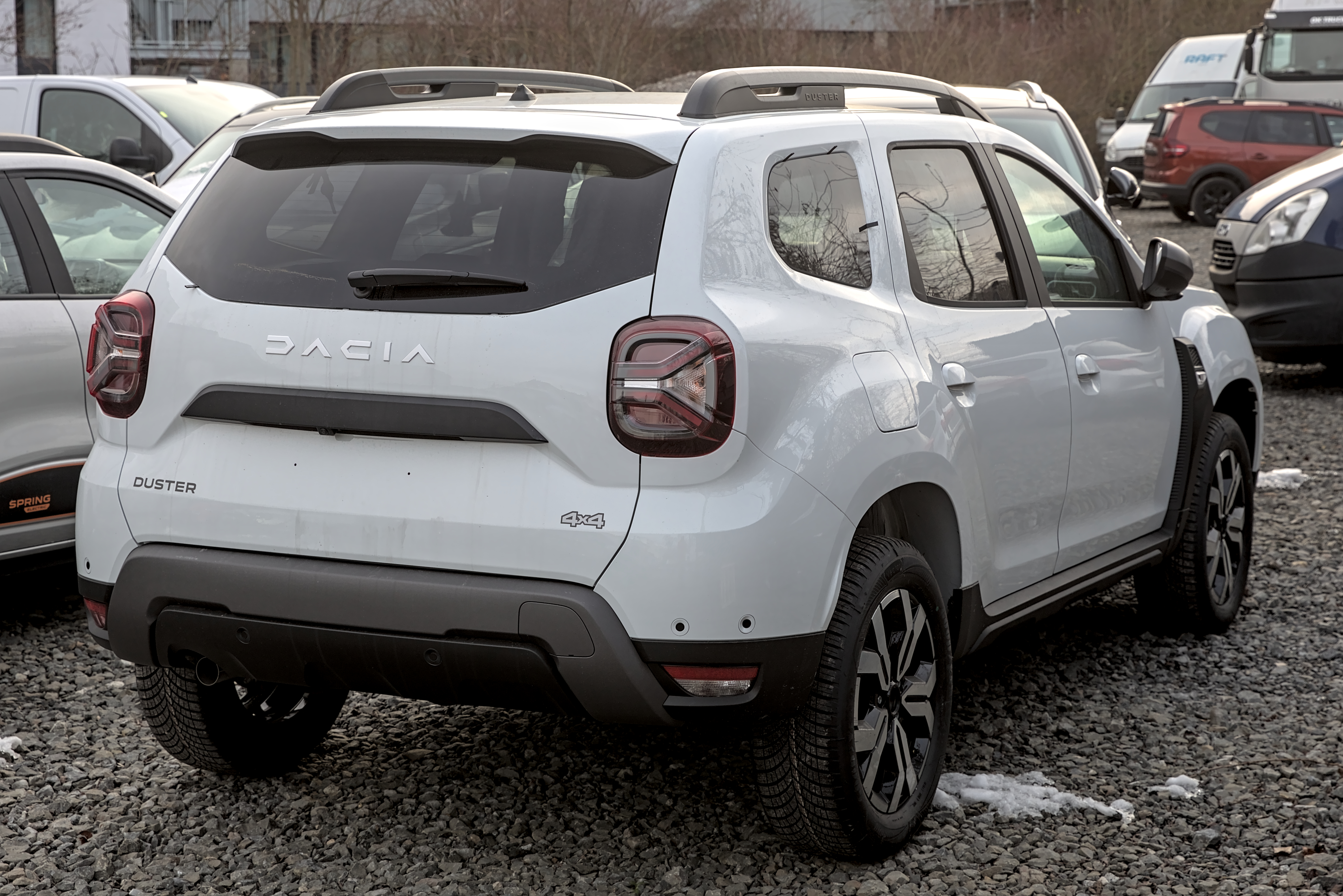
The Dacia Duster is an affordable SUV that many people like because it's practical and has a lot of space. It's a good option for anyone looking for a reliable car that can handle different types of driving.
The Maserati MC20 is a new sports car from Maserati that has a powerful engine and sleek design. It's built for speed and performance, making it a competitor to other luxury sports cars.
The Isle of Man is a place famous for its exciting and risky motorcycle races. It's a special event where racers go really fast on public roads, and it's known for being very challenging.
Subaru is a car brand from Japan that makes vehicles known for being good in tough weather and off-road conditions. They are also famous for their involvement in racing.
A V6 engine has six cylinders, which helps it run well and use fuel efficiently. It's commonly found in many cars and is a good choice for everyday driving.
A V10 engine has ten cylinders that help it produce a lot of power. It's often used in fast cars and racing because it runs smoothly and can go really fast.
A V8 engine has eight cylinders, which gives it a lot of power. It's often found in larger vehicles like trucks and performance cars because it can pull heavy loads and go fast.
Car
Bugatti
Bugatti is a very expensive car brand that makes some of the fastest and most luxurious cars in the world. They are known for their unique designs and high performance.
A joust is when two cars drive towards each other and cross paths at the same time. It's a tricky move that needs good timing and control to do safely, often used in movies or racing.
Car control is how well a driver can handle and steer a car, especially when driving fast or in tricky situations. It's about keeping the car steady and safe while making sharp turns or sudden moves.
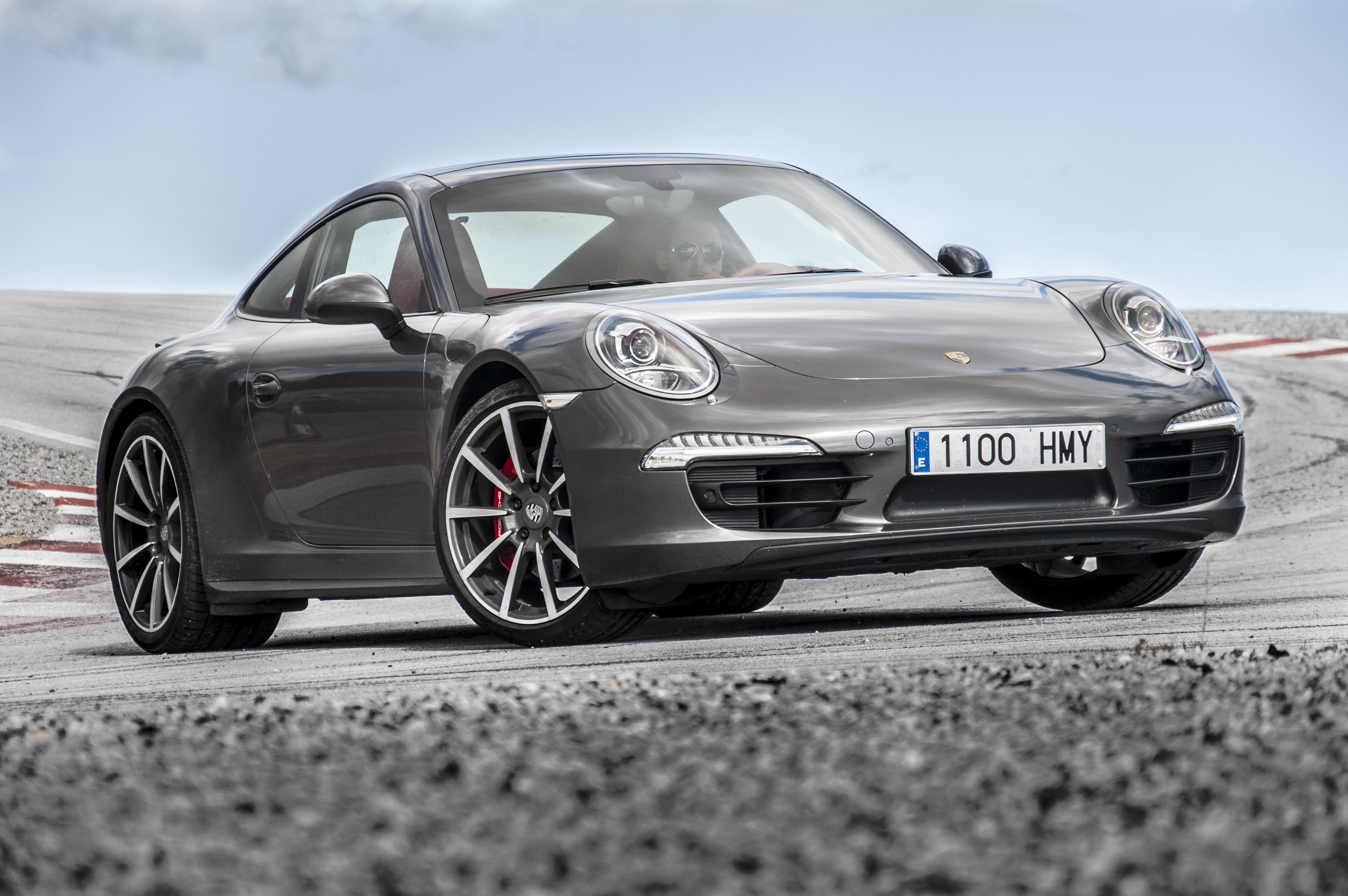
The Porsche 911 is a famous sports car that many people recognize because of its unique shape and fast performance. It's been around for a long time and is often talked about because it's considered one of the best cars for driving.
Hypercars are the fastest and most advanced types of sports cars. They are very expensive and have features that make them stand out from regular cars.
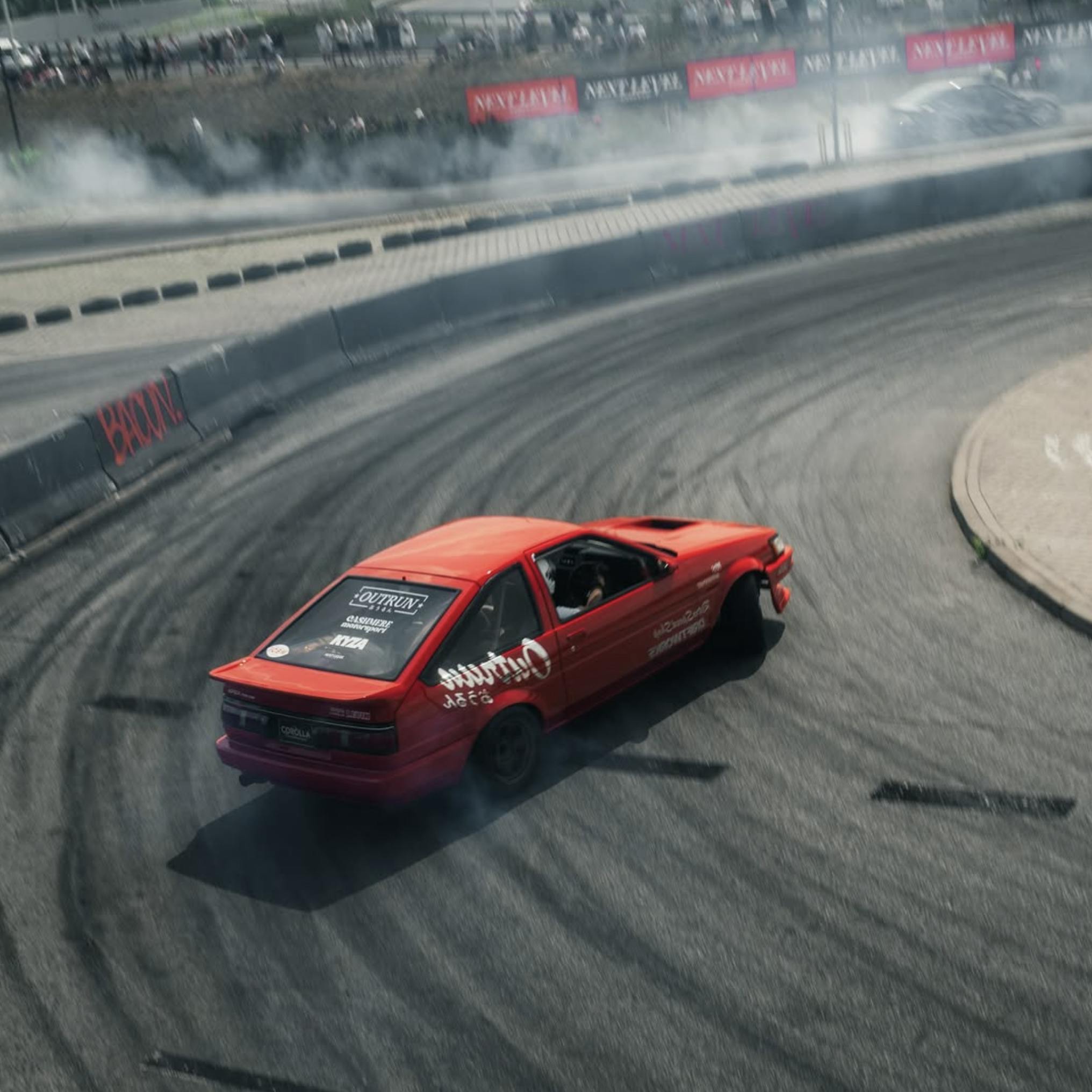
The Toyota Supra is a sporty car that many people love for its speed and style. The older models, especially from the 1990s, are especially popular among car fans and are often modified to go even faster.
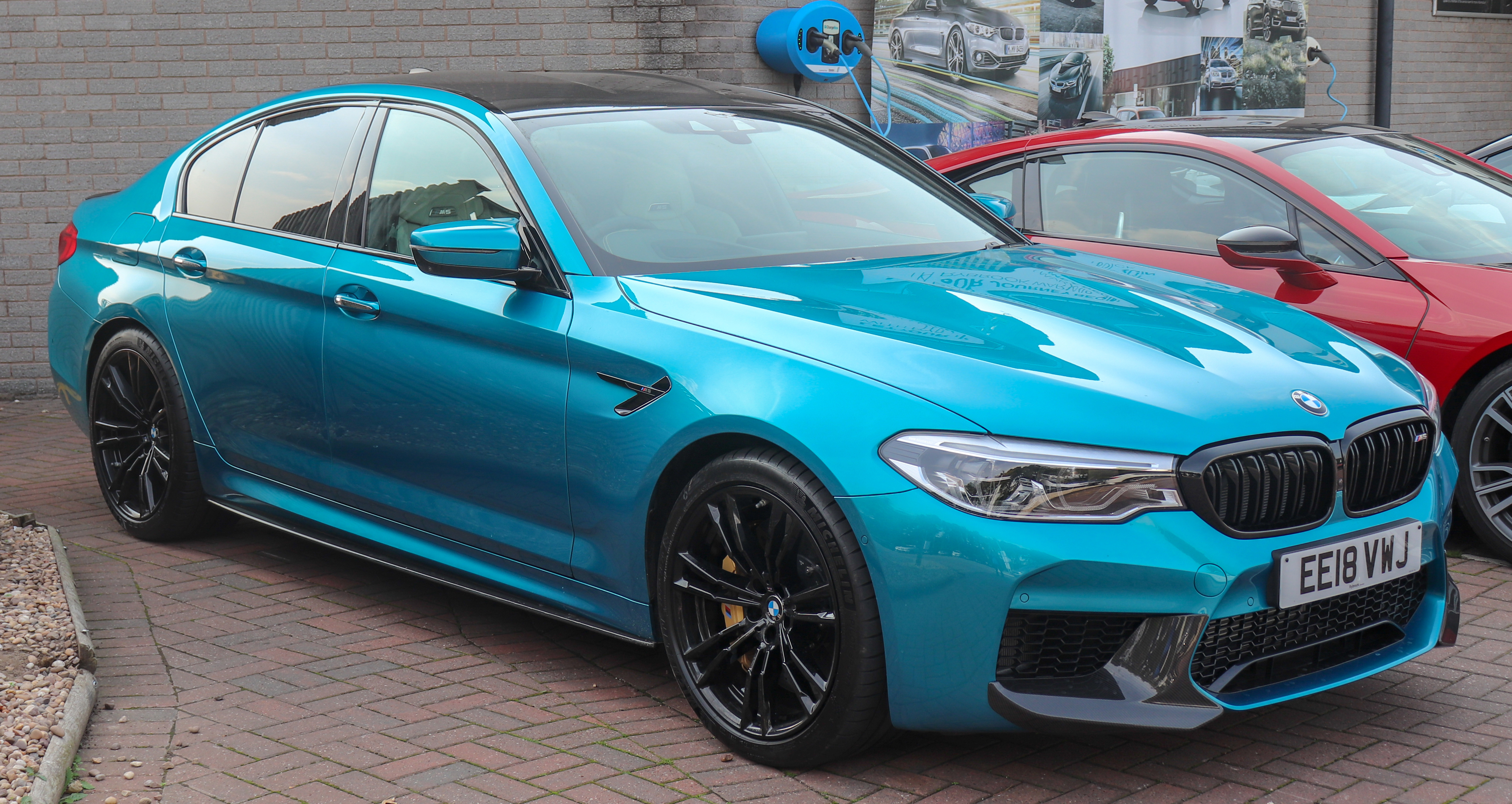
The BMW M5 is a fancy car that is both comfortable and very fast. It's known for being a great car to drive, and it's often seen in movies because of how impressive it is.
The Ferrari Testarossa is a famous sports car from the 1980s that many people recognize because of its unique look. It's a very fast car that represents luxury and high performance.
The Peugeot 205 GTI is a small, sporty car from the 1980s that many people loved for how fun it was to drive. It's known for being quick and easy to handle, making it a favorite among car fans.
The Ferrari F50 is a super-fast and very expensive sports car from the 1990s. It's built for racing and has a powerful engine, making it one of the coolest cars ever made.
The McLaren F1 is a super-fast sports car that was made in the 1990s and is famous for being one of the fastest cars ever. It has a special design with three seats, which makes it stand out from other cars.
The Ford Bronco is a tough SUV that can handle rough roads and off-road adventures. It's been around for a long time and has recently come back with a cool new look, making it popular again.
The Toyota Corolla is a very popular car that many people buy because it's reliable and saves on gas. It's a great choice for everyday driving and is known for lasting a long time.
LIVE
This podcast is part of the sports social podcast network.
Hello, welcome to the Cartagena podcast.
I'm Sam Was and with me on the podcast today,
I have Al Clark.
Now, Al is a filmmaker and producer
who is just full on into automotive stuff.
So he makes documentaries, he makes adverts,
he's been involved in lots of videos for social media
and stuff like that.
He, one of his early documentaries is called Outsiders
and it's a bit of a cult classic in the drift world.
We talk about that.
We talk about how he sort of got into making films
from small shoots, just him up to now working on stuff
with like a hundred plus people.
He was involved in a very viral Bugatti video
that they filmed live,
they've nought to 400 to nought from another car,
a Chiron, which was pretty cool
and kind of blew up everywhere.
He has recently started doing some CGI stuff
and we talk about how that is sort of being integrated
into filming stuff for real, benefits, disadvantages,
whatever, he loves cars going sideways
and generally being dynamic and loud
and all of that sort of stuff
and also bringing a bit of storytelling into these things.
So we have a big dig into all of these things.
Al is a pretty cool dude and just mad into cars
so we have a great chat.
Enjoy.
Hi everyone, welcome to the Car Chat podcast.
I am Sam Mores and with me this week, I have Al.
Hello.
Hello, how are we doing?
Very good, very good.
Welcome.
Can you tell the listeners sort of short summary
a little bit about who you are and what you do?
Sure.
So yeah, I'm an automotive film director by trade.
So I do a lot of basically car commercials
as my main hobby and job and everything.
It all seems to revolve around that, but I do.
Can't escape it and it's just the way it always is.
So, but I have a fairly niche end of the spectrum.
Main clients are Bugatti, Bentley, Aston, McLaren,
so we're kind of dealing with the sort of the slow ones
the ones that you see on everyone's driveway,
inconsequential, really relatable.
Yeah, but the fun part of that is it doesn't mean
that there's lots of budget involved.
The bigger the company, the more expensive the car,
the smaller the budgets as seems to,
it's just an unusual thing, but it's a total misconception.
I think everyone thinks you're rolling around
with millions of pounds to spend and there's always,
yeah, and because they don't need to spend any money
on budgeting, on marketing, it's not like BM
or they're not competing with anyone.
And it's just like, do you want the Bugatti or not?
Like, give us the money.
And apparently people do.
They really do, yeah.
We'll definitely get into a bit
of how this all came about and stuff.
But does that really affect how keen they are to do stuff?
Because literally some of these companies,
I mean, let's say, Ferrari's latest hypercar,
obviously they've got to make some content,
but it's going to sell out.
Yeah, it's a funny old thing.
I think there's still, I believe in my head,
that it's sort of replacing the posters on the wall.
Yeah.
Because we don't really have the magazines.
We don't have those unfolded posters.
You don't get that kind of like nice crinkled,
blue tech thing on the bedroom posters anymore.
At least, I don't think that happens much anymore,
if at all.
And I think media has essentially replaced that.
And I think that's what they're kind of doing the most.
They're creating the content so that those things
are out there, they're in front of people
and they're under them.
And sometimes, these cars are so unobtainable
for most people that I think they need to sometimes
just show what they're actually about,
but they're not just, whilst they are objectively
the works of art in terms of engineering terms,
styling, be able to do choice.
But sometimes, it's really cool to see these things
actually moving and what they do.
And also, kind of defining, because ironically,
it's getting quite a saturated market,
I can't get over how many multimillion pound
hypercars exist now.
It's probably quite hard for them to define actually
who they are in comparison to another one
and sort of separate themselves a little bit.
So there's a little bit of that that goes on.
And then also, which I quite like the sort of the image of
is that a lot of these people who can afford these cars
sometimes get peer pressured into by their friends,
go like, that's the one you want, that's the cool one.
Like, you don't want that one, what are you doing with that one?
That's the children's supercar, you know?
I think that goes all the way to the top.
So whilst you're not doing necessarily,
like outrageous stunts and a lot of content
for the content sake,
because these brands don't really make any money off that
and they do have limited marketing
because they actually spend their money
for their marketing in different ways.
They're doing a much more personal experience
for their customers, right?
They're not doing a big, like,
oh, come on, everyone have a test drive.
You're getting actually just the customer down,
they're flying him in, giving him an experience
and then he'll make the car his own.
And part of that is, yeah, I think that is interesting
because if I think about a brand,
which I think was the, we can probably debate it,
but the first sort of modern, not hypercar brand,
but very expensive car brand to fully embrace
bringing in proper videos and stuff.
I would say it was kind of like singer,
not necessarily like a high end, whatever,
but just getting in, they got in Chris Harris
and whatever to be part of the development.
And that was a shift, that seemed to be a huge shift,
which then goes, oh, we know a lot more about the brand.
We know a lot more about what it's about
and it's from someone that's like, we know.
Yeah, I think the whole world had to re-find its voice
in terms of how they market cars very, very quickly.
Social media was around in like 2000, 2001,
but it didn't become, I don't think particularly relevant
to brands probably until like 2010 maybe.
Like, I don't think, I can't even remember
what year Instagram started,
but I remember thinking, there was just kind of like
a little picture book, wasn't it?
It was a diary and now it's a fundamental core.
It's the fundamental spine of everyone's marketing teams.
It's like, does it work on Instagram?
And does it, you know, YouTube,
I think is making a bit of a comeback, thankfully.
I think the pendulum's swinging back again
to slightly more intelligent.
Slightly going.
Yeah, slightly more meaningful content.
And trust me, I can rant for hours
about portrait, filming cars in portrait.
That's the worst.
Oh, dude, I can list so many problems with it,
like particularly the fact that cars are not portrait shaped.
If the goal, if just to film double-decker buses,
then fine, that is Instagram's made for it.
But like cars, you end up with this tiny sliver
of a car in the middle of the screen,
mostly floor, mostly sky, and it just looks rubbish.
And there's no art, there's no framing.
It's just everything's just in the middle.
It's just, yeah, it's in there.
But you have to, you know,
all the content you make has to work for it.
And it's such a big part now of like what we think about
when we're shooting stuff, you know,
we're shooting stuff deliberately a tiny bit too wide
that's comfortable on a 16 by nine,
so that we can get at least something into a 916.
And we'll sometimes digitally extend
the top and the bottom of the screen.
If we got not quite shot it wide enough
and you have to get the color in the shot,
it's unbelievably complex now.
And your sort of ticking boxes to make sure that it works
rather than creating, I think that kind of blank canvas
are going like, right, we're going full anamorphic,
you know, two times squeezed lenses
and you're going to create some beautiful piece
of storyline that involves like perhaps
there's always a separation, the car is over here
and the person's over here, there's always this line in them.
But you can't do any of that anymore.
It's like, is it in the middle?
Yeah, cool.
And that's it.
It's in the middle and is there so much space around it
that it's like a tiny dot?
That's just, it's infuriating,
but unfortunately that is how it is.
And that is content that everything revolves
around the numbers now, you know,
people just look at numbers,
they measure their success on numbers.
The irony being, of course,
that Instagram doesn't give these people a penny.
There's no, I don't really think there's a need
sort of reason, you know, they can pump out a film
and this thing every single day.
And I don't know what the value of those metrics truly is.
I know that people go, well, it's, you know,
brand awareness, building a brand, brand size and everything.
But if anything, it kind of penalizes companies
when they go to do something.
So for example, if you sort of rent the Norge Life out,
you get specifically penalized in terms of cost
based on the follow account from your social media.
Really?
Yeah, massive, massive difference, you know.
We're just renting it for this shed down the road.
And then they're like, well, hang on,
there's six Ferraris here.
There's a great reason why when we did a drift film
with the Nurburgring, we did it as Ford Performance
and not Ford, you know,
because it's tiny by comparison.
And it worked with the brand as well,
but there's a reason, you know.
But the thing is like, we're just kind of like
so limited now, it feels like everything has to be,
you know, it's part of the deliverable package.
When you suit a commercial,
you don't feel like you're really kind of taking,
you have to, you're not taking into account
really that expressive creativity
that you wanted to have with the visuals.
You're now always thinking about
is the final shot gonna work?
And you know, the hero shot at the end,
you do two, if we're doing it in full CGI,
we'll re-render a different version
just in 916 compatible sort of format.
And it doesn't slap, you know, that final shot
was always gonna be the one that you're like,
wow, that's a beautiful frame.
That's kind of where the hero moment of the film is.
And you don't get that anymore
in the sort of the 916 content.
But I do love that people are starting to push back
and going, ah, screw you Instagram.
And I'm gonna do a 916, a 16 by 9 version
and make you turn your phone.
And, you know, there's gonna be some very lazy people out there
who will watch a 16 by 9 film the wrong way
and sort of...
And then sometimes your phone does the flip
where it just starts putting it upside down
and stuff and you're like, oh, man.
Yeah, yeah, it's disaster.
But I think there is now with the kind of like
the YouTube slightly coming back,
I think YouTube long form content,
people have like, I don't know about yourself,
but like definitely with myself,
I really can't stand that kind of the ADHD content
that's just non, there's no substance to it.
Also, it's kind of like fine for just kind of like
sitting there looking at some stuff.
Actually, I still, I desperately missed the storytelling
in the, you know, even in a one minute film,
you can have story and emotion and stuff.
And so now that these long form content in YouTube
is starting to get a bit of a resurgence again,
I think that shows that there is a demand for intelligence
from people who love cars.
It's not just go to the takeover
and watch someone do a burnout in McDonald's.
And there is that thing, isn't it?
Like when, let's say 2010,
that sort of time or whatever,
if you had a viral clip, like a little clip,
everyone would know about it
and everyone would kind of been talking about it for a while.
And if you, we all say like,
oh, the whatever the blah, blah, blah, and you're like,
oh yeah, the one where someone tries to pop in my head,
jumps into an ice lake and it doesn't break
and just like bounces.
You know, like everyone at the time
would have known that clip.
Whereas now there's so many that like,
if you can last a week, that's kind of pretty incredible.
And people are now constructing them.
They're taking the viral clip.
I don't even think the word viral is used anymore,
which is, it's like, because when it's something,
because nothing goes viral, it's just,
I think it just exists right now.
So it's just weird.
And then people go, oh cool,
that bit where the lady fell over or she had an argument,
there's a clip somewhere I think
of a woman holding up a towel to a mirror.
And she's, and they're filming it from a bleak angle
and that she's going, how does the mirror know
what I'm doing from that angle?
And the husband's like, it just, it's a mirror.
Like that's, it's a mirror.
Like how does it know what I'm doing?
It can't see me.
I'm like, it doesn't, it mirrors it.
And then I suddenly saw like three versions of that.
And they're all pretending to be exactly the same thing.
And you suddenly realize that, oh yeah,
it's all nonsense.
And everyone's just getting the clicks and the views.
And, you know, it's trying to reach almost this
like social status with their Instagram follow account,
which, you know, comes from not from the love of a craft,
but just from like, I just want these numbers.
And it's arbitrary.
Yeah.
I don't really open Instagram anymore.
Like really?
I don't, I look at, I watch YouTube videos,
like 10 minute plus videos all the time.
I love like getting into something, learning a bit,
finding a bit more about something.
And yeah, do you, do you think,
does your brain now think Instagram first
in terms of like vertical format?
When we're, when we're making commercials,
but just like, just literally you like,
do you now take photos?
I remember that for me, there was a point in time.
I do take photos.
Where a lot of photos,
vertical rather than, there was a point where I was like,
well, why would you do that?
Obviously it's a cut.
Obviously it's horizontal.
I do take videos,
vertically on my phone.
Oh, wow.
See, that's interesting.
Yeah, I very, I very,
because I know where it's going to end up.
It's going to go up on a 916 reel.
And I spend, you know, I do take photos.
I still take, like try and take photos properly.
916, a 16 by 9, but the videos,
I pretty much default to vertical.
I don't even try because I know that it's inevitably,
if I'm going to put it out on Instagram as my own,
because I don't really put my work on Instagram either.
It's like really bad, but my,
my like car diaries as it were,
is always generally vertical format
because it's just easier to make it,
because it looks ugly if I do it the other way around.
And I know that I'm not chasing numbers,
but at the same time,
sometimes it's nice if it works and it goes,
it goes a little bit wide because,
not chasing pain.
So I'm, I'm just not chasing.
Yeah, but I'm also, yeah,
I'm contradicting myself massively slightly here.
Well, you know, I think,
I think the problem is,
is that I know where it's going to end up.
And therefore I kind of set myself up going,
like I'm just going to make it
so that it works on the platform
that I'm going to essentially share it with.
It used to, you know, my Instagram, for example,
which is not really very big,
but it's, it was, it's for me,
it's like my, here are my car adventures.
Here's what I do.
There's not really any behind the scenes of me working,
cause I can rarely share that anyway.
And it's just like,
here is something stupid that I went and did.
And that's kind of like,
and if you're into it, cool.
And if you're not, well, you know,
I'm sorry I was interrupted your feed.
You know, I don't bring like personal life really on there.
or anything or anything that's bad that's put out there
that's not, that comes from those sources.
Obviously there's some really bad stuff on the internet,
but on Instagram, but, you know, generally,
people are trying to say,
look, here is happy life.
So yeah, but to answer your question,
I would say, yeah, I do think about Instagram
when I'm filming stuff on my phone first.
And, but when we shoot a commercial,
that also is at the forefront of like,
I would, can we make this work in this format?
And it's, it just dictates so much about
what is made these days.
And I think that's really what's killed off.
I mean, rental houses, you know,
they just don't rent out real lenses anymore
because they're shooting it that way.
Yeah, it's, no one's shooting it that way.
Cause everyone has to be ready for the way around
that actually the brands,
they don't actually look at the YouTube metrics anymore.
It used to be, I did really well on YouTube.
No one cares.
No one, it's never ever bought up in a meeting
when something did well.
They only go, oh yeah, we, we did, we did okay,
but the Instagram really popped off.
Anyway, okay, that's, that's cool.
That's the one I hate.
Never, never mind then all that sound design
while someone sits there on a toilet watching on mute,
you know?
Yeah, it's cool.
Yeah, you know, we spent like three days
getting that mix perfect and getting all the transients,
amazing sort of bass really kind of came through
and didn't muddy up the engine sounds.
And you know, the grade spent like thousands of pounds
at a grading house in London to get the color right.
And someone's watching it on dim,
the wrong way around to go, cool.
And, and then like they move to the next reel
and it's a guy falling up a scaffolding or something.
So yeah.
Oh, it's, it's the longevity as well.
Stuff doesn't really hang around anymore.
As you say, it's gone in 24 hours now.
You know, they used to be, used to be,
I mean, I'm, I've been doing this since 2000
and like seven 2006.
So I've sort of seen that whole transition happen
from, from when you were kind of had like content
that was meaningful, you know, car magazine,
which was one of my first ever paid jobs
were quite early on in the car review video game.
And those reviews, they would do one video a month
because, you know, I remember the very first job I did,
I turned up, the photographer was like,
what do you mean you're making a video?
And it was like, well, how long do you need?
Like 20 minutes.
I'm like, dude, I need like two days.
Like, I've got to make a video, I'm going to make a film.
And, and they're like, right,
you're not just doing like a piece
to camera in front of a car.
Like, yeah.
And that for a while became that really interesting
transition period between the photographer having
absolutely, you know, you had to do that eight page spread
and, you know, full feature and stuff.
And he had to get, let's say, 60 banging photos
and, you know, to make like eight of them awesome,
like proper rig, you know, and a front cover and stuff.
And now it's the video that absolutely dominates.
And you know, the photographer's lucky to get
like an hour with the car.
No, I remember, yeah, George,
Jeff Williams on the pod recently, right?
And he, he knows the pain of going from being
the dominant person on the shoot.
The photographer first.
To being like, yeah, George,
you can definitely have the car in a bit.
Like, don't worry.
And then like an hour later, he's like, yeah, no, no, no,
in a bit, in a bit.
Like, it's, cause the problem is
brands do still value photography massively.
I'm working on a project at the moment
with it, we've got a commercial coming with Aston Martin.
And they understand very well
that the value of the photography, you know,
it remains dominant on the website.
People still visit the dot com quite a lot.
And the photography is the backing to many of the events
and bits and pieces like that, you know,
and they're not taking film frames.
And that is a, that is a big part of it.
The, the, and they still put a good weight
on the importance of photography.
Some brands kind of don't really mind too much.
They know that they need the shots,
but they're not that first,
but it depends who you go to and what you do.
And it's, it is interesting.
Do you think we're close to the,
it just being film frames.
Obviously CGI kind of is, but like in, in, in normal.
Sometimes I do.
Yeah. We, we've definitely provided like a still
from a film because, you know, we get,
you get 25 chances a second to get a cool shot.
So, and, you know, those, those frames,
they come under less scrutiny as well than photography.
People will overanalyze a photo and they'll go like,
oh, that little reflection here is,
and the designers will be like,
no, you can't see this crease line down there.
And you're like, yeah.
And in video, no one cares.
They're like, oh, does it look cool?
Yeah, it does.
Yeah.
Because the cars in motion,
you've got light moving across the surfaces
and the context of the shape is way easier
to kind of understand.
And then the film frames kind of look cool
because they've got a different vibe to them.
They're less retouched.
They're kind of a bit flatter
and a little bit more moody sometimes.
Or they've got more, the motion blur is generally
a little bit draggy here
because we're running at a 50th of a second all the time.
And there's that kind of like, you know, choice of frames
where the car angle isn't necessarily perfect,
but the vibe is good.
And sometimes you can just do it off the vibe.
And then in CGI, if we're doing a CGI film,
we can upscale that to 8K, 12K, whatever.
It doesn't matter.
Pick your angle, job done, yeah.
Bigger, yeah, exactly.
We can even, you know, if we can even lower the camera low,
I like that moment,
but can you just tilt the camera down and you're like,
yeah, sure, it doesn't matter.
It's cheating, but there's a lot of work
that goes into the other side of that,
but that's a whole other story.
Yeah, right, so let's dive back a bit.
When did you first start shooting video
and how did you get that first,
where did that first sort of car gig come about?
Apologies for my creaky chair.
I forgot, I needed to throw it in a bit.
I think it's mine as well.
I think mine does it as well, that's fine.
So I came out of a job in the music industry
that I didn't really enjoy.
It started off being awesome,
but I didn't really dig it after a few months
because it changed quite significantly.
When I was chucked back in an office, I didn't like it.
So I kind of was desperate to kind of get out
of the office life.
And it just was never for me.
And I'd sort of messed around with filming stuff
during that time.
I lived up in, at the time I lived in
just south of the Breckin Beacons.
So I used to go up in some pals.
I used to go up and drive around the rows,
dis-drifting, whatever, and muck around,
but film it and kind of create little montage videos.
So I kind of had a love for it.
And then I remember one day we were up in the A4069
and Top Gear were up there filming.
And they were filming, I think it was E60M5,
which, and I remember the road was closed, right?
That's cool.
All right.
That's when we got to see the, still the truck and stuff.
Little did I know that one day I would be working with them
and doing that.
And that was cool.
But that was kind of like,
I remember that being quite an isolated moment.
It was like, that's a cool moment.
And we just didn't really think much of it.
It went off somewhere else
because we couldn't see anything.
We then, I then had a little sort of trying,
like a period after I finished this music industry thing,
trying to work out what I wanted to do.
I did try some other quite very different things,
quite extreme career choices,
but didn't go through with them in the end for various reasons.
And the, I ended up sort of wondering like,
I just want to do something for myself and my own business.
And I kind of thought, well,
what do I like, like cars?
And I quite bluntly learned I like top gear.
And I was like, right, let's just see if we can do something.
So I was running a little track day company business
at the time as well.
I started with a friend and the,
my idea was I would rent out little GoPro cameras.
But before GoPro's existed, they were little bullet cameras,
little kind of like old little TV, like tiny little things.
You kind of see them on V boxes,
but way more archaic.
And I would rent those systems out, burn a DVD for someone.
And cause no one really had GoPro's.
So you just give them the kit, they put them in the car
and they get, oh, DVD of them driving on the track day.
And it's great.
And that was, that was a quite a simple thing.
But eventually upgraded and bought her with a,
bought her like a prosumer video camcorder
with quite a big lens and a DV tape, I think it was.
And started shooting a bit of B-roll for people
on the track days so they could kind of get a drive by
of their car.
And then a race driver said,
oh, would you be interested in making a promo video for me?
And I was like, yeah, that sounds cool.
We'll end up making a promo video.
That went well, I really enjoyed it.
And then during all of this time,
I had been going to the Nurburgring since about 2002, 2003.
And I got to know, I don't know if you know,
Jochen Van Cowbridge very well, Frozen Speed.
He's one of the OG, yeah, absolutely one of the OG
Nurburgring photographers.
He was always, you know, great friends.
And he was always, you know, set up camp
in the Piston Claws in the corner with his TV screen
setting up, you know, and selling photos
on a Friday night after tourist fart.
And then it was great.
And he was contacted by Car Magazine saying,
they're interested in doing some video reviews.
Does he know anyone?
And he said, well, yeah, I do.
And that was me, and he knew I was sort of starting up.
I'd been shooting some drifting as well,
because the drifting is such a spectacular thing to film.
And that was my first proper paid professional job
was going to the South of France for Cannes.
And it was Bugatti, Veyron, Grand Sport, Vitesse.
Was it Vitesse?
I can't remember.
It was the convertible, it was the convertible.
It was quite good stuff.
You're like, yeah, yeah, I do this all the time.
As I'm suctioning my Manfoto dirty suction cups,
Veyron thinking, please don't lift the paint,
please don't lift the paint.
And then that was, again, a bit of a,
this is awesome.
This is actually really good fun.
I can shoot shots and we didn't have enough time,
but it was good to be involved and see it.
And that was my first proper press thing.
And then that started snowboarding.
I did a Ferrari, I think I did 430s.
Was it 16M, the convertible, I think?
And we shot that in Maranello.
And then whilst that was happening,
there was this transition period
of all the magazines were collapsing
and everything was transitioning over the video.
So as a result, loads of people were leaving
the magazine industry and going into sort of
starting up startup agencies.
And one of the guys who had been part of the transition,
a guy called Andy Thomas,
he was working for a publishing company,
a small, tiny little publishing company
called FP in London.
And he was like, ah, he'd been obviously in contact
with his car magazine friends.
They had a small Jaguar gig for photography.
And he said, ah, do you wanna,
would you come and shoot some video for us?
Because we don't really need it,
but at the same time we wanna provide it
and kind of give them a commercial.
So I was like, absolutely.
So that was my first OEM gig.
We turned up at this tiny little circuit called Guadiqs,
I think it was.
And the guys knew that there was a film shoot going on
and a photo shoot.
And the photo shoot was with an amazing photographer
called Eastern Chang.
He had like the full proper mega rig,
like the huge boomer.
The big box he wanted.
Yeah, the bolt under the car that takes,
you know, like two hours to fit for one shot.
And it's, you know,
it's the kind of thing that virtual rig basically destroys.
I was about to say,
does anyone still use those or almost like just use drones?
You do see them,
but I think they're a vanity project, if I'm honest.
I don't think there's actually any need for them anymore.
But it's a cool thing.
And to be honest, like a lot of the cool cars,
you can't even fit bolt stuff underneath anyway,
without removing all the undercarriage.
Eastern Chang.
Yeah, yeah, definitely all of his stuff.
Oh man, he's, he was, it's still fantastic.
And, you know, big Honda guy as well.
So, you know, big respect.
He, yeah, anyway,
and then the other guy that was there from the Jaguar team
was like, cool.
So where's the crew for the film?
Expecting presumably like a Panavision lorry
to have turned up or something.
And I'm like, hey, what's up?
Hey, that's me.
And he was like, right, okay, that's weird.
You're going to have to stand back and like,
no, no, I promise we've got this.
We can make a film.
I've got all the equipment I need.
I've got the camera, got tripod, got bolt on stuff.
And we ended up attaching cars to rent cars,
chasing this Jaguar.
It was XKR speed pack, I think it was.
And around this track, and we made a film.
We had a dry ice machine that kind of hazed out
sort of go through fog.
And I did the most disgusting crunchy grade on it.
There was way too much,
but it kind of had like 2000s music video vibes to it.
Yeah.
And that was it.
And that was kind of the first OEM thing.
And it just sort of snowballed from there.
I did a few launches, but I didn't really enjoy them.
They paid well, but they're not really creative.
You just turn up and shoot journalists.
And there's not, you know, it's a good earner,
but not something you want to carry on there.
It's like, the people at Grave is so boring.
And then just eventually you start filming
more and more sort of bespoke pieces.
And then I started directing a little bit on stuff.
And then I started mostly getting asked to direct.
I don't know if that means I'm rubbish at filming stuff.
And actually I'm just better at shouting, I don't know.
But I've always enjoyed the directing side
and the editing side a lot, I think.
Because I think they go hand in hand.
I think this is virtually the same process.
And I think that's where I sort of ended up now
is mostly directing, editing, and obviously in recent times
now going into sort of CG and animation stuff as well.
So, yeah, that's been a huge shift.
Is that a sort of interesting disconnecting point
where you go from doing everything.
You're like, you turn up and you're like,
I've got my camera, I'm deciding all the shots.
I'm editing everything.
I'm filming everything.
I'm making sure everything's on blah, blah, blah, blah.
And you're like, I can do all of those things.
And then going, yeah, I'm just going to like, not just,
but you know, I'm going to decide what the shots are
and put it all together and you're going to film or whatever.
Yeah, ultimately, I just got bored of standing around
trying to load the luggage onto the airplane.
It was because it just like, it's miserable.
I was like, if I just had a rucksack,
this would be so much cooler.
Yeah, yeah, much easier not to be carrying all the stuff.
At that point, did you and do you sort of own
a bunch of camera gear now or do you hire a lot
or do you even own it and then sort of hire it out type of?
So, I did have an absolute myriad of kit, as you can imagine.
We tried to cover everything.
So I had three sort of big proper film cameras.
I had a ton of lenses, a load of car grip
and you know, gimbals, I had like two drones,
what's, you know, bits and pieces like that.
And then I realized that it was getting harder and more annoying
to do all these, to carry all these things, do all these things.
And whilst trying to like think creatively as well
and not just be sort of, you know,
because I was starting to get in as sort of the peak bulk of gear
that I had, ironically, I was using it less and less
because I kept having to sort of think more about like
what we're actually trying to make here
and trying to like bookend films and stories
rather than sort of creating a cool montage of shots.
And that was kind of the fundamental difference was
I really enjoyed kind of like,
shoot where you switch off and go like,
I'm just gonna do some cool shots
and we can kind of glue it all together.
And that was kind of what I enjoyed about the review stuff
was I could just, I really had to only think about
my in and out points for like,
oh, can I get these shots to glue together at the end?
But not trying to think about a story arc
or try and keep a shot style, you know,
all that kind of stuff.
And I just, as I did more and more of that,
I realized that I wasn't really that involved
in the actual process of shooting it.
And I was getting more and more involved
in the standing around and asking other people
to shoot the thing that I wanted.
And I think that was that kind of like,
there was no particular moment that I,
there was no particular film where I did something.
I always liked to be hands on.
I still have a couple of cameras.
I still love to shoot.
I don't get to do it much at all anymore
because it's just the way that the career has changed.
But the fact that also taking a huge drone around
was great to have it, but actually like,
you had to get the license and the insurance
and then the flying permissions in some places.
I know some people bandit it and that's fine.
But I just, it just became too much of a stress
because the places we were being asked to go,
they were saying like, oh,
have you got your drone license?
And I'm like, no, no.
And you just kind of,
and you just get the person, he's a drone pilot.
And I was like, oh, well, that's just a huge way of my mind
because they're just going to do all the drone flying anyway.
It's their job.
Just let them do it.
Yeah.
Just you deal with their insurance
and you have to be to air traffic control.
I think it was a good word where I was like,
that was one of the first times.
And then I ended up hiring a guy called Duncan,
awesome guy, he was a drone pilot.
He was fully certified licensed.
And he, so he would fly around
and I would shoot, do the camera,
DOP bit essentially.
And then that kind of just everything just again,
it's that snowball, gradual snowball, relentless effect
where I'm just doing less and less, needing less and less,
realizing that actually there are people
who are much more involved in the kit.
They're much more interested in like the newest,
latest stuff that looks the best, works the best.
It just wasn't that bothered.
And I just, I was getting more focused on the storyline,
the editing and the sort of the product itself
and I being able to learning how to translate my thoughts
to someone and tell them,
say like, right, I'd like you to shoot this like this
with this in this way.
And that was, that was the difference.
And I think that's quite nice for other people
because they also, they can switch their brain off
because they'll get told what to shoot.
And that's, it works both ways.
And they can, exactly.
They can know about the technical aspects
of this versus that versus this lens versus that versus,
you're like, I kind of need this shot.
I know what I want.
Just make sure it's either in or out of focus
depending on what I asked you.
And that was, that was kind of it really.
And it was never, I think that worked really well
because really I had the edit,
it was always the edit that I had in my head
that I was working towards.
And ultimately I could shoot it myself
but it was annoying because I was just going like,
right, I need to actually then shoot this and this
and then you'd have like three people trying to shoot stuff.
And we're all sort of trying to get a shot
and not crash each other's angles and stuff.
And I'm like, right, actually if I don't shoot
and I just tell you guys where to stand for this moment,
we're actually going to get a better film out of this.
And that was kind of the transition
that ultimately happened.
And it was definitely the right decision for me
because it elevated,
allowed me to elevate a little bit higher again
and work on projects that I really wanted to work on.
And it ended up going sort of,
it ended up, you know, Bollywood car chased at one point
when the directing got out of hand.
What was that like?
Bollywood car chase?
Yeah, well, we shot.
We shot out in Finland or Norway.
I want to say Finland actually.
Shot on a big ice lake, two Audi R8s having a gunfight
and then drifting through snow dunes
and then ultimately they'd chase each other down snow roads
and they ended up crashing through a church wall
and then having a big fight.
And that was like a climatic sequence
of a gigantic film called War.
And I got to work with some unbelievably talented drivers
from, you know, Frederick Asbow,
from Formula D was one of the drivers
and Frederick Soly as well, who's another legend.
I don't know if you've seen the meme of the blue car
exiting the off-ramp and there's a sign above it
that one goes this way and one goes the other way
and him skidding off.
You'll recognize when you see it, but he's that car.
He's driving that crested it.
And we've sort of got to know each other over the years
and he's again, he's a Russian arm driver
or sorry, a Ukraine driver as it's being re-framed.
An arm car, the backstory to that very quickly
just for context is the arm cars that you see on movie sets
with a big jib arm on the front of the cameras,
that for most of its working life was called a Russian arm.
Yes.
And it actually was invented in the Ukraine.
So when the conflict and the war invasion happened,
that's why they decided that we're actually renamed
in Ukraine, in the Ukraine.
So that's the reason for it.
But yeah, old habits.
And that was a wicked, wicked event
because the nice thing with Bollywood
is they're still making 80s and 90s action movies
just with modern tech.
And it's this unapologetic, fun, happy, good stuff.
It's all over the top and very full of bravado
and machismo and it's brilliant fun.
But also like the stunt sequence that we put together
was really, really, it was legit.
Like we were genuinely like running these cars
so close to each other, 360 spins,
it's sort of 70, 80 miles an hour on the ice.
And then when they cut it all together,
they ironically did so much CGI work on it
that it almost made it look fake after this.
We're like, no, this really happened.
Like we really did this.
It seems like a newspaper.
Yeah, yeah, yeah.
It's like, stop.
Can it to my suit.
Put the VFX down.
So, but that was really, really good fun.
And that was kind of like why I love the directing side of it
because it's being as such a car person,
being able to kind of like work with people
who are also really into cars,
but being able to like bring a vision to life
and go like, you know,
you can be slightly indulgent in sometimes
and go like, I'd quite like to do this and this
and kind of go, you know, it's a fun aspect of it.
And you just can't do everything.
Like, and that's ultimately where it comes down to.
You cannot, you can't really, at least I can't,
I haven't got the mental capacity to direct, shoot
and do all the things on set that you have to do
to the level that I wanted to do.
And there are other people who probably definitely can,
but I am not one of those people.
So I had to kind of like drop one aspect.
So I decided to drop the physical shooting side
with the goal of being able to move on.
That's how you make sense.
And coming from that time when you were like,
I can shoot everything.
I remember when I sort of first started doing
a few videos and photos and whatever.
And you're like, I only need the car for four minutes
and I can make a video, a photo,
and I'll give you all of my driving impressions.
And then like you fast forward 10 years and you're like,
yeah, that's the output of that is one,
it's just horrendous on your brain and you can't do it.
So coming from that point,
lots of people get into filming
and they go in on like big crews
and they look at small crews,
like a one person crew and go, you're mental.
Like it's just impossible.
And then I guess you're now coming sort of back,
not as back, but where have you reached?
Is there a middle or you're just like,
no, actually we need 50 people now or 100 or what?
It depends very much on the project.
So like on a CG project that would, you know,
which again, I know we'll get into this later,
but like it might be literally like three or four people
for the entire project.
I had done a shoot recently, which was like eight people,
which was lovely because it's live and moves fast
and there's no like big crew vans to move.
You don't need a ton of people.
You know, that was our in the USA
and that was kind of just small crew.
That's funny that they feel small now.
Oh yeah.
I mean, like big shoots is like 120 people.
It gets huge.
We had a, you know, that's probably,
I mean, 120 about the biggest it gets.
I don't even think Top Gear is that big,
but it depends so much on what needs to be done
in those times.
You're not just, you know, usually when you have large crews,
that's not effectively people
who are always working throughout the day.
It's not 120 camera people.
You'll have, you know, if there's one big main camera,
for example, that camera might have three people
that's dedicated to just looking after that camera,
there'll be a first, a second, a third AC
and basically the responsibilities drop down
as they go down, but you know,
the first one person is making sure the camera works.
The second person is making sure the camera
is attached properly.
And the third person is making sure
that there's something in the camera to make it work.
Right, okay.
So, but like in the moment,
a lot of people will stand around
and do nothing for quite a lot of the day,
but there will come a moment when you cut,
suddenly everyone has to move.
Yeah.
And a large amount of things have to suddenly happen
to keep the day rolling.
And that's why you have like large crews.
It's not for the sake of having people
and it's not a union thing or anything like that.
It's purely like there is a moment to keep this day rolling
because you only perhaps get talent for like
you're shooting with an F1 person, for example,
you'll get them for an hour to three hours tops.
Sometimes we get lucky,
we have like Max for stepping for a whole day,
but that happens extremely rarely.
But when you need something to happen,
you've got a lot of things that need to move instantly.
They have to happen then, correctly.
There and then, and everyone needs to be briefed.
So there's one person controlling a small group
and you know, if the lighting things have to change,
or you've got to do a location move,
you know, you've got so much stuff from people
and things that have to move effectively.
You've got to have people waiting at the other end
to make sure there's parking spaces outside,
something we feel moving to a location.
Like I can go, you know, there's so much.
When you start to break it down,
and then all of a sudden you've got to then feed 120 people
and or you might have to, you know, hotel 120 people.
Like that's, it's where it suddenly gets massive
without, you know, you go, that's unnecessary.
It's like, well, sometimes it is necessary
because that's, it depends what the factors are.
I don't like large crews.
I don't think anyone likes large crews
because you don't really meet anyone.
You don't really work with everyone closely on the set.
There's always 50% of the people.
And I'm like, hey, mate, would you move that for us?
And you're like, I never really remember their names.
And you're like, you feel really bad.
And I'm like, oh, you'll be checking a call sheet
going like, oh, what's the gaffer called again?
And I'm like, Steve, Steve, yeah, you know.
So that happens quite a lot.
But the small crews are so much more fun
because it's so much more personal.
And I think there's a better vibe.
You know, you feel like you're having fun
and it's creative rather than everyone's sort of like
quite detached from the process.
You know, even a large shoot,
a lot of people don't even know what the hell you're shooting.
You know, and so at the start of each day,
I try and do a little briefing and try and explain the story
of what's generally happening to the whole crew.
So at least everyone's kind of going,
I kind of get the vibe of what's going on.
And that apparently doesn't happen very often,
which I find bizarre.
They'll have a briefing,
but the director won't tell them
what's actually the point of the film.
So everyone's going like,
why am I fitting this camera to this?
Why am I putting this on here?
You know, why are we painting this?
Like, no one really understands
that they're just doing the job and they're not into it.
So I feel that's a big part of it.
And that's an element of the directing
that I think I've learned from doing everything
and wanting to know a little bit more.
And presumably that's a huge trickle down effect.
It's like, if everyone knows kind of why you're there,
the input they have on that final thing,
which might be tiny, tiny, tiny,
they might be like,
oh, I know we're about to do this,
but I don't think that's gonna,
that's not the right solution for what you want.
Totally.
And people know, especially on car shoots,
people who are car people on car shoots
get what needs to be done better.
It's why with a smaller crew,
you can be more focused and use people
that you know are car people.
Like on a car shoot, we talk about,
you know, after every single take,
a car gets washed, every single take,
someone goes over with a duster,
got a glass cleaner or something
and give it a quick check
because you just know that the next take
that we're gonna do,
there'll be a blob of dust or a leaf
or something that's in the grill that you can't have.
And like, it just takes someone a second
on a commercial to take it out.
Or we go to retouching,
it takes someone like two or three hours
to just paint out this leaf, you know,
that just, and that's the sort of stuff.
So you have people on set who are doing things
to keep the ball rolling.
It's, you know, it's not crew size
almost becomes irrelevant.
It's days, you're trying to reduce days
because you don't have the time
and deadlines are getting tighter
and you have to produce more per day,
you know, you have to kind of have like one person
making sure that everything's 916 compatible
as we were saying earlier.
Just one person is just watching a monitor,
just making sure that everything's 916
because they know that if it falls out of it,
that might be, you know, on a drama shoot,
that might be a continuity person or something like that.
But there'll be someone, there's someone doing that
and because I'm not paying attention to that really,
I'm just looking at the overall thing and making sure.
Sometimes I'm not even looking at the shots.
I'm just trying to make sure the party still carries on
because like some days there's so,
like we did a Honda shoot very recently.
That was brutal.
Like it was like 3 a.m. start
and we didn't finish until like 9, 10, 30
or something like that in the evening.
The crew was destroyed
and we were just trying to like keep spirits high,
you know, but there was no time for an extra day.
So just the way the schedule landed.
So we couldn't, everyone was just trying to keep.
Yeah, so as director, you then become the person
who's actually trying to keep the level of energy up on the set
and you have to be the energy person that people feed off
and you've got to be bright and happy
and still like enthusiastic about it
because everyone follows you
and you just, if you drop off the cliff, everyone else does.
Anyone with grumpy in the product suffers as a result.
Yeah.
Are most car media stuff that's produced these days?
Most of that produced by people that are into cars.
I seem to have interfaced with quite a lot of a few shoots
where maybe someone is,
but like a lot of the people involved aren't
and you're like, my brain just goes,
all right, but you don't get it.
You just like, the reason your angles are shit
is you don't get it.
This is unfortunately the case.
A couple of examples that spring to mind were,
I've done a couple of shoots
where we've worked with some phenomenally talented DOPs
who have shot some of the most legendary fashion commercials
and they've done big multi-million pound campaigns and stuff
and they haven't really shot cars in a beauty sense
and they'll suddenly just point a light at a car
and it's suddenly pinging and reflecting
and you're like, brother, no, brother, just stop it.
It's like, there's a whole way of lighting a car
that you have to do, otherwise it's just horrible
and it's the same thing as shooting people.
I'm not very good at shooting people,
but I know how to light and shoot a car
and that is something which I've found
that if they're not car people straight away,
they're thinking in the wrong space instantly.
When you say we need to highlight a wheel,
they'll just put a spotlight on it
and you're like, no, that looks horrific.
We need to find a way of reflecting the light
back onto the car softly
and this will always be the thing,
but so what I have found on some shoots,
this is the same thing with directors, actually.
I've consulted on some commercials
alongside other directors.
We did a, you know, it was a big Maserati,
if it was MC20 launch film,
where I was a consultant director
working with an unbelievably talented set of
a pair of directors who were music video specialists,
incredible aesthetic and like an absolutely insane vision.
Just it's so cool, so beautiful, beautiful thing,
but they hadn't worked with cars before,
so they didn't know really how to shoot a car,
so rather than sort of go like, we'll figure it out,
I can just come in for 48 hours,
help through that bit
and just essentially act as a second unit director,
essentially, and then jump back out again.
And I think that's,
if I hadn't gone into the CG route during COVID,
I would have really tried to push
into more second unit stuff on films
because the second unit, you have on a big film,
you have a first unit, which is your actors,
the main stuff that happens on stage,
it's probably like 80% of what you see on film.
The cool sequences that are created
is the second unit director.
The second unit director is the guy
who controls all the action,
so in your Fast and Furious films,
purely as an example,
the first unit director probably isn't even present on set
during the drift scenes in the car chases,
like unless it's the CG performance part of it
because that's not relevant, it's the second unit director.
That is my germ.
That is my germ.
Make the cars look cool, make them look beautiful,
make them look fast, loud, whatever,
it's my whole, that's what I love
and it kind of comes from my love of driving
and all that kind of stuff, so that's the element
I would have always liked to have steered into
had life worked outside differently,
but that is the job that we have to be car people,
the stunt people, they're proper car people,
the good ones are.
There are astonishingly still some guys
in the stunt register who don't really like cars,
but that is a hangover from the stunt register days
when you had to have three disciplines, I think,
you had to use, so most people are like fighting
because that's really popular,
maybe falling because that's really helpful
and then a good pay for falling and then cars
because cars is fun, right?
So you have a lot of guys who are not really
actually very naturally talented drivers doing stunt driving
but they can roll the car over
because you just drive a pipe and it falls over.
I'm slightly downplaying the ease of this,
but within the scope of what we're talking about,
this is, however, when you put someone in a car
who is an absolutely God's talented, gifted driver
and they can drift a car over a penny,
an inch from the camera and do six or seven takes
perfectly every time, that's who you actually want
driving your cars on these films
and I think the industry is really starting to pick that up
and learn that and there's lots of guys
who just have really good car control and bike control
and they are getting, rightly so,
the good driving stunt work now and as a result,
I think you can see the lift in quality of drivers
in car chases and you see it over all of these films.
Mark Higgins, one of the greatest UK stunt drivers
of all time, rally driver, famous for his Isle of Man,
World's Subaru Records and stuff like that,
but he's an unbelievably talented driver
and you see it, you see that control
in all the Bond films, you don't see cars,
you know, in old Hollywood shows and films,
you used to see a car doing this massive Larry Skid
and then it would just about spin out,
but they'd cut just before you,
but you're like watching that show going like,
they span that car, they span that freaking car
and that's the difference, I think,
that really kind of makes a difference
when you've got real car people in set,
you produce real, authentic car people stuff
and I think that energy comes across
going back to the original point of this whole thing
is that by having lots of car people on set
who love cars, know what makes a car work,
that is what creates longevity and between car people
and you always see it in internet comments,
like I think the internet is the greatest review,
the internet comment section on YouTube
is the greatest review that's real
that you can possibly have
because there's no one cares what they write,
they'll write what they're thinking.
So if you've got generally good things to say
about what's being put up there,
not knowing who has made it or the other way around,
you don't know who's making those comments,
that's really good because you see that
and it reflects hopefully well on your work that you go,
yeah, this was sick and whereas you see really like
contrived stuff that's like, oh my God,
this was so sped up, this looked rubbish,
this was like the weakest thing,
like why have they put a V10 engine over a V6
and like, you know, looking at you BMW
and that was a V8 wasn't it?
Yeah, they put a Lamborghini V10 sound over a V8
and like stuff like that, the internet will destroy you
for that but no one, that's why you get hired
is because you're the car guy
and as long as you can then have your car guy nerdiness
and like hyper focus on random niche details
but understand the brand qualities and the brand values
and elevate that into like a high-end commercial
for multi-millionaires to go and be happy
that they bought their Bugatti.
That I believe is where the uniqueness of hopefully
what I do and people like me do.
What is the most outrageous bit of driving
you've seen on a set?
Where you're just like, jeez, that guy
or even if it's just the repeating
of the same obscene manoeuvre.
There's a guy, there's a sun driver called Mauro
in the UK, Mauro Calo, he's absolute legend.
That man can throw a car into the most perfect position
every single time because he's just,
you know, you need that reliability.
When you are asking someone to drive at a camera car
and doing the one of these, it's called a joust
where you drive a car, a moving camera car
and you have to cross paths at the right moment.
You know, that requires extreme car control
and it's not just like wobbling the car
through the corner and adjusting
because if you want to actually get a truly gnarly shot,
you want to have a long lens
that doesn't allow for a lot of movement.
So you want to, and then the focus puller needs to be,
you know, because you're not going to,
you know, you've got a focus puller who's trying
to like decipher, is he close or are we zoomed in?
Like, because he has to make that decision.
So consistency is incredibly key.
Mauro, I think is probably one of the best in the business
for just placing a car on a penny.
But then, you know, you sometimes get,
we get like, we did a shoot with Andy Wallace,
who is, I don't think even he would mind me saying,
Andy is now, you know, getting on a bit,
but seven times Le Mans champion
and at his age still doing 270, 300 miles an hour in cars
and he will hold it perfectly.
And if we even to do a flyby past a car,
we asked him to do a flyby on a track in Papenburg last year.
And he was, I think he was doing like 280 miles an hour
past us and we were doing like 70.
And he has to hold the car.
Because as you go past the car,
we get virtually blown out of the lane,
but also so does he.
And he has to hold that thing and be perfect.
I mean, that car was so fast and pushes so much air.
He could feel the bridge as he goes under the bridge
in the car.
So that's the kind of physics stuff
which those true professionals bring.
And it looks so easy on camera.
I think it's like anyone who does anything really well,
they make it look so easy breezy.
And, you know, just that,
that's the level that I can only wish to drive to.
Yeah.
Whilst we're on driving fast and whatever,
I feel like we have to sort of loosely cover
this video that you were involved with,
well, a while ago now, the Norte,
was it Norte 400 to Norte?
Yeah.
Chiron?
Yeah, that's right.
Yeah, we did, this was an idea.
This was actually, this was an idea
that came out of being car people.
And I did, the last launch I ever did
was the Bugatti Chiron launch.
So I hadn't done launches for a while,
but I'd been sort of,
I knew the people of Bugatti a little bit.
We'd been doing some stuff.
I'd ended up doing a film for DriveTribe.
It was in the end, actually, if you remember that.
And when that was still the original,
was it DriveTribe?
Yeah.
Yeah.
What was that?
It was for, yeah.
I think it was DriveTribe, but yeah, it was DriveTribe.
But before it became what it is,
the, what I'm saying now.
And we did first year on,
and then I ended up going on the launch to kind of help.
And it was, it was like a quiet period of work.
So I was like, yeah, I did that.
And we were driving back into Lisbon, it was in Portugal.
And we were on the freeways.
It was like Sunday morning, Andy Wallace is in the car.
And he was just sort of, he said like,
were we just talking about the car itself
and like how insane the car was?
Cause I'm not trying to sound like a Bugatti fanboy here,
but these things are like,
I always try and say it's like a 911 Turbo SS, SS, SS, SS.
It's like, it's like,
unfathomably usable performance,
but ridiculously fast and insanely reliable and well-made.
And, you know, not to put down anyone other than the hypercars,
but there is a certain thing that Bugatti does extremely well.
And he was on the motorway and we just like driving along.
And he says, well, you know, if you just put your foot down
and then he just put his foot down and this car reached
an indescribably stupid speed in the tiny space of time
on this completely empty, you know,
like it's nothing in the morning outside Lisbon.
And I was like, that sort of gave us an idea of like,
well, what if we, cause, you know,
we had another car following.
And I was like, I was not trying to film on the phone
vertically, obviously.
And I thought like, what if we did this actually
at the top speed?
Cause we have Aerola Sen while they did
before Bugatti got bought, but they had Aerola Sen.
We had the longest flat straight in the world.
What would that look like car to car?
And he was like, that's a really silly idea
because they'll push each other out of the lane and stuff.
And he's completely right.
That's exactly what they do.
But we're like, yeah, but what if we tried anyway?
And I know that Andy wasn't unfortunately available
for the shoot cause he was doing,
I think he was actually racing for the time,
but they had, we got in a Juan Pablo Montoya
to do it instead.
So we turn up at Aerola Sen, there's huge long track.
And for those who don't know, it's an oval track,
massive long thing with a enormously long straight,
but the straight is so flat.
It's physically cut into the earth.
It's not laid over it.
It is flat, flat.
So the middle is higher.
The banks are higher than the ends
because the earth is a circle or a, you know, a sphere.
So like you can, it's subtle,
but it's quite a weird, important detail.
It's that's how extreme this place is.
The two, we got the Chiron out there, we did the run.
It smashes the record without even trying.
It was smashed a couple of days later by Koenigsegg,
but the Koenigsegg is a different kettle of fish.
But they nonetheless did the record,
did it multiple times.
It was so easy that Juan Pablo didn't even need
to wear a suit or helmet,
because when we were chatting about the film,
we're like, well, what does he need
to seem to wear a race suit?
And the Bugatti engineers are like, why?
And I go, well, he's going really fast, isn't he?
And they're like, yeah, it's designed to do that.
And then suddenly you realize,
it's such an amazing attitude,
because they were like, well, yeah,
I mean, it's not like we're doing it a fiesta.
It's like, yeah, just supposed to,
it's not even, it's not even a speed limiter at that speed.
267 miles an hour.
So anyway, it's mental.
So they, you know, obviously with all the safety checks,
they're checking tires, swapping wheels and stuff like that
to make sure that everything is safe.
Just from a, you know, like a due diligence perspective,
but it was fine.
There was no issues whatsoever.
The car to car bit, then we then shot,
we attached the camera to the back of a car,
launched the two cars at exactly the same time,
and they both follow each other up to 267 miles an hour,
where Juan Pablo's car can continues on past us,
probably at like 275 onto like 280.
And that was, that was the shot.
Everything was built around this whole shot.
That was the whole concept.
And I'm very happy to say that it worked really, really well.
The fun part was what the internet then tried
to decipher from it, because someone found a photo
of the back of a Toyota Supra, an old Mark IV Supra,
with a camera on the back of it in,
and they were like, oh, that's how they filmed it.
And for instantly it became as,
oh, this was filmed by a thousand horsepower Supra.
And the whole, this, and I think it sort of became
internet law that how do you film a Bugatti
with a thousand horsepower Supra?
And honestly, this was the constant,
the constant narrative, and it was awesome
because it kind of pushed it out so far
into the outer reaches of car culture,
because obviously most people haven't got any interest
in a Bugatti show, and if they're kind of the Supra people,
you know, people did be quite narrow-minded in that respect,
but yeah, they, it just became a whole thing.
And we're like, it was like a whole meme.
Yeah.
And then I remember, I remember photos of an Iguera RS,
which I think broke the record a minute,
and they were like, you know,
it was like a sort of rig on it,
and they were like, well, obviously that's how they filmed it.
That's how they filmed it, yeah.
And we just, it was a while thinking,
we were thinking like, how do we tell everybody
that we just use another one?
Because no one thought, like, oh,
we Bugatti surely have more than one sharon.
Yeah.
And like, we had three, like one of them was just,
one of them was just used for like,
miking up the sound, and we just send them off,
shoot it like, honestly, we ended up using three shurons,
just to, because it rained halfway through the shoot,
just to pick spray off the ground.
Like, it was the bougiest shoot I've ever done.
That's cool.
But the cool thing, the other really like,
cool thing that sort of like,
being really nice to kind of see over time is like,
it still gets millions of views at the moment.
And I think I just, I checked it just yesterday
when I was sending links across that the,
we've just, we've crossed a hundred million views
on YouTube, which is organic, and insane,
because that puts it at the highest,
well, it's always been there for quite a while,
but it's the highest viewed automotive,
video, I think, and definitely the highest viewed commercial.
There is a higher viewed commercial first,
but it's Jean-Claude Van Damme doing splits
with the Volvo Trucks.
But they put it under entertainment, not automotive.
So, legally.
Technicality.
Yeah, and it's not a car.
But that is, and deservedly so, because that was so slapped.
But yeah, no, we do have that,
we can claim that quite legitimately,
that it's the highest viewed piece
of automotive content single-view, which is bananas,
and doesn't include the internet versions of that,
like the Instagrams and your TikToks
and stuff that have also followed it.
So, that was really special,
and we kind of realized that, you know, Bugatti,
that genuinely helped bring Bugatti up.
I mean, it gained, like, hundreds of thousands
of followers from that video,
and it really kind of helped lift them out
of filter being this kind of like,
almost like an unattainable watch thing to a brand
that's like, whoa, they do really cool stuff.
Because obviously, there were other brands that,
there were other videos that they had made with Top Gear,
and obviously the race was really popular,
and they did speed runs and stuff,
but they sort of came from exterior places.
It was the first time that something that Bugatti
had put out that was like, really showed,
like, real what it could do.
But it was done in a way,
and it was hopefully beautiful enough,
and entertaining enough, and so then we,
that sort of unlocked a level of confidence
with Bugatti to go and do other stuff,
and we ended up making a drift film with them,
and a few other bits and pieces,
and just realizing that, just occasionally,
if you just drop a little nuclear bomb of cool content,
it really, really lands hard,
and that makes a big, big difference.
So, well, I don't think I'll ever see the likes
of being able to repeat that sort of success.
It's just, I mean, I don't know how it can,
but it was, it was really cool
that that was something that was,
it was such a genuine film made by car people
who love cars, and Bugatti, the people,
you know, the PR team, Mary Louise at the time,
she was a huge car person.
She just loves speed and cars,
and she was instrumental in organizing that,
and then you have the vision from everyone else
who is on set, who can make it happen.
So, you need the people, like car people drive emotion,
and I know that cars these days,
people worry that they're becoming like emotionless husks,
and I do think there's a lot of, like, marketing teams
that, I mean, BMW, I don't know what happened
a couple of years ago.
I don't know, I don't know where that came from,
because that felt such a left turn from there,
like we are, we make the best drivers cars,
we adore driving, and people still adore driving,
and then they were just like,
nah, if you love driving, you're weird,
and like, here's some, and just,
they were so brutal about it, and I think,
I think that landed on its face so hard.
I don't know why brands do that,
just like, we've had a few brands just like,
torch everything.
Yeah, it's mental.
People kinda like you guys.
Yeah, yeah, yeah, like, sometimes you're like,
and you wanna have like an intervention,
sit down and be like, right, are you okay?
What are you doing?
Like, you can't, like, I know that it's your brand,
but like, were the investors in the brand?
And like, we are the people that drive everything,
like we, and the court of public opinion
is generally the right one, unfortunately,
when it comes to this kind of stuff,
and like, you know, sometimes you look at stuff
with such a, I really hate the excuse of,
well, you're talking about it, aren't you?
Like, that drives me mental,
because that is not a reason to be proud of it.
If that is the reason, I think it was like,
was it Ricky Gervais who said like,
or if you wanna go and be famous, go and shoot someone.
Yeah, exactly.
If that's what you wanna be, you shouldn't be famous,
like, why don't you, yeah, be famous for the right thing
and make your brand good for the, yeah.
So like, with your brand, like,
make your brand cool for the good reasons.
Like, Jaguar, I mean, Jaguar,
I'm not gonna beat on Jaguar,
but for a while back in the day,
we were shooting quite a lot of the villains commercials.
Really cool.
Yeah, and that was, Jaguar has struggled
with its voice for quite a long time,
and that was a moment that suddenly,
everyone remembers that era.
I think it was, I think it was Piggy Lines
who sort of came up with the whole thing,
and he was like, this is cool.
It was just a cool thing, and it was identifiable,
and it sort of played into what British,
I know it's a bit old hat,
but it's what people loved about the cars.
They were cool, like, a bit gangster,
a little bit tongue-in-cheek,
like, and like a product that people were like,
yeah, it's Jag, it's pretty cool.
It's got a Jag, you know,
and that sort of set you up as the person
that you were projecting to be, perhaps, I don't know.
Maybe, I don't know what happened there,
but again, and we all remember that,
and like, B&W were responsible
for some of the greatest adverts of all time,
with the Star film, with Madonna,
and you know, the Guy Ritchie version,
with the M39 M5, and that series of whole films,
I think they're called The Heist,
and if people haven't seen these films,
go and type it into YouTube, go and watch,
just type in B&W, M5, Madonna, Guy Ritchie,
and you will be treated to six minutes
of just the most exquisite, like, out-of-pocket,
car, chase, driving, everything,
and there's a whole series of them.
There's one with Don Cheadle, that's amazing.
There's loads, I mean, they're just, they're pure,
I mean, the Jerry Brookheimer did one,
like, it's huge, like, people,
and teams and crews that did them,
they spent a fortune on it,
and they're so ingrained in my brain,
as like, this was content that does not only the test of time,
but made me instantly want an M5,
and it played to the strengths
of what people loved about the cars,
and that, those were definitely instrumental,
and like, me wanting to get into filmmaking more.
And they stick, don't they?
You remember those adverts or whatever,
and as long as the brand,
as long as the brand doesn't do something to, like,
reverse that, then that just,
just there in the back of your head going,
oh, they are kind of cool.
They're kind of cool, I'm not, you know,
whatever reason I've not engaged with it,
or blah, blah, blah, blah, but like,
they did that, that's fun, therefore.
And the trickle-down effect,
you don't even have to want an M5,
the trickle-down effect is B&W made some badass stuff,
and it's cool, and no one,
I don't think anyone could have watched it,
and been offended, but I think now,
like, I've had, I've had three car commercials
that we've made banned over the years,
for breaking what they call the advertising,
the ASA laws and stuff like that,
and they're usually things like,
it's usually glorifying speed,
and glorifying dangerous driving, and so,
and we're not talking about people
doing donuts in the street, I'm talking about,
there was one film we did where a jag
crossed a white line, and that was it,
just crossed a white line, so to stop that now,
we then, if we go on a, if we do an overtake
on a particularly aesthetic bit of road,
and there's a white line in the middle,
a solid white line, we have to digitally remove
the white line, because the shot,
if it's beautiful and the light's right,
we can't re-change the road.
Can't we do it somewhere else?
So yeah, we get rid of the white line in post,
and then sometimes you have to get rid
of the reflection in the car, as you can imagine as well,
so it's a black car, and there's suddenly
a white line reflected in the car,
but it's not on the road, that's weird,
so it's a whole heap of stuff that happens.
I sort of, like, I get it, but also,
yeah, it's tricky, isn't it?
But then what, they don't do it in films, though?
No, because fantasy, but you can't have fantasy
if it's not real, yeah, so here's the thing,
like, I was helping a friend out, George Housen,
from Petroleum, who was shooting for RM Auctions,
Ferrari Testarossa, convertible,
like, the proper outrun Ferrari, the real thing.
I knew that thing was an ex-Barene car,
sort of royalty thing.
He, we shot this film at RAF Bentwater's
around the perimeter roads, and it's a girl
who goes into a daydream, watching someone play
the original arcade game.
It then cuts to the arcade machine in the fricking jungle,
like, it's clearly fantasy, and then they've got
the Testarossa ripping through traffic,
having a great day, and you're like,
well, that's the coolest thing, and at one point,
she sort of does the thing that they do in the computer game
where the blonde girl waves her hand out,
and she's sort of getting up and excited,
and it goes like, drift.
And then it cuts back to out of her eyes,
so clearly out of the daydream,
where they're back in the bar, watching the guys play outrun.
I think it went on the internet for about seven days
before it got banned for promoting dangerous driving,
because we were like, into driving to oncoming traffic,
and then not wearing a seatbelt.
And we're like, A, this is clearly fantasy,
like, so clearly projected as fantasy,
there's even the misty, wobble boo-boo-boo-boo,
you know, sure of having the little harpy sound,
they go, woo-hoo-hoo-hoo, and then it cuts back to reality
where nothing interesting is happening,
and it was so clearly fantasy,
and yet it still fell under the same rules,
and that was a YouTube video,
just for advertising a car that's coming up for sale soon,
and it has had to be wiped from the internet.
There is a couple of versions of it
that just exist from third-party accounts
that they had no control over, but it's gone,
and that was a really cool film, it was fun,
it was nice, there was, you know,
there was disclaimers on it as well,
like, there were disclaimers saying that, you know,
don't do this.
Fascial driver, float course, whatever.
You know all that stuff, yeah, we do it all the time,
but like, that was the power of the ASA,
someone wanting to take all the fun out of cars,
and as a result, I mean, you look at,
I mean, I don't know if you've seen
like a Peugeot 205 GTi advert from the 80s,
it is mental, they are jumping these things through walls,
there are Saab adverts where they're like doing,
like, they're like flipping them over
and doing handbrake turns, you know,
there is a whole era of driving adverts
where the cars were just doing the most outrageous things,
like a handbrake turn and pulling up to a stop,
because it was exciting and fun,
and we can't do a single part of that anymore,
and I can clinically go through, it is so lame,
which partly made the CGI thing feel quite appealing,
is that you can kind of do whatever you want to do,
and then as it sort of progressed,
well, as it's progressed,
and we've become more closer to photorealism,
the more scrutiny it falls under,
and because we are ostensibly trying
to recreate real films,
and that's the problem, if it looks real,
it's then treated as real,
so we then have to still adhere to the road laws
in our CGI film, in our fantasy worlds,
in make-believe places,
and that is quite depressing,
and they're about to take away all my engines,
like, I can't have engines in the films soon,
like, it's all of that kind of stuff,
is becoming quite difficult to challenge,
that's why these brands that I do work with,
like McLaren and those guys,
you know, they're kind of still championing
the proper ICE engine, and still making noise,
and long may that continue as long as they possibly can.
Yeah, well, I'm slightly conscious of time,
so we've got to get a few things through
before we hit the limiter.
So you started making,
I think that sort of Bugatti film
is an interesting sort of transition point,
like, you started working in CGI,
and you now make stuff in CGI,
and I guess blend the two as well.
What sort of spurred that,
and I guess, what do you really enjoy about it,
and what can you now do, sort of thing?
So, it came out of COVID,
COVID and Brexit, really,
were the two main triggers that triggered this.
So when both of those things sort of simultaneously
happened at approximately the same period of time,
the entire industry went into,
in the whole film industry, in terms of the UK,
went into this slight panic mode.
From the Brexit side of it,
suddenly people suddenly kept hold of their cash.
They didn't want to do big spends
because they're like, right, what's going on?
The economy suddenly just did a huge wobble up and down,
and people weren't sure what to do.
Suddenly questions over exports and how we work,
and all that, so that really kind of put a kibosh on stuff.
And then, even losing the privileges
to be able to work in Europe for the amount of time
that I was working in Europe as well,
like we've lost that, having the Carnet cameras,
and I'm not being funny, but you take across
a 10 million pound prototype car,
you put a Carnet on that,
and you have spent more than the budget of the entire film,
and that is the problem that has happened.
So that really, really made things very, very difficult for us
from a filmy perspective, to just go out
and just shoot a nice little film somewhere.
Price has started increasing just generally in the world anyway,
so it just compounded the effects into that,
so that was a big problem.
And then, so what I was finding was
there was less and less working abroad doing shoots on roads,
and it became more sort of UK studio shoots
and bits of pieces like that, which is kind of fine,
but really, you know, I love cars moving.
And then COVID hit, spectacular timing,
and that essentially stopped the industry for a year,
like literally shut it completely down, everyone was doing it.
So, you know, if you recall that people on,
not that I ever watched a single episode of it,
but apparently people on EastEnders
were having to sort of do shoots through glass,
and you know, everyone was separated on set,
they were keeping people in bubbles,
you know, you had to travel on as a coach
and stay in a hotel, and there was so much stuff,
but for us, who just need to dip in and dip out of jobs,
it was virtually impossible to go and film something.
And the tap switched off pretty much overnight.
The, it's come back now, but yeah, at that time,
it was a big panic because no one knew
how long this was gonna last, what was going on.
At the time as well, I just, I was becoming aware
that the CGI stuff was getting quite good,
and I thought it'd be quite good to take this time off
to learn a little bit more
and sort of know your enemy a bit better.
And a good friend of mine, Kaisal,
or people on the internet as the Kaisa,
he was very instrumental in kind of showing me
that you can just be created
from your bedroom at home, basically.
And the worlds you can make, and I thought,
well, actually, like, if I can make films at home
that are half-passable, what would that look like?
So we started doing that.
We started watching some tutorials on the internet,
started to kind of like figure some bits and pieces out,
and then a competition happened online
with a VFX channel that I did watch.
And then we're like, oh, why don't you make a vehicle
animation, because funny enough,
when you're sort of trying to learn stuff,
it's actually quite hard to make something
because you don't really know what to make,
but all of a sudden I had a purpose.
I had like, oh, someone is directing me.
I now know what I need to make.
So I started working on this animation
of a yellow NSX flying through
like a fifth element field, kind of floating car thing.
And out of the 2,500 people that entered,
they did a top 100 montage,
and I got into the top 100 with that.
So I'd only been sort of doing VFX for a few months,
literally like three months at that point.
So that was a big boost to going like,
oh, this is cool, this is, I really,
and that was, it actually was a really big kind of like,
feeling like I could do something with this.
And then again, as with all of these things,
it took someone from an agency
to have a little bit of faith in me to go,
could you try doing this with this?
And it was a McLaren project.
It was 750S, I think.
There wasn't a car available for real life.
And that was, they were like,
we just need to show the car moving,
but there isn't a working car.
And I just thought, well,
with what I've learned from my process,
I can make a car move, we can do that.
And they're gonna make it fly.
I can make it fly, because whatever you want.
And we suddenly realized that this was,
and we created the commercial.
So the McLaren 750S launch film is a full CGI launch film
that we sort of put together myself,
my two business partners, Kaisal and Lukash,
we put that together, my directing and my animation,
translating kind of directly onto the screen,
because the nice thing with the program I use,
which is Unreal Engine,
is you are literally controlling a camera
just like a real one.
The car moves just like a real one.
You have to animate everything by hand,
but if you know how the real car should move,
and you know how the real cameras should move,
that does 95% of the work,
because in the same way that you know Toy Story isn't real,
but you buy into it because of the way
that the cameras feel grounded,
and the puppets have weight,
the toys have, you feel like there is,
there's the way that they move within the realms
of that is realistic.
Same with the cars, if you can kind of convey the weight,
the speed, the camera movement, the shutter speed,
the vibration in the camera and all that kind of stuff,
that is what worked really, really well, I think, for us.
Because that comes from the years of shooting real cars.
And then it sort of falls back to the fact
that you are now suddenly in control of everything again.
It's going back to almost a self-shooter.
It's the whole circle goes all the way around.
So I am now editing it.
You're thinking about where you're shooting,
and you create those roads,
although we get people to create those for us now.
The edit happens entirely under your office.
The light is your,
you want to keep the sun at just daybreak,
the entire shoot, no problem.
So that's really nice.
Yeah.
There's never any weather issues.
If we want weather issues, we just put them in.
And it's genuinely like art.
So you are truly, what you are making is,
you are, when people look at it and critique it,
you are responsible for every single thing on that screen.
Sound design, everything.
When everything that happens,
you have had physical control over.
It's not like you can blame the pro driver
for not being good enough to get the car past the camera.
You can't blame the focus puller
because there is no focus puller.
You are programming every element of it.
And it's quite intuitive, actually,
once you understand what it's doing.
It's very overwhelming.
It did take me a good year and a half
to really kind of get my head round a lot of it.
And I'm every day still a school day
and technology is always moving.
But it is true CGI.
There's no AI involved.
It's all real.
You make everything that happens on the screen.
The AI is,
that's the only thing that we're sort of battling with
is people kind of mixing it up,
going like, oh, you just type into a computer
and it's just put in a prompt.
Yeah. And unfortunately, that is not how that works.
And it's going to be a long time
before that is actually how it works as well
because that is physically just not possible yet.
It is, I'm sure at one point,
and I can understand the process
of how that will probably happen at some point.
But for now, there's the subtle art direction.
It's the subtle way that the car drives,
the drifts, the little shakes here.
You can't program that into AI.
You just have to hope that whatever AI mess comes out
is about right.
But if I was to type in McLaren 750S driving on road,
it must look roughly like this.
It'll go, cool, here is something that resembles a 750S,
sorted moving, but it's got the wrong number of spokes.
The grille has changed shape.
Headlights haven't got the same number of things in it.
It might look nice on a tiny phone for a few seconds,
but you can't create a stable 60-second advert out of it.
Yeah. Well, one day we will, though.
Yeah. And are you going through that process again
of starting small and then being like,
well, actually now I kind of want to direct it a bit more.
So can you do the shading on this section?
Can you animate the camera movements and I'll tweak them?
That's exactly what's happening.
We are working with really talented artists
who do a lot of the prep work on the stuff.
You know, the location, the people,
we sort of say we want to build this world.
So, you know, we've got, we're building Glencone currently
in full 3D and, you know, just they're taking the real topology
from Google Maps and from scans of the earth
and they said that the mountains are perfect.
We're there then spending all their time
hand painting in the rocks, the moss, the gorse, this all.
Yeah. You know, and all that kind of stuff.
That is a really skilled artist team
spending a long time working on that.
And that's one of those things
that I haven't got the time to do that
because we've got a few other bits pieces
and I let those people who are really good at that make that.
And then I sort of can jump in at the end,
frame the cameras, direct it,
sort of animate what I want to do.
Then I kind of hand it back over and go,
right, off you go, finish it.
And that sort of, again, I think by being involved
in the process, trying to learn the CGI throughout
from the start, in the same way that you learn the film stuff,
you become familiar with all the steps of the process
and the limitations and what you can expect them to do.
And one of the things that I was told
when I first started making them
is that the thing that made a difference
with the stuff I was making was people could tell
that I was a car nerd on top of it.
So you have these unbelievably talented artists
who can create these photo realistic, incredible shots,
but they actually don't really know how a car moves.
They even, their references from films are wrong
because people in those films perhaps have different films.
So I can, from following cars around racetracks,
from standing next to driving cars,
I know the subtle, the weirdness,
I know when something's not quite right.
And I can't describe it other than go,
that's not quite right.
And that's the difference hopefully
is where you weaponize everyone's skill set.
So you take their amazing talent to create the image
and get the physical environments
and the models looking as photo realistic as possible.
Then I come in and dabble around and do my little bit
and then I hand it back over whilst the other talented people
make the next part.
It's an amazing process.
It's incredibly collaborative
and it means you're not limited also
by people just in the UK.
I work with people all around the world.
So it's an incredibly cross global process
and makes the world feel delightfully small sometimes,
but it truly is like, you're no longer limited by
can we get that person to set?
It doesn't matter.
They don't even have to be on the same time zone.
We just all work in this kind of environment
and it's fantastic.
It's a really enjoyable process,
but I still try to break out
and do some real films every now and then.
I still don't wanna lose real.
And the CGI stuff is good
because we're filling holes at the moment
because prototypes are hard to build,
inevitably turnaround times are incredibly short.
And again, as we said at the start,
the amount of deliverables required on these films
is insane.
You might get 80 versions of the same commercial
that has to be made.
So if you can imagine all those formats
that has to be pushed out,
that just makes sense in CGI
because I can just go back into that shot,
redo that frame a few hours later,
another shot comes out and it's correct.
So for manufacturers, it takes a lot of the risk away.
They know that they'll get good weather.
They know that they'll get the car
that they need to get in the environment they want.
They'll see it.
Yeah, exactly.
No one's gonna, there's no embargo issues.
There's no transport issues.
There's no carnae issues.
And ultimately, as long as it remains a commercial
and not trying to pass itself off as editorial content,
people are quite comfortable with CGI now.
We've sort of got over that a bit like, oh, CGI.
Now it's kind of like, they don't even think about it.
As long as the basics are right, that's fine.
And do you think because of that,
because it's like of the sort of commercial aspect side of it,
it's almost like that's the perfect place-ish
to make that stuff.
Whereas then in the real world,
you kind of want to make like real things.
Definitely.
Real stories, real people, that sort of stuff.
100%.
And that's the humanity.
And it's why a lot of people go to car shows.
It's not really for the cars.
It's the social aspect as well.
And I think human stories around cars,
you can have, it's the universal language, isn't it,
that kind of holds completely different classes of people
together from all sorts of walks of life.
And we can still have a commonality.
The guy who's got his 250 Tesserosa worth millions of pounds
will then be able to look at a MX-5, my one MX-5,
that's in great condition,
that's probably worth about five grand.
And they'll go like, that's awesome.
I used to have one of those.
They can chat, they can talk.
And there's an immediate thing.
And so I think, we're producing stuff
that basically shows brand values
and call the core performance of cars
that the manufacturer want to show
and just go like, here's a cool thing that our car can do.
Please buy one.
Whereas in real life, you want to see what is the person,
what is the moment, what is the situation
that that car creates without being contrived.
It's the real use.
And I think that's that real story thing will always be.
The reality will always override like a contrived narrative.
Yeah.
It's almost like, I was watching some of the stuff
about this recently, but like a documentary now,
it's just better than all else.
Almost, it will last, documentaries last forever.
Films, like yes, no, maybe, who knows.
But it's like, you're telling a real story of real people
about a thing that like really happened.
Oh yeah.
And weirdly, I think some documentaries are rewatchable.
I mean, I've rewatched like the fire festival documentary
like three times, like, and like, I know what's gonna happen.
There's no voice of discovery anymore.
Like, but you know, and it's like, I love that stuff.
You know, one of the first sort of big films
that we ever did off the back, off our own back
was we created a, we went to Japan
and shot a drift documentary called Outsiders
and we sold like a ton of Blu-ray and DVDs from it
and stuff before we ended up putting it out on the internet
a few years later.
It's about like five million views on the channel,
on Driftworks.
Yeah, yeah, yeah.
Outsiders was, and that was never really supposed
to be a documentary.
I was going out to just film it and document it,
but when we got home, we're like,
I could edit this a little bit better, you know?
And it's still very janky and it's very old
and it's very amateurish,
but the core structure of the film, you know,
lasts and I still get to this day, even this week,
I had people asking when the second ones come out
or that they, I met someone at the weekend who said,
you know, Outsiders got me into drifting
and they still watch it this day.
And it's kind of one of those odd things
that whilst there is nothing to be learned
from watching it again,
there was clearly something that resonates either like
as a, as just an emotional thing or whether it was just,
because it's, again, I didn't really know,
I didn't know as much as I know now
in terms of the technical side of it
and also just in terms of the physical,
the actual drifting side of it.
Like I, there were lots of people there that we met
that I knew of them and I didn't really know
how significant what I was doing really was.
And it was just the right, again, right time, right place.
And I love that so much.
And then, like many years later,
we got to the privilege of filming with Sterling Moss
back in, I think it was 2012, 2013.
He was still, still healthy.
He recently had fallen down his lift shaft,
but, you know, as is Sterling's way,
he just got back up again in crack time.
And we got to spend some time with him
and a legendary test driver called Norman Dewis.
And we captured a couple of like incredibly unique
special moments with the two guys.
Unfortunately, that project essentially got shelved
until Sterling died.
He died on his Easter day, he died, didn't he,
during COVID period.
And at that point, I had this sort of unedited project
and I was like, I have to put this out.
So I spoke to, spoke to JAG and spoke to,
spoke to the original agency that I've shot the footage for.
And I said, like, look, do you mind if I put this out?
Re-cut it myself, put it all out.
And they were like, yeah, actually,
that would be a really nice thing to do.
And so I got, I got the sort of the permission to do that.
And then I got, it got picked up by Sky Documentaries,
who put it out as well.
So they ran that for a few months
and then I ended up putting it out.
And that was, that was really, really special
because that was the last unseen Sterling Moss documentary
with new, genuinely new footage.
And we had like Murray Walker in there.
There was Martin Brundle, we interviewed Jackie X,
we did interviewed Murray Walker was legendary.
It was so much fun.
And, you know, all these kind of like led,
like motorsport legends around it just felt so special.
It still feels so special to this day.
And I don't get to make those as much as I'd love to
because you kind of have to be in that documentary world.
And I'm sort of so locked into commercials
because it's what people pay me to do.
I need to just take some time off
and go and shoot something.
If you could, if I gave you like a sort of loosely
unlimited budget, time, whatever,
to go and make a documentary,
is there one that you're like, I would do that?
I would love to go and do outside.
So outside is too, I would love to go and do again
or maybe reset it because we're at the end of the era
with that whole world.
Like the street drifting scene has pretty much
pretty much relegated itself
to private moments in the mountains.
There is still some stuff that happens obviously,
but it's not as prevalent as it was,
but also the fact that the cars,
they're less and less existing.
The scene is still vibing,
but it's not where it once was.
And also just to speak to the legends and say like,
it's now 30 years since you started doing this,
like you're now, these are the Derrick Bells of
the Japanese cars.
And like you've wanna hear these stories from these legends,
or hear these old war stories about the way it happened.
Unbelievable stories.
There would be some silly stories,
but you just need to do that.
I'd also love to do like the classic GT1 era.
I'd like to do like the late 90s, early 2000s GT1 cars.
And just there was a period of time
where those cars were just unbelievable.
And that's such a special time.
Those shots of like F40s chasing F50s and GT2 Porsches
with the McLaren F1 trying to like barge its way through.
And it's like, how is this a real race?
And it was lemons and it happened loads.
And it was like, so I think that period of time,
I think there's some good stories there
that haven't really been properly covered yet.
That's where I would probably do that.
Super sick, super sick.
Well, I'm conscious we're slightly running out of time.
So I'm gonna try and shoehorn the ending
before we have to cut.
So I normally do five questions.
I know you've listened to some podcasts before,
so you might have a bit of a clue.
I'm gonna chop it down to two.
What's your most memorable driving triple, Jenny?
So driving up, Jenny.
Driving through Japan in a catering for a week in the rain.
Absolutely bananas.
Just the wrong car, but couldn't have been better.
It was, we were shooting McLaren commercial,
but because they're the same company in Japan,
the same importer, we needed a car
that had a little roll cage at the back
and we could fill it at the back of.
And they were like, well, the only thing we've really got
is like a Cape Giant, it was 270R.
So I spent the entire week doing burnouts
and wheel spins on motorways.
It was the best fun.
No one else wanted to drive it.
No one else was interested.
And I was like, I'm gonna 100% say that McLaren.
That's so funny that they stock both those cars.
I can't comprehend the dealership in the UK
being like McLaren and Katerup.
Yeah, they had Lotus as well,
but like the Katerup was the most powerful.
All the drivers cars, I guess,
like you know, perceived drivers cars.
Five car garage, unlimited value.
Has to be Diablo GTR is my absolute dream.
Unobtainium machine.
I would want a pre-runner,
some sort of pre-runner off-road truck.
Yeah.
Like a converted Bronco, there's a guy in America
who's got this beautiful like 70 Bronco pre-runner truck.
About 800 horsepower, really will drive that be perfect.
I love my, I've got an old 86 Corolla Drift car,
which is my favorite.
It's my absolute, it's the most fun you can possibly have.
It's impossibly slow and crap to drive,
but my God, it's just the best thing
when you're trying to like fly it.
It's a 100% commitment of everything.
I would, ooh, the other two,
I'm going to start going into like,
I would want a mega turbo, like super laggy,
like 1500 horsepower, Japanese something.
Not sure what that is.
Probably a Toyota as well.
To film your Chiron.
Because you just need something
that's just like uncontrollably fast.
And then I would probably go 993 GT2, I think.
It'd like proper like race car, like full on race car.
That'd be it.
What is the question that you get asked most often
by random people, or what is something that you feel
that might be interesting that you should say
that I've not asked you?
The question I make easily get asked the most
is how do you get into it?
Like it's how do you get into it?
How do you get started?
And I get so many people message me asking,
I'll come on set for free.
I'll come and do this for free.
I'll hold bags, I'll do anything.
And the answer to that is we actually,
it's really hard to do that
because you still have to pay that person for insurance.
You have to feed them, you have to get them there.
And actually someone on set who's not doing anything
is really annoying, it's really useless.
And that's why these people won't be able to get
onto much professional sets.
So why I always say is if you've got a way
of shooting something, be it on a camera or something,
prove that show, create, make it clear
that you can do stuff, you've got style
and you've got a talent and a useful thing.
Like some people on set are just useful
because they know what they're doing.
You just wind them up and let them go
and they'll create footage for you.
And that's really awesome.
So having that person who can show
that they can't just not just create Instagram reels
that are pretty, but they've actually got
fundamental film technique understanding,
that's incredibly helpful.
And that goes a long long way.
The, at that point, you can then kind of hopefully
join up other people on the shoot
and you just kind of have to find that way.
I think a lot of people assume that they can run it
on their own and hope for the best.
And that's absolutely fine.
And you can definitely do that.
That's, you know, but I think networking
with the right people and being able to put yourself
into a place where should that moment happen
where you are available and there's a space for you,
you can fill it and then jump into it.
And it's being ready to do that
and being as helpful as you can.
Learning a skill, like a lot of camera people these days
don't need to, they have a gimbal and an auto focusing camera
and they kind of think that's all they need.
But if you want to get on a proper set,
like if you can focus pool, if you know how to actually
be a good second AC or a good first AC,
that actually is really important.
And those people will end up, you know,
making careers of that because that is incredibly valuable.
I've got a good friend, you know, Michael,
who's a stunning first AC.
I know he's a brilliant DAP in himself,
but he's one of the most fastidious camera operator
assistants that I know, he's incredibly good.
He really can do way more than that.
And I'm understanding his skills,
but like if that's all he ever wanted to do,
he could easily make a healthy career out of that.
So I think people forget that there are talents
that you need to have or skills that you can pick up
that make yourself useful.
And would you say CGI, if someone was thinking,
I'm starting to make films or whatever,
should I lean into CGI and start dabbling with that now?
Or is that just like a preference thing?
Or what do you think?
What do you think about like going those two ways?
Like me, know thy enemy is always,
like if you know how it works,
you can either use it to your advantage
and say on shoots that you can bring it into part
of the creative process.
If you love filmmaking and you love film,
like it's realistically,
most people want to film real things.
But if you can get into the CGI stuff and make it useful
and have it as another tool in your chest
of creative ways of shooting,
I don't consider myself a CGI artist.
I just happen to be able to animate in CGI
as an additional part of the process.
At least that's how I try and think about it.
And I don't think it should be mutually exclusive.
I think there is a huge crossover
because fundamental film techniques don't change
whether it's in CGI or in real life.
You still like things with the same ideas.
You've got a few more tricks,
perhaps you have to do in real life
that you don't have to do in CGI and vice versa.
There's tricks that you can have to learn.
But I don't think they're mutually exclusive.
I think if you...
You can download Unreal Engine for free today
and start learning today.
And it will work on a relatively decent computer.
It doesn't have to be a monster.
And you can start creating films.
Whereas you might have to invest in 3,000, 4,000 pounds worth
of camera gear to get a gimbal, a camera, a lens,
add this and the other.
So maybe there is a...
A car, a location and all that, yeah.
Yeah, you think about it.
Actually, trying to shoot car to car,
you need to have two people, absolutely minimum, ideally three.
And where do you just get three people from?
Where do you get this road?
Where's this safe place that you can go to?
Can you afford the fuel?
Is the car good? Is it insured? Blah, blah, blah.
So there is that.
And CGI is incredibly useful these days for car companies
because as I said earlier,
people are struggling to make prototypes work,
getting a hold of engineering cars is really difficult.
And people can change their spec on the car halfway through a shoot.
I've had it where they've changed their mind about the alloy wheels.
I'm joke not.
And we've had to replace alloy wheels across the entire film.
So it gets, you know, there's advantages.
But as I say, don't keep it mutually exclusive.
I think it's like what you feel in your heart is the way to do it.
Yeah. And if you you're the person directing, you know,
if you're a director,
your thing is making the film and making the film great.
It's like you've then got all these tools.
It doesn't matter really what atmosphere where you're doing it.
If that's the thing you want to be, you want to get to be making the stuff.
It's it's all about it doesn't matter what you film, how you film it.
It's all about the end product.
Student films, you know, like the film awards, you know,
there's a category for student films and they don't look at budget at all.
They don't look at the technical.
They don't look at the quality of the camera or the lens.
It's not taken remotely into account.
It is is the fundamentals of what you're making right.
And it doesn't matter whether you've shot it on your iPhone
or whether you've shot it on an Ari Tech five with a set of master primes.
Doesn't matter is the story, the editing, the cut, the tone.
Does it work? Does it does it make sense?
Even experimental stuff, you know, you can see it.
You can there is good experimental stuff.
And there's just some stuff that's just absolutely nonsense.
And, you know, you can cut through that quite easily if you know what you're looking at.
And that's the thing.
Like if you're good at what you do, people will find a value in it and get you involved.
I think a lot of people think what they do is OK,
because they copied something that works or they just created like a series of
shots together, but there's not really anything to it.
It's just they've just created like 20 shots and gone film.
There you go.
And you're like, it doesn't actually do anything.
There's no there's no personality in this.
You've just created a montage of shots that a computer could have just put together.
So there is there is that, you know, what is your little hook?
What's your little?
What's the little secret source that you bring to your shots and your filming?
Nice. Well, thanks very much for coming on the podcast.
I feel like we've plenty more things we could talk about.
But yeah, thanks very much.
Absolute pleasure.
Thank you very much for having me.
Sweet.
About this episode
Al Clark, a filmmaker deeply embedded in the automotive world, shares his journey from creating cult drift documentaries to working on high-profile projects with brands like Bugatti and McLaren. He discusses the evolution of car media, the integration of CGI in filmmaking, and the importance of storytelling in automotive content. Al reflects on the challenges of the industry, the impact of social media on car marketing, and the unique experiences he's had, including filming with racing legends. This episode offers a fascinating insight into the intersection of cars and film, highlighting the creative processes behind captivating automotive visuals.
Al Clark is the founder of Outrun Films and one of the leading automotive directors working in the industry today. From Bugatti and McLaren to Aston Martin, Al’s career spans viral films, major commercials, and the evolution of CGI car production. We discuss his journey from grassroots filming to global campaigns, what goes into making hypercars look their best on screen, and how the industry is adapting to new platforms.
Enjoy,
https://www.outrun.tv/
00:00 – Intro & Al Clark’s path into car filmmaking
03:00 – How car marketing has evolved over the years
06:00 – Social media reshaping how we see cars
09:00 – From photography to video: the big industry shift
12:00 – Viral clips vs lasting storytelling
15:00 – Shooting for Instagram vs cinematic framing
18:00 – Moving from camera operator to director
21:00 – Why story matters in car films
24:00 – Breaking into the automotive film world
27:00 – Working with OEMs & the realities of brand projects
30:00 – Small crews vs 100-person productions
33:00 – Balancing creativity with logistics on set
36:00 – Where car filmmaking is heading next
39:00 – Why passion for cars shows on screen
42:00 – Shooting Bollywood action with supercars
45:00 – Keeping energy high on long shoots
48:00 – Why car enthusiasts make the best crew
54:00 – Second unit directors & filming car action
58:00 – The stunt drivers who make impossible shots possible
01:00 – Standout driving feats on set
01:02 – Behind the Bugatti Chiron 0–400–0 film
01:10 – First steps into CGI car filmmaking
01:22 – Unlocking creativity with full CGI
01:36 – Real cars vs CGI: where the future lies
01:42 – Why real stories and documentary-style films endure
Learn more about your ad choices. Visit podcastchoices.com/adchoices