Thruxton is a race track in the UK. The point is that different tracks and events have different levels of activity, which changes what kind of safety crew support is needed.
Networking is basically meeting people to build relationships for work. The point here is that it shouldn’t feel like a chore—casual conversations can work better.
That’s the big event where an F1 team shows off its new race car to the public. It’s planned like a production—lots of safety planning and coordination—because people and vehicles are involved.
Knots are a way to measure speed, mostly used in aircraft. Mentioning 180 knots is basically saying the stunt involves very high speed, so it needs serious safety planning.
Monster Energy is a sponsor that shows up in racing and car events. In this conversation, it’s mentioned because they’re familiar with how to think about safety and risk.
McLaren is a well-known racing and supercar brand. The point here is that they’re experienced with risk and safety, so working with them is easier than with companies that don’t get it.
An Apple Watch is a smartwatch with sensors that track things like your heart rate. Here, it thought the speaker was working out because their heart rate was high, even though they weren’t driving.
The Nissan GT-R is a sports car made for fast driving. In the podcast, they say they started with a GT-R and then bought one. It’s the kind of car people choose when they want serious performance.
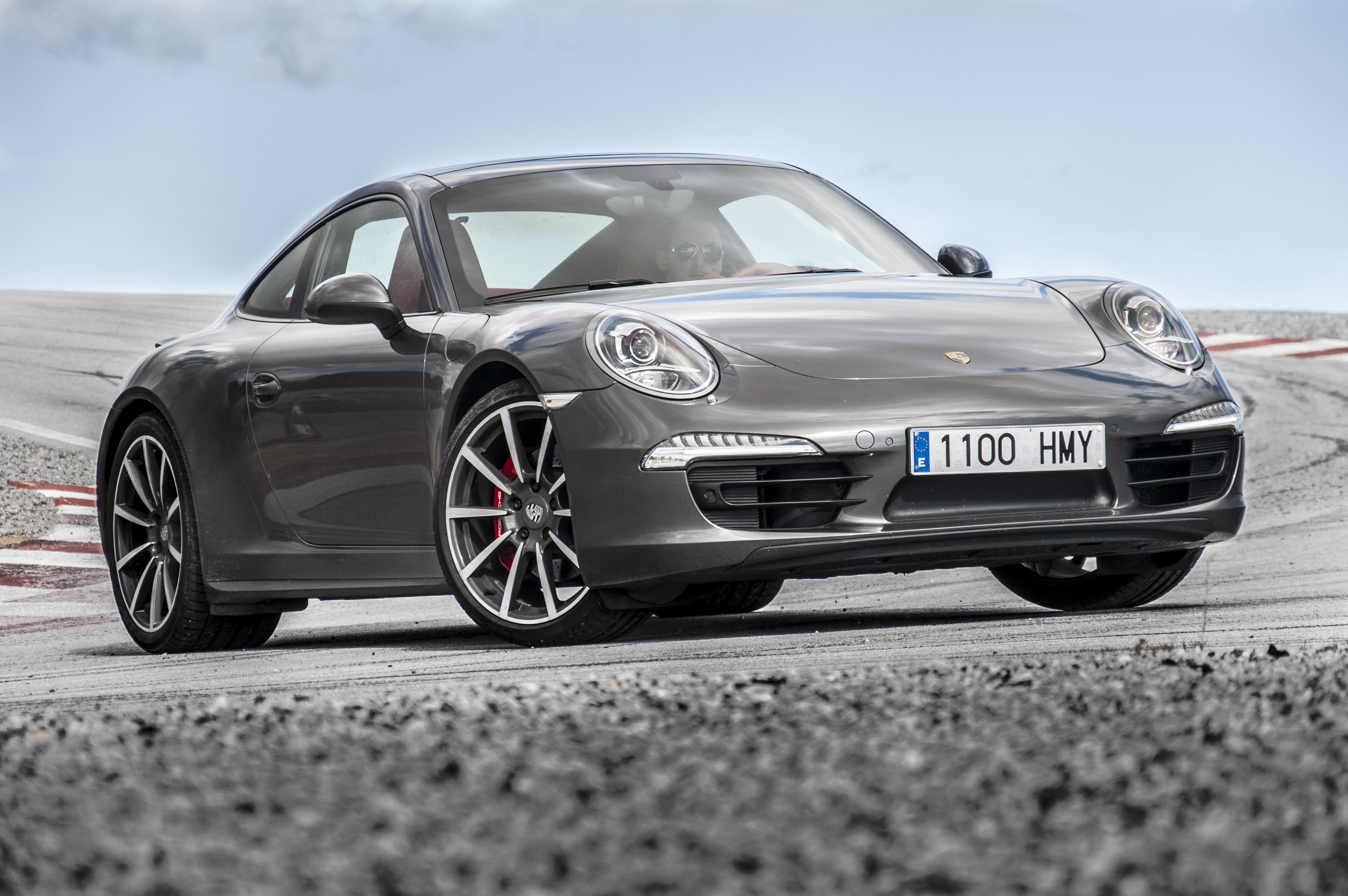
The Porsche 911 is a famous sports car model. The podcast is talking about a 911 GT3, which is a more performance-focused version. They mention it because it’s a cool, track-oriented kind of 911.
The McLaren 720S is a supercar from McLaren. It’s built to be extremely quick, and in the story it’s presented as the next step up from a track-oriented Porsche.
The McLaren Senna is a special, high-performance McLaren supercar. It’s more focused on track-style driving, and the mention here shows Richard was chasing the most extreme McLaren option.
A track day is when you drive your car on a race track with other drivers, usually for fun and practice. If you hit something, repairs can cost a lot because the car is being pushed harder than on the street.
This is a 1987 Ford Fiesta XR2, which is a sportier version of the Fiesta. People like it because it’s a fun, older “hot hatch” that’s usually easier to work on than many modern cars.
An Audi RS6 is a fast, sporty version of an Audi wagon. It’s meant to be quick and practical, but the speaker says it doesn’t really feel like “his” kind of car.
A “plate” here refers to the license plate, which uniquely identifies a vehicle. When a plate is mentioned as “gone,” it usually means it’s missing or not visible in photos.
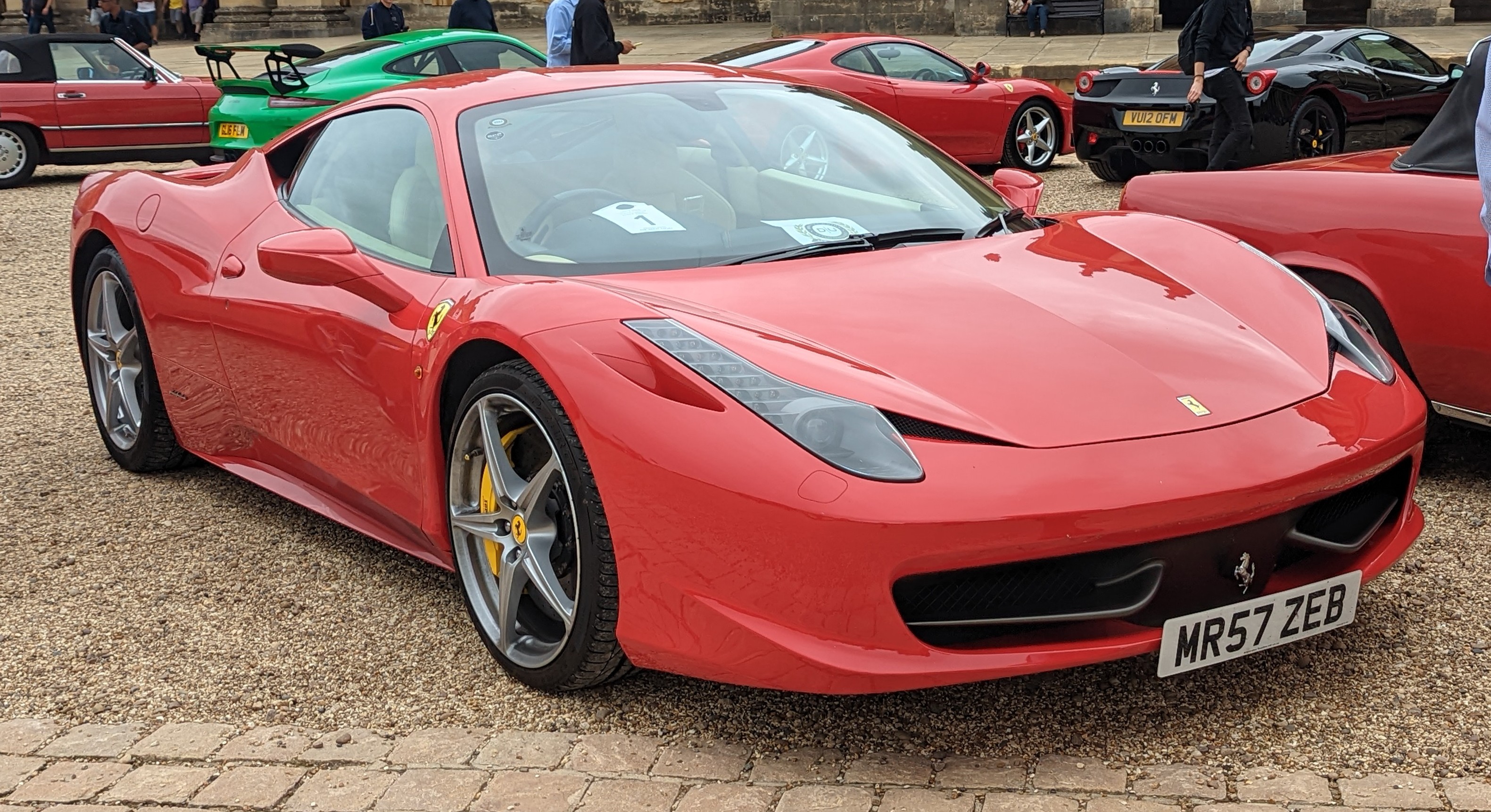
The Ferrari 458 Speciale is a special, more performance-oriented version of the 458. It’s brought up because it’s the kind of car that costs a lot and signals high income or assets.
Elon Musk is a famous business leader who runs big companies like SpaceX. The guest is comparing how much wider Musk’s impact has been versus their own.
Imposter syndrome is when you feel like you don’t really deserve your success. Even if you’re doing well, you might still feel like you’re going to be exposed as a “fraud.”
This is a prescription medicine often used for ADHD. It can help with focus and controlling impulses, which is why doctors use it for attention problems.
Cardiac arrest is when the heart suddenly stops working properly. If it isn’t treated quickly, it can be fatal, so fast emergency response matters a lot.
BASE is a way to categorize where you jump from. It can be a building, an antenna, a bridge, or a cliff.
Concept
risk comparison (driving vs flying)
They’re talking about which is actually more dangerous: driving or flying. Even if flying feels scary, the numbers can show driving is riskier day-to-day.
Netflix is the company being credited here for making the show and pushing for safety steps. It’s basically about who’s responsible for making sure risky filming is handled carefully.
LIVE
K-Pop Demon Hunter's Haja Boys Breakfast Meal and Huntrix Meal have just dropped at McDonald's.
They're calling this a battle for the fans.
What do you say to that, Rumi?
It's not a battle.
So glad the Haja Boys could take breakfast and give our meal the rest of the day.
It is an honor to share.
No, it's our honor.
It is our larger honor.
No, really.
Stop.
You can really feel the respect in this battle.
Pick a meal to pick a side.
I participated in McDonald's while supplies last.
Last night, you spent two hours deciding what to wear to the party.
This morning, it'll take you two minutes to list it on D-Pop and make your money back.
Just grab your phone, snap a few photos, and we'll take care of the rest.
The sheer dress and platform heels you'll never wear again,
there's a birthday girl searching for them right now.
Your one-and-one look is about to pay for your next night out.
Or at least the right home.
Your style can make you cash.
Start selling on D-Pop, where taste recognizes taste.
There was a volcano erupting at the time in Hawaii somewhere,
and we worked out how we could put a wire from the top of this volcano down and across the lava,
and they were going to surf the lava.
You are the top gear safety guy.
We did 16 years supporting the show.
We did over 180 episodes.
The last couple of years with the safety of top gear,
we were still providing fire and ambulance support.
And then that was it.
I only found out the show was over.
We've seen it online.
Top gear was over.
We didn't hear anything again.
The guy that's going to surf the lava, how the hell does he price that?
Every time they do the stunt, they get paid again to do it,
because it's like they're putting themselves at risk.
The man that surfs the lava would be getting paid a lot of money.
It could be 50 grand.
It could be 100 grand.
What was the time that you was on site where something really bad has happened?
There was my time in the fire brigade when there was tough days.
Really tough.
Almost tougher than what you do now?
Oh, tough, emotionally tough, as regards people dying.
There was a crash on the track, a motorbike crash.
And...
There's a bit of the original Top Gun,
where he says too close to missile switching to guns, OK?
Maverick says that.
In the second one, they do a similar line,
but they didn't have the footage of his thumb go into the switch to switch to it.
So they had to make a fake plane set up to film that shot again,
but they did it inside the Top Gear studio.
So a tiny bit of Top Gun 2 was filmed in the Top Gear studio.
But you have filmed a lot of other stuff in the Top Gear studio,
because you are the Top Gear safety guy,
despite the fact that you've worked on so much stuff.
And really, you had pretty much the most important job on the site,
because your job was to keep those three lunatics safe.
Was that the hardest job you've ever had?
Keeping people safe is easy for me.
The politics behind keeping people safe is what's difficult.
That's what's difficult, who to speak to, when to speak to,
especially in the film industry,
picking up when there's going to be a massive blue-in blowout
from some producer and famous movie stars.
And it's like, OK, I'm going to pretend I've got a phone call now and leave set.
Because when we think safety, and we've got one of your ambulances behind,
next to your speciale, which doesn't wreak of safety,
we think of the guys in green suits at the track,
they're usually just sat watching everything occur until the moment that they're needed,
which is when their value kind of shows.
Those guys in green suits at the track,
how much were they needed over the course of, say,
everything that you did at Top Gear?
You said it was two times?
Yeah, I mean, if they're covering, like, a race track,
say they're at Thruxton, for example,
they're probably not going to be doing a lot because, like,
the average motor racing event, you know, there isn't ambulances moving out.
But Top Gear, they would be there, but their role at Top Gear,
they were doing, the team were doing, like, refueling cars,
washing cars, making cups of tea, kind of doing everything.
So they booked them as ambulance crew or fire crew,
but they'd actually be doing everything just to help the show work.
Is that for the mental side of them as well?
Because I couldn't imagine it's not putting down that role at all in any way,
but I can imagine that if there isn't anything going on,
it can be a pretty boring place to stand occasionally.
So, like, do people naturally that are doing that role
kind of try and get involved in other things and they get to know the people?
The people which my team employ will always want proactive people.
They're actually going to be able to do stuff,
not do too much, not get too involved.
We have a phrase in the business, visibly invisible,
and that's what all of my team are told to be.
They're told to be visibly invisible.
People know you're there, they can see you, you're visible,
but you're invisible, you're discreet, you're subtle,
you're in the background, you're under the radar.
When somebody's doing, then you're visible.
So, it's this little phrase that we have.
Now, the things that you've been able to purchase through your career in safety
are very visible, isn't it?
Yeah, and we're going to go into everything else as well,
your other cars, 720s, all sorts of things.
They're not the kind of stereotypical car, I would imagine,
a health and safety guy that's part of the top gear team
being able to own, buy and drive.
Yeah.
When you were working on top gear, were you there like,
how did that work? Where was your business at at that point?
So, originally back then, I was in the fire brigade then,
I do the business side of stuff to generate revenue to buy cars.
That's kind of, I think, I think I've just understood that right now actually,
it's kind of like, that is the reason why I work,
the way I work is because I can buy the things that I want.
When I was a firefighter, I, well, I had a TVR server when I was in the fire brigade,
which was, you know, being able to afford this,
being able to even afford getting through an MOT every year,
because it was TVR, it was quite a struggle.
But I realised there's only so much I can make as a firefighter.
So hence why I then moved across into safety,
because I realised I can make more money, I can build a business,
I can get the things I want.
And ironically, I found something pop up on Facebook
that said some flashbacks like 10 years ago,
and it was me putting up a picture of a speciale,
saying, look at this, you can spec a speciale early on the Ferrari website.
If I can always see exactly the same spec as that.
I didn't even know I'd be able to get one one day.
That is insane.
The thing that I want to get into, because it is insane,
is like the how, because there's so many things that I know about you,
that I think even entrepreneurs wouldn't do the same way as you.
There's a really valuable piece of information in this podcast
that we're going to talk about today,
because I had always admired how you have separated running a business
from Andy Harris, the person,
and you basically generated two different income streams from doing that.
But it's not been without challenge, not been without managing stuff.
So I want to take it back to where we kind of finished
on our last podcast for a minute,
which is we got up to the, we went past the Clarkson,
May and Hammond years of trying to keep those boys safe
when they were doing crazy stuff.
But we never kind of got into the end of Top Gear,
because even though we'll talk about the films that you've done it such today,
Top Gear is obviously a massive part of your story.
How did that come to an end for you?
It was very abruptly, right?
Yeah, yeah.
I mean, we obviously, I had a,
some of our team on the day that Freddie had his accident.
That happened.
And then never heard again.
Did 16 years supporting the show.
We did over 180 episodes.
That happened.
And then that was it.
Never heard.
I only found out the show was over who's seeing it online.
There was it and myself and a lot of the other crew as well.
That was it.
We never had anything.
Were you there that day?
No, I was, I was in Abu Dhabi,
ironically on Gran Turismo.
But my team were, some of my team were at Pinewood,
but they actually had people actually on there on the day,
a crew that they booked for the day.
And that's then obviously I got the phone call saying,
obviously what had happened.
But since then that was it.
Top Gear was over.
We didn't hear anything again.
I know Freddie's done his documentary since we last spoke
and there's been a lot more information coming out about it.
But like from your perspective,
what were like critical failings that day?
Do you think if you were there,
that wouldn't have happened?
Yeah.
I mean, I wasn't massively involved towards the last couple of years
with the safety of Top Gear.
We were still providing fire and ambulance support.
The BBC were doing the health and safety.
I'd kind of moved away from that and I'd moved a bit more into,
into movies and stuff.
And I'd still drop in every now and again and do a day on Top Gear,
but not so much in a safety role,
more as like just me and a paramedic overseas doing something with the show,
just, just being there and supporting them.
So that's your business.
MSS safety supplies, ambulances, fire crew, et cetera,
to racetracks, movie sets, all that kind of stuff.
And because your passion for cars is kind of linked into that.
But Andy Harris, you, as like a rensity,
you use your knowledge and skill base and you sell that at a quite high day rate
to those companies as a separate thing, right?
Yeah, yeah.
Yeah.
So I, when Top Gear ended, I thought, okay,
I need to kind of really push into other stuff.
And I realized that the business side of stuff,
being a businessman running a company does not excite me.
I've never written a business plan.
The business runs.
It turns over, you know, over a million every year.
I've got an amazing team that run the business,
but that doesn't excite me.
Whereas what does excite me is being out and doing cool stuff.
So even recently, Red Bull F1 team came to me.
So we want to release, unveil our new livery for 2026.
How can we do it?
So we came up with the idea about the plane swooping down,
catching, ripping the cover off the car.
So that whole project was passed to me by Red Bull,
which is like an onkers.
How has that happened?
Why are Red Bull getting in touch with you
when you were just part of the fire service
like a decade ago?
Yeah, yeah.
I think it's because through Top Gear
and then working with other people,
I've just met lots of people and my confidence
in what I understand and what I know about
has come through.
And the creativity side of stuff as well,
being neurodivergent, it enables me to see things differently.
So when people want to do a project, I'm like,
ah, you can do it this way.
And if you put a camera here, we can do that,
you won't be able to see this.
So we'll hide that.
So I can just devise ideas.
And that's kind of where I am now where I'm sort of like
producing and coordinating and choreographing action things
for online content, for product launches,
for massive global brands, but it's all car related,
which is what I understand because I understand race.
I race myself.
I understand how cars move fast and what they can do.
And talking about money linked into that,
because I honestly think this is one of the most valuable
pieces of information for any business owner
or entrepreneur listening here.
Because people just don't execute how you've consistently
lived your life with your business.
Because it's almost like a train track and you've got one
of the tracks on this side and one of the tracks on this side.
And it's like MSS Andy Harris.
And I think you've made significantly more money
doing it that way because essentially your avatrack
and most business owners that are the business that supplies
the ambulance and the fire crew would just do that
and be caught up in the weeds basically doing that part of it.
But then you're there basically charging thousands of pounds a day
for your services alongside.
Like was there anybody that told you to do that?
I know it's a stupid thing to do.
But because I think most people just get sucked in
is probably the phrase to the day-to-day carnage
running their business.
And then you're just like, no, the business is the business.
And like if you want me, it's me.
And would you say it's that single decision alone
that's allowed you to purchase a lot of the crazy cars
and things that you've amassed?
I think over the years the car purchase has been
if we go and do a massive movie project and want it for a year,
I have to normally have to sell a car at the start
to be able to fund the company doing that for the year.
So I put it into the business.
At the end of the business, at the end of that year,
I'll bring it out and I'll invest in another vehicle or something.
But yeah, running it as Andy Harris
or at the car filming safety guys,
I sell it as online is a lot more profitable,
a lot less problematic.
The only person who can let it down is me.
I do, I try and do one day a week with the business
here at the studios.
But there's a team that run it who are very autonomous
and very allowed to do things their way,
which is why it enables MSS to run and generate revenue
and then me to do my separate thing on a very big day rate
because I know no one else can do it.
No one else in the world does what I do,
which sounds a bit arrogant, but there isn't anyone.
It's an amazing honour.
And is that just because of all the experiences
that came through this top gear moment,
that came through this thing that brought so many people together
and so many of your friends on this podcast
from the top gear days from Jim to Ben Collins to so many.
I was with a lot of the team that do the new digital one
the other night and I know they watch every single one of these.
I can't believe how abruptly that came to an end.
Like, does nothing surprise you in business anymore?
Nothing surprises me in business.
The industries that I'm in, movies, television, content, events,
it's such a creative, non-normal.
You found out you wouldn't be going back to the top gear track
to provide services your business supplied
through articles on social media, essentially,
rather from the BBC themselves.
Yeah, yeah.
I think I might have sent me a text saying,
have you seen this?
And I think it was something saying that the show,
what they said the show is going to be archived
for the time being or something.
And that was it.
There is no more top gear.
And that's kind of what I enjoy doing.
That's where now myself and a lot of the ex-top gear crew as well
are now making our own productions ourselves.
So we have brands like Bentley.
Did you see the Travis Pastrana Bentley film with the scientists?
Yeah, yeah, yeah.
So that is John, who's the top gear series director, myself,
a load of the camera team.
It's the same thing that makes top gear.
So there's now this group of people that is the people
that made top gear.
Bentley can come to them and say, we want to do this,
and we know each other.
This is what we do cast off.
So just like a bit of additional context for a new listener
listening that's still a little bit like,
this is all a little bit weedy.
I can't quite figure it all out.
We're sat in your unit, which is based in a studio currently.
This is where you've run your five vehicles
and your ambulances out.
And you've got someone that runs his business day to day
pretty much for you.
Yeah, yeah, there's like five people in the office next door
that run the business.
And then you're basically out just doing whatever you want,
wherever you want.
We mentioned Red Bull a minute ago.
Oh, I went off to do this job from Red Bull,
but also said that we're a decade ago,
you're in the fire service.
And it's just because of the people that you've met
that's made that possible.
I hate the word networking because it feels so forced.
And I think people that are not necessarily used to talking
or a little bit worried about talking to people
and kind of getting into how you communicate
with business owners and kind of like-minded people.
The word networking, I don't think it helps
because it almost applies to a forced situation
like you're somewhere to do something.
Would you say your best deals, the Red Bull moments,
everything has come from pretty much either sitting
at a bar or just bumping into someone at a car event
because you bought a car,
rather than kind of physically being in a place
to hunt for something?
Yeah.
If you look at these, I think they do these breakfast
network and events for business.
I've never done anything like that.
This is just my friends.
This is the people which I've met and done stuff with,
and we just phone each other up and say,
we've got this job coming on, do you want to do that?
Or I'll say to them, do you want to do this?
Or a lot of the stuff now with our clients,
we will come up with the ideas and then we'll then go to them.
But the people are, and I think maybe it's the industry,
maybe it is the creative media industry
that is this industry where it's not formal,
it's not a business network,
it is your friends, your contacts,
your people that you work with,
and then the money is just something which is done
behind the scenes to pay for it all.
So you did the 2026 Red Bull F1 car reveal, right?
Yeah.
Where the cover comes off from a helicopter.
Where it's a plane comes down at 180 knots.
Right, so talk us through that.
So how did that whole situation come about from inception
to how are you involved in that?
Like, what is it all?
Okay, so the team at Red Bull,
Toby, who I've known for many years,
he's the Red Bull, he looks after all of the motorsport side
of stuff for Red Bull, not just F1, but all of Red Bull stuff.
And Toby's like, we've got this idea,
we want to kind of reveal this car,
and he then hands it to me to say,
like, how can we make this happen safely but also physically?
So for example, what we did was we got a real F1 car,
the Red Bull factory, we started getting covers over it
and we started having like winches and pulley systems
and a dynamometer to look at the Newton meters of force.
And we actually started rehearsing and testing
ripping covers off of cars.
Because we've then got to put that force,
those amount of Newton meters that are there.
We know that the plane is going to be doing 180 knots coming down.
And what's weird with that one was I was thinking,
right, I've got calculations of this type,
this cover at this speed and this amount of force
creates this amount of kilonewtons.
Can it rip off the back of the aeroplane, for example?
So I got my friend Peter on board and he made this hook system,
which could catch and then release the hook.
But what was quite cool with that was I'm thinking,
I need to get like a scientific aerodynamic engineer or someone
to help me understand and put all the computer CFD model at all.
And I'm like, client's Red Bull F1.
So the Red Bull F1 have not figured this all out themselves?
No, no, so they passed it to me.
But then what was so cool with that was,
I then get introduced to Red Bull advanced technologies.
They're like head of aero is then calculating all the wind
calculations with me and the forces of,
you think that sheet over an F1 car is six metres by four metres.
For a split second, when that plane is doing 180 knots,
it is pulling a flat sheet as a surface area
of whatever six metres by four metres is as a sail.
So for a split second, it's going to slow the plane down.
It's going to rip the back of the plane off.
So you've got to calculate what the forces involved
that don't rip a plane in half at 180 knots at 20 feet above the ground.
So, you know, and the plane team,
so we're rehearsing it on the ground with sort of like
pulleys and winches and everything.
Meanwhile, the plane team over in the Czech Republic,
they're actually rehearsing the speed and coming down
and how do they do it?
And then we just bring it all together
and work out how we do it on the day.
Let me tell you a story about my girlfriend, Speedy Edie,
who phoned me multiple times yesterday
complaining about a rattling noise
and engine morning light on her Mercedes.
To say she was panicking was an understatement.
However, to my luck, it was the exact day
that OBD-11 launched Mercedes
to their list of supported vehicles.
Those supported models also include
Vag Group cars, BMW, Toyota and Ford in the US.
After plugging in the little pocket-sized OBD-11
to the Mercedes OBD port,
we let the device and the app do its thing
by scanning the car and then clearing
all of the fault codes, including
that engine morning light from the dash.
24 hours later, the morning light remained gone
and we found out that that start-up rattle
was just due to a loose screw.
But OBD-11 goes far beyond just clearing
fault codes on your car.
This little device has over a thousand
one-touch applications ready to activate
including Apple CarPlay.
SpringFest is heating up at Lowes
and for a limited time, we have the extra
big deals you need to impress guests.
Get your outdoor space ready
and save $50 on a select cobalt 24-volt
blower kit, now $79.
Plus, save $80 on a charbroil
performance 4-burner grille, now $199.
It's springtime and our best lineup
is here at Lowes.
Valet and 413, while supplies last,
selection varies by location.
This episode is brought to you by State Farm.
You know those friends who support your
preference for podcasts over music on
road trips?
That's the energy State Farm brings to
insurance.
With over 19,000 local agents, they help
you find the coverage that fits your
needs.
So you can spend less time worrying about
insurance and more time enjoying the ride.
Download the State Farm app or go online
at StateFarm.com.
Like a good neighbor, State Farm is there.
I think the car call inspector is a
genius feature of OBD 11, allowing you to
check out any new or used car you're
looking at purchasing to make sure it's
clear of any unwanted issues.
Making sure you have an OBD 11 in your
car is absolutely essential, whatever
mileage you do.
And we've made that a little bit easier
for you to add that to your arsenal by
OBD putting on a sale which runs to the
end of the month for 30th of April and
using my discount code RTS and the
links in the description and the pin
comment of this video, whether you're
listening on Spotify or YouTube or
Apple or wherever, you were able to get
that discount and go and grab yourself
an OBD 11.
I promised when you're by the side of
the road absolutely worried stiff why
your engine morning lights come on and
you're able to clear it because it was
literally nothing, then you'll thank me.
You can also thank me by subscribing
down below, liking this video and saying
thank you to OBD 11 for sponsoring this
video.
Now, back to our conversation.
Tell me that it sounds fun
unless something went wrong.
So like, what's the moment where you have
to make, do you ultimately have like a
decision over that to say like we're not
doing this?
And is that difficult with a client
like Red Bull?
Yeah, I mean it's difficult with every
client.
The good thing is with people like
Monster Energy, Red Bull,
McLaren, all these companies that do
automotive stuff, they understand risk
anyway.
So that's great.
But when you have some companies that
don't understand risk and they just have
this crazy idea, you're like, no, that's
not really possible.
But for me, yeah, there is a worry, but
I am pretty confident that we've put
everything in place to make it safe
before we do it.
But we even did, like talking about
defenders, we did the reveal film when
the defender first came out, we shot it
in Kazakhstan about six years ago.
And it's a defender off the
side of the cliff.
It's a friend of mine, Jim Dowdall,
stunt coordinator.
I think it was Gary Hotro, was the stunt
driver in the car.
And it's literally a defender climbing
over a cliff with a thousand foot
drop underneath it.
And when we call action, someone's
phone goes off.
I'm like, whose fucking phone is that?
It was actually my Apple Watch was going
off saying caution.
No, it said great workout.
My watch was assuming I'm in the gym
doing a great workout because my heart
beat was going so much.
I'm not even in the car, I'm just
watching it.
So that was like, shit, I do worry
about these things.
But it's just the planning and it's
the understanding and the knowledge
we've got in doing this sort of stuff.
So do you have that conversation with
the client that's just like, I've
made it safe in terms of if something
goes wrong, this is here to happen.
We've calculated that the most likely
scenario is that it's not going to go
wrong.
But he could still just roll down the
cliff and that's not on me.
Is that kind of the way that that goes?
You've got to remember that a lot, if
you see some cool advert on Telly
or a massive launch film for a car
or something like that, that's not
normal.
If you want to be totally safe and
you're launching a new car, you just
pull the sheet off and say, here it is.
If you want to push things and be like,
you know, super cool in what you do
and get the attention for doing
things your way, then you've got to take
more risks.
But you've got to take those risks.
You've got to plan everything and you've
got to put the budget into that.
And that's where the reason why my
day rate is so much.
It's almost like a way of testing people.
If they say, oh, we can't afford that,
then I know they're not going to afford
all the other stuff.
I want to put in place to make that
stunt or that sequence safe.
So it's all, you know what I mean?
It's like, if I have a massive day rate,
then I know that they've got the budget
to do things properly.
So what's the coolest things you've seen
with your own eyes then, stood there
doing things, thinking, how the hell is
this my job?
Oh, man.
Tom Cruise on the side of the airplane
on Mission Impossible, seeing him the
first time thinking that's Maverick
on the side of that plane taken off.
I say the Red Bull thing was cool.
The Travis Pastrana Bentley film.
It's Travis Pastrana.
And I'm in front of him and John the
director's like, Andy, I can't see him.
Can you call an action?
I'm like, OK, Travis, three, two, one, action.
That's like, there's no point saying
that I'm really cool.
That doesn't, that means nothing to me.
That is fucking cool.
And I've got to go fucking hell.
That's like, bring it right back then
because that's Pete moment there.
Absolutely incredible.
What would have like 10 year old Andy
thought of that?
And like, who was 10 year old Andy?
10 year old Andy, up to 30 year old Andy
was not very confident in himself.
The school, no, I didn't have many
mates in school, kept myself to myself.
Even in the fire brigade, wasn't that
good at doing it.
I was all right, didn't ever progress,
just stayed as a firefighter.
Yeah, no confidence in myself.
What I do, just a normal person
that just didn't really know
what he wanted to do in life.
Did you have a fire inside you to like,
there is something in me that feels like
I'm destined to do something,
I'm not sure what it is or where it is yet,
or did you almost just fall into what happened?
No, I think I just plotted.
And then I think just getting,
I set up a few little companies on the way,
I did an alarm engineer company,
so I was put in a house,
some burglar arms and people houses.
I did a few other little businesses
where I was trying to do things.
And that was in your 20s?
Yeah, yeah, yeah.
And then I think it was kind of
working on motor racing and all that.
I just thought there was a niche,
there was no one that understands cars
and action and how things like that work,
like the way I understand it.
So I can market this and create something.
All the things you're describing from being youngest,
like not confident, a bit of a nerd,
plotting the words you used,
isn't like boom bang action Tom Cruise.
But was that the stuff you enjoyed watching?
Is that like what you geeked out on watching action films
and crazy stunts and that kind of?
And cars, I loved cars.
And like this American truck I've been building
for eight years now,
there's so many reasons why that truck is the way it is
because of stories from my younger years.
So there's everything on that vehicle
almost like has a story behind it.
So I've always liked cars.
I don't know why, why do we like cars?
What is so exciting about,
I was chatting to him mate the other day,
he's a TT rider who rides in the TT.
We've been having this chat a lot recently about
why does an engine that makes noise
when you're a little kid and you're in a little pedal car
it's called, when you first go in a petrol engine go car,
it's a petrol engine that's making the noises
like your dad's car.
Why do we get excited about petrol engines
and movement and speed and there's,
what's the science?
Why do we love that so much?
You know what I mean?
Why do you love the cars that you've got?
As opposed to, you know,
I think because we all kind of love
putting ourselves in risky situations
that feel like we're in control.
Which is why a lot of the time I tend to find
that super car owners and people that like going fast
absolutely hate, I don't know if you're the same as me
going on roller coasters.
I'd never step foot on a roller coaster again for me
because I don't physically have my hands on the controls
or the brake pedal or something like that.
They don't excite me while a coaster.
Maybe it is that because we're not controlling it.
For me, it's just like, we'll go around.
Yeah, but then maybe, but here's the other thing
because I've been so lucky to see cool stuff all the time.
Sometimes when I go as not working to see something
that's all right, I'm like, it's all right.
Because I know that in a few days time I'm going to have
an F1 car going down a runway or a plane doing this.
And talk us through the cars that you currently have
in your collection that you've been able to buy
since starting that business.
And when was it that you did start the business, what age?
I think maybe 30, 31.
So 30, 31 you start your business?
Yeah.
Since then, what has kind of been in the garage?
You started with the GTR, right?
So I bought a Nissan GTR.
When we finished Fast & Furious 6,
because they had Nissan GTRs in Fast 6.
So I was like, I want a GTR.
So I saved a load of money, worked really hard.
Did all the days on Fast 6, bought a GTR.
And then I think another film project came along.
So I had to sell the GTR to then personally put money
back into the business.
So after that, I then bought a GT3 RS,
paid way over the price for it.
Why did I buy a GT3 RS?
I was filming in Finland.
We had a Miami Blue GT3.
Sorry, not an RS, sorry GT3, sorry Porsche GT3.
And I was like, this is cool.
So I ended up buying one by the end of the week.
Never even been in one.
Never even saw the one I was going to buy.
But that's when they were like 20 grand overs.
So paid over for that one.
And then I was on a runway day, a V-Max,
on these sort of runway days.
And I was on the runway as with a friend of mine,
a girl called Michelle Westby.
She does like drifting and racing.
And I mean her, the GT3.
And then Richard, who used to own Autovervending,
Richard very sadly died last year.
But Richard was like an amazing man.
He would have been amazing on this podcast.
He was the most charismatic man I've ever met.
In my life.
But Richard came up to us and said,
why don't you buy a 720S?
If you like the GT3, you can go even faster.
And I was like, and then Michelle was like, buy one.
And Richard's just the greatest salesman ever.
And I was like, well, you've got one for sale.
But Richard's one was so cool.
So Richard wanted a Senna.
So Autovervending, the car club.
They wanted a Senna, but they hadn't bought enough McLaren's.
So they said to Richard, you've got to buy at least.
So Richard bought three 720s, two totally standard
and one with every option.
And then what's quite funny was they then said to him,
now buy a Senna.
So he sold me the McLaren 720S with every option on it.
He'd lost a fortune on it, but he got his Senna allocation.
I managed to get a less than year old 720S
with a massive spec for like 70 grand less
than Richard had paid for it.
So we were both up on it.
So I had this 720S that I've still got now
that I absolutely love about it.
Seven years had nothing go wrong with it in seven years.
Well, say nothing.
I think had some bubbling on the paint,
which they did under warranty.
And I had suspension accumulators,
which they did under the warranty.
So seven years of track days, runways, 200 mile an hour.
Totally fine.
Well, they like to be used McLaren.
Yeah.
Yeah.
They don't do well.
They don't do well sitting around, do they?
No.
No, but I hit a rabbit at 140 on a track day last week.
So yeah, that's not been cheap to repair.
So yeah, 720.
Still at 720.
Obviously, especially Arleigh,
which I bought when it was half the price it is now,
which is so cool.
It's on finance.
I pay a grand a month on finance.
It goes up.
You pay a grand a month on finance.
And how much was the car?
I paid just over 300.
I think I put 80 down.
Okay.
I pay a grand a month.
But that must go up four grand, three grand a month.
Yeah.
Yeah.
I get to own that.
So there's that.
I've got a 1987 Ford Fiesta XR2 with a tape player,
which is so, so cool.
It's retro.
It's cool.
It's kind of, hasn't got ABS.
It's quite terrifying.
I've got my RS6, which is, is all right,
but I'm probably going to sell it
because it's not really me.
I'm not really an RS6 kind of person.
I think it was funny that I didn't think you'd like that.
I know.
It's wonderful, but it's, it's dirty.
So I need to clean it.
And it's like, I use it all the time.
It's too nice to look dirty on the outside.
Whereas the Octa can look dirty and get away with it.
It's a crazy statement.
Is it too safe for you?
You can't hear the exhaust.
That's the other thing.
So it's not too safe.
It's almost not, it's almost like not there enough for me.
Which is a crazy statement
because do you want to just tell people what the number plate is?
There's gone semi-virus on your speciale.
That picture, that plate has gone.
If you had a front plate,
I'd be able to see.
I've got a front plate under the bonnet actually.
AD11DAF.
Which doesn't mean anything.
However,
ADHD.
ADHD.
AF.
Which that one picture,
that picture that's gone viral,
which I wasn't even driving it when that picture was taken.
But that same, what's weird is that picture
is the one that goes viral every time.
Not a nice picture of it.
That picture of it,
traffic lights in Stratford-upon-Aven or somewhere.
And it's like 12, 14 million, 20 million views now
where it gets shared.
I mean, it comes up all the time, doesn't it?
Do you ever think like, what do brands think?
When I say brands,
I know what you're going to ask now.
What do clients think
if I'm driving around in a 458 speciale
with a plate that says ADHD.AF on it.
And I'm there to do their safety.
So my clients in motorsport and content and YouTube
and branded content, they know about it.
They think it's cool.
They think it's funny.
They understand.
My clients in the movies,
I try for them not to be aware of it
because the movies is a very different industry
to the informality of working in motorsport.
Because movies is all about money,
about how you can make a film
and get the biggest profit margins back.
And obviously, when the safety advisor
who's at the bottom of the tree turns up in that
with that number plate,
that's never going to go down well.
So I try and keep that away from the movie side of things.
I turn up in...
Well, I probably wouldn't even turn up in the Land Rover.
I'd probably turn up in the van.
Because you've got that now.
Now, that is a very special Defender at the end.
What is it?
That is the new Defender Octa.
They are phenomenal.
That is a BMW M5 powered Defender.
635 horsepower.
It drives like...
If I had to have one car for the rest of my life,
it's that.
That is pretty special.
Yeah.
What made you buy one of those?
The...
Originally, it was the finance deals they were offering.
They didn't want 2% finance.
So it was the finance deals, what made me buy it.
And the fact that I get the VAT back.
And the fact that we use it in the business all the time.
It's used to trailer things.
It used to drop stuff off.
So is that basically like an SVR?
What was Range Rover Sport?
Oh, it's more than that.
Is that the suspension?
It's got this 6D suspension that can just...
It's just...
That is the flagship of Land Rover now.
And the fact it's got a BMW engine makes it even better.
And the noise it makes, the way it accelerates,
it shouldn't do what it does.
But it suits me.
The way that I am, the way I dress,
what I need to do for a job.
If I've got a tow something out of a field
and chuck a load of junk in the back of an Audi RS6,
it's too nice.
That I can use it off-road.
I can drive people around.
I can chuck stuff in the boot.
I can tow a trailer with a load of extinguishers
in the back of it.
That I can use a lot better for work than an RS6,
which is just...
It's too nice an RS6.
Too nice for what I need.
At what point
does even your love of cars get challenged
by the fact that you could probably sell that
and make nearly 300 grand at the minute?
I know.
It's difficult, isn't it?
Because is it fair to say that the assumption
of someone that has a 720S
and a 458 Speciale and a Defender Octa
are in a business with a unit and staff
and all the rest is that you must have millions
and millions of pounds to squirt away in the bank.
And that's not right.
I've got about 1,400 quid in the bank.
In my personal bank.
At the moment.
It's like you have to do things.
And you know what?
It's like a business.
You're constantly doing a director's loan back to the business.
Yes, one day I will sell MSS as a separate thing.
I'll still carry on doing my own individual consulting work
that I do.
But then going back to the question,
yes, that's a lot of money tied up in that.
Do you quit whilst you're ahead?
But then if you had an F40, which I know that you love it,
or a LaFerrari,
and you bought it at 1, 2 million
and it's now worth 4 million.
Wendy, you said it.
Let's get into your mind then.
Let's get into your mind then because I met this guy.
Maybe I should do a podcast with him.
I met this guy when I was in my teen age
and through my dad's business that supplied Stone
to build his merchants.
And he had a builders merchant in Surrey.
One yard.
I think it was called Silverland Stone, Greg Skilbeck.
And he'd worked, like you,
relentlessly his whole life building this business.
And he sold it for a pretty penny.
He sold it for, I think it was 8 million pounds.
Something like that.
Well done, cashed in, unbelievable.
I think that was my memory.
But he owned a McLaren F1
and it was brand new.
Everything an F1.
And he bought it for 300 grand
and he sold it for 600 grand.
It's a very similar circumstance.
That's now 20 million.
And he thought, oh my God, I've doubled my money on a car.
This is the most insane thing ever.
And he could have sold that car for three times more.
He still had it than the business he worked
his entire life building.
So get inside the head of a speciale owner for a second.
Is that what's going through your head daily
with a car like that?
I didn't buy it to make money.
I bought it because I wanted one
and because I knew it wouldn't lose money.
There does get to a stage where you think
my life could be made a lot easier.
Money doesn't buy happiness,
but it does make your life easy.
And I've been skinned and I've been wealthy.
There's that saying in there,
I've been skinned, I've been wealthy.
I know we're our most happiest, you know?
So it can give you an ability
through selling things that you own to make your life easier.
The way the world is going,
especially in the UK at the moment,
there's a lot of changes coming,
especially in business in the UK as we all know.
When do you decide to cash out?
Then if I cash out, what do you do?
Do you put it into your house?
Well, house prices don't go up like they used to.
You just put it into your house.
What else do you put it into?
Where do you move?
You come back to look for another car to go into.
To invest in, but you've already got one that's going up.
Exactly.
So it's like, when can you make sure that you are comfortable
and do I need to sell it?
I mean, there's probably a whole hour of podcasts,
don't there?
Do you sell especially early now or not?
As soon as Shmi bought one, I was like,
okay, they're going to go nuts now.
And sure enough, I think he's probably a catalyst towards
the reason why they've also started going up so much.
Because he announced his what, three months ago,
and it's only been the last three months that they've started
going really bonkers, isn't it?
But we sat here and you said that it was amazing to reflect.
I think I told you one of the titles I was planning for the episode
about how a regular guy that started a safety business
now has over a million pounds of cars.
And I think it's really nice when I'm able to get people on
at different ends of the spectrum and journeys of success.
But where I mean is where they've started, where it's happened,
where like the catalyst thing have started in their business
or doing the thing that be able to mount the things they have.
And it's really nice when I get people that have got stories
of doing that after 30.
So I think there's so many people in their 20s out there
that feel like me, I do every day,
but feel like they're not doing enough
or they're not ahead enough quickly or they've turned 27
like I just have or 28 or whatever.
And they see a YouTuber, a TikToker that's 19
with everything that they want to muscle have.
It's just nice to kind of sit down with someone
that has a regular business in that sense.
More of a business that plods on as you said
and carries on and offers a service.
It's traditional, yet it's still actually been really successful
with something like that after the age of 30.
Did you kind of think that when you were in your late 20s
that there was still an opportunity to do something?
Did you think it was kind of over then?
Are you surprised by your own journey is what I'm saying?
Yeah, I am surprised by it,
mainly because I didn't plan to do it.
It just grew and grew and evolved.
But then there is a tiny bit of me.
Although, yeah, I've not designed my business side of life
to be about growth.
As I say, I've never done a business plan.
That's the reason why, because, you know,
I haven't ever planned to grow it all.
But then I do think, well, I think my business
has been running the same amount of time as SpaceX.
Someone called Mr. Elon Musk has accomplished quite a bit more
than I have.
So am I lacking the fact that in the same time
someone's dominated the world,
whereas all I've done is been able to afford a speciality?
But then I'm happy with that.
I'm confident in what I've created.
I don't have any other goals in business
other than to just keep going, keep my team happy
and keep doing cool shit across the world.
How quickly did you become a different person
in terms of confidence after you started a business?
I think initially, the first six years of running a business
was almost the opposite,
because you get a lot of shit off of people.
You get opposition trying to rubbish it.
You get people screwing you over. You get things going wrong.
Then that in me created a resilience of,
okay, the business cannot fail
because I'm going to prove to the people which have doubted me
or that have tried to screw me over what I can do.
So that side of it is quite good to give you that
in a, not confidence, but in a resilience in yourself
and in what you can accomplish.
And the same as, what's it called?
What's that thing called when people are afraid of...
What's it called when people say that they're imposter syndrome?
Imposter syndrome.
I used to have imposter syndrome
as many people do in business.
Now, not 1% of me has imposter syndrome.
I know that I, and what I do,
I know that I am the best in the world at it.
No one else can do it.
With the clients that I've got and the projects I'm doing,
that has given me the confidence to go,
yeah, this is what I do.
There is no imposter syndrome now.
Anything else I can't do, but doing the exact things I do,
I am very good at it and I'm confident myself at it.
But dealing with a problematic, a problem in a business,
or dealing with this, or dealing with that,
I know what I'm good at and what I'm not good at.
So I get people to do what I'm not good at
and I do what I am good at.
What's the person that you've worked with on a set
who you've had to be the thickest of skinned to work with?
Yeah.
And where was that skin built?
Was it through Clarkson Hammond Maydays?
I mean, that sort of stuff was...
Because we knew who the presenters were
and what they do, you kind of are expecting it.
You do have to be thick skinned, but I'm quite lucky
because if you want to film, for example,
I normally work on what's called second unit.
So second unit often doesn't have actors.
It's often, there'll be a stunt coordinator,
there'll be stunt performers, there'll be special effects teams,
but you'll have doubles doing everything.
So you don't often work with the political problems
of big actors where you need to be thick skinned.
But that said, a lot of people are normal people behind it all.
You know, these massive megastars and stuff
are actually all pretty cool behind the scenes.
There are people which you do know you have to be careful around.
So with them, I'll just do the very bare minimum,
say the minimum, stay out of the way sort of thing.
Just to try, I think having ADHD is interesting
because you spend a lot of your life worried about upsetting people
and you often do upset people,
especially kids with ADHD when they're younger,
getting lots of trouble.
They upset people, they have reputation.
So that does teach you quite a lot on how not to upset people.
And I know that when I take my sensible tablets, as I call them,
take my ADHD tablets, that kind of gives me a new,
I don't know, a new way of looking at things
and calming me down and focus, I suppose,
to not to do the wrong things or say the wrong things.
It kind of enables me to be careful around the people.
I need to be careful around.
When did you go on the medication, the ADHD tablets?
So I didn't even know I had ADHD until about eight years ago
and I was listening to a radio phone in.
It was Ian Dale on LBC
and that was when he was talking about ADHD undiagnosed in adults
and I knew that there was something not right with my brain,
but I didn't know what.
In a frustrating way?
I thought I was unwell.
I thought I had Alzheimer's or something like that.
Of course you didn't focus.
So I couldn't focus.
I would lose things.
I thought there was something.
I thought, is there a brain cancer?
What is wrong with my brain?
And I knew for a thrill.
I went to the doctor twice as well,
saying there's something not right in my brain.
And it wasn't diagnosed.
But that one radio phone,
instantly I pulled over and I was like, that's it.
And then I Googled it and I'm like, this is a hundred percent me.
And then obviously you go through the ADHD assessment
and you learn so much more about it.
But then when people say, I was no such thing as ADHD,
okay, take these three tablets and come back to me.
It's really fascinating that because what you're describing,
I know I must have, I think a lot of people,
maybe even driven by social media
and our constant scrolling stuff
and what it does to rewire our brains.
But I think there's a lot of young adults
that probably have symptoms where either low or high.
And what you're describing there like,
I lose my wallet for a week at a time
on a bi-weekly basis quite literally.
I'm like, it's fine, it'll turn out.
And other people, I don't know how you're fine with that.
And I'm like, well, my brain's on something else.
So like, I've got to pay that parking ticket.
I need to do that.
And I just don't.
And then it's like 270 quid a week later.
I'm like, why have I not done that?
You could be forgetful.
But then these...
Explain that.
So it's really fascinating to have someone
that says they've got ADHD that's actually got the medication
and then what the results of that is.
This is the way to see if you have ADHD or not.
Now, this is a controlled drug.
So obviously I can't literally have you go through a doctor
and stuff, but this is methylphenidate hydrochloride.
This is meth.
Okay.
This is if a normal person...
So someone says they've got ADHD, but they're normal
and they have these tablets.
They would be very efficient.
They would be like buzzing off their head, okay?
If a person with ADHD takes these,
I take three of these, they're 10 milligrams.
So I take 30 milligrams.
I take it three times a day.
When I take these about 15 minutes after all the...
The prefrontal cortex, your brain,
this cerebellum and cerebrum just becomes aligned
and it just works better.
It just slows things down,
enables me to think, to process,
enables me to be a bit more normal.
But it does take away a bit of the edge, a bit of the crux.
Who's that?
Yeah, it does it.
And with me, what's very interesting,
I haven't...
Actually, I've not spoken about this before,
but with me, my tablets,
I've only realized over recent years
actually bringing autistic traits.
And it's a common thing where people with ADHD and autism,
the ADHD hides the autism.
Whereas if you take these tablets,
it gets rid of the ADHD
to guess what comes out of nowhere, autism.
So a lot of what I do and how I think,
I haven't been assessed for it
because I don't want to be assessed for it
because it means then that there's lots of negatives to it,
especially medically,
you can't get a private pilot's license with autism, for example.
So it was that side to it.
But it's very strange how I can use the tablets
to get me to think differently.
If I need to really focus, I'll take three.
If I need to do this,
but also be able to do 10 things at once, I'll take one.
I can actually change my brain
with the amount of tablets I take.
And if I don't take them for three or four days,
I'm an absolute mess.
I've lost everything.
I don't know where I am.
I'm flustered.
I've forgotten this.
I am useless without them.
And it makes me realize how rubbish I must have been
in my 20s and 30s and even when, as a kid,
I didn't have them.
I need these now to help my brain work.
If you're listening and you enjoy this,
please subscribe to Ben's podcast.
I personally listen to it all the time.
I've listened to every single episode
and I'm always messaging him saying,
you know, this one's great.
It is, I promise,
it's genuinely my favorite podcast to listen to.
So if you're like that,
who's been the most important hire in your main business,
MSS, for actually running the show on a day-to-day basis
if you kind of get that way?
Yeah.
So within my team, there's two people that are,
well, we're quite a small team.
Considering the size of the business,
it's quite a small team,
but everyone is like super cool at what they do.
And if someone joins the team that can't cut the mustard,
it stands out pretty quickly.
I've got my head of safety,
who is kind of like across the things or the team.
And with the guys, I've got Kelly,
who's our project manager.
She is the person who,
if I literally found out, like Kelly,
leave this doing quick, put me a flight here.
Kelly used to work at Terminal 5 Heathrow.
She's used to dealing with chaos.
She thrives on that excitement of, you know,
someone needs to get in this country, that country.
Two things you wouldn't put together.
There's so many polar opposites that come onto this podcast.
The safety ambulances, saving lives,
making sure that if someone has a really big crash,
they've got a chance of surviving it.
I mean, I had Billy Monger on only a few weeks ago,
who lost his legs in that horrific F3 crash.
Well, that ambulance out the front is the ambulance
that took Billy Monger to the med centre.
Really?
That is the exact ambulance that was there that day,
by a strange little kerpl.
And then that's the times that it's actually needed.
So, what was the time that you was on site
where something really bad has happened?
Like, take us into like a really bad, really tough day.
Um...
So, there was...
Well, there was my time in the fire brigade
when there was tough days, really tough.
Um...
Almost tougher than what you do now?
Oh, tough, emotionally tough, as regards people dying.
Like, yeah, really not good days.
Um, there was a train crash and that was...
Yeah, that was pretty bad.
Is that what gives you so much for respect
for the lads that go out and do what they do?
You know, how I described earlier,
because it's just I've been stood on the side of the top gear track
and the lads are just lads leaning on the ambulance stuff.
But is it crazy what they go through
that the general public just don't...
All mine.
For more information.
I've seen that you would see
have all dealt with very bad days at work.
They've all been frontline emergency services.
They've all dealt with things going really, really wrong.
I think we even had...
We had a job at...
We were doing the fire safety medical ambulance
cover and safety for Thrucks and Circuit one year.
And there was a...
It was a round of British super bikes.
There was a crash on the track motorbike crash.
And the one the riders died.
But we saw him go to the med center
and we knew it was big.
We didn't know how big.
And I come in what it is.
There's a call sign we use,
which means the priest or the vicar has turned up.
And I remember hearing on the headset on the radio
that Mr...
Basically, you don't ever use these at words in event safety.
You have code words for everything.
It was like, Mr. Green has just turned up at the med center.
I don't know what exact words were.
And I knew that was the vicar has turned up at the med center.
So I'm like, yeah.
He's there for one reason.
It's...
Yeah.
Then days like that are tough.
And days like that bring back my...
You know, those 10 years I did in emergency services
that are...
All emergency services deal with.
I did six years as a volunteer responder
for the ambulance service as well while I live.
I've probably done 30 cardiac arrests.
I've never got anyone back.
So I've resized 30 people on my own
until the ambulance service get there,
which haven't made it.
So there is a tough side.
And I do worry that one day it's going to hit me
like a steam train, the shit, which I had to...
Does it go through your mind when you're signing off?
Yes.
Let's do it.
Let's rip the cover off the car using the plane,
the Red Bull, et cetera.
And do you ever see films that you think
that might have gone too far,
that like you weren't on it or something like that,
or companies pushing the boundary just a little bit too far?
Does that happen or is that just that person in the car
and the company is fine with them taking the risk?
There's all the right paperwork in place
and that's what they pay the big bucks for?
So that side of it is
that's where I often do get frustrations
because I'm giving an opinion based on
seeing things happen and go wrong.
So that's how I know what things go wrong.
Within my team, Carolyn, she's our business development manager.
She's the person that's dealing with clients all the time
and she kind of understands my frustrations
when a client doesn't understand the reality of the danger
of what we're doing.
She often deals with clients for me
because she knows I'll just get frustrated and be like,
no, no, no, so she's like very good at kind of...
We almost say that she's almost like my carer sometimes.
She's sort of like vetting the jobs
and dealing with the problems
if people don't understand the reality
of what we're going to do here.
If you were doing a base jumping stunt,
we did a load of base jumping stuff years ago,
there is statistics, there is a website out there
that has the fatality rates in base jumping
and what percentages of what type of jump people will die.
So that is a factually proven bit of data
about if you do a base jump...
Do you want base stands for?
Explain it forever.
So base, bridge, antenna, span, or earth.
That's what base means.
Jumping from a bridge, jumping from an antenna, a mast,
a span, i.e. a...
How is it?
No, sorry, building.
Building, antenna, span, bridge, earth.
Just jumping off a building, jumping off an antenna,
jumping off a bridge or jumping off earth, i.e. off a cliff.
And if you go down all those different things,
there is...
And you're each one the most dangerous one is?
Earth?
I think it's building because if you jump off a building,
you've only got 50% of space in front of you.
There's 50% of the space behind you that is the building.
Whereas if you jump off of a span, a bridge,
there is nothing.
Once you've jumped off, you've got nothing behind you.
You've got 160 degrees around you.
So there is data out there with how dangerous base jumping is.
So you can then go to a client that says,
we want to do a base jumping stunt
and you can actually go right.
As long as you're aware, people die doing it.
This is the data behind it.
Why do people do it?
Do you ever think that when you're working with these people,
the stunt guys?
But this goes back to me saying to you about engines
and cars and wanting to go fast and stuff.
I've done six parachute jumps just out of a plane,
not a base jump.
Can you imagine, and that's like out of a plane
with the Royal Air Force and safety and all that,
can you imagine climbing up the side of a bridge,
off the side of a bridge with your mates?
You're not supposed to be there
and you've got traffic going past
and just you jump off.
You imagine the rush from that.
You imagine the, it's naughty.
It's not just the adrenaline.
It's the illegalness.
It's the, I can see why people do base jumps.
Do you know Alex Honnold?
No.
He's the climber that just did the building in Taiwan on Netflix.
He's the guy that climbs up the side of all the cliffs
with no rope, no strings attached to all that kind of thing.
And he's absolutely adamant that what he does
and how he lives his life is less risky
than how 99% of people live their lives.
He doesn't like spending too much time in cars
and cars are where it all goes wrong apparently.
And he doesn't like doing this, doesn't like doing that.
He's like, you put yourselves at far much more risk
than me climbing with no ropes,
because I know what I'm doing going up the building.
Do you think that that's denial
of just trying to keep the scary bit at bay?
Yeah, yeah, that's bullshit.
Yeah, he's not.
Yeah, yeah.
He doesn't need to climb up that building.
Okay, he can make the choice to get in a car.
Yes, you're probably more at risk driving to work
than you are crashing in a plane going to someone holiday,
you know, if you drive to the airport, statistically.
But statistically, you know, if he falls off at that,
that's it.
He doesn't need to climb that.
That is a very risky thing.
But then you could say about how many times
have people fallen off doing stuff like that.
That's where you got to look at, you know, at risk,
severity versus likelihood.
You work with all the big brands and the TV companies
and the Red Bulls and monsters that kind of do all this stuff.
His climb, his recent one, was live on Netflix
going up that building.
What do you think of that?
So I work with Netflix.
Yeah, I've done quite a lot for Netflix in the past,
as have our team.
I was surprised to see it was being broadcast live.
Very surprised.
I mean, there would have been a delay.
I don't think it would have been totally live.
I think there would have been a 10 second delay on it at least.
But the interesting thing for that is,
our Netflix just filmed it circumstantially.
They are filming something he was going to do anyway.
Okay, that's a great boy.
Is it scripted that he is going to do that?
So when we've done similar stuff in the past
with wingsuit flyers chasing down sort of cliffs and stuff.
If it's scripted and you're asking someone to do it,
who is then responsible?
There's, you know, a lot.
And also when I saw that as well,
I thought people that are watching that live
are not watching it because of the interest in climbing.
They're watching that for one reason.
Because this human nature that we have,
why do people slow down when they go past an accident on the motorway
and they look across the other character eye?
It's a human nature, isn't it?
People are interested in what happens in us when things go wrong.
I think it'd be very interesting to understand
the average person that watched that show
and why they were genuinely watching it.
Because they're not watching it because it's climbing.
That is something intense to watch in it.
That is something to...
I mean, on Netflix side, I'm impressed.
That's good.
The fact that Netflix took the risk
and put all the safety measures in place as best they could to do that
and the fact that they pushed to do that as well is exciting.
I think it's good.
Have you got to be there as well,
not just obviously for the person doing the thing,
but is there sometimes people behind the scenes
that are putting themselves at more risk
than the people actually doing the thing?
I'm thinking like camera crews and stuff like that.
Yeah.
You look at the average Bear Grylls type TV show
and he's hanging off a side of the cliff eating a dead moose or something.
There's someone next to him filming that.
With a massive camera.
How's the camera operator got there?
So, yeah, there is these unsung heroes of documentary filmmaking
that are also doing this sort of crazy stuff,
going to these crazy places,
going to...
You look at these journalists that go to war zones.
Do you see that thing recently?
That journalist is doing that talk in Iran a couple of weeks ago
and the rocket comes down, hits behind him.
It's the most...
It's literally he starts running and a rocket lands behind him.
It is bonkers to watch.
So, these journalists that go to war zones and stuff.
I've been to war zones.
I had a rifle.
They go to war zones.
They got a microphone.
I know I'd rather have.
It's crazy when you think about it like that, isn't it?
Yeah.
The risk people put themselves in.
I think we've got this degree of when someone's got press written on them
that, oh, they're going to be fine.
That's not really the case then.
No.
It's like...
Who's the nuttiest of all the companies you work with?
Who does the biggest stunts, the biggest things?
No one's nutty because everything is assessed.
No one that I work with is stupid and takes a dangerous risk.
But then the companies that want to really push the boundaries
of what is super cool to watch and what is amazing and great content
and what draws people in stuff, you've got to look at the drinks companies
at Monster Energy, Red Bull, stuff that they're sponsoring, stuff they want to do
because it's extreme sport, athletes.
It's doing what...
There's that thing Red Bull last week did.
Red Bull F1 car on a railway track.
Have you seen that?
And I don't know why something in Spain they did like a couple of days ago.
They put train wheels on an F1 car and people just commented
Red Bull doing Red Bull things.
It's not dangerous, but it's cool.
It's the brands that want to do cool stuff in there.
Where do they go though once they broke all the records?
Do you ever get involved in those active chats?
Because do they just keep thinking they can push the boundary a little bit further,
a little bit further, a little bit further, a little bit further?
Are you like...
There's a point where you just can't get past the boundary.
I saw the one where the guy skied down the cliff
and did like 200 and something meters in the air before touching down.
I'm just like, so what?
Has he got to do it again and go 10 meters further?
Do you get involved in any of those conversations?
I mean, once a week I'm having a phone call with someone about a record attempt
or how can we break this or how can we do that?
We've got one we're planning at the moment actually.
It's not a speed attempt.
It's actually a distance attempt.
It's quite a complex one, but it's quite cool if it's going to happen.
But people always want to do that,
but we are going to run out of all this stuff one day.
Stuff which can't be done once.
Today it's like, what do you do?
What do you do next?
What idea can you come up with next to do something that's cool,
that's modern the ties in with what's going on at the moment?
There's so much.
Where do you go next?
What about you?
Where do you go next?
Well, I'm kind of moving away from the safety advisor stuff now
and I'm now coordinating with the ideas and producing stuff,
which is what I like doing.
Coming up with stuff, thinking I'll just be driving on
and I'll be like, ah, hold on.
That makes me think of that.
That can do that.
We've got some super cool stunt projects coming up.
So did you just phone up a mate at Red Bulls that I've had an idea?
I think we can make it happen.
I think we can do it safely and I'll help you do it.
And this is what we could do?
Well, not necessarily just Red Bull.
It could be if the idea ties into a brand, then we can do that.
So you've got to look at, and for me, it's always automotive brands.
So I've got to think, okay, what companies, you know,
if it's an idea around aerodynamics and downforce and stuff,
you think McMurtry, they are all about downforce and suction.
So I've got this idea on that.
So I know the team McMurtry.
Let me guess, driving a car outside down a tunnel.
That'd be a good idea, wouldn't it?
So, yeah, there's all sorts of ideas, what people want to do.
But you've got to think what brand does what.
Give us a scenario of an idea that you've been given that is just too far to do.
One of your no moments.
I'm sorry.
I'd love to do it, but it can't be done.
I didn't say no.
We did actually plan it.
But in the end, we just decided this is too silly.
It was kind of a company.
It was one of the big tech companies that make circuit boards of heat treats and stuff like that.
It was like one of the massive global brands.
And video or something like that.
And they wanted, they said, our circuit board and our chips can withstand this heat.
And we came up with an idea of there was a volcano erupting at the time in Hawaii somewhere.
And we worked out how we could put a wire from the top of this volcano down and across the lava.
And then we were going to make a surfboard out of these chips underneath the surfboard,
have a stunt double on a harness, and they were then going to come down.
So they're like on a wire floating over the top of the lava.
And they were going to surf the lava and then come off the lava and then go into the sea and release.
And then they land on the sea and surfboard.
They were going to surf lava.
This was an idea.
We planned this.
We actually went through it.
We were like, can this happen?
And we were joking.
And when I first got the phone call about, can this happen?
I started speaking to a few people that I work with, people that do like wire rigs and special effects.
And we were like, and we were always like laughing.
And it's always become this joke now that the stunt that never happened.
But it could, there is a way to do that, isn't there?
There is a way.
You can come down on a wire and you, the surfboard, and it was really going to have Velcro on the shoes
with the surfboard attached your feet via Velcro.
So as soon as you hit the lava and you go off, you can move your feet at a certain angle,
which then disconnects the Velcro to leave the surfboard if it was too much.
And then the wire system could pull you up.
I mean, there was a lot of people on it, a lot of stunt coordinators, special effects teams,
wire, we were kind of going through it for a while.
But can you imagine that?
That would have been the digger sea on the internet, the guy that surfed lava.
Who was the person that gave the final like, no on this?
It's sort of, I think during that, I think since COVID came along and all the ideas
and cool stuff sort of stopped happening.
But yeah, none of us actually said no.
None of us said yes, but we said we could look at this.
We could maybe do a test rig with a dummy to come down and see what happens.
There was discussions over, can this happen?
So when someone sees something like that, that's mental.
I remember the one that made my jaw drop almost like listening to that
was the skier that went down the side of Everest.
You see the guy that skied from the top to the bottom.
And like, he's like just dipping off good cities at points.
He's on like a knife edge.
Is it like a consensus where like a load of people that are going to make that happen
sit in the room and it's almost like a vote.
Like everyone has to go around and go, yep, yep, yep.
Is that how it is?
That's how it is to be.
So for something like that, there would be a brand deal behind it as well.
So which company is going to sponsor that and put the money towards it as well?
Is someone from high up in that company then going to go, whoa, whoa, hold on.
This is Everest.
You know, one in 12 people die on the top.
We're not going to risk this.
So there's going to be a lot of people in that process,
but then ultimately the person doing the skiing has got to make that call.
That's a brilliant question to ask you.
You ready?
Yeah.
Who's safer?
One in 12 people in the group that goes up Everest
or the guy that's had everything planned that's about to surf lava.
There's no one like you and there never will be.
From the producer about Union Rhapsody,
there are many legends,
but there is only one.
Michael, rated PG-13 in theaters April 24.
This episode is brought to you by Redfin.
You're listening to a podcast, which means you're probably multitasking,
maybe even scrolling home listings on Redfin,
saving homes without expecting to get them.
But Redfin isn't just built for endless browsing.
It's built to help you find and own a home with agents who close twice as many deals.
When you find the one, you've got a real shot at getting it.
Get started at redfin.com.
Own the dream.
Statistically, we know one in 12 people die doing Everest.
That's why Serenal Fiennes in his 70s did it a 13th time.
He was like, well, I haven't died yet.
I'm going to prove death wrong.
I'm going to do it a 13th time in my 70s.
That's why Serenal Fiennes is one of the coolest men on Earth.
But there is data to prove that.
Whereas the surf and lava, there isn't.
We haven't done it before.
It's unique.
We know what the risks are with Everest because it's been done so many times.
We know the safest way.
We have all the experience over the years.
That's a statistical analysis of what makes it dangerous.
Whereas the lava thing isn't.
But ever it's been done a lot of times, not complacency,
but it kind of is done.
Okay, we do this.
We go, it's just, you know, you think if you're a Sherpa working at Everest,
it must be mundane towards the end, just doing it all the time.
They're doing it like eight times a year or something.
I think they're just doing loads.
Whereas is someone doing it the surf and the lava is that, you know,
they'd be more focused on safety because it's the first time it's been done.
I really don't know.
It's such a fascinating world this to learn about because I think the average person
would be able to point at the jobs we see in our day-to-day life
and give a pretty close estimate to what that job pays.
You know, like whether it's a top earning lawyer or NHS or Costa as a services,
we have a pretty good, take a good stab at it in the dark.
You've given us an insight into your world and how you, and the super cars and stuff.
The guy that's going to surf the lava, how the hell does he price that?
Will he just come in and go two million?
Like there's no rate card.
It's just like he'll throw a number and if the brand wants to do it, they do it.
Yeah.
So sometimes if people come up with the idea, you might get some YouTubers who will do silly stuff for free.
But then if it's done as a stunt, the stunt coordinator will then work out
what's called an adjustment for the stunt performance doing it.
And there are some amazing stunt performers out there with such individual amazing skills
that have a very high adjustment rate.
Every time they do the stunt, they get paid again to do it
because it's like they're putting themselves at risk.
That's where you've got to think, you've got stunt performers that work on the movie projects and TV,
but then you've got your daredevils that do stuff for YouTube.
You've got these people that go and climb up the side of, you know,
do pull ups off the side of skyscrapers.
They're not getting paid for that.
They're doing just for YouTube hits.
Whereas the professionals are doing it as part of a scripted sequence.
So I think how they would put a price on it is the same with a car roll over.
People that are rolling cars for living stunt performers, they have a set price
if it's just normal car roll over.
Is there a rate for that?
Yeah, I don't know what they chart.
I think a stunt performer, don't forget to be on the stunt register.
These guys and girls have got to do a lot of training.
It's not easy to get on the stunt register.
It is so much.
So if I wanted to roll a car on camera, you've got to get a license as if you were going racing.
Not so much a license, but you'll be nine times out of ten,
you'll be in a British stunt register.
You'd have gone through their systems and their processes.
You'll be an expert in this and that.
You'll have a certain amount of disciplines, whether it's a martial art, diving, cars, horse riding.
There's always different disciplines, which I think you have to have six different disciplines.
And then you've spent time on set.
You've listened to what the stunt coordinators told you.
You've done exactly what you need to do.
And then there's a day rate for them.
And then there's then their adjustment fee for every time they're doing so.
They can even be...
I mean, I don't so much work on the stunt side of stuff as scripted for movies and stuff.
But if someone's being punched in a scene, they might get, I don't know, a thousand pound,
five hundred pound, whatever, for being punched in a movie.
There's all different rates because they are putting themselves at risk.
They have a talent.
They have a skill.
They've trained to do something.
They're like an actor or an actress, aren't they?
But they are specialists in what they're doing.
And then they deserve the money that they're getting.
And they're paid well because they are pretty good at what they do.
So the man that serfs the laugh will be getting paid a lot of money.
I reckon if they did their brand deal right and who would be doing it,
it could be fifty grand.
It could be a hundred grand.
It could be more.
That low?
That low to surf online?
But then it could be even more.
There's people which have done car stunts, very risky car stunts before that have been paid a lot.
But I don't get involved in that side of stuff.
But then it's kind of, you're bringing that person in who holds the rights to that.
You know, does that person get known a lot more?
There's all sorts of complexities that goes on with how it's all funding, how people are paid.
And I say out of that, I just deal with how I can make these things safely.
How people are paid for it.
I leave that down to the, that's the boring stuff.
Well, I think you've done very well to put some of the boring stuff aside
and focus on doing what you love doing.
And I think that is the whole point of road to success.
So Andy, thank you so much for coming on again and giving us more of an insight into the world
behind just the top gear days and working with Clarkson May and Hammond,
which is super cool, but there's so much more to you.
So thank you once again for speaking to me in the audience
and I'm sure we will be catching up once you've surfed lava in the near future.
That's cool.
Thank you.
Have me appreciate it.
About this episode
Andy Harris, former Top Gear safety lead, explains how his MSS safety business evolved from emergency services into high-end stunt and production work for brands like Red Bull, McLaren, and Netflix. He recounts the abrupt end of Top Gear after Freddie’s accident, the politics of keeping “lunatics” safe, and why safety teams stay “visibly invisible.” The conversation also covers his business strategy of separating himself from the company, pricing at a high day rate, and his ADHD/autism traits. Along the way, he details the Red Bull 2026 car reveal mechanics and discusses risk, stunt pricing, and why some boundary-pushing ideas get rejected.
Make sure to use code RTS at https://go.obdeleven.com/RTS for 20% Off! Unlock Apple Car Play and Diagnose faults on your car, anywhere, anytime!
From working behind the scenes on Top Gear to coordinating some of the most dangerous stunts in the world, Andy Harris has lived a life most people wouldn’t survive.
In this episode, Andy breaks down what it really takes to keep high-risk productions safe — from Hollywood film sets to insane brand stunts like surfing lava. But behind the supercars, global projects, and working alongside some of the biggest names in the industry… there’s a much darker reality.
Don’t forget to subscribe to our channel for more exciting content about your favourite shows and celebrities. Hit the bell icon to stay updated on all our latest episodes
👍 Like, Comment, and Share this episode. Join our discussion in the comments section