[Archive] DAILY: U.S. EV Sales Hit Record, VW EV Update and Mercedes-Benz Add AI | 12 Oct 2025
EV News Daily - Technology and Business of EVs
[Archive] DAILY: U.S. EV Sales Hit Record, VW EV Update and Mercedes-Benz Add AI | 12 Oct 2025 EV News Daily - Technology and Business of EVs · Oct 12, 2025
The Tesla Model 3 is a smaller electric car from Tesla that is very popular. It offers a good driving range and many high-tech features, making it a great choice for those looking to go electric.
The Volkswagen ID.3 is a fully electric car that is designed to be affordable and practical for everyday use. It's part of Volkswagen's range of electric vehicles.
The Volkswagen ID. Buzz is an electric minivan that looks a lot like the old VW buses from the past. It's designed to be fun and spacious while being good for the environment since it doesn't use gas. Volkswagen is making this car to attract both old fans and new customers who want electric vehicles.
The Volkswagen ID.5 is a sportier version of the ID.4, designed as a coupe-style electric SUV. It combines the benefits of an SUV with a more stylish look.
The Audi Q4 is a smaller electric SUV from Audi that offers a luxurious feel and modern technology, making it a great choice for eco-conscious drivers.
The Porsche Macan is a small luxury SUV from Porsche that offers a sporty driving experience and a stylish design, perfect for those who want both luxury and performance.
Term
AI
AI stands for artificial intelligence, which is technology that helps computers think and learn like humans. In cars, it can help with things like voice commands and smart features.
EVs stands for electric vehicles, which are cars that run on electricity instead of gas. They are better for the environment and can save money on fuel.
The Polestar 2 is a modern electric car made by Polestar. It's designed to be stylish and high-tech, making it a competitor to other electric cars like the Tesla Model 3.
Megawatt charging is a way to charge electric cars very quickly, using a lot of power at once. This helps electric vehicles get back on the road faster, especially for big trucks and buses.
Wireless charging lets electric cars charge without needing to plug in a cable. Instead, they use special technology to transfer power through the air, making it easier to charge up.
An experimental EV is a test version of an electric car that is being used to try out new ideas and technologies. These cars are usually not sold to the public yet.
Thermal management is about keeping the car's parts at the right temperature. It's important for electric cars to make sure the batteries don't get too hot or too cold, which helps them work better and last longer.
The CCS2 connector is a type of plug used to charge electric cars. It can charge the car quickly and works with many different charging stations, making it easier for drivers to find a place to charge.
A kilowatt is a way to measure how much power something uses. For electric cars, it tells you how quickly the car can charge or how much energy it uses when driving.
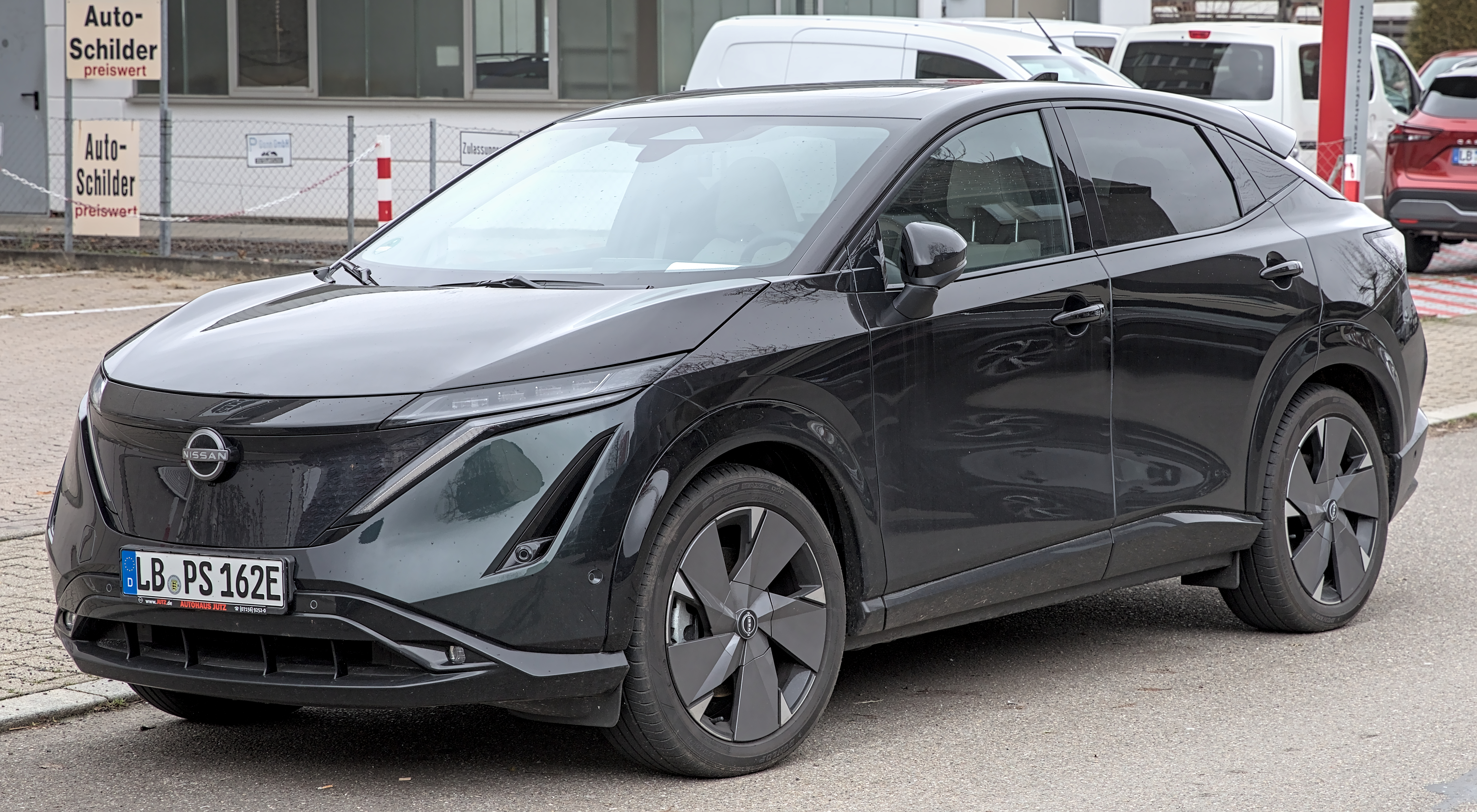
The Nissan Ariya is a new electric SUV that runs on batteries instead of gasoline. It has a modern look and lots of space inside, making it a good choice for families. The recent updates to its design show that Nissan wants to keep it attractive to buyers.
A facelift is when a car gets a small update to its look, like new headlights or a different grille, but the main parts of the car stay the same. It helps keep the car looking fresh without a complete redesign.
Daytime running lights are lights that turn on automatically when you start your car, making it easier for others to see you during the day. They're a safety feature that helps prevent accidents.
Alloy wheels are special types of wheels made from metal that are lighter and look nicer than regular steel wheels. They can help the car perform better and look more stylish.
A federal tax credit helps you pay less in taxes. For cars, especially electric ones, it means you can save money when you buy the car because the government gives you a credit that lowers your tax bill.
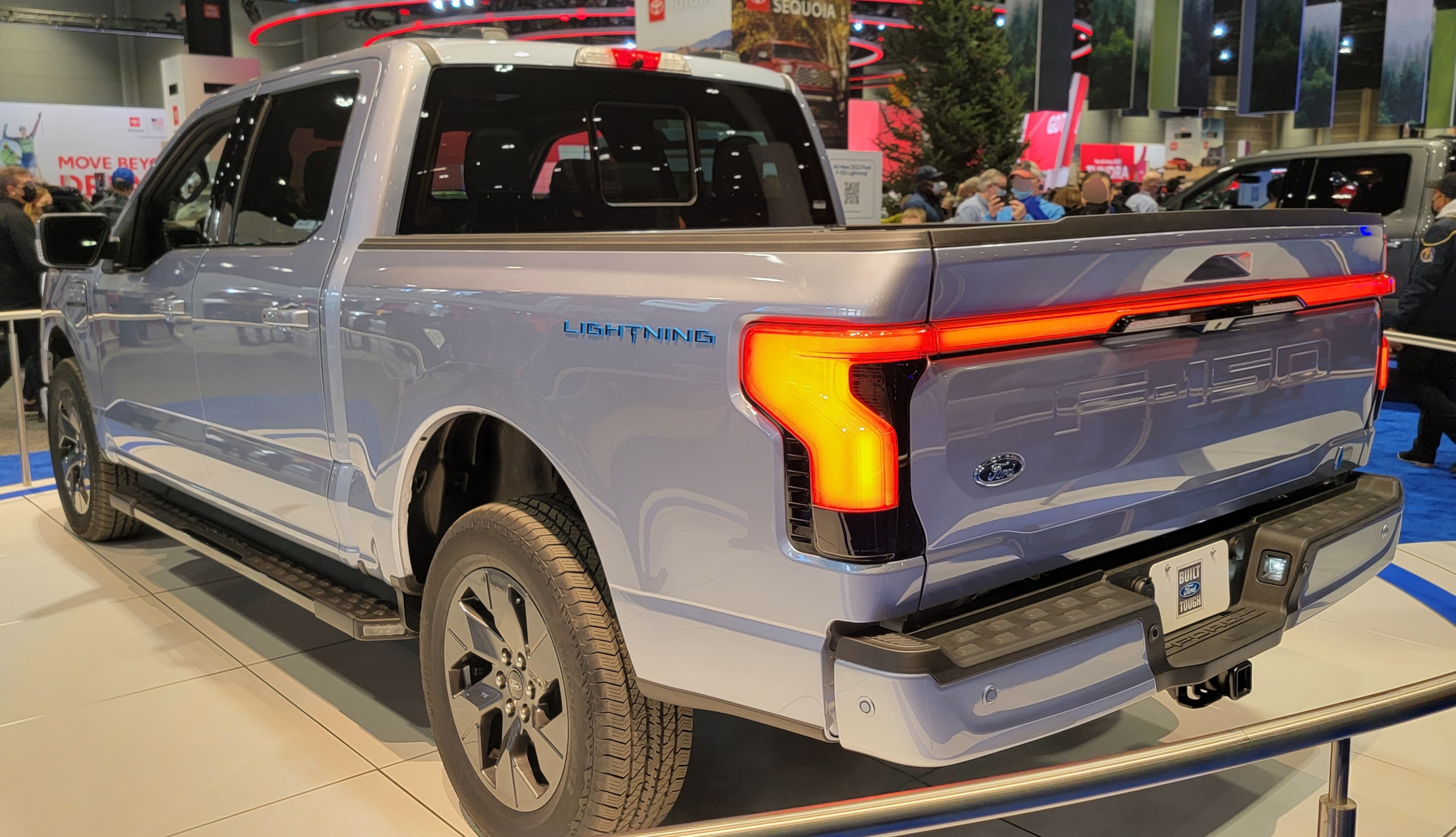
The Ford F-150 Lightning is an electric pickup truck that looks like the regular Ford F-150 but runs on electricity instead of gas. It's important because it shows how trucks can be more environmentally friendly while still being powerful and useful. People talk about it to see how it compares to other electric trucks.
An over-the-air update is when a car gets new software or fixes automatically through the internet, similar to how your phone updates. This means you don’t have to go to a shop to get these updates.
LIVE
Welcome back to the podcast.
Today, US EV sales hit a record.
VW's EV update and Mercedes-Benz add AI.
Plus, stay tuned.
Later in the show, I'll tell you why.
Tesla's latest moneymaker seems to have annoyed drivers
by running ads inside their cars.
We'll know EV news China today as it's the weekend.
It's back tomorrow.
Let's get into the numbers.
We knew we're gonna be really good.
US EV sales hit a record in Q3 as the expiration
of the federal tax credit brought forward.
Many sales.
Kelly Blueberg estimates that,
which is a very specific estimate, by the way,
438,487 units EV sold in Q3 in the United States
as buyers rushed to beat the expiring incentives.
Volume was up 41% from Q2 and up 30% on Q3 last year,
topping the previous high,
which was the end of last year by nearly 20%.
And lifting EVs to 10.5% of total vehicle sales,
last year it was 8.6%,
where about 90 EV models were sold last quarter
in the United States.
Only nine of them, though, exceeded 10,000 units.
The Tesla Model Y and Model 3 leading the way, by the way.
The Y was estimated to have sold 114,000
and the Model 3, 53,000.
The new Chevy Equinox continues to sell really well.
That's in the top three.
And outside those leaders,
most EVs are selling under 2,000 units a month
in the United States.
Loads of choice, but no real domination apart from Tesla.
Volume is essential in automotive manufacturing,
so profitability for some of those automakers
is definitely on their minds.
Yet record sales and rising share
point to a clearer path towards scale
and improved economics.
Now, Volkswagen Group delivered a lot of BEVs worldwide
in the last quarter.
So these are pure BEVs we're talking about,
not just plug-in hybrids as well.
These are pure BEVs.
252,000 of them were sold globally in the last quarter.
That is up 33.1% year on year,
bringing the nine-month BEV deliveries at the business
to 717,500.
So that is up 42% on the same time last year.
Growth was moderated after a strong start globally.
Q1 got off to a rip for Volkswagen.
First half BEV deliveries for the first half of the year,
standing at 465,000 units.
Across all powertrains, Volkswagen Group
still shipping about 2.2 million vehicles last quarter.
So BEVs, a big chunk of their business and regionally,
the Q3 shifts were pretty pronounced.
A lot of the German carmakers are finding this in the US.
BEV deliveries climbed from 12,000 to 37,000 year on year.
Europe rose as well from 109,000 to 175,000 year on year.
And China, you won't be surprised to hear,
continues to be an issue for the established automakers.
China fell this time last year.
57,500 vehicles delivered to 25,000.
The top-selling BEVs at VW, what do you wanna guess?
Any guesses?
All right, for the first nine months of the year,
let's look at the year to date.
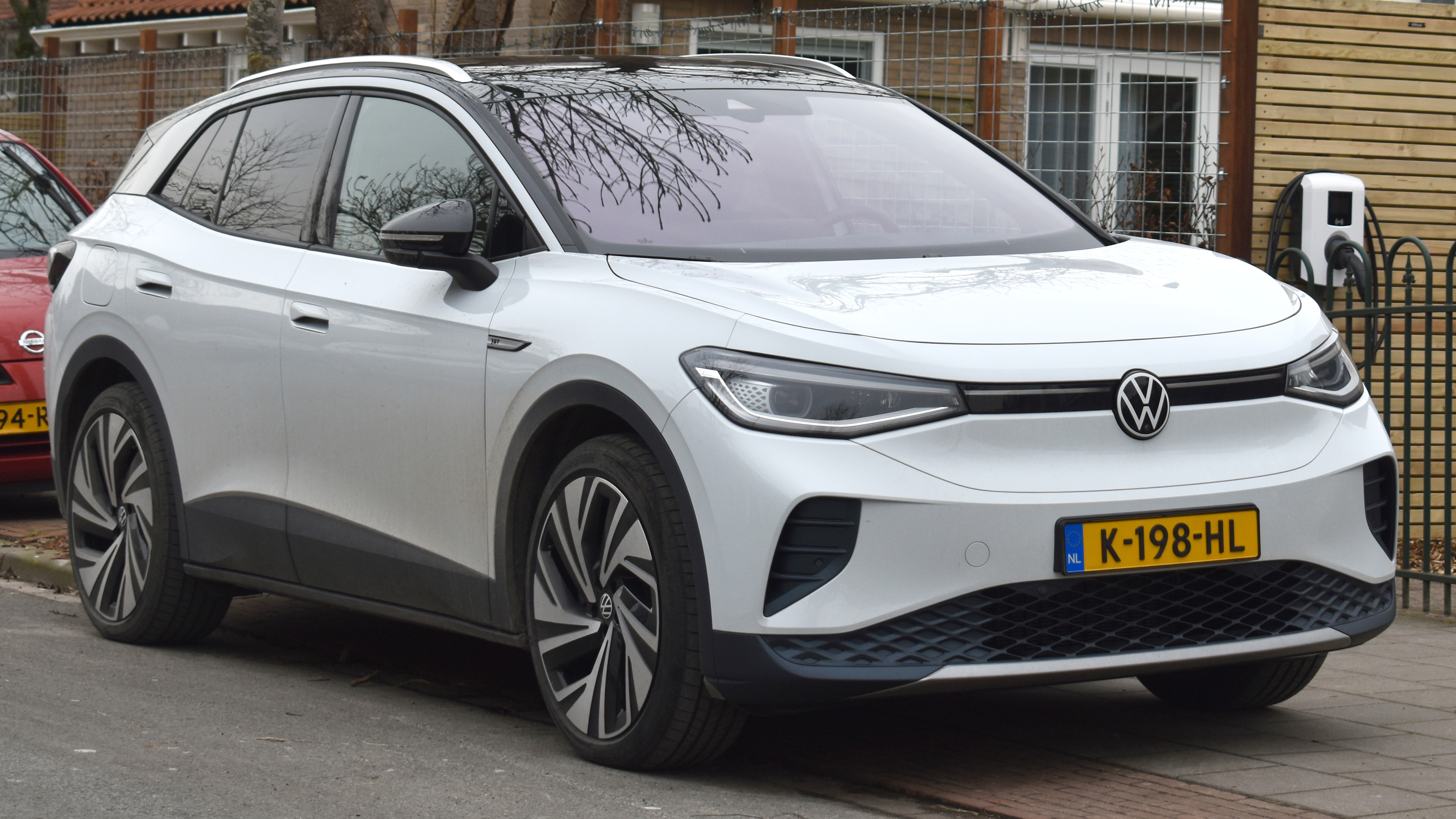
That is Volkswagen ID.3, sorry,
Volkswagen ID.4, ID.5 lumped together.
Almost 130,000 of those.
And that's way ahead of the next one.
That's the VW ID.3 at 89,000.
Then the Q4 from Audi.
And that includes the Sportback figures as well.
Then the Audi Q6 e-tron and the Sportback,
then the Skoda L-Rock, Skoda ENIAC,
VW ID.7, including the Tora,
which is possibly one of the best EVs you can buy right now.
The estate version of the VW ID.7.
Then the Buzz and the Porsche Macan and the Coupre,
born is how Volkswagen Group is shaking out
in the third quarter of the year.
Now, AI is making its way into cars in China.
We've known that for a long time.
Many of the domestic Chinese names,
like the likes of DeepSeek, are ending up in EVs.
Mercedes-Benz will ship their new CLA,
one of the EVs of the year, by the way,
with Google's conversational AI system called Gemini.
And it will ship in the United States
before the end of this year.
Now, I see lots of people being asked online on surveys,
things like that.
Do you want AI in your car?
And inevitably, there's a lot of pushback
because I don't know whether it's the comments section
of the internet is always a strange place,
or the questions offered without context.
Now, a live demo, which Mercedes-Benz have shown off,
shows that Gemini differs from the current Google Assistant
because it can handle context.
It handles follow-ups and multi-step requests
for sustained interaction rather than one-off commands.
Unlike simple voice assistants,
Gemini acts as a conversational agent
that picks up nuance and interrogates things
like Google Maps and business data
to deliver richer answers
and more useful suggestions during drives.
I cannot wait for Gemini to end up in my Polestar 2.
Apparently, it's coming.
The latest on the forums,
whether you should believe them or not,
but there's some very, very well-informed people
on the Polestar forums,
say that the Google Gemini AI is coming to Volvos first,
or at least Avolvo first.
Polestar, a close second.
Bring it on.
I pay for Google's, what is it called?
Google One, it's like 20 quid a month,
and I get two terabytes of storage
and access to all of their AI models as well.
And you know what is interesting
as someone who now works from home?
I've gone from working in a bustling,
big media organization with hundreds of people
and transitioning to a career
where essentially I sit down here on my own talking to you
and not having many people to bounce off of,
apart from maybe in the private chat of Patreon.
For the paid Patreon members,
it's called Killer What Confidential.
Come and hang out if you wanna support me on Patreon.
It's where I am these days, rather than social media.
Apart from that though,
I can go big chunks of my day not talking to someone.
And you know what, to have ideas bounce off of AI,
it is brilliant.
The three that I pay for is Microsoft Copilot,
Perplexity, and Gemini AI from Google.
And it's brilliant,
because you open the app,
you hit the little microphone button,
and you just talk to your phone.
And it's like having somebody on the other end.
So I'm like, well, I'm thinking of making a podcast,
special edition about XYZ subject.
What are the things that I should be thinking about?
And it just replies immediately,
and they're getting so good now.
And so to have that in the car,
I still feel like a bit of a numpty,
talking to my car when other people are in the car.
I must say that big caveat.
But if I'm on my own,
to be able to talk to the car in a conversational way,
and for it to have a record of our conversation,
and for me to be able to follow up,
if it says, oh, there's an EV charger,
10 miles away, for instance,
you can reply with, take me to it.
And with the current voice systems,
it would go, take me to what?
It has no memory.
And also you have to use exact words.
If you haven't used them,
and I'm sure maybe many of the listeners of this podcast
are pretty tech savvy,
you probably are up on AI.
I'm probably way behind many people.
But if you don't know,
and it sounds a little bit woo-woo,
and I why don't want AI in my car,
I totally understand it.
The press is full of a certain angle, take on AI,
but it just means that you can talk to your car
in a conversational way.
Now the automakers like to give these little examples of,
oh, my bottom's a little bit cold,
and the car will go,
no, let me heat up your bottom with the heated seats.
That's pointless, right?
Because I can reach down with my hand
and turn on the seat heater.
But for other things,
like navigating to a shop,
and I want to know the opening hours of the shop,
or other charges nearby,
those kind of things,
you can talk to your kind of conversational manner,
and Google's version is,
I mean, it might be my favorite one.
It's right up there.
It's really good.
They are doing a thing called Notebook LM,
where you can upload,
this is a digression, by the way,
a PDF of, say, a 2,000 word summary of a document,
or a book chapter,
and say, make me a podcast.
And then these two fake voices discuss the document.
And in the early days, it was a bit cringe,
but they've really improved it in a year later.
Gosh, this thing is a great way to load up a document
I want to learn from,
maybe a white paper,
or something about batteries that I don't understand,
and then give it to it, to Google,
and say, make me a 30 minute podcast,
with two people, two fake voices,
talking to each other about the subject.
It's a fascinating way to learn, you know.
Anyway, I'll stop and move on.
I think it's a great idea.
When I'm Mercedes-Benz,
bring it to the Polestar,
as soon as possible, please.
Now, Mercedes-Benz are also working on megawatt charging,
and wireless charging too.
It's called the Experimental Lada Fatsug.
I thought if I try and say it with confidence,
then I bottled it at the last minute.
The Mercedes ELF.
This is an experimental EV,
a bit like the EQV, actually a van,
but it's an experimental electric vehicle,
which carries two high-speed charging systems
and two wireless charging formats
to evaluate real-world function and limits.
The program tests hardware that is near-series production.
One high-speed interface is the megawatt charging system,
MCS, capable of 1,000 kilowatts.
It's about three to four times faster
than most of us charge on a really good day,
used to probe things like thermal management,
resilience, components,
under extreme load and high temperatures.
The ELF, which is their test vehicle,
also uses a CCS2 connector.
They've pushed about 900 kilowatts through CCS2,
so it can be done.
And that would add, you know, a full battery,
100 kilowatt hours in 10 minutes.
Tests simulate motorway and urban fast charging stops.
For low-power cable-free charging,
they've also equipped this vehicle
with two 11-kilowatt AC approaches,
contactless magnetic resonance via a ground coil,
like a wireless phone charger,
to study efficiency, height and parking tolerance,
and automated conductive charging via floor plates
that make a physical connection
and require precise positioning
for the two plates to come together.
Fascinating that Mercedes-Benz are working on this.
Let's talk about the Nissan Aria,
getting a pretty subtle facelift.
Nissan may be backing away from the Aria
in the United States,
but elsewhere, they're actually updating it
with a facelifted version.
The refreshed front drops the large black panel.
At daytime running lights adopt a curved three-stripe pattern,
and the badge looked to be backlit.
Traditional air intakes and fog lights are removed,
wheel arch plastic cladding is more pronounced,
and the car wears a new alloy wheel design,
no rear or interior images published.
The update adds Google-powered entertainment,
vehicle to load, and suspension changes.
This is rolling out in Japan for the updated Aria,
whilst others, like I say my US listeners,
having to get used to the idea
that there will be no new model year Aria.
We'll take a break, we'll come back,
and lots more to discuss, stick around.
Okay, welcome back to the podcast.
Now, Ford is ending a leasing program
that extended the federal tax credit,
$7,500 of value off its cars.
Now, the tax credit ended at the end of last month,
as you know, General Motors also abruptly
canceled a similar plan.
Basically, Ford and GM worked with the IRS
to totally legitimately buy vehicles back from dealers
through the financing businesses,
technically separate organizations of Ford and GM,
buy them back from the dealers,
therefore they can claim the tax credit,
and then you can lease them to customers
through dealers at the lower cost.
Like a preemptive down payment, if you like,
a way to pass on EVs,
also getting the federal tax credit money.
In August, the IRS issued guidance
permitting the credit if it was placed in service
after September.
GM reversed course on October the 8th
after Senators Bernie Moreno from Ohio
and John Barrasso from Wyoming
contacted the Treasury Secretary,
Scott Besant, calling this a loophole
and billking the US taxpayer.
Now, Ford and GM, neither of which are up for the fight
against the White House, have backed down on this plan.
Ford has trimmed its F-150 lightning prices
after the tax credit ended and briefly explored
extending the credit to leases
before abandoning that plan,
excluding the Workman Pro model, the STX,
now starts at $65,500,
including $2,195 destination.
That's big, isn't it?
$2,195 destination.
I'm sure that's more than it used to be at Ford.
It matches last year's base XLT.
So STX replaces XLT, renamed trim.
They've added the off-road equipment,
better vehicle, and it's the same price.
The Flash is 4,000 cheaper than last year
and the Lariat starts at $77,190,
which is $2,000 less than the current model year.
Platinum remains the same.
These cuts are smaller than some of the current lease incentives.
Cars direct reporting that certain current model year,
2025 lightnings, still have up to $11,500 of discounts
and lightning pricing has fluctuated in recent years.
Ford paused lightning production around this time last year
to catch up with supply and demand.
And finally, here's a problem that I'm not sure
why so many people got worked up on the internet about,
but boy did they today.
Tesla released an over-the-air update
that lets owners switch their in-car visualization
to a Tron style, like the movie Tron, light cycle.
It's all tied to Disney's new movie, Tron Erez,
and the update began rolling out to owners yesterday.
Many owners interpreted the change as in-car advertising.
They didn't want their car to look like a Disney movie
and they're very upset, saying it diverts attention
from things that you should be doing at Tesla,
like important software updates
and it introduces promotional content inside the vehicle.
As long as you can turn it off, what's the problem?
If Tesla had to make you watch a 30 second video
before the car would start, like a YouTube video,
then I would see the problem.
Observers asking on the internet today
whether Tesla was paid by Disney for the placement.
Yes, I would say they're not gonna go out of their way
to do this out of the kindness of their heart.
And whether this shifts the start of a broader trend
towards automakers using the big screens in our cars
for advertisements, well, I would certainly hope not.
And if one day I got inside the Polestar
and it showed me an ad that I hadn't asked for,
you'd be able to buy that car later that day.
I think it's fair to say.
I'd be moving on to a different brand.
Connected features can add value to electric cars,
but also promotional content should be opt-in only.
Not clear whether this Tron, Ares, Disney collaboration,
activation, whatever we wanna call it,
was entirely opt-in from people's anger online.
It appears that it has just sort of shown up
on their screen, which I kind of get,
but first world problems and all that.
Right, that's your podcast for today.
Thanks to our premium partners,
Porsche of the village in Cincinnati,
Audi of Cincinnati East,
and Volvo cars of Cincinnati East,
national car charging on the US mainland
and the low-high charge in Hawaii,
an octopus-electroverse.
Global public charging made simple with one app and one map.
Have a good and cinema.
And remember, there's no such thing
as a self-charging hybrid.
About this episode
U.S. EV sales have reached a record high in Q3, driven by the expiration of federal tax credits, with Tesla leading the market. Volkswagen also reported significant growth in BEV sales globally. The episode discusses Mercedes-Benz's integration of AI into their vehicles, enhancing user interaction with conversational capabilities. Additionally, the podcast covers Ford and GM's recent changes to leasing programs and the controversy surrounding Tesla's new in-car advertising feature linked to Disney's Tron. The episode is packed with insights on market trends and technological advancements in the EV space.