Automotive safety is about making cars safer for people. It includes things like seatbelts and airbags that help protect passengers in case of an accident.
Seatbelt technology is about how seatbelts are made safer and more effective in protecting people in car accidents. New designs include things like inflatable seatbelts that help cushion the impact.
Inflatable seatbelts are special seatbelts that can inflate like an airbag during a crash. This helps protect people by spreading out the force of the impact.
Autonomous vehicles are cars that can drive on their own without needing a driver. They use technology to see the road and make decisions, but they're still being improved.
Self-driving technology is what allows a car to drive itself without anyone controlling it. It uses special tools and computers to understand the road and make decisions.
Self-driving vehicles are cars that can drive themselves without needing a person to control them. They use special technology to see their surroundings and make decisions on the road.
Lidar is a technology that helps self-driving cars see their surroundings by using lasers to measure distances. It creates a 3D map of the area around the car.
Shadow mode is a way for Tesla to test their self-driving technology without fully using it. It helps the car learn from situations where accidents almost happen, but it doesn't actually take control of the car.
The Tesla Semi is an electric truck that helps businesses transport goods without using gas. It's important because it could change how trucks work, making them cheaper to run and better for the environment.
A 12 volt system is the type of electrical system used in most cars to power things like lights and electronics. In electric cars, it helps run important features like the door locks.
A jump pack is a small, portable battery that can help start your car when the battery is dead. You connect it to your car's battery to give it the power it needs to start up again.
Power brakes help you stop your car more easily by using a system that makes the brake pedal easier to push. They usually work with help from your car's engine or a small electric pump.
BMW is another German car brand that makes luxury cars and motorcycles. They are well-known for their sporty vehicles and have started using hybrid technology to make their cars more efficient.
Audi is a car brand from Germany that makes luxury cars. They are known for using advanced technology in their vehicles, including hybrid systems that help save fuel.
A light hybrid is a type of car that uses both a small electric motor and a regular gasoline engine. The electric motor helps the engine run better and use less fuel, making the car more efficient.
The front hub assembly is the part of the car that connects the wheel to the rest of the vehicle. It helps the wheel turn smoothly and is important for safe driving.
A sway bar is a part of the car that helps it stay balanced when going around corners. It connects the wheels on either side to keep the car from tipping over too much.
Car
Land Range Rovers
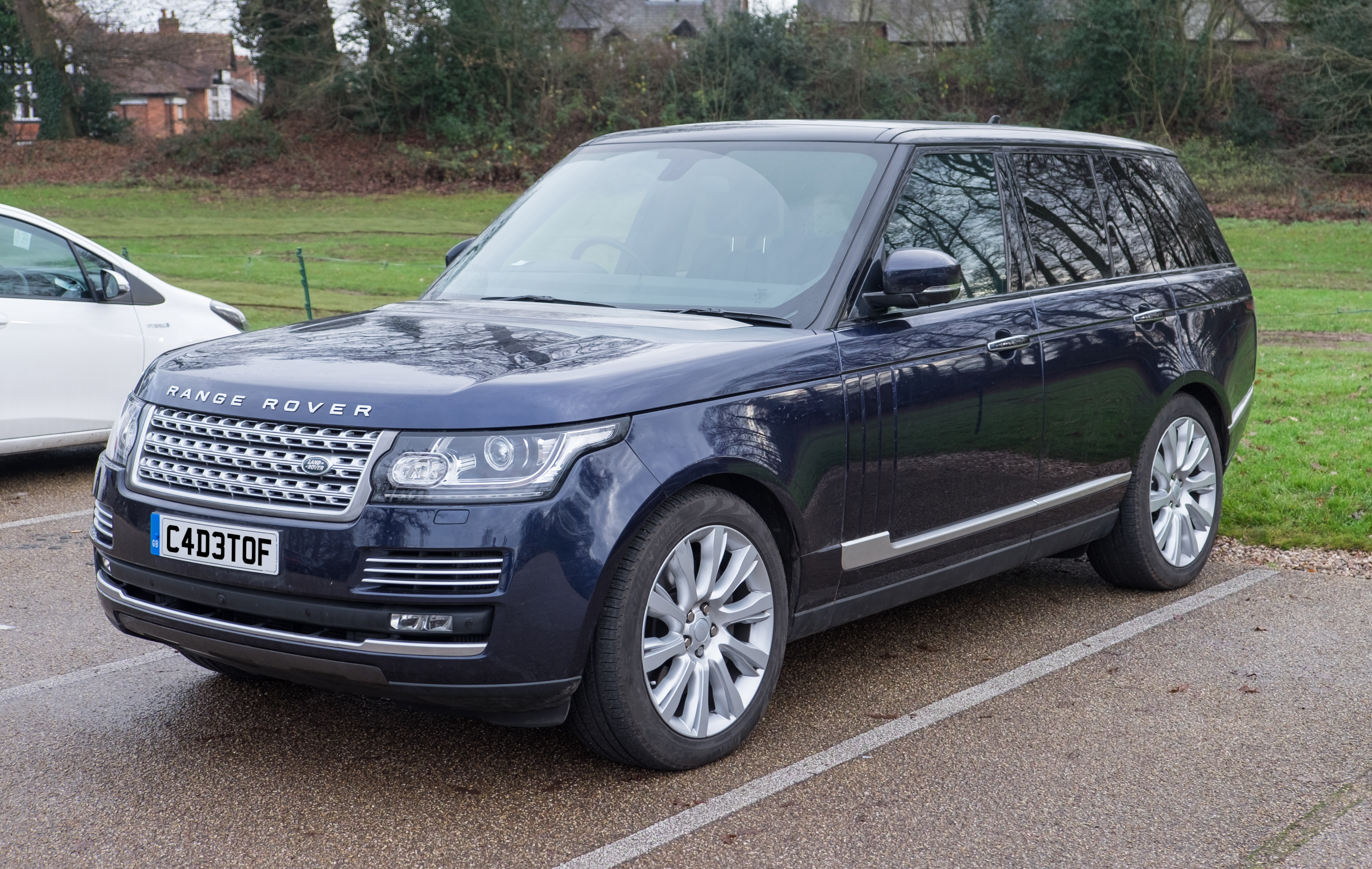
The Range Rover is a fancy SUV that can drive on rough terrain like dirt and rocks, but it also feels very nice inside. People talk about it because it's both tough and luxurious, making it a favorite for those who want to explore while enjoying comfort.
The RDX is a stylish and comfortable SUV that has lots of space inside for passengers and cargo. It's known for being reliable and has some cool tech features, which makes it a good option for people looking for a nice vehicle.
Electronic power steering helps you steer the car using electric motors instead of fluid. It can save fuel but can also have problems if the electronics fail.
Fluid flushing means completely replacing old fluids in your car with new ones. Some people think it's important, while others think it's not always needed.
An electronic tester is a small device that you can put in your brake fluid to check if it has too much water in it. It's a quick way to see if you need to change the fluid.
The RAV4 is a small SUV that's known for being very reliable and good on gas. It's a popular choice for families because it has enough space for everyone and can handle different types of roads.
The Porsche 959 is a super-fast sports car from the 1980s that was really advanced for its time. People talk about it because it was one of the best cars ever made, and it's very rare, making it special for car enthusiasts.
LIVE
W-A-T-T presents John Paul, the car doctor, all things automotive.
Have questions? Call or text 7-8-1-837-4900.
Now, here's John Paul, the car doctor.
And good Sunday morning everyone and welcome to another edition of the car doctor program
on 959WATD, your social radio station.
And if you're listening, you could be listening anywhere.
You could be listening online.
If you go to 959WATD.com, you could be asking your smart speaker to listen to WATD,
which a lot of people do.
Or you might be listening in a few days to the podcast,
which I try to post usually Sunday afternoon.
And you can find it on most podcast channels like Spotify and iTunes
and all those places where people listen to podcasts.
Jesse, you're a big podcast listener, right?
I do dabble in the podcasts.
You do?
Mhmm.
Keeps you, keeps you, gives you something to do while you're driving that kind of thing?
Yeah, yeah, yeah.
Yeah, you know what, I've like, I have days where I listen to music,
but overall I have pretty much abandoned music.
It's podcasts or audio books for the most part.
Well, because you create your own music too.
I do, I do, and podcasts.
And podcasts.
But it's mostly I just have to feed this huge brain of mine more knowledge, you know?
I, and you know, we'll get into what you learned about your truck later in the program.
Yeah, it'll be underwhelming.
Yeah, it will be.
I got, and I bring up the podcast because I got an email and it says,
I listened to your podcast, Good Information on Batteries,
lots of things I didn't previously know.
And that was by Fred Perkins, who's the Chief Engineer for the Center for Auto Safety.
And they are located in Washington, DC.
And Fred is on the line with us.
Fred, good morning and welcome to the Cardart Department.
I think I'm here.
There, there we go.
There we go.
We're all, we're back to where we should be.
Before we got going here, I mentioned that you are the Chief Engineer with the Center for Auto Safety.
Tell us what the Center for Auto Safety is and what they do.
Oh, thank you.
Center for Auto Safety is a Washington, DC based nonprofit organization dedicated to automotive safety.
We've been around for over 50 years, had a lot to do with the introduction of airbags, seatbelts,
and a lot of other commonly accepted and valuable safety technology for automotive use,
as well as for safety of pedestrians and road designs and pedestrian safety and crosswalks
and all sorts of things that can affect people's lives in or on roads.
Yeah, I think I remember years and years ago, this was probably 30 years ago,
that you folks, the typical GM seatbelt kind of the square buckle with the button in the middle of it,
you guys started to realize that if something taps the back of that buckle,
it just comes unclipped and pops open.
And not exactly a fantastic design.
Alright, that was one issue and a lot of other issues associated with seatbelts.
There's actually a lot of emphasis on seatbelt technology now with the use of automatic safety restraints,
inflatable seatbelts actually that spread the load, and adaptations for older people and younger people
and small people, large people.
So everybody's got different requirements based on their bills and based on their gender and how they're put together.
So we address all of those in our safety.
We participate in the development of legislation in the federal level.
We participate in development of rules by NHTSA, National Highway Transportation Safety Administration.
And we also participate in development of legislation or requirements at the state level.
And, you know, right now we're seeing a fair amount of information about autonomous vehicles.
You know, one of the things about autonomous vehicles that, you know, I think I like the idea,
but, you know, to me they're just not there yet, but certainly as people get older and are still reasonably healthy
and want to be mobile, an autonomous vehicle might make a lot of sense.
Also, for the most part, autonomous vehicles don't drive distracted and they don't drive impaired
and they tend to pay attention, but they're not ready yet, are they?
Oh, no, they won't be for as long as I'm alive and probably not for any of your listeners.
There's a lot of hyperbole about it and I like to think of it as a gold rush and everybody's out there trying to sell shovels.
So there's a lot of that going on.
And yes, if they were perfect, all of those things would be true, but they're far from perfect.
You might recall at the beginning of this conversation, somebody pushed the wrong button and we lost communication, right?
People are fallible, yes, machinery is fallible, too, because machinery was designed by human beings.
And so all of those things have to be taken into consideration when you're looking at putting your life in the hands of a computer-driven vehicle.
So kind of a broad brush approach, but we can get into specifics if you'd like, but there's just an awful lot of hyperbole.
There are no federal regulations concerning the quality or safety of any AV that's on the road.
And in fact, the manufacturers are very busy trying to preempt regulations at the state level and assure that there are no regulations at the federal level
because they really want to develop this technology without any regulations or whatever.
So there's some problems there.
Yeah, no. And I think, you know, I look at autonomous vehicles and I remember, and this was probably 10 years ago or so maybe
when there was an autonomous shuttle that was in Las Vegas and it was rolled out and within the first hour it got into a very minor collision.
And it got into the collision because with all the technology in this little shuttle thing, apparently it didn't have a horn.
And what happened was something backed into it. It wasn't that it drove into something, something backed into it.
And you're like, okay, here's this billion dollars worth of autonomous technology and it couldn't beep a horn to tell the truck not to back up.
Well, you've got great memory and that's true.
In fact, it had no way for a human being to recognizing the problem, lean in and honk the horn.
Everything was hidden beneath various barriers.
So it anticipated a very different environment than it actually saw in real life.
And, you know, if you think of it, there are millions of collisions that take place every year with human vehicles.
Every one of those is unanticipated.
So if you were to design a car that you want to travel around the world without any human intervention, you could only use a database that included all the accidents that you know about.
There's no database in the world that includes all the millions of collisions every year.
And in the trade, those are called edge cases because you've got the normal thoughts and then you've got the edge cases.
But there are millions of edge cases and there's no computer big enough and no program is smart enough to include all those circumstances in the design of an automatic control system.
And in fact, because there are no federal regulations, there's no way of actually testing a vehicle before it's on the road to say, is it even safe enough to pass muster with minimum safety requirements?
It's all people flying by the seat of their pants and doing their best basically to maximize stock price.
So it's a big problem.
Yeah, and the idea of, you know, if the time ever, I remember seeing a picture somewhere and I talked about traffic jams and, you know, the 300 and somewhat million cars that are in the United States and how 300 million self-driving cars aren't going to change the traffic jams at all.
They're just going to be still 300 million cars on roads that are way too crowded.
To me, in my mind, that sounds like the dumbest one ever because the car sort of drives itself until it doesn't.
So you can't relax. You still have to be paying attention and you have to be able to jump in when you need to.
So having that form of self-driving just seems dumb to me.
You know, maybe I'm simplifying a little bit.
And the other thing, you know, I remember talking to some engineer from one of the companies that were building driving technology and I said to them, how are you going to handle vehicle bullying?
And he said to me, what do you mean?
I said, well, if I see a self-driving car coming and I look at it and I'm like, well, here's a self-driving car.
I know it's going to stop if I pull out in front of it. So I'll just pull out in front of it and it will have to come to a stop.
And they kind of went, oh, well, yeah, I suppose that could happen if people were inconsiderate.
And I'm like, have you been on the road?
That's so funny. Yeah, you know, you're right.
And calling it dumb is accurate, but it's too simple because it's dumb and dangerous for a lot of the reasons you talked to us.
In fact, one of the things we're advocating for now is that cars with all this fancy computer equipment in them should be programmed to alert the public when they're being driven dangerously.
I have a, sadly, I have a friend whose two children, two of two, were killed on Cape Cod when the joint driver crossed the road and ran into them.
Oh, my.
They should, you know, there is technological capability to do something about that.
Like when the car crosses the center lane, why doesn't it flash its headlights?
Or why doesn't it do something to alert the public that there's a hazard up ahead?
Especially in Massachusetts, we have a long history starting sometime before Paul Revere of the public announcing the imminent danger of something coming at you.
We have a long established right of self-defense.
We should be able to defend ourselves against not only self-driving cars, but against conventional vehicles that are being operated directly by a human driver.
Well, and I sort of, you know, kind of, you know, how this technology can be incorrupted isn't the right word, but I was watching television the other night and we have an Amazon speaker thing.
And all of a sudden somebody, you know, somebody on the television program, their name was Alexa, and all of a sudden the speaker said, you know, wanted to go do something.
And I'm like, well, how does an autonomous vehicle sort of decide that when it hears something, it doesn't suddenly change what it's doing?
And I think even that sort of stuff is things people need to worry about before they consider what a self-driving vehicle can do and what it can't do, right?
Okay, absolutely right.
So think of this scenario where you've got a self-driving car and it responds to voice commands.
So you're sitting in the car and you're saying, okay, drive me to the local CVS and say, sure, okay, I'll do that.
And, you know, the program does that.
But now think of having that car full of high school kids, right?
You've got four kids in the car.
One of them says, drive me to the high school because I've got a physics exam.
Someone else says, the hell with that, take me to the beach.
I want to go surfing.
How does the car know what is the authentic command and how does the car know what it really should do?
So in the trade, these are called authentication issues and validation issues.
And commands should be always validated that it's coming from the right person.
And it should be authenticated that in fact the right person is in fact the person speaking into the voice command box.
So there's no requirement for that at the federal level.
There's no understanding that the AV manufacturers need to include that.
And one of the things that we've done to fill that gap is at the Center for Auto Safety,
we have developed a checklist for regulators and people like you who are in the journalism trade
to understand what some of these issues are and what technical qualities should be included in the AV development.
This is free to anybody at our website and we have to give you the coordinates if you want.
But there's a gap right now.
The manufacturers do not want to sell anybody what they have included in their safety requirements.
The government has no safety requirements and the manufacturers do not want the government to develop any safety requirements.
Even if the government did, it would take years to do that and put the rules in place.
We have a lot of experience doing that and participating in that process.
So unless the companies willingly look at a set of requirements to protect the public
and unless state legislators and city legislators look at a set of requirements they can use
as a basis for asking the companies, well, have you done this?
Have you made sure that this is going to stop the crosswalks?
There's a recent development that the Tesla, excuse me, the Waymo self-driving technology
does not respond properly to school buses stop with flashing red lights.
There have been several instances where it's just driven right by the school bus.
This is now under investigation by the government.
But for crying out loud, this should be a basic thing that manufacturers build into the computers
that are driving these vehicles on public roads.
Another interesting part of this in my mind is that this is lethal industrial technology,
these self-driving cars, potentially lethal technology.
They could run over people in a second.
Every other class of industrial machinery that can cause grievous injury or death to people
is required to be placed behind physical barriers so that people can't be injured by them.
You know, all walks past construction sites and have fences up to keep you away from the dump trucks
and the cranes and all the hazardous stuff that's going on inside.
So why is it that we're letting these vehicles run rampant through the streets
and dangering everybody without even letting people know that they have a hazard approaching them?
We should at least clearly have some kind of distinctive warning system on these cars.
A big decal that says danger AV or flashing lights or something
to let people defend themselves against faulty technology.
Yeah, it was probably 15 years ago or so.
I belong to the New England Motor Press Association.
It was probably 15 years ago we had a tech conference at MIT
and that seemed to be the kickoff of self-driving vehicles and we were talking about it.
And since then and then years following that it seems like it fell out of favor.
Now all of a sudden it seems to be rushing back.
Is it just stock market based that's causing it to rush back?
Because frankly the technology, you look at the Waymo car with the giant lidar thing on the roof
nobody wants a car that looks like that.
So the technology really hasn't changed that much yet.
What's the push now for autonomous vehicles?
Invested billions of dollars, many billions of dollars in this technology and they're looking for a return.
GM was driven out of the business because of a grievous injury.
It caused its self-driving vehicles caused in San Francisco.
Now they're trying to get back into it by saying well we're just building into cars
and people won't even know it's there the most part it'll just make life better.
Waymo has invested billions and billions of dollars and I think so this may sound a little cynical
but I think what's happening is that they are trying to put these cars in place
as cities around the country drive taxis out of business and force people to use this technology ultimately
in the same way that the internet has taken over the news business
by driving so many newspapers out of business.
In many places you've got no alternative if you want the news to open up your computer
and seeing what Google can bring to you for example.
I think one of the things that concerns me and I assume it's probably still there
Tesla in their cars I think they called it shadow mode
where you know they had their semi self-driving technology actively working
but they knew it didn't work and the thought behind it was well we'll let itself report
when the almost collisions happen.
The idea that a car company lets drivers of vehicles or owners of vehicles
become guinea pigs for the technology without telling them about it
seems like kind of a dirty trick.
How much time do we have? I could go on a lot of Tesla.
Let me just mention a couple things. Building off your broadcast last week
you were talking about batteries right?
So Tesla has electric controls on door release
so it's very slick and you know if you come up to it and it pops up
well there's a problem. This runs off of a 12 volt system
and that 12 volt system either the battery can run down to zero
or it can be damaged in a collision.
If the battery cannot provide the electricity
there's no way to get in or out of the cars in many cases.
They have emergency releases in some of the cars, not all in some of the cars
but those tend to be hidden under door maps,
under behind speaker panels in very inaccessible places
and I urge all of your listeners who own a Tesla
to open up the service manual, find out where those emergency releases are
as a minimum and make sure they understand it.
Because in many cases, several cases, I don't know how many exactly,
cars have been disabled, children have been trapped in the cars,
police have had to come and break the windows.
There was one incident recently where a Tesla went off the road,
there were 14 years inside, the batteries burst into flames,
the 12 volt battery was destroyed, the people were trapped inside the car
and they were being burned to death.
A pedestrian who happens if you're walking by
was able to save one of the people by taking a tree limb,
breaking the window and bringing the person out
and tragically stood there and watched all the other people
who were screaming for help were burned to death.
This is what Tesla brings to the party.
So unless you know where those emergency releases are
and of course, if you're in a crash and the car is on fire,
who the hell wants to go behind the speaker wire
and remove a speaker panel to find the emergency release?
Who's going to do that?
No, I think even the last generation Corvette,
and maybe the new one, I haven't really paid attention,
has electric door releases, but they do have a handle,
but the handle was sort of tucked under the driver's seat
and I'm not sure on the last generation Corvette
whether it actually opened the door or opened the hatch.
But either way, it was an electric door release
that when the battery was dead, you couldn't get into the car.
So I know from a road service perspective,
when the battery went completely dead and the car was locked,
the road service technician had to crawl under the car,
try to find the positive cable off the battery,
hook a jump pack up, and power up the car
so they could get the door to unlock.
So not a great design.
The way to do that design is to have a mechanical backup
behind the door handle so that if you open it and you pull the handle
and the electric system doesn't work,
that it engages the mechanical system that will open the door.
This is the way your power brakes work in your car.
If the power brake pump fails,
you can still press hard on the brake and it'll stop the car.
The door handles should have been designed the same way,
and in fact, that company has now said that they're
generously considering redesigning the door handles
so that people can get out of the car if it's on fire.
Generous gesture.
Well, there is a lot of information out there
about all of these safety issues,
and your organization's website is autosafety.org,
and on there you can learn things about lemon laws
and kind of an AV checklist and AV consumer bill of rights,
which I think is really quite interesting.
It has a lot of information about what people are really kind of looking for
to make sure that these vehicles as they come to market,
like you pointed out, there are two ton vehicles.
You don't want a two ton vehicle that doesn't have the ability
for a human to interact with it in the event of an emergency.
And you have your podcast where you can find more information as well.
So a lot of information in the Center for Autosafety.org is the website.
And Fred, I want to thank you for taking a little time out of your Sunday
and joining us on the Cardocta program.
John, it's a pleasure and a happy return if you want to discuss any other issues.
It sounds like we could talk about Tesla for several hours.
Let me just finish with one thought about your podcast last week.
You mentioned that you didn't know of any 48-fold systems
that are currently available in cars.
What's the exception?
That wasn't quite accurate.
The both Audi and BMW have a technology they call light hybrid
that uses a 48-fold system.
And the 48-fold system comes with a phone set of potential hazards
that maybe we can talk about now at the time.
Don't answer if you're scheduled here.
But thank you so much for having me.
Alright, thanks Fred.
Alright, take care.
It's been a pleasure.
Alright.
Why don't we take a break, pay some bills.
If you would like to join us and talk about the scariness of autonomous vehicles,
would you get in one?
Would you own one?
Would you let one take you for a ride?
Or if you have a question about your car problems,
and we have Jesse's truck to talk about
where I have some pictures of a new hub
and where did the stabilizer links go?
We can talk about that when we come back.
And any car-related question, repair question,
give us a call at 7-8-1-8-3-7-49-100.
Phone lines are open and Jesse's just kind of sitting around with nothing to do.
So give him a call.
Phone number again, 7-8-1-8-3-7-49-100.
You're watching the Car Doctor program on 959-WATD.
We'll be right back.
Even car geeks and do-it-yourselfers rely on AAA
to give them extra peace of mind on the road.
AAA offers 24-7 roadside assistance,
whether you're in your own vehicle, a friend's car, or even a rental.
Combine that with great rates of insurance,
hotel, gas and buying savings,
and discounts on 8,700 brands,
and you're covered on and off the road.
Get a special membership offer today at aaa.com slash join.
That's aaa.com slash join.
You're living miles to reach high.
You're living that river on wild.
Hi, this is Jeff Neely.
And this is Joe Clap.
And I'm Steven Davis.
We're Humble Roots.
Tune into Twilight Showcase Radio.
Hosted by Sandy Stride and Keith James.
On 959-WATD and 959-WATD.com.
And of course, visit twilightshowcase.org.
Twilight Showcase, tonight from 8 to 10 on 959-WATD.
Make an appointment Sunday morning at 11
for John Paul, the car doctor, on 959-WATD.
Now, back to the car doctor.
And welcome back to the car doctor program on 959-WATD,
our phone number is 7818374900.
Jesse sent me a couple pictures.
Now, Jesse, what year's your pickup truck?
2017.
So, it is nine years old.
You live in Massachusetts.
We have rust.
Honestly, you were saying to me that, you know,
the job that you did on this vehicle with the help of several
of your friends, and I kind of like the way you described it.
You basically held a flashlight that was hampered by rust.
And actually compared to vehicles up in the northeast,
further up in the northeast, New Hampshire, Maine,
upper state New York, your truck is actually not that rusty.
But you had a weird ABS problem where the ABS would lock up the brakes
when you were taking a turn, right?
And that was part of the problem.
Only at like really slow speeds.
So it seemed to be like less than 10 miles an hour.
And that's where ABS isn't supposed to work.
Because when you're driving slow, you don't want the ABS to work
because you'd never actually be able to come to a stop
because you'd step on the brakes and it would lock and release,
lock and release, and not actually come to a stop.
So originally, you guys replaced the wiring harness
because you thought the wiring harness was broken,
but it was not.
And you ended up having to replace the whole front hub assembly,
which is not that easy to take off.
Not when it's rusty.
I mean, like I said, I was mostly just holding the flashlight
but helping out a little bit.
But yeah, I got a buddy, Paul, and he's with an elite auto
and I think PBD that they allowed us to use a garage
because they're buddies or whatever.
And yeah, so we kind of had all the tools under disposal.
But if it wasn't rusty, I think it maybe would have taken an hour.
But instead, we were there all night, pretty much.
Yeah.
And then you found out your truck has a front sway bar
and sway bars are connected.
The sway bar's job is to help keep a vehicle level on turns.
And on low speed, sometimes things like jeeps
and Range Rovers and Land Rovers and stuff like that.
And I think Toyota, some of their off-road vehicles,
you can actually disconnect the sway bar
so the vehicle can articulate a little bit more
so it can tip and twist a little bit more.
But for the most part, they're supposed to be attached
and yours were not attached to anything.
Correct.
Yeah, both of them were missing in the front.
So that was a little concerning.
And I think I had heard them break.
One thing had to do with another because, I don't know,
maybe you could tell me, a good question for you.
So my brakes had been locking up and then twice that week,
the same week, I heard a huge pop and I'm like,
well, something broke underneath and I don't know what that was.
But I'm assuming it was the sway bar link's disconnecting and snapping.
Yeah, I don't know that the sway bar link caused,
it was any cause and effect other than it probably just broke.
I just found the timing ironic.
I was like, this has to be happening because the brakes are locking up
or something, I don't know.
Yeah, it is entirely possible they were related,
but honestly, kind of unlikely.
I think it's just, this is fairly,
the sway bar link's breaking on your pickup is fairly common.
They just rust out and break.
And again, the job is that they help keep the vehicle level on turns.
And the design that GM used, these used to be a bunch of sets of bushings
and a metal sleeve and GM decided to do it a little bit differently
and put like a plastic sleeve in the middle.
And I think honestly, the plastic collects moisture
and it tends to rust right where it gets more air to it.
And I think it's just probably a crappy design.
But like you said, those parts were fairly inexpensive.
And what's interesting is you guys used AI a little bit
to try to figure out what's wrong with this, right?
We did, yeah, it was actually pretty helpful.
At least for me where I was trying to be as much of a help as I can
because I was the only one in the room that didn't know anything about cars.
And yeah, it was kind of guided me through.
I would take pictures along the way and be like, hey, how does this look?
And it would be either tell me that it looks good
or that maybe we need to loosen up this there a little bit or tighten this there.
And it was correct about everything.
We also used it for like the torque, what do you call it?
Like the torque specs or how much?
Look at this, you're becoming a mechanic.
Yeah, some say I know everything about it.
So I'll be hosting the show going forward.
Yeah, well, that'd be good.
I could get a day off once in a while.
But no, AI is when I first started to use AI or machine learning
or whatever else you want to call it.
It was wrong way more than it was right.
And now, especially in, I think the chat GBT one tends to be,
is that the one you were using?
I was using Grock.
Grock, okay.
I find the chat one to be a little bit more accurate.
And the idea that I can have it like you did,
somebody sent me an email, they got into a car crash
and they wanted to know how much it would cost to fix it.
And they sent me some pictures.
And I used to be a vehicle damage appraiser.
I went to school for it.
And I had a pretty good idea, although I'm a little out of touch
with body shop stuff, but I had a decent idea
what it was going to cost to fix it.
But I posted all the pictures on the chat site
and it came back with a fairly good estimate.
I was surprised how it analyzed the pictures
and came up with something.
It definitely does good when you upload pictures to it
and be like, hey, tell me what I'm looking at here.
Tell me if I'm doing this right or what should this look like
or what's missing from this picture.
You know, things like that.
It does seem to be able to analyze that.
Yeah, no, it's pretty amazing stuff.
With AI or all mechanics.
But right here on this program, it's me answering car questions.
Except for the personal call-in.
I forget who it was last week that called in
and wanted to know if there was a battery inside an EDPASS transponder.
And I didn't know.
And in fact, chat told me there was.
So there you go.
So it does actually.
It's a useful tool.
It does actually do stuff.
Use it for it.
It takes over the world and kills off the human race.
Yeah, yeah.
Enjoy it.
Just kind that.
Yeah, yeah.
I think I'll call the podcast from now on
Holding the Flashlight with Jesse.
How's that sound?
That sounds good.
That sounds good, yeah.
No, I think you're on to something.
Interesting accumulation of questions that came in this week.
And one question that came in were a neighbor knocked on my door.
And that one was had to do with his boat and his boat motor.
And his boat motor wouldn't tilt.
And like many electric motors went over and banged on it with a hammer.
And it came back to life.
And so the motor that runs the pump that tilts the motor that tilts the
outboard engine up and down is broken now because we hit it with a hammer.
But prior to that, the problem is this poor guy is having a very hard time trying to find
a replacement part.
He's ordered to now and both of them are wrong.
And he just wants to be able to use his boat, which he won't be able to use for the next
week or so because the weather here is not going to be great.
But it is he's a little frustrated with trying to order the parts and he's been trying to
order parts from marine supply places locally and he's been striking out.
But sometimes you can actually fix something with a hammer or at least diagnose what the
problem is.
And it was sort of, well, do the normal stuff, see if it's got power.
And when you push the switch, does it actually work?
And it was and then tap on the motor a little bit similar to a car that won't start because
it's got a bad fuel pump and you bang on the bottom of the gas tank and it's enough to
free the fuel pump up.
All of a sudden it starts to work and it comes back to life.
Electric door motors for windows and things.
You can you can get some of those that they don't work because they sit on an angle and
moisture gets in there and rust goes to the bottom where the brushes are.
And unfortunately, these parts, especially like his, it's not a really serviceable part
and it was pretty corroded inside.
I don't think you could probably fix it anyway, but he's having a heck of a time.
And part of it might be Amazon's problem or something like that because buying parts online
sometimes can, especially car parts, can be really an issue.
Sometimes what showed in the picture isn't it or the quality is terrible.
It really can be an issue.
Somebody wrote to me and says I have a brand new, or almost brand new,
2025 Acura RDX Super Handling All-Wheel Drive.
They purchased it early in the year, last year I guess, five months and 1500 miles later
while driving all the dashboard warning lights activated and the steering locked up.
It was extremely scary situation since I could not steer and I was on a curved road.
Probably could steer it if you put enough muscle into it, but if you've ever driven a car with power steering
when the power steering doesn't work, especially electric power steering,
you need to be the incredible Hulk to turn the wheel.
The dealer confirmed the electronic power steering code failure and replaced the steering rack and pinion.
I'm surprised this occurred with the new car and am concerned about future problems.
The service department was not able to put my mind at ease.
What are your thoughts? Is this something I should be concerned about?
If I am able to sell the car, should I?
I do not want to have future problems nor do I want to worry about steering locking up in the future.
I think it's fixed.
There was an electronic power steering update, but it was software based.
So they went in and they did some software magic and it fixed it.
The idea that the dealer replaced the entire steering system tells me they went deeper into the problem
and made an updated repair that at this point isn't public as far as I know.
It's not on any of the databases I use.
So I would call the car accurately diagnosed and repaired at this point.
So I think it's okay.
This one, this is the same question I get from Honda owners probably once a month.
And it's sort of interesting because I'll just read the question.
I have a 2019 Honda pilot with 69,000 miles.
Recently at the dealer they recommended a brake fluid flush and front and rear differential fluid replacement.
I'd like to get your opinion if this is needed.
As a recent article you stated you're not a proponent of fluid flushing, sometimes called wallet flushing by the way.
This service can get expensive, especially if not needed. What are your thoughts?
I think it's a good idea to change brake fluid.
In most manufacturers now they're saying when the brake fluid gets to be three or so years old you should change it.
In Europe when you go get a MOT exam or whatever it's called, which is equivalent of our vehicle inspectionally,
much more detailed, they actually check the brake fluid for contamination.
So it's actually part of the inspection process.
Maybe it has something to do with driving on the auto bonnet 100 miles an hour
and you want to have brake fluid that's not going to boil when it gets really hot.
Also brake fluid with moisture and can contaminate the anti-lock brake system,
all the little valves and stuff inside of there.
So changing brake fluid every three to five years I think is a good idea.
One of our regular listeners said you've mentioned in the past taking like a turkey baster
and sucking the brake fluid out and putting new brake fluid in.
That's something you do periodically, it doesn't completely flush out the system,
but if you've ever taken the cap off a master cylinder and stepped on the brakes
you notice the fluid squirts up inside of it so it does circulate the fluid around.
So those of you that have been around since the beginning of time, like I have,
might remember Brad Sears.
Brad Sears had a TV show on PBS, Last Chance Garage,
and he was a big proponent of sucking out some brake fluid and putting in new brake fluid
20 some odd years ago because over time and you do it sort of like when you do oil changes.
So you suck out a few ounces of brake fluid, put in a few more ounces of brake fluid
and over time all that brake fluid gets kind of recycled in there and gets replaced.
Flushing out completely where you use like a brake fluid bleeder and force out the new brake fluid
and put in a new brake fluid, that's the better, more complete way to do it
and you do it once and then you come back in three, four, five years and do it again.
So Honda and Acura for instance recommend brake fluid changes at three years.
Subaru recommends brake fluid changes at three years.
Some other manufacturers never mention it. They just say look at the brake fluid and make sure it's full.
So it kind of depends but our engineering studies at AAA show that brake fluid will start to get
moisture contamination and you can test it two ways.
You can either take a electronic tester that sits, you put it in the brake fluid and it will tell
whether there's moisture in it or you can take sort of pH dip strips.
Some people think the strips are more accurate. Some people think the electronic tester
which is only $20 I think is more accurate.
Either way I think either of them are going to give you some indication if the brake fluid needs to be changed.
So changing brake fluid, good idea.
The rear differential service on a Honda Pilot comes up as a reminder, maintenance reminder number six.
I'm a big believer in following the maintenance recommendations for the electronic reminder on
Honda and Acura vehicles and some others. I think they're pretty accurate.
So they say when the maintenance reminder six comes up, change the differential fluid.
Wait till it comes up. The front differential, it doesn't have one.
It has a trans axle. It's all part of the transmission.
So you can't just change front differential fluid. You change the transmission fluid.
Now maybe the dealer said it that way. I don't think so.
I don't know what they're doing if they're saying we're going to change your front differential fluid.
You can't. So I'm not sure what they're trying to sell.
So what I'm trying to tell this person is pay attention to what the manufacturer's on board maintenance
reminder says and follow that look in the owner's manual.
When I answer car questions a lot of times, you know, I'll look at all data and Mitchell and motors.
I don't use motors as much because I honestly, I forget I have it sometimes.
But I've been using all data since it came out, since it was introduced.
And I'm just most comfortable with that. But sometimes I'll go back to the owner's manual.
I'll look at the owner's manual and just kind of go, you know, what do they say there?
You know, the owner's manual was written by the people that built the vehicle.
And yes, some of it's and this is where some people would disagree with me.
You know, sometimes they'll say, well, the owner's manual recommends an oil change at 10,000 miles.
That's crazy because 10,000 miles you could have, you know, a lot of different things go wrong.
They're just saying it to say, look at how low our maintenance costs are.
Maybe there's something to that. But still, you can't get in trouble if you follow the owner's manual.
You know, you're doing what the vehicle says to do. So there you go.
One more question. And this is kind of a simple one, I think.
This person owns a 2010 Toyota RAV4. It creaks a bit, but it's dependable as it is old.
But the driver's side sun visor is beginning to droop, perhaps an inch or two from normal.
They said they tried some online fixes. Maybe they use chat or Gronk or one of those.
And I'm uncertain as to purchasing another one.
As I'm somewhat concerned, I could do damage to the clips or assembly already on in the roof on dismantling the original visor is there not
is not there something really simple. I have no idea what that means.
That I could do to increase the friction point, rough it up a bit so it doesn't slip.
I had the same problem on another Toyota. The dealer simply replaced it in its entirety.
That was $100 back in 2014. So I think it'd probably be close to $200 today.
Yeah, it's usually the the sun visor itself is not going to be a lot you can do.
I've seen people put pins and hooks and all kinds of goofy things on to try to fix it.
You have a factory new Toyota part when I looked on lines like 80 bucks.
I saw a non Toyota part. They only come in a minimal amount of colors.
So you buy the non Toyota part for $25. There's only really a couple of screws that hold it in place.
So for $25 on Amazon or eBay, I'd give the non original equipment part a try if it doesn't work.
Like it doesn't look right or doesn't seem like it fits right. You can always return it.
I got to say Amazon does make it pretty easy to do that sort of stuff.
Why don't we take another break if you would like to join us our phone number is 7818374900
and it looks like where I am it is going to pour in about 10 minutes.
So hopefully we'll still be here when you come when we come back from the break.
You'll listen to the car doctor program at 959 WATD. We'll be right back.
We have a special membership offer today at aaa.com slash join.
That's aaa.com slash join.
This Sunday the Patriots get ready to host the Houston Texans in a divisional round at Gillette Stadium in Foxboro.
Listen Sunday as the Bethany Builders podcast crew broadcast live from crazy axes at Gillette to preview the Patriots matchup.
Listen to Sophia Bethany, Chris Bethany, Steve Burton and Christian Fourier.
The Bethany Builders podcast crew at Gillette Stadium live this Sunday from 1215 to 1 on 959 WATD.
Make an appointment Sunday morning at 11 for John Paul the car doctor on 959 WATD.
Now back to the car doctor.
Welcome back to the car doctor program on 959 WATD. It is getting dark and stormy.
It looks like, you know, I know people think, you know, I'm in the sunshine state in Florida,
but it's not so sunshiny right now. It looks like nighttime out there.
Let's talk to Jim. Jim, good morning.
Good morning, John. I have a little update on my ABS problems on my daughter's two 2014 Centra.
My good friend Alan gives me access to his heated garage, which I really appreciate.
And I tried the scanner on it and worked on it for about an hour trying to figure out how to use it, went to chat.
They tell me what to do and it was the wrong screen and I tell them this is a screen that's coming up.
And they say, oh, you're right. That's not what we should be seeing and through all that.
Now you just bought a new scanner, right? Yes, yes.
What was the one you bought? I'll tell. I'll tell. Okay.
And I'd sent them an email asking if this would work on my car and they said yes, it would.
And Alan said, well, Steve, there's a helpline over there. You can call them and I was very skeptical,
but I went online and looked and they actually had one. I called them. They were very great.
I got right on. They told me what to do and all the screens they kept telling me to go to.
It didn't say to work on it. And finally you just said, bleed the brakes manually.
And I told them what I saw and he says, oh, no, you just have to bleed the brakes normally again.
So we bled the brakes a third, a seventh, eighth time now. This is like the third time I've been bleeding them.
I was going to say you've been bleeding brakes since before Christmas.
Yes, you're right. And it still is the same issue.
So I'm thinking maybe it's just an effective master cylinder again, maybe.
Yeah. No, I regret having to try and do that again, but I don't know if I have any other options.
No, it sounds like from everything you said, including the experts at Autel.
Yeah, like I said, I thought that I thought from the very beginning that was just kind of a manual bleeding process.
Nothing specific about doing it. Just kind of do it the old fashioned way.
And yeah, maybe you just got maybe you just got a bad master cylinder.
Well, I don't know what I'll get over the heated garage again, but it's really nice working over there.
You know, it is having a having a friend with the garage is one of the one of the nicer things, I think.
Yeah, it's, you know, in my in my lifetime, I never had a garage at my house, but you know, I worked in a garage.
So, you know, there was always the end of the day where you could kind of do your own stuff.
And then when I went to work at AAA until 2017 or 18, you know, we had the AAA auto diagnostic center.
So it was a two bay garage with lifts, and we didn't have we didn't have a ton of tools.
And more importantly, we didn't have we didn't have much for supplies.
So if I was going to do something at night at the end of the day, I just had to make sure I brought my tools that I wanted to use as well as, you know,
if I knew I was going to drop nuts and bolts and things like that.
And then when AAA moved the headquarters building down in Providence, Rhode Island, I lost access to that.
I still had a friend that had a little used car lot and he had a little two bay shop didn't have much for lifts.
He had just the low lift style ones that would only lift up a couple feet.
But there was enough stuff in there or tools in there where I could get my job, get what I wanted to get done.
And I miss all of those accesses, you know, access points to be able to do all that because it is often nice where you can get into a garage is heated
and has enough light in it where you can see and be able to work on your car and not have to worry about weather conditions and things like that.
So indeed one quick little update on the transponders.
I got a letter from easy pass saying that my transponder wasn't working.
Obviously the battery was dead.
And I happened to be in a car where I forgot the transponder.
I'd given it to my brother and I took another car and I went to, I guess they're not related, but I called easy pass trying to pay it online.
And I couldn't find it anywhere and I finally called them directly.
And they informed me that even though I don't have the easy pass in the car as long as the car is registered for that easy pass transponder, you don't even need the easy pass.
I went through, this was through the 95 tolls in New Hampshire.
It may not work in every state, but a lot of the states, even if you don't have the easy pass in the physical car, as long as the license plate, they take a picture of it.
And they put it on your transponder bill.
Put it on your transponder. Oh, okay.
And that's where you said to me you let your transponder to your brother.
What sometimes can happen is, and this happened to somebody I know, they let their transponder to somebody and the person ended up, because the plate wasn't registered to the transponder, it kicked it out.
But yet, the person that borrowed the transponder got one of the bills in the mail, but oddly, out of the guy who owned the transponder, the money came out of his account.
So it's like, well, they charge me for it, but then they charge the guy in the car for it too.
Wow.
It was only like $2, so it wasn't terrible, but the lesson to be learned there is, if you do lend your transponder to somebody, go online and put their plate number in, even if you just put it in temporarily.
I rented a car and did that, but then I had to make sure I took it off the transponder.
Oh, yeah.
Because I didn't want to get bills.
That's right.
That's right.
Yeah.
Just like somebody said, if you ship a car somewhere, wrap it in 19 layers of aluminum foil and hide it in the car so it doesn't, when it's on a transport truck, doesn't hit every thing that it goes under.
One last thing to get time.
You're all tell, all data.
Is there a consumer friendly that we can, I mean, I looked it up.
I thought it was $300 a month to use it or $250.
Well, it is the pro version.
Yeah.
But you can get, you can get a single use version for one car.
And I think it's under $100 a year maybe.
But look up all data, look up all data DIY.
And what it does is it focuses on one.
And I just got an email the other day and I haven't read into it enough, but there's a company that's doing sort of even less than that $30 a year.
And they claim they have some pretty good information in it too.
So I'll do a little bit more research and figure out what that one is.
Awesome.
Okay.
Thanks.
Yep.
Thanks for watching.
I appreciate your help.
Take care.
Thanks for calling in.
Let us give us that update on those squishy brakes still.
So yeah, sometimes that's just it.
Sometimes it's just weird, you know, you want to give your local mechanic a gift.
If you go into a shop, put the locking lug nut key in the cup holder so they can find it so they don't have to go looking for it.
They'll love you for that.
That music means we need to go until next week.
Make sure your weary seatbelts drive safely.
Be good to your car.
I want to thank Fred Perkins for calling in from the auto safety group and until and if you do see an emergency vehicle by the side of the road, slow down or move over.
It saves lives.
Talk to you all next week.
Bye-bye.
About this episode
A deep dive into the safety concerns surrounding autonomous vehicles with Fred Perkins, Chief Engineer at the Center for Auto Safety. The discussion highlights the current limitations of autonomous technology, including the lack of federal regulations and the potential dangers posed by self-driving cars. Perkins emphasizes the importance of human oversight and the need for better safety features in these vehicles. The episode also touches on personal anecdotes and the complexities of integrating technology into everyday driving experiences.
In this episode we are talking with Fred Perkins the chief engineer at the Center for Auto Safety (www.autosafety.org) about self driving cars, are they ready for prime time?