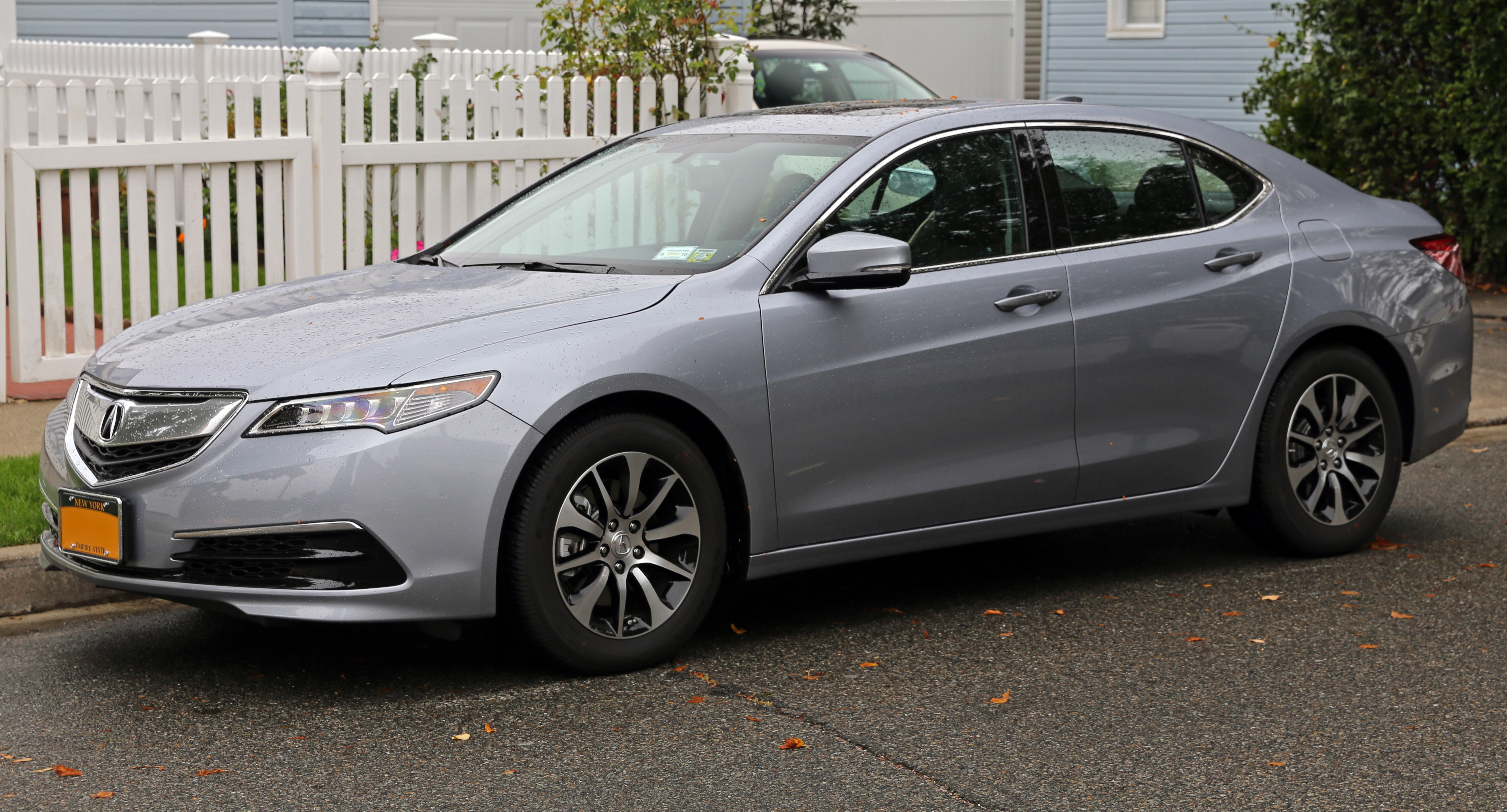
The 2021 Acura TLX is a fancy car that can change gears automatically to help it drive smoothly and save gas. It has many gears so it can go fast or slow efficiently.
Gearing is how a car changes the way its engine power is used to make the car go faster or slower. Different gears help the car use fuel better or go faster.
A 10-speed automatic transmission is a type of car gearbox that can change through ten different gears automatically. This helps the car run better and use less fuel.
An electric vehicle is a car that runs on electricity stored in batteries instead of gas. It doesn't make smoke and can be cheaper to drive in some ways.
The battery pack is like a big rechargeable battery that gives power to the electric car so it can move. How far the car can go depends on how big and good the battery is.
This test checks how far an electric car can go on the highway before the battery runs out. It helps people know what to expect when driving long distances.
Jump starting means using another car's battery or a special device to help start your car when its battery is dead. If done wrong, it can hurt the car's computer and electronics.
A battery boost pack is a small, portable battery that can help start your car if the battery is dead. It uses a special type of battery called lithium, which lasts a long time but needs to be charged every few months.
A lithium ion battery is a type of battery that stores energy to power devices like jump boxes. They work well but need to be taken care of so they don’t get damaged or catch fire.
The Honda CR-V is a small SUV that many people like because it doesn’t need some parts changed as often, like the timing chain inside the engine instead of a belt. This means it can be easier and cheaper to take care of over time.
The Honda Pilot is a bigger SUV that can fit a family comfortably. Older models need some parts inside the engine changed every so often to keep the car running well, so it’s good to know about this before buying one.
The timing belt is like a rubber band inside your car's engine that helps parts move together at the right time. It needs to be changed every so often, usually around 60,000 miles, to keep your car running safely.
The timing chain is a metal chain inside the engine that helps parts move together at the right time. It's supposed to last a long time without needing to be changed, but if it breaks, fixing it can be a big job.
Service records are papers or logs that show what work has been done on a car, like oil changes or fixing parts. They help you know if the car has been taken care of properly.
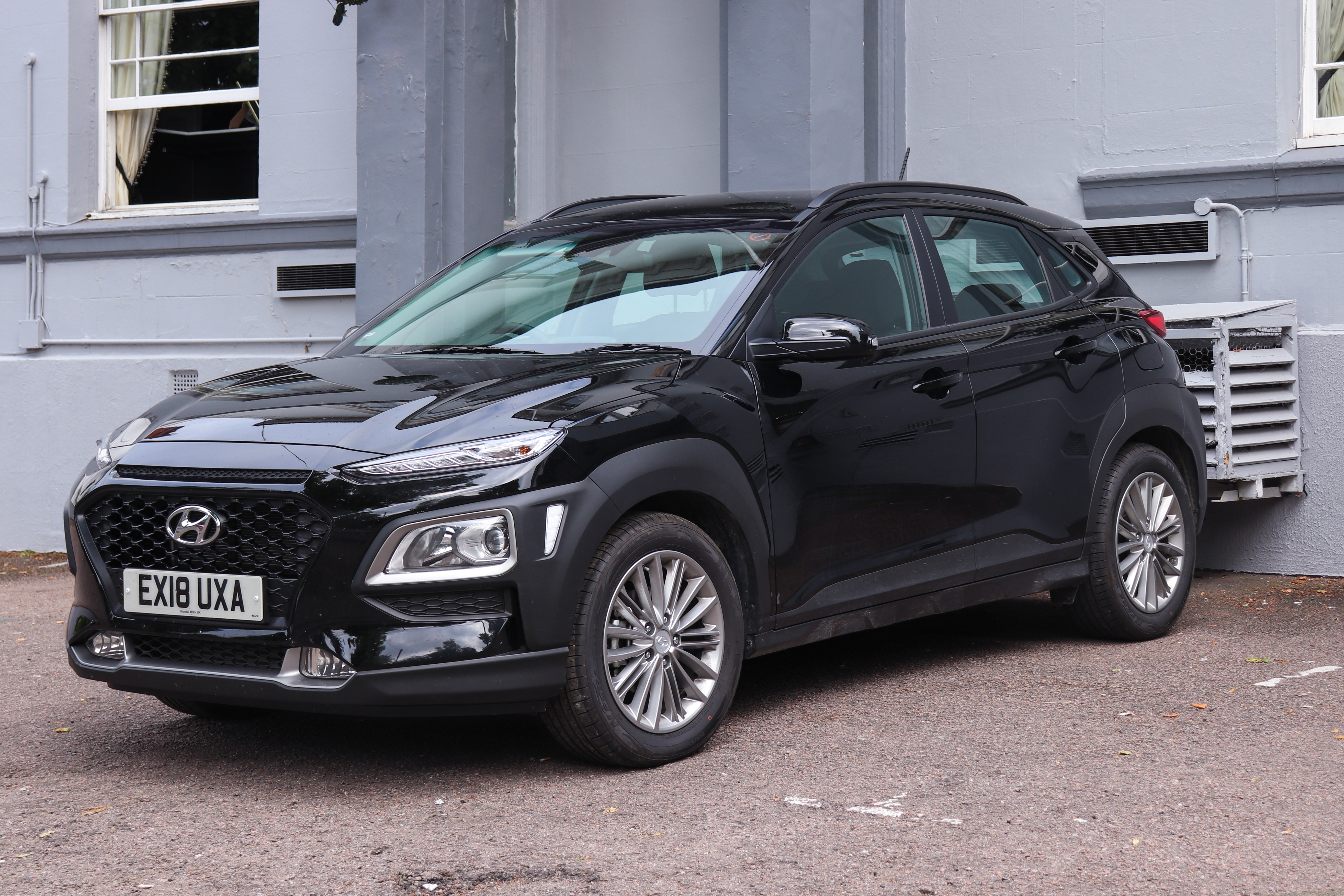
The 2021 Hyundai Kona Electric is a small electric SUV that uses a battery for power instead of gas. It can recover energy when slowing down to help the battery last longer.
Regenerative braking helps electric cars save energy when you slow down by turning the motor into a generator that charges the battery. It also means you don't use the regular brakes as much.
GM is a big car company in the US that makes electric cars. Some of their cars let you control how much the car slows down by how hard you press the brake.
The Honda Ridgeline is a pickup truck that drives more like a car, making it easier and more comfortable to use every day. It’s good if you want a truck but don’t need something too rough or big.
The Honda Passport is a bigger SUV that can handle rough roads and is good for families or people who like outdoor activities. It’s made by Honda, so it’s usually dependable and easy to take care of.
The Ford Maverick hybrid is a small truck that uses both gas and electricity to save fuel. It's smaller than most trucks and good for smaller families.
The Hyundai Ioniq 5 is a new kind of car that runs on electricity instead of gas. It’s roomy and has cool features, making it a good choice for people who want a clean and quiet ride.
The Toyota RAV4 is a small SUV that sits higher off the ground than regular cars, which some people like for better views while driving. It’s reliable and good for families or people who want extra space.
The Toyota Camry is a popular car that’s comfortable and easy to drive. It’s not very tall like some SUVs, so some people might find it too low, but it’s good if you want a reliable and affordable car.
The Toyota Crown is a fancy car that’s not too low like some cars and not too tall like some SUVs. It’s comfortable and has nice features for people who want a smooth and stylish ride.
The Chevrolet Corvette is a fast and sporty car that looks really cool. People like to drive it when they want something fun and exciting, even just for quick trips.
LIVE
Before we get started, we want to let you know that the Talking Cars team is going to
be in New York City for this year's New York Auto Show and we want to meet up with you,
our fans of the podcast.
We'll be at the Canucks Sports Bar in Manhattan on Wednesday, April 1st at 5pm.
Come in for a bite.
We'll be talking about what we saw at the show and handing out some groovy Consumer
Reports swag.
So, if you're in the neighborhood, stop by because we'd love to talk cars with you.
And now on to the episode.
Get their questions to TalkingCars at iCloud.com and you'll see that written on the screen,
right?
And they've sent those questions and some of them have even sent video questions and
that means they're not only going to get their questions answered by two and a half experts,
but they're also going to get some swag sent to them.
And yes, we're a non-profit, but we have a small swag budget and we're going to send
swag to anyone, TalkingCars swag, CR swag, just like Mike is modeling right there,
his CR Auto Test Center, and you can go around impersonating us.
But we're the real thing, so we're going to answer your questions.
Our first one is Daniel from Maryland.
Daniel sent us a video, so take it away.
A question about fuel mileage and maybe we could do some myth-busting here.
Previously, you guys have said that it has proven that going 55 miles an hour on the
highway is more efficient than 65 or 75.
Now, back in the day, cars with four or five-speed transmissions, you could easily get to top
gear by 55 miles an hour.
My 2021 Acura TLX, which I absolutely love, I mean, look at this thing, it doesn't let
itself get into 10th gear to its top gear until 62 miles an hour.
So would you still say that 55 in 9th is more efficient than, say, 65 in 10th?
Thanks.
So that's a really great question.
This is Daniel's gut is sort of inner Hagar.
He does not want to drive 55, and he wants to know, does he have an excuse?
He's actually being efficient.
Now, I feel like there's more to it than just how the transmission is geared, right?
You're definitely right.
Yes.
There's a lot to it.
And as someone who tests fuel economy, I do feel like I can answer this one.
No matter what your gearing is, power, any of that kind of stuff, basically the faster
you go, you're just fighting air.
You're moving air, and air is really heavy.
Anyone who's rolled the window down on the highway, stick your hand out the window,
and your arm gets blown back, that's that wind resistance.
So the faster you go, and it's not linear.
It's not like you go a little faster, it gets a little worse.
You go a little faster, it gets a lot worse.
You go a little faster, it gets a lot worse yet again.
So basically, speed is the thing that is your downfall here, speed and wind resistance.
But that's not all, like you mentioned, gearing.
Cars do have more than three and four speeds now.
Some of these automatics have 10 speeds, and you can't even access them until certain
speeds are reached.
But that's all sort of situational.
You might be going that fast, so now they have gearing to give you the best possible
fuel economy at that speed, but it still might not be the best possible fuel economy.
And then it goes even beyond that, where the computer that controls the engine can
actually change how long the fuel injector is on, so you could have less RPM but more
fuel being used.
So it's not just a sort of straightforward answer, other than if you want to get the
best fuel economy, slow down and be smooth and avoid unnecessary pedal inputs, both
gas and brake.
And I guess one of the reasons why cars are designed to be more efficient at higher speeds
is to fight that wind resistance.
That's certainly part of it.
You have the weight of the vehicle, you have gearing, you have tires, you have all this
different stuff, plus then just traffic around it, plus how people drive.
Let's be honest, even if it is a 55-mph speed limit, most people aren't doing that.
So they still build these cars for the environment that they live in.
And if it's 55, 65, if you're in Texas and it's 80, I bet traffic is probably doing
10 or 15 over.
Yep.
So they know that when they build the vehicle.
So they're putting these systems in place to sort of help us out in the way we use them.
But you're still fighting that friction regardless of, you know, you could be in gear 10, one
of these 10 speeds, but if you're halfway down on the throttle, the fuel injectors are
still spraying a lot of fuel, even though it's the best possible gear.
If you're on the throttle, you're injecting fuel in the engine.
So if you want to get the best fuel economy, stay off the throttle.
Or only drive downhill.
That is helpful, yes.
Now what about EVs?
I was just going to say that as EVs, I mean, they eat up range when you're at the highway
speeds there.
They do.
So really they're most efficient for the battery pack when you're going at slow speeds around
the city.
Yeah, about 30, 35 seems to be the sweet spot.
Because even when you're up at 55 in an EV, you're pushing the battery, the electrons
against that friction and that wind resistance just to keep at speed.
Correct.
And when we do our electric vehicle highway range test, we travel at 70.
And I would love to do it at like 80, 85, but the lawyers won't let us.
I've already asked.
So that they, you know, we're set to that 70 because it is pretty reasonable.
That's kind of like what traffic does, you know, a little bit above the speed limit probably.
But yeah, you're just, you're exchanging whether it's fuel or your electrons to fight
this wind force.
So yes, low down.
So sorry, Daniel, you can't say, well, no, no, I'm just being fuel efficient by driving
faster.
Okay, Rick from Chesapeake, Virginia has a question.
Recently, I've read that jump starting a car with cables has the potential of damaging
in car electronics with the dead battery.
Is there any truth to this?
Would you recommend using a battery boost pack with a lithium battery that can be hooked
up directly to the battery?
The downside is you have to keep the battery up to charge every six months.
The upside is I can keep it in the glove box and never have to worry about inability to
reach my battery cables.
I recently had my battery go bad and the jumper cables in the spare tire well were impossible
for me to get to.
Which would you recommend?
And I think we've all sort of been there when you need to get out either the spare tire,
the kit, and there's everything is in the trunk and you're unpacking the car to get
everything out.
Or the car is backed in and you think, oh, the car is dead and maybe I can jump it from
opening the hood and then the battery is buried beneath the trunk and we can't get to it.
Exactly.
We're especially seeing that with hybrids and even EVs with starter batteries too.
Batteries, they were complex, they got kind of standardized and now everything's all over
the place again.
Yeah, and I mean, Rick's correct here that these jump boxes are nice and they do have
some technology built in that if you were to connect them backwards, meaning the positive
to negative, negative to positive, there's electronics in the box that help protect
the vehicle.
You can absolutely damage both vehicles if you jump start them incorrectly.
So if you're not a mechanic, if you're not mechanically inclined, if you're not comfortable
with that, a jump box is definitely the safer solution because of those built-in little
bits of basically computer, like there's a computer circuit in there that stops you
from causing damage and things like that.
And then it is nice because you don't need to flag down a stranger in a parking lot to
have them come over and jump start your vehicle, you're just for self-sufficient.
As long as again, you keep that jump box charged up.
And also make sure that you, if you have one that's a lithium ion battery, that's a big
lithium ion battery.
So if it starts to like bulge or look kind of weird, keep an eye on it, especially if
it's sitting outside for long periods of time, if you're in a place with huge temperature
changes that can put some stress on it.
So just make sure you, you know, because no one wants a lithium ion battery fire.
Yeah, they have a good draft.
But that is a good point.
Like what, you know, it gets cold and all these heat cycles.
If you don't maintain that lithium ion battery, it's useless.
Correct.
And some of the jump boxes, you know, people like we have them in the shop here, we
live and plugged in basically all the time because a lot of times we need to use them.
But that's not great for me there, to be honest.
It's like always charging your EV to 100%.
It's not really what you want to do.
It's just sort of what we do when it happens in shops.
You I mean, that's kind of mechanic move.
You always kind of have it ready because well, that's a kind of a lot of mental
load to always be thinking about, hey, I should keep my lithium
ion booster battery charge from 20% to 80% at all times.
And some of them have the same sort of computerization in there to try and optimize it a bit.
But I mean, also with the prices of these things, I mean, I have some battery powered,
I have a battery powered snowblower and I was thinking about, oh, jeez,
those replacement battery in that thing is like 300 bucks.
Better off buying another snowblower.
I know. Do I leave it in the, you know, do I leave it in the shed?
Do I bring it indoors?
You know, if they're cold, you're, you know, if you're cold, they're cold.
Bring them inside.
Yeah. So, you know, just another thing to keep keep an eye on.
But yeah, so basically good idea.
Yeah, use a jump box, use a jump box and you can use it for other things too.
It depends. So so part of the the smart circuits in there,
they actually don't let power sort of come out of the leads
until it detects some amount of power.
So one downside is that if your battery is like totally dead zero volts,
it might not actually power it on because of all the smart electronics.
You know, you don't want to have two hot leads where you can like
smack them together and make sparks.
You know, all that kind of looks cool. It's not safe.
So that's where those electronics are built in.
So I knew what you were like as a kid, I guess.
Well, yeah, exactly.
But the other thing is also if you're if you're not entirely mechanically
or even if you're just afraid it's not going to a lot of credit cards,
a lot of insurance companies come with roadside assistance plans.
Always great to have.
So just call someone who has, you know, who can do it too.
So or if you sign up for something like AAA.
All right. Great question.
So Scott from Melrose, Massachusetts, almost bought a condo in Melrose.
I got a couple of friends there.
Anyhow, Scott says, why don't more cars have timing chains
as opposed to timing belts like Honda CRVs?
I'm looking to replace my 2007 Honda Pilot LX.
And one of my concerns with high mileage slash low price
Honda pilots was the expense of a timing belt and water pump replacement.
Our second car is a 2014 CRV LX and recently topped 100,000 miles,
which reminded me that CRVs have timing chains.
I think we've all owned cars with belts and chains
and had our own experiences with pros and cons here, right?
I definitely, from my experience, owning older Audi's.
Some have timing belts and some with timing chains.
I would much rather do that timing belt service every 60,000 miles
than have a timing chain that's supposed to be lifetime.
And then at 140,000 miles, you have to replace it anyway.
You hear that?
Relatively, yeah. Oh, no.
You hear that tensioner and a timing chain replacement.
That is a big, big job.
That's a lot of hours to replace.
Whereas a timing belt, it's like, you know, it is expensive.
I'm not saying, you know, it's something you have to keep in mind
every 60,000 or whatever miles.
But in my experience, it's I would rather keep up with that
maintenance than have to deal with a timing chain failing.
Yeah, I would definitely rather plan for the maintenance than have a surprise.
And the chains, you know, that good for life thing
is a really interesting point to bring up because you don't know what that number is.
It's sort of a clock that's always counting down.
And we could both have the same car,
but we're going to have a different experience as to when that happens.
And like you say, those chains are not meant to be service
because they're quote unquote good for life.
So it is a bigger job to replace those.
And I absolutely, whether I'm paying for it or doing it myself,
I would rather do a belt than a chain.
So much easier.
But as someone who's bought older cars
with with timing belts, that's kind of one of those things.
I feel you, Scott, in terms of like when you don't know how the car has been maintained,
if you're not buying it from the original owner, who has the the logbook
and or there's the sticker that says, you know, timing belt replaced,
you just kind of have to plan for that because you've you've you've you've got
that ticking time bomb, sometimes quite literally under the under, you know,
under the hood.
So yeah, it is one of these things where if you're buying a car
with 100,000 miles on it and it's just running based on luck
and you don't know that's where those those service records come in.
And I will add that from this is coming from a former dealership technician.
You don't have to go to the dealership to have a timing belt done.
They're pretty straightforward at this point.
And there's a lot of independence out there that can totally handle it.
And you could probably get it done for about half price as compared to
like your OE dealer, so you can certainly save some money.
And if you are up against a chain replacement, you can still have that
done, you know, in sort of in the aftermarket independent shop.
Just make sure that they're comfortable with it.
And maybe that they've done that before on your particular engine.
I don't you don't want it to be that technician's first time, you know,
of doing that job on your car.
You don't want to pay for them to learn.
Totally. In some cases, that chain is on the back of the motor.
You have to drop the motor. Yes. Yeah.
You have to drop the motor, replace everything, put the motor back in.
Yeah, separate the engine from the transmission.
There's like four chains back there.
It's a nightmare. Yeah.
And if you've never done that, you don't want that.
You don't want to do that job.
So you want to find a specialist for one of those.
Yeah, it's one of those things where the part itself is, you know,
under a hundred bucks and the labor is out of the world. Yes.
All right. So Henry from Friendship Heights, Maryland, where I have
never almost bought a condo, asks, we have a 2021 Kona electric.
I almost always use regenerative braking and my wife mostly doesn't.
If regen braking is enabled, do the brake lights come on
when the driver takes their foot off the accelerator?
Well, we had this question ourselves
and we started getting in more EVs with regen.
So, you know, well, if you go to cr.org, you know, you can find
or even just Google, you know, about regen braking
and brake lights and consumer reports, you'll find our story.
And we've got video and I'm sure we're going to show it on the screen
and everything else. But do you want to talk a little about?
Yeah, from what I understand, it's basically related to the amount of G's
that the car is pulling at the time that it's stopping, right?
In some cases, I mean, I think it varies.
That's a car as well. Yeah.
So we when we sort of when this was brought to our attention,
we said, we have a bunch of EVs. Let's go check it out.
So Joe and I took 24 cars that we had at the time and over.
We built a rig to figure out when the brake lights come on,
which was just a mirror suction cup to the glass.
You could see it in the rear view mirror.
We had cameras and stuff, but we're like, let's go low tech
and use a couple of mirrors and it worked.
We found that at least we related to G force, the G at which you're slowing down.
But whether it's actually related to a pedal position,
you have various car to car to car, but you could stop some vehicles,
particularly Hyundai Kia, you could bring them to a stop without the brake lights
coming on until like that last two miles an hour,
basically until you came all the way off the pedal.
And I think they should be watching video of our Ioniq five slowing down
and they even have a cutting of like the speedometer and you can see the brake lights
and stuff, but that was sort of the car we used for the video.
And then Hyundai Kia actually came out with an update to fix that.
Yeah, based on sort of all these findings.
So yes, the brake lights should come on,
but it's all dependent on where you're balancing that pedal.
You can have a little bit of regen and still not get brake lights.
It's essentially the same as like coasting in a gas car.
But if you get to enough regen, you should have brake lights.
And it can also depend on what regen setting you have.
So if it's a setting where you go sort of where the car coasts,
you know, and I did some reading about this and it looks like actually
the Kona Electric was not included.
It was the EGMP platform cars that had this sort of issues.
The Kona Electric is kind of its own thing.
And that kind of depends on the amount of regen that you put in.
So maybe if they're to you and you have two cars, have someone follow you,
turn up the regen all the way and you can run your own experiment in the car.
But I mean, we think it should be if it's stopping the car,
the brake lights should 100 percent should come on.
But a shout out to Hyundai and Kia for actually having those
the regen paddles. Yes, that is awesome.
I mean, I know it's a little bit unrelated to this and when the brake actually comes on.
But having those stages is great.
And I'll also say, you know, it was good for them that they actually went and
updated the software on these cars too, because they agreed that, hey,
this is a problem and let's give some people some brake lights.
Right. Yeah. And and it's and it's great too,
because if you have a household like like Henry's, where two people disagree
on the regen and I think that's a lot of places read sometimes some people want.
And also, depending upon your commuter, the type of driving you're doing,
it's different when you want it.
So being able to adjust it on the fly.
Yeah. Again, shout out in terms of that.
I also love the GM cars where you just squeeze it.
Yeah, that's a good one.
That will add to some cars have a brake light indicator now,
actually, in your instrument panel, like Toyota's have it.
And I know the Rivian I was just in has a little picture of the car.
If you're set up on sort of like the 8S screen, the brake lights in the car come on.
So you sort of can find that point in balance of regen where the brake lights are on.
So that's just sort of a nice sort of touch to the driver.
At least you know that you have brake lights. Yeah.
So, yeah, there's your there's your question.
You can go you can recreate our experiment.
The home game, the home version of Consumer Reports.
Autotest center in a suction cup.
Exactly. And then have have whoever's not in the car follow you around and tell you
you can be on the on the phone like we have our walkie talkies.
Yeah. And you'll have swag so you can even wear the outfit. It's great.
Well, maybe you shouldn't be on the phone.
But yeah, I know you shouldn't be on the phone.
All right, Joe from Cleveland.
Joe from Cleveland says, big fan of the pod.
Honorable mention to Mike Monticello's sense of humor.
The lease of the 2023 Honda Ridgeline RTLE is up in six months.
And I have some decisions to make.
Do I buy the car?
Do I lease another Ridgeline or go for something different altogether?
Speaking of which, I'm a big fan of the format.
Nice ride, versatility with a bed and comfortably fits a young family of four
on short road trips.
However, I'm wondering if there's a redesign on the horizon and would love a hybrid option.
So, yeah, the rumor is Honda is coming out with a new version of the past of the Ridgeline.
It's likely going to look like the passport.
And there's also rumors that Honda is going to debut a V6 hybrid, too,
which would be that kind of best of both worlds there.
But you've got a lease.
That's also a concern because a lease is a finite amount of time.
What I would do personally is I would look at the buyout number
and see if it's if it's more or less than what comparable versions are selling for privately.
And also your Honda dealer, if you tell them, listen, I want to buy another Honda,
they might give you help you get a lease extension until that 2027 comes out.
We don't know any more than you do about this.
It's just sort of it's kind of in the in the in the rumor mill.
And you can find it on on any other, you know, automotive website and learn about it.
But if you want to maybe stretch it for another three, six months,
they might let you stretch that lease, right?
Yeah, it's definitely possible that they would let you do that.
But on the flip side, and as the reliability guy, we always say,
don't buy the first new model year of a generation by the last model year
of the previous generation, because that is often the most reliable.
They've worked out the kinks.
So I'm not if you want the new Ridgeline, I understand,
because it's new and new tech and it's probably a lot better.
But from a reliability standpoint, if you wanted to jump into a final model
year lease for a Ridgeline, I feel like that would be a good idea from from
for reliability, even with a Honda, like we saw remember.
Well, of course, you remember Toyota's new hybrid powertrain for their trucks
and some of the big SUVs Toyota.
We would always say, well, there's some caveats to that first year.
And then all of a sudden, we had this batch of of Toyota's and Lexus's
that had sort of average or even some that had issues.
Yeah, so it is possible that it will be reliable when it comes out,
because it is a Honda.
But like you said, you never know, you you know more about the final model
year of the previous generation than the new one.
Yeah. So and again, the Ridgeline, it's a C.R.
favorite if Jen Stockburger, we're still here.
She would extol its virtues, but but we can we can do that as well.
So the other choice, too, is that if you don't it's a little tight,
but maybe give the Maverick hybrid a try.
It's a little it's smaller.
You might not have that, you know, if your family grows anymore,
that backseat might be a little a little tight for you.
But it's worth giving it a try and see if it.
All right, Correa has a question for us.
I love your podcast.
Thank you.
I use a lot of info you share to build rapport with my customers
as an insurance agent.
I regularly take my mom to doctor's appointments, errands, outings, etc.
In my parents 2020 Hyundai Ioniq,
but it is painful for my parents and I to get in and out of because it is so low.
They want to trade it in for a used vehicle from a reliable brand
and are looking to spend 15,000 to $23,000.
Sedans like the Camry are too low, but small SUVs like the RAV4 are too high.
I thought maybe an Odyssey or Sienna might work, but they don't need a vehicle
that large. What would you recommend for our family situation?
Whatever they get, must have Apple CarPlay, Android Auto
and a reliable suite of safety features,
which are kind of the things that we look for to.
I have two answers to this question.
And my first one is just my honest gut reaction when I saw the Camry
being too low and the RAV4 being too high is, well, the crown,
the Toyota crown is right in between there.
It's a reliable Toyota.
You could get a three year old in 2023 for about that price.
And that is just it's like a lifted sedan.
It's it's the perfect height.
I love driving that car.
But then I went into our database and I crunched some numbers
and I looked at the height of vehicles.
So this I know it's it's more of a proxy of what is high enough for access.
But the actual height of the vehicle when you look at a RAV4,
it's 67 inches, the Camry is 57 inches.
So I looked for something in the sweet spot in between.
So I have a question about that because I looked at the spreadsheet,
which was great because I asked for the spreadsheet being that you're the spreadsheet guy.
But when you're saying 67 inches, that's like five, six feet tall.
So where's that measurement coming from?
Because that's the height of the car.
OK, overall height of the car.
And that's yeah.
So again, I do want to stress that I was using it more of like a proxy of
OK, of the height of the actual vehicle.
We didn't have that actual how many inches off the ground is the seat.
OK, figure.
But I figured this would be a rough estimate of of height.
And the Toyota Crown at 61 inches high
came in right in the middle there.
That was probably my suggestion.
We have other ones.
The Kia Nero is also 61 inches.
Subaru Crosstrak is 63 inches.
And these are all reliable cars with with
suite of safety features and they have Apple CarPlay and Android Auto.
I think that kind of the most important thing is that you go and actually
bring your parents to buy the car.
And it might that might be tough to, you know, to get everyone there.
But, you know, plan a day and you you had a great.
We were just talking before this started.
You had a great tip about how to do that.
So yeah, I didn't really come up with a car.
I just if I have parents that are in their mid 70s,
this is something that I would be dealing with as well.
I would go to a car max, a place that just has a variety of cars
from different makes and models and let them sit in some cars and talk to the
salesperson, say, I want to try a Camry of this, that pick four or five cars
of sort of different heights and let your parents try them out.
I mean, it becomes a long day and it could be a little bit of an event for them
to do that, but not only seat height and roof height and all those things.
Again, hearing from my parents, because I will do the same thing.
I take them on errands and things like that.
I'm in a variety of different vehicles and sometimes I don't think about that.
So it's like, well, mom, we're gonna go run an errand, but sorry,
I'm in the Corvette today.
You know, that has happened.
And they always talk about the grab handles placement.
You know, like a lot of them, they kind of don't have them at all.
They don't have them at all.
They sort of like both positions because just sort of depending on the car,
it's kind of nice to be like maneuver themselves.
You know, they like one for getting in, one for getting out, that sort of thing.
They also talk about side bolsters on the seats.
Seats that are flatter are a little easier to get in and out of because
you're not lifting yourself like up and out of a hole or like an up and over
like a wall to kind of fall into the seat.
So it's not necessarily just seat height or just roof height.
It's like the perfect sort of recipe and blend.
So I like the idea of going like a car max and let them sit in four, five,
six cars and see what's comfortable.
It's interesting because I've, I mean, I've also been through with, you know,
an elderly parent trying to, trying to help and also helped other people try
and choose cars and people have had the completely different, even people
who use the same mobility aids, who have the similar issues, et cetera.
One will say, I want a sedan because I can, it's easier.
It's harder for me to lower myself down, but I can pull myself up easily.
Other people say the exact opposite.
I want something it's hip height that I can just turn into.
And it's easy for me to swing my legs out.
It's just up to the individual person so often.
The other thing is we've got a couple of great articles on CR.org
about things you can do accessibility wise to make it easier to get in and out
of any car and two that, the two that came to mind for, for me,
that might be helpful.
One is a transfer sheet.
It's basically like a slippery sheet.
It's, it's kind of like a circle.
It's sort of a, and, and it's very slippery.
And if you put it under sort of one side of your leg and on the side of the seat,
it allows you to more easily slide out of the car without having to lift yourself.
And the other thing is an additional grab bar, and these are not expensive.
These are like 10, $15 tops for some of these things.
This is a, this grab bar is a device that if you put it into,
you know, the, where the, the, the lock plate is the striker, the striker,
exactly on the door jam, which is like welded to the car.
Very solid, very solid.
You stick it in there and it turns into a handle that you can use to pull yourself
out of or push yourself or lower yourself out of the car.
And these are things that are incredibly useful.
They're inexpensive.
They don't change the way the car starts, stops, starts, stops or steers.
So you don't have to worry about like safety issues.
So you might be able to adjust a car that you, that you already have.
And the other thing just to keep in mind is, you know,
if someone starts using a roll later, if someone needs more mobility aids,
think about, you know, look at that trunk space, look at the rear seat.
You know, look at that car for the future, how it's going to be easier
for someone to continue using that car over time.
But this is something that, you know, everyone at some point has to, has to look at.
And we're increasingly looking at that.
And when we're evaluating cars and driving people around, so great questions
and great choices.
But yeah, I love that.
I love that car max.
And the nice thing about car max, they don't, they don't get paid on commission
the same way, like wasting a salesperson.
This is time and they have such a variety.
You know, if you just go to a Chevy store, of course,
you're going to have all the Chevy's, they're going to have a few used cars.
But you want to go somewhere that has a variety.
That way, you know, just be honest with them, say, this is what we're looking for.
I want to try four or five cars.
They can pull them out for you and just give them a try.
And you're not and you don't have to go from store to store to store and and figure it out.
And yeah, so that's that's always the advice that that that we give.
So yeah, good luck.
And if you have any questions, send them to talkingcarsaticloud.com.
We'll answer your question if it's a good one.
We'll send you swag and and you'll get to be part of the Talking Cars family.
So thanks so much.
We'll talk again soon.
About this episode
The discussion covers three main automotive topics: the true fuel efficiency of driving speeds in modern cars with advanced transmissions, the safety and convenience of portable lithium jump starters versus traditional jumper cables, and the pros and cons of timing chains versus timing belts in vehicles like Honda CRVs and Pilots. The hosts explain how air resistance impacts fuel economy more than gearing, recommend jump starters for ease and electronic protection, and share personal experiences with timing belt maintenance costs versus timing chain longevity and potential failures.
This week, we go through the mailbag and answer audience questions, including: Is driving 55 mph really more fuel-efficient—even in a 10-speed like the Acura TLX? We break down the science behind highway MPG, explain how regenerative braking affects brake light activation in EVs like the Hyundai Kona Electric, Hyundai Ioniq 5, and Kia Niro EV, compare jump-starting with cables vs. lithium battery boosters, dig into timing chain vs. timing belt replacement costs in models like the Honda CR-V, and help you decide whether to buy or lease a Honda Ridgeline. Plus, we highlight the best used cars for easier entry and exit, including the Toyota Crown and Subaru Crosstrek.
Join CR at https://CR.org/joinviaYT to access our comprehensive ratings for items you use every day. CR is a mission-driven, independent, nonprofit organization.
SHOW NOTES
-----------------------------------
00:00 - Introduction
01:39 - Question #1: Does the old '55 mph is best' rule still work with 10-speed transmissions?
05:51 - Question #2: Can jump-starting hurt electronics—or is a lithium booster safer?