A V6 hybrid is an engine that uses both gasoline (or fuel) and electricity. The electricity helps the car accelerate and can be reused during the race.
A V8 is a type of engine with eight cylinders. The podcast is talking about whether F1 might switch back to that engine layout instead of the current hybrid setup.
The FIA is the organization that makes the rules for major auto racing. If the FIA president is talking about engine changes, it could mean new regulations for F1.
A V10 is an engine with ten cylinders arranged in a V shape. The hosts are saying F1 considered it, but it didn’t move forward because teams/manufacturers weren’t on board.
Electric power here means the part of the car that uses electricity to help the engine. They’re discussing whether F1 might use less of that electric assistance than it does now.
Minor electrification means the car would still use some electricity, but not as much as today’s hybrid setup. It’s basically a smaller electric contribution than the current rules.
Concept
regulations in formula one right now are at an all-time low
They’re talking about the rules that govern Formula 1. The point is that the current rule setup is being criticized, and the sport may need a big change to win fans back.
In hybrid race cars, a battery stores energy. That stored energy can be used to add power when needed, and it can also be recharged while slowing down.
“V6” is an engine with six cylinders arranged in a V shape. Here it’s mentioned as the current engine setup, so changing away from it would be a big deal.
“Sustainable fuels” are fuels designed to be cleaner than regular gasoline or diesel. The idea is to reduce emissions while still using engine technology.
The grid just means all the cars/teams that are racing in an F1 event. If an engine powers teams on the grid, it’s being used by multiple teams in that race season.
F1 changes its rules periodically, and the 2026 regulations are the next big set. Those rules are meant to influence how complicated and costly the cars are to make and race.
The cost cap is a rule that limits how much F1 teams are allowed to spend. If the limit goes up, teams have more money to work with, which can change who has the advantage.
Cadillacs here is being used to represent Cadillac’s racing involvement. The speaker’s point is that adding another big program costs more money and resources.
OEM means the company that makes the original parts used by others. Here, it’s about engine makers supplying engines to F1 teams and how rule changes impact them.
Weight reduction means making the car lighter. In racing, a lighter car can be faster and easier to control because it needs less effort to change speed and direction.
Williams is an F1 team. In this discussion, they’re mentioned because they don’t always build every part of the engine themselves, so rule changes can be more difficult for them.
They’re talking about batteries as the power source for electric cars. The point is that the materials for batteries come from limited places and can be costly to get, with real-world impacts on people.
Term
finite resource
They mean the materials needed for batteries aren’t unlimited. If they run short or get expensive, it becomes harder to build enough cars.
They’re talking about fuel made from renewable sources and meant to be better for the environment than regular fuel. The idea is to cut down on emissions while still letting engines run normally.
F1 has a rule that sets how heavy the car is allowed to be. If that limit changes, teams can redesign the car to be lighter, which can help it handle better.
F1 rules change on a schedule that spans multiple years. Teams have to build cars based on what the rules will be later, so it’s hard to plan when the future is uncertain.
In 2014, F1 changed the rules so the cars started using hybrid technology. That means a smaller gas engine plus systems that store and reuse energy to help the car go faster.
“Hybrid based” means the car uses both gas and electricity. Usually it’s a smaller gas engine plus an electric system that helps when you accelerate or to improve efficiency.
Term
semi electric
“Semi electric” usually means the car isn’t fully electric all the time. It uses electricity to help in certain moments, but the gas engine still runs the car most of the time.
Here, “off the books” means working around the rules—doing development when you’re not supposed to. In racing, that can give a team an unfair advantage.
In F1, some teams use engines built or developed by big companies. Those companies also want the tech to help their regular cars, so they care a lot about the rules.
Red Bull is a top F1 team brand. Here, the point is that Red Bull’s involvement is partly about the spotlight and promotion, not only about selling technology to carmakers.
Mercedes is a major car brand in F1. In this discussion, it’s used as an example of a company that wants both visibility and real technology benefits for its regular cars.
Audi is a big car company involved in F1-related technology. The host is saying Audi cares a lot about the brand exposure and about using what they learn for regular cars.
Haas is an F1 team. The host is basically saying teams like Haas may not have the same big-company marketing and technology-transfer priorities as the major manufacturers.
The host is weighing two priorities: putting on a great show for fans, or making sure the big companies involved are satisfied. Rule changes can affect both.
Renault is a car brand involved in Formula 1 via its team structure and manufacturer backing decisions. Here, the hosts mention Renault choosing to back Alpine as a “sporty version,” linking F1 involvement to marketing and product positioning.
Alpine is Renault’s more sporty brand. The hosts are saying Renault used Alpine to market a more performance-oriented car identity tied to racing tech.
A combustion engine is the classic type of engine that burns fuel to make power. The hosts are saying people are talking again about bringing that kind of engine back into Formula 1.
Brake horsepower is a way to measure how much power an engine makes. They’re using it as a rough example of how much power could come from the engine versus electricity.
ICE means internal combustion engine, which is the normal engine that burns fuel. They’re talking about keeping that and then adding extra power from electricity.
Electric energy is power coming from electricity instead of burning fuel. Here, it’s part of the idea of combining an engine with battery-powered boost.
Here, “top up” means giving the car a small extra boost using the battery. The speaker thinks that strategy hasn’t worked well enough compared with a different plan.
Downforce is the “suction” effect from the car’s shape and wings that presses it onto the road. Less downforce usually means less tire grip, so it’s harder for cars to stay close and fight for position.
Qualifying is when drivers try to set the fastest time to decide who starts where. It’s often a “best possible lap” situation, not necessarily how the car behaves during the whole race.
The constructors’ championship is the points race for the teams, not just individual drivers. It’s about how well each team’s cars do across the season.
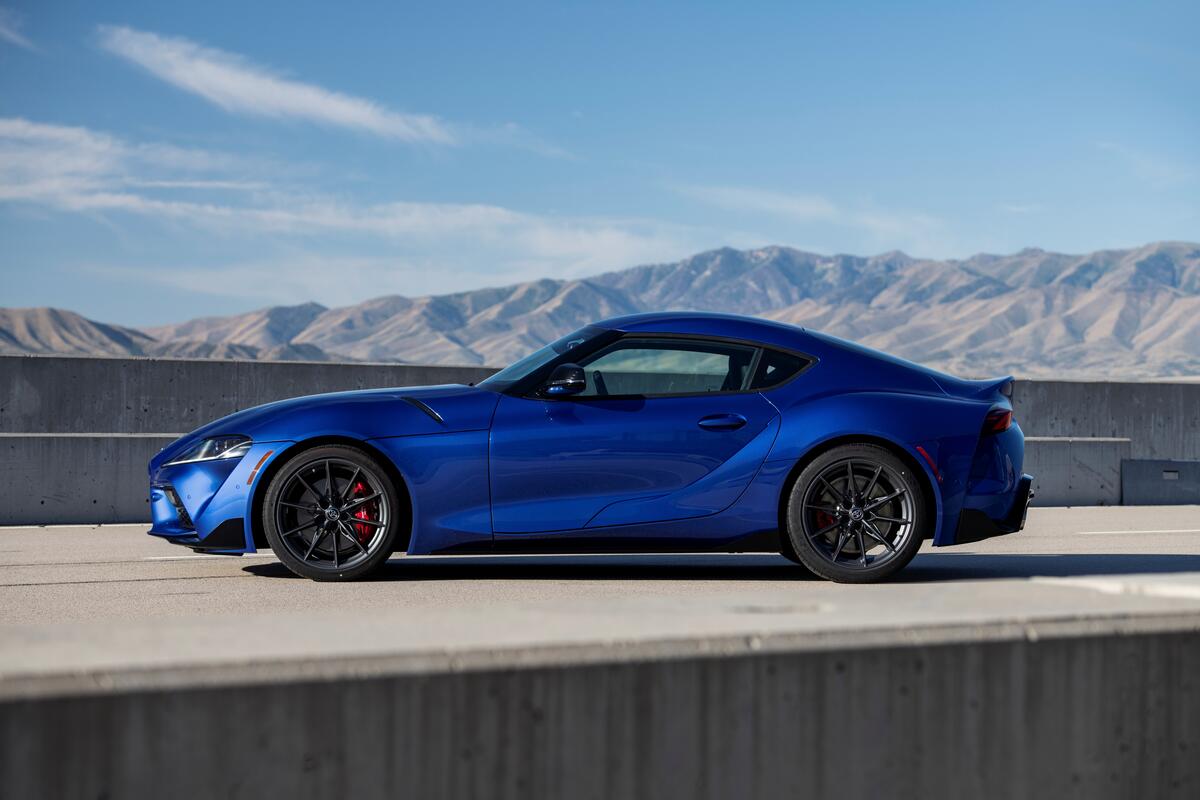
The Toyota Supra is a sports car made for fast driving and good handling. When people talk about upgrades being tested, they mean they’re trying new parts or settings to see if the car performs better. It can be mentioned when discussing what gets tried early in a racing weekend.
Term
90 million test session
The point here is that teams didn’t get much time to test before the weekend. With less testing, it’s harder to know which changes will really help on race day.
Powertrain is the car’s driving system—basically the engine and the parts that help turn that power into motion. They’re saying McLaren’s setup is strong because of its Mercedes powertrain.
An “electrical issue” means something is going wrong with the car’s electronics—wires, sensors, or computers. In an F1 car, that can stop the engine from starting or make the car behave inconsistently.
An “installation lap” is an early run during a race weekend where the team checks that the car is properly set up and functioning before pushing hard. Avoiding crashes on an installation lap matters because it reduces the chance of damaging the car before the real running begins.
Preseason testing is when F1 teams run their cars before the season begins to check how everything works. It helps teams find problems early and set up the car for the first races.
In F1, “upgrades” are improvements the team brings to the car during the season. They can be new parts or changes that help the car go faster or work more reliably.
Concept
beginning of the cycle
“Beginning of the cycle” means the team is still early in how long that car concept and design will stay competitive. The host is saying today’s advantage might not be the same later as other teams catch up and rules/development evolve.
Standings are the leaderboard for the season based on points. If two drivers are near each other in the standings, they’re performing similarly over time.
It means controlling how far ahead or behind you are compared to other drivers. Teams do this to stay safe, avoid mistakes, and keep tires from falling off.
In F1, the "power unit" is the car’s main engine system. It’s not just the engine—it's the whole setup that makes the car move, including the hybrid parts.
Cutting corners is when a driver takes a shortcut to make the lap faster. Race officials treat it as a rules violation because it can be unfair and unsafe.
It’s a punishment where the driver has to go through the pit lane without stopping. Because pit lane is slower than the track, it makes them lose time.
The “meatball” flag is an official warning that something is wrong with the car. If you get it, you usually have to bring the car in so the problem can be addressed.
F1 has painted lines that define exactly where you can leave the pit lane and rejoin the track. If a driver crosses the wrong line, race officials can penalize them.
Officials need clear proof before they punish someone. If the video isn’t clear enough, they may not be confident to apply a penalty.
Term
slam dunk
“Slam dunk” here means it’s obvious—like there’s no real doubt. The speaker is saying some penalties are clear-cut, while others aren’t.
Term
pit lane once an alert is registered
F1 uses detection systems (and trackside monitoring) to flag certain rule breaches, such as speeding or improper behavior in the pit lane. Once an alert is registered, the process for applying penalties is typically straightforward.
“Regulation tweaks” means the sport changes its rules a bit. The goal is usually to make racing more competitive or more exciting, and it can change how teams set up their cars.
“Mitigating factors” are other reasons that could explain why something happened. So even if the rules changed, the better racing might also be because of conditions or events that weekend.
Concept
helping hand system
A “helping hand system” is an electronic aid that makes it easier for the car to recover from a bad start. The goal is to reduce how badly one mistake hurts the driver’s chances.
“Revs” is short for engine revolutions per minute (RPM). In F1 starts, keeping revs up helps the driver avoid bogging down and can improve launch consistency, especially when traction and clutch/launch behavior are critical.
A sprint race is a shorter race during certain F1 weekends. It can affect where drivers start for the main race, so it matters a lot even though it’s not the full Grand Prix.
Throttle is how much you press the gas pedal. In racing, using it too early in a turn can make the car grip poorly or feel unstable.
Term
mega dual allowance
This sounds like a qualifying rule that lets drivers try again if something goes wrong. The hosts are saying Miami has a specific limit for how much recovery is allowed.
It means you take your foot off the gas before a corner and let the car slow down more naturally. Drivers do this to control speed and keep the car stable.
A chicane is a zig-zag section of track that makes you change direction quickly. “Fast” chicanes are taken at higher speed, so they’re harder to drive smoothly.
Gear choice matters because it changes how the engine pulls. If a corner is mostly “fourth gear,” it suggests the car doesn’t need to be slowed down as much as for a very tight, low-speed turn.
Qualifying pace is how fast the car is during the qualifying session. It’s mainly about getting a good starting position, not necessarily how well the car lasts in the race.
Long run pace means how fast the car is when it’s on track for a longer stretch, not just one quick lap. It accounts for how tires wear down over time.
LIVE
Thank you for listening to the late breaking f1 podcast. Make sure to check out new episodes every Wednesday and every Sunday
Hello and a very warm welcome to the late breaking f1 podcast presented by Sam sage and me Ben Hawking back on this midweek
Wednesday, and there's no f1 this weekend, which is a bit of a shame Sam, but equally
Not that it will come out to you guys in this exact order
We've been recording for five days in a row. So you must be absolutely sick of me
No, no, no, I think actually it's the gift that keeps on giving
I think you know we are we are the one constant in the formula one world
So we must keep doing the good work and bringing great formula one content to the people
Well, we're gonna talk about tomorrow and the next day. We're gonna run out things at some point
We'll find something big. something will come along in a formula one package
Yes, that's what we love
Astounding in the first minute of the show pretty much coming up on today's episode
We've got a game of f1 overrated and underrated coming up
We've got Miami and a bit of a wrap up there of what happened at the weekend a few things that we just need to
We need to put a bow on
McLaren and Ferrari
Increased competitiveness at Miami. How long can that last for who do we like the look of out of the two coming out of that race weekend?
But let's start with the return of V8
Return of V8 Sam. That's that's interesting. It is interesting. It's uh, I saw a great meme the other day
Which applies perfectly to this which you know cursed remember you can use on socials, which will be
Man you hate most makes great points. Oh, yes. Yes. Yeah, and I was like damn it, Ben
Damn you not you. No, no Ben
Mohammed Ben
You've come up with this idea because
It's really good. It is I'd be here for some V8. See you know, I've written to the comments
There's a lot of big phrases going on like 1200 brake horsepower
Screaming engines lack of energy efficiency and I'm thinking
This guy's ticking some good boxes here, but I think he's got a little plan up his sleeve
Which I'm happy to get involved with him in it. Yes
Because whilst we have V6 hybrid engines at the moment, they will only stay for a minimum until
2030 or 2031 Mohammed Ben Suleyman the FIA president would like to go back to V8 engines a previous push by Ben Suleyman
Was actually to reintroduce v10 engines that were shelved last year due to a lack of support from manufacturers
However, attitudes appear to be shifting amongst the teams
They're now thought to be more open to reducing the level of electric power
reflecting a broader change in the automotive industry
and
In his quote, he said you will hear about it very soon and it will be with very very minor electrification
I'm positive they want it to happen, but let's say the manufacturers don't approve it for 2030
The next year it will happen in 2031. It's done. Anyway quote. It will be done
I really enjoy how blindly assertive he is on this quote because he's like no thought process behind if it doesn't work
How much of a fool he's gonna look what you mean? It will be done
It will I'm gonna stop doing that across my day, you know, like I will have a McDonald's for lunch
I'll have a double cheeseburger. It will be done and then I will go and buy one
Members of your team at work are gonna be terrified to get any emails from you
It's just gonna be those words. It will be done do this for me
It will yeah when the race winner wings a Grand Prix
I will drown them with water with a glass bottle. It will be done. That's how that's how I mentioned
That's how he thinks with every choice. Yeah, I'm pretty sure that was what was going through his head of the weekend
Anyway, I like the hammer Ben Suleyman has almost taken on a role of
Because about let's say a year ago
Mohammed Ben Suleyman was getting a lot of stick and honestly rightfully so and that should continue to an extent but
Stefano Domenicali has almost taken up the mantle from him more recently and it feels like Ben Suleyman
Who's just like set off a fire in the corner
It's just seen a fire in the distance that Domenicali's set off and he's look everyone look at that one
I'm with all of you guys. Look at that guy. What are you doing Stefano?
He's trying to be on everyone's side now it feels like yeah
It's that you've painted the picture brilliantly for the wider argument
I wanted to make here that
The regulations in formula one right now are at an all-time low. They are in the Bing people hate these regulations
There's a lot of conversation about how sold as formula one is how disappointed people are in the new regs
How people are turning off and not watching the sport. So how do you suddenly run the best PR campaign?
How'd you get back on everyone's good side after you got a lot of stick last year?
You promise some the thing that everyone wants immediately which is V8 screaming engines with no battery
Like you're selling promises. You're selling dreams here, Mohammed then Suleyman
You've got to deliver on them because whilst you might be in people's good books for a minute
If it falls through you've already retracted from V10 down to V8
You can't really go anywhere else after this V6 is what we've already got so you've got to deliver
I do think he's seized the opportunity to essentially give himself a better public image
And you know what if he does deliver it fair play to you because it is something we all want
And I think it would have to evolve sustainable fuels and making sure that it is genuinely
applicable to the automotive world thanks to the comments from Mercedes that they could genuinely find this interesting
But I don't think he could just make it so I don't think you just have it down because he wants it done
I do think he's going to need buying from
Manufacturers sponsors drivers formula one. It's not as simple as just I'm gonna do it because I want to do it
That's not how it works, but it will be done
But what I it doesn't compute in my head, but what if it's not done? It will be done
Okay, I always take everything that Mohammed Ben-Suleyman says with a bucket full of salt
I was gonna say a pinch, but that's it's not really a pinch when it comes to him truck. Yes, I
Always like to think whenever Mohammed Ben-Suleyman says something is definitely going to happen
It's probably gonna happen if he says something is probably gonna happen
It might happen and if he says something might happen, there's it won't happen
No waste time thinking about it
There's an adjustment scale that goes on in my head as soon as he says something
Again three months ago. He was talking about V10s like we're already on
This is what I mean though. He's already retracted one statement. Yeah, I'm with you in that
I think he's making it sound a lot more simple than it will be in reality. It's not just a case of
FIA wants this F1 wants this we make it happen
There are far too many stakeholders including the individual teams for that to be the case and we might well
We might well get to something close to what Mohammed Ben-Suleyman wants that wouldn't surprise me at all
I feel very plausible
But I'm not quite sure it's as simple as as he's making it to be there will be compromises along the way there will be
Multiple probably engine manufacturers who say yeah, we like 90% of what you're saying
But we'd actually like this on top of it or we don't like that bit and soon enough like you are
Negotiating and again, you might get something very close to what you intended
It's unlikely to be as simple as just it will be done
Yeah
And you have to consider as well that someone might simply reject the idea entirely
Something like let's take Audi right brand new to this new regulations
They came in because they favored the battery power and the way that the English were working and it makes sense for them to be involved
If they see their automotive side going a different direction and they think they might be fully electric
Let's say by 2031 who wants a V8 racing series have anything to do with their program. They'll go well alright
Thanks. See you later. We'll be gone again and they have to contend with the fact
They might lose a global name in automotive industry, which will be a real shame for Formula one. Yeah, exactly
And especially if it's a team that holds
To be fair to Audi like that
They don't hold the most power in the sport at the moment
But if it's someone like Mercedes or Ferrari who are powering multiple teams on the grid
Then it becomes even an even bigger problem for Mohammed Ben Silliam and those trying to to push through this push through these changes
I
Can see it happening overall though because if you look at the 2026 regulations that we have now and you mentioned that
There isn't universal popularity with them despite what mr.
Domenicali might be saying but on top of that like completely separate to that I
Think the idea or at least one of the ideas around the 2026 regs was that they would be less complex and
Cheaper and I think at the moment we're over two
Well, I don't think either of those things have been achieved the cost cap has increased this year from
135 million dollars to
215 which is such a gigantic jump as well
it is and I understand there are other things at play such as
global inflation and
There's always going to be a bit of a lift in a first year of regulations regardless of what they are
And I do also understand that there are more things that are covered under the cost cut than when it was first introduced
But even with all of that and I don't want to make this like a feel sorry for the teams because they have enough money to go
Around but there's an extra mouth to feed with Cadillacs, so
Revenue has been not necessarily shrunk, but divided up slightly differently
The cost is on the rise
We need to make sure Ferrari is I know Mercedes will get on to them and what they said about potential changes to V8 engines
Ferrari were basically just like would like the engines to be a bit cheaper and that's it
Understand it. Yeah, I get it. I get it is arguing the most expensive thing to engine it if you are
An OEM a manufacturer of the ages themselves a seller of those engines so to hear that it's not simple
They're making changes that something have to do completely different direction to what was originally discussed for years before those regulations came in
That is very frustrating
You know, that's like us doing a podcast for a year and then mr. Big podcast turns up and goes
Actually, can you do all your podcasting French and we'll go we miss you and we start doing one of our podcasting French
And then two weeks later after we just learned French they go could you do it in like
Spanish with a bit of French and we'll go. Oh, you talk about that
That's a lot of time and a lot of effort to do that. It is frustrating technically plausible, but very frustrating
Okay, so a new idea for a podcast character is mr. Big podcast
But who it says in an awful French accent, who do you think you are?
You want me to talk about podcasting?
I think it's going to catch on you know, let's go. Do you love mr. Grand podcast?
Do you think the the biggest benefit in
Reintroducing va engines would be the the weight reduction because I think that's right up there
Definitely up there. That's a big option as to saving a problem that a lot of manufacturers have gone through so far
You know, you're talking williams who have had to buy in their engines still and they don't have control over the
Creation of an engine they they get the product that they're given so being able to strip weight out of it
It's not really an option for them
So now that they're getting a lighter product
Definitely better because they can then focus on areas of the car and we've seen weight be a problem throughout many years
of formula one
you remember one hour from air rocked up and they were the only team that actually met the weight reduction and
They should have sued for that. Yeah, they were basically told
No, we're just going up it again because no one else could do it
So well done for meeting that now imagine every line that doesn't exist anymore
The other thing that I think is becoming more and more of a conversation in the automotive world
Is the creation of batteries itself, you know, it's a finite resource
And along that material comes with very specific places around the globe. It's expensive to mine expensive to get it has a real knock on for human
Reaction, you know, those people are in those minds and they're being treated badly, which is not great
So we need to make sure that we are creating a sustainable model for powering cars
Now formula one has always been at the cutting edge of this
Weirdly, Sebastian Vettel managed to do it now
What feels like 10 years ago where you run a car on a sustainable renewable and recyclable version of fuel
And it makes total sense if the automotive world is trying to pivot in a direction
Where actually they can recycle or recreate their own fuels in partnership those fuel companies because it's cheaper
It's more effective
It goes longer and also it ain't gonna run out which is great for everyone
That's a real positive
So it makes total sense that something at the cutting edge of another industry
adapts to that first
So I think if Mercedes who are a global manufacturer, you know, the likes of toyota who are slowly becoming a part of it
Audi Honda all of these cars that are so integral to the automotive world are suddenly seeing a shift or sustainable fuels
Go formula one wants to pioneer that they are great
We can run that early in formula one and see how it works for the cars
It's a genuine scientific impact that makes sense and could provide a real cost saving for marketing for adaption everything like that
So I think there's a number of huge benefits for moving back to a v8 standard
Essentially motor based engine rather than being vacuum powered
Yeah, I would include all of those on my list of things that could improve as a result of the reintroduction of v8 certainly
As mentioned like weight reduction if you think about the situation we're in now
The weight limit last year was 800 kilograms and then that was reduced this year to 768
So we have made some form of a move towards lighter cars not a massive move but down by 32 kilograms
by give
The teams immense credit for what they've been able to achieve
Because the batteries are much more powerful this year, but they are much heavier like these electric batteries are
heavy boys
That's gone up by 30 kilograms. So in effect these teams haven't cut by 32. They've cut by 62 because of the battery power increasing
And I just think more nimble more agile cars is the way to go in the future
And I don't think we get that unless we start to move back towards
um, you know the combustion engine being responsible for more of the engine's overall power versus
The battery power. So I'm with you on that. The other thing is um, I know we're not as big on this as some people are
But noise like it would be good to get back. I still like big noise. Yeah, exactly
I think for some though, it's like right at the top of the priority list. Whereas for us, it's maybe like
Midway through but it would be very nice indeed if you gave me a worker. I had it or a worker
I didn't I'll pick the worker. I had it but if you didn't give me an option
I wouldn't be gutted but I don't have it. It's just a nice impact. It just feels cool
And you know what feeling cool is is great. I haven't done a lot of that in my life. Feeling cool is great
Yeah, I can pretty count on one hand the amount of times I felt cool
Do you think that f1 are in a bit of a tough spot in terms of when they're planning out their regulation cycle?
We're already having started this set already thinking about the next set
And based on the amount that it costs the teams they have to last like multiple years like they don't really have a choice
But trying to predict what the industry is going to be like in four or five years time
It's very difficult
Do you sympathize with f1 in that respect?
It's a very difficult task to get right and we've seen it not be right and we've seen it be right now
Take the hybrid era 2014 that was the last really big engine change that we had in recent memory
And you would argue that formula one went down a semi correct path, right?
We saw a lot of changes in road cars to be more hybrid based whether that be
Semi electric whether that be you know kind of you run a battery under a certain speed
Or you're fully electric right electric power was quite important a smaller engine size is doing more is the norm now for road cars
Um, so that made total sense
And so they they got it right the issue with what they got wrong
Was ending up having the competitiveness all over the place and we saw such domination from the sayings which we never want
So you sympathize in that sense that they need to give
manufacturers
Enough time for the sport to be researched and understood so going in the right direction
They those will be consulted for sayings ferrari, you know, um honda
They'll all be spoken to and asked does this make sense with your business model?
Is this something in five years time you can see doing is this going in the trend that you think it is?
They will take on board with that information
The issue of course is once they then make that decision they have to make it in such a window
That there will be teams that even though you're technically not meant to develop until a certain point
We'll be going away and doing stuff that's off the books isn't formula one related
Which does have a direct impact you run a risk there. So they are constantly playing a balancing game of
The right information the right direction how much awareness?
What's the cost? Is it viable? Is it exciting? Is it something we can actually make a racing product out of?
You know, are we going to destroy the racing product by giving them too much time?
It's a really difficult thing that they have to work out here
And so I'm not surprised that we're having this conversation in the first year of new regulations
Especially with how poor they've turned out at all
I think publicly they need to be had because I think it would actually retain a lot of fans that might be tempted to move away from the sport
Um, but at the same time you run the risk of causing a lot of dismissal and frustration about what you have got now
Yeah, I mean the automotive world moves very quickly
It moves far quicker than the
Again like five years average or so maybe that a regulation cycle is set for and it's tough to predict what it's going to
Going to do in the next few years
And unfortunately I say unfortunately it's the reality of the situation that these engine manufacturers
And a lot of these teams they do need
That road relevancy like they do need that not all teams are here just for a marketing exercise
You know for the likes of red bull it very much is that's great
But the likes of
Audi and Mercedes as examples
They are here at least to some extent to be able to take that technology away and use on their road cars and
With respect to some teams that are out there like
Hass and and williams and I do genuinely mean that because from a pure f1 fan perspective
Particularly with like williams their heritage is so important and I love seeing them do well when they are doing well
But when you're looking at the importance of a team in terms of potential like sponsors and partners and the like
Audi and Mercedes means so much more in terms of that global recognition
than the likes of a has or a williams will like with respect to those two teams like
They they don't care like people don't are like
The people that need to care don't care in that regard for those names. They will for Audi. Mercedes
So they do need to appease these manufacturers at least to an extent
And that's where you get into this difficult entertainment versus keeping them happy
I don't know situation that we seem to always be in
Yeah, I fully agree with you
Unlike williams or has Audi Honda Mercedes even Ferrari if you're so lucky to own one
It's a gateway. It's a conversation
And if you sit there and go, I've got a brand new Audi. Oh amazing. Why did you choose that one?
Well, they're in Formula one actually and uh, I think they're really cool
And I went and test drove one because I support them watching Formula one
Um, and I loved it and it's got all these cool features and you end up talking about the car
But you you've got the car because you watch Formula one and you trust what they do and you trust that brand and you think it's a cool
Brand to be a part of that's reliability and it has great technology. It's efficient
These are all things that subliminally send a message. That's why Mercedes are such an integral part of Formula one now
That's why they value it so highly because
Their products have skyrocketed since being successful in Formula one
And that's why Renault put Alpine backing instead of having Renault because they wanted a sporty version of a car
That is seeing a sporty and competitive that they sell small cars because it has technology that's relevant to being sporty
And and it's efficient and it's and it's quick. I mean they haven't shown the quick bit yet, but still they're on it
You know, that's what they're trying to achieve with that
So that's why it is really important that we do have genuine manufacturers on board
Willing to subscribe to the idea of what comes next and so it'd be interesting to see with the likes of Toyota
Honda, you know forward and how they're involved maybe further out there
You know that we've had conversations BMW, Porsche
There might be others who have shown interest or being interested previously
What they want to come back into the sport or be a part of the sport for the first time
Because a combustion engine is being spoken about again
Uh, let's take a quick break. Um on the other side we'll wrap up this discussion because Mercedes have an idea
of a mega engine
Like mega desk total of same words. I don't like the phrase mega engine
Meg engine
Yeah, no
Um
Welcome back everyone. Um, just to finish off this discussion about v8 engines because uh
Mercedes and toto wolf were asked about this at the weekend Mercedes is on board with ben sulium's push to bring v8 engines back to f1
Toto wolf speaking to the race has said we love v8s that has only great memories and from our perspective
It's a pure Mercedes engine it revs high
And then it's about how do we give it enough energy from the battery side to not lose connection to the real world
If we swing 100 combustion, we might be looking a bit ridiculous in 20 31 or 20 30
We need to consider that make it simpler and make it a mega engine
Maybe maybe we could extract 800 brake horsepower off the ice engine and we put 400 brake horsepower on top of it
Or more in terms of electric energy. So
total wolf just wants the biggest engine of all time
I could kind of subscribe to the biggest engine of all time. I'm not sure it should be called
Mega engine. I feel like that should appear in like a power point with like flames around it
You know, that's the words if it was like, um sharp nado or something. Sure. Yeah, exactly. Do you know what I mean?
It's like is this happening? Is this real should I laugh at it?
If you haven't seen it by the way, this is a self-topic go and check out the names and the tag lines for each of the five
Sharknado movies. It is hilarious and Sharknado six mega engine. That's the guy who wants to come out. Yeah. Yeah. Um
I actually think it should go the other way. I think we should look at starting the cars with a battery
Um, so they're efficient at low-speed and it starts you look at electric cars off the line
I got an electric mini a few years ago. I was beating everything off the line
Thanks, ring in the electric ring. Here's my broken leg is proof
We're still going
um
It was so quick off the line and that was a mini cooper and it flew
Imagine if the formula one cars were powered between zero and like 80 kilometers an hour
Battery only and then the ice kicks in I generally think you get faster starts
um
You have battery relevance which is efficient when you're starting a car which is the most inefficient time to be driving a car
And they will likely go like the clappers and then the rest of it
You get the loud screaming engine for the rest of the race because they never that slow again
So that could work. I'm okay with a bit of a balance here
But I don't like the idea that we're still using battery to top up the speed. It hasn't worked
It's still not working. Can we move away from the top up side of things and looking at from a different perspective?
Yeah, it's um, I called this in my notes a big somewhat vote of confidence
from toto wolf
In the Mercedes power right now 36 of the grid. So having them not shoot this down
Is is important at this point equally. He hasn't committed himself to anything either
So it's we'll see how it goes in the next couple of uh months
Maybe I'm maybe a little bit surprised. He hasn't played a bit more hard to get with this, but uh equally
Yeah, hasn't really committed to anything
Um, I'm not sure. I like the mega engine idea. Um, this sounds
Now I've come around to it. Yeah, I knew you would
Mega engine. I knew it would take all of what three minutes. I'm surprised it's taken that long. I'm hooked. Yeah. Um, I don't
massively like the idea of it just based on if we are having a
1200 brake horsepower engine and regardless of what the split is that that what toto wolf has suggested would be like a
two-thirds split which is obviously taking us away from what we have right now, which is about
55 45 and closer to maybe what we had last year
um somewhere in the middle of those two
I just think the racing would be absolutely dire like
The size that these cars would have to be
We're not we wouldn't be going to a more nimble more agile car
These would be like the the fattest things you've seen in your life going down a straight
Going back the wrong way man. It's just kind of being engine with wheels. That's budget. It might be it will be
Unless they strip all the downforce out of it. It's going to just be like
There won't be any racing and you know, he's going to be at the front
Fernando along so no one years. No, he won't because he'll think ah, I've got a good idea
Alpine Honda that's going to be the future and then they'll be often wonder around. Yeah, right
So that's not going to happen. But yeah, I
I just think it would almost be at the 1980s again. Hopefully without the
lack of safety we had but there's a lot of people that love to kick old days
Back in their day
There were some good things about f1 at that point
But there were some very bad things that if it was played out now would get a lot of complaints
that it's similar to maybe like the
2019 2020 regulations where like they were seriously impressive beasts of cars particularly the Mercedes
Remember thinking on like a Mercedes quali lap like good lord. This is impressive
Didn't always create the best racing though. Like yeah, if you were to sell someone this is prime race car
You know to go quickly round the racetrack. Yeah. Yeah fair enough. Yeah. Yeah for sure feet of engineering. That is incredible
Entertainment going wheel to wheel. No not quite so much
Let's move on to McLaren and Ferrari coming out of the Miami GP weekend a very good weekend for McLaren
Not that they're
Yet second place in the construction championship, but they have cut down that gap quite a lot to Ferrari
Let's start with McLaren. Do you think that they are right now Mercedes biggest challenges going forward?
It is tough to say we've had one race. Uh, it felt like a very specific style of race, you know
We had very hot temperatures. We had that risk of rain as well
So we don't have setups or playing it
There's a lot of upgrades that were still being tested with only a 90 million test session at the start of the weekend
So maybe it comes out that there's something that we're not sure is working or needs to be adapted differently or actually
A different racetrack might be brilliant or not
So that is hard to say without further evidence further actual analytics and running
But from the one race we've had and the amount of upgrades they brought that seemingly stepped them forward
Well, and they've got this Mercedes engine on board, which as we know is
Joint best with red bulls for powertrain
It feels like they've got a pretty powerful package
And we all know that the design master Rob Marshall
Was not was not letting it go for too long. He has been in the kitchen cooking up his is a second off our pace
Yeah, there we go
My man built up old scaffolding rig at the end of the Japanese Grand Prix
And he he scaled to the very very top of the tower and he went I've just found the second to place up here
Let's I'll bring it on down for you. That's what Rob Marshall does
Um, we love you Rob bigger
We thought the world's biggest hands, by the way
I can attest to that
I felt like a child next to him. No wonder he could create carbon fiber. You know, it's just gigantic hands
melded it
Like a god of formula one the car it's like pottery like it's just there
Is it with a little apron on just crafting it out of steel and carbon?
I'm really glad we haven't got a top off topic here. No
Big up Rob. Anyway, I do think that from the one race we've seen they looked like they found their consistency
They moved away from the issues that they were being caused by the engine
Majoritively right where they had an electrical issue
They had an issue with getting the engine started and we're going to cars at one point
Piastry hasn't crashed an installation lap so far since race one. That's good
Um, so it feels like their issues have reduced and now the issues are reduced and they're getting actual running time
We're seeing the Mercedes that in preseason testing
Felt quite threatening and they were essentially running the same car all the way through from preseason testing
All the way to that spring break that we just had and then they've delivered upgrades and upgrades look like they've genuinely worked
So whether they are the absolute test from the sayings right now
It is tricky to say but it's definitely going in the right direction 100% for the time being
Yeah, I think they are the best contenders or the biggest contenders for Mercedes
I think what miami taught me and this maybe isn't just a McLaren point but more of a wider point about the entire grid
It's just how much the order has the potential to change at this point in the season
Like especially amongst the top four teams like teams can at this point through upgrades find some really big gains
Over competitors if they get things right like you might look at the moment and say well Mercedes have a brilliant car
and relatively they do
But we are at the beginning of the cycle right if you put that in that car two years into the future
It will be rubbish because even Mercedes have seconds to find right now
And there's no guarantee that they're all all of these teams are going to find that time
Sort of in the same timeline that won't happen
McLaren, I think needed to take advantage of this weekend given
Mercedes have their own bigger update happening at canada
And they did like they dropped 10 points all weekend 48 out of 58 points
So I think well done to McLaren in that regard because there's no guarantee
That this pace will continue for them. I think it probably will but there's no guarantee that happens
And I think
I was impressed by McLaren, but i'm not overly surprised in that
I think we could kind of see this coming from the beginning of year in that
Like lano norris for example even through the really low points that they've had this year has been quite optimistic to say
I think we'll be challenging for wins soon and he's ended up right at least in terms of one instance
They had a slow start to preseason testing sure
They had issues with like not knowing the Mercedes power unit as well as the the factory team
But these are all quite
I'm going to create a word rectifiable
Things right like that they can be fixed it not super quickly, but they can be fixed
And that's why i'm maybe less surprised that they've made a big jump from from one weekend to the next
That might that might be the biggest jump that they make all year
That wouldn't surprise me, but that has put them in a much better position going forward
I uh, I think rectifiable is already a word then is it a word? I think so. Yeah, I mean I've definitely heard it before
It makes sense. I just didn't know if it was actually I've also heard the word yabba-dabba do and that isn't a word
You've been listening to george russell too much mate always. Yeah, never never stop listening to him
The one other point I wanted to make about McLaren. Um, I feel like this weekend
I don't know if you'd agree with this or not. We had the likes of antonnelly
Norris Leclerc Verstappen
So one representative from the four big teams
All show a lot more pace than their respective teammates
It felt like maybe and it is only one race. So it is a maybe
Maybe these regulation tweaks have helped
Introduce driver skill a little bit more
Into the mixture again in which case if that is true
McLaren with their lineup. I don't think we'll be too disappointed about that
Their lineup is very consistent and very relevant to modern formula one. Um, and I mean that those words very intentionally
Because you know you look at ferrari and you might think well charlotte claire and lewis hamilton
You know that is incredible. I agree if you were to you know breach lineups across all time
You'd argue that charlotte claire and lewis hamilton might be one of the most potent lineups of all time
That's a fair argument
But right now of these regulations with current formula
Lewis hamilton is still what it is best
And charlotte claire is still finding his feet
It would feel like if it was like this race was the first time he properly stepped forward in comparison to lewis hamilton
And yet when it comes to mclaren
They are often
Right next to each other in in the standings usually with both qualifying and the grand prix
They are
within a tenth in qualifying and usually within a place in the grand prix and that shows you that
They are in a really good position to take the car forward because if they can get the post out of both drivers every grand prix
Is they adapt that will serve them
Maybe not as a driver's title because for example and tangali might continue to score enough points
So he goes well, but if they can score enough points together second and third on repeat
They'll win the constructors again, and that's a great place to be from mclaren
We're not playing f1 fill in the blank today
But if we were firstly we'd hear a great jingle secondly
If the question was ferrari should be feeling blank after this weekend. I think I would go with deflated
I'd say worried worried why yeah
I was joking about this
Ferrari were on the up
And they spent so long working on this car, right?
They were one of the first probably the first top runner took a side
We're going to move into 2026 regs. That's what we're going to develop
And you can see the deflated the deflated attitude as you mentioned of charlotte claire and lewis hamilton last season
Where they knew they were fighting with a car that wasn't really built to be particularly competitive in 2025 very frustrating for them
So to come into 2026 and not be at the top not be top game
And then to get three races in and still not have won a grand prix
But equally to be so far away from winning a grand prix that the team actually who becomes closest to winning a grand prix
That isn't the sayings isn't them. It's now mclaren
Is so frustrating it's so worrying that all this effort all this time the direction that they've gonging the line up
They've crafted is still not enough to beat the sayings over one race
I know we're only four grand pre-ing. You know, we might see a real shift in two races time when upgrades start to settle
Or, you know, the regulations where the engine might change slightly. We don't know but as it stands
McLaren have been closest to a victory when it isn't a Mercedes car
Not Ferrari and I think that is really quite worrying. I think there's a few people
Senior in Ferrari that might be starting to sweat a little bit
Yeah, if you look at
That's a good point like the three
nearest that drivers have come to beating Mercedes so far this year you would say number one was
Norris actually winning the sprints
Number two is Norris in the main Grand Prix at Miami and then number three would be Piastri at Japan
Like you would fill out the podium just of McLaren. You wouldn't include Ferrari in that. So
Um, there are positives. I will say but yeah, given the jump
McLaren made and Mercedes not bringing a major update to Miami. It's yeah, I said deflating
It's just a bit of a disappointment. Like they're not going to go away from this weekend
Angry, I don't think but hey disappointed worse as we all know
Yeah, you don't ever want to be disappointed especially with the amount of upgrades
They actually brought to Miami if they brought like two upgrades
I'll be like, all right, you know, it's gonna take some time
They brought as many as McLaren and it has not worked
I think qualifying was a bit better in the Charles Leclerc, at least on Leclerc side of the garage
He got within four tenths of pole on both qualifying sessions
Which doesn't sound like a lot, but it is closer than what he's had on average so far this year and equally
I think he would admit especially in sprint qualifying. It should have been closer than than what he had
I think he should have been on the front row in all honesty. Yeah
So I think that is maybe a smaller positive
The disappointment is the race pace though because it's still not quite there
And there's a reason I say not quite there because it's not a million miles off
But it's just enough that he I say he because it's Leclerc in Miami really
Just can't quite hold on like when we saw Norris in the lead when we saw Antonelli in the lead
They were able to manage the gaps. They were able to not go off massively into the distance
But keep it a safe distance
When Leclerc was in the lead early in Miami, he is hustling that car in order to stay ahead
Because for I just don't again don't quite have it
Yeah, it's a it's a small enough gap that you can see that with a lot of effort
He could say in the the competition
But it's a big enough gap that come the end of the Grand Prix
He ends up being 20 seconds behind
And that is you know half a second really a lap to create that gap and that's too much
That's too much to be a championship-winning car
A fun fact that is absolutely not a fun fact for Ferrari
Louis Hamilton and Charles Leclerc have led as many races this year as George Russell has they've led two each
Wow, and they haven't won any of them. They haven't been close to winning any
No, at least Russell's got one wing. I also heard uh, I think it was from the race that it is 555 days today that car number 55
won
the last Ferrari race
Carlos Sainz's final win for Ferrari. Just gonna let that brief
Like Leclerc hasn't won a race since
And Louis Hamilton has never won a race for Ferrari
You red clowns
Isn't that accrosious?
Oh boy, um, I think it's a point we've made before but
Ferrari got be hoping as soon as we get to this aduo review that it reveals that Ferrari's power unit is not very good
Oh, we are the worst
Look at our poor little engine. It's like a mini-engine
Mega engine, mini engine
Ours is from easter egg toy
I got mine in happy meal
Made of plastic and oh I am child of mega engine
Let that scroll up
Yeah, they're going to be doing everything they can to downplay that engine honestly. Oh, um, they asked them second in the constructors
No entry in there. Um, yes, they asked them second in the constructors. I don't know that last long
Do you think they'll last through Canada?
Uh, no, I don't I was going to say I give it two races, but they technically are two races of Canada
I think
If it goes exactly the same way won't be as bad because Charlotte Clarke isn't going to spring it off and pull it all
No, he's got he's got a history of that in Canada
Well, that's true
It's my Lewis Hamilton can flip off color pinto as he crashes into him again
Um, and they might figure six thing eight who knows but if it's the same as what we got in Miami
It will be a reduction from second to third for Ferrari and they look so good at Australia
We're like there's glimmers real glimmers back to third you go Ferrari
I find it funny that we were
Taking the proverbial Mickey out of Ferrari on Sunday for finishing sixth and seventh and the actual end result was worse than that
So far that there's a decision after the race to recuse their happiness even further
Well, that leads us quite neatly on to our second break because on the other side
We are going to be discussing a couple of penalties that were applied after we reviewed the race on Sunday
Welcome back everyone a few things to just to mop up on the Miami GP weekend a couple of penalties
We briefly spoke about these two in power rankings as we recorded that after these were announced
So that's often the first place you get our reaction to these sorts of things when the fia decide
They need hours to make a decision
How how can they take so long to make a decision that we can stop?
Regroup record a full race review publish the race review go to bed and then the decision is being made
Rome wasn't built in a day. I'm being told by the men of Carly. I think Rome was built faster. It might be yeah
um, should we start with the
22nd penalty that shell a clerk received for uh, just not doing the last lap
I'm paraphrasing there, but uh cutting the corners
Multiple times throughout that lap. Um a compilation of that was shown on f1's
Um social media. So if you if you want to have a look at exactly what he did you'll be able to there
Fair penalty. Yeah, well slam dunk. I'm sorry. Um, all the time is a lot. Yeah. Well, I don't care
It's essentially a drive-through penalty, but converted into seconds by the way
You know the flag that looks like a meatball
Yes, you've been meatballed as Stanley Hudson might say
And I have your meatball
He you know, he was going to be shown that flag realistically
He's driving a car that's too dangerous to damage to drive around a racetrack
Uh as was demonstrated he could barely make it over a corner and he was clearly choosing to shortcut the track to make his life easier
I don't blame him for that decision, but that is the case self-inflicted, of course
He also we mentioned this runs limb like off the road completely
Whilst doing that which is just unfair or another driver
So I do think that he's also been partially penalized for essentially not leaving racing room for another car
You the the punishment has to be severe enough that you shouldn't want to do it again
It shouldn't just be equal to what you might have gained had you you know cut all the corners
Just to take the time back
It has to be take all the time back and then take some more time as a punishment. So for me 20 seconds is fair
Yeah, I thought it was fair as well. I know a lot of people think this is a lot, but I'm fine with this
Just to give like a almost a chronological of version of events here. So turns um after the spin, obviously
Turn six is sort of the the next corner. He has to navigate which is a right hander
Charlotte Clair is full lock to the right. The car is not going right. It is going straight ahead
So I think at that point Charlotte Clair knows
All right
This car isn't doing right turns and that's exactly what you said in the stewards room afterwards that incident by itself
I was okay with because I really don't think he gained anything there
The problem is what he did after that because he then ends up behind limb blood as a result of this
I think he was going to the runoff for turn eight to avoid him knowing that if he tried to turn the car
he would go like
Actually take the corner. He might go into him. So again to
To avoid him. I don't mind him taking the runoff the problem what he does for the rest of his lap
He doesn't really slow down when he's doing this
Like if he if he intentionally cut the corner because he didn't think he could make it
You then at least like
Okay, I'm gonna almost intentionally go on the brakes to prove to the fia. Like I'm not gaining from this
I just can't do it. Um, and then later in the lap. He does the same thing
Um turn 11 might be the worst one. It just goes straight. There's no attempt there
He's like, you know what there's the exit off I go. I think he does it turn third
Turn 14 and turn 15 as well. I don't mind him trying to bring it home
It is the last lap, but there is just again, no real attempt to slow this thing down
There's no guarantee. I think I said this on the power rankings
recording we did
There's no guarantee he would have actually made the corners if he attempted them in which case you shouldn't really benefit from that
and Leclerc and Ferrari's
Argument in the stewards room afterwards was
Well, we couldn't do right right turns. We established we couldn't do right turns
The problem is he cuts the corner four times. Two of them are left turns
Retire the car. I'm sorry. That would be my answer. Okay. Well, you've got to fit to be on a race track then
If you can't do half the turns on a racetrack and you should not be driving the car on the racetrack
Yeah, I saw a lot of people say like where he lost two positions. What did he possibly he didn't gain an advantage
He might have lost more than two positions. That's kind of it's it's relatively finished the race
He should have retired. Yeah, so I was fine with 20 seconds
um
The staff and eventually got a five second penalty for crossing the pit lane exit line once
They managed to get some more evidence limited video evidence was the exact quote by the stewards on this one in the
in the document afterwards
And then they were able to get some video evidence in the meantime
There's a million cameras on these racetracks like
How don't you have it? I found out that you can watch turns 16
Via a traffic can you can yes, which is
Hilarious, but if I can watch formula one in a traffic can you can see your pit laying exits
It's just one of those where like I don't understand how you don't have the information because you have enough video evidence to suspect that he's done it
Like you clearly have some video evidence. Otherwise you wouldn't be able to say
I think you've done that
But then you don't have enough video evidence to actually say like it should be a penalty
And these things are often slam dunk. You don't tend to accuse someone of doing it
It's like speeding in the pit lane once an alert is registered
You're typically done for you don't really tend to get up our bag. We were wrong
It's usually a one and done. Oh, it's the same argument as sorry
I'm gonna bring up the ar and football and why I hate it so much is like
I don't mind if you scrapped it and knowing that like 10 percent of the decisions you make
Are probably going to be wrong. I don't care that
Over time that will balance out and every team thinks that they're the unlucky ones
Over time everyone will get their good and bad luck with those decisions
But we know that all of the decisions will at least be made quickly
It's insane. Yeah, I agree. think I will say it enough times
I'm not going away with a point but penalty should be given while the race is happening. Yeah
Um
In terms of the regulation tweaks, do you think they worked?
Well, it was a better race
That's for sure now there's a number of mitigating factors that might explain why it was a better race
So you can argue that the regulations improved that. Um, we had a better weekend overall qualifying was more enjoyable
I you know, I'm happy at my hands. I'm just saying it was better. Why was it better?
Well, the cars felt like they were not flat out, but more actively consistent, you know at the very top end of their spectrum
Um, I think they were massively benefited by the fact that it was not a dominant weekend from Mercedes
Where when you expect something to happen and that is not what happens. That's exciting. Actually, that's exciting
So to see the claring Ferrari Verstappen back at the front that creates great atmosphere that creates excitement
When you've got four drivers from four different teams all in the potential for pole position
That's literally what I want the definition formula one to be. I wanted to see a variation of competitiveness across teams
So that helped you I'd like to see more to see if qualifying maintains that excitement over
Canada and you know, that's kind of a Grand Prix but that's a good start
The race was also better. Um, we still saw mistakes at the start
So I'm glad that this kind of helping hand system that allows them to not drop their revs too much
Sacrifice too much for a poor start. I'd love to know how much Antonelli was helped
With his start for example, uh, when he got a poor start in the sprint race
Equally how much it helped others, you know, I'd like to know if that caused
Proper assistance if we barely noticed it. It will be interesting to hear how much it had an actual effect
Overall good race good weekend. I can't say too much about it
I think a bit more of a case study to understand if it really is an improvement 100%
Yeah, we can't make too many sweeping generalizations at this point based on one Miami GP where let's face it from an energy
Conserving perspective. It was always expected to be
fine not one of the absolute best on the calendar, but something maybe close to
Shanghai that we've already had which was I think better than Suzuka and Melbourne in that regard
I do think it was an improvement
And I think it was maybe a bigger improvement than I thought it was going to be not saying everything is
Automatically transformed and fixed
But it was a bigger improvement than I thought it was going to be qualifying to your point
Definitely better largely down to the competitiveness, but also
if you went I I went on board for um
I think it was Lando Norris. Uh, no, it wasn't Lando Norris. It was the it was the pole lap
I went on board with and
It looked pretty good apart from a few corners
Through the first sector where it seemed like they were at 80% possibly the rest of the lap looked okay
I still think there's a bit of work to be done there Lando Norris in particular
commented after the Grand Prix to say
You still get punished for being too early on the throttle which just I agree with him when he says that should not be a thing
Um, unless you literally spin the car because you're too eager on the throttle
But that's how I wrong it that he's not too early on the throttle, but he springs the car on turn one
I've always happened. Yeah
Um
Yeah, I so I would like um
I'd like qualifying still to be tweaked a bit more and they do have scope to do a little bit more
In the the mega dual allowance that we've spoken about
Before that they're allowed to recover on these qualifying laps. It was set at eight for miami
And it's going to be different each each race weekend
Eight is the same as it was in Suzuka
Like they could have dropped this if they wanted to to maybe to maybe seven
And I think on reflection like that could have completely eliminated
Any any like lifting and coasting
I think we got a good amount though. Like I didn't notice it to the point where I was straight
I don't remember sitting there thinking going. Oh god. I can hear them halfway down the street
Yeah, canada's going to be a real test because whilst there are a couple of heavier braking zones
There are a lot of what are normally fast chicanes at canada
I think it could be it will be tougher in canada than it was in miami. It's a very fast flowing track. Um
The slowest corner into the hairpin and even that is quite a steady rhythm for a hairpin to be taken
It's quite a wide angled hairpin
Um, it doesn't really have a slow corner. No, you know the slowest corner other than that hairpin is fourth gear pretty much
So it's going to be really that's going to be right up there as one of those tracks where it's tough to harvest energy
Yeah, so I think these these potential improvements, they'll get a truer test when we go racing in a couple of weeks time
Shall we do an f1 fantasy update? Um starting with top three in the league
Doing very well out top on
1327 points is never lewis faith. Well done to you at least one of the lewises are winning
Uh, second place is torte an seneles on 1270 and in third place we have
pop pi
That is awful
But the score isn't third place on a 1258 points
We had a three-way tie for the winner in miami
I should say by the way, these are somewhat provisional when I checked them earlier. They were still provisional from the weekend
Mine has changed in the last hour. Good. Um, so at least at that point, uh, the three winners, uh, leclerz sweet has
There's an h in that
hus
um big easy's boys and team zh
Nice good mix of games. Yes
But what about us? Um
Sam you were leading the way. I don't know if I am obviously I didn't play a chip this weekend. I believe you did. I did
um
Angles, so
I was stupid. I forgot to change my times two from the clear to anting any
Oh, I didn't forget to do that. I just intentionally did that
Okay, well at least you're getting negatives from it because I did um, I have dropped
Um, I don't know how much I dropped by it's not a lot but I am on
565 now
Uh, you are still clearer of me. I'm in three figures at least but 740 if I played my no negative this weekend
That gap's coming down. Like I don't you want to pump up the brakes pump the brakes, mate
I'm still not in a great spot this year. I
I started the year really badly in terms of my strategy
It's very hard to get yourself back onto the path when you you know, you kick off in the thousands
I went unconventionally at the beginning of the year thinking that red bull
Would be better and they haven't been so yeah, I have made one change all season
Yeah, I've been like frantically trying to get onto a better build than what I started with
But yeah, 740 if so not doing too badly. No negative helped me out a bit because
Liam Lawson's retirement
Didn't cost me any points. Yeah. I mean, I was quite lucky because in that sense
I didn't have any retirements even charlotte claire who picked up his penalty, of course
Like that was my worst feature there. So all retirements that I had including both
Manufacturer cars were fine. I got quite lucky there
Now this is this is going to sound weird
But despite the fact that you are in the 500s. Yeah, and I'm in the 700s
Neither of us have won because actually I think
Kirsty's won this week not because she's got the best ranking
But she's 1000th exactly which is just a round number
Automatically wins round numbers are just cool. Yeah
Just that's why I was born on the 10th
Honestly, it's better that Kirsty's a thousandth than like
977th, right? Better than she's a thousandth than third or something
Yeah, I don't know about that
All right, yeah, so we'll we'll see how we do in Canada. There's over
3400 of you in the league by the way. So thank you everyone who has joined still
available to join by the way all of the
Necessary info is in the description
Your points don't get reset either. You don't go to last. So, you know, if you if you haven't been in the league
Yeah, I'd like it if you were you just got cast back for both
But you join you get all your points in school already. So it's not too late
Not too late at all. Let's take our final break on this episode on the other side
deaf one overrated underrated
Welcome back everyone, it's time for f1 overrated underrated
Oh, it's a classic then it really is bad that hits that hits different, bro
I thought your dance moves were really good. Yeah. Yeah in time with the music very much so
Yeah, I'm such a bad dancer. It's pretty more in time that I didn't hear it
I love watching you dance. Yeah, thanks. I appreciate it. It's like something a new species try and communicate with us
Like a bumblebee trying to talk
It's actually exactly how mega engine dances
Stop saying mega engine
everyone overrated or underrated we're going to do
Three different things here very simple. We're just going to say if they're overrated underrated or
Just somewhere in the middle rated. Um, we're going to start with the circuit appropriately
circuit gilville nerve
I think you like this one sam
I do i'm a fang of circuit gilville nerve. I think it's fantastic. I'd love to go
It's one of those tracks that for me is like a bit of a bucket. Let's have like love to visit
I think it's rated. I know it's really boring to start with
I think it gets a lot of love from the people and the drivers. I think it's got some good history to it
It's got all the champions, of course
It had the famous time where three drivers all set exactly the same lap time and a single qualifying which is
A marvelous thing just to oh gosh. All right making stats up now. Um,
It also has drama pretty much, you know every other time we go there
It doesn't always provide the absolute belter of a grand prix
But like seven out of ten are usually pretty good and um, I think we were aware of that
I don't think we go here every year going. This will be the best race of the season equally
I think people really like it. So I think rated is it top 10
Yeah, I think top 10 is it top five
No, got top five. Yeah, I think for me it would just about break the top 10 but probably in like
Ninth or tenth I think I've got like seventh eighth on my list
In which case I'm going to go rated because I feel like that's where the consensus is
I don't think people view it as a top five track, but equally I don't think people view it as a like bottom 50% track either
I think it's a it's a good challenge. I I like the
I'm not gonna say it's completely unique
But the challenge of those and I hope it's still a challenge this year the challenge of those very fast chicanes
Does often make for an interesting race the the weather is hit or miss sometimes at this place, too
It has delivered a few
Snoozers, but equally it has delivered some very good races in the last 15 years as well. So yeah, also there's walls
You make a mistake. You're hitting the wall
Yeah, and whilst I appreciate like the wall of champions might be overrated in that
That is the biggest lying formula one quite frankly. It happened once and that just never happened
One thing happens champions have hit many other walls and they don't having it going
Uh, yeah, but the rest of the track I think is pretty solid
What about
We'll go team principal on this one. Hmm. Are you kamatsu?
Oh, let him cook and I think kamatsu is underrated
I think a lot of the general
Formula one populace
Don't understand just how hard harsh have it in formula one. Um, now I'm not gonna spare their blushes here
I don't believe that, you know, we should start applauding everything that they do
But look at what harsh we're doing before kamatsu became team principal
They were struggling with cash because their funding was so low
They had to bring in the likes of matting and all carly for example as a sponsor
They were running around in last by seconds lap after
Then they were dealing with rookies and old drivers and they couldn't seemingly get something off the ground
And now it feels like they are a fully fledged operational formula one team on the smallest budget
And I think kamatsu is the driving force behind that
I really think he's got a grasp on what harsh should be doing in formula one now
I would like to see them step up. I'd like to get a wing
I'd like to have a podium
But I do think because there's such a plucky young outfit and they're doing a great job
So I think kamatsu is a real spearhead of that. I think he's underrated
I've also gone with underrated here and I know he gets a lot of praise
I still think he's underrated based on the job that he's done
And I know where house have come from in terms of being like
Downright awful in the sort of 2020-2021 era
But even before kamatsu became team principal like they they'd improved at that point
At least in terms of their qualifying pace, but they weren't able to sustain it during during a grand prix
kamatsu comes in and
Immediately goes to fix that and he does to the point where in a preseason like the first preseason test after kamatsu becomes team principal
They spend all of their time focused on long run pace sorting out the tire wear issues that they had
And it it came to the point where because they hadn't set any fast laps
I remember we were thinking in that preseason
Oh god, they're really slow again
And then they showed up and they were at least by house standards
Pretty all right because of how and it was a bold brave call for them to do that
And it worked and since then he's taken them on further than I think has have the right to be in terms of the the size of the
You know the size of the organization. So I'm still going with underrated here
And lastly we'll go with a driver
Sergio Perez
um
Tricky this one and because it's tricky
I'm gonna say he's underrated
I think he gets a lot of stick Sergio Perez for what he went through at red ball
Now some of that is on him
Some of that is because he wasn't able to master the car in the way that for staffing was but he's you know
He's not unique in that problem. You know, many a great driver has tried and failed to master that red ball
Wherever staff and has succeeded, you know, you're looking at the mics of album. So I got sorry
Sorry, ghastly, you know, there are people who have gone on to achieve really good things in formula one that weren't able to achieve
Anything more Perez got race wings. He got regular race podiums. He you know helped achieve multiple constructors championships
He's peak though is before he joined red bull
And I think there are so many fans
Who watched formula one that if you've forgotten or not experienced what Sergio Perez could do in a midfield car
He had so many podiums so many high point scoring moments a wing which we recently reviewed as part of our patreon special episode
um in sakeer in a car that just shouldn't have won a grand prix and
He was a tire master. He was great at kind of elevating a car
He also was a downright great guy helping a team get through a really difficult financial situation
I think that because there's a lot of respect
I just think because of the recent history he gets a lot of stick. So I think underrated
Yeah, I think as a result of again talking about that sakeer win very very recently
It makes me want to go to underrated
I'm actually going to settle at rated instead because you're right everything he did he did at force india and what became racing point
Was brilliant like he was uh, he was for a time pretty much the only guy getting podiums even though
You know holkenberg was there with him
But it was Perez who was consistently finding these random third place finishes wherever it was available to a team that
Never really had the pace to be there and then that 2020 season we talk about the sakeer race a lot
He's very good that season outside of that grand prix as well
Of course the end of the red ball stint didn't go well for him right now
It's very tough to judge him in the Cadillac, but um, yeah based on an entire career
I think an upper midfield guy is probably about he's done a very good job of that. So I'm going to go with rated
So all agreed on two not too far off on the third one either
So um, it'd be interesting to hear if you're a complete opposite ends of this one folks. Let us know
Before we go a couple more things to do firstly. It's time for
The greatest segment in all of podcasting. It is the
Helby question of the week
Week
Right um our question of the week a bit of an image led one this time
So if you saw Isaac Kajar's retirement from the Miami GP very early on in the race
You'd have seen him not be too pleased about how it went down
He is basically smashing his car for a minute
And then you think he's done and he keeps smashing his car for another minute
And then you think he's done again and then he gets out the car and he's still throwing his fists around all over the place
Not happy whatsoever about his retirement. Our question is what was he actually reacting to?
Um, first one that made me laugh was from mr. Farrow. He was trying to kill the florida mosquito now
Nats as we have in the uk are very annoying
I can't imagine what a real proper mosquito would be like
So I imagine having a proper fisticuffs with a mosquito flying around. Yeah, you got a gig at hand. Yeah
Imagine waking up and you're a nat
That's the worst life thing it. Yeah. What's the point? You're even pretty exactly a little butterfly looks nice
And you're a nat like you even if you were a pretty alibi like you're you're called a nat
Such a crap
Nat yeah, right. Sorry for all the the gnats out there
Big lessons. Yeah. Yeah. Yeah. Yeah our fourth biggest market. I believe
First one from me is from jordan who said georgia r r martin still not releasing the winds of winter yet
He's working on it. It'll get there at some point
Yeah, I'm sure I'm sure there's a lot of other dragon
Fantasy stuff that you can watch right? Yeah, and not all of them are appropriate, but there are some out there
We're also not sponsoring of them. So we won't be saying
Um, really enjoyed this one from roscoe loves coca. He didn't get invited to winter with franco
Oh
That is reason to be angry to be fair
Best winter ever
All right, the worst winter ever because I wasn't with franco like okay like after that Miami performance
I get why you actually could win sir. You'd be bummed
uh, my
It wasn't that bad I went to
Oh god
Uh, next one from me is from jd. He realized that the wall he hit wasn't cake
That is the next one on my list. That is so funny to be fair to him. It looked cakey
Remember that last night before we had to fly home from texas and all we did was watch episode of
May I I don't think I'll forget it in a hurry
Oh
What a bizarre program. Yeah, it looks quite cakey to me. It's daddy's got his knives
What a strange man
What a strange man. Um, this one from camo. It's only a reference second reference on power rankings
He found out that he gets waterboarded by nbs if he wins a race
No one deserves that man. That's the real prize
Uh, Danny's gone with he trapped a ball in his seat
Now I've never trapped a ball in my seat
But I don't plan on starting
A ball trapping is I'm not here for that. No, I'm not here for that. Um, I've got my last one here from, uh
Michael who said he was so disappointed he shrieked him. Ah
He's he's in the cut. No, no
No, this disappointing six watching this film
Uh, uh, last one from me is from drew who just said
failure
Oh, well
Yeah, that kind of makes sense like failure was Anthony Hamilton about
I give him a hug. Yeah, I mean Nicholas was there
Nicholas was there get a hug off a different Hamilton. I didn't see him. Uh, okay. Yeah, he was there. Yeah, lovely
Um, not that I was there to see him anymore
Me and nick are good friends
Honestly, they should have invited us to the f2 because there's no one else there watching it
Wow me up so much. We could have had a different seat every sector and we wouldn't have interrupted anyone else's viewing
I know there were a lot of comments about like how they don't open the gates until very late at miami for some reason
Yeah, some people are on a bus basically as you're starting
But like for those that have intentionally decided to spend a ludicrous amount
On an f1 ticket and then not take advantage of that
Close my mind
Lula
Sorry, when you say ludicrous, it's hard but to control them big up ludicrous. Um
Well, I would say that's the end of the episode, but we have one final visit
A belated visit for the month of april
Sorry, I'm late little boys and girls. Where is he?
It's got a big to it. It's not work if little bells
It's the father christmas of the birthdays
Bang, why does the father christmas of birthdays exist?
That's a much bigger question actually
You know what we haven't got do we have another hour of this podcast? That's a patriot conversation
Well, because for those of you on on patreon who are on our top tier
If you send us your birthday and send us you even go with the name that you've got on patreon
But if you have a particular nickname that you'd like us to use that's absolutely fine
Just send us a message on there and in your birthday month or in this case just after your birthday month
We will wish you or the father christmas of birthdays will wish you a happy happy birthday
Yes, a happy birthday to many people. Thank you to everyone that has not only subscribed at the top tier
We've got in touch to have a birthday shout out so happy birthday
To zack's cat texas ranger
I love when people don't give us a day because it's just your birthday is april and I really love that for you
Croatian on iceland
I don't know how that works, but happy birthday for april second scotty durang april third. Are you part of duran duran? Maybe
Yeah, I imagine there's another half somewhere turbulent juice great name strange, but great april fifth happy birthday
Happy birthday, amanda. Oh for april 9th. It's like like the x-factor guy. They're not father christmas of birth
Rachel and adage
Literally that one of the best voices of all time. Happy birthday, Amanda for april 9th
Shingane happy birthday for april 15th hang out from chicago
Thank you for specifying because you know back to the wrong
We wouldn't want it back to go to a different city different state. So happy birthday to you
Josh Emery april 16th happy birthday
Ryan b april 19th happy birthday a stranger to gene harse. Well, aren't we all happy birthday for april 21st
Ryan Zeigler happy birthday for april 23rd same birthday as bleatland, but happy birthday to you and the same
birthday
Oh, it's philip mcgovern triple birthday
And then finally last but of course no means leaves happy birthday to you
Andrew
X-factor guy's back again
Thank you so so much for all your birthday messages
We hope you love the father christmas of birthdays
And if you want to be shouting out by the father christmas of birthdays
They do drop it to patron subscribe at the top tier and drop us a message and we will be happy to oblige
In a month kids
My question is why wouldn't you want that?
Honestly, give me a reason why you would not want that. That's got many better things in life
Um with that sam if you wouldn't mind getting us out of here until sunday until sunday
Yeah, I think it's going to be 16 days until formula one returns from when you're listening to this
So not long left. You know set your calendars get the countdown ready and we'll keep you you're filling up to date
On many formula one news topics silly things that go on in the world of racing
So sit with us only a couple weeks till we're back on track
If you want a bit more content patron is there and it's the the cost of a cup of coffee
So check it out. See what you think. Um, you can always cancel it after a month and it supports the show
You might even get shouting out by the birthday man
Comes from the sky
Disco is available links in the description over 4 000 people in there. It's an amazing community. Please check it out
Social media late breaking f1. You can see us silly faces memes get involved in crushing in the week
It's it's a great place to be and we're so so close
But do guys subscribe on youtube late breaking f1 so close to 10 k
So it'd be amazing if we hit that milestone
At literally any point in my life. That'll be wonderful. Thanks for listening in the make it so whatever
Thanks, William was saying
It will be done. Yes. All right. Thanks for listening. We'll see you sunday in the meantime
I've been sam sage and i've been ben hawking and remember keep breaking late
You
About this episode
The hosts spend much of the episode unpacking whether Formula 1 could really move back toward V8 engines, with FIA leadership, Mercedes, and the current hybrid era all part of the debate. They weigh fan appeal against manufacturer needs, cost, weight, and sustainability, while also touching on 2026 regulations and how teams plan years ahead. Later, the conversation shifts to Miami GP stewarding, penalties, and McLaren’s improving form versus Ferrari and Mercedes.
More BS from MBS, or is a V8 comeback actually on the horizon? Ben and Sam break down the latest engine chatter shaping the sport’s next era, then wrap up the Miami GP with a look at the post-race penalties.