Search Keyloop Fusion to start your transformation journey today.
Coming to you from just outside Windsor, Ontario, the automotive capital of Canada.
Today on the show, we are flashing back to one of our most listened to episodes of the year,
when we replay a May 16th conversation with Kia Canada Chief Operating Officer,
Eliash Elashab.
He talks with Automotive News Canada publisher Tim Domopoulos about Kia's electrification
strategy, EV incentives, affordability, and more.
But first, a look at some of the top Canadian automotive stories of the week.
Some Canadian auto suppliers say automakers based in Europe and Asia are looking at shifting
vehicle assembly to the United States.
They say that could be good for business, says Martin Rea International Chief Financial
Officer Peter Cirillis.
We are starting to see examples of production volumes being reshorred to the U.S.
as well as inquiries from our customers regarding readiness plans for moving volumes or relocating
next generation programs.
Linnemar Executive Chair Linda Hasenfratt says her company is engaged in the same process.
Says Hasenfratt, we are seeing customers looking at on-showing parts and systems
they are currently buying from Asia or Europe.
Both companies say U.S. auto tariffs are the reason for the inquiries, and both
say they could benefit from higher North American vehicle volumes and higher local content.
In related tariff news, BMW Canada plans to resume imports of several of its X series models,
most importantly the top selling X3 and X5, that according to several Canadian dealers.
Those vehicles are built at the automakers plant near Spartanburg, South Carolina.
The luxury brand stopped importing those models in the spring after the Canadian
government implemented 25% tariffs in response to the same ones levied by the U.S.
Dealers say BMW built up a stockpile of the models in the United States
and plans to resume limited shipments within the coming weeks, that despite the steep tariffs.
Two dealers who spoke on the condition of anonymity say inventory for the popular
X series models has been sold down to nearly zero.
And finally, Canadian Java giant Tim Hortons will soon be offering a morning jolt of a different kind.
The ubiquitous coffee shop chain has partnered with Quebec Electric Vehicle Charging Infrastructure
Company Flow to install EV fast chargers at 100 restaurants across Canada.
The first EV fast chargers have already been installed and are open to the public in Regina.
The pair of companies plans to offer 100 stations, which is roughly 400 charging
ports across 10 provinces by the end of 2028. And that's a look at some of the top Canadian
automotive stories of the week. Coming up, a replay of a May 16th conversation between
Automotive News Canada publisher Tim Domopoulos and he at Canada Chief Operating Officer,
Eliash Elasham. This is Automotive News Canada and today I want to tell you about
something that's transforming dealership operations from the showroom to the service bay.
It's called Fusion, the all new automotive retail platform from Keyloop. It's built around four
connected domains, demand, supply, ownership, and operate, bringing your entire dealership
together in one powerful cloud based ecosystem. Let's face it, most retailers are dealing
with systems that don't talk to each other. A recent survey found that half feel they're
using too many logins with the experience for dealers and consumers disjointed. Fusion solves that.
It connects your digital retailing, inventory, after sales, and back office into one seamless
platform so your team can focus less on workarounds and more on what matters, the customer.
And it's built for the Canadian market. Whether you're running a busy metro dealership in
Toronto or supporting customers in rural Alberta, Fusion helps deliver one smooth connected experience
from online browsing to in-store purchase to long-term ownership. It's not just about
streamlining operations, it's about making the experience better for everyone, efficient
workflows for your staff, no repeated questions for your customers, everything just works.
Keyloop calls it connected retail without the chaos and for Canadian dealerships looking
to simplify, scale, and stay ahead. It's a smart move. Want to see it in action?
Search Keyloop Fusion and inquire today to get started. The all-new Fusion, automotive retail
platform from Keyloop. Welcome back to the Automotive News Canada podcast. I'm your host,
Greg Lason. We'll now hear that replay of a May 16th conversation between Automotive News
Canada publisher, Tim Domopoulos, and Kia Canada Chief Operating Officer, Eliash Elashav.
Hi Eliash, like that many OEMs, Kia has been charting a course for an electric future.
How has this plan been adjusted and the change in your appetite and government support?
Well electrification is still on the forefront for us and it's still the focal point of our
future investment and our future in this country. We know the incentives have obviously helped and
driven some of the EV adoption. So without these programs we do find it's going to be a
little bit harder for consumers to get into the EV market and especially for some of the provinces
that have ambitious EV penetration goals to try to hit their numbers. But frankly we feel
that the industry is at a transition phase and so we need to have all hands on deck right now.
So all stakeholders need to be participating to support the movement. OEMs have a role to
play. We have to invest in R&D. We have to come all with the right product. Government has a role
to play. They have to get the infrastructure in place and they have to help by providing
the means to bridge the gap for the pricing in the short term.
Still I mean it was a big surprise when the government pulled back at least BC and Quebec
with their EV incentives and then the federal government as well. So what are your thoughts
on the end of the federal incentives and the recent pullback from BC and Quebec?
Well we think it doesn't go in line with the expectations that they're putting out there
for the market. It's a necessary means in the short term. We have to have everyone participating
to try to get the EVs in the hands of consumers as many EVs as we can. So BC pulling back I think is
already showing a little bit of pain in their penetration. Quebec has come back with their
incentive program so that's helping I guess things back in line and I think the federal government
is going to frankly struggle to hit their numbers if they don't have some sort of support to try to
help consumers. It's unfortunately it's a necessary evil.
All right well with the change in EV market demand and the change in the incentive climate
is there a change in expectations regarding the EV infrastructure investments your
dealers need to make? So our dealers are in a pretty good place right now. So we do believe
that EVs are still the future. Our dealers are believers in that as well. So our product portfolio
is a testament to what's going to happen with EVs. Our future production is heavily geared
towards new EVs and new segments for EVs. So dealer investment in my opinion is very reasonable
and scalable the way that we've designed it. So because of that our dealers are already all in.
90% of our dealer network is already EV certified and have the required charging infrastructure in
place and the remaining 10% should be done by the end of this year. We even have two dealers
actually that partnered with us to open EV inspiration centers one in Vancouver and one
in Quebec City and those have been separate locations dedicated to providing kind of a
EV education for the public in a non-sales environment where consumers can be comfortable
to just talk about EVs and the impact of EVs on their lives. All right now you mentioned product
before EV 3 won World Car of the Year the World Car of the Year award that is and are presumably
affordable cars like the EV 3 the key to rekindling broader interest in EVs in this country
and beyond. Yeah I think that's that's a fair assessment I mean EVs have not been affordable
in the last few years that they've been out and that's you know partly due to economies of scale
and some of the precious metals required to build the batteries but the price points have
been a bit of a barrier and the government incentives have helped offset some of that
cost. We talked about that earlier so that helps bridge the gap and get people into the EV
market but frankly the EVs are not running at the same price range that some of the more affordable
ICE engine vehicles are so we think that EV 3 will be a great example of a product that's already
being recognized around the global markets that's going to come to Canada in the next year or so
that'll give accessibility price points for EV buyers and for vehicle buyers in general so
that they can consider EV as an option not as an alternative at a higher price but as an
even keel option and just go for the better technology that makes more sense for them.
All right let's talk a little bit about sales. How is the year shaping up overall? We saw
declines in sportage and big gains in Sorento so what's happening over there regarding sales?
So it's been a wonky start to the year but it's been actually it's been changing quite a bit in
the last couple of months so initially we had a little bit lower inventory in sportage and more
in Sorento and that helped drive that Sorento sales up but in the last 30 days we had our
best sales month ever in the history of KCA in April and we recorded almost 10,000 sales
which is a 28% increase year over year and leading the way was sportage so that's coming
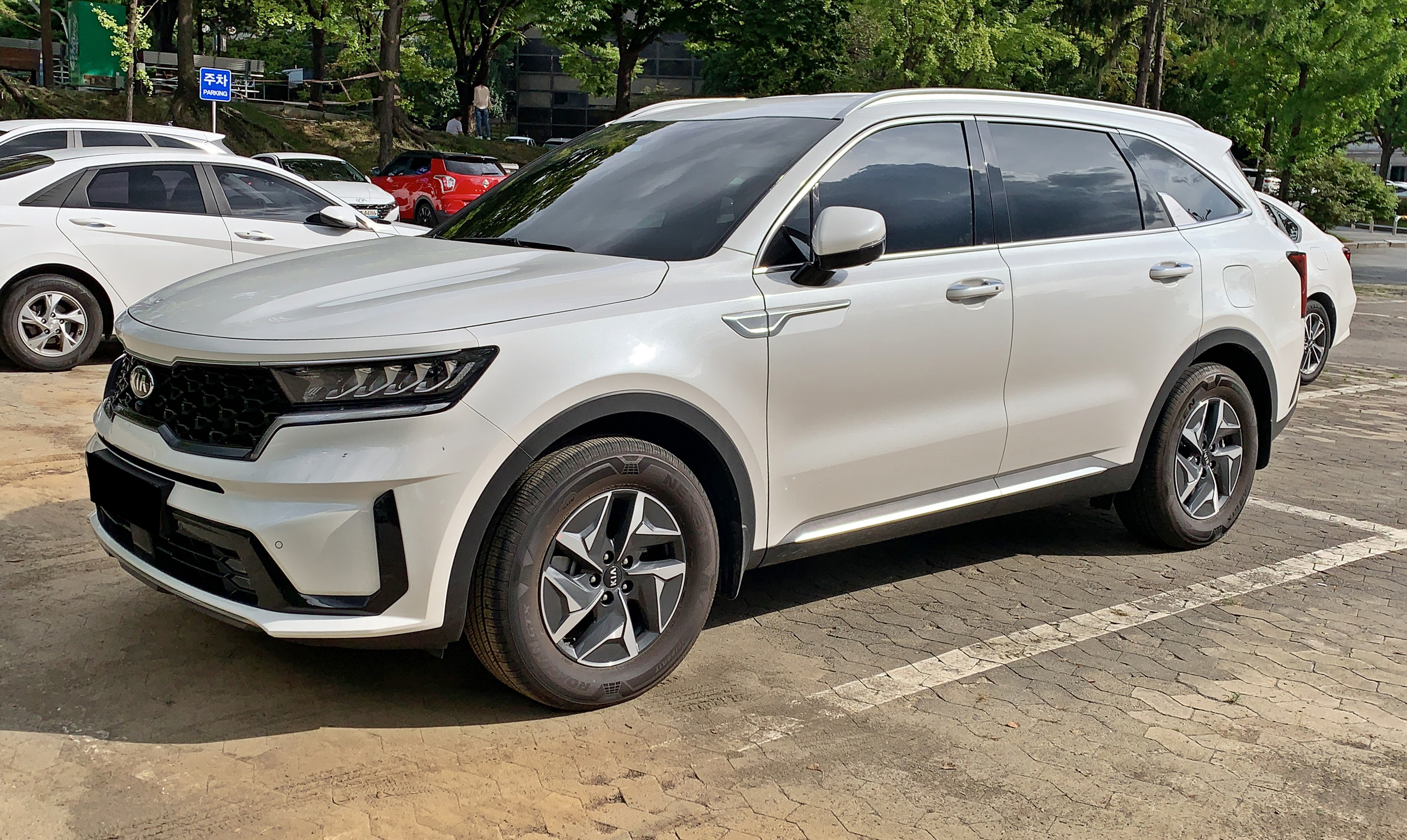
back around and the sales numbers are shooting back up. Sorento was the second best selling model
last month and then K4 was actually the third so that puts us in a very good place for the year
we're up almost 5% and hitting on all cylinders. All right let's talk about contingency planning
for Kia Canada regarding the tariffs so what is Kia Canada doing to address tariffs here in Canada
on US vehicle imports? Well I think Kia is in a relatively good position overall for the situation
that we're in. Over 80% of our production occurs outside of the United States so that doesn't
get impacted by the tariffs. We have three models that come out of the US market and they're
currently I guess not being imported because we have enough inventory on ground we had
quite a bit come in earlier this year so we're still in good shape. Those car lines are
Telluride, Sorento and EV6 and so we have the inventory on ground none of that inventory has
been hit with the tariffs so we're still in good shape to have an effective pricing
but at this point it's probably too early to tell what we would do next it's going to depend on
how long the situation continues and what other surprises we get in the coming weeks.
Okay so do you think overall pricing will rise in account of these tariffs for
for vehicles that you have an inventory and even vehicles that are on the way what's
going to happen with pricing? I think vehicles that we have an inventory are protected and
they're safe. We're still monitoring to see what would happen for vehicles that come out of the
US specifically. As I mentioned most of our product is not coming from there so we'll have to
it's a bit of a wait and see position at this point that we also have some potential
to move some production even for those models out of the US and into Korea so we would consider all
our options before making any decision. I know we've seen some OEMs already start to incur some
pricing for some of the tariffs that are coming that are affecting their inventory that's coming
from the US so I think it's going to be different by OEM and it's going to be a little bit of
wait and see for us. Okay now looking ahead what excites you the most about Canada's journey over
the next year or two and you know whether it's new models or dealer initiatives or innovations
that Canadian drivers can that can look forward to? We have a lot of exciting things coming
actually the next one or two years is actually 12 to 18 months even it's super exciting for us
we have three all-new EV models that we're launching in Canada including Canada unique
model that Yuna has spoken about before the EV5. We have the PV5 the first
purpose-built vehicle for us that's also coming next year and we have some complete
redesigns for some of our ICE and hybrid models that are also coming in the next
6 to 12 months so there's a lot of new product coming for the Canadian market for the Canadian
consumer and it's each time this product comes out sleeps and bounds ahead of the last generation
so we're super excited for that frankly we're going to have a hard time trying to
be able to keep up with all the product launches but on top of that there's lots of
other technology that's coming that we're more excited about our connected car services
is going to be coming out with an updated app and some more features and technologies that are
going to be added to that that's going to really make consumer life much more integrated with their
vehicle and much more convenient overall. Lots of fun lots of exciting stuff happy customers happy
dealers. Absolutely. Alice really thank you so much for your time appreciate appreciate it
always good talking to you. Same here Tim hope to see you around some more. I'd like to thank
Eliosh for his time and Tim for conducting the interview if you'd like to be a guest
have a suggestion or simply want to comment email me at glasen at autonews.com and remember
you can listen to all our previous podcasts on Spotify, iTunes, Google Play or on our website
automotivenews.ca just scroll to the podcast hub in the middle of the home page and don't
forget you can follow Automotive News Canada on X where we're at Auto News Canada and you
can find me there too under at glasen a n c finally look for us on LinkedIn just search
Automotive News Canada that does it for this episode of the Automotive News Canada podcast
have a happy Labor Day weekend we hope you'll join us next time so long everybody
About this episode
Kia Canada COO Elias El-Achhab discusses the company's electrification strategy and the impact of government EV incentives in a replay of a popular May conversation. He highlights the importance of collaboration among OEMs, government, and dealers to boost EV adoption. The episode also covers recent trends in Canadian automotive sales, including Kia's strong performance and plans for new EV models. Additionally, it touches on the challenges posed by tariffs and the need for infrastructure investment to support the growing EV market.
Suppliers see reshoring efforts; BMW to resume imports; Tim Hortons adding EV chargers. Plus, a replay of the May 16 conversations with Kia Canada Chief Operating Officer Elias El-Achhab, who talks about Kia’s electrification strategy, EV incentives, affordability and more.