LinkedIn is the website/app people use for professional networking and job hunting. Here it’s being used as a way to meet people in the car world and show what the speaker is working on.
NASCAR is the big American racing series with cars that look like regular cars but are built for racing. It’s especially known for oval tracks and close racing.
It’s a private car club with its own track where people can practice driving fast cars safely. Think of it like a members-only playground for car enthusiasts.
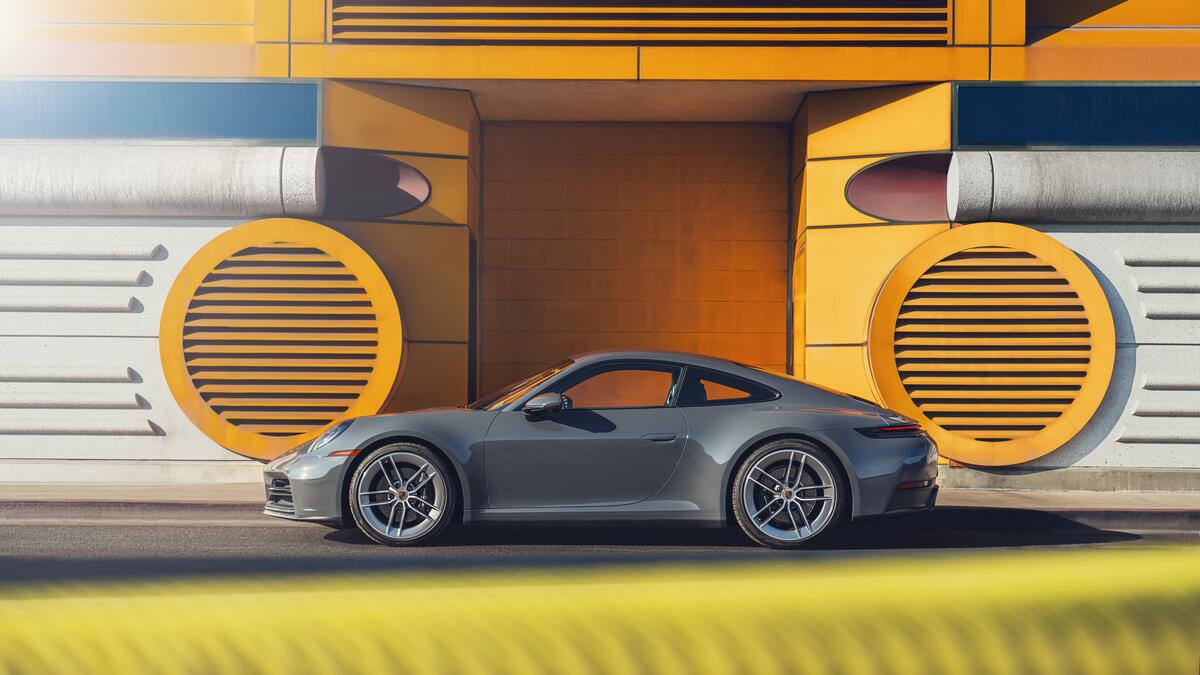
It’s Porsche’s famous sports car, and it’s one of the most recognizable performance cars ever made. She’s saying this was the car that first made her fall in love with cars.
This is the movie about a gamer who gets a chance to become a real race driver. The hosts are comparing it to the idea of teaching young people to race through gaming.
This sounds like a school workshop space where students can build things and work on projects. Here, it’s the place where they make and race cars and RC stuff.
Not all tires are the same. Some are made for rain, some for dry pavement, and some for racing, so picking the right ones helps the car stick to the road.
It’s basically a driving school or training camp for people who want to get better behind the wheel. At a place like Monticello, that usually means learning to drive performance cars on a track.
It’s basically an ambulance built to handle dirt roads, mountains, and rough terrain. The point is to get medical help to places that are hard to reach.
This is the system that helps people get medical care, like clinics, hospitals, and ambulances. The speaker is saying some rural places don’t have enough of that support nearby.
This is a design-planning tool for choosing colors, materials, and surface finishes. Car designers use it to make sure the vehicle’s interior and exterior look work together.
Car designers often make a life-size clay version of a vehicle so they can see what it looks like in person. It helps them judge shape and style before building the real car.
This means an ambulance built to drive on dirt roads, trails, or other rough ground. It’s basically a rescue vehicle that can go places a normal ambulance can’t.
This is the famous race track in Austin, Texas, where Formula 1 races. The speaker is saying the track in the Dominican Republic is similar in name but not the same place.
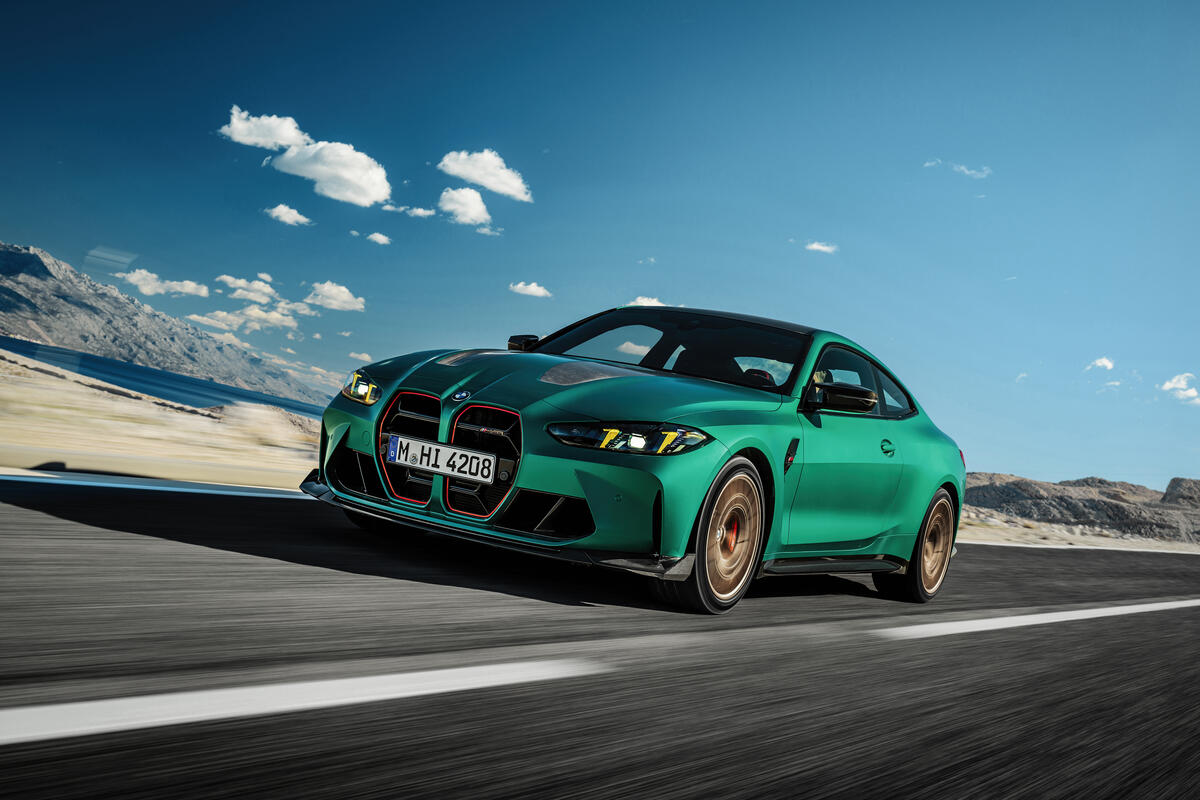
This is BMW's sporty, high-performance coupe. It's the version people talk about when they want a regular-looking car that can still be very fast and sharp to drive.
It's racing on dirt, gravel, and other rough surfaces instead of a normal paved track. The cars have to be tough and controllable when the ground is slippery and uneven.
Car
Porsche Dakar
This is Porsche's off-road version of the 911. It sits higher and is built to handle rough roads and dirt better than a normal sports car.
These are the small, open-wheel race cars you see in student engineering competitions and some pro racing series. They’re built to strict rules and are meant to be fast and agile.
It’s a driving competition where you weave through cones as fast as possible, usually by yourself on the course. It’s more about handling and accuracy than racing other cars side by side.
Here it means a car that feels old-school and mechanical instead of packed with computers and driver assists. The driver does more of the work and gets more direct feedback.
This is a college program for people who want to work on race cars and racing technology. It teaches the science and engineering behind making cars faster and better on track.
She’s a race driver and motorsport leader who’s become a visible role model for women in racing. The speaker is pointing to her as an example of someone younger women can look up to.
A race car driver from the UK who became famous for winning a women’s racing series. She’s often mentioned as an example of a successful woman in motorsports.
Person
Hannah Schmidt
A person being held up as an example in motorsports. The clip doesn’t say enough to explain exactly who she is beyond that.
Probably a well-known woman in racing and motorsport leadership. The speaker is using her as someone worth looking up to.
LIVE
Hello everybody and welcome back to this week's episode.
Today we are joined by a young up and coming Alexandra McCoy, someone that I actually found
through LinkedIn, which is kind of an interesting story, but she is a student currently and
working on some very interesting motorsport projects.
So Alex, welcome to the podcast.
Hello.
Thank you so much for having me.
I'm so excited to be here.
I'm so excited too.
In our initial conversations, I think we had some really interesting conversation and
I think what you have to offer is going to be really valuable here.
So why don't we just dive right in and tell us, have you always grown up around the automotive
world?
What was kind of your introduction to cars?
Oh my goodness.
So I have my dad to thank for this one because he started indoctrinating me into motorsports
with cars, you know, the movie.
I think I watched that maybe like 30 or 40 times as a toddler.
I love cars.
I had all the hot wheels.
Oh my goodness.
I had all the toys.
But as I grew up, I started liking more of actual racing.
I watched a little bit of F1.
I watched NASCAR a little bit too.
And as I grew older, I actually, when we were during COVID, during COVID, my dad was driving
dirt bikes again and I was really interested in driving dirt bike too.
So when I was about 13 or 14, I got my first dirt bike and I started driving on the roads
in the Dominican Republic, which was really fun and kind of like a gateway for me to really
start expressing myself in this way.
And then I went to a camp in Monticello Motor Club where I started driving Caymans.
I was about 16 years old at the time.
And that summer, I'd also gone on a trip around Germany and Sweden where I got to see a lot
of automotive manufacturers in the flesh.
You know, I went into the factories.
I went to the museums all over Europe.
And so as I got older, my interest grew and now I'm here and I'm doing everything I can.
I've got my school's automotive engineering club, which I've started.
I've worked a few jobs in motorsports by now and I'm really excited to see where it takes me.
That's so amazing.
And what just a wide variety of introductions at such a young age.
Tell us, is there any special car that you have a particular affinity to?
Oh, my goodness.
I love this question.
I love this question.
Um, the first car that made me really interested in cars is very, very basic.
I have to owe it to the Porsche 911.
I think I get it.
I'm a Porsche girl.
I get it. I love Porsche.
I think they're my favorite brand by far.
But I think the 911, it's a classic.
You can't you can't go wrong.
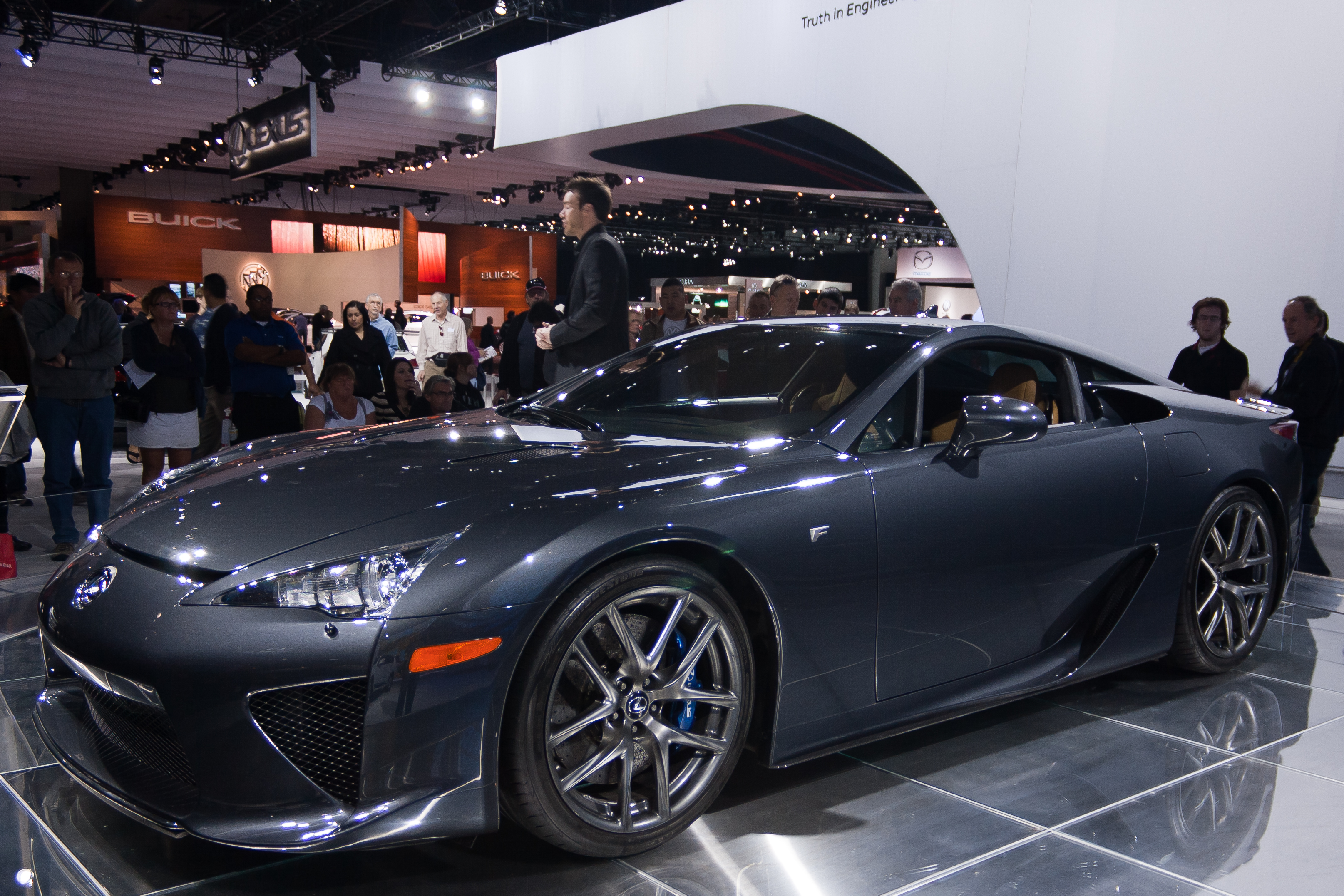
Although if I didn't choose a favorite car right now, it's going to be the Lexus LFA.
Okay. Okay.
We're branching out a little bit.
I like it.
Thank you. Thank you.
Well, good.
So you talked just kind of alluded to a little hint of some school club that you started.
Tell us a little bit about what your passion really has started to ignite at your school programs.
Oh, my goodness. Yes.
A lot has happened at school.
I actually just came back today before this recording.
I was at my club.
So in my junior year in high school, which was last year,
I started my school's Automotive Engineering Club,
which is a combination of RC car racing.
So we're taking RC cars.
These ones that we just got go up to about 60 miles an hour.
They're really something.
We we change them up a little bit.
We we make them a bit stronger, make them a bit faster.
Currently, I'm redesigning the chassis for one of them.
Casual, just casually, just casually.
And a few other students are they're fixing the suspension right now.
So they're a bit lower.
We're building ramps for them, jumps for them.
We also have a state of the art racing simulator, which I'm very proud of.
I got to school to buy it.
And we've been using that to teach kids how to drive.
We run a set of course on it and we show them what not to do and what to do.
And it's very fun.
A lot of people who've never driven go on that and think, oh, I've got this.
It's just like Mario Kart.
We don't.
But really, yeah, you feel a lot more.
Don't you feel a lot more?
Sometimes we like to bring out a fan.
We plug it into the wall and we blow it at them and say it's for immersion.
Or we'll take the chair and we'll shake it around.
State of the art.
We love it. I love that.
I love that.
Before we dive into that project, just back to the RC cars for a second.
Are y'all competing with these?
What does that look like?
So we actually haven't started competing with them yet.
But but I'm really interested in seeing what we can do to sign my school up
for Formula One in schools and actually start making it competitive.
My school has some great robotics teams, and I think some of that talent
could really be put to use in more car related activities.
And I think in wider horizons as well.
And I'd like to connect my school with with more of an international community that way.
So I really like to do that.
That's really where I want to take it.
That's my dream with the club.
That's fantastic.
So let's go back to the Sims real quick.
You mentioned that you are teaching people what to do and what not to do.
Tell us a little bit more about this project and what you hope to get out of it
and maybe what some of the experiences for people participating looks like.
Yeah. So in the auto club, we do a little bit of racing.
So one of my co-founders who helped me find the club.
He's actually a really great race car driver.
And in the beginning, he would really be there to show students how to drive.
And as we've all gotten busier, we've been using more of the RC cars.
But whenever there's a student who asks, hey, I'd really like to use a simulator.
We always we all go over and we tell them, all right, here's you always want to look.
You'll look where you go.
There's a lot of tips.
So we just kind of sit them down.
We strap them in and we tell them, all right, here's.
Do you know how to drive a car? No.
Do you know where the gas pedal is? No.
Sometimes you prank them a little bit.
The gas pedals on the left, but it's all a good fun.
And a lot of times students are very young.
A lot of freshmen love it because they love gaming.
So they see this little bit more of a game.
But our older students are like, I really want to get into racing.
And so we'll teach them how to actually drive.
We'll show them, OK, here's where you go.
We'll actually set them up in some races or even I built a few custom tracks
for the students so we can put down cones and say, all right,
go between these cones, swerve between these.
So that's amazing. I love that.
And, you know, it's such a proactive thing to be doing now, especially with how
so many people and companies are bridging the gap between younger demographics
who love gaming and bridging that into a professional race car driver.
So that's amazing that at high school level, this is happening
and in somewhat of a controlled experience.
Absolutely. Have you seen the new Gran Turismo movie?
Yes, yes, just like that.
It really is. I mean, that's exactly what the story was.
You know, I think that that movie is going to do a lot to highlight
how important investing in kids who are interested in gaming can be
and translating into real life experiences.
So that's fantastic. What's happening?
If there's something that you could take away or like an objective
that you would see as a win from working in this program, what would you say that is?
Objective. Wow. OK, there's a few.
There's a few.
I think, first of all, it's allowed me to really connect with my school
in a number of ways, being able to be a leader really brings out,
I think, the most in me and see that passion for cars
and RC and racing ignite and other people.
No pun intended. That's really fulfilling for me.
Also, just getting to know more people through a common interest.
That's always amazing.
And just getting a space where I get to be myself, you know, not every day of the week.
Can I go up into our schools?
What we call the I lab, which is basically like a big workshop area.
Not every day. Do I get to go in there and hang out with some great people
and just build whatever we feel like and just drive fast cars around and race them to.
So I think it's really been a great space to open up in my school.
That's I love that. I love that so much.
And you mentioned you had some tips for people that you gave.
I think it's interesting with you being as young as you are
and getting involved in the automotive space as young as you did.
What are some driving tips you would have for people just right off the bat
who are maybe interested in maybe translating those skillsets onto a track?
OK, first tip, you will look you will go where you look.
You'll go where you look. So true.
So when I was starting out, I was very slow.
I still am sometimes a little slow on track when I'm getting my first few laps out there.
But you have to not look right in front of you.
You have to look ahead of you. And that's something I love that.
I actually really quick.
I had a dinner just the other day with a good friend of mine
who has been in the industry for decades.
And unfortunately, last year, he had an incident with a vehicle on track.
And he said, I knew I know what I wasn't supposed to do.
He said, but I was staring directly at the wall.
He's like, why did I do that?
And you really do. It really does happen.
I had a moment as well.
One of my first times I ever was actually driving
a little bit competitively with some friends of mine.
I was doing a qualifying lap.
And there was a car in front of me.
We were on a downhill.
And for some reason, I was too scared to go flat out and pass them.
I thought I was going a little too fast.
But I hit the brakes going downhill,
which all the way went to the front.
And luckily I didn't look at the wall.
I looked where the car was and I managed to to, you know, miss it.
But you don't forget that.
So that's a good tip.
So, um, yeah, you'll do that.
Definitely go. You'll look where you go.
No, you go where you look.
What are like maybe two more tips, two more tips.
OK, let's think.
I don't remember what I did in these are on this spot.
I apologize. This is on the spot.
No, I should know. I should know this.
Definitely don't go crazy in wet conditions.
I've slid. I've slipped inside it a little bit.
So make sure you have on the right tires.
That's a good one.
That is a good one.
You learn anything from a Ferrari pit crew.
Then we should probably do it right.
Where use the right tires, always wear the right equipment.
I feel like I need a good on track one. Let's see.
I'll always leave just enough space
between the car that you need to pass and don't pass the car.
Like, oh, man, it's hard to explain without having.
I'm using my hands right now and I'm trying to describe it.
Make sure that you've pulled up to the window of the car
you're about to pass before you pass on the inside,
or else they won't see you and they'll cut you off.
And it'll be terrible. Yes, it will be terrible.
I'm sure later I'll come up with a great one.
I'll be like, oh, I should have said this.
So when it comes up, I'll put it in there.
Please do. Please do.
No, that's perfect.
But you're so right.
Also, making sure that you're in the right position
before you just overtake is so important.
And I think when a lot of new drivers get started,
they just think they see a window and then go for it
and it actually causes way more problems.
Yeah, I've seen it happen. Don't do that.
So, Alex, tell us a little bit.
You alluded again at the beginning of this conversation,
some driving and work experience that you've had.
Tell us a little bit about what some of those driving
opportunities and teaching opportunities were.
Oh, yeah. So I worked at Monticello Motor Club
after I spent a summer there doing the driver's camp.
I went through all three weeks of it.
I came back last summer to actually be an instructor assistant,
which was super, super exciting.
So I spent time working logistics for some of the weeks,
making sure everything was going to plan alongside
the actual director of the program.
That was super rewarding.
And then I began to help the instructors
actually set up activities.
So I pointed out mistakes the kids were making.
I provided help for the students.
I transported them around the track.
So I had a golf cart with me always.
I had a walkie talkie.
I felt very professional.
And then, of course, I cleaned off the carts
and we had these big Subaru's we drive off road.
So power washing was very satisfying.
I like to do it actually a lot.
Oh, it's like those satisfying videos.
But I was doing it myself.
And I broke one of them, actually.
But it was not it was on track.
It was not part of the job.
I was driving one of the Subaru's that they'd just gotten on track.
I was testing it out and they'd warned me before,
hey, these brakes aren't very good.
And so I go out on track and I started driving it super hard.
And actually, the brakes overheated.
And it was a little scary, but we managed to pull in.
It was totally fine.
They got new brakes anyway, but it was like it was a rite of passage.
But that was all last summer.
It was really fun working alongside the students
and seeing them genuinely improve over the course of just a few weeks.
As I saw, I saw them.
I saw a little bit of myself in them.
So it was really fun watching them improve.
It was really, really fun.
That's so good.
And what do you think, as someone who is helping to teach,
I always think it's important that you learn in that experience, too.
What is maybe a piece of advice or a lesson
or just something that you took away from the experience
of being a mentor, really, in that role?
Yeah, yeah, that's a really good question.
One thing I learned myself and also I think
really the students who got the most out of the program learned,
especially was that it didn't matter how fast you were going.
Speed comes with experience.
As you get better, you'll go faster because you gain that confidence.
So it's not all about going flat out in every single corner.
If you don't know what you're doing, you're going to get into some problems.
So take it one step at a time and just like anything else,
you know, you can't go immediately into racing.
First, you got to start with some laps.
You got to try it out, go karting.
So take it easy on yourself, start out slow and then build up.
The people who really got the most out of the program
were the ones who listened.
I think it's just really good, you know, just listening, staying on course,
literally making sure we had a few, you know, people who would go off.
And it was totally fine, but it's really it's a dangerous sport.
So making sure you're always listening and just being a very good listener.
Yes. No, you're so real.
Yeah, really, you're so true.
It's, you know, when you start out, it's it's very easy to think
you can just get in a car and floor it because I think in this industry,
there's a lot of type A personalities and competitive people.
But you know, understanding that to your point,
the more experience you have and the better skillset you have,
then the faster you can go while still being safe and you're so right.
It is an industry where there's a lot of risk,
but you can still have a good time doing it.
And it doesn't have to be all about competition,
because really you're competing against yourself and how you're improving.
So thanks for sharing that.
Tell us a little bit about over over the past couple weeks,
you've gotten accepted to a new program with General Motors.
Can you speak to that a little bit?
Oh, I'd love to.
OK, this was the Youth Modelers, Artists and Designers program.
This was so much fun.
It just ended about a week or two ago.
And it culminated in a really fun presentation.
But what the presentation was about was over, I think it was eight or so weeks.
It started in December and it went to February.
We were tasked by General Motors.
And I think there's about 50 of us who got accepted into a program
all in middle school and high school, who would design a car for what
our side hustle was.
So we choose something we'd like to do.
I chose an ambulance for off-roading and, you know, going to the mountains.
Amazing. I love off-roading.
I love going while I'm in the Dominican Republic with my family there.
We like to go off into the mountains and drive a lot there on the beaches.
And there's not often a lot of people who are really tapped into
the medical infrastructure of the Dominican Republic out in rural areas.
So I thought, hey, I love driving in the dirt.
Also, helping people is pretty great.
So what if we combined them?
And that was my side hustle.
So I created a vehicle with the help of a mentor who works at GM.
He was absolutely amazing.
A friend of mine was also in the program and we worked all those weeks.
We did CMF pallets.
We did a lot of design sketches, a lot of development sketches,
some great final renderings.
Even a 3D model was prepared for me.
And some of the people who were there on site,
there was options for online and on site.
And the people who were there built 3D clay models.
I wasn't able to do that, but I was able to come to the final presentation
in GM's historical design dome on their technical center.
So that was amazing.
I went all the way to Detroit and missed a day of school for that.
I'd do that any day.
Yeah, that's so cool, Alex.
And are we anticipating to see a future patent for off-road ambulances
in the near future from you?
I think I'll get back to you on that one.
But we're working on it, cooking it up.
We'll see. No, that's that's so amazing.
Seriously, to combine passion and a need.
I think that's such an awesome experience you got to have.
So out of out of the different places
you've had the opportunity to drive in different cars you've driven.
What are some of your favorite places
you've driven on or different tracks you've been to?
Wow. Oh, my goodness.
OK, I have a few tracks I've been on.
I've been on Monticello's, one that I really loved.
And I went on recently for the first time was in the Dominican Republic.
There's one race track in the south in Santo Domingo
called Oh, my God.
It's it's the autodromo.
Yeah, circuito de las Américas.
But it's like not it's not Kota.
It's not circuit of the Americas.
It's the Dominican one.
It's it's a very small, flat track, but it's fun.
It's fast. My dad's racing there right now.
He just went.
He got third place in his class.
I'm super proud of him.
Way to go. Yeah, I know.
Shout out, dad.
And I got to.
I think I was driving a golf, if I remember correctly.
I think it was a golf and I drove it around that track on a practice day.
It was just me, my dad and my uncle and a few other friends of ours.
It was really hot.
I wasn't ready for how hot it was going to be.
You know, you've got your fire suit on.
You've got everything you're in a car with no AC and it's like 87 degrees outside.
It was so fun.
I love that track.
It's really it's easy to get the hang of.
It's a short one, too.
I think it laps like a little over a minute.
Oh, well, yeah, I think I was doing like 140
I didn't have a super fast car, but I didn't care.
No, that sounds like a great time.
And you're you're so right, too.
You mentioned the the fire suit.
Oh, my gosh, I think people drastically
underestimate how hot those are.
There's a reason they're called fire suits.
It might not be for that reason, but it certainly should be.
Yeah, exactly.
It's not just to prevent you from catching on fire.
It's actually because you're in a fire.
Yeah, at that point.
Oh, my gosh.
So that sounds like an amazing track.
You've gotten the chance to drive multiple different vehicles.
What's one of the most memorable cars that you've driven?
Oh, OK, this is a good question.
I have driven.
And I love the off road cars, because I think they have a lot more energy
to them and a lot more personality, in my opinion.
I did love driving the Caymans at Monticello
because they were a lot of fun.
They were really fast.
They're automatic, so didn't have to do much thinking there.
I have a car of my own that I really do love to drive.
So that one's the best, in my opinion, because I just love having a car now.
It's a ride of passage, you know, as you become an adult.
It's really fun.
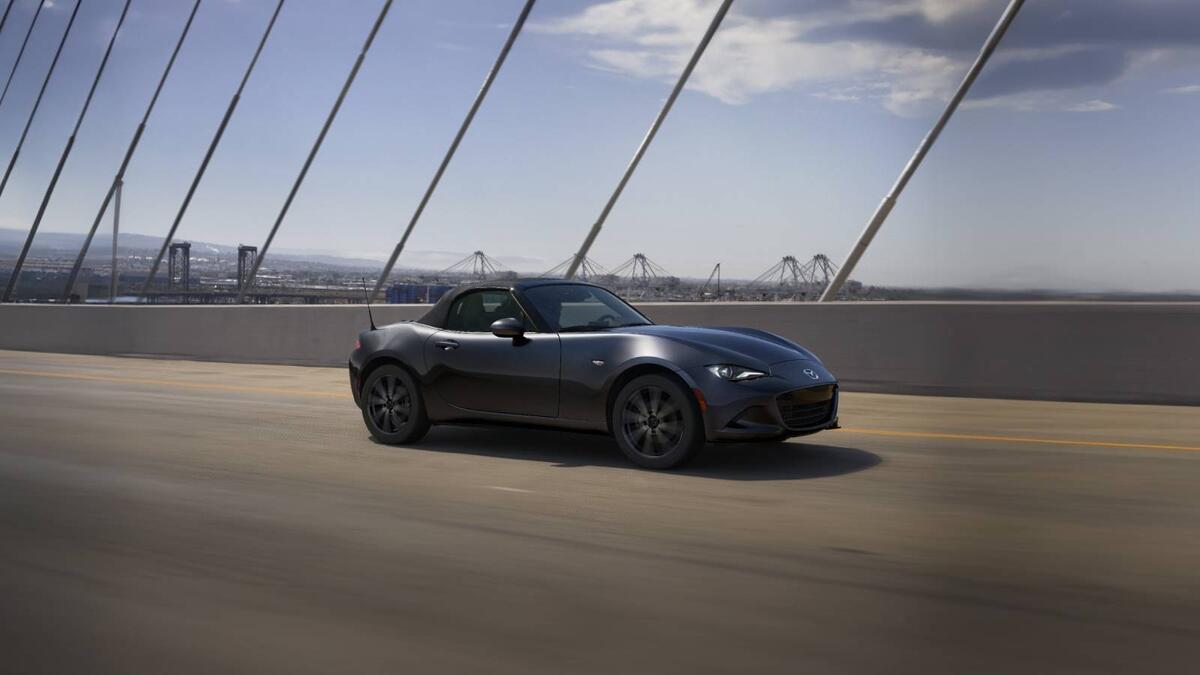
Although I think the first car that I ever learned to drive was a Miata.
That was an experience.
But Miata's are so much fun because it doesn't necessarily matter
if they're not that fast, but you learn so much from driving a Miata.
I think I think it's the best first car to learn how to drive.
You know, you have manual.
That's been one of the most fun.
But I'm hoping to drive some of my dream cars that I mentioned earlier.
Yeah, although the Subaru's are fun.
A Mini Cooper.
I did a Mini Cooper lap around Monticello.
I think I got it to like 100 and 25 miles an hour.
I feel like that just sounds hilarious.
Like just near the there goes the Mini Cooper.
There goes the Mini Cooper.
Oh, and there's the Nissan GTR.
Right, I think that's that's the one that I like to tell people about.
I'm like, oh, that was a fun one.
I think they're all fun.
Awesome. That was or BMW.
I think it was an M4.
So I'm going to go with the BMW M4.
I didn't think there was a few cars of different.
That one, that one, I think is the most fun.
It's OK.
Honestly, you mentioned the personality of off road and rally cars.
And really, I think every car has its personality.
And I while I definitely favor classic German cars,
I have a huge respect for all cars.
So I totally get that it's hard to choose.
I'm bad at favorites.
I love that you brought up the rally in a couple ways here.
I'm a huge advocate for off road rally racing and specifically like Porsche's.
And just, man, the capabilities of being
able to whip that vehicle around off road is just, oh, man, it's it's not.
You can't compare it to anything.
No, not at all.
I mean, I'm sure you've seen you said yourself that you love Porsche.
The Porsche Dakar that came out.
Dakar. Oh, I love when that came out.
That was so exciting.
It was a combination of all my favorite on track cars and and off roading.
I think that was brilliant.
I love how Porsche did that.
Absolutely.
You know, there's there's that whole different market
and on the other side of the world, outside of the states,
that's just huge and to rally and, man, yeah, that's that's an area
I'd like to get more involved in, I think.
Oh, for sure.
So let's let's get back to some to you, your future a little bit.
What at such a young age, I was so impressed when we first started talking
of what you've been able to accomplish and your experiences.
But what are some things you might see yourself doing in the future?
I know this is always a hard question
and it's totally OK for your answers to change as you evolve.
But what are some things where you maybe see yourself now?
Yeah, yeah, this is what it's been on my mind for most of the school year.
I know.
So I've had some time to think about it.
I mean, becoming an adult, you know, it's very important to think about,
you know, what I want to do with the rest of my life,
but I've already built such a great foundation.
So I think definitely I'm going to be somewhere in the automotive industry.
I really love working with cars and at the least engineering or and or design.
I love arts.
I'm an art kid at heart and I love cars and I like engineering a lot
and I really want to learn it so I can understand cars better and work on them myself.
So right now the goal is engineering degree.
And then if I'm still interested in design, I think graduate school for design.
Again, this is all up in the air right now.
We've got a lot of time and it can change.
It can change, of course.
So it's somewhere I think walking the line
somewhere between my love for fine arts and drawing,
as well as some great engineering and design.
I think that's where I'll end up.
That's an awesome meeting ground there in cars.
Yeah, so do you just kind of brought up a good point?
Have you worked on cars?
You mentioned, you know, thanking your dad for the introduction to the space
and and your kind of love for this industry.
But do you have experience working on cars and is that something you do regularly?
No, I'm a city kid.
I live in New York City.
I got no garage, which is unfortunate, but it's, you know, it's whatever.
I try to get myself as much in hands on projects with my school's club, of course.
And I that's how I really get involved.
But as for actually working on the cars,
that's what I really want to dive into in college.
I want to join a formula essay team.
I don't know if you're familiar with it,
but the teams that they have at colleges that build those formula cars
that they race against each other.
Yeah, I'd love to join one of those teams and really start to understand cars
and inside out.
I think I understand them to a certain degree, but to really get what's going on.
I really want to dive in further.
So there's a lot more I want to do still,
but I'm very excited for what that's going to be like.
I love that so much.
Actually, some of my first exposure to essays were during an event that I went to
that was an SCCA, it was their solo nationals, which is their autocross championship.
And there was an essay team that had brought the car they built to compete
in the championship.
And it was just so cool getting to talk to those folks
and seeing what they created and how it performed.
So that's amazing.
They know their stuff.
Oh, they do.
Yeah, I listen, I am not a mechanical engineer.
I can I can do simple things and I can work on classic cars that are very analog.
But my goodness, what people are building from the ground up is just fascinating to me.
So when you have your degree and tenure in the career later,
I'm sure we'll reconnect.
I will help you out.
No problem.
That's perfect.
So I guess we'll kind of start to close out a little bit here.
As someone who is young in yourself,
what's a way that you would recommend more people your age to get involved
in motorsport and automotive industries?
This is a great question.
I've been saying that to every question, but I do genuinely think they're amazing.
Great conversation.
Exactly.
So I've been saying with a lot of my friends to build their empire,
you know, to get involved is one thing.
But to also work on yourself and, you know, in any single respect,
but also professionally, get involved, put yourself out there,
start really putting in hours, what really drove me to again, no pun intended.
I feel like since I've gotten more into cars throughout my life, I just do it now.
I can't stop.
So make more driving puns, for sure.
And also, I think it's really important, of course,
I built a LinkedIn profile, which is how I got connected with you.
But that's also a way that I post what I'm doing.
I connect with more people.
And those are really important as you never know where you're going to end up
and talking to people, you know, talking to anyone.
I got one of my first job offers by telling my doctor about how much I loved
cars and like a month later, I was working at Volvo.
So really anything can happen.
Just get out there, be passionate and make it something that you can
really build your life around.
That's so good. Something you love.
Enjoy it. So good.
Just keep working on it and whenever you have time and get the help you need.
And be on podcasts.
Yeah, get out there.
OK, OK, this is a very similar question.
But what is a piece of advice that you would think
or whether it's advice or an experience that you have that can maybe inspire
more women specifically, but also younger generations to get involved?
Yeah, I love speaking specifically to the female audience because I remember
I was accepted into one of the schools I was accepted into
who has a motorsports engineering program and I was there touring the other week.
And as we're all entering all of the motorsports engineers who are there,
we enter a big room and someone goes up and asks, all right,
all of the girls in this program, please raise your hand.
And there's a pretty big audience and only two of us are there.
Yeah. And I felt like, wow, I was not shocked.
But I was a little sad because I knew that there's so if only there was
more connection and I think enthusiasm for women in the industry.
There would be more girls there.
But there just isn't that many women already there to look up to.
Now, more than ever, there are, you know, you've got Suzy Wolff,
you've got Jamie Chadwick, these amazing people, Hannah Schmidt to look up to.
But I think as more women start taking that leap forward,
there's going to be more girls in the industry.
So I'd say for anyone in any industry, try something,
even if you're not sure you'll like it.
And I definitely recommend motorsports, look into it,
see if it's something that you like and follow your passion
because you never know where it may bring you next.
I thought back in ninth grade, I was going to go into animation.
And then as I started exploring more interests,
I found that motorsports is something I wanted to do.
So I encourage everyone to follow that.
And I think if we can just appreciate people for who they are
and what they love, then and not worry about anything like,
oh, you don't really like motorsports, then I think it'll be amazing
to see where the industry goes.
Yeah, absolutely.
We don't need this narrative that just because a woman
likes something in motorsport, they have to know everything.
Oh, my gosh.
Can you name five drivers?
No, literally.
But really, I think what your advice is so, so invaluable,
especially coming from someone who still has so much life to experience.
I love how you mentioned Susie Wolfe and some of the other
just amazing drivers in this space.
There's a quote that I forget who actually said it and started it.
But I heard through the Women in Motorsports North America organization
and it was if you can see her, you can be her.
And just having someone to look up to that is, you know what,
maybe I can do that.
Why can't I, you know, kind of changing the narrative of that question
becomes really important.
And what you said to Alex of, you know, try all the different things.
I mean, for myself personally, I did not think I was going to ever be in
motorsports when I was younger.
And then when I got in the automotive space, I tried every different role
just to figure out what part of motorsport I actually liked being in.
So such good words of wisdom.
And yeah, no, it's been so great chatting with you
and just hearing some about your experience.
So thank you so much.
Yeah, absolutely.
Thank you so much for having me.
It's been a pleasure of mine.
Alex, where can the listeners find you
if they want to follow along on your upcoming journeys?
Oh, connect with me on LinkedIn.
I love LinkedIn.
I love connecting with people and it's led me to experiences like this.
So if you're interested in seeing what I'm doing more professionally,
definitely check out my LinkedIn where I post as often as I can
about what I've been up to.
I love chatting with people and seeing what they've done
and just learning from others.
And if you want to see more of what I'm doing day to day,
follow my Instagram, 92 McCoy, where it's a nine to MC KOI
and shout out to the avenues auto engineering club Instagram.
You can find it linked on my profile.
And you can see what I've been up to.
You can see all my car content saved.
And I love just connecting with people.
So that's where you can find me.
Thanks, Alex.
We'll have that all tagged below so everyone can find you.
Thanks, listener for tuning in this week and Alex for joining.
We'll see you next week.
Bye. So much.
About this episode
Alexandra McCoy traces her path from watching “Cars” as a toddler to learning to drive at Monticello Motor Club and building an RC-focused school Automotive Engineering Club. The conversation connects simulator training, custom cone tracks, and safe passing with real track lessons—like why vision matters and how wet grip changes everything. It then pivots to her GM-sponsored off-road ambulance concept for rural Dominican Republic communities, plus her broader take on women in motorsports and finding mentors.
In today’s episode, host Eva is joined by Alexandra McKoy, a New York City kid inspired by automotive and working to learn as much as she can to make her mark in the motorsport world. They talk all things from school programs to off-road ambulances. Follow along with Alex’s journey on Instagram, @92mckoy or on LinkedIn, Alexandra McKoy to stay connected. Be sure to follow @bedifferentialpodcast to stay up to date, learn more, and get bts from the motorsport world.