Road Atlanta is a famous racetrack in Georgia where cars race on a special course. It's known for its exciting turns and hills, making it a popular spot for racing events.
Petit Le Mans is a long car race that takes place in Georgia, USA. It's known for being very challenging and lasts for either 10 hours or until the racers cover 1,000 miles, whichever comes first.
An endurance race is a type of car race that lasts a long time, usually several hours. It challenges both the cars and the drivers to see who can last the longest without breaking down.
Concept
Ford vs Ferrari
Ford vs Ferrari is a movie about a car race where Ford tried to beat Ferrari in a famous race called Le Mans. It shows how hard it was for Ford to make a fast car that could win.
Le Mans is a classic movie from 1971 starring Steve McQueen, which is about the famous car race. It shows the excitement of racing and is loved by car fans for its realistic scenes.
Fiat is an Italian car company that makes small cars and is popular in Europe. They have been around for a long time and make various types of vehicles.
Formula 1 is a top-level car racing sport where very fast cars compete in races around the world. It's known for its exciting races and high-tech cars.
Prototype cars are unique race cars built to test new ideas and technologies. They are usually faster and more advanced than regular cars you see on the road.
Formula One is a type of car racing where very fast cars compete on special tracks. It's famous for having the best drivers and the most advanced cars.
G forces are the forces you feel when a car speeds up, slows down, or turns quickly. In racing, drivers experience strong G forces that can make it hard to control the car and can be physically demanding.
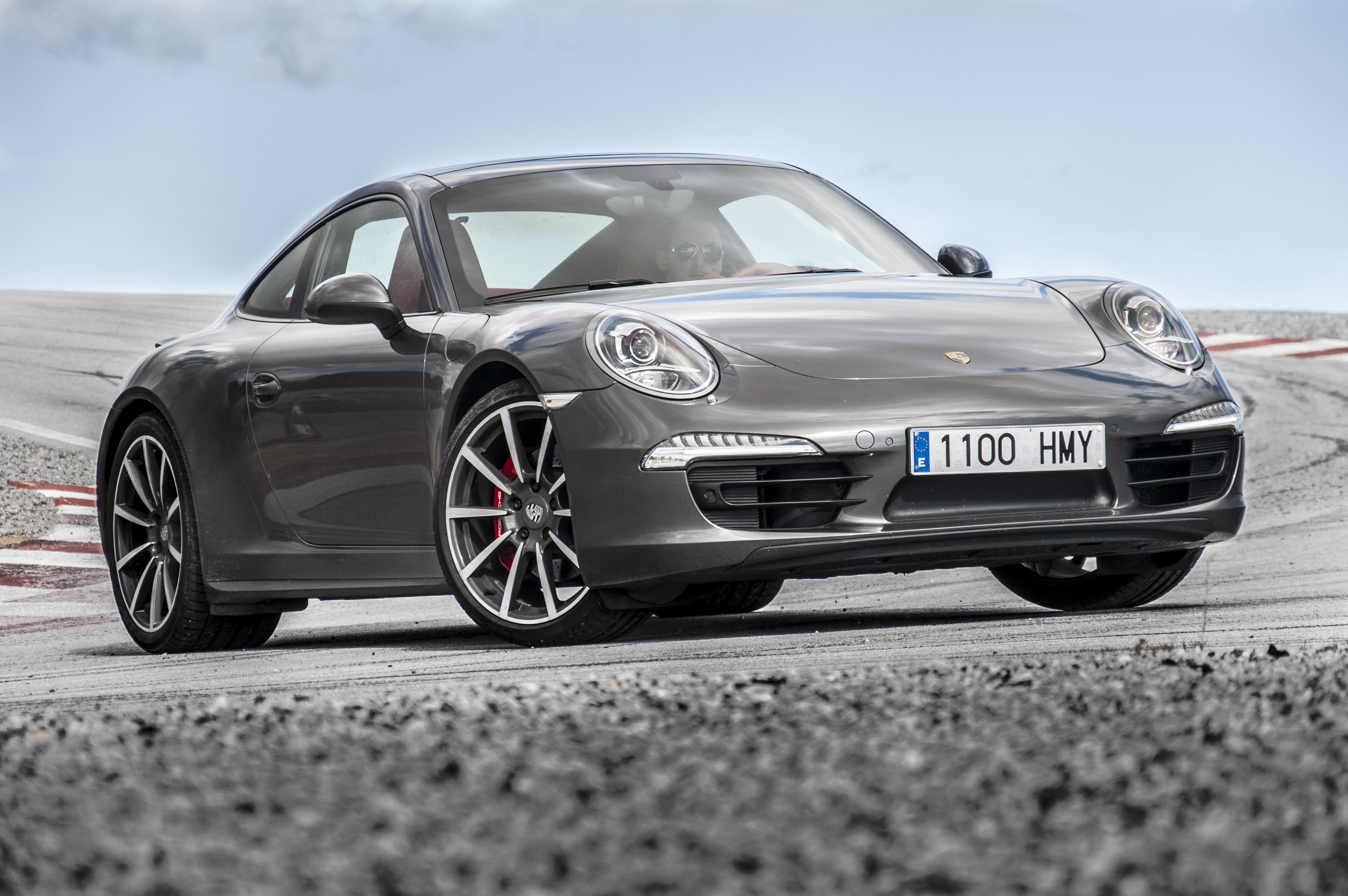
The Porsche 911 GT3 is a special version of the Porsche 911 that is built for racing and high performance. It has features that make it faster and better on the track than regular 911 models.
NASCAR is a type of car racing that takes place on circular tracks. The cars used in NASCAR races are specially built for speed and competition, making it a thrilling sport to watch and participate in.
Charlotte Motor Speedway is a famous race track where many NASCAR races are held. It's a big oval track where cars go really fast, and it's located in North Carolina.
A tri-oval racetrack is a type of racing track shaped like an oval with three curved sections. It's designed for high-speed racing, allowing cars to go really fast while turning.
The Monaco Grand Prix is a famous car race that takes place in Monaco, a small country on the French Riviera. It's known for its difficult track that runs through the city streets, making it a unique and exciting event.
A roll cage is a strong metal frame inside a race car that helps keep the driver safe if the car flips over or crashes. It makes the car stronger and protects the driver from getting hurt.
The Ford Mustang is a popular sports car that has been around since the 1960s. It's known for being fast and fun to drive, making it a favorite among car enthusiasts and everyday drivers alike.
IndyCar racing is another form of car racing where cars have open wheels and can go really fast. One of the most famous races is the Indianapolis 500, which takes place at a big track in Indiana.
The Indianapolis Motor Speedway is a well-known racetrack in Indiana where many car races happen, including the big Indianapolis 500 race. It's a place where lots of fans come to watch the races.
A timed event is when drivers race against the clock to see who can finish a course the fastest. It's all about completing the course in the shortest time possible.
The Chevrolet Corvette is a fast and stylish sports car that has been around for many years. It's known for its great speed and handling, and it's often seen as a dream car for many people.
LIVE
Hey, folks.
Welcome to another edition of My Car Guru, where I always try to encourage, enlighten, educate
folks about something that is critical to their existence in this modern world, and that's
the automobile and how it impacts our lives.
So that's all the introduction that we need today.
We're talking about something a little bit different, and that's racing.
Why are we talking about that?
Because today, I leave, or just right after this program, I leave for Georgia, just outside
of Gainesville, Georgia.
There's a two and a half mile or a little bit larger than that racetrack called Road Atlanta.
And at that particular racetrack this, well, this week and this weekend is really a
series of races culminating in a race on Saturday, which is called the Petite Le Mans.
So what does that mean?
Petite means small.
Le Mans is a place in France.
And it's, if not the most famous auto race in the world, it's in the top two or three.
And it is an endurance race at Le Mans.
That happens early summer, and the race is 24 hours long.
If you watch the movie with Matt Damon called Ford vs Ferrari, then that was the Le Mans race.
There was a movie many years ago made by Steve McQueen called Le Mans.
And it gave an insider view as to what it was like to race and to all the different
surrounding events of Le Mans.
I actually liked, well, except for a lot of the stuff that had nothing to do with the
actual race.
I really liked Ford vs Ferrari simply because it was an unbelievable story about how the
Ford Motor Company decided to participate in Le Mans.
And it was a result of an argument because several years before that, Henry Ford II,
which was Henry Ford's grandson, had made an attempt or actually made a move to buy Ferrari,
the actual company based in Maranello, Italy.
And Ferrari was open to it.
But the negotiations fell apart at the end because Ford and the leaders in the Ford
Motor Company did not want Enzo Ferrari to have control over the racing program.
They wanted to control everything, the production of just retail cars that they would sell to
public and the racing program.
Well, Ferrari pulled the plug at the last minute and decided to team up with Fiat.
Well, this made Henry Ford II very upset.
And so he decided that he wanted to beat Ferrari at their own game because Ferrari had
dominated Le Mans type racing for many, many years.
Well, not just that, but Formula 1 racing.
You know, the only thing they weren't really involved in was NASCAR.
So Ferrari was a big participant in the type of racing that Americans really weren't
that familiar with.
But because that transaction had blown up in the face of Henry Ford, he, in order
to save face, he decided to hire people who really understood that world and what it would
take and that's where Carol Shelby came into the picture.
And they were successful in 1966, Ford beat Ferrari.
They got first, second, and third place at Le Mans, which was a phenomenal achievement.
So this race that I'm going to is called the Petit Le Mans.
It is part of the same series, the same types of cars race at Le Mans that race at the Petit
Le Mans.
And this is the final race of the season.
It's an endurance race.
There'll be four different classes of cars racing around the track at the same time.
When I say classes of cars, I'm talking about cars that go really, really fast.
And well, all of them, quite frankly, all of them go really, really fast.
It's just that the prototype cars are the fastest.
And almost as fast as Formula One race cars.
And so it's really a lot of fun.
So I pick up my grandson, my seven year, one of my grandsons, seven year old Bo, and I'll
be picking him up and we'll be going down.
He went with me last year and we just had a ball.
And so we have a big motor home that we rent, we park it in the same place every
year.
It's just right beside the track.
Well, it's in what they call the S turns at Rhode Atlanta.
And it's just a great view.
And there's a company that we hire.
They actually take the camper there, set it all up.
When we arrive, it's there, it's running, it's plugged in, ready to go.
And we stay from Wednesday typically, but I'm not going down until today.
And then we stay through Sunday.
The race is a 10 hour race instead of a 24 hour race like they do at Le Mans.
But it's still an endurance race.
And another interesting twist is that we have four different classes, but you
have many different drivers.
There'll be about 50 cars on the racetrack at the same time.
And there will be driver exchanges.
So you may have three or four different drivers taking turns during this race,
just like they do at Le Mans.
You can't imagine the the G forces and the the heat and just the the toll
that it takes on the body of a race car driver.
I mean, many of them will lose anywhere from 10 to 15 pounds.
Can you believe that during a race?
I mean, I guess what they're losing is water weight.
But they become very dehydrated.
They have to be in tremendous physical condition to be able to do this.
You know, a lot of people think, well, they're just driving cars
right around on a road.
Now they're going at incredible speeds that would scare you to death.
I took a ride one time with a professional race car driver around
a curvy track in a Porsche 911 GT3.
And it was all I could do to keep from throwing up.
I mean, I got to drive the car first and I thought that I was pretty good.
I said, this guy, you know, he was riding along with me, the professional driver.
I said, he's going to be pretty impressed for this.
At the time I was 65 years old and he wasn't impressed.
At all, because at the very end of it, he said, OK, now it's my turn.
We did two laps and I'm serious.
I was ready to tell him to stop, please, after the first lap.
But I stayed in there and when I get and I have a problem with orientation
sometime, well, let's say vertigo, you know, dizziness.
I could never ride the rides at a fair like I used to when I was a kid.
I don't know why that developed in me, but it did.
And probably for the next hour, I felt very bad.
I just was dizzy and lightheaded.
And that's understandable, I guess, for a person my age.
But you think about what these drivers are capable of doing
and they get in a race car and they race for three hours or four hours.
And the incredible G forces that their bodies have to endure
and the focus that it takes to drive a car, you know, at 180 miles an hour.
You know, on a two lane road, basically.
But, you know, there's no traffic coming in the opposite direction.
But it's about two lanes wide and the concentration that it takes.
Have you ever driven at 100 miles an hour even?
I mean, think about most people drive, I don't know,
on the interstate 70, 80 miles an hour and they feel pretty comfortable with that.
And I'm not recommending that you attempt this.
Unless you go to some type of a racing school.
But I wish that everybody could do that and see what it what it's like.
I got to drive a NASCAR race car around Charlotte Motor Speedway.
I got to do 30 laps by myself in a car.
It was three, 10 lap sessions.
And the fastest I got was 165.
And as I'm driving around, I'm thinking,
I just can't imagine doing this with one one car on either side of me.
And cars in front of me, cars behind me.
And we're all doing 165 miles an hour on a tri oval racetrack.
Just the amount of focus that it would take
because you're literally inches away from another car.
And so I have a great deal of respect for these people, you know,
most people that see the races on, you know, maybe wives that aren't
into racing or husbands that aren't or kids that aren't, you know,
they just see cars going around a track and it's no interest to them.
But if you really get into it and really watch the races
and what these guys are capable of doing, I mean, it is quite amazing.
OK, I'll take my first break and we're going to talk about all the different.
Well, basically the 10 most popular types of racing in the world
and what's different about them. And I'll be back in just one minute.
OK, I'm back. I am going racing.
And I really wanted to dive into this just a little bit and educate folks
on the different types of racing.
We're just going to talk about the top 10 different types of racing
as far as popularity is concerned, because, you know, there are
aficionados in each field, people who know the most about a particular
type of racing and know nothing about something else.
They just they respect it because they understand how difficult it is
and what it takes to be successful doing it.
But at the pinnacle, at the very top of automotive racing
is something called Formula One racing or F1.
It happens all over the world.
Basically, there are races on every continent except Africa.
That's the only one that doesn't have a race.
Some of the most famous circuits include, and you may have heard of
the Monaco Grand Prix.
I was actually there two days after, you know, it was one day
after the race, we were on a cruise that started in Nice
and went all around, went to Italy and, and what else?
Sardinia, Corsica, ended up in Rome.
But one of the stops was at Monaco and I'll never forget
waking up the morning and looking out the window and right there's
Monaco right in front of me.
And it was something that that I had seen for years and years
on, you know, in books and in movies and things like that.
To finally actually be standing there.
It was quite the experience.
But yeah, Silverstone, Monza, which is in Italy, Suzuka,
which is in Japan, the Circuit of America's, which is an official
Grand Prix race now that takes place outside of, I think, Austin, Texas.
But it's really the pinnacle of what they call open wheel racing.
So, you know, they're two different, basically two different types of cars.
There's open wheel where the wheels, the tires are actually exposed.
There's no fenders over top of the wheels.
And then there's closed wheel racing.
But this is open wheel.
It's the fastest.
It's the most advanced race cars in the world.
You know, you'll have elite drivers today, like, well, like Max Verstappen.
You may have heard of him or not.
Lewis Hamilton is a very common name.
You know, if you look back in the old days, you've got people
like Jackie Stewart, Jim Clark, Dan Gurney, Mario Andretti, even raced.
Michael Schumacher, Ayrton Senna.
So these are some of the very famous race car drivers.
The typical cost of a Formula One team runs from $150 to $200 million per year.
As a comparison, the typical NASCAR team, these are, you know, the most popular
racing, I guess, former racing in the United States, is $10 to $20 million a year.
The cost involved in one Formula One race car is about a million three to a
million five.
The typical NASCAR race car costs between three and $400,000.
Now NASCAR is primarily in the United States.
Occasionally they'll have a race someplace else, but they race at places like Daytona,
Talladega, Bristol, just right up the road.
Charlotte, those are some of the most popular races.
NASCAR racing started in the South.
I mean, it was a dirt track type of thing.
And some of the oldest drivers were some of the bravest men in the world
because they were driving vehicles around a circle dirt track with no seat belts.
They were mostly cars from the early fifties and heavy metal, no safety devices.
They finally figured out that they needed to start putting roll cages and seat
belts to hold the drivers in place.
And NASCAR exploded across the South and then made its way to the to the
Northeast, you know, tracks like Dover and out West like Las Vegas, which I've
driven a Ford Mustang.
What was that?
A Mach 1 around the track at Las Vegas Motor Speedway.
And it's just so much fun to be able to get out there and do that.
But I never kid myself into thinking I'm anywhere close to the ability of those
those fantastic drivers, some of which had names like Dale Earnhardt.
He was always my favorite.
Jeff Gordon, Bobby Allison, Bill Elliott, Daryl Waltrip, Rusty Wallace,
who owns a bunch of car dealerships in this region.
Of course, the King, Richard Petty and then Cal Yarborough, what used to
be my mind and my brother's favorite back in the sixties and early seventies.
But again, no comparison in cost, but the popularity is amazing.
But it doesn't even approach the worldwide popularity of Formula One.
Another type of racing is IndyCar racing.
And the most famous IndyCar race is obviously at the Indianapolis Motor
Speedway. They call it the Brickyard.
It is the crown jewel of Indianapolis racing.
But they race all over the country.
It they actually look like Formula One cars, but they are quite different.
They're not near as expensive.
They have tremendous speed, but they race on oval tracks.
They race on the street and they race on road courses.
I remember they had an IndyCar race in downtown Nashville, Tennessee,
not too long ago.
I think they decided that that was not something that they wanted to repeat
due to safety concerns.
But some of the most famous drivers in IndyCar racing would be people
like A.J. Foyt, Mario Andretti.
Raced, you know, he's one of the few race car drivers that has won
at just about everything that he's ever done.
He's won races in Formula One, NASCAR, IndyCar series,
won the Indianapolis 500 several times.
And he's done it at all.
I'll never forget.
I was in San Francisco one time at the NADA Convention,
the National Auto Dealers Association.
And Tara and I were walking down the street and we walked past this shoe store.
And as we were walking past, I just looked over and I see this this guy standing
just standing there looking at shoes.
You know how they display shoes in a shoe store?
And I said, honey, that's Mario Andretti.
And she said, who's that?
So, you know, sometimes you you can't impress everyone
with the people that you know.
Sometimes they've never heard of it.
Of course, I'd say she could do the same thing with me.
OK, another form of racing that's very popular is called World Rally Championship, WRC.
This is a global phenomenon and it is wild.
You can watch some of this on YouTube, but these crazy people
get in these extremely high performance, typically all-wheel drive cars.
But many times they're front-wheel drive or rear-wheel drive.
But usually all-wheel drive in these days.
And they drive on regular roads, mostly curvy country roads, and it's a timed event.
So one car starts, they start to clock.
They wait probably a minute or so and then they start another car.
And whoever completes the course the quickest wins.
And this is a very unique form of racing because
as far as I know, it's the only form of racing that has a driver and a passenger.
Now the driver's doing a lot of the work, but the passenger,
they're connected by microphone and they have, of course, all this safety gear on
and helmets and all that.
And the passenger keeps his head down the entire time looking at a map
or looking at a turn instruction.
So as they're going down the road, he's calling out what the driver is
getting ready to face, like the next curve, then the next curve.
And he tells them the next one's to the left and the next one's to the right
at 90 degrees, the next one's to the left at 60 degrees.
I mean, and his head is always down.
That's the amazing thing.
Talk about somebody who doesn't have to deal with Vertigo.
If he did, he would be totally lost.
But those are fun to watch.
Another type of very popular racing doesn't involve cars at all.
It's called MotoGP.
It's called it's basically the global motorcycle circuit.
They have races in Italy and Spain and Japan, Malaysia, also in the US.
But basically these are the fastest motorcycles in the world.
These drivers are crazy.
You know, this is a type of racing.
Well, they're all somewhat crazy or courageous or highly skilled
or all of the above.
You've seen these motorcycles racing, I'm sure, either in a commercial
or something where they're just completely almost laid down
horizontal, going around these curves and their knees are touching the ground.
And it's it's pretty amazing.
Not something I've really been interested in ever.
But still amazing to watch.
Number six on the list is the Le Mans prototype racing.
And that's that's what I'm going to watch.
It's called the World Endurance Championship.
Again, it's it's centered in Le Mans, France.
It goes all over Europe, US, Asia, the Middle East.
And it's popular because it tests the durability and teamwork
of these different teams.
Now, some of the most famous teams are are Porsche, obviously, Ferrari,
BMW, Ford, Acura, Cadillac, Chevrolet with the Corvette.
It's very, very successful.
So that's what Bo and I are going to watch.
And again, Le Mans is a 24 hour race.
The one that we're watching is simply 10 hours.
But they really have to work together as far as the pit crews and the teams.
I mean, they will have to they'll wreck cars.
They'll put them in the pits, take them to their to their tent,
to their little temporary shop that they have fix them,
put them back out there on the track and continue racing.
Now, those cars probably aren't going to win
because they had to be taken off the track for a period of time.
But they're not just in it to win first place, second, third or fourth.
It's a points thing.
And the more points that they have, of course, Formula One is the same thing.
I mean, it's based on points and whoever has the most points
at the end of the season is crowned the champion.
Now, in Formula One, they have a manufacturer's champion
and they have a driver's champion.
And most of the time, you know, the same team wins both.
But that's not always the case.
Another form of racing is called Formula E.
It's just like Formula One.
Except they use electric vehicles.
They look exactly like a Formula One race car with open wheels,
but they just don't have an internal combustion engine.
They have an electric motor and batteries that run the vehicle.
Now, because of that, they have to be pretty short races,
but they are very exciting.
And this is something that took off about five years ago.
Another form of very popular racing is another thing
that I haven't been that fascinated with, but it is big around here.
And that's drag racing, NHRA and global variants.
It's U.S.-based.
Some of the places that they race are Pomona in Indianapolis,
Gainesville, Bristol, you know, the Bristol race is really big.
Thunder Valley is what they call it.
I've been to those races before.
One of the things I don't like about it
is when those rail dragsters and Formula One cars take off,
it hurts my chest.
I mean, the vibration and the noise is unbelievable.
I don't see how there's people take it down there next to the cars
when they get ready to take off.
OK, I'll take my last break.
I'll be back here in just a minute.
OK, the final two forms of racing that I want to just go over real quick
is one is called World Touring Car Racing.
And it takes place in Europe, Asia, South America.
It's kind of what NASCAR used to be
when they used to race like almost real cars.
Now the cars are complete.
Well, the only thing that looks like the actual vehicles that they represent
are graphics.
All the cars are practically identical.
And that's one of the reasons why you see such close racing in NASCAR.
Now, the World Touring Car, their production based sedans
and they're modified to be safer.
But they are relatable.
You know, you can actually look at that car.
And if you go to a showroom, you're going to see that same basic car.
It's going to have racing tires on it, probably has a roll cage in it
just to keep the drivers safe.
But they are, you know, more stock cars.
And they used to call NASCAR stock car racing.
But that's not even close to the truth anymore.
OK, the final form of racing is an off road rally racing called Dakar.
D-A-K-A-R. That's in Africa.
It originated from the Paris to Dakar race that is primarily in Saudi Arabia.
And it's popular because it's a grueling two week endurance race across
deserts and dunes for cars, trucks, motorcycles, buggies.
It's they call it the ultimate test for man and machine.
They used to have the Baja 1000 in Baja Mexico
and they had to eliminate that they still do a version of that race.
But it's it is not anything like it used to be because too many people got killed.
And that's the last point I want to make, you know, racing has become
extremely safe because of the safety advances that they have done in cars.
There are still drivers that that lose their lives in race cars.
But back in the late fifties and the sixties and even up into the seventies,
it was very common for even just in Formula One racing for
12 to 15 drivers to die in a particular season.
They used to call I read a book one time called The Killing Years,
and that's what it was about.
It was about racing and how many people would lose their lives,
primarily because most of the drivers didn't wear seat belts.
And the reason they didn't wear seat belts is because they didn't want
to become trapped in a car that would rather be thrown from the car
than the burn up because the gas tanks exploded.
And isn't that a nice thought to end this program?
Hey, if you have any questions of the cargo,
we just call me four, two, three, five, five, two, 2020.
We're sending an email to Lindy Lawson 2020 at gmail.com.
And I'll see you next time.
About this episode
Delve into the thrilling world of auto racing, from the iconic Le Mans to the adrenaline-pumping Petit Le Mans. The host shares personal experiences and insights about various racing types, including Formula One, NASCAR, and World Rally Championship. He highlights the physical demands on drivers, the intricacies of endurance racing, and the evolution of safety in motorsports. With anecdotes about famous races and legendary drivers, this episode serves as a comprehensive introduction for novices looking to impress fellow car enthusiasts.