Automotive Education Stories - Makenna and Brandon - University Restoration Program Journey
To All The Cars I've Loved Before: Classic Car Restoration, JDM, and Automotive History
Automotive Education Stories - Makenna and Brandon - University Restoration Program JourneyTo All The Cars I've Loved Before: Classic Car Restoration, JDM, and Automotive History · Jan 7, 2025
The DeLorean is a unique car known for its shiny metal body and doors that open upwards. It's famous for appearing in movies, especially 'Back to the Future'.
Fuel injectors are parts of a car's engine that spray fuel into the engine to help it run. They make sure the fuel mixes well with air for better performance.
The Honda Prologue is a new electric car that Honda is making, designed to be good for the environment. It's meant to be a practical choice for people who want to drive an electric vehicle without giving up space or comfort.
Battery powered means a vehicle runs on electricity stored in batteries instead of using gasoline. These types of cars are becoming more popular today.
Electric cars are vehicles that run on electricity instead of gasoline. They are known for being better for the environment because they produce fewer emissions.
The Chevrolet Camaro Z28 is a special version of the Camaro that is designed for better performance. The 1979 model is known for its stylish look and powerful engine.
The 4L60E is an automatic transmission made by GM that helps cars shift gears smoothly. It's often used in many different cars and is known for being strong and reliable.
4-wheel alignment is when a mechanic makes sure all four wheels of a car are pointing in the right direction. This helps the car drive better and makes the tires last longer.
The Chevrolet Corsica is a four-door car that was made by Chevrolet. It was popular in the late 80s and 90s for being affordable and practical for families.
Boost is the extra air pressure that a turbocharger adds to an engine. This helps the engine make more power by burning more fuel.
Car
Chevrolet Z26
The Chevrolet Z26 is a sportier version of the Cavalier, a compact car. It has some upgrades that make it more fun to drive compared to regular models.
The transmission is what helps your car move by sending power from the engine to the wheels. It can change gears automatically or manually, depending on the type.
The throttle position sensor is a part that tells the car's computer how much the gas pedal is pressed. This helps the car run smoothly and use fuel efficiently.
The Tesla Model 3 is a popular electric car that is known for being fast and having a long battery range. It's designed to be a more affordable option compared to other Tesla models.
Rear-wheel drive means that the back wheels of the car get the power from the engine. This can help with handling and performance, but it might not be as good in bad weather as other setups.
A battery module is a part of the battery in electric cars that stores energy. It's made up of smaller parts called cells, and multiple modules work together to power the car.
EV backups are when you use the battery from an electric car to provide power to your home. This can help keep your lights on if there's a blackout or save money on electricity.
Car
Tesla
Tesla is a company that makes electric cars. They are known for their advanced technology and have several different models that people can buy.
The Chevrolet Impala LTZ is a version of the Impala that comes with more luxury features. The 2009 model is part of a series that was made from 2006 to 2016.
Part
39
The '39' is a type of engine used in some Impalas. It's designed to give a good mix of power and gas mileage, but it can have some problems if not taken care of.
The '4065' is a type of automatic transmission found in some Impalas. It's designed to shift gears smoothly, but it can have issues if it isn't taken care of.
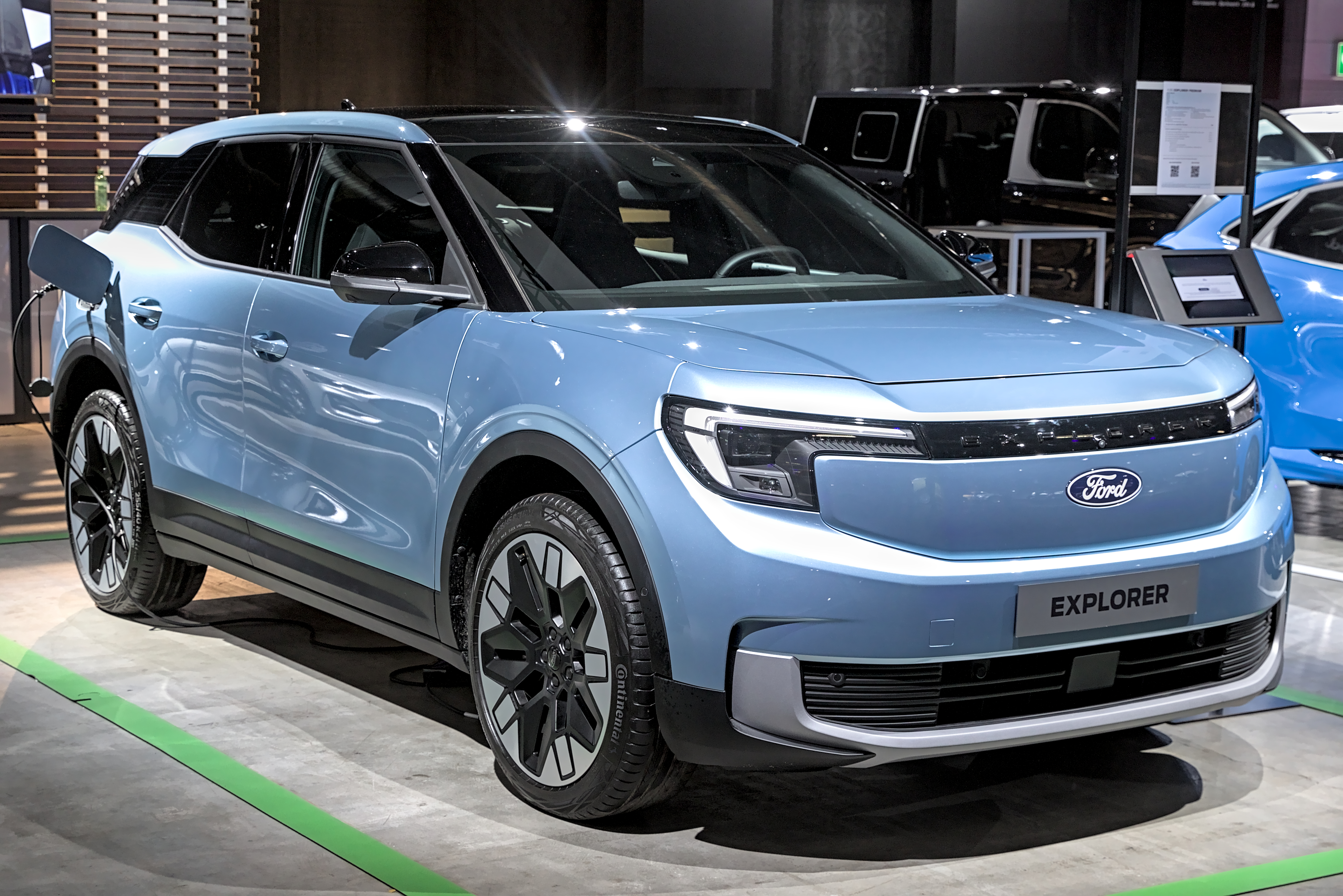
The Ford Explorer is a big family car that can carry a lot of people and their stuff. It's been around for a long time and is known for being comfortable and useful for road trips or daily driving.
The Acura MDX is a fancy family SUV that has a lot of room inside and feels nice to drive. It's designed to be safe and comfortable for families, which is why many people like it.
LIVE
Welcome, Listener Land, you have found the best podcast you've never heard of, or never heard
about, but you know, we're trying to fix this one continent at a time.
You've reached to all the cars I've loved before, your authoritative podcast on automotive
nostalgia, the podcast where every car tells a story, every machine has a soul, and every
car has a culture.
I am Christian at CarsLove.com, he is Doug at CarsLove.com, yes, those are our real names,
my middle name, I had it changed to the at symbol, so my first name is Christian, my last
name is CarsLove, so the middle name is at, he is Doug at CarsLove.com, and have you
done all the paperwork to have your name legally changed to these email addresses partner
or what?
It's, it's in progress, Maryland is not as easy going as Florida.
Oh, Florida is like another planet, anything goes.
I mean, it's, it's, uh.
Yeah, pretty much, pet alligators, you name it.
Tigers, chimps, you know it.
Ah, Tigers, that's right.
So did you do anything fun today, any ripping apart of your automobile, any smoke testing
at work, any smoke testing of your engine?
Not today, but yesterday I did the jar test, where with the, following the smoke
test, right, to which revealed a few loose, loose or ill, ill fitting seals on my
fuel injectors on my DeLorean, mechanical fuel injection.
So I did the jar test where I pulled out each fuel injector, put them in even
sized Gatorade bottles and ran the fuel pump, watch them and test it, see that
they were spraying and then measured, measured the equal sized bottles.
And, uh, to my surprise, they all came out well.
Fantastic.
Yeah.
The only jar testing we do in Florida involves moonshine, but thank you for
sharing that moving on today's moonshine.
Today's theme, the prologue is going to be back to school.
Yes.
The podcast goes back to school.
We're a little into the school year, uh, for any of us individually, but
the podcast is going back to school.
That's right.
What was your favorite class?
What did you like learning about?
What carried forward for you?
What did you do in the classroom?
What did you touch in the classroom?
I'm going to revisit that question here in just a little bit.
So let's let the theme of the prologue simmer, but, uh, our new
session, that section that we have is where are they now?
Or what are previous guests up to recently?
This also includes, yes, it's a tease updates on shows that we have
in queue that we can't bring to you.
We're so excited about it.
We have a bunch in the hopper that move into post-production.
Okay.
And sometimes we, we sort of mentioned that as a little bit of a tease
or an upcoming commercial.
So Doug, we have a lot going on here.
I know that, uh, Tim season one guest, Tim was at your house and
you guys were ripping apart your car in the garage, but, uh, there
was some sailing.
I heard there was some sailing going.
Well, Tim is a sailor, but one of our, one of our, uh, one of our guests
for a upcoming episode, uh, Chris, um, Chris, who is CEO of Red Kick,
Big O Red Boat, K I K, um, they do a lot of sailing.
They have some connection to, uh, Finland, I think with, uh, planting trees,
but they partnered with, um, Tuliketu racing amongst others.
I think they've done the Volvo ocean race.
These are serious sailors and, uh, yeah.
They did, uh, did some racing in, uh, in Finland, I had to read up on it.
Tim, Tim, of course, is sailor.
I didn't have a chance to talk to him about it, but yeah, uh, Chris, uh,
Collins, exciting, they, yep, they, they have fun.
Uh, and he will, his episode will drop here in the coming weeks.
And as always, great friend of the show or a BFF of the show.
Winifair Frisha continues to post compelling content on her Instagram site.
Check it out.
Uh, is her, I don't, she's, yeah, her episode is dropped.
What's, do you have that Instagram site handy?
Frisha Brothers, F-R-E-C-C-I-A.
Yeah.
FrishaBrothers.com.
You'll get there.
She's the marketing genius behind all of it.
Creative genius and marketing genius.
And all things air-cooled.
Lovely.
In Greenwich, Connecticut.
Mm-hmm.
Calls to action moving on.
Uh, let's see.
So we continue to post on the, on YouTube.
So the YouTube contests, uh, presence continues to grow.
Please check it out.
Enjoy.
And, uh, you will find this podcast wherever you get your podcast.
Please follow and tell a friend, download, follow, tell a friend.
Those three things in that order.
What else am I missing partner?
What else?
The link tree is always a great way to kind of switchboard to us to find our
different presences.
L-I-N-K-T-R dot E-E slash cars love.
L-I-N-K-T-R dot E-E slash cars love.
And check us out there.
Do we, do we, is there anything further on the calls to action before we revisit
the show theme and introduce today's guests?
Uh, nothing besides the, uh, the common things.
If you have a good guest, let us know.
If you think you'd be a good guest, fill out the, um, hit the, hit the button
on our website to be a guest.
You can also get there via the link tree.
And maybe you have a friend.
Maybe you have a neighbor, maybe you have a, uh, parent who you think
would be a good guest.
And if you, and if you want to start a, a podcast, that's fine.
We don't mind.
Just please don't make it about automobiles.
So it doesn't conflict and compete with ours.
So pivoting back to today's show theme, back to school, old school, back to
schools, and we mentioned at the top, what were your favorite classes?
What were things that you liked?
What were things that you did in school, in class?
Did you ever touch anything in class?
And I went back to my, to my thinking.
And I dissected a few things in high school, but nothing like, nothing
like today's guests, who I am super thrilled to introduce because they are
involved, they will explain to you how, at an automotive program at Weaver
State University.
So I am so pleased that it has brought McKenna and Brandon to our doorstep.
Good afternoon.
How are each of you doing?
Good.
How are you?
Ben, now that you're here, fantastic.
Brandon, you there?
So good.
It's glad to be here, guys.
Oh, man, we're thrilled to have you.
So please tell us a little bit more about Weaver State, the program that
you're involved with and kind of how you, how you came to a doorstep, how
that happened.
Sure.
So I'll get us started since I've been here a little bit longer.
So I'm Brandon Stevenson.
I'm one of the instructors here at Weaver State University.
And I was actually a student of the program in the early 2000s.
So in about 2007, I came and I participated in the program.
I was a technician and a General Motors dealership, and I was looking
at different programs in the area and Weaver State had the ASAP program,
which was an associates through General Motors in automotive technology.
So I took the program and decided to go on to get a bachelor's.
And then I went and worked corporate industry for about nine years
and then decided to come back, come back home and start teaching
here at Weaver State and loved it.
So basically been around nearly 20 years now.
It's it's great.
Really loved it.
Fantastic.
Yeah, so you mentioned you got a bachelor's, is that correct?
That's right.
But they also have there's a two year degree, too, which I thought
was so interesting, as well as continuing education.
So there's really there's really a glove to fit every hand.
There's a program to fit where you are in your educational journey,
where you are in your life.
So that's interesting.
Speaking of that, McKenna, can you tell us a little bit
about how you came to the program and how you're enjoying the program?
So I came into the program about two years ago.
I realized my passion of cars overweighed my passion of criminal justice,
which was my degree.
And I came back and went in full force.
I am due to get my associate's degree in the spring
and I will continue on to my bachelor's degree.
Fantastic. Yeah.
And if you want a little bit more information, again,
we will we will link to the show notes on your
basically the way you found this recording, right?
So your podcast streaming platform of choice.
But PBS NewsHour and this is how we first
Doug first became aware of this program
here at Weber State was watching the PBS NewsHour.
So if you're in front of a computer type in PBS NewsHour,
they have a PBS dot com slash news hour.
They had a rethinking college segment where they feature Weber State University.
It's about a seven minute segment and see it aired October 2024.
So if you are young and listening in Utah and looking for an alternative
to I would say traditional school, look at this, give this a chance
because McKenna, you walk into class and there's an engine lab.
Is that correct? I mean, you can just pick up all these
all these engine parts and turn them around and think about them
and see how they feel like Legos, right?
Yes. Yes.
It's a lot of fun, definitely, to be able to have the hands on experience.
That is probably one of my favorite pieces of the program.
You get to touch, you get to mess with.
And if you end up breaking something, you just fix it.
So it's pretty nice.
Yeah. Yeah.
And the automotive program is in the same building as the computer science
department, because as cars become more technologically advanced and more
integrative, it's it you really do have to become a bit of a computer
technician to make the car go.
I mean, what do you think, Brandon?
Do you see that in your daily?
Oh, yeah, definitely.
One of the big reasons that we changed location.
So we were up in Ogden, Utah, and then we got this brand new
facility about four years ago.
One of the reasons that they decided to house us with computer
science is for the reasons you just mentioned.
And what's really interesting to me is a lot of our students actually get
interested in computer science, so they'll do a major.
So we'll have some students that are automotive technology majors and
also science majors.
Yeah, they have those classes.
It's really great.
Yeah. Yeah.
And the sign on the building, you'll see this in the piece at at PBS.com
slash News Hour.
The sign on the building actually said computer and automotive and
engineering is really anything new campus, just a few years old.
And so Doug reached out to Jessica Slater, the department chair.
After he saw it, he was so impressed with the program.
And Doug, tell us a little bit about that interaction.
Yeah, you know, just just as you said, email.
Said I had seen the seen the show on PBS News Hour and.
And I'd love to interview some people for our podcast.
And she wrote back and give us three names.
Brandon being one of them.
And yeah, here we are.
And she's been very responsive as has Brandon and his colleagues.
And, you know, we decided to do things a little different.
And we wanted to have an instructor along with a student.
So we get both perspectives.
And I'm going to give it away, but both of these students grew up
with parents, dads that are mechanics.
And here they are. Right.
It's it's pretty awesome.
I love seeing that the tradition carried on.
And, you know, we'll talk more about that.
But I know I know McKenna got started pretty early.
And I'm sure Brandon as well.
Yeah, yeah.
And we'll pivot to McKenna in just a moment.
Wanted to throw out here that it was mentioned in the piece
by the interviewer, Ali Rogan, she used the word hybrid,
which I thought was so interesting because they're they're saying,
all right, well, we take a traditional institution of higher
learning, Weber State, and then they're bringing in kind of a
trade school, a tech class, but they also help place jobs.
So so what about that appealed to you?
Most do you feel McKenna as you as you sought more information
about the program and in thought to enroll?
Definitely figuring out just what opportunities I could get
through this program.
Jessica has been nothing but helpful for finding things that
will help me out to further my education.
And she actually gave me a job through here that will help me
towards my goals of owning my own shop.
So she tailored a job specifically for me, training me to manage
pretty much what I can through here.
She basically.
She's she tells me what to do.
That's great.
Love that.
So that's something that I don't think was mentioned in the piece.
So employers, potential employers like Toyota, Jim and Chrysler
obviously love to recruit at an institution like this
because they have somebody who's certified, knows what's going on.
You walk through the doorstep and you know how to rip something apart,
which is wonderful.
But if you want to start your own shop or go an alternative path,
I think that's wonderful, too.
There are just so many options through this hybrid,
this hybrid experience, learning experience that they're giving you.
And a big part of the piece was women in this
non-traditional non-traditional type learning setting.
So so could you talk about that a little bit, McKenna,
on what your experience is and do you see many people like you
in that situation?
So, yeah, there are a growing number of girls coming into the program.
We are definitely trying to get more through the high schools.
We're trying to reach out to them.
And through my experience being a woman in this program,
it has been nothing but amazing.
I get treated the same as any other student.
But I also get better grades than other people.
So I might get a little bit of favoritism.
But I get the same exact treatment.
I'm able to do what the guys can do as well.
So it's been definitely very accommodating for women.
Girls are usually better at turning in assignments.
So her grades better.
She's better at turning in.
Wonderful.
She's done other things.
Yeah, I know Doug wants to get in here.
Go ahead.
Yeah, so, McKenna, all the different parts of the cars,
and we're going to talk about some of your cars
and Brandon's cars, including where you guys started.
There's some great stories.
But what's your favorite class or favorite component in a car
or favorite system in a car that you enjoy working on
and learning about?
Yeah, so one of my favorite components
is probably the steering and suspension component.
Me and my dad do a lot of that at home
and being able to do that here and learning more about it
and being able to get in those conversations with my dad
about how all these things are working,
be able to ask him questions to where he's not looking at me.
Like, I'm a little silly sometimes.
But it definitely has just helped my education
through the steering and suspension
just build upon what I've learned before
and growing that even more.
That's awesome.
Yeah, I bet you like to play with Legos, too.
Oh, yeah, I do.
That's the word on the street.
Yeah.
It reminds me a lot of Legos, so.
Nice.
Nice, that's it.
Yeah, you never know.
Parents, your kids playing with Legos
might be working on suspensions, who knows, in the future.
And they might go to Weber State.
Oh, yeah.
It's a good program.
And in fact, I think there are two steering and suspension
classes, Brandon.
Yeah, we have two steering suspension classes,
two brakes classes, engine mechanical, engine repairer.
That PBS special talked a lot about our electric and hybrid
programs, so we do have electric vehicle
and hybrid electric vehicle courses as well.
The key part is we want our students, when they graduate,
so we do a certificate and associates or bachelors
and there's that continuing education certificate
for those that already have an education
or already have a career and want to come back.
But we really want them to be able to graduate
and be able to do something with that,
so be able to go out and get a job.
And that was one of the reasons that I really came
and was highlighted to me is that I could go get a job
as a technician right now.
And then I further got my bachelors
and I can still go back and be a technician.
So those foundational skills that are taught in those classes
are still pertinent in today's world.
Excellent, excellent.
And yeah, I was just looking through our notes
from before the podcast and Weaver has been around
or Weaver, I don't know if it's Weaver,
certainly the program, automotive program
has been around for over a hundred years.
Is that correct?
1922 is the first time we started doing automotive classes
at Weaver.
Weaver State's been around since 1880s.
They had a different name at the time
and we eventually came to state college now at university.
But yeah, since the 1920s, we've had an automotive program
again, teaching the workforce
on how to service and repair vehicles.
Right, right.
And they were brand new back then
and there was a bit of everything.
And yeah, until Henry Ford came along,
I think every car that came out was slightly different.
Yep.
So yeah, that's awesome.
What a great history.
Now, is it true?
Is it true?
I read somewhere that when Ford was starting with cars,
he was initially interested in powering them with batteries
with that nascent technology.
But then it was the rush of oil
and I think Titusville that kind of came,
you know, cheap gasoline and it moved towards it.
Is there any truth to that, Doug?
Or Brandon?
And so it was more gasoline driven
but his initial druthers were battery powered.
Yeah, I can't speak for Ford
but there were a lot of electric cars around that,
I don't know, 1918, 1920s
and they just didn't make it, they didn't have the range,
right?
Yeah, right.
That was the big thing was the range.
Sorry.
Yeah, so it's cool about looking at that history
and they were very popular in cities
because no pollution, easy to start
because it was, you know, you could just drive
but as America changed and we didn't just live
in big cities, we started to go out into the countryside,
those electric point and less and less possible.
You needed something that could go a little bit further.
Great point, great point.
Well, thank you for that.
Thank you for walking us through
your respective journeys in Weber State
and but we're gonna use a different kind of technology.
We're gonna step into the way back machine,
the time machine and we're gonna go back
and I want to hear how it all started for you, Brandon.
What was that first car and was it running at the time?
Oh, I love this question.
So my first car was actually a 1979 Z28 Camaro.
I know you guys can imagine it.
Midnight blue, black.
Midnight blue.
So it has the fender vents and the hood scoop.
Gorgeous car.
My dad bought it new in 79.
He was working at a dealership, so he's a technician.
Gave it to my mom.
My mom blew it up.
Good job, mom.
Got parked at my grandma's house
and every time we went to go see grandma,
I would see this beautiful car
that was just getting beat and weathered
and all of those things and just kept telling my dad,
man, I love this car.
This is the best thing ever.
My dad ended up stopping a technician
and started teaching high school
and I was actually at the high school
that I went to school too.
And so one of the things that we got to do in class
was like, dad, let's rebuild this engine.
Let's rebuild the transmission.
Let's get working on this.
So that's what we did.
We rebuilt that Camaro
and me being the 16 and 15 year old kid that I was,
I wanted to make as much power as possible.
So it wasn't really streetable, but it's still loud.
It's still fun.
And it's actually here at Weber State.
I just pulled it out of my trailer a couple of months ago
to show my students that, yeah,
you can build a project and have a project
and hold on to it for all these years.
And holding on to it is really the neat,
I think the accomplishment,
finding a place for it.
Anyway, sorry.
Go ahead, Doug.
No?
Yeah, no, it's great.
So it's still streetable.
It wasn't really streetable then, not really now.
She's just loud.
She's more of a show car than a street car.
But to make it more of a street car,
I'd like to be able to drive it on the street.
I put in many school and high school
and all of those things.
So it's really not most street friendly,
but I've got a 5-3 LS and a 4L-60E
that I'm gonna put in into it.
Show the students along the way doing that kind of conversion.
And we're also gonna go over
that kind of the emissions and horsepower change.
So going from this little small block Chevy,
look what emissions we produced,
looked how much power we could produce,
and what can we do with a fairly stock LS 5-3.
So it's really cool to be able to show students
that with the equipment that we here at Weber State,
we've got a 4Wheel alignment.
We have got the 4Wheel dyno as well
and also our engine dyno
to be able to do some of these tests
and show the students.
Nice, nice.
That's awesome.
Yeah, that's gonna be a fun project.
I'm really excited for it.
Yeah.
So that was your first car,
but not a daily driver, right?
As you said.
Yeah, of course, you're still in the family.
Yeah, yeah.
So what was your daily driver or second car,
if you will?
Yeah, so the car that actually drove around
all the time while I was just loving the Camaro
was a 95 Beretta and Z26.
So I like the Z family apparently.
My sister wrecked it and it became part
and because I couldn't really drive the Camaro
on a daily basis, we looked at this,
like, well, why don't you take over the Beretta?
So she rear-ended somebody.
So it was a pretty easy fix.
Just put a bumper hood,
fix a radiator or the core support
and learned a little bit of those body things
that I didn't learn on the Camaro.
So being able to straighten some frame rails out
and just do the body paint
and all the repair on it was really good
and is a really good driver,
being a little 3-1 with a four-speed auto on it.
Yeah, yeah, could peel the wheels right off the line.
It could squeak them, yeah.
Yeah, yeah.
Christian and I have a close friend
and I always just remember this story of his dad
renting a Corsica, the four-door version
and came out to visit him at college
and he let my friend, our friend Adam,
who was on the show, drive the Corsica home
and Adam's like, yeah, of course, I spun the tires.
Of course, I spun the tires.
Of course I spun the tires.
I mean, yeah, we had fun.
We went up to the, you know, lined up on the white line
just to help with the spin a little bit,
lose a little traction.
So great, great story.
And so that was not your first Corsica though.
Sorry, Beretta, here we are.
Yeah, not my only Beretta.
So I had two of them.
So that one, I turbocharged.
Well, I built a turbo kit for it,
but the problem with that 4060 was they were pretty robust,
but once you started putting boost to them,
they would blow up and for mostly daily,
I didn't want to have to be rebuilding
the transmission all the time.
So I actually found a guy that had a Z26
that he had five speeds walked out in Nashville, Tennessee
or Knoxville, I think he was in Knoxville actually
and then he put a 34 in it.
So the slightly bigger 60 degree V6 in it.
And I got that shipped out
and ended up putting my turbo kit on that,
I call it the purple Beretta or black rose metallic.
And that one I turbocharged, headstudded, cam,
all of this stuff.
So again, I seem to have a problem with making cars
that are supposed to be a daily driver,
not really dailyable anymore.
Just like to make all the power.
So what happened to both those cars actually?
So that white car, I sold it to a friend.
Yeah, so the first was a white Z26,
one of my sister wrecked,
ended up selling it to a friend when I bought the purple one
because my parents were saying,
hey, we've got too many cars here as it is.
So I sold the white one
and then was driving the purple one
with the turbo and stuff on it.
And that was fun going from 30 miles per gallon to 14.
So it's kind of sad.
But a couple of years later,
that friend was having problems with that white Beretta.
And I was like, hey, well, I'll buy it off you.
He thought he needed to transmission.
And I had a spare transmission laying around,
did some troubleshooting on it,
found it was just a simple connector
on the throttle position sensor that was actually failed
and fixed that for basically nothing.
I had a spare connector around as well.
And then sold it to a different friend
and made a couple thousand bucks.
So that was a really good thing.
Nice, nice.
And your friends like, man,
I should have just brought it to you to look at.
Yeah, you should have just had you look at it.
He's like, oh, it's helping mom.
Maybe that friend should have been in the program
at Weber State.
Definitely.
Cool, cool.
And so what is your,
now I think you have a daily driver
that you haven't modified, hopefully.
What is your daily driver right now?
So my daily driver was at Tesla
when it's working properly.
So I've got a couple of Teslas,
one in particular I just had a sell that went out on it.
But the rear wheel drive one,
I keep that as stock as possible.
So just a little rear wheel drive model three
and it does the job.
Yep, yeah.
And if you lose a sell on it,
what are your options?
Just curious, I think I've seen,
obviously you could go give Tesla $25,000.
Yeah.
For a new module, right?
Yeah, so a whole battery is their repair procedure.
They have four battery modules
inside of that whole battery housing
and they don't sell individual battery modules.
Each of those modules contain about 1,000 cells.
There's a couple of guys online
that'll take this sell out and then weld a new one in.
That's not really good practice either.
So Tesla's repair procedure is a whole battery.
I've been trying to get a refurbished battery sell.
So I've dropped the battery, I've opened it up
and I'm down just trying to source
that one battery module.
Okay, gotcha.
But yeah, all for one little battery sell that has failed.
It's crazy.
And so getting a, is a refurb one,
a one that's been in an accident probably
that the battery was not damaged?
Yep, got it.
Yeah.
So it's really popular with these Tesla batteries
is they'll pull them out of the cars,
erect car or something and then sell the modules
out for EV backups or battery backups for homes.
So some of those companies will refurbish the battery
with that in mind.
Like it's gonna be a battery backup for a home
but you can purchase them and in the car
that there's just really not a good procedure
for a Tesla yet.
So it's kind of a trial and error thing right now.
Yep, well, you're in a great place
to do some of that, right?
Definitely.
You're right.
Learning a ton.
Yep, yep, excellent.
And what was your, what car?
Cause obviously you're capable of fixing a lot of them.
What car did you hate the worst and why?
I would say I bought this car off of my father
in law, he bought it at auction.
It was a 09 Impala LTZ and it was a decent car
but it was just an auction car.
It had a lifter tick when I got it.
The transmission was slipping when I got it.
I just needed something real quick.
So I purchased it off of them
and it just became a money pit.
Ended up having to replace the 39 in it
and then replaced the 4065 in it as well.
So it wasn't Impala's fault.
It was the previous owners
just beat the living stuff out of it.
Yeah.
Nope, gotcha.
Excellent.
Thank you.
Those are some great stories
and the Z28 lives on.
It does.
That's the best part.
Hopefully you can share some pictures of it.
Love to see it.
For sure.
Yeah, so McKenna.
Let's step in the way back for you
and let's talk about how it all started.
Was there an explorer to go exploring with in your past?
Yes.
So I started out my 16 year old self
with a 2004 Ford Explorer that exploded
but when it didn't explode or caused me any issues
it was the funnest thing ever.
Me and my family used to get out on little road trips.
It was during when COVID happened
so I couldn't hang out with friends.
So my dad bought it for me for my 16th birthday
and said, go nuts.
So I would just ride around in that all the time.
It's when gas was a little bit cheaper
so it didn't cost so much to drive around
but after it exploded in a RB's drive-thru
Yeah.
In an RB's drive-thru.
Oh yeah.
Wait, did it at least get you to the drive-thru window?
Were you like 10 feet from it and hungry
and you couldn't get the car
or was it 10 feet past the window
and at least you could mourn with your seasoned curly fries.
So I had just barely turned into the drive-thru.
There was a car in front of me.
I heard this really loud pop
and I look to go look at my engine bay
and all you see is smoke coming out of the wheel wells
and my belt had slipped
so my power steering did not work.
So I turned the car off, turned it back on
and fastly put it in reverse,
pulled out of that drive-thru, parked in the parking lot
and there's a McDonald's right across from there.
So all of these people at McDonald's
were just seeing me bawling my eyes out, calling my dad.
Dad, come help me.
I don't know why my car is on fire.
So why is it smoking?
Yeah.
So we had to pivot past that, right?
We weren't gonna do any more exploders.
We were gonna move on to a Honda, right?
Oh yeah.
All liable, all liable.
Yep, this one was a white 2001 Honda Civic LX.
Her name was Jessie.
She was getting a lot better miles to the gallon
and she was the car I took to college
that had a head gasket issue.
But luckily my dad could fix that
and I ended up driving that for three more years.
Gotcha, gotcha.
Now you named the car.
You named it just, okay, so it's J-E-S-S-I-E.
We have to be specific on the spelling, right?
I never thought about naming my car
until we started this podcast
and I drive an Acura MDX.
And so in honor of all you wonderful people
who name your cars, I just start calling,
I named my MDX Maddox because of MDX.
Is that clever or stupid?
Oh, it's great.
That's actually a really nice name.
I like these guests.
Sounds like a TV show, Maddox.
Yeah.
No, that's Matlock.
I think it a Matlock.
Okay, let's move on.
So there was another, after this lovely Civic,
you liked it so much.
You got another, is that correct?
Oh yeah, yep.
It was just, it was finally time for me to get a new car.
About a year prior to me buying the Green Honda Civic,
the white one had,
while I was driving through a code,
I was wondering why it was running rough
and I ended up getting to an intersection
to turn into a Home Depot and the car just died.
I had to push it out of the intersection
into the Home Depot parking lot
and turns out my timing belt got torn through
by the spring tensioner.
Yeah.
So the spring tensioner curled up into a ball
and started tearing through the timing belt.
Luckily I was able to get it somewhere
I didn't get ran into, called my dad.
He came over, we ended up fixing it
and it had no other issues.
We just replaced the water pump and the timing belt.
Completely fine.
And but it just, it...
That's all.
It lived its life.
So we got a new one for my trip to Vegas.
I went to SEMA this year.
And so we got this new car
because it ran a lot better.
It just had a lot more power
because going on hills with Jesse was a no-go.
But we named the new one, the green one, Maverick.
It is a 2001 Honda Civic EX.
Now, why Maverick?
Had you just seen Top Gun or something?
No, no, I don't know.
I kind of just look at a vehicle
and I'm like, this is going to be your name.
And it just sticks.
It works perfect for it.
I like that.
My dad would always just tell me if I broke down,
like, well, why'd you break?
Fix it.
And that was it.
He had the side of the road.
I broke something.
Yeah.
And I did it either at the Arby's parking lot
or the, what was it, the Home Depot?
So...
Yeah, it's probably McDonald's in your case.
Yeah.
Could be.
Yeah.
So what was SEMA like?
I just, man, I think YouTube goes crazy during SEMA
and we're all...
Doug's jealous, by the way.
Yeah.
What was it like behind the scenes?
How many, I think you went with Weber, right?
Yes.
How many people went?
Or students and teachers, instructors?
The students, I think we had 25 students
who ended up going.
And then we had Scott Holland, Brandon,
and Cade go with us.
And it was huge.
Apparently they had over 160,000 people there
with over 800 vendors.
Something like that, yeah.
Great news.
Yeah.
We were there for three days
and I didn't get through the entire thing.
There's an outdoor portion.
There's three halls that you can go through
with an upstairs to two of them.
And it's absolutely insane.
It's crazy.
It's so much fun, though.
Did you meet any celebs while you were out there?
Whether YouTube stars,
I think of Richard Rawlins,
Gas Monkey Garage,
because I knew he was always out there.
We were hoping to see him,
but we didn't go on the day that he was going
to be unveiling the vehicle he brought.
We ended up seeing the guys from Throttle.
And then we saw the guys from Big Time,
which I had them shout out Brandon,
because Brandon is a huge fan.
I am.
And we also seen Phil Swift,
the Flex Seal guy, who-
Oh, wow.
Yeah.
My boyfriend was super excited to see him.
Yeah.
So if you would have kept just the flex tape
in the back of your car,
maybe you could have gotten out of the RV's drive-thru.
There we go.
We could have.
We'll never know.
Yeah, yeah.
Always keep a roll with you.
Yeah.
Is that the first time Weaver has taken students to SEMA?
No, we've been taking them for quite a few years.
I don't know.
That's cool.
Yeah, quite a while.
Okay, awesome.
But first experience for you, McKenna?
Yes.
So I will definitely be going again next year.
I'm very excited.
We need to go.
Yeah, but the show is not open to the public.
So you have to be sponsored by some institution
or something, right?
Yeah, on Friday, I saw a bunch of guys
wearing a Friday experience tag.
So I think for a certain, you can just on Friday.
Yeah, I think it's just Fridays.
Oh, I see.
Which is not enough time.
And probably a lot of the vendors have left by then.
I would bet.
But that's definitely for the insiders, for the cool kids.
Maybe one day, maybe my next line.
You guys could sign up to be students at Weaver
and then you could come as one of our students.
Look at this.
What a perfect callback and tired.
Yeah, so as we guide the podcast toward the off ramp,
I just want to say thank y'all so much
for agreeing to be on the show.
We had a fantastic time meeting you.
We can't get enough of Weaver State.
And oh, by the way, Doug wanted me to throw in here
that so what is there?
What is it, Doug?
Their YouTube presence that we wanted to talk about?
YouTube channel.
It's an automotive YouTube channel as well, I heard about.
I think it's called Weaver Auto.
Yeah, Weaver Auto, one word.
OK.
One of our professors, John Kelly, he started that probably
2008, 2007 issues when he started doing that.
And he just keeps adding more and more content to that.
OK, wonderful.
Check it out.
How much of the content is the content all from within the school?
Yeah, so everything is videotaped here at Weaver State
using our equipment, yeah.
Nice.
Excellent.
So yeah, for folks who want to see more about Weaver
and see hands on program, that might be the best place to go.
Absolutely.
Certainly learn something for sure.
Yeah.
And check them out.
They have a program to fit so many different people.
And I just want to thank you, Brandon and McKenna,
for being on the show.
It was a distinct pleasure meeting you.
You represent your institution well.
And it was just a thrill to have you here.
Thank you.
Thank you so much.
Hope to be on more of these.
This was a lot of fun.
It was.
Absolutely.
We're going to have you back.
We're definitely going to have you guys back.
And in a future season, I can't even
remember what season we're on right now.
But we just love having these conversations
with fantastic people.
So if you like what you've heard,
you have just listened to the high-rebbing, low-mileage,
late-bottle, heard around the world.
That's true.
Authoritative podcast on automotive nostalgia.
He is Doug at CarsLove.com.
I am Christian at CarsLove.com.
Yes, that's my real name.
They were McKenna and Brandon.
Please follow and tell a friend.
If you like the show, check out our YouTube channel,
Instagram, Facebook, Myspace.
Just kidding.
We're not on Myspace.
But follow and tell a friend.
Download, follow, tell a friend.
Make sure you check out the link tree.
All of our different presences are right there.
L-I-N-K-T-R.E-E-Slash.
CarsLove.
It's a bit like the old yellow pages,
but I refer to it as our switchboard.
I'm sure we're going to see it the next local car show.
Thank you for listening.
Keep the rubber side down, and we will see you next week.
About this episode
Makenna and Brandon share their inspiring journey through the automotive restoration program at Weber State University. They discuss the hands-on experiences that shaped their passion for cars, including rebuilding engines and working with advanced technology. The episode highlights the program's inclusive environment, particularly for women in a traditionally male-dominated field. Listeners will enjoy anecdotes about their first cars, the challenges they faced, and their aspirations in the automotive industry, making it a compelling exploration of automotive education.
In this inspiring episode, we shine a light on the next generation of car enthusiasts represented by Makenna (a top student) and Brandon (an instructor) from Weber State University’s renowned automotive tech program. Together, they share uplifting restoration stories from the shop floor – from resurrecting a vintage Mustang GT as a class project to fine-tuning a classic Pontiac GTO’s carburetor that had stumped even seasoned mechanics. PBS NewsHour even featured their work, and now we get the behind-the-scenes look at how these projects double as rolling classrooms. Makenna talks about balancing academic life with greasy hands, and how working on classic cars has given her confidence and a deep appreciation for automotive history. Brandon adds perspective on teaching: instilling not just technical skills but also automotive passion and patience in his students.
Listeners will learn how modern educational tools meet old-school cars – think 3D-printing parts for a 60’s muscle car – and the fun “auto adventures” that happen when college kids road-trip to car shows in their freshly restored rides. “Campus of Cars” is equal parts educational and heartwarming, illustrating how the torch of car culture is passed on. It’s a must-listen for anyone curious about the future of car restoration and the young people who will keep our classic car memories alive.
*** Your Favorite Automotive Podcast - Now Arriving Weekly!!! ***
Listen on your favorite platform and visit https://carsloved.com for full episodes, our automotive blog, Guest Road Trip Playlist and our new CAR-ousel of Memories photo archive.
Don't Forget to Rate & Review to keep the engines of automotive storytelling—and personal restoration—running strong.