B(aT) the Movies: Bullitt (1968)Bring a Trailer Podcast · Nov 6, 2025
Annotations will appear as you listen
0:00
66:58
Car
Honda CT-70
The Honda CT-70 is a small motorcycle that was made in the 1970s. It's easy to ride and was popular for fun and leisure, especially among younger riders.
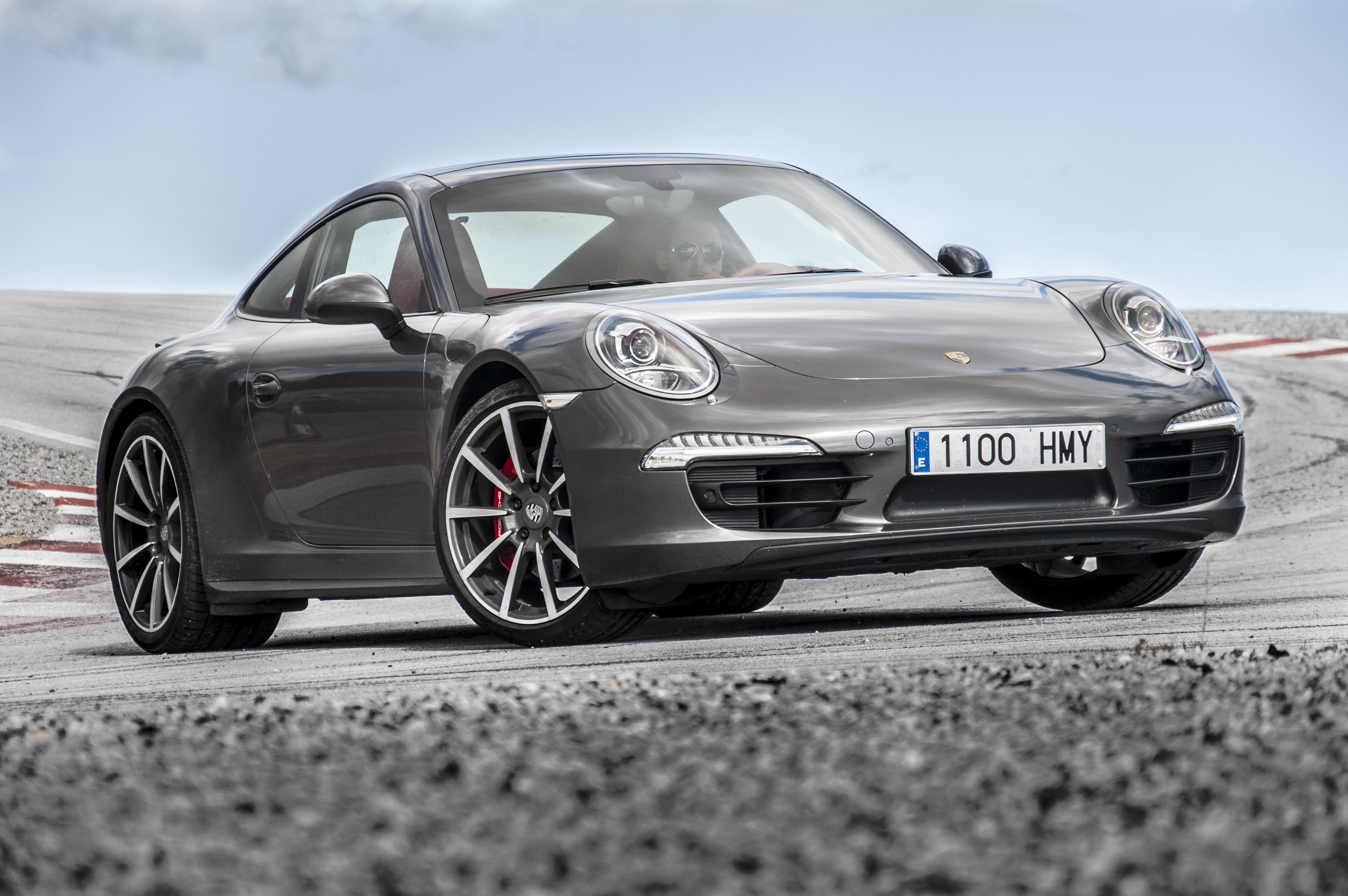
The Porsche 911 is a famous sports car known for being fast and stylish. It's been around for a long time and is loved by many car enthusiasts because it combines luxury with great performance.
The Ford Edge is an SUV that has a lot of room inside and is great for families. It comes with modern features that make driving easier and more enjoyable.
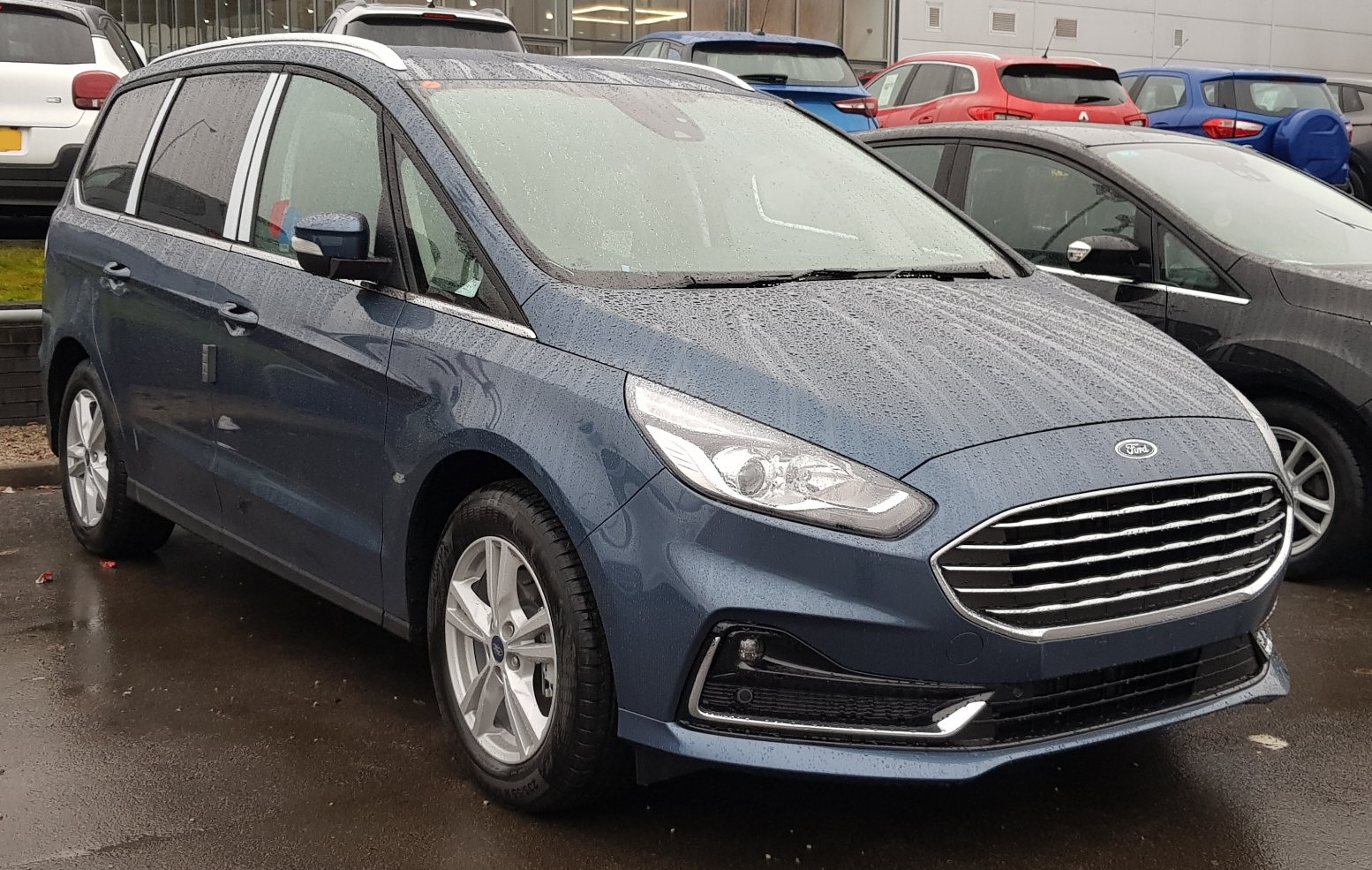
The Ford Galaxy is a big car that was popular in the past for being roomy and comfortable. It's the kind of car that families would use for long trips.
The Ford Mustang is a classic American car that is known for being powerful and sporty. It's popular because it looks cool and is fun to drive, with many different versions available.
The Chevrolet C10 is an old pickup truck that many people love because it's tough and has a simple, classic look. You can still see these trucks being used today for work and fun.
The Bullitt Mustang is a special version of the Ford Mustang that was inspired by a movie from 1968 called 'Bullitt'. It is famous for its green color and exciting car chase scenes in the film.
Highland Green is a specific color that was used on the 1968 Ford Mustang, especially the special Bullitt version. It's a popular color among fans and collectors because of its connection to a famous movie.
Torque Thrust is a type of wheel that many car lovers like to use. It has a unique look with several spokes and is often seen on classic muscle cars to make them look more stylish and sporty.
A loud exhaust is a type of car part that makes the car sound louder and more powerful. Many people change their car's exhaust to make it sound better.
The 440 wedge is a powerful engine made by Chrysler that was used in some of their cars. It's known for being strong and fast, making those cars very popular.
The Dodge Charger is a big car that is often associated with speed and power. It's been around for a long time and is popular for its sporty look and strong engine options.
The 426 Hemi is a very powerful engine made by Chrysler that is famous for its unique design. It was used in many fast cars and is still talked about today for its performance.
Upgraded suspension means improving the parts of a car that help it handle bumps and turns better. It makes the ride smoother and helps the car stay stable on the road.
Car
Austin Healey
Austin Healey is a brand of sports cars that were made in Britain. They are known for being stylish and fun to drive, especially popular in the mid-20th century.
The Porsche 911 GT3 is a special version of the Porsche 911 sports car that is built for speed and performance. It's designed to be very fast on the racetrack and has features that make it lighter and more aerodynamic.
A stick shift is a type of car transmission that you have to change gears yourself using a lever. It gives you more control over how the car drives compared to an automatic transmission that changes gears for you.
A limited-slip differential helps both wheels on an axle work together better, especially when one wheel starts to spin faster than the other. This is important for better grip and control when driving.
The Chevrolet Blazer is a type of SUV that is good for both driving around town and going on adventures. It has a modern look and is spacious enough for families.
The Chevrolet Corvette is a fast and stylish sports car that has been around for many years. It's famous for its great looks and powerful performance, making it a favorite among car fans.
A solid rear end is a type of car suspension where the back wheels are connected and move together. It's strong and often used in cars that need to handle well at high speeds.
Gymkhana films are exciting videos where drivers perform cool tricks and stunts with cars. They show off how well the driver can control the car while doing things like drifting and jumping.
Ken Block is a famous driver who makes exciting car videos where he shows off his skills. He's well-known for doing amazing stunts with cars in different locations.
The Audi S8 is a fancy car that is very fast and comfortable. It has a lot of high-tech features and is designed for people who want a luxury driving experience.
LIVE
Hello, everybody, and welcome back to the Bring a Trailer podcast. My name is Alex Porter.
Coming to you from the San Francisco headquarters of the company, joined by three people in
the studio today, Beck, Tyler, and Cam, all former guests slash co-hosts. Thanks for being
here, gentlemen.
Thanks for having us, Alex.
Yeah, I'm looking forward to this. We're talking about the King of Cool.
Yeah, I'm excited to hear some hot takes.
Oh, my gosh. Okay. So what those guys are referring to is that we're going to try something a
little bit different today. We have all watched the movie Bullet, and we're going to do a little
bit of a car movie themed pod. If this is popular, we can do more of them, but we thought we'd
start with Bullet because it's a classic and has a classic car chase scene in it, maybe the most
classic. And also want to talk a little bit about whether this is a car movie. Why is this in the
car movie Canon? I think it's one of the top ones up there. But before we discuss all that,
I want to hear a little bit about your guys' background with the movie, whether you've seen
it before. We tried to get kind of a wide representation here. We have people familiar
with it, people who are not. Beck, what's your background with the movie?
I have loved this movie for a long time. I even brought my own copy into the studio here for us
all to look over. I figure it was good. We had to have a visual of McQueen himself while we're
shoulder holster. We're going to have some shoulder holster talk later on.
Cam, I can see you adopting one, honestly. You've thought about it. Cam would be Detective
Frank Bullet, I think, if given a different career. But crucially, it being a San Francisco
thing was definitely an instigator for me early on. You didn't grow up here, right,
Cam? So you're the only San Francisco native. So that was a big deal for you.
Big deal. I mean, and I was one of those where the young age was watching the driving scene and
trying to figure out where they were. And yeah, it was very early on, very inspirational.
How many times do you think you'd seen it before we decided to do this?
Not a crazy amount, maybe three or four times. We watched it. I brought it on like a buddy's
bachelor party. It's like a kind of a good bachelor party to play in the background.
A lot of McQueen movies are that way, I would say, especially for a modern audience.
For sure.
Tyler, you brought in something too to prove your bona fides for McQueen.
I have spent probably too much of my life getting into the life and times of Steve McQueen.
So back in 2017, 2018, I wrote a book called 1001 Steve McQueen Facts,
and I now know more than I ever wanted to know or thought I would know about Steve McQueen.
We covered his entire life, personal life, films. But a big part of that, the publisher
was Car Tech. So kind of to your question earlier about whether or not Bullet is a car-related
movie, the publisher, Car Tech, which is an automotive publisher, wanted this book to be
written for them. So we have a whole section about cars, movie cars, personal cars, motorcycles,
racing, everything. So it's impossible to talk about Steve McQueen without including his automotive
kind of culture, planes, motorcycles, cars.
Totally. And your entree, I presume, was motorcycles because of your interest?
Yes. Yes, it was. And he had a lot of them.
Can you share the anecdote you were sharing downstairs with Randy?
Sure. This is actually one of my favorite facts from the book. Out of 1001 people have asked me
this so many times, and I never have an answer. And finally, I do have an answer when Randy just
asked. And there's a super cool BAT tie-in with it where when Steve McQueen was on the set of The
Reavers, the young actor who he was working with was just kind of a nice kid, and Steve McQueen had
to blast working with him and kind of showing him some of the Hollywood ropes. So he bought him a
little Honda minibike. I want to say it was a CT-70. And I was able to find one super obscure
reference to it in my research. And at that time, I want to say the book was published in 2018,
that bike, the whereabouts, were not known. And then all of a sudden, two years ago at our
quail motorcycle gathering alumni event, what is sitting there but this bike? And my jaw dropped.
I just couldn't believe it. I had no one's ever heard of this bike since the 70s. No one has seen
it. And of course, these guys had found it and brought it to our alumni event. So that is now
my favorite fact. So sick. We need a new edition of your book with the 1000 and second fact.
We need the 1000 and second fact. That's right. I mean, you can't talk about this movie without
talking about McQueen. Like this is an action thriller movie, maybe one of his best. And it
is like a McQueen Star vehicle. But before we do that, Cam, what is your background with the movie?
I know what it is, but tell the audience. Yes. This movie has been on my radar for a very long time.
For car reasons or? Just as a classic movie to watch. I've been a McQueen fan, but this one has
just avoided me throughout my life. That being said, the mid to late 60s is one of my favorite
time periods for so many different design reasons, social, cultural reasons. And so to dive into this
movie with the perspective that I have of the late 60s, especially the San Francisco scene that was
happening, it was really interesting to see how certain parts of society were portrayed. Dude,
this was filmed during the summer of love and it doesn't feel like that, right? It doesn't.
And you also forget the way that Steve McQueen is portrayed as Frank Bullitt.
He doesn't come off as any sort of, you know, along the lines of the hippie mindset. No, but
as a person, he very much was like, he was a star, but he kind of, you know, he was smoking marijuana.
He was, he was taking drugs, but he very much just. He was barefoot. He was barefoot a lot.
Sure. Although he has some good footwear in this that I'm excited to discuss with you.
And so that was, it was interesting coming in with a, maybe thinking that there'd be some of
that imagery portrayed in it and really kind of lacking that. It's a gritty city in the way
it's portrayed in the movie, which more so than I expected it to be. And you had never seen it
before, right? I'd never seen it before. And I will, I will admit that aesthetically, this movie
is incredible from a substance standpoint. Left me wanting a bit and it was a bit tough for me
to get through this. It took me a few watches. So I had only seen it once in high school for the
chase scene, right? Because car guys like have to see it. And then I rewatch it. And the first
time I rewatched it, I fell asleep like an hour in. And I agree with everything you were saying.
And then rewatch it again, made it all the way through. And then last night, rewatch it again.
And I actually found it holding up. Did you watch it again after you watched it the first time?
I rewatched multiple portions of it. I found it growing in my esteem with
the rewatches, right? Like noticing more things about it.
Certainly. And I think if I were more of a cinephile, I could see this being a movie that
you would pull more out of every time you watched it. And so I think that's something I should do.
Totally. I took notes last night when I was doing it. You can see the influence of this
movie on other movies for sure. Yeah. And a ton of different ways.
Yeah. There's so many scenes in it. There's so many firsts that happened in this movie
that are really interesting. I mean, this was actually the first movie to be filmed entirely
on location with an all Hollywood crew. Oh, that's a good fact. I didn't get that one.
This is the first time that a movie was made totally on the scene. And that's something
that Steve McQueen wanted to do. He felt that grittiness that you guys are talking about.
That was a huge part of why they had to do that. You just can't fake that little
apartment with the stairs and that lever to open the door. I don't even know what that is.
There's so many authentic San Francisco parts. Yeah, totally.
And with that, not only is it all very authentically located, but also many of the actors we see are
real people. Oh, and they look like it. Everyone's got big alcoholic noses. Surgeons
are like actual surgeons. They filmed it on location in SF General. I love the UC
patches on all their shoulders because they're all coming out of UC Berkeley or UCSF.
Just fantastic little details there that makes it, I think, stand out at its time.
Doesn't seem like that kind of thing would have been made back then or maybe even again.
Yeah. He personally fronted the filming budget to have it filmed in San Francisco,
which I found really cool. And he followed a lot of these techniques for Lamar a couple
years later, right? So same kind of thing. I mean, that gets even more documentary-like.
I don't know if we'll subject you to that one, Cam. Maybe that one's even longer and has even
less plot. This actually does have a plot. Let me just do the broad strokes on the film before
we dive in. I thought we could talk a little bit about kind of structurally. We could go
through the movie, talk about scenes that you guys like, things you're interested in.
I definitely want to do a San Francisco section. We have to do a whole big chunk on the chase,
right? Because that's like the key. And Beck's going to tee that up for us. And we've got to
talk about the man himself and his style. And Cam, getting into the sartorial side with you,
I'm very excited about. Oh, and Tyler, you'd seen it a lot of times. When was the last time you
watched it? What's your history with the movie? The last time I watched it was when I was writing
the book about it. So I have not seen it in a while. I'd seen it before then. I watched it for
research purposes. So really kind of going through it to figure out what was going on.
And then I just watched it again this morning. And it actually, to your point, it actually kind
of becomes a good movie once you know what the plot is. So after seeing it a few times and you
kind of know the plot and you read the IMDB profile on it, it's like, oh, this is actually good.
But seeing it for the first time, you would have no idea. No idea what's going on.
It's both simple and also kind of limited at the same time.
Totally. Totally. It totally is. Okay, so filmed in 67. It's a 68 movie. Obviously,
a star vehicle from a Queen, 37 years old when he made this, which is amazing when you look at
how weathered he is. I know, but you look a little better, Tyler. Not that he's not a handsome man,
but people are, everyone's tan. And like, you know, it was a different era. Like,
you can tell it's an old movie. $4 million budget made $42 million. It was one of the
biggest movies of the year. It has a 98% rotten tomatoes approval. So it's like critically acclaimed.
I agree that for a modern person, they might be like, I don't know if this is a good movie or
not. People certainly thought it was. And it is in the canon of like great movies from this era.
And one of the many things I think it presages is like the 70s, you know, like movement to gritty,
you know, all the famous movies from the 70s, the Scorsese movies and
Dirty Harry. Totally. Well, Dirty Harry is the same cop, right? It's the same officer. It is.
It is all based on the same guys. Steven McQueen was offered that role
in the course before Clint Eastwood was. So that was it. I mean, this movie kicked off this whole
thing of like... He turned down a lot of the roles that came after this that I would have loved to
see him in. I think a lot of that is technology based too, right? So like the technology to do on
location shoots, I remember early watching while it was the zooming of the lenses and sort of that
styling of film that wasn't really the case, sort of the generation before. And absolutely, the
technology that allowed for this movie to be made, shot in low light on location.
It looks like a 70s movie, right? Like in total, like an all-in-one here or something.
Yes, correct. Yeah, yeah, yeah. Nominated for two Oscars, one an Oscar, best editing,
which is fascinating. I don't know if you would have thought of this as an Oscar-winning movie,
but it is. Why do you guys think it is so revered among car peoples? Just the chase
scene or is there more to it? I think the cars that are portrayed throughout the film are really
well-selected. Who knows how much of that was intentional or just cars that happened to be
on the street. I mean, cars in the background. Yeah, yeah. Did you guys see the Bizzarini?
I love background cars. And there's a parking garage and there's a Bizzarini in there.
You mean the opening? I read it was McQueen's Jag XKSS.
His XKSS. Oh, I miss that. No, there's definitely like a big, one of the big 5,300
Bizzarini coupes is in like a parking garage. It's right at the beginning of the movie.
Well, this is also the beginning of the movie when it's in Chicago. So we're starting sort of
chronologically here. In Chicago, great sort of image landmark is the Chicago Sun-Times banner.
Yeah, oh, totally. So you know where you are. I miss the XKSS. It's there. It's right there.
Wait, hold on. I have the time for it. Because I was looking for it this morning.
Because you have to talk about the XKSS. So when I was taking out my,
I was also had my laptop open. I'm writing things down and it immediately pause like,
what the hell is that? And turns out it was Steve McQueen's actual XKSS.
Oh, amazing. Two minutes and 46 seconds in. There you go.
The green one with the Von Dutch interior. That's amazing.
All the cars are great, right? All the cars. I mean, you think back in the day,
people are still driving probably their 20-year-old used car. And so you have like
sure 40s Ford Coupes just parked up on this street. Or the 356 at the end,
which is like a 10-year-old car that Jacqueline Bassetta is driving, the yellow 356C. This is,
I guess that would have been like a three to five-year-old car.
But a very strong choice to put her in a 356 and not a 911.
Totally. I was thinking that exact thing because that would have been the cutting edge.
Easily could. But it's a cabriolet. It's so good. She's horrified. She's wonderful.
Well, that's the thing. They wanted a cabriolet. There's no cabriolet.
Total 911.
What were some of the car highlights for you, Cam, that stuck out? Anything? We're talking
bitzerinis and Jags. But yeah, there's some 40s cars.
Yeah. I mean, that's what really stuck out to me. I also love the sedan representation in there.
There's so many good.
The big Ford sedans.
That's right.
The taxi, the C-cab sedans. Obviously, they're going to be sedans. But I just love
that body style so much. I know it's not everyone's company.
No, but it looks like a galaxy, but like in a sedan.
No, it's so good. But yeah, all of the background cars in this,
because it's a period film, that's just where my head and my heart is car-wise.
So it all kind of rung the bell for me.
You know, a lot of background cars I saw was first year, first gen Camaros.
I saw a lot too, yes. There's a white one that I noticed during the change.
Brand new, right. These things would have been just recently coming to market.
There are also low level stripper mustangs. At one point, there's a,
what looks like a six cylinder white fastback with like hubcaps on it, which is sick.
But like a 65-66, not a 67-68. Yep, first generation.
I actually really enjoyed all of the kind of like work trucks.
Just because you actually still see them.
There are still dudes painting houses, driving 67-66 C-10s with the latter X that are covered
in paint at this point. So like they're still here in San Francisco.
What you're hitting on, I think is totally true, which is one of the best things for a
younger or a modern car guy to watch is like the background car spotting.
That's like one of the top things about it. And the background city spotting back.
So you want to tee up some of the San Francisco stuff?
Because if you live here, which we all do, but a lot of obviously our listeners do not,
it's an amazing San Francisco movie too. It's not just the cars, it's the city.
So opening scenes, when we get out of Chicago, it immediately comes back to San Francisco.
I thought an important call out was we see the Fairmont Hotel,
which is where the California Meal-A started for a long time.
Well, no, it goes to both. It starts off in front of the Fairmont and camera pans over.
Deremont's more recognizable, has all the flags out front.
But the villain is making the phone call from the Mark Hopkins, right?
Yes, he goes into the Mark Hopkins, asks the front desks for a letter. They don't have it.
He then has to get on the phone and call in. I don't know if you guys have been to the top of
the mark. One time, I had the only time I've ever had caviar by wife and I had
before we had kids. We had caviar. That sounds like a before kids.
It's totally. So that was like 16 years ago.
Also, I do just want to say that Johnny Ross is a great name.
Yes, totally. I mean, what a name.
Great villainous look. What a name.
Everyone's jaws are incredibly strong. Every jaw is just razor sharp. It's just amazing.
But yes, the Mark Hopkins Fairmont, that hill right there, classic San Francisco,
every tourist goes there. A cable car goes across it. But Fairmont, I bring up specifically
because the California Melee used to congregate there. That's before they did their rally all
the time. And then the Mark Hopkins is across the street from it, which was pretty fantastic.
We get eventually to Robert Vaughn, who is a senator, I believe.
Is this a state senator?
Can somebody explain the plot to me at some point? I watched it a couple of times. Please,
someone explain it.
Robert Vaughn is some sort of congressional politician.
I think he's a rising DA. I think he's supposed to be a local official.
I think he was a DA.
He gives off DA vibes.
But he's talking at the end about ambition and everything. So he wants to rise.
He wants to be governor, probably.
He's weirdly locally connected.
And so he is trying. He's got some sort of congressional hearing coming up.
And he was going to have essentially somebody who's going to leak a bunch of information
so he'll publicly put, I forget what they call it, it's their word for the mafia.
I think they say mob or something like that.
He calls it something else, like the organization or something like that.
But yes, it essentially is the mob.
And they've got an informant who's going to drop a bunch of information.
They got him out of Chicago. They get him into San Francisco.
And he needs this guy to be protected.
And so that's where Steve McQueen comes in.
Him and his team are going to protect him at this really derelict little hotel,
which I'll talk about in a moment.
Is that after the Pack Heights house, though?
Right. So the Pack Heights is where Steve McQueen meets, right?
There's like a cocktail party. That's an amazing.
And that house, that actually is probably the part that looks the most today,
like it did back then. That's not different.
That house basically hasn't changed.
It's the top of Pacific Heights. It's a big giant mansion.
They're having some sort of cocktail party there.
I think it's more or less either meant to believe that it is Robert Von's home
or at least he's having a fundraiser happening there.
That's where I wanted to hang out more for that cocktail party.
People were definitely putting him back there too.
Steve McQueen has woken up in his flat,
is just awesome Victorian-era flat, Eduardo, maybe,
by his, what I assume, is his partner.
And they wouldn't have called it that back then.
And they just, yeah, it's like his old lady or something.
Ball and chain.
Totally, totally ball and chain.
And then he, it's like middle of the day.
He's clearly hungover from the night before.
Doesn't he grind his own coffee? What happens there?
He does something, right? What is it, Kim?
There's something interesting.
And he does grind his own coffee.
There's something that's outdated there, right?
With like a hand grinder or something, right?
That means my roommate's back on that.
Okay, it's totally back.
There is some full circle hipster stuff in this, right?
Yeah, for sure.
Turtle necks and sport coats.
I love it.
But then when he goes to the meet Robert Von at the house on Broadway,
Broadway is a major sort of, they call it billionaire's row now in San Francisco.
And that's where he gets the assignment to go babysit this informant.
And so they go to this hotel, that hotel is a real hotel.
This is my favorite location in the movie.
It's so dingy.
You see the old Embarcadero freeway outside, right?
Which is gone.
There used to be a freeway right along the shoreline.
As is that building.
That building was just right near the hook as well.
So that hotel and that freeway both removed.
But you can tell it's real because in the background,
you're seeing these cars and it's clearly not a projection screen.
Like back then they totally would have just put a projection screen
and you would have been able to tell the entire time.
This is, it feels very real.
And this is probably...
So grind me in tight too, you know what I mean?
Like you would have made a bigger set if you were going to make a set.
It looks so disgusting.
San Francisco.
It was.
I feel like San Francisco is almost a character itself in this movie.
Like if you had a tried to film this on a set
or done in any other city at the time.
I'm sure there were other gritty cities.
But I feel like the selection of San Francisco
and the specific shot choices and location choices were so intentional
for a mood to the movie, which very much comes across the screen really well.
Yeah.
And that was all Steve McQueen.
I mean, he was the one who came to San Francisco,
felt what we're all kind of feeling having watched the movie.
And he was like, we're not making a set in Hollywood for this dingy hotel.
We're doing the real thing.
And it costs like an extra half million dollars to make that happen.
So I hope you all enjoyed it.
Well, I mean, it does.
It's such a smart point cam because the mood of the movie
matches the mood of late 60s in San Francisco.
It's like perfect, right?
Yeah.
This is going to get really nerdy here.
So, you know, when Steve McQueen goes to go see his girlfriend,
he's gotten the order from-
Is it her office?
The office is so sick.
It's all filled with plants and everything.
A real design office.
That studio designed a fountain.
It's called the Valena Court Fountain.
It is a real fountain in San Francisco that was at the time being designed.
There was a model.
You hear Steve McQueen walk up to his girlfriend and he asks something like,
oh, is this the fountain that you're working on?
His old lady.
His old lady.
And he has to go through it.
She asks him like the weird question, like,
what's like the water flow meter or whatever it is?
That fountain still exists to this day.
It's in the Embarcadero Center.
It's highly controversial because it looks very brutalist.
Yeah.
And it rarely ever works.
They made it work for a couple of years in the 90s.
I remember as a kid, my mom's office was in Embarcadero Center.
So I would go walk around all the time.
Hugely popular with the skater community.
But it is basically under threat of being torn down today.
That's going to be happening possibly next year to be completely renovated.
But that little model, that is a real fountain that was eventually put into the city.
What's it called?
Valena Court.
I'm mispronouncing it probably.
V-A-I-L-L-A-N-C-O-U-R-T Fountain.
And are you saying that Jacqueline Bissette was wrong about the water flow rates?
The water flow rates were clearly wrong.
She was not even correct.
She was a bad designer.
She sort of sounded like she knew what she was talking about.
Oh, I've seen that before.
That's so famous.
Imagine if you had basically like a handful of straws
and then bent the bendy points of straws in all random different directions
and then pumped water through those straws to come out as a fountain.
That in sort of a larger than life form is what this...
I've definitely never seen it working.
I've never seen it working.
It's like one of those things where they spent like very little money to build it
and then they spent 10x that to get it working again 30 years later
and it worked for about two years.
And it's been essentially dry ever since.
But when it is working, there's pathways to walk through it.
It's very cool.
I have like weird childhood memories.
So I actually completely forgot about this.
I never realized this when I was watching the movie past times,
when I watched it for this podcast.
Oh, it all came.
I saw the fountain and I was like, holy crap, that is it.
And it looks like a dead ringer mini version of it.
So then he gives her bad information.
I think it's probably Stephen Queen's fault actually.
Oh, it's Stephen Queen's fault.
So can we say that when it's getting torn down?
Can that be on the thing?
Absolutely.
So after that, then he goes to babysit.
That's where he goes to the Grimy apartment,
which is my favorite scene.
Although the hospital is really interesting and kind of creepy.
You said that's the general, okay, which is where?
It's in Petrero.
Honestly, actually in between here and the old BAT office,
about midway through the one 20 seconds.
Zuckerberg or whatever.
Yes, now it's called Mark Zuckerberg, the general hospital.
Crazy seeing hospitals from a different like no closed rooms
or like open wards.
They're open wards that you walk right through
they're doing like, you know, when you're watching the surgery,
I was trying to watch like, are they actually wearing gloves?
I don't know.
People are like ripping cigs and just hanging out
wherever they want.
Well, and like one interesting aspect of this movie
that I think played into me falling asleep a few times
was there is such a lack of dialogue that progresses the plot line.
But you get like four minutes of hearing just the doctors
like talking about the procedure and how they're going to do it,
which seems so unnecessary.
It's just a really interesting decision.
I think it's meant to make it feel real, right?
I noticed that the scene where I was thinking about that same thing
is the scene towards the end of the movie
when they're looking through the bags of the girl who gets strangled.
Yes.
And it's like real police investigative work.
You know what I mean?
I'm like, did they study how guys really taught,
but it seems real, I don't know, or there's a realism to it.
There's a scene where it doesn't even seem like acting, you know?
No, there's a scene where they're either loading someone into an ambulance
or taking someone out of an ambulance.
I can't remember exactly.
A caddy ambulance, by the way, the caddy ambulances in this are so good.
And yeah, you just get like, I think it's a very short little like 30 second thing,
but of the paramedics talking about like how they messed up the situation.
And it's just like, this has no reason to be in the movie,
but it makes it feel so real.
In a modern movie, they might not give that part,
but they would say things like,
all right, now we're going to go to the hospital to go do XYZ,
which you don't in real life need to say,
because the person you're with already knows that.
Exactly.
Yeah, yeah.
There's no exposition in this.
There's no exposition, which is part of why the plot is confusing.
Correct.
Other great location that I wanted to grill you on, Beck, specifically, is
there's three big action scenes, obviously, right?
Like there's the chase in the hospital,
which is really good, the foot chase,
and there's the car chase,
and then there's the final chase in the airport.
Is that the same buildings that SFO has now?
Because it is the curved thing.
Correct.
Most of it's been renovated.
They're renovating the last of the three original terminals.
But the shape is the same.
The same concept.
It is the same, more or less, structure.
I'm sure those rooms and terminals have been rehabbed by now, but yes.
We need a very brief 707 Pan Am section at the end,
because there's like so much action here.
I was waiting for you guys to start geeking out over that.
We should go back to cars first.
So like let's do the big one.
Is this the best Mustang of all time?
I know we chatted about this briefly,
but personally, 68 is, I think, my favorite year for the Mustang.
And also, even having not seen this movie before,
like I know the bullet Mustang.
And one of my favorite colors.
Highland Green.
A fantastic color on a Mustang.
I think Torque Thrust, right?
Torque Thrust.
So Highland Green, no trim, and Torque Thrust?
So good.
I mean, it's so good.
There's a lot of design choices with that car
that nowadays they would have put him in a Shelby.
Yeah, totally.
Nowadays.
They were trying to sell something.
This was McQueen's idea, right,
to build this car kind of the way it was.
Isn't that right?
Yeah, he was the one who ripped off the pony on the grill.
Yeah.
And Belchowsky built a Max Belchowsky, I think.
Isn't that right?
The old Yeller guy?
I'm almost positive he built the cars.
There's two of them, I think, for the movie.
There were two.
I actually saw one of them, the one that's currently in existence.
The famous one that got sold.
The school teacher.
I got to see that in person.
And there was an aura about that car for sure.
Is it still unrestored?
It was unrestored when they found it.
I don't, I doubt anybody's restoring that car.
It was perfect.
It was like, it was all banged up from the movie.
That auction at Meekam, when they did it,
we watched it in the office.
I don't know if I did.
It was, I already, I forgot.
We watched it live here in the office,
however many years ago it was.
I think it was 2018, 2018 when it came.
Sold for a little over 3 million, I would say.
Three, I thought it was one, it's 3 million.
I think it went for like 3 million.
Yeah, I thought it was one and a half or something.
A lot.
It went for a lot, a lot, a lot.
And when they brought it in to the main room
where everyone stands up, everyone's taking photos,
they've got like a group of people in front of the car,
like pushing people away as they bring it down the aisle.
I remember Randy saying like,
treating this like a prize.
Entering the ring.
Has some fight music.
It's incredible.
I always liked the, this is what you and I were talking about,
Ken, the originals were always my favorite,
the original Fastback 65-66.
But man, I was converted last night.
It's so good.
Also, we don't have to get into the car chasing yet,
but seeing that car just ripping around San Francisco,
I don't think there's a scene in a movie
that's made me want to get out and drive to my car a little more.
Totally.
Maybe not quite like that, but yeah.
Well, why don't we pivot right into that?
Because we already talked about some of the other cars.
We should go right into it because it's the iconic scene
and the black plates are fresh and the tires,
like everything about it is so good.
So that car, Tyler, you might be the one who can school us on this,
like beefed up suspension, loud exhaust,
obviously the torque thrust and the de-trimming,
but I don't think a ton of other mods, right?
Any motor mods?
Not that I'm aware of.
The exhaust was entirely removed for sound purposes.
So there was, what you were hearing was basically that engine.
So through the 390s, by the way, 394 speeds.
One of the neat things about it was,
actually you talk about Shelby's,
the steering wheel in the car was from a Shelby GT350.
That was upholstered by Tony Nancy,
who's kind of a legendary, I'm sure people know.
And a buddy of the Queens, yep.
So just kind of some neat history with that car
and with the movie as well.
So again, it goes back to, is this a car movie?
And you look at the history that the people who touched this car
and worked with it and what that car means to everybody.
I mean, it's a car movie.
And then the chargers are basically stock,
from what I understand.
And I read somewhere last night
when I was doing a little bit of prep
that they wanted to use a Ford,
and they couldn't find a Ford that could keep up with the Mustangs.
And so these are 440 wedges.
I think they're automatics,
but they're 440 wedges and chargers,
which is like a, that was the replacement for the 426 Hemi.
So a very powerful engine in the chargers.
You know, the charger wasn't entirely stock.
That charger would have come with either alloy or magnesium wheels.
I don't know if you guys know specifically,
but for dramatic purposes, they wanted to hubcaps.
Oh yeah, just fly on.
When I was thinking, I was like,
I feel like they like put hubcaps back on.
I feel like I've seen like six hubcaps come off this car.
Eight hubcaps.
Four the left front has lost four hubcaps in the chase scene.
I had that thought.
I was like, I feel like I just saw that.
Yeah, so they had to put on steel leaves with hubcaps
and white walls.
And I want to say that car,
when you see it for the first time,
it has black wall tires.
And then in the chase, you'll see it has the white walls.
And that's only because they wanted you to see those hubcaps come flying.
Totally.
Also that first sighting of the charger is so menacing.
It's what it's parked on the street downtown.
It's one of the great villain cars of all time.
Why?
We haven't really done it in the entire movie so far.
It's very long lenses.
And then all of a sudden there is this like wide shot up close
to the driver's side headlamp.
And it's when he's stopping to take the phone call,
which is an important point later on.
But that first shot is so intimidating.
It's fantastic.
It's superb car casting.
The way that they were taking those hills,
I'm like, it had to have been an upgraded suspension.
And I can't believe they only used two cars.
The way that they were bashing, though,
I mean, I don't know how many chargers they used, but...
I think also only two, isn't that right?
I want to say two.
Man, it's just, it's almost comical.
Like how many times they're...
Totally.
Well, you know what?
I was actually most impressed in terms of driving was when he's
reverse parallel parking 48 minutes.
That was one of my times.
I would have...
That Austin Healy would have been smoked if I had been tried.
The clutch would be gone.
Both cars on either side would be gone.
Left hand parallel park up a San Francisco hill.
I don't see what that's so impressive of this.
That's what I said totally.
My grandpa was a lifelong San Francisco fire department.
He ended up being a captain,
but he started as a tiller man on a hook and ladder.
And he drove like that until the day he died.
God bless him.
He drove like a tiller man.
He was a crazy driver.
But when my mom was 16, so this is 19.
Sorry, mom, if I'm outing you here, she was born in 53.
So 69, right around the same time as this,
was when she was getting her driver's license.
He took them in their 66 or 67 beetle and he parked it
on one of the steepest hills in San Francisco and said,
all right, Linda, you're up.
He got out of the driver's seat.
She had to get out of the van and she had to start on that hill.
That was how she was taught to start with.
And my mom, by the way, like when I bought the GT3,
she hasn't owned a stick in 40 years.
She hops right in, doesn't even think twice.
She's not intimidated at all.
And another part of this car chase scene
that I feel I can go overlooked is,
to your point about the exhaust being removed,
for me, one of the stars of this movie is the score.
Oh, it's so good.
I wanted to bring it.
I didn't realize who it was.
Did you look up who's the?
Yeah, it's Lalo Schifrin,
who did the first Mission Impossible score and really like...
The TV show score, like wrote that song.
Okay, interesting.
I mean, the score from this movie is such a blueprint
for the 70s crime thriller type of score.
But what I love is, during the car chase scene,
there is zero music happening and the engine.
But it goes right up to it, which is interesting.
The music plays and then right when it stops,
the guy buckles his belt in the chart.
This is the belt buckle.
And then right when it ends, the music comes back in.
It's almost like a release from what you were just...
Sure.
Like all this tension.
But I just love that decision because you literally are just
watching these cars rip around and all you're hearing
is the fantastic engine noises.
And you don't notice the lack of dialogue?
Or, I mean, I don't know if I breathe for...
I mean, do we know how long that chase scene is?
I think it's like 10 minutes or something?
No, I think it's shorter than that.
But it feels long.
I had my whole family come in last night to watch it because I was like,
this is the whole reason we're doing this.
Because they were like,
why are you watching this boring movie, dad?
And my five-year-old was like, do it again.
Like play it again.
So we actually went back and just did it again.
He really likes the guys burning up at the end.
I told you guys that.
Yeah, okay.
Yeah, fine.
But he liked the whole thing.
The cars are going really fast in a way that you don't see in...
Like you can tell it's road racers and McQueen was influencing it.
Like they're not sliding all the time.
Like you can see the cars like, oh, he apexed that corner
and is exiting as fast as he can.
Whereas in a lot of car movies,
even ones that are supposedly accurate,
they're sliding and stuff, which is not fast, right?
That's slow.
And so there's a couple of times where you're like,
oh, that's Harry, what they're doing right there.
It was all at speed.
They got up to 124 miles an hour was the top speed that they hit during that chase scene.
Up on the hill.
What is that hill that they go up on top of?
Because I know it's disjointed.
So they get to San Bernal Mountain.
They start in the excelsior and then later they're in the excelsior again.
Because they're starting off basically near the hospital,
which is down where we said near where we are right now,
which is near Portrero and like 22nd Street or so.
They then very quickly end up in the Marina District,
which is about 20 minutes away.
But it is where all the hills are.
So that's where you start.
That's where the jumps are happening.
That's where the jumps are happening.
That's where you see the green beetle.
Dude, okay.
So that's very quickly on that.
They do a really sick thing.
There's so many things I wish people would emulate from this movie.
They show the perspective of the pursued car going around the beetle.
And then they show the same scene again from McQueen behind it.
So you see him chasing the other car.
You get both perspectives.
It's really cool.
They're both going around that green beetle.
And then there's a bit of a timeline error
because then about a minute goes by
and then they show that green beetle going over the hill again.
Right, so again.
Oh, I missed that.
I missed that.
The green beetle was clearly like in their
rolladex of what they had in the inventory.
And so they bring that back out occasionally.
But when they get to, they're doing the hills of like Russian Hill,
Telegraph Hill, they eventually get to the Marina.
That's actually pretty consistent.
You could sort of do that route to a certain extent
because I think actually the best shot of this entire race
is when he's going down the Marina green at speed.
Oh, in front of the Safeway.
In front of the Safeway.
And Chrissy Field.
Dude, and he's ripping.
It is a low angle behind clearly chased car scene that I'd be,
I would love to see if there was a film before this
that had really done it the same way, especially on a public.
It looks like a race.
He's going so fast.
It sounds incredible and he's ripping down Marina Boulevard.
To the point in which I'm just like,
this is inspired people to do that.
Of course.
Well, to Kim's point, I was like, oh, I want to go do this.
But like, I don't want a stupid modern car.
I need to go do this in a rolled car.
Yes.
I always wait for cars to stop at the stop signs
before crossing over to Chrissy Field.
Because that is a big road.
And a lot of people do think they are Stephen McQueen behind the wheel.
Yep.
So it gets down the Marina green,
enters essentially the Presidio.
And this is where I think they're obviously taking a ton of license
because now they're going to jump literally outside the city.
Or like South City.
This is the San Bruno, South City, Daly City,
to specifically Guadalupe Canyon Parkway.
That's the road up on the cliff side.
Correct.
It looks like a rural valley area.
You could even guess it like, oh, they shot this in LA in the canyons.
But no, it's still done locally.
I think that's the road where Randy is.
Do you remember the video he did about his intergrally?
I think they're up on that road.
Oh, it could be.
It's a great, I mean, as far as like a good driving road,
it's pretty short.
You can turn back around and go back and do it again very easily.
It's actually to the stay of pretty slow four lane road two and two.
So it's not like it's been shut down or used for other purposes.
And the only reason why aesthetically it kind of works
is because while he's ripping on Marina Boulevard,
it ends in the Presidio, which is also a very hilly forested area.
So if you didn't really know any better,
visually for a hot second there, it makes sense.
But if you know the topography, if you know the map,
it doesn't make any sense at all.
It feels like there's continuity when you're watching it.
Except like the Golden Gate Bridge just disappears.
Yeah, yeah, that's true.
He's approaching the Golden Gate Bridge and now that's gone.
And then Guadalupe Canyon Parkway is where they're ripping it.
He's crossing double the yellows to try and chase him,
which is just fantastic.
And then there's the guy on the motorcycle.
I believe it's a BSA.
It's a BSA 750 written by Bud Eakins.
And no helmet.
No.
Yeah, I know.
Low sign crash, no helmet.
I forgot about the no helmet thing.
I knew the story behind the bike.
Bud Eakins came up with that idea that morning and was like,
how cool would it be if I just like low sided a bike
right in front of the cars?
Because you need a reason for them to get away a little bit.
Because between stops and checks.
Like because he's being a good guy.
And he stops to make sure that guy's actually wasn't the plan.
Yeah, he's good.
Yeah, he actually spun out.
He had to avoid Bud Eakins in order to not hit him.
Yeah, that was not a really planned thing.
How much of the stunt driving did he do
versus was Eakins also doing stunt driving too?
Okay.
Was Bill Hickman too, right?
That's right.
I think Hickman was, yeah, in the charger.
He is an acting credit.
He is the driver in the charger.
And he also worked with Steve McQueen at Kotate Raceway
to do all the practicing and rehearsing for us.
To practice, okay.
But McQueen did do a lot of the driving.
McQueen did all the driving except for the hill jumps.
And I think there was one other scene that was just,
the studio said that's too dangerous.
And he was pissed too.
He wanted to do all the driving.
He also wouldn't let him, for insurance purposes,
they wouldn't let him race at Le Mans 71.
He really wanted to do it.
Yeah, so he just made his own race and did it anyway.
Yeah, he, it was kind of funny.
He was just like a real, he was a bit of a hard ass actually.
Of course.
Big time hard ass where like.
Marine, he had a real tough life.
Yeah, I mean, it was like his way and the right way,
or that's it.
So he fought with the studio for four whole days
to get him to allow him to do the jump scene.
And they finally agreed and gave him his time to show up.
And by then they had already filmed it.
So they knew they were never going to win.
So they just told buddy, you can just show up a little early.
They filmed the scene and then that was it.
The moment where he's chasing the charger
and he overcooks the corner,
it's still like in Russian Hill,
Telegraph Hill area.
And it goes in reverse.
And it goes in reverse.
It's the famous three reverse burnout.
I've read one place.
I don't know if you guys saw this too,
where that wasn't intentional either,
that he was meant to make the corner,
but he did.
And well, you probably saw the charger smokes the camera.
Oh yes, it takes out, it was actually a weird cut at it in.
Yeah, they didn't edit that out.
And that was real.
He talked about when it hits the car.
Yeah, the charger just disappears for like a foot in.
So that was Bill Hickman missing that turn.
And like trying to do it right,
missing that turn and just nailing.
He destroyed a camera.
I don't know if there's someone behind it
who got out of the way or what,
but destroyed that camera.
And going around the corner, Steve McQueen, same thing.
Is there something I would love to try that corner at slower speeds?
Is it over tracks?
Is there something that makes you slide?
Also, there's the hard things in the intersection
where it's like a hill and then the intersection's flat.
And then it's a hill again on the other side.
So your suspension's really upset.
It's the corner of Larkin and Chestnut Beck.
Does that mean anything to you?
I mean, in generally speaking,
just like Alex was referring to is these weird corners
where basically two flat streets go to a mostly flat intersection,
but on either sides of those streets, it cuts.
It's like all four entries have different angles.
It's very bizarre.
It'll be very hard for a solid ass all the time.
All of a sudden you level out and then you're tilting again, you know?
And as we know, the Mustang does not have a limited slip differential,
I believe.
I think we saw a single wheel spin out for a while.
But it was importantly camera facing.
But he put four, 10 gears or something in it.
He put a really short rear end ratio in it,
probably for all that burnout and acceleration.
That's how he was able to back up into that spot then.
God, okay.
That's how he does it.
Man, it's so good.
And you guys didn't disappoint with all the facts about the chase.
It's part of why it's so good is like they were sending it
and then like they had the smarts to be like, let's put this in,
put the sending it right into the movie.
I mean, that is such a large part of the movie for me is that chase.
Is it the best?
We haven't done any other movies, but is it, does it deserve?
How about this?
Let me reframe that.
Does it deserve its place in the Pantheon?
Oh, for sure.
It's definitely up there, probably top five.
At the point, it becomes subjective.
But I think what's so crucial about it is that I don't think
there's another one from that era that even really comes close.
Correct. I don't think there's modern one.
Now that they're CGI, I think the reason my kids and wife were
unwraptured is none of this is fake.
And they kind of couldn't almost comprehend it.
There's no CGI, there's no green screen, there's no nothing.
It's all real.
Yeah. And at the time, these were just cars.
So it's not like when they were making this movie,
it was supposed to be a car movie.
Nowadays, I think people will put a chase scene in a movie
because they're like, oh, we can attract car people.
That's nefarious.
They're car movies.
But this is kind of what starts that, right?
Like to some extent, it's like, oh, come for the car chase.
Yeah. But I also think that might play into why this movie has
such a lasting effect on car people is that it's not in your face.
If you're a car enthusiast, you can pick up on a lot of really
nice details in this movie, but it is not overtly a car movie,
I don't think, from a plot point.
A non-car person can enjoy and appreciate it all too.
Yeah, I think if a non-car person were to watch this,
I don't think they would pick up on the cars at all as an aspect of the movie.
To that point, there's a much later, like,
modern Ryan Gosling film named Drive.
Oh, yeah, I know it.
Scorpion jacket. Cam has that jacket.
Very similarly. It's also very slow.
And if you went to it thinking this is going to be a car movie,
you'd be disappointed.
I think there was even a lawsuit about it,
because people felt like they were sort of misinformed
as to what they were going to see there.
But it has an epic car chase,
quit and suddenly with a Ford Mustang,
that I have to arguably, if you're a car person,
makes up for it.
Like, that makes it the film.
But with the context of a modern audience was a flop.
Compared to this film, which I think was so groundbreaking
and so new, it made a completely different reaction.
I wish I could go back and speak with a car enthusiast in period
who had just seen that movie and just hear their take on it.
And if they're like, that car chase was the best part of that movie kind of thing.
You know, Cam, I'm going to go out on a limb here
and suggest that we probably have some users who may have seen that,
who may be of a certain age, who may have seen that movie.
And I would love to, to your point, hear like people want to comment.
And that would be awesome to hear some first-person experience.
What it was like in the theater.
Yeah, you see it. Totally.
I don't know if any of you did this in your research.
Was it marketed with the car chase scene in mind?
Or was it just like police detective?
Should it be called shoulder holsters and sport coats?
The most features of the DVD has the original trailer
and it totally shows ripping cars.
Okay, they knew that was what they had something special.
Yeah, the shoulder harness you're referring to.
And I know we're all kind of a little bit of history buffs here,
but that was the detective.
I can remember his name.
Who Dave Toshi.
Who from the Zodiac Killer.
That's the dirty hairy guy.
Yeah, that's a bunch of basically created or was
and everything based off of him.
The concept of like your classic late 60s or early 70s.
Everybody calls him lieutenant in this usually.
Not detective.
Interesting.
Everyone calls him lieutenant.
He barely ever flashes a badge.
He's never in uniform.
He's never in a marked car.
Although a badge clearly gets you anything you want in this movie.
People flash badges and get behind security
desks and airports and everything.
I also was like shocked when they walked right up
to the ticket counter at the airport.
There was no line.
Like what were we doing right in 1968 that you could do that?
And we were flashing a badge.
She gives me a manapest.
But you were going to say Dave Toshi with the holster.
That was his thing.
Steve McQueen had him design that shoulder harness
for him for his little cult detective.
It's a revolver and it goes, I've never understood this.
It goes upside down.
I know.
Like it hangs down.
Yeah.
Oh, yeah.
Bex got a picture of it.
You can grab it and pull it out, I think.
And then doesn't it have extra bullets?
It has six extra bullets across the...
On the other side.
Yeah.
Okay.
It's so sad.
That's such a lot.
But I've never seen that.
Let's talk McQueen, but let's start with the sartorial stuff.
So at the end, when he shoots the bad guy
finally through the door and he kicks the gun away,
did you notice his like suede boots?
You're a boot guy.
We need to go back and watch.
Have some good rough out suede boots on.
Tell me favorite sartorial pieces, favorite pieces of clothing, Kim.
Oh, man.
Well, that's the other interesting thing is as a young person in the era watching this,
I would expect Steve McQueen to have a bit more progressive fashion happening,
but he's like tweed blazers, black turtleneck.
Like he's very classically styled.
And I don't know if maybe that was to make him seem a bit older than he was at the time.
But I mean, just from a fashion icon standpoint,
like all of his fits in this movie are so good.
Well, there is a specific one that like I'm kind of imagining
Alex has hanging up in his closet.
Oh, do tell.
The pajamas in the beginning.
What are those?
They're so good.
But also like I could see Alex showing up to work in those one day.
Tyler wanted us all to show up in turtlenecks and sport coats today,
which would have been really, really good.
We should have done that.
I could have made that happen.
Yeah, yeah.
The shoulder holster is good.
There's not really bell bottoms, but there's quite a bit of plaid,
and there is kind of a skinny fit on a lot of the pants.
You start to see some seventies influence start to come in a bit.
I am curious though, I haven't done any research at all.
I would love to know if he had like a stylist for this movie,
or if this was all just him kind of portraying the character as the way he imagined it,
or copying the cop.
Well, there's the informant that he meets within the restaurant after the.
This is not the guy with the yellow glasses.
Oh, that guy's insane.
Oh, those mutton chops.
Mutton chops and the yellow sunglasses.
He's the seventies.
He's clearly.
He's ahead of the curve.
He's ahead of the curve.
Well, McQueen is.
He pulled it off.
How could that guy pull off?
But look, McQueen is clearly, he's a cop, right?
So he's always going to be a little bit more conservative, I think,
when it comes to his fashion.
He looks so good.
He looks so damn good.
And then this informant guy who he talks to is clearly on maybe the same age,
but he's on the other side of the law.
And so he's obviously very progressive in his fashion.
He's just gone off the deep end.
Yeah.
But I'd be very curious to hear if anything stuck out to you.
Shoulder holsters.
No, I loved everything about the style choices.
I mean, I should have looked it up who the costume designer was,
because it looks, again, it's kind of like the city or even with the cars.
It all kind of fits together and everything, it all kind of is of a piece.
And yet there's always something interesting to look at in the background,
right?
Whether it's cars, whether it's style, whether it's the architecture,
that office in particular.
I may take back to Sleazy Hotel is my favorite location.
That design office with plants everywhere in it.
You know what I mean?
It looks like you're almost in like an arboretum.
It looks so freaking good.
Well, and I'm just a huge fan of 60s interior design.
Totally.
Architecturally and like from a furniture perspective.
And some of the interiors and like the furniture inside of those spaces are so good.
But yeah, I am curious to know if there was any intentionality behind.
I would like to know too.
Because it is like there's not a lot of loud colors happening.
It's very dull, dreary, like professional.
It'll be intentional when I start dressing that way.
That'll definitely be intentional.
That kind of goes to what we've been talking about, which is
one of the best things about this movie is that everything in it is real.
Like there's nothing that was fake.
That was kind of like out of the ordinary, what would have been going on.
And for me, I mean, the location for me is that apartment.
I still don't understand how the front door leads to the stairs
and the refrigerator.
But that sounds like such a San Francisco thing.
Very much so.
And very much another sort of real feeling and all this is moving on in the story.
Where is that?
I'm sure that's a real apartment, right?
Didn't you feel it?
Oh, yeah, it exists in that market is still there across the street.
It's still there.
What neighborhood is it in?
It's in Telegraph Hill.
Okay.
It's in that same sort of.
Well, that's right.
You see quite tower a couple of times growing.
Yeah, okay.
But the big sort of painfully slow moment for me that felt very real
was waiting for the Telefax Photo Printer.
Oh, my God.
The printout.
Oh, man.
I thought that was good tension, though.
It's good tension.
And his boss like holds him back because he wants to be the first one to grab.
I was last night towards the end on my like second or third watch.
I was really getting into it.
It took me a while, I think, Cam, like you to kind of get into the speed of the movie.
And then once I was there, particularly like last 20 minutes or so last night,
I was like fully in.
Like I was really in.
I found I found that dawning a Tweed Blazer and that was a cigar.
And yes, totally helps you try to embody.
McQueen himself, he's also all of a piece of the movie, says almost nothing.
I mean, how many lines of dialogue does he has?
And it's mainly just it's he's like a star.
You know, he's just holding the frame with his face.
And he's not even really doing very much facial acting.
Is it his eyes?
I was trying to figure out what is the blue eyes.
What is it?
It says blue eyes.
But he really does hold it.
He's clearly the star.
Well, and to that point, an interesting thing that I heard when I was doing some research
after watching it was apparently this is a quote from Steve McQueen's wife of the time.
He would come home with the script and basically just cross outlines.
He knows he knows that his start.
He knows he's going to hold it with his sideburns and his blue eyes and his shoulder holster.
And he does some facial acting, but there's also a lot of just,
you know, intentionality behind it, whether he's entering a store for a certain reason
or, you know, it's just like a lot of action based plot progression.
And also, sorry, I have to shout out Theodora Van Runkle, the costume designer.
Okay.
Oh, there we go.
Who evidently took a lot of inspiration from McQueen's own wardrobe for.
Yes.
Because you see McQueen kind of looking like that off camera too.
But yeah, just the intentionality behind creating scenes with not a lot of dialogue,
but that gets a point across of what's going to happen next or why is this.
It's total movie stardom, right?
He knows what he can do in a scene without words, like he knows better than anyone.
And that's why he was a, you know, movie star offscreen too, right?
Highest paid.
Highest paid.
Yep.
Yep, yep.
Yeah, I mean, that's kind of like a Steve McQueen movie is him not really doing a lot of talking.
I mean, that's just it.
He acts with his face, with his body expression.
I mean, you could tell he just becomes the character and you believe it.
Totally.
It's crazy.
Yeah.
So that telephoto printer gives them the information that lets them know.
Oh, good.
You're going to unpack the plot.
We're not going to mimic the movie here too much.
Crucial scene.
They're all packed in this tiny little room.
The phone goes on to it.
The phone goes on.
My wife was watching.
She's like, why did they have a phone on it?
Oh boy, I don't remember going to this, how this technology works.
But yeah, basically the signals, the beeps and boops that come over the phone
is what actually causes the thing to print on that heat printer.
And it gives them, I think, the password.
There is some sort of identification.
They figure out they had the wrong guy.
Yeah, the wrong guy.
Basically, the informant had found a double.
And the evil politician looks like a fool.
He looks like a freaking fool.
And McQueen says, I don't give a damn.
That's like all he says.
But that leads them to find out that they've obviously got the wrong guy.
So they end up at his hotel room.
This was pretty tough.
Where he was pretty gruesomely had murdered the girlfriend, the girlfriend.
And then they ended up at the...
Those are delightfully paired with the 356 scenes, which are so good.
Probably my second favorite card in the movie.
His girlfriend, then all of a sudden there's really the only real emotion that we see all film
is his girlfriend's reaction to seeing the dead body.
And she is to what we were just discussing, which was,
how is he so stone faced throughout all of this?
And it's because in theory, he is so rough edged and hardened due to his lifestyle
and due to his life of fighting crime and muscle cars and all this kind of stuff,
that she's like trying to decide whether or not she can be with this person.
Oh, there's this scene on the side of the road.
I thought that was like the best acted scene in the movie.
It's the only real emotion that happens the entire time.
And he's just like stone walls.
He's just like, no, this is just...
And this is what you're going to have to get used to if you want to be with me.
Are any of you fans of heat, the movie heat, which I love?
Oh, right.
So like to me, that was the influence on heat.
That's like Pacino being like, this is it, baby.
You've got to share me with the robbers.
That's kind of that scene, right?
Like, wasn't...
Didn't heat...
Sorry to give it away, but isn't that the one that ends at the airport?
Isn't there...
Well, that's what I was going to say.
Like the whole end scene, I'm like, oh my God, did Michael Mann steal the whole...
Yeah, I'm thinking of the right movie.
Is it?
Yes, correct.
With the blue lights, is it the only light that you've got?
Yeah, right.
They're running under the planes and all that stuff.
I mean, it's an homage.
Michael Mann's a smart filmmaker.
He's doing an homage to Bullet, I'm sure.
Oh, there are a lot of...
Yeah, there had to have been.
But they discovered that they have to go to the airport.
They have this informant...
Do we get to have an airplane quarter here?
So we get to the airplane quarter, God.
Sing the same, Alex, to our airplane segment.
I'm going to take a little break.
You guys have fun.
But first of all, I mean, you like Stylecam.
Pan Am is such a good brand.
Uh-huh.
And I'm so...
So, you know, do you hear somebody's trying to revive it?
That's a surprise.
I saw that happen.
I've taken this long because I'm going to try it right now.
I don't know if you can start a new airline anymore, but man, Pan Am and TWA are the two
like most stylish of the world.
It's fascinating because it's evoking the old world of traveling,
which unfortunately can never come back, right?
Because once the 747 comes out, only a year or two after this,
that totally changes.
Like once you have a big plane, totally changes the economics of...
Well, the big one of the two regulation in the 80s.
That can totally change.
But also a big plane that can carry a ton of people, right?
And right now we're looking at 707 and 727s in this film,
where Stephen Queen, for some reason, decides at some point he has to lay down
on the wheels to not get rid of it.
It's like taking off.
I think it's on the runway.
Like it's like firing the engines.
But all shot actually at SFO, shot on the runways,
shot inside the terminals and everything there.
The scene where the 707 comes right up to the camera.
Yes.
So it's one of my favorite shots.
Great one.
And the love scene is 727 with the third engine high on the vertical tail.
Very awesome.
What was the airline on that one?
I can't remember.
There's PSA, which I'm not sure what the acronym probably...
I don't know.
Pacific Something Airways.
Probably.
And then of course the Pan Am 707 that's there.
So good.
So good.
Some shots taken.
Some good gunplay there at the end.
A little bit of gunplay in there.
Shot through the glass window.
Yes.
Blast through.
Shoot to cop first.
Like there's just a random car.
And then no one forgets about him.
So like that's...
They have to put that in the plot to make it okay for him to blow him away.
Shoot to cop.
Pan shot first.
Greedo shot first.
It's that you got to get a blow away one cop so that it's justified.
I got to give Stephen the Queen credit though.
I mean to talk about his shoulder harness.
He was actually a big firearms enthusiast himself.
Never pulled up.
Yeah.
And but you know what?
Like you watch movies today.
How come nobody else thinks to kick the gun away from the bad guy?
It's like you think he's dead.
He's clearly dead.
Just kick the gun away a little.
Show us.
Show us.
He's sick boots.
How many times has the bad guy come back to life and caused problems?
Because they didn't kick the gun far enough away.
Also, I don't think Stephen Queen pulls out his gun until the very end.
But that whole end scene when he's with the crowd,
he has it like down at his side and it's a revolver, which I love too.
Because the other guy, the bad guy's got an automatic,
but he's got a revolver, which is so baller.
And then there's a priest at the end praying over the bad guy.
There's a lot of religious people then.
Oh, and 68's hide of Vietnam.
There's a lot of soldiers.
I don't know if you noticed that.
A lot of soldiers in the airport.
Yeah, sailors too.
Sailors, yeah.
A lot of military personnel because this would have been one of the big
embarkation points for going across the Pacific to Vietnam.
That kind of puts it in perspective too.
I mean, Vietnam and summer of love.
It's so interesting.
And neither of those things are super overt in it, right?
No, not at all.
That was a great take cam.
I had, every time I've seen the movie, I had no idea that like summer of love
was going on just like, and what was the height, Ashbury?
Hey, Ashbury's 67.
The summer of 67 was filmed in 67.
So they must have gone through there in order to get to.
It just shows you that maybe this like iconic thing wasn't as widespread.
Most people were just going about their lives in San Francisco in 67, right?
And that's what I think when I'm watching some of the car chase scenes.
There are some scenes where they cut to it and you see people on the side of the road
and they look like surprised at what's going on.
And I'm like, I wonder how many of these were like actors or just people that
happened to be shopping at the store at that certain time.
And probably the final car, I think we really see, the one that really matters
would be the car that Robert Vaughn gets into at the airport, which is this big
continental.
And it's got the big, giant radio antenna, like the big V is it?
So cool.
I assume it's for a TV maybe even?
It's probably for the police radio.
Well, I don't know because he's supposed to be like a senator or something.
I don't know.
But he has like police connections.
He's like getting rits of hate.
You will sign the writ of habeas corpus.
There's like a bumper sticker on that car and I didn't write it down,
but it was like support your local law enforcement kind of thing.
For sure.
But again, he looks like a fool at the end.
He looks very silly.
He shouldn't have messed with Frank Bowling.
No, he shouldn't have.
No.
What else do we miss guys?
What are the parting shots?
What else should we say?
Well, one of my favorite things because I'm a big Corvette guy.
You guys are talking about Mustangs and Chargers.
Well, something had to actually film those cars.
We're such solid, solid rear end simpletons.
Something had to actually not only be able to go as fast as those cars,
but go faster, go slower, maneuver around, break.
It had to be able to be significantly better than those cars.
And they realized this before those scenes were shot.
Someone from the crew went to the local Chevrolet dealer and bought a 427 Corvette.
Amazing.
And they stripped the fiberglass off, welded on some camera mounts and some metal body.
There's a picture of a C3 or a C2.
It would have been a C3.
For a C3.
And you could tell there's one picture of it online.
And you could tell it's got the C3 rake.
And they stripped it down to birdcage and frame,
welded all the camera stuff on, and that was what they used.
And that car has, as far as I know, never been found.
That car could be in some local junkyard.
I wonder if they just threw it in the junkyard.
Yeah.
Nobody would have re-bodied it.
They wouldn't care.
Well, if the studio owned it, they may have just ended up passing it down through to other films.
Oh, yeah.
It could be used for other films.
Fascinating.
Interesting.
Wow.
I caught one blue C2 for a second in a scene.
I think that was maybe the only Corvette I noticed.
I think it's right when the chase scene starts before they're actually chasing each other.
Oh, I missed it.
I think there's a Corvette.
I saw a blue C2.
He almost did something.
I recall McQueen pulls across a road and a Corvette almost T-bones him, which probably was real.
Okay, sure.
Yeah, that probably was.
Was it fun, Cam?
That's the big question.
Did you have fun?
It was fun, but I'm more excited to watch it again.
Okay.
Interesting.
Okay.
Would you recommend it to other car people?
Absolutely.
Other young car people?
Absolutely.
You're our Gen Z voice here.
I can't say I would recommend it to just someone looking for a, you know, recommend me a good movie to watch.
I don't know if this would be my first option, but for a car person, especially someone who is interested in this time in history, I think it's a must-see.
Definitely a must-see.
I'd also try to make some sort of connections to younger viewers who may have been watching like the Gymkhana films.
Ken Block specifically in Gymkhana 5 came to San Francisco and did some of these hills at a much higher rate of speed and jumped his car much further.
And a car built for that kind of thing.
Built for it as well, but clearly inspired by this chase scene and went to some of the same spaces as well.
That was another huge moment, I think, in San Francisco lore as well.
Also, if you're a millennial and you grew up playing video games, the game Driver on the PlayStation is like completely modeled off after this as well.
Same styling, same feeling, same muscle cars takes place in San Francisco.
Hubcaps fly off constantly in that video game.
So it lasted every single decade.
I think there was influences, no matter what you were sort of into.
It's played out in many ways.
Yeah, I want to say when the new Charger came out, you guys probably know what year that was.
It's going back a ways now and weirdly, it was a four door when it came out.
But I want to say it was a car and driver, a road and track.
Someone did a piece where they grabbed that model year Mustang and they took the new Charger and they replicated the chase scene.
This was the first time two real capable Mustang and Charger muscle cars were back on the road together.
And that was a lot of fun.
So there's these references, just like you were saying back every decade, but it's like people just can't stop referencing this film.
And that really says a lot.
There's also like a billion pieces on how to replicate a bullet Mustang or like one of our sister brand.
I was motor trainer road and track just did a thing on all the locations, right?
Right. So we can maybe link to that forever.
People are going to be writing about this and trying to recreate scenes or recreate the look of something.
And they're recreating the movie now.
Are they really making it? How did I miss that?
Spielberg is Spielberg.
No kidding.
Spielberg to direct Bradley Cooper in new bullet movie.
When's that from?
2022. And then there's other stories more recently since like 2025 about updates about it.
Still those two guys?
I believe so, yes.
That's an interesting comment.
Okay. Biggest question. We do it again. What are the films?
Oh, man. I mean, like it's hard not to include the original Gone in 60 Seconds.
Oh, I've never seen that one.
I've seen the Caj remake.
I've never seen two.
I've also never seen Tulane Blacktop, which is like one of the other ones that always comes up.
American Graffiti. I haven't seen that one.
I rewatched that recently. It's very good.
I've never seen American Graffiti 2, but I have rewatched the first one recently and it's great.
It's another movie like this that's like a lifestyle movie,
but like the car spotting is happening constantly.
And it's a little bit more overtly about cars than this one, but it's also kind of not.
Cars are the theme, but not necessarily what it's about.
Dazed and confused.
Dazed and confused.
I mean, great car movie.
That is not a car movie by any means, but if you like cars,
there's something for you every step.
I've been out there scouting some other ones.
I rewatched, Beck was horrified.
I rewatched Driven recently, which is the Sylvester Stallone car.
That was a good movie.
I totally.
Le Mans. I promised Cam I wouldn't subject him to that,
but I've subjected other staffers to that.
Grand Prix.
Haven't seen that.
Says John Frankenheimer.
Oh, and I should say this is directed by Peter Yates.
We didn't give the director credit.
He did The Saint, which was like another kind of famous car thing, right?
Oh, yeah.
The TV show with Roger Moore and had the Volvo P-100 in it.
Oh, you're talking in the TV show The Saint.
Yes. Not the Val Kilmer V-1.
Which is they brought the...
Val Kilmer, Saint, Heat.
I was like, I feel like we're just going on...
I actually love the Val Kilmer, Saint.
Saw that in the theater, but that's too car-adjacent to do a car podcast on.
Anyway, shout out to him.
So, Grand Prix is Frankenheimer, and that's similar to Bullet for me,
and that I saw it once in high school because I'm like,
oh, this is a famous car movie I got to see, and I haven't watched it again since.
But that has my Honda Grand Prix car in it.
In fact, I think Honda is one of the main characters in that movie.
Have you ever seen it, Beck?
Long, long time ago.
That's also 68, I think.
So, that's like a very good candidate for this.
Ideally, I'd like to...
The original Fast and Furious is a good one.
I remember loving that movie.
I was 16 when that came out.
That's 99.
That's a good one.
That's right.
It's crazy to think...
We always think of old movies as being these great car movies,
and Fast and Furious, I mean, that was...
I mean, that's the greatest car franchise ever, right?
I mean, it's one of the biggest action franchises period of the last couple of decades.
Ronin needs to happen.
I've rewatched Ronin again recently.
That's another one like this, where it's like a sick movie.
It has great car stuff, but car adjacent again.
Definitely.
People have just searched the YouTube clip to just watch that scene.
Actually, secretly, the S8 chase scene at the beginning,
where Sean Bean barfs, because he's not as hardcore as he thinks he is,
is secretly almost better than the big car chase scene.
It's shorter, but Streets of Paris is sliding it.
Yeah, but there's an RPG in the second place.
I know, I know.
Anna's 6'9".
Anyway, okay, we'll save it.
We'll save it for that.
Thanks, guys, for doing this.
What a treat.
Absolutely, Alex.
This has been a joy.
I love the excuse of diving into these movies.
I would love to do more that I've not seen or have much to treat with,
and it's just a phenomenal, wonderful night.
Well, thanks, Tyler, to you too.
Yeah, Alex.
This was awesome.
I just, as you know, I love any opportunity to hang out with you guys.
This is kind of a fun thing to really sit down and do,
even if we just do this and don't even do a podcast on.
And I'd be like, let's just do this anyway.
We would totally do this over beers and just BS.
Can I make one suggestion?
Yes.
I think it would be fun if next time we even somehow let the community know
what movie we're going to watch.
Oh, totally.
That way, before they listen to our mediocre review of it,
they at least are also aware of what we're talking about.
We need at least some positive feedback, though, before we do this.
That's right.
That's a shout out to anyone who's still listening at this point.
Please let us know if you like this,
and we want to hear your suggestions too for what we want to do.
Randy, for Days of Thunder, I tease that downstairs.
Oh, yes.
I've seen that movie many, many times.
Love that film.
Top Gun, but in cars.
You know, Alex, we didn't talk about it.
You mentioned Days of Thunder, Robert Duvall.
Where was he in Bullet?
He's the cab driver.
He's the cab driver.
The one who likes cabby.
But like at the beginning, too, he's like in the tan.
It's like a big Ford sedan, tan-colored.
It's the reason why.
It's the reason why.
Yeah, it's the reason why.
He's driving the villain at the beginning.
He's driving, well, he's driving the decoy.
Yes, sorry.
At the beginning.
And then after, I forget how McQueen makes the connection
to what cab company he was in,
but he gets a hold of Robert Duvall
and then asks Robert Duvall to drive him around
on the same route that he did.
He goes and talks on the same pay phone.
But you're not wrong.
It's easy to miss him.
And what's wild is he's like fourth build.
I know.
Yeah.
In the opening credits.
Also, opening credits, when will we see that before?
I know.
Who has the amazing opening credits?
I know.
I know.
I mean, we could do a whole nother hour on this movie.
I took four pages of notes.
This is like the most I've ever prepped for a podcast.
Well, I just need to watch all my movies with Beck
because for the first time,
I actually know what this movie's about.
So thank you.
I'm just going to watch all my movies with you.
That's, if we do more of these,
that'll be Beck's plot breakdown corner.
That's what's actually happening.
I need a jingle.
Totally.
Totally.
We'll write some original music.
Well, thanks, gentlemen, so much.
And thanks to all of you for listening.
Hope you enjoyed this one.
Again, we'd love to hear feedback that you can comment in the post
when we put this up or also send any thoughts,
questions or concerns to podcast at bringitrailer.com.
Thanks as always for listening and we'll catch you next time.
About this episode
A deep dive into the classic 1968 film 'Bullitt,' featuring Steve McQueen as the iconic Detective Frank Bullitt. The hosts discuss their personal connections to the film, its groundbreaking car chase scene, and the cultural context of San Francisco during the late 60s. With insights from guests who have written extensively about McQueen, the episode explores the film's influence on car culture and cinema, as well as the sartorial choices of its characters. The conversation also touches on the film's technical achievements and its lasting legacy in automotive history.
In a BaT Podcast first that we'd love to make a regular feature, four of the crew gather at HQ to hash out one of our collective favorite car movies: none other, of course, than 1968's Bullitt with Steve McQueen. The crew start by establishing their various McQueen bona fides and history with the movie before talking about the evasive nature of the plot (and what, in fact, that plot might be); filming and financing details; background car spotting; San Francisco landmarks, both here and gone; razor sharp jaws; the sleep-inducing sections; regenerating hubcaps; the Lalo Schifrin score (or lack thereof, in key places); and of course, the most famous car chase in the movies.
But they don't stop there - this movie has a lot more to cover, like several unintentional car stunts; Mopar-on-camera violence; gun-toting styles of late-'60s movie detectives; the film's sartorial choices; homages in later movies; and which of those movies should make it onto the list of future podcast subjects.
Links for things mentioned in this episode:
2:27 1001 Steve McQueen Facts by BaT's own Tyler Greenblatt
1:01:07 Retracing Steve McQueen’s “Bullitt” Car Chase in San Francisco on MotorTrend
Got suggestions for our next guest from the BaT community, One Year Garage episode, or B(aT) the Movies subject? Let us know in the comments below!