What is up, everyone, and welcome back to the Fast Life podcast.
On today's episode, I'm sitting down with my good friend, Chris, a local here in the Dallas
Fourth area, a man who's lived a lot of lives, and we talk a lot about them in this podcast,
from growing up in NYC, to backpacking the world, to learning how to fabricate and
build custom frames, to building an e-bike company, all kinds of cool shit.
We're getting into it in this episode, but beforehand, let's just talk real quick about
our sponsors and give them a shout out.
LawTigers, 1-800-LawTigers, if you or someone you know has been in an accident, give them
a call.
If you need some cool parts for your motorcycle, please hit up Arleness.
They have it all, and I love them.
They're the best.
Custom dynamics, if you need to get your lighting dialed in, front to back, and everything
in between.
Cowboy Harley-Davidson, if you're looking for a new or used motorcycle or need to get the
one you've had, worked on and looked at and taken care of, give them a call.
Cowboy Harley-Davidson down in Austin, Texas.
And last but not least, RWDV Twin, they got you covered with some of the highest quality
suspension available.
Really good stuff.
Check them out.
Custom fairings, custom fenders, and good suspension.
Check them out.
Now let's get into it.
Hey, guys.
You ready to let the dogs out?
So like I said, rusty, because, man, this year I haven't used the studio that much.
It's been a lot more road trips and stuff like doing podcasts, and I had to come up
here and disinfect this thing before you got here today, like spray it, glass cleaner
all the tables and surfaces just to get the dust down.
I don't even want to ask.
I mean, nothing nasty is taking place, but it's just like this has been a weird year.
Not bad by any means, but not at all predictable.
Do you like doing podcasts on the road?
Ah, man, there's joys to both, right?
There's something simplistic and comfortable about doing it right here.
There's something interesting, and I'm also in someone else's environment.
I think sometimes when you're in their environment, they open up more, but I don't know.
I think it's just fun to do regardless, but it does get kind of like, I used to do
it so much in here, like almost once a week, twice a week, that now I feel what guests
are like when they come sit in here, and they're like a little, like, oh man, the
camera's on, the lights are on.
Now it's going like, I get it now because I feel it right now.
I didn't even realize we started.
Yeah.
Now, but I'm glad that we were able to finally get in here and do it together.
We always end up having like long drunken podcasts at any other place.
Everything from building bikes to YouTube to music, whatever the fuck's going on.
Now we just got to do it with the cameras on.
Yeah.
Yeah.
So this might be a bomb.
We'll see.
We got the juice.
Sierra Nevada, you were drinking that Saturday, weren't you?
This is the greatest beer known to man.
Nice.
Full stop.
My perspective.
I'll try it before the end of the night, so I was trying to watch my figure.
Yeah.
You know?
That'll help.
Yeah.
Not really.
It's placebo effect, dude.
Yeah.
You know?
I'll tell you what's not helping, espresso martinis and old-fashioned are not helping.
I'm not going to lie, dude.
I had a bit of a hangover.
For real?
Sunday morning at your birthday party.
It was probably one, espresso martinis, and I...
You started with beer, though.
It's an unfortunate talent.
I can drink anything, mix it all up, and I'll be fine.
But I had to take some aspirin, like a little bitch the next morning.
Just wake up and start walking around didn't really work out for me.
Yeah.
I was a little off.
I felt like a little clumsy.
I think what sent me over the edge in terms of, you know, how I felt the next
morning was trying to keep up with Matt and all those Guinnesses.
He'd order a Guinness and then before you can even put it, the glass to your lips.
Oh, yeah.
I remember that.
He's already finished half of it.
Dude, he was down in Guinnesses.
They were Irish car bombs, basically.
And I normally don't do that anymore, like try and keep pace with anybody.
But I had these like, you know, 23-year-old vibes where I felt like I had to keep
up with Matt.
Man, there's...
Yeah.
So that night started off with espresso martini, I think, or an old-fashioned.
I think I had two or three.
I think you had a couple of old fashions.
I had plenty of those.
I had a bunch of those.
But when the Guinness thing hit, when it was like, let's do Guinness, like, I feel like
everybody else's enthusiasm went through the roof, so I was like even more excited
about it.
I love Guinness.
Well, Guinness is a good party trick.
For the people who don't know, they think it's like a power move, right?
Like it's thick and it's heavy and all this other stuff.
It has less calories compared to Bud Light per ounce, and it's only like 4% alcohol.
So and it's kind of like a base, right?
It's not super acidic, so you don't feel like...
And there's no carbonation, so you don't get like bloated.
It's actually like a cheat move, if you ask me.
I used to do that back in the day, especially when out with all the boys and it's beers
and shots, Guinness all the way.
That's what you want.
I didn't know that.
I mean, I know it's a thicker beer, but man, there's just something about it, like, you
know, when it starts to cool off a little bit, like, it's like the male version of the pumpkin
spice.
As soon as you see a leaf hit the ground, it's just like you grab the flannel and you
go get a Guinness.
You know what I mean?
I don't know.
I love it.
I see what you're saying.
It's not a summer beer though.
I'm with it.
No.
No, it's not.
Oh man, it's a good one though, but yeah, you lived a lot of lives, I feel like.
I have.
And I've just closed the life and trying to open up another.
Yeah.
What's that like, starting over?
You know, I'm 38 now and it sucks more.
It's easier when you're in your 20s, but now you have more responsibilities, more,
I think it's really like ignorance is bliss, right?
And so the more, you know, the more it seems daunting to, I got to start something over again,
all this other stuff, so.
Kind of sucks, but you can do anything, like still going to wake up tomorrow, not in any
danger.
Yeah.
So I'm trying to look at it like that and just try and do something every day.
So I'm trying a bunch of new stuff, currently still unemployed, finally started the job search,
which is another, so it's like trying to do a new thing and a new thing and a new thing
and then trying to find a whole new thing to support all those new things.
So it's kind of compounding right now, but I have lived a lot of lives and pulled a
lot of shit out of my ass that I had no business attempting or doing, but did it and it all
went off successfully.
So there shouldn't be any difference this time around plus, you know, the opposite to
ignorance is bliss, like experience and knowledge actually taking it faster and further.
I feel like the idea of starting over, it's something that like, like, I, I fan,
I wouldn't say fantasize about it, but there is aspects of it where like, starting
over now is almost like in general, like you might think about it in two different ways.
Like, okay, it could be bad because you're having to start over, but you're starting over with
all these skills, knowledge, network, you know, perspective and all this stuff.
So whatever you're going to go, you can apply a lot more valuable things to it to get
to progress further.
You know what I mean?
I do.
I was, you said two separate things and I already had two separate things in my head.
Yeah.
Um, you know, start out overall new, it's one thing when you can cut all your bait, drop
all your sandbags and start over new, but when you got to carry all that shit with you,
it feels a little bit more arch, yeah, arduous.
That's what I was going to say that like the, the scare, like the things about the
thought processes I've had about wanting to start over in certain aspects is thinking
about, well, I, I'm kind of trapped in certain areas that I can't just like say, okay,
I don't care about this anymore and I'm going to go this way.
It's kind of like I have to find a way to, to reinvent myself or find inspiration or
build over here, but while still maintaining this fire over here.
That's what I mean.
Yeah.
Yeah.
So double duty.
Yeah.
But yeah, it's a, it's like I said, it's a, it's a thing that I'm actually, you
know, I feel like I'm doing it constantly though.
Like I've, I felt like the last two years of my life, I've constantly had to
reevaluate and pivot, maybe not so much that people would have noticed on the
outside, but it's been a lot of that, like internally around here.
You know what I mean?
Like trying to figure out, you know, testing the wind, seeing how things are
going and trying to decide if I need to spend more time in the paint shop or in
the podcast room or in the YouTube space or, you know, is there, is there
a way to build bikes and make money?
You know, like, no, there's a lot of, I know, right?
There's just a lot, man.
There's a lot of possibilities.
Or do I need to go see if AutoZone is hiring?
You know, I think you're better than AutoZone.
Maybe O'Reilly's.
O'Reilly's is like the target of the part stores.
I feel like in your, your affiliation with either one of those is whichever
one's closer.
Yeah.
It's convenience.
All that matters.
Well, along this, these lives that you live, where'd you pick up the
skills to fabricate and to be able to do some of the things you're doing
like on these current builds you're doing?
It's just been a long kind of journey.
I've said this in a couple other podcasts or things here.
So I don't want to like tell the same story, but I'll like fast forward
through all that.
I started really young, like the passion for motors and wheels.
And I kind of distill it down to that meta description.
Motors and wheels started very, very young.
And it's kind of funny because I didn't grow up on a farm.
I didn't grow up on my dad's gas tank or an auto body shop or anything like that.
I don't know.
It started young, like five or six, like started building go carts out of wood.
And, you know, I grew up in the suburbs outside of New York City.
So, you know, my parents and the neighbors are dismayed by the sounds
of the skills, the skillsaw going off and like, what the fuck is he doing?
Yeah, a child.
But it just started there.
And then, you know, like a highlight of that early stage is I begged and begged
and begged and convinced my dad to buy me a welder at 12 and started because
I was like, well, I got to take the next step and I want to put motors
on these things.
So it's got to be metal.
So I have to learn how to weld.
Yeah.
And luckily, like I had the internet and a computer in my house early.
Pretty fortunate, you know, the fact that I kind of had a bit of a silver spoon.
Had to work for everything.
God bless my parents for that.
Had to do it all myself.
But what was it?
Where were you using the internet?
Like what kind of information?
I was just trying to remember where I was going with that.
Thanks for that.
But I started learning and finding stuff on the internet.
Yeah, it was more forum based early days of internet.
It was very, very sparse.
But like it was better than, I don't know, going to the library.
And I didn't have it.
I was 12 years old.
So I even younger at that age.
Like I learned what welding was on the internet.
Actually, my dad's a bit of an airplane nerd.
And one summer we did a road trip out to Oshkosh where they have
the big EA air show.
And Lincoln was there with a setup like you can actually use the welder.
So I spent, I just like did the thing.
And then when I got back online and then started practicing there.
And I forget if it must have been just before I conned him to get me a welder.
Okay.
Because that was the summer after seventh grade.
So I would have been 12.
And that's probably when you start with the me.
Yeah.
Uh, weld pack 100.
Nice.
It was flux core.
And then I learned, oh yeah, flux core sucks.
And so, uh, graduated from that.
And then I started getting close to, well, at 14, uh, again, God bless my parents.
My mom saw like what I was up to.
And she got me a job at an auto body shop.
And I would show up after school on Fridays and then for the whole day on
Saturday, and they paid me 10 bucks a day.
And I started with, um, sweeping the floors.
Of course.
And then within a year I was painting cars, um, not like whole car.
Like, first of all, started scuffing and then taping and prepping.
And then, um, obviously I had some other stuff to practice spraying on.
And then I also started, uh, this is when people started getting cell phones.
Actually, like.
Like some Nokia playing snake on your phone kind of shit.
It was a Nokia.
Yeah.
I don't remember what number it was or whatever, but, um, it was a funny thing.
Like first, so I started high school in 2001, nine, 11 was like my third
day of high school.
And so everybody entered high school without a cell phone.
And within like two weeks, cause nine, 11 had happened or whatever.
All of a sudden everybody had cell phones.
And I was working at this auto body shop for a year at that point.
And I was already painting.
And the owner of the auto body shop son was 21 and I was like 14.
So he became like older brother and he had painted his cell phone.
I just got a cell phone.
I want to paint mine, brought that to school and everybody was like, what the fuck?
Yeah.
So I started a little business painting cell phones.
Probably painted like 20 or 25, 25 bucks a pop.
So, you know, it wasn't huge with today's inflation.
That's probably like $50.
I mean, dude, like in high school, even freshman year, a night out cost
10 bucks, five bucks for a small little flask of SoCo and five bucks for a spot
on a cypher.
So that was it.
And yeah, it funded.
If I did one a week, it funded my weekend and I had five bucks left over.
So into the savings.
How far from the city were you whenever let you were living there?
So I was born in Manhattan.
And then when the second, my, my, I'm the oldest of three boys, second
boy was on the way.
They're like, all right, we're going to move to the suburbs.
So we moved to New Rochelle, New York, which is one of the four cities that
borders the Bronx to the north.
So as closest to the city as you can be without being officially in the city,
but tri-state area, they call it New York, New Jersey, Connecticut.
It's all like one big blob, but, you know, there were trees on my
street, separate house and all that other stuff.
That's cool.
Yeah, I think I was telling you that I've been up there before in that area.
And it's, it's like hilly as hell.
Like it's a lot more hills than I think of when I think of New York.
I think my perception of New York and the whole area before I ever went
there was just flat.
Like I thought of it the way I, I see Dallas, you know, Dallas is a grid
as well, but it's a, you know, it's kind of flat there.
But then as I'm coming through, like coming through New Jersey, it's,
it's kind of hilly is Hills mountainous kind of, not quite mountains, but
hills, I would call it rolling hills.
You know, it's still part of the Appalachian chain, but you're not in the
like center ridge of the Appalachian mountains.
But even like coming through Staten Island, Staten Island's like, seems
like it's way up there.
You know what I mean?
It's like a big mound.
Yeah.
Like a, like a landfill.
But I would say Long Island's pretty flat, you would say, right?
Yeah.
Is this just like a sandbar or some shit, huh?
Yeah, it's, it's relatively flat.
Like Manhattan, um, there's a couple like hills that you'll notice.
It's just like a slight grade in some, some streets, mainly the
avenues going north and south, um, but relatively flat Brooklyn, Queens,
relatively flat, you have some hills.
But once you get onto, so New York City is five boroughs, Manhattan,
Staten Island, Bronx, Brooklyn and Queens.
Uh, the Bronx is the only borough that's on the mainland.
Everything else is on an island, Staten Island, Manhattan's an island
and Brooklyn and Queens are on the geographic formation of Long Island,
but Long Island is NASA and Suffolk County on the other end.
And then Brooklyn and Queens are part of the city.
Yeah.
Yeah.
Um, but once you get onto the mainland, yeah, there's topographical changes
and, um, these roads are old.
So they're squiggly and narrow and make for good riding and driving.
Yeah.
As long as there's no traffic.
That's wild.
Yeah.
Like I said, last year, last summer was the first time I got the
chance to be in that area.
Um, and I was pretty blown away by how hilly it was.
One of my buddies house I stayed at, like they had a fucking view,
like a nice one, some shit you'd have in like the hills of LA, you
know what I'm saying?
Yeah.
And I was like, damn, it's pretty rad up here, you know, so.
I like it.
Um, I, I went away to college after high school, obviously, and, um,
been back to New York, living and working like six or seven or eight
times, I don't know how many times for like three, six, nine month,
12 month stints.
Yeah.
Um, but I never like moved back and stayed put for good.
After I graduated college, I did like a six or seven year stint of traveling.
So I go back to work in New York, in New Rochelle, my hometown, um, bartending.
Uh, always worked in restaurants, the bars at restaurants, and I had a
good end with this restaurant group that three locations over the time
that I spent with them.
And I could be like, nope, I'm, uh, you got to take me off the schedule
for the next six months.
I'm going.
Yeah.
Italy, India, Thailand, somewhere.
It's like backpacking stuff or what started out as backpacking.
I did a semester abroad in college in Barcelona and graduated.
And then, uh, I went back to school.
I went to design school in Florence, Italy for a year.
What was that like?
A fucking amazing.
It was amazing.
So, all right.
So we're kind of jumping around in my timeline, but that's fine.
Um, 1-800-LAWTIGERS is the number you need to save in your phone.
If you or anyone you know has been in a motorcycle accident, the
first call to make is to LAWTIGERS.
Their job is to help you take the proper steps in the
unfortunate event of an accident.
They have helped many of my personal friends over the years and
they can do the same for you.
Across the nation, LAWTIGERS has been a major supporter of our
motorcycle's culture and events, and we are excited to have this
new partnership here on the Fast Life Podcast.
Remember 1-800-LAWTIGERS.
Also, check them out www.lawtigers.com.
Arlenes is a one-stop shop for some of the baddest custom
motorcycle parts in the industry.
I have had the opportunity to ride with many of their
products, including their forged wheels, plug-and-play
bagger mid-controls, air cleaners, and some of my favorites
have been their custom brake calipers.
From my bagger to low rider ST and now my FXR chopper, Nes has me
covered with high quality parts and accessories to keep me
performing and looking badass.
If you head on over to www.arlenes.com and enter the
code FastLife10, you'll save 10% on your purchase.
For decades, the Nes family has pushed custom motorcycle
culture through innovation and style.
So hit the link in the description and check out their
vast product catalog to start building your dream motorcycle.
As you all know, off-road lighting has become a huge
deal in the motorcycle scene, but as those trends rise, so
has enforcement of DOT regulations.
You don't want to be stuck out on hundreds, if not
thousands of dollars in lighting that will get you
pulled over, fined, and possibly have your motorcycle impounded.
Custom Dynamics has a solution with their Shark
Demon Headlight, which is designed for motorcycles
and is available for all current Harley-Davidson
models, as well as various sizes for custom
applications, along with turn signals for the
roguelite applications, all DOT compliant and still
offering that badass look and visibility you're after.
Custom Dynamics has been providing custom lighting
solutions to the motorcycle world for over 20 years,
a small company and team based out of North Carolina
offering some of the best customer service in the industry.
So check out their website at www.customdynamics.com
and don't hesitate to hit the link in the
description below and hit up the Custom Dynamics
team with any questions regarding your bikes
lighting upgrades.
Well, where do you even get like, so you're painting
in high school.
OK, let's do a crime spot.
And what, what, what changed or what sparked
the want to be on the creative side of things
and get into design or was it going to
automotive style design or or like tube and chassis
type stuff? So there was a pivot.
You know, I was building go-karts, welding
little stuff and
getting into high school like social life kind of
took over a little bit, but I still had this like
Friday, even through high school, Friday and
Saturday and when and even with a hangover on
Saturday, I went and it's just something
that I've always loved to do.
And like I said before, I had very little
access and so access was king and I wasn't
going to lose that.
And then two things happened in high school.
One family requirement, you have to go to
college in the oldest of three boys.
I was never really a good student,
but it was like family requirement.
You got to set an example, all that other stuff.
So I was like, well, I don't want to just go
to college silly mistakes.
A lot of fun or it could be a lot of fun.
But I found out about this program called
Formula SAE and it had already been going on
for several years, like 25 years, and it's
basically an intercollegiate competition for
engineering students to
conceptualize, design, build, and then
compete in a formula style open wheel race
car. And there's a rule book, hence the
formula thing. SAE is this Society of
Society of Automotive Engineers, which,
you know, like imperial size wrenches,
they call SAE sometimes.
I think that's kind of like an old thing now,
but that's where that comes from.
And the competition was in Detroit, so like
you have sponsors from the Big Three and all
that other stuff.
But you got to build this race car.
And like I said, there's a rule book.
So
lengths, widths, weights, minimums,
maximums, you had a maximum
displacement of 610 cc's.
So the go-to was basically a 600
motorcycle engine.
Yeah.
I was on a team with very low budget,
very humble.
And of this, like I said, I wasn't a very good
student. So for all the schools that I got
into, I basically chose the school I wanted to
go to based on how the team was.
And these guys were just good old boys
throwing shit together.
And I was like, the other school I could
have gone to, like you had to sign in,
there was a key card and like you had to be
a comer. I was like, fuck that.
These guys, like I could see that there was
beer in the corner and stuff.
So I was like, I'm going to go with this one.
And it was the furthest away from home,
which I felt like I wanted to do.
So that was in Norfolk, Virginia,
which is you're bordering on race country
there. Oh, yeah, yeah.
Drag strip nights and all this other stuff.
So I went there and
I could already weld and
you know, the seniors.
It's like part of their senior design
thesis type of thing.
And it's broken up to chassis team,
suspension team, arrow team, engine team,
all this other stuff.
So all the seniors leading those teams,
they're presenting it for their thesis
and they're basically designing that stuff.
But, you know, somebody's got to put in
the work and build all this stuff.
And they were seniors.
They wanted to really just kind of
party and stuff.
So they were like, you go for it.
My name was New York at that time.
So New York, you go build that.
So I built the frame.
I built the suspension.
I built the gas tank.
I built the exhaust and I helped with the arrow.
Little bit of supervision, a little bit of help,
but really like I was putting in
all those copes fit up, welding.
And I knew how to weld,
but I didn't know how to TIG weld
when I first got there.
I had never TIG welded before
because I just didn't have access.
So I spent the first week
just laying down beads and within a week.
Like you generally understand the concept of,
you know, the properties of metal,
at least by sight and by feel.
And so figured that out.
And, you know, we did some tests
and there's a lab at the school
so they could x-ray it and all this other stuff.
And they're like, yeah, good enough.
So that's great.
So you can actually see your penetration
and things like that.
Yeah.
And there was some good, some bad.
Yeah.
We, the way we learn is we just see
if it works on the road.
Yeah, I know.
I mean, I don't want to lie.
There was a lot of that.
Yeah.
But there was some process and
so I did that and
it was kind of a long story,
but I got into TIF with a teammate
and they did not invite me to competition that year.
And I was like, you know, I built this fucking car.
Yeah.
And so that kind of rubbed me the wrong way.
But one of the guys who started this program,
he was several years older,
he had went to work at a hot rod shop nearby.
And long story with him,
but the old timer that owned the hot rod shop
was retiring and this guy was able to buy
the business from him on installments,
like owner financing type of thing.
And so he was like 27, 28 at the time.
I was like 19 or 20.
Yeah.
And basically quit the formula team
and went to work there.
Again, started sweeping little odd jobs,
but they also had a media blasting pit
and that's what kept the lights on.
That was like bread and butter, cash flow for them.
So as much media blasting as I wanted to do,
I could do and,
but I also had a key to the front door
let me work on my own projects as much as I wanted.
So I had and media blasting paid more
than sweeping the floors.
I was like, I'll go fucking media blast.
And it was like 25 bucks an hour,
which is huge at that time.
Yeah, it's like 15 dollars an hour now.
Yeah.
And so I had cash flow.
I had access.
And that's where like the quantum leap happened.
Rolling back a little bit earlier in high school,
I was working this auto body shop,
already love motors and wheels.
And during this time was biker build off.
And like I said, access was absolutely critical.
Even just watching it was huge.
And I think it was like a year earlier,
I found a copy of Hot Rod magazine
on a magazine shelf in a convenience store somewhere.
And it was Jesse James's dodge viper on the cover,
but in the background were all these frames.
Like it was like in the showroom and had all the,
like some just frames, some with a motor and a tank on it,
some complete bikes and all this other stuff.
And I was just like, what is that?
And then biker build off came out right after that.
I was like, I think I want to,
I think I'm interested in bikes.
And first week on the formula team,
one of the guys showed up with a Katana 600.
And he just saw me like staring at it.
He was like, you ride?
I was like, not really.
He's like, do you want to ride?
Yeah.
He was like, why don't you go take it for a ride?
Never ridden a motorcycle.
I'd been on like little pit bikes or whatever happened
to come around the neighborhood or something like that,
but not a full size bike.
And he just handed me his helmet and his keys and I was off.
And I pulled back in and I was like, yep.
And it seems like everybody's first is like a Katana.
Yeah.
It's like the neighborhood fat girl
that everybody got the finger or something.
Yeah.
Yeah.
Yeah.
It was definitely like that.
And this thing was trashed.
But those things are so ugly, dude.
It was probably one of the ugliest sport bikes ever.
It was missing body work,
which made it look a little bit better.
Yeah.
Yeah.
The fairings on that bike were just God.
I don't think that dude's still in the industry
designing whoever designed that.
Yeah.
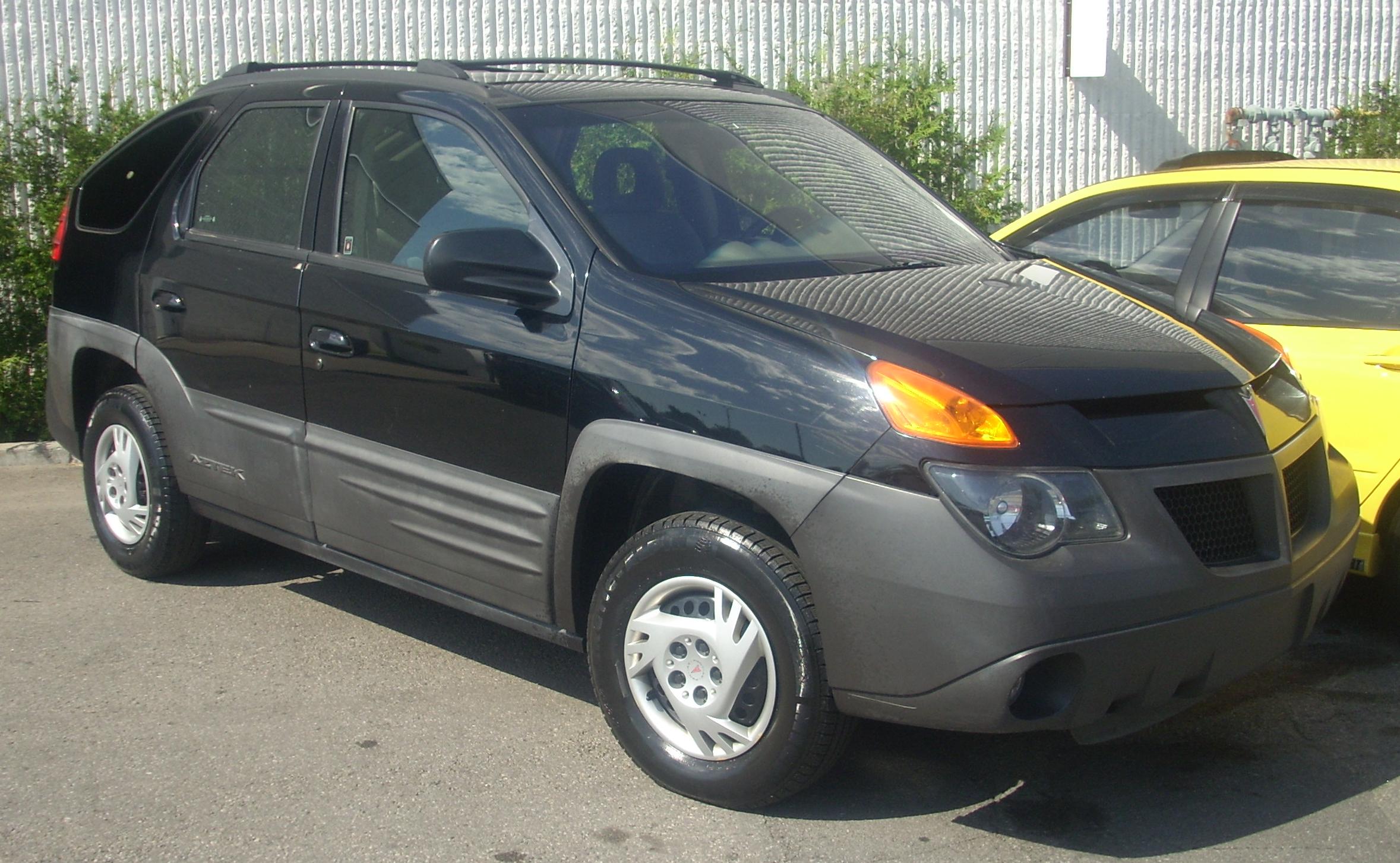
It's like the Pontiac Aztec or whatever the fuck.
Yeah.
I remember that.
Is that what it was called?
The Aztec?
Dude, you just missed the mark on all fronts.
So that happened as like I need a bike.
I know I'll build it.
Yeah.
And then Hot Rod Shop happened.
And I had access to tools like no experience.
And the guy, Aaron, he's just like, go for it.
And eventually slowly but surely I got to put my hands
on like shop projects.
Stuff that I really was under qualified to do.
And I messed up very little.
And he would keep me from-
Causing a problem, yeah.
Yeah.
Like he wouldn't let me do stuff that he knew I didn't.
But it was just kind of like, yeah, go for it.
And so that is kind of the theme going forward.
He's like, yeah, just go for it.
And so that was a quantum leap at the Hot Rod Shop
and I spent an extra year in college.
I just went slow.
So I had like a solid four years there.
And then the year after I spent some time there.
So I was there for like five years.
And it just kept going.
Graduated college.
Like I said, I was still there on and off for a year.
And I could go back and work
and I could take two weeks off, go down there,
knock out half of a project.
And then rinse and repeat two months later
or something like that.
And then I also went on a big long travel,
met a girl, fell in love, got kidnapped in Germany.
And she was like, well, you have to stay.
And you know, you need a visa.
And the only way to do that is to go back to school.
And I was like, I just did school.
I don't wanna go back to school just to go to school.
But I was looking and I found a couple
of these design schools in Europe
and school is cheap in Europe.
Yeah.
So it was like 6,000 euros for a year
in this design academy, which is just a certificate.
Not like super accredited or whatever.
But I kind of figured out, I was like, you know,
travel, design, whatever, partying.
I was like, yeah, I'll do it.
I just called it like a learning vacation.
I still call it a learning vacation.
So I did that and learned some CAD skills, basic stuff.
And then when I was there, the GoPro 3 had just come out
and I bought one of those.
And then I started recording a bunch of our, you know,
little funny escapades all around Florence, Italy,
made a huge group of international friends.
It was a lot of fun and started making little videos.
Yeah.
And this was, I mean, YouTube was out,
but there was no such thing as like a YouTuber at that time.
Instagram was literally, this was 2013 I was there.
So it literally just came out.
So like all this stuff was still quite new.
And then I was like, I think I like this video thing.
So I want to go do something more serious.
How do I tie all these things together?
Videos, travel, motorcycles, et cetera.
And on a previous travel, I ended up in Nepal.
And I was literally like just flying around.
There's still around Skyscanner.net.
You can find the cheapest flights to anywhere
and they have a function for everywhere.
So you can type in where you're at.
And I got like a 41 Euro ticket from Istanbul
to Kathmandu, Nepal.
And so I just bought the ticket and I went
and I went on wiki travel,
which is like Wikipedia for traveling.
It'll give you like a quick download
of what's going on anywhere.
And is there like, I haven't traveled internationally yet.
We just got our passports this last year.
Is there anything like when it goes
to certain countries like that where you have to,
I mean, you don't, can you just show up
that y'all I'm here?
Is there some kind of like process to like?
Certain countries, yes, certain countries, no.
So in Europe for an American,
you have a visa waiver,
which basically means you don't need a visa to go.
Since COVID, there's a couple other little things
and with technology,
they want you to like input all of your stuff.
But generally, anywhere in Europe, you don't need.
In the UK, you don't need.
And there's a handful of countries that you don't need.
I would say probably half of the countries
in American passport doesn't need.
Others you need a visa,
which you need to apply for beforehand.
Others have visa on arrival
where basically you just turn up
and they're gonna have you fill some stuff out.
You're gonna take your photo, all that other stuff.
But historically and to date,
it's usually you can just rock up.
And that's what it was a visa on arrival in Nepal.
And it's like 28 bucks or whatever it was,
fill out this form and that's it.
So I was there for a month.
And one of the things that I immediately jumped out of me
is like there is a bunch of Royal Enfields in Nepal
and I was like, what is that?
Isn't that, cause I had spent a lot of time
on the jockey journal.
Do you know what that was?
Yeah, there used to be a chopper form, right?
Yeah, it was like chop cult came after jockey journal,
but jockey journal had a bunch of old curmudgens on it.
And they only wanted to talk about stuff,
doing it their way or whatever.
Actually, the first bike I built was a full frame up
I built the full frame and the jig that I use now
is the jig that I built for that frame.
Nice.
It has a little 2009 welded in it.
So it's like 16 years old,
but I built that frame and I put my whole post up there
and they took it down immediately.
Like no offense, good job on the bill,
but we only do American and British stuff here.
I was like, but I hadn't really paid attention
because I was just lurking on the forum
and so I learned a bunch of stuff there.
Again, access, just trying to find, trying to find,
trying to learn, trying to do, trying to build.
And it was just a lot of that for a long time.
And so back to Nepal, I was like,
Roy Linfield, isn't that that English?
There's a bunch of them in India.
I guess there's some in Nepal.
So I kind of made it a mission to go find one
and rent one, get on one and ride it around.
And I did.
And I was actually in Pakara, Nepal,
which is like a place you start a lot of treks from
and I was doing a trek where you basically
just walk into the mountains.
You can walk to Everest Base Camp from there.
I didn't do that one because it was kind of too long.
But I did my trek, came back, ended up in Pokhara, Nepal
and I went and found an old mechanic
who had these Roy Linfields
and started talking with him and got a download
on the whole history of Roy Linfield being in India,
even though we're in Nepal.
You know, it's kind of like a
America, Canada type dynamic going on between the two.
And just became fascinated.
And then two years later, I went to design school,
started making those videos, thought I liked that.
And I was like, I think I want to make a documentary.
I was like, what could I do to tie all my interests
together?
Cause I was like 27 at the time,
still behaving like I was 18.
And so I was like, I'm going to go to India,
make a documentary about this Roy Linfield story in India.
Not the BBC style documentary about the English era,
but and at the time Roy Linfield was just beginning.
It's done a bunch of research.
It was just beginning.
It's rebuild, restructure, rebrand, all the stuff.
And that was only 10, 11 years ago.
And now Roy Linfield is a totally different thing.
So it just started kind of innocent enough,
just stumbled upon it, kind of loved it.
And in the context of India and Nepal,
being on a Royal Enfield is pretty fucking cool.
It's, it's on.
It's like a perfect bike for the terrain
and everything they got going on there.
It is, and that's why it's there.
That's why it's there.
So I made that documentary single-handedly self-funded.
I ended up running a Kickstarter while I was there
because I, you know, a little bit more money,
raised a little bit of money.
I interviewed the CEO of Roy Linfield.
And then just, it was a field of dreams moment,
like build it and they will come.
And so I just went, started meeting people,
made a lot of friends, had a great fucking time.
Road in the Himalayas, road all over the country.
People lent me bikes.
It's a funny thing about India,
like very different from here.
People don't just let you ride their bike.
It's like, it's like the level
of taking their wife out for dinner.
It's like, only if you really know them,
it's like boundary.
It's a foot massage.
Yeah, right.
In India, you meet somebody like,
oh, very nice to meet you, ride my bike.
Yeah.
What?
But it was like that.
And I just rode all types of bikes all over India
and it was fucking blast.
And there's nothing more exhilarating
than riding fast in slow traffic
and the densest traffic.
And there are cows and dogs and trucks
and people crossing the road.
It's gnarly, but it was a lot of fun.
Damn.
So then I did that.
I came back and moved, met a girl,
moved to Chicago, got my own little workshop.
It was the first time I ever had my own
like workshop space and just started
working on bikes again.
Started assembling some tools
and getting some of your own shit.
Yeah.
I mean, I still had my jig.
I still had my welder, angle grinder.
What the fuck else do you need?
Yeah.
So I built, first thing I built there was a 87 Ninja 250
where I wanted to build like a mini little track bike,
full carbon fiber body.
You can go look at that on the internet page.
It's just a pipe burn, I think.
Built that.
So like basically just subframe, exhaust,
rerouting of wiring, different wheels,
different front end, different rear shock.
And then I molded the whole body kit myself.
Repop, you know, made a plug, made molds,
laid up carbon fiber, came out pretty, pretty bitchin.
And then I had just gotten a Harley Roadster.
Yeah.
So I made carbon fiber fenders
and a little windscreen and stretch the tank,
little stuff and built the exhaust
and chain conversion and little stuff like that.
You seem like you would find,
you know the process of doing things
so you would just tackle it.
Like, you know, cause I've also worked in a job
when I was really young,
where we used to make plugs from, you know,
molds essentially to do carbon fiber parts.
I worked at a shop where we would take,
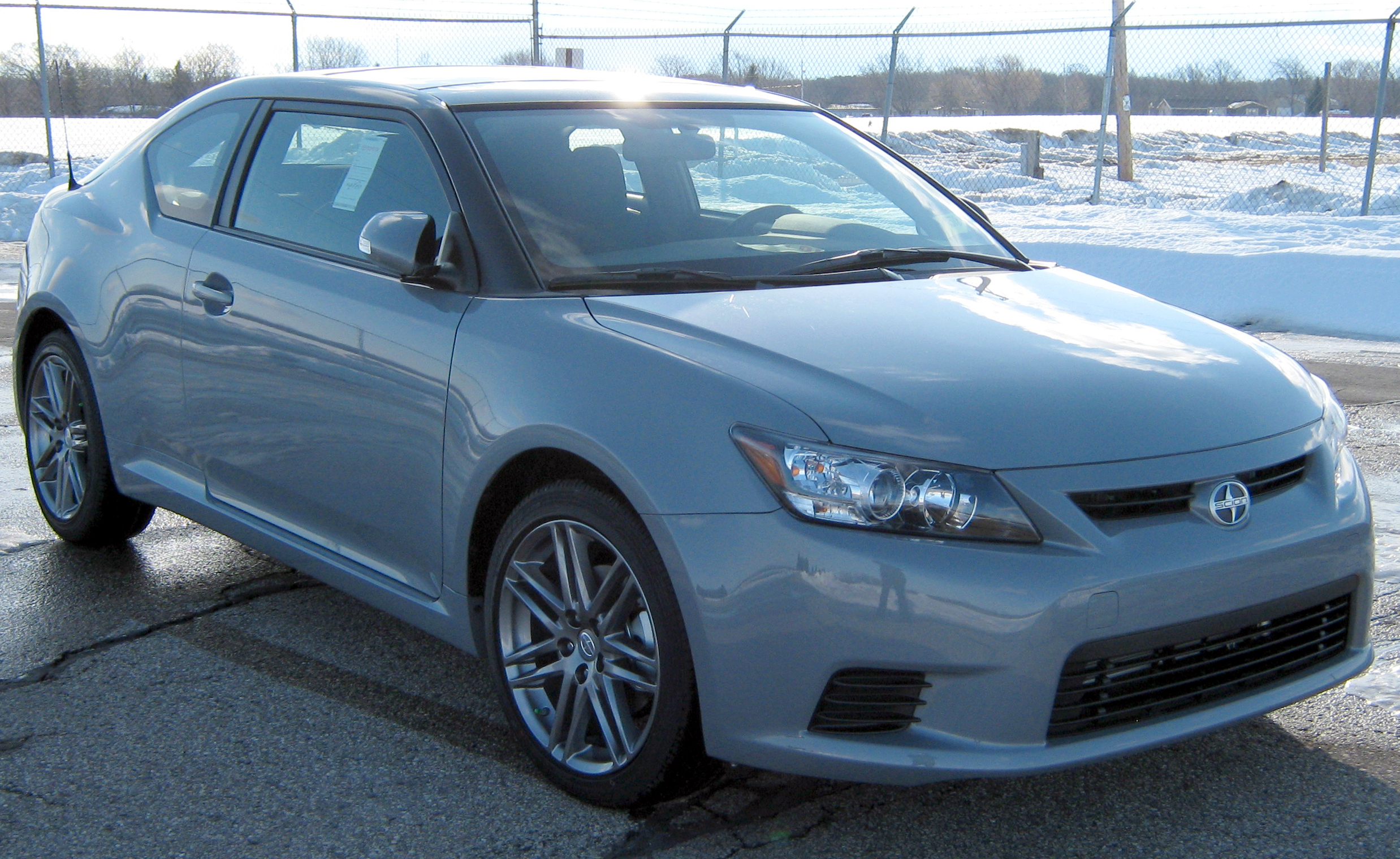
like the only project you ever worked on
was a Scion TC.
When those first came out a long time ago,
is Scion still a thing?
The car, Scion?
I feel like they just folded it.
I think they just folded it back into Toyota.
So when the Scion TC first came out,
that was like their coupe, right?
And at the time there was this really,
I think he's always been really famous
in the drag racing world,
but his name was Bob Norwood.
And he used to build all these chassis
and all this crazy shit.
Well, what he was doing is he was taking a Scion TC
and they were building a funny,
not a funny car, but like a drag car, like all out.
Just using the shell.
Yeah. So basically what we had to do
was take this factory car
that was literally the car from the billboards
cause everything inside of it was,
like the dash was fiberglass.
It wasn't like the original,
it wasn't like the thing they made.
It was like the prototype car.
Right.
So we make a full plug of this whole car.
Then we pull a mold off of it in regular fiberglass.
And then we chop and stretch it.
So we chop the top, stretch the hood,
and then made another mold.
And then that's the mold that we made a carbon fiber out of.
And I was, it was like two and a half months.
I would work to this place every fucking day I left,
my pants were matted from fiberglass all over it.
And I was just like, man, this sucks.
I'm not doing this no more.
So.
It's a disgusting process,
but the result somehow.
It's just a massive undertaking, you know?
And I mean, to do a bike part is a little bit more manageable,
but, you know, like I got a buddy in NorCal
that, you know, Steve up there, he built fucking boats,
like the ones that you see and have a suit and shit.
And it's gnarly watch them do backing bags
and stuff on that stuff.
Well, I agree with you on like,
you just go and learn the process.
And if you have general dexterity,
you just, it's a recipe.
Like you can follow the recipe just like you can make
fucking chicken parmesan or something.
Yeah, yeah.
So that is my approach and you just go for it.
And it takes long enough where you can realize
if something's going wrong or right.
And, you know, sometimes you got to get all the way to the
end realize I did it wrong and go back and do it over
again, but that's part of the process.
But now there's so much more new tech that makes a lot
of these things easier, like 3D printing.
Instead of, you know, using a B foam and pouring it into
something or around a part and then sculpting and using
body filler and all this other stuff.
If you can design in 3D, which I've been imploring
everybody to do, it's much easier than you think.
You can start to create a shape and then you can
have it printed.
You don't even have to have the printer.
You can send it out somewhere.
They'll ship it to you.
And then you're just doing, you know,
finishing of that surface and then you have your plug.
And it's one to one, absolutely perfect.
And it speeds up that whole process.
Usually the plug is what takes the longest.
Sucks to make a mold.
But if you really wanted to get crazy with it,
you could probably just turn the 3D printed thing into,
you could do the negative and make that your mold.
So that's what I've been having fun with.
You know, I never intended to do this like professionally
or as like a main job.
I was just building my own bikes, bikes for myself.
And always excited on the next project
and take the next step of whatever process it was.
And so now that I'm kind of, you know,
we didn't get into the zoos thing,
but since that's been done for a year now,
I'm excited and I just moved into a house
that has a garage attached to the house,
which is huge.
You know, I have a dedicated workspace.
It's only a 20 by 20, but it's plenty of space.
And it's, you know, I could sit on the couch
or I can go in the garage.
And I think, you know, which one I probably got.
Yeah, yeah.
Well, how did the zoos bike thing come to be?
Like, how did that even like?
I'm gonna grab a beer.
Yeah.
I'm grabbing one too.
RWD V-Twin has 100% made in American suspension
for your touring, inmate, soft tail, and dyno models,
offering various ride height options for you to choose from.
The RS2 rear suspension and the RS1 front cartridge system
offers 12 clicks of compression on the rear
and eight clicks on the front,
allowing for a silky smooth experience
all the way to a nice and firm ride.
All RWD suspension comes with a lifetime warranty.
I've had the opportunity to paint many of RWD's fairings
and fenders, and I can attest to the quality.
So if you're looking to get an FXRT style front fairing
along with their high quality steel fenders,
they've got you covered.
You can also check all these parts out
and get more info at the link in the description
of this podcast wherever you're listening to it at.
Also, you can type in www.RWDVTwin.com.
Where you can drop the fast life offer code
and save yourself 10% on your order.
Also, give them a follow on the gram at RWD underscore VTwin.
Located in South Austin, Cowboy Harley Davidson
has become a hub for killer events
and provides a place for the motorcycle community
to call home.
Cowboy Harley has something for you
every weekend of the month.
On the first Saturday, they will host the cars
and copy style meet and hang.
Then on the second Saturday, it's Ink and Iron,
a local artist show where tattooers, painters,
pinstripers, and all artists are welcome
to come showcase their work and art.
The third Saturday of each month features a bike show
with a different bike category every month,
offering a 500-hour gift card for the top prize.
Finally, the fourth week of the month
will have a Thursday night bike night.
Check them out at www.CowboyHarleyAustin.com
and give them a follow on Instagram
at CowboyHDAustin.
So, Zeus was a happy accident.
Yeah.
A lot of this stuff was just kind of naturally
arrived the impetus of an idea and then went for it.
And what created that was when I moved to Chicago,
this was September 2016,
like a year after I got back from India,
I just made the documentary, released it,
and then I was like, well, what now?
Anyway, moved to Chicago, met a girl,
moved in with her.
She was living downtown.
I actually didn't move in with her.
I rented a house or an apartment
that had a detached garage,
and then I subletted the apartment to other people.
And just used the garage.
And I got the garage for 150 bucks a month.
Nice.
That's pretty good.
And it was, I was living downtown with her
and this garage was in Wicker Park,
so it's still pretty central, 2.1 miles away.
And we had a car, but if I was driving there at 545
on a Friday, it would take 45 minutes to go two miles.
And I could get on the L, the subway,
and that would take like 40 minutes.
I was like, this is fucking ridiculous.
I should just ride a bicycle.
Yeah.
I was like, I won't ride a fucking bicycle.
But at the time, I don't know,
maybe the algorithm had just started at this time
or something, but started seeing these electric bikes.
And the interesting thing about them
was that they had moved the motor to the wheel.
It was called a hub motor.
I was like, well, that's really interesting.
If you think about the general anatomy of a motorcycle,
you know, you have two wheels,
one for the other, power plant in the middle,
and all the geometry, the functionality,
even if just having the gas tank on top of the motor
so that you can feed via gravity.
Obviously, we moved on to fuel injection,
fuel pumps and other stuff, things like the Gold Wing
and the V-Max have the tank under the seat
and all that other stuff, but you know what I mean.
But this changed the whole anatomy,
and then one of the big kind of poster boy companies
in the scene of the electric bike thing was Super 73.
And they basically, at that time,
this was early days, they had just come out.
They had basically designed an electric bike
with these components that looked like
an old Sears mini bike, like a Coleman style mini bike.
And I was like, oh, that's kind of rad,
but I have this general, after doing this stuff so long
and doing a lot of research,
I can kind of look at something
and tell you how it's gonna ride.
Like I have decent capability,
not a fucking John Britton or anything like that,
crazy engineer, Savant,
but I can tell you what is right and wrong geometry.
I could tell that this was,
while it was a cool concept, it was not right.
But I had never ridden one,
and so I actually went on Alibaba
and started messaging the factories in China
that produced the battery and the hub motor,
and they're actually selling kits already.
So I lied to them and I said that
I was an electric bike company coming to market
and that they should send me a bunch of parts to test.
They did.
So I got the parts and I just wasn't sure
of what the capability of those motors batteries were.
So I wanted to put it on like a test mule frame.
So I got an old electric or an old BMX bike
off of offer up for 20 bucks.
And I had to widen the dropouts, the axle plates,
the bike world, they call them dropouts
in the rear by like 15 millimeters.
So I had to cut and stretch essentially,
put it on my frame jig.
And in three days, I had a functioning prototype,
as I guess it was.
And it was just fucking fun, man.
It sounds so juvenile and so lame,
but you know, like there's this thing
where you have like levels of commitment and fun
and you can raise commitment and fun can come up,
but if you can keep fun up high and drop commitment,
it somehow like is a multiplier of the overall experience.
And so I literally just finished this thing,
got on it, wrote it like 50 feet, I'm like,
this thing's fucking awesome.
So I went over to my friend's motorcycle shop
and it was like a Friday night.
And we just started doing hot laps
around the building the whole night.
I was like, this is fucking cool.
And actually I have a video of all of that stuff,
it was just recording people,
like this one does on your phone.
And I was like, build another one, build another one.
And so I just started iterating.
And then I was down at hand-built show,
MotoGP weekend, you know, a couple months later.
And doing like a whole weekend trip,
one of my friends was there,
he brought one of his friends.
And that guy is Pete, who was at the time,
the head of design at Skullcandy Headphones.
Also a motorcyclist did some minor building
of motorcycles and stuff like that.
I mean, that's why we're at MotoGP and hand-built show.
And so we met, he saw my Instagram, he was like,
what's this?
Started telling him about it.
I was like, version two is gonna be done in like two weeks.
So I did that.
And then he was like, I'm gonna send you 2,500 bucks.
I want you to build me one.
And then even before I started building it,
he was like, dude, I think you're onto something.
Look at these super 73 dudes.
And I think you can do it.
I think, and I was like, well,
I don't know anything about this world.
Like you want me to start a company,
manufacturing, all this other stuff.
Do you want to be my partner?
And we basically spent our hands shook on it.
And then it was like two years from that point to launching.
But we would shed it a little bit.
We launched a Kickstarter, failed,
but we got a lot of feedback.
And then we would shed it again for another 11 months.
Launched a presale and that was,
it was on my birthday, January 22nd, 2020.
And we had already like lined everything up with the factory.
We had our orders ready to go,
but we were launching a presale to get the money
from those presales to pay the manufacturer
to start production.
So it was a bit of a parlay on that one.
And right as we're about to launch,
we're like, we kind of have a little bit of a problem
over here.
It's January, 2020.
And I was like, well, American market doesn't care
about your problem.
Is this going to work or not?
Thankfully, in retrospect, we decided to go for it.
And then we got a bunch of presale,
like we sold seven bikes in the first day.
It's like $2,900 each.
So like we're making some money.
And then in the first week, we sold 25.
And we started going, we're only going to make 50.
We did a limited drop.
The e-bike thing was already kind of coming on.
And then...
Wasn't that around the same time
that Harley was coming out with their e-bike?
Yeah.
Like the bicycle versions or the younger ones?
Yeah.
Just a couple months after that,
but the e-bike thing was coming on strong
for a little bit.
If we had started two years earlier,
I think we would have been sitting even better.
But we're just starting this out of my garage, basically.
Were you still in Chicago at the time?
Yeah, nice.
And so we did that.
We took on another partner as based in Fort Worth,
an old friend of mine that we had collaborated
on some motorcycle stuff with Royal Enfield stuff
back to the India days.
And he had a warehouse and I was like,
hey man, I'm working on this project.
Do you want to be in?
And he was like, yeah, I'm in.
So we pooled some money up front of our own,
not too much, but as much as we could,
each of us stomach and got the ball rolling.
And looking back, man, I can't believe,
you get a little bit older and you realize
all the risks you've taken
and they all just kind of worked out.
And now you feel a little bit,
I feel a little bit more risk averse,
but just fucking went for it.
And then COVID actually arrived here
and everything sales stopped
and we hadn't made enough money to whatever.
And I was like, well, we got to do something
because we don't have a bunch of marketing dollars.
We can't run a bunch of ads on Facebook
or anything like that.
And I had built this concept bike
during the design evolution of zoos
and the kind of general visual architecture of the bike.
And I sent it out to a bunch of like design website,
like web mags type of thing.
And it kind of fucking blew up.
And Pete was like, you can't release that.
We're not selling that bike.
You're going to confuse people.
And I was like, well, we got to make like 25 grand
in the next 10 days.
What else?
So Hail Mary and it fucking worked.
It went kind of semi viral, not majorly viral,
but like semi viral, we sent it out to two places
and then like 20 other mags
that just kind of regurgitate content
from industry leaders picked it up.
And two things happened.
One, orders started rolling back in
and we upped the amount from 50 bikes to 100 bikes
for this first like pre-sale slash drop.
And then I got contacted by this guy
who's the curator of an exhibit
that's been going on for like 25 years.
And every two, three years,
they pop up at a different gallery of modern art.
So it's like been at the Guggenheim in New York twice.
It's been at the Guggenheim in Bilbao once.
And this one was going to be at Kagoma,
Queensland, Australia, gallery of modern art.
And it's the exhibit is called
the motorcycle design art desire.
And each installation, each couple of years,
they have like a different theme.
And this one was going to be a look back
at the previous 125 years of motorcycling history,
breaking it up into eras or chapters
and showcasing the best of each chapter.
I was like, I think you may have made a mistake.
You're calling me for this like concept bike that I built.
And they're like, nope, you're the bike I want
because this was the latest chapter
is like the coming of EV
and all this other stuff.
And there's not too many examples.
Brian Fuller had a bike in there,
a few others and my bike
and that shit's hung on my wall in my garage right now.
So that was pretty rad.
It was a fucking roller coaster, man.
And we took off like a bottle rocket
and then macroeconomic bullshit, 2023,
a few things happened.
We were going to raise money.
We waited too long, investment opportunities dried up.
2021 and 2022 were pretty bonkers years.
People are spending all types of money because of...
Yeah, COVID checks.
COVID checks, people being at home,
not just all economic behavior was strange.
People still made money,
but they didn't have to spend as much money every day
on commuting and going out to eat every day.
All of these things created
a very different economic behavior
for the whole country and the whole world.
And then the Chinese factories figured out,
not figured out, but they started going direct to consumers.
So they started making their own bikes.
And then all of a sudden there was
what's called a glut in the market, just oversupply.
And so then all the prices have to come down
and to be able to compete,
you have to bring your price down,
took away all our margins
and then all of a sudden we found ourselves
in an economic unsolvable equation.
And so we ended up selling to the factory last year,
basically just offloaded the thing.
Yeah.
Some of the guys are,
most of the guys are still with them,
still working for Zoos and the brand
for the Chinese factory.
And I could have stayed and I decided not to.
So here I am figuring out what the next chapter will be.
Putting in resumes, yeah.
But you know, I've seen that,
like that's kind of been a very common problem in everything.
Like, you know, once you've had any kind of product
being developed overseas in China,
then they just have access to it.
And they don't have the same laws as we have here.
It's a problem.
It is.
And I mean, but here's the other unfortunate thing.
It's like, because they decide to build the bikes, right?
For this market over here,
it completely just tanks y'alls
because you can't keep up,
you can't produce it for the price that they can.
And consumers are like...
The price we're paying to get the product
is what sustains their factory.
And we need to pay for advertising.
We need to pay for warehousing, shipping,
all the things.
And there was just nothing left on the bone
at the end of it.
And it start, you know, the sea comes creeping in.
Yeah, it's just, it's crazy that like,
you know, a lot of people in America just don't understand
that's how these economies work
and they fold because of like,
you don't really have the ability to go there, right?
Yeah.
When you have someone that's like,
that has a CNC in their garage
or is making one-off things,
it's like, you want to do it at a small enough scale
not to like tip the Chinese folks over there
to be like, oh, we need to make some of those parts
because those are hot right now.
And then just undercut you on your own fucking designs.
And they can turn it around like this.
I mean, it's a massive problem for us here on this side.
And I mean, I'm not gonna lie to you,
you go over there and it's one,
I've been over there once
because I couldn't go because of COVID lockdown.
I ended up going in June of 2023,
first and only time.
And their ability to make stuff, dude,
it's just one factory after another,
after another, after another.
And massive rooms full of CNC dudes
and that they can make anything.
A close friend of mine,
this is kind of off topic,
but kind of in the same realm of things,
close friend of mine that deals a lot with that side
of the world or that side of the motorcycle industry
of like, having things built over there.
They talked about how like,
if you have brands here that are hiking up their prices
due to air quotes tariffs,
that they're full of shit, right?
Because most, like say,
say this brand sells something for $500, right?
Well, they're making,
they're getting it made for 80 bucks, 60 bucks over there.
So $60 is all you're paying the tariff on.
You're not paying the tariff on $500 of the item, right?
You're paying it off.
Yes, you're right,
but it really comes down to the numbers
of what that product is.
Okay.
So they having a different tariff for like.
And.
Isn't it just based on?
There's various stages of the value add.
And when you get,
so you have what it costs to make,
and then shipping,
and then
what do they call it?
Like once it arrives at the port and getting here,
and once it's,
I'm talking in very basic like economic levels.
When you start piling on costs
at the beginning of that chain,
it cascades all the way down.
So it's not as simple as $500 part,
$80 to make it 25% tariff on 80 is 20 bucks.
So it's a hundred bucks
and they'd still have 400 to play with instead of 420.
It can depend.
It depends on what the part really is.
And it also depends on like,
if you're selling a product for 500 bucks,
the cost to make it at $80 isn't your total cost.
Like your net margin.
Yeah, yeah, yeah.
We have all the other aspects of like,
all types of other things,
but also if you're selling for something,
if you're selling something for $500 and your cost is 80,
you're probably at a huge scale.
And because you can get these things,
the more having so much made
that you're able to get it at that price.
But even if you're producing 1,000 of the thing,
that's not enough scale
to bring the cost of manufacture all the way down.
Well, that's what I'm talking about.
It happens at 10,000s or 100,000s
or millions of those items.
That's what I'm saying.
That's where that's kind of the cold-hearted question.
And China has that capacity to produce
in the 100,000s of an item.
Yeah.
Wouldn't even blink.
So it just kind of like,
yeah, I mean, the whole thing is just,
it's kind of like,
I would get people asking me a lot
if I want, like, why don't you sell parts?
Like, why don't you have like a fast-life garage,
risers or whatever?
And I'm like, man, it's the scariest business
to get into, man.
Inventory is the devil.
Yeah.
Ask a shop if they want to produce t-shirts
to sell on their behalf.
And the ones that do, they look at the cost
and they realize, oh, I got to sing 10 grand
into inventory for t-shirts
because I have three colorways
with two different colored graphics
and I need six different sizes.
That scales up very quickly
and you're going to spend a couple hundred grand
in what happens if you only sell 10.
Yeah.
And you're going to sit on quite a bit.
That's why companies that, you know,
collab with other companies
and they won't have their own line
but they'll have another company
put their name on their forum.
Yeah.
Well, you know, some of the things
that people have been going out
is like getting the print on demand stuff
but I feel like the quality,
and I'm talking out of my ass.
I don't know for sure.
I don't have one sitting right here
going, this is good or this is bad.
But I felt like in the past,
when I saw the print on demand,
the quality wasn't there.
And to me, in this day and age
where most of the people are,
they're opening a box to receive a product
for the first time
as opposed to walking into an establishment
and pulling it off the shelf.
Like I want, when they open that box
to be the same way they feel
when they walk in the store
and see it on the shelf.
Like it needs to be like, yes, hell yeah,
I'm so stoked.
You're 100% right.
Everybody expects that
and with print on demand,
you're not going to get that.
Like the quality is decent
which you put the shirt on.
If you don't have, you know,
super high bar for fashion
or how every single, you know,
you have something like, I don't know,
whatever you call it,
taste makers or something.
Everything's got to be,
oh my clothes designer, you know.
It's not going to work for them
but like, I'm just a jean and t-shirt guy.
It would work for me
and I don't do unboxings.
I just open the box
and I use whatever is in it.
So it depends.
And that's, I would say like the print on demand thing
is a viable thing
if you're testing the waters.
Bring the mic to you.
Sorry.
Just take it with you wherever you go.
There you go.
But again, if that's not what you're trying
to produce excellence, then you got to.
Well, see that's right there.
That's the point that you're trying,
like deciding what kind of brand you want to be.
I know it's more profitable
to just figure out how to move things
than more sales that are coming through the website
every day or whatever,
than the more money you make.
But man, like, it's hard,
it's very hard to care about the user experience,
dare I say, integrity of your own brand,
to just like push things out of your shop for profit.
And not want when somebody gets something for you
to have some kind of feeling.
Building this chopper down here,
I've had to use a lot of,
I'm thankful that there's a lot of brands out there
that sell products that solve a problem
that otherwise I would need to drill, cut, shape,
whatever, it's like simple little brackets, right?
Junior's handmade, I'll shout him out on this one.
I've been buying a lot of little stuff
from awesome products.
And then every time I open the box,
there's a postcard with the handwritten letter
that says thank you for,
it says thank you, Jayce.
The next says thank you again, Jayce.
Thank you again and again, I really appreciate it.
You know what I mean?
It's those kind of thoughtful things that like,
I'm like, fuck man, I feel like I'm buying it from him,
like a person, right?
As opposed to, we all got to this point,
like when Dixon Flannel blew up
and you felt like every time you were on Instagram
saying, hey man, I love the Flannel,
you thought you were talking to him or some shit,
or he was hand packing it for you,
like there's that point, right?
Well, I think that's where the creative process comes in
because I don't know what kind of box
that part came from Junior's on,
but like, a note goes a long way.
100% and that's a low cost endeavor.
You just got to put hand to paper on that one,
but it makes a huge difference.
And I think that the, I guess what I'm trying to say is,
you feel like you have three things to choose from
but you can only choose two,
but there's somehow a middle thing
that can up it to basically three
without, but still only really focusing on two things.
If choosing all three is impossible,
either financially or, you know, functionally.
Yeah.
But that, and that's where real products
or services excel, I think.
And that's really what it takes.
Otherwise, everybody would be doing it.
I think that's the roadblock I'm in
with things in regards to creating,
you know, having a regular run of t-shirts, you know,
having regular products that people
that want to support the brand can do it.
Like I'm in this point where like,
I'm ready to kind of like open up those avenues,
but I really want it to feel different.
And, you know, getting things printed is up and down.
You know, you go to one guy
and you think you got it all right.
And then, you know, then you get a bad batch
or then, you know, it's like it,
it's just the consistency of things.
You know, like when I produce a helmet for somebody,
I have to, I have to like have,
I have to be consistent.
Maybe I'm not there.
Like I'm, you're not getting it fast.
But when you open the box, there's no like,
oh man, I was hoping it would be this.
It's like, no, it's perfect.
You know, I just finished the helmet
for a dude that paints fucking planes
and huge RVs and does these stupid, like huge things.
And I knew he was a painter.
And so he paid me to paint him a custom helmet.
So, I mean, even more so than I normally would do,
I'm like trying to make sure it's dialed in
and there's no problems in it.
Cause I want him to open it up
and I know he's going to look for a flaw
and I wanted to find them first and solve them.
And those are the kind of things
that I feel like push me behind
in like profitability,
but integrity is through the roof.
Does that make sense?
Yeah.
You know, like.
That's definitely the push and pull on that plane
is quality and delivery versus profitability.
I see a lot of painters out there
and this isn't a dig or, you know, talking shit,
but I see them pumping out like helmets,
especially recently, right?
And I'm like, man, like, damn, that's like three this week.
I'm like, I'm pretty fast.
Like if anybody ever watched me work,
I'm pretty quick with it.
And I'm like, if I'm pretty quick
and I can still only maybe do one helmet a week,
either you're just putting some stupid hours
or you're cutting a lot of fucking corners.
You know what I mean?
And that's kind of where things get kind of weird.
It's like in the internet, like.
I don't feel like we're.
Maybe they're producing in China.
I don't feel like we're in that world anymore
where like you really want to publicly like like,
fuck this guy and blah, blah, blah.
Like I know that it still exists,
but like if you had a helmet painted by somebody
and you open the box and it's kind of trash,
like you're like, oh man, whatever, dude, fuck.
I'm not going to go with that guy anymore.
And that do keep selling helmets, right?
Yeah.
Well, it sucks because like he kind of got away with it.
And like I'm busting my ass to do a better quality one.
And I'm still in the same category.
You know what I'm saying?
Like it's it's I was telling someone the day that like.
Getting to maybe some version of the top of like your industry
is like a death sentence.
You know, you're you're expected to perform
to the highest of quality.
You're expected, you know, you're trying to charge at that
like at that rate, too, which all all the automatically like.
Deducts a lot of potential clients for me
that are never going to reach out to you
because they assume you're too high or wherever the case may be.
Or they would they're going to choose
the guy that's two hundred dollars cheaper than you
just because two hundred dollars like whatever.
So you're like, you have to perform.
You have to do this.
You have to you never know who's opening that box.
And it needs to be the best thing possible.
And you can't produce that a lot
because it's so meticulously hand done that.
And there's a cap like I can't charge more.
I'm already kind of high with it, right?
Well, I'm trying to think of the ways
that that's been solved for historically.
And the first thing that comes to mind is exclusivity.
Like if you think of fashion brands,
they will limit how much you can get so that you can't get it.
But that doesn't really help.
Like it'll help with a coach bag
because there's only one coach bag. Yeah.
Yeah, there's Louis Vuitton, but it's not coach.
If you want coach, I think it helps when it's a material item,
even though technically the helmet is a material item.
Yeah, it's no, they're paying for your art.
It's the thing on it, right?
Yeah, they're paying for your work.
So there might be the aspect of like, OK, well, one day,
you know, the exclusivity of it could create a demand.
As like reselling something that's already been done,
but they're all personalized to because you could just like double your prices.
And then you're going to be like, well, then nobody's going to buy it.
Exactly. Like there's always a price cap to what you do.
Maybe yes, maybe no.
Yeah, but at the end of the day,
like there's still those relationships that you built
through doing a helmet for somebody that, like, I just I've had a price.
I just needed to be this so that I can devote this kind of time to find yourself
with celebrity who will post about it.
I fucked up.
And then the moment that happens, you double your prices.
You know what you want to know how celebrities work?
Every celebrity that I know I'm that I'm connected with.
It's not even them.
It's the fact that everybody that wants to get to them will start going through you.
Oh, I know. I mean, I'm I'm just thinking of,
like my buddy, you know, Xavier from Providence,
who, you know, was the drummer for Black Cherry Forever, right?
The amount of people that find out, like through us,
like just doing stuff together that hit me up, trying to get me to get stuff
signed for them is fucking bananas.
I'm like, I'm like, dude, this is gross.
Like it's kind of it's weird.
Chicks, hey, so little dudes from overseas, like it's weird.
You know what I'm saying?
So it's like weird when it's like,
you think you're kind of like known and shit and then you're I was joking
because you're right, it's an ugly it's an ugly thing.
But sometimes that shit hits and.
It does. But it's like, what is it going to hit?
It's going to create this is what I do.
I overthink everything, right?
But here here here's the possible great scenario.
I paint a helmet for Jason Momoa, right?
And he loves it.
He makes an Instagram post and Jason's the best, blah, blah, blah.
That all that does is create more work.
Yeah, it doesn't create more value.
It you would have to raise your price after that.
Yeah, but like and you're not going to be selling.
Here's the other Achilles heel.
We haven't addressed is within the motorcycle industry.
Usually if you're impassioned, yeah, you you want to do this as a
contribution, right? Yes, you want to expand the offerings in the motorcycle
space and most of those people are just salt of the earth people.
And so let's say all that happened.
Jason Momoa buys a helmet or it gets a helmet painted amazing
that a bunch of people hit you up.
You would have to raise your prices.
But then all the people that you really want to make paint helmets
for can't afford it and you're selling it to those other people.
Exactly. You know, so and then, you know, there's always not cool anymore.
And then it falls off.
Yeah. So it's it becomes like a, you know, name your street wear brand
that was cool that then all of a sudden wasn't, you know what I'm saying?
Like that partner with the wrong place or whatever the case.
So there's like it's not I don't think that the helmet is the thing
for my brand to kind of take it to the next level because it's
something that I think we can offer that's very unique and personalized.
But I just don't think it's that.
And I don't think it's building custom motorcycles.
I don't know what it is, you know?
And I don't know that there needs to be anything to it, but I just know
that everything I touch and do, I just want it to feel like it's it's like
there's integrity behind it.
Like I busted my ass for this, you know?
And I thought like to take it back to like the junior's handmade the notes.
I'm like, man, when I'm doing a helmet for somebody and I'm sitting
we're sitting there and they're telling me the story as to why they
want this thing on there or this number.
Like they're they're telling me about themselves in a way.
We're kind of in a relationship for a minute, right?
And so I have the ammo to make something personalized to write something down
and be like, yo, like, man, I really appreciate you allowing me to
encapsulate this experience memory or memorial for you in this helmet.
I really appreciate the opportunity in that handwritten note.
I think is I don't know.
It maybe it's maybe it's kind of selfish because I'm thinking
about how I feel about doing it versus how the other person would
feel getting it, but I mean, like, what else?
Like, I think, I think there's like this shift of like everybody, I know
myself and I'm only speaking for myself.
I just want to find more authentic feeling connections and whether
it's where I purchase or the things I'm buying and from who I'm buying
from and the people I spend my time with and, uh, you know, everything
across the board and I feel like there's this push to go older.
Not so much bikes, not choppers.
I'm not talking into film photography.
I'm just saying older, like simplistic things, you know, I don't know.
I got a people bed that way you can do your thing.
Anyway, I don't know what the fuck I was talking about.
It's, uh, what else we got?
Well, we have, yeah, like, um, you've been doing more YouTube.
You've been getting back into like trying to create content in there.
Um, I think that we've had some pretty good con conversations in regards to that.
Um, I've, I've had probably one of my best years producing content for YouTube,
but like, again, these last four months have been so hectic that it's
been hard to do the work and then go, you know, chop the videos up
and put them out, you know what I'm saying?
So I feel like after born free, I'm going to have like a lot of
content to drop.
So, but anyway, catch my breath too.
Cause I upstairs, you know, take your time, um, but no, well, you know,
you did the recent one where you, uh, did the Royal infield deal.
And we, we went to the bar that night and had a long talk about that
whole like concept of like how to like, how do you, like what, what,
what is a good YouTube video now?
You know, is it information?
Is it the vibes of things?
Is it, you know, like where do there's so much content out there?
Now, how do we, how do we like wade in that pool now?
You know what I mean?
I think that's the existential question for anybody who's creating
content and, um, you know, what we're all in the audience for everything
or anything, if you're on social media, you have your own algorithm
and naturally you're going to find the content that you like and engage
with and you know, on the plus side, there's nobody that can do what you do.
Anybody, but there's also for every thing that you do, there's a thousand
or 10,000 or a hundred thousand other people on the same topic.
And of course, some people are playing very well with the algorithm
and they're getting that reach and therefore they're getting the rewards,
whether it's brand deals or just pay out from the platform
because of that reach.
Yeah.
And so then people naturally try and copy that because they want that same end,
but they probably water down their stuff or it's just not as good
as the people doing it originally.
And I think ultimately, and it's a slippery slope.
And I think at one point or another, we all fall victim to it.
Yeah.
But I think ultimately you just got to make what you really want to make.
And if it's something you don't want to do, you shouldn't do it.
You know, I did that Royal Enfield documentary and then I, you know,
didn't move on, but I was doing other stuff and then zoos occupied
like nearly seven years worth of attention from me.
Yeah.
I was fully invested in that.
And then that ended like 14 months ago.
So and I had some space to kind of explore what I was going to do next.
I had time and space that usually translates to money.
I don't feel like I have any money, but I had some I had some time,
very fortunate to do that.
And I was just like, well, what do I like to do?
And I wanted and I had that garage.
And so I was like, I'm just working on some fucking projects and
a separate topic, but, you know, started working with David and some
of his projects because he's a lightning rod for motorcycle projects.
I was like, yeah, just give me something I can, I can wrench.
I can build, I can shoot, I can edit, I can talk on camera.
So like just put me to work and I like doing all that stuff.
So it's basically just whatever.
And then, you know, it probably sound like Royal Enfield guy.
I don't think of myself as that way.
I don't think of myself as denominational at all, like all types of bikes.
But that all of a sudden came in.
So I was invited to that launch, went to the launch and
been trying to work with them on something and that hasn't happened yet.
But I was like, give me one of these bikes for a month and I'll
go make some content and hadn't really thought it through.
So I got the bike and it's like, yeah, let me make some content.
I kind of try to say, well, I think this recipe should work.
And I kind of like did some stuff that was mediocre.
And then I made this kind of review and I was like, I'm not going to make
a fucking spec sheet review like everybody else.
I'm just going to kind of ride it and tell you what I think.
And that one did so much better than the other ones.
And there's still small time stuff about a fucking influencer or anything like that.
But it did so much better.
And the way I measure that is like people are sincerely engaging,
which means comments and not just like three fire emojis.
Like, you know, people are they're writing a paragraph or something.
And that was really cool.
I felt really good about that because I had done some short form content
before I released that.
And I was just kind of I don't know if this is exactly what I thought
or what I want to do or whatever.
And then I was like, oh, it's pretty cool.
So I actually really like the bike is a lot of fun to ride.
Put sticky tires on it and took it to the track.
And there's not the bike that you would think you would take to the track.
But it's a lot of fun to go, you know, push a slow bike fast.
I mean, we're all doing it with Harley's.
Yeah, exactly, exactly.
So we're on the same page with that one.
So that was cool.
And then like a week before I'm supposed to go up there,
I got a message from actually a guy who supported the Kickstarter
for my Royal Enfield documentary.
After that, I had built, I did a custom and I put it in the IMS show in New York.
And, you know, this was 10 years ago and he had bought that same bike
after I did that.
So I like genuinely influenced the guy.
Yeah, he found me on the Internet.
We had never met.
He supported my Kickstarter.
So like if you watch my film, there's a whole list of names at the end.
He's on there, Jeff Linen.
And then I came back and it was Michael Baker, Royal Enfield of Fort Worth,
who became business partner at Zoos, who found me at that same time,
making that documentary because he's a Royal Enfield dealer.
And he was like, this is rad and support your Kickstarter.
And then we came back.
I was like, I kind of want to build a Royal Enfield custom.
And so we worked out a deal.
He got got me a bike and did that.
That was 2016.
And then this guy who supported obviously was still following.
He bought that bike and then he wrote it for like 2,800 miles.
And then he started tearing it apart to do a project.
He's been sitting for five years.
So he hit me up a week before I went to Milwaukee for the launch
of the gorilla, the new Royal Enfield bike.
And he was like, this thing's been sitting on my lift for years.
If you do something with it, you can have it.
And so now I'm building that chopper around that bike, a custom
that I've a bike that I've already built around that platform before.
And at this point, it's like feels like a lifetime ago.
Yeah.
But I'm also.
I was like, I'm going to build a fucking chopper because it's got a good look to this so far.
Yeah, I love like the little snippet you put out today with the
just doing all the coping on the tubes and pretty much getting the bones of the
of the frame all like done.
All the lines are there.
The seatpost isn't in yet.
And that's another critic.
That's like a secondary or tertiary line, but still as critical as any other line.
Yeah.
But I just love frame building.
And that's really all Zeus was like we sourced exactly the components we wanted
in terms of brakes, battery, motor, all we designed really, at least to start
was the frame and the seat.
And that's just line and proportion.
Yeah, that's where you create your stat.
And that's that's what bike building is.
Yeah.
I mean, even on a production level, but especially custom.
It's how do you dial in those little nuances so that it just.
It becomes a one plus one equals three scenario.
And that's that's the fun of it.
And so when you're designing a frame, you get to start from scratch.
Otherwise, you're designing around an architecture that wasn't really
your intention to begin with.
Yeah.
And so I've always I've always loved frame building.
I think I could probably trace it back to that magazine that I picked up
with all of Jesse James's frames.
And then my first motorcycle, I built the frame.
And I've just been interested in that ever since.
And I think when that e-bike thing picked up, I was just, I know exactly what to do.
Yeah.
Yeah, I feel like the frame is where you can kind of develop all the
the structure, the skeleton of like, that's the word of the of the
all the other settings that come to it.
Right.
And you can't build a stat like the the stance.
You can't build a six foot three man with five foot eight bones.
Yeah.
Or vice versa.
Exactly.
So yeah, I get that.
And that's why, like, you know, I was my buddy Vincent, the he does
the motor local tacos.
He came out last weekend was helping out, and we finally got to take the chopper
off the lift and put it on the kickstand on the ground.
And that's when I got the roll around chairs and was just sitting there
and here and here and over there.
And I'm like, this this point right here, Vincent, is where if if
you're looking at it and you're like, this is sick, then you're on the right
path, but it's something standing out to you.
If you don't feel right, it doesn't like speak to you.
That's when you know that, like, somewhere in this process, you're kind
of going off off target.
So this is where I'm going to grab the mic back because I've been
shouting this from the rooftops and saying it in conversation with anybody.
One of the skills that I learned through zoos, because I could, I could,
you know, draw dimensions and I took drafting in high school.
But and I know geometry and all this other stuff.
But when it came to designing the zoos platform and sending out to be
manufactured, it has to be a 3D file.
It has to be a set file.
And so that's where I took up the mantle to start learning how to do it in
earnest. And now every single thing I build is designed in 3D.
I have 20 something bikes already designed, like show bikes ready to
fucking go in 3D that I haven't picked up one piece of metal for yet.
I wish I could.
And that's what is happening.
And I'm trying to show that process in this Royal Enfield chopper build
because I think it's absolutely critical.
It takes some time, but it's like low effort time.
You can do it in the AC and your underwear and you can dial it in perfectly.
And then every step of the way, when it comes to coping the tubes or the
fit up or the measurement, if you have the 3D file, you have a jig,
you have the tools, you can do one step in one move, second step
in one move, three step in one move.
And it comes out exactly.
And it's it still kind of blows my mind, actually.
Yeah. You know, I've been the tubes.
This is the angle.
And the tubes, like this is the length.
And I've gotten to the point where I just trust the process.
I'm like, yeah, that's it.
I've I've moved to millimeters just because like that's it sold out.
Maybe two hundred and thirty seven point five millimeters.
I mean, that comes down to like a thirty second of an inch.
Yeah. Right.
And that's fucking precise for for frame building.
Yeah, it is.
That's really because there's there's always a little bit of movement
and flex and you can lean on it or like shave a little bit off.
And yeah, you're always going to do that in the final fit up.
But I find I've gotten to the point where I just just like this is the measurement.
Fit it up. God damn. Yeah.
Like a glove.
And that's good. And it's very rewarding.
And that process feels good all the way through.
And then you roll it off the lifts and you set it on the ground
and you get in your rolling chair and you look all around.
Like that's exactly how it's looking.
Yeah, that program, when you have it in 3D, though, you can also
you're kind of able to do that in the modeling, right?
Yeah, as you spin that file around, you're seeing it from these different angles
because I noticed that in the video you put out or the the the reel you made.
Yeah. And I'm like, OK, so like you kind of get that from a different perspective.
But then also you can you do have to train your eye just a little bit
because you have two camera views that you can work off of in 3D.
You have orthographic and you have perspective.
Perspective is like a camera lens, right?
So like if I'm looking at a wheel, a three quarter view,
the front of the wheel looks bigger than the back of the wheel.
That's perspective.
If you're looking at an orthographic, it's like a 2D drawing.
Yeah, like you're drafting on paper.
And so you're designing in 2D and then you'll extrude the material
or like when I'm building a frame, it's literally just line.
So I'm designing it in profile like this is the angle of this.
But I know that like this is a double down tube.
So it's straight like this, but then there's a spread for the frame rails.
So I just drag those frame rails over.
I add my fillet the same radius as I know.
I have my bending die centerline radiuses.
Yeah, extrude it into a tube and then I put it in perspective
and then I can just kind of sit back, orbit around it and look.
And there is a little bit of a difference in looking at it on your screen
and then looking at it in real real life, but this is just time
and the amount of time that it takes to learn the process,
you will learn to gain the eye and the perspective,
your own perspective, not just the viewing lens perspective.
And then you can just you just figure out what's one one.
And that like this this build, I'm still very early on in it.
Frame's not even done, but I have all of the tabs, all of the mounting.
Every single part that has to be built or welded together or fit up
or bolted on is in my design.
And I know exactly how it's going to work.
I don't have to cut something out, hold it up,
get back in the rolly chair, look around.
Is it right? Because I've already done that in 3D.
I just have to know if it's placed well, it's straight,
welded up properly, tack, weight, do all that stuff
and then do final weld up at the end. Yeah, I learned that years ago.
But then you and that's it.
And it makes the build so much faster and rewarding because you don't have to be.
It's almost like autopilot.
Pilots still the pilot pilot still in the pilot seat.
Yeah, pilots still looking out of the cockpit window
still kind of flying the plane, even though the plane's flying itself.
Yeah, kind of makes it more enjoyable than like.
Yes, high stress, gnarly experience.
Yeah, that's a that's I could see the way that those
methods could solve a lot of the problems that like you're you're kind of
like working all out on the computer before and then now with the kind of
things that we have like the send cut send or the the RMFG or what is that?
Those are the local guys just like so that send but the ability to draw it
in the program and then have all these things cut out and sent to you
so that you don't have to like sit there for hours with a grinder.
I mean, I still want to learn the grinder way because I'm in a much
I'm like when it comes to like fabricating and welding,
I'm like where you were in high school, you know what I mean?
Like I have no I have a lot to learn in that stuff.
So learning it that way to me gives me the fundamental
like shit that I need so that as I also can implement my skills,
I completely agree with you on that.
Yeah, but at some point you have to graduate and it's OK to skip a grade.
Yeah, and even when you're cutting, having a laser cut and then
you're still going to use the angle grinder.
Yeah, I would say the angle grinder is my spirit animal
because I'm not super finessed.
And that's where I kind of lean on the
yeah, the the send cut send stuff because it's laser fucking straight.
And ultimately, that's that's what I want.
I'm OK, like I'll do the laser cut thing.
And then I'll use my angle grinder to give it a little bit more
soul or organic shape where it looks like it's it's been touched.
Right. It's not a razor sharp edge.
But save the angle grinder for that.
Yeah, like, you know, what's the football line?
If you're not cheating, you're not trying. Yeah.
Maybe there's a cheat code, but you're going to get a better result.
And at the end of the day,
you're building something for the most perfect result that you can create.
That's that's the goal that everybody's trying to achieve
when they're building something.
So take all the advantages you got.
Yeah, there's definitely, I mean, like I said,
we in the in the paint side of things,
we find ways to kind of make those processes
more repeatable or, you know, efficient.
And this is the same concept, but it's like,
I know 15 different ways that I can airbrush a portrait
in some different ways are more time consuming.
Some of them are fast.
Some of them, you know, like just you have more ways to skin that cat.
Right. And I think that's the point of like learning
how to do this stuff very basically and then learning to add in
these technological advances and, you know, opportunities, right?
With using these programs to be able to draw
and design something in there, then finesse it in the final product.
Like I still want to know that, OK, if I need to take this this flat stock,
this two inch, you know, quarter inch flat stock that I can draw a shape
with a piece of cardboard or make a template with cardboard
and then trace it and then make it work, you know.
Well, there is no replacement for that.
And you have to know how to do that 100 percent.
And I agree with you that that is more foundational to learning
how to design in 3D, because all of your design in 3D,
like it is ultimately going to be cut.
It is going to be bent.
It is going to have holes or threading or whatever.
Yeah. Involved in it.
So you have to conceptually understand this stuff before you can.
Go to 3D. Yeah.
But if you do know that and I would venture to guess that you do.
I know that you do.
It's worth taking a leap into into that and figuring it out sooner
rather than later, because eventually.
Everybody's going to start using this stuff.
I mean, like I've come to know Christian Sosa pretty well recently.
And if I may say the way that he's much more of the artistic approach
where he's going to cut it out, he's going to cut it out
and shape it with his hands and his mind.
But he's doing cat stuff now, too.
And I like to lean on these colloquial terms like a thousand ways to skin a cat.
Yeah, the way he's approaching cat is very different the way that I approach cat.
But he's got that four by eight CNC plasma table
and he has an app on his iPad, but he's plotting vector points.
He's rearranging.
He's getting it all cut out on that.
And then he starts shaping with his hand and his mind.
So nothing's really changed for him, but he's found an advantage in speed,
accuracy, and I think it really comes down to foresight through the whole process.
Just like when you're describing how to airbrush a portrait, you know, all of the steps
or even all the different routes you can take to get to some end.
Yes, I mean, that is the experience that you must have.
But if you already have that experience,
I would recommend to anybody to start layering in new new routes
up the mountain, because it's no different than what you just described.
Yeah, just more powerful tools.
And I mean, a lot of that 3D modeling stuff is still like it's the same stuff
that they're using when they do, you know, 3D printing and stuff like that as well.
It's like the same kind of there's so many applications.
Yeah. And and once you open, that's kind of my point is once you open up
this skill, they're you are opening up a multitude of different applications
that then affect how you build a bike and ultimately affect the quality of the outcome.
Yeah, and the efficiency. Yeah.
Well, efficiency just
there's efficiency if you have to run a business and that's a necessity
or prerequisite. But as you know, and as we've spoken about,
there is, you know, blood, sweat and tears are like there's effort
that goes into this and the efficiency just comes into how much is each bike build
or each project zapping out of you because you got a lifetime of them to go.
So that's where the efficiency pays off.
And if you got to go through that whole process back to the the pilot
in the cockpit is every flight fucking gnarly like, you know, white knuckle or is it?
Boom, boom, boom.
Yeah, after being involved in these these last two builds, you know,
back to back like this, I can't imagine
like what it's like for the people that have multiple builds going on at once,
like for customers or whatnot or like I just couldn't like it's got to be gnarly.
I'm also like the way I'm wired is like I'm a very laser tunnel vision
focused kind of guy, like I can only really attend one project at a time.
That also is why I'm probably the time it takes to get something from me
is because everything I have is going into one project each time
as opposed to like spreading out.
Like I can't paint four helmets at once.
You know what I mean?
Like I can do four things to each one,
but I can't give it like that that special sauce individually, right?
When it comes to like building bikes
and I've I've got an opportunity that's on the table to build an FXR
for a gentleman next year that's kind of a dream opportunity.
Um, you know, it's a dude that wants to build an FXR.
That's going to be it's his forever bike.
You know, a bike he doesn't want to get rid of, which that's important
because when you when you're building something that you want to keep,
that you want to use and enjoy and and you're not looking to get rid of it.
You're not you're not thinking about this in terms of like
like its popularity of now or how much does it cost
versus how much can I get back once I spend the money?
You know what I mean?
Because when I build a bike for myself, I'm not thinking about like,
oh, I spent too much. Now I can't I got to stop here.
I'm like, no, I want this. Yeah.
This is going to make it cooler.
This is going to make it better.
And so a lot of people that want to build bikes, like they they don't think like that.
They like, well, I'm going to buy all the very expensive things.
We're going to put that on the bike,
but then we're going to skip out on everything else.
And to me, yeah, it's like like everyone
like like both of my FXRs that I have done right now,
like they have custom hand controls, a PM really nice hand controls.
Like there's no buttons up there.
There's there's no distractions while you're riding the bikes.
Like when you're riding one of my two bikes right now, you're riding it.
You're not checking the tire pressure on the gauges.
You're not fucking getting an email like you're riding a bike.
You're feeling it.
And I think that that's like something that is like really made me enjoy
motorcycling more is that simple aspect.
You know, like, yes, it'd be nice to know how fast I'm going right now.
But if it really matters, I've put my phone up.
I got Google Maps or whatever it says how fast I'm going.
I'm good, right?
But so in regards to like this bike that I'm potentially building for this guy,
you know, I just laid out all the terms like, hey, if I'm going to do this,
this has to be this, this, this and this.
He's like, sounds good.
I'm like, are you fucking punking me right now, dude?
You know, I don't even know if there's like money to be made in this in this venture,
you know, but I haven't the amount of as long as you do it in a moment
where you don't need money, then it'll be fantastic.
You'll make a little bit of money along.
Yeah, yeah, I was talking to Magic Mike about this.
You know, one late night, we're going deep on stuff
because he turns out a lot of bikes.
He does and he's fucking really good.
I like I love his style.
Yeah. And and you know, I've only known Mike, huge Zuzer, by the way.
For real?
He has like 12 Zeus bikes.
I'm not kidding.
I think he has the most Zeus bikes out of anybody on planet Earth.
Sosa has four.
He does.
Yes. Back to the Zeus thing.
Must be a Vegas thing.
Anybody that was like, like writing off that whole electric bike thing.
You're right.
Ninety nine percent of the time, except for the one I built.
If you don't believe me, ask Sosa and Magic Mike.
Yeah.
And I was like, are we are you?
Does anybody really make money?
Are you making money?
He's like, no, you just shuffle money along.
And he lives a very simple lifestyle.
Yeah.
Half the nights he's sleeping in his shop.
He has like a little apartment in there, you know, no different than like this.
Yeah.
It's just a room, AC, carpet, whatever.
And then he has his shop shower.
But he's building enough to where, like, there's enough cash flow there.
He can keep the lights on, keep himself fed and have a good time
with life and everything like that.
And, you know, he gets to do what he loves.
And I think that's probably the best that anybody could really ask for.
Of course, there are exceptions where somebody's made,
but they don't make it on the bikes.
They make it a t-shirt or the brand or something like that.
Yeah. I mean, there's there's one
king of that, right?
Jesse, he's hiring probably probably a job in there.
Dude, I'm not that good.
I'm not that I'm not that good.
I know that I'm not. I don't know.
I don't want to be like over, over humble or anything like that.
He's got a high turnover rate of like people go to work for him.
And then they it's like it seems like a stepping stone kind of place
to work for you to go out into the into the motorcycle industry
and kind of like blossom on your own or you leave there
and you're jaded by it and you don't want to have anything to do with the motorcycle industry.
Seems like to be the I've heard similar things.
I know two people that have worked there,
one that I know like much better.
And like I learned what he made there and it was shockingly low.
Yeah. And I was like, well, and that's fine.
I'm not like judging, but I was I was curious.
I was like, how did how did you justify that for yourself?
Because he's now making literally eight times what he was making
there. And, you know, it's like not just liveable,
but it's comfortable what he's making now at eight times, I would hope so.
And he was like, you know,
he was a time in two things.
It was a time in his life where he could have made 10 or 12 grand more or something.
And the benefit was to learn and get that feather in the hat.
And that ultimately catapulted him into his next thing that he did.
So I agree with you. Yeah. And that's worth it.
That's 100 percent worth it.
But I also know the level of that guy and, you know, some people
champion my skills, but I'm not at that level.
And I don't know that I want to try and chase that level
because of the other side of the coin that you said, where people get jaded.
I said earlier that I've only built bikes for myself.
With the exception of Zeus, I've never built anything for a customer
ever in my life. It was only what I wanted to build.
And eventually I'll move it on or somebody wants to buy it or something
like that. That's cool, but I'm not making any money in that.
It was never intentioned to do that.
It's just more of my own.
This is how I practice my religion alone in the garage. That's it. Yeah.
Well, you know, what would you say is like the dream?
You know, client for a bike build.
You know, if you had to like lay it out.
And I mean what I think we like for the audience listening,
like talking about this isn't so much to be like, you know, fuck it
when you do this, fuck you when you do that.
It's more like, you know, like in this space
and the way that you get so involved in these bikes and the stress
and the the the the roller coaster of emotions, you know,
the imposter syndrome, the fucking like all these different things
that that plague you, you know, when you might have this one
victory when you pull it off the lift and set it on the kick.
So you're like, oh, it looks good.
But then you look at this and you're like, OK, this one little thing is
OK, but if I address this, then what's the cascading of events,
the domino effect of things that that affects it and not to solve.
So and I say that to say that, like
when I'm doing a bike for somebody, you know, like or what I'm asking you
is like when you're doing a bike for somebody like what is the ideal customer?
Well, I don't know because I've never had one.
But if you were to ask for one, like it's going to be a unicorn.
Somebody who has, of course, you set a budget.
It's not build me a quarter million dollar bike.
But yeah, somebody who is going to not balk at the cost of anything.
And it's not just the cost of parts.
It can be the cost of time, minor tools, time, of course.
Or like, hey, I want to do this process.
It requires me to buy a tool and they're like, yeah, go buy the tool.
And they're effectively buying you the tool to use it on their bike.
But they you keep it afterwards.
All those little things are like budgets, not an issue timeline.
And I think ultimately an alignment of vision because the yes, the
you well know that you will sacrifice your own pay, which, you know,
I would say comes out of the budget, but ultimately doesn't come out of the
budget, doesn't come to you for an alignment of vision.
And so you are ultimately building what you want, what they want is what you
want and that both of you receive the same satisfaction or elation from the final product.
No, that's I never seen it.
I think that I think I think those are the only two things.
I would put the alignment of vision first, first, yes.
And second is that you're compensated appropriately.
Yeah.
And the thing is with like, like so my customer has a budget
and, you know, in everything that he is looking for, like the, you know, the
initial parts costs, like the things that I want to run this type of motor.
I want to run these type of wheels.
You know, those things are kind of like not going to be made or whatever.
Like you put on the table.
Okay, now we have we still have space within your budget for this all to
come together for this to be painted and for me to spend the time it
takes to assemble this with the, you know, the integrity.
Now, do you have like a full on spreadsheet type of thing?
This is the way I did it a long time ago.
I haven't built a bike for somebody in years and I stopped, stopped offering it
because it's tough.
It's tough.
And it was a close friend that I was doing a bike for and I got put
into a really weird situation.
And it was one of those situations where I should have stood up and said
something then and I just kind of like tucked my tail and dealt with it.
And I had the most misalignment of vision and expectation.
Exactly.
Expectation falls under vision over the whole thing.
But yeah, expectation also touches budget.
Yeah.
And time.
And that's kind of where like, I feel like this usually if you're
building a bike for yourself and you know, you have the money and you
have a budget, then we're in the right place to have a conversation.
Right.
And whatever, like where this guy's budget is versus where someone else's budget
is or whatever that there could be a big variance and I could still do
something within that as long as the other aspects fit within the budget.
Now, if they added up in their budget is, let's say they want to
build an all out FXR and they have 20 grand, but they tell me the four
parts that they want to buy and we're at 18 grand off those parts.
Yeah, there's nothing left.
Like, bro, like you're the, where do you think this bike's going to
ever think of like a multiplier?
Like when I, when I do the rough calculation of what the cost of parts,
materials, et cetera is, I always double it just straight up.
This is the way I double it.
This is the way I do it.
And I think it works.
I think it didn't work for me a long time.
Or I think that my building back in the day or customizing bikes is
where I like to say it back in the day.
I was younger and I felt like I was more people were trying to
take advantage of my youth and my inexperience by getting me to do the
work, but not willing to pay me for it.
You know what I mean?
Um, and people out there, you're naturally going to have to go through
that forest.
I know that I've dealt with this.
I've been, I've been in this space since my entire adulthood, right?
I have, you know, some people might consider the way that I talk
about like the skills that I have as arrogance.
I find it as a way of like, uh, like fighting back against all the
fucking dudes in my life that have tried to take advantage of me and
fuck me over.
You know what I mean?
Or more pragmatically, it's, it's a litmus test.
If people, uh, get flung off the handle when you're talking about
what it costs or even what it takes out of you or your experience of
that, if they can't handle that, then they're probably not the
right customer.
Exactly.
And I mean, there's, you know, and, and I think that, you know,
there's no right or wrong.
There's no right or wrong.
It's like, I'm just not the guy to do a bike for you.
I think that I'm going to be as emotionally attached to this bike
I built for this gentleman as I think he is.
And when it comes to that, like ultimately at the end of the
day, the most important thing is not, it's about us being happy
with the project, but the project has to be sick.
The bike has to be dope.
At the end of the day, it's not about, you know, it's not
really about the money that I could potentially make or
would make or whatever.
I mean, obviously you want to be able to, like, like I'm, I'm,
I'm tapped right now, doing a second bike, right?
I'm tapped, but I'm having to figure out where to come up
with the money to, to finish it.
It's not like, oh, well, that's it.
Yeah, I have to, the way this bike is now, I cannot put
another dime in it.
And when you're a customer on the outside looking in, yeah,
that's the way it feels.
I get it.
You feel like you have to cut the line, but like I'm
looking at it going, well, I need a battery.
I need a chain.
I need neck bearings.
Uh, no matter how tapped I am, I have to have these things.
I can't put, you know what I mean?
It's not an option.
You know what I mean?
And it's not at the, it falls on me to solve that problem.
There's no, this isn't a customer's bike or for a
bill for somebody else.
Like I do.
I want to ride to Born Free.
That's why I was asking about the spread.
That's why I was okay.
Sorry, I lost track of that.
What I do is one of the ways that you can make it up, but
you have to think down to every fucking nut, bolt and
washer to substantiate that cost because they're going to
think in their head, I want this part, this part, that
part to me, that adds up to $18,000.
Like, well, you haven't considered, you know, like if
you get the tires mounted somewhere and they charge
you 175 bucks for it, that's a line item.
And I have to drive those tires over there.
You know what I mean?
That's a line item.
So the way that I do, the way that I've always done it
is you start a project with a folder and it's kind of
like a spreadsheet and all you're doing is basically
documenting.
You're almost writing a report every week of what
you've done.
If, you know, if the bike, when I pick up the bike
and I get it to the shop and I get it stripped down
to the bare frame and now here we are.
All right.
I just spent six hours doing this.
And that's a free estimate.
It's not free.
And you just charge for an estimate.
Well, no, I mean, it's, it's, we're not really
estimating here because we've got a budget.
Yeah.
So the goal is to it's just, it's just labor to get
it there and get it going.
I'm just trying to drive the point home is that, you
know, this is all time, money and experience.
Like, as we're talking about this, there's a
bunch of like, I like these colloquialisms or
lines or stories, because there's like truth in
there and there's this famous story Pablo Picasso
later on in life.
He was at some dinner party, you know, like
elite people around whatever.
And some lady, oh my God, Pablo, I love you.
Won't leave him alone.
And she's finally begging him, like, could you
just draw a little something for me, right?
Pulls out like a napkin or something, sketches
something.
And he's like, oh, Pablo, it's amazing.
Can I do anything for you?
It goes, yeah, that'll be $25,000.
She's like, what?
That just took you like two minutes.
It's like, you're not paying me for the two
minutes.
You're paying for me for the 60 years.
Yeah.
And so that kind of concept, I mean, I've
heard it so much and it is that, right?
One of my best friends, Brad, he's the AC guy.
He's the guy that can show up to your
house and so get your AC working.
AC guys get that.
Yeah.
And he's like, well, it's there's a service
fee to come out to your house.
It's X amount of dollars.
And it's 2 a.m.
And I just solved your problem.
It cost me, you know, I had to put a new
capacitor on your fucking, you know, $150
cost charging you $1,500.
Yeah, maybe not that much, but you know what
I mean, though, like it's 2 a.m.
It's July 31st.
It's 108 degrees.
Yeah.
The low hasn't gone below 100 degrees
in the past 23 days.
Yeah.
You have an infant at home.
What's it worth to you?
Exactly.
So that's kind of the thing that like
I think about that all the time.
And when you are like when you have a
mentality of like, when you are a
rider, when you are a dude in the
bike scene, you tend to think about
things and you, I know Matt does
this too.
I do it.
It's like, I'll, I'll, when someone
gets a helmet for me, I have a list.
And if you want this, this, and
this adds up, it's right there.
You know, this is what it costs.
Every once in a while, I'm like, man,
like, I just don't know if I want to
charge them that much.
You know what I mean?
Like I'm like, that's a lot of money.
I do the same thing.
You know, and I, it somehow works
into all of my calculus because I
want to do it and I want to, I
want to, I just, I just want to
do it and my wife is a shrewd
business person and she's like,
no, they, they have to pay.
You're underselling yourself and
you're going to kick yourself
later for this.
Yeah.
And I know she's right.
I'm like, yeah, but I want to do it.
And then you do it and then you get
the result that you, you know, you
re-put you so.
Yeah.
In regards to this bike, I think
that the way that I found that
works the best is, is just, you
know, regularly talking.
We, we have an ideal time for
you to finish it, right?
It's within reason.
Um, and as long as there's money
there to keep the ball rolling
with products that need to be
bought, things that, you know,
I'm not making or, or dealing
with, we'll be able to get it
going.
But the thing is that like the
labor at the beginning is kind
of minuscule compared to the labor
at the end, right?
Right.
I would totally never charge
for an estimate.
Like, yeah, yeah, it's just fun.
But as I'm tearing the bike
down, the thing is, I told
was like, if we start with this
bike, then all these parts that
we're not using, those are
sellable items for you that you
can sell and recoup some of the
money to go back into that
right now.
I just listed all the fucking
like, yeah, dude, if you take
it number of items, like engine
is one item, obviously I'm using
that.
Yeah.
But like, I'm using
like seven items off of this
Royal Enfield.
And there are a hundred other
items.
I just listed them all on eBay
a week ago.
I've sold two and after eBay
fees, I've already recouped
seventy three dollars.
You can't bank on that.
Like, yeah, it's a nice little
extra sprinkling beer money.
Well, this dude, you know, he,
you know, I told him, say,
look, the main thing that I
don't want to happen is that
like every purchase has to come
through me every everything.
Every part you want to buy
every like, I don't want to
wake up on on Monday morning
and you were taking a shit
on Sunday and saw this part
come across.
So you ordered it.
And now we're now we have to
figure that out.
Like, I was like, we need to talk
about everything you want to do.
And it needs to go through me
because here's the deal.
You know, for for those
that don't know, like bike shops
make money selling parts, right?
Now, here's here's our companies
make all of their money selling
here's the justification as to
that, you know, when you
if you buy a part from me,
that means that it's my
responsibility, responsibility
on all fronts of this parts
compatibility with your bike,
working if there's an issue
with the part, if it doesn't
work, blah, blah, blah.
If you provide me with parts
and now all of a sudden
this primary cover doesn't fit.
That's your fucking problem.
And it's between you and
whoever you bought it from.
And I'm not involved.
And now it's on my
lift. And now I'm going to have to
possibly charge you because
that's now your fault.
Yeah.
That now I'm like, you know what
I mean? Like it's it's it's more
complicated.
People need to understand that
like, like the world
we all have a job.
My job is this, right?
Your job is whatever you do.
Trust me, if you're paying me
to build your bike, you make
more money than me.
I can't afford to build my
own bikes.
You know what I mean? If I had
to pay myself, there's no
fucking way I can afford this
shit. You know what I mean?
Yeah, it's just expensive.
I I chose to go the route
to learn how to use these tools
and to develop these skills
so that I can enjoy this.
I wish that I knew how to fucking
animate for Disney
or goddamn run spreadsheets
or goddamn, you know,
play stocks.
You know what I'm saying?
I don't know how to do that.
But you do and you make enough
money to enjoy motorcycles.
Thank you.
But also thank me that I fucking
couldn't. And I figured out
how to make this shit happen so
that I could possibly help bring
your ideas or your
your bike to reality.
You know what I'm saying?
Like this is this is a circle of
life. We all play a part in this,
right? Yeah.
But yeah, man, like I I can't
afford this shit.
I can't afford to buy my own
helmets.
You know what I'm saying? Like
if I painted a helmet for myself
and I charge I couldn't I don't
make that kind of money.
You know what I mean?
And it's weird to say that.
But that's also why I get in my
head like, man, like, that's a lot
of money. Yeah, you know.
What we've been talking about the
past couple of minutes has
inspired a question in my mind
that I want to ask you.
And then I have my own response
to it.
What would you change about all of
this stuff?
Motorcycle building specifically.
What would you change about it?
Like one thing that you could change
that would make it all more fun?
Fun.
Oh, that's a that's a loaded question.
It is as complicated.
And I'm I have my own thought
about it. Well,
the challenges is what makes it
fun because if there was no
nothing to overcome, if there was
no obstacle.
So the challenge is not something
that needs to be changed.
No, the challenges are there to
create the hard.
That is the fun with it.
Yeah, I agree.
I think that the.
I think what we were I was kind of
getting at the beginning of this
conversation was what's not fun
about it.
Is managing the relationship
with the individual you're building
a bike with and making sure that
you're truly on the same page.
What's the root cause of
that relationship running awry?
Too many cooks in the
kitchen.
Um, anything else?
Usually it's either too many cooks
in the kitchen or too many critics
telling the cooks how to cook.
You know what I mean?
Basically, the advent of group
chats and fucking
forums is like
me and you have a conversation
and we have a game plan on your
bike and then you decide
to ask another opinion
on a group message.
I see what I and then next thing
you know, now I have to explain
myself in my point of view to you
to re
iterate.
I guess that's the slippery slope
that I never went down.
There's a lot of managing
expectations. I've only built
bikes for myself.
So I never had to deal with that.
Yeah. And I have built some
funky stuff, but I prefer the funky
stuff.
Yeah, agreed. Like
like I built a CR 80 chopper.
Is that that when you're brought
to bite night, the little fucking
the what was it?
The two stroke fucking chopper
and Zach got on it.
I asked everybody to take it for a ride
and only Zach.
Well, he knew what a two stroke is how
you need to run it.
Yeah, but it's an 80.
Come on.
But OK, so the answer your question
the answer your own question on that
one.
It's the cost.
It's the price that if
that all of a sudden came down.
Everything would be a lot easier.
If things were a little bit more
chump change.
And I am inspired by
for example, there are many examples,
the guys in Indonesia.
Right. These guys are.
Comparatively have nothing.
I don't know the situation
of the economics on the ground
or anything like that.
Yeah.
They make up for it in skill and
ability, but somehow
having less to work with,
whether that's capital
or parts they've been able to
make up for and everything else.
And it's
kind of in parallel or synonymous
synonymous with the state
of life
here in the United States.
Everything just costs money.
Like.
How much is a loaf of bread?
I don't know, like five seventy
five or like
it just costs money and
not that it shouldn't or
whatever, but what if
it didn't?
And when you come into
the top tier of motorcycle
building, ultimately
stuff just costs money.
If there was a creative way
to get around the costs,
would it be more fun?
And this is what I'm trying.
This is this is my deduction
of how to
figure this out.
And it's what I tried to
approach on this Royal Enfield
build is like how I got the bike
for free. So that's
that's the variable cost, right?
For anybody, what bike are you
building?
Therefore, you're starting with
that bike. You have to source
the bike, whether it's
relatively new or
parts or whatever.
There's a cost there.
That's the X factor that's on you.
I got it for free.
So I was like, well, how far
can I send this?
And I kind of threw the budget
out the window because I was
like, well, I want to try all
these new processes and I got
a bunch of laser cut parts.
And a lot of it were just
jig fixturing things.
I'm ordering one of it and it's
three eighths inch steel, which
cost the most.
And I spent like seven hundred
bucks on steel that I'm going to
use literally for like a minute
and then it's going to sit on
my shelf. So I make tabs out of
it. No, I'm not going to order
more laser cut shit.
But
that's a little aside.
Let's put that to the side.
But like, could you build
something fun?
For next to nothing, like
three grand, right?
Unfortunately, nobody
is going to think it's cool and I
don't care. Like I'm not building
a friend. You could as you for
me. Well, I could as me,
but I'm also building it for me.
Yeah. But for a customer, it's
impossible to do something at
that. No, not not for three
grand. This is the cost three
grand. But the bike you're
talking about the cost is
twenty grand or, you
know, a multiple
of what I'm building
and ultimately
like I think what would make
motorcycling more fun
is
well, I guess I'm still stuck in
my head, my mindset of like
I'm just building bikes for
myself and the Indonesians
they're building bikes for
themselves.
Ultimately, like that's that's
what I'm doing, too. I'm
building bikes for myself, too.
Right. And every once in a
while, a customer comes along
and you, you know, you
you float your boat with
helmets. Yeah.
And podcast, podcast
and sponsorship.
And if that shit goes away,
you're in hot water.
And you'll see me out there
painting a lot more.
So well, I guess there's
another point that affects
all of this. Like
the other day, we were talking
about your exhaust design and I
took a screenshot in your phone
and to send it to myself.
And it's stored as Chris
Café racer.
And we talked about it.
It's like, you're more in the
Café racer thing.
I'm like, I mean, not really.
Choppers were actually my first
true love and all of the bikes
that I build for myself are
chopper esque.
Well, they're not they're not
Harley based choppers, so they're
not real choppers.
The thing is that like your
I name people in my phone
based on the type of bike.
Yeah. So when they show up,
like you can place them
because I have not offended.
I'm not fucking Chris's in
my phone. And I've built
I've built a handful of
what you could would consider
I met you through that vein
of Café racing through David.
Yeah, it's hard to avoid
the Café racer thing.
And I've been, you know, I've
obviously been working with him
on various things.
And I'm posting
some stuff for him on
his main account, Café
Racers of Instagram.
And you can tell
when I post it, because it's
like not Café racer stuff
and somebody at first, like
five minutes, somebody commented
like, do you have the faintest
idea of what a Café racer is?
Hint, this is not it.
I don't give it's cool, man.
Yeah, it's cool.
And so to get back to that,
like what would make motorcycles
more cool in the context of building?
Being able to build more and what
and that's everybody, not just you,
but everybody, the whole custom world.
Yeah.
Being able to build more, more
ideas, more bikes,
what limits that?
Cost.
If there was a way to bring costs
down.
Through not not not that like
because parts aren't going to come
down. That's not what I'm saying.
A five dollar loaf of bread isn't
all of a sudden going to become one
dollar.
My point is like, is there a creative
way around that
that gets people excited
and then when everybody gets excited,
the customers also get excited and
then the customers come to you.
And maybe they're not.
The top dollar builders,
but they're.
But nonetheless, they're still at
your door.
Yeah.
And I feel like this race to the
top
as cool as it is.
And I like cutting edge is cutting
edge. Cool is cool.
Yeah. Best is the best.
But this race to the top
ultimately, I feel diminishes
everything. And I, you know, I
I'm not, you know, chanting from
the rooftop about
it. But it's kind of like
an ingrained belief system that
you should lean more into the
creative, more outside of the box
and.
At minimum, you might find your
own salvation there.
I think the consumer side of
the motorcycle industry is so
indoctrinated by
purchasing off shelves.
Yeah. That like they
don't have. They don't know how to
assess value to
like craftsmanship.
Well, the guy that's taking a shit
and ordering a part, he's just
going to pay what it is because
he's not negotiating
with somebody. It's just on a page.
And that's the checkout cost and
they'll spend the three thousand
dollars on a swing arm.
Yeah. And they've
acquiesced to that cost
of the craftsmanship to that guy.
But so they won't. But they won't
to you. The thing is like they
also. So they look at that swing
arm and then they go to another
account or another brand
say, OK, well, how much is their
swing arm? And so they they
at us.
The value is set whether they
are in their head like I
value a swing arm at this much
money or not.
They have no they didn't set that
for themselves. The industry did.
Yeah. The industry decided, hey,
if you want to get a custom swing
arm on your Harley soft tail or
bagger or FXR, this is where
the this is where it starts.
Yeah. And then so in their head,
they're they're like conditioned,
they're groomed for a
newer term that everybody likes
to use to assume, OK,
well, if I want to address
the back end of this bike, I
need to have said thing
on it, you know, and so
you have people that value that
now, they see that on somebody
else's bike because they've already
done the research for themselves
like, oh, man, dude's got a so
and so swing arm on their bike.
They got some money in that,
right? But they will never
depart the handmade bracket,
the handmade exhaust or the
handmade fucking paint job
or the handmade gas tank or
all these other little handmade
things. There is nowhere else
to assess value to that.
It's it's it's in the eye
of the beholder or the eye of the owner,
right? Like the owner value
did that's why they wanted it, right?
But the consumer side
of motorcycles right now.
And this is I think the part that
sucks. And I think that's why,
like, if people out there
that have been buying in this
manner are not fulfilled,
it's because you you're
basically being told how much
things are worth and
you're now putting that on a high
pedestal regardless of whether
you want it or not, because
you feel like you need to have it to
have a complete custom bike.
I was just struck by an idea.
Back to the Zeus days.
That concept bike that I made that
went to Australia and like this
whole little thing for
like two years, we put it on the
website at and I built
this frame in 12 hours.
Very simple frame.
I there's some carbon fiber bits
on it that took a long time.
So I put the value at
$10,000.
There was only one made.
It's not for sale.
Yeah. I put it on the website
as a product.
$10,000 sold out.
We would get at least once a week.
Somebody saying, when's it coming
back in stock? I want it.
They didn't know, like even
even though we said in the
description, this is a concept
bike, it's not coming out.
We're just putting it here.
Literally like kind of tongue in
cheek. Well, there's in the
description, but they're like,
no, seriously, I want it.
The problem is that this little
two-stroke fucking hybrid
electric bike that I just
kind of fucked around with two
months ago.
I'm getting comments like how
much I'll buy it, name your price.
So I guess the point is like,
what if you do name your price
somewhere?
If you I don't know if you have
a website, but if you have a
website, the Swing Arm
guys are naming their price for
their swing arm.
What if you put your price
at X amount,
a certain amount that weeds
out the people that you know don't
want to be your customers anyway,
but the people
that could be your customers see
the price, they digest it
and they say, OK, then they're
at your door and you've set
an expectation the same way
that the guys with the swing
arm have.
Yeah, no, that's kind of I
don't have it on the shelf
for you to make that decision
without having a conversation
first, right?
Like, so it's not like a price
tag that's out there, right?
But when you ask me, hey, what's
your I just copy, paste these
of the details, right?
But my problem
with that is is this is where my
integrity side comes into play.
Like that would be easy
to do in a way.
And then I just got to promote
the price out there.
Hey, look, check it out.
And there's a hundred thousand
dollar bikes and then somebody
approaches you and they're like,
oh, I can do it for 70 grand.
You're like, shit.
But my thing is that, like,
I know it seems cheap.
I'm just I'm just thinking
every time you were just talking
about with like the you put the
10,000 dollar zoo spike out there,
right? Yeah.
And then there's people out there
that are like,
look, everybody does
this, whether we have the money
in our bank account or not.
If somebody sells a product, right?
We always go see what the most
expensive one is.
And we always look at it and then
we go, OK, well, that's for sure
out of my price tag.
What can I afford that I like here?
Yes.
And then we kind of figure out
where we're at in life, right?
But a lot of people end up punching
up more than they really want.
Exactly.
Because they want to be closer to the
top one, even if they can't afford it,
right?
So this is what I'm getting at.
There's this mind game going on.
And I think it's fucked and it takes
it devalues, in my opinion,
the true nature of craftsmanship,
right?
Because if you're a craftsman
about what you're doing, then, A,
you the exclusivity of what you're
making is going to make it more
expensive as it is.
You probably don't have time to
make a website about it
because you're only making two or
three a year or one a year
or 10 a year, not fucking 100
to where people can add to cart.
You know what I'm saying?
I'm going to call it an annoying
bullshit on that because now there
are A.I. tools.
You can write a fucking prompt
and we don't talk A.I.
in this goddamn.
You see, this room is full of art,
man. You know, A.I.
in this bitch, when A.I.
can make a goddamn table for me.
Missing the point.
Missing the point.
Do you use chat GPT?
No. No.
No.
Look, I've sent out three resumes
so far and I know I was like, oh,
yeah, but they're using A.I.
to read resumes and it calls out
if it was A.I.
It's like, I don't give a shit.
I'm giving you a resume.
All right.
And I got to rebuild one every time.
You know how much I've how much
time I've spent on those three
resumes, 20 minutes.
You know how much I would have
spent. It's a tool, man.
It is. All right. So.
I have you're going to be able
to understand you're going to
have you're going to get this
and I'm going to use this as a
way to ask you a question.
We're both pretty computer savvy,
considering that we both grew up
working with our hands.
Matt's the same way,
working with our hands and shops,
right?
To the point where we all know
older men who decided
I'm not into this fucking
technology shit, where that's
what you're saying right now.
OK, that's what I'm getting to.
But in your head or say it,
like, let people know at some
point in your time, like, some
dude was like, I don't get this
social media thing. I'm not into it.
Yeah, I'm not into this whole
internet stuff, whatever.
I'm not into this whole fucking,
you know, this, that and the other.
It's always something to do it.
I think I'm just at that point
in my age where I have to draw
the line in the sand like I don't
have nothing wrong with that.
Too many people want business cards
instead of doing social media.
Yeah.
I get asked, do you have business
cards so I can hang out to people?
I get frustrated by that, too.
But
the whole point of a business card
is to be able to connect with
somebody. And when they physically
put that in their pocket and they
go home and they take it out and
they put it on their nightstand,
you've actually done a great job.
And again, these are just tools
like we got to you can take
the title and the attached
baggage of whatever item
it is and just distill it down to
exactly what it is or what it
isn't. And at the end of the
day, these are tools or mechanisms
to achieve the end that
you are seeking.
Yeah. And a business card
is still a good thing to have
because somebody who very well might
be your customer and give you money
wants a business card.
That's what they want.
And then you have a physical token
in their fucking pocket.
Well, what I was getting at is
they don't want to look you up on
Instagram or anything.
Yeah. They're not into social
media. Yeah.
So it's not always that.
And I've scoffed at those people
too.
But well, I mean, like I
wouldn't be scoffing if they were
going to give me money.
Well, I mean, I think what Matt
saying is like drawing that line
in the sand of like the people that
decide not to be on certain
platforms or whatever the case.
Well, I'm not writing you off for
not using AI.
I mean, look,
AIS is like a big word
that there's many versions
of it, which I do
actually use. Like I use it in,
you know, like when
I say I use it in photo editing,
you might think, oh, for someone
out there, oh, AI edits
Jason's photos. No, no, no.
AI has removed background,
has small new things.
Yes, it's like a very
yeah, it's things that's been
around for a while instead of
using my mouse to plot
127 vector points
around an object so that I can
create a mask and I will do it
in a second. Exactly.
As opposed to me saying I wrote
my resume.
Those are two different things.
AI is helping me do my job.
This is called human in the loop.
So I'm supplying the prompt
and then they give it back to me
and then I edit it.
But it's creating all the
it's doing all the keystrokes
for me. I still have keystrokes
to deliver afterwards.
I'm not just copy and pasting.
I feel like we've seen this
a lot lately.
People that make AI.
Flyers for their events.
I will. I will not go to your event.
I don't I don't I don't blame
you for that perspective.
You know why?
Because.
There's an art like
band flyers, right?
Band posters.
They're coming to Dallas.
Tools coming to Dallas.
There's a cool poster for it.
I want that poster.
You know, I mean, I want that or
whatever.
To me, if you don't give a fuck
about your event more than the
only thing you do is make a prompt
for it.
Like.
I I agree with you.
There's there's no upfront here.
Letter.
Like misspelled and everything.
I saw something like that yesterday.
Well, that's like the biggest
word on there. It's misspelled.
But you're reaffirming the point
is they can't fix it because they
don't know how to prompt to fix
the problem that people don't care
enough about their their products.
So like with the resume example,
if they provided me some bullshit,
I'm not just going to let the thing
fly. Yeah, I go and edit it.
But.
I think it's a very specific
example you gave.
Yeah, this this is
when you get a flyer and you're
learning about it, that is your
first interaction.
It's everybody judges a book by
its cover. That's that cover.
I can read it.
And there's there's nothing wrong
with that. That's the human part
of it. And that's not just
allowable, permissible.
I think that's right because
that's that's your introduction.
That's your prima facie.
That's your first
first.
I just I just feel like it's
like things being
easier for you to produce more
of those things does not make
those things better.
Yeah. Right.
Creativity and you and
and the relationships, if you're
not the kind of person that can
make flyers and you have to do
that hard thing and find the
people that are and make
relationships to get things done.
I mean, do you want like
I know people are making T
shirt designs on AI now, but
like.
I think what it comes down to
for me is
is it a tool and is a human
operating the tool?
Like, where's where's the line?
What's our filter for where AI
is permissible or not permissible?
If it can help me make art, I'm
good. I do not want it to make
art.
Yeah, fine.
That's that's that's my whole
thing. I agree with you.
You know, the whole the funniest
meme ever was the one where it's
like, I thought we were making
robots to do all the dumb
boring shit, but all the robots
are just doing all the art and
creative things for us now.
It's just stupid.
It's like the most aspect
worst things in the world.
You know what I mean? It's
like.
Like, look, art and
creativity is like a big part
of like the taste maker world of
like our culture for the last
forever for decades for millennia,
right?
But
the thing is that, like, if you
if if you get to a point
where like having the art is
more important than the artist
and you miss the message of the
art, 100 percent,
right? But I think you've
already identified for the people
that know
it's not passing muster.
Yeah, the people who know will
know and the people who don't
know weren't
revel weren't relevant anyway.
Yeah, it just it's like it sucks
because it's another one of those
like things in culture that's
going to put it's going to divide
people, right? It's it's not.
Yeah, but people people who rode
horses said the same thing about
the automobile.
Yeah, that's a fucking yeah.
That was a necessity, though.
I mean, people are
let's fast forward a little bit.
People who.
Fucking what's his name?
Paul Krugman, Pulitzer Prize
winner, all this other stuff.
He said that the the internet
will be no more impactful than
the fax machine.
Oh, yeah.
Is is he's name is quote now?
Yeah, he's a famous douchebag too.
Yeah.
No, do you agree?
Is email a necessity?
I don't disagree that like it's
it's got a place.
I think it's it's use is
but that's up to you.
Well, I mean, yes and no, right?
It's like.
In a way that like that, that's
if you get like if you create
an entire culture of people
who are effectively happen to
create some form of art to
advertise and then you make
a tool that creates art
to make you advertise better.
Then it's like society like pushed
everybody like.
The only thing that's going to
happen, I think you're making
a good point.
I guess I just don't pay attention
to that stuff.
So sort of how I look at it is,
you know, it's good to evolve
over time and, you know,
learn new techniques and styles
and everything.
But you shouldn't be.
I guess I have a little bit more
faith in humanity where all the
new fancy bullshit that
isn't worth it is going to get
evolved out anyway.
Like, yeah, but I mean, like
techniques, it requires
this. So the amount of time
that it takes for some people
to create to learn how to
prompt in an effective way
to actually make good AI
products. Yeah, you could
probably apply that to learning
how to use fucking Photoshop.
Right. 100 you choose not to
do because you that you're
compelled to do something that's
also difficult to learn how to
essentially code or communicate
with this this chat bot
to create something when you could
also do like, like just
fucking look at YouTube and this
wealth of knowledge to solve
these flyer issues on your
own on your computer.
It costs $10 a month to get
Photoshop. Yeah, you know what
I'm saying? Yeah, you're paying
$20 a month for AI.
If you're getting like chat,
GBT, like professional shit, so
you can get more than one image
a month. You know what I'm saying?
So it's like the thing is that
like, I agree with you that
that's the ideal.
I actually I mean, and
if I'm wrong about this, you can
totally crucify me for it.
I'm doing this Royal Enfield
Chopper now and I made my
first YouTube video and I had
the whole rendering or
I created a rendering from
my design file and I
put it into chat GPT.
I said, put this bike
in New York City because that's
where it's going to go. It's
going to live in New York City.
So that when I visit, because I
go there like three times a
year, I want to buy cool bike to
ride.
And so I did in order
to put it into a reel
for literally 12 out of
30 frames, just a flash is the
first thing just
to get it was a flash
so that people might spend the
next second and then the next
three seconds and the next 10
seconds on the reel
because I want the real to do
well. We all have to do this
so that they're like, oh, maybe
I'll go watch the YouTube video
and then, you know, it all
aggregates towards something.
And if you look at that actual
file, obviously it's all fucked
up AI bullshit.
Like, you know, there's like
some tentacles growing out of
the cylinder head.
But, um,
you know, it's got a tentacle
I felt a little bit cheap
about it and I didn't
really like it.
But I could have and I
don't have the Photoshop skills.
But I could have put it into
Photoshop and actually really
made it polished.
But it was just like 10 years
ago, like, oh, this image is
photoshopped.
Yeah. And I mean, that obviously
that's getting much better
and whatnot. But I think
it's just more like Photoshop's
getting better. But like, you
know, just just 10 years ago,
like, oh, like
beauty industry, right?
Like she's not, of course,
this person's beautiful.
However, the fuck it is.
I don't know.
I don't follow that shit.
Kim Kardashian.
Yeah. But they edit her
her skin or, you know,
they'll lift her tits or whatever
the fuck it is, right?
But now all of a sudden, that's
cool because AI is bigger,
better brother.
I'm not saying it's right.
I'm not saying it's wrong.
Actually, I agree with your
position. I mean, look,
eventually it's going to become
part of the topography of
everything. And it's just a
matter of how you use the
tool, whether it's and I
agree with you. If you see
a shitty fire, shitty fires,
shitty fire doesn't matter who
made it. Yeah. If somebody
actually made it themselves in
fucking paint.
M.S. paint.
Yeah, like sick.
Would you have a different
response? Oh, you know what?
It's a shitty flyer, but they
really put some effort and I
want to go to the show.
Yeah, it's like they tried.
You could see. I mean, there's
a digital footprint.
You sure? Well, there's a
digital print footprint of,
like, you could tell that
they tried some degree.
I would rather see them put
12 minutes of M.S.
paint effort into
then 12 minutes of fucking
prompting. I make my YouTube
thumbnails on paint.
Sick.
All I mean, look, I mean, I'm
not my my opinion
in my perspective is
of a struggling, you know,
wannabe artist of some kind
of former fashion as well.
And all I'm thinking of is,
like, my own connection to
art. And I'm thinking about
the art that's inspired me.
I agree with you. That's the
true north.
And I'm thinking about the fact
that, like, when I.
I think about music, right?
And I love music
to so many different degrees.
And I also know that there's
like there's gaps of music
in time that were
the most popular things in the
world. But you just somehow
never go back and listen to it.
Why is the song song not as
popular now as it was when
it came out?
I mean, put that somehow.
I mean, yeah, about my head.
Yeah, but I'm not going to
fucking let me add this to my
playlist and go listen in the
car, but somehow fucking,
you know, stairway to heaven
keeps coming up, you know, I'm
saying or or some Pink Floyd
or some fucking Nirvana or
you know, something that seems
like it was created out of some
kind of like true
place in someone's fucking
like soul in their heart or
their their life or their
connection to the world at
the time. And that art they
made resonates for generations
as opposed to something
that, like, I would say a
lot of the pop or music that
came out of the early 2000s
is no more different than the AI
that we're like getting now.
It's it's it I track
it clicks the bait, it clicks
the checks the boxes, but
it doesn't check the boxes of
like like staying power
and like real substance that
it came from. And when you
translate that into art in
general, like
you just don't see that.
Yeah, I mean, like you can
see the difference in that.
I think these are all precursor
conversations to what we feel
is coming in the very near
future of where computers
or AI is a threat to
the human experience, the
lived human experience.
And that is a gnarly
thing. Computers already kind
of fuck with the human
experience. 100 percent
they're fucking human
experience. It's look at us
now, bro. We're all brain
rotted.
I avoid that shit.
I'm brain rotted.
Yeah. It's not that like
it's not that they don't solve
a lot of great problems and help
out with a lot of different things
like I'm I use my phone every
day. I use my computer every day,
right? But it's just being
aware of said
things to be able to
decide, you know what?
I've been on my phone too much
today. Or you know what?
I need to go see someone in
person. I need to go sit at a
bar and have a beer with
somebody. I need to go to a
restaurant and have a, you
know, food with somebody.
I need to say these things
I'm thinking in my head out
loud to somebody to
see if I'm fucking full of shit
or not. Yeah, you know what I'm
saying? Because I can watch this
shit on my phone and watch
these YouTube videos and I can
come up with all these
narratives and these thoughts
in my head. But until I hear
it said out loud, I'm like,
OK, I guess I really
don't believe that.
No, Jase, you're being a
little racist right now.
I'm doing whatever
the fuck, you know, it's
like you need human
interaction to have fucking
like to just balance
out your fucking mind, man.
Well, I agree with that.
I think I've probably been a
little bit contrarian just
for the sport of it.
Yeah, but
I agree that.
And I'm going through that right
now, like I'm a wash
in a sea of myself, you know,
not knowing what's going on.
So I need to touch base
with my own humanity
and that's through community
and people and all this other
stuff. And AI
is certainly not going to help
that. It's probably going to be
that the the steepening
of the slope.
I mean, if you decide to start
talking to a guy, it's just going
to tell you what you want to hear,
brother. It's sycophantic
as fuck. Absolutely.
Tell me I'm pretty.
Dude, it's fucking.
Here's 101 reasons why you're
pretty. This is 101 reasons
why you're right and they are
wrong.
Yeah. You know what I mean?
Like it's all it's
just it's a weird woman.
Well, for the for the record,
I'm 100 percent with you on
all of these things, but it
doesn't change the fact that
it's part of the new topography.
It is. And I struggle with it.
Yeah, I'm like, OK, well, there's
going to be outlying moments where
like, fuck, like I saw in Rogan
the other day where AI
had converted
50 cents, 50 cents.
Many. The song was so good.
Shit, it's fucking.
It's so funny.
Dude, I actually been listed a
lot. And oh, it's on your
playlist. It's on my playlist.
But I have shown I have
shown the thing is that like
all right. That's that's such
I was actually going to bring
that up earlier.
But the reason that I
find that.
What is it about that song
in that way that connects us to
it? Well, you kind of already
identified. You already identified
why is Thong Song
not coming up, but Stairway to
Heaven is. Well, you already
have a predisposition
to the aesthetic of
that kind of rock and roll certain
people, right? 100 percent.
That's totally subjective.
It's like it's totally subjective.
So, you know,
blues, guitar based blues
from the fifties and sixties
from a black man is
aesthetically pleasing to
anybody who has a predisposition
to rock and roll. Yeah, it's the
foundation. Exactly.
Objectively and subjectively.
And so you just change the words
and it's just fucking chord
progression. It's like all pop
songs are for chord progression
from the Beatles to.
Yeah, fucking Cisco.
Like so, AI is just
like, oh, G A C D
in this sound.
Here are the words.
Here's the the tenor of the voice,
if you will.
And that's the song.
Yeah, but that's the creation of a
song anyway.
Well, that's, you know, that's
kind of where I'm like wondering
because like I do like that.
I do like that song, but I do.
It's it's also kind of like you know.
That was the first song that popped
in my head when I thought about
like the analogy to say it.
But how old were you when thongs
sunk? Where were you in life?
I mean, I was.
Were you experiencing thongs?
Definitely. I had already had.
I think that was that that happened
at the same time, like thongs came
like became mainstream.
So I was in like, I think seventh
or eighth grade.
It was late nineties when thongs
on came out. Are you sure?
I think it was like 2000 or 2001.
Check it. I'm going to pee real
quick. I got pee so bad.
What was that?
We were just talking about some
before we walked down there, though.
When song song came out, where you
were when that shit came out.
Matt, you're supposed to Google
that while we're gone.
I turn.
I turn motorcycle.
All right, let's see how fast
chat you can do it.
When did Cisco's the song song
come out?
February 15th, 2000.
All right, we split in the middle.
So I was in I was in seventh grade
and fucking in seventh grade,
all of a sudden girls were wearing
thongs and like would barely
like sprouted titties seven
ground, seven grade.
I felt like when I was in high
school, so I'm forty three,
so I'm six years older than you.
Right. You said thirty six.
I was born in eighty seven.
So. Yeah, dude, I feel like
thongs were like happening in the
nineties for sure.
No, they definitely happened.
But I. Maybe it's what you're
right. I'm in contact with thongs.
Yes, I think you're right.
And that's what I'm going to hedge
to is that all of it.
Well, it was like a cultural thing.
And then all the girls like.
They're like showing them.
I'm like, they'll fucking pull
because the well tell thing
was going on in the nineties.
That was kind of like the girls
that know I know that.
I just wasn't around for it.
Yeah, I can it's kind of a weird
flex now because it doesn't seem
like that much of a flex being that,
you know, but like I have had sex
in the nineties.
You know, I have not.
So I've had sex in three different.
But there's somebody out there
that's done in the 80s, too.
They're like sitting here like
has the one up, right?
So it's just kind of a weird.
It's a weird thing.
But but in regards to the music
aspect and AI and all this shit,
I feel like in AI in general,
hasn't really affected the motorcycle
world other than the things
I've already pitched about,
like people trying to use it
for T-shirt designs,
flyers for events.
Yeah.
And those kind of basic things.
But I feel like as a tool
to help you do things like.
Well, is it going to come
to motorcycle design?
And if it does,
is it going to replace
that evocativeness
because motorcycles and, yes,
we're custom motorcycle based
where it really comes down to the art.
Even if I'm having laser cut stuff,
I still want to touch it up
by hand to give a kind of.
Yeah.
Organic shape to it.
But if you fly out
to the 10,000 foot view,
so to speak, a custom motorcycle
should have all that stuff.
Are is AI going to be able to design
and it's not going to be a custom bike,
but like, you know, a full production bike.
I think that is coming.
Even it's happening in cars,
but to a different end,
like singer, not singer Porsche,
but CZ INGR.
They're using AI to design
their control arms
and it looks like a totally organic
structure like a skeleton.
And it's for strength to weight ratio
and it's being 3D printed
out of metal and it's the best.
Like we were talking about this
actually the other day.
Is it Matt Darden?
Yeah, Matt Darden.
We were talking about singer the other day
and it has a turbine
and it's smoking a Porsche GT3
from the entry of a turn to the apex.
It's passing the car in a turn
from the entry of the turn
and it's already passed it
before the apex of the turn
and it's electric, it has a turbine,
it has all these AI printed parts.
So the aspect of that's a performance aspect, right?
The aspect of like AI solving equations
to help further advance advancements
in like the technology of things
is one thing that, OK, I that's
I think that's the grand scheme
of like the hope with AI.
I'm sure that like
everybody's not investing in AI
so they can make better fucking band flyers
and fucking a bit of investing in AI
to make money. Exactly.
And that's going to come in the money
is going to be made in those bigger
advancements of like things
like you're talking about.
Yeah.
Or solving certain problems, right?
That technology is always a double edged sword, right?
Yeah, like.
Manufacturing technology led to all types
of tools that are in every single home
today, but it also
created the nuclear weapon.
Yeah. And now we all live under that.
Yeah. You know.
So I just think that there's
like an aspect of it all where
I think motorcyclists in general are typically
like outside of a certain barrier
of society on the fringe of things
because we already kind of chase
a different feeling, a different experience in life.
They kind of best kept secret in the world.
It kind of pushes you outside
like a little bit of a barrier, right?
There's there's a lot of the world
that lives within this place of like comfort and safety.
And in a lot of ways, we do as well.
But we take this one step out of that barrier
being on a motorcycle week, the thrill and the excitement.
It's a little bit dangerous.
It's a little bit this, blah, blah, blah.
And now we're we're a layer removed, right?
And I think that that gives us a little bit of a
of a window to see things coming
a little bit sooner than it like consumes us.
If that makes sense.
And while there's a lot of ways, obviously,
the AI or like technology in general
is going to help change things.
The the biggest changes the motorcycle world needs
to grow and evolve is not technology.
It's it's it's reasons to ride motorcycles.
I agree with that because this is something
that is purely human experience, riding a motorcycle
and do experiencing everything that you just described
are all the ways that it can be described.
Yeah.
That is a human experience that is only experienced by the person
with their hands on the handlebar and their butt in the seat.
And that is incredibly pure.
I think, you know, I said a second ago
that it was one of the best kept secrets in the world.
But surfers experience that.
Yeah.
Skateboarding, whole skateboarders, like whatever is, you know,
yeah, whatever especially inertia sports.
Yeah, where you're stepping into some kind of a risk thing.
I think the world is definitely becoming more risk averse.
And that's it's kind of a shame.
I think that's what I'm struggling with.
All of a sudden I have like risk aversion and my life's
think that's just age and knowledge going back
to the previous yeah, talking about.
But it puts a damper on the lived experience,
100% risk aversion.
That's that's no fun.
I mean, you have more to lose now as you get older,
you just acquire more things in life, friends, family,
loved ones, significant others, other not others.
You you have more to lose.
And so the risk verse reward becomes diminishing at some some degree.
Yeah, I learned the biggest lesson I learned on my trip last summer
where I I did a dream trip seven weeks on the road.
On a motorcycle, anywhere I wanted to go in America, you know what I mean?
And all I did was just fantasize about my my life,
the one that I was so ready to leave.
You know what I mean?
And I'm in this I'm in Crater Lake on top of this thing sitting
on the edge of a cliff looking at this beautiful thing,
thinking about my grass at home and how bad I need it.
I probably need to cut it.
You know what I mean?
So there's like a there was a weird fucking thing to deal with or to.
To kind of combat the perspective that pushed me to go on the trip
versus while I was on the trip, what pushed me to want to be home?
You know, it was my wife, it was my kids, it was my my friends at
bike night, and it was the the QT stop on the way to work every day
to get a monster.
It's just like those things that become so monotonous that like
once you get away from it, it's it's a funny thing in this book
from Todd Blueball, the.
Todd Blueball, the too far gone.
There's a there's a thing in the back of the book where it says
there's a point of time when you're on the road where you might not ever come back from.
So I was on the road for seven weeks, you know, like a little over 30 days.
And they were saying in this book, like you if you get on the road
for like six months, you know, and I would maybe ask you this
from your backpacking experience, do you come back from that?
Or does that become like the normal?
Like, does your serotonin levels of excitement and thrill and fucking like?
You know, when I think of like some, you know, I think about my buddies
up there and us sitting at a fucking on top of a hotel in San Juan in
and Mexican hat drinking whiskey.
And that's like one of my top 10 moments of my life of not talking
about my kids and shit and my wife, but like doing stuff.
And you're like, oh, I had this one time on the Himalayas
and or in Istanbul or some shit like that.
Like it sets like this thing so high in your head, you know, does it?
Yes. Yes, it does.
That's actually an incredible question you just asked me
because I'm all of a sudden like asking myself,
is that right? Or is it wrong?
There was a time I did several trips
and if you add them all together, it was like six or I think
I think I did the math once is like six years, seven months.
I spent outside of the country all inside of my 20s.
Yeah.
So I spent more of my 20s outside of the country than I did in.
And there was many times pre-trip,
during trip, after trip, I had written off life in this country.
Not because of the country, maybe parts because of it,
but lived written off my own experiences in life.
I'm not going to do that anymore. I'm going to do this. Yeah.
But to your point, I also had moments in those trips
for like, no, I want to go back to that.
And ultimately, I did.
I did come back. Yeah.
And there are times when you come back to like,
no, I want to go back there and it's a it's a push and pull.
And I think, you know, one of my personal struggles right now
is that I have set a very high bar for myself in so many different things.
And I'm struggling to see if struggling to see a vision
to get back to another high or if the high is even worth it.
That's tough.
The high, yeah.
It, you said serotonin.
Yeah, it is. It's like whatever, whatever.
I like to always use the analogy of like an emotional roller coaster.
Like, you know, those those highs
that feeling like every all the fruits of the labor you put in put you on top.
Everybody's experienced this.
Like, you know, when you get married, right?
Well, what's the high when you met that person?
First, fall in love.
You get married and then, you know, fast forward 20 years or whatever it is.
I can hate this person.
Yeah.
Eternal, eternal sunshine of the spotless mind.
Yeah, they really unpacked that really well in that film.
I don't know, but the answer is yes.
The answer is always yes.
And that's just something that it's like
taking ownership of your own decisions.
I remember a conversation I had with my Italian roommate
about, you know, she noticed that I was struggling
with something that was happening at the time.
And she's like, why are you on this roller coaster?
Bontania, Russ.
That's roller coaster in Italian.
Sick. And.
And I was like.
Because this is where the fun is at.
This is this is how you enjoy life is this roller coaster.
And it was late at night.
We were both a little bit inebriated.
And we didn't get into a fight or anything like that.
But we both called each other stupid.
We both apologized.
Nice day.
Difference of opinion.
That's all.
And she was like, no, you shouldn't do that.
You should take it clean and easy and level.
I would say that's the difference between the archipelago mindset
and like the person that's going to get a job and, you know,
just ride out the path that's kind of laid out for you.
Well, I think that comes down to the threshold of.
Tolerance for that person.
And I've always been that person with a high tolerance
for ups and downs.
And now I think it's.
People.
People are asking me.
They're like, well, is it circumstantial?
Is it age?
And I think it's the amalgamation of all of these things at
this particular juncture where I'm at, whatever, wherever
that is, whatever that means that you suddenly have to
contend with because of your lived experience, your
desires, your constraints, all these other things.
But I still think it's worth it.
I don't have any regrets.
I'm actually feeling invigorated as I speak about this
and we all got to come out and face another person
and say it out loud and realize if it's true or not.
And you know, that's just it.
That's a good point you said that because I do feel that I
feel that the scary thing is that like you, it's easy
to look at your ups and downs in the past and sometimes
to like try to date yourself for the for the time
being like the moment.
Am I on an up or down?
You know what I mean?
And I think that knowing that is not maybe not as
beneficial as just like staying focused on like
whatever task is at hand.
One of the things that like I've really always tried
to keep in mind is, you know, you met Corey
main drive cycle at bike night the other week.
And we did the first FXR tour.
We had did these this documentary that was going down
that my buddy was making and there's since been a lot
of issues for it to get finished.
But there's this part that Corey says in the
documentary that has been released that says
we're living in the good times now.
Like now is a good time.
And if you have that mentality, I think is a good
way to help you not get stuck in the in the
confuseness or the juxtaposition of like figuring
out good or bad.
Like like it's kind of like I didn't ever think
about the word depression until everybody in the
world was talking about it.
And then you're like, do I have depression?
And I'm like, no.
But I mean, I do feel depressed sometimes.
I do have anxiety sometimes.
But to say that I have anxiety or I am a
depressed person is is a very hard thing to do.
I think I experienced those emotions and those
feelings just like anybody else, but I don't live
in them, you know?
And I think I try, you know, I want to try to
live in that, that grit, like gracious or
gratitudes or that's the right word.
Live with gratitude.
I yes, I've learned this from other people and
I don't think that I practice it very well.
But it's a simple it's a hack even to
realize all the things you have versus the
things you don't.
It's as simple as a hack as going and get
physical endorphins from working out or a walk
or a conversation that suddenly somehow
changes your entire perspective 180 degrees
away from where you were a moment before.
Yep.
I mean, there's times when like sometimes I
just see my wife to be like,
yo, like it's we're good.
I'm like, we are all right.
Hell yeah.
You know, because there's only a few people
shout out to the wives.
Yeah.
There's only a few people that really matter.
I mean, it really matter in the scheme of like,
you know, if the zombie apocalypse happened,
like, hey, you know, yeah, there's only a
few people that really matter at that
point to me.
You know what I mean?
And those, you know, that she's there and
my kids are somewhere else and, you know,
my mom's too slow.
She's not going to be able to keep up.
So I love you, mom, but I don't know.
You ain't killing the rest of the family,
you know, for this shit.
But the, you know, those kind of perspectives
is hard, you know, and these last couple of
months being glued to the shop and these
bikes and not, I haven't, this is like one
of my least traveled years of my life.
And I didn't start traveling until my 30s,
as opposed to you, you know, you got
to see the world in your 20s.
It flipped because I came back and I had
to play catch up.
Yes.
And I feel like, in a way, that's a good,
that's a good point.
I feel like because I've been self-employed
my entire adulthood and I feel like
I've gotten to have a very unique life,
but I've sacrificed all those comforts
that like someone that may have went
to college and jumped into the workforce
or someone that has tenure at a job,
that has a lot of benefits now.
Like I'm at that age where like I'm 43.
So the kids, the kids, the people I went
to high school with, where they're at
in their career when they went that path,
they're in way better shape than me, but
I still love my life and I still love
what I've gotten to experience.
So I don't look at it as like, I, you know,
what was me?
Like I'm looking at like, yo, man,
like I'm proud of this.
My friend that did it right.
I'm glad to know that exists.
But man, like I don't know if I would trade
what he has for what I've gotten to do
and experience in this.
You're right.
But you can only be right.
And I feel like the right,
the right mentality to adopt
if you're ever in that mode is this phrase.
I love these isms because it's just
a shortcut to the truth.
Comparison is the thief of joy.
Yes.
And it's as simple as that.
Yeah.
And it's, it's hard.
It's hard not.
I think we're all wired to compare.
Like we need to judge or, or, uh, you know,
compare or measure ourselves in our,
are we doing life right?
And so the only way I can measure that
is to the people that I know that started
life in a similar vein that I did.
I went to high school with them.
You know, all the people,
all the people that you're asking yourself,
comparing yourself to are doing the same thing and
100% looking at the detractors.
Oh, agreed.
Yeah.
It's, it's our human nature.
And, you know, it's amplified by all the things
we were talking shit about earlier.
Yeah.
I think the social media, AI, whatever.
The difference is like, if we were,
if I was, you know, graduated high school
in like 78 or 82 when I was born,
and I'm, I'm doing my high school reunion,
my 20 year in 2002 and my space isn't out yet.
You know what I'm saying?
Like you're going to your high school reunion to actually,
I went to my 10 year.
We didn't, my high school 20 year was 2020.
We were supposed to have a five year,
a 10 year, a 15 year.
None of them ever happened.
I think, I think it killed the whole idea of it
because you could see everybody on social media.
100%.
You know, that's,
I can only imagine that's the only reason why.
I watched, my high school was very diverse.
Like Matt also went to a school similar out here.
So did I.
Our high school was like,
like there was everything.
There was not, it was not, it wasn't,
Same.
It wasn't like, oh, this is a predominantly
white school or black school.
It was like, man, like it was fucking everything.
You know?
You sound proud of that.
I am.
Well, I mean, I don't,
I feel like I grew up in a very open minded world
where music and culture was like a part of my everyday life
where options.
I didn't look at, you know, the Hispanic culture
that I was around as like, oh, what the fuck is that?
Or the black culture or the redneck culture or any of that.
You know what I'm saying?
Like it was just, I was around it all.
And, you know, like in high school at the time,
you just kind of had to, you know,
like adapt, you know, whatever.
And then I didn't, I didn't experience high school
with social media or cell phones.
You know what I mean?
We had beepers.
You know what I'm saying?
We had fucking beepers.
We had next tells.
But that was, yeah, there was no social media.
I mean, I signed up for, I was one of the first people
to gain access to Facebook because it had just launched.
You were in college, yeah.
It was only for university.
And I signed up on my third day of college
and everybody was like, how come you haven't signed up yet?
I signed up in July before college.
Yeah.
And I was like, yeah, fuck that shit.
But then I realized I was kind of gotta do it.
I hated Facebook when it first came out
because my son's mom at the time was in college
and I wasn't.
So she had access to it.
It's not that I wanted to be there.
It's just that I was an insecure little bitch.
Yeah.
And so I wanted to see what.
And your girlfriend's getting poked.
Yeah, you're the poke.
It's just, it's, there's so many things
that go into play and, you know, it's just, I'm like,
I love the life that I've gotten to live
and the people that have met and have been a part of my life,
whether it's for the long run or short runs
or whatever the case may be.
But I think that when you are selling the seeds
of uncertainty, then you're always going to be questioning
whether or not should I, should I cut my losses now
and get a job?
Should I, should I apply this to a company for stability
for to do this or do that?
And sometimes the answer might be yes.
It's not like I'm trying to make an argument
for one side or the other.
I'm in that boat right now.
You know, like I have, you know, I have this shop.
I have the, I have work.
I have this podcast and I think most of the world would be
like, well, you have the life.
And I'm like, man, I'm one bad health problem away from fucked.
You know, one thing that pops up that I can't solve
at a care now, you know what I'm saying?
Or one thing like this is a house of cards
for the most part.
The skills that I have are not.
That's the only thing that I've invested in
that I will fucking hold up to anybody.
I can, I can shoot video, edit video, take photos,
weld, custom paint, build bikes, organize events,
orchestrate podcasts, create.
I can do everything that I do.
I have all those skills.
And the thieves will compare,
but you're the only one that has to lose any of that.
Exactly.
So it's a scary thing.
Like you, you just think, okay, well,
do I have all these skills?
Are any of these skills valuable to some other brand?
You know?
And that's where that's where comparison fucks you up.
Yeah.
Because I start thinking, okay, well, you know, could I
start doing a bit of that and I instantly regret.
Yeah.
I mean, not regret where it's one thing if it's going
right, but we're slipping into another topic.
I feel like we're, we're ending on a high note.
Yeah.
And ultimately like we are living the life.
It is.
It's a, it's a, it's a way to live life, but as anything,
like you, you get to, you get to, you have more ownership
of your day in this former fashion,
but you have more responsibility and, and the
responsibility lies on you when things don't go well.
So there is a, you know, everything's a, a lever
scale as today is my birthday.
You know what I'm saying?
Happy birthday again, by the way.
It's a scale, right?
You, you, you want more of this, you're going to
lose a little bit of this.
Like they're, you know, there is no, I want all
this and all this and all that and everything
balances out.
It just doesn't exist unless you're rich.
I think that's the biggest fallacy.
Everybody's chasing it, but these, we know, we know
there's plenty of proof these rich motherfuckers
are the most miserable people.
There's a one you got rich and depends on the
kind of person you were before you got rich.
I think there's a happy medium.
So it says the Libra.
If you get, if you get some money at the
right time in life and you're able to
appreciate it, I think that like, you know,
they can do some, my guess is that is when you
have a healthy 15 years left, a healthy and
mobile, healthy and mobile 15 years.
Yeah.
That's when it should be.
Yeah.
That's a, but you should do all the things
that you want to do before that.
Actually, that's, that's the model I've been
living on and that's what I'm worried about.
Is it can my body hold up to all my decisions
and all my like dream chasing before I need
some kind of structure to help, you know,
whether it's like I have no health care,
none of that shit, you know what I'm saying?
And granted, I could, I could find some
bullshit fucking policy to, you know, maybe,
you know, so I could say I have health
care, but I don't know if it's going
to do anything.
You know what I mean?
I just went through that.
I just canceled it because it's bullshit.
Yeah.
So it's like, you know, when I, when I had to get
my fucking teeth kind of halfway fixed,
like I had to pay for that out of pocket, man.
It was like 20 something grand just to get
fucking fake teeth from here to here, you know.
Well, you could have got that half covered
if you paid that 20 grand over the course
of a year and the three prior years
that you didn't use it.
So it's a, it's just one of those deals.
I look at everything like,
go to Mexico or Turkey, they'll,
they'll hook you up for 1200.
Yeah.
That's why I keep hearing your passport now.
I'm serious.
It's a thing.
I see everybody going to get hair
transplanted to Turkey right now.
Yeah.
That's, that's the algorithm talking to you,
but Turkey, you can go actually
planning on doing this, not the hair transplant.
You can go to, you can go to Turkey
and it's like ranges between like 900, 1200
bucks.
It's like a three day thing.
They do full fucking skin, not just like a cat skin,
but you'll do dental for you, gynecological,
everything can't pre-cancer self screening,
all this other stuff.
It's like a three day thing.
They pick you up at the airport
and like a luxury car, you stay,
it looks like a shopping mall,
but all the stores are all the different doctors
and there's a hotel attached.
It's like three days, like I said,
it's a couple hundred bucks, you know,
just budget $2,000.
You'll find out all that stuff.
Now, if you need a orthopedist
because you broke your arm,
you could probably go do it there,
but you need a little bit more immediate care.
But I think that's going to be the new way
of the world if the healthcare here
continues to be that way.
I mean, like a lot of the athletes,
especially older athletes,
if they don't have to worry about
regulation or testing or whatever,
that they're going to get stem cell treatment,
you can do it in Mexico.
Yeah.
I mean, dude, it's like a two, three hour flight.
You go there.
Done.
Yeah, I've heard a lot about that stuff.
Yeah.
Or BBL, I know you've been one now.
I heard they stink.
Do they?
I don't know.
I heard, I saw something about
Cardi B's stunk or something like that.
So somebody broke up with her or some shit.
I don't know.
What exactly stunk?
I have no idea.
I, that was the headline.
I didn't care enough to click on it
and go into deeper.
I'm just not into it.
Yeah.
I guess I'm asking about a root cause analysis,
but I don't think I want to be asking about that.
Oh, it's a mess.
Well, all right, Chris, we got to,
we got to start.
We'll do this all right,
just like we do every time we get drunk together.
Yeah.
It was fun.
Thanks for having me.
Yeah.
I'm looking forward to hanging out
and born free with you
and doing all that stuff
and seeing what you,
where you land
and all your ideas
and endeavors with what you,
how you apply all this shit to life.
Well, one thing is for certain
is that I will land.
We're still young.
Yeah.
All right.
I really want to thank you guys
for checking out this episode.
I want to thank Chris for coming out
and sharing all this information.
I had a great time.
I always have a good time talking with him.
We've shut down bite night many times.
Sometimes you got to pry us apart
because we just keep going.
And yeah, good times.
Guys, we've got a lot of cool stuff coming up.
Born Free Texas is happening.
Hopefully you'll be out there.
We will be dropping a new t-shirt there.
Pretty excited about that.
We also have the pre-party for Born Free
going down at Stroker's Dallas.
We are hosting that.
The Fastside Garage
and that is Wednesday, October 15th.
Not going to want to miss it.
A lot of cool giveaways,
cool things for you guys to,
you know, possibly win.
Yeah.
Man, I'm so excited.
I am so, so worn out
from trying to get this chopper built.
It's a lot of pressure.
It's a lot of work.
It's a lot of everything.
And yeah, I'm seeing the light
at the end of the tunnel
even though the tunnel is still pretty long.
So wish me luck, guys.
Got some more great caught.
I have some more great podcasts,
hopefully dropping before Born Free.
If not, we will definitely be doing a lot
during Born Free.
So we'll see you on the next one.
Thank you.
Have a good one.
Peace.
About this episode
Chris shares his journey from backpacking the world to building custom motorcycles, discussing his experiences in NYC, his passion for fabrication, and the evolution of his career. The conversation dives into the challenges of building bikes for clients, the importance of aligning visions, and the impact of technology on creativity. Chris reflects on the highs and lows of motorcycle culture, the significance of human connection, and the balance between art and commerce in the industry. This episode is a deep exploration of passion, craftsmanship, and the realities of pursuing a creative career.
I met Chris (PrometheanLiver) earlier this year while collaborating on a paint project. The more I spoke with him, the more I wanted to know more! Growing up outside of NYC to backpacking the world to learning to fabricate and build frames, Chris has lived many lives, and we get to hear about them in this episode!