A sensational driver from Canapas, North Carolina, Dale Earnhardt in the Australian Racing Olds
will be you.
Earnhardt continues to show the way.
You can't say enough about this young driver.
He made the veteran sit up and take notice of his driving style.
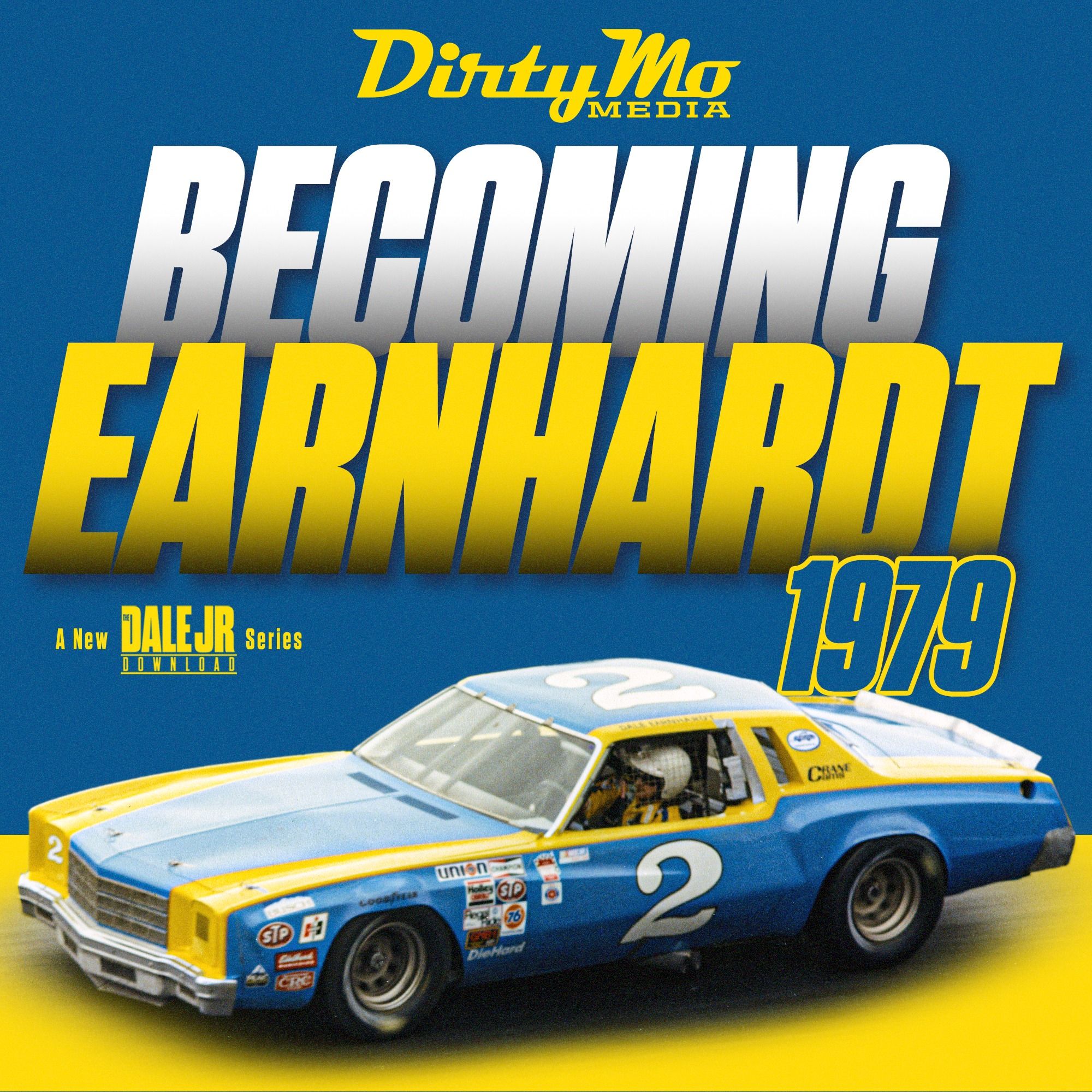
Welcome to Episode 9 of Becoming Earnhardt presented to you by Chevrolet.
The first eight episodes of Becoming Earnhardt encompass the season.
This is a round table and I have some guests with me today.
My aunt Kathy is here and my aunt Kay, who actually helped make the scrapbook.
How are you doing?
I'm doing good.
Y'all have been featured in the show.
We've done some extra work for us to help sort of promote the series.
But we'll talk about that.
And also with us is crew member in 1979, Doug Riker.
Very good.
Thanks Dale.
Yes sir.
Thanks for being here.
I'm thankful that y'all are here and I kind of have a lot of questions.
But basically when we started out the series, we explained how I get these two scrapbooks
Kay and you made these and back when the moment was happening, going through the new season.
You make the scrapbooks and they just literally just laid around the house.
Under my bed.
For 40 years or whatever.
For a long, for years, yes.
When you made them, do you remember making them?
Do you remember those moments?
Yes, I do.
I mean, I bought blue and yellow because that's the car Dale was driving at the time, the
Wrangler car.
And each week, you know, articles would be in the paper or either somebody would give
me an article, I'd cut them out and I did not wait, I went ahead and placed them.
Where'd they go?
Yeah.
So anytime I had anything, I put it in the scrapbook.
Do you remember this, Kathy?
Well, credentials, anything we had extra, we gave them to Kay.
Gotcha.
Because they're in there too.
Yep.
Yep.
She kept all credentials, tickets.
I kept my own credentials and tickets too, I mean.
For the first year or two that we went to the race, we always got passes.
And we all kept everything, but mine's in a tote somewhere.
They're not in a scrapbook.
Yeah.
You know, they're still up in a tote up in the attic or...
So this is Dad's very first year full time.
Why did you want to make the book?
Because we knew it was a big thing, hoping, you know, this was going to be his start
to something wonderful.
And it just seemed like the right thing to do to document it and remember it, so...
You know, you got to realize that we watched him sacrifice an awful lot in the sportsman
series and dirt tracking and following in Daddy's footsteps and giving up so much that
when he finally got this break, I mean, I can't speak for Kay.
She's the one that made this awesome scrapbooks, but I know how we all felt as a family just
watching him sacrifice and try so hard, you know, try so hard to be something and make
something of himself.
So the great thing about the scrapbooks is really when you open it up and you start
going through them, it's perfectly in order.
Like, you know, you did it just like you said.
As the articles came out, they went in the book.
And so that...
And it's a good thing I did it that way or they would not have been.
They would have been all over the place.
It's a history book.
Yeah.
And that made it easy for me, really, to come...
I had been talking to Mike for a couple of years about doing a show around a story.
And so I had this article around the boycott of the Talladega race that happened in 69 or
whenever that was.
And I wanted to do a podcast around that story, you know, and really tell it in detail.
But this was a better idea, right?
Obviously put right down in my lap that, you know, had this scrapbook.
And I know about...
I can look in, you know, a website or I can look in a magazine and find the finishing
order and find the statistics.
But the scrapbook had the quotes, right, from the articles.
It had dads on words, it had other drivers.
And it really gave you the temperature of the moment.
And how funny it was how, like at the start of the season, dads very, I just want these
guys to respect me.
I'm just trying to earn their respect.
I'm just trying to, you know, they seem to be okay with me racing up there in front.
They seem, you know, he's worried about the veterans, right, getting annoyed by him or
whatever.
You can hear his voice, can't you?
You can.
And then at the end of the year, he's like, we're going to win a championship.
You know, he's totally changed.
He flipped from...
He was now a veteran in, like, a matter of like nine months, he's like, oh yeah, I got
this, you know, we're here to kick some ass.
Um, Doug, when you're, I know you, I mean, how often do you really get a chance to think
about those times?
How often do you allow yourself to go back and really, you know, with the new, NASCAR's
got that new NASCAR classics out so you can go watch these races, you know.
And I need to.
They're at your fingertips.
I'll learn a lot.
All of this stuff's right at your fingertips.
How often do you ever dive in?
I know on a few of these shows, it's like, you know, we always talk about, we were talking
about it in the lobby.
Like somebody will say something and it just triggers, you know, and it's like, oh God,
yeah, let me tell you about that.
You know what happened?
And you know, just, I learned so much just by listening.
I mean, back then I was the kid, I was just a kid that left California with a bean bag
in a suitcase and I came this way and I was like, we're going racing.
I didn't know what racing was going to be.
It's like elevate.
What am I supposed to do?
I just did it.
Yeah.
Right.
And we all did it and learned together.
Really?
That's what was kind of cool.
I'm fascinated by how you were 20 years old and maybe even younger than that.
You're in the 79 year.
I don't know exactly how old you were in February when they started.
19.
Okay.
So you're 19 years old.
The team has some veteran members on it, older crew guys that have probably been in
the series of the sport.
They weren't all 19 year olds from California.
Jake Elder, you know, has been in NASCAR forever.
He knew all the, you know, he'd been in every ditch there was right to get through the sport.
How are you able to establish yourself in such a way at such a young age to be dependent
on?
Right?
How did you acquire the respect and the camaraderie with the others?
Of the guys in the team that allowed you to eventually in the 1980 season get the crew
chief opportunity.
So, I mean, it doesn't make sense.
Like the numbers don't make sense.
So how did it happen?
I mean, I did leave off early and actually going back and looking or thinking about 79
season, birthday was in June.
So at the start of the season, I was only 18.
So that'll knock that down a notch.
But it's like anything.
And throughout my career, you have to earn your respect from the elders.
In my case, I was the sponge.
I was learning from Jake.
He's the one with all the experience.
We started first race was out in Ontario.
We showed up.
We didn't know what we were doing, but how do you learn?
You do it.
And that's all I did.
I worked alongside of Jake and we were hand in hand, the good and the bad, you know, the
temperament.
He had his temperament.
So do I.
But I tried to be, I'm probably more of an outgoing guy than Jake was.
I was probably happy.
Go lucky.
And he was serious.
He was.
That was racing.
That was his life.
But I learned a lot and I just took it all in.
Early in the scrapbook, I'm reading an article right out of Atlanta, Atlanta is the first
race with Jake.
It's like the fourth race of the year, whatever.
Jake has a quote during the post race, right?
So the, you know, have this good run.
And I was trying to figure out a way to talk about his temperament.
Talk about it's their fifth race of the year.
And so I was trying to have a way to discuss Jake and share with people what he was about.
And he had these during the race or after the race, he goes, he kept calling dad the
boy.
They're asking him about, you know, they're asking Jake about dad.
And he's like, well, the boy listens to me.
I stick with, you know, the boy, the boy's got talent.
The boy listens to what I tell him, the boy, and he never would call dad by his name.
And so we will one day, you know, when we do the next episode reveal, when we do the
next series in 1980, we're going to reveal really how they felt, you know, Jake falls
apart.
We'll easily get into his temperament during that conversation.
But before then in 79, you know, he does come in and he's like, you know, he's, he's, he's
like, I've seen it and done it.
Just do what I tell you and we'll be fine.
Right.
And he, but he seemed like, you know, there's these moments during the, during the season
where like dad's racing at Charlotte for the 600 and he's like, well, I'm telling him
to slow down.
He's talking to the media.
He's talking to Ned Jarrett on pit road.
He's like, Dale's over driving the car.
He's running the car too hard.
Well, tell him to slow down.
I tried to tell him to slow down.
He don't, he, you know,
What in his blood?
They were, there was this weird thing where I felt like Jake would, Jake wanted things
just to prove he, just to prove and show that he had the control.
Is that really kind of how it was?
Cause like, you know, he would, you know, if, if he said, Hey, Dale, I think if you
slow down, you know, we'll save a little race car for the end of the race.
And plus these, you know, the new payment and three and four guys are having some problems.
You know, they could have had a conversation or whatever, but he would get frustrated when
dad wouldn't just do what he said without deep, without context, right?
Slow down.
Why?
Right.
And then when he didn't do it, Ned, you know, Jake would get frustrated and like, cause
he, he was just used to everybody listening to every word he said to do, right?
Was that kind of, was that kind of true?
Was Jake, was Jake that, you know, was that the way the relationship was with dad and
Jake?
Yeah.
Because he, he's the one that had all the experience.
Yeah.
You know, and it's, it's hard to beat experience.
That's, that's why we do it so long and the better we go that we have something for the
next team.
Yeah.
Well, he had something for us.
We needed that.
I didn't know other guys on the team that came, you know, Dave and, and Jeff Prescott
and those guys that came out with us.
Yeah.
We didn't know what we needed.
He did.
He's been there.
Like when he told us to pick a spring, right?
Yeah.
He'd go over and pick a spring and he'd squat on it.
He'd put that spring between his legs and kneel down and go, yep, this is the one.
It didn't matter what it was.
You don't, don't matter what it is.
This is the one.
Put it in the car.
Oh yeah.
That was me.
I was the doer.
Yeah.
So when dad didn't listen, which he didn't listen at times on, especially on the racetrack,
Jake liked to be able to, you know, remote control the driver.
All right, time to push.
All right.
Don't push right now.
Okay.
Back it down a little bit.
And all the other drivers like Kale and Benny and they all knew when to go and not go.
You know, none of them went out there and just ran hard as they, hard as they could
like dad tended to do.
Did you see Jake get frustrated at times with dad?
Oh yeah.
Oh yeah.
Yeah.
Staying standing there with him, of course, you know, even though he might not say something
on the radio, but we could see his body language, he might not have heard it, but yeah.
And so did they, did Jake and him have conversations at the end of these races about it?
Sometimes, sometimes they'd have it during the race.
I have to bring this up because it's a beautiful quote.
And I think was it Charlotte and Dale kept saying cars pushing the cars pushing.
I can't get off of four.
The car's too tight.
Too tight.
He said, Dale, listen to me, is I can do a lot of things, but I can't stop the wind
from blowing at turn four.
That's why your car won't turn.
Yeah.
And he knew it.
Yeah.
And it was just to hear stuff like that, you know, it's like, okay, I got it.
Drive through it.
Right.
I think, you know, Jake was great for the team.
You guys, that was like the only part of the whole team that was really missing was like
that crew chief rolling was doing some of that stuff at the start of the year, I suppose.
We talk about in, we talk about Dave Marcus quitting because of the, you know, the team
going to two cars and how that was kind of taboo back then.
Drivers didn't like the idea of having a teammate and then Dewey Live and Good was
fired, which I guess pissed off Dave Marcus a little bit too.
Yeah.
But while all that's happening, Dave buys a couple cars from Osterland to race the 79
season.
So the cars, I mean, even though there was a fallout and disagreement, still liked them,
still liked them enough to buy and sell some cars back and forth and wheel and deal, he'd
call.
I guess Dave had to call him up and go, man, you want to sell a car too?
Dave just really didn't realize that that was the model in the upcoming model.
Why didn't you want to learn from someone else?
They always say, you don't want to be on an island by yourself.
Having a teammate to roll stuff off that runs the same car, why wouldn't you?
That's what we do now.
One of the frustrating things about this whole series was when we get to the Bristol race,
so there's a lot of information that we learned that existed and a lot of audio of all these
races.
And so we know MRN today, right?
And we think MRN did everything forever.
But there was another publication, there's another entity or property, what was it called?
The UR or something?
There was another group that was broadcasting a lot of the races in the southeast and all
of that material is now at App State in the archives.
And so we were able to get a hold of a lot of these races in the 79 season that were
the broadcast radio rights to it.
And so unfortunately there's not a lot of video of the Bristol win.
There's this very short sort of five minute reel of Dad going around crossing the finish
line a couple laps at the end of the race.
And in one little clip of that, Dad ramps up the wall and I'm thinking I want to think
that this is like in the last handful of laps when he's trying to run away from Daryl.
Do you remember?
Well he climbed the wall some coming out of four.
I do remember that.
What was that?
You triggered some.
I triggered that.
Right.
Was that late in the race?
Oh yeah.
Damn near wreck.
Damn near.
It took himself out, right?
But see that's what Jake had always envisioned, man, boy, don't run so hard, right?
You're leading.
Savor it.
Well, no, that wasn't Dale's model, you know?
That wasn't in his DNA.
No.
Yeah, I was watching that clip and I'm like, damn, it looks like he climbs the wall right
there.
That's so wild.
And then those cars were tough enough to handle that.
Oh gosh, they were tanks.
Right.
So your great story that came out of the show is you tearing up your cigarettes and not
smoking anymore.
Your 1918-19 years old smoking cigarettes like any kid was at that time.
And Winston told your boy, you told his crew, you said, if we win, I'll quit.
And right there in the middle of Victor Lane, you tore up your cigarettes and you never
smoked since.
And to this day, from that day and that time, I have not had a cigarette period.
Another thing that I thought was interesting is right in Victor Lane is where the car got
teched.
Like, there's pictures of the roof, the hood up, the car, the engine getting going through.
They didn't even pull it out of Victor Lane.
They just put it up on four stands.
He just brought your stuff.
Did the tech right there in Victor Lane?
Yep.
That's hilarious.
Where were y'all at when Dad wins Bristol?
I was in landfill.
You were there.
I was there.
I was not.
So there's some pictures that I have with you and Danny and it's from that race.
So you were there.
You were not.
Where were you at?
I was at home.
Did you want to be there?
Well, of course.
Well, you certainly didn't know Dad's going to win.
No.
Yeah.
I had a husband and kids and things just prevented me from going.
So how do you learn that Dad wins the race?
You listen to the radio?
Well, if it was on the radio, I was listening.
If it was on TV, I was trying to remember how many races were.
It was not on TV.
So yes, definitely.
Probably 103.7.
Yeah.
Okay.
Yep.
And so you're there.
I was there.
I had Shelly and Stacey with me.
You had the girls with you.
We tailgated and Kelly and y'all were there.
I was not there.
Y'all were in the infill.
In 1979?
No.
No.
Yeah.
All the kids.
It seemed like all y'all were there.
Yeah.
No, I wasn't.
I mean, there's no photos of me there and I don't remember being there.
Well, I just know that there was a bunch of kids and we were all in charge of the kids
in the infill.
My mom was there and we had pictures.
We made pictures with Daryl Walter and Tim Richmond and we had food out.
Where are all these photos?
At my house.
Kelly's probably got a copy of them somewhere.
Damn.
I'll pull them out and get them to you.
But yeah, mother got to go to Victory Lane.
Dale didn't let us come up to Victory Lane until after the tech and all that was over.
Then we got to give him a kiss and hug.
But yeah, it was, you know, it was just a dream come true.
It was just so awesome to see him up there and just want a heart, a heart was so full
for him.
Yeah.
Do you remember one of the pictures that's in his album, our shared album of his trophy
and I'm standing beside of him with curly hair?
He brought the trophy to the daycare and showed it to all the kids and we, there's another
picture with all the kids around him that he brought it up there to show us the trophy
in Canapas.
You were, you were working at the daycare and that I was, I went to that daycare.
And so he brings the trophy to the daycare.
He brought it to the daycare.
There was another thing that he did later in the year was like at Jackson school.
What's the school around there?
The Jackson Park.
Jackson Park.
He went to Jackson Park.
There was like a Delan Heart Day at the second Charlotte race in October and he was doing,
doing appearances was like a brand new thing for him, I imagine.
Doing anything, you know, where he's being kind of recognized was, had to been like a
complete 180 from where he was just 12 months before that, right?
He did an autograph session in downtown at a dealership that year as well.
And he had, you know, had quite a line, but it wasn't anything like later as he got more
popular of it.
He didn't get a chance to go to Disneyland or anything like after I've heard his win.
So do you remember where y'all did?
I guess you drove home.
Drive on home.
In the articles it says that him and Jake were in the car together on the way home just
laughing like kids.
It could have been.
I think, anyway, I think we actually called it the Bozo bus.
Oh.
It was a van that we all rode.
It was yellow, yellow and blue and all that.
Yeah.
That's what we rode in.
That was our bus.
Yeah.
Driving to every race.
Oh yeah.
Yeah.
That was before we unheard of airplanes or private planes, right?
You might have flew to Ontario otherwise.
Yeah, those.
Yeah.
But the other thing else, you were in the car.
Yeah.
Van.
I know it happened because the cars got there, but it always kind of surprised me that the
teams could get to Riverside in Ontario and go out there and race like hell and get everything
done and get back home.
It just seems like the sport was so small back then.
I don't know how they traveled all over the country like that.
Commercial.
Yeah.
Commercial.
But as far as the cars go, even then we had to have other cars, right?
Yeah.
We couldn't go out with one car.
So we had spare.
Yeah.
You know, at the time we were building our own stuff and, you know, I think we were kind
of ahead of the time in that era too.
So we had spares, we had them ready, had to come back, turn the trucks around just like
you do now.
Oh, and Dale, to get back to Bristol and the celebration that we had in Canapas and the
shop.
Yeah.
I think in the previous, one of the previous episodes we talked about, Dale and Mike bought
a bottle of champagne and he kept in the refrigerator at the shop and we all gathered
there and I brought you cups.
Those are the cups?
Those are the cups that Connie put in her China cabinet.
So I guess they're 50 years old or right there at it and wanted to give those to you.
There's a picture with Dad sitting there on the go-kart with one of them cups next to
him.
Yeah.
So let me ask you about that.
Were you there?
Mm-hmm.
All right.
So I got the pictures, have seen those pictures all my life, really didn't know zero context
about them until, you know, get a little bit older and then obviously doing this little
series.
They definitely come into focus in what was happening, but so he has this bottle of champagne.
He says he's going to crack the bottle open when he wins his first race.
Does he, you know, after, when, is this the night after the race?
No, it was, it was a few weeks.
A few weeks later?
Was it?
It wasn't, it wasn't the night after, it was, it was only a few days, it was at least
a week or so.
It wasn't the night, it wasn't that week.
I don't remember it being that far out.
It wasn't that far out, but it wasn't that week because he was really busy.
Did he call, did he call y'all and say, hey, everybody come in?
We all knew he was coming, so we all, all five of us were there.
Who else was there?
Well, it was me and Mike and, all five of us were there and I had five brothers and
sisters for there.
I don't think Terry, Randy's wife came.
I know that Sherry, Danny's wife came, my husband was there either.
And mama.
I seen Teresa in the picture.
Teresa was there.
Ma'am all.
Mother and Connie Goodman and her husband, of course Connie's the one that made the
pictures.
He, he actually said call Connie and ask her to come make pictures and I did.
And so this is Ralph's shop, shop dad been racing out of next to Mama's house and, and
running his little sports car.
And so it looks dark.
It looks late.
Yep.
It was at night time.
Yep.
Y'all eat?
Nope.
Nope.
He just walked in.
Y'all cracked the bottles.
Well, we had the trophy out there.
I swear, I really think it was like the next night or something.
There was a pool table.
It was not weeks out.
I don't think.
It wasn't weeks, but it won't believe it was that night.
I mean, the race was Sunday, so it may have been Tuesday, Wednesday, that night.
Well, right.
Either way.
I mean, it doesn't matter.
But anyway, Connie said she wish you'd have dated the cups and had him sign them.
It would have been cool.
But so there's a pool table sitting there.
I don't remember a pool table being in the shower.
It's always been.
It was always been there.
And that refrigerator was dad's refrigerator that sun drops were kept in long as I remember.
And so y'all drink the champagne then what?
I think we just hung out a while then went on.
He got on that go cart and laughed about used about daddy building it and riding on it and
how Danny got on it and went up in the hedges when he rode at that time.
And because there was a little track out there on the side lot beside the house and Danny
couldn't get it to stop and ended up in the hedges.
But yeah, just goofed around.
That's the same go cart that Kelly and I got on with a little thing.
I wonder where it's at today.
It's somewhere.
I have no idea.
It's got to be somewhere.
Did you end up in the hedges?
I ended up driving up a guide wire on a telephone pole.
But yeah, they said they said to mash it wide open and I'm yeah, I mashed it wide open and
speed like and it just was going wherever it was going is out of control.
We need to investigate that and find out where it is.
Well, yeah, it's hiding somewhere.
I mean, not nowhere.
I don't think it's anywhere where we're going to find it, but that thing was a bit like
a tank.
There's no way it's not stealing.
He may know where it's.
There's no way the frame's not still laying somewhere because there's no there's it would
have been impossible to cut it.
Can't rust through that.
No.
So the scrapbooks, the the 79 scrapbook I redid the book itself was coming apart and
the pages were bad, but I meticulously reconstructed it into a new book just so you know, good.
I'm glad you're saying 1981 is still in the original book.
Yeah.
Right now.
But yeah, I wanted it to last another 40 years.
So one of the characters that's kind of prominent in this whole thing is Joe Millican.
And so I've watched a lot of old races and I remember, you know, in my mind, Joe Millican,
you know, raced.
He would work for the Petties and the Petties let him take a dodge to Daytona and he'd go
run the Daytona Arca race or the Daytona Sportsman race in the 70s and do well, you know, outside
of that, I didn't really know much about the guy.
I knew everything about his cup career, right?
But before that, just the only thing I knew was those races he ran reading and learning
about this, you know, in this document, I realized that he raced short tracks at Careway and
did had a lot of little local short track background, more of a foundation in driving
and racing than I expected or knew.
He gets the opportunity to race the DeWitt car.
My perception of that team is it's not a really strong team.
A lot of people have left that team and after 78 when Benny left to go with MC Anderson,
the team didn't get better, right?
They lost engine builder and a crew chief and a driver.
And so, and the owner, LG DeWitt is sort of now, you know, sort of backing out of the
sport in a way and not quite 100% dedicated or sure about his ownership of a car.
He's got the racetracks rocking ham and a couple of speedways he's got to take care of.
And the one thing I will say about that car is, you know, Benny Parsons wins the championship
in 73 and every year after that, that car was probably the most dependable car in the
circuit.
You know, it didn't run as strong as Junior's cars and the Wood Brothers, but he outlasted
a lot of them most often and they always got really, really good results and that's actually
how they win the championship in 73 was just they never broke.
And this was basically the story of Millican, you know, he would run 5th, 10th every week.
You know, when Dad was in the races, Dad could, you know, usually outrun him or show
him more speed, but if Dad didn't crash or break his collar bones and miss races and
all those things, you know, Joe Millican was always going to run in the top 10 or somewhere
around there as this season's going.
Dad talks about it in the articles that the rookie of the year is important to him.
Does the team care about the rookie of the year?
Is it are you getting the idea that it's important to dad?
Is that something that y'all are working toward every week?
Are you watching it in the in the Westacup scene or the Grand National scene?
Are you looking at the score?
Yeah, every week.
Yeah.
I mean, when you think back to 78, the only reason we ran only five races in 78 was so
he was still eligible for rookie of the year in 79.
And you know, that was always big.
Everybody that was always everybody's focus, you know, for the longest time.
Yeah.
Of obvious.
And so when the season begins, do y'all handicap like, you know, you got Gantt, Lobani?
I mean, I don't know if you took Gantt seriously or took Lobani seriously because we don't know
Terry Lobani that we, you know, we were looking at this through a different lens, right?
Right now we're looking at through 2024 lens, Terry Lobani is a two time champion and damn
Hall of Famer.
But in 1979, he's some guy from Texas.
Just another car.
Just another car, right?
You have no clue that he's going to have any, any kind of the career that he ends up having.
But I guess the one car that you do know about and you do have a history with and understanding
with is the 72, maybe not you specifically because you're so young and coming into this
whole deal.
But the season gets going, 10, 12 races into the year, Millicons hanging around.
Did y'all and dad them seem to get along okay?
Did y'all were there any unique moments, I guess, with with the Millican team that stand
out or any kind of memories of that battle between y'all two throughout the throughout
the year?
No, I don't think it was a very bad battle.
I mean, I don't remember anything, any fights or any confrontations, you know, it was a
little different back in, you know, we were all new.
So we're not going to go start a fight.
But you know, he was competitive though.
We all realize that and if we had to make sure we did our jobs right, you know, I was
a tire changer and, you know, I had to go through the motions and we had to do our stuff
right.
Otherwise we could lose it just as easy as he could make a mistake on the track.
Right.
Yeah.
That was, um, I want, you know, when I've got this giant scrapbook of photos and I've
sort of divided them all down to where they go.
All right.
And I have one specific, uh, collection of all 7980 and for the longest time, I couldn't
tell you which one would be 80 and which, you know, if you, if you pulled a picture
out of there and said, all right, is this 80 or 79, it'd take me a few minutes to really
look into the details of it and go, yeah, I think that, you know, that that must be this
race.
Right.
Um, but most of them are one or the other and I couldn't tell you the, the between them.
Now that after doing this, I can tell, you know, I can look at a picture of a car on
the racetrack dad's car and say, yep, that's rocking him second race.
Yep.
That's, that's Riverside where the fender fell off or, you know, um, the next row where
he tore it off inside the truck.
Right.
So, um, I, uh, as I'm reading, you know, as I'm learning all this, I will say, um, you
know, sometimes dad got swept up in some stuff that was none of his doing the rocking him
race, like the second race after Daytona, where the, the kale and Donnie get in another
wreck and they spin in front of the field and dad T bones, Donnie and everybody gets
wrecked.
Right.
Kale, Richard's mad, Darryl's mad.
Everybody's out of the race and tore up.
Um, there was some races like that in, in the season where dad just kind of found himself
in the wrong place at the wrong time, but there were some other races where, um, yeah,
he just was hard on equipment.
Um, like Martinsville.
Yeah.
Like hitting the curb, taking out half the field.
Three wide on Richard Petty, the king at the start, at the start in the term one.
You've got those pictures.
And so, you know, I, there's, it's just funny to me because again, looking at, looking,
looking, looking at it, we don't ever, ever, we don't ever talk about dad being flawed.
Uh, because in our eyes, he was this crazy sometime champion that was great at everything
and just incredible.
But in 1979, dude was flawed.
He made some, he made mistakes, right?
Almost every race, there was a moment where he screwed up something or did something he
should have done stuff.
He, you know, he wouldn't do five or 10 years later down the road, but 79 is his rookie
year.
You know, he's going to do the rookie things.
Um, it, when he, you know, when he gets out of the car after a Martinsville, for example,
right?
Um, he T bones Richard in turn one and crashes a bunch of cars out and I'm surprised.
Like Harry Gantt gets out and goes, yeah, they'll turn Richard and this and that and
happen.
He's not even that mad about it.
He should be really mad.
He should be furious.
Yeah.
He should be furious at dad.
Um, they said that Richard got out of the car at the end of the race and stuck his finger
in dad's chest and was like, don't you ever do that again?
You better net.
Right?
Um, do you remember those moments when dad gets out of the car after a race where he
might have not made, uh, he might not have made everybody happy, but he also might have,
you know, made mistakes, right?
Does he get out and there's pictures of him, right?
Sulking or, or a head hanging, head hanging, sitting at the back of the holler like, damn,
that didn't go well.
You know, do you remember those moments?
Well, I mean, yeah, of course, we, we, uh, as a group, we're all a team, you know, we're
afraid of what's going to happen, right?
We, we know these guys are going to be mad.
They're not happy.
I mean, it can't make everybody happy, but also I think people understood that because
he was a rookie.
That's what rookies do.
You learn.
And if he did it two or three more times, like someone in the past years that did a whole
pattern of wrecking people and then, you know, then you get that, oh my gosh, you know,
is he ever going to learn?
Yeah.
But he learned.
We all learn.
Yeah.
When he's going, I guess for the sisters, as he's going through this year and he's making,
you know, you're wanting this to work.
You're wanting this to, you want dad to have the success and this be his career.
And these races, you know, obviously you're not able to watch races on TV like we are
today.
So you can't see detail, right?
You just hear what the radio tells you.
Um, and so, uh, you know, but there's, there's, um, he obviously would go into 1980 and wins
a championship, but 1979 was rookie of the year champion, but he also, you know, had
a lot of, uh, struggles, not, you know, even aside from the injury, you know, you guys,
uh, you know, do y'all get a chance to be around dad or spend much time around him during
that year and get his sort of, not a lot, but first of all, I'm an Earnhardt.
This is hard, but Kay was right.
The toast was Monday night after the Sunday race.
There you go.
I figured it was.
It was, that's so hard because I was wrong.
She was right.
Well, I knew it wouldn't have been weeks.
I just, in my mind, her pictures and I asked her and she said it was Monday night.
I knew it was right after.
He did it right at some point.
Anyway, what was, do y'all remember what dad's temperament was when you were,
so y'all are around him in little chunks, right?
You're going to, they'll be, yeah, there'll be a month where you won't see him and then
bam, you're together.
Honestly, Dale invited Mike and I, when he was hurt, they'll invite Mike and I over to
dinner at Teresa's apartment and he had his brace on, you know, he was upbeat.
I mean, Dale was always bigger than life.
Even when, you know, he never thought he would fail.
Dale always was a winner in his, in his mind and his actions and his personality.
You know, he came at Thanksgiving.
He always brought y'all on Christmas.
I mean, we were just a family then.
We really never talked racing.
If he talked racing, it was with the men.
If they walked out of, out of the house or in the shop or something.
But when he was around family, he was always upbeat.
He never, ever really showed the pressure.
Well, I know.
And this has to be when he was hurt too.
He had the lake house.
And we all went out there because we were all up there and all the kids laying on the dock.
There was a picture of them laying on the dock.
So he invited us all up as a family.
And so that was one thing I learned.
Just here and there.
That was a neat thing that I learned.
So in one of the articles that he writes, I'm assuming, I'm just assuming, right?
I don't know that he's writing this article with Whitlock.
I have no idea.
He's not writing it by himself.
So he's doing, somebody says, hey, yeah.
Somebody has says, hey, you should do these bi-monthly articles.
And he's like, all right.
So it must have been Whitlock.
And so he talks about in one of those articles while he was broke,
while he was out with the six weeks with the collarbone issue,
he moves into the house.
So you remember him being over at Teresa's apartment in Charlotte with the collarbones.
Before he had the house.
So like literally a week or two later, he's got the house.
And so, which is still, and they still own it.
It's down there in Morrisville.
And that's the house we ended up moving in in 81, 82.
And I remember 1981, this old YouTube video, you can find it on YouTube,
one tough customer where you're pulling dad on a tube on the lake out from that house.
He would have gatherings with the crew after all the tax, even after the races.
Yeah.
And so being able to really get timeline of things, right?
Hearing dad, well, I knew he bought the house, but I didn't know when.
And I damn sure hadn't heard a word about his feelings on it.
And so when he's talking in the articles, like, man, I love it.
It smells great.
It's new.
It's awesome.
I love this house.
I got a lot of things.
Well, I never do that either.
Right.
Because he never talked about it.
He never talked about it.
But you know, he brought Rod Australian mother.
We cooked a meal at mother's house and Rod, he brought Rod for dinner up there.
Really?
In 79 that first year.
Wow.
And, you know, you think about someone with Rod's kind of money and prestige that would
be able to own a race team.
You know, again, we're just from small town Canapas and never been
anywhere or in that kind of world that you would expect him to be different.
But Rod walks in the house and blue jeans and a regular shirt and, you know, talks just like
a regular person fit in eight mashed potatoes with the rest of us and was just a wonderful man.
We just had the best time that night.
I have a picture of that night as well.
Yeah.
Well, that's one of the people.
That's one of the characters that we really didn't get to hear from.
And he played such a prominent role in this whole thing.
So he did seem very calm and quiet and, you know, well spoken.
What was Rod like for a boss?
You know, we didn't really, I mean, let me try to remember, right?
My boss was more rolling, you know, rolling had to answer to Rod.
But most of my dealings was with rolling all the time.
But when Rod came around, I mean, you know, we all met Rod because his daughter went to
high school with us, you know.
So it was, he's kind of started knowing each other even when we were out there.
Yeah, way before the races.
Yeah.
And then with rolling, working for Rod and some of his projects and then
us running at San Jose Speedway, knowing Lana, the daughter.
And then finally, when they start talking about merging, well, we merged with it.
You know, it was just kind of a fit, right?
I remember traveling in the motorhome with him down to Daytona one time and
different things.
It wasn't my motorhome.
It was his, but this stuff like that.
Yeah.
He was a good guy.
He seemed like it.
I mean, he gave me my start.
But one thing I don't think any of us really thought about because it wasn't our world was,
he was a businessman and had to make those kind of decisions as a businessman.
And so that affects a lot of people's world as we all know from history.
The part we don't always understand.
The part we never understand.
Yeah.
Hey, everybody.
Dale Jr. here.
Let's take a minute to talk about Chevrolet.
As you know, the Earnhardt family is a Chevy family.
I own a Chevrolet dealership that I'm very proud of.
And there's sure to be a Chevy dealership near you.
So do me a favor.
Before you buy your next new or pre-owned vehicle,
check out Chevrolet's lineup of durable, innovative, award-winning, performance-focused models.
You'll be glad you did.
And we'd be honored to have you in the team Chevy family.
One great option you should check out is Chevy's factory lifted trucks.
These lifted trucks help you tackle the trails.
The first ever Silverado ZR2 Bison offers the extreme performance and capability you need
to make easy work out of the most difficult terrain.
Featuring a 13-inch touchscreen display, the versatile multi-flex tailgate,
33-inch mud terrain tires, and multi-matic DSSV dampers,
this truck allows you to stay connected while taking adventure to a whole new level.
Dare to be different with the first ever Silverado ZR2 Bison.
Chevy, find new roads.
All right, so let's move on to Dad's injury, right?
So in the episodes, we hear about y'all's experience learning about that and wondering
if Dad was okay and learning that he's okay and he's got these injuries.
So all my life, I thought, you know, he wrecks a Pocono and breaks two collar bones, right?
Digging into the articles and reading all about other things, it's more than that.
He heard his jaw. He was eating foods through intravenously for a week or something.
These are in these articles, right? That was the helmet was scuffed and that he was dealing
with a concussion. They kept him in the hospital for a week. It took him a whole week before they
released him from the Pennsylvania hospital. So the injury in the crash was a whole lot more
significant. He may have been there a few days, but I know Mother and Randy went to
Pennsylvania and he checked himself out. That part two doesn't make any sense to me.
Why would y'all, my first reaction to that is, did they not call Dad and say we're coming up there?
We didn't have cell phones for one day. Well, you had a rotary. True.
All I know is Mother was hell bent on going. Randy said, if you want to go, I'll take you.
They went. So they drive up there and then while they're driving up there, Dad's checking
himself out and flew home and got on a commercial plane. That may have been a few days. It could
have been a week. It was a week. I just remember that hearing about how horrendous pain he was in
on the airplane, commercial plane flying home, but he was hell bent on coming home. Yeah. Well,
they checked him out and he goes home. And so, you know, there's a lot of articles that really
detail the car, the damage to the car, the helmet, the window net was busted and
Dad's own injuries and doctors and all these things. And there was a hole in the net. Yeah,
where it scraped the wall, right? Where it scraped the wall. Yeah, where the helmet and the wall
so it must have been this really very brief, like bam, bam, quick, like, I mean, obviously,
if he's, if he crashes and he makes contact with this helmet to the wall, in most cases,
that's going to be a near fatal injury, right? I mean, that's a bad deal. But it must have been
this very, very brief contact with the wall that his helmet makes. And when I've actually got some
pictures of the car sliding down the racetrack after it made contact with the wall, I'd never
seen a picture of the car post the crash. It's not up close. It's blurry. It's bad. There's no
pictures of the car in the garage after the race. There's no way to look at this thing. There's no
way to really know like, okay, what hit first? How did it hit? Where did it hit? You hear its
driver's side. You know, you're just piecing together a very, very limited piece of information.
If I remember right, it was really from going into the corner with Pocono's fairly flat. Yeah.
And it was back at the tunnel that the tunnel turn, which is flat and he went in and got loose.
And it just slapped the wall driver's side. Right. And at that time, technology, I mean,
you know, he had those van seats in the, in the car, no side racing, no head, no head support,
nothing. No, nothing on the left side of the seat. Nothing. Yeah. So you slide.
Never anticipated hitting the wall on the left side. No, all right. You thought you're always
going to hit with the right. Yeah. So looking at this image of the car after it's made contact
with the wall, there's very little damage there backs. The tail, you know, the back is fine.
The, the deck lids good. There's no wrinkle been there. The hood's fine. There's no big bend or
wrinkle in the hood of the left front. The front's not knocked over. It must have been just a real
flat pop. And what's I can't understand is how do you break your collar bones? I mean,
he must have had them damn things so damn tight. I know he was pretty bad about tightening his
seat belts up to ridiculous amount. Well, I think the biggest thing that happened in that case
where there was no support on the left and he just was able to move so much further. Yeah. Well,
your neck's going to stretch. That was before neck restraints and headrest and all he had was his
bubble goggles and his helmet. Yeah. Right. Well, that way to that helmet just wink, snap. Yeah.
And the sad part for us was, you know, it rained it out. So they had it on Monday. I was on my
way home from work listening on the radio, went to commercial, came back from commercial and he
had wrecked. Yeah. Yeah. They don't tell you how bad it is. No. Well, they can't. Well, you can't.
Yeah, they don't know. They don't even know. And I think part of the part of the thing with Mother
was she couldn't get any information. Every time she'd ask, Well, how's Dell? You know, you call,
Oh, he's fine. He's fine. Oh, he's fine. And after a day or two, maybe of that, she thought,
I'm tired of this crap. I'm going. I wonder if he never, like how he doesn't get on the phone
from wherever he's at. That part I do not remember. So weird. You know that.
No, I mean, I mean, if I'm dad, I don't, if I'm dad and I'm sending a hotel room for at least
at the minimum three days, I mean, if we go by the articles in the hospital room, I'm just saying,
if we go by the, if we go by the articles in multiple instances, it tells us he was in this
hospital for a week. If I'm sitting in there in the hospital room, I'm calling somebody at some
point, right? Yeah. And you know, Theresa knows where he's at. She's probably there. She's sitting
right there. Right. And so in the phone. Yeah. But I mean, she can call people.
Surely there's somebody got a call. Someone had to be communicating. I know. I don't understand
how ma'am all in Randy drive all the way up there and dad doesn't know they're coming. And that that
and dad, you know, inadvertently leaves because he gets checked out and goes home and misses. And
that and Randy and I'll get up there and they're like, where's he? Come on, let's go. He's gone.
Oh, he's gone. That's strange. That's just a comical. That's a comical part of the whole thing,
I guess. Anybody that knows Dale. As soon as they get more wordies, as soon as they get more, as soon
as they crack the door, he's leaving, which says a lot about the entries because he was there as
long as he was, right? You know, he's going to leave at the first opportunity. He had to be feeling
it. Yeah, he must have. He comes back. And one of my favorite things to talk about in in in old
racing. I don't know if the drivers are I don't know if the young drivers today are as wowed by
this as I think they are. But one of my favorite things to talk about is the relief driver situation
back in the 70s and 80s. Pretty much every damn week, somebody got some relief. And as we'll learn
in these articles, sometimes the drivers get back in. Rich Petty would get out for 100 laps
and then climb back in, right? All right, I feel better. And so we go to Richmond. Dad sits on
the pole. First race back. And Lenny Pond falls out of the race. They put Lenny Pond in the car.
You guys did great idea because Lenny Pond in Richmond or that's like his best track.
He goes out there finishes top five scores some rookie points for dad. Then you go to Dover,
which is probably not a great track with broken collar bones or collar bones that are healing.
And I called Bill Elliott and I said, Hey, I said you relief drove for dad at Dover. And I was like,
you know, you're not on the entry blank. You didn't you didn't race. You didn't qualify.
How did you get there? Why were you there? I know he raised some racists for Roger
Hanby in the 17 Roger was in the race. So I thought maybe he just went along with Roger and was just
standing around. Well, he said that Jake called him midweek. And it was like, Hey, can you go?
Just because just go to be there. If we need somebody just in case. Yep. And so I thought,
wow, okay. So Bill goes up there. They're running running along in the middle of this race and dad
spins out and doesn't hit anything. And then just a dozen laps or a couple dozen laps later,
he spins out again. And I think after the second spin, he's talking about being tired.
And Jake's like, Come on in, get out. And so he gets out and Billy gets in and then 100 with 100
laps to go because they ran 500 laps and over back then. It's like a long race. Dad gets back in.
I just think that's so funny that they're like y'all are like eight, 10 laps down,
running in eighth or 10th. And dad's like, Yeah, I'm good. I'm gonna get back in there.
Like once you get out, you just think you just stay out. Yeah, there was no reason to get back
in. I got the points for starting. There's no point to get back in. Right. That was the only
reason he started. It's just interesting to me. But it's Dale. That's Dale. You would think Jake
would be, you would think finally now he's in the pits like you were with Jake. And Jake would be
like, Yeah, no, you're not going in. What's he doing? What's he saying about the car? Yeah.
Yeah, I thought that was pretty interesting. But he ends up, you know, coming back and finishing
out the year pretty good, pretty decent. So called back into the rookie of the year battle, which,
you know, Millican led multiple times throughout the year, but he climbs back in the best 15
finishes. And he put together enough points and with the win at Bristol to rightly win the rookie
of the year. Yeah, so that's it. I mean, I think, you know, think I want to thank UK for having the
idea to even create those scrapbooks in the first place. I'm I'm much, I'm very thankful. I was
thankful first that you thought enough to give them to me. You know, you y'all, you were making
plans to come to moms to see to see what you may want to take home. Yeah. And I got to thinking
about them and I thought they're just laying under my bed. I knew how enthusiastic and passionate you
were about it. I thought, well, he may appreciate them. If he doesn't want them, he can give them
back to me. Yeah. And we are the seniors in the family. So we're depending on you to be the person
that keeps the stories going, the stories going and talks to the babies and tells them about our
brothers and our family. So that scrapbook is there for a reason. Yeah. But I also heard you
talking earlier about scrapbooks and, you know, what was inside those scrapbooks and all that.
Well, this was the rookie of the year that we've all been documenting, right? Yeah. So
what else could I not do but to have that shirt? That looks like a damn original.
That is an original wrapper. It's not been open. Bull crap. Dale, here you go. Man.
It's like one more appropriate thing. We've been talking about this now.
How do you have this? How do you still have this sitting here unopened?
Have you ever been to my house? I have everything. Have you ever been to this house?
So this shirt is kind of the Holy Grail of vintage racing shirts in NASCAR at least.
And in the bag. Yeah, in the bag. Good Lord. One of these things on a hanger is going for
a hundred hundred fifty dollars. So I can't believe we have one still in the bag. I bet it's the only
one left. Not really. Might even have another one. Oh my God. Takes two. Yeah. Don't you have two
girls? I do. Well, wait a minute. Those could be the two girls that carry on the rookie of the
year. Yeah, that would be sweet. Number two. All right. Damn, dude. That's pretty incredible.
You know, I tell you, that was because, you know, I got them from my mom. Yeah. You know,
we always finished up in Ontario. We won the championship there. I'd always get my mom stuff,
right? They were the biggest fans. And she had the scrapbooks of all the San Jose paper
articles and all that stuff. I wish I would have dug those out. They're probably somewhere.
Yeah. But you know, I always got, she always wanted stuff. So I would take the truck home
to, and I park it in front of the whole house. Take the whole house. The whole hauler thing.
Yeah. The whole rig. Yeah. Yeah. And I'd bring her home. My dad even rode home with me one time.
It was like, that was cool. Those are my family things that they were really into the racing.
They loved A-O and they had them. Well, I appreciate that, man. That's pretty amazing.
I will make sure that these are probably just going to stay just like they are.
Been in that bag a long time. Yeah, they have. I won't leave them in that bag.
But thank y'all for spending some time with us. I want to thank y'all from all the listeners for
giving us your time to help make this series what it is. You guys bring a lot of great insight and
information into that season and make it kind of jump off the page, if you will. And when we
start leaning into the next installment of Becoming Earned Heart the 1980 year, we will need you to
come back and we will. We may study a little bit before that. You guys go ahead. Y'all go ahead
and go home and start thinking and getting your notes together. And we're going to all get together
in a big, big room full of big table and come and put together a show that'll be even better than
this one. Maybe we could spark some more stories. Yeah, for sure. I'm certain we will.
Now that we have a blueprint and an understanding of what we're trying to do,
I think 1980 could be even, you know, be much, much better. So thank y'all and
until then, till I see you again. Thanks, Dale. Enjoy it. Thank you guys. Thank you.
It's awesome as it is to be able to talk to Doug, Kathy and Kay. You know, as we wrap up the
last show or last episode of Becoming Earned Heart, I kind of wanted to touch on some of
the key people that were part of this storyline.
Rod Osterlin, the car owner for Dad. You know, we know they win the rookie of the year in 79
and the championship in 1980. Rod would actually go on in the middle of the 81 season and sell his
team to a man named JD Stacey. Pretty sketchy character of this JD Stacey as we talked about
him in some of the podcast over the years. But either way, Rod would leave NASCAR but then
re-enter the sport with Huss Strickland in 1989 and Jimmy Spencer in 1990. If you remember the
Heinz number 57 Pontiac, yeah, that was Rod's car. As far as we know, Rod is still alive
in Southern California. Now, Roland Velodka, who was the business manager for the team, would
continue to work in the sport with drivers like Buddy Baker and Rodney Combs and Huss Strickland
even worked around the truck series. Even briefly worked with Kevin Harvick. Roland was well
respected by Dad as far as I could tell and I thought he, you know, considering what they
accomplished in such a brief period of time in 79 and 80 with a new team, Roland must have done a
great job. Roland unfortunately passed away at the age of 81 in 2020, but it's been fun sort of
getting to know more about him in this series. Jake Elder, also known as suitcase Jake, not
going to talk about him much right here. You know why? Because he's going to be a big part of our
next season of Becoming Earnhardt, the 1980 season. Yes, we want to do the 1980 year and I
have that scrapbook ready to go and so we'll get into that maybe in the next installment of Becoming
Earnhardt. What happens to suitcase Jake Elder and the racing team? We do know that far beyond
the 1980 season he worked for Robert Yates and was actually fired by Robert Yates and replaced by
Larry McRinnells and he passed away in 2010 after some some health issues he dealt with.
Doug Reichert, who was here for the round table, continued to crew chief in the sport for a long
time. Winning races is recently with Greg Biffle at Roush and he continues to seek out opportunities
to work in the sport. Still feels like he has something to offer. He's also an incredibly good
handyman carpenter. If you need something made, built, he can do it.
One of the things I think we talked about, maybe you don't recall or maybe you missed,
Doug showed me a copy of his wedding certificate and dad had signed that as a witness. Dad was his
best man also in Doug's wedding. So they were really close even after Doug and dad split up
beyond the 1981 season. Doug would go to work at Junior Johnson's with their Walters,
Mount Dewcar and so forth, but they remain close enough friends that dad was his best man during
the wedding in the mid-80s. We talked about the end of the Petty Pearson era where those two had
nose-to-nose, tooth and nail, so many first and second place finishes between Pearson and Petty.
All of that came to an end in the 1979 season. That to me kind of, that's it, that story,
I know it. You know it. We've heard it many, many times, but reading through it and living,
sort of living through it, I say, it really hurt, hit me on a personal level how I never
thought about it like that. You know, you've got these two incredible professionals no matter what
sport battling each other in so many great matches and finally it has to end, right? You never love
to see it when your heroes, you know, have to hang up the helmet. But not that Pearson was retiring,
but that rivalry that had been so good for NASCAR was over. David Pearson would continue to race,
but you know, with very, very limited success after that. He won a few more races and then
eventually decided to hang it up for good, driving, you know, he's at the end of his career,
driving cars that really just couldn't get the job done. This was the beginning of the Daryl
Waltrip and Dell Earnhardt error. And Daryl says as much during the show multiple times,
man, it looks like I'm going to have to be racing this Earnhardt guy for the rest of my career.
And man, they would. It would really come to a head around the, you know, 1986 season when dad
and Daryl would wreck it. Richmond in a massive crash that would give Kyle Petty his first cup
win. I have the car that Daryl crashed in that wreck in the race car graveyard.
Dad and Daryl would account for six championships throughout the 1980s.
The rookie class obviously goes on to be incredible except Joe Millican. You know, we'll talk about
Joe Millican a little bit in the next episode of Becoming Our Heart, the next season of Becoming
Our Heart for 1980. But he gets, he gets a few part-timer odds, one with Ray Mock in 1981.
He eventually gets a ride in the car that would become Rick Hendricks number five car.
That team would, would end up getting sold to Rick. He makes some sporadic starts, though,
all the way up until 1987 when he was at a cup all together. He never had really another full year
of competition from 81 on where he was in the same car throughout the year in a steady ride.
He returned to the late model ranks back at Caraway in some of the weekly race tracks. He had a
scary crash at Caraway in the 90s and then went on to work for race teams driving transporters
and doing things like that for teams like Roush actually was involved in a transporter
crash in the 2010s with Roush. And he's still out there roaming around. We tried really hard
to get Joe to come sit down and talk to us or just be able to really pick his brain a little bit
about this series, but it was really difficult to make that work. But we are so thankful for
his career and his effort and battle through the 1979 season.
Terry Labani, we know is going to go on and win championships as, as recent as 1984. I mean,
literally five years removed from this season. Terry's a champion. Harry Gantt wins a ton of
races, obviously becoming a household name. And also, I think it's a little fascinating to me how
much the rookie of the year deal mattered. Yes, of course, we're embellishing it. We're blowing
it up. We're making it a big deal on the show, but it really was that big of a deal back then.
The rookie of the year battle was something people were so excited about because this really was
where there was such a small group of veterans, you know, capable of winning every week, half a
dozen, maybe 10 cars at times. But there were really a half a dozen good winning cars on the
racetrack. And those rookies were exciting. That rookie of the year battle was, you know,
was always compelling. We lost a little bit of its identity over the years, but every once in a
while we get a really good crop of rookies that fires up the excitement in that rookie of the year
battle. Obviously, we talk about JD Stacey. Now, one of the stories that got cut from the show
is about JD Stacey. He owned a car that Neil Bonnet drove in the late 70s and they got into
dispute with crew chief Harry Hyde. And Harry says, we're parking these cars. I'm not taking
them to the racetrack anymore. JD Stacey would go over to Rod Osterland in 1978. Dave Marcus is
Rod's driver, dad's not there yet. JD and Rod would cut a deal to where Rod Osterland would
put cars on the racetrack that Neil Bonnet would erase to be able to finish the 1978 year.
That really ticked off Dave Marcus. When Dave Marcus quit, it was as much about the next year
trying to share a ride with Dale, with my dad. It was as much as frustration over that, the firing
of Dewey Lavingood. And also in 1978, he's having this great year. They're running well and all
of a sudden now they're going to start preparing cars for JD Stacey and Neil Bonnet. Well, that
wasn't in the plan. JD Stacey eventually resolves his conflict with Harry Hyde. But in the off season
that year, JD Stacey works in the coal business. In the off season that year, JD Stacey's limo
was parked in the parking lot of a Concord Hotel. Police found a bomb underneath that car.
Rig to explode as soon as the car backed out of its parking spot. And they happen to be just
walking by this car. They weren't even like looking for this, right? They see the car and
they're just like, Oh, look, that's a nice limousine. What is that strap to the bottom of the thing?
They get in there and inspect it. They don't know who's it is, whose car it is. JD Stacey would say
this was the second attempt on his life at that point in time. JD Stacey would lurk in the shadows,
if you will, of the NASCAR circuit through 79 and 80. And then in 1981, in 1982, he would buy
Rod Ashland Racing. Dad, obviously getting all this information from Neil Bonnet says,
yeah, I don't need to drive for this guy. I'm quitting. He would quit in two weeks and go
drive for Richard Childers midseason in 81. JD Stacey will go to the racetrack and start paying
everybody all kinds of money just to put JD Stacey on the side of his car. There's like
seven or eight cars out on the racetrack with JD Stacey on the side and eventually checks start
bouncing. People aren't getting paid and JD Stacey just disappears. Quite an interesting character.
Another great story that got cut from the 79 show was Kel Yarborough appearing on the Dukes of
Hazard. Now, this is something that I was a little bit confused by because I recall when I was a kid,
I believe it was in the 1984 year. I remember Kel Yarborough being on that show and I remember
it was right after he had won the Daytona 500 in the Hardy's car and they actually used a little
bit of the clip clip of him winning or the in-car camera footage or whatever in the in the Dukes
of Hazard show. I don't know if Kel's been on the show twice or what, but in 1979, in articles,
Kel talks about how he's so nervous because he's got to go to Hollywood to shoot an episode of
Dukes of Hazard. So maybe Kel Yarborough was on there twice. He eventually went to Hollywood,
shot his episode in the middle of the 1979 year, and then during one of the final races of the
season, the episode ran on like a Friday or Saturday night. And imagine all of the industry
probably tuned in. There's probably only like three stations on the television. They tune in
to watch Kel on Dukes of Hazard do a terrible job of acting, even trying to play himself,
and then go to the race track the next morning and give him a hard time for it. You know that
happened. We also have a interesting thing that we kind of missed. Now I've got this picture,
so I apologize for letting this slip. David Pearson drove dad's car in relief for dad while he was
injured. They go to Bristol and I made a big deal like, man, David Pearson racing at Bristol,
he hasn't raced here in a long time. Yeah. And he was older and running a limited schedule.
Why would he run this race? It's definitely going to wear him out. Well, he did get worn out. He
got relief driving from Lenny Pond. Lenny was popular for a relief driver back then, but Lenny
gets in the car. I've got pictures of this on my phone and I just missed it. It should have made
the show, but pretty cool to know that Lenny was climbing in everybody's cars back then when they
needed help. So during this show, you and I learned more about dad's crash at Pocono and the injuries
he dealt with than I even knew, right? I thought it was broken collar bones. It was much more than
that. Well, let me read you an article from the Winston Salem Journal on August 3rd, 1979. This is
a Friday. Rookie Earnhardt out for at least a month. Dillon Hart will be transferred Sunday
to a Charlotte hospital from the East Strasburg, Pennsylvania hospital where he's currently in
the intensive care unit recovering from injuries from Monday's Pocono 500. Earnhardt, the hottest
rookie on the Grand National Tour in several years, has several bruises and one broken collar bone,
one cracked collar bone and injured jaw in a concussion. I didn't know about the jaw and he
is expected to be out of action at least until the Capitol City 400 at Richmond. Wow. They had some
foreshadowing there and according to Jake Elder, the team's crew chief, because of his jaw injury,
Earnhardt is being fed intravenously. Dang. So busted his jaw. I guess he's got a jaw
sewn shut and he's getting fed through a tube. Is that what I'm reading? Sounds like it. But depending
on relief driver David Pearson showing here Sunday and the talks next week between team manager Roland
Vallaca and Pearson of Spartanburg, South Carolina, the veteran will likely drive the team's cars at
Michigan, Bristol and Darlington and perhaps Dover. So Elder says, I went over and saw Dale Monday
night. His neck and shoulders were all swelled up and he could only lift his hands just a little. The
guy said, no kidding. And then he asked me, when can I drive my next race? Elder didn't have the
heart to tell him not for quite a while. This is another neat little tidbit. Bruton Smith,
that's Marcus's dad, who's been on the podcast many times and the owner of Charlotte Mary Speedway,
sent his personal plane to Pocono to bring dad back. That's from Elder's mouth. Now,
our, you know, the sisters said that dad got a commercial plane home. So we really don't know.
We could ask Marcus, I guess. But Elder is telling this article that Bruton Smith is sending his
personal plane to bring dad back from Pocono and dad will probably check into a hospital for a couple
of days and let the doctor run some more tests. Darrell saw the crash and he said the tire exploded
into a million pieces and the wreck smashed the driver's seat all to pieces and tore the steering
wheel clear around and it smashed the row bars almost clean metal to metal flat. Now I don't
want Dale to come back too quick or come back too soon but I do want him to get back in the car
as soon as he can like getting back on a horse that's thrown you. I know he's going to miss
four races. Heck, you can't even run Bristol when you're actually well. That place will really get
to your neck and Darlington Dovers, those are where you're plumb out. I figure he ought to be
ready to run Richmond if he's able. NASCAR Grand National Competition Director Ray Hill conceded.
There's a possibility his head brushed the wall. Based on the crew's review of the accident,
a hole was torn in the car safety window net by the impact which Doug Reichard, the crew chief,
backed up earlier in this show. Elder said that Earnhardt has been complaining of pain in the
back of his head. So there you go. That's just some more information. You know, I mean, you know,
we're all still just speculating really what happened in the crash but
Dad hit the wall. We do know this. He had to hit the wall flat driver's side. I thought it was a
head-on crash or somehow how did he move forward in the seat? I just assumed the shoulder straps
broke the collar bones but apparently he went to the left side and without anything on the left
side of that seat to stop him from moving toward the door bars and toward the left side of the car.
That's when the shoulder harnesses really kind of just broke the collar bones and did that damage.
But he moved far enough to actually hit his head on the wall briefly. Get him a bag of concussion
and somehow broke his jaw which I'm maybe guessing that he hit his jaw or something on the door top.
But, you know, just a lot more injuries than I'd ever considered.
So what is the next stage of becoming Earnhardt? Well, we have the 1980 scrapbook.
All right. And we, you know, when we wrote this episode 1979, I sat down and threw the script
together. We did this as Michael loves to say. We did it backwards. And this came together well
and I'm real proud of it. But I think if we do this the right way and write the outline and then
bring all the information together and the audio from the races and everything else,
it could be so much, so much better as a product easier for you to listen to. So we're excited
about that. We're going to do it. The 1987 is going to happen. The 1980 season is going to happen.
Probably next year. We're coming off of the rookie of the year. 1980 is going to be a big year for
Dad as well. He's going to have more wins. It's the last season of the big-bodied race car. They're
going to go to the smaller cars in 1981. And I have the car in my possession that Dad ran the
final race in 1980 to clinch the championship. That car also won at Atlanta and did several
other things throughout the year that we'll talk about. We have the car in our hands. Pretty cool.
So we'll talk about that and let y'all know how that's coming along. But there's a lot of incredible
happenings and moments throughout the 1980 season. I don't want to spoil too much, but
Jake Elder will not be the crew chief when the team wins the championship. And that split
is really, really dynamic. And there's a lot of articles with some pretty telling quotes.
Dad and Kel Yarborough get into a bit of a spirited battle not only on the racetrack for
the championship, but in the media. There's some quotes and comments from both drivers about their
opinions of each other and their driving. So should be a lot of fun. We'll also include
obviously the sisters and Doug Reichert for their take and information, what they can recall.
Now that we know what we're trying to do with this series, I'm telling you, I think 1980 and that
season will be even more entertaining. So until then, I hope you've enjoyed our look back on the
1979 year. Becoming Earn Heart came out of some scrapbooks that my aunt made with love. And
it's been incredible to create something with those. And I've really enjoyed the feedback that
everybody has given us. And I hope, you know, it's an Evergreen series. If you enjoyed it,
now you can share it with friends. They can listen to it in full, have some fun with it,
and keep the stories out there. Like my aunt said, keep telling the stories and keep sharing
with people. Some of the cool things that happened in my dad's career, but NASCAR as well.
We'll see you next time on Becoming Earn Heart.
On Twitter, Facebook, TikTok, and Instagram.
About this episode
A roundtable look at Dale Earnhardt’s 1979 rookie season “dust settling,” anchored by family scrapbooks and crew memories. The guests—Kathy and Kay (who built the scrapbooks) and 1979 crew member Doug Riker—revisit how Earnhardt earned veteran respect, the push-pull with crew chief Jake Elder, and the Bristol win details (including Victor Lane tech and Riker’s cigarette-quit vow). They also cover the Pocono crash injuries beyond broken collarbones, relief-driver strategy, and the importance of rookie-of-the-year points. The episode closes with teasers for 1980 and behind-the-scenes stories about key figures like Rod Osterlund and Jake Elder.
The dust has settled on the greatest NASCAR Cup season in history, and it’s time to recap all that we’ve learned about 1979. Dale Earnhardt Jr. invites some of the guests from BECOMING EARNHARDT for a roundtable discussion to recount all that we’ve learned and conclude some of our favorite characters ’ stories. Dale’s aunts, Cathy Watkins and Kaye Snipes, as well as Osterlund Racing crew member Doug Richert, return as first-hand character witnesses who helped bring the story of 1979 to life.
The chat once again sets the dial back to the beginning of 1979 and views Dale Earnhardt through the eyes of his family, as he’s getting ready to embark on the biggest opportunity in his young racing career. It also dissects complicated characters like Jake Elder and the team dynamic at Osterlund Racing. They dive into the significance of the NASCAR Cup Rookie of the Year in 1979 and just how close things got in the race between Dale and Joe Millikan. Finally, some new details are revealed about the severity of Dale’s injury at Pocono and his lengthy hospital stay and time out of the driver’s seat.
FanDuel: Must be 21+ and present in select states (for Kansas, in affiliation with Kansas Star Casino) or 18+ and present in D.C. First online real money wager only. $5 first deposit required. Bonus issued as nonwithdrawable bonus bets, which expire 7 days after receipt. Restrictions apply. See terms at sportsbook.fanduel.com. Gambling Problem? Call 1-800-GAMBLER or visit FanDuel.com/RG. Call 1-888-789-7777 or visit ccpg.org/chat in Connecticut, or visit mdgamblinghelp.org in Maryland. Hope is here. Visit GamblingHelpLineMA.org or call (800) 327-5050 for 24/7 support in Massachusetts or call 1-877-8HOPE-NY or text HOPENY in New York.
Hosted by Simplecast, an AdsWizz company. See pcm.adswizz.com for information about our collection and use of personal data for advertising.